COMMUNICATION
and
GLOBALIZATION
Chapter 2
Elsie Joy D. Licarte, LPT
LEARNING OBJECTIVES:
At the and of the lesson, the students should be able to:
• Explain how cultural and global issues affect communication
• Appreciate the impact of communication on society and the
world.
• In order to develop skills as communicators, we must
gain practical knowledge of the factors that make
communication across cultures succeed or fail.
CULTURAL ISSUES AFFECTING
COMMUNICATION
1. CULTURAL IDENTITY
2. RACIAL IDENTITY
3. ETHNIC IDENTITY
4. GENDER ROLES
5. INDIVIDUAL PERSONALITIES
6. SOCIAL CLASS
7. AGE IDENTITY
1. CULTURAL IDENTITY
• Values and attitudes can have an impact on
communication across cultures because each
person’s norms and practices will often be different
and may possibly clash with those of co-workers
brought up in different parts of the world.
2. RACIAL IDENTITY
• Racial identity refers to how one’s membership
to a particular race affects how one interacts
with co-workers of different races.
3. ETHNIC IDENTITY
• Ethnic identity highlights the role ethnicity
plays in how two co-workers from different
cultures interact with one another.
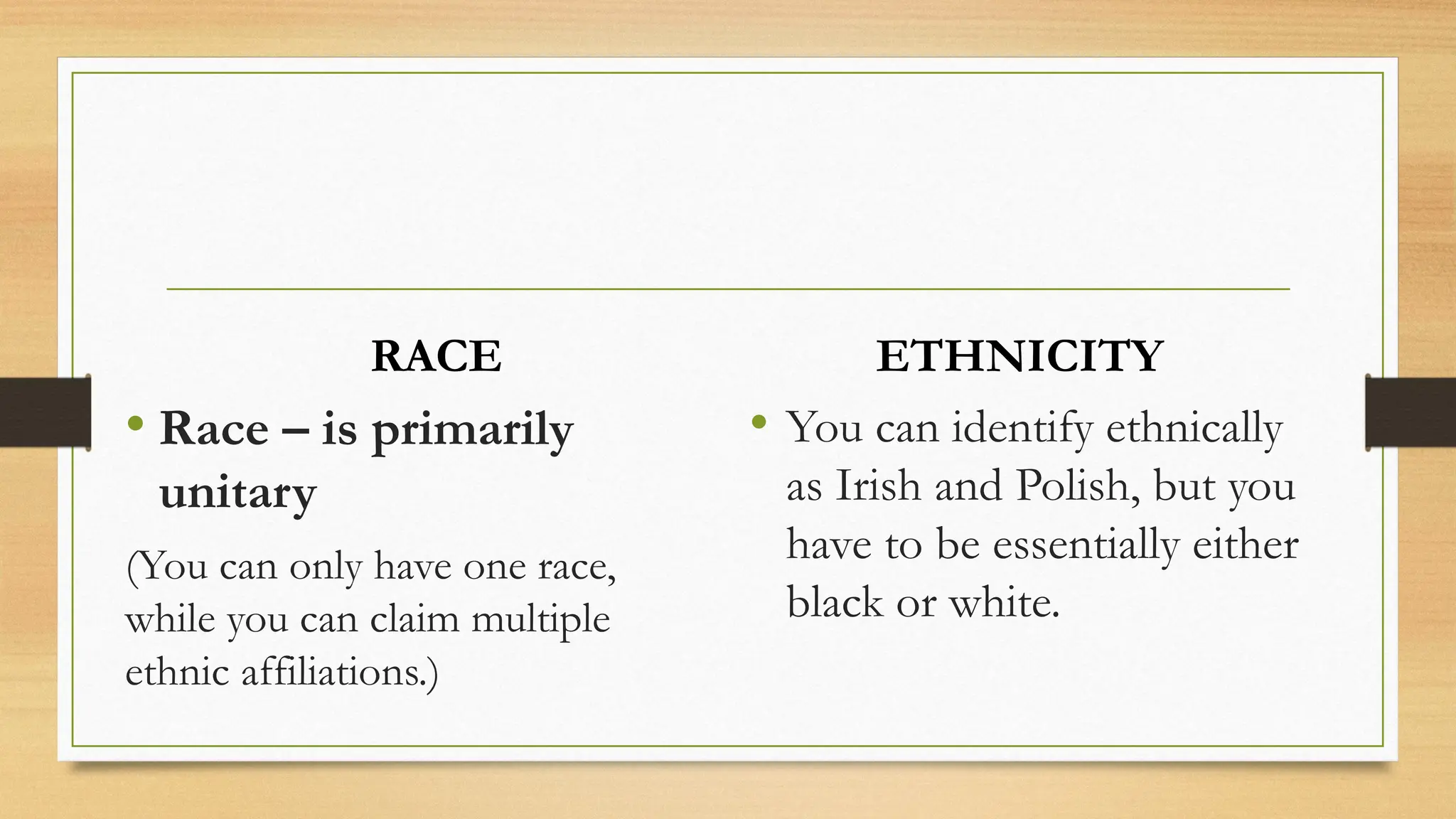
RACE
• Race – is primarily
unitary
(You can only have one race,
while you can claim multiple
ethnic affiliations.)
ETHNICITY
• You can identify ethnically
as Irish and Polish, but you
have to be essentially either
black or white.
4. GENDER ROLES
• This means that communication between
members of different cultures is affected by
how different societies view the roles of men
and women.
5. INDIVIDUAL IDENTITY
• This means that how a person communicates with
others from other cultures depends on his own
unique personality traits and how he esteem himself.
6. SOCIAL CLASS
• The social identity factor refers to the level of
society that person was born into or references
when determining who she wants to be and how she
will act accordingly.
7. AGE IDENTITY
• The age identity factor refers to how members of
different age groups interact with one another.
This might be thought of in terms of the
“generation gap”.
8. The Roles Identity
• The roles identity factor refers to the different roles a
person plays in his or her life including their roles as a
husband or wife, father, mother or child, employer or
employee, and so forth.
-to be continued…

COMMUNICATION AND GLOBALIZATION in Purposive

  • 1.
  • 2.
    LEARNING OBJECTIVES: At theand of the lesson, the students should be able to: • Explain how cultural and global issues affect communication • Appreciate the impact of communication on society and the world.
  • 3.
    • In orderto develop skills as communicators, we must gain practical knowledge of the factors that make communication across cultures succeed or fail.
  • 4.
  • 5.
    1. CULTURAL IDENTITY 2.RACIAL IDENTITY 3. ETHNIC IDENTITY 4. GENDER ROLES 5. INDIVIDUAL PERSONALITIES 6. SOCIAL CLASS 7. AGE IDENTITY
  • 6.
    1. CULTURAL IDENTITY •Values and attitudes can have an impact on communication across cultures because each person’s norms and practices will often be different and may possibly clash with those of co-workers brought up in different parts of the world.
  • 7.
    2. RACIAL IDENTITY •Racial identity refers to how one’s membership to a particular race affects how one interacts with co-workers of different races.
  • 8.
    3. ETHNIC IDENTITY •Ethnic identity highlights the role ethnicity plays in how two co-workers from different cultures interact with one another.
  • 9.
    RACE • Race –is primarily unitary (You can only have one race, while you can claim multiple ethnic affiliations.) ETHNICITY • You can identify ethnically as Irish and Polish, but you have to be essentially either black or white.
  • 10.
    4. GENDER ROLES •This means that communication between members of different cultures is affected by how different societies view the roles of men and women.
  • 11.
    5. INDIVIDUAL IDENTITY •This means that how a person communicates with others from other cultures depends on his own unique personality traits and how he esteem himself.
  • 12.
    6. SOCIAL CLASS •The social identity factor refers to the level of society that person was born into or references when determining who she wants to be and how she will act accordingly.
  • 13.
    7. AGE IDENTITY •The age identity factor refers to how members of different age groups interact with one another. This might be thought of in terms of the “generation gap”.
  • 14.
    8. The RolesIdentity • The roles identity factor refers to the different roles a person plays in his or her life including their roles as a husband or wife, father, mother or child, employer or employee, and so forth.
  • 15.