

COMMUNICABLE
DISEASE
Presented by: Professor, Pallavi Pathania
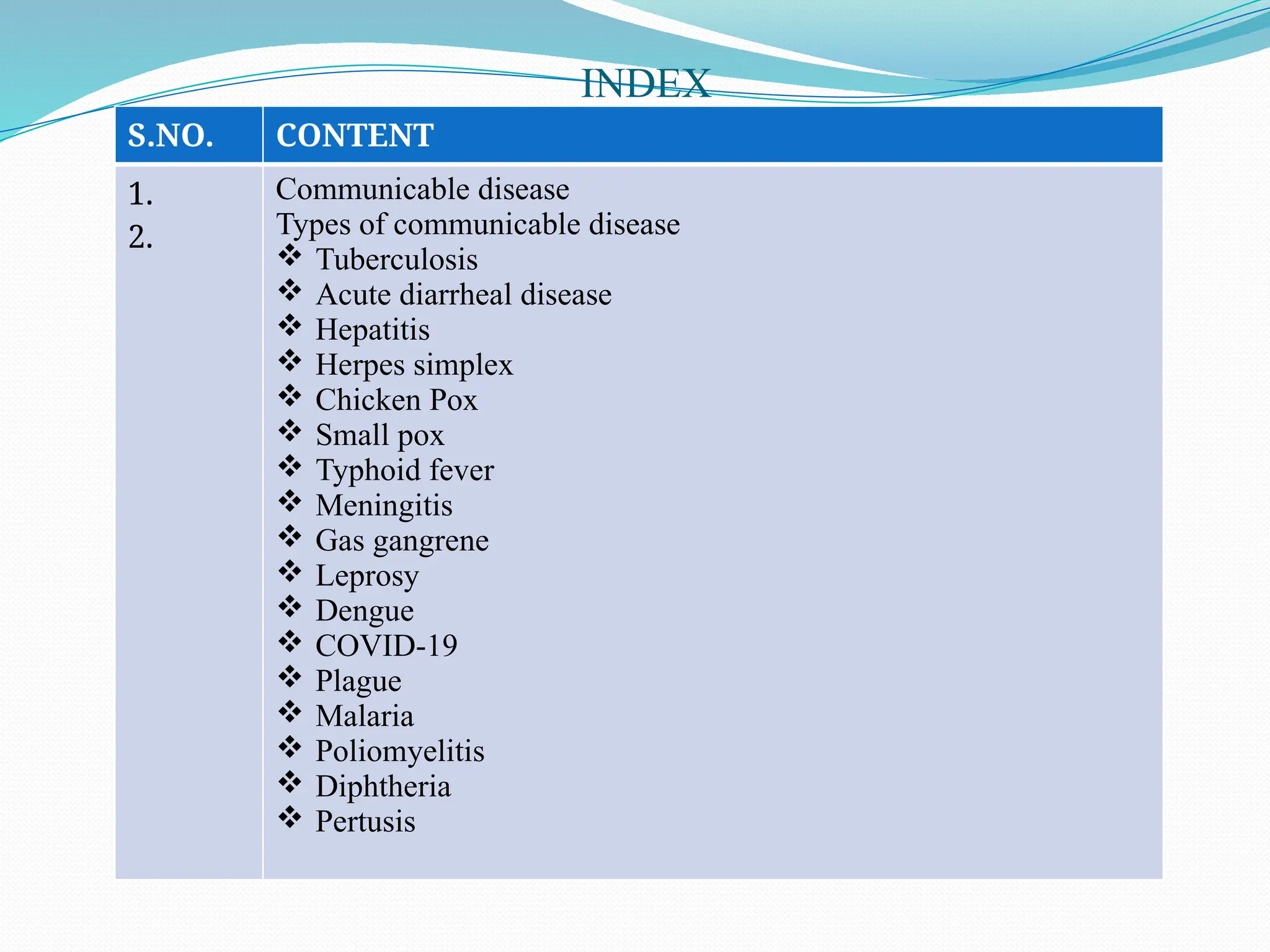
INDEX
S.NO. CONTENT
1.
2.
Communicable disease
Types of communicable disease
 Tuberculosis
 Acute diarrheal disease
 Hepatitis
 Herpes simplex
 Chicken Pox
 Small pox
 Typhoid fever
 Meningitis
 Gas gangrene
 Leprosy
 Dengue
 COVID-19
 Plague
 Malaria
 Poliomyelitis
 Diphtheria
 Pertusis
Cont…
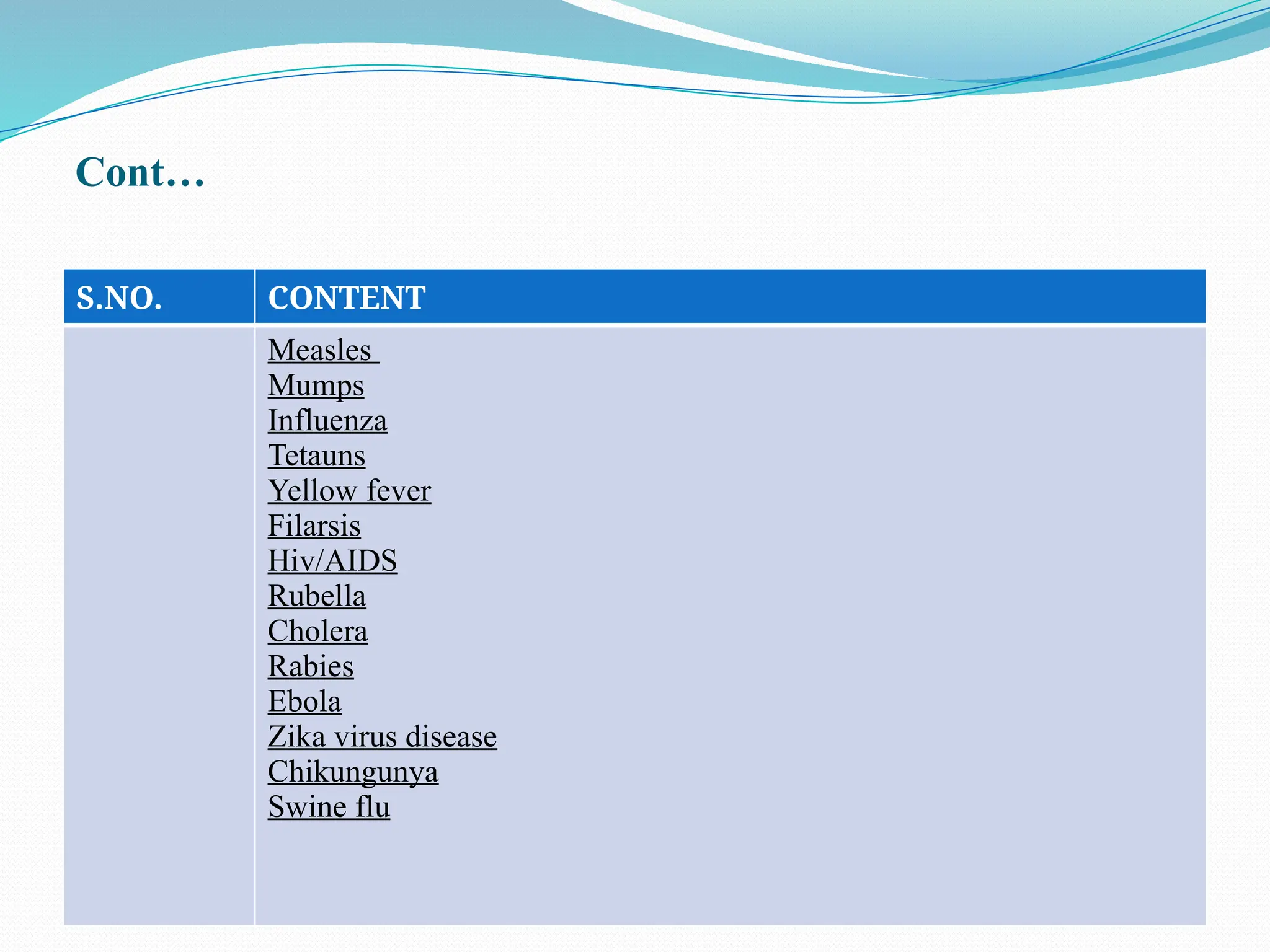
S.NO. CONTENT
Measles
Mumps
Influenza
Tetauns
Yellow fever
Filarsis
Hiv/AIDS
Rubella
Cholera
Rabies
Ebola
Zika virus disease
Chikungunya
Swine flu
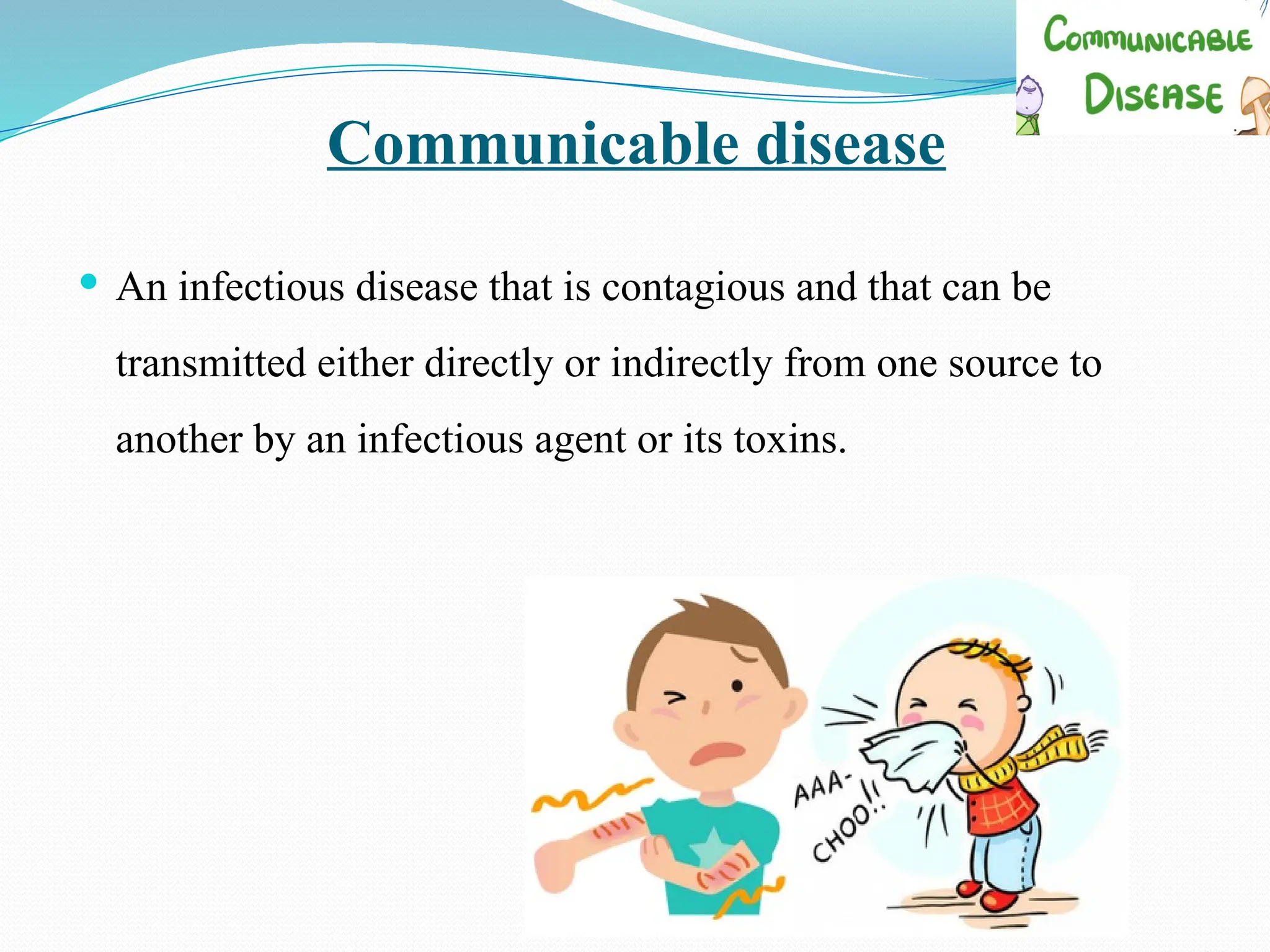
Communicable disease
 An infectious disease that is contagious and that can be
transmitted either directly or indirectly from one source to
another by an infectious agent or its toxins.
OR
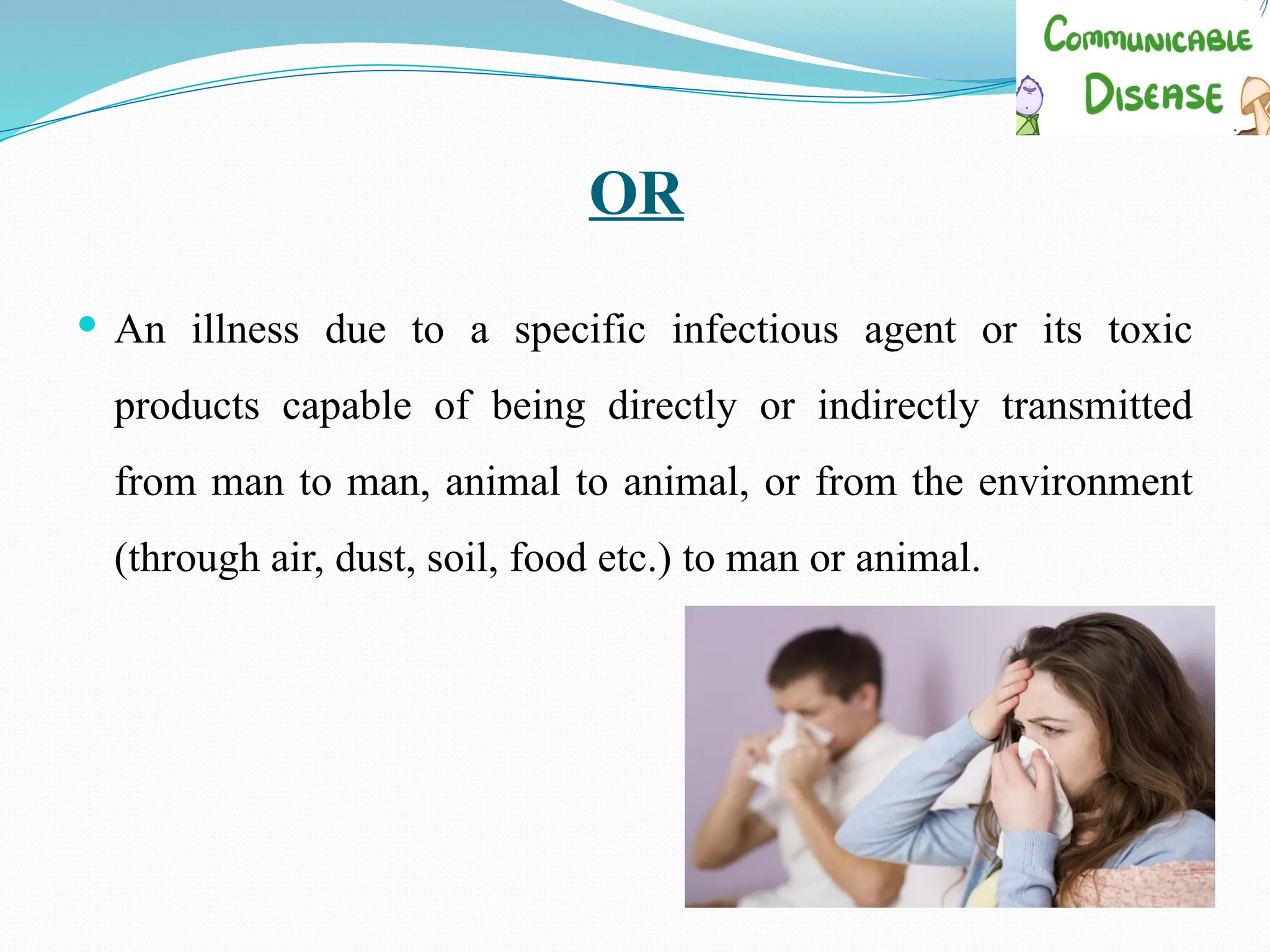
 An illness due to a specific infectious agent or its toxic
products capable of being directly or indirectly transmitted
from man to man, animal to animal, or from the environment
(through air, dust, soil, food etc.) to man or animal.
Cont…
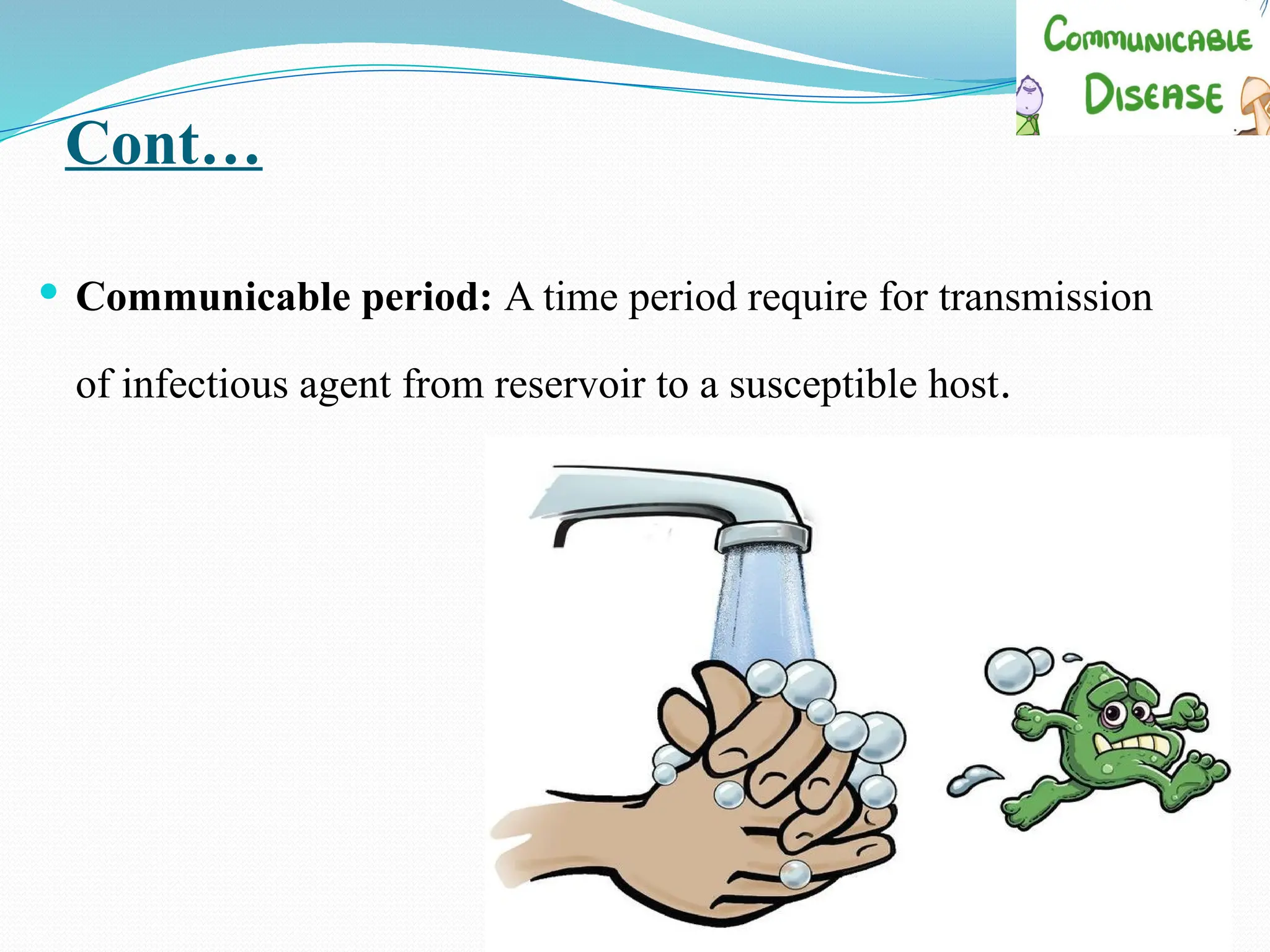
 Communicable period: A time period require for transmission
of infectious agent from reservoir to a susceptible host.
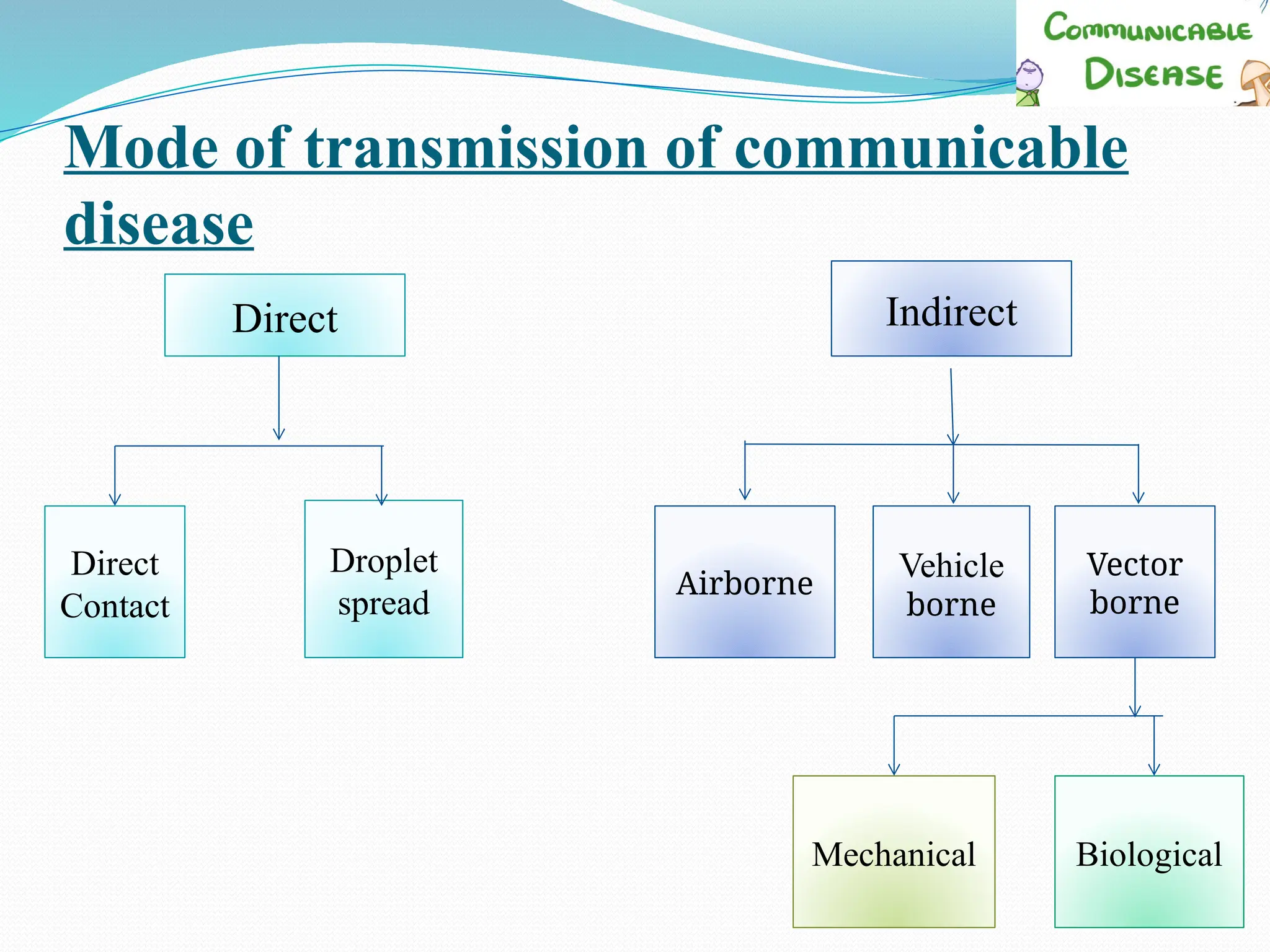
Mode of transmission of communicable
disease
Direct Indirect
Droplet
spread
Direct
Contact
Airborne
Vehicle
borne
Vector
borne
Biological
Mechanical
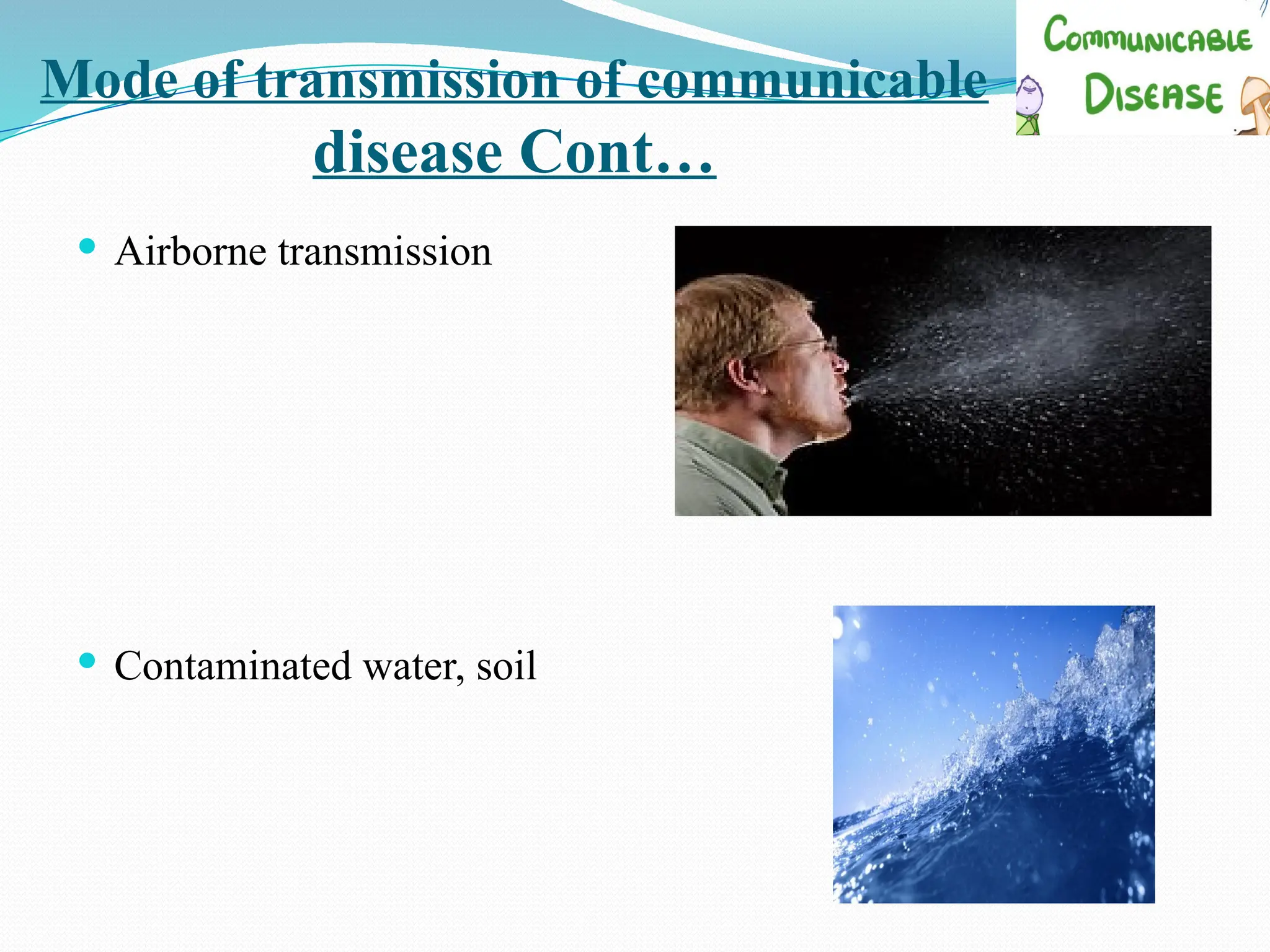
Mode of transmission of communicable
disease Cont…
 Airborne transmission
 Contaminated water, soil
CONTD….
 Contact and faeces
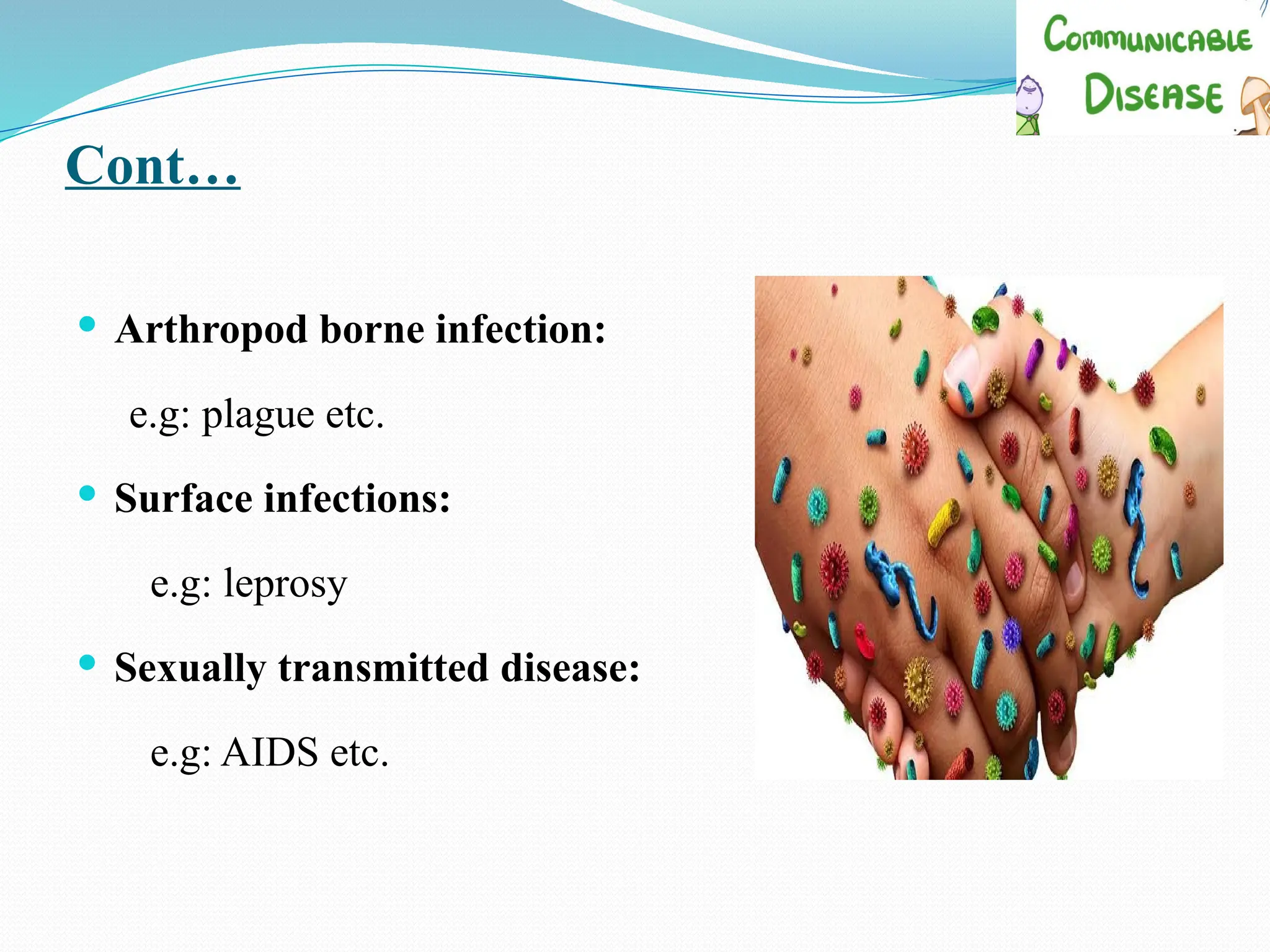
 Pathogens in blood- stream and tissues
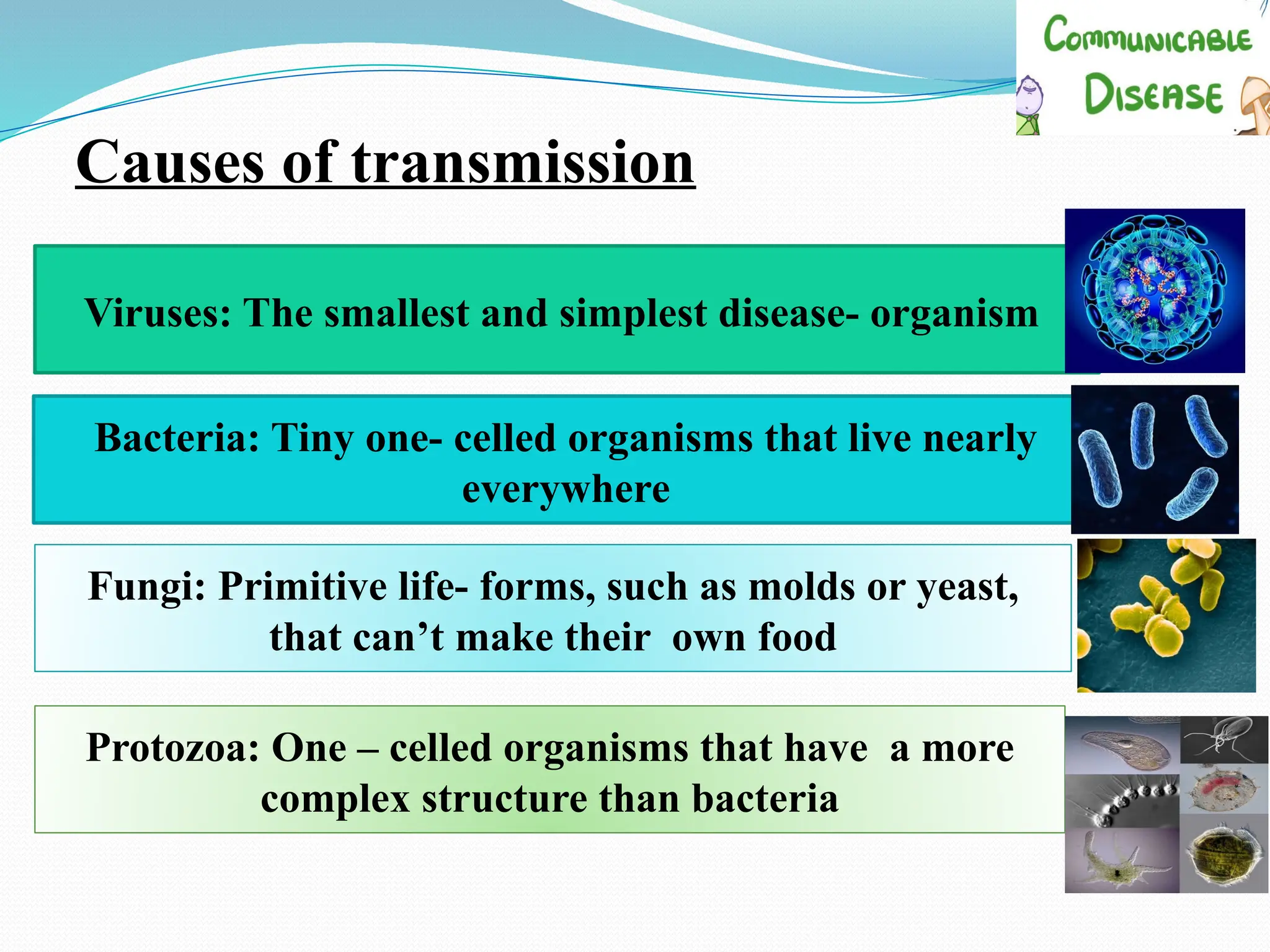
Types of communicable disease
Depending upon source:
 Respiratory infections:
e.g: tuberculosis etc.
 Intestinal infections:
e.g: hepatitis etc.
Cont…
 Arthropod borne infection:
e.g: plague etc.
 Surface infections:
e.g: leprosy
 Sexually transmitted disease:
e.g: AIDS etc.
Causes of transmission
Viruses: The smallest and simplest disease- organism
Bacteria: Tiny one- celled organisms that live nearly
everywhere
Fungi: Primitive life- forms, such as molds or yeast,
that can’t make their own food
Protozoa: One – celled organisms that have a more
complex structure than bacteria
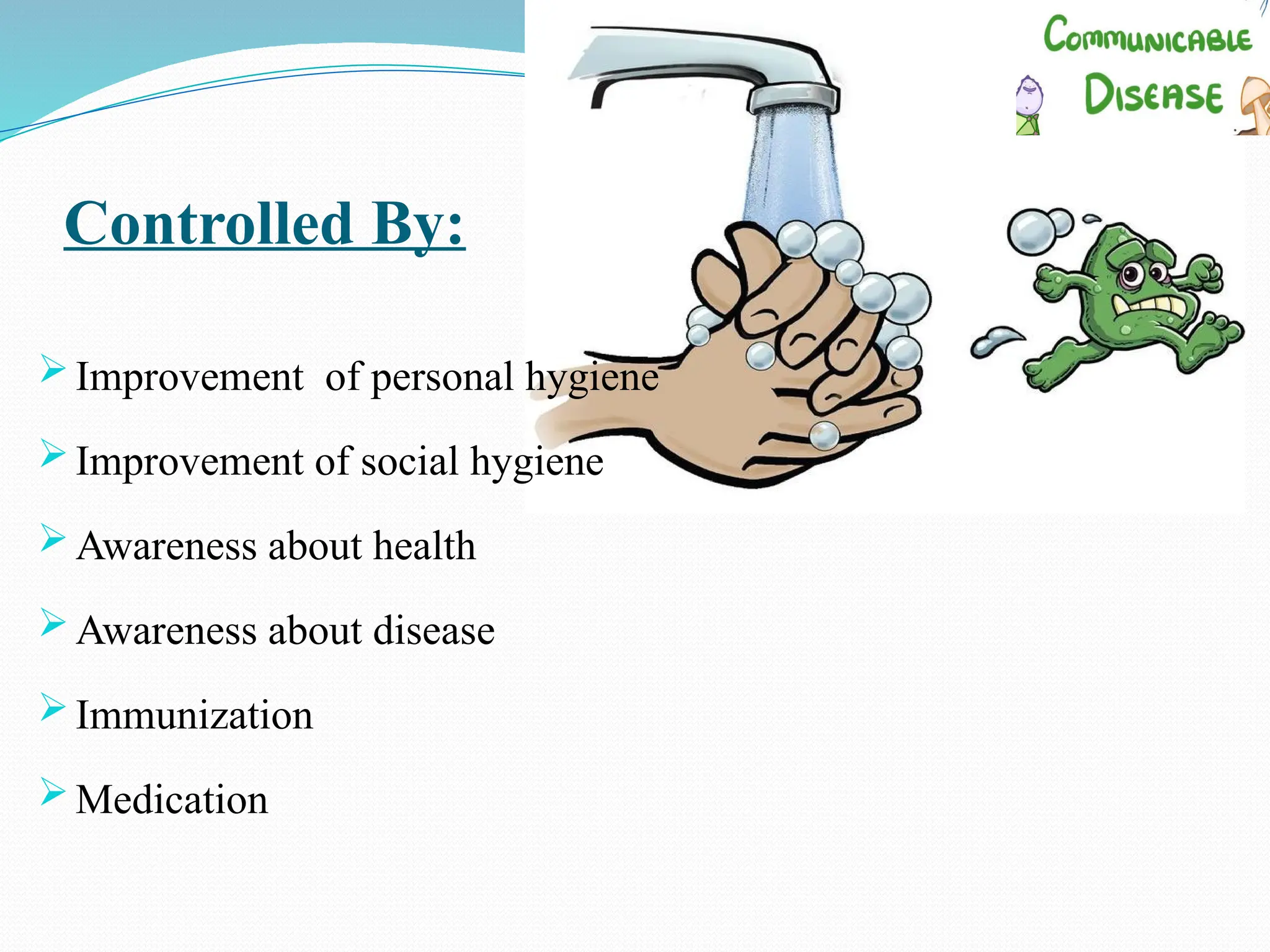
Controlled By:
 Improvement of personal hygiene
 Improvement of social hygiene
 Awareness about health
 Awareness about disease
 Immunization
 Medication
 According to recent information, the most
prevalent communicable diseases in India
include tuberculosis (TB), malaria, HIV/AIDS,
typhoid, influenza, hepatitis, measles, and
COVID-19, with a significant burden of these
diseases concentrated in specific regions and
high-risk populations; while the government is
actively working to manage these issues through
vaccination campaigns and disease surveillance
programs.
 Prevalence: While the burden of non-communicable
diseases has increased, communicable diseases still
represent a substantial part of the disease burden in
India.
 Leading communicable diseases: Respiratory infections
(like pneumonia), acute diarrheal diseases, and viral
hepatitis are considered the top communicable diseases
causing deaths in India.
 Underreporting: A significant number of communicable
disease cases likely go unreported, impacting the
accuracy of reported statistics.
 Impact on health system:The continued presence of
communicable diseases places a significant strain on
India's healthcare system.
RESPIRATORY SYSTEM
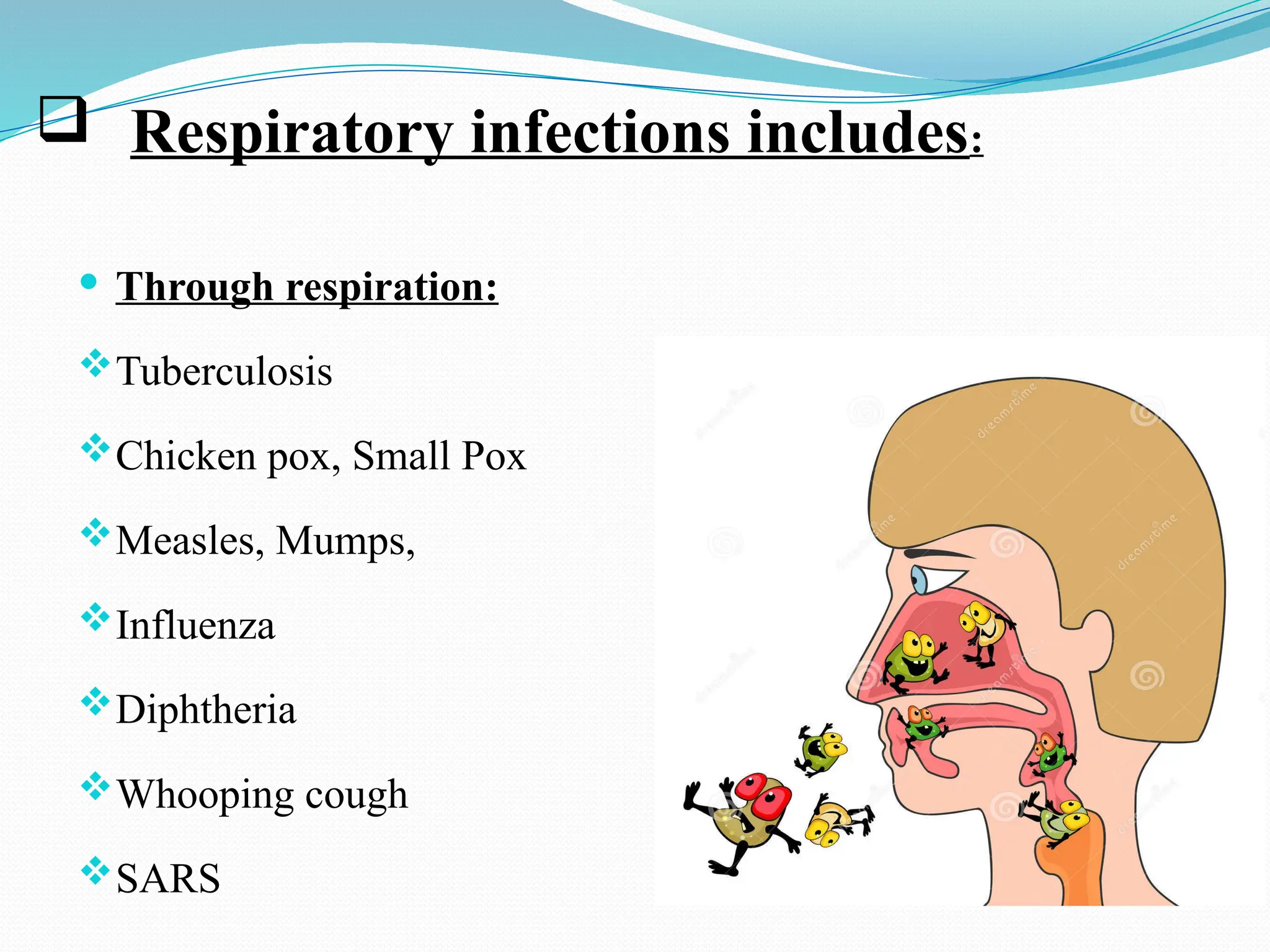
 Respiratory infections includes:
 Through respiration:
Tuberculosis
Chicken pox, Small Pox
Measles, Mumps,
Influenza
Diphtheria
Whooping cough
SARS
• Tuberculosis
Phthisis, Phthisis pulmonalis , Consumption
White plague
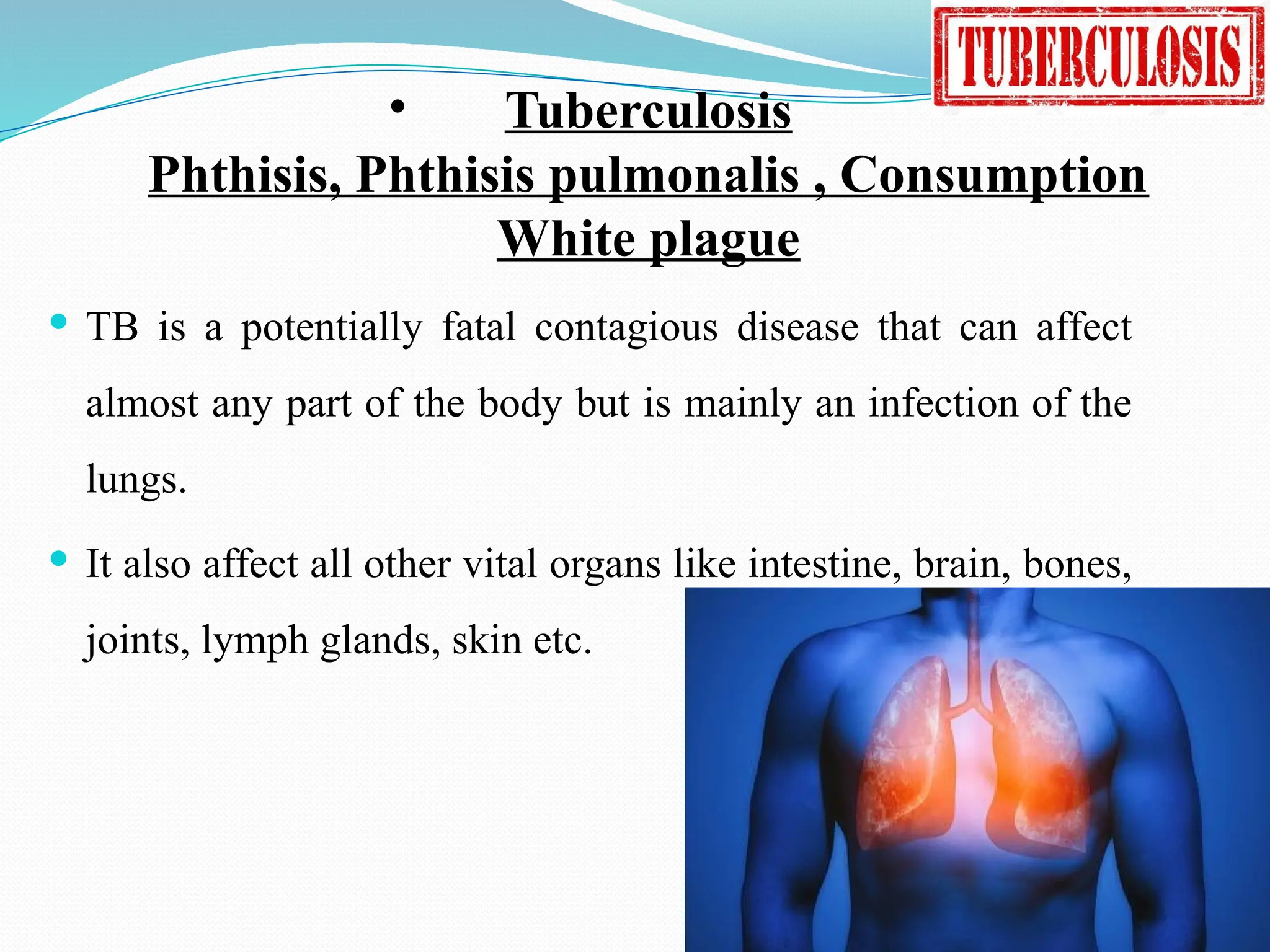
 TB is a potentially fatal contagious disease that can affect
almost any part of the body but is mainly an infection of the
lungs.
 It also affect all other vital organs like intestine, brain, bones,
joints, lymph glands, skin etc.
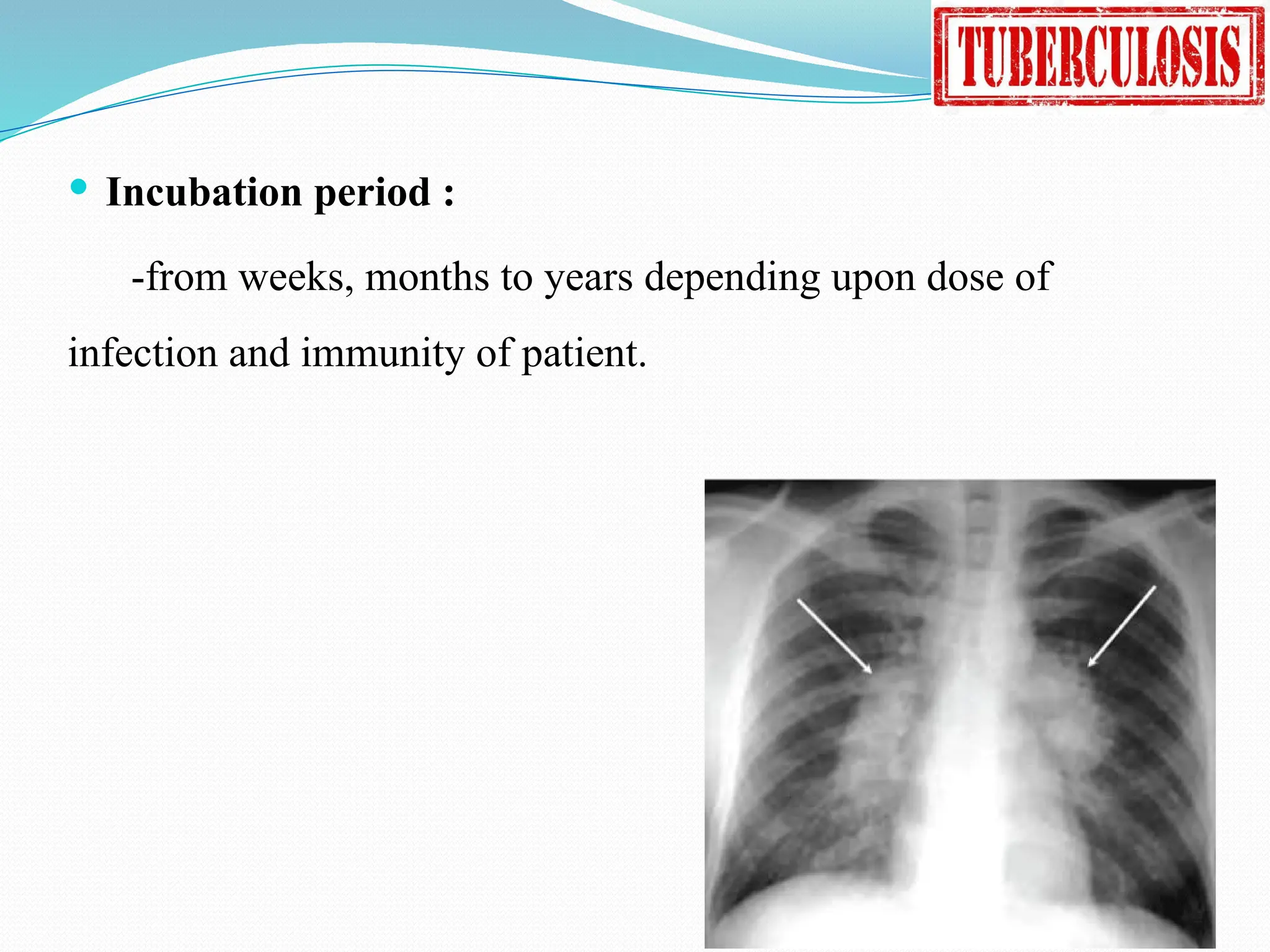
 Incubation period :
-from weeks, months to years depending upon dose of
infection and immunity of patient.
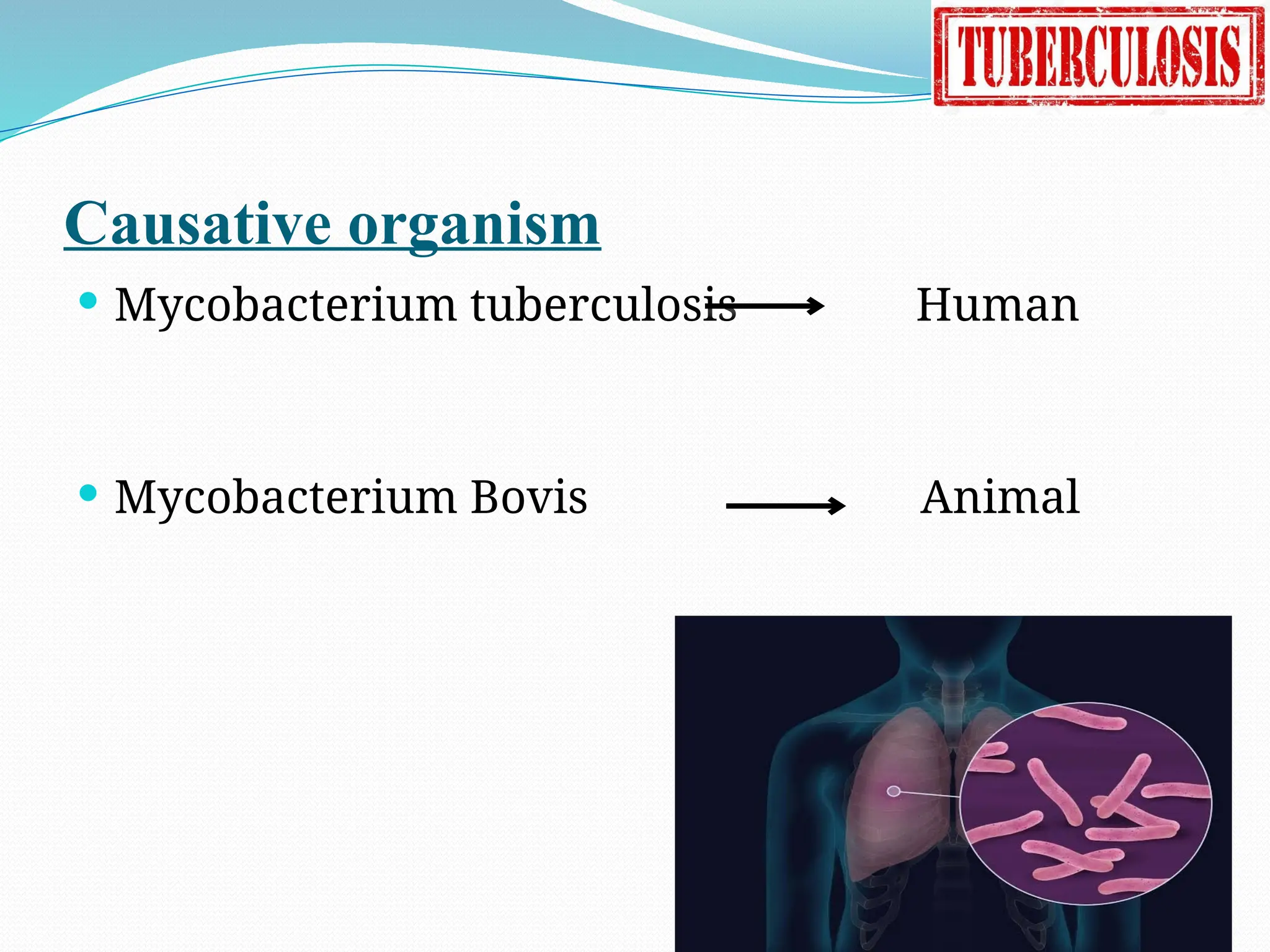
Causative organism
 Mycobacterium tuberculosis Human
 Mycobacterium Bovis Animal
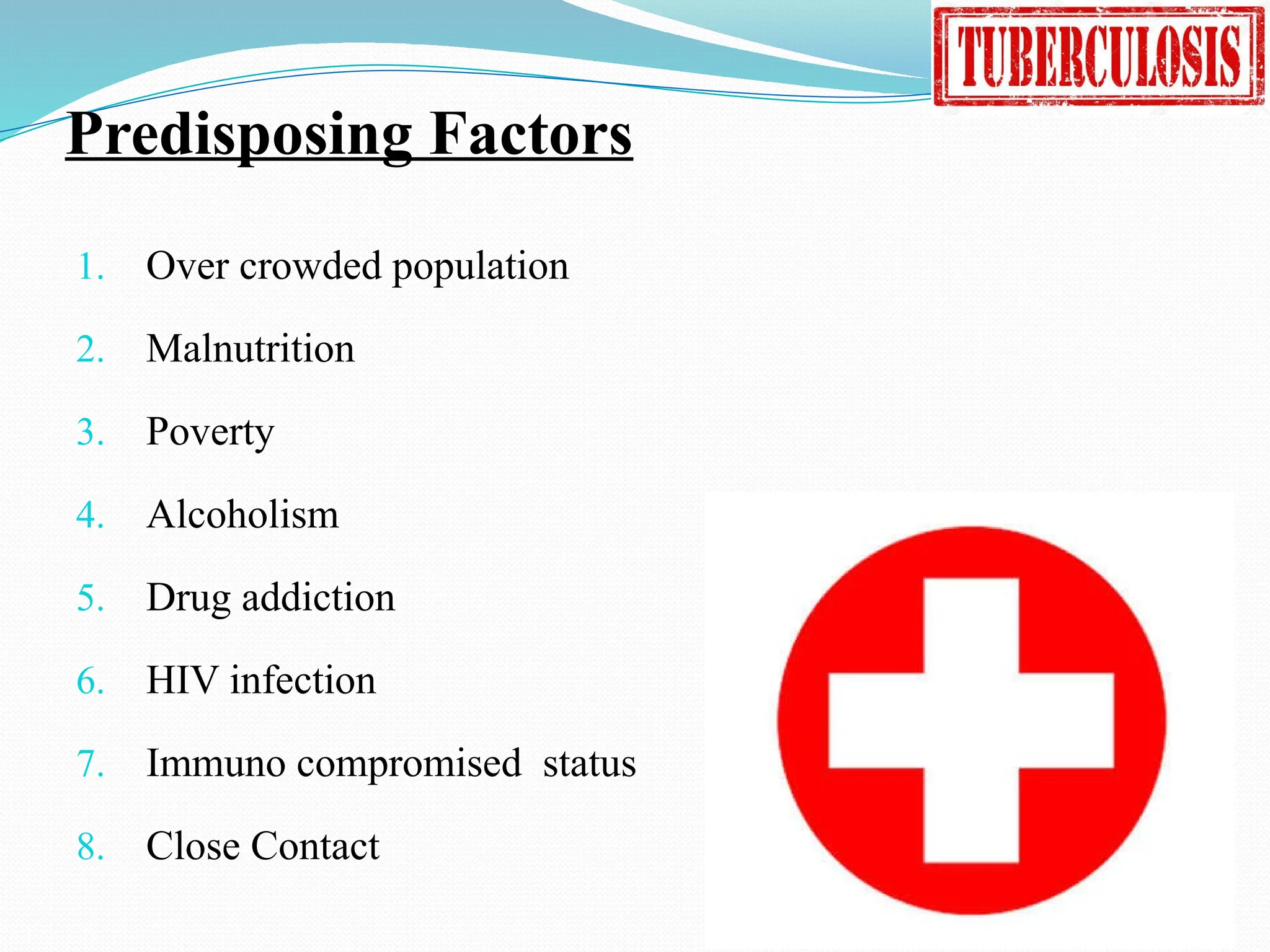
Predisposing Factors
1. Over crowded population
2. Malnutrition
3. Poverty
4. Alcoholism
5. Drug addiction
6. HIV infection
7. Immuno compromised status
8. Close Contact
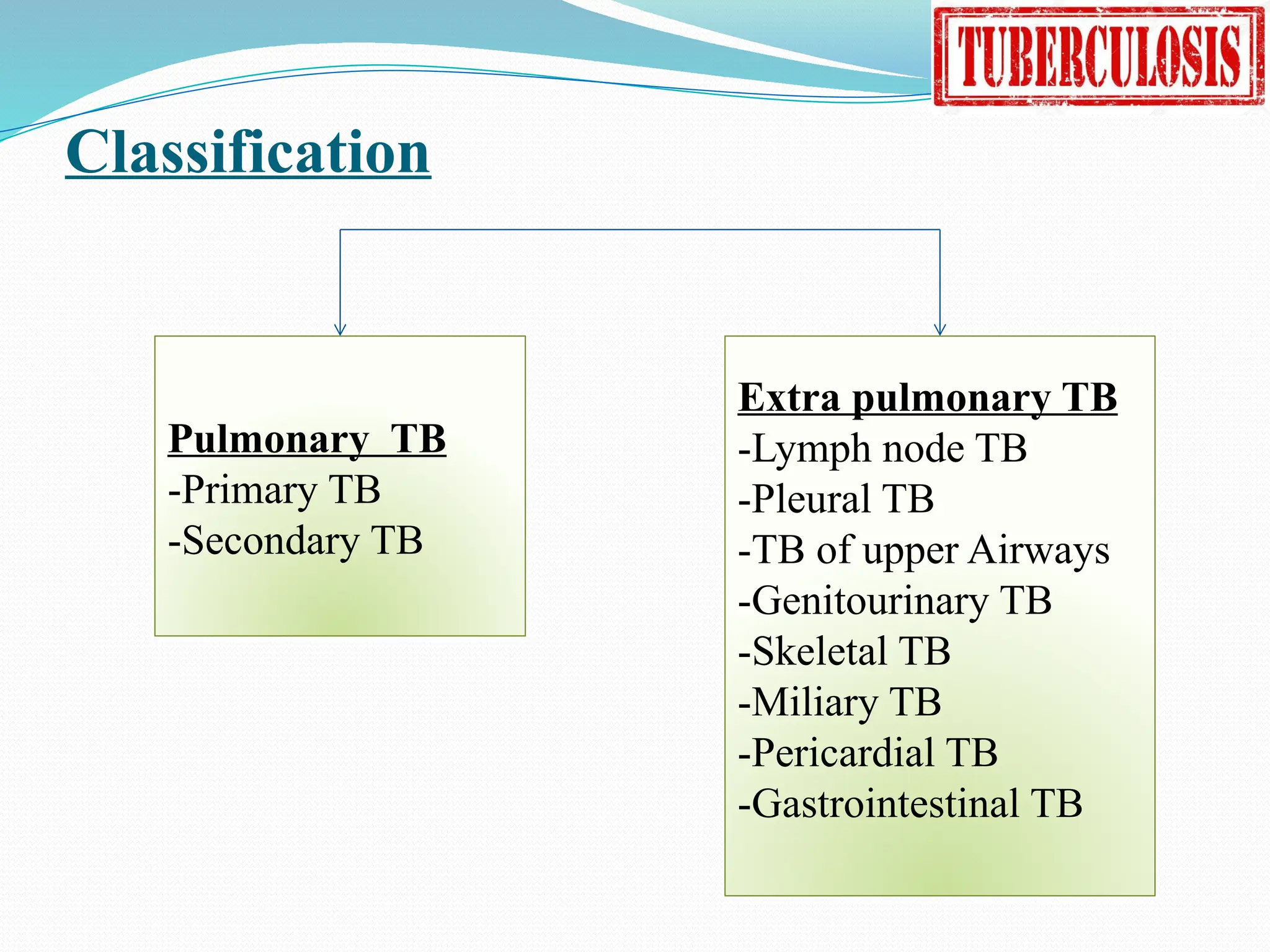
Classification
Pulmonary TB
-Primary TB
-Secondary TB
Extra pulmonary TB
-Lymph node TB
-Pleural TB
-TB of upper Airways
-Genitourinary TB
-Skeletal TB
-Miliary TB
-Pericardial TB
-Gastrointestinal TB
Mode of transmission
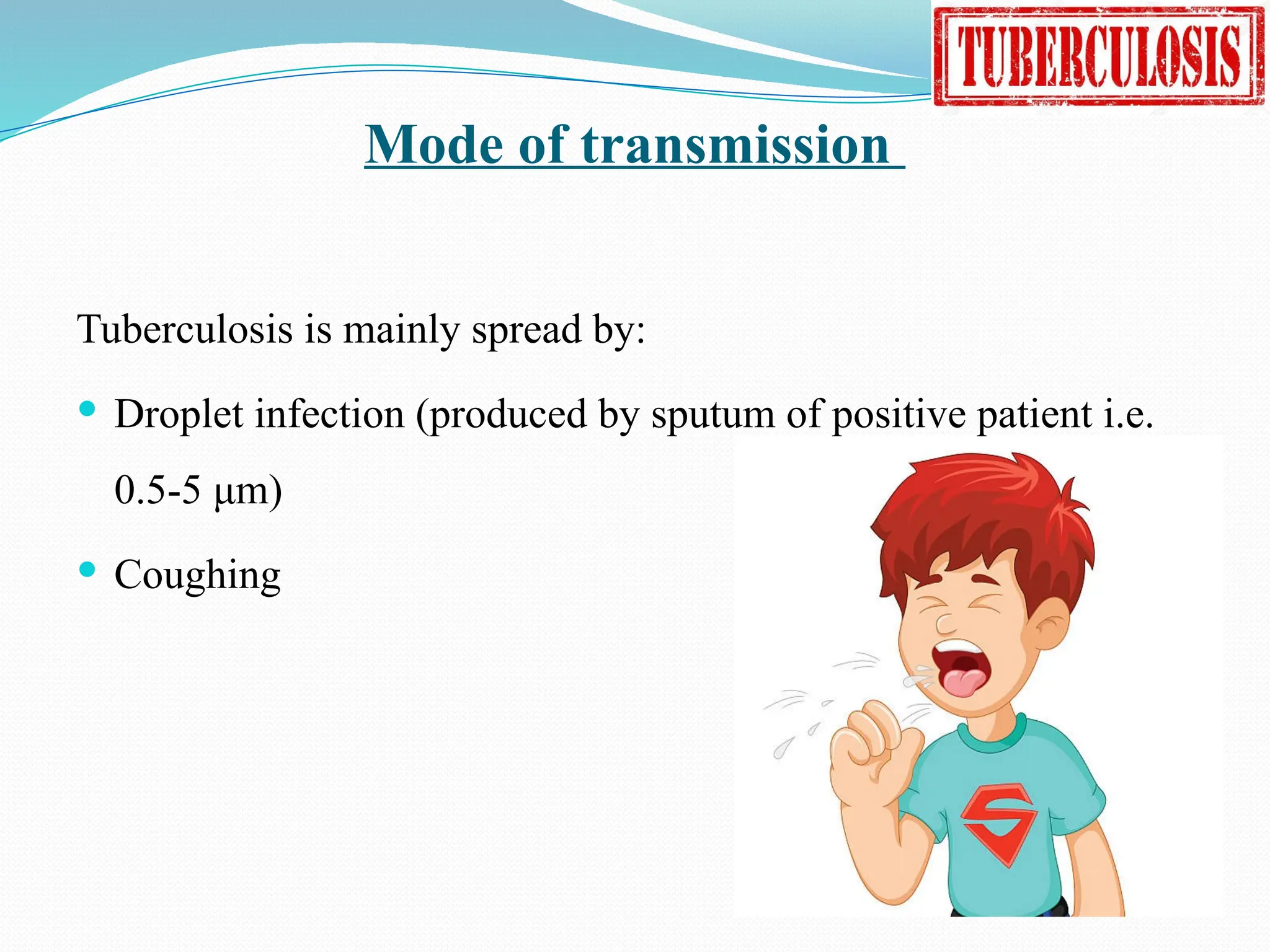
Tuberculosis is mainly spread by:
 Droplet infection (produced by sputum of positive patient i.e.
0.5-5 μm)
 Coughing
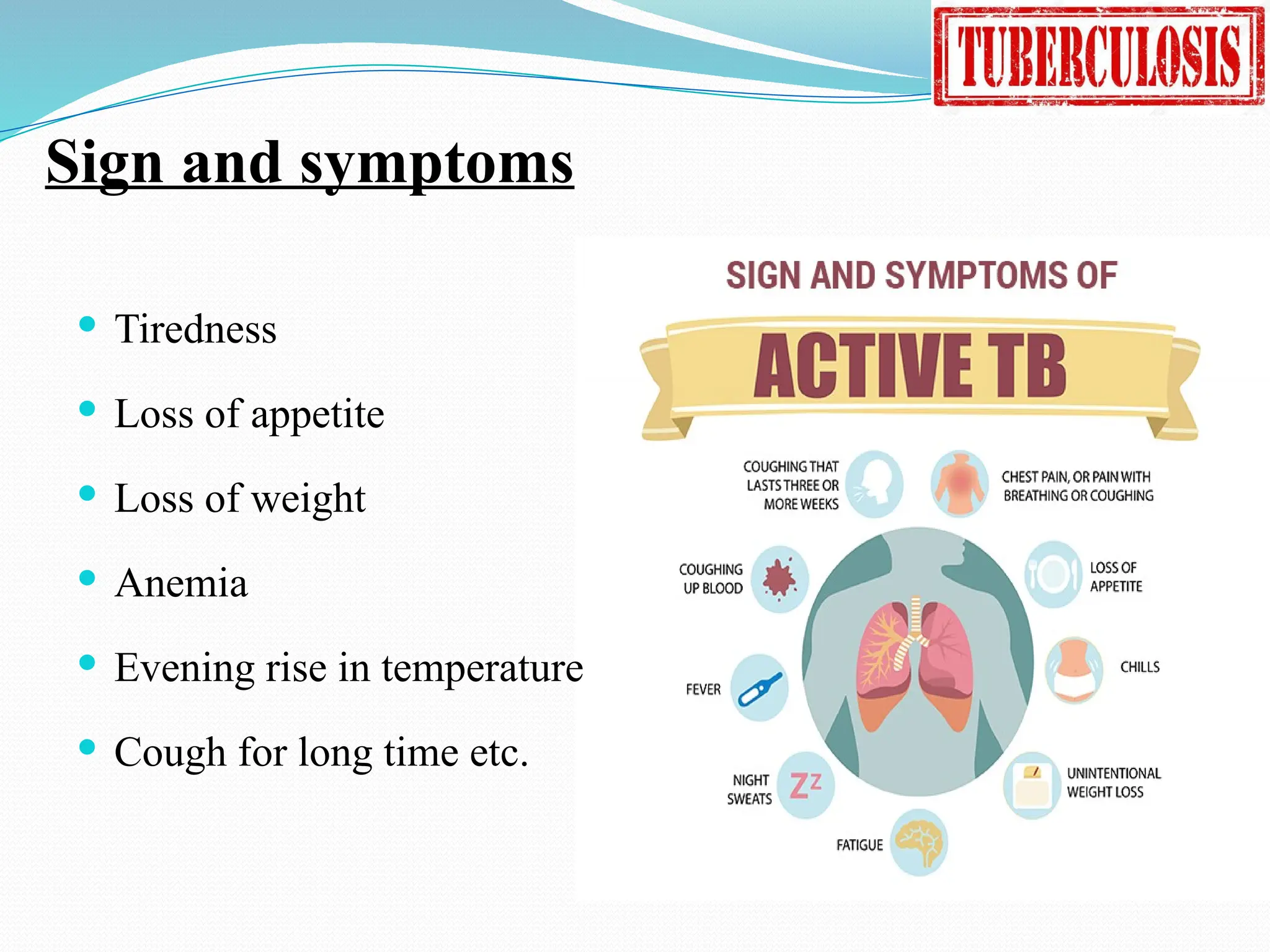
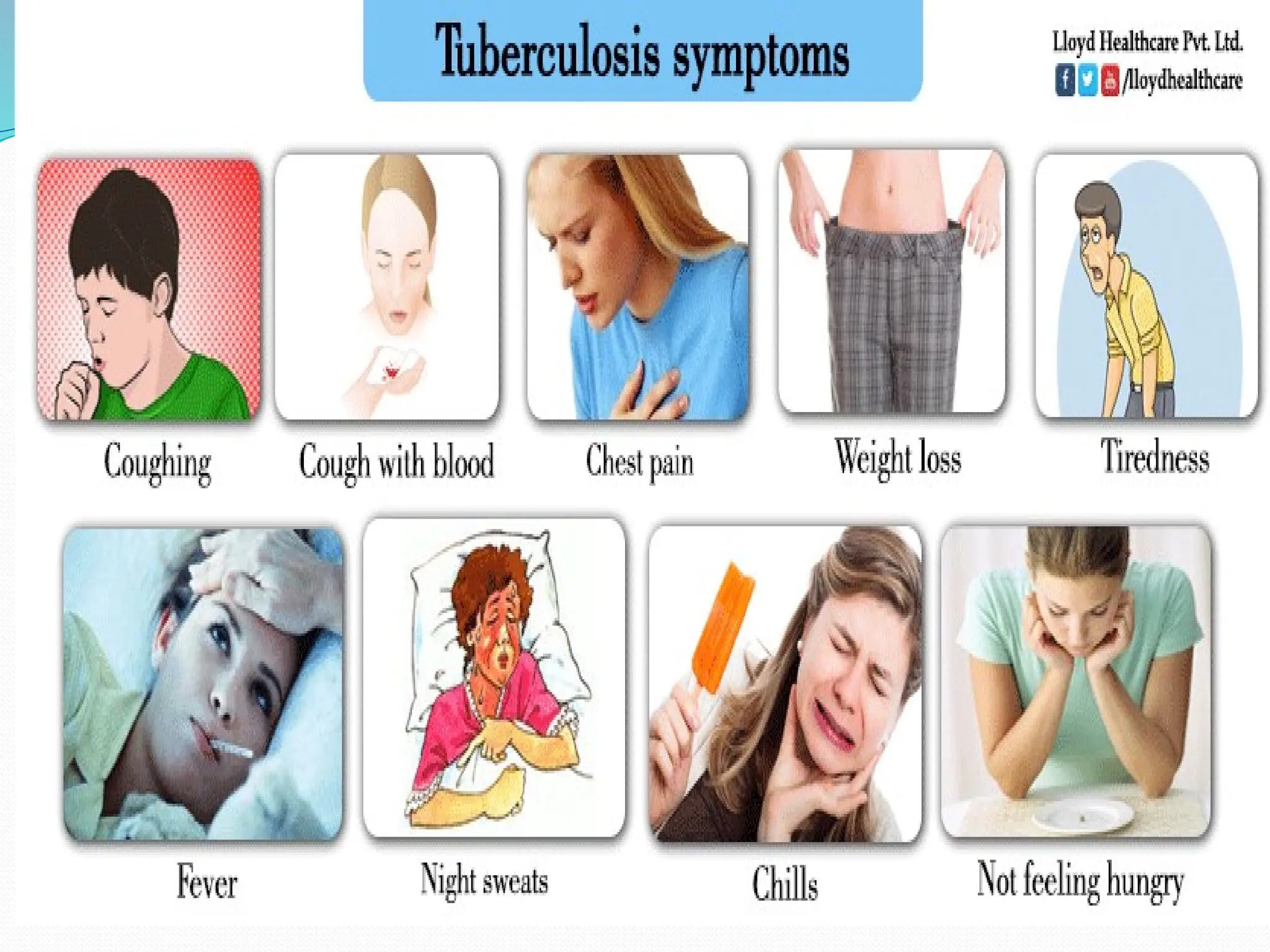
Sign and symptoms
 Tiredness
 Loss of appetite
 Loss of weight
 Anemia
 Evening rise in temperature
 Cough for long time etc.
Cont…
 Sputum examination and culture
 Biopsy of affected tissue
 Chest CT
 Tuberculin Skin Test (PPD)
Contd…
-Interferon gamma release blood
test such as the QFT- Gold test for TB
infection
-Thoracentesis
Treatment
 Antitubercular drugs:
First line:
 Isoniazid- 5mg/Kg
 Rifampin- 10mg/Kg
 Pyrazinamide-15-25mg/Kg
 Ethambutol- 15-25 mg/Kg
 Streptomycin- 15mg/Kg
Cont…
 2nd
Line Drugs:
Cycloserine-15mg/kg
Capreomycin-12-15mg/kg
Paraaminosalicyilate sodium -200-300mg/kg
Ethionamide-15mg/kg
Vitamin b (Pyridoxine)
Cont….
 3rd
Line drugs:
 Linezolid
 Thioacetazone
 Arginine
 Rifabutin
 Clarithromycin
Cont…
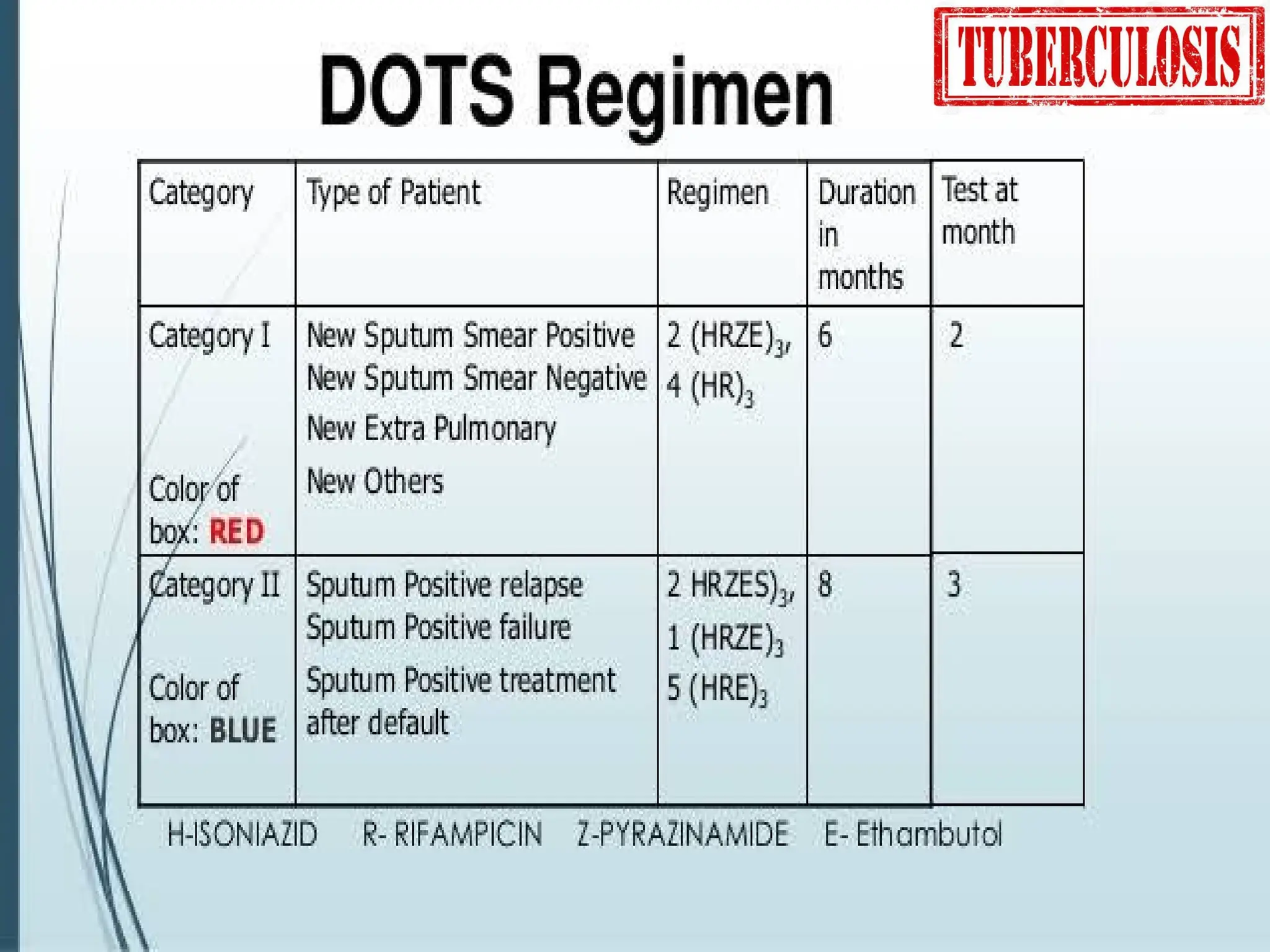
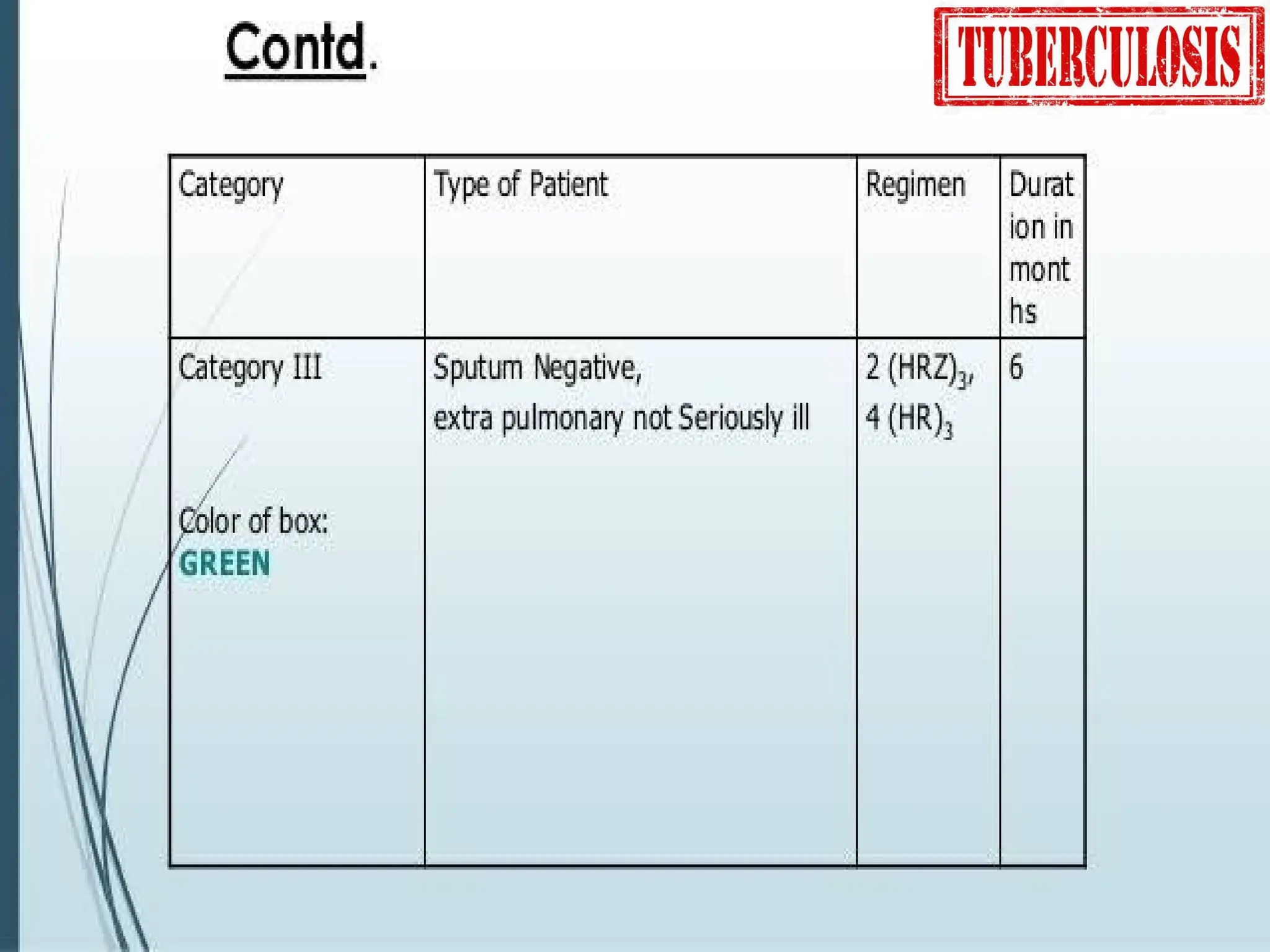
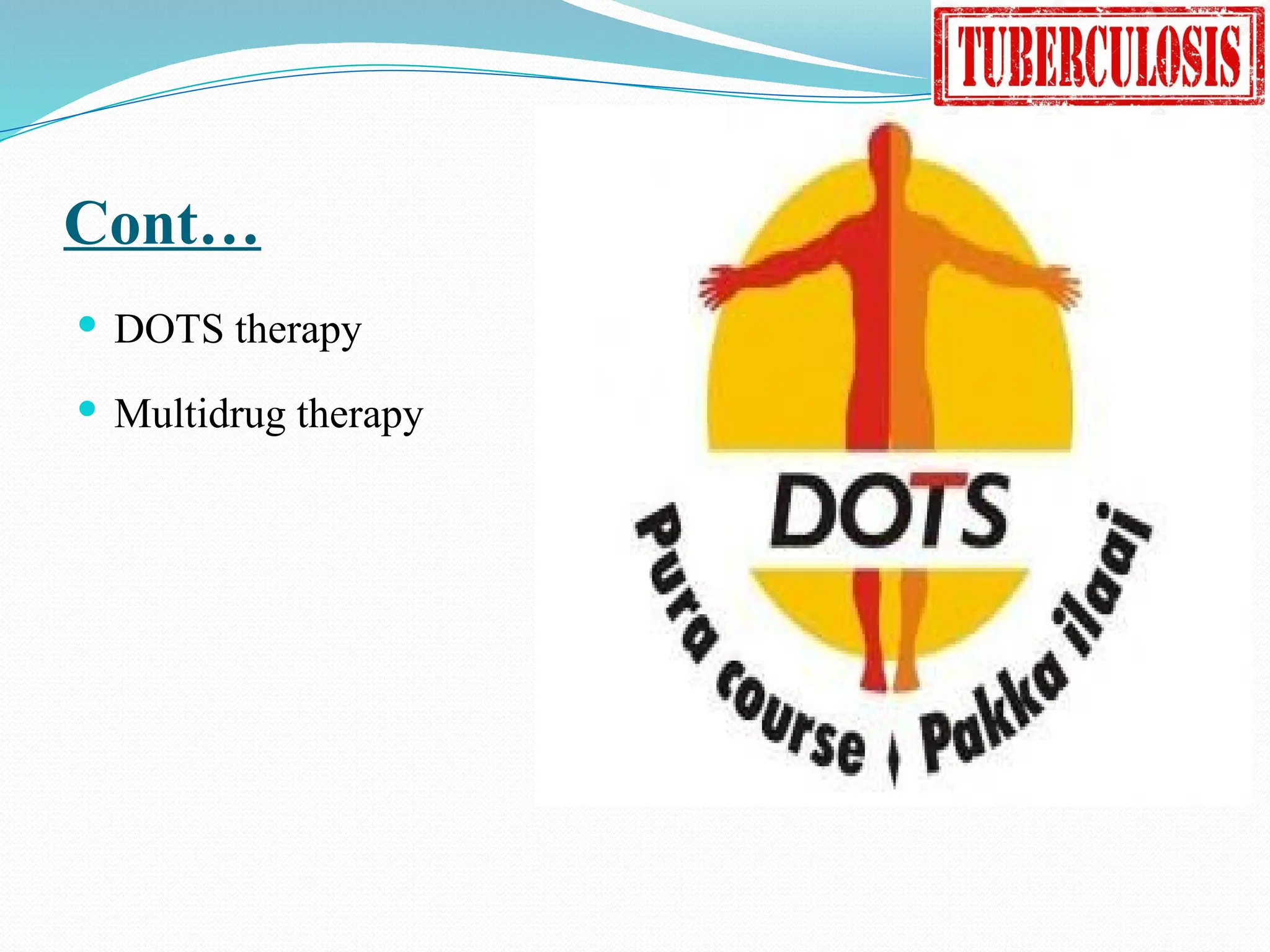
 DOTS therapy
 Multidrug therapy
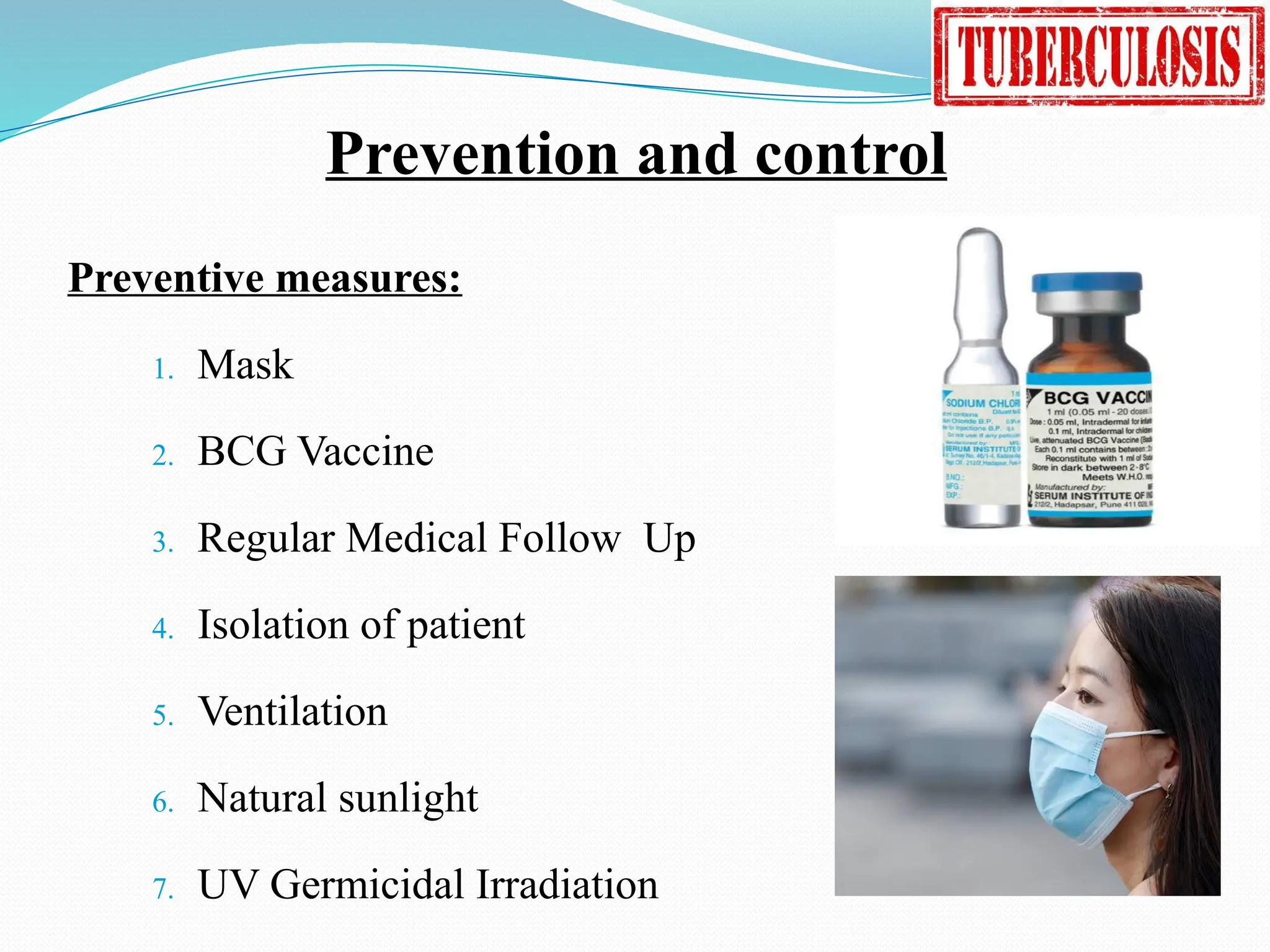
Prevention and control
Preventive measures:
1. Mask
2. BCG Vaccine
3. Regular Medical Follow Up
4. Isolation of patient
5. Ventilation
6. Natural sunlight
7. UV Germicidal Irradiation
Cont…
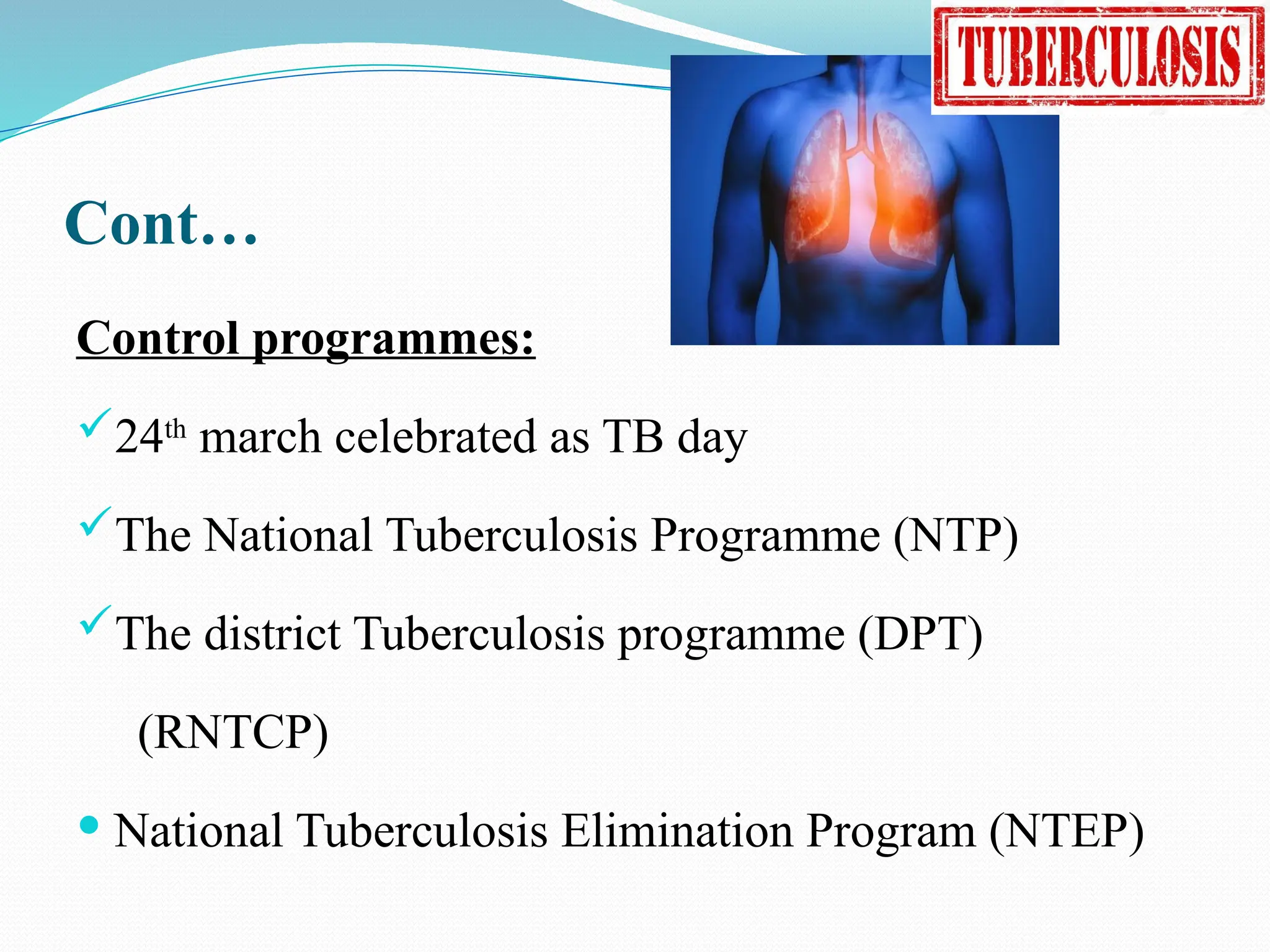
Control programmes:
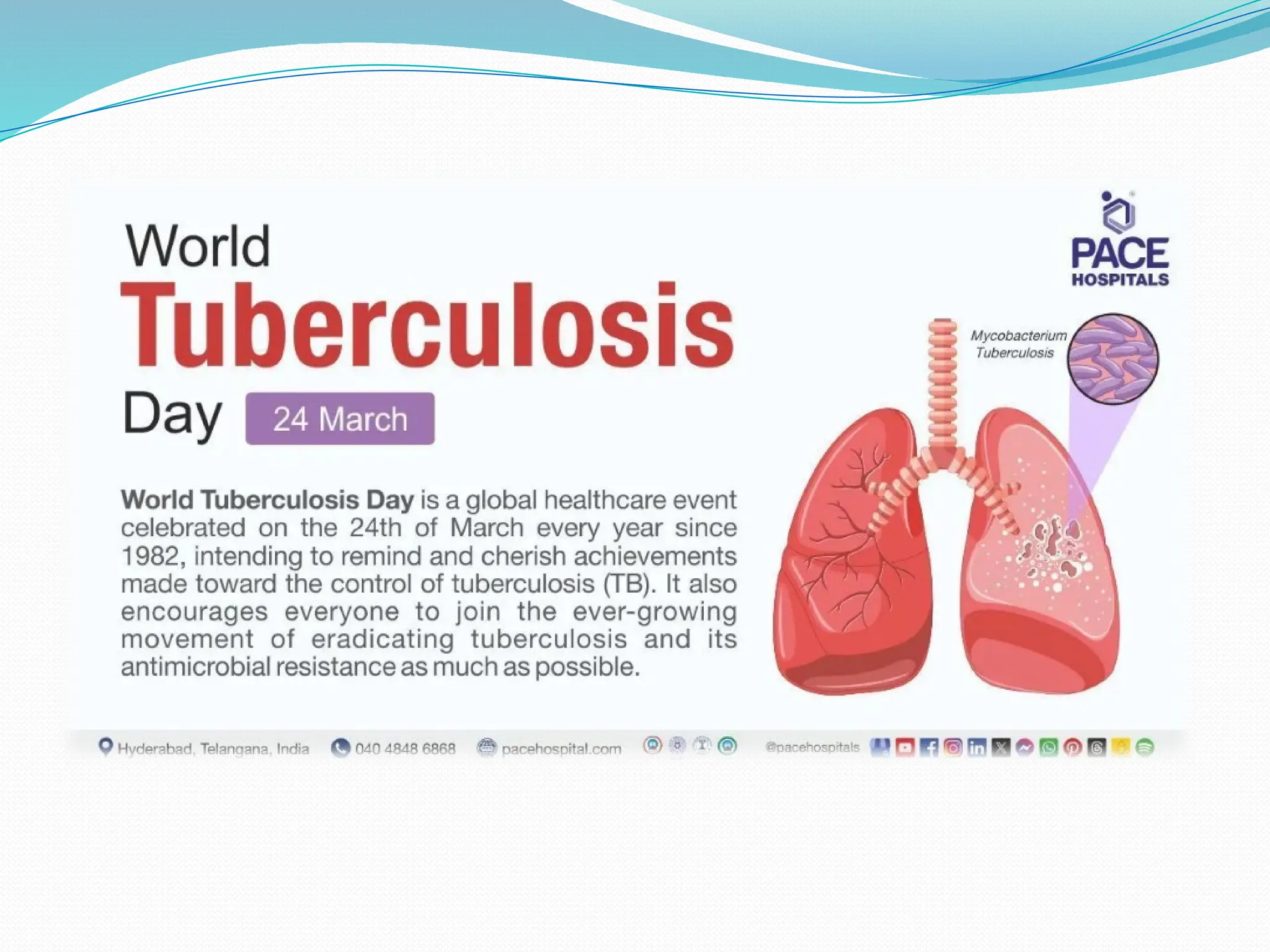
24th
march celebrated as TB day
The National Tuberculosis Programme (NTP)
The district Tuberculosis programme (DPT)
(RNTCP)
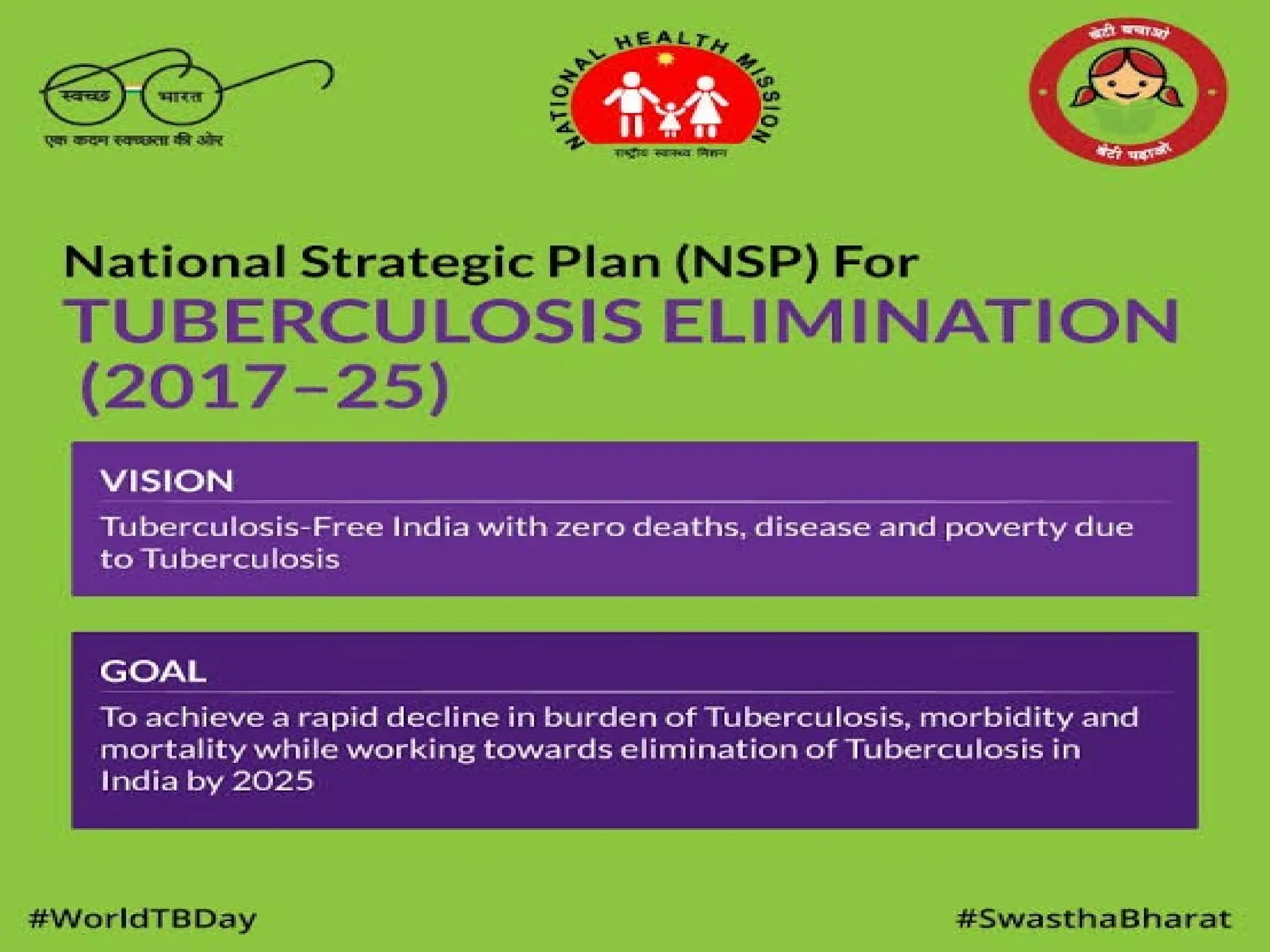
 National Tuberculosis Elimination Program (NTEP)
 The Glory of Life ( film)
The Glory of Life is a
2023 German drama film
about Franz Kafka and
his final romance with
Dora Diamant, which
takes place while he is
suffering from
tuberculosis
The film is based on the
best-selling novel by
Michael Kumpfmüller. It
tells the story of Kafka's
last year, when he met
Dora in 1923 while
convalescing from
tuberculosis on the
Baltic Sea coast. The two
moved in together in
Berlin and then to a
sanatorium in Austria,
where Dora joined him
Acute diarrheal disease
 Acute diarrheal disease is a sudden onset of
diarrhea that lasts less than 14 days. It's
characterized by frequent loose, watery stools.
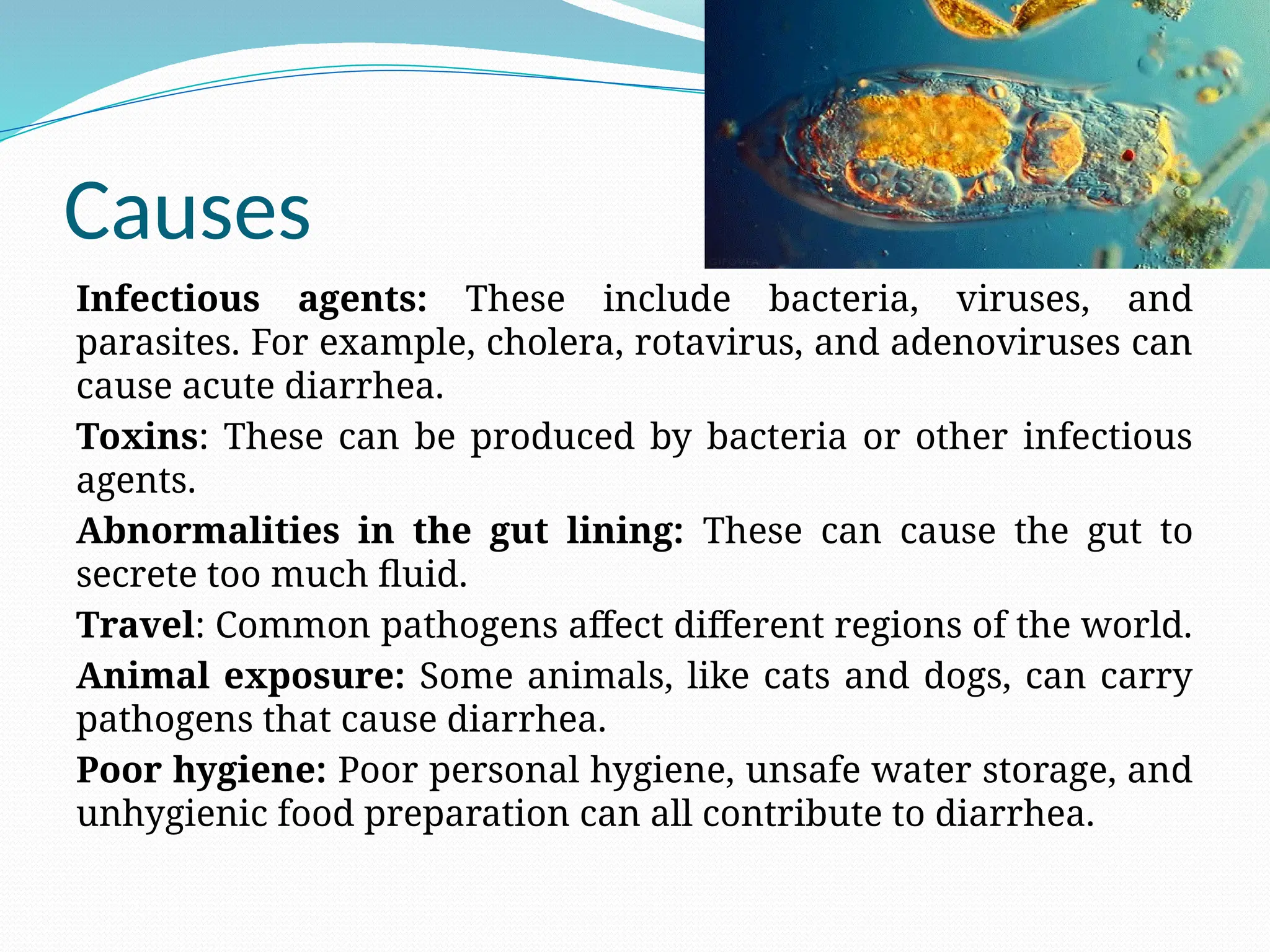
Causes
Infectious agents: These include bacteria, viruses, and
parasites. For example, cholera, rotavirus, and adenoviruses can
cause acute diarrhea.
Toxins: These can be produced by bacteria or other infectious
agents.
Abnormalities in the gut lining: These can cause the gut to
secrete too much fluid.
Travel: Common pathogens affect different regions of the world.
Animal exposure: Some animals, like cats and dogs, can carry
pathogens that cause diarrhea.
Poor hygiene: Poor personal hygiene, unsafe water storage, and
unhygienic food preparation can all contribute to diarrhea.
Pathophysiology
 Bacteria attach to the wall of the small bowel
 enterotoxins are released,
 drawing fluid electrolytes from the mucosa into
the lumen,
 causing profuse watery diarrhea.
Types
Watery diarrhea
 Acute watery diarrhea: Lasts a few hours to a few days, and can be
caused by cholera, rotavirus, or entero virus
 Secretory diarrhea: Large volumes of watery diarrhea, often more
than a liter per day
 Osmotic diarrhea: Caused by excess sugar or small molecule intake,
or poor absorption, such as with lactose intolerance
Bloody diarrhea: Acute bloody diarrhea
 Also known as dysentery, and can be caused by bacteria like Shigella,
Campylobacter, or Salmonella, or parasites like intestinal amoebiasis
Bloody diarrhea: A subtype of diarrhea where all or most stools have
visible blood, which indicates inflammation in the bowel wall
The incubation period for acute diarrheal disease
can vary from a few hours to 10 days, depending
on the cause.
 Bacterial diarrhea: The incubation period is
usually a few hours to 5 days after exposure.
 Viral diarrhea: The incubation period is usually 1
to 3 days after exposure.
 Enteric adenovirus infection: The incubation
period is usually 8 to 10 days after exposure.
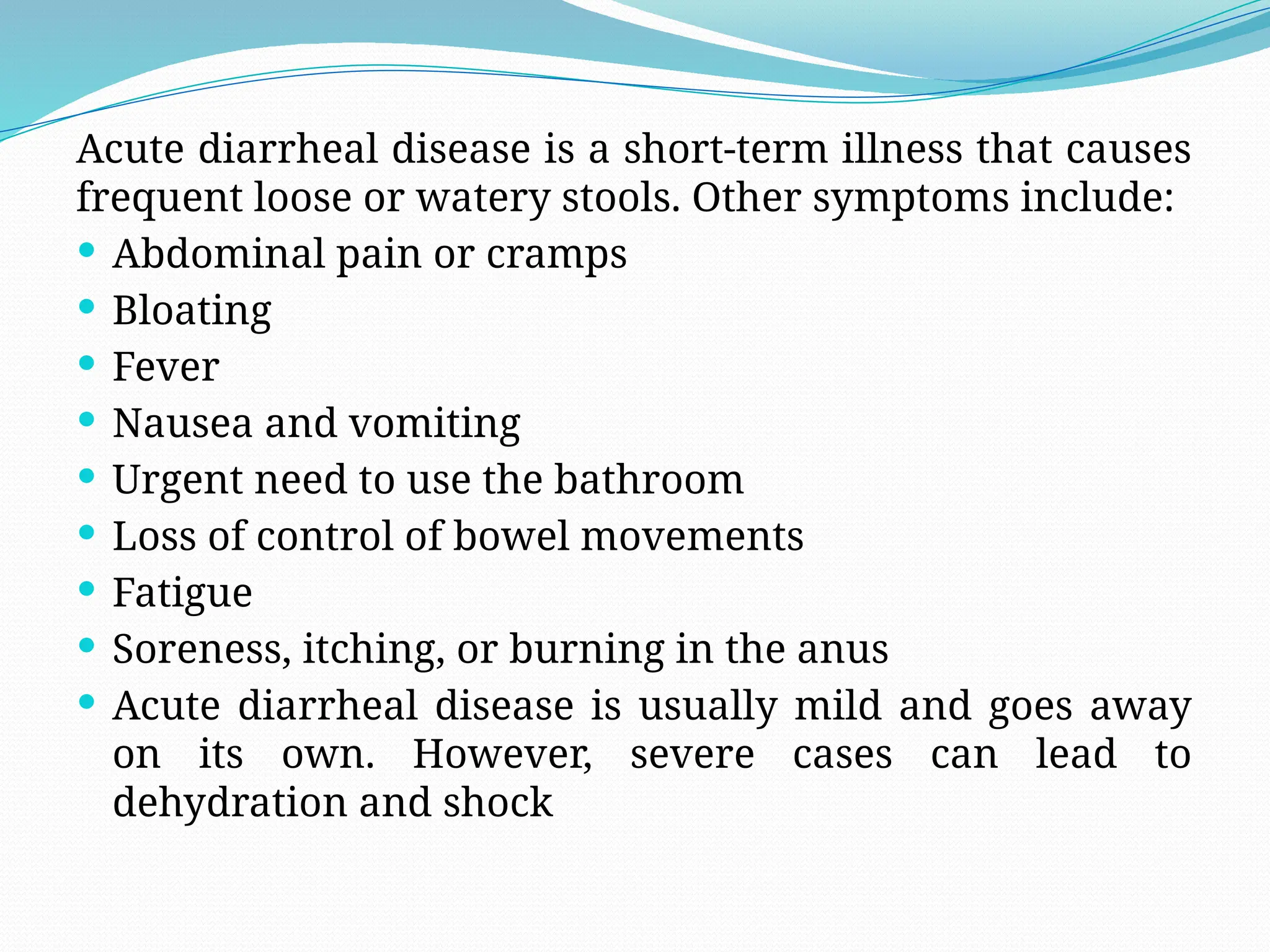
Acute diarrheal disease is a short-term illness that causes
frequent loose or watery stools. Other symptoms include:
 Abdominal pain or cramps
 Bloating
 Fever
 Nausea and vomiting
 Urgent need to use the bathroom
 Loss of control of bowel movements
 Fatigue
 Soreness, itching, or burning in the anus
 Acute diarrheal disease is usually mild and goes away
on its own. However, severe cases can lead to
dehydration and shock
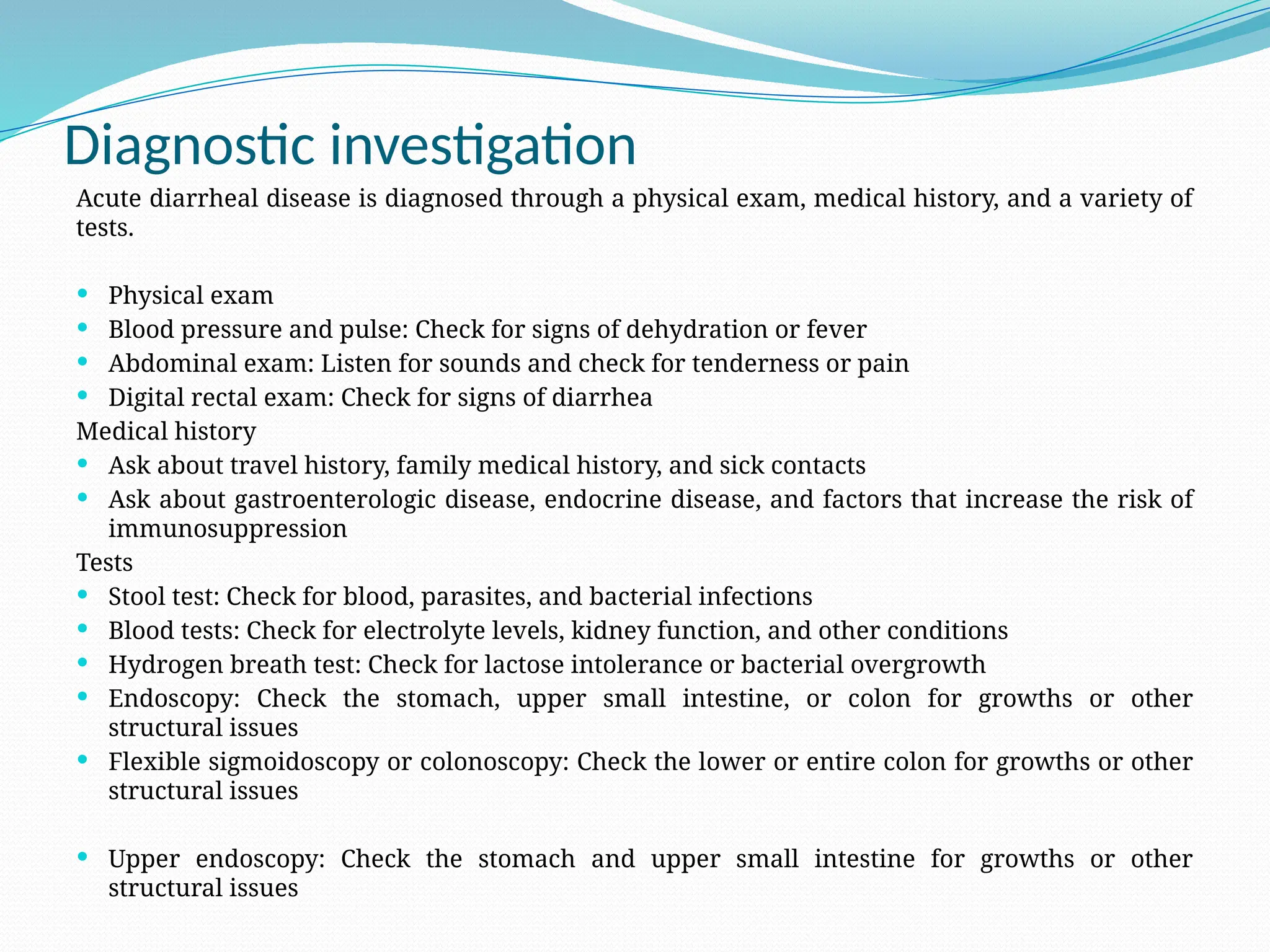
Diagnostic investigation
Acute diarrheal disease is diagnosed through a physical exam, medical history, and a variety of
tests.
 Physical exam
 Blood pressure and pulse: Check for signs of dehydration or fever
 Abdominal exam: Listen for sounds and check for tenderness or pain
 Digital rectal exam: Check for signs of diarrhea
Medical history
 Ask about travel history, family medical history, and sick contacts
 Ask about gastroenterologic disease, endocrine disease, and factors that increase the risk of
immunosuppression
Tests
 Stool test: Check for blood, parasites, and bacterial infections
 Blood tests: Check for electrolyte levels, kidney function, and other conditions
 Hydrogen breath test: Check for lactose intolerance or bacterial overgrowth
 Endoscopy: Check the stomach, upper small intestine, or colon for growths or other
structural issues
 Flexible sigmoidoscopy or colonoscopy: Check the lower or entire colon for growths or other
structural issues
 Upper endoscopy: Check the stomach and upper small intestine for growths or other
structural issues
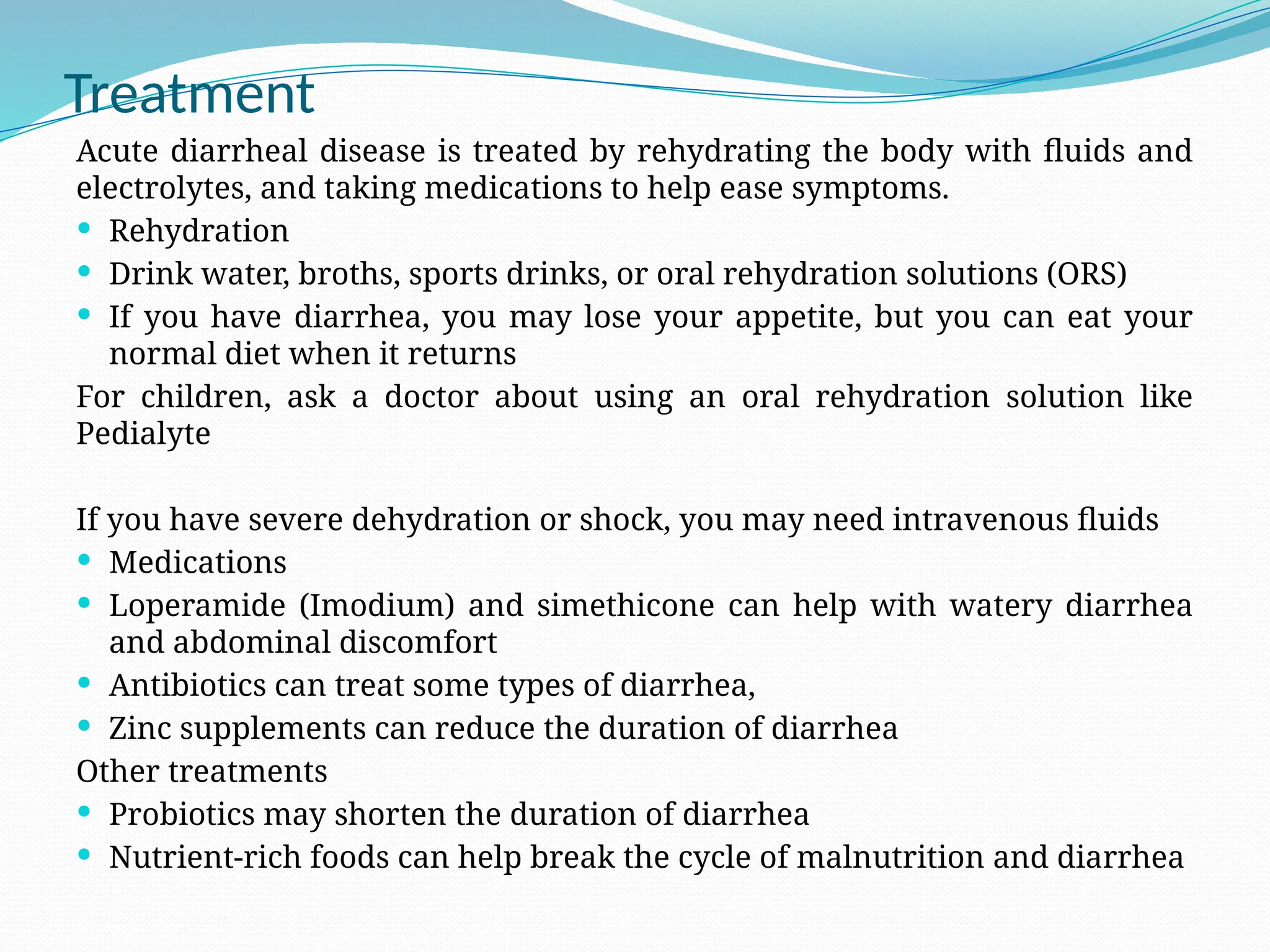
Treatment
Acute diarrheal disease is treated by rehydrating the body with fluids and
electrolytes, and taking medications to help ease symptoms.
 Rehydration
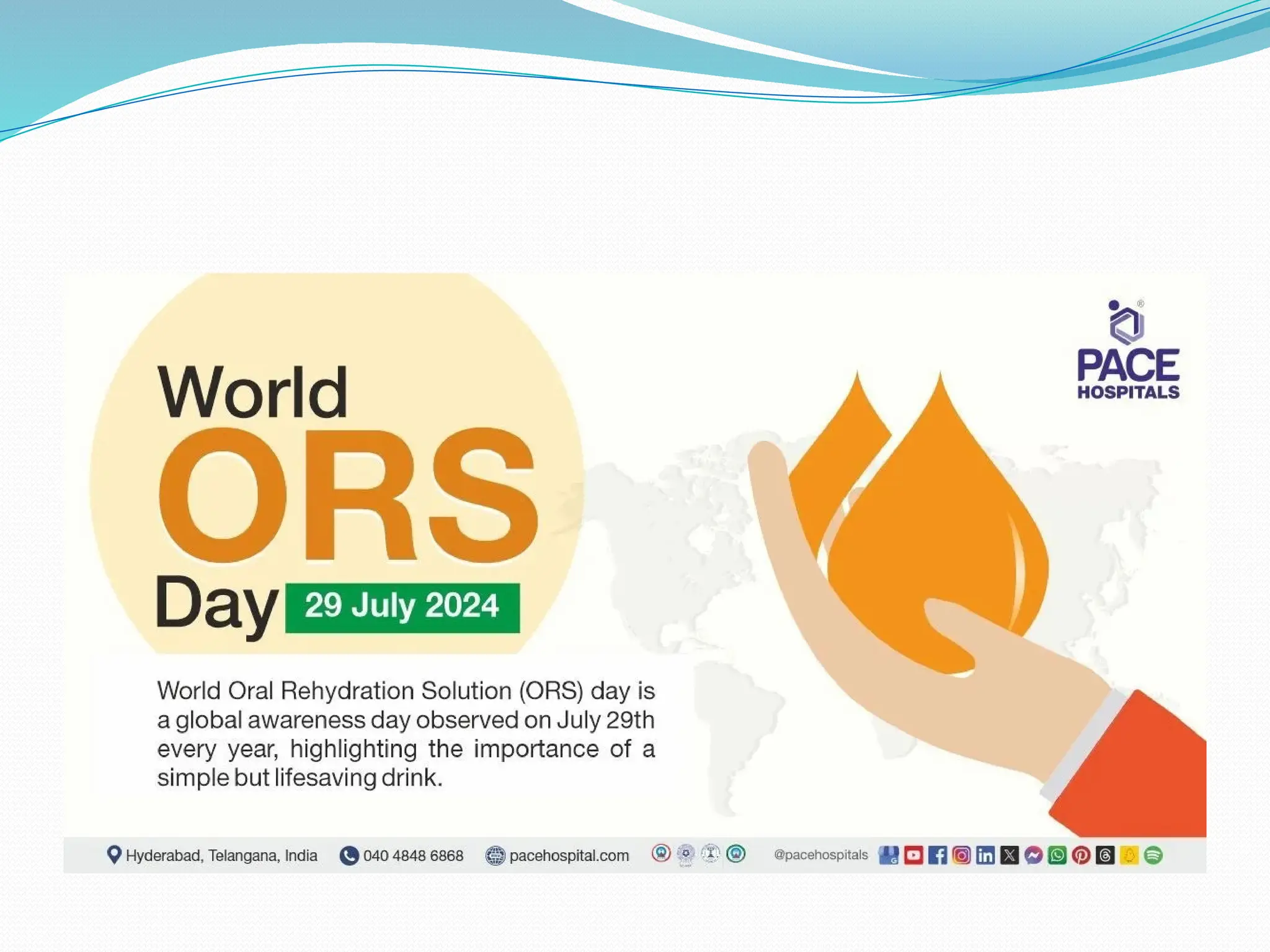
 Drink water, broths, sports drinks, or oral rehydration solutions (ORS)
 If you have diarrhea, you may lose your appetite, but you can eat your
normal diet when it returns
For children, ask a doctor about using an oral rehydration solution like
Pedialyte
If you have severe dehydration or shock, you may need intravenous fluids
 Medications
 Loperamide (Imodium) and simethicone can help with watery diarrhea
and abdominal discomfort
 Antibiotics can treat some types of diarrhea,
 Zinc supplements can reduce the duration of diarrhea
Other treatments
 Probiotics may shorten the duration of diarrhea
 Nutrient-rich foods can help break the cycle of malnutrition and diarrhea
Vaccine
There are licensed vaccines for cholera, rotavirus, and typhoid fever, but no
combination vaccine for diarrheal diseases. However, vaccines are one of the most
effective ways to protect children from diarrheal diseases.
Rotavirus vaccines
 Rotarix and RotaTeq: These vaccines are safe and effective at preventing rotavirus
illness.
 ROTAVAC and ROTASIIL: These vaccines were developed in India and approved by
the WHO for safety and efficacy.
 Benefits: Rotavirus vaccines reduce hospitalizations and deaths, and help stop the
spread of rotavirus in the community.
Cholera vaccines
 Dukoral: A monovalent vaccine based on formalin and heat-killed whole-cells of V.
cholerae O1
 Shanchol and mORCVAX: Bivalent vaccines based on serogroups O1 and O139
 Benefits: These vaccines have been effective in controlling epidemic diseases
Prevention
Acute diarrheal disease can be prevented by practicing good hygiene, sanitation, and food safety.
Hygiene
 Wash hands with soap and water, especially after using the bathroom, before eating, and after
changing diapers
 Avoid sharing towels, utensils, and handkerchiefs with someone who has diarrhea
 Stay home from work or school until symptoms resolve
 Sanitation Ensure access to clean drinking water, Treat wastewater and sewage properly,
Dispose of human waste properly, Clean and disinfect frequently touched surfaces, and
Maintain proper drainage systems.
Food safety
 Buy fresh food from reliable sources
 Cook food thoroughly, especially seafood and shellfish
 Wash and peel fruits yourself
 Avoid raw vegetables
 Avoid drinks with ice of unknown origin
Other measures
 Get the rotavirus vaccine for infants
 Educate yourself about how infections spread
 Breastfeed exclusively for the first six months of a baby's life
Hepatitis
 Hepatitis refers to an inflammatory condition of the liver. It is
commonly the result of a viral infection, but there are other
possible causes of hepatitis. These include autoimmune
hepatitis and hepatitis that occurs as a secondary result of
medications, drugs, toxins, and alcohol.
 Autoimmune hepatitis is a disease that occurs when body
makes antibodies against liver tissue.
 The five main viral classifications of hepatitis are hepatitis A,
B, C, D, and E. A different virus is responsible for each type of
viral hepatitis.
 Hepatitis is an inflammation of the liver and caused by viral
infection, alcohol consumption, several health conditions, or
even some medications. Treatment varies based on the type
and underlying cause.
Types
 Hepatitis A:
This form of hepatitis does not lead to a chronic infection and usually has
no complications. The liver usually heals from hepatitis A within several
months. However, occasional deaths from hepatitis A have occurred due to
liver failure, and some people have required a liver transplant for acute
hepatitis A infection. Hepatitis A can be prevented by vaccination.
 Hepatitis B:
Around 22,000 new cases of hepatitis B occurred in 2017, and around
900,000 people are living with the disease in the US. Approximately 95% of
adults recover from hepatitis B and do not become chronically infected.
However, a few cases cause a life-long, chronic infection. The earlier in life
hepatitis B is contracted, the more likely it is to become chronic. People can
carry the virus without feeling sick but can still spread the virus. Hepatitis
B can be prevented by getting a vaccine.
Types
 Hepatitis C: Hepatitis C is one of the most common causes of liver
disease in the U.S., and used to be the number one reason for liver
transplant. About 75% to 85% of patients with hepatitis C develop a
chronic liver infection. Roughly 2.4 million people in the U.S. are
estimated to have chronic hepatitis C infection. It often does not show
any symptoms. No vaccine is yet available to prevent hepatitis C.
 Hepatitis D: Hepatitis D only happens to people who are infected by
the hepatitis B virus. If you are vaccinated against hepatitis B, you
will be protected against hepatitis D virus.
 Hepatitis E: This type of hepatitis is spread by ingesting contaminated
food or water. Hepatitis E is common throughout the world. Even
though vaccines exist, they are not available everywhere.
 Hepatitis A: A food-borne illness that's usually mild and self-
limiting. It's the easiest type of hepatitis to transmit, especially in
children.
 Hepatitis B: A chronic infection that can lead to liver damage, liver
cancer, and cirrhosis. It can be transmitted through contaminated
blood, needles, syringes, or bodily fluids.
 Hepatitis C: A chronic infection that can lead to liver damage, liver
cancer, and cirrhosis. It's only transmitted through infected blood or
from mother to newborn during childbirth.
 Hepatitis D: A chronic infection that only occurs in people who are
also infected with hepatitis B.
 Hepatitis E: An acute infection that's most prevalent in Africa, Asia,
and South America.
 Autoimmune hepatitis: A non-viral cause of hepatitis caused by
autoimmune disorders.
 Alcoholic hepatitis: A non-viral cause of hepatitis caused by
excessive alcohol consumption.
 Drug-induced hepatitis: A non-viral cause of hepatitis caused by
certain medications or toxins.
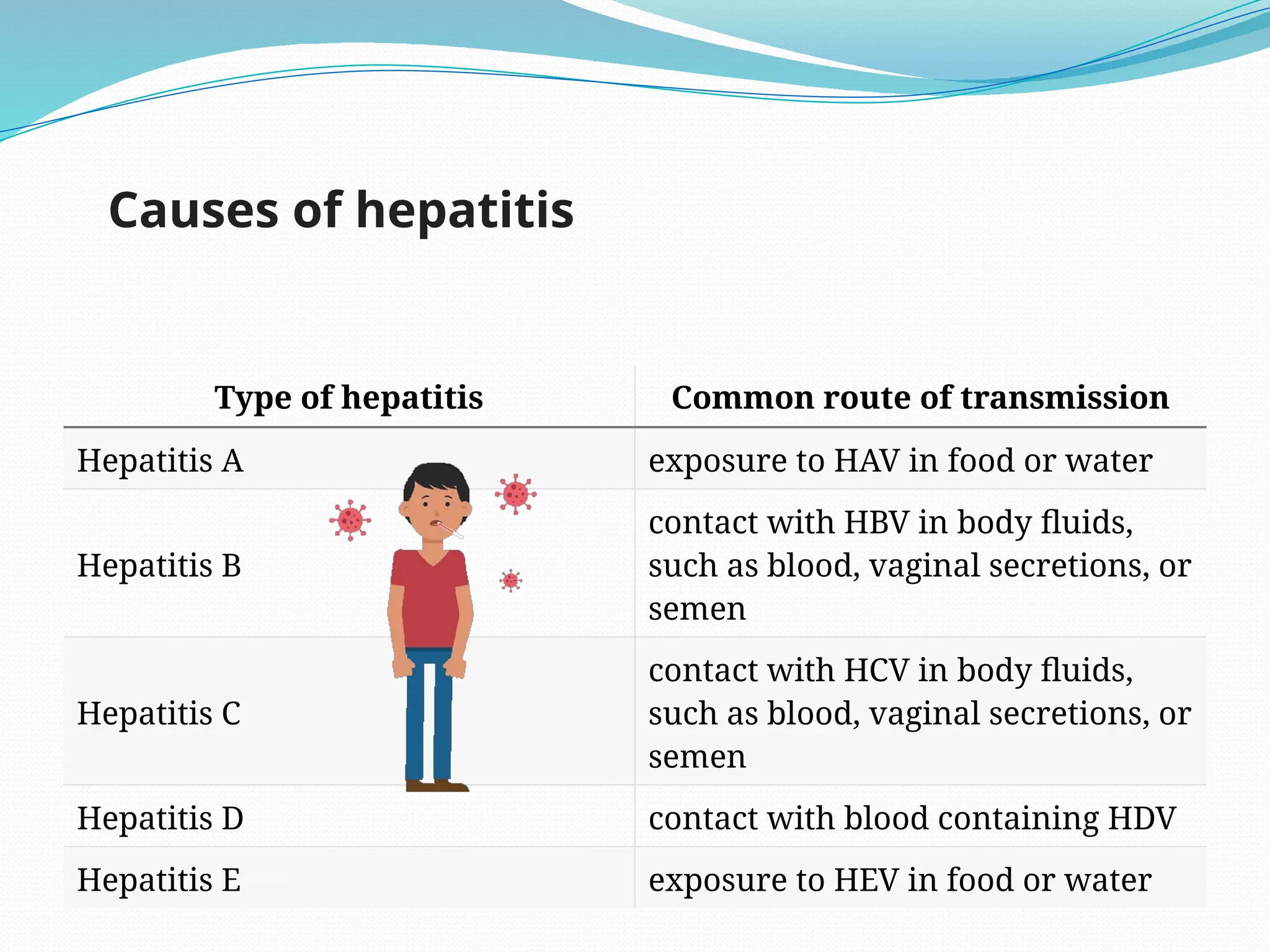
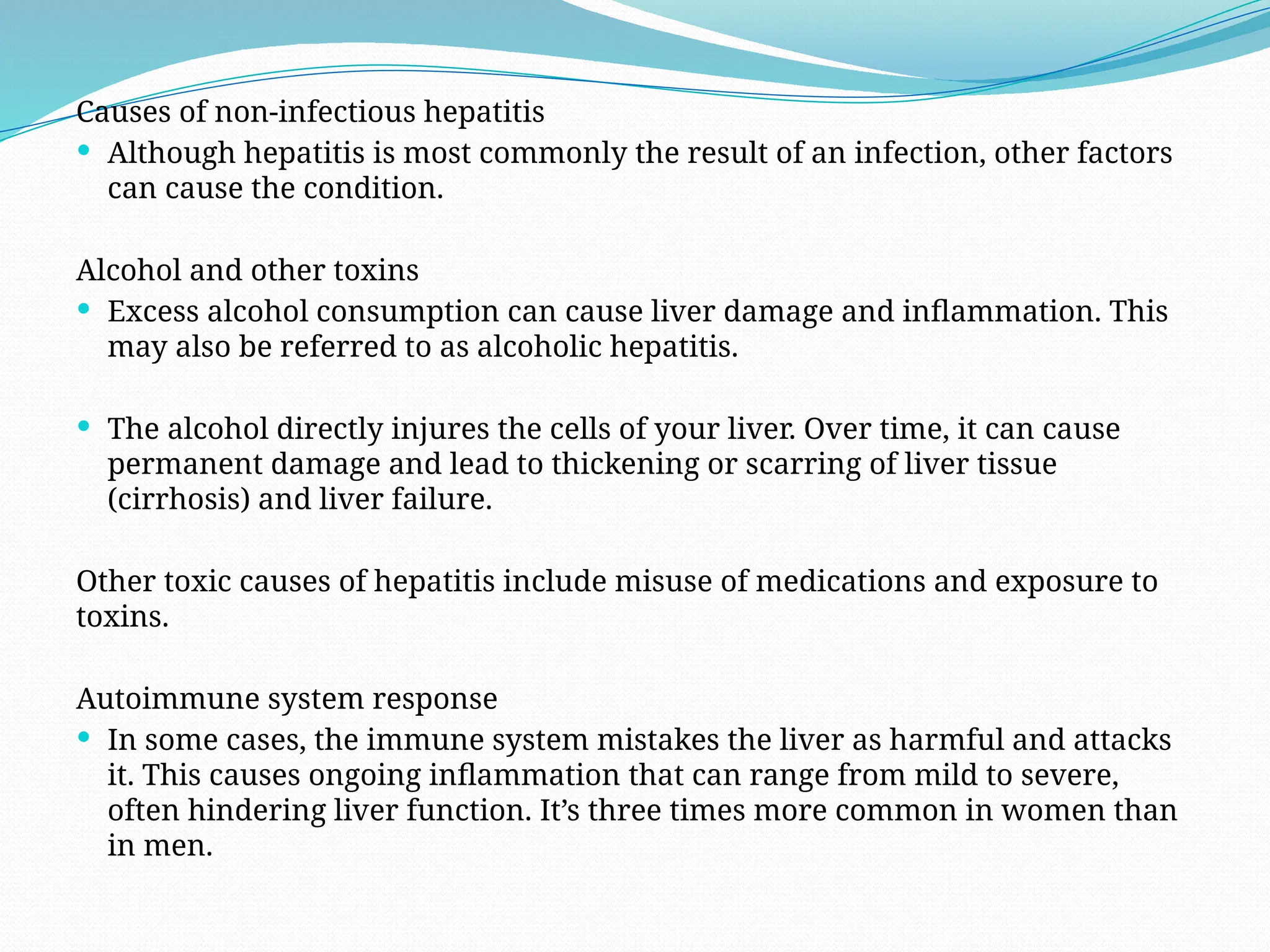
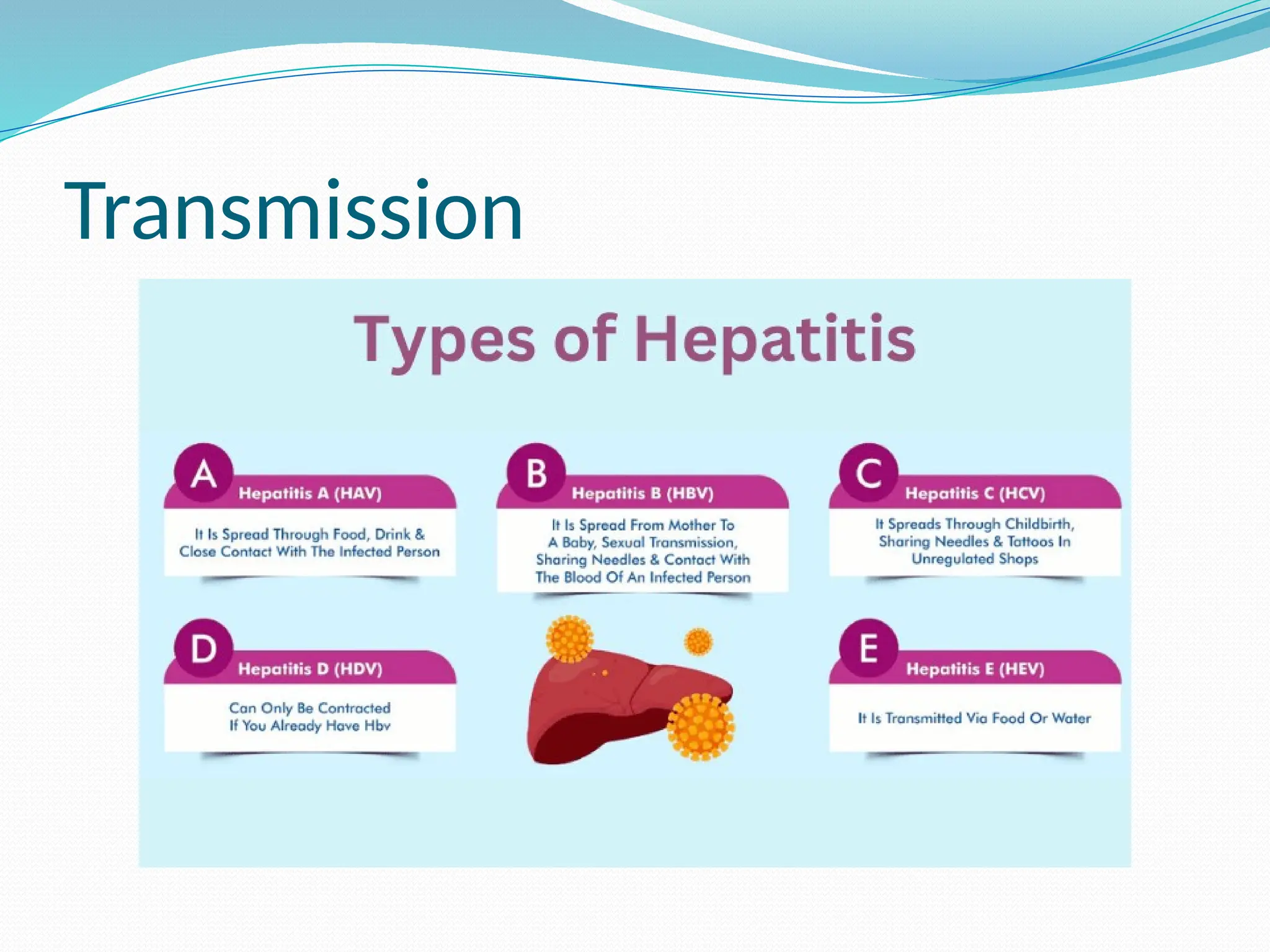
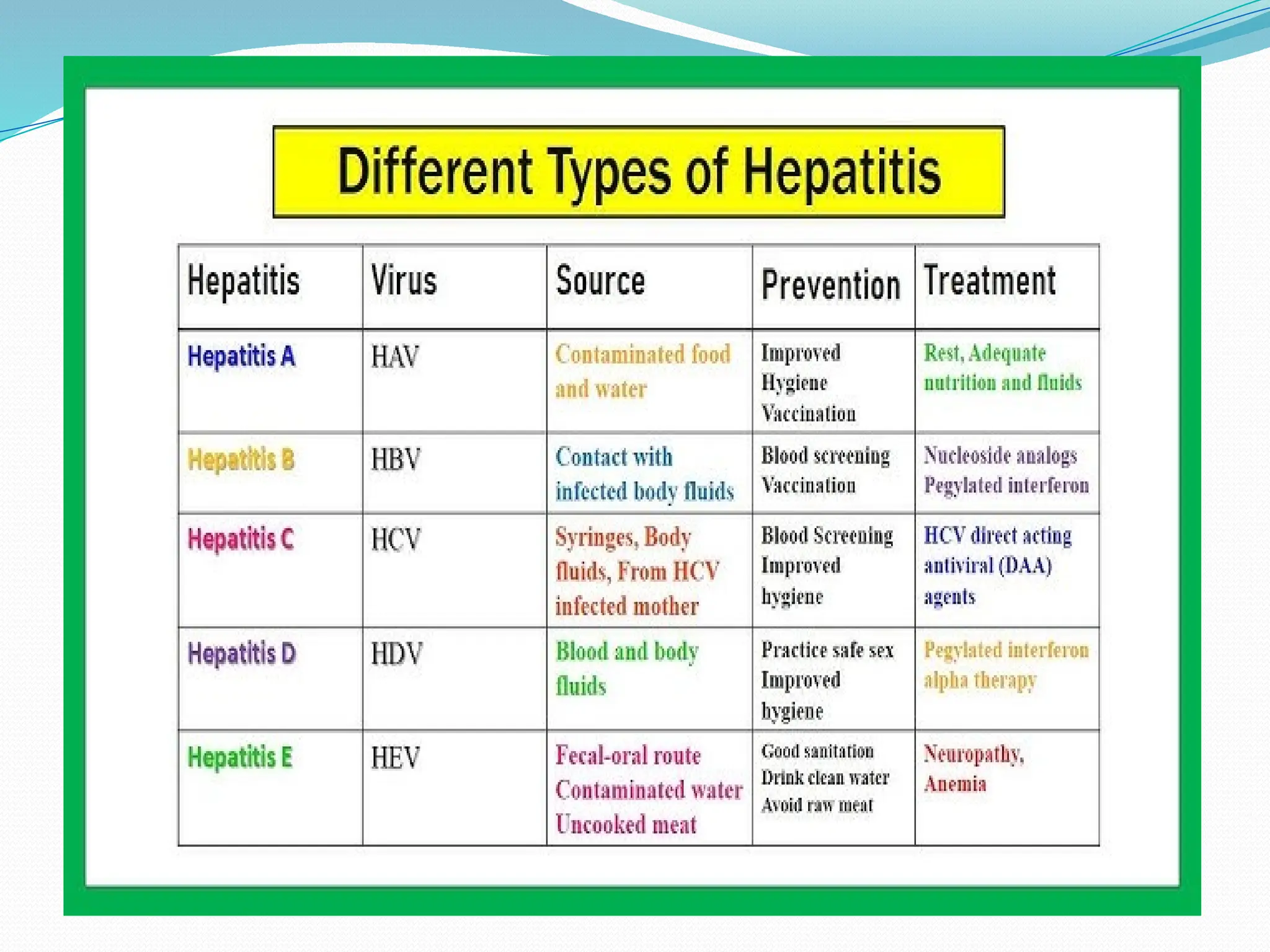
Type of hepatitis Common route of transmission
Hepatitis A exposure to HAV in food or water
Hepatitis B
contact with HBV in body fluids,
such as blood, vaginal secretions, or
semen
Hepatitis C
contact with HCV in body fluids,
such as blood, vaginal secretions, or
semen
Hepatitis D contact with blood containing HDV
Hepatitis E exposure to HEV in food or water
Causes of hepatitis
Causes of non-infectious hepatitis
 Although hepatitis is most commonly the result of an infection, other factors
can cause the condition.
Alcohol and other toxins
 Excess alcohol consumption can cause liver damage and inflammation. This
may also be referred to as alcoholic hepatitis.
 The alcohol directly injures the cells of your liver. Over time, it can cause
permanent damage and lead to thickening or scarring of liver tissue
(cirrhosis) and liver failure.
Other toxic causes of hepatitis include misuse of medications and exposure to
toxins.
Autoimmune system response
 In some cases, the immune system mistakes the liver as harmful and attacks
it. This causes ongoing inflammation that can range from mild to severe,
often hindering liver function. It’s three times more common in women than
in men.
Risk factors
 Hepatitis A: Poor sanitation, lack of safe water, living with an infected person,
and traveling to areas with high rates of hepatitis A
 Hepatitis B: Contact with blood, semen, or other bodily fluids from an infected
person, sharing needles, and traveling to areas with high rates of hepatitis B
 Hepatitis C: Sharing needles, birth from a mother who is infected with
hepatitis C, and receiving a blood transfusion
 Hepatitis D: Being infected while pregnant, carrying the hepatitis B virus, and
receiving many blood transfusions
 Hepatitis from tattoos and piercings: Getting a tattoo or piercing in an
unregulated setting
 Hepatitis from grooming items: Sharing personal care items that may have
come into contact with infected blood, such as razors, nail clippers, or
toothbrushes
 Hepatitis from medications: Taking medicine that can weaken the immune
system, such as chemotherapy
 Hepatitis from sexual contact: Having sex without a condom with multiple sex
partners or with someone who's infected
 Hepatitis from HIV: Being HIV positive
 Hepatitis from homelessness: Being homeless
 Hepatitis from recreational drugs: Using any type of recreational drugs
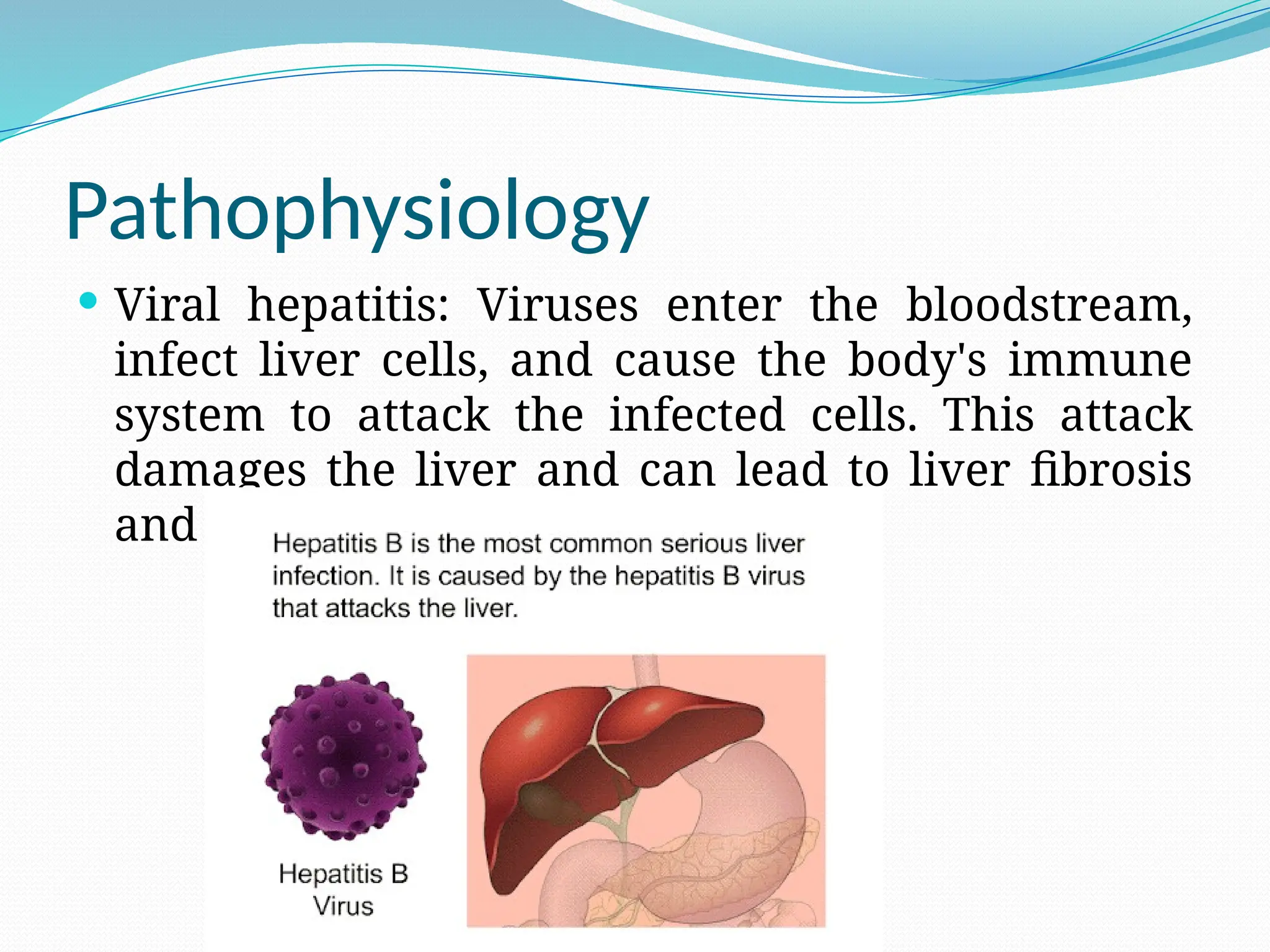
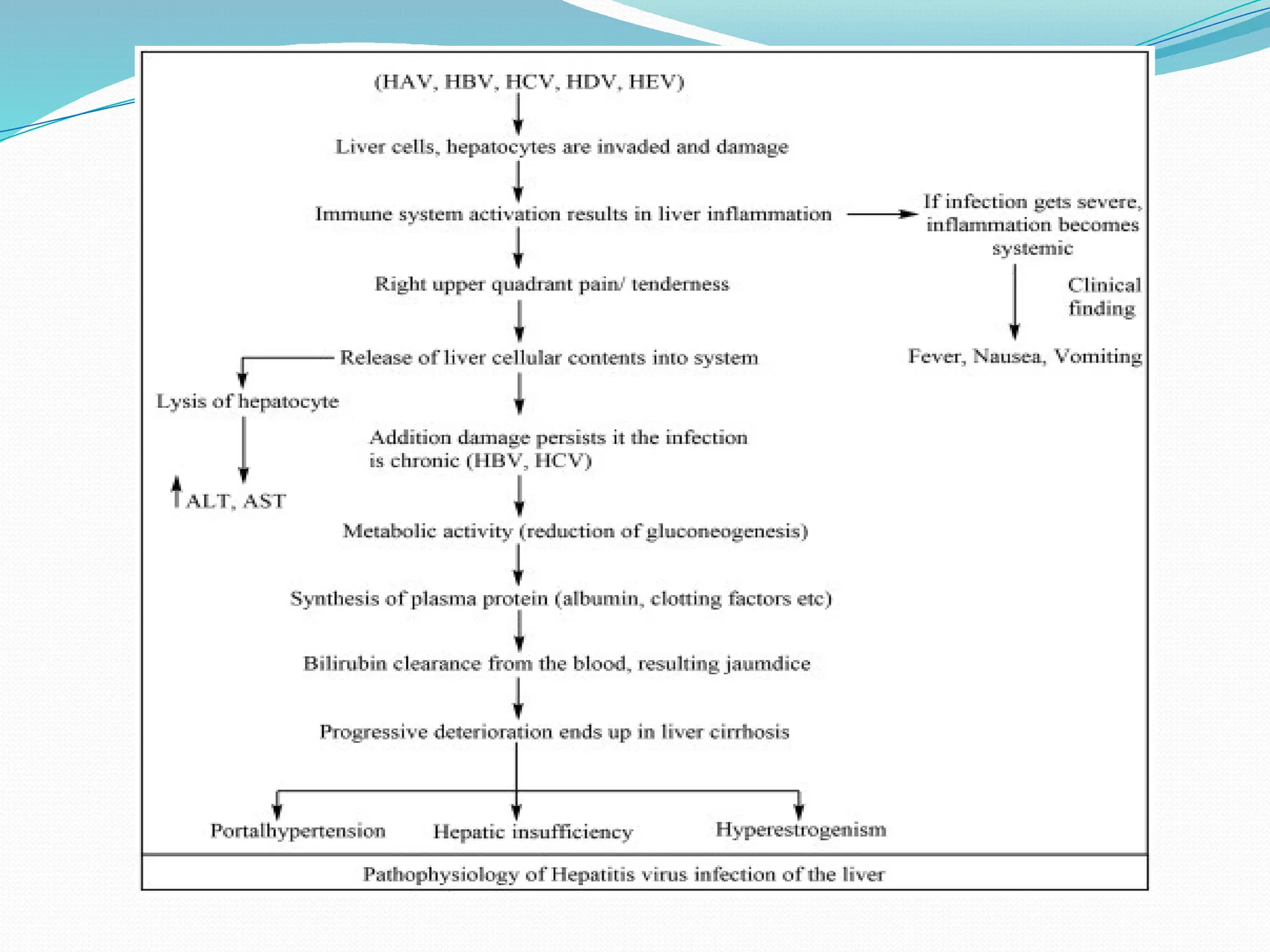
Pathophysiology
 Viral hepatitis: Viruses enter the bloodstream,
infect liver cells, and cause the body's immune
system to attack the infected cells. This attack
damages the liver and can lead to liver fibrosis
and cirrhosis.
Transmission
Sign and symptoms
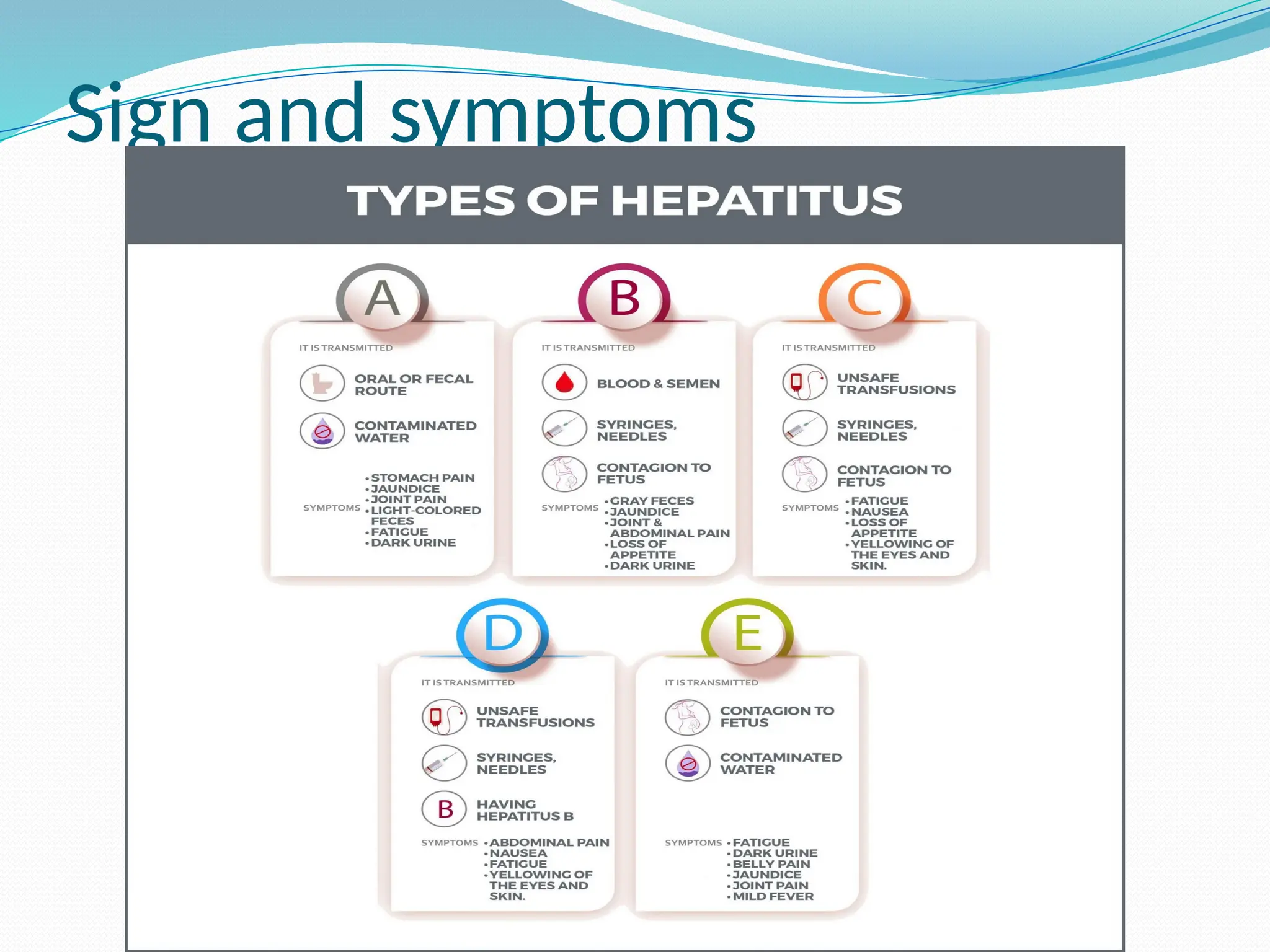
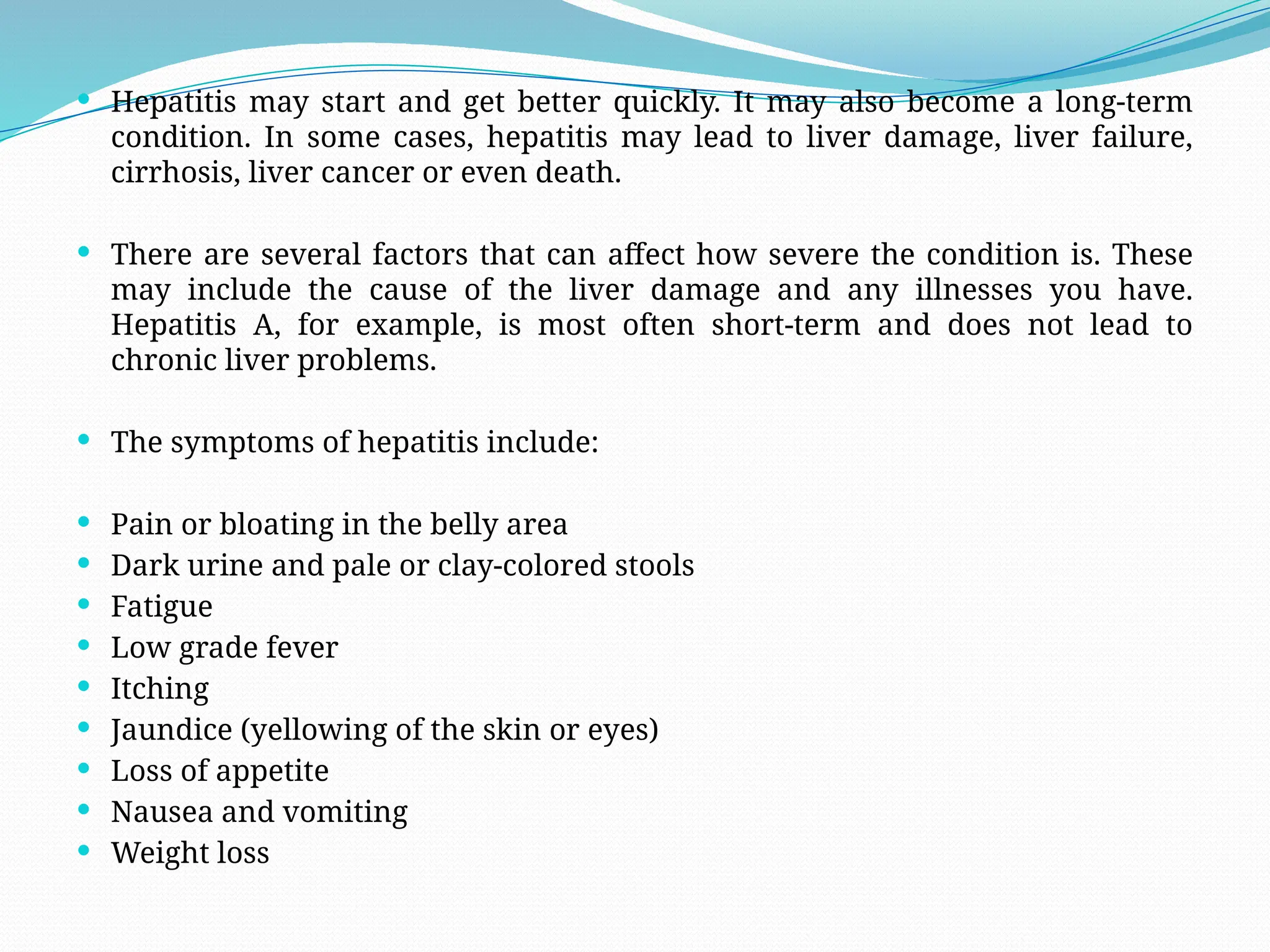
 Hepatitis may start and get better quickly. It may also become a long-term
condition. In some cases, hepatitis may lead to liver damage, liver failure,
cirrhosis, liver cancer or even death.
 There are several factors that can affect how severe the condition is. These
may include the cause of the liver damage and any illnesses you have.
Hepatitis A, for example, is most often short-term and does not lead to
chronic liver problems.
 The symptoms of hepatitis include:
 Pain or bloating in the belly area
 Dark urine and pale or clay-colored stools
 Fatigue
 Low grade fever
 Itching
 Jaundice (yellowing of the skin or eyes)
 Loss of appetite
 Nausea and vomiting
 Weight loss
Diagnostic investigation
 Hepatitis is diagnosed using a combination of blood tests, imaging tests, and sometimes a
liver biopsy. The type of test used depends on the type of hepatitis being investigated.
Blood tests
 Hepatitis B: Blood tests can detect the hepatitis B virus, determine if the infection is acute
or chronic, and if you are immune.
 Hepatitis C: Blood tests can detect the hepatitis C virus, and determine if the infection is
acute or chronic.
 Hepatitis A: Blood tests can confirm a suspected case of hepatitis A.
 Autoimmune hepatitis: Blood tests can help diagnose autoimmune hepatitis.
Imaging tests
 Liver ultrasound: A special ultrasound called transient elastography can show the amount
of liver damage.
 Abdominal ultrasonography: Can help exclude other conditions that resemble acute
hepatitis.
 Computed tomography (CT): Can help exclude other conditions that resemble acute
hepatitis.
Liver biopsy
 A small sample of liver tissue is removed for testing to check for liver damage.
Other tests
 Elastography
 Uses sound waves to measure the stiffness of the liver and check for fibrosis.
Paracentesis
 Fluid from the patient's abdomen is tested to help differentiate among many potential
causes of liver disease.
Hepatitis treatment depends on the type of hepatitis and the severity of liver damage.
Treatments include:
 Antiviral medications: These can prevent the virus from replicating, reverse liver
damage, and eliminate the virus from the bloodstream.
 Interferon shots: These can help your immune system fight the virus.
 Liver transplant: This is an option if your liver has been badly damaged.
 Rest and hydration: These can help you feel better and prevent dehydration.
 Nutritious diet: This can help you get enough calories and prevent malnutrition.
 Abstaining from alcohol: Alcohol can damage your liver.
 Hepatitis A: Rest, hydration, and a healthy diet: These can help you feel better and
prevent dehydration.
 Vaccination: This can prevent you from getting hepatitis A.
 Hepatitis B : Antiviral medications: These can help fight the virus and slow its
ability to damage your liver.
 Interferon shots: These can help your immune system fight the virus.
 Liver transplant: This is an option if your liver has been badly damaged.
 Hepatitis C : Direct-acting antiviral (DAA) tablets: These are the safest and most
effective medicines for treating hepatitis C.
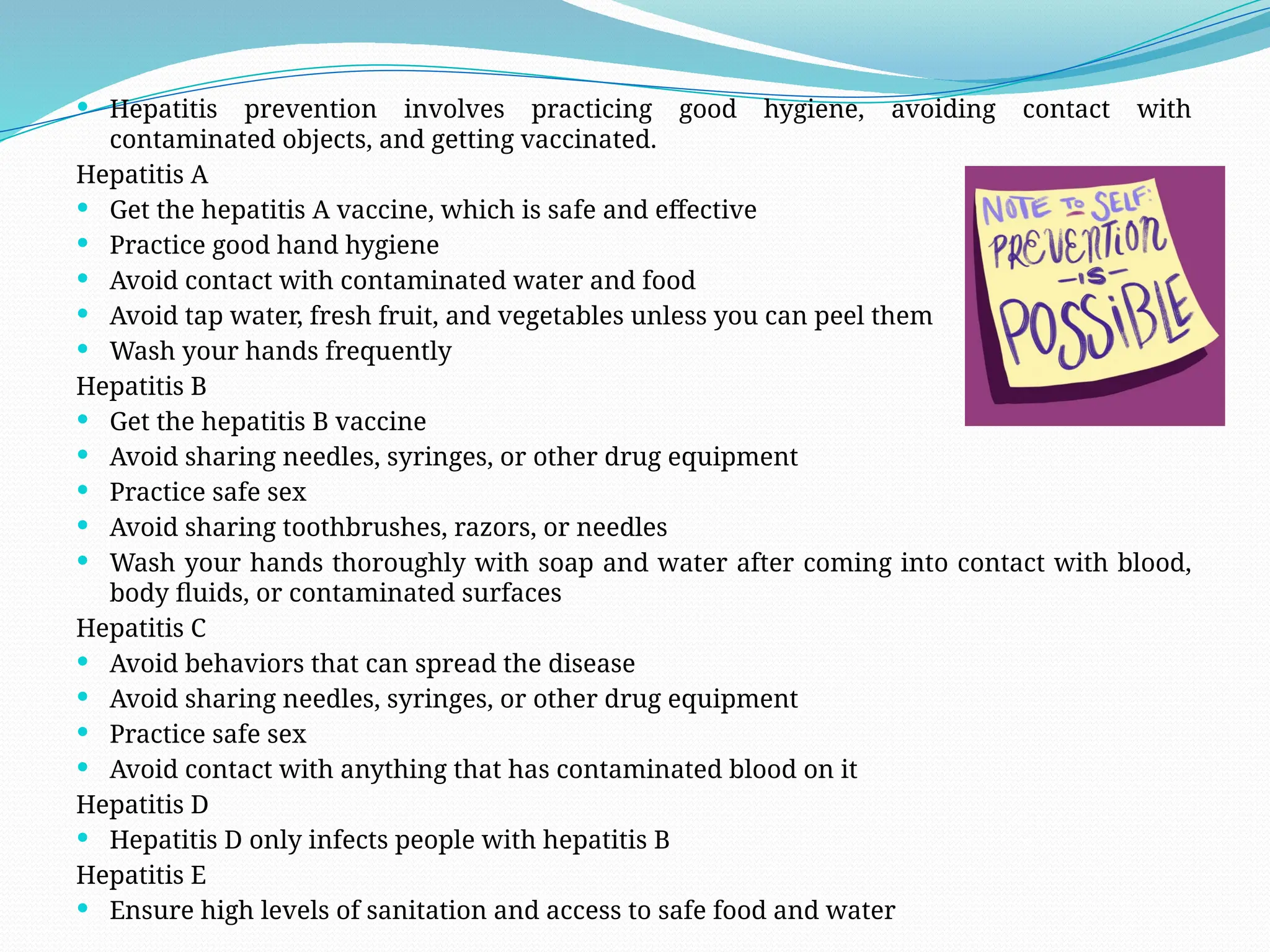
 Hepatitis prevention involves practicing good hygiene, avoiding contact with
contaminated objects, and getting vaccinated.
Hepatitis A
 Get the hepatitis A vaccine, which is safe and effective
 Practice good hand hygiene
 Avoid contact with contaminated water and food
 Avoid tap water, fresh fruit, and vegetables unless you can peel them
 Wash your hands frequently
Hepatitis B
 Get the hepatitis B vaccine
 Avoid sharing needles, syringes, or other drug equipment
 Practice safe sex
 Avoid sharing toothbrushes, razors, or needles
 Wash your hands thoroughly with soap and water after coming into contact with blood,
body fluids, or contaminated surfaces
Hepatitis C
 Avoid behaviors that can spread the disease
 Avoid sharing needles, syringes, or other drug equipment
 Practice safe sex
 Avoid contact with anything that has contaminated blood on it
Hepatitis D
 Hepatitis D only infects people with hepatitis B
Hepatitis E
 Ensure high levels of sanitation and access to safe food and water
Vaccination
 Hepatitis vaccinations are safe and effective ways to prevent
hepatitis A and B. The CDC recommends that children get the
hepatitis A vaccine between 12 and 23 months of age. The
hepatitis B vaccine is recommended for all newborns and
children, and for adults at risk.
Hepatitis A vaccine
 There are single-antigen and combination vaccines.
 The combination vaccine protects against both hepatitis A and B,
but can only be given to people 18 years or older.
 The CDC recommends that children get the hepatitis A vaccine
between 12 and 23 months of age.
Hepatitis B vaccine
 The first dose is recommended for newborns within 24 hours of
birth.
 The vaccine is given in 2 or 3 doses.
 The second dose is given 1 month after the first, and the third
dose is given 6 months after the second.
As of current information, there is no officially
designated "Herpes Simplex Day" in India, and
there is no widely recognized national awareness
day for herpes in the country; however, if you're
looking for a global reference point, "Herpes
Awareness Day" is often observed on October 13th.
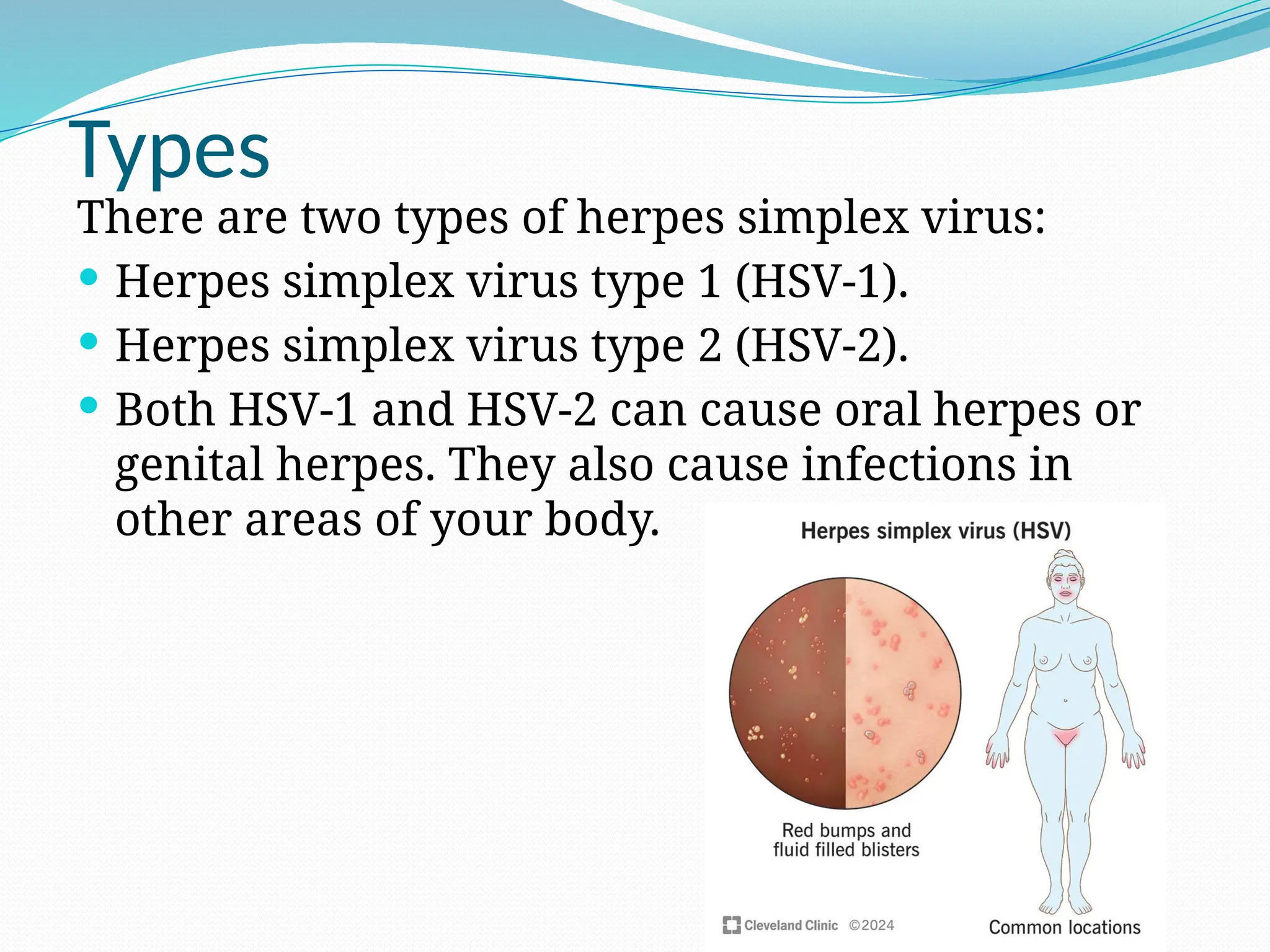
Herpes simplex
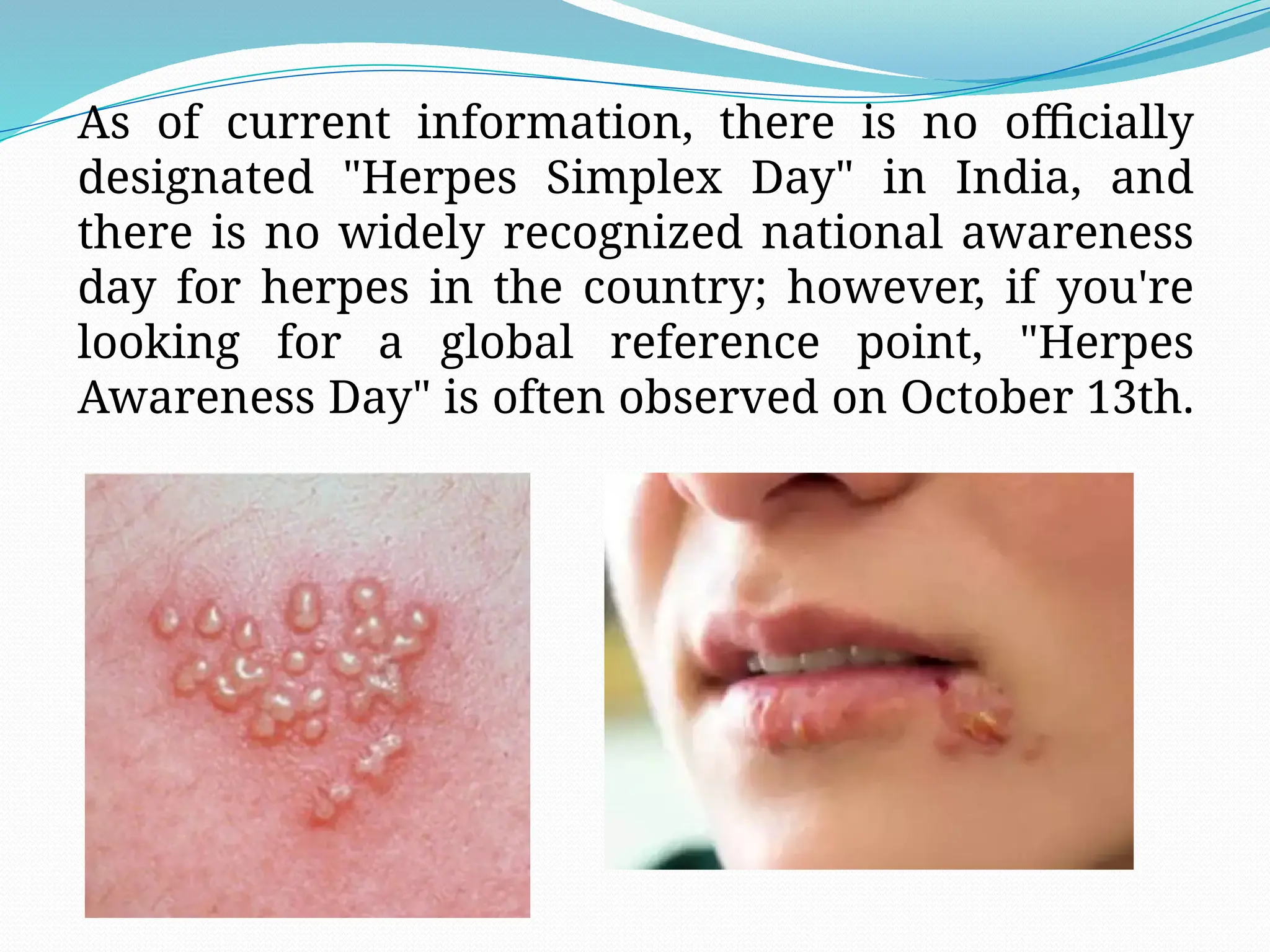
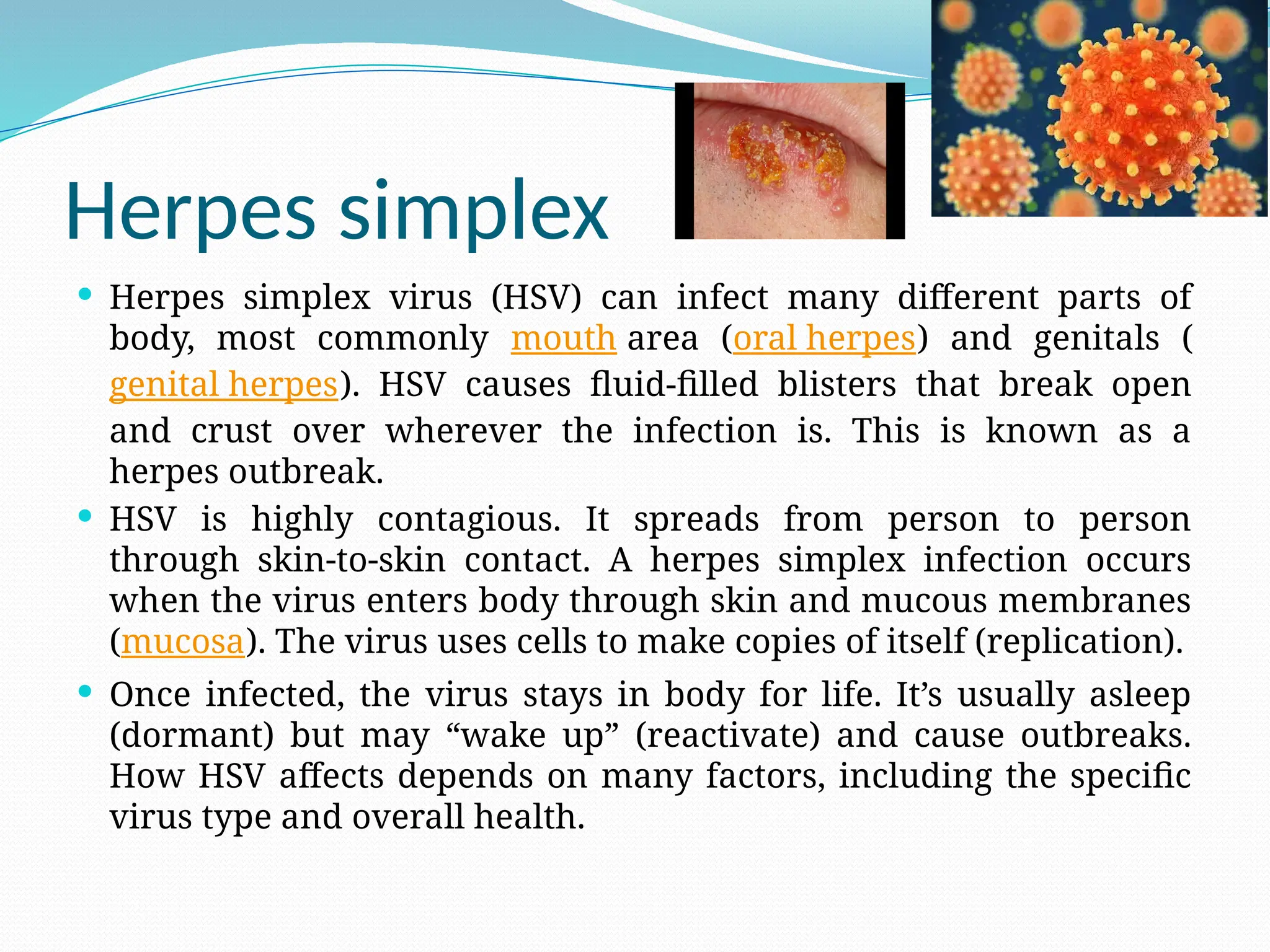
 Herpes simplex virus (HSV) can infect many different parts of
body, most commonly mouth area (oral herpes) and genitals (
genital herpes). HSV causes fluid-filled blisters that break open
and crust over wherever the infection is. This is known as a
herpes outbreak.
 HSV is highly contagious. It spreads from person to person
through skin-to-skin contact. A herpes simplex infection occurs
when the virus enters body through skin and mucous membranes
(mucosa). The virus uses cells to make copies of itself (replication).
 Once infected, the virus stays in body for life. It’s usually asleep
(dormant) but may “wake up” (reactivate) and cause outbreaks.
How HSV affects depends on many factors, including the specific
virus type and overall health.
Types
There are two types of herpes simplex virus:
 Herpes simplex virus type 1 (HSV-1).
 Herpes simplex virus type 2 (HSV-2).
 Both HSV-1 and HSV-2 can cause oral herpes or
genital herpes. They also cause infections in
other areas of your body.
Herpes simplex incubation period
 The incubation period for herpes simplex
infections ranges from one to 26 days but is
typically six to eight days. This is how long it
takes for you to develop symptoms after first
getting infected with HSV.
 Some people get infected but don’t develop
symptoms right away. Instead, symptoms may
not appear for months or even years until the
virus reactivates.
Herpes simplex virus (HSV) type 1 (HSV-1) and type 2 (HSV-2) are both
contagious viral infections that cause painful blisters or ulcers. HSV-1
usually causes cold sores around the mouth, while HSV-2 usually causes
genital herpes.
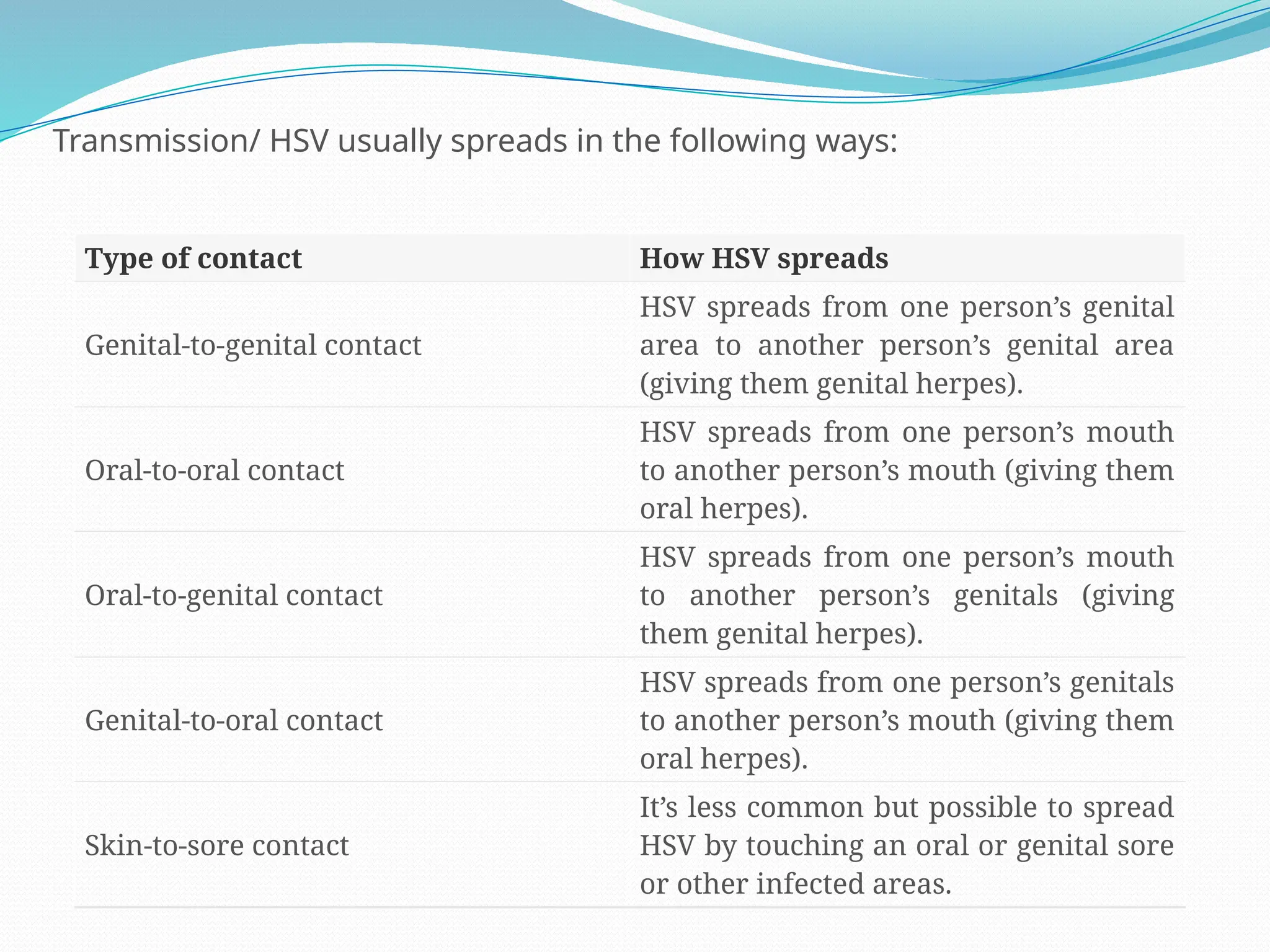
Type of contact How HSV spreads
Genital-to-genital contact
HSV spreads from one person’s genital
area to another person’s genital area
(giving them genital herpes).
Oral-to-oral contact
HSV spreads from one person’s mouth
to another person’s mouth (giving them
oral herpes).
Oral-to-genital contact
HSV spreads from one person’s mouth
to another person’s genitals (giving
them genital herpes).
Genital-to-oral contact
HSV spreads from one person’s genitals
to another person’s mouth (giving them
oral herpes).
Skin-to-sore contact
It’s less common but possible to spread
HSV by touching an oral or genital sore
or other infected areas.
Transmission/ HSV usually spreads in the following ways:
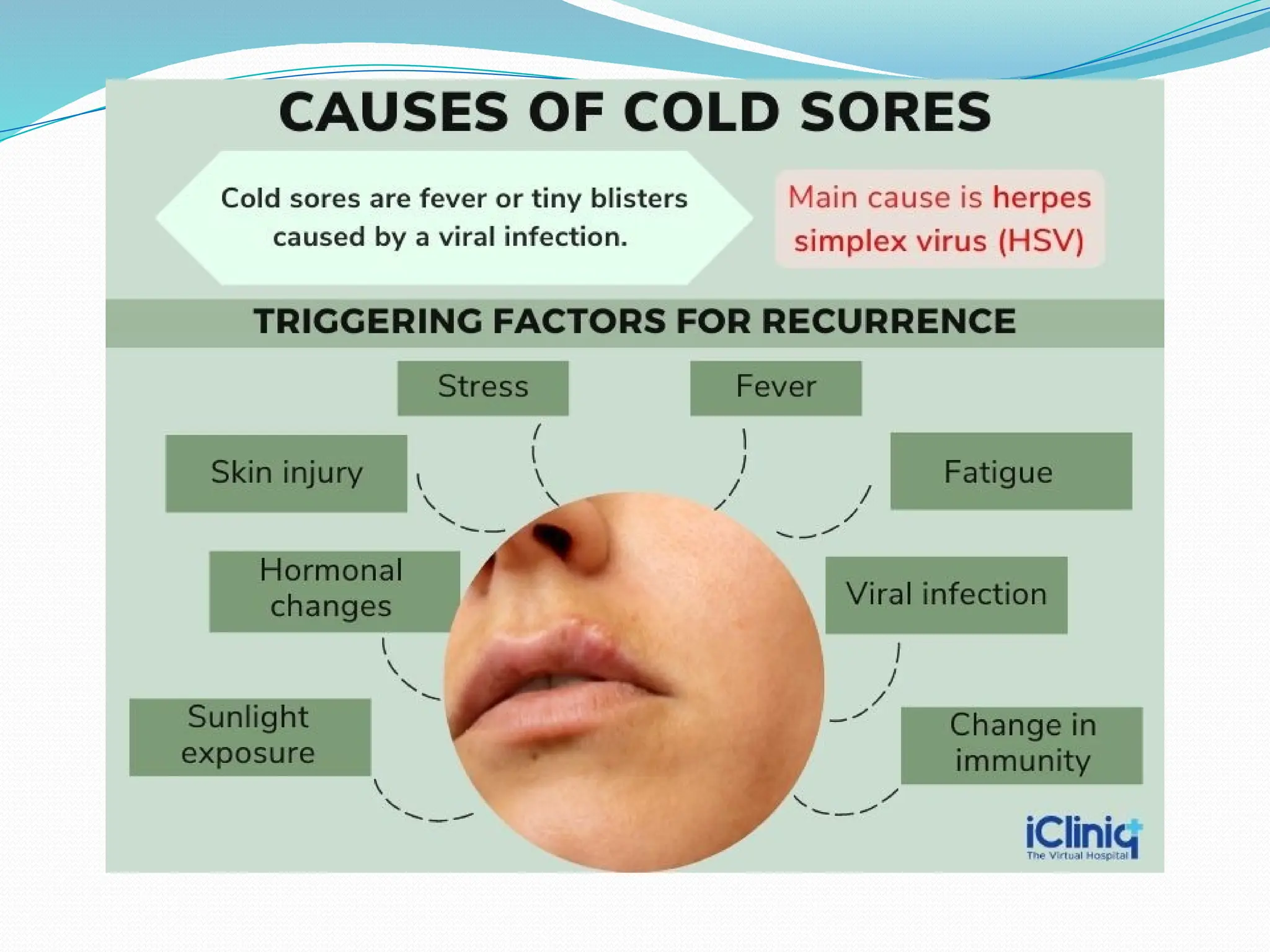
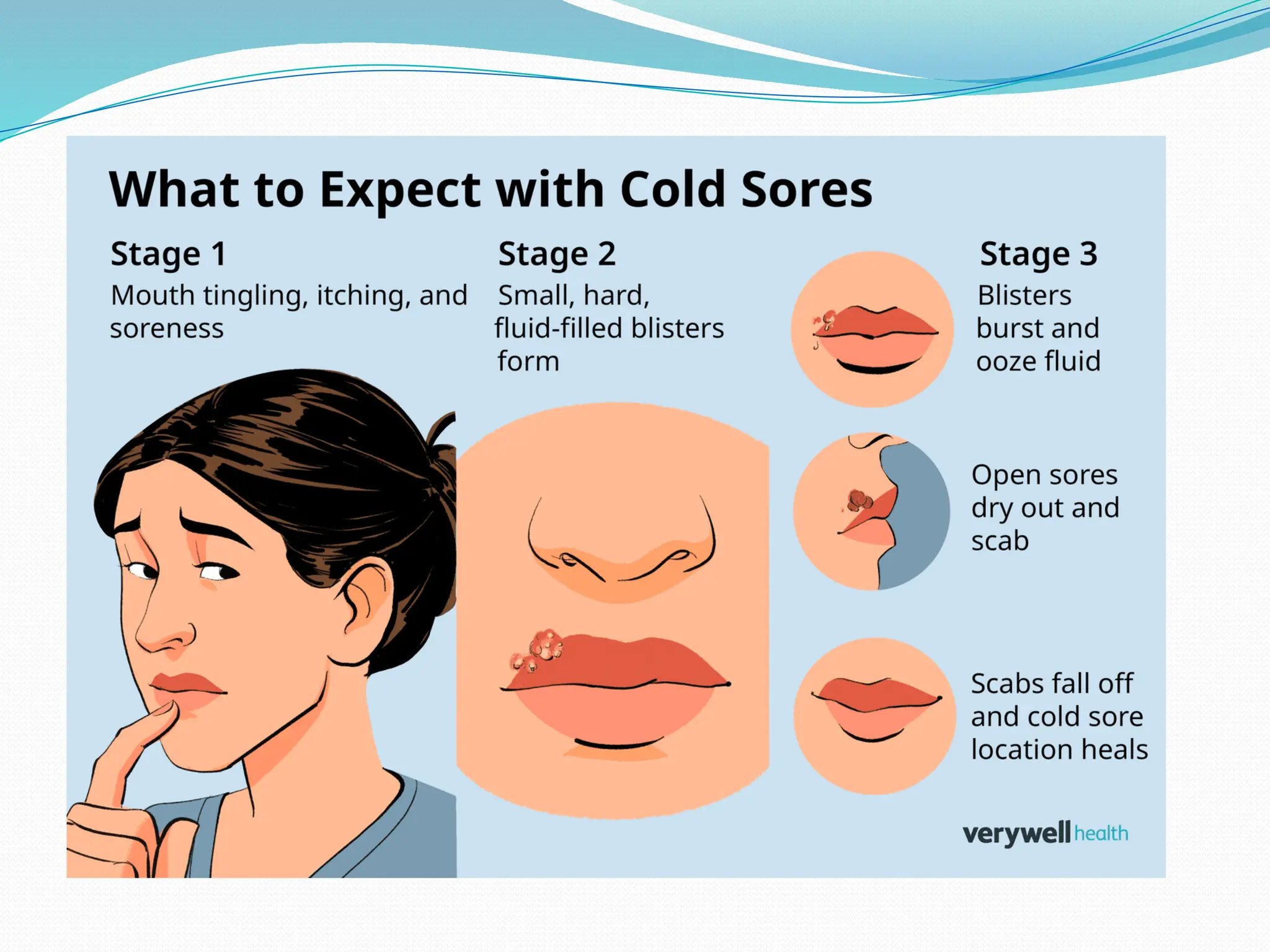
Stages
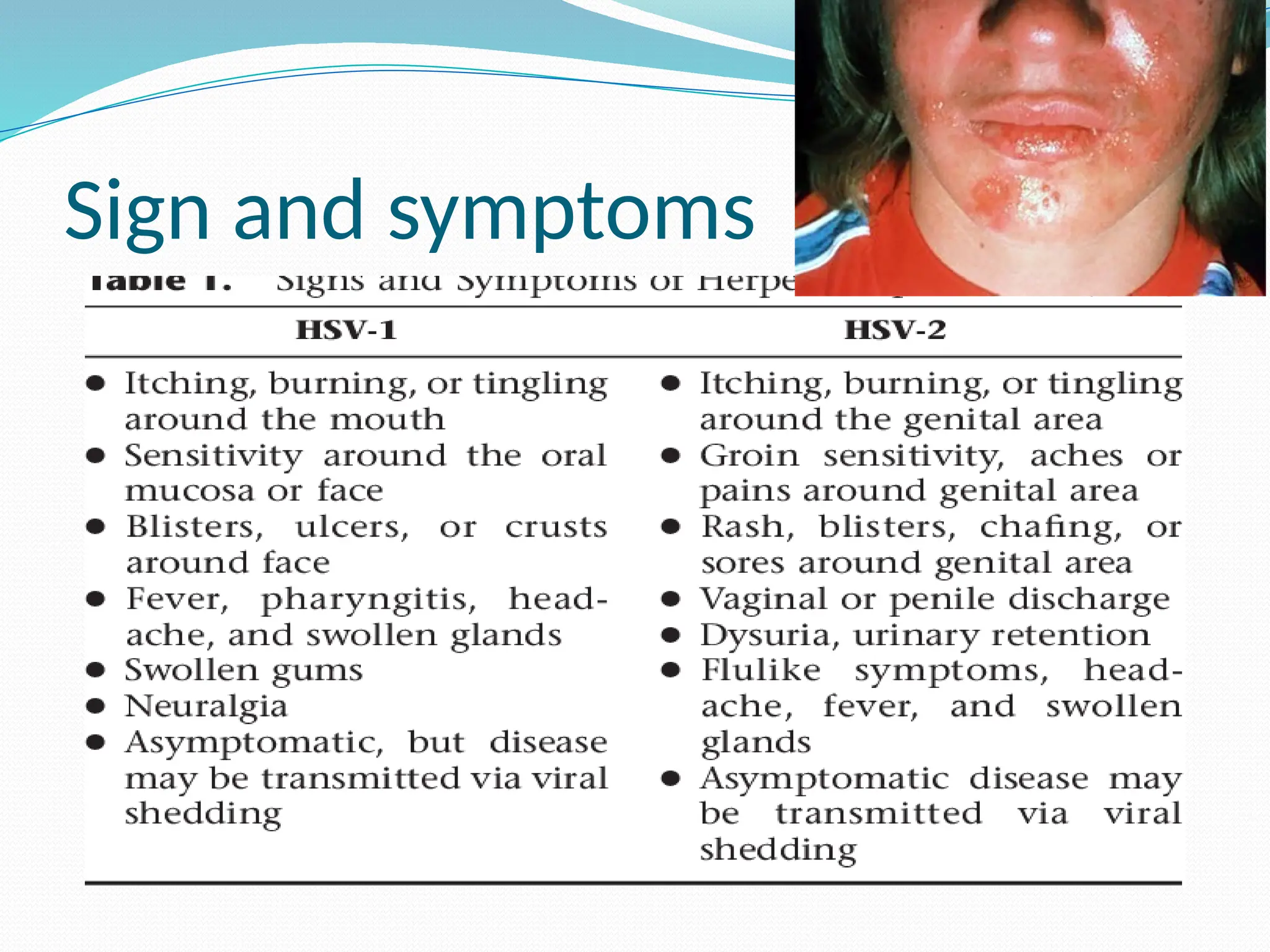
Sign and symptoms
Treatment
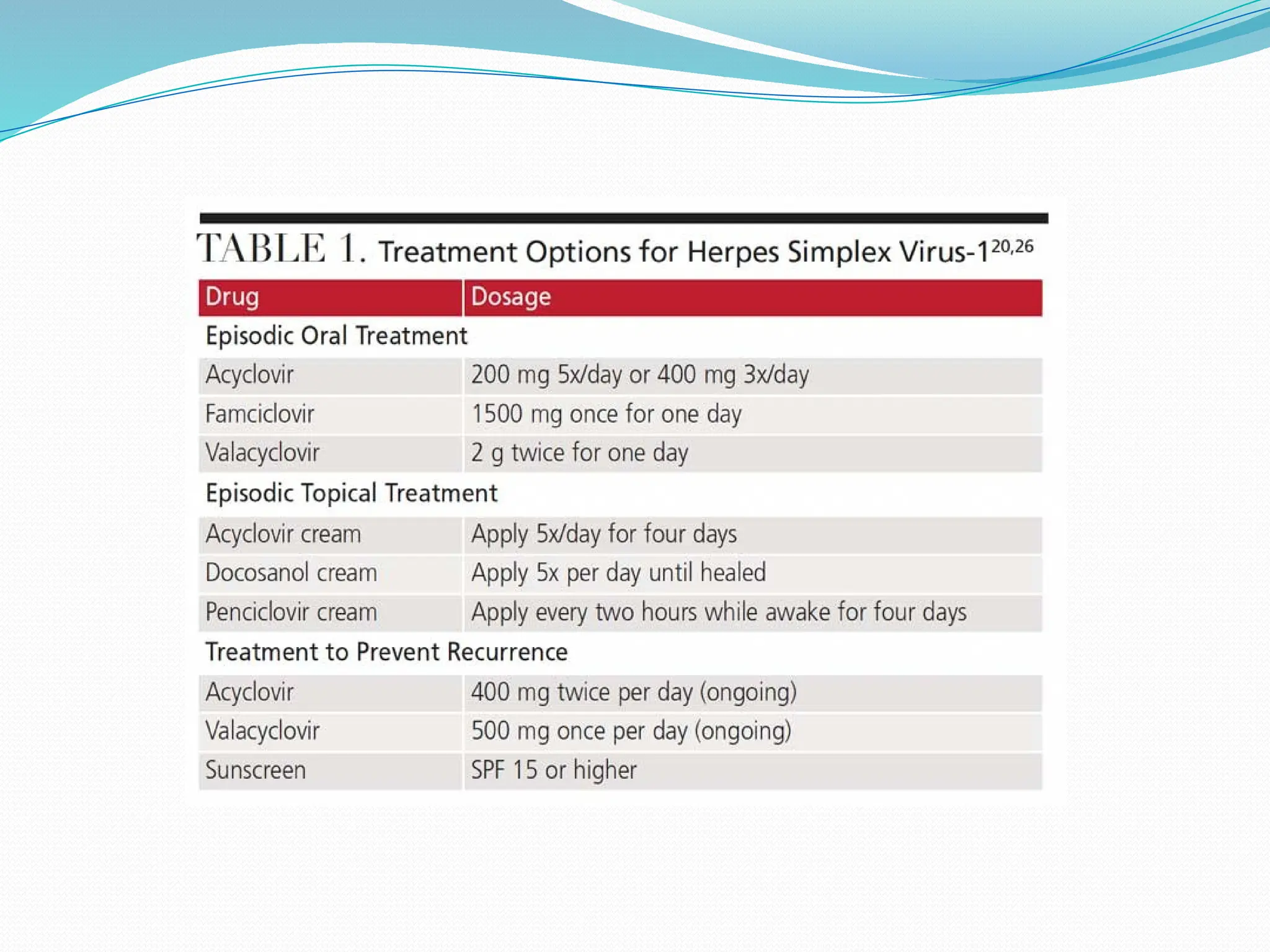
Prescription antiviral medications are the main treatment for HSV infections.
These come in different forms, including:
 Pills you swallow.
 Cream or ointment you apply to your skin.
 Medication your provider gives you intravenously (through an IV).
 Drops you put into your eyes (for ocular herpes).
Your provider will tell you which type(s) of medication are best for you based
on:
 The type of infection you have.
 Its severity.
 How well your immune system is working.
 They’ll also tell you the proper dose and how long you’ll need the medication.
Treatment for oral and genital herpes falls into two categories: episodic therapy
and chronic suppressive therapy.
Prevention
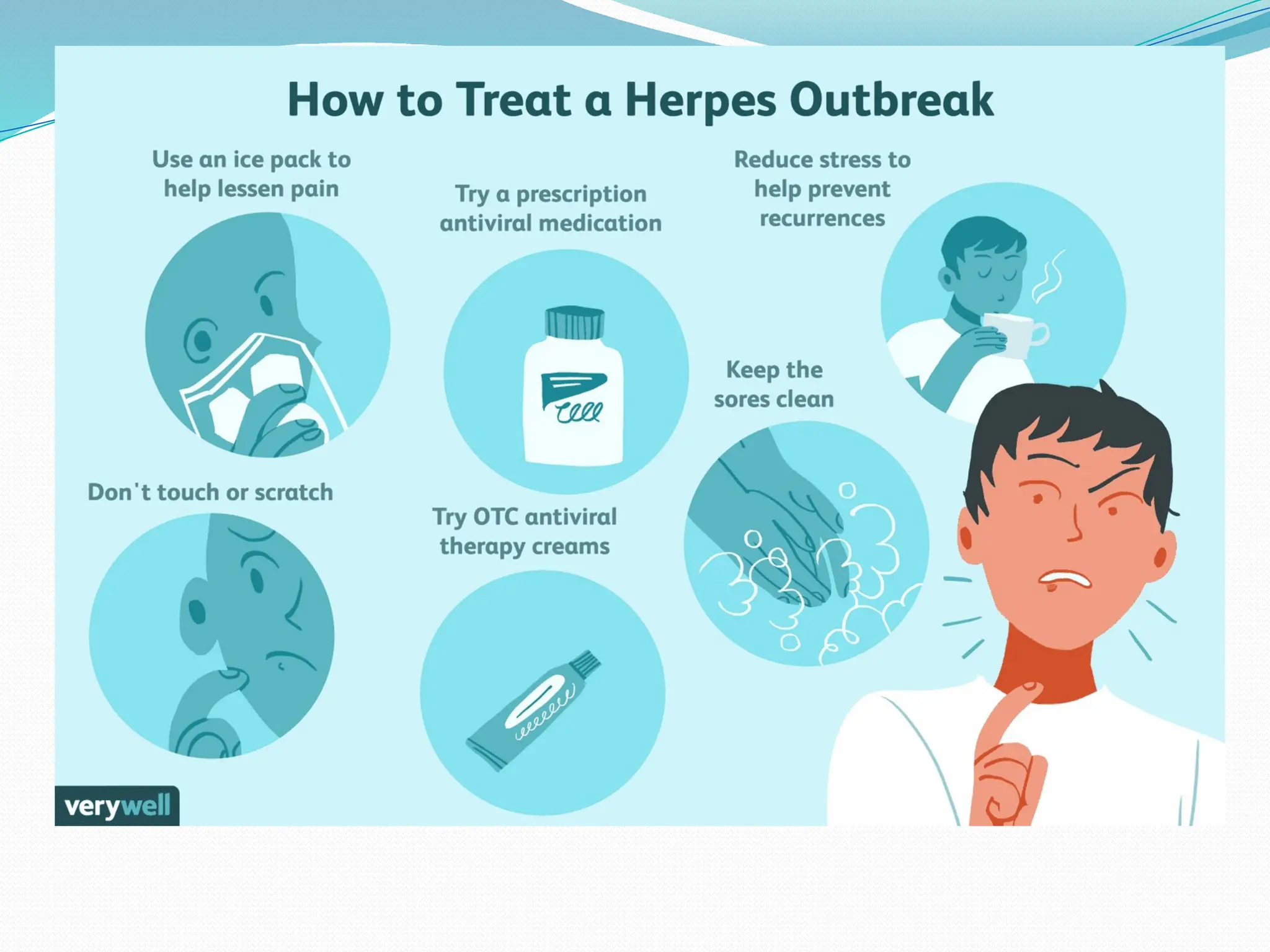
 To prevent herpes simplex virus (HSV), you can avoid risky
behaviors and maintain a healthy immune system.
 Avoid risky behaviors
 Avoid oral contact: Don't share objects that have touched
saliva,.
 Avoid sexual activity:
 Wash hands: Wash your hands with soap and water after
touching sores or the area around them.
 Wash objects: Wash objects that may have touched sores, like
eating utensils, drinking glasses, washcloths, and towels.
 Maintain a healthy immune system Eat nutritious food,
Exercise regularly, Get enough rest, and Reduce stress.
• Chicken pox
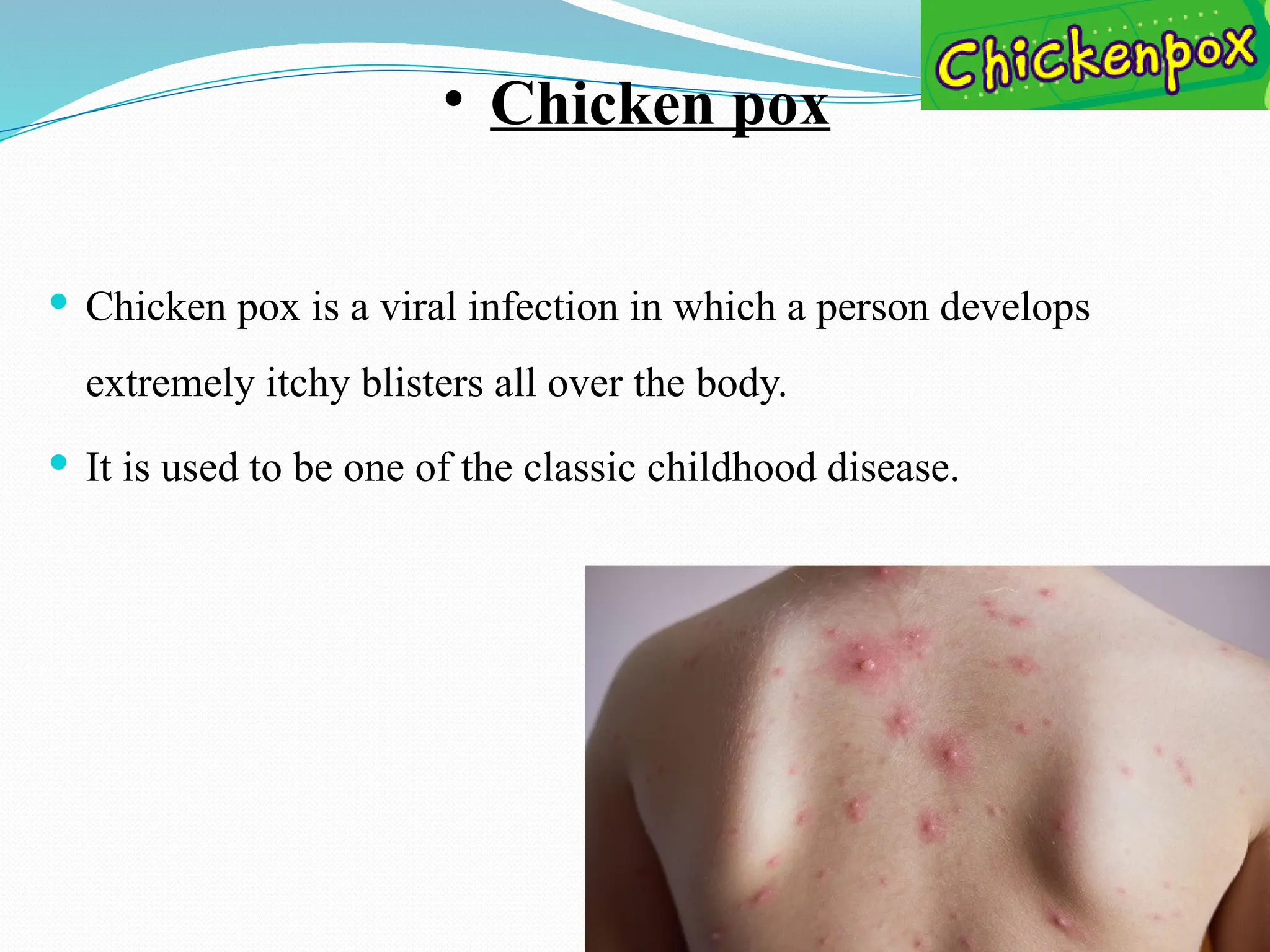
 Chicken pox is a viral infection in which a person develops
extremely itchy blisters all over the body.
 It is used to be one of the classic childhood disease.
Incubation period:
 About 14 - 16 days
Causative Organism
Human (alpha) herpes virus (Varicella- Zoster
virus :VZV)
 Occur mainly in children under 10 years of age.
 Uncommon in adults.
Mode of transmission
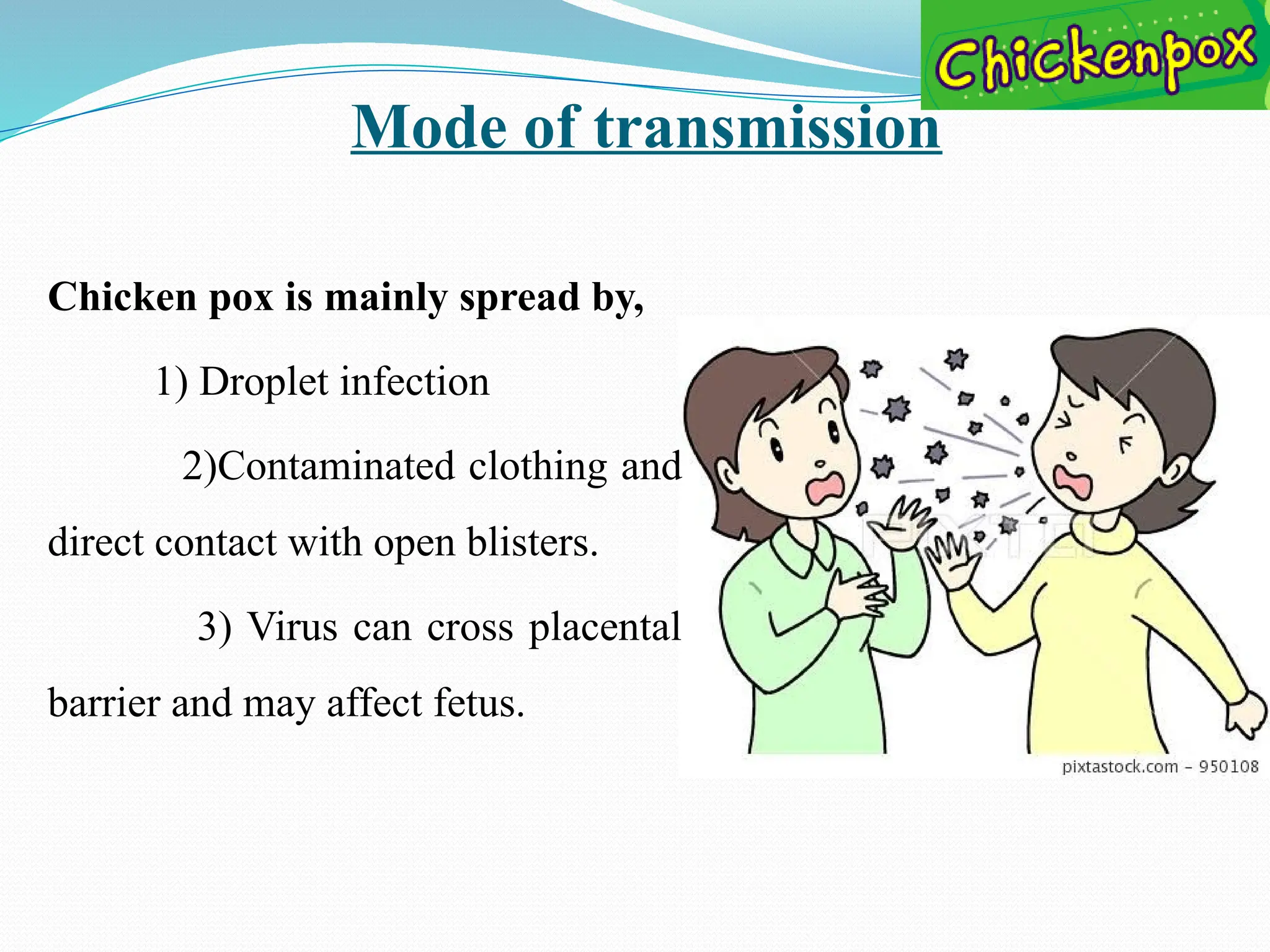
Chicken pox is mainly spread by,
1) Droplet infection
2)Contaminated clothing and
direct contact with open blisters.
3) Virus can cross placental
barrier and may affect fetus.
Sign and Symptoms
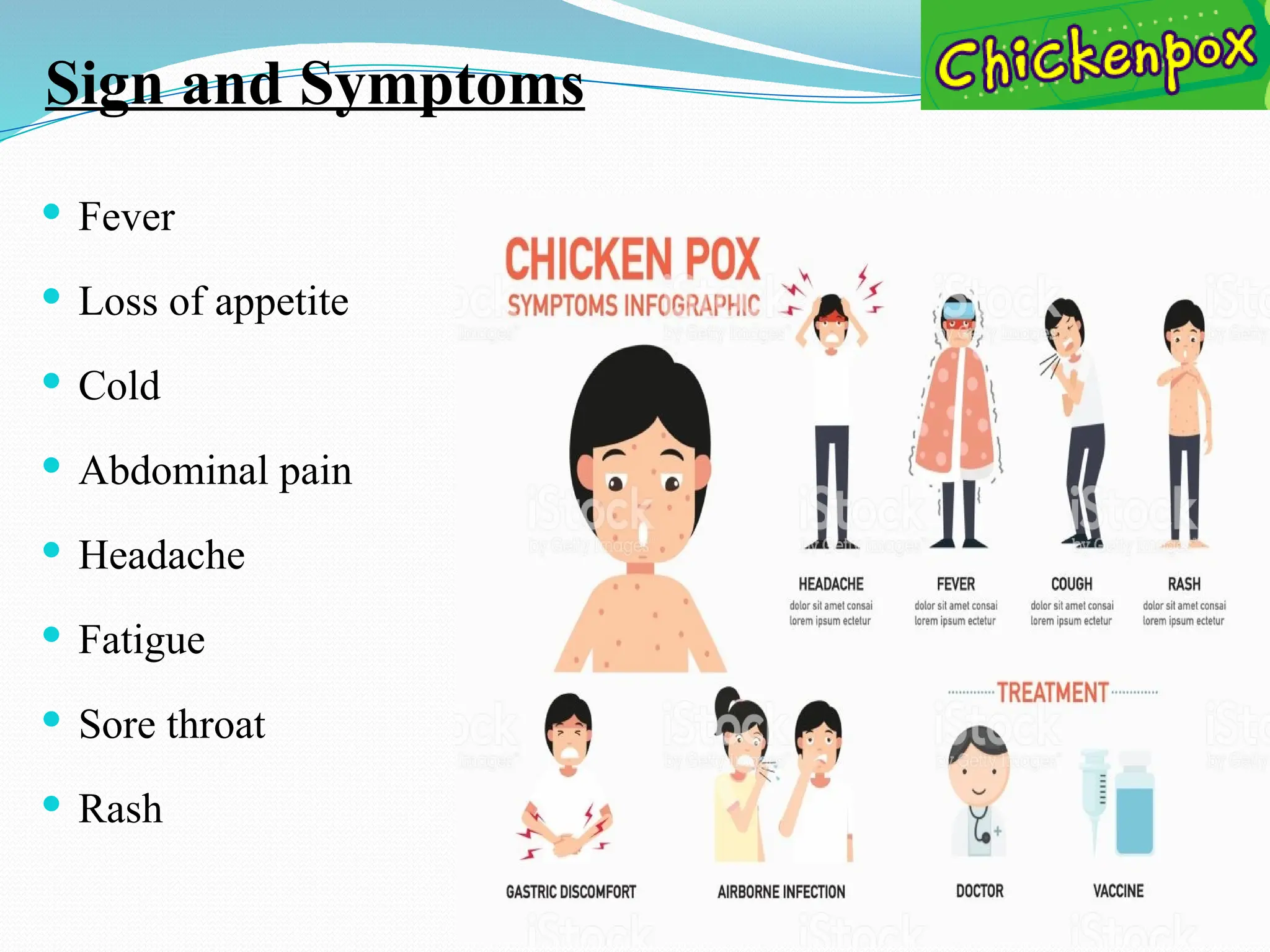
 Fever
 Loss of appetite
 Cold
 Abdominal pain
 Headache
 Fatigue
 Sore throat
 Rash
Cont…
 The rash starts on the chest and
back, and spread to the face,
scalp, arms and legs.
 The rash can develop all over
the body, inside the ears, on the
eyelids, inside the nose and
within the vagina, everywhere.
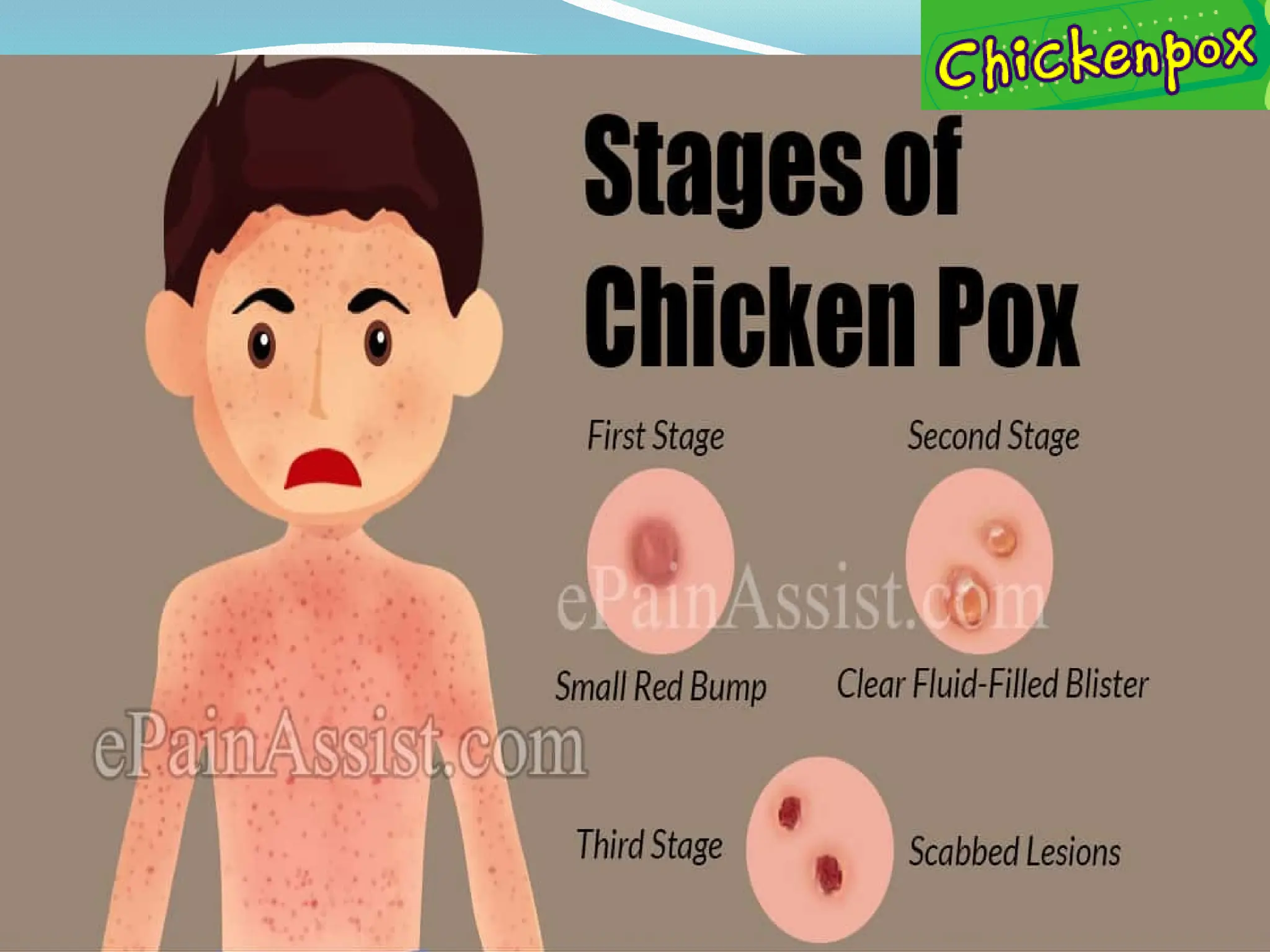
Stages of Chicken Pox
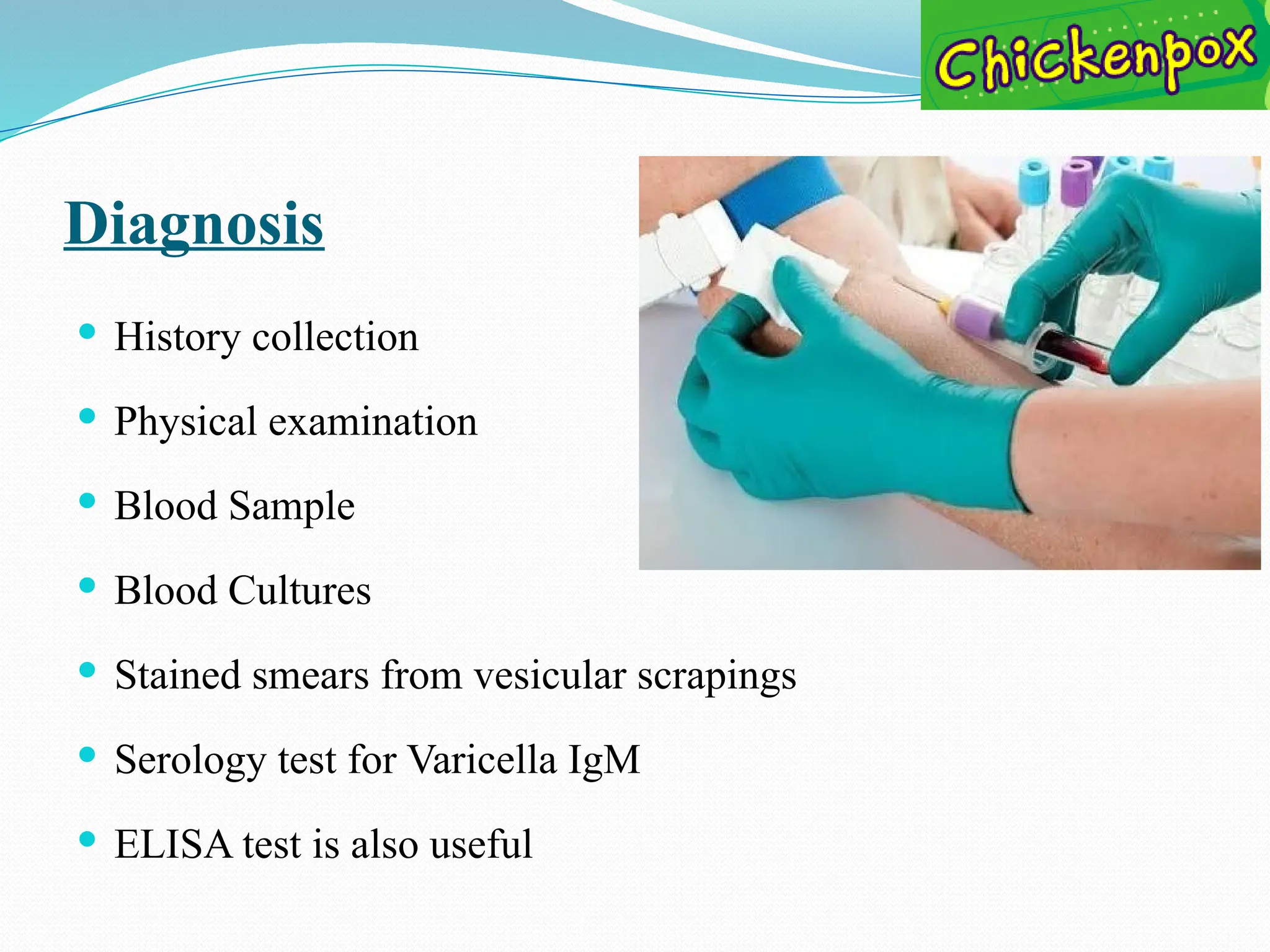
Diagnosis
 History collection
 Physical examination
 Blood Sample
 Blood Cultures
 Stained smears from vesicular scrapings
 Serology test for Varicella IgM
 ELISA test is also useful
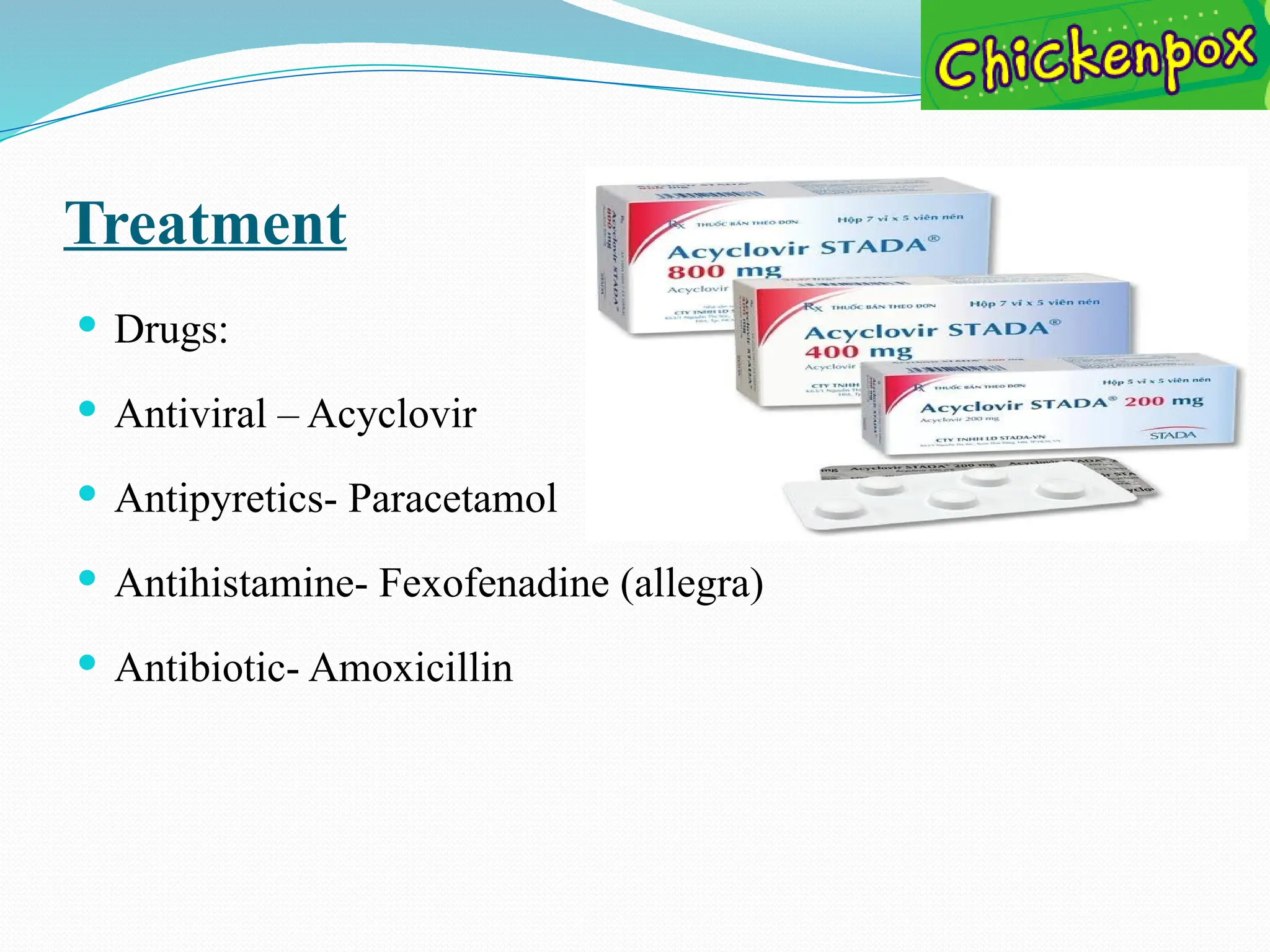
Treatment
 Drugs:
 Antiviral – Acyclovir
 Antipyretics- Paracetamol
 Antihistamine- Fexofenadine (allegra)
 Antibiotic- Amoxicillin
Vaccination
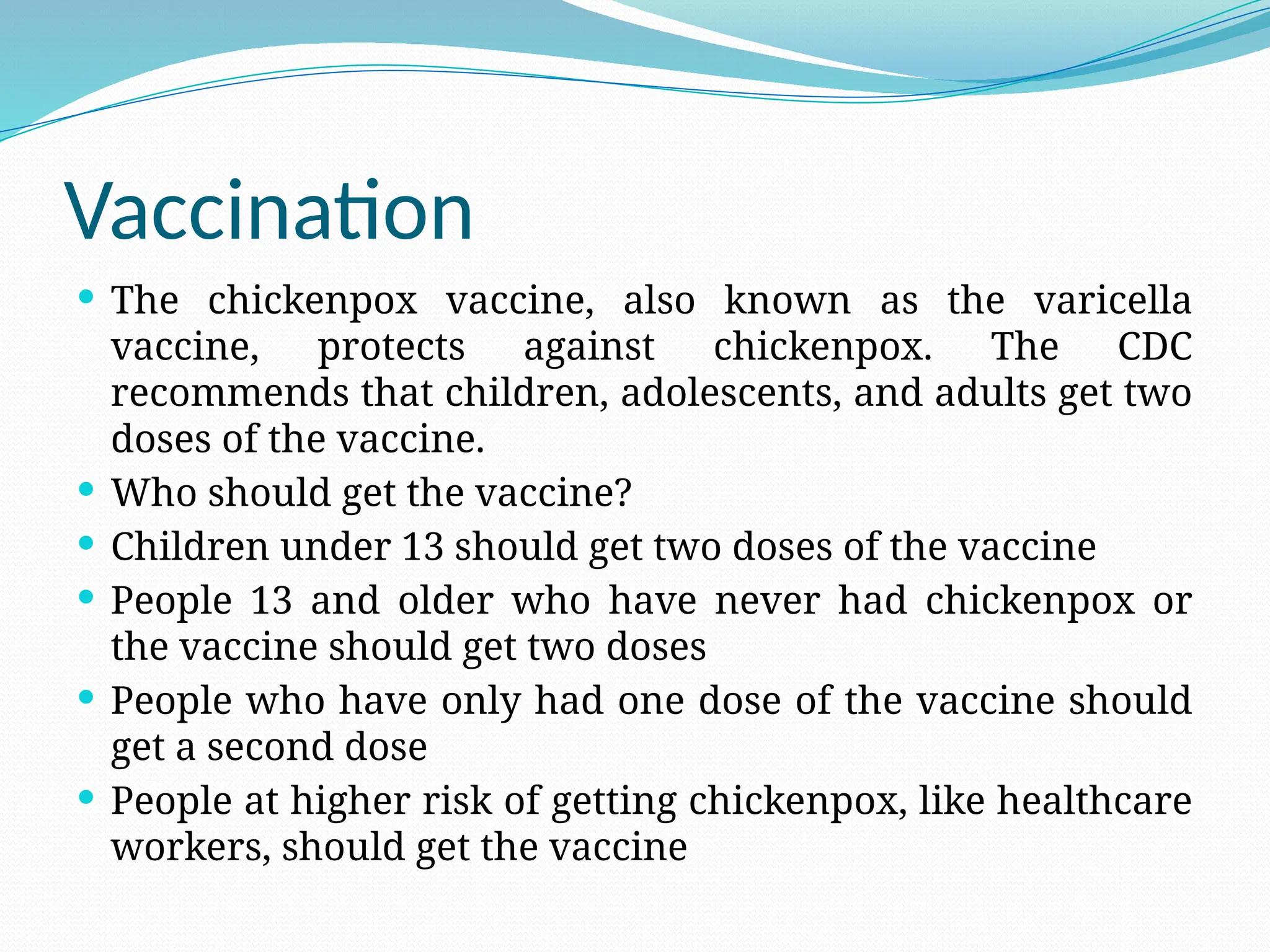
 The chickenpox vaccine, also known as the varicella
vaccine, protects against chickenpox. The CDC
recommends that children, adolescents, and adults get two
doses of the vaccine.
 Who should get the vaccine?
 Children under 13 should get two doses of the vaccine
 People 13 and older who have never had chickenpox or
the vaccine should get two doses
 People who have only had one dose of the vaccine should
get a second dose
 People at higher risk of getting chickenpox, like healthcare
workers, should get the vaccine
Prevention and control
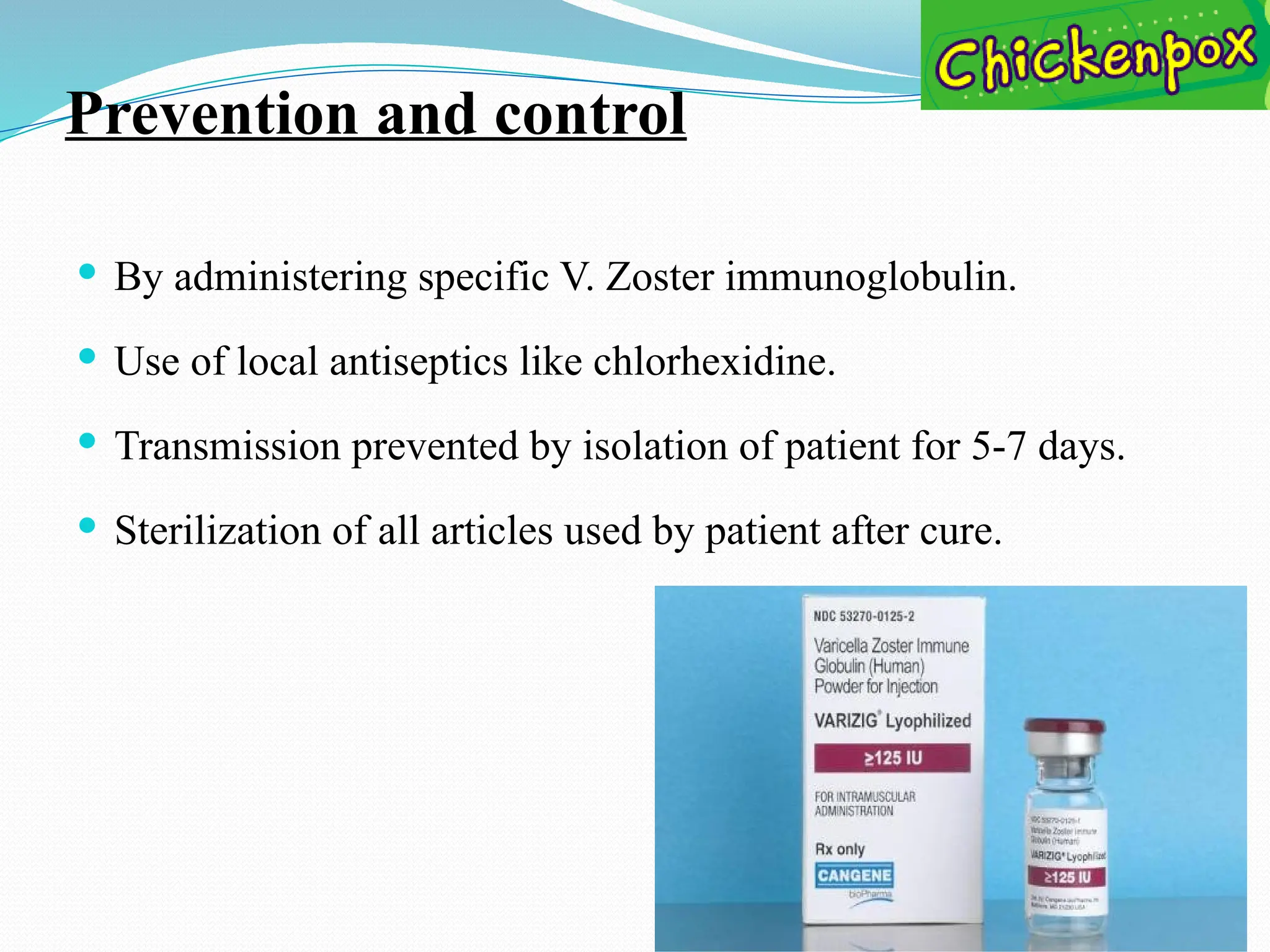
 By administering specific V. Zoster immunoglobulin.
 Use of local antiseptics like chlorhexidine.
 Transmission prevented by isolation of patient for 5-7 days.
 Sterilization of all articles used by patient after cure.
Complications
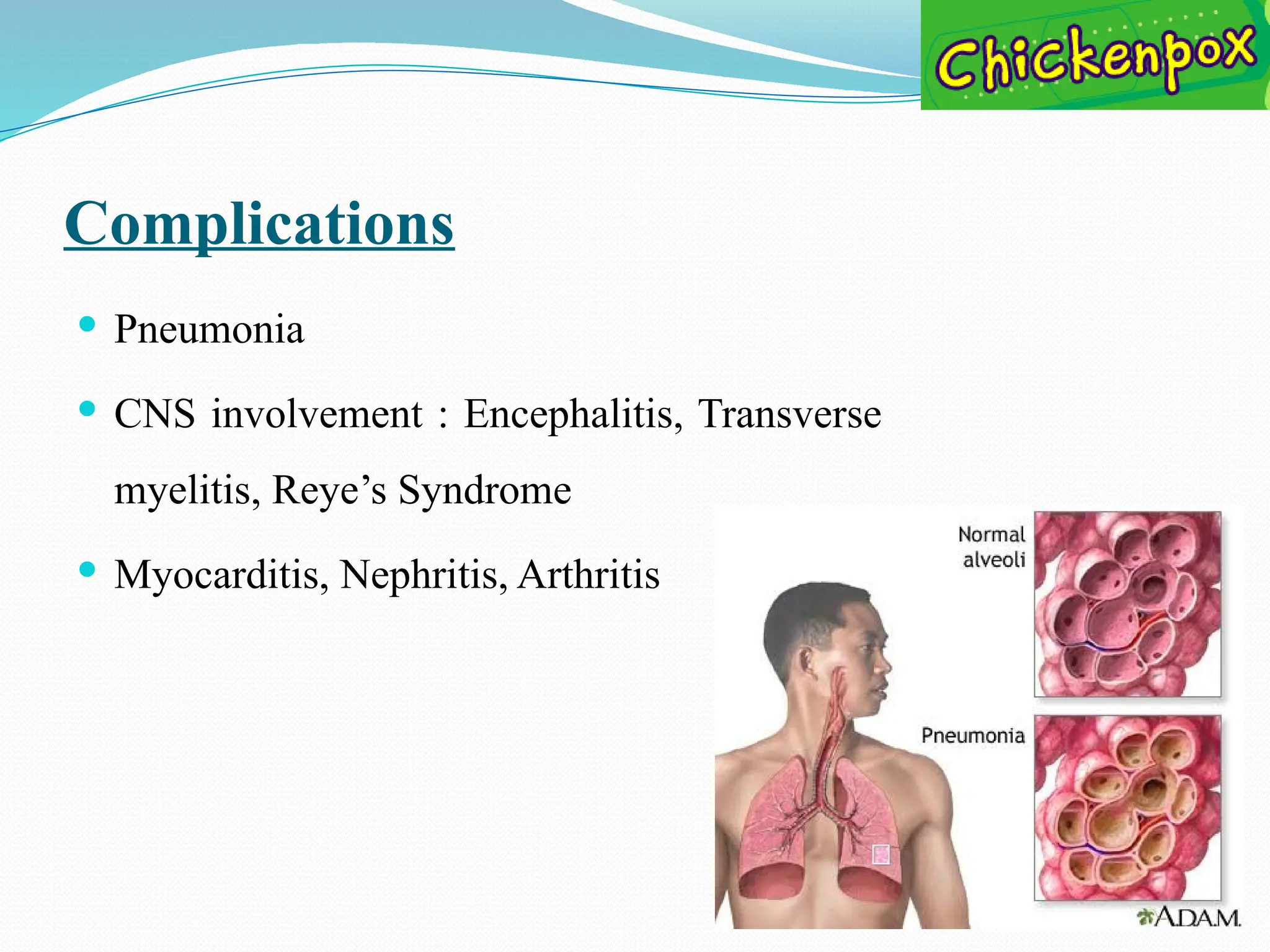
 Pneumonia
 CNS involvement : Encephalitis, Transverse
myelitis, Reye’s Syndrome
 Myocarditis, Nephritis, Arthritis
Movies
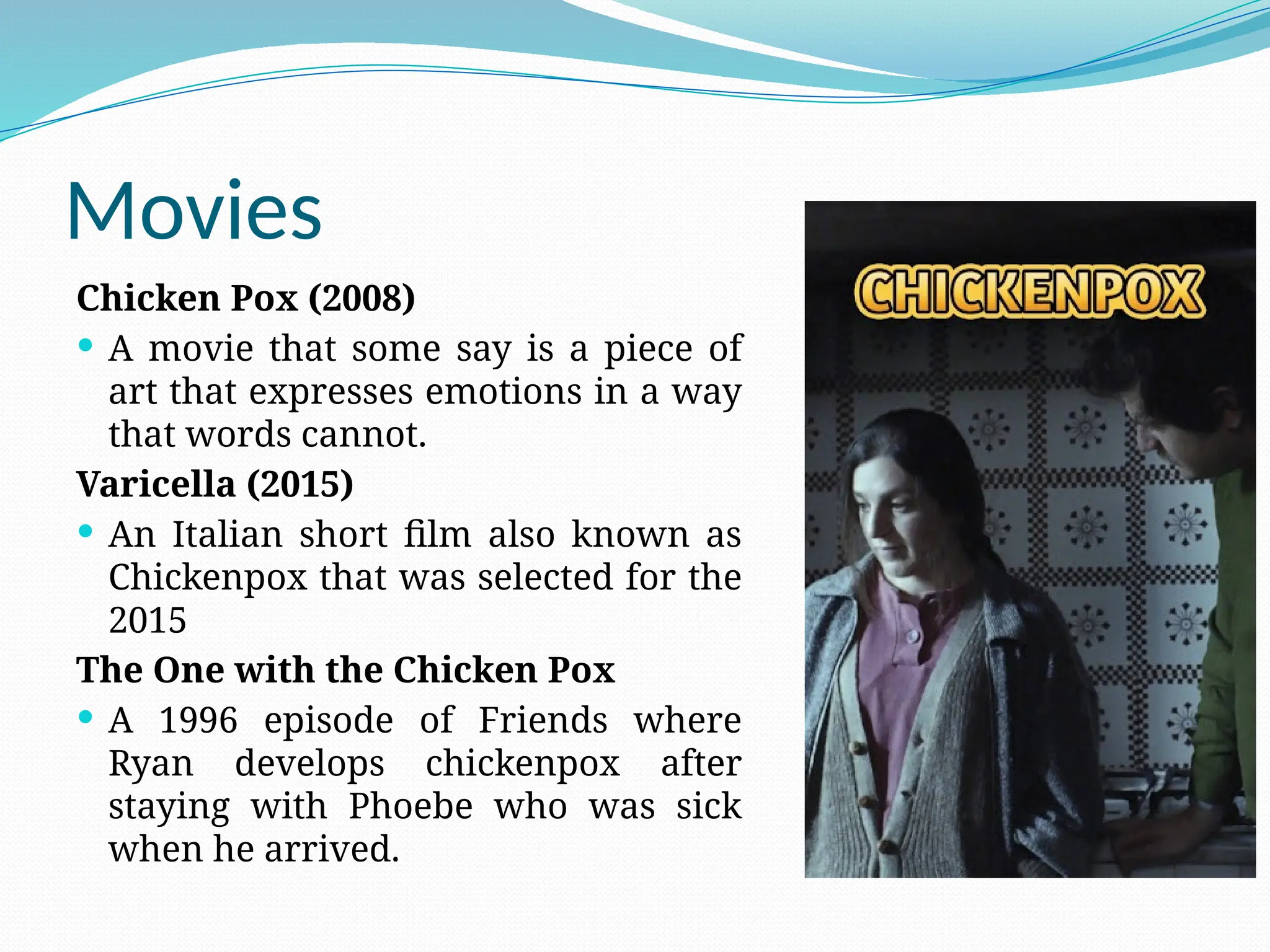
Chicken Pox (2008)
 A movie that some say is a piece of
art that expresses emotions in a way
that words cannot.
Varicella (2015)
 An Italian short film also known as
Chickenpox that was selected for the
2015
The One with the Chicken Pox
 A 1996 episode of Friends where
Ryan develops chickenpox after
staying with Phoebe who was sick
when he arrived.
Small pox
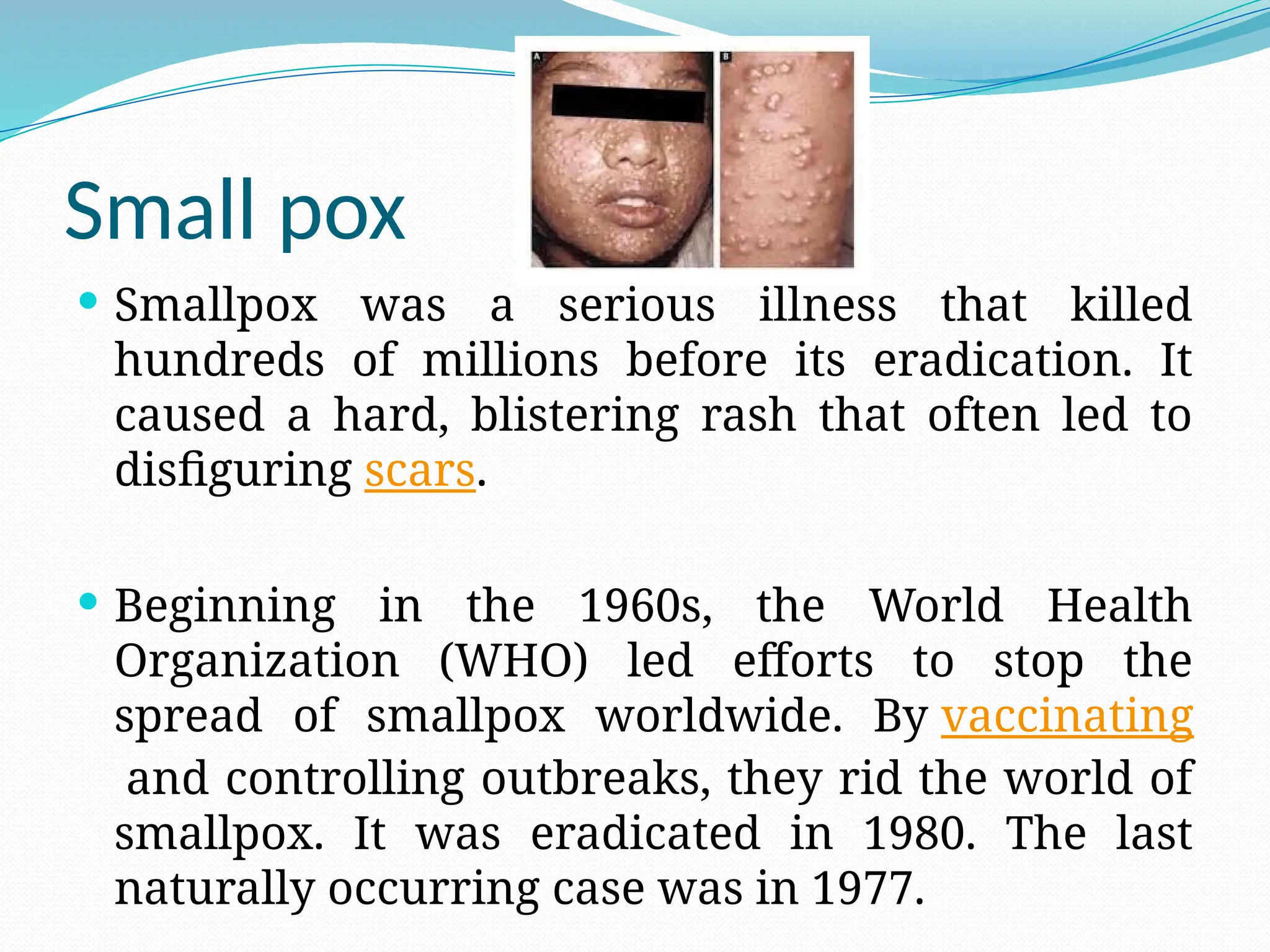
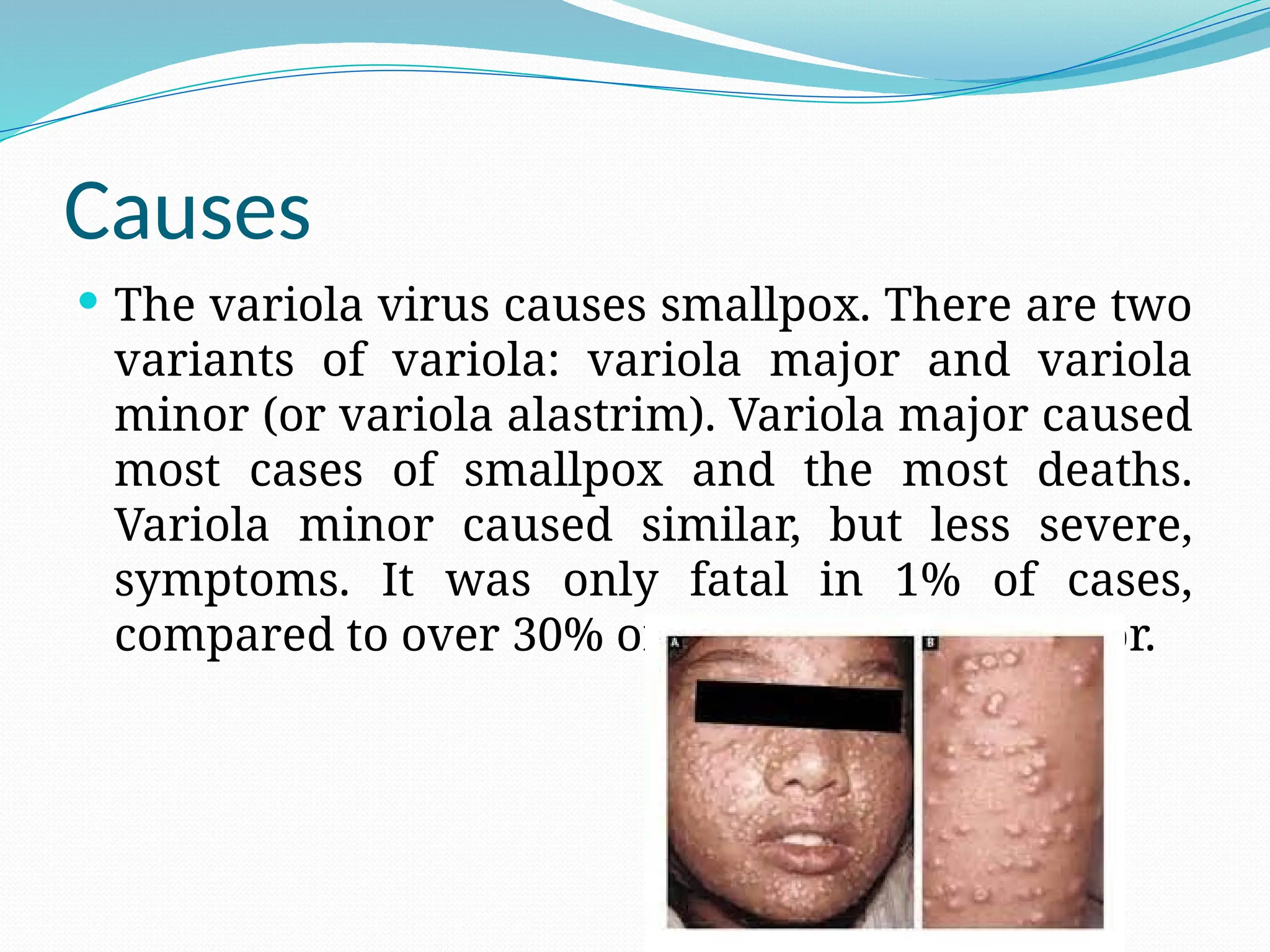
 Smallpox was a serious illness that killed
hundreds of millions before its eradication. It
caused a hard, blistering rash that often led to
disfiguring scars.
 Beginning in the 1960s, the World Health
Organization (WHO) led efforts to stop the
spread of smallpox worldwide. By vaccinating
and controlling outbreaks, they rid the world of
smallpox. It was eradicated in 1980. The last
naturally occurring case was in 1977.
 Smallpox vaccines are not routinely given in
India because smallpox has been
eradicated. However, health officials would use
the vaccine to control any future outbreaks.
 Explanation: The first smallpox vaccine lymph
arrived in India in 1802.
 In 1962, India launched the National Smallpox
Eradication Program (NSEP).
 The program focused on mass vaccination and
involved hiring healthcare workers and investing
in vaccine manufacturing.
 The World Health Organization (WHO) also
played a critical role in the eradication of
smallpox.
Causes
 The variola virus causes smallpox. There are two
variants of variola: variola major and variola
minor (or variola alastrim). Variola major caused
most cases of smallpox and the most deaths.
Variola minor caused similar, but less severe,
symptoms. It was only fatal in 1% of cases,
compared to over 30% of cases of variola major.
Transmission
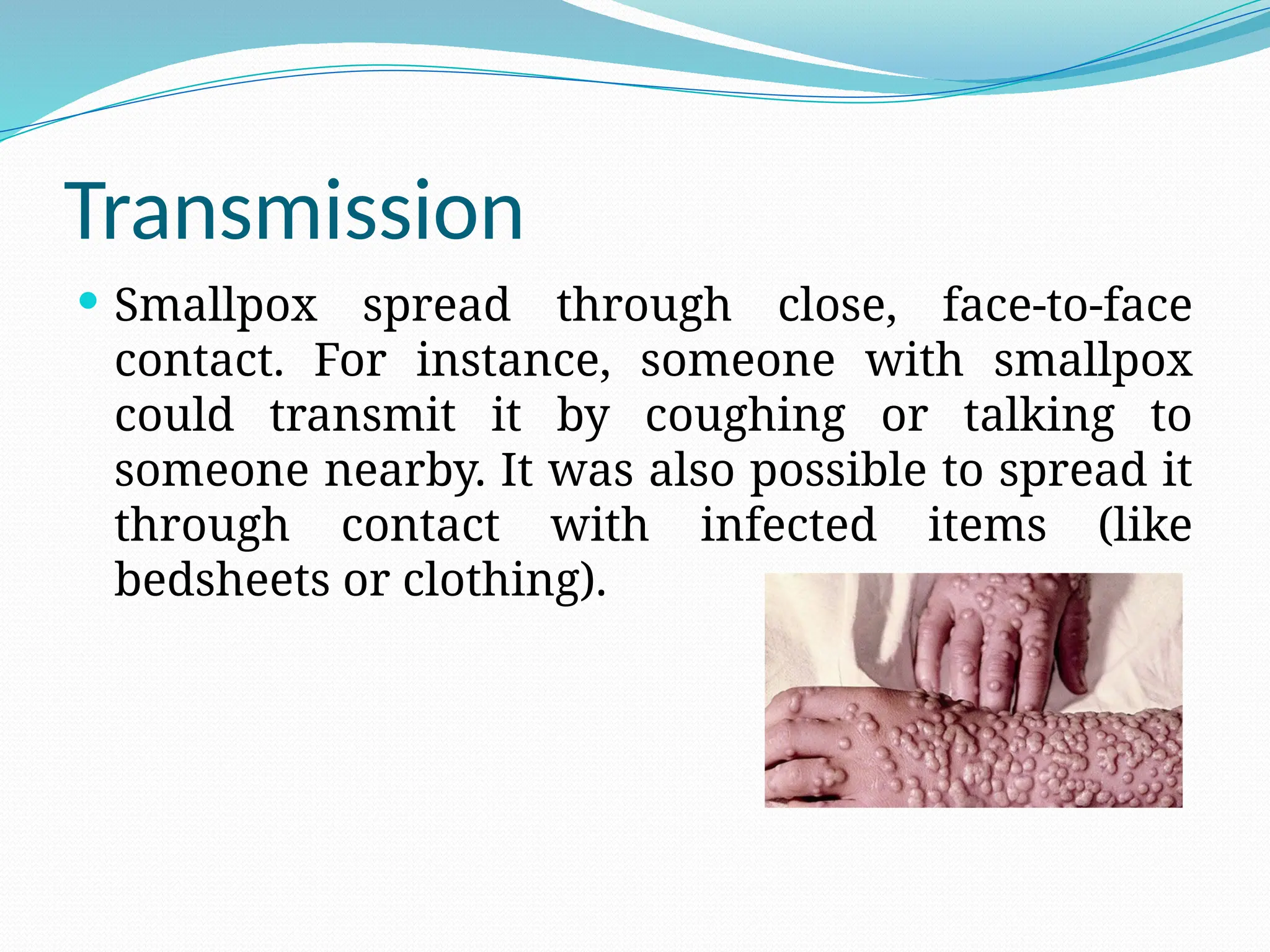
 Smallpox spread through close, face-to-face
contact. For instance, someone with smallpox
could transmit it by coughing or talking to
someone nearby. It was also possible to spread it
through contact with infected items (like
bedsheets or clothing).
Pathophysiology
 Initial infection: The virus enters the respiratory tract through
droplets from an infected person's cough, sneeze, or talk.
 Replication: The virus multiplies in the respiratory tract and
lymph nodes.
 Viremia: The virus spreads throughout the body, causing a
massive asymptomatic viremia.
 Skin infection: The virus localizes in the skin, causing a rash
that progresses through stages.
 Cell-mediated immune response: The body's immune response
causes the rash to develop into pustules.
 Scarring: The pustules can cause deep scarring, especially in
the most lethal cases.
Types
 There are a few types of smallpox that cause slightly different
symptoms:
 Ordinary smallpox. Ordinary smallpox was the most common type of
smallpox and caused the symptoms described above. It caused about
85% of cases. About 1 in 3 people with ordinary smallpox died.
 Modified-type smallpox. People who had been vaccinated sometimes
got modified-type smallpox. This was similar to ordinary smallpox, but
the rash was less severe and didn’t last as long. Most people survived
modified-type smallpox.
 Flat-type (malignant) smallpox. Flat-type smallpox caused more
severe initial symptoms than ordinary smallpox. The bumps from the
rash merged together and never got hard or fluid-filled. This made a
flat, soft rash that didn’t form scabs. Flat-type smallpox happened
more often in children. It was almost always fatal.
 Hemorrhagic smallpox. Hemorrhagic smallpox was more common in
pregnant people. It caused severe initial symptoms. The rash usually
didn’t get hard and fluid-filled. Instead, the skin underneath it bled,
causing it to look black or burnt. It also caused internal bleeding and
organ failure. Hemorrhagic smallpox was almost always fatal.
Sign and symptoms
Early symptoms
 High fever, often between 101° and 104° Fahrenheit
 Feeling generally unwell (malaise)
 Severe headache and backache
 Abdominal pain and vomiting
 Mouth sores
 Rash
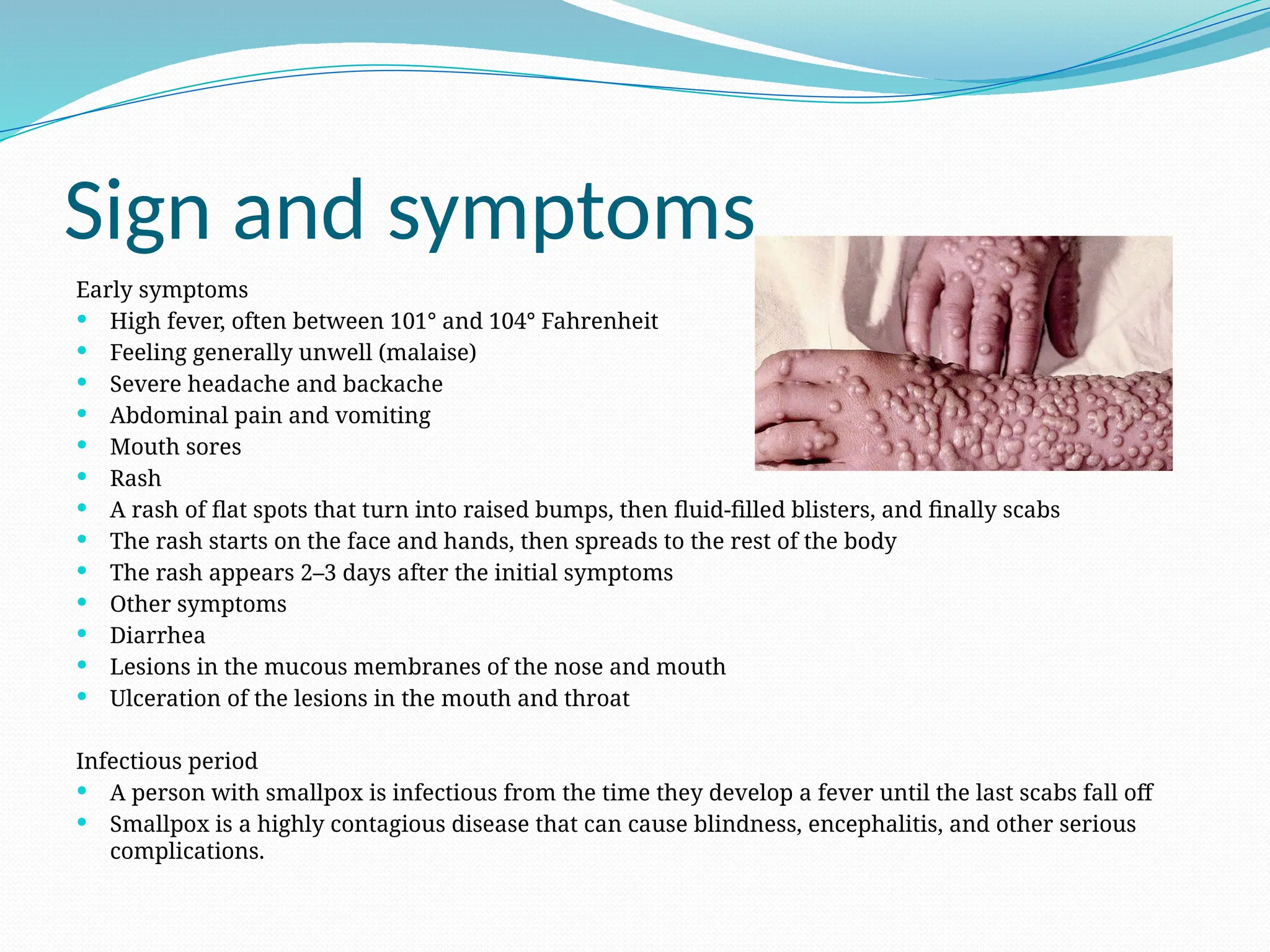
 A rash of flat spots that turn into raised bumps, then fluid-filled blisters, and finally scabs
 The rash starts on the face and hands, then spreads to the rest of the body
 The rash appears 2–3 days after the initial symptoms
 Other symptoms
 Diarrhea
 Lesions in the mucous membranes of the nose and mouth
 Ulceration of the lesions in the mouth and throat
Infectious period
 A person with smallpox is infectious from the time they develop a fever until the last scabs fall off
 Smallpox is a highly contagious disease that can cause blindness, encephalitis, and other serious
complications.
Diagnostic assessment
Laboratory testing
 Real-time polymerase chain reaction (PCR): The
preferred method for detecting the variola virus
 Culture of fluid or scab: From blisters, pustules, or
scabs
 Blood test: During the fever stage to identify
antibodies made in response to the virus
 Electron microscopy: Of fluid or scab
 Smallpox is diagnosed in specialized laboratories that
have the proper testing techniques and safety
measures.
Treatment
 Smallpox treatment is generally supportive care in a hospital setting. There is no
specific treatment that has been proven effective in people who are sick with
smallpox.
 Supportive care : Patients are treated in a hospital setting with strict isolation and
infection controls.
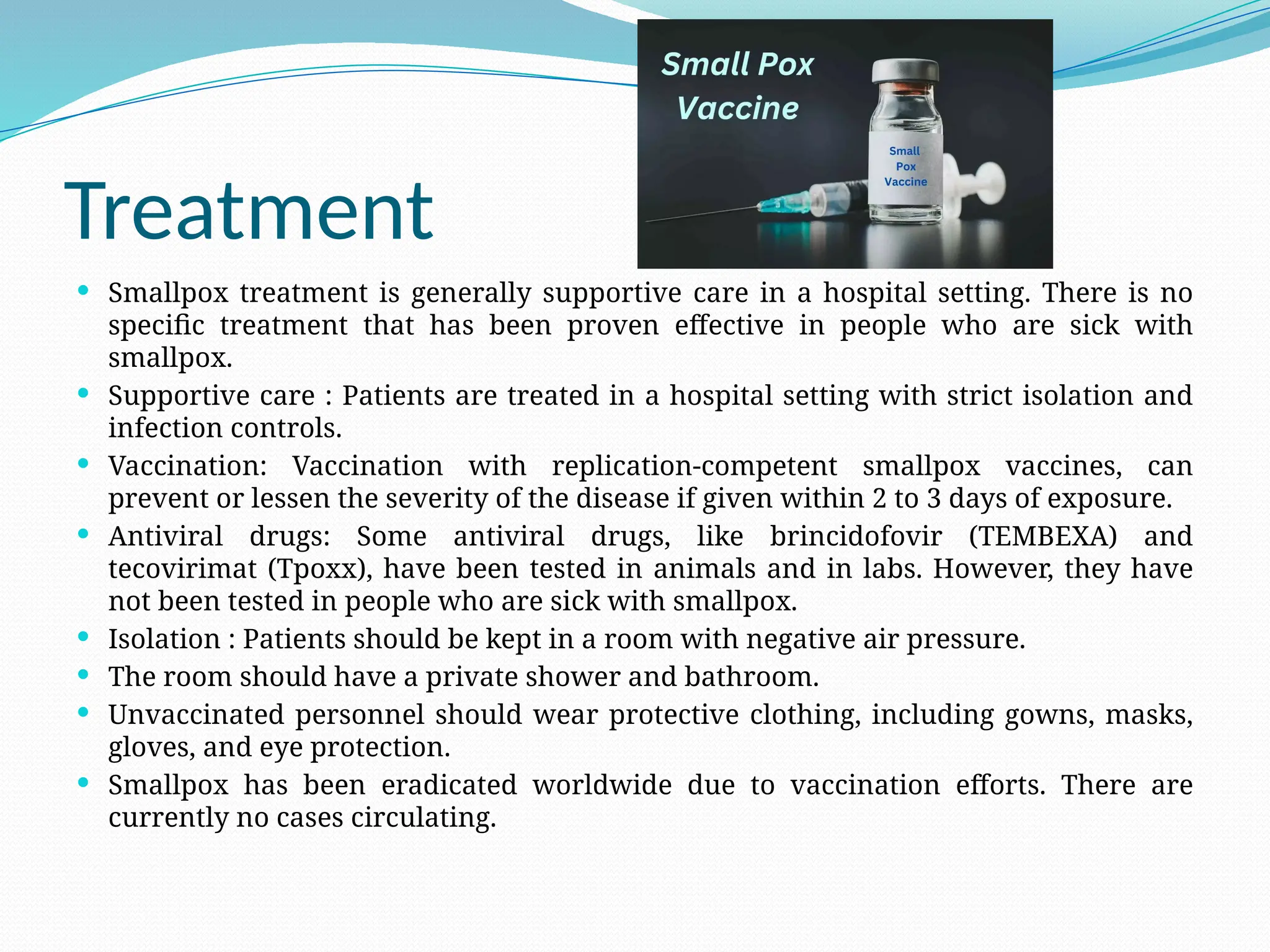
 Vaccination: Vaccination with replication-competent smallpox vaccines, can
prevent or lessen the severity of the disease if given within 2 to 3 days of exposure.
 Antiviral drugs: Some antiviral drugs, like brincidofovir (TEMBEXA) and
tecovirimat (Tpoxx), have been tested in animals and in labs. However, they have
not been tested in people who are sick with smallpox.
 Isolation : Patients should be kept in a room with negative air pressure.
 The room should have a private shower and bathroom.
 Unvaccinated personnel should wear protective clothing, including gowns, masks,
gloves, and eye protection.
 Smallpox has been eradicated worldwide due to vaccination efforts. There are
currently no cases circulating.
Prevention
 Smallpox is prevented by vaccination. The smallpox vaccine is made
from a virus called vaccinia, which is similar to smallpox but less
harmful.
How to prevent smallpox
 Get vaccinated
 The smallpox vaccine can protect you from getting sick or make the
disease less severe if you get it before or within a week of exposure.
 Vaccinate people at risk
 If there is a potential exposure, vaccinate all people who are
susceptible.
 Dispose of contaminated materials properly
 Incinerate disposable materials and sterilize reusable equipment or
clothing.
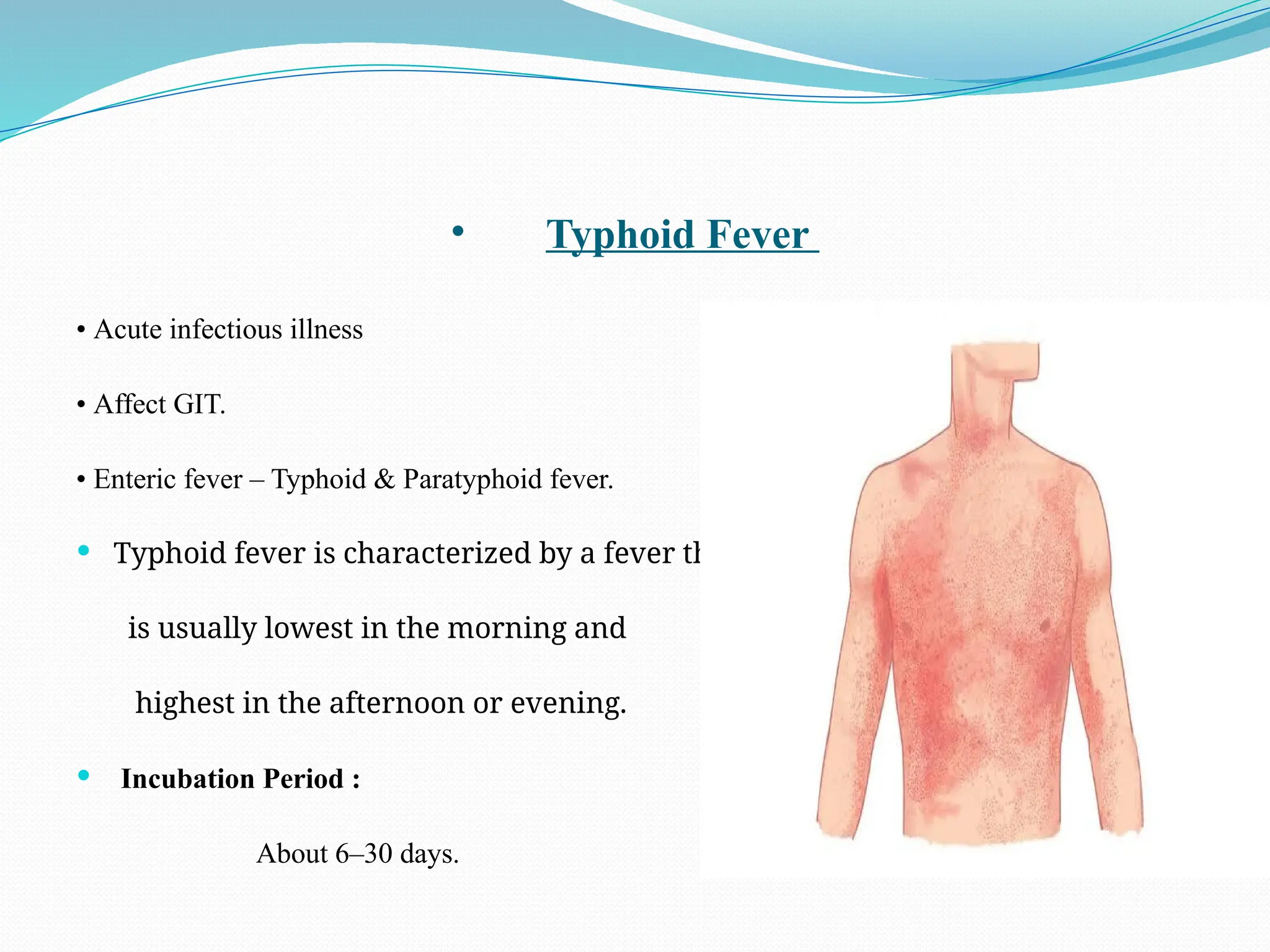
• Typhoid Fever
• Acute infectious illness
• Affect GIT.
• Enteric fever – Typhoid & Paratyphoid fever.
 Typhoid fever is characterized by a fever that
is usually lowest in the morning and
highest in the afternoon or evening.
 Incubation Period :
About 6–30 days.
Typhoid fever
 Typhoid fever is an illness caused by the
bacterium Salmonella Typhi (S. Typhi). It infects
small intestines (gut) and causes high fever, stomach
pain and other symptoms. Typhoid fever is also
called enteric fever.
 Paratyphoid fever is similar to typhoid with more
mild symptoms. It’s caused by Salmonella Paratyphi
(S. Paratyphi).
 S. Typhi and S. Paratyphi are different than
the Salmonella bacteria that cause salmonellosis, a
common type of food poisoning.
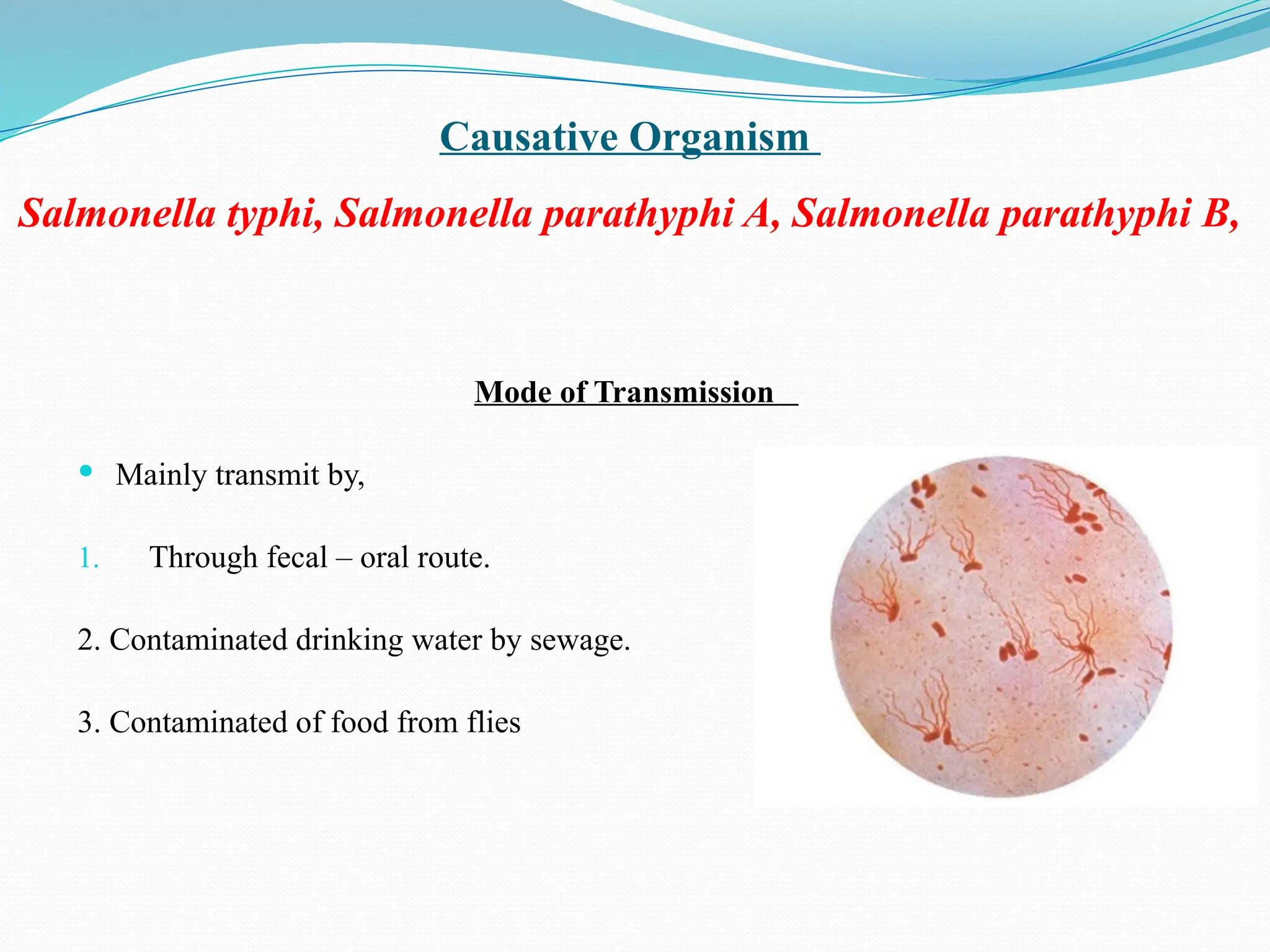
Causative Organism
Salmonella typhi, Salmonella parathyphi A, Salmonella parathyphi B,
Mode of Transmission
 Mainly transmit by,
1. Through fecal – oral route.
2. Contaminated drinking water by sewage.
3. Contaminated of food from flies
Stages
 Stage 1. You can start getting typhoid symptoms anywhere from five to 14
days after coming in contact with S. Typhi. The first symptom is a fever that
gets higher over a few days — called “stepwise” since it goes up in steps. The
bacteria is moving into your blood in this stage.
 Stage 2. Around the second week of fever, the bacteria is multiplying in your
Peyer’s patches (part of your immune system that identifies harmful
invaders). You’ll start experiencing abdominal pain and other stomach
symptoms, like diarrhea or constipation. You might get “rose spots,” small
pink dots on your skin that look like a rash.
 Stage 3. If not treated with antibiotics, the bacteria can cause severe damage,
usually around the third week after your symptoms start. Some people get
serious complications, like internal bleeding and encephalitis (inflammation
in your brain).
 Stage 4. Stage four is when most people begin to recover. Your high fever
begins to come down. S. Typhi can live in your gallbladder without causing
symptoms, which means you may still be contagious even after you feel better.
Pathophysiology
 Ingestion: The bacteria enter the body through
contaminated food or drink.
 Survival: The bacteria survive stomach acid and pass
into the small intestine.
 Invasion: The bacteria invade the intestinal
epithelium, triggering an inflammatory response.
 Dissemination: The bacteria spread to the lymph
nodes, gallbladder, liver, spleen, and other parts of the
body.
 Systemic disease: The bacteria can spread to the liver,
spleen, and bone marrow, causing systemic disease.
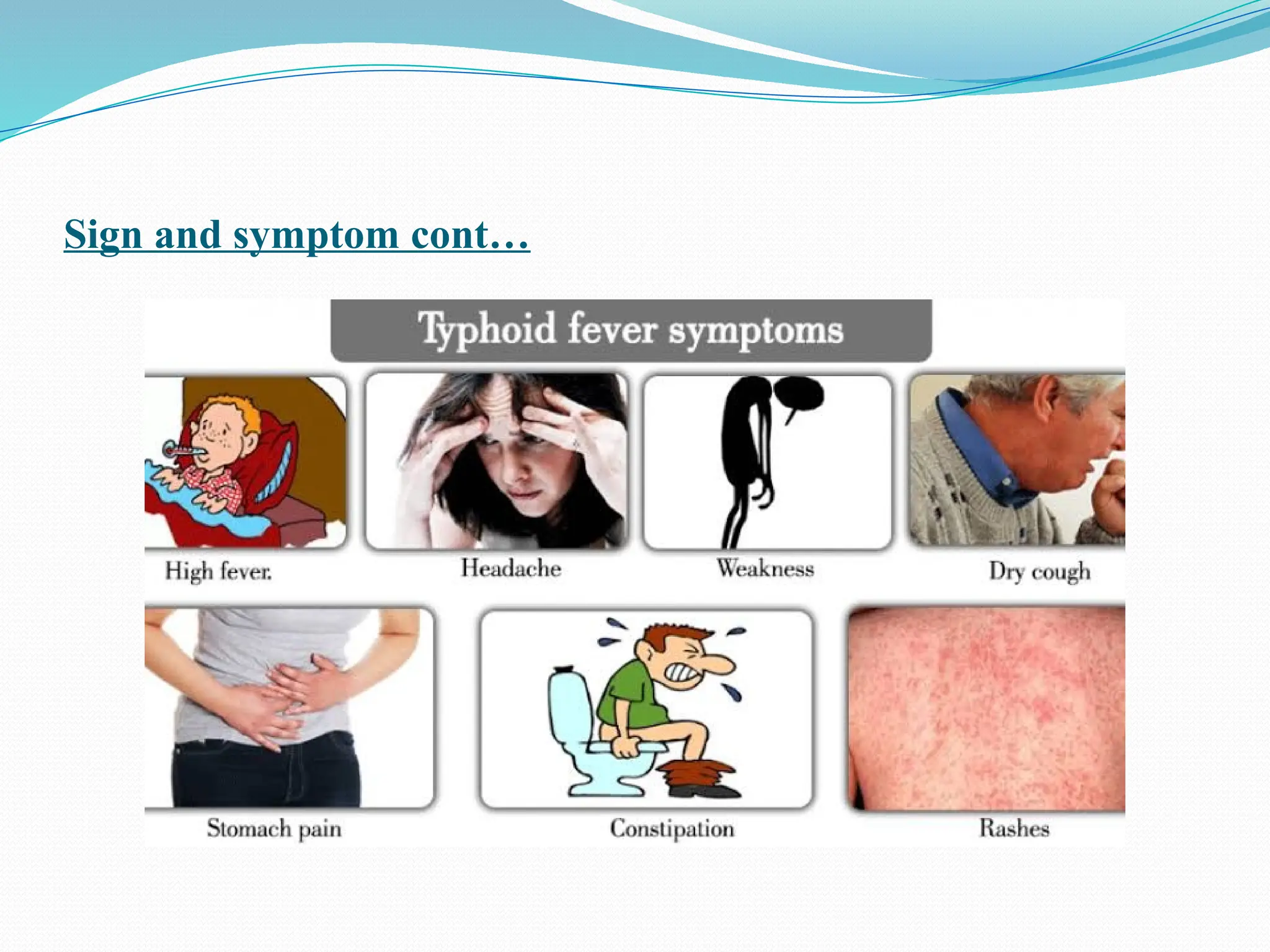
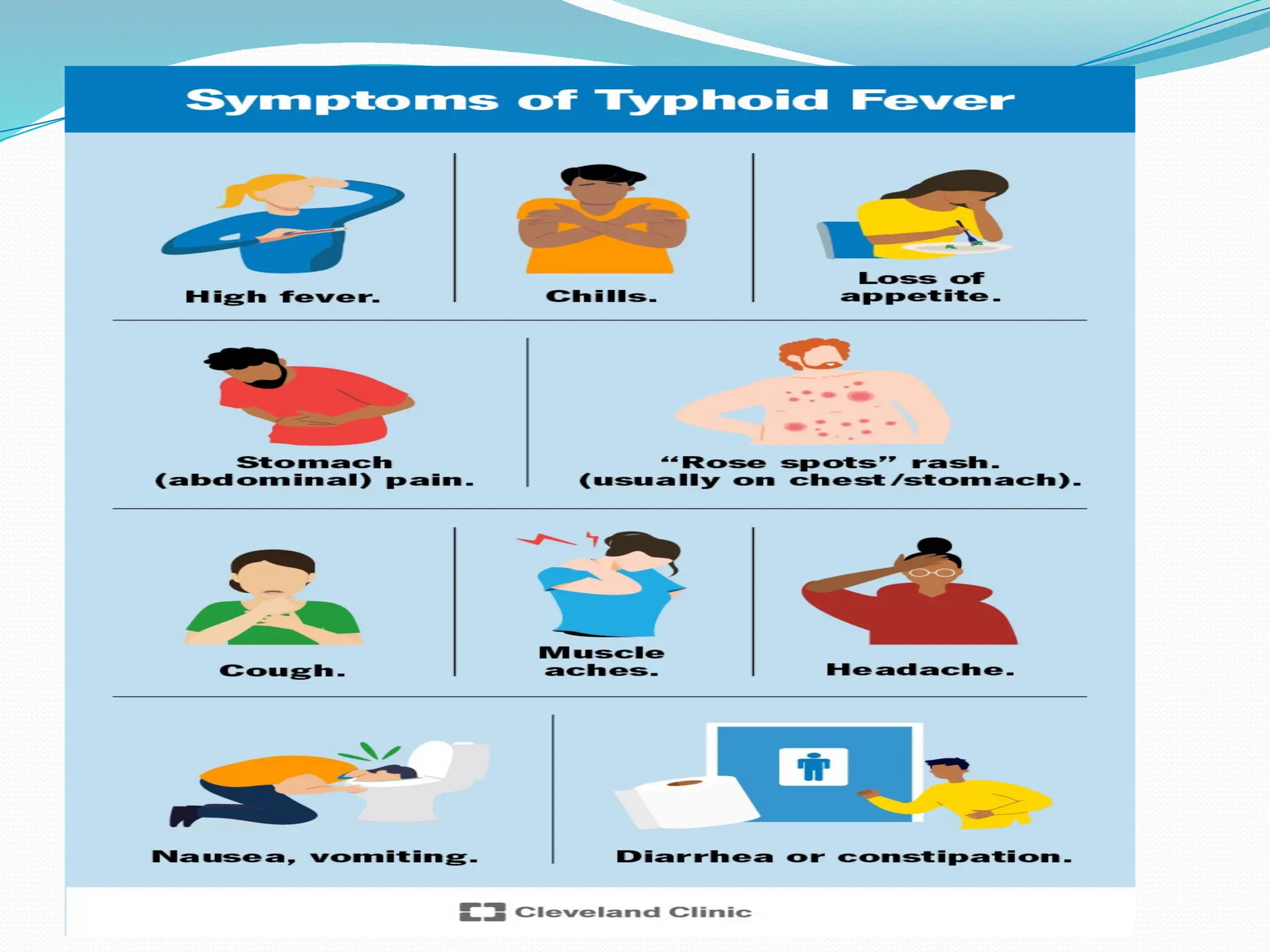
Sign and symptom cont…
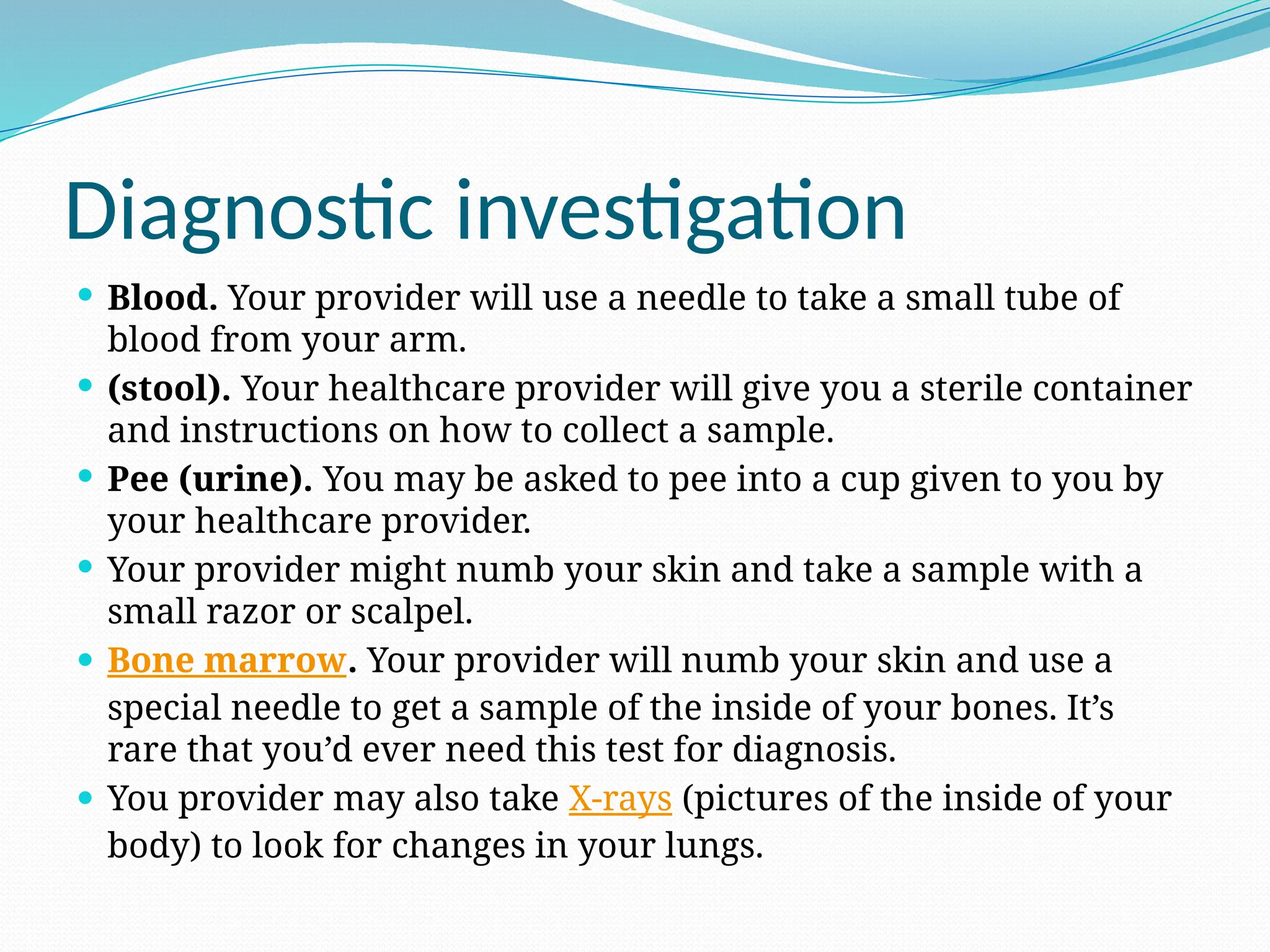
Diagnostic investigation
 Blood. Your provider will use a needle to take a small tube of
blood from your arm.
 (stool). Your healthcare provider will give you a sterile container
and instructions on how to collect a sample.
 Pee (urine). You may be asked to pee into a cup given to you by
your healthcare provider.
 Your provider might numb your skin and take a sample with a
small razor or scalpel.
 Bone marrow. Your provider will numb your skin and use a
special needle to get a sample of the inside of your bones. It’s
rare that you’d ever need this test for diagnosis.
 You provider may also take X-rays (pictures of the inside of your
body) to look for changes in your lungs.
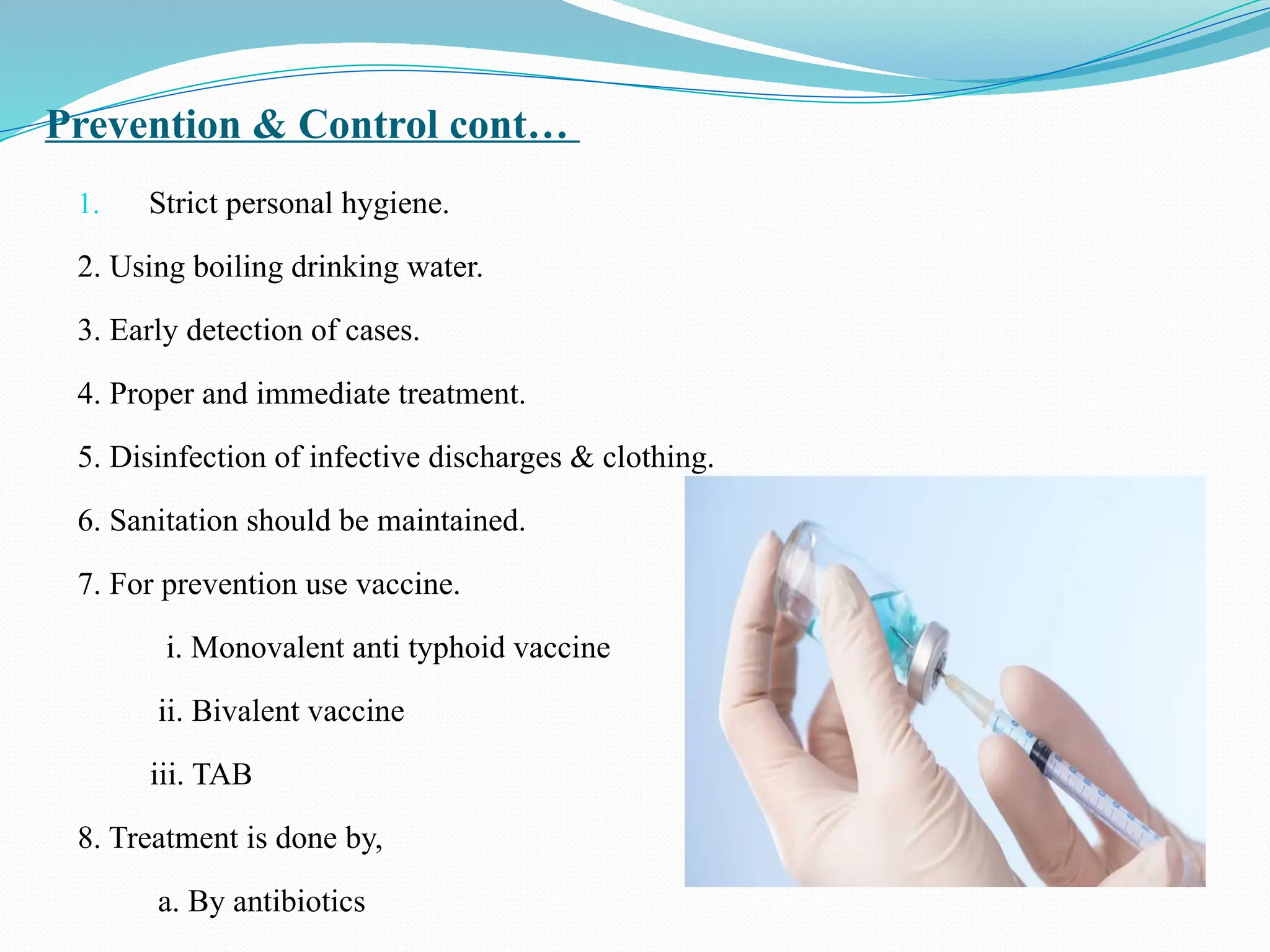
Prevention & Control cont…
1. Strict personal hygiene.
2. Using boiling drinking water.
3. Early detection of cases.
4. Proper and immediate treatment.
5. Disinfection of infective discharges & clothing.
6. Sanitation should be maintained.
7. For prevention use vaccine.
i. Monovalent anti typhoid vaccine
ii. Bivalent vaccine
iii. TAB
8. Treatment is done by,
a. By antibiotics
Management
 Typhoid is treated with antibiotics. Some newer types of the
bacteria are able to survive antibiotic treatments, so you’ll
be treated with different antibiotics depending on what type
of typhoid you have and where you got sick. Paratyphoid
fever is also treated with antibiotics.
treat typhoid fever with antibiotics, which may include:
 Ciprofloxacin, levoflaxin or ofloxacin.
 Ceftriaxone, cefotaxime or cefixime.
 Azithromycin.
 Carbapenems.
 Conservative management .
 The typhoid vaccine for adults is available in injectable and
oral forms. The World Health Organization (WHO)
recommends the typhoid conjugate vaccine (TCV) for routine
use.
Injectable vaccines
 Vi polysaccharide vaccine (Vi-PS): A single injection given to
people aged two and older.
 Typhoid conjugate vaccine (TCV): An injectable vaccine that can
be given to children and adults.
Oral vaccines
 Ty21a vaccine: A live-attenuated vaccine given in four capsules
taken on alternate days. It's approved for adults and children
aged six and older.
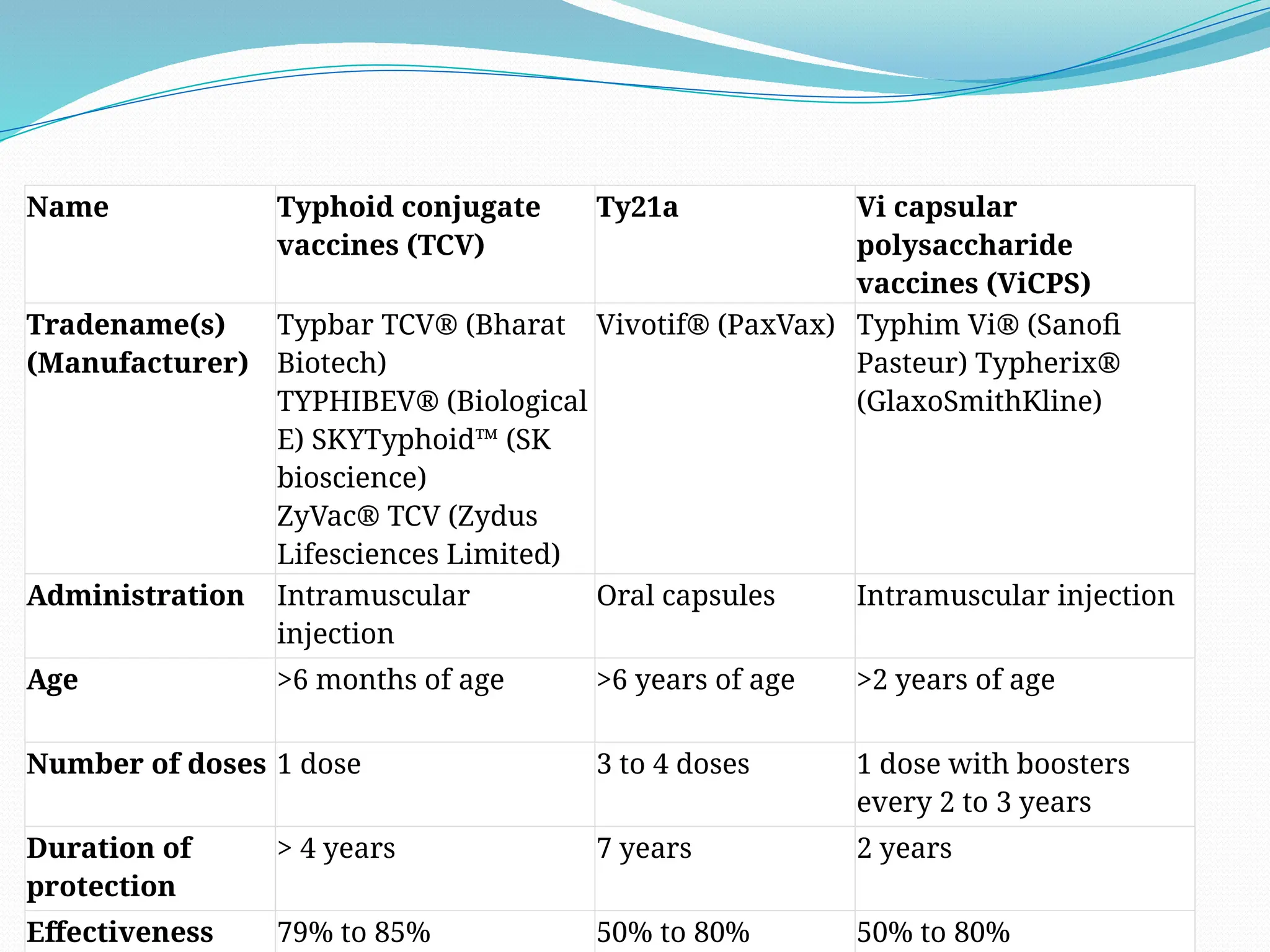
Name Typhoid conjugate
vaccines (TCV)
Ty21a Vi capsular
polysaccharide
vaccines (ViCPS)
Tradename(s)
(Manufacturer)
Typbar TCV® (Bharat
Biotech)
TYPHIBEV® (Biological
E) SKYTyphoid™ (SK
bioscience)
ZyVac® TCV (Zydus
Lifesciences Limited)
Vivotif® (PaxVax) Typhim Vi® (Sanofi
Pasteur) Typherix®
(GlaxoSmithKline)
Administration Intramuscular
injection
Oral capsules Intramuscular injection
Age >6 months of age >6 years of age >2 years of age
Number of doses 1 dose 3 to 4 doses 1 dose with boosters
every 2 to 3 years
Duration of
protection
> 4 years 7 years 2 years
Effectiveness 79% to 85% 50% to 80% 50% to 80%
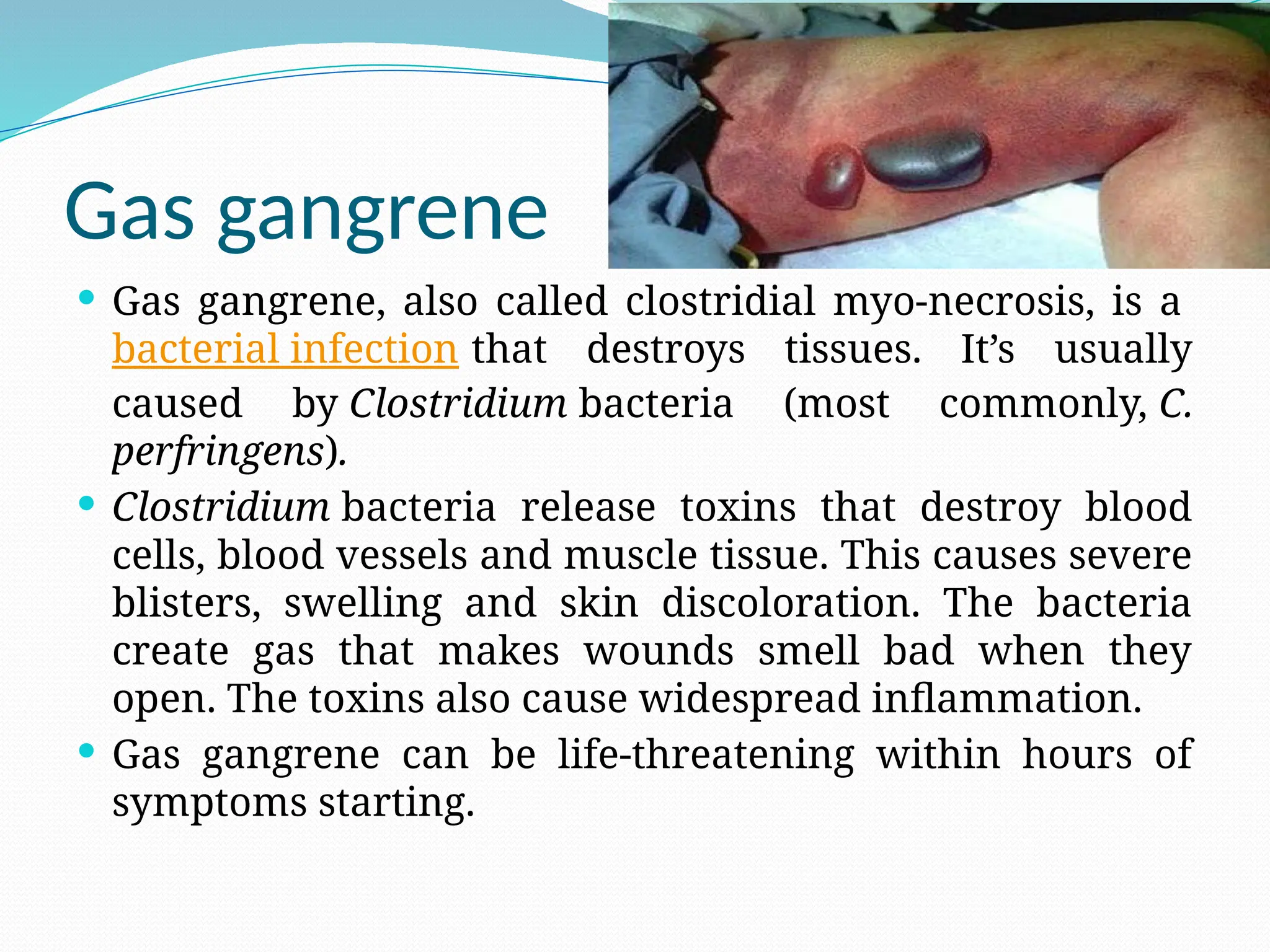
Gas gangrene
 Gas gangrene, also called clostridial myo-necrosis, is a
bacterial infection that destroys tissues. It’s usually
caused by Clostridium bacteria (most commonly, C.
perfringens).
 Clostridium bacteria release toxins that destroy blood
cells, blood vessels and muscle tissue. This causes severe
blisters, swelling and skin discoloration. The bacteria
create gas that makes wounds smell bad when they
open. The toxins also cause widespread inflammation.
 Gas gangrene can be life-threatening within hours of
symptoms starting.
Causes
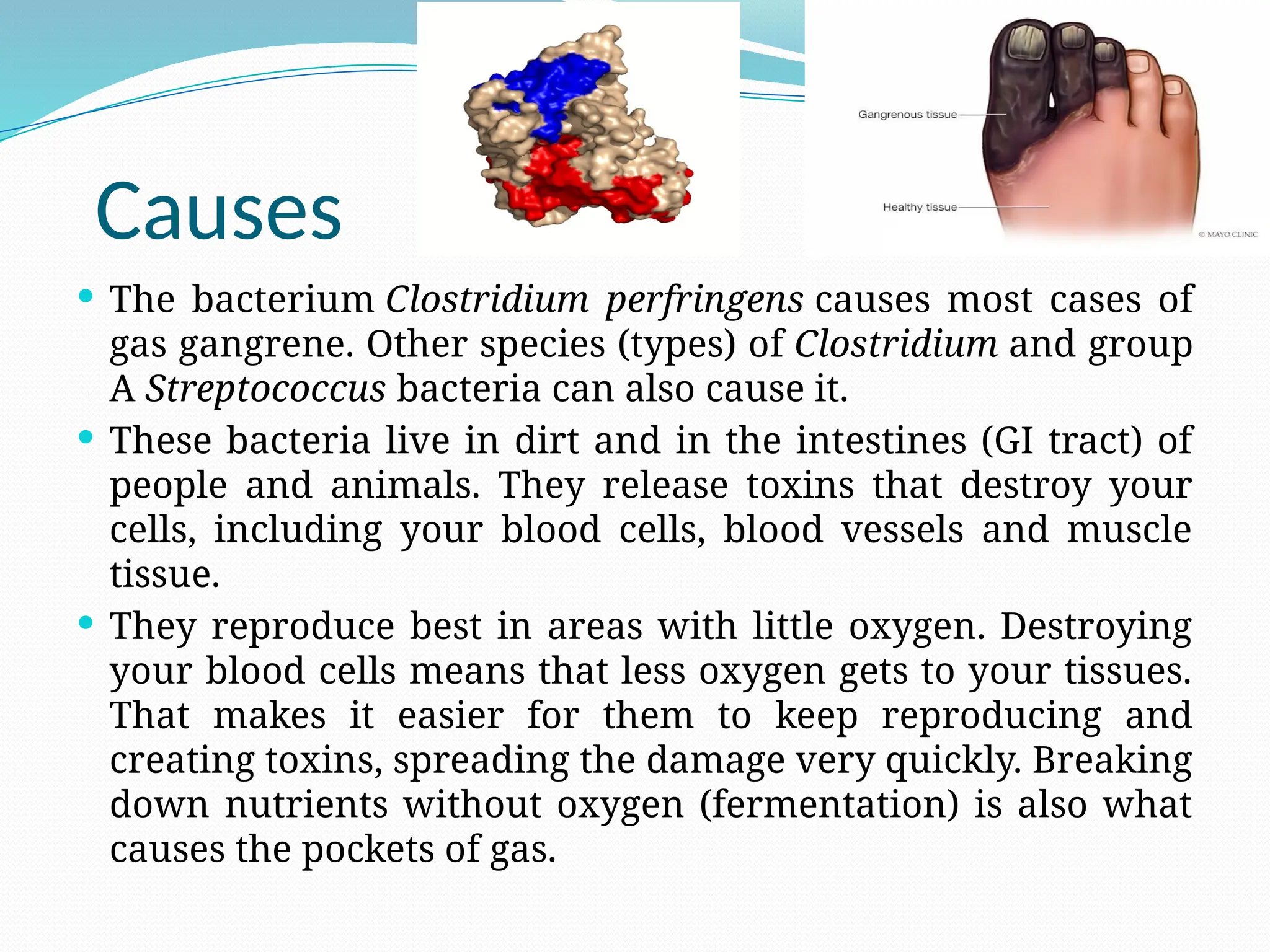
 The bacterium Clostridium perfringens causes most cases of
gas gangrene. Other species (types) of Clostridium and group
A Streptococcus bacteria can also cause it.
 These bacteria live in dirt and in the intestines (GI tract) of
people and animals. They release toxins that destroy your
cells, including your blood cells, blood vessels and muscle
tissue.
 They reproduce best in areas with little oxygen. Destroying
your blood cells means that less oxygen gets to your tissues.
That makes it easier for them to keep reproducing and
creating toxins, spreading the damage very quickly. Breaking
down nutrients without oxygen (fermentation) is also what
causes the pockets of gas.
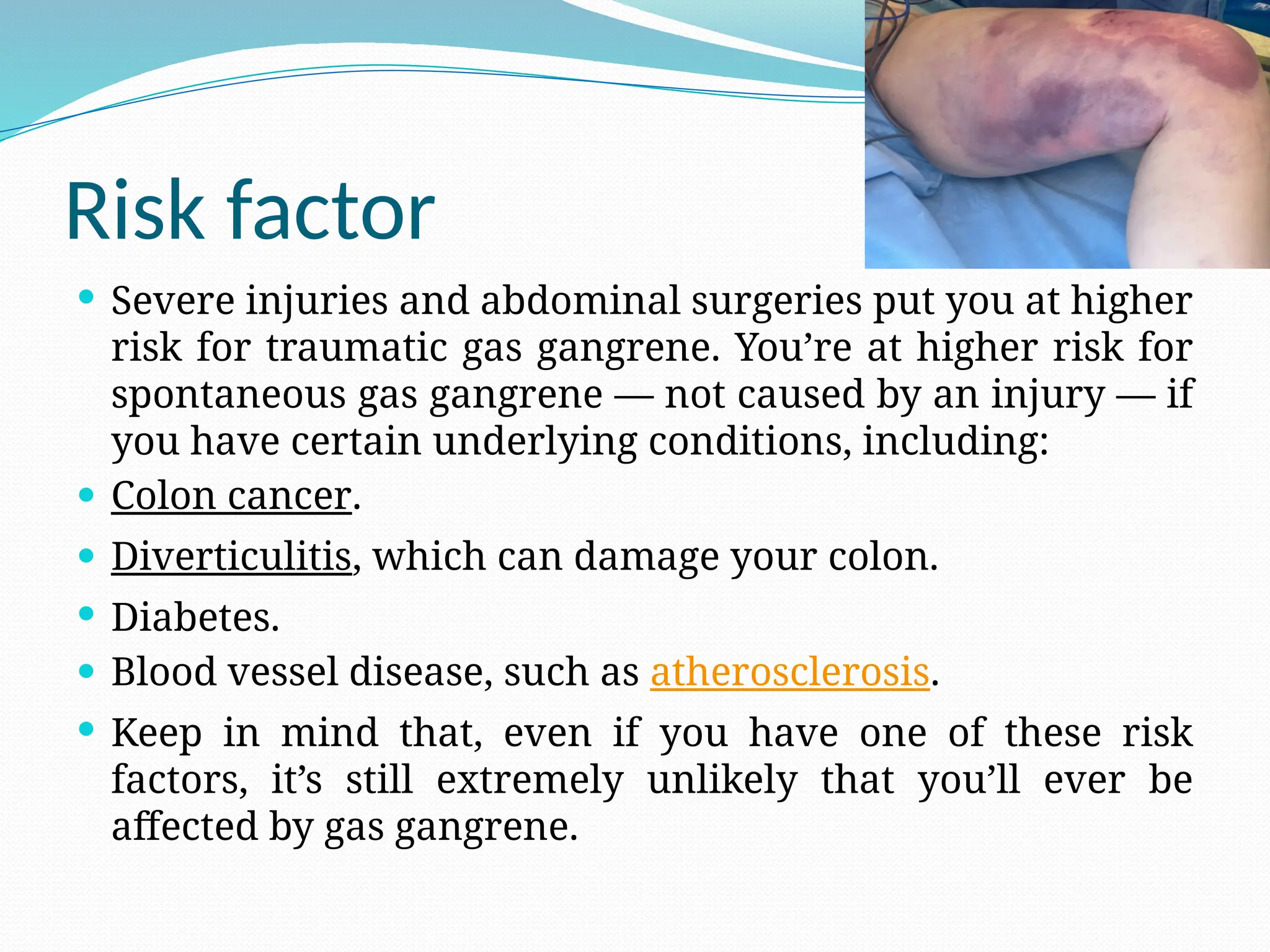
Risk factor
 Severe injuries and abdominal surgeries put you at higher
risk for traumatic gas gangrene. You’re at higher risk for
spontaneous gas gangrene — not caused by an injury — if
you have certain underlying conditions, including:
 Colon cancer.
 Diverticulitis, which can damage your colon.
 Diabetes.
 Blood vessel disease, such as atherosclerosis.
 Keep in mind that, even if you have one of these risk
factors, it’s still extremely unlikely that you’ll ever be
affected by gas gangrene.
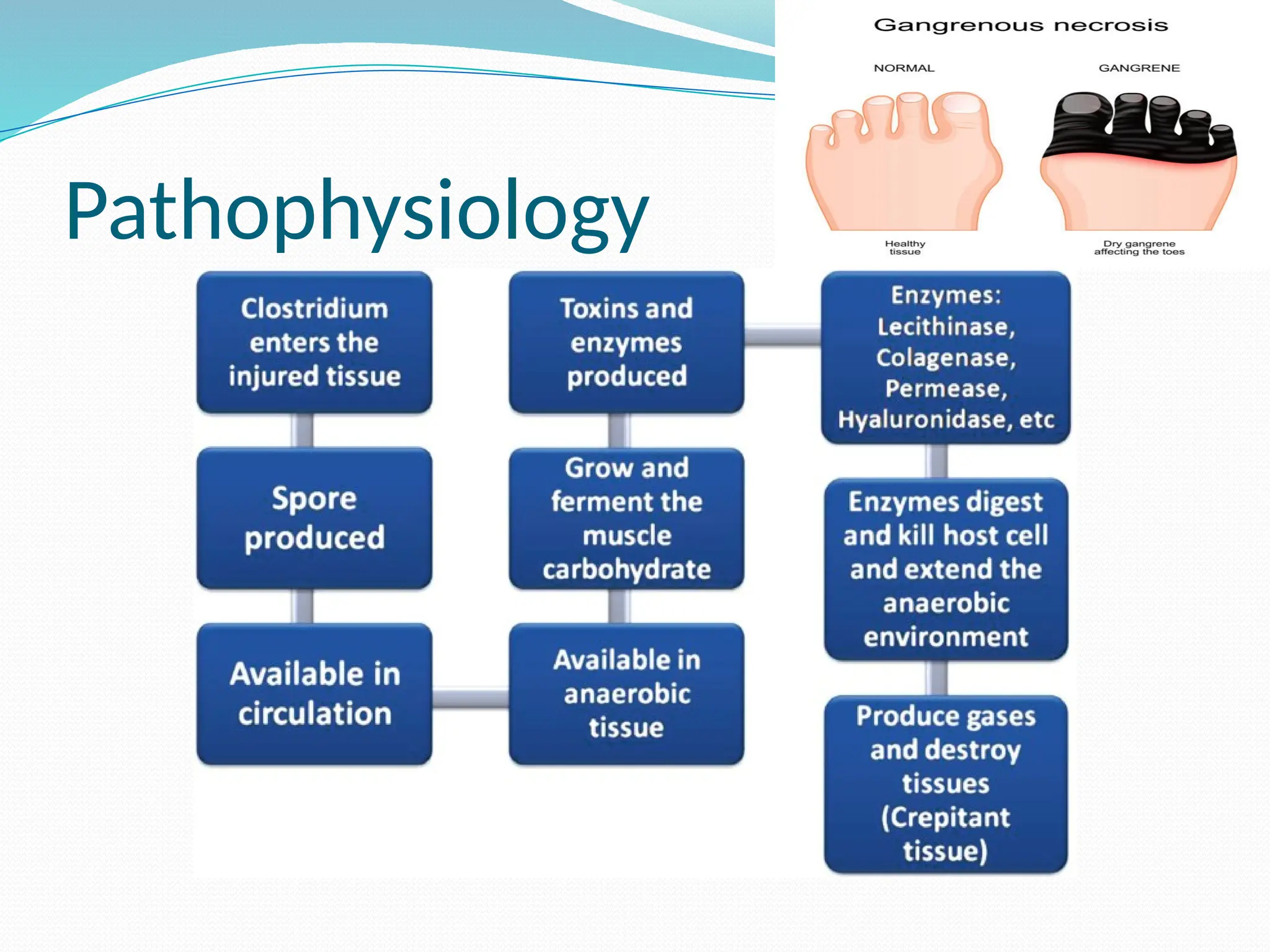
Pathophysiology
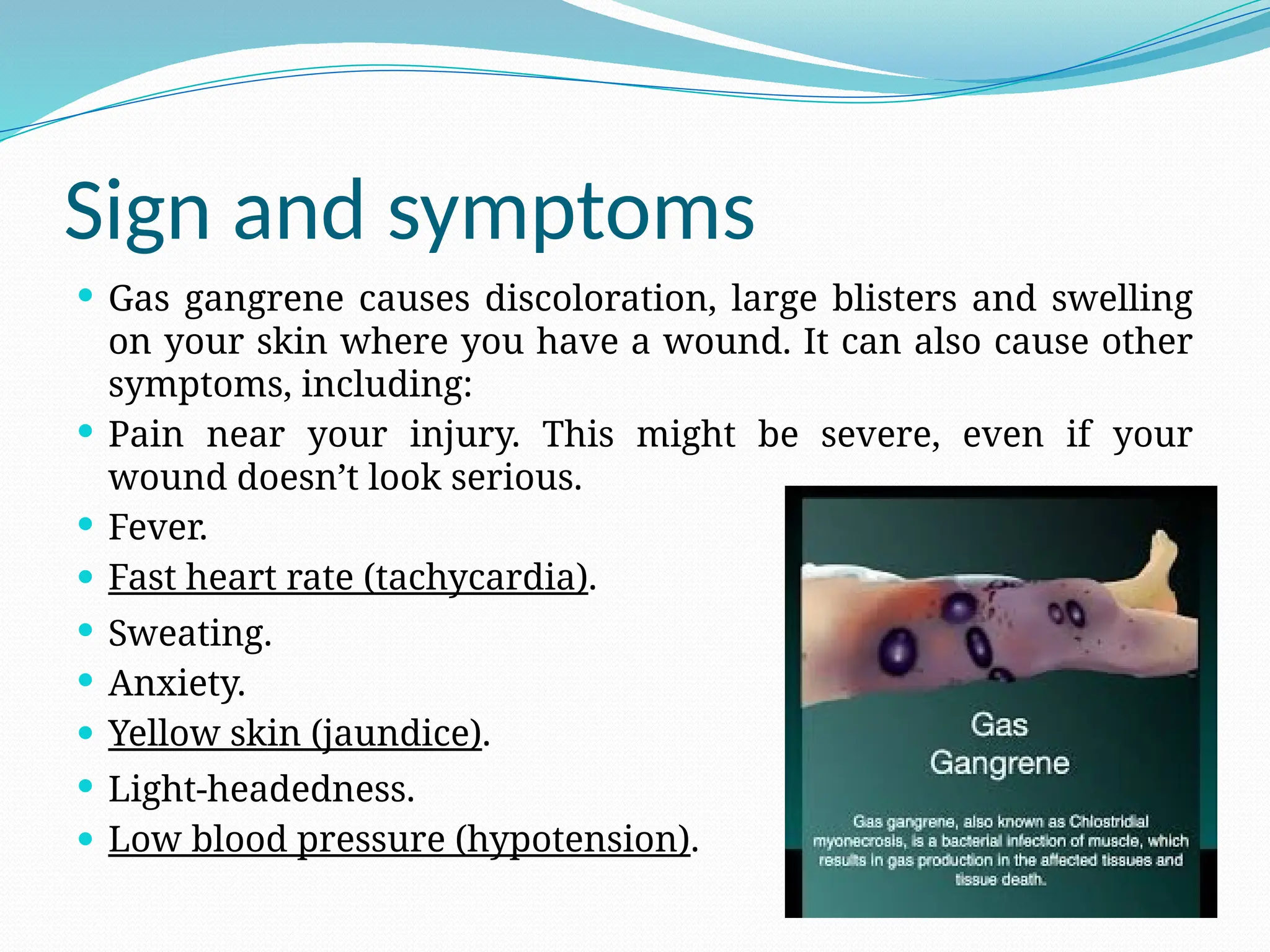
Sign and symptoms
 Gas gangrene causes discoloration, large blisters and swelling
on your skin where you have a wound. It can also cause other
symptoms, including:
 Pain near your injury. This might be severe, even if your
wound doesn’t look serious.
 Fever.
 Fast heart rate (tachycardia).
 Sweating.
 Anxiety.
 Yellow skin (jaundice).
 Light-headedness.
 Low blood pressure (hypotension).
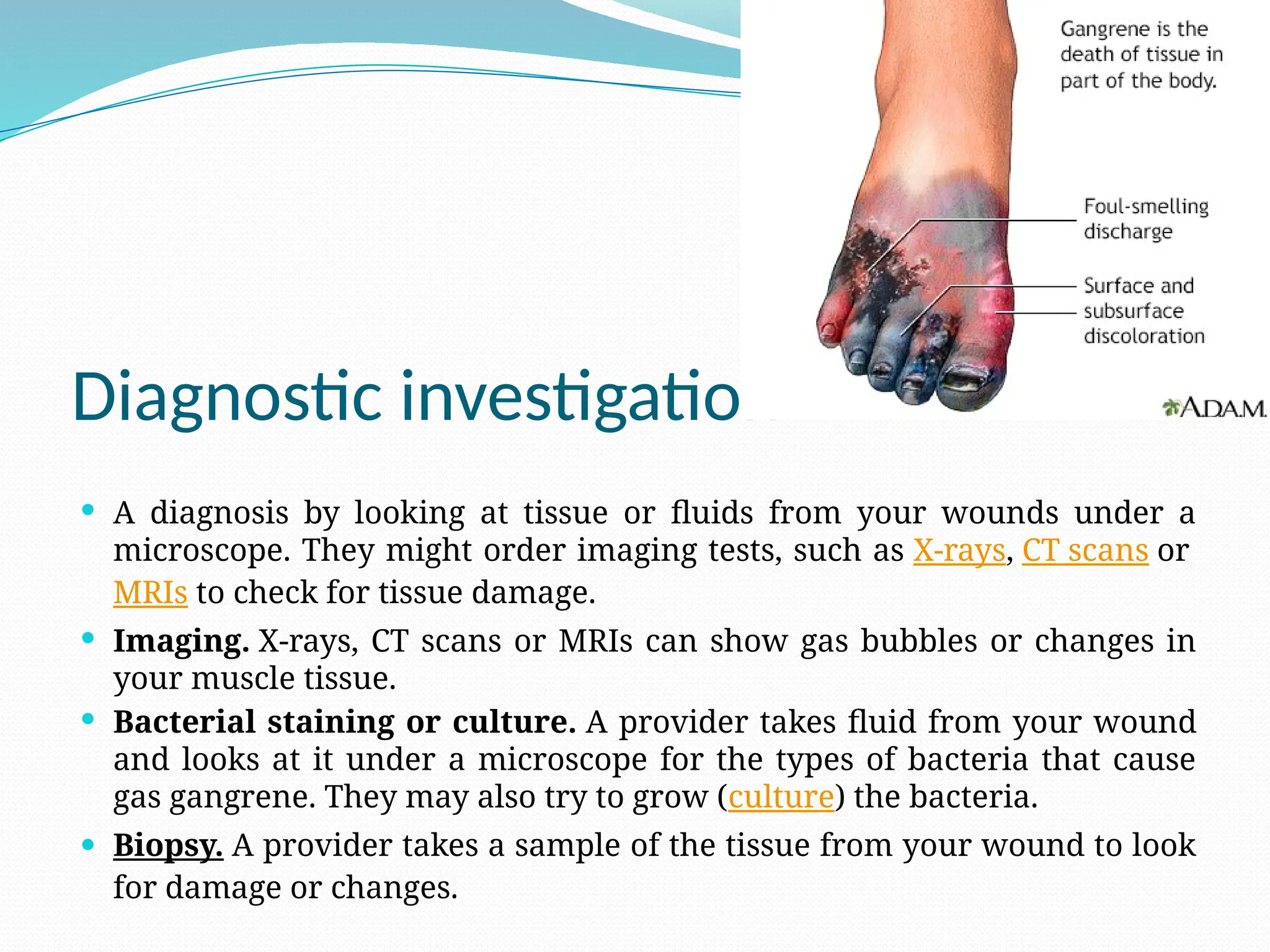
Diagnostic investigation
 A diagnosis by looking at tissue or fluids from your wounds under a
microscope. They might order imaging tests, such as X-rays, CT scans or
MRIs to check for tissue damage.
 Imaging. X-rays, CT scans or MRIs can show gas bubbles or changes in
your muscle tissue.
 Bacterial staining or culture. A provider takes fluid from your wound
and looks at it under a microscope for the types of bacteria that cause
gas gangrene. They may also try to grow (culture) the bacteria.
 Biopsy. A provider takes a sample of the tissue from your wound to look
for damage or changes.
Treatment
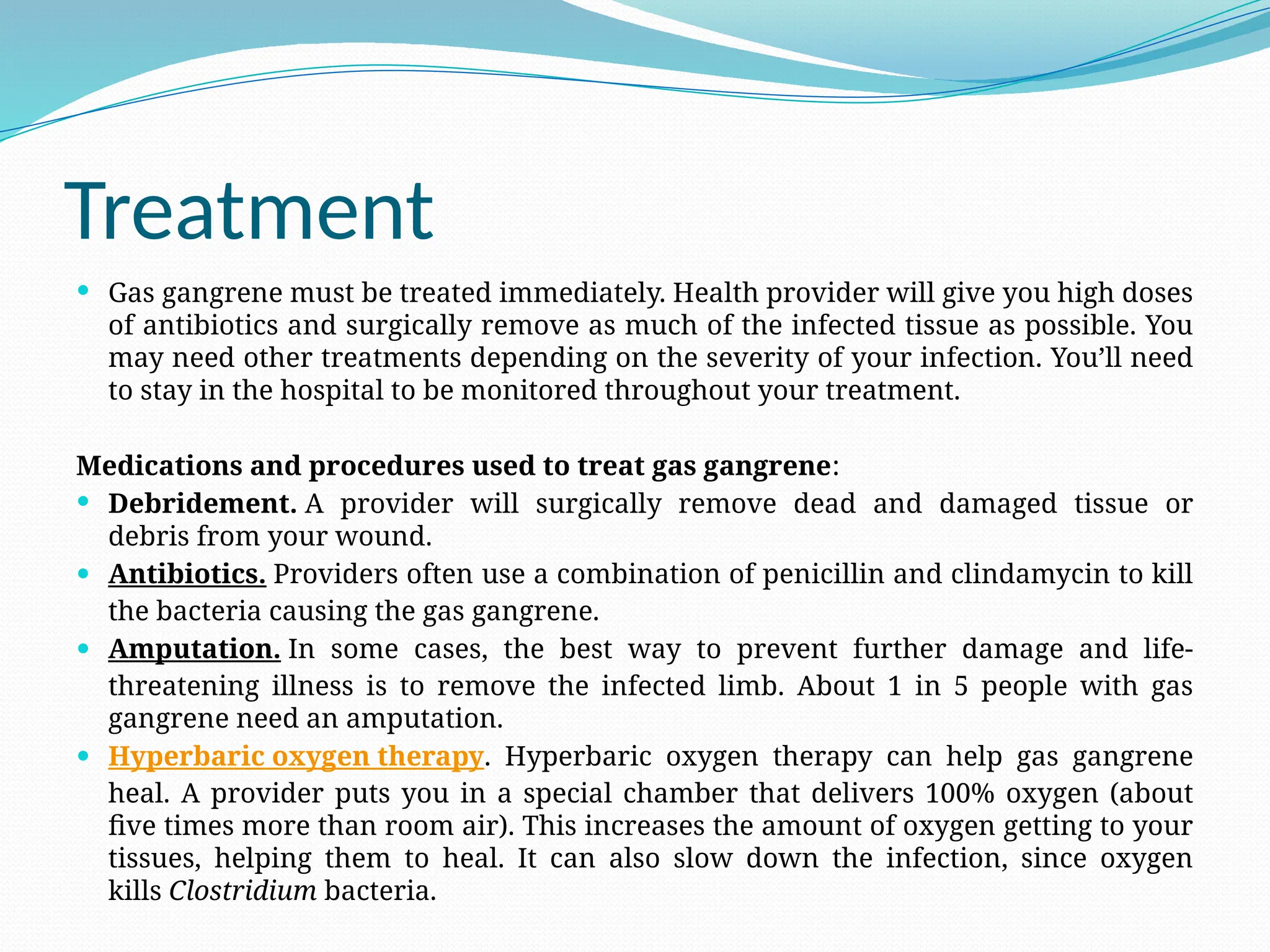
 Gas gangrene must be treated immediately. Health provider will give you high doses
of antibiotics and surgically remove as much of the infected tissue as possible. You
may need other treatments depending on the severity of your infection. You’ll need
to stay in the hospital to be monitored throughout your treatment.
Medications and procedures used to treat gas gangrene:
 Debridement. A provider will surgically remove dead and damaged tissue or
debris from your wound.
 Antibiotics. Providers often use a combination of penicillin and clindamycin to kill
the bacteria causing the gas gangrene.
 Amputation. In some cases, the best way to prevent further damage and life-
threatening illness is to remove the infected limb. About 1 in 5 people with gas
gangrene need an amputation.
 Hyperbaric oxygen therapy. Hyperbaric oxygen therapy can help gas gangrene
heal. A provider puts you in a special chamber that delivers 100% oxygen (about
five times more than room air). This increases the amount of oxygen getting to your
tissues, helping them to heal. It can also slow down the infection, since oxygen
kills Clostridium bacteria.
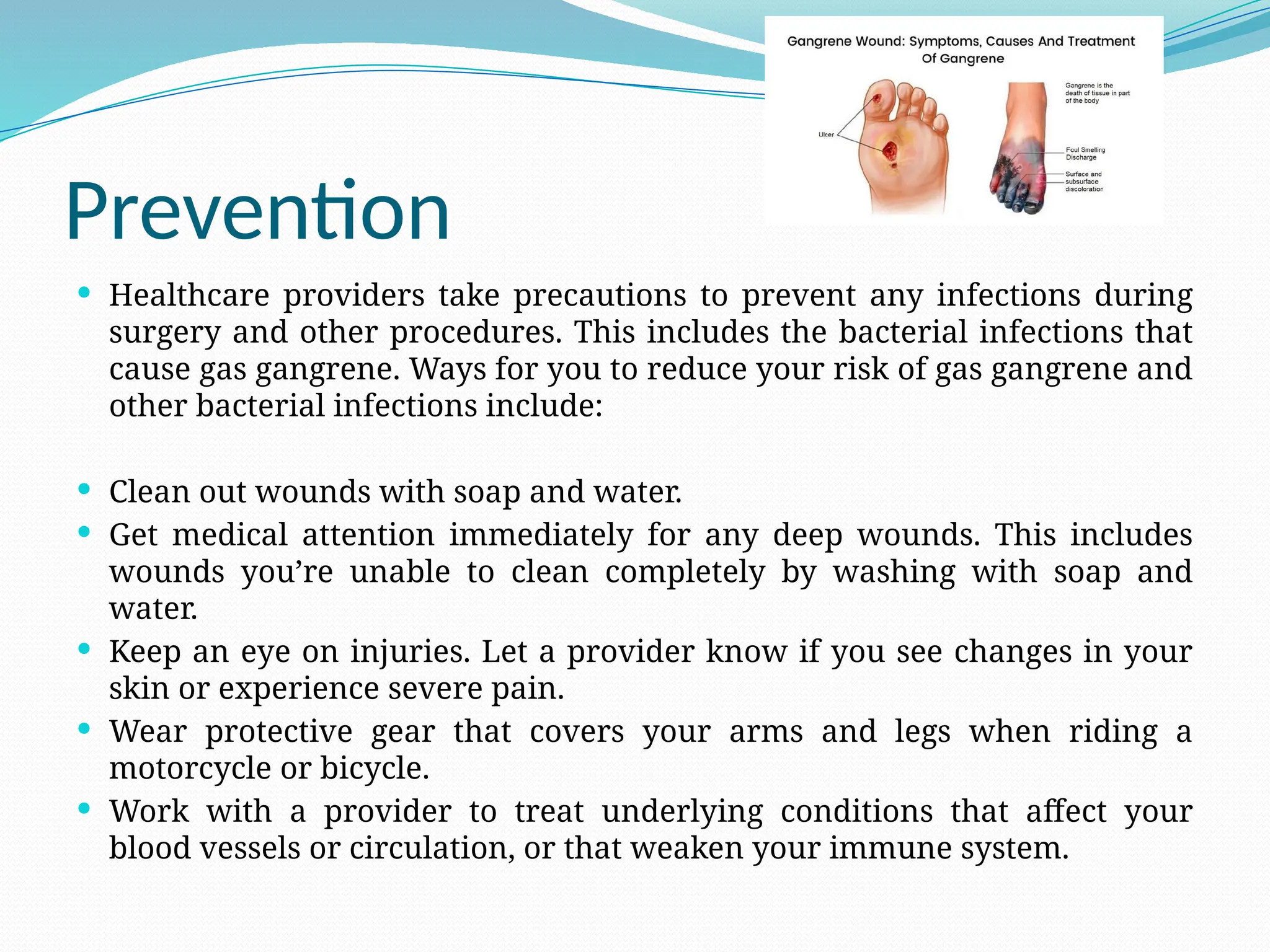
Prevention
 Healthcare providers take precautions to prevent any infections during
surgery and other procedures. This includes the bacterial infections that
cause gas gangrene. Ways for you to reduce your risk of gas gangrene and
other bacterial infections include:
 Clean out wounds with soap and water.
 Get medical attention immediately for any deep wounds. This includes
wounds you’re unable to clean completely by washing with soap and
water.
 Keep an eye on injuries. Let a provider know if you see changes in your
skin or experience severe pain.
 Wear protective gear that covers your arms and legs when riding a
motorcycle or bicycle.
 Work with a provider to treat underlying conditions that affect your
blood vessels or circulation, or that weaken your immune system.
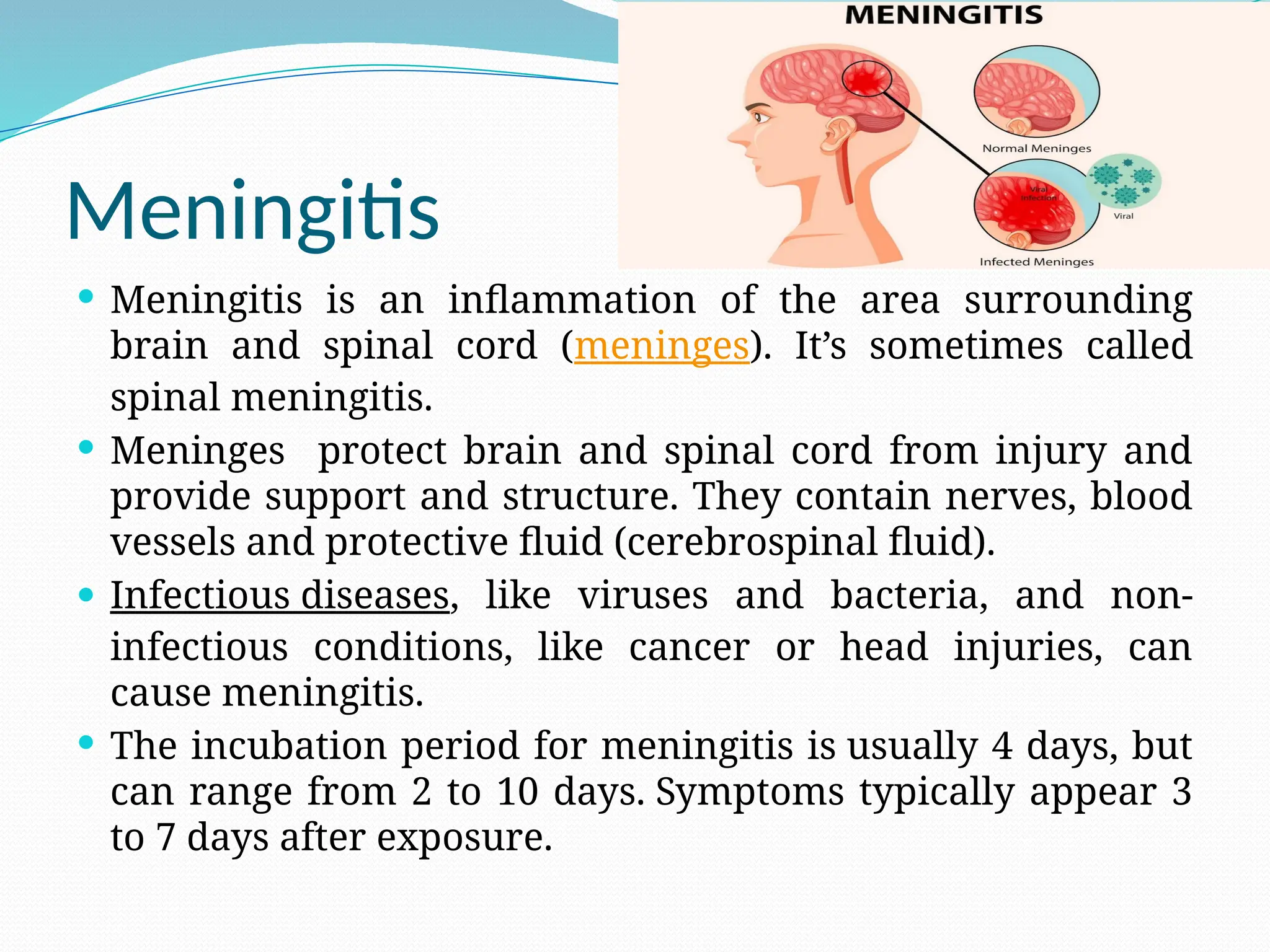
Meningitis
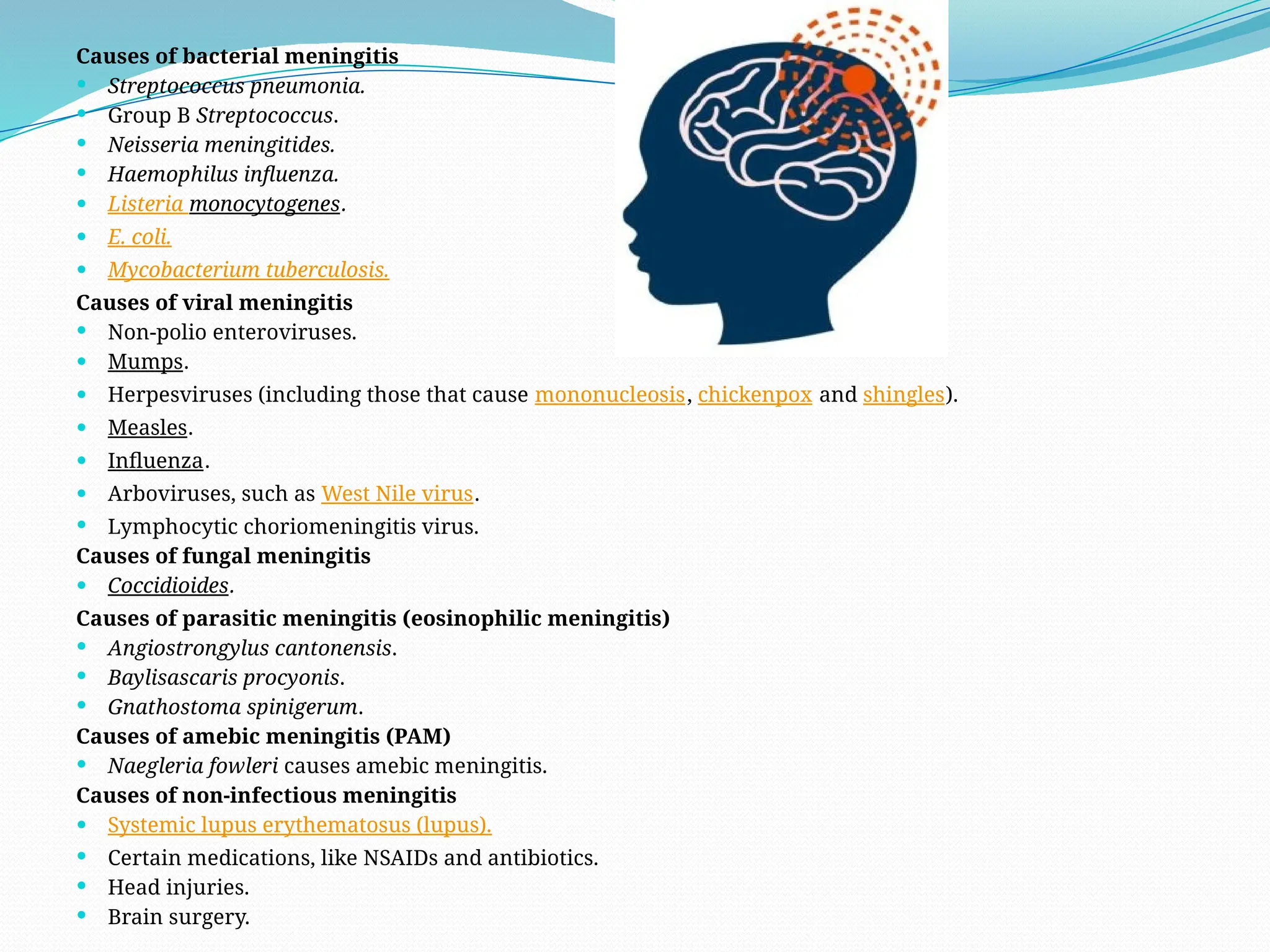
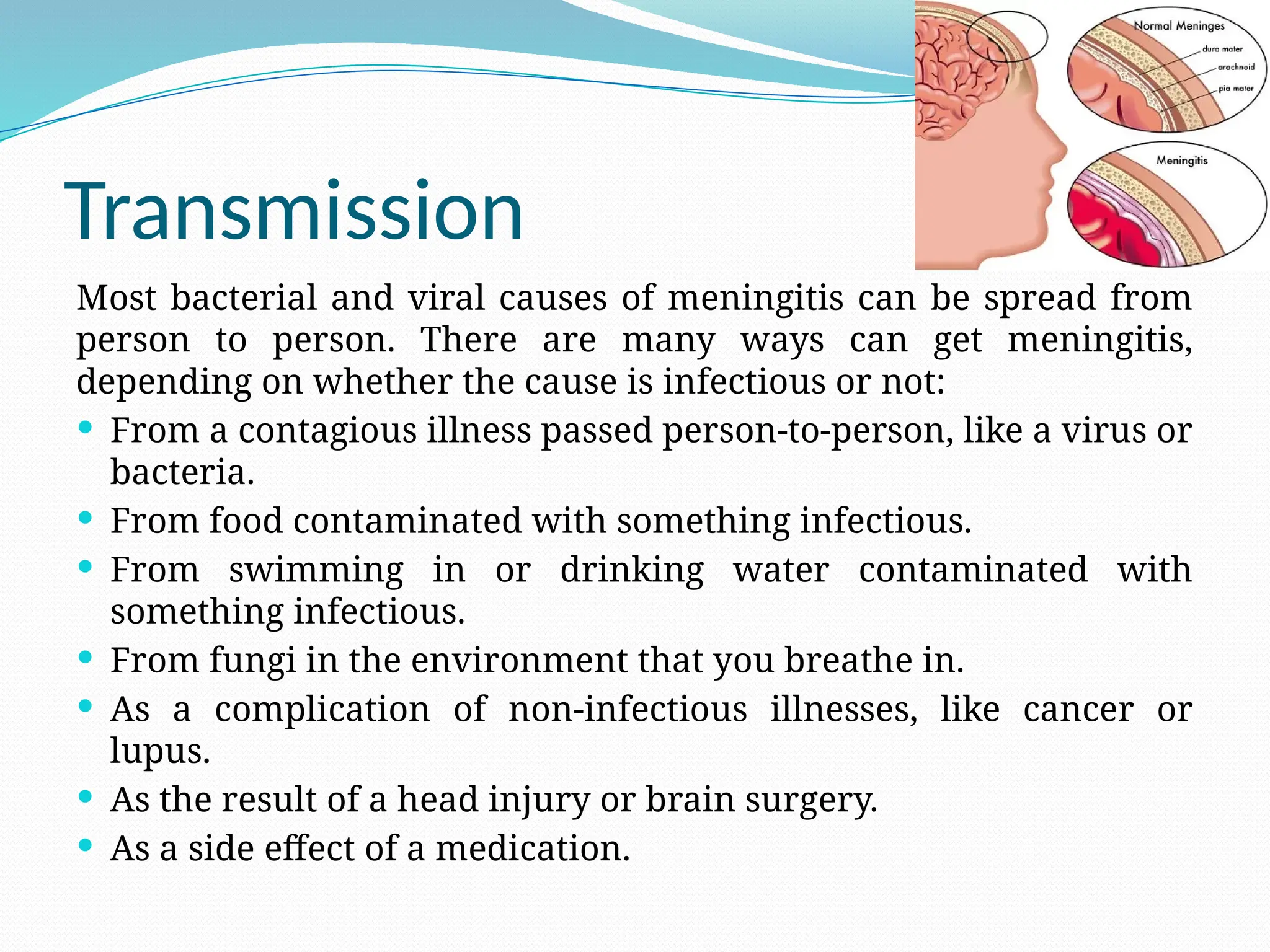
 Meningitis is an inflammation of the area surrounding
brain and spinal cord (meninges). It’s sometimes called
spinal meningitis.
 Meninges protect brain and spinal cord from injury and
provide support and structure. They contain nerves, blood
vessels and protective fluid (cerebrospinal fluid).
 Infectious diseases, like viruses and bacteria, and non-
infectious conditions, like cancer or head injuries, can
cause meningitis.
 The incubation period for meningitis is usually 4 days, but
can range from 2 to 10 days. Symptoms typically appear 3
to 7 days after exposure.
Causes of bacterial meningitis
 Streptococcus pneumonia.
 Group B Streptococcus.
 Neisseria meningitides.
 Haemophilus influenza.
 Listeria monocytogenes.
 E. coli.
 Mycobacterium tuberculosis.
Causes of viral meningitis
 Non-polio enteroviruses.
 Mumps.
 Herpesviruses (including those that cause mononucleosis, chickenpox and shingles).
 Measles.
 Influenza.
 Arboviruses, such as West Nile virus.
 Lymphocytic choriomeningitis virus.
Causes of fungal meningitis
 Coccidioides.
Causes of parasitic meningitis (eosinophilic meningitis)
 Angiostrongylus cantonensis.
 Baylisascaris procyonis.
 Gnathostoma spinigerum.
Causes of amebic meningitis (PAM)
 Naegleria fowleri causes amebic meningitis.
Causes of non-infectious meningitis
 Systemic lupus erythematosus (lupus).
 Certain medications, like NSAIDs and antibiotics.
 Head injuries.
 Brain surgery.
Transmission
Most bacterial and viral causes of meningitis can be spread from
person to person. There are many ways can get meningitis,
depending on whether the cause is infectious or not:
 From a contagious illness passed person-to-person, like a virus or
bacteria.
 From food contaminated with something infectious.
 From swimming in or drinking water contaminated with
something infectious.
 From fungi in the environment that you breathe in.
 As a complication of non-infectious illnesses, like cancer or
lupus.
 As the result of a head injury or brain surgery.
 As a side effect of a medication.
Types of meningitis are typically named for the cause or
for how long you’ve had symptoms. They include:
 Bacterial meningitis.
 Viral meningitis.
 Fungal meningitis.
 Parasitic meningitis. Meningitis caused by certain parasites is called
eosinophilic meningitis or eosinophilic meningoencephalitis (EM).
 Primary Amebic Meningitis (PAM). Meningitis can be caused by the
ameba Naegleria fowleri.
 Drug-induced aseptic meningitis (DIAM). Rarely, certain medications
cause drug-induced aseptic meningitis (DIAM).
Non-steroidal anti-inflammatory drugs (NSAIDS) and antibiotics are the
most common causes of DIAM.
 Chronic meningitis. When meningitis has lasted a month or more, it’s
called chronic meningitis.
 Acute meningitis. Bacterial meningitis is often acute, meaning that
symptoms are severe and come on suddenly.
Risk factors
 Are under 5 years old. About 70% of all bacterial meningitis cases
affect children under age 5.
 Have a weakened immune system.
medications that suppress your immune system.
 Have a CSF leak.
 Don’t have a spleen or have a damaged spleen.
 Live in or travel to places where infectious diseases that cause
meningitis are common.
 Have chronic nose and ear infections, pneumococcal pneumonia or a
widespread blood infection.
 Have a head injury, traumatic brain injury (TBI) or spinal cord injury.
 Are living with sickle cell disease.
 Are living with alcohol use disorder.
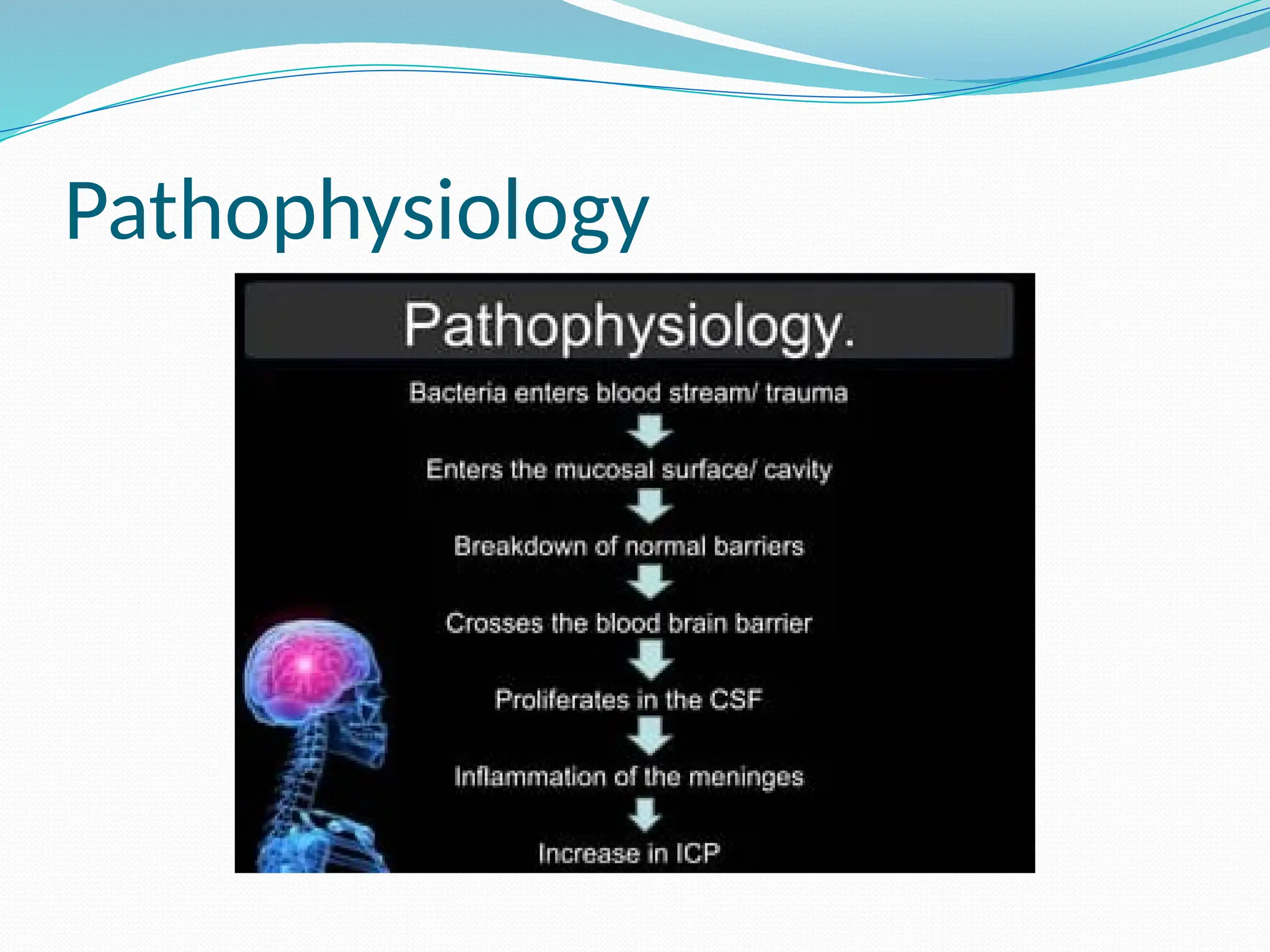
Pathophysiology
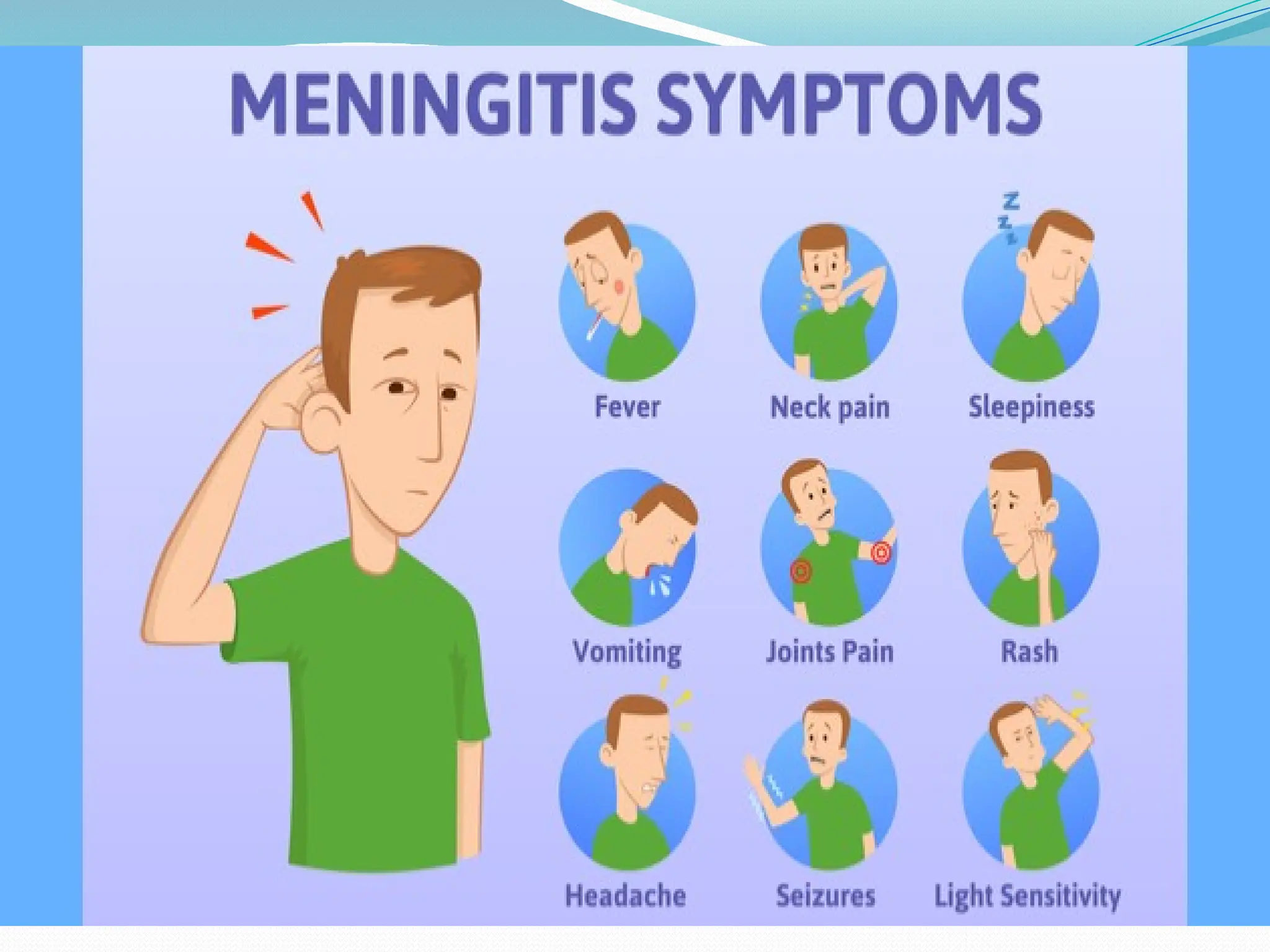
Symptoms of meningitis in children and adults
 Neck stiffness.
 Nausea or vomiting.
 Sensitivity to light (photophobia).
 Confusion or altered mental state.
 Lack of energy (lethargy), extreme sleepiness or trouble waking up.
 Lack of appetite.
 Small round spots that look like a rash (petechiae).
Additional symptoms of amebic meningitis
 You might experience additional symptoms of amebic meningitis a few days
after your initial symptoms:
 Hallucinations.
 Loss of balance.
 Lack of attention or focus.
Meningitis signs and symptoms in babies
 Your baby might not experience the same meningitis symptoms as adults (like
headache, neck stiffness and nausea) and it can be hard to tell even if they
are. Some signs of meningitis you can look for in babies include:
 Bulging “soft spot” (fontanelle) on baby’s head.
 Poor eating.
 Sleepiness or trouble waking up from sleep.
 Low energy or slower responses (lethargy).
Diagnostic Investigation
 Some tests your healthcare provider may use to diagnose meningitis
include:
 Nasal or throat swab. Your provider uses a soft-tipped stick (swab) to
take a sample from your nose or throat. A lab will test your sample for
signs of infection.
 Lumbar puncture/spinal tap. Your healthcare provider inserts a needle
into your lower back to collect a sample of your cerebrospinal fluid (CSF).
A lab tests your CSF sample for signs of infection.
 Blood tests. Your provider takes a sample of blood from your arm with a
needle. A lab tests your blood for signs of infection.
 Your healthcare provider can use a CT scan or MRI to take pictures of
your brain and look for inflammation. This is sometimes called a brain
scan.
 Stool sample. You give a sample of your poop (stool) to your provider. A
lab will test your stool sample for signs of infection.
Treatment
 Meningitis treatment depends on the cause. Antibiotics are used to treat
bacterial meningitis and antifungals are used to treat fungal meningitis.
Antivirals can be used to treat some viral causes of meningitis. Non-infectious
causes of meningitis are treated by addressing the underlying illness or injury.
 There are no specific treatments for other infectious causes of meningitis.
Medications might be used to reduce inflammation or relieve your symptoms.
Medications and other therapies that might be used to treat meningitis include:
 Antibiotics for bacterial meningitis.
 Antifungals for fungal meningitis.
 Antivirals for certain cases of viral meningitis, like herpesvirus and influenza.
 Corticosteroids, like dexamethasone or prednisone, to reduce inflammation.
 Pain relievers.
 IV fluids to keep you hydrated.
Prevention
 The best way to reduce your risk of meningitis is to take simple precautions
to protect yourself from the infectious diseases that most often cause it.
 Get vaccinated against the bacterial and viral infections that can cause
meningitis. Ask your providers which ones might be recommended for you
or your child. Take care to avoid fungal infections.
 Wash your hands frequently with soap and water.
 Avoid contact with others when sick with a contagious illness. Cover your
mouth and nose when you cough or sneeze, and disinfect frequently
touched surfaces.
 Don’t swim in or drink water that could be contaminated. Use distilled or
treated water for nasal irrigation.
 Practice safe food prep. Don’t drink unpasteurized milk or eat food made
from unpasteurized milk.
 Take precautions to avoid mosquito and tick bites.
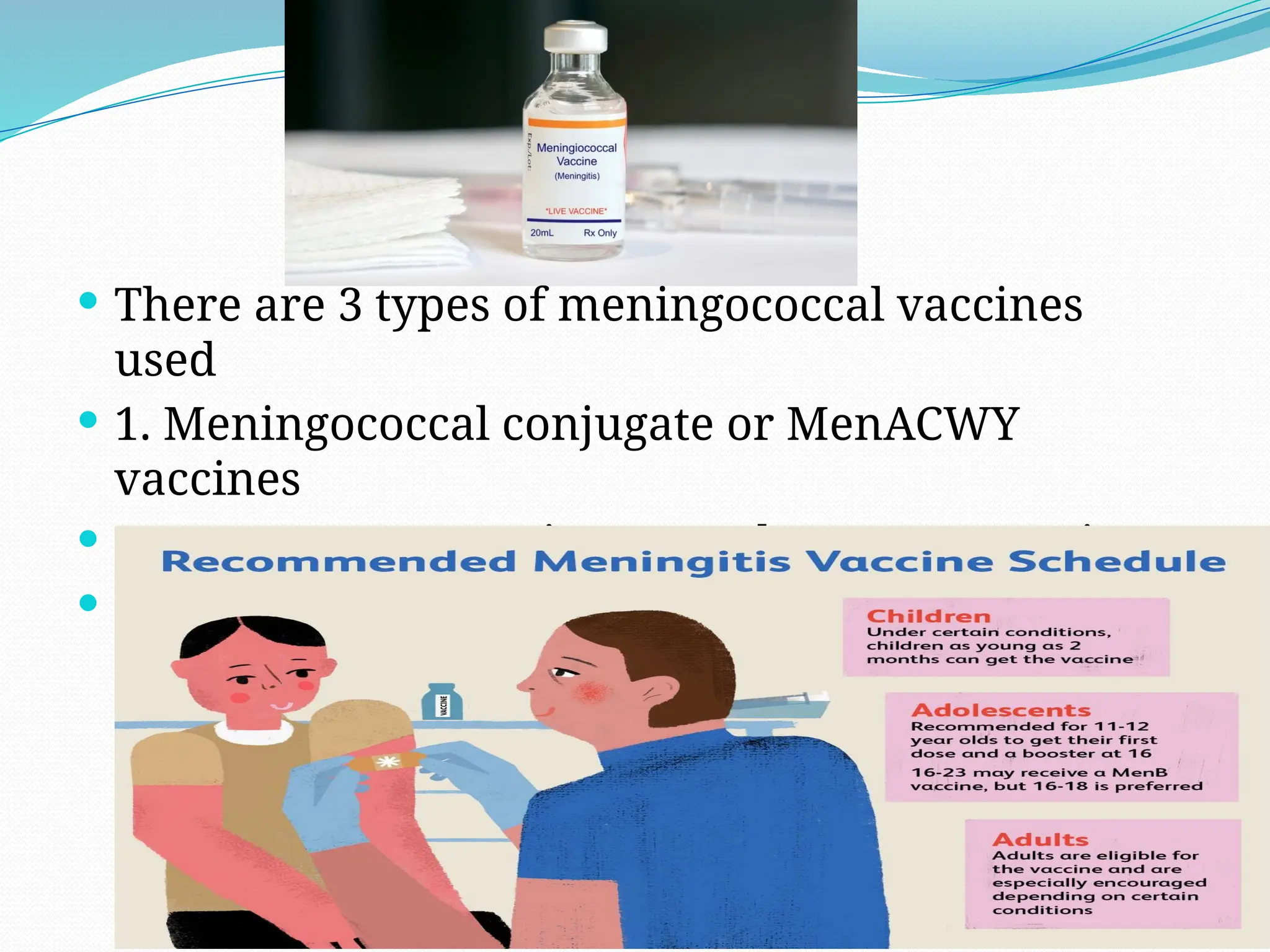
 There are 3 types of meningococcal vaccines
used
 1. Meningococcal conjugate or MenACWY
vaccines
 2. Serogroup B meningococcal or MenB vaccines
 3. Pentavalent or Men ABCWY vaccine
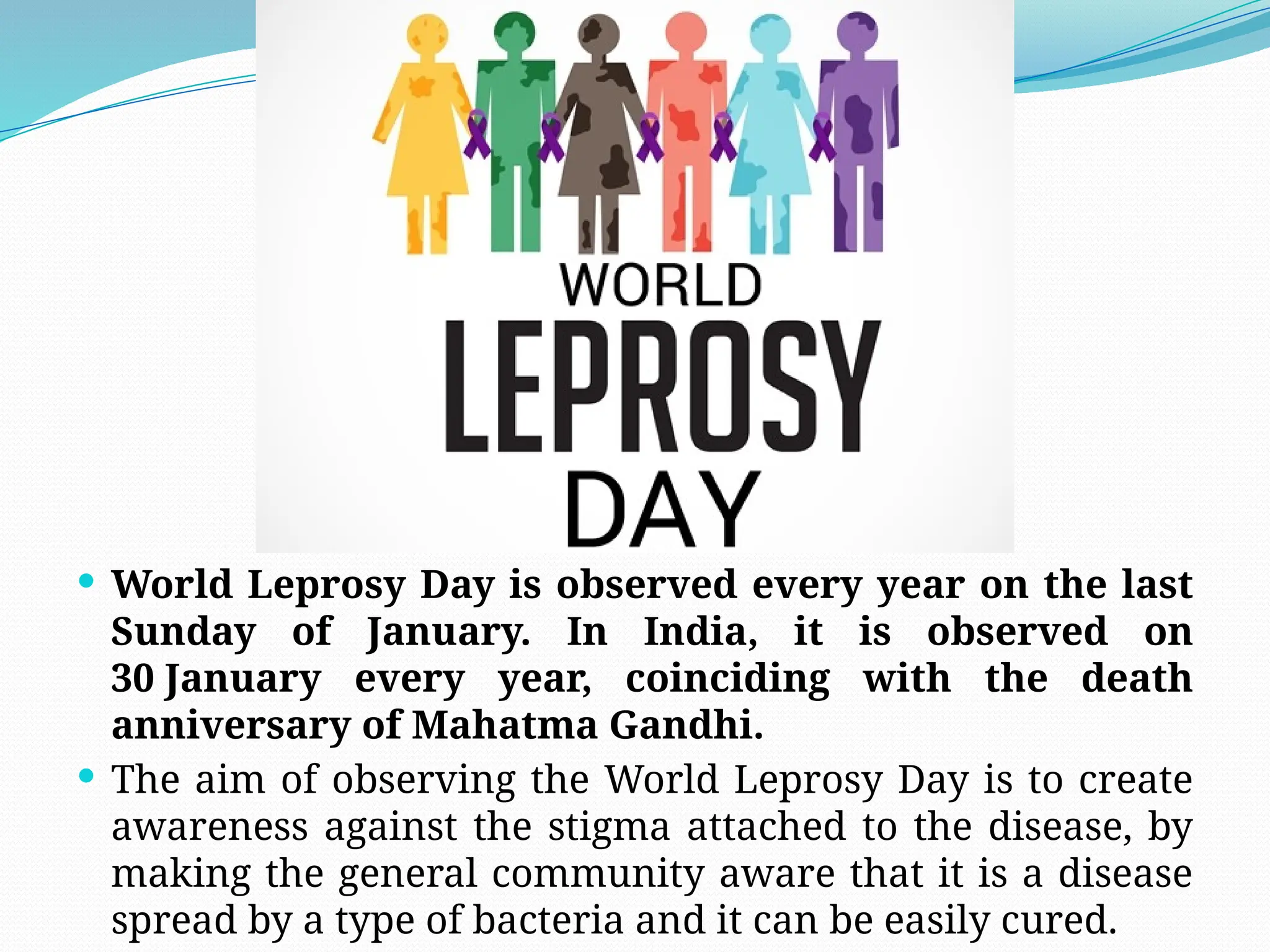
 World Leprosy Day is observed every year on the last
Sunday of January. In India, it is observed on
30 January every year, coinciding with the death
anniversary of Mahatma Gandhi.
 The aim of observing the World Leprosy Day is to create
awareness against the stigma attached to the disease, by
making the general community aware that it is a disease
spread by a type of bacteria and it can be easily cured.
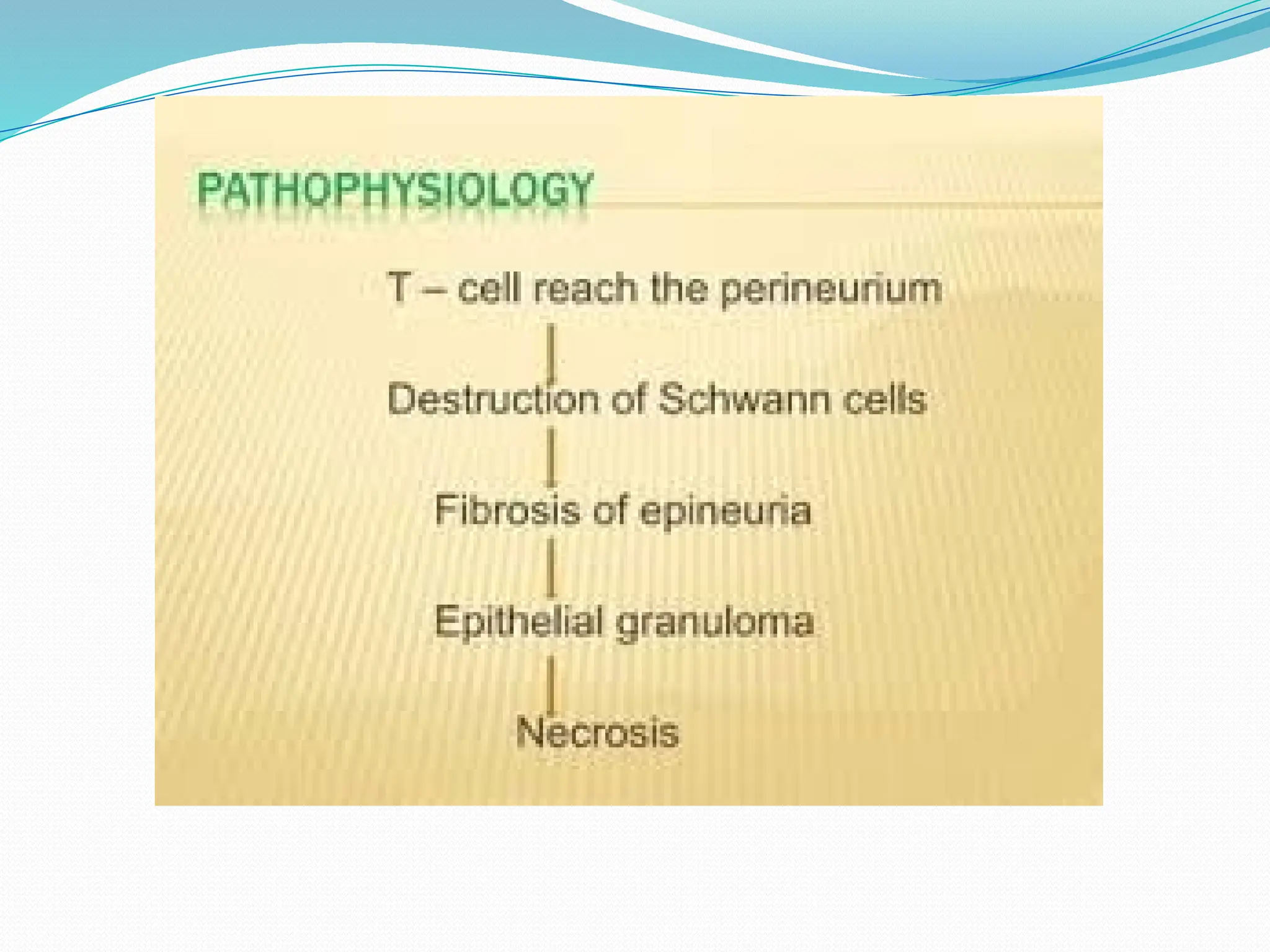
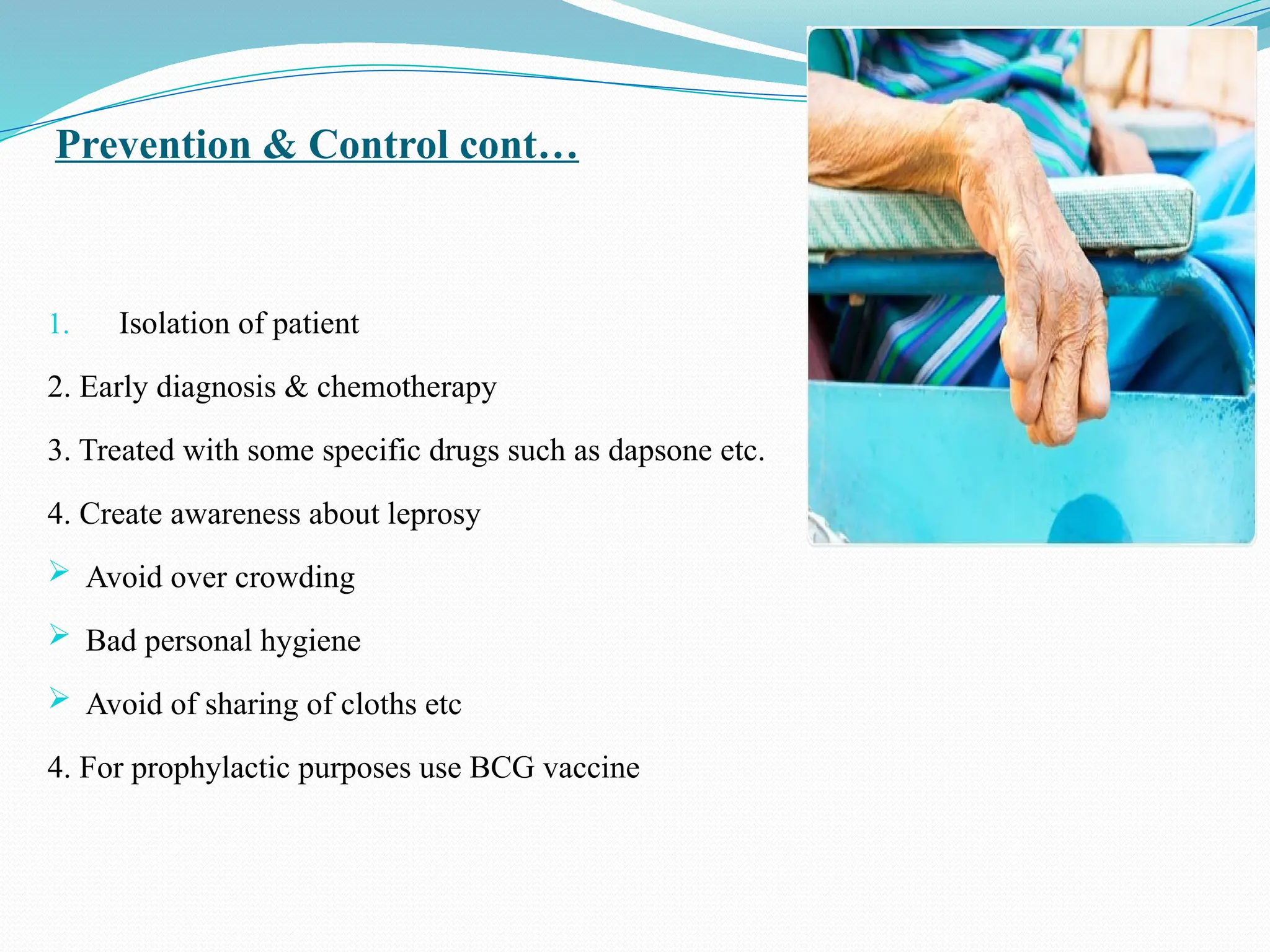
• Leprosy
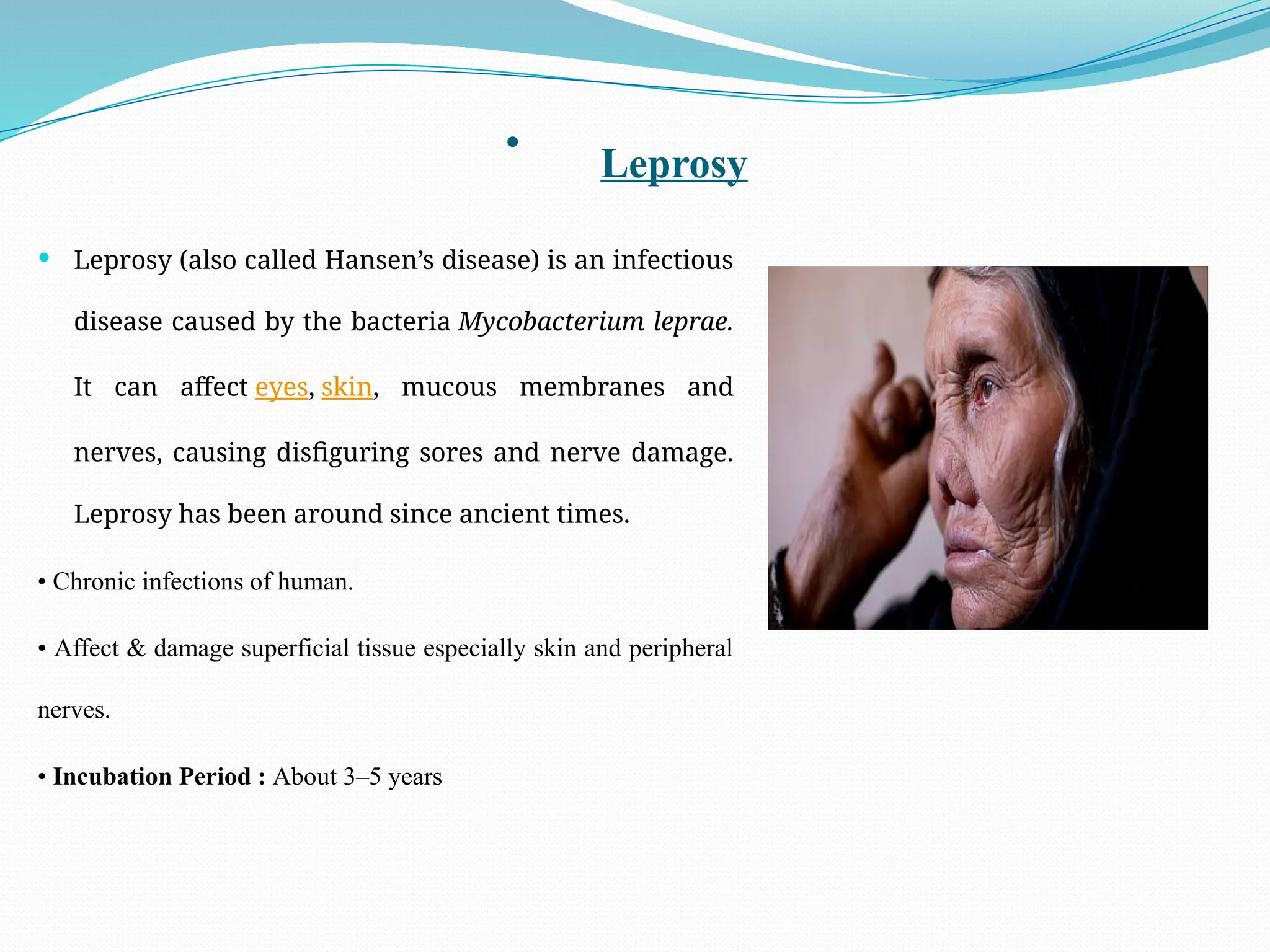
 Leprosy (also called Hansen’s disease) is an infectious
disease caused by the bacteria Mycobacterium leprae.
It can affect eyes, skin, mucous membranes and
nerves, causing disfiguring sores and nerve damage.
Leprosy has been around since ancient times.
• Chronic infections of human.
• Affect & damage superficial tissue especially skin and peripheral
nerves.
• Incubation Period : About 3–5 years
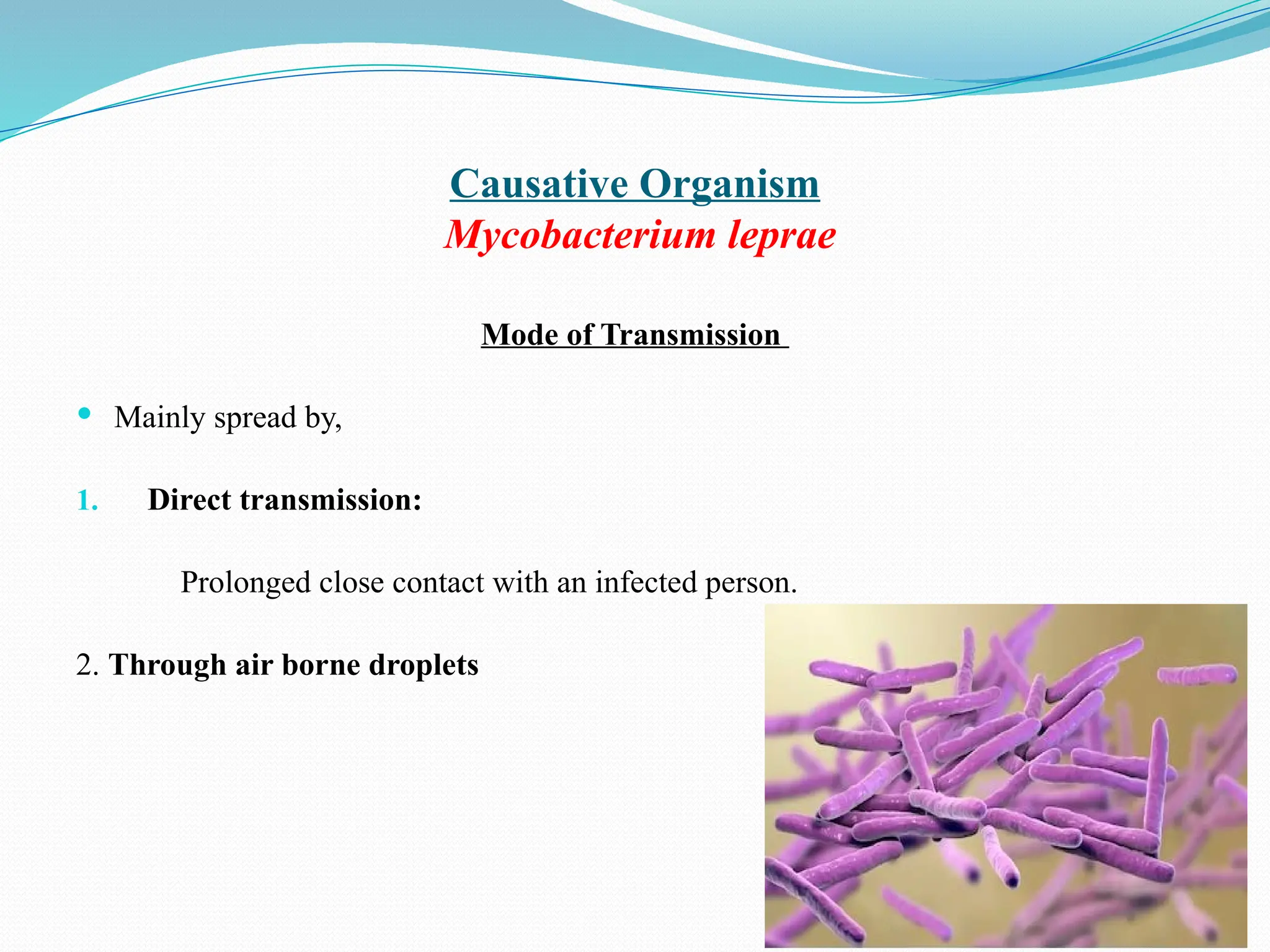
Causative Organism
Mycobacterium leprae
Mode of Transmission
 Mainly spread by,
1. Direct transmission:
Prolonged close contact with an infected person.
2. Through air borne droplets
The incubation period for leprosy, also known as Hansen's disease, can range
from 9 months to 20 years, with an average of around 5 years. The incubation
period is difficult to determine because the leprosy bacillus multiplies very
slowly.
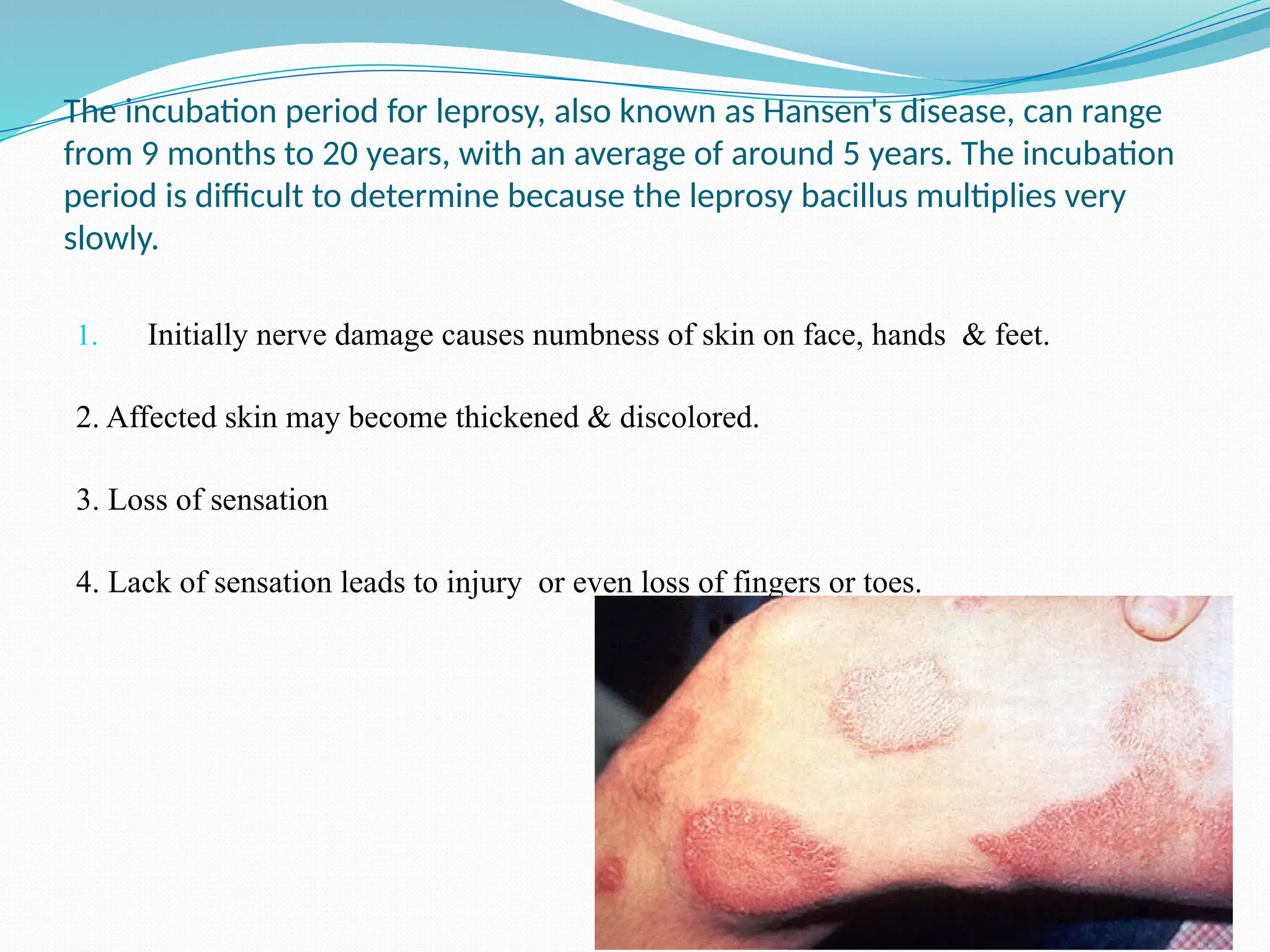
1. Initially nerve damage causes numbness of skin on face, hands & feet.
2. Affected skin may become thickened & discolored.
3. Loss of sensation
4. Lack of sensation leads to injury or even loss of fingers or toes.
Types
There are three main types of leprosy, including:
 Tuberculoid leprosy. Someone with this type of leprosy
usually has mild symptoms, developing only a few sores. This
is because of a good immune response. Tuberculoid leprosy is
also called paucibacillary leprosy.
 Lepromatous leprosy. People with this type of leprosy have
widespread sores and lesions affecting nerves, skin and
organs. With lepromatous leprosy, the immune response is
poor and the disease is more contagious. Lepromatous leprosy
is also called multibacillary leprosy.
 Borderline leprosy. This type of leprosy involves symptoms of
both tuberculoid and lepromatous leprosy. Borderline leprosy
is also called dimorphus leprosy.
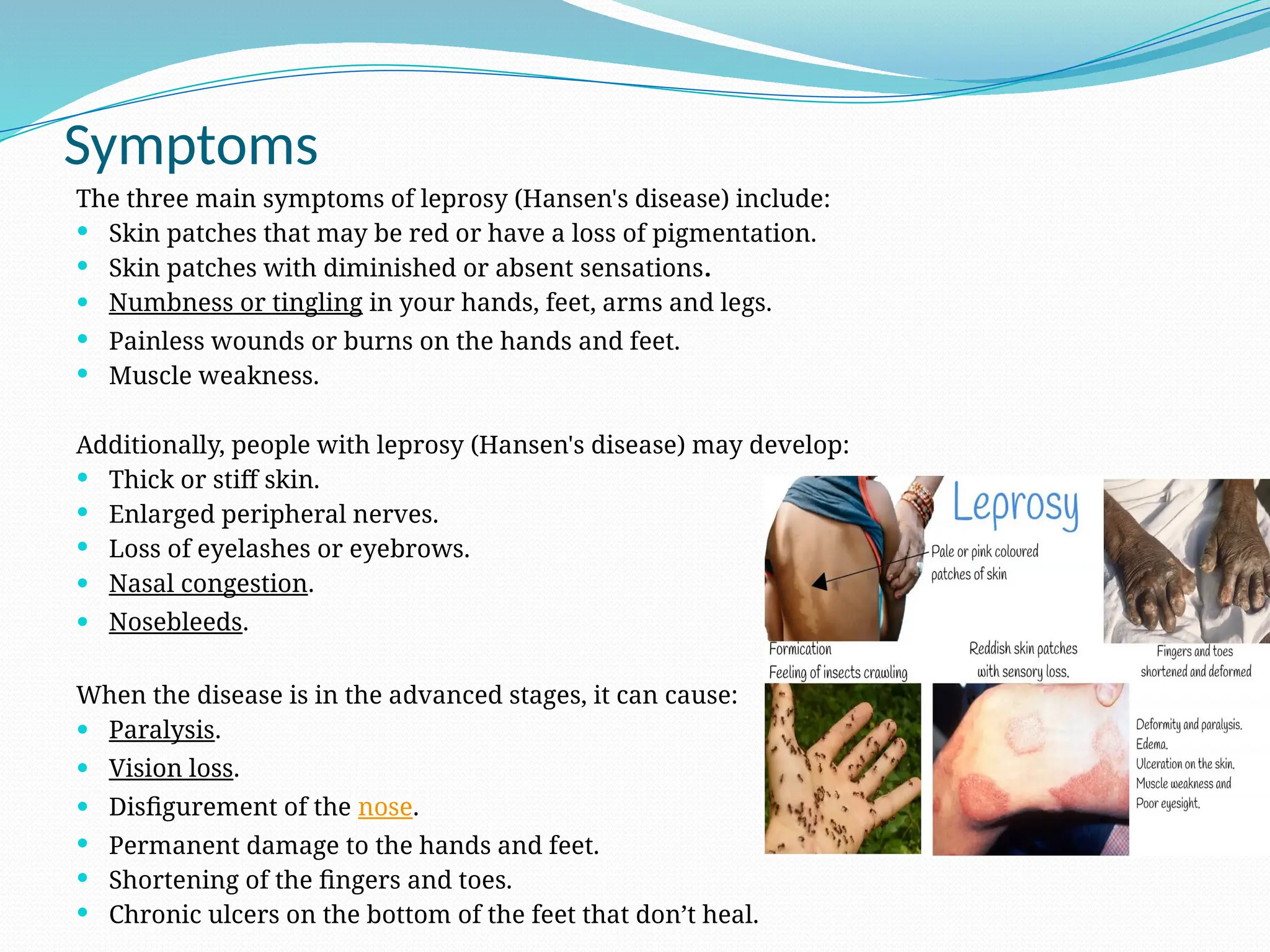
Symptoms
The three main symptoms of leprosy (Hansen's disease) include:
 Skin patches that may be red or have a loss of pigmentation.
 Skin patches with diminished or absent sensations.
 Numbness or tingling in your hands, feet, arms and legs.
 Painless wounds or burns on the hands and feet.
 Muscle weakness.
Additionally, people with leprosy (Hansen's disease) may develop:
 Thick or stiff skin.
 Enlarged peripheral nerves.
 Loss of eyelashes or eyebrows.
 Nasal congestion.
 Nosebleeds.
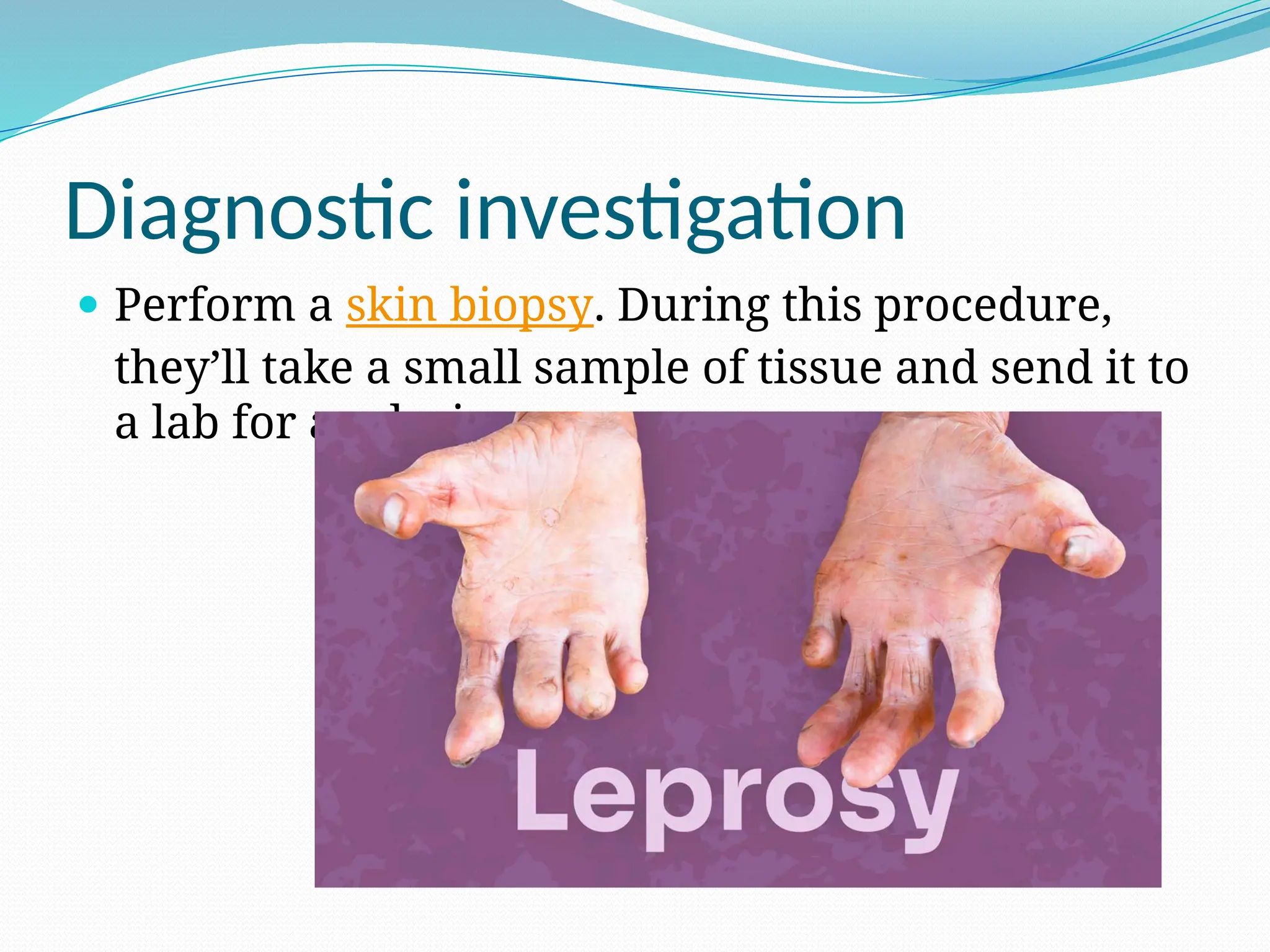
When the disease is in the advanced stages, it can cause:
 Paralysis.
 Vision loss.
 Disfigurement of the nose.
 Permanent damage to the hands and feet.
 Shortening of the fingers and toes.
 Chronic ulcers on the bottom of the feet that don’t heal.
Diagnostic investigation
 Perform a skin biopsy. During this procedure,
they’ll take a small sample of tissue and send it to
a lab for analysis.
Treatment
 Leprosy (Hansen's disease) is treated with multidrug therapy (MDT),
an approach that combines different types of antibiotics. In most
cases, your healthcare provider will prescribe two to three different
kinds of antibiotics at the same time. This helps prevent
antibiotic resistance, which occurs when bacteria mutate (change)
and fight off the antibiotic drugs that usually kill them. Common
antibiotics used in the treatment of Hansen's disease include dapsone
, rifampin and clofazimine.
 Antibiotics can’t treat the nerve damage that may occur as a result of
Hansen's disease. Your healthcare provider may also prescribe anti-
inflammatory drugs, such as steroids, to manage any nerve pain.
 On average, leprosy (Hansen's disease) treatment takes one to two
years to complete. During this time, your healthcare provider will
monitor your progress.
Prevention & Control cont…
1. Isolation of patient
2. Early diagnosis & chemotherapy
3. Treated with some specific drugs such as dapsone etc.
4. Create awareness about leprosy
 Avoid over crowding
 Bad personal hygiene
 Avoid of sharing of cloths etc
4. For prophylactic purposes use BCG vaccine
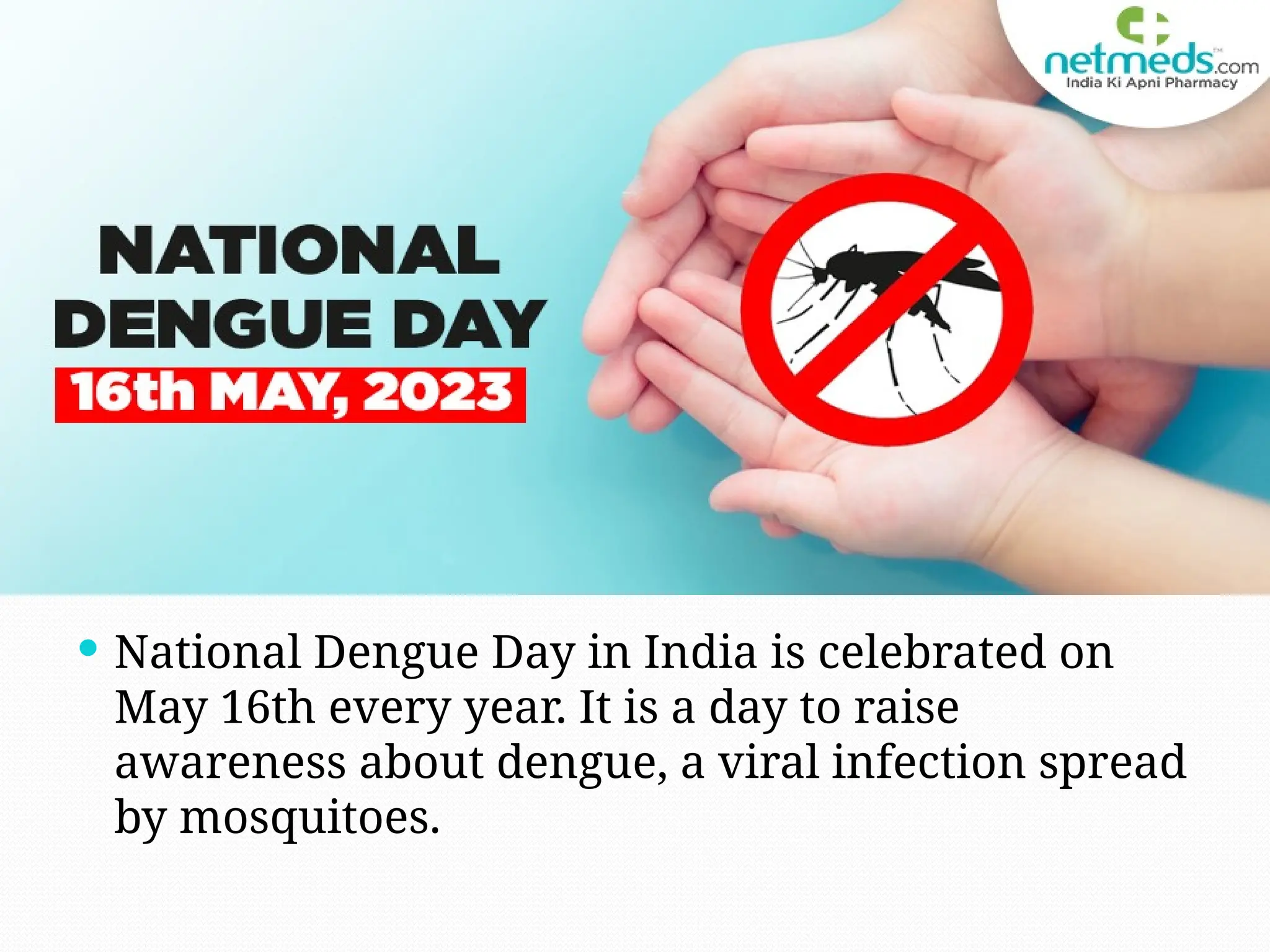
 National Dengue Day in India is celebrated on
May 16th every year. It is a day to raise
awareness about dengue, a viral infection spread
by mosquitoes.
Dengue
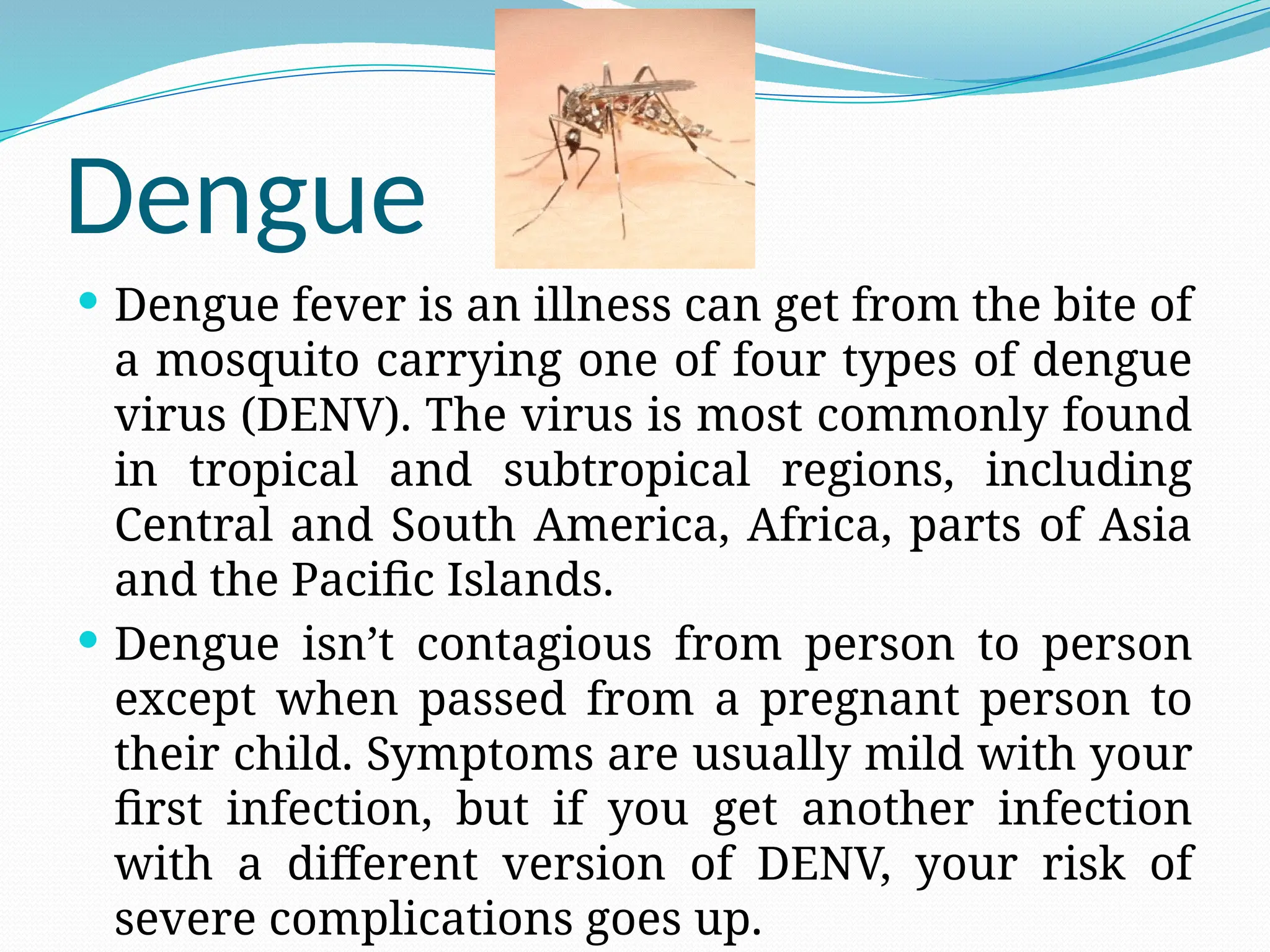
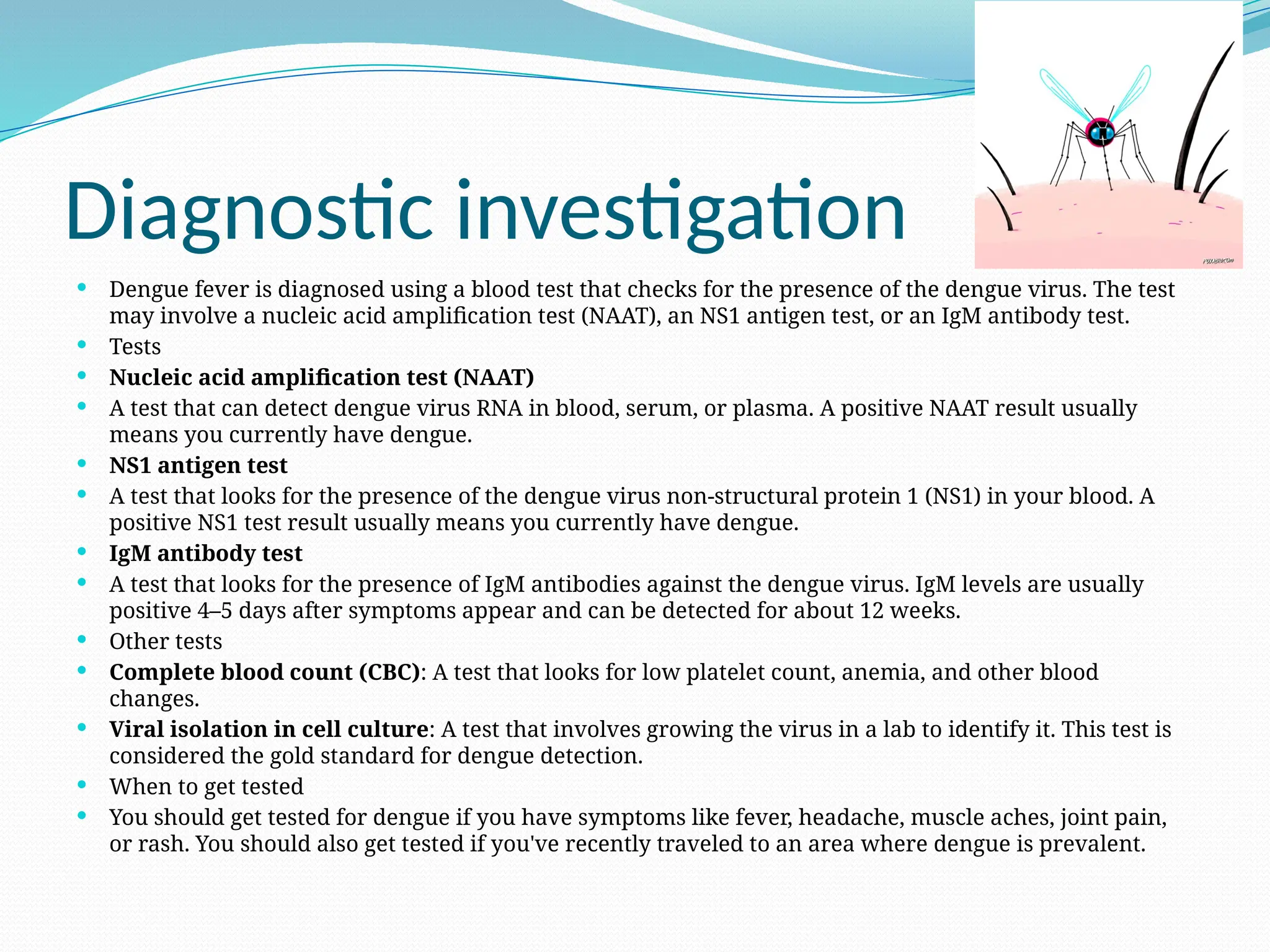
 Dengue fever is an illness can get from the bite of
a mosquito carrying one of four types of dengue
virus (DENV). The virus is most commonly found
in tropical and subtropical regions, including
Central and South America, Africa, parts of Asia
and the Pacific Islands.
 Dengue isn’t contagious from person to person
except when passed from a pregnant person to
their child. Symptoms are usually mild with your
first infection, but if you get another infection
with a different version of DENV, your risk of
severe complications goes up.
 Dengue fever is caused by one of four dengue
viruses. When a mosquito infected with the dengue
virus bites you, the virus can enter your blood and
make copies of itself. The virus itself and your
immune system’s response can make you feel sick.
 The virus can destroy parts of your blood that form
clots and give structure to your blood vessels. This,
along with certain chemicals that your immune
system creates, can make your blood leak out of
your vessels and cause internal bleeding. This leads
to the life-threatening symptoms of severe dengue.
Risk factors
 Living in tropical areas: Dengue fever is caused by a virus that's more
prevalent in tropical and subtropical areas.
 Travel to tropical areas: Travelers who spend a lot of time in areas
with dengue are at higher risk.
 Previous dengue infection: Having dengue fever before increases the
risk of developing severe dengue if you get it again.
 Urbanization: Unplanned urbanization can increase the risk of
dengue transmission.
 Age: Extreme age can be a risk factor for severe dengue.
 Mosquito feeding activity: Dengue is more likely to spread during
periods when mosquitoes are feeding the most, which is usually in
the early evening and two to three hours after dawn.
 Community practices: How a community stores water, keeps plants,
and protects itself from mosquito bites can affect the risk of dengue.
Transmission
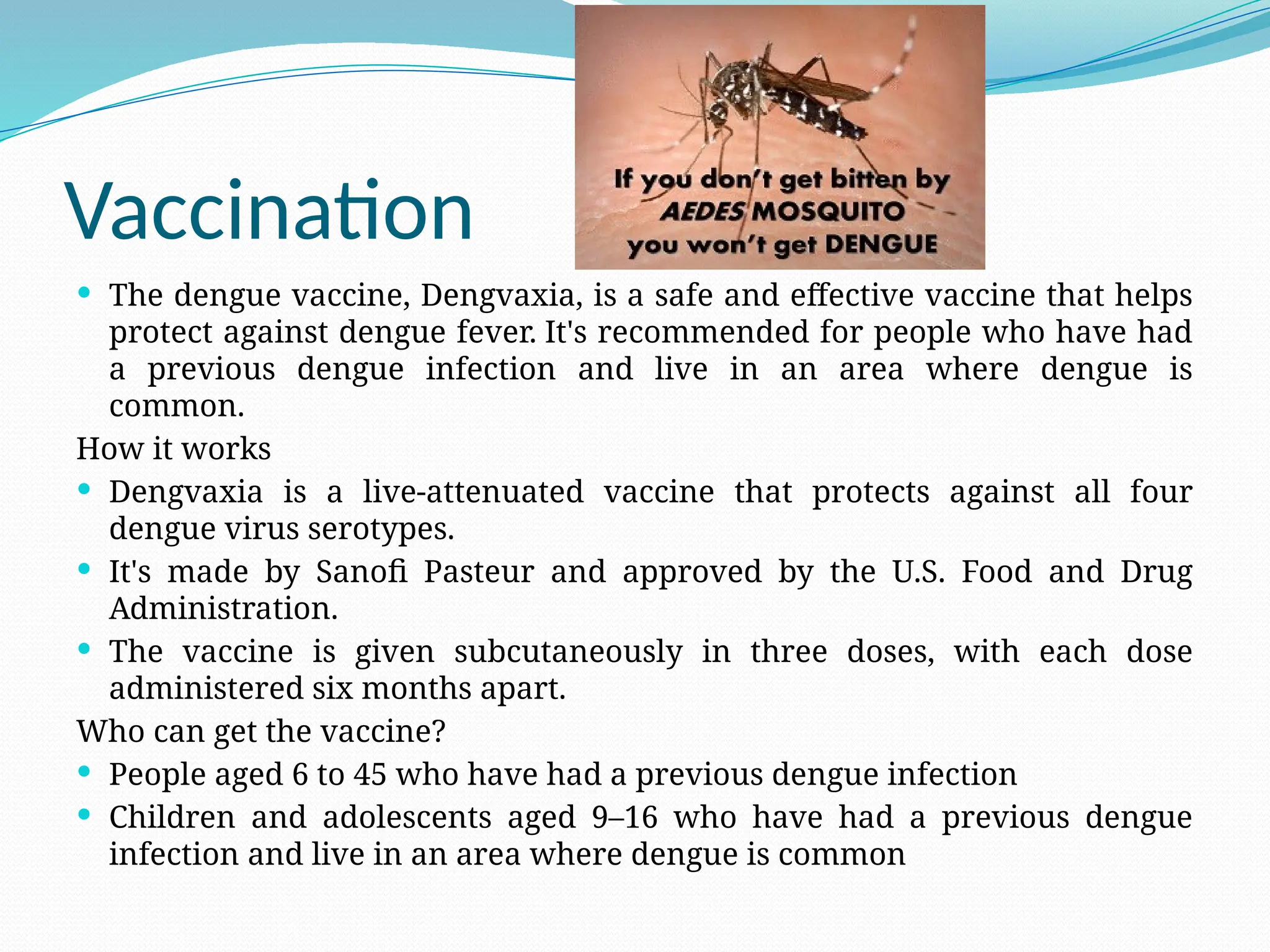
 Dengue is spread by Aedes mosquitos, which also
carry viruses like Zika and chikungunya. The
mosquitos bites someone with dengue fever and
then bites someone else, causing them to become
infected.
 Dengue fever isn’t contagious directly from one
person to another like the flu. The only way to
get dengue from another person is if a pregnant
person becomes infected. If you’re pregnant and
get dengue, you can pass it to your baby during
pregnancy or childbirth.
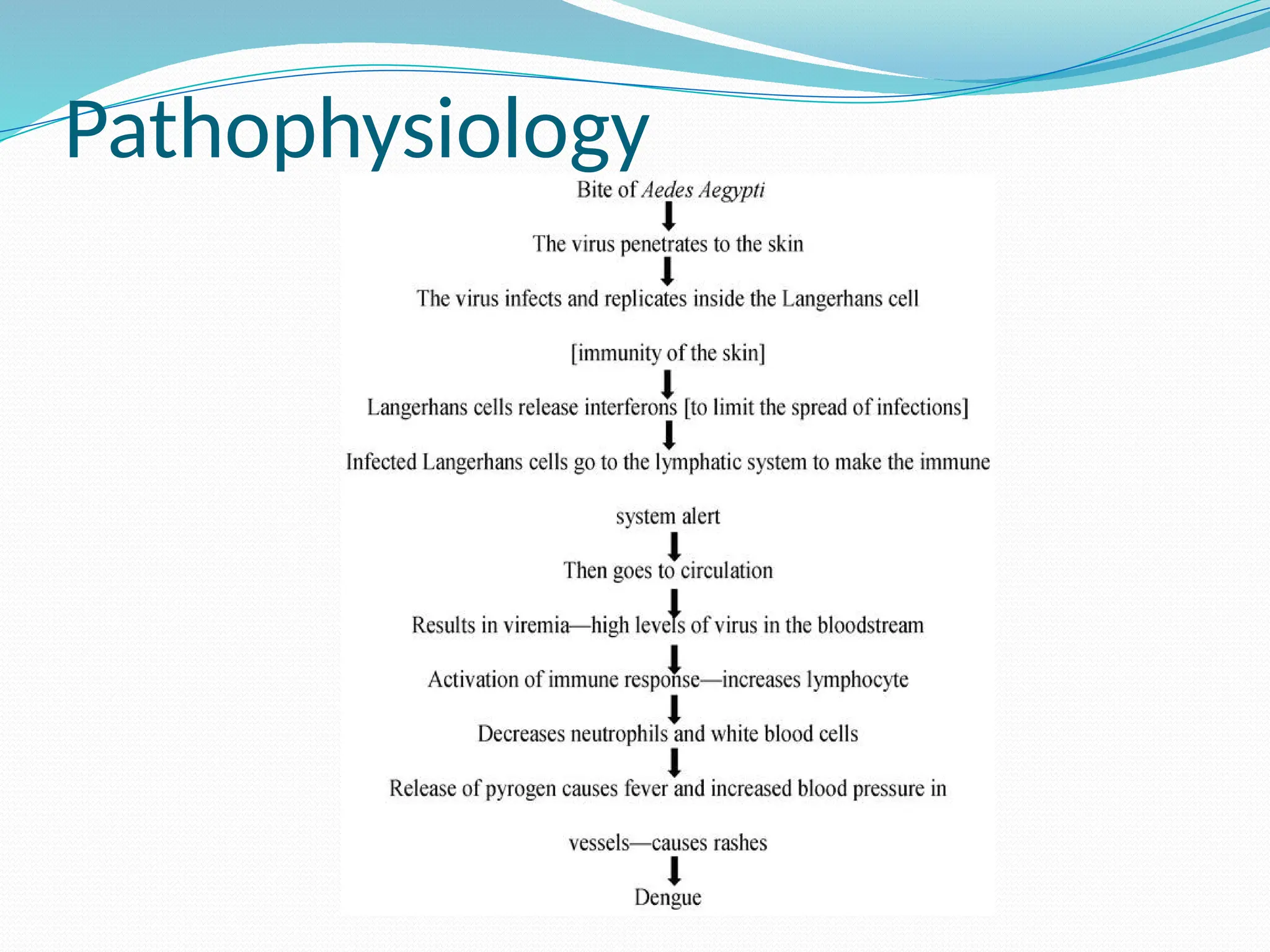
Pathophysiology
Sign and symptoms
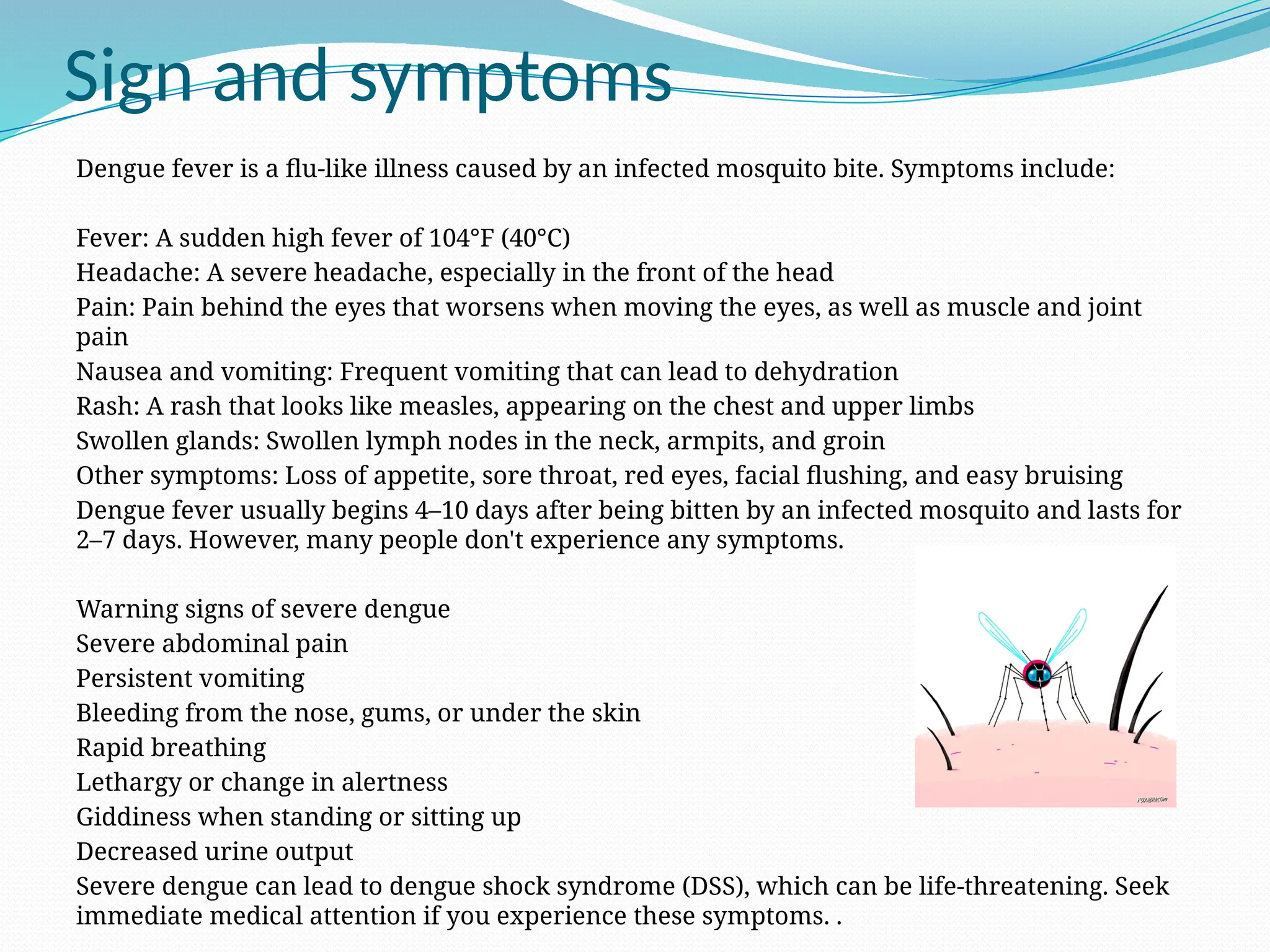
Dengue fever is a flu-like illness caused by an infected mosquito bite. Symptoms include:
Fever: A sudden high fever of 104°F (40°C)
Headache: A severe headache, especially in the front of the head
Pain: Pain behind the eyes that worsens when moving the eyes, as well as muscle and joint
pain
Nausea and vomiting: Frequent vomiting that can lead to dehydration
Rash: A rash that looks like measles, appearing on the chest and upper limbs
Swollen glands: Swollen lymph nodes in the neck, armpits, and groin
Other symptoms: Loss of appetite, sore throat, red eyes, facial flushing, and easy bruising
Dengue fever usually begins 4–10 days after being bitten by an infected mosquito and lasts for
2–7 days. However, many people don't experience any symptoms.
Warning signs of severe dengue
Severe abdominal pain
Persistent vomiting
Bleeding from the nose, gums, or under the skin
Rapid breathing
Lethargy or change in alertness
Giddiness when standing or sitting up
Decreased urine output
Severe dengue can lead to dengue shock syndrome (DSS), which can be life-threatening. Seek
immediate medical attention if you experience these symptoms. .
Diagnostic investigation
 Dengue fever is diagnosed using a blood test that checks for the presence of the dengue virus. The test
may involve a nucleic acid amplification test (NAAT), an NS1 antigen test, or an IgM antibody test.
 Tests
 Nucleic acid amplification test (NAAT)
 A test that can detect dengue virus RNA in blood, serum, or plasma. A positive NAAT result usually
means you currently have dengue.
 NS1 antigen test
 A test that looks for the presence of the dengue virus non-structural protein 1 (NS1) in your blood. A
positive NS1 test result usually means you currently have dengue.
 IgM antibody test
 A test that looks for the presence of IgM antibodies against the dengue virus. IgM levels are usually
positive 4–5 days after symptoms appear and can be detected for about 12 weeks.
 Other tests
 Complete blood count (CBC): A test that looks for low platelet count, anemia, and other blood
changes.
 Viral isolation in cell culture: A test that involves growing the virus in a lab to identify it. This test is
considered the gold standard for dengue detection.
 When to get tested
 You should get tested for dengue if you have symptoms like fever, headache, muscle aches, joint pain,
or rash. You should also get tested if you've recently traveled to an area where dengue is prevalent.
 Dengue fever is treated with supportive care, such as rest, fluids, and pain relievers. There is no specific cure for
dengue.
 Supportive care
 Acetaminophen: Can help with fever and muscle pain. Acetaminophen is available over-the-counter under brand
names like Tylenol.
 Hydration: Drink plenty of fluids to stay hydrated.
 Bed rest: Get enough rest to help your body fight the virus.
 Tepid sponge baths: Can help manage fever.
 Home remedies: Turmeric may help reduce the severity of symptoms. Warm milk can provide comfort and
hydration.
 Avoid certain medications : Aspirin, Ibuprofen (Advil, Motrin IB), Naproxen sodium (Aleve)
 Non-steroidal anti-inflammatory drugs (NSAIDs)
 Severe cases
 May require hospitalization
 May require intravenous (IV) fluids and electrolyte replacement
 May require blood pressure monitoring
 May require blood transfusion
 May require careful fluid management
 May require prompt treatment of hemorrhagic complications
 Prevention
 Use mosquito repellents
 Wear clothes that cover as much of your body as possible
 Use mosquito nets
 Remove standing water
 Repair holes in screens
 Keep windows and doors closed
 There are a number of medicines and natural remedies that can help increase
platelet count in dengue patients, including:
Papaya leaf extract
 A natural remedy that can be taken as a juice or supplement. It's made from
fresh papaya leaves that are washed, cut, blended, and strained.
PLT-NORM
 A natural herbal medicine that contains a blend of herbs that can help increase
platelet count.
Nplate (romiplostim)
 A once-weekly platelet booster that works by increasing the activity of cells that
produce platelets.
Giloy (Tinospora Cordifolia)
 An Ayurvedic herb that can help improve platelet count by boosting the immune
system.
Pomegranate
 A fruit that's rich in iron, which can help maintain a healthy platelet count.
Pumpkin
 A vegetable that contains vitamin A and antioxidants, which can help increase
platelet count.
Spinach
 A leafy green vegetable that's rich in vitamin K, which is important for blood
clotting and platelet production.
Vaccination
 The dengue vaccine, Dengvaxia, is a safe and effective vaccine that helps
protect against dengue fever. It's recommended for people who have had
a previous dengue infection and live in an area where dengue is
common.
How it works
 Dengvaxia is a live-attenuated vaccine that protects against all four
dengue virus serotypes.
 It's made by Sanofi Pasteur and approved by the U.S. Food and Drug
Administration.
 The vaccine is given subcutaneously in three doses, with each dose
administered six months apart.
Who can get the vaccine?
 People aged 6 to 45 who have had a previous dengue infection
 Children and adolescents aged 9–16 who have had a previous dengue
infection and live in an area where dengue is common
Prevention
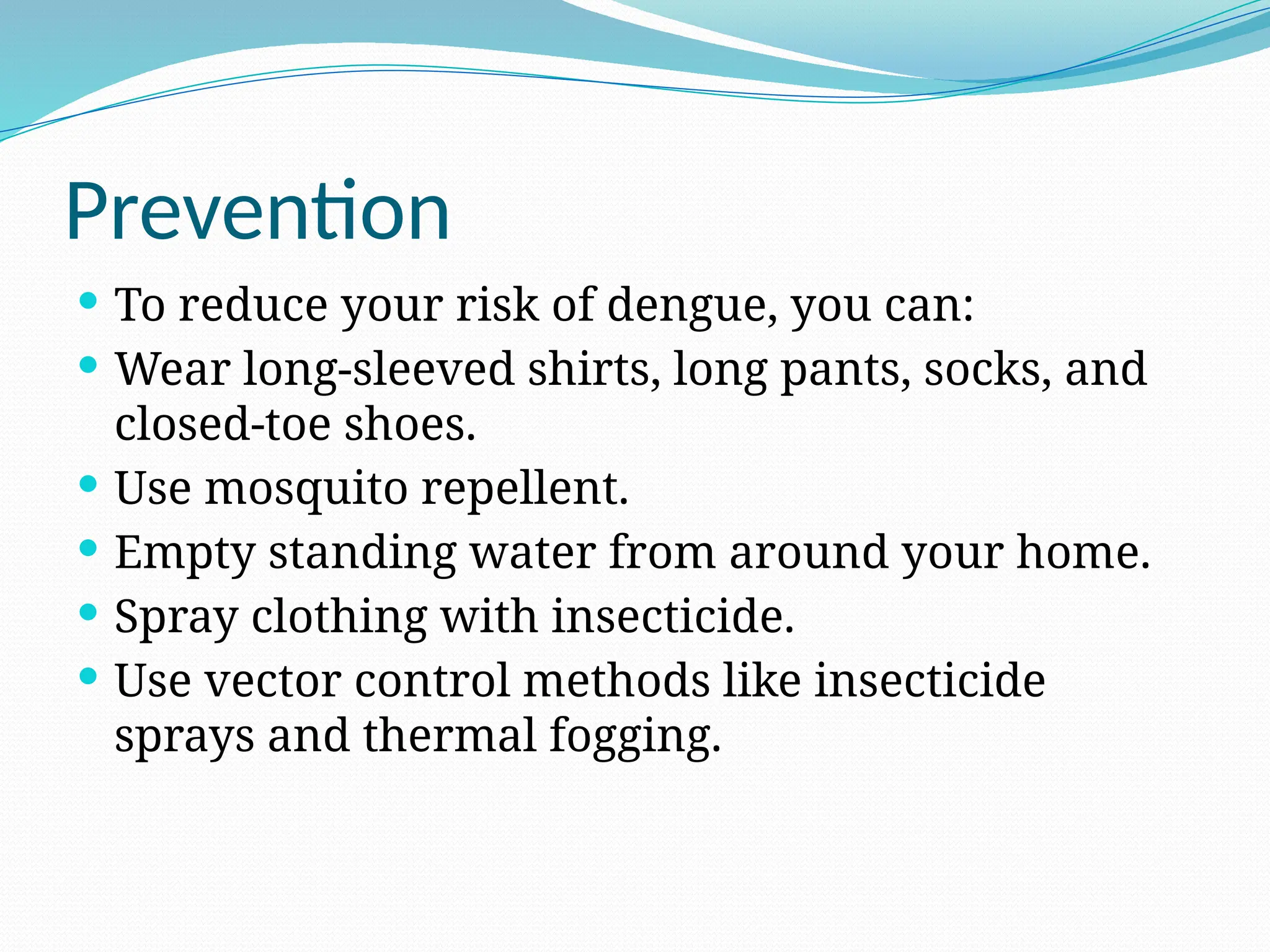
 To reduce your risk of dengue, you can:
 Wear long-sleeved shirts, long pants, socks, and
closed-toe shoes.
 Use mosquito repellent.
 Empty standing water from around your home.
 Spray clothing with insecticide.
 Use vector control methods like insecticide
sprays and thermal fogging.
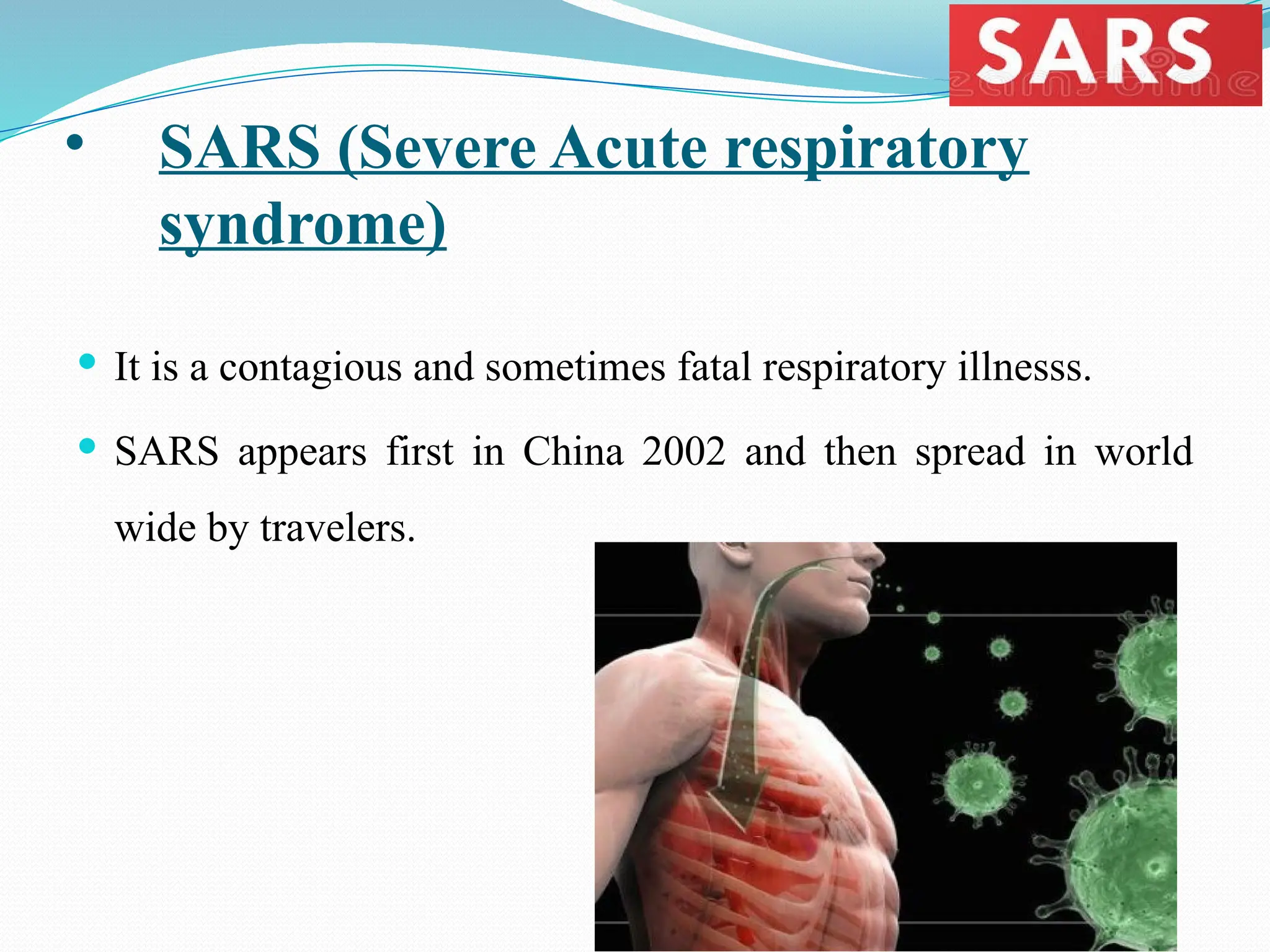
• SARS (Severe Acute respiratory
syndrome)
 It is a contagious and sometimes fatal respiratory illnesss.
 SARS appears first in China 2002 and then spread in world
wide by travelers.
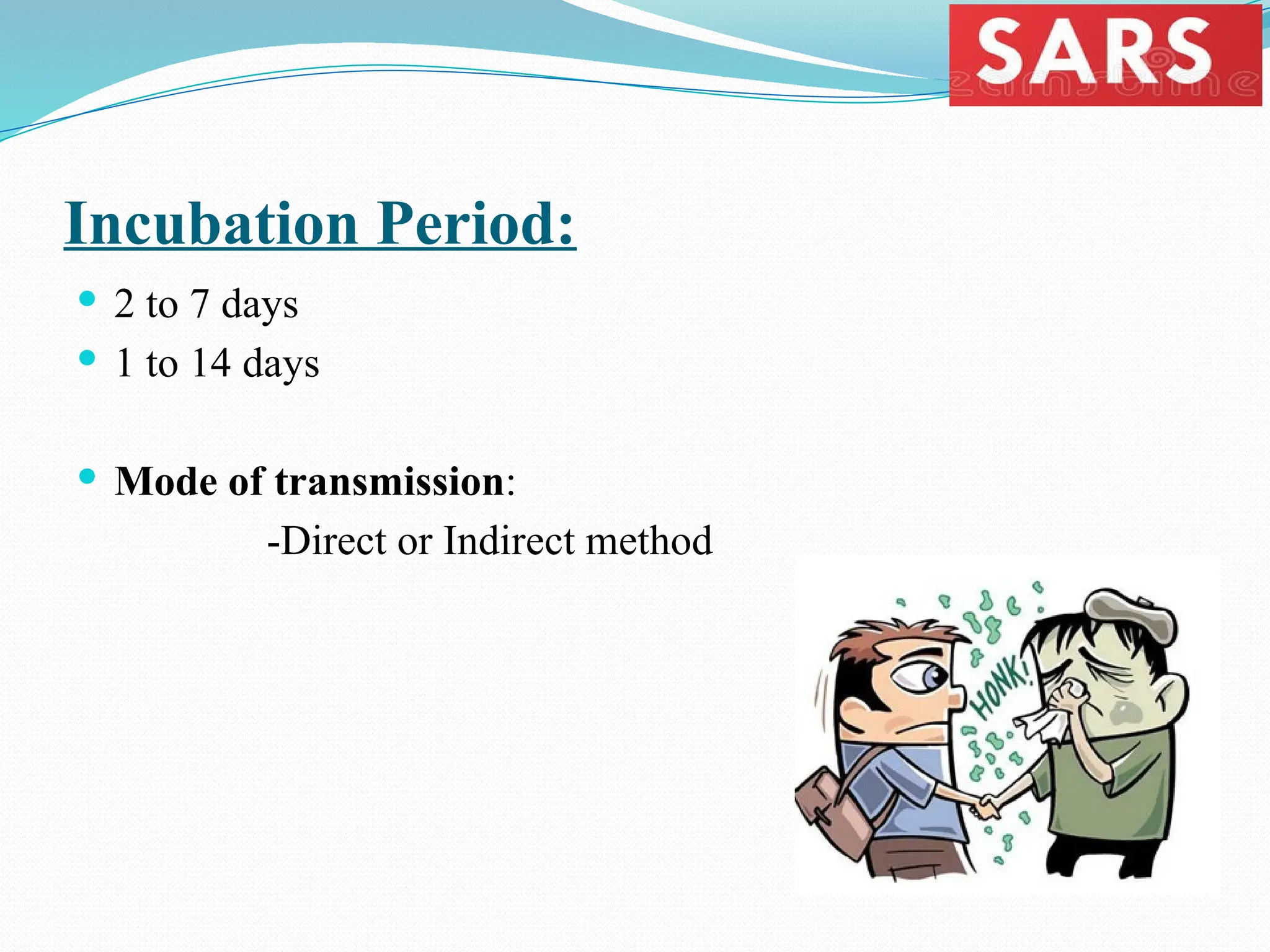
Incubation Period:
 2 to 7 days
 1 to 14 days
 Mode of transmission:
-Direct or Indirect method
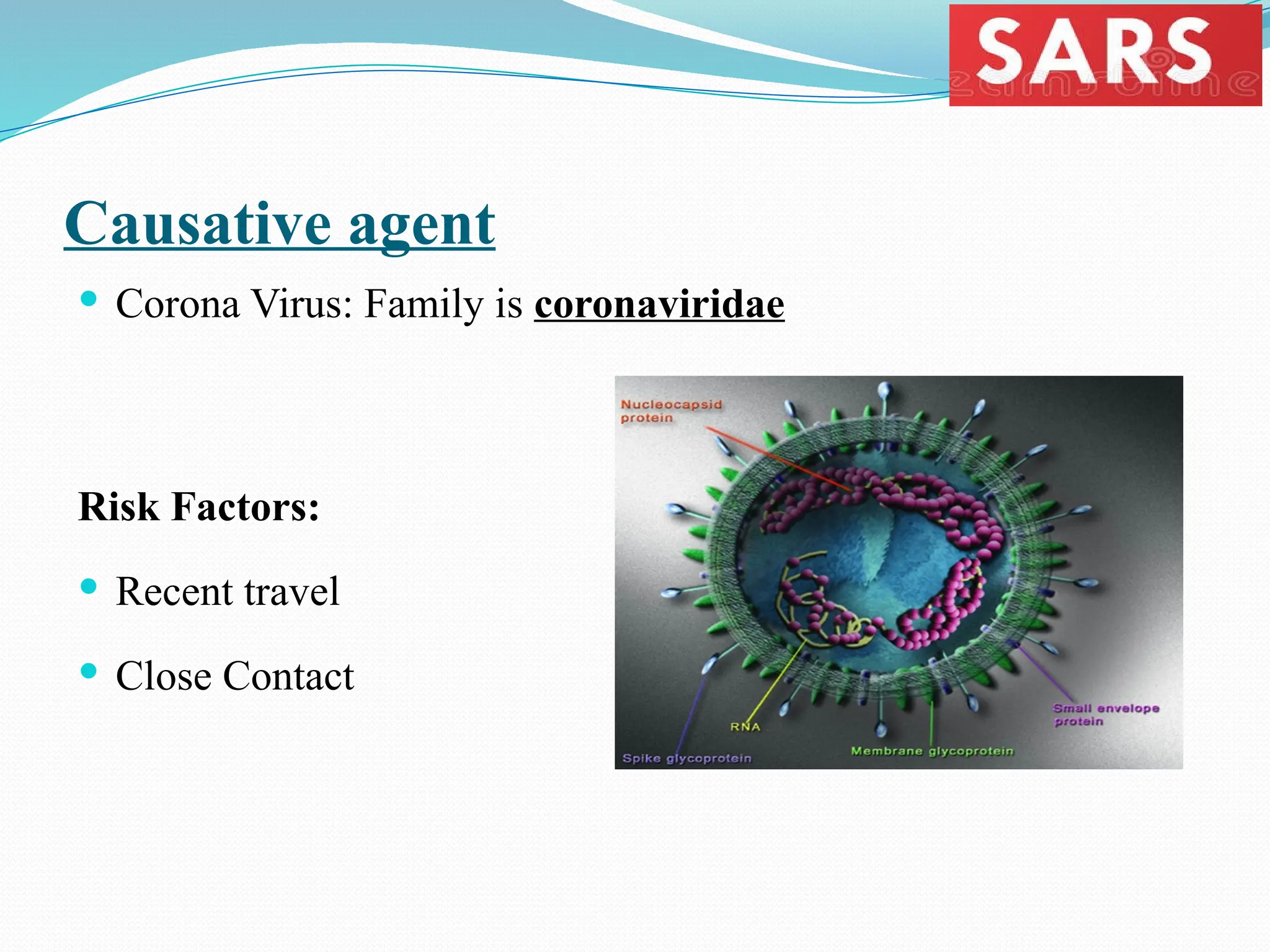
Causative agent
 Corona Virus: Family is coronaviridae
Risk Factors:
 Recent travel
 Close Contact
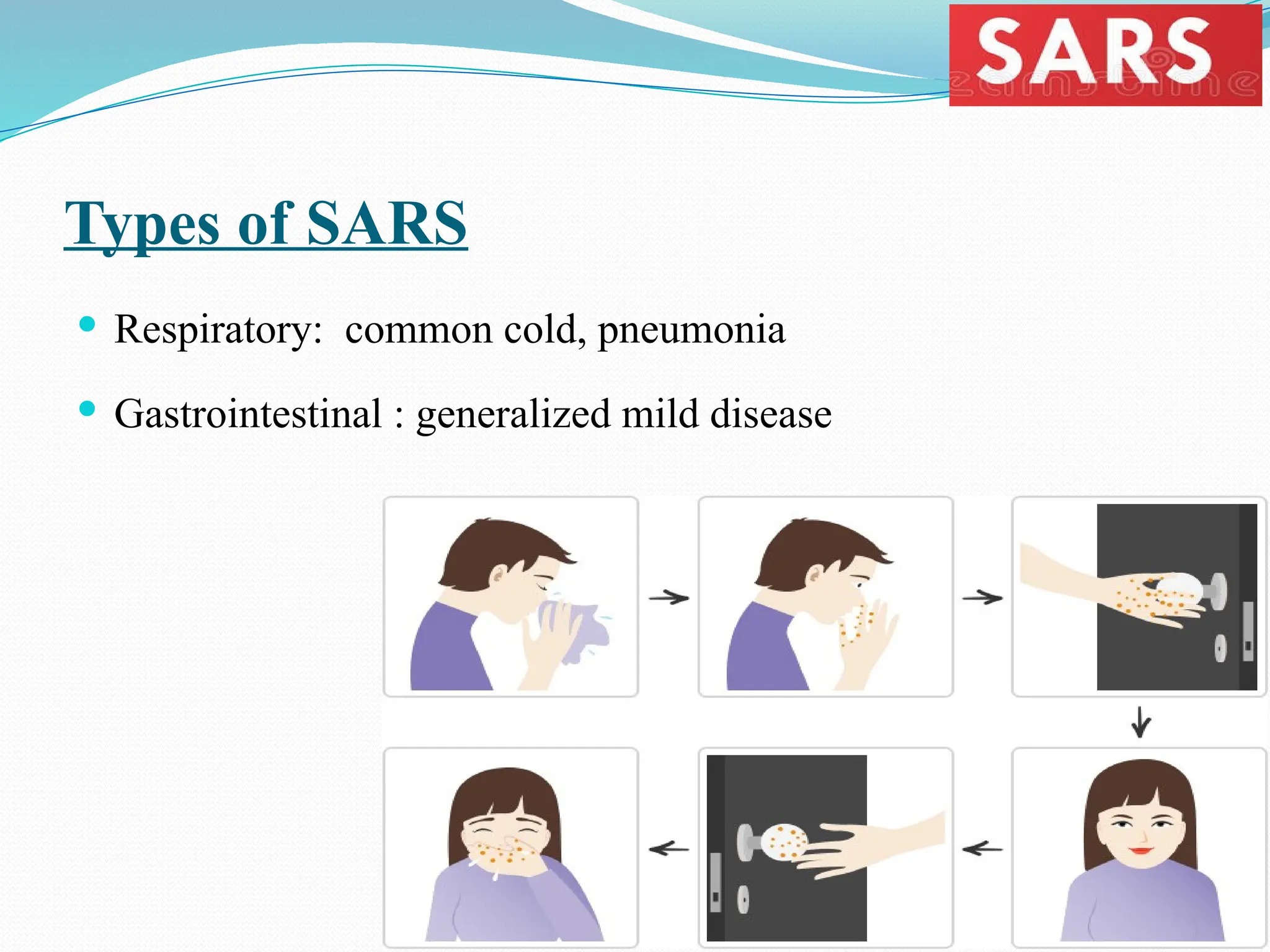
Types of SARS
 Respiratory: common cold, pneumonia
 Gastrointestinal : generalized mild disease
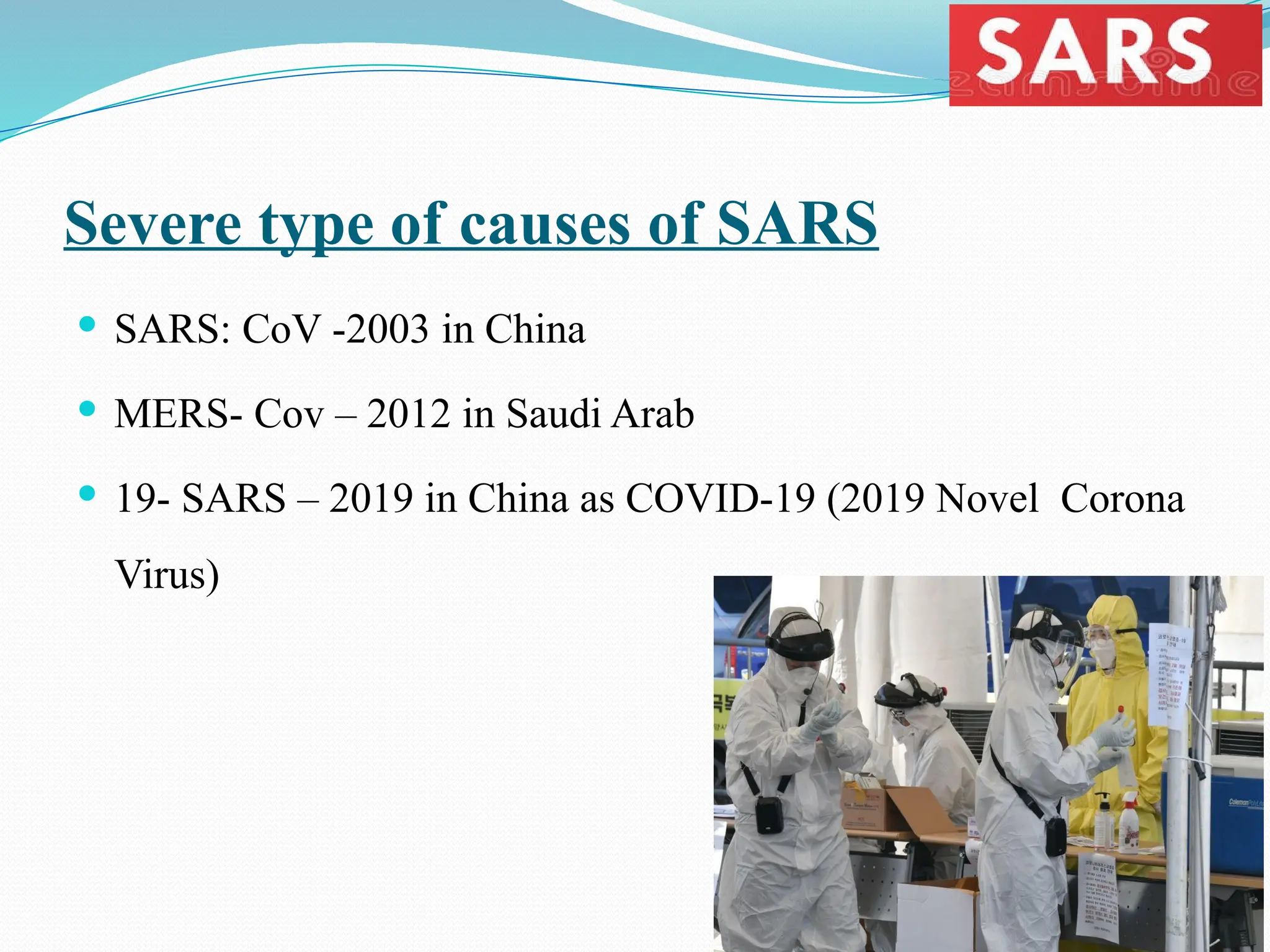
Severe type of causes of SARS
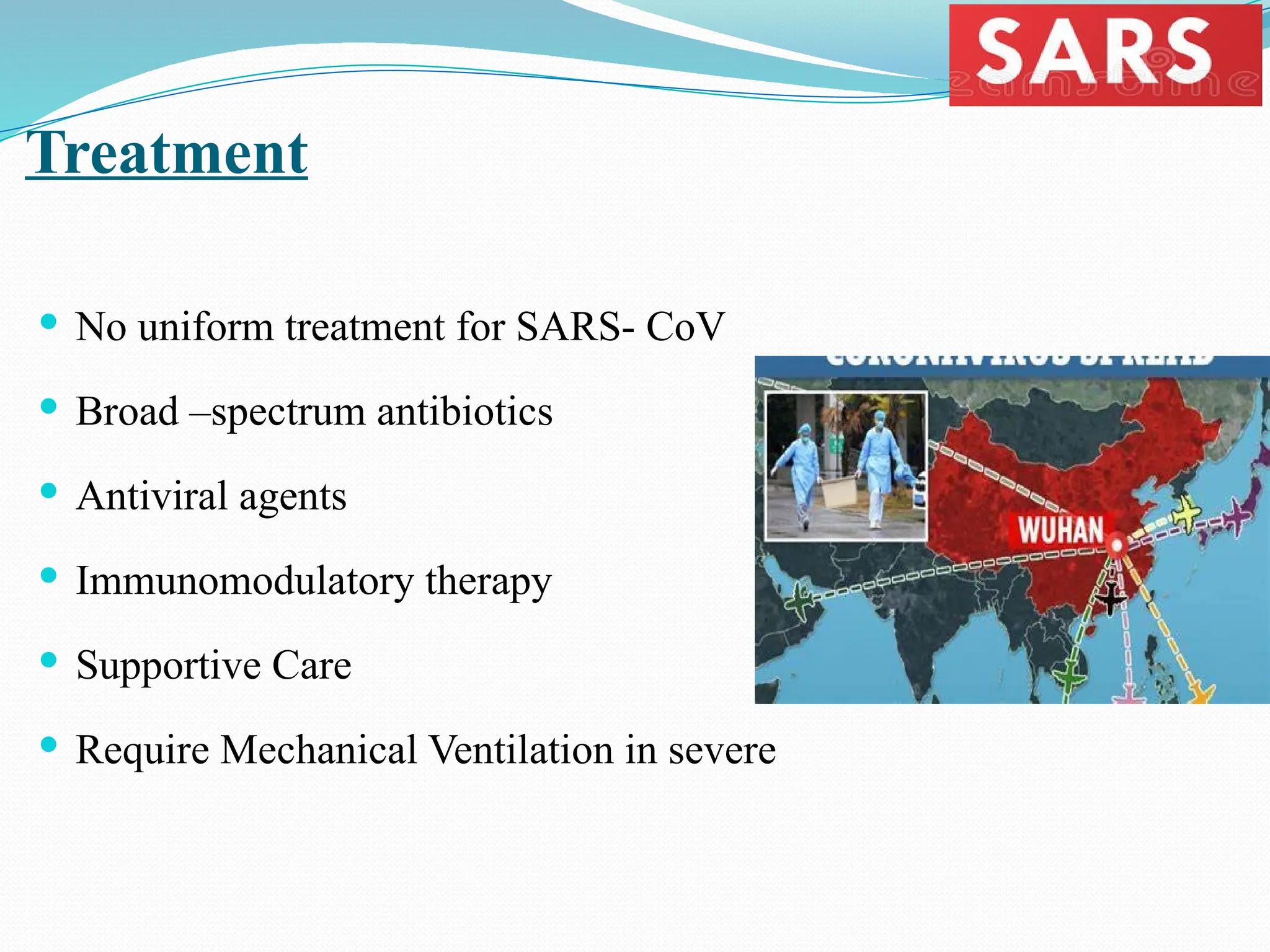
 SARS: CoV -2003 in China
 MERS- Cov – 2012 in Saudi Arab
 19- SARS – 2019 in China as COVID-19 (2019 Novel Corona
Virus)
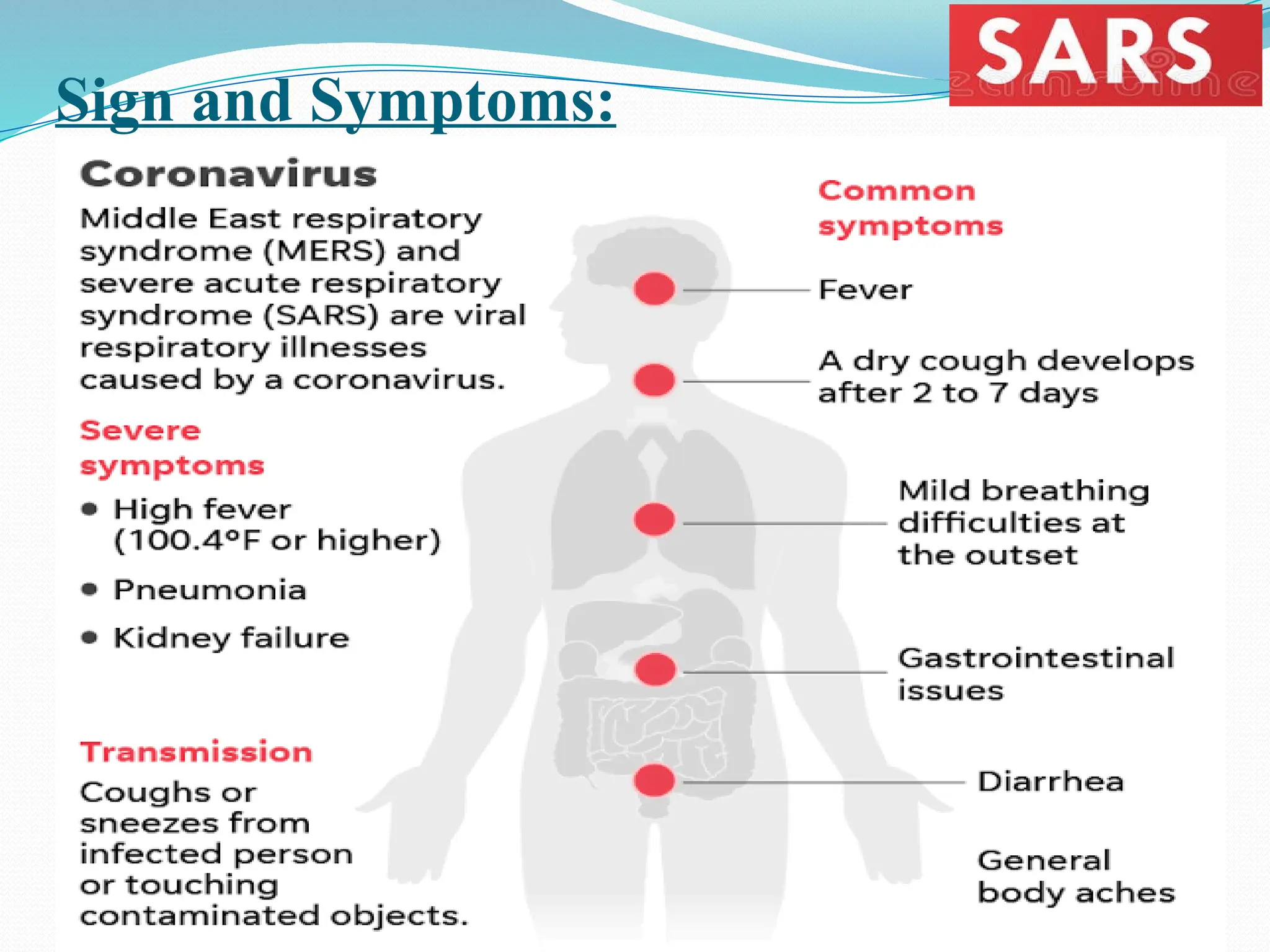
Sign and Symptoms:
Diagnosis
 PCR (Polymerase Chain Reaction)
 Serologic Testing
 Viral Culture
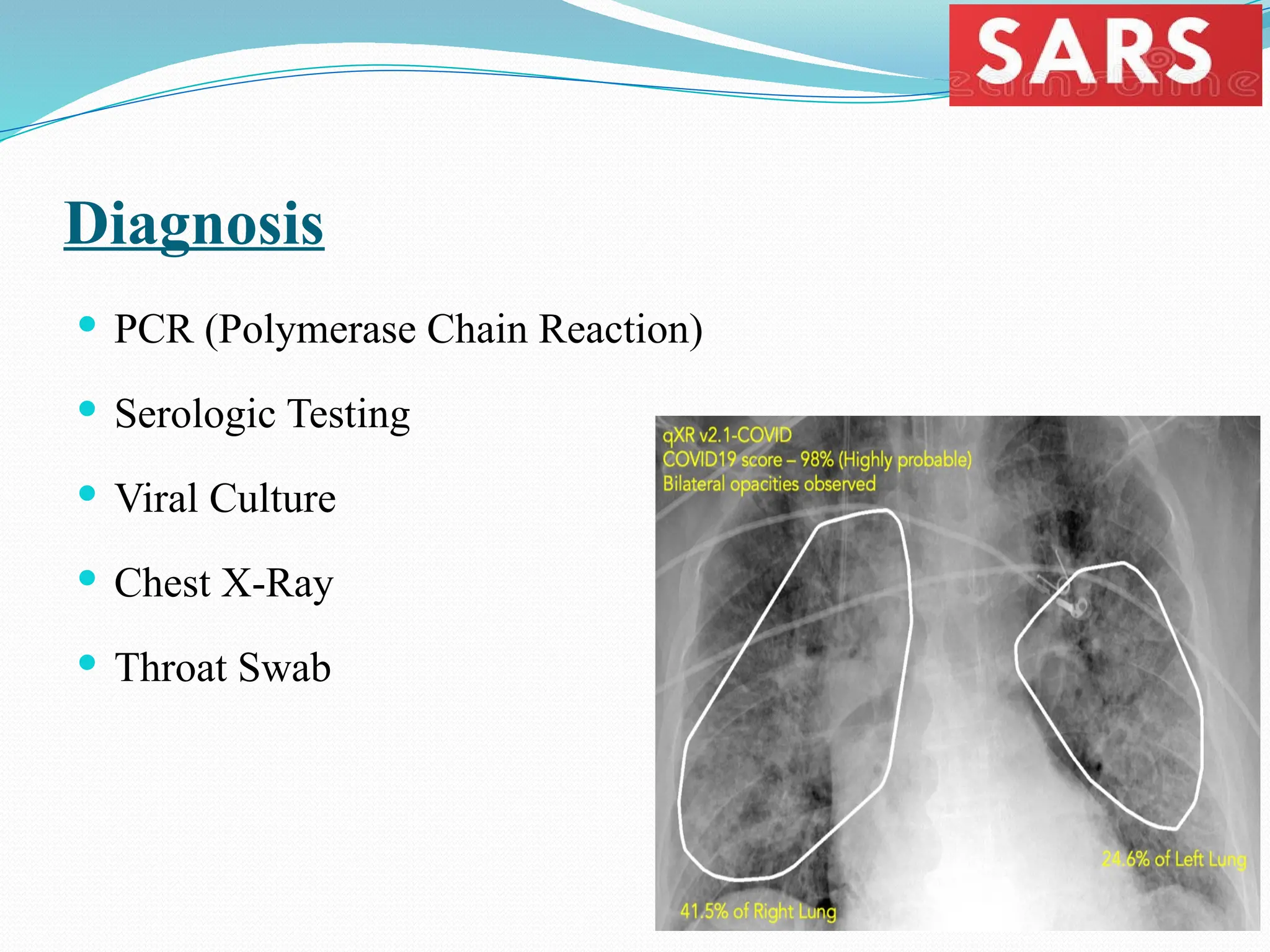
 Chest X-Ray
 Throat Swab
Treatment
 No uniform treatment for SARS- CoV
 Broad –spectrum antibiotics
 Antiviral agents
 Immunomodulatory therapy
 Supportive Care
 Require Mechanical Ventilation in severe
Prevention
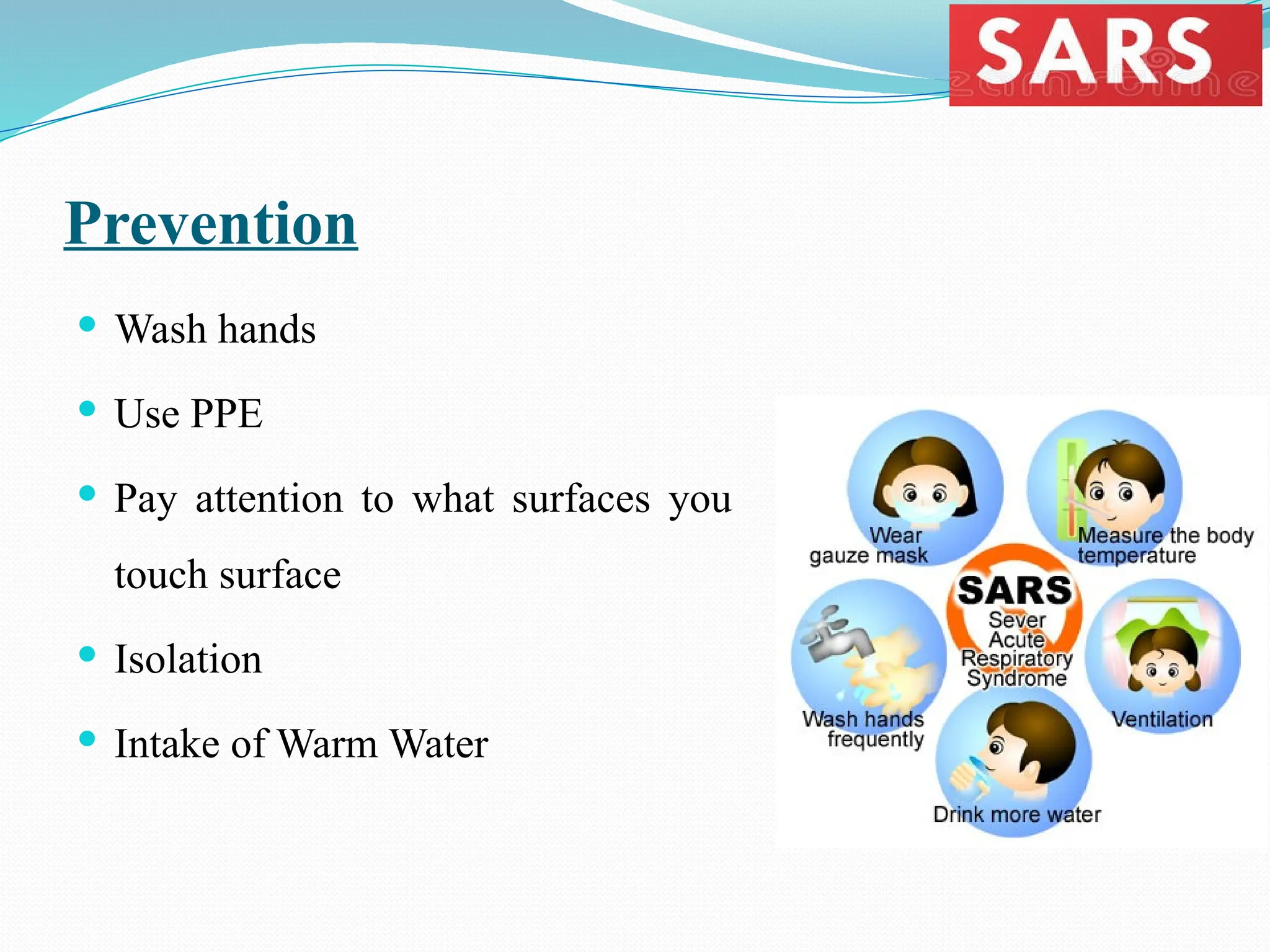
 Wash hands
 Use PPE
 Pay attention to what surfaces you
touch surface
 Isolation
 Intake of Warm Water
 SARS Wars (Thai: ขุนกระบี่ผีระบาด or Khun krabi phirabat,
also subtitled Bangkok Zombie Crisis) is a 2004 Thai
action fantasy comedy horror film directed and co-written
by Taweewat Wantha.
 The story involves people who are infected with a fictional
Type 4 strain of the SARS virus and turned into zombies.
The outbreak is contained to one apartment building in
Bangkok, and the Health Ministry is determined to keep it
contained at all costs. But the building also happens to be
the hideout for a gang that has kidnapped a teenage
schoolgirl. She is to be rescued by a sword-wielding
superhero crime fighter, who must not only contend with
the criminals, but also the zombies in a race against the
government's plan to blow the building up.
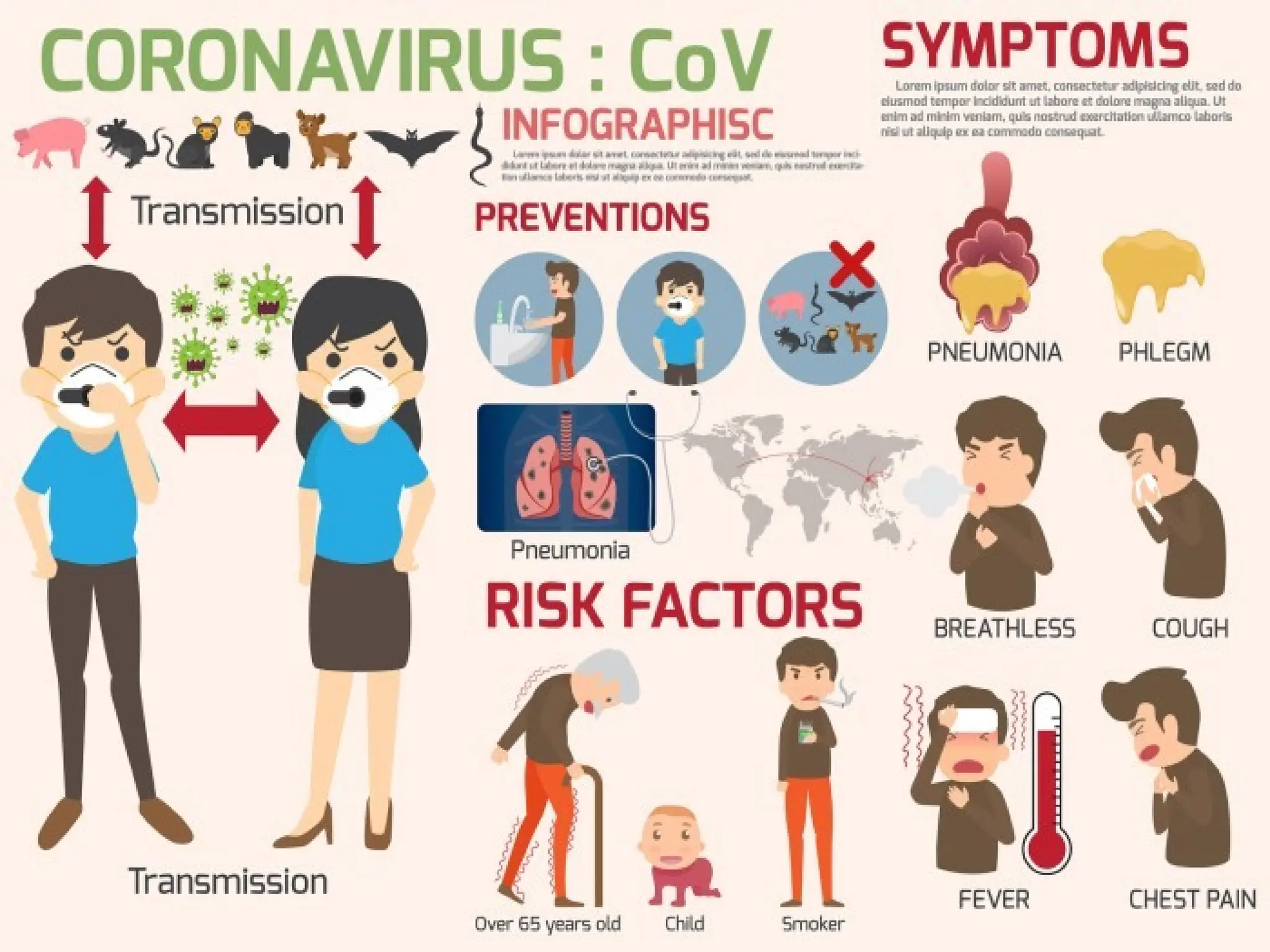
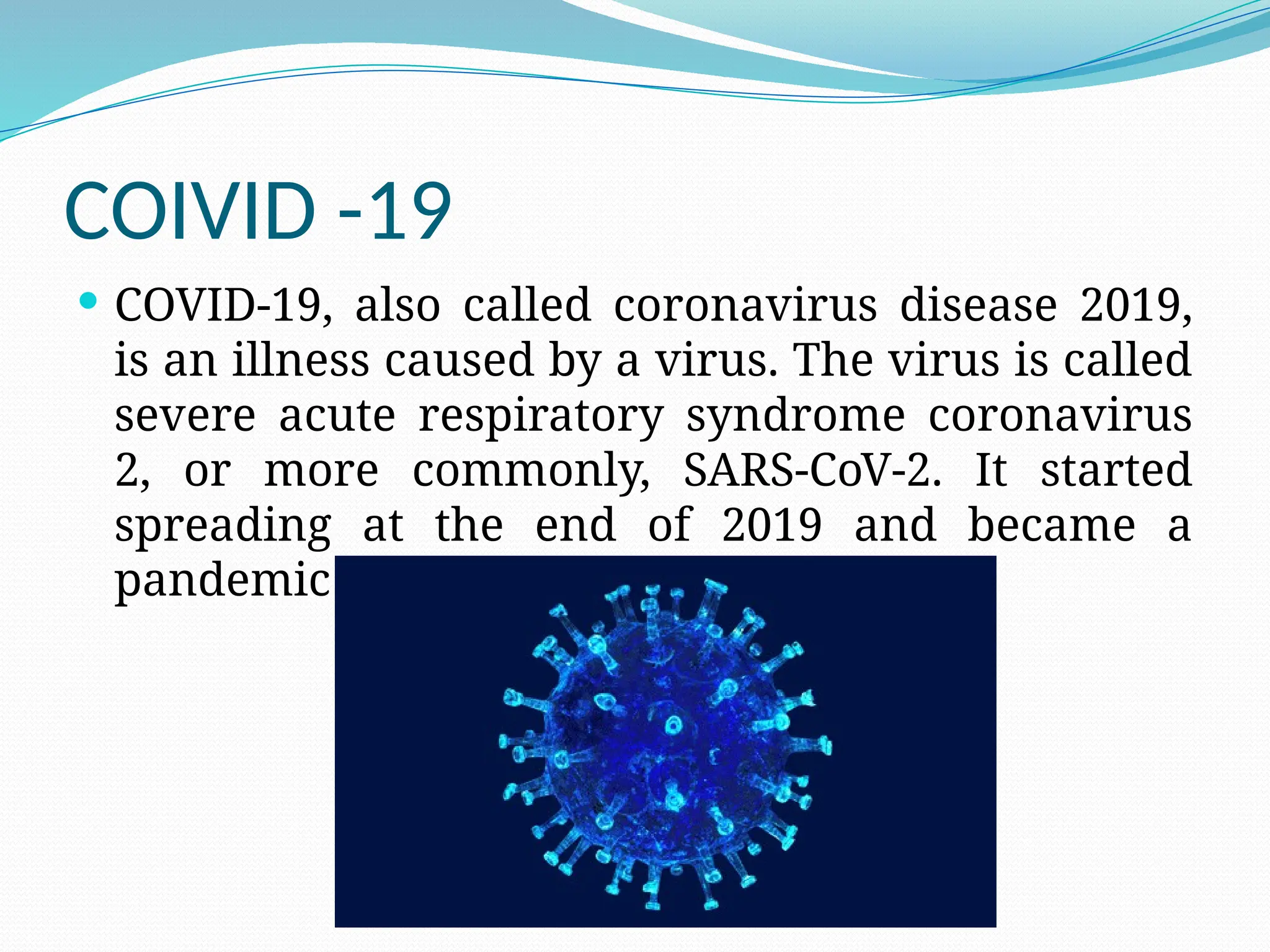
COIVID -19
 COVID-19, also called coronavirus disease 2019,
is an illness caused by a virus. The virus is called
severe acute respiratory syndrome coronavirus
2, or more commonly, SARS-CoV-2. It started
spreading at the end of 2019 and became a
pandemic disease in 2020.
 COVID-19 is caused by infection with the severe acute respiratory syndrome coronavirus
2, also called SARS-CoV-2.
 The coronavirus spreads mainly from person to person, even from someone who is
infected but has no symptoms. When people with COVID-19 cough, sneeze, breathe, sing
or talk, their breath may be infected with the COVID-19 virus.
 The coronavirus carried by a person's breath can land directly on the face of a nearby
person, after a sneeze or cough, for example. The droplets or particles the infected person
breathes out could possibly be breathed in by other people if they are close together or in
areas with low air flow. And a person may touch a surface that has respiratory droplets
and then touch their face with hands that have the coronavirus on them.
 It's possible to get COVID-19 more than once.
 Over time, the body's defense against the COVID-19 virus can fade.
 A person may be exposed to so much of the virus that it breaks through their immune
defense.
 As a virus infects a group of people, the virus copies itself. During this process, the genetic
code can randomly change in each copy. The changes are called mutations. If the
coronavirus that causes COVID-19 changes in ways that make previous infections or
vaccination less effective at preventing infection, people can get sick again.
 The virus that causes COVID-19 can infect some pets. Cats, dogs, hamsters and ferrets
have caught this coronavirus and had symptoms. It's rare for a person to get COVID-19
from a pet.
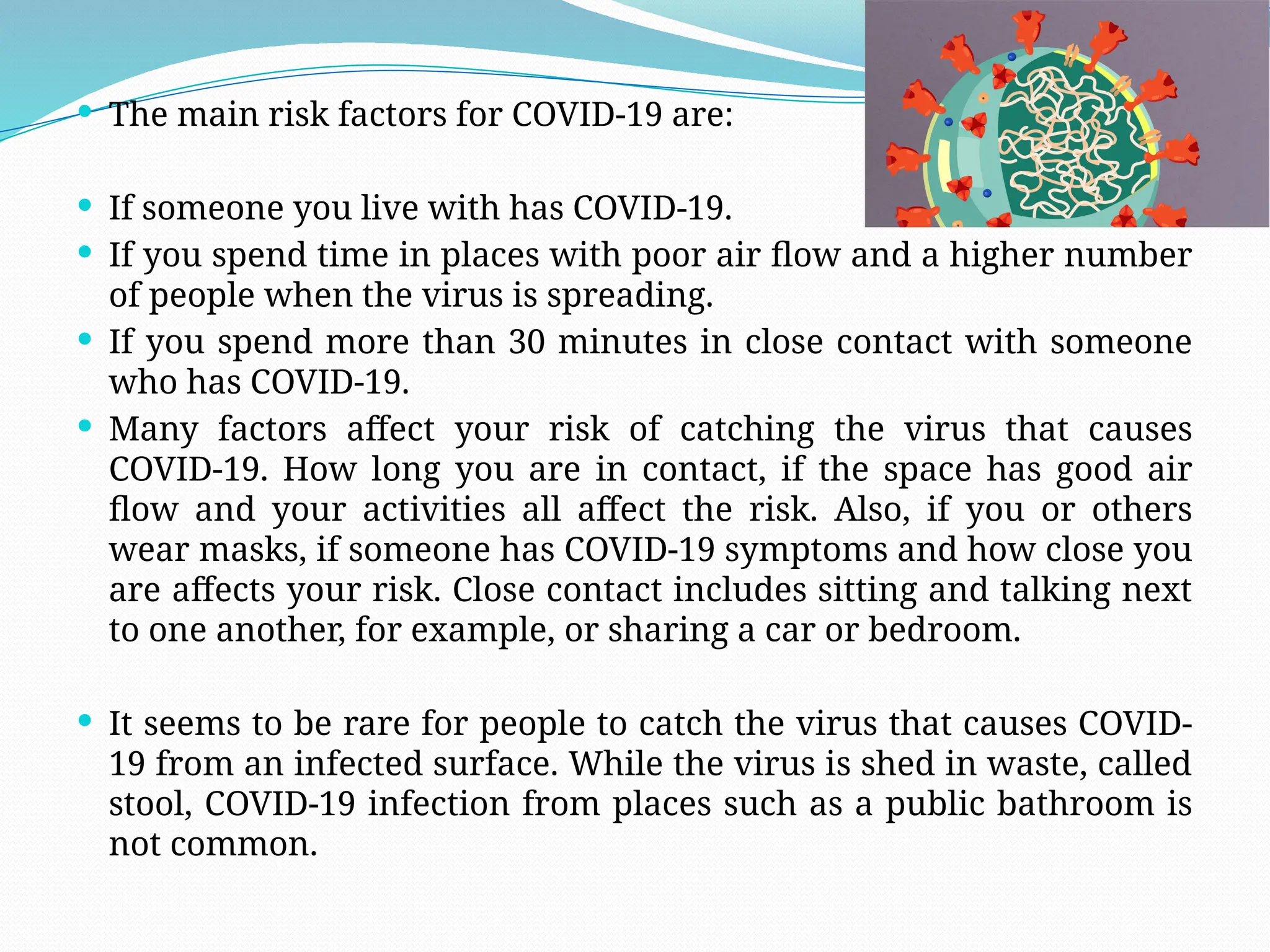
 The main risk factors for COVID-19 are:
 If someone you live with has COVID-19.
 If you spend time in places with poor air flow and a higher number
of people when the virus is spreading.
 If you spend more than 30 minutes in close contact with someone
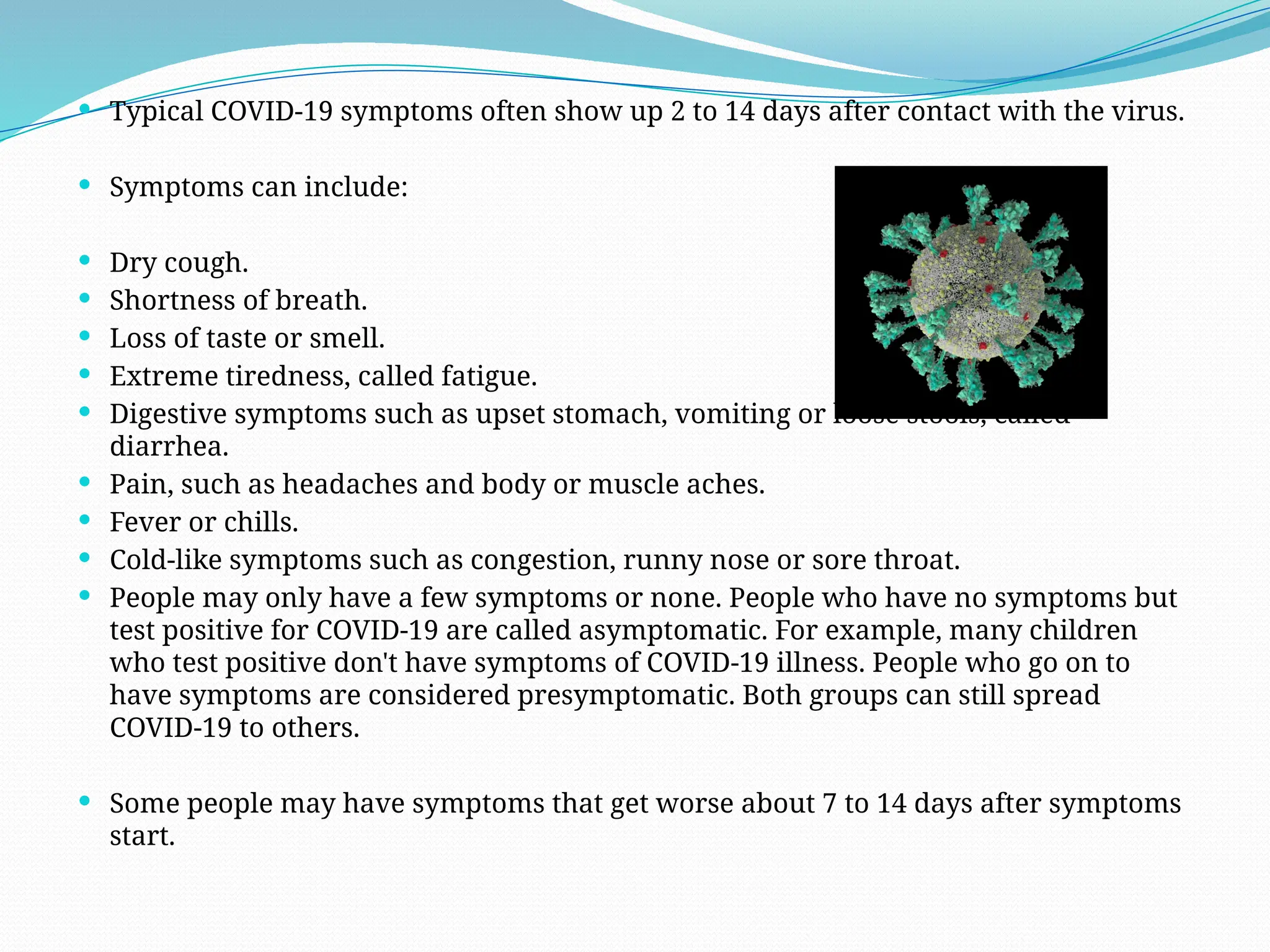
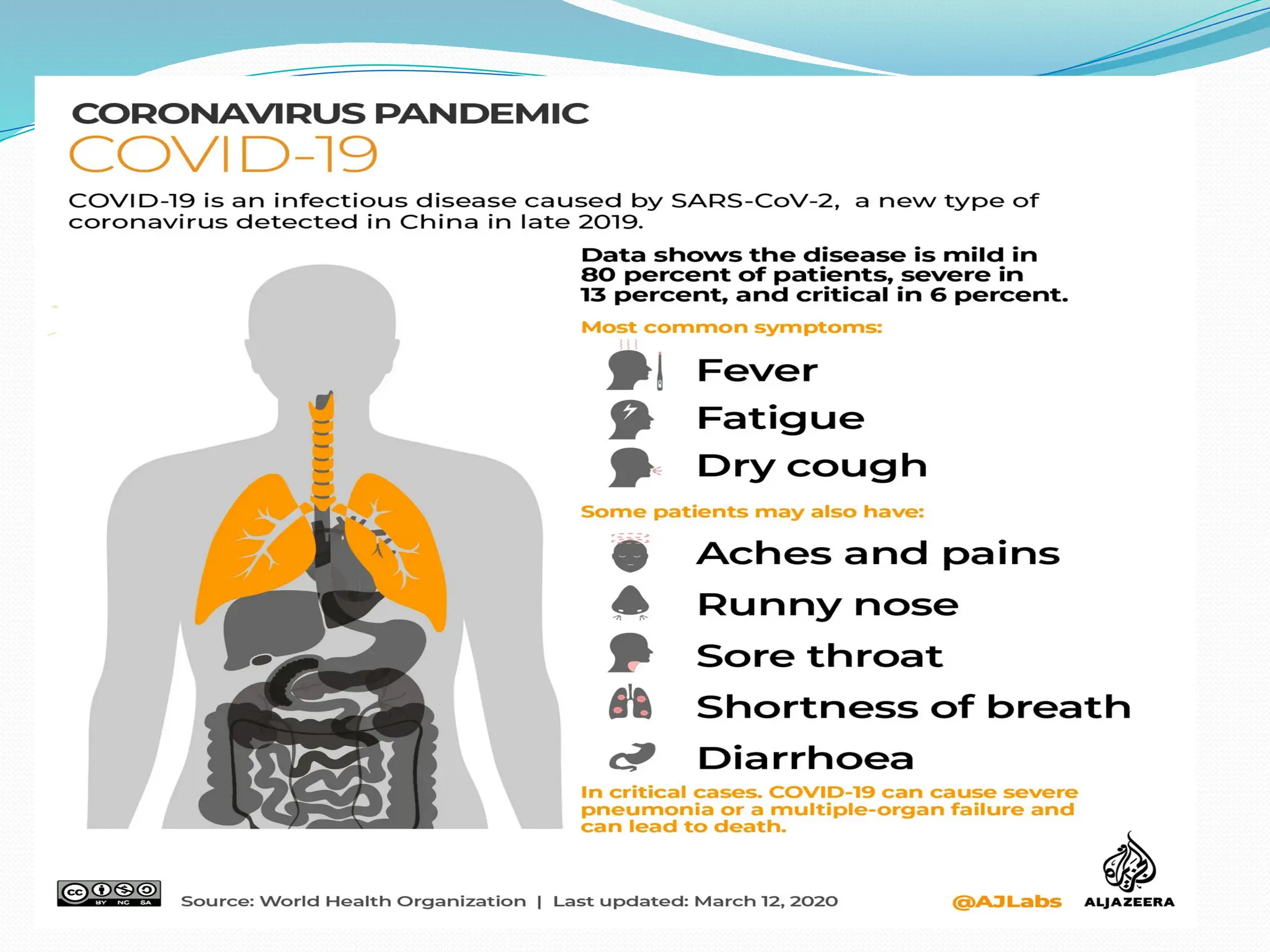
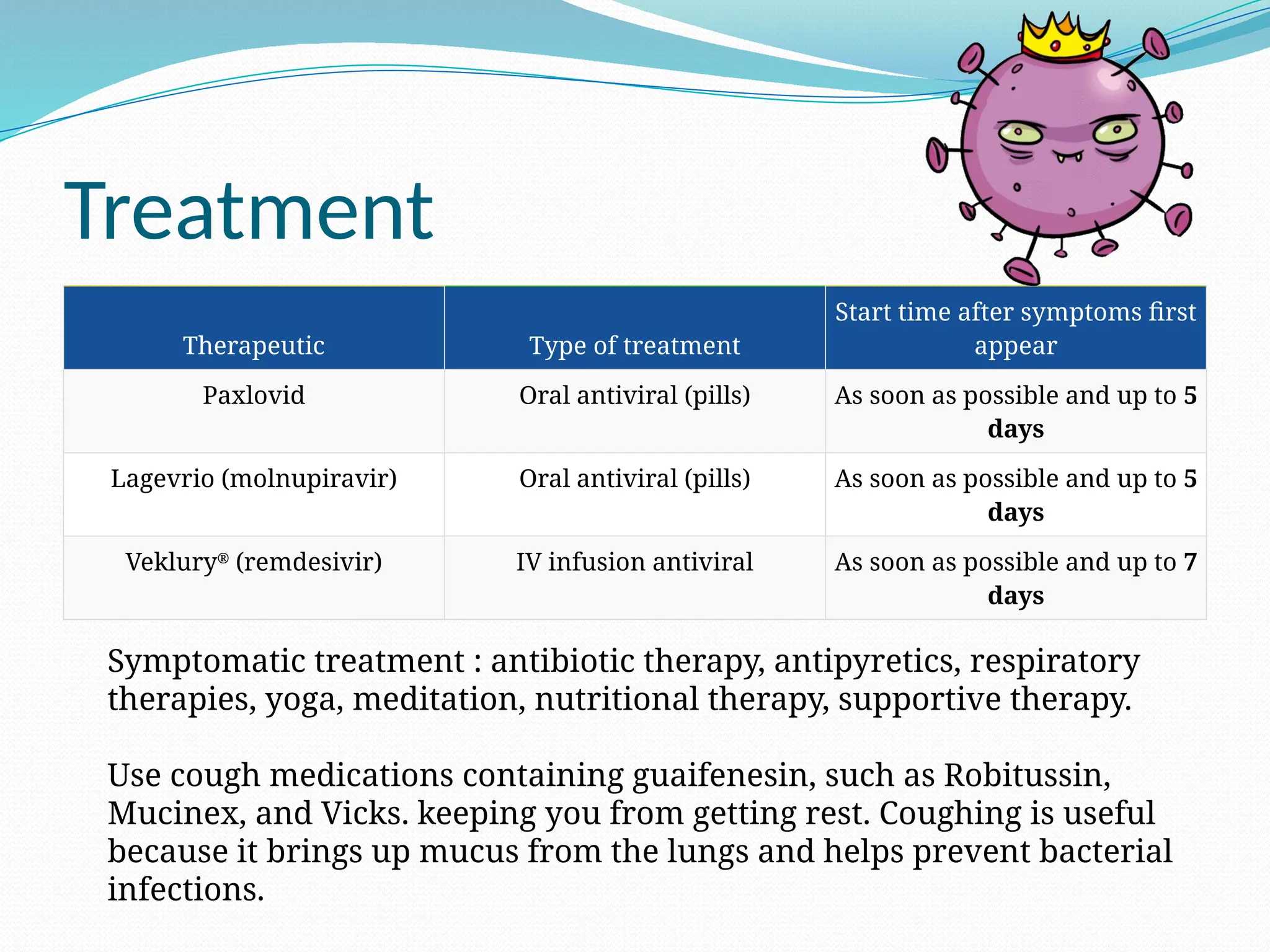
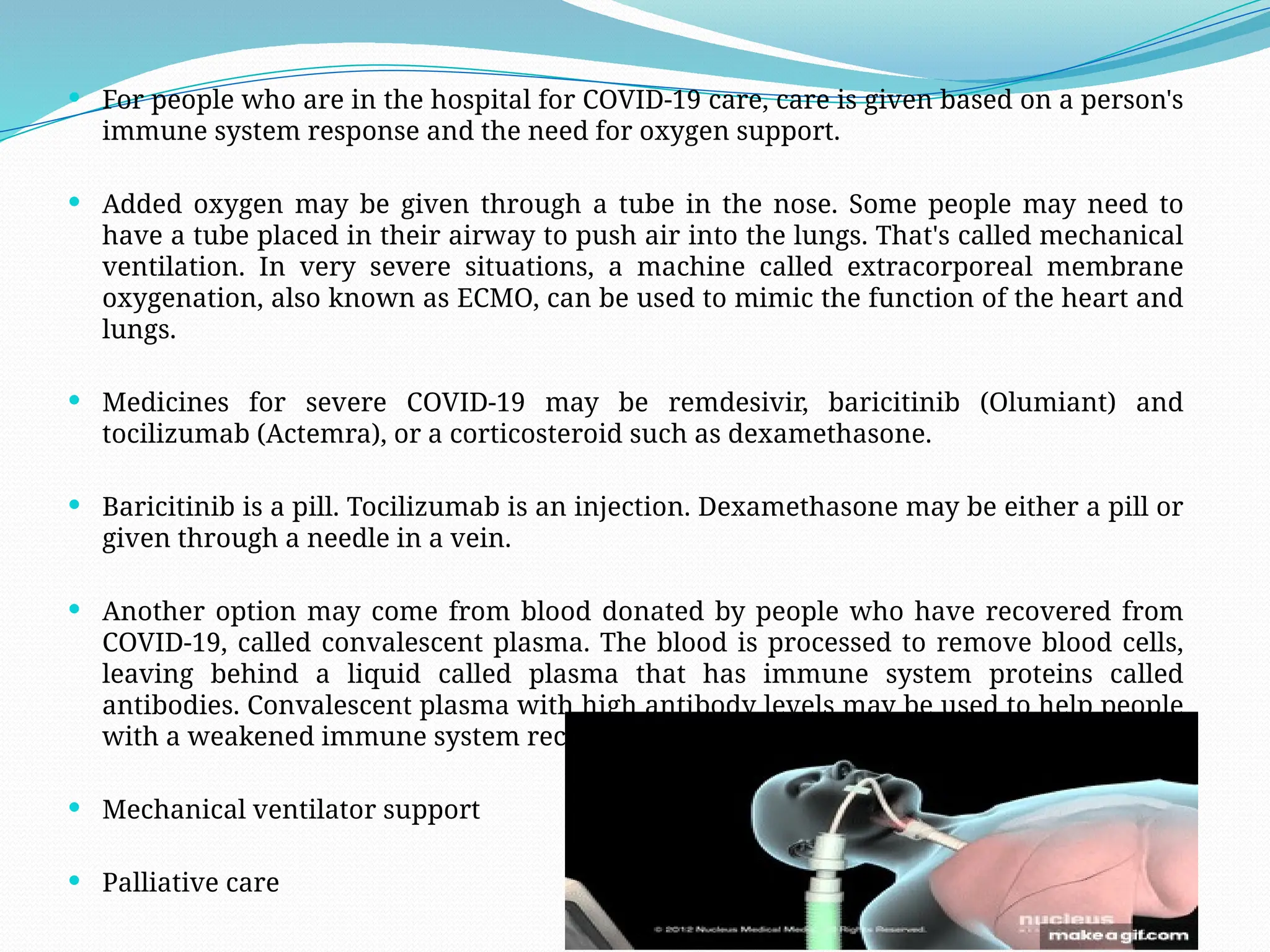
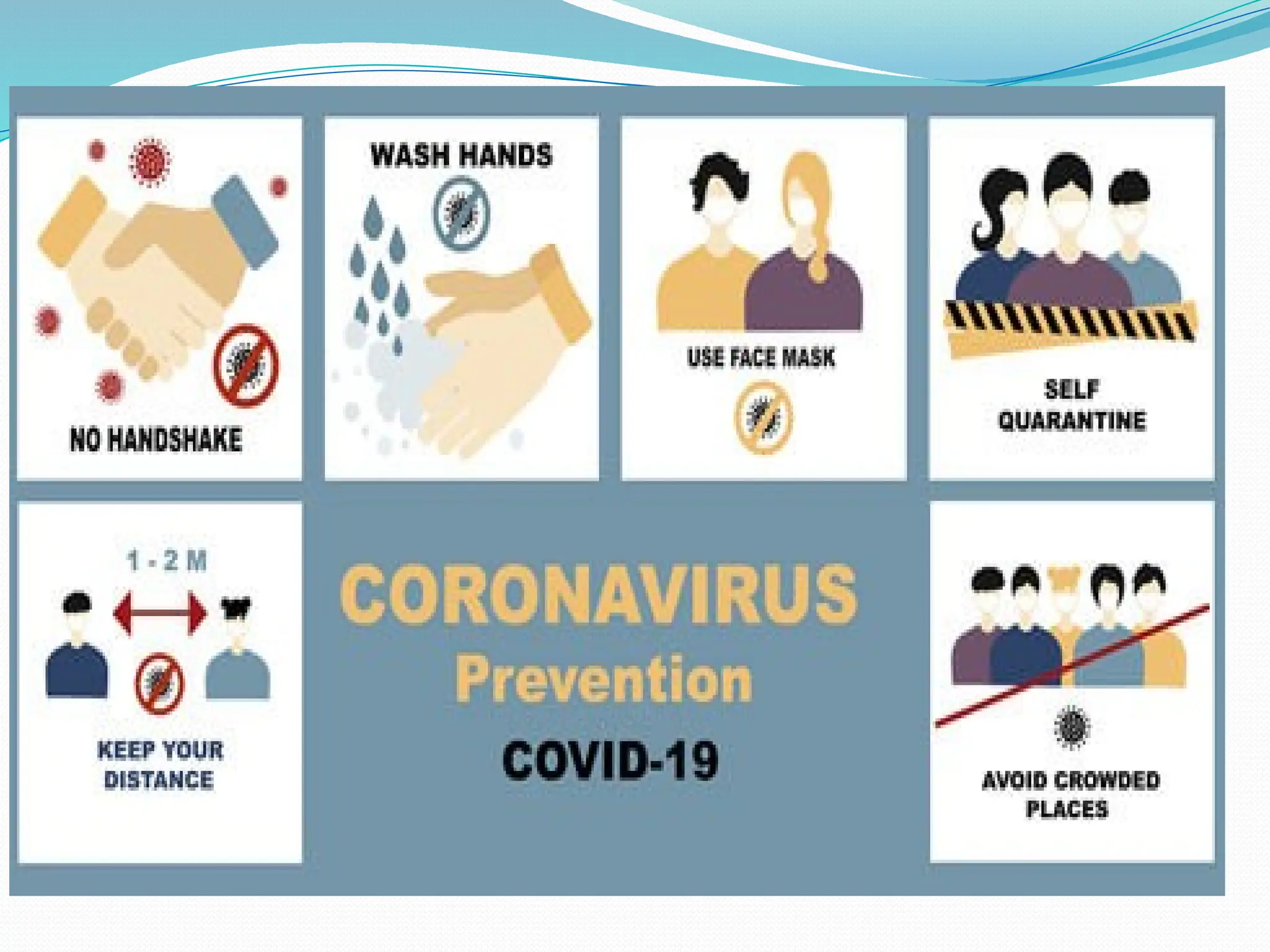
who has COVID-19.
 Many factors affect your risk of catching the virus that causes
COVID-19. How long you are in contact, if the space has good air
flow and your activities all affect the risk. Also, if you or others
wear masks, if someone has COVID-19 symptoms and how close you
are affects your risk. Close contact includes sitting and talking next
to one another, for example, or sharing a car or bedroom.
 It seems to be rare for people to catch the virus that causes COVID-
19 from an infected surface. While the virus is shed in waste, called
stool, COVID-19 infection from places such as a public bathroom is
not common.
Pathophysiology
 Typical COVID-19 symptoms often show up 2 to 14 days after contact with the virus.
 Symptoms can include:
 Dry cough.
 Shortness of breath.
 Loss of taste or smell.
 Extreme tiredness, called fatigue.
 Digestive symptoms such as upset stomach, vomiting or loose stools, called
diarrhea.
 Pain, such as headaches and body or muscle aches.
 Fever or chills.
 Cold-like symptoms such as congestion, runny nose or sore throat.
 People may only have a few symptoms or none. People who have no symptoms but
test positive for COVID-19 are called asymptomatic. For example, many children
who test positive don't have symptoms of COVID-19 illness. People who go on to
have symptoms are considered presymptomatic. Both groups can still spread
COVID-19 to others.
 Some people may have symptoms that get worse about 7 to 14 days after symptoms
start.
 Most people with COVID-19 have mild to moderate symptoms. But COVID-19
can cause serious medical complications and lead to death. Older adults or
people who already have medical conditions are at greater risk of serious
illness.
 COVID-19 may be a mild, moderate, severe or critical illness.
 In broad terms, mild COVID-19 doesn't affect the ability of the lungs to get
oxygen to the body.
 In moderate COVID-19 illness, the lungs also work properly but there are signs
that the infection is deep in the lungs.
 Severe COVID-19 means that the lungs don't work correctly, and the person
needs oxygen and other medical help in the hospital.
 Critical COVID-19 illness means the lung and breathing system, called the
respiratory system, has failed and there is damage throughout the body.
 Rarely, people who catch the coronavirus can develop a group of symptoms
linked to inflamed organs or tissues. The illness is called multisystem
inflammatory syndrome. When children have this illness, it is called
multisystem inflammatory syndrome in children, shortened to MIS-C. In
adults, the name is MIS-A.
Diagnostic investigation
Molecular tests. These tests look for genetic material from the COVID-19 virus.
 Polymerase chain reaction tests, shortened to PCR tests, are molecular tests. You may also see this
type of test called an NAAT test, short for nucleic acid amplification test.
 PCR tests are more accurate than the other type of COVID-19 test, called an antigen test. PCR tests
may be done at home. But they are much more likely to be done by a healthcare professional and
processed in a lab.
Antigen tests. These tests look for viral proteins called antigens.
 Antigen tests also may be called rapid COVID-19 tests or at-home COVID-19 tests. These tests are
useful if you need a quick result.
 Antigen tests are reliable and accurate, but they are less accurate than PCR tests. This is especially
true if you don't have symptoms. If you take an antigen test and are negative for COVID-19, take
another antigen test after 48 hours to get the most accurate result.
 computed tomography (CT) based medical imaging technologies are being used for diagnosing the
COVID-19 infection and pathological status, respectively, in clinical settings [
Treatment
Therapeutic Type of treatment
Start time after symptoms first
appear
Paxlovid Oral antiviral (pills) As soon as possible and up to 5
days
Lagevrio (molnupiravir) Oral antiviral (pills) As soon as possible and up to 5
days
Veklury®
(remdesivir) IV infusion antiviral As soon as possible and up to 7
days
Symptomatic treatment : antibiotic therapy, antipyretics, respiratory
therapies, yoga, meditation, nutritional therapy, supportive therapy.
Use cough medications containing guaifenesin, such as Robitussin,
Mucinex, and Vicks. keeping you from getting rest. Coughing is useful
because it brings up mucus from the lungs and helps prevent bacterial
infections.
 For people who are in the hospital for COVID-19 care, care is given based on a person's
immune system response and the need for oxygen support.
 Added oxygen may be given through a tube in the nose. Some people may need to
have a tube placed in their airway to push air into the lungs. That's called mechanical
ventilation. In very severe situations, a machine called extracorporeal membrane
oxygenation, also known as ECMO, can be used to mimic the function of the heart and
lungs.
 Medicines for severe COVID-19 may be remdesivir, baricitinib (Olumiant) and
tocilizumab (Actemra), or a corticosteroid such as dexamethasone.
 Baricitinib is a pill. Tocilizumab is an injection. Dexamethasone may be either a pill or
given through a needle in a vein.
 Another option may come from blood donated by people who have recovered from
COVID-19, called convalescent plasma. The blood is processed to remove blood cells,
leaving behind a liquid called plasma that has immune system proteins called
antibodies. Convalescent plasma with high antibody levels may be used to help people
with a weakened immune system recover from COVID-19.
 Mechanical ventilator support
 Palliative care
Part -2 Topics in Next Slide
 Plague
 Malaria
 Poliomyelitis
 Diphtheria
 Pertusis
 Measles
 Mumps
 Influenza
 Tetauns
 Yellow fever
 Filarsis
 Hiv/AIDS
 Rubella
 Cholera
 Rabies
 Ebola
 Zika virus disease
 Chikungunya
 Swine flu
COMMUNICABLE DISEASE - Part 1.........................................

COMMUNICABLE DISEASE - Part 1.........................................

  • 1.
  • 2.
    INDEX S.NO. CONTENT 1. 2. Communicable disease Typesof communicable disease  Tuberculosis  Acute diarrheal disease  Hepatitis  Herpes simplex  Chicken Pox  Small pox  Typhoid fever  Meningitis  Gas gangrene  Leprosy  Dengue  COVID-19  Plague  Malaria  Poliomyelitis  Diphtheria  Pertusis
  • 3.
  • 4.
    Communicable disease  Aninfectious disease that is contagious and that can be transmitted either directly or indirectly from one source to another by an infectious agent or its toxins.
  • 5.
    OR  An illnessdue to a specific infectious agent or its toxic products capable of being directly or indirectly transmitted from man to man, animal to animal, or from the environment (through air, dust, soil, food etc.) to man or animal.
  • 6.
    Cont…  Communicable period:A time period require for transmission of infectious agent from reservoir to a susceptible host.
  • 7.
    Mode of transmissionof communicable disease Direct Indirect Droplet spread Direct Contact Airborne Vehicle borne Vector borne Biological Mechanical
  • 8.
    Mode of transmissionof communicable disease Cont…  Airborne transmission  Contaminated water, soil
  • 9.
    CONTD….  Contact andfaeces  Pathogens in blood- stream and tissues
  • 10.
    Types of communicabledisease Depending upon source:  Respiratory infections: e.g: tuberculosis etc.  Intestinal infections: e.g: hepatitis etc.
  • 11.
    Cont…  Arthropod borneinfection: e.g: plague etc.  Surface infections: e.g: leprosy  Sexually transmitted disease: e.g: AIDS etc.
  • 12.
    Causes of transmission Viruses:The smallest and simplest disease- organism Bacteria: Tiny one- celled organisms that live nearly everywhere Fungi: Primitive life- forms, such as molds or yeast, that can’t make their own food Protozoa: One – celled organisms that have a more complex structure than bacteria
  • 13.
    Controlled By:  Improvementof personal hygiene  Improvement of social hygiene  Awareness about health  Awareness about disease  Immunization  Medication
  • 14.
     According torecent information, the most prevalent communicable diseases in India include tuberculosis (TB), malaria, HIV/AIDS, typhoid, influenza, hepatitis, measles, and COVID-19, with a significant burden of these diseases concentrated in specific regions and high-risk populations; while the government is actively working to manage these issues through vaccination campaigns and disease surveillance programs.
  • 15.
     Prevalence: Whilethe burden of non-communicable diseases has increased, communicable diseases still represent a substantial part of the disease burden in India.  Leading communicable diseases: Respiratory infections (like pneumonia), acute diarrheal diseases, and viral hepatitis are considered the top communicable diseases causing deaths in India.  Underreporting: A significant number of communicable disease cases likely go unreported, impacting the accuracy of reported statistics.  Impact on health system:The continued presence of communicable diseases places a significant strain on India's healthcare system.
  • 16.
  • 17.
     Respiratory infectionsincludes:  Through respiration: Tuberculosis Chicken pox, Small Pox Measles, Mumps, Influenza Diphtheria Whooping cough SARS
  • 19.
    • Tuberculosis Phthisis, Phthisispulmonalis , Consumption White plague  TB is a potentially fatal contagious disease that can affect almost any part of the body but is mainly an infection of the lungs.  It also affect all other vital organs like intestine, brain, bones, joints, lymph glands, skin etc.
  • 20.
     Incubation period: -from weeks, months to years depending upon dose of infection and immunity of patient.
  • 21.
    Causative organism  Mycobacteriumtuberculosis Human  Mycobacterium Bovis Animal
  • 23.
    Predisposing Factors 1. Overcrowded population 2. Malnutrition 3. Poverty 4. Alcoholism 5. Drug addiction 6. HIV infection 7. Immuno compromised status 8. Close Contact
  • 24.
    Classification Pulmonary TB -Primary TB -SecondaryTB Extra pulmonary TB -Lymph node TB -Pleural TB -TB of upper Airways -Genitourinary TB -Skeletal TB -Miliary TB -Pericardial TB -Gastrointestinal TB
  • 25.
    Mode of transmission Tuberculosisis mainly spread by:  Droplet infection (produced by sputum of positive patient i.e. 0.5-5 μm)  Coughing
  • 27.
    Sign and symptoms Tiredness  Loss of appetite  Loss of weight  Anemia  Evening rise in temperature  Cough for long time etc.
  • 30.
    Cont…  Sputum examinationand culture  Biopsy of affected tissue  Chest CT  Tuberculin Skin Test (PPD)
  • 31.
    Contd… -Interferon gamma releaseblood test such as the QFT- Gold test for TB infection -Thoracentesis
  • 33.
    Treatment  Antitubercular drugs: Firstline:  Isoniazid- 5mg/Kg  Rifampin- 10mg/Kg  Pyrazinamide-15-25mg/Kg  Ethambutol- 15-25 mg/Kg  Streptomycin- 15mg/Kg
  • 34.
    Cont…  2nd Line Drugs: Cycloserine-15mg/kg Capreomycin-12-15mg/kg Paraaminosalicyilatesodium -200-300mg/kg Ethionamide-15mg/kg Vitamin b (Pyridoxine)
  • 35.
    Cont….  3rd Line drugs: Linezolid  Thioacetazone  Arginine  Rifabutin  Clarithromycin
  • 38.
  • 39.
    Prevention and control Preventivemeasures: 1. Mask 2. BCG Vaccine 3. Regular Medical Follow Up 4. Isolation of patient 5. Ventilation 6. Natural sunlight 7. UV Germicidal Irradiation
  • 40.
    Cont… Control programmes: 24th march celebratedas TB day The National Tuberculosis Programme (NTP) The district Tuberculosis programme (DPT) (RNTCP)  National Tuberculosis Elimination Program (NTEP)
  • 43.
     The Gloryof Life ( film) The Glory of Life is a 2023 German drama film about Franz Kafka and his final romance with Dora Diamant, which takes place while he is suffering from tuberculosis The film is based on the best-selling novel by Michael Kumpfmüller. It tells the story of Kafka's last year, when he met Dora in 1923 while convalescing from tuberculosis on the Baltic Sea coast. The two moved in together in Berlin and then to a sanatorium in Austria, where Dora joined him
  • 44.
    Acute diarrheal disease Acute diarrheal disease is a sudden onset of diarrhea that lasts less than 14 days. It's characterized by frequent loose, watery stools.
  • 45.
    Causes Infectious agents: Theseinclude bacteria, viruses, and parasites. For example, cholera, rotavirus, and adenoviruses can cause acute diarrhea. Toxins: These can be produced by bacteria or other infectious agents. Abnormalities in the gut lining: These can cause the gut to secrete too much fluid. Travel: Common pathogens affect different regions of the world. Animal exposure: Some animals, like cats and dogs, can carry pathogens that cause diarrhea. Poor hygiene: Poor personal hygiene, unsafe water storage, and unhygienic food preparation can all contribute to diarrhea.
  • 46.
    Pathophysiology  Bacteria attachto the wall of the small bowel  enterotoxins are released,  drawing fluid electrolytes from the mucosa into the lumen,  causing profuse watery diarrhea.
  • 48.
    Types Watery diarrhea  Acutewatery diarrhea: Lasts a few hours to a few days, and can be caused by cholera, rotavirus, or entero virus  Secretory diarrhea: Large volumes of watery diarrhea, often more than a liter per day  Osmotic diarrhea: Caused by excess sugar or small molecule intake, or poor absorption, such as with lactose intolerance Bloody diarrhea: Acute bloody diarrhea  Also known as dysentery, and can be caused by bacteria like Shigella, Campylobacter, or Salmonella, or parasites like intestinal amoebiasis Bloody diarrhea: A subtype of diarrhea where all or most stools have visible blood, which indicates inflammation in the bowel wall
  • 49.
    The incubation periodfor acute diarrheal disease can vary from a few hours to 10 days, depending on the cause.  Bacterial diarrhea: The incubation period is usually a few hours to 5 days after exposure.  Viral diarrhea: The incubation period is usually 1 to 3 days after exposure.  Enteric adenovirus infection: The incubation period is usually 8 to 10 days after exposure.
  • 50.
    Acute diarrheal diseaseis a short-term illness that causes frequent loose or watery stools. Other symptoms include:  Abdominal pain or cramps  Bloating  Fever  Nausea and vomiting  Urgent need to use the bathroom  Loss of control of bowel movements  Fatigue  Soreness, itching, or burning in the anus  Acute diarrheal disease is usually mild and goes away on its own. However, severe cases can lead to dehydration and shock
  • 51.
    Diagnostic investigation Acute diarrhealdisease is diagnosed through a physical exam, medical history, and a variety of tests.  Physical exam  Blood pressure and pulse: Check for signs of dehydration or fever  Abdominal exam: Listen for sounds and check for tenderness or pain  Digital rectal exam: Check for signs of diarrhea Medical history  Ask about travel history, family medical history, and sick contacts  Ask about gastroenterologic disease, endocrine disease, and factors that increase the risk of immunosuppression Tests  Stool test: Check for blood, parasites, and bacterial infections  Blood tests: Check for electrolyte levels, kidney function, and other conditions  Hydrogen breath test: Check for lactose intolerance or bacterial overgrowth  Endoscopy: Check the stomach, upper small intestine, or colon for growths or other structural issues  Flexible sigmoidoscopy or colonoscopy: Check the lower or entire colon for growths or other structural issues  Upper endoscopy: Check the stomach and upper small intestine for growths or other structural issues
  • 52.
    Treatment Acute diarrheal diseaseis treated by rehydrating the body with fluids and electrolytes, and taking medications to help ease symptoms.  Rehydration  Drink water, broths, sports drinks, or oral rehydration solutions (ORS)  If you have diarrhea, you may lose your appetite, but you can eat your normal diet when it returns For children, ask a doctor about using an oral rehydration solution like Pedialyte If you have severe dehydration or shock, you may need intravenous fluids  Medications  Loperamide (Imodium) and simethicone can help with watery diarrhea and abdominal discomfort  Antibiotics can treat some types of diarrhea,  Zinc supplements can reduce the duration of diarrhea Other treatments  Probiotics may shorten the duration of diarrhea  Nutrient-rich foods can help break the cycle of malnutrition and diarrhea
  • 54.
    Vaccine There are licensedvaccines for cholera, rotavirus, and typhoid fever, but no combination vaccine for diarrheal diseases. However, vaccines are one of the most effective ways to protect children from diarrheal diseases. Rotavirus vaccines  Rotarix and RotaTeq: These vaccines are safe and effective at preventing rotavirus illness.  ROTAVAC and ROTASIIL: These vaccines were developed in India and approved by the WHO for safety and efficacy.  Benefits: Rotavirus vaccines reduce hospitalizations and deaths, and help stop the spread of rotavirus in the community. Cholera vaccines  Dukoral: A monovalent vaccine based on formalin and heat-killed whole-cells of V. cholerae O1  Shanchol and mORCVAX: Bivalent vaccines based on serogroups O1 and O139  Benefits: These vaccines have been effective in controlling epidemic diseases
  • 55.
    Prevention Acute diarrheal diseasecan be prevented by practicing good hygiene, sanitation, and food safety. Hygiene  Wash hands with soap and water, especially after using the bathroom, before eating, and after changing diapers  Avoid sharing towels, utensils, and handkerchiefs with someone who has diarrhea  Stay home from work or school until symptoms resolve  Sanitation Ensure access to clean drinking water, Treat wastewater and sewage properly, Dispose of human waste properly, Clean and disinfect frequently touched surfaces, and Maintain proper drainage systems. Food safety  Buy fresh food from reliable sources  Cook food thoroughly, especially seafood and shellfish  Wash and peel fruits yourself  Avoid raw vegetables  Avoid drinks with ice of unknown origin Other measures  Get the rotavirus vaccine for infants  Educate yourself about how infections spread  Breastfeed exclusively for the first six months of a baby's life
  • 57.
    Hepatitis  Hepatitis refersto an inflammatory condition of the liver. It is commonly the result of a viral infection, but there are other possible causes of hepatitis. These include autoimmune hepatitis and hepatitis that occurs as a secondary result of medications, drugs, toxins, and alcohol.  Autoimmune hepatitis is a disease that occurs when body makes antibodies against liver tissue.  The five main viral classifications of hepatitis are hepatitis A, B, C, D, and E. A different virus is responsible for each type of viral hepatitis.  Hepatitis is an inflammation of the liver and caused by viral infection, alcohol consumption, several health conditions, or even some medications. Treatment varies based on the type and underlying cause.
  • 59.
    Types  Hepatitis A: Thisform of hepatitis does not lead to a chronic infection and usually has no complications. The liver usually heals from hepatitis A within several months. However, occasional deaths from hepatitis A have occurred due to liver failure, and some people have required a liver transplant for acute hepatitis A infection. Hepatitis A can be prevented by vaccination.  Hepatitis B: Around 22,000 new cases of hepatitis B occurred in 2017, and around 900,000 people are living with the disease in the US. Approximately 95% of adults recover from hepatitis B and do not become chronically infected. However, a few cases cause a life-long, chronic infection. The earlier in life hepatitis B is contracted, the more likely it is to become chronic. People can carry the virus without feeling sick but can still spread the virus. Hepatitis B can be prevented by getting a vaccine.
  • 60.
    Types  Hepatitis C:Hepatitis C is one of the most common causes of liver disease in the U.S., and used to be the number one reason for liver transplant. About 75% to 85% of patients with hepatitis C develop a chronic liver infection. Roughly 2.4 million people in the U.S. are estimated to have chronic hepatitis C infection. It often does not show any symptoms. No vaccine is yet available to prevent hepatitis C.  Hepatitis D: Hepatitis D only happens to people who are infected by the hepatitis B virus. If you are vaccinated against hepatitis B, you will be protected against hepatitis D virus.  Hepatitis E: This type of hepatitis is spread by ingesting contaminated food or water. Hepatitis E is common throughout the world. Even though vaccines exist, they are not available everywhere.
  • 61.
     Hepatitis A:A food-borne illness that's usually mild and self- limiting. It's the easiest type of hepatitis to transmit, especially in children.  Hepatitis B: A chronic infection that can lead to liver damage, liver cancer, and cirrhosis. It can be transmitted through contaminated blood, needles, syringes, or bodily fluids.  Hepatitis C: A chronic infection that can lead to liver damage, liver cancer, and cirrhosis. It's only transmitted through infected blood or from mother to newborn during childbirth.  Hepatitis D: A chronic infection that only occurs in people who are also infected with hepatitis B.  Hepatitis E: An acute infection that's most prevalent in Africa, Asia, and South America.  Autoimmune hepatitis: A non-viral cause of hepatitis caused by autoimmune disorders.  Alcoholic hepatitis: A non-viral cause of hepatitis caused by excessive alcohol consumption.  Drug-induced hepatitis: A non-viral cause of hepatitis caused by certain medications or toxins.
  • 62.
    Type of hepatitisCommon route of transmission Hepatitis A exposure to HAV in food or water Hepatitis B contact with HBV in body fluids, such as blood, vaginal secretions, or semen Hepatitis C contact with HCV in body fluids, such as blood, vaginal secretions, or semen Hepatitis D contact with blood containing HDV Hepatitis E exposure to HEV in food or water Causes of hepatitis
  • 63.
    Causes of non-infectioushepatitis  Although hepatitis is most commonly the result of an infection, other factors can cause the condition. Alcohol and other toxins  Excess alcohol consumption can cause liver damage and inflammation. This may also be referred to as alcoholic hepatitis.  The alcohol directly injures the cells of your liver. Over time, it can cause permanent damage and lead to thickening or scarring of liver tissue (cirrhosis) and liver failure. Other toxic causes of hepatitis include misuse of medications and exposure to toxins. Autoimmune system response  In some cases, the immune system mistakes the liver as harmful and attacks it. This causes ongoing inflammation that can range from mild to severe, often hindering liver function. It’s three times more common in women than in men.
  • 64.
    Risk factors  HepatitisA: Poor sanitation, lack of safe water, living with an infected person, and traveling to areas with high rates of hepatitis A  Hepatitis B: Contact with blood, semen, or other bodily fluids from an infected person, sharing needles, and traveling to areas with high rates of hepatitis B  Hepatitis C: Sharing needles, birth from a mother who is infected with hepatitis C, and receiving a blood transfusion  Hepatitis D: Being infected while pregnant, carrying the hepatitis B virus, and receiving many blood transfusions  Hepatitis from tattoos and piercings: Getting a tattoo or piercing in an unregulated setting  Hepatitis from grooming items: Sharing personal care items that may have come into contact with infected blood, such as razors, nail clippers, or toothbrushes  Hepatitis from medications: Taking medicine that can weaken the immune system, such as chemotherapy  Hepatitis from sexual contact: Having sex without a condom with multiple sex partners or with someone who's infected  Hepatitis from HIV: Being HIV positive  Hepatitis from homelessness: Being homeless  Hepatitis from recreational drugs: Using any type of recreational drugs
  • 65.
    Pathophysiology  Viral hepatitis:Viruses enter the bloodstream, infect liver cells, and cause the body's immune system to attack the infected cells. This attack damages the liver and can lead to liver fibrosis and cirrhosis.
  • 67.
  • 68.
  • 69.
     Hepatitis maystart and get better quickly. It may also become a long-term condition. In some cases, hepatitis may lead to liver damage, liver failure, cirrhosis, liver cancer or even death.  There are several factors that can affect how severe the condition is. These may include the cause of the liver damage and any illnesses you have. Hepatitis A, for example, is most often short-term and does not lead to chronic liver problems.  The symptoms of hepatitis include:  Pain or bloating in the belly area  Dark urine and pale or clay-colored stools  Fatigue  Low grade fever  Itching  Jaundice (yellowing of the skin or eyes)  Loss of appetite  Nausea and vomiting  Weight loss
  • 70.
  • 71.
     Hepatitis isdiagnosed using a combination of blood tests, imaging tests, and sometimes a liver biopsy. The type of test used depends on the type of hepatitis being investigated. Blood tests  Hepatitis B: Blood tests can detect the hepatitis B virus, determine if the infection is acute or chronic, and if you are immune.  Hepatitis C: Blood tests can detect the hepatitis C virus, and determine if the infection is acute or chronic.  Hepatitis A: Blood tests can confirm a suspected case of hepatitis A.  Autoimmune hepatitis: Blood tests can help diagnose autoimmune hepatitis. Imaging tests  Liver ultrasound: A special ultrasound called transient elastography can show the amount of liver damage.  Abdominal ultrasonography: Can help exclude other conditions that resemble acute hepatitis.  Computed tomography (CT): Can help exclude other conditions that resemble acute hepatitis. Liver biopsy  A small sample of liver tissue is removed for testing to check for liver damage. Other tests  Elastography  Uses sound waves to measure the stiffness of the liver and check for fibrosis. Paracentesis  Fluid from the patient's abdomen is tested to help differentiate among many potential causes of liver disease.
  • 72.
    Hepatitis treatment dependson the type of hepatitis and the severity of liver damage. Treatments include:  Antiviral medications: These can prevent the virus from replicating, reverse liver damage, and eliminate the virus from the bloodstream.  Interferon shots: These can help your immune system fight the virus.  Liver transplant: This is an option if your liver has been badly damaged.  Rest and hydration: These can help you feel better and prevent dehydration.  Nutritious diet: This can help you get enough calories and prevent malnutrition.  Abstaining from alcohol: Alcohol can damage your liver.  Hepatitis A: Rest, hydration, and a healthy diet: These can help you feel better and prevent dehydration.  Vaccination: This can prevent you from getting hepatitis A.  Hepatitis B : Antiviral medications: These can help fight the virus and slow its ability to damage your liver.  Interferon shots: These can help your immune system fight the virus.  Liver transplant: This is an option if your liver has been badly damaged.  Hepatitis C : Direct-acting antiviral (DAA) tablets: These are the safest and most effective medicines for treating hepatitis C.
  • 73.
     Hepatitis preventioninvolves practicing good hygiene, avoiding contact with contaminated objects, and getting vaccinated. Hepatitis A  Get the hepatitis A vaccine, which is safe and effective  Practice good hand hygiene  Avoid contact with contaminated water and food  Avoid tap water, fresh fruit, and vegetables unless you can peel them  Wash your hands frequently Hepatitis B  Get the hepatitis B vaccine  Avoid sharing needles, syringes, or other drug equipment  Practice safe sex  Avoid sharing toothbrushes, razors, or needles  Wash your hands thoroughly with soap and water after coming into contact with blood, body fluids, or contaminated surfaces Hepatitis C  Avoid behaviors that can spread the disease  Avoid sharing needles, syringes, or other drug equipment  Practice safe sex  Avoid contact with anything that has contaminated blood on it Hepatitis D  Hepatitis D only infects people with hepatitis B Hepatitis E  Ensure high levels of sanitation and access to safe food and water
  • 74.
    Vaccination  Hepatitis vaccinationsare safe and effective ways to prevent hepatitis A and B. The CDC recommends that children get the hepatitis A vaccine between 12 and 23 months of age. The hepatitis B vaccine is recommended for all newborns and children, and for adults at risk. Hepatitis A vaccine  There are single-antigen and combination vaccines.  The combination vaccine protects against both hepatitis A and B, but can only be given to people 18 years or older.  The CDC recommends that children get the hepatitis A vaccine between 12 and 23 months of age. Hepatitis B vaccine  The first dose is recommended for newborns within 24 hours of birth.  The vaccine is given in 2 or 3 doses.  The second dose is given 1 month after the first, and the third dose is given 6 months after the second.
  • 76.
    As of currentinformation, there is no officially designated "Herpes Simplex Day" in India, and there is no widely recognized national awareness day for herpes in the country; however, if you're looking for a global reference point, "Herpes Awareness Day" is often observed on October 13th.
  • 77.
    Herpes simplex  Herpessimplex virus (HSV) can infect many different parts of body, most commonly mouth area (oral herpes) and genitals ( genital herpes). HSV causes fluid-filled blisters that break open and crust over wherever the infection is. This is known as a herpes outbreak.  HSV is highly contagious. It spreads from person to person through skin-to-skin contact. A herpes simplex infection occurs when the virus enters body through skin and mucous membranes (mucosa). The virus uses cells to make copies of itself (replication).  Once infected, the virus stays in body for life. It’s usually asleep (dormant) but may “wake up” (reactivate) and cause outbreaks. How HSV affects depends on many factors, including the specific virus type and overall health.
  • 78.
    Types There are twotypes of herpes simplex virus:  Herpes simplex virus type 1 (HSV-1).  Herpes simplex virus type 2 (HSV-2).  Both HSV-1 and HSV-2 can cause oral herpes or genital herpes. They also cause infections in other areas of your body.
  • 79.
    Herpes simplex incubationperiod  The incubation period for herpes simplex infections ranges from one to 26 days but is typically six to eight days. This is how long it takes for you to develop symptoms after first getting infected with HSV.  Some people get infected but don’t develop symptoms right away. Instead, symptoms may not appear for months or even years until the virus reactivates. Herpes simplex virus (HSV) type 1 (HSV-1) and type 2 (HSV-2) are both contagious viral infections that cause painful blisters or ulcers. HSV-1 usually causes cold sores around the mouth, while HSV-2 usually causes genital herpes.
  • 80.
    Type of contactHow HSV spreads Genital-to-genital contact HSV spreads from one person’s genital area to another person’s genital area (giving them genital herpes). Oral-to-oral contact HSV spreads from one person’s mouth to another person’s mouth (giving them oral herpes). Oral-to-genital contact HSV spreads from one person’s mouth to another person’s genitals (giving them genital herpes). Genital-to-oral contact HSV spreads from one person’s genitals to another person’s mouth (giving them oral herpes). Skin-to-sore contact It’s less common but possible to spread HSV by touching an oral or genital sore or other infected areas. Transmission/ HSV usually spreads in the following ways:
  • 82.
  • 84.
  • 86.
    Treatment Prescription antiviral medicationsare the main treatment for HSV infections. These come in different forms, including:  Pills you swallow.  Cream or ointment you apply to your skin.  Medication your provider gives you intravenously (through an IV).  Drops you put into your eyes (for ocular herpes). Your provider will tell you which type(s) of medication are best for you based on:  The type of infection you have.  Its severity.  How well your immune system is working.  They’ll also tell you the proper dose and how long you’ll need the medication. Treatment for oral and genital herpes falls into two categories: episodic therapy and chronic suppressive therapy.
  • 89.
    Prevention  To preventherpes simplex virus (HSV), you can avoid risky behaviors and maintain a healthy immune system.  Avoid risky behaviors  Avoid oral contact: Don't share objects that have touched saliva,.  Avoid sexual activity:  Wash hands: Wash your hands with soap and water after touching sores or the area around them.  Wash objects: Wash objects that may have touched sores, like eating utensils, drinking glasses, washcloths, and towels.  Maintain a healthy immune system Eat nutritious food, Exercise regularly, Get enough rest, and Reduce stress.
  • 90.
    • Chicken pox Chicken pox is a viral infection in which a person develops extremely itchy blisters all over the body.  It is used to be one of the classic childhood disease.
  • 91.
    Incubation period:  About14 - 16 days Causative Organism Human (alpha) herpes virus (Varicella- Zoster virus :VZV)  Occur mainly in children under 10 years of age.  Uncommon in adults.
  • 92.
    Mode of transmission Chickenpox is mainly spread by, 1) Droplet infection 2)Contaminated clothing and direct contact with open blisters. 3) Virus can cross placental barrier and may affect fetus.
  • 94.
    Sign and Symptoms Fever  Loss of appetite  Cold  Abdominal pain  Headache  Fatigue  Sore throat  Rash
  • 95.
    Cont…  The rashstarts on the chest and back, and spread to the face, scalp, arms and legs.  The rash can develop all over the body, inside the ears, on the eyelids, inside the nose and within the vagina, everywhere.
  • 96.
  • 97.
    Diagnosis  History collection Physical examination  Blood Sample  Blood Cultures  Stained smears from vesicular scrapings  Serology test for Varicella IgM  ELISA test is also useful
  • 98.
    Treatment  Drugs:  Antiviral– Acyclovir  Antipyretics- Paracetamol  Antihistamine- Fexofenadine (allegra)  Antibiotic- Amoxicillin
  • 99.
    Vaccination  The chickenpoxvaccine, also known as the varicella vaccine, protects against chickenpox. The CDC recommends that children, adolescents, and adults get two doses of the vaccine.  Who should get the vaccine?  Children under 13 should get two doses of the vaccine  People 13 and older who have never had chickenpox or the vaccine should get two doses  People who have only had one dose of the vaccine should get a second dose  People at higher risk of getting chickenpox, like healthcare workers, should get the vaccine
  • 100.
    Prevention and control By administering specific V. Zoster immunoglobulin.  Use of local antiseptics like chlorhexidine.  Transmission prevented by isolation of patient for 5-7 days.  Sterilization of all articles used by patient after cure.
  • 101.
    Complications  Pneumonia  CNSinvolvement : Encephalitis, Transverse myelitis, Reye’s Syndrome  Myocarditis, Nephritis, Arthritis
  • 102.
    Movies Chicken Pox (2008) A movie that some say is a piece of art that expresses emotions in a way that words cannot. Varicella (2015)  An Italian short film also known as Chickenpox that was selected for the 2015 The One with the Chicken Pox  A 1996 episode of Friends where Ryan develops chickenpox after staying with Phoebe who was sick when he arrived.
  • 103.
    Small pox  Smallpoxwas a serious illness that killed hundreds of millions before its eradication. It caused a hard, blistering rash that often led to disfiguring scars.  Beginning in the 1960s, the World Health Organization (WHO) led efforts to stop the spread of smallpox worldwide. By vaccinating and controlling outbreaks, they rid the world of smallpox. It was eradicated in 1980. The last naturally occurring case was in 1977.
  • 104.
     Smallpox vaccinesare not routinely given in India because smallpox has been eradicated. However, health officials would use the vaccine to control any future outbreaks.  Explanation: The first smallpox vaccine lymph arrived in India in 1802.  In 1962, India launched the National Smallpox Eradication Program (NSEP).  The program focused on mass vaccination and involved hiring healthcare workers and investing in vaccine manufacturing.  The World Health Organization (WHO) also played a critical role in the eradication of smallpox.
  • 105.
    Causes  The variolavirus causes smallpox. There are two variants of variola: variola major and variola minor (or variola alastrim). Variola major caused most cases of smallpox and the most deaths. Variola minor caused similar, but less severe, symptoms. It was only fatal in 1% of cases, compared to over 30% of cases of variola major.
  • 106.
    Transmission  Smallpox spreadthrough close, face-to-face contact. For instance, someone with smallpox could transmit it by coughing or talking to someone nearby. It was also possible to spread it through contact with infected items (like bedsheets or clothing).
  • 107.
    Pathophysiology  Initial infection:The virus enters the respiratory tract through droplets from an infected person's cough, sneeze, or talk.  Replication: The virus multiplies in the respiratory tract and lymph nodes.  Viremia: The virus spreads throughout the body, causing a massive asymptomatic viremia.  Skin infection: The virus localizes in the skin, causing a rash that progresses through stages.  Cell-mediated immune response: The body's immune response causes the rash to develop into pustules.  Scarring: The pustules can cause deep scarring, especially in the most lethal cases.
  • 108.
    Types  There area few types of smallpox that cause slightly different symptoms:  Ordinary smallpox. Ordinary smallpox was the most common type of smallpox and caused the symptoms described above. It caused about 85% of cases. About 1 in 3 people with ordinary smallpox died.  Modified-type smallpox. People who had been vaccinated sometimes got modified-type smallpox. This was similar to ordinary smallpox, but the rash was less severe and didn’t last as long. Most people survived modified-type smallpox.  Flat-type (malignant) smallpox. Flat-type smallpox caused more severe initial symptoms than ordinary smallpox. The bumps from the rash merged together and never got hard or fluid-filled. This made a flat, soft rash that didn’t form scabs. Flat-type smallpox happened more often in children. It was almost always fatal.  Hemorrhagic smallpox. Hemorrhagic smallpox was more common in pregnant people. It caused severe initial symptoms. The rash usually didn’t get hard and fluid-filled. Instead, the skin underneath it bled, causing it to look black or burnt. It also caused internal bleeding and organ failure. Hemorrhagic smallpox was almost always fatal.
  • 109.
    Sign and symptoms Earlysymptoms  High fever, often between 101° and 104° Fahrenheit  Feeling generally unwell (malaise)  Severe headache and backache  Abdominal pain and vomiting  Mouth sores  Rash  A rash of flat spots that turn into raised bumps, then fluid-filled blisters, and finally scabs  The rash starts on the face and hands, then spreads to the rest of the body  The rash appears 2–3 days after the initial symptoms  Other symptoms  Diarrhea  Lesions in the mucous membranes of the nose and mouth  Ulceration of the lesions in the mouth and throat Infectious period  A person with smallpox is infectious from the time they develop a fever until the last scabs fall off  Smallpox is a highly contagious disease that can cause blindness, encephalitis, and other serious complications.
  • 110.
    Diagnostic assessment Laboratory testing Real-time polymerase chain reaction (PCR): The preferred method for detecting the variola virus  Culture of fluid or scab: From blisters, pustules, or scabs  Blood test: During the fever stage to identify antibodies made in response to the virus  Electron microscopy: Of fluid or scab  Smallpox is diagnosed in specialized laboratories that have the proper testing techniques and safety measures.
  • 111.
    Treatment  Smallpox treatmentis generally supportive care in a hospital setting. There is no specific treatment that has been proven effective in people who are sick with smallpox.  Supportive care : Patients are treated in a hospital setting with strict isolation and infection controls.  Vaccination: Vaccination with replication-competent smallpox vaccines, can prevent or lessen the severity of the disease if given within 2 to 3 days of exposure.  Antiviral drugs: Some antiviral drugs, like brincidofovir (TEMBEXA) and tecovirimat (Tpoxx), have been tested in animals and in labs. However, they have not been tested in people who are sick with smallpox.  Isolation : Patients should be kept in a room with negative air pressure.  The room should have a private shower and bathroom.  Unvaccinated personnel should wear protective clothing, including gowns, masks, gloves, and eye protection.  Smallpox has been eradicated worldwide due to vaccination efforts. There are currently no cases circulating.
  • 112.
    Prevention  Smallpox isprevented by vaccination. The smallpox vaccine is made from a virus called vaccinia, which is similar to smallpox but less harmful. How to prevent smallpox  Get vaccinated  The smallpox vaccine can protect you from getting sick or make the disease less severe if you get it before or within a week of exposure.  Vaccinate people at risk  If there is a potential exposure, vaccinate all people who are susceptible.  Dispose of contaminated materials properly  Incinerate disposable materials and sterilize reusable equipment or clothing.
  • 113.
    • Typhoid Fever •Acute infectious illness • Affect GIT. • Enteric fever – Typhoid & Paratyphoid fever.  Typhoid fever is characterized by a fever that is usually lowest in the morning and highest in the afternoon or evening.  Incubation Period : About 6–30 days.
  • 114.
    Typhoid fever  Typhoidfever is an illness caused by the bacterium Salmonella Typhi (S. Typhi). It infects small intestines (gut) and causes high fever, stomach pain and other symptoms. Typhoid fever is also called enteric fever.  Paratyphoid fever is similar to typhoid with more mild symptoms. It’s caused by Salmonella Paratyphi (S. Paratyphi).  S. Typhi and S. Paratyphi are different than the Salmonella bacteria that cause salmonellosis, a common type of food poisoning.
  • 115.
    Causative Organism Salmonella typhi,Salmonella parathyphi A, Salmonella parathyphi B, Mode of Transmission  Mainly transmit by, 1. Through fecal – oral route. 2. Contaminated drinking water by sewage. 3. Contaminated of food from flies
  • 116.
    Stages  Stage 1.You can start getting typhoid symptoms anywhere from five to 14 days after coming in contact with S. Typhi. The first symptom is a fever that gets higher over a few days — called “stepwise” since it goes up in steps. The bacteria is moving into your blood in this stage.  Stage 2. Around the second week of fever, the bacteria is multiplying in your Peyer’s patches (part of your immune system that identifies harmful invaders). You’ll start experiencing abdominal pain and other stomach symptoms, like diarrhea or constipation. You might get “rose spots,” small pink dots on your skin that look like a rash.  Stage 3. If not treated with antibiotics, the bacteria can cause severe damage, usually around the third week after your symptoms start. Some people get serious complications, like internal bleeding and encephalitis (inflammation in your brain).  Stage 4. Stage four is when most people begin to recover. Your high fever begins to come down. S. Typhi can live in your gallbladder without causing symptoms, which means you may still be contagious even after you feel better.
  • 117.
    Pathophysiology  Ingestion: Thebacteria enter the body through contaminated food or drink.  Survival: The bacteria survive stomach acid and pass into the small intestine.  Invasion: The bacteria invade the intestinal epithelium, triggering an inflammatory response.  Dissemination: The bacteria spread to the lymph nodes, gallbladder, liver, spleen, and other parts of the body.  Systemic disease: The bacteria can spread to the liver, spleen, and bone marrow, causing systemic disease.
  • 118.
  • 120.
    Diagnostic investigation  Blood.Your provider will use a needle to take a small tube of blood from your arm.  (stool). Your healthcare provider will give you a sterile container and instructions on how to collect a sample.  Pee (urine). You may be asked to pee into a cup given to you by your healthcare provider.  Your provider might numb your skin and take a sample with a small razor or scalpel.  Bone marrow. Your provider will numb your skin and use a special needle to get a sample of the inside of your bones. It’s rare that you’d ever need this test for diagnosis.  You provider may also take X-rays (pictures of the inside of your body) to look for changes in your lungs.
  • 121.
    Prevention & Controlcont… 1. Strict personal hygiene. 2. Using boiling drinking water. 3. Early detection of cases. 4. Proper and immediate treatment. 5. Disinfection of infective discharges & clothing. 6. Sanitation should be maintained. 7. For prevention use vaccine. i. Monovalent anti typhoid vaccine ii. Bivalent vaccine iii. TAB 8. Treatment is done by, a. By antibiotics
  • 122.
    Management  Typhoid istreated with antibiotics. Some newer types of the bacteria are able to survive antibiotic treatments, so you’ll be treated with different antibiotics depending on what type of typhoid you have and where you got sick. Paratyphoid fever is also treated with antibiotics. treat typhoid fever with antibiotics, which may include:  Ciprofloxacin, levoflaxin or ofloxacin.  Ceftriaxone, cefotaxime or cefixime.  Azithromycin.  Carbapenems.  Conservative management .
  • 123.
     The typhoidvaccine for adults is available in injectable and oral forms. The World Health Organization (WHO) recommends the typhoid conjugate vaccine (TCV) for routine use. Injectable vaccines  Vi polysaccharide vaccine (Vi-PS): A single injection given to people aged two and older.  Typhoid conjugate vaccine (TCV): An injectable vaccine that can be given to children and adults. Oral vaccines  Ty21a vaccine: A live-attenuated vaccine given in four capsules taken on alternate days. It's approved for adults and children aged six and older.
  • 124.
    Name Typhoid conjugate vaccines(TCV) Ty21a Vi capsular polysaccharide vaccines (ViCPS) Tradename(s) (Manufacturer) Typbar TCV® (Bharat Biotech) TYPHIBEV® (Biological E) SKYTyphoid™ (SK bioscience) ZyVac® TCV (Zydus Lifesciences Limited) Vivotif® (PaxVax) Typhim Vi® (Sanofi Pasteur) Typherix® (GlaxoSmithKline) Administration Intramuscular injection Oral capsules Intramuscular injection Age >6 months of age >6 years of age >2 years of age Number of doses 1 dose 3 to 4 doses 1 dose with boosters every 2 to 3 years Duration of protection > 4 years 7 years 2 years Effectiveness 79% to 85% 50% to 80% 50% to 80%
  • 125.
    Gas gangrene  Gasgangrene, also called clostridial myo-necrosis, is a bacterial infection that destroys tissues. It’s usually caused by Clostridium bacteria (most commonly, C. perfringens).  Clostridium bacteria release toxins that destroy blood cells, blood vessels and muscle tissue. This causes severe blisters, swelling and skin discoloration. The bacteria create gas that makes wounds smell bad when they open. The toxins also cause widespread inflammation.  Gas gangrene can be life-threatening within hours of symptoms starting.
  • 126.
    Causes  The bacteriumClostridium perfringens causes most cases of gas gangrene. Other species (types) of Clostridium and group A Streptococcus bacteria can also cause it.  These bacteria live in dirt and in the intestines (GI tract) of people and animals. They release toxins that destroy your cells, including your blood cells, blood vessels and muscle tissue.  They reproduce best in areas with little oxygen. Destroying your blood cells means that less oxygen gets to your tissues. That makes it easier for them to keep reproducing and creating toxins, spreading the damage very quickly. Breaking down nutrients without oxygen (fermentation) is also what causes the pockets of gas.
  • 127.
    Risk factor  Severeinjuries and abdominal surgeries put you at higher risk for traumatic gas gangrene. You’re at higher risk for spontaneous gas gangrene — not caused by an injury — if you have certain underlying conditions, including:  Colon cancer.  Diverticulitis, which can damage your colon.  Diabetes.  Blood vessel disease, such as atherosclerosis.  Keep in mind that, even if you have one of these risk factors, it’s still extremely unlikely that you’ll ever be affected by gas gangrene.
  • 128.
  • 129.
    Sign and symptoms Gas gangrene causes discoloration, large blisters and swelling on your skin where you have a wound. It can also cause other symptoms, including:  Pain near your injury. This might be severe, even if your wound doesn’t look serious.  Fever.  Fast heart rate (tachycardia).  Sweating.  Anxiety.  Yellow skin (jaundice).  Light-headedness.  Low blood pressure (hypotension).
  • 130.
    Diagnostic investigation  Adiagnosis by looking at tissue or fluids from your wounds under a microscope. They might order imaging tests, such as X-rays, CT scans or MRIs to check for tissue damage.  Imaging. X-rays, CT scans or MRIs can show gas bubbles or changes in your muscle tissue.  Bacterial staining or culture. A provider takes fluid from your wound and looks at it under a microscope for the types of bacteria that cause gas gangrene. They may also try to grow (culture) the bacteria.  Biopsy. A provider takes a sample of the tissue from your wound to look for damage or changes.
  • 131.
    Treatment  Gas gangrenemust be treated immediately. Health provider will give you high doses of antibiotics and surgically remove as much of the infected tissue as possible. You may need other treatments depending on the severity of your infection. You’ll need to stay in the hospital to be monitored throughout your treatment. Medications and procedures used to treat gas gangrene:  Debridement. A provider will surgically remove dead and damaged tissue or debris from your wound.  Antibiotics. Providers often use a combination of penicillin and clindamycin to kill the bacteria causing the gas gangrene.  Amputation. In some cases, the best way to prevent further damage and life- threatening illness is to remove the infected limb. About 1 in 5 people with gas gangrene need an amputation.  Hyperbaric oxygen therapy. Hyperbaric oxygen therapy can help gas gangrene heal. A provider puts you in a special chamber that delivers 100% oxygen (about five times more than room air). This increases the amount of oxygen getting to your tissues, helping them to heal. It can also slow down the infection, since oxygen kills Clostridium bacteria.
  • 132.
    Prevention  Healthcare providerstake precautions to prevent any infections during surgery and other procedures. This includes the bacterial infections that cause gas gangrene. Ways for you to reduce your risk of gas gangrene and other bacterial infections include:  Clean out wounds with soap and water.  Get medical attention immediately for any deep wounds. This includes wounds you’re unable to clean completely by washing with soap and water.  Keep an eye on injuries. Let a provider know if you see changes in your skin or experience severe pain.  Wear protective gear that covers your arms and legs when riding a motorcycle or bicycle.  Work with a provider to treat underlying conditions that affect your blood vessels or circulation, or that weaken your immune system.
  • 134.
    Meningitis  Meningitis isan inflammation of the area surrounding brain and spinal cord (meninges). It’s sometimes called spinal meningitis.  Meninges protect brain and spinal cord from injury and provide support and structure. They contain nerves, blood vessels and protective fluid (cerebrospinal fluid).  Infectious diseases, like viruses and bacteria, and non- infectious conditions, like cancer or head injuries, can cause meningitis.  The incubation period for meningitis is usually 4 days, but can range from 2 to 10 days. Symptoms typically appear 3 to 7 days after exposure.
  • 135.
    Causes of bacterialmeningitis  Streptococcus pneumonia.  Group B Streptococcus.  Neisseria meningitides.  Haemophilus influenza.  Listeria monocytogenes.  E. coli.  Mycobacterium tuberculosis. Causes of viral meningitis  Non-polio enteroviruses.  Mumps.  Herpesviruses (including those that cause mononucleosis, chickenpox and shingles).  Measles.  Influenza.  Arboviruses, such as West Nile virus.  Lymphocytic choriomeningitis virus. Causes of fungal meningitis  Coccidioides. Causes of parasitic meningitis (eosinophilic meningitis)  Angiostrongylus cantonensis.  Baylisascaris procyonis.  Gnathostoma spinigerum. Causes of amebic meningitis (PAM)  Naegleria fowleri causes amebic meningitis. Causes of non-infectious meningitis  Systemic lupus erythematosus (lupus).  Certain medications, like NSAIDs and antibiotics.  Head injuries.  Brain surgery.
  • 136.
    Transmission Most bacterial andviral causes of meningitis can be spread from person to person. There are many ways can get meningitis, depending on whether the cause is infectious or not:  From a contagious illness passed person-to-person, like a virus or bacteria.  From food contaminated with something infectious.  From swimming in or drinking water contaminated with something infectious.  From fungi in the environment that you breathe in.  As a complication of non-infectious illnesses, like cancer or lupus.  As the result of a head injury or brain surgery.  As a side effect of a medication.
  • 137.
    Types of meningitisare typically named for the cause or for how long you’ve had symptoms. They include:  Bacterial meningitis.  Viral meningitis.  Fungal meningitis.  Parasitic meningitis. Meningitis caused by certain parasites is called eosinophilic meningitis or eosinophilic meningoencephalitis (EM).  Primary Amebic Meningitis (PAM). Meningitis can be caused by the ameba Naegleria fowleri.  Drug-induced aseptic meningitis (DIAM). Rarely, certain medications cause drug-induced aseptic meningitis (DIAM). Non-steroidal anti-inflammatory drugs (NSAIDS) and antibiotics are the most common causes of DIAM.  Chronic meningitis. When meningitis has lasted a month or more, it’s called chronic meningitis.  Acute meningitis. Bacterial meningitis is often acute, meaning that symptoms are severe and come on suddenly.
  • 138.
    Risk factors  Areunder 5 years old. About 70% of all bacterial meningitis cases affect children under age 5.  Have a weakened immune system. medications that suppress your immune system.  Have a CSF leak.  Don’t have a spleen or have a damaged spleen.  Live in or travel to places where infectious diseases that cause meningitis are common.  Have chronic nose and ear infections, pneumococcal pneumonia or a widespread blood infection.  Have a head injury, traumatic brain injury (TBI) or spinal cord injury.  Are living with sickle cell disease.  Are living with alcohol use disorder.
  • 139.
  • 141.
    Symptoms of meningitisin children and adults  Neck stiffness.  Nausea or vomiting.  Sensitivity to light (photophobia).  Confusion or altered mental state.  Lack of energy (lethargy), extreme sleepiness or trouble waking up.  Lack of appetite.  Small round spots that look like a rash (petechiae). Additional symptoms of amebic meningitis  You might experience additional symptoms of amebic meningitis a few days after your initial symptoms:  Hallucinations.  Loss of balance.  Lack of attention or focus. Meningitis signs and symptoms in babies  Your baby might not experience the same meningitis symptoms as adults (like headache, neck stiffness and nausea) and it can be hard to tell even if they are. Some signs of meningitis you can look for in babies include:  Bulging “soft spot” (fontanelle) on baby’s head.  Poor eating.  Sleepiness or trouble waking up from sleep.  Low energy or slower responses (lethargy).
  • 143.
    Diagnostic Investigation  Sometests your healthcare provider may use to diagnose meningitis include:  Nasal or throat swab. Your provider uses a soft-tipped stick (swab) to take a sample from your nose or throat. A lab will test your sample for signs of infection.  Lumbar puncture/spinal tap. Your healthcare provider inserts a needle into your lower back to collect a sample of your cerebrospinal fluid (CSF). A lab tests your CSF sample for signs of infection.  Blood tests. Your provider takes a sample of blood from your arm with a needle. A lab tests your blood for signs of infection.  Your healthcare provider can use a CT scan or MRI to take pictures of your brain and look for inflammation. This is sometimes called a brain scan.  Stool sample. You give a sample of your poop (stool) to your provider. A lab will test your stool sample for signs of infection.
  • 144.
    Treatment  Meningitis treatmentdepends on the cause. Antibiotics are used to treat bacterial meningitis and antifungals are used to treat fungal meningitis. Antivirals can be used to treat some viral causes of meningitis. Non-infectious causes of meningitis are treated by addressing the underlying illness or injury.  There are no specific treatments for other infectious causes of meningitis. Medications might be used to reduce inflammation or relieve your symptoms. Medications and other therapies that might be used to treat meningitis include:  Antibiotics for bacterial meningitis.  Antifungals for fungal meningitis.  Antivirals for certain cases of viral meningitis, like herpesvirus and influenza.  Corticosteroids, like dexamethasone or prednisone, to reduce inflammation.  Pain relievers.  IV fluids to keep you hydrated.
  • 145.
    Prevention  The bestway to reduce your risk of meningitis is to take simple precautions to protect yourself from the infectious diseases that most often cause it.  Get vaccinated against the bacterial and viral infections that can cause meningitis. Ask your providers which ones might be recommended for you or your child. Take care to avoid fungal infections.  Wash your hands frequently with soap and water.  Avoid contact with others when sick with a contagious illness. Cover your mouth and nose when you cough or sneeze, and disinfect frequently touched surfaces.  Don’t swim in or drink water that could be contaminated. Use distilled or treated water for nasal irrigation.  Practice safe food prep. Don’t drink unpasteurized milk or eat food made from unpasteurized milk.  Take precautions to avoid mosquito and tick bites.
  • 146.
     There are3 types of meningococcal vaccines used  1. Meningococcal conjugate or MenACWY vaccines  2. Serogroup B meningococcal or MenB vaccines  3. Pentavalent or Men ABCWY vaccine
  • 147.
     World LeprosyDay is observed every year on the last Sunday of January. In India, it is observed on 30 January every year, coinciding with the death anniversary of Mahatma Gandhi.  The aim of observing the World Leprosy Day is to create awareness against the stigma attached to the disease, by making the general community aware that it is a disease spread by a type of bacteria and it can be easily cured.
  • 148.
    • Leprosy  Leprosy(also called Hansen’s disease) is an infectious disease caused by the bacteria Mycobacterium leprae. It can affect eyes, skin, mucous membranes and nerves, causing disfiguring sores and nerve damage. Leprosy has been around since ancient times. • Chronic infections of human. • Affect & damage superficial tissue especially skin and peripheral nerves. • Incubation Period : About 3–5 years
  • 149.
    Causative Organism Mycobacterium leprae Modeof Transmission  Mainly spread by, 1. Direct transmission: Prolonged close contact with an infected person. 2. Through air borne droplets
  • 150.
    The incubation periodfor leprosy, also known as Hansen's disease, can range from 9 months to 20 years, with an average of around 5 years. The incubation period is difficult to determine because the leprosy bacillus multiplies very slowly. 1. Initially nerve damage causes numbness of skin on face, hands & feet. 2. Affected skin may become thickened & discolored. 3. Loss of sensation 4. Lack of sensation leads to injury or even loss of fingers or toes.
  • 151.
    Types There are threemain types of leprosy, including:  Tuberculoid leprosy. Someone with this type of leprosy usually has mild symptoms, developing only a few sores. This is because of a good immune response. Tuberculoid leprosy is also called paucibacillary leprosy.  Lepromatous leprosy. People with this type of leprosy have widespread sores and lesions affecting nerves, skin and organs. With lepromatous leprosy, the immune response is poor and the disease is more contagious. Lepromatous leprosy is also called multibacillary leprosy.  Borderline leprosy. This type of leprosy involves symptoms of both tuberculoid and lepromatous leprosy. Borderline leprosy is also called dimorphus leprosy.
  • 153.
    Symptoms The three mainsymptoms of leprosy (Hansen's disease) include:  Skin patches that may be red or have a loss of pigmentation.  Skin patches with diminished or absent sensations.  Numbness or tingling in your hands, feet, arms and legs.  Painless wounds or burns on the hands and feet.  Muscle weakness. Additionally, people with leprosy (Hansen's disease) may develop:  Thick or stiff skin.  Enlarged peripheral nerves.  Loss of eyelashes or eyebrows.  Nasal congestion.  Nosebleeds. When the disease is in the advanced stages, it can cause:  Paralysis.  Vision loss.  Disfigurement of the nose.  Permanent damage to the hands and feet.  Shortening of the fingers and toes.  Chronic ulcers on the bottom of the feet that don’t heal.
  • 154.
    Diagnostic investigation  Performa skin biopsy. During this procedure, they’ll take a small sample of tissue and send it to a lab for analysis.
  • 155.
    Treatment  Leprosy (Hansen'sdisease) is treated with multidrug therapy (MDT), an approach that combines different types of antibiotics. In most cases, your healthcare provider will prescribe two to three different kinds of antibiotics at the same time. This helps prevent antibiotic resistance, which occurs when bacteria mutate (change) and fight off the antibiotic drugs that usually kill them. Common antibiotics used in the treatment of Hansen's disease include dapsone , rifampin and clofazimine.  Antibiotics can’t treat the nerve damage that may occur as a result of Hansen's disease. Your healthcare provider may also prescribe anti- inflammatory drugs, such as steroids, to manage any nerve pain.  On average, leprosy (Hansen's disease) treatment takes one to two years to complete. During this time, your healthcare provider will monitor your progress.
  • 156.
    Prevention & Controlcont… 1. Isolation of patient 2. Early diagnosis & chemotherapy 3. Treated with some specific drugs such as dapsone etc. 4. Create awareness about leprosy  Avoid over crowding  Bad personal hygiene  Avoid of sharing of cloths etc 4. For prophylactic purposes use BCG vaccine
  • 157.
     National DengueDay in India is celebrated on May 16th every year. It is a day to raise awareness about dengue, a viral infection spread by mosquitoes.
  • 158.
    Dengue  Dengue feveris an illness can get from the bite of a mosquito carrying one of four types of dengue virus (DENV). The virus is most commonly found in tropical and subtropical regions, including Central and South America, Africa, parts of Asia and the Pacific Islands.  Dengue isn’t contagious from person to person except when passed from a pregnant person to their child. Symptoms are usually mild with your first infection, but if you get another infection with a different version of DENV, your risk of severe complications goes up.
  • 159.
     Dengue feveris caused by one of four dengue viruses. When a mosquito infected with the dengue virus bites you, the virus can enter your blood and make copies of itself. The virus itself and your immune system’s response can make you feel sick.  The virus can destroy parts of your blood that form clots and give structure to your blood vessels. This, along with certain chemicals that your immune system creates, can make your blood leak out of your vessels and cause internal bleeding. This leads to the life-threatening symptoms of severe dengue.
  • 160.
    Risk factors  Livingin tropical areas: Dengue fever is caused by a virus that's more prevalent in tropical and subtropical areas.  Travel to tropical areas: Travelers who spend a lot of time in areas with dengue are at higher risk.  Previous dengue infection: Having dengue fever before increases the risk of developing severe dengue if you get it again.  Urbanization: Unplanned urbanization can increase the risk of dengue transmission.  Age: Extreme age can be a risk factor for severe dengue.  Mosquito feeding activity: Dengue is more likely to spread during periods when mosquitoes are feeding the most, which is usually in the early evening and two to three hours after dawn.  Community practices: How a community stores water, keeps plants, and protects itself from mosquito bites can affect the risk of dengue.
  • 161.
    Transmission  Dengue isspread by Aedes mosquitos, which also carry viruses like Zika and chikungunya. The mosquitos bites someone with dengue fever and then bites someone else, causing them to become infected.  Dengue fever isn’t contagious directly from one person to another like the flu. The only way to get dengue from another person is if a pregnant person becomes infected. If you’re pregnant and get dengue, you can pass it to your baby during pregnancy or childbirth.
  • 162.
  • 163.
    Sign and symptoms Denguefever is a flu-like illness caused by an infected mosquito bite. Symptoms include: Fever: A sudden high fever of 104°F (40°C) Headache: A severe headache, especially in the front of the head Pain: Pain behind the eyes that worsens when moving the eyes, as well as muscle and joint pain Nausea and vomiting: Frequent vomiting that can lead to dehydration Rash: A rash that looks like measles, appearing on the chest and upper limbs Swollen glands: Swollen lymph nodes in the neck, armpits, and groin Other symptoms: Loss of appetite, sore throat, red eyes, facial flushing, and easy bruising Dengue fever usually begins 4–10 days after being bitten by an infected mosquito and lasts for 2–7 days. However, many people don't experience any symptoms. Warning signs of severe dengue Severe abdominal pain Persistent vomiting Bleeding from the nose, gums, or under the skin Rapid breathing Lethargy or change in alertness Giddiness when standing or sitting up Decreased urine output Severe dengue can lead to dengue shock syndrome (DSS), which can be life-threatening. Seek immediate medical attention if you experience these symptoms. .
  • 164.
    Diagnostic investigation  Denguefever is diagnosed using a blood test that checks for the presence of the dengue virus. The test may involve a nucleic acid amplification test (NAAT), an NS1 antigen test, or an IgM antibody test.  Tests  Nucleic acid amplification test (NAAT)  A test that can detect dengue virus RNA in blood, serum, or plasma. A positive NAAT result usually means you currently have dengue.  NS1 antigen test  A test that looks for the presence of the dengue virus non-structural protein 1 (NS1) in your blood. A positive NS1 test result usually means you currently have dengue.  IgM antibody test  A test that looks for the presence of IgM antibodies against the dengue virus. IgM levels are usually positive 4–5 days after symptoms appear and can be detected for about 12 weeks.  Other tests  Complete blood count (CBC): A test that looks for low platelet count, anemia, and other blood changes.  Viral isolation in cell culture: A test that involves growing the virus in a lab to identify it. This test is considered the gold standard for dengue detection.  When to get tested  You should get tested for dengue if you have symptoms like fever, headache, muscle aches, joint pain, or rash. You should also get tested if you've recently traveled to an area where dengue is prevalent.
  • 165.
     Dengue feveris treated with supportive care, such as rest, fluids, and pain relievers. There is no specific cure for dengue.  Supportive care  Acetaminophen: Can help with fever and muscle pain. Acetaminophen is available over-the-counter under brand names like Tylenol.  Hydration: Drink plenty of fluids to stay hydrated.  Bed rest: Get enough rest to help your body fight the virus.  Tepid sponge baths: Can help manage fever.  Home remedies: Turmeric may help reduce the severity of symptoms. Warm milk can provide comfort and hydration.  Avoid certain medications : Aspirin, Ibuprofen (Advil, Motrin IB), Naproxen sodium (Aleve)  Non-steroidal anti-inflammatory drugs (NSAIDs)  Severe cases  May require hospitalization  May require intravenous (IV) fluids and electrolyte replacement  May require blood pressure monitoring  May require blood transfusion  May require careful fluid management  May require prompt treatment of hemorrhagic complications  Prevention  Use mosquito repellents  Wear clothes that cover as much of your body as possible  Use mosquito nets  Remove standing water  Repair holes in screens  Keep windows and doors closed
  • 166.
     There area number of medicines and natural remedies that can help increase platelet count in dengue patients, including: Papaya leaf extract  A natural remedy that can be taken as a juice or supplement. It's made from fresh papaya leaves that are washed, cut, blended, and strained. PLT-NORM  A natural herbal medicine that contains a blend of herbs that can help increase platelet count. Nplate (romiplostim)  A once-weekly platelet booster that works by increasing the activity of cells that produce platelets. Giloy (Tinospora Cordifolia)  An Ayurvedic herb that can help improve platelet count by boosting the immune system. Pomegranate  A fruit that's rich in iron, which can help maintain a healthy platelet count. Pumpkin  A vegetable that contains vitamin A and antioxidants, which can help increase platelet count. Spinach  A leafy green vegetable that's rich in vitamin K, which is important for blood clotting and platelet production.
  • 167.
    Vaccination  The denguevaccine, Dengvaxia, is a safe and effective vaccine that helps protect against dengue fever. It's recommended for people who have had a previous dengue infection and live in an area where dengue is common. How it works  Dengvaxia is a live-attenuated vaccine that protects against all four dengue virus serotypes.  It's made by Sanofi Pasteur and approved by the U.S. Food and Drug Administration.  The vaccine is given subcutaneously in three doses, with each dose administered six months apart. Who can get the vaccine?  People aged 6 to 45 who have had a previous dengue infection  Children and adolescents aged 9–16 who have had a previous dengue infection and live in an area where dengue is common
  • 168.
    Prevention  To reduceyour risk of dengue, you can:  Wear long-sleeved shirts, long pants, socks, and closed-toe shoes.  Use mosquito repellent.  Empty standing water from around your home.  Spray clothing with insecticide.  Use vector control methods like insecticide sprays and thermal fogging.
  • 169.
    • SARS (SevereAcute respiratory syndrome)  It is a contagious and sometimes fatal respiratory illnesss.  SARS appears first in China 2002 and then spread in world wide by travelers.
  • 170.
    Incubation Period:  2to 7 days  1 to 14 days  Mode of transmission: -Direct or Indirect method
  • 171.
    Causative agent  CoronaVirus: Family is coronaviridae Risk Factors:  Recent travel  Close Contact
  • 173.
    Types of SARS Respiratory: common cold, pneumonia  Gastrointestinal : generalized mild disease
  • 174.
    Severe type ofcauses of SARS  SARS: CoV -2003 in China  MERS- Cov – 2012 in Saudi Arab  19- SARS – 2019 in China as COVID-19 (2019 Novel Corona Virus)
  • 175.
  • 176.
    Diagnosis  PCR (PolymeraseChain Reaction)  Serologic Testing  Viral Culture  Chest X-Ray  Throat Swab
  • 177.
    Treatment  No uniformtreatment for SARS- CoV  Broad –spectrum antibiotics  Antiviral agents  Immunomodulatory therapy  Supportive Care  Require Mechanical Ventilation in severe
  • 178.
    Prevention  Wash hands Use PPE  Pay attention to what surfaces you touch surface  Isolation  Intake of Warm Water
  • 179.
     SARS Wars(Thai: ขุนกระบี่ผีระบาด or Khun krabi phirabat, also subtitled Bangkok Zombie Crisis) is a 2004 Thai action fantasy comedy horror film directed and co-written by Taweewat Wantha.  The story involves people who are infected with a fictional Type 4 strain of the SARS virus and turned into zombies. The outbreak is contained to one apartment building in Bangkok, and the Health Ministry is determined to keep it contained at all costs. But the building also happens to be the hideout for a gang that has kidnapped a teenage schoolgirl. She is to be rescued by a sword-wielding superhero crime fighter, who must not only contend with the criminals, but also the zombies in a race against the government's plan to blow the building up.
  • 180.
    COIVID -19  COVID-19,also called coronavirus disease 2019, is an illness caused by a virus. The virus is called severe acute respiratory syndrome coronavirus 2, or more commonly, SARS-CoV-2. It started spreading at the end of 2019 and became a pandemic disease in 2020.
  • 181.
     COVID-19 iscaused by infection with the severe acute respiratory syndrome coronavirus 2, also called SARS-CoV-2.  The coronavirus spreads mainly from person to person, even from someone who is infected but has no symptoms. When people with COVID-19 cough, sneeze, breathe, sing or talk, their breath may be infected with the COVID-19 virus.  The coronavirus carried by a person's breath can land directly on the face of a nearby person, after a sneeze or cough, for example. The droplets or particles the infected person breathes out could possibly be breathed in by other people if they are close together or in areas with low air flow. And a person may touch a surface that has respiratory droplets and then touch their face with hands that have the coronavirus on them.  It's possible to get COVID-19 more than once.  Over time, the body's defense against the COVID-19 virus can fade.  A person may be exposed to so much of the virus that it breaks through their immune defense.  As a virus infects a group of people, the virus copies itself. During this process, the genetic code can randomly change in each copy. The changes are called mutations. If the coronavirus that causes COVID-19 changes in ways that make previous infections or vaccination less effective at preventing infection, people can get sick again.  The virus that causes COVID-19 can infect some pets. Cats, dogs, hamsters and ferrets have caught this coronavirus and had symptoms. It's rare for a person to get COVID-19 from a pet.
  • 182.
     The mainrisk factors for COVID-19 are:  If someone you live with has COVID-19.  If you spend time in places with poor air flow and a higher number of people when the virus is spreading.  If you spend more than 30 minutes in close contact with someone who has COVID-19.  Many factors affect your risk of catching the virus that causes COVID-19. How long you are in contact, if the space has good air flow and your activities all affect the risk. Also, if you or others wear masks, if someone has COVID-19 symptoms and how close you are affects your risk. Close contact includes sitting and talking next to one another, for example, or sharing a car or bedroom.  It seems to be rare for people to catch the virus that causes COVID- 19 from an infected surface. While the virus is shed in waste, called stool, COVID-19 infection from places such as a public bathroom is not common.
  • 183.
  • 184.
     Typical COVID-19symptoms often show up 2 to 14 days after contact with the virus.  Symptoms can include:  Dry cough.  Shortness of breath.  Loss of taste or smell.  Extreme tiredness, called fatigue.  Digestive symptoms such as upset stomach, vomiting or loose stools, called diarrhea.  Pain, such as headaches and body or muscle aches.  Fever or chills.  Cold-like symptoms such as congestion, runny nose or sore throat.  People may only have a few symptoms or none. People who have no symptoms but test positive for COVID-19 are called asymptomatic. For example, many children who test positive don't have symptoms of COVID-19 illness. People who go on to have symptoms are considered presymptomatic. Both groups can still spread COVID-19 to others.  Some people may have symptoms that get worse about 7 to 14 days after symptoms start.
  • 186.
     Most peoplewith COVID-19 have mild to moderate symptoms. But COVID-19 can cause serious medical complications and lead to death. Older adults or people who already have medical conditions are at greater risk of serious illness.  COVID-19 may be a mild, moderate, severe or critical illness.  In broad terms, mild COVID-19 doesn't affect the ability of the lungs to get oxygen to the body.  In moderate COVID-19 illness, the lungs also work properly but there are signs that the infection is deep in the lungs.  Severe COVID-19 means that the lungs don't work correctly, and the person needs oxygen and other medical help in the hospital.  Critical COVID-19 illness means the lung and breathing system, called the respiratory system, has failed and there is damage throughout the body.  Rarely, people who catch the coronavirus can develop a group of symptoms linked to inflamed organs or tissues. The illness is called multisystem inflammatory syndrome. When children have this illness, it is called multisystem inflammatory syndrome in children, shortened to MIS-C. In adults, the name is MIS-A.
  • 187.
    Diagnostic investigation Molecular tests.These tests look for genetic material from the COVID-19 virus.  Polymerase chain reaction tests, shortened to PCR tests, are molecular tests. You may also see this type of test called an NAAT test, short for nucleic acid amplification test.  PCR tests are more accurate than the other type of COVID-19 test, called an antigen test. PCR tests may be done at home. But they are much more likely to be done by a healthcare professional and processed in a lab. Antigen tests. These tests look for viral proteins called antigens.  Antigen tests also may be called rapid COVID-19 tests or at-home COVID-19 tests. These tests are useful if you need a quick result.  Antigen tests are reliable and accurate, but they are less accurate than PCR tests. This is especially true if you don't have symptoms. If you take an antigen test and are negative for COVID-19, take another antigen test after 48 hours to get the most accurate result.  computed tomography (CT) based medical imaging technologies are being used for diagnosing the COVID-19 infection and pathological status, respectively, in clinical settings [
  • 188.
    Treatment Therapeutic Type oftreatment Start time after symptoms first appear Paxlovid Oral antiviral (pills) As soon as possible and up to 5 days Lagevrio (molnupiravir) Oral antiviral (pills) As soon as possible and up to 5 days Veklury® (remdesivir) IV infusion antiviral As soon as possible and up to 7 days Symptomatic treatment : antibiotic therapy, antipyretics, respiratory therapies, yoga, meditation, nutritional therapy, supportive therapy. Use cough medications containing guaifenesin, such as Robitussin, Mucinex, and Vicks. keeping you from getting rest. Coughing is useful because it brings up mucus from the lungs and helps prevent bacterial infections.
  • 189.
     For peoplewho are in the hospital for COVID-19 care, care is given based on a person's immune system response and the need for oxygen support.  Added oxygen may be given through a tube in the nose. Some people may need to have a tube placed in their airway to push air into the lungs. That's called mechanical ventilation. In very severe situations, a machine called extracorporeal membrane oxygenation, also known as ECMO, can be used to mimic the function of the heart and lungs.  Medicines for severe COVID-19 may be remdesivir, baricitinib (Olumiant) and tocilizumab (Actemra), or a corticosteroid such as dexamethasone.  Baricitinib is a pill. Tocilizumab is an injection. Dexamethasone may be either a pill or given through a needle in a vein.  Another option may come from blood donated by people who have recovered from COVID-19, called convalescent plasma. The blood is processed to remove blood cells, leaving behind a liquid called plasma that has immune system proteins called antibodies. Convalescent plasma with high antibody levels may be used to help people with a weakened immune system recover from COVID-19.  Mechanical ventilator support  Palliative care
  • 191.
    Part -2 Topicsin Next Slide  Plague  Malaria  Poliomyelitis  Diphtheria  Pertusis  Measles  Mumps  Influenza  Tetauns  Yellow fever  Filarsis  Hiv/AIDS  Rubella  Cholera  Rabies  Ebola  Zika virus disease  Chikungunya  Swine flu