LIBRARY RESOURCES COMM 1180 MELANIE PARLETTE, ENGINEERING & IT LIAISON LIBRARY RESOURCE CENTRE CONESTOGA COLLEGE
TODAY YOU’LL LEARN . . . About the Library website and that you have an Research Guide (and that this is helpful) How to search the library catalogue What a database is, how to search it and why you need it for your assignment About RefWorks How to Use RefWorks to make citing in IEEE more efficient
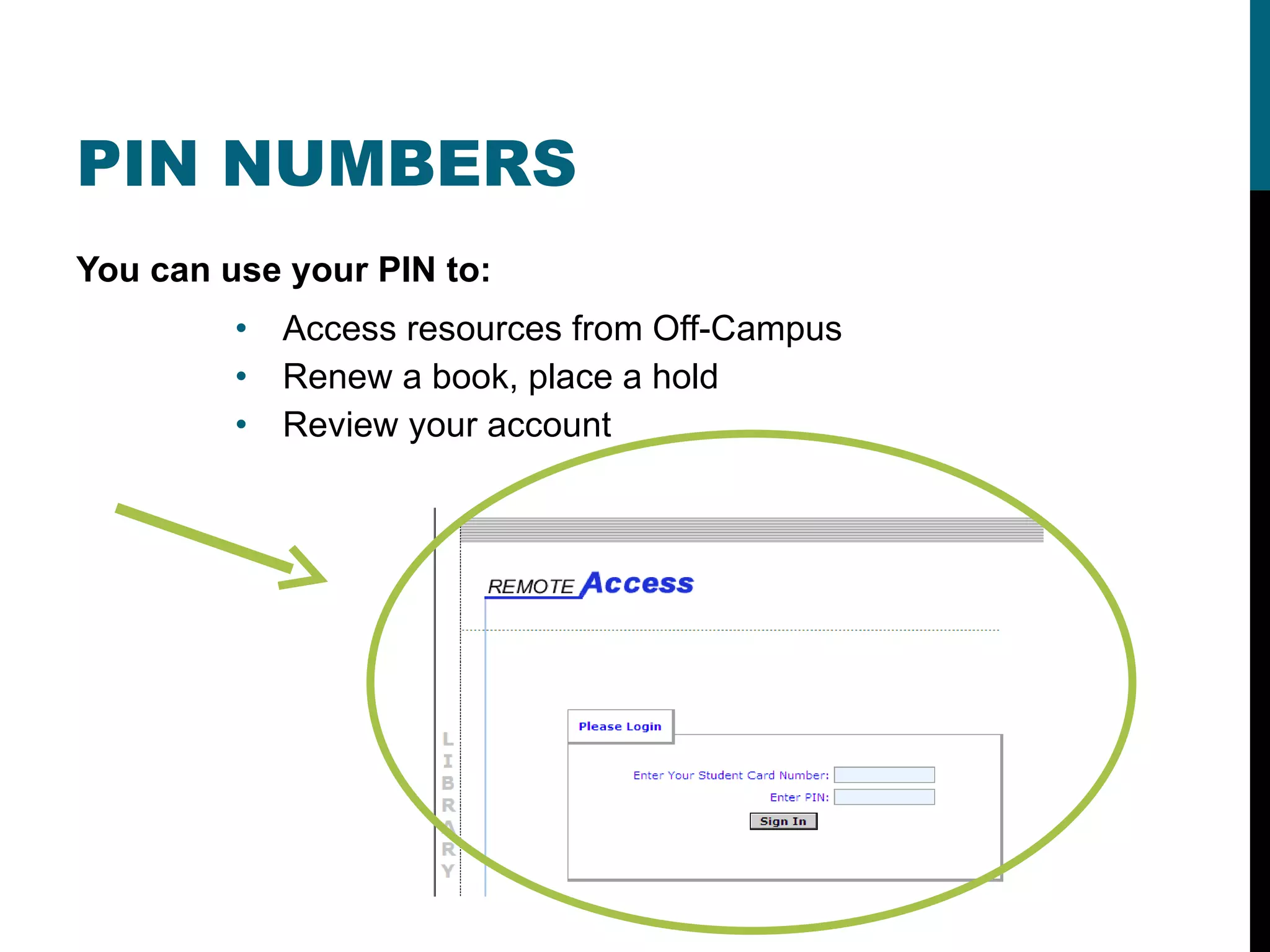
PIN NUMBERS You can use your PIN to: Access resources from Off-Campus Renew a book, place a hold Review your account
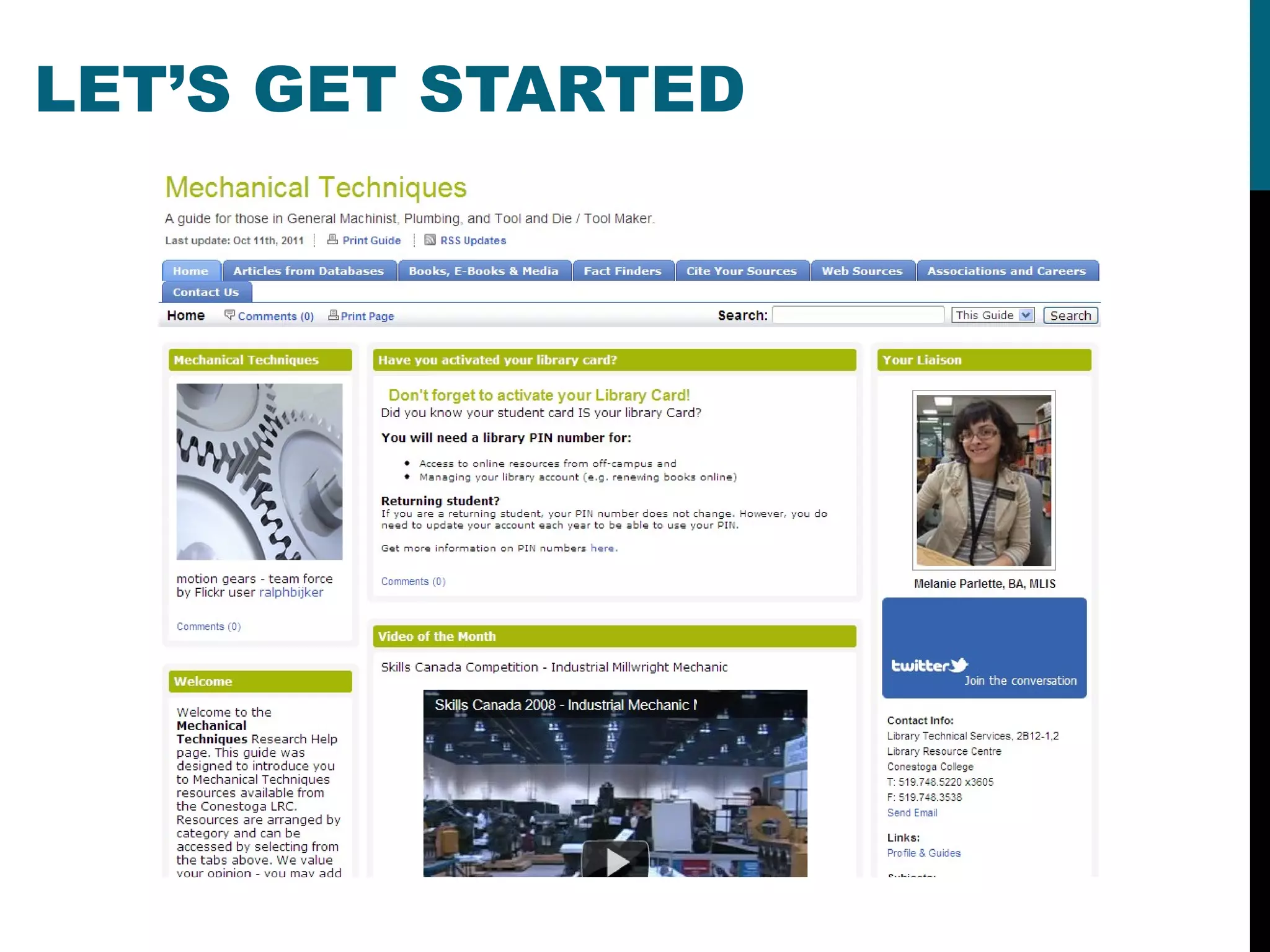
LIBRARY HOMEPAGE www.conestogac.on.ca/lrc Highlights: LRC Hours AskON Library Catalogue E-Resources Contact Us Research Help
LET’S GET STARTED
LIBRARY CATALOGUE Q: What can you find in the library catalogue? A: Anything that is  physically  housed in the library  (and more)  ! Let’s take a look…
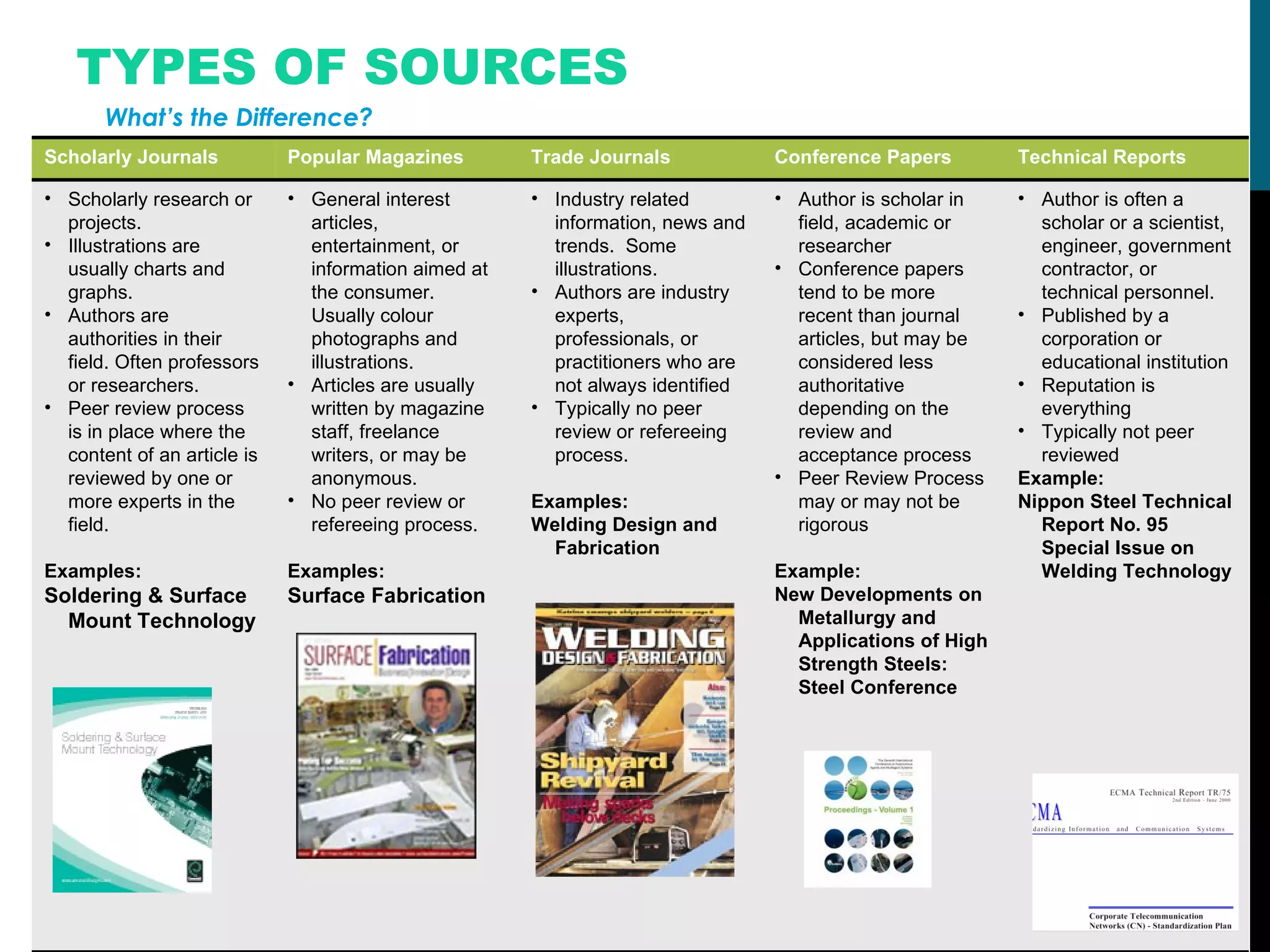
TYPES OF SOURCES What’s the Difference? Scholarly Journals Popular Magazines Trade Journals Conference Papers Technical Reports Scholarly research or projects.   Illustrations are usually charts and graphs.  Authors are authorities in their field. Often professors or researchers.  Peer review process is in place where the content of an article is reviewed by one or more experts in the field.  Examples: Soldering & Surface Mount Technology General interest articles, entertainment, or information aimed at the consumer.  Usually colour photographs and illustrations.  Articles are usually written by magazine staff, freelance writers, or may be anonymous.  No peer review or refereeing process.  Examples: Surface Fabrication‎ Industry related information, news and trends.  Some illustrations.  Authors are industry experts, professionals, or practitioners who are not always identified Typically no peer review or refereeing process.  Examples: Welding Design and Fabrication Author is scholar in field, academic or researcher Conference papers tend to be more recent than journal articles, but may be considered less authoritative depending on the review and acceptance process Peer Review Process may or may not be rigorous Example: New Developments on Metallurgy and Applications of High Strength Steels: Steel Conference Author is often a scholar or a scientist, engineer, government contractor, or technical personnel. Published by a corporation or educational institution Reputation is everything  Typically not peer reviewed Example: Nippon Steel Technical Report No. 95 Special Issue on Welding Technology
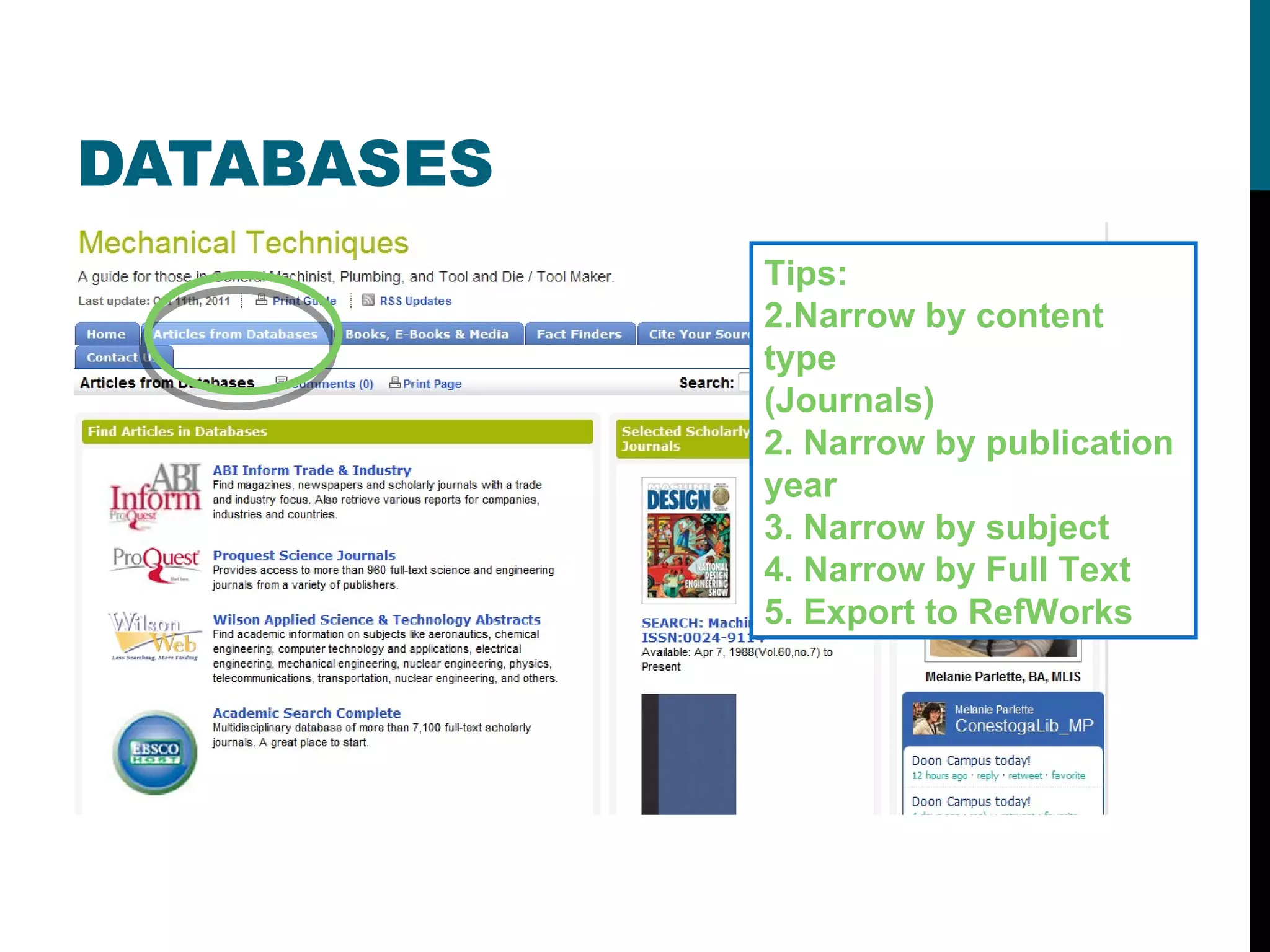
DATABASES What is an electronic article database? Online / web-based collection of: Magazines Newspapers Journals Includes professional journal articles Databases are usually organized by major subject i.e. nursing, business, science, etc. You choose a database based on your topic Each database contains millions of articles, searchable by keyword
DATABASES Tips: Narrow by content type (Journals) 2. Narrow by publication year 3. Narrow by subject 4. Narrow by Full Text 5. Export to RefWorks
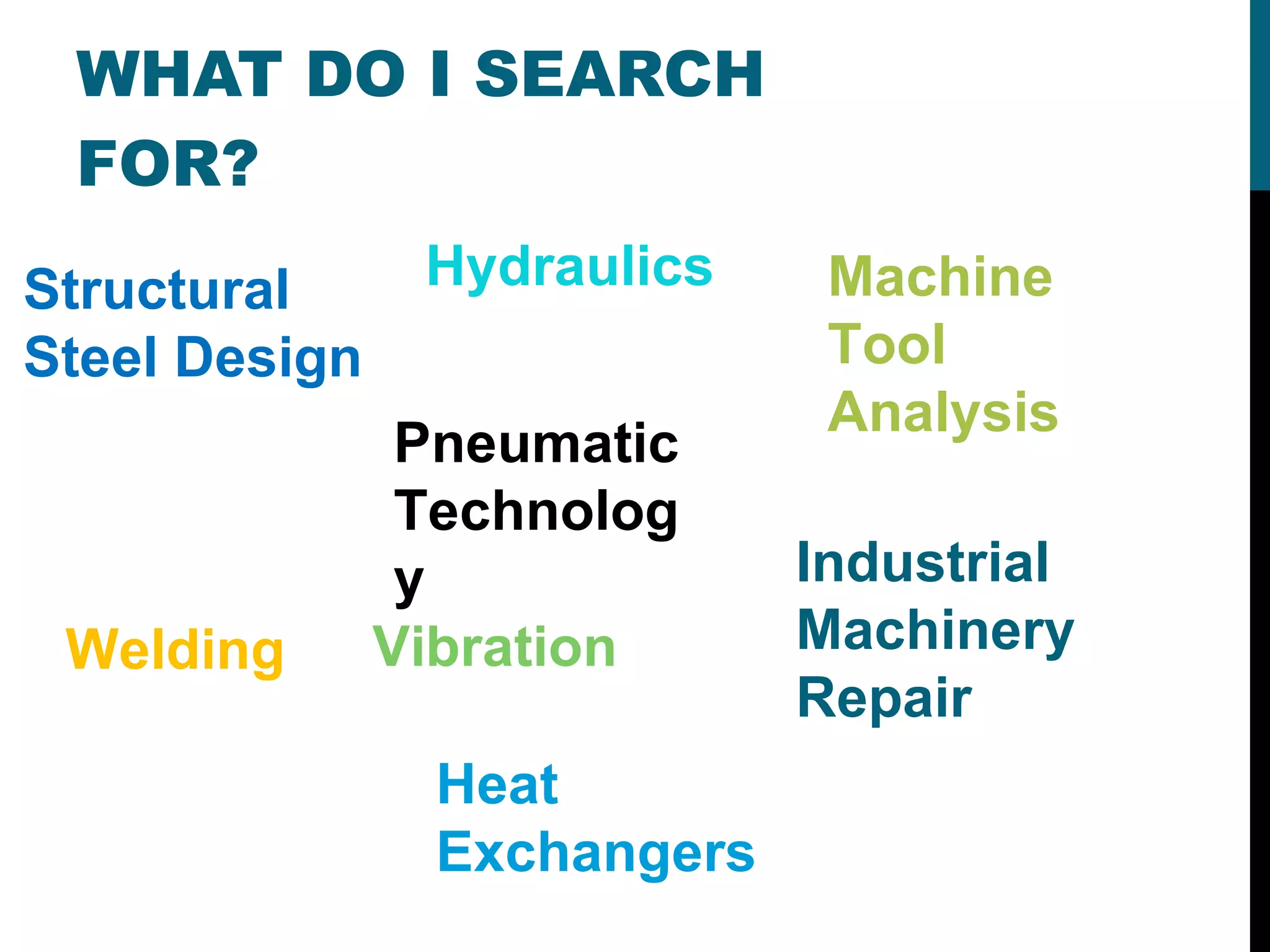
WHAT DO I SEARCH FOR? Pneumatic Technology Welding Heat  Exchangers Machine Tool Analysis Structural Steel Design Industrial  Machinery  Repair Hydraulics Vibration
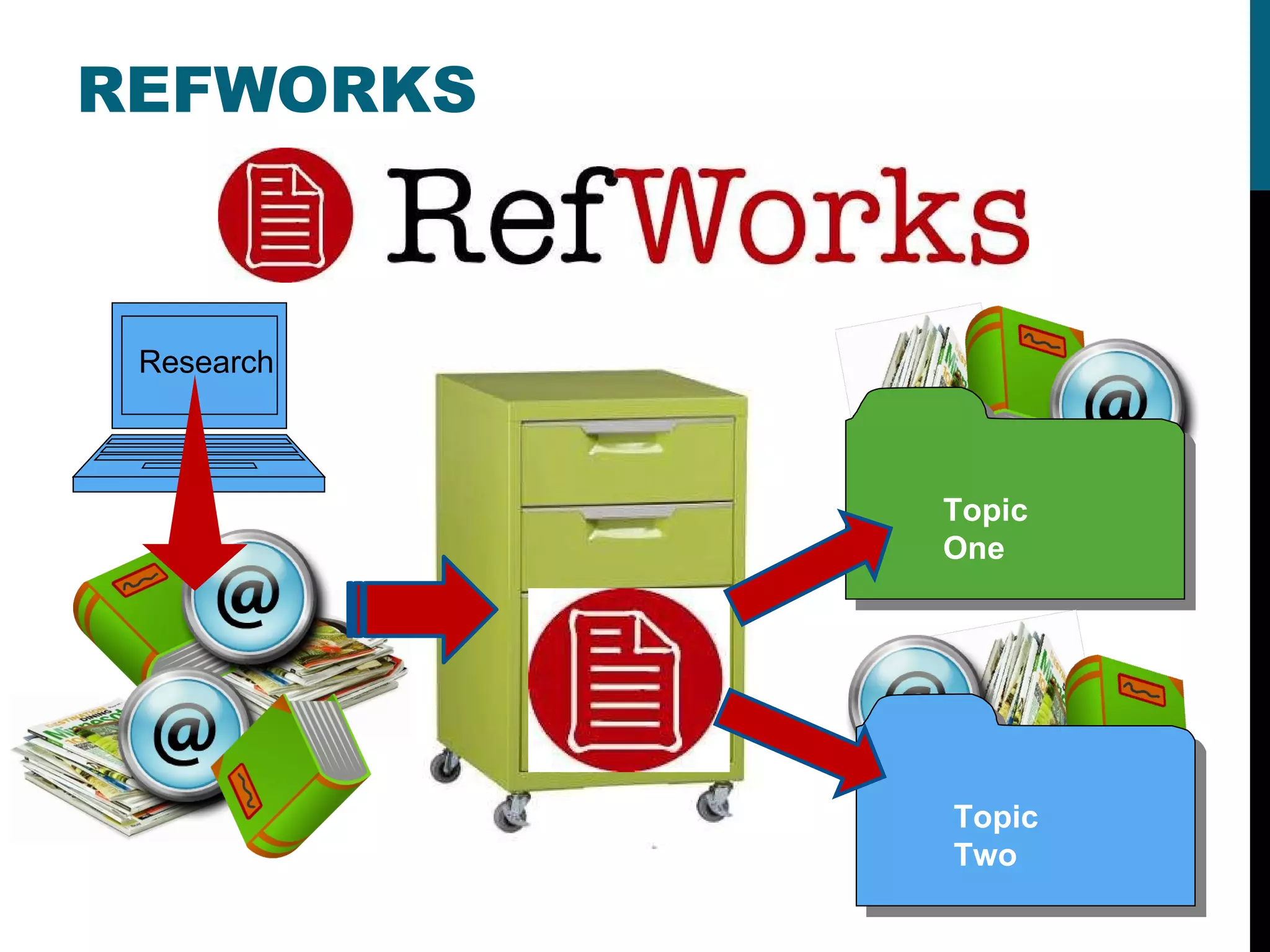
REFWORKS Research Topic One Topic Two
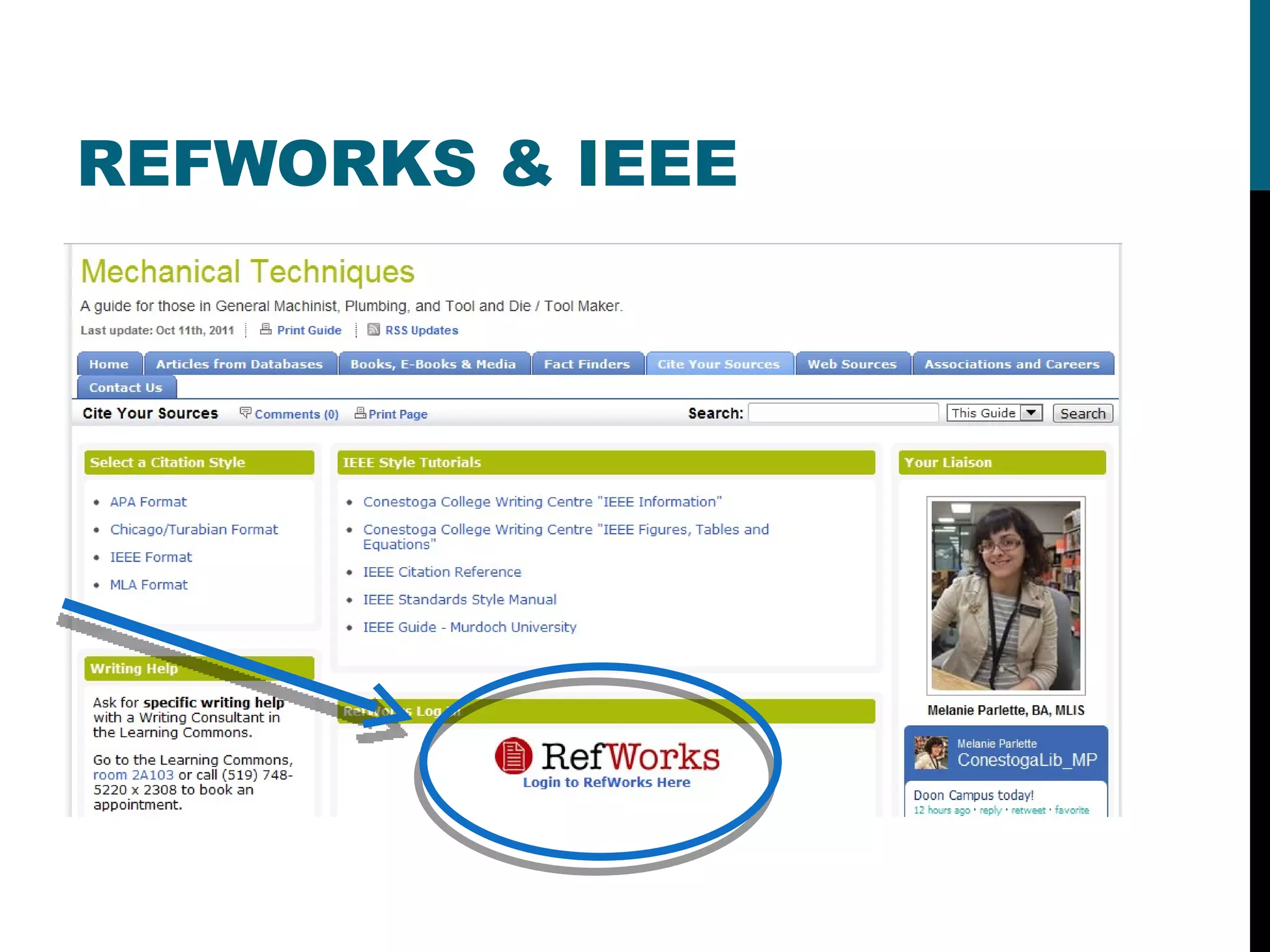
REFWORKS & IEEE
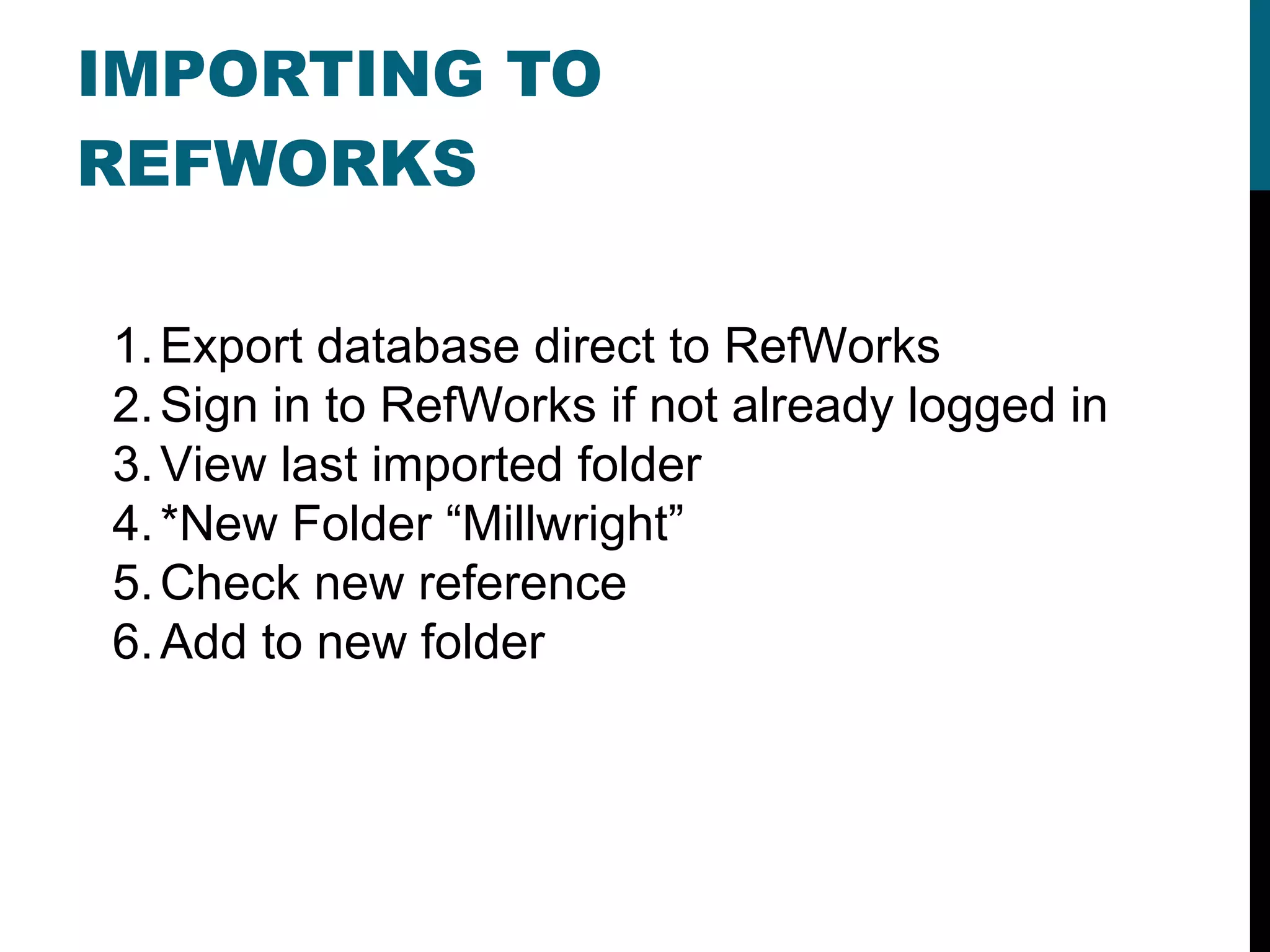
IMPORTING TO REFWORKS Export database direct to RefWorks Sign in to RefWorks if not already logged in View last imported folder *New Folder “Millwright” Check new reference Add to new folder
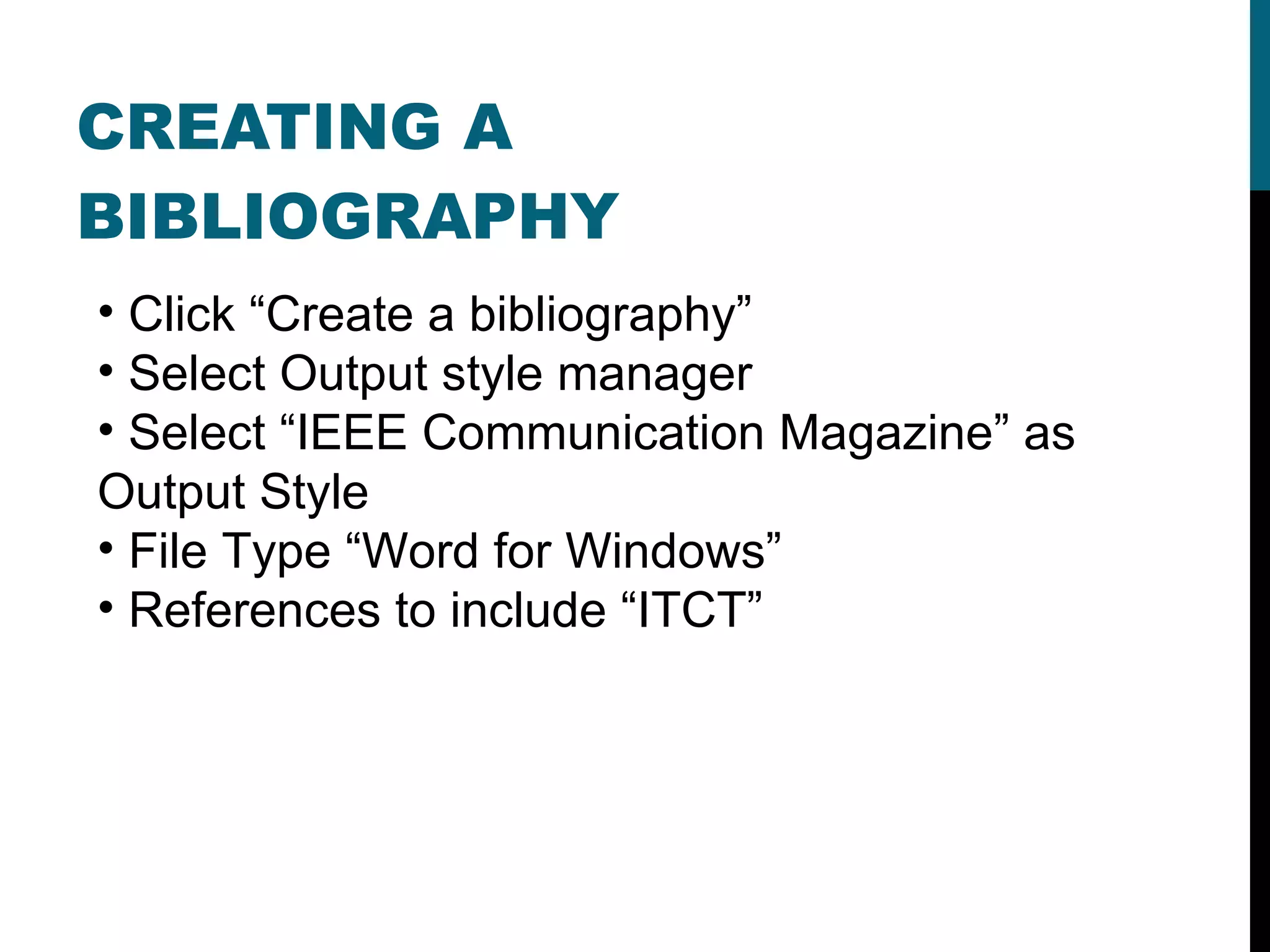
CREATING A BIBLIOGRAPHY Click “Create a bibliography” Select Output style manager Select “IEEE Communication Magazine” as Output Style File Type “Word for Windows” References to include “ITCT”
GET HELP AT THE LIBRARY By Email [email_address] [email_address]   Online IM Chat on the LRC Contact Us Page Or  in the  Mechanical Techniques “Research Guide” In Person Visit the LRC Monday, Tuesday, Thursday, Friday 8:30 AM – 4:00 PM,  Wednesday 12:00 PM – 7:30 PM By Phone Information Desk @ 519-748-5220 x4526

COMM 1180 - Mechanical Techniques

  • 1.
    LIBRARY RESOURCES COMM1180 MELANIE PARLETTE, ENGINEERING & IT LIAISON LIBRARY RESOURCE CENTRE CONESTOGA COLLEGE
  • 2.
    TODAY YOU’LL LEARN. . . About the Library website and that you have an Research Guide (and that this is helpful) How to search the library catalogue What a database is, how to search it and why you need it for your assignment About RefWorks How to Use RefWorks to make citing in IEEE more efficient
  • 3.
    PIN NUMBERS Youcan use your PIN to: Access resources from Off-Campus Renew a book, place a hold Review your account
  • 4.
    LIBRARY HOMEPAGE www.conestogac.on.ca/lrcHighlights: LRC Hours AskON Library Catalogue E-Resources Contact Us Research Help
  • 5.
  • 6.
    LIBRARY CATALOGUE Q:What can you find in the library catalogue? A: Anything that is physically housed in the library (and more) ! Let’s take a look…
  • 7.
    TYPES OF SOURCESWhat’s the Difference? Scholarly Journals Popular Magazines Trade Journals Conference Papers Technical Reports Scholarly research or projects.  Illustrations are usually charts and graphs. Authors are authorities in their field. Often professors or researchers. Peer review process is in place where the content of an article is reviewed by one or more experts in the field. Examples: Soldering & Surface Mount Technology General interest articles, entertainment, or information aimed at the consumer.  Usually colour photographs and illustrations. Articles are usually written by magazine staff, freelance writers, or may be anonymous. No peer review or refereeing process. Examples: Surface Fabrication‎ Industry related information, news and trends.  Some illustrations. Authors are industry experts, professionals, or practitioners who are not always identified Typically no peer review or refereeing process. Examples: Welding Design and Fabrication Author is scholar in field, academic or researcher Conference papers tend to be more recent than journal articles, but may be considered less authoritative depending on the review and acceptance process Peer Review Process may or may not be rigorous Example: New Developments on Metallurgy and Applications of High Strength Steels: Steel Conference Author is often a scholar or a scientist, engineer, government contractor, or technical personnel. Published by a corporation or educational institution Reputation is everything Typically not peer reviewed Example: Nippon Steel Technical Report No. 95 Special Issue on Welding Technology
  • 8.
    DATABASES What isan electronic article database? Online / web-based collection of: Magazines Newspapers Journals Includes professional journal articles Databases are usually organized by major subject i.e. nursing, business, science, etc. You choose a database based on your topic Each database contains millions of articles, searchable by keyword
  • 9.
    DATABASES Tips: Narrowby content type (Journals) 2. Narrow by publication year 3. Narrow by subject 4. Narrow by Full Text 5. Export to RefWorks
  • 10.
    WHAT DO ISEARCH FOR? Pneumatic Technology Welding Heat Exchangers Machine Tool Analysis Structural Steel Design Industrial Machinery Repair Hydraulics Vibration
  • 11.
  • 12.
  • 13.
    IMPORTING TO REFWORKSExport database direct to RefWorks Sign in to RefWorks if not already logged in View last imported folder *New Folder “Millwright” Check new reference Add to new folder
  • 14.
    CREATING A BIBLIOGRAPHYClick “Create a bibliography” Select Output style manager Select “IEEE Communication Magazine” as Output Style File Type “Word for Windows” References to include “ITCT”
  • 15.
    GET HELP ATTHE LIBRARY By Email [email_address] [email_address] Online IM Chat on the LRC Contact Us Page Or in the Mechanical Techniques “Research Guide” In Person Visit the LRC Monday, Tuesday, Thursday, Friday 8:30 AM – 4:00 PM, Wednesday 12:00 PM – 7:30 PM By Phone Information Desk @ 519-748-5220 x4526

Editor's Notes

  • #7 Structural Steel Design
  • #9 Use the print examples you brought to explain what a student can find in a database. Emphasize variety of information, ease of use, scholarly holdings, quality of information and tools provided for organizing results
  • #10 Use the print examples you brought to explain what a student can find in a database. Emphasize variety of information, ease of use, scholarly holdings, quality of information and tools provided for organizing results
  • #11 Use the print examples you brought to explain what a student can find in a database. Emphasize variety of information, ease of use, scholarly holdings, quality of information and tools provided for organizing results