Rules of the Road
Case study of the collision between MS Lykes Voyager
and MS Washington Senator
Rishi Varman Kuma
Dns 01330
 Time and date : 0938 (UTC+8) on 8 April 2005
 Location of incident : 23º 37'9N, 117º 56'9E, 069º The
Brothers Light 15.4nm
 Visibility: Foggy, less than 200m
Accident Details
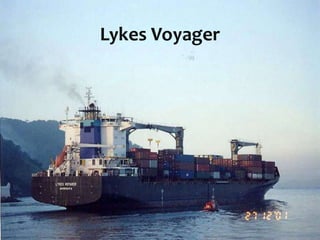
 Vessel details : Lykes Voyager
 Manager : Anglo-Eastern Ship Management
 Port of registry : London
 Flag : United Kingdom
 Type : Container
 Built : 1995, Stocznia Gdynia S.A. Poland
 Classification society : American Bureau of Shipping
 Length overall : 187.16m
 Gross tonnage : 23540
 Engine power and/or type : 17940kW Sulzer oil engine, direct
drive
 Service speed : 19.5 knots
 Persons on board : 24
 Injuries : None
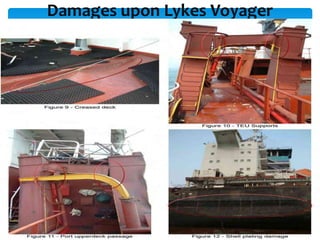
 Damage : Extensive damage to shell plating, decks, internal
frames, and container stowages in way of the port quarter.
Vessel Details
Lykes Voyager
 Vessel details: Washington Senator
 Manager : Niederelbe Schiffahrts-Gesellschaft (NSB)
 Port of registry : Hamburg
 Flag : Germany
 Type : Container
 Built : 1994, MTW Schiffswerft GmbH - Wismar, Germany
 Classification society : Germanischer Lloyd
 Length overall : 215.653m
 Gross tonnage : 34617
 Engine power and/or type : 20 510kW BV Sulzer
 Service speed : 21.3 knots
 Persons on board : 21
 Injuries : 2 (minor)
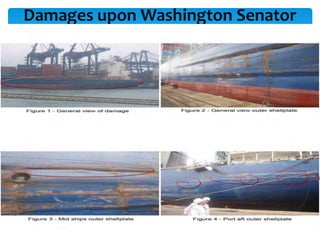
 Damage : Extensive damage to shell plating and internal
decks and bulkheads in way of the port quarter.
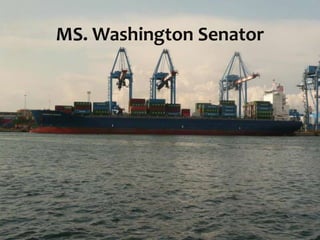
MS. Washington Senator
 At 0938 (UTC+8) on 8 April 2005, the German
registered container ship Washington Senator, which
was on passage from Shanghai to Hong Kong at a
speed of 17 knots, and the UK registered container
ship Lykes Voyager, which was on passage from
Yantian to Vancouver at a speed of 19.5 knots,
collided in the Taiwan Strait. No one was hurt but
both ships were damaged and, although there was no
pollution, a number of containers were lost
overboard. After the collision, both ships sailed to
Hong Kong for repairs.
Summary
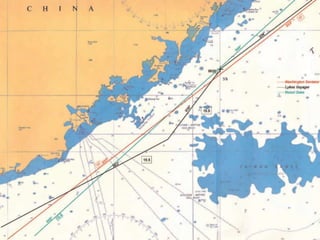
 The collision occurred about 4 minutes after Lykes Voyager
altered course to starboard from 022º to 070º to avoid
Washington Senator, and Washington Senator had altered
course to port from about 242º to 190º in accordance with
a passing arrangement her master assumed had been
made with Lykes Voyager but instead with another vessel
called Notori Dake. The distance between the ships at the
time of the alterations was about 2.5 miles, and visibility
was less than 200m in fog. Shortly after each vessel had
steadied on their respective headings, both masters
realized that the ships had turned towards each other, and
were on a collision course. Unfortunately, by that time, the
distance had further reduced to the extent that the last-
minute avoiding action taken by both ships was unable to
prevent a collision.
Narrative of the Accident
 The passing arrangement agreed by the master of
Washington Senator was made with an unidentified
ship (Notori Dake), not Lykes Voyager.
 The developing close-quarters situation between
Washington Senator and Lykes Voyager could have
been resolved solely by the early application of the
COLREGS. However, the master of Washington
Senator opted to contact Lykes Voyager on VHF radio.
 By the time Washington Senator established VHF
communications with Lykes Voyager, the distance
between the ships was less than 5 miles.
Factors contributing to the collision
 Identification procedures were not followed during
each VHF radio transmission, and the identity of the
ship with which the passing agreement was made,
which was probably one of many within VHF radio
range, was not established.
 The avoiding action taken by Lykes Voyager was not
taken until the ships had closed to about 2.5 miles.
This was due to the inexperience of the third officer,
who was focused by the threat posed by a nearby
ship being overtaken, and because the master had
been distracted.
 The performance of the master of Lykes Voyager was
possibly affected by fatigue.
 When restricted visibility and large concentrations of fishing
vessels were encountered, neither the master of Washington
Senator nor Lykes Voyager considered it necessary to reduce
speed below their required passage speeds.
 There is no guidance available to masters of ships which are
unable to proceed at a speed which allows them to be
stopped within a distance appropriate to the prevailing state
of visibility as required by Rule 6 of the COLREGS.
 Neither of the bridge teams made use of the available AIS
information to monitor the actions of the other vessel when
manoeuvring at close-quarters. This was probably due to
several factors, including the absence of specific guidance or
instruction from the ship managers, and the method in
which AIS information was displayed.
Rule 2: Responsibility
 The third officer assumed that the master took the con from him at
about 0910, when he was told to alter course to starboard to avoid
the fishing vessel, whereas the master considered that he took the
con at about 0935 when altering course to 200°. Therefore, the
master and the third officer were under the impression that the
other had the con for a period of 25 minutes.
 Although visibility had reduced to 1 mile for much of the night,
none of the watch officers had informed the master.
 The third officer did not consider he had the master’s authority to
reduce speed if he felt it necessary to do so.
International Regulations for Preventing
Collisions at Sea 1972
Rule 5: Look out
maintain a proper look-out by sight and hearing as well as by all
available means…
 Washington Senator and Lykes Voyager were fitted with AIS but,
other than the association of the AIS information for Lykes Voyager
with her radar target, AIS information was not utilised further. Had
the initial predicted close-quarters situation between Lykes Voyager
and Washington Senator been resolved, by the early application of
the COLREGS, such additional information from AIS would have
been of little requirement. However, as this was not the case, the
use of the AIS information was potentially beneficial.
Rule 6: Safe Speed
 At the time of the collision, the visibility was less than 200m; Lykes
Voyager was proceeding at 19.5 knots, and Washington Senator at
17 knots. Neither of the vessels could have stopped within 200m,
which was approximately the distance from their bridges to their
bows. As such, it could be argued that they did not comply with
Rule 6 of the COLREGS
Rule 8: Action to avoid collision
Be positive, made in ample time and with due regard to the
observance of good seamanship…
 Lykes Voyager’s third officer detected and acquired Washington
Senator at a range of between 8 and 9 miles, but no action was
taken to avoid a collision until they had closed to about 2.5 miles.
Rule 19: Conduct of vessel in restricted visibility
 The third officer was focusing on Notori Dake, the nearest radar
target. An alteration of course was made by the third officer of
course to 022° at 0930. The action was successful in increasing the
CPA of Notori Dake, but it was taken without consideration of its
effect on the CPA of the radar target closing on her starboard bow,
or the consequences of altering course to port in restricted
visibility.
Damages upon Lykes Voyager
Damages upon Washington Senator
 Marine Accident Investigation Branch United Kingdom
www.maib.gov.uk
Source
Thank you and have a good day! 

COLREGS 1972

  • 1.
    Rules of theRoad Case study of the collision between MS Lykes Voyager and MS Washington Senator Rishi Varman Kuma Dns 01330
  • 2.
     Time anddate : 0938 (UTC+8) on 8 April 2005  Location of incident : 23º 37'9N, 117º 56'9E, 069º The Brothers Light 15.4nm  Visibility: Foggy, less than 200m Accident Details
  • 3.
     Vessel details: Lykes Voyager  Manager : Anglo-Eastern Ship Management  Port of registry : London  Flag : United Kingdom  Type : Container  Built : 1995, Stocznia Gdynia S.A. Poland  Classification society : American Bureau of Shipping  Length overall : 187.16m  Gross tonnage : 23540  Engine power and/or type : 17940kW Sulzer oil engine, direct drive  Service speed : 19.5 knots  Persons on board : 24  Injuries : None  Damage : Extensive damage to shell plating, decks, internal frames, and container stowages in way of the port quarter. Vessel Details
  • 4.
  • 5.
     Vessel details:Washington Senator  Manager : Niederelbe Schiffahrts-Gesellschaft (NSB)  Port of registry : Hamburg  Flag : Germany  Type : Container  Built : 1994, MTW Schiffswerft GmbH - Wismar, Germany  Classification society : Germanischer Lloyd  Length overall : 215.653m  Gross tonnage : 34617  Engine power and/or type : 20 510kW BV Sulzer  Service speed : 21.3 knots  Persons on board : 21  Injuries : 2 (minor)  Damage : Extensive damage to shell plating and internal decks and bulkheads in way of the port quarter.
  • 6.
  • 7.
     At 0938(UTC+8) on 8 April 2005, the German registered container ship Washington Senator, which was on passage from Shanghai to Hong Kong at a speed of 17 knots, and the UK registered container ship Lykes Voyager, which was on passage from Yantian to Vancouver at a speed of 19.5 knots, collided in the Taiwan Strait. No one was hurt but both ships were damaged and, although there was no pollution, a number of containers were lost overboard. After the collision, both ships sailed to Hong Kong for repairs. Summary
  • 8.
     The collisionoccurred about 4 minutes after Lykes Voyager altered course to starboard from 022º to 070º to avoid Washington Senator, and Washington Senator had altered course to port from about 242º to 190º in accordance with a passing arrangement her master assumed had been made with Lykes Voyager but instead with another vessel called Notori Dake. The distance between the ships at the time of the alterations was about 2.5 miles, and visibility was less than 200m in fog. Shortly after each vessel had steadied on their respective headings, both masters realized that the ships had turned towards each other, and were on a collision course. Unfortunately, by that time, the distance had further reduced to the extent that the last- minute avoiding action taken by both ships was unable to prevent a collision. Narrative of the Accident
  • 10.
     The passingarrangement agreed by the master of Washington Senator was made with an unidentified ship (Notori Dake), not Lykes Voyager.  The developing close-quarters situation between Washington Senator and Lykes Voyager could have been resolved solely by the early application of the COLREGS. However, the master of Washington Senator opted to contact Lykes Voyager on VHF radio.  By the time Washington Senator established VHF communications with Lykes Voyager, the distance between the ships was less than 5 miles. Factors contributing to the collision
  • 11.
     Identification procedureswere not followed during each VHF radio transmission, and the identity of the ship with which the passing agreement was made, which was probably one of many within VHF radio range, was not established.  The avoiding action taken by Lykes Voyager was not taken until the ships had closed to about 2.5 miles. This was due to the inexperience of the third officer, who was focused by the threat posed by a nearby ship being overtaken, and because the master had been distracted.  The performance of the master of Lykes Voyager was possibly affected by fatigue.
  • 12.
     When restrictedvisibility and large concentrations of fishing vessels were encountered, neither the master of Washington Senator nor Lykes Voyager considered it necessary to reduce speed below their required passage speeds.  There is no guidance available to masters of ships which are unable to proceed at a speed which allows them to be stopped within a distance appropriate to the prevailing state of visibility as required by Rule 6 of the COLREGS.  Neither of the bridge teams made use of the available AIS information to monitor the actions of the other vessel when manoeuvring at close-quarters. This was probably due to several factors, including the absence of specific guidance or instruction from the ship managers, and the method in which AIS information was displayed.
  • 13.
    Rule 2: Responsibility The third officer assumed that the master took the con from him at about 0910, when he was told to alter course to starboard to avoid the fishing vessel, whereas the master considered that he took the con at about 0935 when altering course to 200°. Therefore, the master and the third officer were under the impression that the other had the con for a period of 25 minutes.  Although visibility had reduced to 1 mile for much of the night, none of the watch officers had informed the master.  The third officer did not consider he had the master’s authority to reduce speed if he felt it necessary to do so. International Regulations for Preventing Collisions at Sea 1972
  • 14.
    Rule 5: Lookout maintain a proper look-out by sight and hearing as well as by all available means…  Washington Senator and Lykes Voyager were fitted with AIS but, other than the association of the AIS information for Lykes Voyager with her radar target, AIS information was not utilised further. Had the initial predicted close-quarters situation between Lykes Voyager and Washington Senator been resolved, by the early application of the COLREGS, such additional information from AIS would have been of little requirement. However, as this was not the case, the use of the AIS information was potentially beneficial.
  • 15.
    Rule 6: SafeSpeed  At the time of the collision, the visibility was less than 200m; Lykes Voyager was proceeding at 19.5 knots, and Washington Senator at 17 knots. Neither of the vessels could have stopped within 200m, which was approximately the distance from their bridges to their bows. As such, it could be argued that they did not comply with Rule 6 of the COLREGS
  • 16.
    Rule 8: Actionto avoid collision Be positive, made in ample time and with due regard to the observance of good seamanship…  Lykes Voyager’s third officer detected and acquired Washington Senator at a range of between 8 and 9 miles, but no action was taken to avoid a collision until they had closed to about 2.5 miles.
  • 17.
    Rule 19: Conductof vessel in restricted visibility  The third officer was focusing on Notori Dake, the nearest radar target. An alteration of course was made by the third officer of course to 022° at 0930. The action was successful in increasing the CPA of Notori Dake, but it was taken without consideration of its effect on the CPA of the radar target closing on her starboard bow, or the consequences of altering course to port in restricted visibility.
  • 18.
  • 19.
  • 20.
     Marine AccidentInvestigation Branch United Kingdom www.maib.gov.uk Source
  • 21.
    Thank you andhave a good day! 