
The admission interview is a very important part of
your college application process. During the
interview, the admission officer will assess you on
your personality, character and aspirations.
The interview is an opportunity to project you as
someone who will be a great addition to the
university. Merely meeting the academic
qualifications does not guarantee a seat in the
program; your whole personality should suit the
college and its principles. Colleges usually prefer
candidates whom they believe will add value to their
college and will appreciate the knowledge gained.
Therefore it is your responsibility to show them that
you are an ideal candidate who will do full justice to
the course.
Familiarize yourself with the college and what it
stands for. Read the brochures and visit the
website to gain better insights. Visit the campus if
you can. Keep an eye out for things that you
really like about the college or its campus. Also
make sure that you know the exact location of the
college so that you arrive for the interview on
time.
Be polite to people you meet in the campus. You
never know who might be observing you.
Admission officers look for much more than a
good score in your mark sheet. The way you
present yourself, inside and outside the interview
room, matters a great deal.
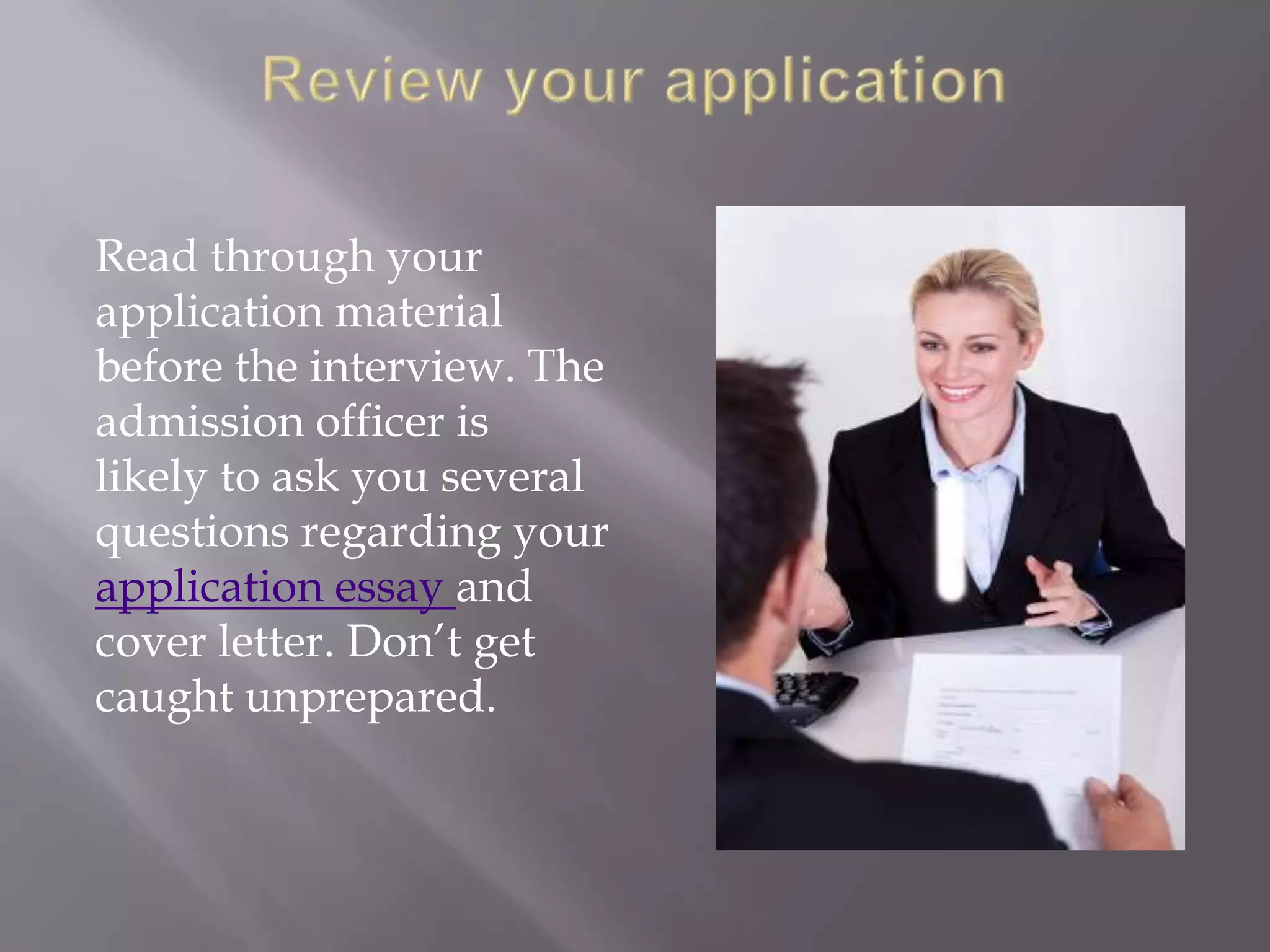
Read through your
application material
before the interview. The
admission officer is
likely to ask you several
questions regarding your
application essay and
cover letter. Don’t get
caught unprepared.
Pay attention to what you wear. There are no set
rules on what to wear for a college interview;
however, you do want to look nice. Choose your
attire based on the type of program and the
culture of the school you are applying to, the
weather, and the context of the admission
interview. If you cannot decide, just ask the
admissions office – they will be able to give you
more information on what kind of attire is
typically worn during their interviews.
There are a few questions interviewers may ask
all students; prepare for them well in advance.
Some of the questions include:
1. Tell me about yourself.
2. Why did you apply to this college?
3. What will you major in?
4. Describe yourself using 3 adjectives.
5. How do you define success?
6. Where do you see yourself 5 years from now?
Prepare some questions to show your level of
interest in the program and the college. Ask
specific questions. e.g.
1. What are popular majors?
2. What role does the student body play or how
active is it?
3. Where does the college need to improve and
how can the students contribute? Etc.
Don’t ask generic questions that can be answered
by reading through the brochure.
Practice at home by looking into a mirror and
answering questions. During the interview, show
enthusiasm and interest in the college. Keep the
answers conversational and natural. Don’t
memorize your answers, or you may end up
sounding like you are reading from a script. Be
honest, natural and spontaneous.
You can use the pen and
paper to write down
your prepared questions
so you won’t forget to
ask them. You can also
take notes during the
conversation.
Thank the interviewer as you finish your
conversation. Also send a thank-you note after the
interview. The more interest you show in a
college, the more interest they are likely to show
in you.
With some preparation, you can enter into a great
conversation with your admissions officer. Take
advantage of the opportunity that the interview
provided to get to know your prospective school
a little better.

College admission interview 9 tactics

  • 2.
    The admission interviewis a very important part of your college application process. During the interview, the admission officer will assess you on your personality, character and aspirations. The interview is an opportunity to project you as someone who will be a great addition to the university. Merely meeting the academic qualifications does not guarantee a seat in the program; your whole personality should suit the college and its principles. Colleges usually prefer candidates whom they believe will add value to their college and will appreciate the knowledge gained. Therefore it is your responsibility to show them that you are an ideal candidate who will do full justice to the course.
  • 4.
    Familiarize yourself withthe college and what it stands for. Read the brochures and visit the website to gain better insights. Visit the campus if you can. Keep an eye out for things that you really like about the college or its campus. Also make sure that you know the exact location of the college so that you arrive for the interview on time.
  • 5.
    Be polite topeople you meet in the campus. You never know who might be observing you. Admission officers look for much more than a good score in your mark sheet. The way you present yourself, inside and outside the interview room, matters a great deal.
  • 6.
    Read through your applicationmaterial before the interview. The admission officer is likely to ask you several questions regarding your application essay and cover letter. Don’t get caught unprepared.
  • 7.
    Pay attention towhat you wear. There are no set rules on what to wear for a college interview; however, you do want to look nice. Choose your attire based on the type of program and the culture of the school you are applying to, the weather, and the context of the admission interview. If you cannot decide, just ask the admissions office – they will be able to give you more information on what kind of attire is typically worn during their interviews.
  • 8.
    There are afew questions interviewers may ask all students; prepare for them well in advance. Some of the questions include: 1. Tell me about yourself. 2. Why did you apply to this college? 3. What will you major in? 4. Describe yourself using 3 adjectives. 5. How do you define success? 6. Where do you see yourself 5 years from now?
  • 9.
    Prepare some questionsto show your level of interest in the program and the college. Ask specific questions. e.g. 1. What are popular majors? 2. What role does the student body play or how active is it? 3. Where does the college need to improve and how can the students contribute? Etc. Don’t ask generic questions that can be answered by reading through the brochure.
  • 10.
    Practice at homeby looking into a mirror and answering questions. During the interview, show enthusiasm and interest in the college. Keep the answers conversational and natural. Don’t memorize your answers, or you may end up sounding like you are reading from a script. Be honest, natural and spontaneous.
  • 11.
    You can usethe pen and paper to write down your prepared questions so you won’t forget to ask them. You can also take notes during the conversation.
  • 12.
    Thank the intervieweras you finish your conversation. Also send a thank-you note after the interview. The more interest you show in a college, the more interest they are likely to show in you. With some preparation, you can enter into a great conversation with your admissions officer. Take advantage of the opportunity that the interview provided to get to know your prospective school a little better.