
Collective Bargaining
Topics to be covered
Collective Bargaining
Evolution Of Collective Bargaining
Types Of Bargaining
Collective Bargaining Process
Collective Bargaining Agreement
Levels At Which Collective Bargaining Is Undertaken
Conditions For Successful Collective Bargaining
Trends In Collective Bargaining
Perceptions
Collective Bargaining
 “Collective Bargaining is a process in which the representatives of a
  labour organization & the representatives of business organization
  meet and attempt to negotiate a contract or agreement, which specifies
  the nature of employee-employer union relationship”.
                                                            – FLIPPO
Process involving discussions and negotiations

‘collective’ – group

'bargaining' – proposals and counter proposals

to reconcile their conflicting interests

is a flexible approach
Evolution Of Collective Bargaining

Coined by Sydney and Beatrice Webb


Industrial Revolution – Great Britain


The Indian Scenario:
  Gandhiji - the leader of the Ahmedabad textile workers
  Idea gathered interest only after the Second World War
  GOI took steps like setting up of machinery for
    negotiations, conciliation and arbitration.
Types Of Bargaining


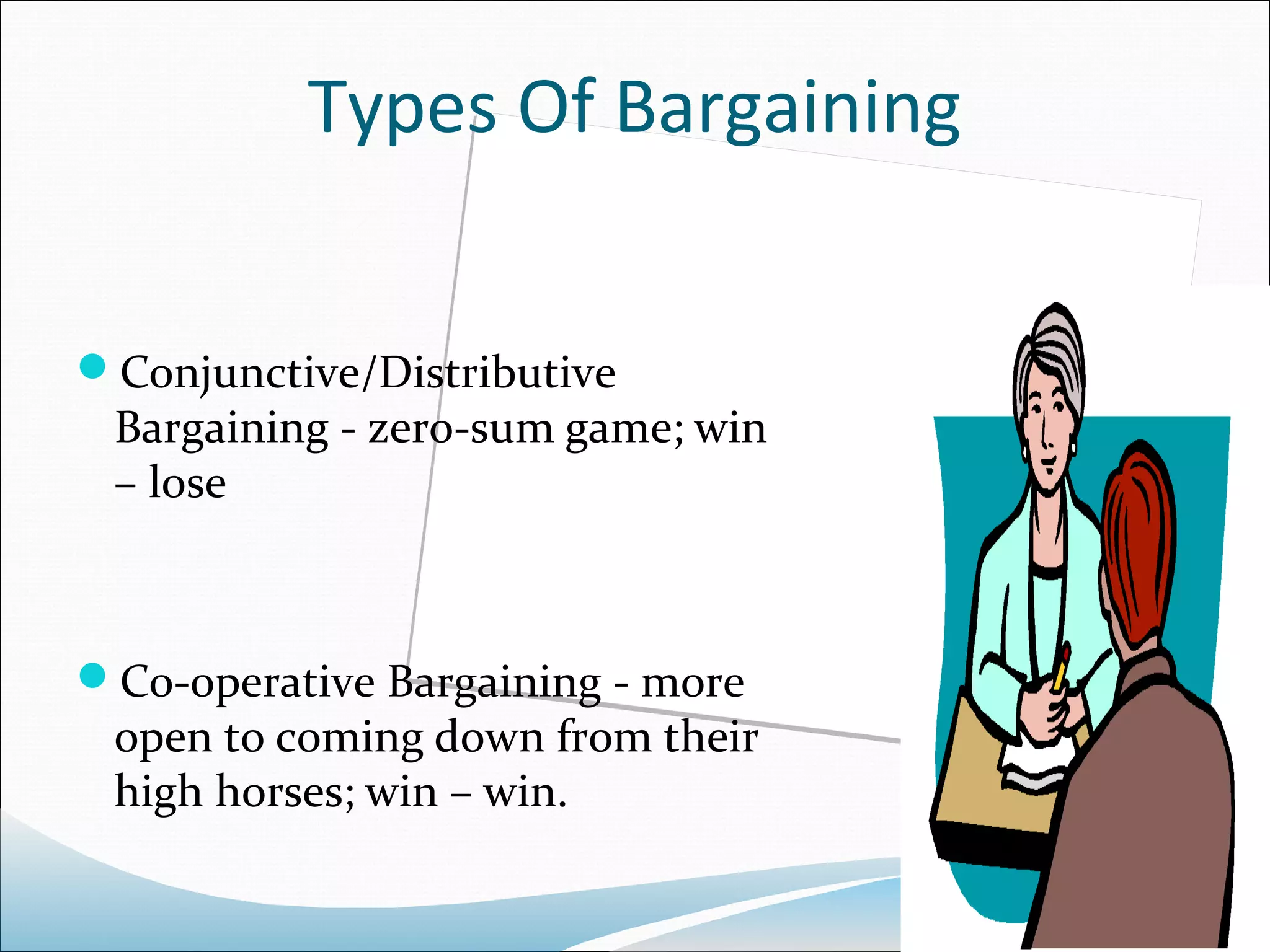
Conjunctive/Distributive
 Bargaining - zero-sum game; win
 – lose


Co-operative Bargaining - more
 open to coming down from their
 high horses; win – win.
Collective Bargaining Agreement
Written document regarding working
  conditions and terms of employment

Legally, a CBA binds only the parties to
  it.

In India, there are three types of
  agreements, namely
    voluntary agreements,
    settlements, and
    Consent awards.
Contents of Collective Bargaining
                Agreement
The date of commencement of the
  agreement

Its duration

A definition of terms

The procedure for settling disputes
  regarding interpretation, as well as other
  disputes.

The consequences in the event of
  breaches of the agreement

As regards wages, exactly how conversion
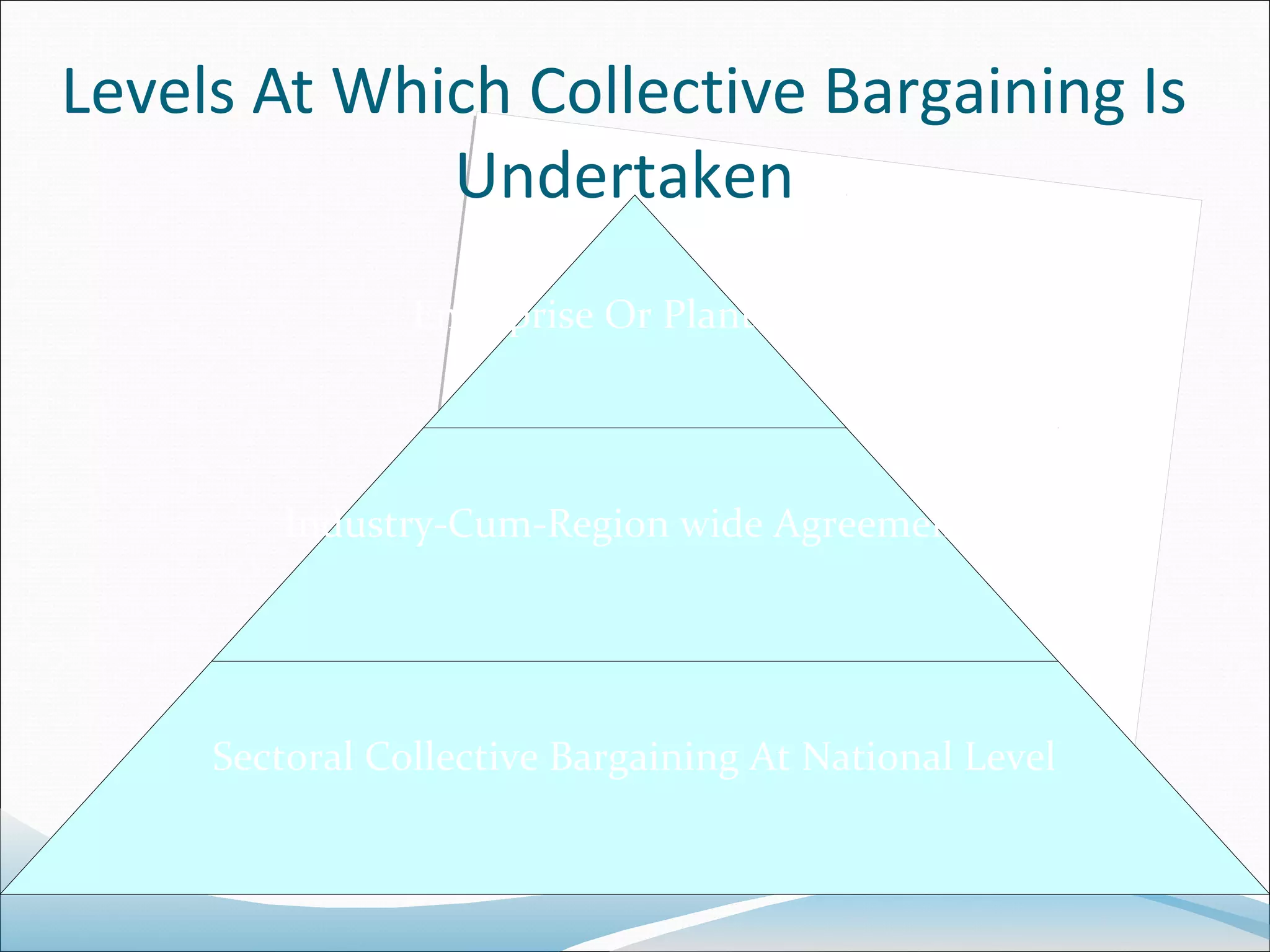
Levels At Which Collective Bargaining Is
             Undertaken
                Enterprise Or Plant Level


         Industry-Cum-Region wide Agreements


     Sectoral Collective Bargaining At National Level
Conditions For Successful Collective
                Bargaining

Trade Union Recognition

Observance of Agreements

Support of Labour Administration
 Authorities

Good Faith

Proper Internal Communication
PERCEPTIONS ON COLLECTIVE
          BARGAINING
CB essentially means negotiations between the labour and
 management
CB should just not stop at the negotiations but also go on to be
 implemented; otherwise the entire process of CB will be
 rendered futile.
It is mostly the formal sector that benefits out of the CB process.
The parties have to adopt a flexible attitude throughout the
 process of bargaining
It is based on give and take approach and take or leave
 approach.
Once both the parties know what they want, negotiations
 become easier and better.
Obviously all the above mentioned conditions are required
 successful for CB but the most essential among them is the
 “good faith”
CB agreement is a written format and it is essential
 because that acts as a legal framework and as a guide to
 their relationships on certain matters for a specified period
 of time.
Collective bargaining is not highly practiced in India,
 several factors are responsible for this:
 • Multiple unions
 • Defective laws
 • Mediation by political leaders
Organisations understand the importance of human
 resources hence they take care of the workers well enough
 so that collective bargaining is not highly required. It is
 also because most MNC’s are setting up their plants in
 India, because of which compensation levels have gone up
 so also the terms of employment has become favourable in
 most parts of the country.
It is necessary to create a win – win situation for both the
 parties, if this is not done, the process of CB just acts as a
 temporary solution. Also, if CB is used as a temporary
 solution, it would infact create an environment of distrust.

Collective bargaining for class

  • 1.
  • 2.
    Topics to becovered Collective Bargaining Evolution Of Collective Bargaining Types Of Bargaining Collective Bargaining Process Collective Bargaining Agreement Levels At Which Collective Bargaining Is Undertaken Conditions For Successful Collective Bargaining Trends In Collective Bargaining Perceptions
  • 3.
    Collective Bargaining  “CollectiveBargaining is a process in which the representatives of a labour organization & the representatives of business organization meet and attempt to negotiate a contract or agreement, which specifies the nature of employee-employer union relationship”. – FLIPPO Process involving discussions and negotiations ‘collective’ – group 'bargaining' – proposals and counter proposals to reconcile their conflicting interests is a flexible approach
  • 4.
    Evolution Of CollectiveBargaining Coined by Sydney and Beatrice Webb Industrial Revolution – Great Britain The Indian Scenario: Gandhiji - the leader of the Ahmedabad textile workers Idea gathered interest only after the Second World War GOI took steps like setting up of machinery for negotiations, conciliation and arbitration.
  • 5.
    Types Of Bargaining Conjunctive/Distributive Bargaining - zero-sum game; win – lose Co-operative Bargaining - more open to coming down from their high horses; win – win.
  • 6.
    Collective Bargaining Agreement Writtendocument regarding working conditions and terms of employment Legally, a CBA binds only the parties to it. In India, there are three types of agreements, namely  voluntary agreements,  settlements, and  Consent awards.
  • 7.
    Contents of CollectiveBargaining Agreement The date of commencement of the agreement Its duration A definition of terms The procedure for settling disputes regarding interpretation, as well as other disputes. The consequences in the event of breaches of the agreement As regards wages, exactly how conversion
  • 8.
    Levels At WhichCollective Bargaining Is Undertaken Enterprise Or Plant Level Industry-Cum-Region wide Agreements Sectoral Collective Bargaining At National Level
  • 9.
    Conditions For SuccessfulCollective Bargaining Trade Union Recognition Observance of Agreements Support of Labour Administration Authorities Good Faith Proper Internal Communication
  • 10.
    PERCEPTIONS ON COLLECTIVE BARGAINING CB essentially means negotiations between the labour and management CB should just not stop at the negotiations but also go on to be implemented; otherwise the entire process of CB will be rendered futile. It is mostly the formal sector that benefits out of the CB process. The parties have to adopt a flexible attitude throughout the process of bargaining It is based on give and take approach and take or leave approach. Once both the parties know what they want, negotiations become easier and better. Obviously all the above mentioned conditions are required successful for CB but the most essential among them is the “good faith”
  • 11.
    CB agreement isa written format and it is essential because that acts as a legal framework and as a guide to their relationships on certain matters for a specified period of time. Collective bargaining is not highly practiced in India, several factors are responsible for this: • Multiple unions • Defective laws • Mediation by political leaders Organisations understand the importance of human resources hence they take care of the workers well enough so that collective bargaining is not highly required. It is also because most MNC’s are setting up their plants in India, because of which compensation levels have gone up so also the terms of employment has become favourable in most parts of the country. It is necessary to create a win – win situation for both the parties, if this is not done, the process of CB just acts as a temporary solution. Also, if CB is used as a temporary solution, it would infact create an environment of distrust.