Downloaded 22 times












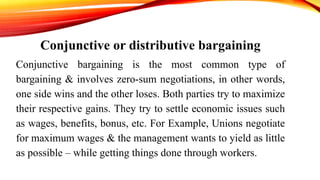



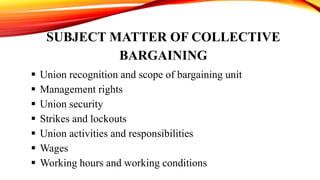





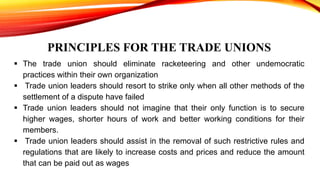





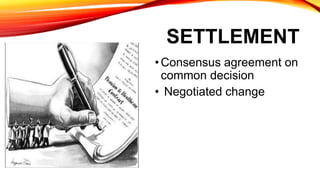
















Collective bargaining is a process of negotiation between employers and employee representatives, usually trade unions, aimed at reaching agreements to regulate working conditions. It allows both sides to agree on employment terms and resolve workplace issues, promoting industrial peace. Key aspects of collective bargaining include determining wages, benefits and other employment terms through representative negotiation rather than individual contracts. The main types of bargaining are distributive, focusing on allocating gains, and integrative, pursuing mutually beneficial solutions. Success depends on factors like the economic environment, attitudes of employers and employees, and government policy toward unions.


