Collaborative Learning SpacesMethods, Ethics, Tools, Design
Abram AndersUniversity of Minnesota Duluthadanders@d.umn.eduGPACW Fall 2010
Emergent SpacesDemand SideProfessional Environments: collaborative, networked, just-in-timeInformation Workers: new media skill sets and flexible adaptation to new tools and contexts for cooperative action
Emergent SpacesSupply SideInstitutional Values: online learning, non-traditional network communitiesPedagogical Innovation: technology and cooperative learning, Open Education, Connectivism, COINs, etc.

Emergent SpacesPersonal Motivation; Situated InnovationResearch Interests: new media, open source, rhetoric, and professional communication technologiesService Learning: University online learning initiative, College-level team and group-work initiative
Emergent SpacesSocial media, crowd-sourcing, collective intelligenceComposing common spaces and shared interfacesEthical and practical challenge for the immediate future
methodsBest practices for collaboration and technology-use
Criticisms of Group-workStudent FeedbackWaste of time, too unfocusedToo complicated and/or inefficient; Mismatched goals and/or abilitiesSocial loafers vs Dutiful achievers
Group-work goes wrongPooled work; group structure is non-essentialHomogeneous membership: dynamics for invention are weakHeterogeneous motives and/or weak management: goals and processes are unclear or underdeveloped
Best Practices for GroupsShared Purpose, Goals, InterestsInterdependence and Mutual AccountabilityMake work relevant, competitive, evenly distributedStructured Processes: Group Contracts, Peer Evaluations, Group and Individual Assessments
Achieving PurposeDaniel Pink, “Drive”: simple incentives are counter-productiveAutonomy, Mastery, PurposeMake profit motive and purpose motive congruent
Purposeful Group LearningTragedy of commons = higher order purpose; making the best of a bad situationNeed to get “self-interest” out of the way; better higher order purposeMust make project/process purpose congruent with grade incentives
Similarly, TechnologyAvoid redundant, irrelevant, over-complicated, needless proprietaryUsability (and accessibility): Effective, Efficient, Engaging, Error Tolerant, Easy-to-LearnSpecific tools are too often solutions in search of a problem
EthicsValues for Technological Commons
Values for LearnersStudents who are engaged, interested, challenged, motivatedAutonomy: choice, immediate action, 3rd person playMastery: activity-specific goals for skill development (intrinsic)Purpose: long-term objectives; continuing value; community investment
Collaborative CommonsFacilitate connections and create common ground between:Pedagogical Goals and OpportunitiesTechnological Tools and ApplicationsCollaborative ProcessesEngage the unique challenges of situated learning communities
Composing Ethical CommonsCommon PurposeDevelop sustainable processes of innovationDevelop sustainable communities of learners
Composing Ethical CommonsImmediate ValueOvercome pedagogical challengesAchieve emergent goals/objectives
ToolsExamples and Applications
Building a Better Bullet PointResume Draft-workOpen Source processTypewith.meUnique challenges: self-representation; rhetorical sensitivity; writing process
Crowd-sourced EditingEditing business correspondenceAssembly line: identify, rewriteMicrosoft WordUnique challenges: first author inertia; “pretty-good”-isms; achieve action bias in revision
DesignPutting it TOGETHER; Iterative development
Collaborative Service LearningInspirationImplementationIterative Development
Inspiration	Overcome traditional zero-sum “coverage v group” work problemStudents teach each-otherBuild connections between successive generations of studentsPractical knowledge developed by students for students
ImplementBest Practices autonomous results: products and assessment interdependently structured processes for invention, distribution, and performanceUtopian impulse must be matched by pragmatic application
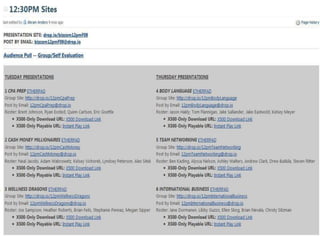
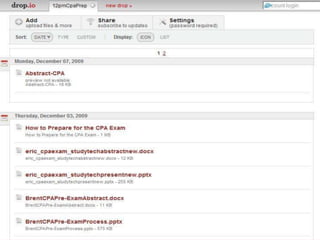
Iterative Development1 ed. Basic Assignment; Teamwork Instruction; Screencast Capture2 ed. Group Selection; Work Roles3 ed. Commissioned Assignments; external (local) clientsFuture: Web-based deliverable for public portal site, videos with abstracts and supporting references
Creating Collaborative EnvironmentsPurposeful, Interdependent, Group ProcessesHighly Structured Interfaces and Infrastructures for Learner PracticesScaffolding and Iterative Development for Learners and Curriculum
Summary Outline1) formulate an Ethics: identify stakeholder goals, values, and formulate outcomes;
Summary Outline2) choose appropriate Tools: consider institutional/contextual affordances, consider issues of usability and integration;
Summary Outline3) outline a Design: strategically integrate writing, technology, and collaboration knowledge and skill sets, employ scaffolding, regular reinforcement, and achievable expectations;
Summary Outline4) review, revise, Redesign: always try something new, expect to improve, iteration is the key. 

Collaborative Learning Spaces

  • 1.
  • 2.
    Abram AndersUniversity ofMinnesota Duluthadanders@d.umn.eduGPACW Fall 2010
  • 3.
    Emergent SpacesDemand SideProfessionalEnvironments: collaborative, networked, just-in-timeInformation Workers: new media skill sets and flexible adaptation to new tools and contexts for cooperative action
  • 4.
    Emergent SpacesSupply SideInstitutionalValues: online learning, non-traditional network communitiesPedagogical Innovation: technology and cooperative learning, Open Education, Connectivism, COINs, etc.
  • 5.
    Emergent SpacesPersonal Motivation;Situated InnovationResearch Interests: new media, open source, rhetoric, and professional communication technologiesService Learning: University online learning initiative, College-level team and group-work initiative
  • 6.
    Emergent SpacesSocial media,crowd-sourcing, collective intelligenceComposing common spaces and shared interfacesEthical and practical challenge for the immediate future
  • 7.
    methodsBest practices forcollaboration and technology-use
  • 8.
    Criticisms of Group-workStudentFeedbackWaste of time, too unfocusedToo complicated and/or inefficient; Mismatched goals and/or abilitiesSocial loafers vs Dutiful achievers
  • 9.
    Group-work goes wrongPooledwork; group structure is non-essentialHomogeneous membership: dynamics for invention are weakHeterogeneous motives and/or weak management: goals and processes are unclear or underdeveloped
  • 10.
    Best Practices forGroupsShared Purpose, Goals, InterestsInterdependence and Mutual AccountabilityMake work relevant, competitive, evenly distributedStructured Processes: Group Contracts, Peer Evaluations, Group and Individual Assessments
  • 11.
    Achieving PurposeDaniel Pink,“Drive”: simple incentives are counter-productiveAutonomy, Mastery, PurposeMake profit motive and purpose motive congruent
  • 12.
    Purposeful Group LearningTragedyof commons = higher order purpose; making the best of a bad situationNeed to get “self-interest” out of the way; better higher order purposeMust make project/process purpose congruent with grade incentives
  • 13.
    Similarly, TechnologyAvoid redundant,irrelevant, over-complicated, needless proprietaryUsability (and accessibility): Effective, Efficient, Engaging, Error Tolerant, Easy-to-LearnSpecific tools are too often solutions in search of a problem
  • 14.
  • 15.
    Values for LearnersStudentswho are engaged, interested, challenged, motivatedAutonomy: choice, immediate action, 3rd person playMastery: activity-specific goals for skill development (intrinsic)Purpose: long-term objectives; continuing value; community investment
  • 16.
    Collaborative CommonsFacilitate connectionsand create common ground between:Pedagogical Goals and OpportunitiesTechnological Tools and ApplicationsCollaborative ProcessesEngage the unique challenges of situated learning communities
  • 17.
    Composing Ethical CommonsCommonPurposeDevelop sustainable processes of innovationDevelop sustainable communities of learners
  • 18.
    Composing Ethical CommonsImmediateValueOvercome pedagogical challengesAchieve emergent goals/objectives
  • 19.
  • 20.
    Building a BetterBullet PointResume Draft-workOpen Source processTypewith.meUnique challenges: self-representation; rhetorical sensitivity; writing process
  • 23.
    Crowd-sourced EditingEditing businesscorrespondenceAssembly line: identify, rewriteMicrosoft WordUnique challenges: first author inertia; “pretty-good”-isms; achieve action bias in revision
  • 24.
    DesignPutting it TOGETHER;Iterative development
  • 25.
  • 26.
    Inspiration Overcome traditional zero-sum“coverage v group” work problemStudents teach each-otherBuild connections between successive generations of studentsPractical knowledge developed by students for students
  • 29.
    ImplementBest Practices autonomousresults: products and assessment interdependently structured processes for invention, distribution, and performanceUtopian impulse must be matched by pragmatic application
  • 36.
    Iterative Development1 ed.Basic Assignment; Teamwork Instruction; Screencast Capture2 ed. Group Selection; Work Roles3 ed. Commissioned Assignments; external (local) clientsFuture: Web-based deliverable for public portal site, videos with abstracts and supporting references
  • 37.
    Creating Collaborative EnvironmentsPurposeful,Interdependent, Group ProcessesHighly Structured Interfaces and Infrastructures for Learner PracticesScaffolding and Iterative Development for Learners and Curriculum
  • 38.
    Summary Outline1) formulatean Ethics: identify stakeholder goals, values, and formulate outcomes;
  • 39.
    Summary Outline2) chooseappropriate Tools: consider institutional/contextual affordances, consider issues of usability and integration;
  • 40.
    Summary Outline3) outlinea Design: strategically integrate writing, technology, and collaboration knowledge and skill sets, employ scaffolding, regular reinforcement, and achievable expectations;
  • 41.
    Summary Outline4) review,revise, Redesign: always try something new, expect to improve, iteration is the key. 

Editor's Notes

  • #6 More specifically, I am interested in the role of distributed learning and open source production processes in contemporary pedagogical and professional communication contexts. Whether through crowd-sourcing, open source organizational strategies, or real-time data mining, emerging information economies and technologies increasingly produce value by leveraging large scale aggregations of relatively disparate and fragmented individual actors and actions. My research argues that these large scale social and information processes are salient and instructive for the micro-physics of team work, localized projects, and even the composition classroom. Whether at the level of the individual or a community of learners, knowledge is produced through reshaping of our common spaces and re-articulating of our common interfaces for composing ourselves, each other, and the world.
  • #7 My research argues that these large scale social and information processes are salient and instructive for the micro-physics of team work, localized projects, and even the composition classroom. Whether at the level of the individual or a community of learners, knowledge is produced through reshaping of our common spaces and re-articulating of our common interfaces for composing ourselves, each other, and the world.