Original article
Mortality of emergency abdominal surgery in high-, middle-
and low-income countries
GlobalSurg Collaborative
@globalsurg|www.globalsurg.org
Correspondence to: Mr A. Bhangu, Academic Department of Surgery, Room 29, 4th Floor, Old Queen Elizabeth Hospital, University of Birmingham,
Birmingham B15 2TH, UK (e-mail: aneelbhangu@doctors.org.uk)
Background: Surgical mortality data are collected routinely in high-income countries, yet virtually no
low- or middle-income countries have outcome surveillance in place. The aim was prospectively to collect
worldwide mortality data following emergency abdominal surgery, comparing findings across countries
with a low, middle or high Human Development Index (HDI).
Methods: This was a prospective, multicentre, cohort study. Self-selected hospitals performing emer-
gency surgery submitted prespecified data for consecutive patients from at least one 2-week interval
during July to December 2014. Postoperative mortality was analysed by hierarchical multivariable logistic
regression.
Results: Data were obtained for 10 745 patients from 357 centres in 58 countries; 6538 were from high-,
2889 from middle- and 1318 from low-HDI settings. The overall mortality rate was 1⋅6 per cent at 24 h
(high 1⋅1 per cent, middle 1⋅9 per cent, low 3⋅4 per cent; P < 0⋅001), increasing to 5⋅4 per cent by 30
days (high 4⋅5 per cent, middle 6⋅0 per cent, low 8⋅6 per cent; P < 0⋅001). Of the 578 patients who died,
404 (69⋅9 per cent) did so between 24 h and 30 days following surgery (high 74⋅2 per cent, middle 68⋅8
per cent, low 60⋅5 per cent). After adjustment, 30-day mortality remained higher in middle-income (odds
ratio (OR) 2⋅78, 95 per cent c.i. 1⋅84 to 4⋅20) and low-income (OR 2⋅97, 1⋅84 to 4⋅81) countries. Surgical
safety checklist use was less frequent in low- and middle-income countries, but when used was associated
with reduced mortality at 30 days.
Conclusion: Mortality is three times higher in low- compared with high-HDI countries even when
adjusted for prognostic factors. Patient safety factors may have an important role. Registration number:
NCT02179112 (http://www.clinicaltrials.gov).
Paper accepted 10 February 2016
Published online in Wiley Online Library (www.bjs.co.uk). DOI: 10.1002/bjs.10151
Introduction
Global health priorities are typically assessed by measuring
the burden of various diseases, including human immuno-
deficiency virus (HIV), tuberculosis, malaria and trauma.
Surgery, however, contributes to the treatment of a very
wide range of conditions and its significance may have
been obscured by a disease-based approach to international
health1. This is changing and the importance of surgery
to human health and welfare has been highlighted by
several recent studies2–4. For instance, 17 million of the
51 million people who died across the world in 2012
suffered from diseases needing surgical care1,2. Access to
surgical care varies widely3,4. It has been estimated that
less than one-third of the world’s population has access to
safe, timely and affordable surgery, and only 6 per cent of
the 300 million surgical procedures performed each year
take place in a low- or middle-income country (LMIC)
despite one-third of the world’s population living there2.
There are firm moves, supported by the World Health
Organization (WHO), to improve access to surgical care3,5.
However, safe surgery requires considerable infrastructure,
and improving coverage should go hand in hand with
quality assurance3. Surgical mortality data are collected
routinely in high-income health systems, but 70 per cent
of countries lack routine surgical surveillance systems4,6.
This study is the first step towards remedying the lack of
outcome information by creating an international network
of surgeons across all continents to measure mortality
rates following emergency abdominal surgery. This is a
common operation that is carried out with life-saving
© 2016 BJS Society Ltd BJS
Published by John Wiley & Sons Ltd
GlobalSurg Cohort Study
1–5
6–10
a Collaborating centres
b Proportion with trauma
11–20
> 20
0–2%
> 2–5%
> 5–10%
> 10–20%
> 20%
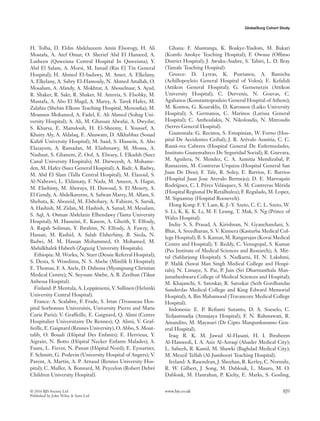
Fig. 1 a Collaborating centres and b proportion of enrolled patients with trauma diagnosis, by contributing country
intent, but which nevertheless carries substantial mortal-
ity. This makes it an important topic in its own right and
a potential proxy for surgical care generally. The aim of
this study was to collect postoperative mortality data and
analyse variation in factors that might affect mortality. This
first report describes the feasibility of collecting bedside
patient-level data across low-, middle- and high-income
settings using a new collaborative network. The study also
compared the performance and practicality of using 24-h
or 30-day postoperative mortality as the primary outcome
measure in a wide variety of clinical settings. Variation in
mortality was compared with markers of prognosis (includ-
ing operation type) and service, marked by the availability
and use of safety checklists.
Methods
An international, multicentre, prospective, observational
cohort study was conducted according to a prespecified,
registered and published protocol (ClinicalTrials.gov
identifier NCT02179112)7. A UK National Health Ser-
vice Research Ethics review considered this study exempt
from formal research registration (South East Scot-
land Research Ethics Service, reference NR/1404AB12);
individual centres obtained their own audit, ethical or
institutional approval. Results are reported according to
Strengthening the Reporting of Observational Studies in
Epidemiology (STROBE) guidelines8.
Study interval
Investigators from self-selected surgical units identified
consecutive patients within 2-week time intervals between
1 July 2014 and 31 December 2014. An open invitation
to participate was disseminated through social media, per-
sonal contacts, e-mail to authors of published emergency
surgery studies, and national/international surgical orga-
nizations. Short intensive data collection allowed surgical
teams within these units to contribute meaningful numbers
of patients without requiring additional resources. The
© 2016 BJS Society Ltd www.bjs.co.uk BJS
Published by John Wiley & Sons Ltd
GlobalSurg Collaborative
Table 1 Demographic and preoperative data by Human Development Index tertile
HDI tertile
High (n = 6538) Middle (n = 2889) Low (n = 1318) P*
Mean(s.d.) age (completed years) 44⋅5(23⋅7) 33⋅4(19⋅6) 30⋅7(18⋅8) < 0⋅001†
Sex < 0⋅001
M 3162 (48⋅4) 1600 (55⋅4) 808 (61⋅3)
F 3373 (51⋅6) 1289 (44⋅6) 510 (38⋅7)
Missing 3 (0⋅0) 0 (0) 0 (0)
ASA fitness grade < 0⋅001
I 2701 (41⋅3) 1648 (57⋅0) 613 (46⋅5)
II 2004 (30⋅7) 728 (25⋅2) 352 (26⋅7)
III 1134 (17⋅3) 283 (9⋅8) 162 (12⋅3)
IV 411 (6⋅3) 98 (3⋅4) 43 (3⋅3)
V 102 (1⋅6) 65 (2⋅2) 69 (5⋅2)
Unknown 183 (2⋅8) 66 (2⋅3) 76 (5⋅8)
Missing 3 (0⋅0) 1 (0⋅0) 3 (0⋅2)
Diabetes 0⋅622
No 6044 (92⋅4) 2686 (93⋅0) 1226 (93⋅0)
Yes 491 (7⋅5) 203 (7⋅0) 92 (7⋅0)
Missing 3 (0⋅0) 0 (0) 0 (0)
Current smoker < 0⋅001
No 4633 (70⋅9) 2247 (77⋅8) 1100 (83⋅5)
Yes 1901 (29⋅1) 640 (22⋅2) 217 (16⋅5)
Missing 4 (0⋅1) 2 (0⋅1) 1 (0⋅1)
Diagnosis < 0⋅001
Non-trauma/non-cancer 5522 (84⋅5) 2416 (83⋅6) 1049 (79⋅6)
Neoplasm 407 (6⋅2) 80 (2⋅8) 57 (4⋅3)
Trauma 143 (2⋅2) 290 (10⋅0) 159 (12⋅1)
No disease identified 181 (2⋅8) 48 (1⋅7) 14 (1⋅1)
Complication of previous procedure 285 (4⋅4) 55 (1⋅9) 39 (3⋅0)
CT performed < 0⋅001
No 3883 (59⋅4) 2354 (81⋅5) 1173 (89⋅0)
Yes 2652 (40⋅6) 535 (18⋅5) 145 (11⋅0)
Missing 3 (0⋅0) 0 (0) 0 (0)
Values in parentheses are percentages by column unless indicated otherwise. HDI, Human Development Index; ASA, American Society of
Anesthesiologists. *Pearson χ2 test, except †Kruskal–Wallis test.
study covered an extended time interval to accommodate
the availability of local investigators and variable holidays,
while helping to smooth seasonal variation that can affect
surgical pathology. An institution could collect over as
many 2-week intervals as desired within the study time
frame.
Patients and procedures
Consecutive patients undergoing emergency intraperi-
toneal surgery during the chosen 2-week interval were
included. There were no age restrictions. Emergency
surgery was defined as any unplanned, non-elective
operation, including reoperation after a previous proce-
dure. Intraperitoneal surgery was defined as any open,
laparoscopic or converted laparoscopic procedure that
entered the peritoneal cavity. Elective (planned) or
semi-elective procedures (where a patient initially admit-
ted as an emergency was then discharged from hospital
and readmitted at later time for elective surgery) were
excluded. Additionally, patients undergoing caesarean
section were excluded as they represent a separate oper-
ative group with different management needs that have
been studied elsewhere9.
Data
Included patients were followed to day 30 after surgery or
for the duration of their inpatient stay where follow-up
was not feasible. Records were uploaded by local inves-
tigators to a secure online website, provided using the
Research Electronic Data Capture (REDCap) system10.
The lead investigator at each site checked the accuracy of
all cases before data submission. The submitted data were
then checked centrally and, where missing information was
identified, the local lead investigator was contacted and
asked to update and complete the record. Once vetted, the
record was accepted into the data set for analysis.
© 2016 BJS Society Ltd www.bjs.co.uk BJS
Published by John Wiley & Sons Ltd
GlobalSurg Cohort Study
Table 2 Operative data by Human Development Index tertile
HDI tertile
High (n = 6538) Middle (n = 2889) Low (n = 1318) P*
Procedure start time < 0⋅001
08.00–18.00 hours (daytime) 3966 (60⋅7) 1230 (42⋅6) 586 (44⋅5)
18.00–22.00 hours (evening) 1401 (21⋅4) 755 (26⋅1) 367 (27⋅8)
22.00 to 08.00 hours (night-time) 1167 (17⋅8) 901 (31⋅2) 365 (27⋅7)
Missing 4 (0⋅1) 3 (0⋅1) 0 (0)
Admission to procedure time (h) < 0⋅001
< 6 1382 (21⋅1) 1324 (45⋅8) 607 (46⋅1)
6–11 1192 (18⋅2) 723 (25⋅0) 287 (21⋅8)
12–23 1510 (23⋅1) 462 (16⋅0) 189 (14⋅3)
24–47 1031 (15⋅8) 171 (5⋅9) 94 (7⋅1)
≥ 48 1415 (21⋅6) 204 (7⋅1) 139 (10⋅5)
Missing 8 (0⋅1) 5 (0⋅2) 2 (0⋅2)
Surgical safety checklist used < 0⋅001
No, not available in this hospital 422 (6⋅5) 1029 (35⋅6) 474 (36⋅0)
No, but available in this hospital 146 (2⋅2) 248 (8⋅6) 421 (31⋅9)
Yes 5967 (91⋅3) 1608 (55⋅7) 423 (32⋅1)
Missing 3 (0⋅0) 4 (0⋅1) 0 (0)
Senior surgeon > 5 years of training < 0⋅001
No 182 (2⋅8) 1208 (41⋅8) 384 (29⋅1)
Yes 6353 (97⋅2) 1676 (58⋅0) 934 (70⋅9)
Missing 3 (0⋅0) 5 (0⋅2) 0 (0)
Senior anaesthetist > 5 years of training < 0⋅001
No 262 (4⋅0) 1395 (48⋅3) 524 (39⋅8)
Yes 6273 (95⋅9) 1490 (51⋅6) 794 (60⋅2)
Missing 3 (0⋅0) 4 (0⋅1) 0 (0)
Anaesthetic type < 0⋅001
General 6438 (98⋅5) 2213 (76⋅6) 1219 (92⋅5)
Spinal or sedation 97 (1⋅5) 673 (23⋅3) 98 (7⋅4)
Missing 3 (0⋅0) 3 (0⋅1) 1 (0⋅1)
Laparoscopic approach < 0⋅001
No 3369 (51⋅5) 2622 (90⋅8) 1238 (93⋅9)
Yes 3169 (48⋅5) 267 (9⋅2) 80 (6⋅1)
Bowel resection < 0⋅001
No 5454 (83⋅4) 2608 (90⋅3) 1112 (84⋅4)
Yes 1077 (16⋅5) 276 (9⋅6) 205 (15⋅6)
Missing 7 (0⋅1) 5 (0⋅2) 1 (0⋅1)
Stoma formed < 0⋅001
No 5860 (89⋅6) 2732 (94⋅6) 1195 (90⋅7)
Yes 674 (10⋅3) 152 (5⋅3) 123 (9⋅3)
Missing 4 (0⋅1) 5 (0⋅2) 0 (0)
Perforated viscus < 0⋅001
No 5475 (83⋅7) 2406 (83⋅3) 913 (69⋅3)
Yes 1059 (16⋅2) 476 (16⋅5) 377 (28⋅6)
Missing 4 (0⋅1) 7 (0⋅2) 28 (2⋅1)
Supplementary oxygen < 0⋅001
No 239 (3⋅7) 515 (17⋅8) 101 (7⋅7)
Yes 6296 (96⋅3) 2370 (82⋅0) 1187 (90⋅1)
Missing 3 (0⋅0) 4 (0⋅1) 30 (2⋅3)
Pulse oximetry < 0⋅001
No 39 (0⋅6) 129 (4⋅5) 15 (1⋅1)
Yes 6496 (99⋅4) 2756 (95⋅4) 1303 (98⋅9)
Missing 3 (0⋅0) 4 (0⋅1) 0 (0)
Prophylactic antibiotics 0⋅710
No 824 (12⋅6) 370 (12⋅8) 177 (13⋅4)
Yes 5709 (87⋅3) 2514 (87⋅0) 1140 (86⋅5)
Missing 5 (0⋅1) 5 (0⋅2) 1 (0⋅1)
Values in parentheses are percentages by column. HDI, Human Development Index; ASA, American Society of Anesthesiologists. *Pearson χ2
test.
© 2016 BJS Society Ltd www.bjs.co.uk BJS
Published by John Wiley & Sons Ltd
GlobalSurg Collaborative
High
Middle
Low
0 25 50 75 100
Proportion of enrolled patients (~)
CountrybyHDIrank
Appendicitis
No disease identified
Other abdominal
Neoplasm
Gallstones
Complication of previous procedure
Trauma
Fig. 2 Summary diagnostic groups according to Human Development Index (HDI) decile
Outcome measures
The primary outcome measure was the 24-h postopera-
tive mortality rate. This was the number of deaths during
the procedure, or within 24 h of the operation’s conclusion,
divided by the number of eligible operations performed11.
The main secondary outcome measure was the 30-day
postoperative mortality rate. Where 30-day follow-up was
not available, survival status (alive or dead) at the point
of discharge from hospital was recorded. Other secondary
outcome measures included postoperative complication
and reintervention rates. For the purposes of clarity, these
will be described in subsequent reports where sufficient
detail can be included.
Independent (exploratory) variables
The following patient-level factors were collected in order
to adjust outcome. Patient factors were: age, sex, diabetes,
smoking status and American Society of Anesthesiologists
(ASA) fitness grade. Disease factors comprised seven major
diagnostic groups, representing the spectrum of disease
encountered; in addition, the presence of a perforated
abdominal viscus found at operation was included. Hospital
safety was also explored in terms of the availability and use
of a surgical safety checklist for each patient.
Power considerations
The sample size was limited by practical factors, and esti-
mation of power by uncertainty over critical quantities such
as clustering and variation in mortality by diagnosis. An
indicative power calculation is provided in the protocol.
Statistical analysis
Variation across different international health settings was
assessed by stratifying participating centres by country
into three tertiles according to Human Development
Index (HDI) rank. This is a composite statistic of life
expectancy, education and income indices published by
the United Nations (http://hdr.undp.org/en/statistics).
This aggregate measure of development keeps individual
countries anonymous. Differences between HDI ter-
tiles were tested with the Pearson χ2 test and Kruskal–
Wallis test for categorical and continuous variables
respectively.
Hierarchical multivariable logistic regression models
(random intercept) were constructed with three levels:
patients nested within hospitals, nested within coun-
tries. HDI tertile and other explanatory variables were
included as fixed effects. Other than HDI tertile, all
fixed effects were considered at the level of the patient.
Coefficients are expressed as odds ratios with confidence
intervals and P values derived from percentiles of 10 000
bootstrap replications. Model residuals were checked
at all three levels and first-order interactions explored.
Goodness of model fit is reported with the Hosmer and
Lemeshow test, and predictive ability described by area
under the receiver operating characteristic (ROC) curve
(c-statistic).
© 2016 BJS Society Ltd www.bjs.co.uk BJS
Published by John Wiley & Sons Ltd
GlobalSurg Cohort Study
Appendicitis n = 4546 (42·3%)
24-h mortality n = 2 (0·0%)
30-day mortality n = 8 (0·2%)
Appendicitis n = 2499 (38·2%)
24-h mortality n = 1 (0·0%)
30-day mortality n = 3 (0·1%)
Appendicitis n = 1540 (53·3%)
24-h mortality n = 1 (0·1%)
30-day mortality n = 2 (0·1%)
All other n = 6199 (57·7%)
24-h mortality n = 172 (2·8%)
30-day mortality n = 570 (9·2%)
All other n = 4039 (61·8%)
24-h mortality n = 74 (1·8%)
30-day mortality n = 288 (7·1%)
All other n = 1349 (46·7%)
24-h mortality n = 53 (3·9%)
30-day mortality n = 171 (12·7%)
Midline laparotomy n = 3104 (28·9%)
24-h mortality n = 149 (4·8%)
30-day mortality n = 462 (14·9%)
Midline laparotomy n = 1770 (27·1%)
24-h mortality n = 63 (3·6%)
30-day mortality n = 230 (13·0%)
Midline laparotomy n = 795 (27·5%)
24-h mortality n = 47 (5·9%)
30-day mortality n = 139 (17·5%)
Appendicitis n = 507 (38·5%)
24-h mortality n = 0 (0%)
30-day mortality n = 3 (0·6%)
P = 0·368
P = 0·002
P < 0·001
P < 0·001
P < 0·001
P < 0·001
All other n = 811 (61·5%)
24-h mortality n = 45 (5·5%)
30-day mortality n = 111 (13·7%)
Midline laparotomy n = 539 (40·9%)
24-h mortality n = 39 (7·2%)
30-day mortality n = 93 (17·3%)
Middle HDI n = 2889High HDI n = 6538 Low HDI n = 1318
Records accepted n = 10 745
24-h mortality n = 174 of 10 745 (1·6%)
30-day mortality n = 578 of 10 745 (5·4%)
Fig. 3 Study process flow chart and key outcomes by Human Development Index (HDI) tertile. Pearson χ2 test was used for statistical
analysis
Table 3 Outcomes by Human Development Index tertile and American Society of Anesthesiologists fitness grade
24-h mortality 30-day mortality
ASA fitness grade High Middle Low High Middle Low
I 1 of 2701 (0⋅0) 8 of 1648 (0⋅5) 3 of 613 (0⋅5) 5 of 2701 (0⋅2) 25 of 1648 (1⋅5) 13 of 613 (2⋅1)
II 4 of 2004 (0⋅2) 8 of 728 (1⋅1) 11 of 352 (3⋅1) 23 of 2004 (1⋅1) 31 of 728 (4⋅3) 27 of 352 (7⋅7)
III 14 of 1134 (1⋅2) 15 of 283 (5⋅3) 9 of 162 (5⋅6) 82 of 1134 (7⋅2) 50 of 283 (17⋅7) 31 of 162 (19⋅1)
IV 18 of 411 (4⋅4) 12 of 98 (12) 6 of 43 (14) 110 of 411 (26⋅8) 43 of 98 (43⋅9) 15 of 43 (35)
V 31 of 102 (30⋅4) 9 of 65 (14) 11 of 69 (16) 57 of 102 (55⋅9) 18 of 65 (28) 17 of 69 (25)
Unknown 7 of 183 (3⋅8) 2 of 66 (3) 5 of 76 (7) 14 of 183 (7⋅7) 6 of 66 (9) 11 of 76 (14)
Missing 0 of 3 (0) 0 of 1 (0) 0 of 3 (0) 0 of 3 (0) 0 of 1 (0) 0 of 3 (0)
Values in parentheses are percentages. ASA, American Society of Anesthesiologists.
Table 4 Mortality between 24 h and 30 days after surgery
All deaths
(n = 578)
Deaths within
24 h (n = 174)
Deaths after 24 h
within 30 days (n = 404) P*
HDI tertile 0⋅024
High 291 75 of 291 (25⋅8) 216 of 291 (74⋅2)
Middle 173 54 of 173 (31⋅3) 119 of 173 (68⋅8)
Low 114 45 of 114 (39⋅5) 69 of 114 (60⋅5)
Diagnosis
Appendicitis 8 2 of 8 (25) 6 of 8 (75)
No disease identified 17 3 of 17 (18) 14 of 17 (82)
Other abdominal 339 90 of 339 (26⋅5) 249 of 339 (73⋅5)
Neoplasm 78 16 of 78 (21) 62 of 78 (79)
Gallstones 10 1 of 10 (10) 9 of 10 (90)
Complication of previous procedure 44 12 of 44 (27) 32 of 44 (73)
Trauma 82 50 of 82 (61) 32 of 82 (39)
Values in parentheses are percentages by row, indicating distribution of deaths within 24 h versus after 24 h. HDI, Human Development Index. *Pearson
χ2
test.
© 2016 BJS Society Ltd www.bjs.co.uk BJS
Published by John Wiley & Sons Ltd
GlobalSurg Collaborative
Table 5 Factors associated with 30-day mortality
Univariable analysis Multilevel analysis
Alive Died Odds ratio† P Odds ratio† P
HDI tertile
High 6240 (61⋅5) 291 (50⋅3) 1⋅00 (reference) 1⋅00 (reference)
Middle 2701 (26⋅6) 173 (29⋅9) 1⋅37 (1⋅13, 1⋅66) 0⋅001 2⋅78 (1⋅84, 4⋅20) < 0⋅001
Low 1202 (11⋅9) 114 (19⋅7) 2⋅03 (1⋅62, 2⋅54) < 0⋅001 2⋅97 (1⋅84, 4⋅81) < 0⋅001
Standardized age (years)* 38⋅7(22⋅3) 58⋅5(24⋅3) 2⋅36 (2⋅16, 2⋅58) < 0⋅001 1⋅68 (1⋅48, 1⋅91) < 0⋅001
Sex
M 5229 (51⋅6) 333 (57⋅6) 1⋅00 (reference) 1⋅00 (reference)
F 4914 (48⋅4) 245 (42⋅4) 0⋅78 (0⋅66, 0⋅93) 0⋅005 1⋅14 (0⋅92, 1⋅41) 0⋅240
Diabetes
No 9467 (93⋅3) 469 (81⋅1) 1⋅00 (reference) 1⋅00 (reference)
Yes 676 (6⋅7) 109 (18⋅9) 3⋅25 (2⋅59, 4⋅05) < 0⋅001 1⋅21 (0⋅92, 1⋅58) 0⋅174
Current smoker
No 7569 (74⋅6) 395 (68⋅3) 1⋅00 (reference) 1⋅00 (reference)
Yes 2571 (25⋅4) 183 (31⋅7) 1⋅36 (1⋅14, 1⋅63) 0⋅001 0⋅86 (0⋅69, 1⋅08) 0⋅195
ASA fitness grade
I 4910 (48⋅4) 43 (7⋅4) 1⋅00 (reference) 1⋅00 (reference)
II 2997 (29⋅6) 81 (14⋅0) 3⋅09 (2⋅14, 4⋅52) < 0⋅001 1⋅64 (1⋅10, 2⋅45) 0⋅016
III 1415 (14⋅0) 163 (28⋅2) 13⋅15 (9⋅44, 18⋅72) < 0⋅001 4⋅69 (3⋅15, 6⋅99) < 0⋅001
IV 382 (3⋅8) 168 (29⋅1) 50⋅22 (35⋅70, 72⋅11) < 0⋅001 18⋅21 (11⋅95, 27⋅74) < 0⋅001
V 144 (1⋅4) 92 (15⋅9) 72⋅95 (49⋅31, 109⋅52) < 0⋅001 30⋅23 (18⋅60, 49⋅14) < 0⋅001
Unknown 292 (2⋅9) 31 (5⋅4) 12⋅12 (7⋅47, 19⋅46) < 0⋅001 6⋅95 (3⋅90, 12⋅38) < 0⋅001
Diagnosis
Appendicitis 4532 (44⋅7) 8 (1⋅4) 1⋅00 (reference) 1⋅00 (reference)
No disease identified 222 (2⋅2) 17 (2⋅9) 43⋅38 (19⋅08, 107⋅33) < 0⋅001 32⋅52 (13⋅01, 81⋅32) < 0⋅001
Other abdominal 3147 (31⋅0) 339 (58⋅7) 61⋅02 (32⋅40, 134⋅55) < 0⋅001 20⋅09 (9⋅85, 40⋅99) < 0⋅001
Neoplasm 464 (4⋅6) 78 (13⋅5) 95⋅23 (48⋅63, 215⋅20) < 0⋅001 27⋅47 (12⋅88, 58⋅58) < 0⋅001
Gallstones 937 (9⋅2) 10 (1⋅7) 6⋅05 (2⋅38, 15⋅88) < 0⋅001 3⋅37 (1⋅31, 8⋅69) 0⋅012
Complication of previous procedure 331 (3⋅3) 44 (7⋅6) 75⋅30 (37⋅15, 173⋅90) < 0⋅001 18⋅91 (8⋅58, 41⋅67) < 0⋅001
Trauma 510 (5⋅0) 82 (14⋅2) 91⋅08 (46⋅64, 205⋅48) < 0⋅001 23⋅04 (10⋅80, 49⋅12) < 0⋅001
Perforated viscus
No 8424 (83⋅3) 356 (61⋅9) 1⋅00 (reference) 1⋅00 (reference)
Yes 1687 (16⋅7) 219 (38⋅1) 3⋅07 (2⋅57, 3⋅66) < 0⋅001 1⋅82 (1⋅46, 2⋅27) < 0⋅001
Surgical safety checklist used
No, not available in this hospital 1793 (17⋅7) 128 (22⋅1) 1⋅00 (reference) 1⋅00 (reference)
No, but available in this hospital 719 (7⋅1) 95 (16⋅4) 1⋅85 (1⋅40, 2⋅44) < 0⋅001 1⋅28 (0⋅81, 2⋅03) 0⋅294
Yes 7628 (75⋅2) 355 (61⋅4) 0⋅65 (0⋅53, 0⋅81) < 0⋅001 0⋅62 (0⋅42, 0⋅92) 0⋅016
Values in parentheses are percentages by column unless indicated otherwise; *values are mean(s.d.); †values in parentheses are 95 per cent confidence
intervals. More detailed information on diagnoses is available in Table S1 (supporting information). HDI, Human Development Index; ASA, American
Society of Anesthesiologists. Confidence intervals and P values derived from percentiles of 10 000 bootstrap predictions. Total n =10 721. Akaike
information criterion 2974; c-statistic 0⋅93; Hosmer–Lemeshow goodness-of-fit test: χ2
= 13⋅3, 8 d.f., P = 0⋅102.
To help visualize the relationship of outcomes with a con-
tinuous representation of the HDI (HDI rank), the final
fixed-effect regression models were used with a restricted
cubic spline for HDI rank (3 knots distributed equally
across the range of HDI rank) to allow for potential
non-linear relationships. Predictions were made for spec-
ified co-variable levels and bootstrapped confidence inter-
vals generated.
A prespecified sensitivity analysis was performed. It was
predicted that some patients would be discharged alive but
not followed up at 30 days. For the main analysis, these
patients were coded as alive. To test the validity of this
approach, patients ‘discharged alive and not followed up’
were excluded and the 30-day mortality analysis rerun.
All analyses were undertaken using the R Foundation
Statistical Program (R 3.1.1), with packages plyr, stringr,
ggplot2, reshape2, jsonlite, RCurl, httr, Hmisc, rms, lme4
and knitr (R Project for Statistical Computing, Vienna,
Austria).
Results
A total of 10 906 patient records were submitted and 10 745
records were accepted formally for analysis following the
quality control algorithm described above. These patients
came from 357 centres across 58 countries (Fig. 1), with
6538 (60⋅8 per cent) from high-, 2889 (26⋅9 per cent)
from middle- and 1318 (12⋅3 per cent) from low-HDI
© 2016 BJS Society Ltd www.bjs.co.uk BJS
Published by John Wiley & Sons Ltd
GlobalSurg Cohort Study
Probability(%)
Probability(%)
5
4
3
2
1
0
2
4
6
8
HDI rank
15010050 0
HDI rank
15010050
a Mortality at 24 h b Mortality at 30 days
Fig. 4 Adjusted associations between Human Development Index (HDI) rank and mortality at a 24 h and b 30 days. Multivariable
logistic regression models were repeated but using a continuous variable of HDI rank. A restricted cubic spline with three knots
distributed equally across the range was applied to HDI rank. Predictions were made on the models and 95 per cent confidence
intervals determined (shaded area). Vertical lines represent the relative proportion of patients for a given HDI rank. Co-variable levels:
age, 35 years; diabetes, no; sex, male; smoker, no; American Society of Anesthesiologists fitness grade, I; diagnosis, trauma; checklist,
no, not available. a P overall = 0⋅007, P non-linear = 0⋅112; b P overall < 0⋅001, P non-linear = 0⋅032
settings. A complete record with no missing data was
achieved for 99⋅1 per cent of patients (10 644 of 10 745);
24-h outcome data were available for 99⋅9 per cent of
patients (13 missing) and 30-day mortality for 99⋅8 per cent
(24 missing).
Demographics
Differences in demographics and operative data across
HDI groups are shown in Tables 1 and 2. Appendicectomy
was the most commonly performed operation across all
HDI settings (high 38⋅2 per cent, middle 53⋅3 per cent, low
38⋅5 per cent) (Fig. 2; Table S1, supporting information).
Trauma was the indication for surgery in a higher propor-
tion of patients in middle- and low-HDI countries (10⋅0
and 12⋅1 per cent respectively) compared with high-HDI
countries (2⋅2 per cent). Use of a midline laparotomy for
intraperitoneal access increased across the development
index (high 27⋅1 per cent, middle 27⋅5 per cent, low 40⋅9
per cent). A surgical safety checklist was used in 74⋅4 per
cent of procedures, varying significantly across HDI groups
(91⋅3 per cent high, 55⋅7 per cent middle, 32⋅1 per cent low;
P < 0⋅001).
Crude mortality across Human Development
Index groups
The crude 24-h mortality rate was 1⋅6 per cent and the
30-day mortality rate was 5⋅4 per cent. The 24-h mortality
rate increased threefold across HDI groups (high 1⋅1 per
cent, middle 1⋅9 per cent, low 3⋅4 per cent; P < 0⋅001).
Likewise, there was an inverse relationship between 30-day
mortality and HDI (high 4⋅5 per cent, middle 6⋅0 per cent,
low 8⋅6 per cent; P < 0⋅001).
Mortality varied across HDI group for some opera-
tions, but not others. Following appendicectomy, overall
24-h mortality (0⋅02 per cent) did not vary between
groups, but there was a small absolute increase in 30-day
mortality in low-income countries (high 0⋅1 per cent,
middle 0⋅1 per cent, low 0⋅6 per cent). However, mor-
tality following midline laparotomy was higher (4⋅8 per
cent at 24 h and 14⋅9 per cent at 30 days) and varied
across HDI groups (30-day mortality: high 13⋅0 per
cent, middle 17⋅5 per cent, low 17⋅3 per cent; P < 0⋅001)
(Fig. 3).
Trauma was the surgical indication with the highest 24-h
mortality rate at 8⋅4 per cent (high 8⋅4 per cent, middle 6⋅6
per cent, low 11⋅9 per cent; P = 0⋅144), rising to 13⋅9 per
cent at 30 days (high 13⋅3 per cent, middle 11⋅7 per cent,
low 18⋅2 per cent; P = 0⋅157).
Mortality increased from high to low HDI at ASA fitness
grades I–IV, but for patients with ASA grade V mortality
reduced by half in the lower-income groups (30-day mor-
tality: high 55⋅9 per cent, middle 28 per cent, low 25 per
cent; P < 0⋅001) (Table 3).
Of the 578 patients who died, 404 (69⋅9 per cent) did so
between 24 h and 30 days following surgery (high 74⋅2 per
cent, middle 68⋅8 per cent, low 60⋅5 per cent). Most of the
© 2016 BJS Society Ltd www.bjs.co.uk BJS
Published by John Wiley & Sons Ltd
GlobalSurg Collaborative
deaths in this interval related to non-traumatic indications
for index surgery (92⋅1 per cent non-trauma, 7⋅9 per cent
trauma) (Table 4).
Mortality adjusted for case mix
Models of mortality accounted for the clustering of patients
within hospitals and patients/hospitals within countries.
The effects of prognostic factors on 24-h death rates are
shown in Table S2 (supporting information), and on 30-day
mortality in Table 5. After adjusting for case mix (includ-
ing age, sex, history of diabetes, smoking history, ASA
grade and diagnostic group, presence of a perforated viscus,
checklist use), independent correlations between increased
mortality in LMICs at 24 h and 30 days remained. Across
the entire data set, use of a surgical safety checklist was
associated with lower hospital mortality rates at 30 days.
Having a checklist available, but not using it, was associated
with increased mortality at 24 h but not at 30 days.
Mortality analyses were repeated using non-linear
models (Fig. 4). These showed that 30-day mortality was a
better discriminator of HDI than 24-h mortality.
Sensitivity analyses
Some 17⋅7 per cent of patients were discharged alive and
assumed to be still alive at 30 days. Excluding these patients
from analysis of main outcomes did not affect the size or
direction of effects across HDI groups (Table S3, supporting
information).
Discussion
This study measured mortality following emergency
abdominal surgery systematically at a worldwide level,
thereby enabling comparisons to be made across low-,
middle- and high-HDI countries. It shows that a collab-
orative bedside network can collect mortality statistics
following surgery on a large scale, even in low-HDI
countries, and that follow-up to discharge or 30 days is
achievable in the majority of survivors. The mortality
rate after emergency abdominal surgery is two to three
times higher in low- compared with high-HDI countries.
More than half of the patients who died within 30 days
did so after 24 h, strongly supporting 30-day perioperative
mortality rate as an international benchmark. The present
study supports inclusion of this standard in the 2014 WHO
Global Reference List of 100 Core Health Indicators5.
It also identifies appendicectomy as the most common
emergency general surgical operation performed around
the world and in all development tertiles.
The trend towards higher mortality (24 h and 30 days) in
low-income countries remained after adjusting for observ-
able prognostic factors. The association between increasing
mortality and lower HDI may be explained by unobserved
differences in prognosis in different HDI countries, dif-
ferences in treatment, or both. Higher mortality was seen
specifically after laparotomy for trauma, and in patients
undergoing midline laparotomy. Death rates after appen-
dicectomy were consistently low, although a slight increase
was seen at 30 days in low-income countries. Mortality
was also higher in LMIC countries for each ASA grade
up to level V, where the trend reversed, perhaps because
of reluctance to operate on those moribund patients in
resource-poor settings.
Surgical safety checklists were included in this study
as a marker of hospital safety. Use declined markedly
across high- to low-HDI settings, and their use was associ-
ated with reduced mortality at 30 days, even after adjust-
ment. Having a checklist available, but not used, was
associated with higher mortality at 24 h but not 30 days,
compared with hospitals systems without one at all. This
may be a reflection of the urgency of surgery in these
patients. However, this study cannot determine definitively
whether the checklist itself is responsible for improved out-
comes, or whether it is merely a marker of safer hospi-
tal systems12,13. The fact that risk adjustment for trauma
did not affect the mortality gradient across HDI tertiles,
and that checklist use was associated with reduced mor-
tality, does suggest that some of the difference in out-
come in LMICs was not the result of prognostic factors
alone.
An important strategy in collaborator recruitment was to
invert the traditional research model. Rather than depart-
ment heads, junior clinicians were often the contact point
for hospital involvement. Social media and technology
played an important role in the recruitment and running
of the study14. Collaborators, particularly in LMICs, were
clear in their view that those providing the clinical care
can generate high-quality data and lead international clin-
ical research. By providing clear protocols, administrative
support, secure web-based data collection, and continued
direct access to collected data, the collaborative contin-
ues to be met with enthusiasm across a diverse range of
settings. This collaboration has proved that large studies
crossing cultures and levels of socioeconomic development
are feasible without extensive resources when data collec-
tion is performed during a short but intensive interval15.
This international surgical network includes strong LMIC
partners, and has established the feasibility of a common
data-sharing platform that is accessible on computers and
mobile phones.
© 2016 BJS Society Ltd www.bjs.co.uk BJS
Published by John Wiley & Sons Ltd
GlobalSurg Cohort Study
The strengths of this study lie in the scale of the net-
work, range of countries included, duration of follow-up,
low rates of missing data, and clinical and service detail
obtained. Nevertheless, a study of this scale has some
inevitable limitations.
It was not possible to audit entered cases independently
against operative logbooks. However, case sheets were
signed off by the head at each centre and the data set was
not accepted centrally until remediable deficiencies had
been corrected. The data are likely to be more accurate
than local administrative data because they were collected
by enthusiastic clinicians who understood the purpose.
There was also more clinical detail than can be found in
routinely collected data.
It was not possible to capture all risk factors. The risk
adjustment strategy purposely used a limited number of
variables to facilitate future comparisons, both locally and
in other research studies. Access to surgery is poor in many
LMICs with the consequence that patients may present
late2. The effect of late presentation may not be cap-
tured fully in variables such as the ASA grade, which was
collected16,17. The proportion of patients undergoing dif-
ferent types of operation varied by HDI tertile, but out-
comes were compared by operation type and ASA grade, as
well as overall. The short time frames for data capture by
local collaborators are realistic, but do risk selection bias,
such as seasonal variation in local presentations. Longer
enrolment strategies will help quantify this potential bias.
Use of the HDI allowed a comparison between coun-
tries by an accepted classification, although other classifi-
cations exist, comprising different measures and cut-offs.
By grouping countries, between-country variation will not
be detected but is likely to be significant. There is likely
to be a selection bias towards better resourced institu-
tions taking part in this study, even in low-income set-
tings. An indication that this was the case is provided by
the observation that pulse oximetry was used in a very
high proportion of procedures, despite known shortages in
low-income settings18. Furthermore, a high proportion of
procedures had a senior anaesthetist present, which may
not be expected outside better funded centres. This selec-
tion bias may mean that data are not typical of some district
or rural hospitals
Members of this network could now work together to
develop quality improvement collaboratives of the sort
that have driven improved standards in high-income
countries19. A second cohort study allows increased par-
ticipation (registration available at http://globalsurg.org/)
with surgeons able to reaudit their practice. It will also
enable testing of the impact of new risk factors, including
HIV status and the influence of prehospital delays. The
aim is to establish a consortium of representative centres
to deliver large-scale trials with global reach20. A funda-
mental objective moving forward is the evidence-based
identification of cost-effective interventions to reduce
disparities in outcomes after surgery between countries.
Collaborators
Writing group: A. Bhangu (overall guarantor), J. E. F.
Fitzgerald, A. O. Ademuyiwa, G. Recinos, C. Khatri, J. C.
Glasbey, T. M. Drake, M. Mohan, R. Lilford, K. Søreide,
E. M. Harrison (statistical guarantor), on behalf of the
GlobalSurg Collaborative.
Protocol: A. Bhangu, J. E. F. Fitzgerald, S. Fergusson, C.
Khatri, H. Holmer, K. Søreide, E. M. Harrison.
Statistical analysis: E. M. Harrison, T. M. Drake, A.
Bhangu.
National leads (these individuals were involved in recruit-
ment of multiple centres (in some cases all centres) from
the countries listed below): C. Khatri (Lead Coordina-
tor for GlobalSurg); N. Gobin (Australia); A. Vega Fre-
itas (Brazil); N. Hall (Canada); S.-H. Kim (China, Hong
Kong); A. Negida (Egypt); Z. Jaffry, S. J. Chapman (Eng-
land); A. P. Arnaud (France); S. Tabiri (Ghana); G. Recinos
(Guatemala); Cutting Edge Manipal, M. Mohan (India);
R. Amandito (Indonesia); M. Shawki (Iraq); M. Hanra-
han (Ireland); F. Pata (Italy); J. Zilinskas (Lithuania); A. C.
Roslani, C. C. Goh (Malaysia); A. O. Ademuyiwa (Nigeria);
G. Irwin (Northern Ireland); S. Shu, L. Luque (Peru); H.
Shiwani, A. Altamimi, M. Ubaid Alsaggaf (Saudi Arabia); S.
Fergusson (Scotland); R. Spence, S. Rayne (South Africa);
J. Jeyakumar (Sri Lanka); Y. Cengiz (Sweden); D. A. Raptis
(Switzerland); J. C. Glasbey (Wales).
Argentina: C. Fermani, R. Balmaceda, M. Marta Modolo
(Hospital Luis Lagomaggiore).
Australia: E. Macdermid, N. Gobin, R. Chenn, C. Ou
Yong, M. Edye (Blacktown Hospital); M. Jarmin, S. K.
D’amours, D. Iyer (Liverpool Hospital); D. Youssef, N.
Phillips, J. Brown (Royal Brisbane and Women’s Hospital);
R. George, C. Koh, O. Warren (The Royal Prince Alfred
Hospital); I. Hanley (The Tweed Hospital); M. Dickfos
(Toowoomba Hospital).
Austria: C. Nawara, D. Öfner, F. Primavesi (Paracelsus
Medical University Salzburg).
Bangladesh: A. R. Mitul, K. Mahmud (Dhaka Shishu
(Children) Hospital); M. Hussain, H. Hakim, T. Kumar
(Dhaka Medical College Hospital); A. Oosterkamp (Lamb
Hospital).
Benin: P. A. Assouto, I. Lawani, Y. Imorou Souaibou
(Centre National Hospitalier et Universitaire Hubert
Koutoukou Maga).
© 2016 BJS Society Ltd www.bjs.co.uk BJS
Published by John Wiley & Sons Ltd
GlobalSurg Collaborative
Brunei: A. Kyaw Tun, C. Leung Chong (Penigiran Muda
Mahkota Penigran Muda Haji Al-Muhtadee Billah Tutong
Hospital); G. H. Devadasar, C. Leung Chong, M. Rashid
Minhas Qadir (Suri Seri Begawan Hospital); K. Phyo
Aung, L. Shi Yeo, C. Leung Chong (Raja Isteri Pengiran
Anak Saleha Hospital).
Brazil: V. D. Palomino Castillo, M. Moron Munhoz, G.
Moreira (Conjunto Hospitalar De Sorocaba); L. C. Bar-
ros De Castro Segundo, S. Anderson Khouri Ferreira,
M. Cassa Careta (Hospital Da Santa Casa De Misericór-
dia De Vitória); S. Binna Kim, A. Venâncio De Sousa,
A. Daltri Lazzarini Cury (Hospital De Caridade Sãfo De
Paula), G. Peixoto Soares Miguel, A. Vega Carreiro De
Freitas, B. Pereira Silvestre (Hospital Estadual Doutor
Jayme Dos Santos Neves); J. Guasti Pinto Vianna, C.
Oliveira Felipe, L. Alberto Valente Laufer (Hospital Estad-
ual Doutor Jayme Santos Neves); F. Altoe, L. Ayres Da
Silva, M. L. Pimenta, T. Fernandes Giuriato, P. Alves Bez-
erra Morais, J. Souza Luiz (Hospital Estadual Dr Jayme
Santos Neves); R. Araujo, J. Menegussi, M. Leal, C. Viní-
cius Barroso de Lima, L. Sarmento Tatagiba, A. Leal (Hos-
pital Infantil Nosa Senhora Da Gloria); D. Vinicius dos
Santos, G. Pereira Fraga, R. Lages Simoes (Hospital De
Clinicas, University of Campinas).
Cambodia: S. Stock (World Mate Emergency Hospital).
Cameroon: S. Nigo, J. Kabba, T. Ebogo Ngwa, J. Brown
(Mbingo Baptist Hospital).
Canada: S. King, A. Zani, G. Azzie, M. Firdouse, S.
Kushwaha, A. Agarwal (Hospital For Sick Children); K.
Bailey, B. Cameron, M. Livingston (McMaster Children’s
Hospital); A. Horobjowsky, D. L. Deckelbaum, T. Razek
(McGill University Health Center).
Chile: B. Marinkovic, E. Grasset, N. D’aguzan (Hospital
Del Salvador); E. Grasset, J. Jimenez, R. Macchiavello
(Hospital Luis Tisne).
China: Z. Zhang, W. Guo, J. Oh, F. Zheng (Beijing
Friendship Hospital).
Colombia: I. Montes, S. Sierra, M. Mendez (Clinica Ces);
M. I. Villegas, M. C. Mendoza Arango, I. Mendoza
(Clinica Las Vegas); F. A. Naranjo Aristizã¡bal, J. A.
Montoya Botero, V. M. Quintero Riaza (Hospital Pablo
Tobon Uribe); J. Restrepo, C. Morales, M. C. Mendoza
Arango (Hospital Universitario San Vicente Fundacion);
H. Cruz, A. Munera, M. C. Mendoza Arango (Ips Univer-
sitaria Clinica Leon XIII).
Croatia: R. Karlo, E. Domini, J. Mihanovic (Zadar Gen-
eral Hospital); M. Radic, K. Zamarin, N. Pezelj (General
Hospital Sibenik).
Dominican Republic: M. Hache-Marliere, S. Batista
Lemaire, R. Rivas (Cedimat – Centro de Diagnóstico,
Medicina Avanzada, Laboratorio y Telemedicina).
Egypt: A. Khyrallh, A. Hassan, G. Shimy, M. A. Baky
Fahmy (Alazher University Hospital); A. Nabawi, M.
S. Ali Muhammad Gohar, M. Elfil, M. Ghoneem, M.
Asal, M. Abdelkader, M. Gomah, H. Rashwan, M. Kar-
keet, A. Gomaa (Alexandria Main University Hospital);
A. Hasan, A. Elgebaly, O. Azzam, A. AbdelFattah, A.
Gouda, A. Elshafay, A. Gharib, A. Menshawy, M. Hanafy,
A. Al-Mallah, M. Abdulgawad, M. Baheeg, M. Alhendy,
I. A. Fattah, A. Kenibar, O. Osman, M.Gemeah, A.
Mohammed, A. Adel, A. Gharib, A. Mohammed, A. Sayed,
M Abozaid (Al-Hussein Hospital); A. Hafez El-Badri
Kotb, A. A. Ahmed Ata, M. Nasr, A. Alkammash, M.
Saeed, N. Abd El Hamid, A. M. Attia, A. Abd El Galeel, E.
Elbanby, K. Salah El-Dien, U. Hantour, O. Alahmady, B.
Mansour, A. M. Elkorashy (Bab El-Shareia Hospital); E.
M. Saeed Taha, K. T. Lasheen, S. Said Elkolaly, N. Yosri
Elsayed Abdel-Wahab, M. A. Fathi Abozyed, A. Adel, A.
M. Saeed, G. Samir El Sayed, J. H. Youssif (Banha Uni-
versity Hospital); S. Magdy Ahmed, N. Soubhy El-Shahat,
A. Hegazy Khedr (Belbes Central Hospital); A. Osama
Elsebaaye, M. Elzayat, M. Abdelraheim, I. Elzayat, M.
Warda, K. Naser El Deen, A. Essam Elnemr, O. Salah, M.
Abbas, M. Rashad, I. Elzayyat, D. Hemeda, G. Tawfik, M.
Salama, H. Khaled, M. Seisa (El Dawly Hospital, Man-
soura); K. Elshaer, A. Hussein, M. Elkhadrawi (El Mahalla
General Hospital); A. M. Afifi, O. Saadeldeen Ebrahim,
M. M. Metwally (El Mataria Educational Hospital); R.
Elmelegy, D. M. Elbendary Elsawahly, H. Safa, E. Nofal,
M. Elbermawy, M. Abo Raya, A. Abdelmotaleb Ghazy,
H. Samih, A. Abdelgelil, S. Abdelghany, A. El Kholy, F.
Elkady, M. Salma, S. Samy, R. Fakher, A. Aboarab, A.
Samir, A. Sakr, A. Haroun, A. Abdel-Rahman Al-Aarag,
A. Elkholy, S. Elshanwany (El-Menshawy Hospital); E.
Ghanem (Elshohadaa Central Hospital); A. Tammam,
A. M. Hammad, Y. El Shoura, G. El Ashal, H. Khairy
(Kasr Alainy School of Medicine); S. Antar, S. Mehrez,
M. Abdelshafy, M. Gamal Mohamad Hamad, M. Farid
Hosh, E. Abdallah, B. Magdy, T. Alzayat, E. Gamaly, H.
Elfeki, A. Abouzahra, S. Elsheikh, F. Elgendy (Mansoura
University Hospitals); F. Abd El-Salam, O. Seifelnasr, M.
Ammar, A. Eysa, A. Sadek, A. Gamal Toeema, K. Shady, A.
Nasr, M. Abuseif, H. Zidan, S. Abd Elmageed Barakat, N.
Elsayed, Y. Abd Elrasoul, A. Elkelany, M. Sabry Ammar,
M. Mustafa, Y. Hegazy, M. Etman, S. Saad, M. Alrahawy,
A. Raslan, M. Morsi, A. Rslan, A. Sabry, H. Elwakil, H.
Shaker, H. Zidan, Y. Abd-Elrasoul, A. Elkelany (Menoufia
University Hospitals); H. El-Kashef, M. Shaalan, A. Tarek
(Minia University Hospital); A. Elwan, A. Ragab Nayel,
M. Seif, D. Emadeldin, M. Ali Ghonaim, A. Almallah, A.
Fouad, E. Adel Sayma (New Damietta University Hos-
pital); A. Elbatahgy, A. Solaiman El-Ma’doul, A. Mosad,
© 2016 BJS Society Ltd www.bjs.co.uk BJS
Published by John Wiley & Sons Ltd
GlobalSurg Cohort Study
H. Tolba, D. Eldin Abdelazeem Amin Elsorogy, H. Ali
Mostafa, A. Atef Omar, O. Sherief Abd El Hameed, A.
Lasheen (Quweisna Central Hospital In Quweisna); Y.
Abd El Salam, A. Morsi, M. Ismail (Ras El Tin General
Hospital); H. Ahmed El-badawy, M. Amer, A. Elkelany,
A. Elkelany, A. Sabry El-Hamouly, N. Ahmed Attallah, O.
Mosalum, A. Afandy, A. Mokhtar, A. Abouelnasr, S. Ayad,
R. Shaker, R. Sakr, R. Shaker, M. Amreia, S. Elsobky, M.
Mustafa, A. Abo El Magd, A. Marey, A. Tarek Hafez, M.
Zalabia (Shebin Elkom Teaching Hospital, Menoufia); M.
Moamen Mohamed, A. Fadel, E. Ali Ahmed (Sohag Uni-
versity Hospital); A. Ali, M. Ghassan Alwafai, A. Dwydar,
S. Kharsa, E. Mamdouh, H. El-Sheemy, I. Youssef, A.
Khairy Aly, A. Aldalaq, E. Alnawam, D. Alkhabbaz (Souad
Kafafi University Hospital); M. Saad, S. Hussein, A. Abo
Elazayem, A. Ramadan, M. Elashmawy, M. Mousa, A.
Nashaat, S. Ghanem, Z. Oof, A. Elwaey, I. Elkadsh (Suez
Canal University Hospitals); M. Darweesh, A. Mohame-
den, M. Hafez (Suez General Hospital); A. Badr, A. Badwy,
M. Abd El Slam (Talla Central Hospital); M. Elazoul, S.
Al-Nahrawi, L. Eldamaty, F. Nada, M. Ameen, A. Hagar,
M. Elsehimy, M. Aboraya, H. Dawoud, S. El Mesery, A.
El Gendy, A. Abdelkareem, A. Safwan Marey, M. Allam, S.
Shehata, K. Abozeid, M. Elshobary, A. Fahiem, S. Sarsik,
A. Hashish, M. Zidan, M. Hashish, A. Sanad, M. Mesalam,
S. Aql, A. Osman Abdelaziz Elhendawy (Tanta University
Hospital); M. Husseini, E. Kasem, A. Gheith, Y. Elfouly,
A. Ragab Soliman, Y. Ibrahim, N. Elfouly, A. Fawzy, A.
Hassan, M. Rashid, A. Salah Elsherbiny, B. Sieda, N.
Badwi, M. M. Hassan Mohammed, O. Mohamed, M.
Abdulkhalek Habeeb (Zagazig University Hospitals).
Ethiopia: M. Worku, N. Starr (Dessie Referral Hospital);
S. Desta, S. Wondimu, N. S. Abebe (Minilik Ii Hospital);
E. Thomas, F. A. Asele, D. Dabessa (Myungsung Christian
Medical Centre); N. Seyoum Abebe, A. B. Zerihun (Tikur
Anbessa Hospital).
Finland: P. Mentula, A. Leppäniemi, V. Sallinen (Helsinki
University Central Hospital).
France: A. Scalabre, F. Frade, S. Irtan (Trousseau Hos-
pital Sorbonnes Universités, University Pierre and Marie
Curie Paris); V. Graffeille, E. Gaignard, Q. Alimi (Centre
Hospitalier Universitaire De Rennes); Q. Alimi, V. Graf-
fieille, E. Gaignard (Rennes University), O. Abbo, S. Mout-
talib, O. Bouali (Hôpital Des Enfants); E. Hervieux, Y.
Aigrain, N. Botto (Hôpital Necker Enfants Malades); A.
Faure, L. Fievet, N. Panait (Hôpital Nord); E. Eyssartier,
F. Schmitt, G. Podevin (University Hospital of Angers); V.
Parent, A. Martin, A. P. Arnaud (Rennes University Hos-
pital); C. Muller, A. Bonnard, M. Peycelon (Robert Debré
Children University Hospital).
Ghana: F. Abantanga, K. Boakye-Yiadom, M. Bukari
(Komfo Anokye Teaching Hospital); F. Owusu (Offinso
District Hospital); J. Awuku-Asabre, S. Tabiri, L. D. Bray
(Tamale Teaching Hospital).
Greece: D. Lytras, K. Psarianos, A. Bamicha
(Achillopoyleio General Hospital of Volos); E. Kefalidi
(Attikon General Hospital); G. Gemenetzis (Attikon
University Hospital); C. Dervenis, N. Gouvas, C.
Agalianos (Konstantopouleio General Hospital of Athens);
M. Kontos, G. Kouraklis, D. Karousos (Laiko University
Hospital); S. Germanos, C. Marinos (Larissa General
Hospital); C. Anthoulakis, N. Nikoloudis, N. Mitroudis
(Serres General Hospital).
Guatemala: G. Recinos, S. Estupinian, W. Forno (Hos-
pital De Accidentes Ceibal); J. R. Arévalo Azmitia, C. C.
Ramã-rez Cabrera (Hospital General De Enfermedades,
Instituto Guatemalteco De Seguridad Social); R. Guevara,
M. Aguilera, N. Mendez, C. A. Azmitia Mendizabal, P.
Ramazzini, M. Contreras Urquizu (Hospital General San
Juan De Dios); F. Tale, R. Soley, E. Barrios, E. Barrios
(Hospital Juan Jose Arevalo Bermejo); D. E. Marroquín
Rodríguez, C. I. Pérez Velásquez, S. M. Contreras Mérida
(Hospital Regional De Retalhuleu); F. Regalado, M. Lopez,
M. Siguantay (Hospital Roosevelt).
Hong Kong: F. Y. Lam, K. J.-Y. Szeto, C. C. L. Szeto, W.
S. Li, K. K. K. Li, M. F. Leung, T. Mak, S. Ng (Prince of
Wales Hospital).
India: S. S. Prasad, A. Kirishnan, N. Gyanchandani, S.
Bhat, A. Sreedharan, S. V. Kinnera (Kasturba Medical Col-
lege Hospital); B. S. Kumar, M. Rangarajan (Kovai Medical
Centre and Hospital); Y. Reddy, C. Venugopal, S. Kumar
(Pes Institute of Medical Sciences and Research); A. Mit-
tal (Safdarjung Hospital); S. Nadkarni, H. N. Lakshmi,
P. Malik (Sawai Man Singh Medical College and Hospi-
tals); N. Limaye, S. Pai, P. Jain (Sri Dharmasthala Man-
junatheshwara College of Medical Sciences and Hospital);
M. Khajanchi, S. Satoskar, R. Satoskar (Seth Gordhandas
Sunderdas Medical College and King Edward Memorial
Hospital); A. Bin Mahamood (Travancore Medical College
Hospital).
Indonesia: E. P. Refianti Sutanto, D. A. Soeselo, C.
Tedjaatmadja (Atmajaya Hospital); F. N. Rahmawati, R.
Amandito, M. Mayasari (Dr Cipto Mangunkusumo Gen-
eral Hospital).
Iraq: R. K. M. Jawad Al-Hasani, H. I. Ibraheem
Al-Hameedi, I. A. Aziz Al-Azraqi (Alsader Medical City);
L. Sabeeh, R. Kamil, M. Shawki (Baghdad Medical City);
M. Mezeil Telfah (Al-Jumhoori Teaching Hospital).
Ireland: A. Rasendran, J. Sheehan, R. Kerley, C. Normile,
R. W. Gilbert, J. Song, M. Dablouk, L. Mauro, M. O.
Dablouk, M. Hanrahan, P. Kielty, E. Marks, S. Gosling,
© 2016 BJS Society Ltd www.bjs.co.uk BJS
Published by John Wiley & Sons Ltd
GlobalSurg Collaborative
M. Mccarthy, A. Rasendran (Cork University Hospital); D.
Mirghani, S. Altaf Naqvi, C. S. Wong (Limerick University
Hospital); S. Chung, R. D’cruz, R. Cahill (Mater Miseri-
cordiae University Hospital); S. G. Gosling, M. Mccarthy,
A. Rasendran, C. Fahy, J. Song, M. Hanrahan, D. Duarte
Cadogan, A. Powell, R. Gilbert, C. Clifford, C. Normile, A.
Driscoll (Mercy University Hospital); P. Stassen, C. Lee, R.
Bowe (Midlands Regional Hospital Mullingar); W. Hutch,
M. Hanrahan (University College Cork); H. Mohan, M.
O’Neill, K. Mealy (Wexford General Hospital).
Italy: P. Danelli, A. Bondurri, A. Maffioli (Azienda
Ospedaliera Luigi Sacco, Polo Universitario); M. Pasini,
G. Pata, S. Roncali (Azienda Ospedaliera Spedali Civili Di
Brescia); P. Silvani, M. Carlucci, R. Faccincani (Ospedale
San Raffaele); L. Bonavina, Y. Macchitella, C. Ceriani
(Policlinico San Donato); G. Tugnoli, S. Di Saverio, K.
Khattab (Maggiore Hospital); M. Angel Paludi, D. Pata,
L. Maria Cloro (Nicola Giannettasio Hospital); A. Allegri,
L. Ansaloni, F. Coccolini (Papa Giovanni XXIII Hospital);
E. Veronese, L. Bortolasi, A. Hasheminia (San Bonifacio
Hospital); G. Nastri, M. Dal Canto, S. Cucumazzo (Santa
Croce Hospital); F. Pata, A. Benevento, G. Tessera (San
Antonio Abate Hospital), P. Paolo Grandinetti, A. Man-
iscalco, G. Luca Lamanna (Santi Benvenuto E Rocco
Hospital Asur); L. Turati, G. Sgroi, E. Rausa (Tre-
viglio Hospital); R. Villa, M. Monteleone, D. Merlini
(Unita’ Di Chirurgia D’urgenza Azienda Ospedaliera
Salvini); V. Grassi, R. Cirocchi, A. Cacurri (University of
Perugia).
Libya: H. Waleed, A. Diab, F. Elzowawi (Misurata Cen-
tral Hospital).
Lithuania: M. Jokubauskas, K. Varkalys, D. Vensku-
tonis (Kaunas Clinical Hospital); R. Pranevicius, V.
Ambrozeviciute (Klaipedas Seaman Hospital); S. Juciute,
A. Skardžiukait˙e (Lietuvos Sveikatos Moksl¸u Univer-
sitetas); D. Venskutonis, S. Bradulskis, L. Urbanavicius,
A. Austraite, R. Riauka, J. Zilinskas, Z. Dambrauskas
(Lithuanian University of Health Sciences); P. Karum-
nas, Z. Urniezius, R. Zilinskiene (Republic Hospital of
Kaunas); A. Rudzenskaite (Republic Hospital of Pan-
evezys); A. Usaityte, M. Montrimaite, N. Kaselis (Republic
Klaipeda Hospital); A. Strazdas, K. Jokubonis (S. Kudirka
Regional Hospital of Alytus); K. Maceviciute, E. Laugze-
mys, A. Kolosov, V. Jotautas, I. Rakita, S. Mikalauskas,
D. Kazanavicius, R. Rackauskas, K. Strupas, T. Poskus,
V. Beisa (Vilnius University Hospital); R. Rakauskas, E.
Preckailaite (Vsi Jonavos Ligonine).
Malawi: R. Coomber, K. Johnson, J. Nowers (Queen
Elizabeth Hospital Blantyre).
Malaysia: D. Periasammy, A. Salleh, A. Das (Hospital
Kajang); R. Goh Ern Tze, M. Nirumal Kumar, N. A. Nik
Abdullah (Sarawak General Hospital); N. R. Kosai, M.
Taher, R. Rajan (Universiti Kebangsaan Malaysia Medical
Centre); H. Y. Chong, A. C. Roslani, C. C. Goh (University
Malaya Medical Centre).
Malta: M. Agius, E. Borg, M. Bezzina, R. Bugeja, M.
Vella-Baldacchino, A. Spina, J. Psaila (Mater Dei Hospital).
Martinique: H. Francois-Coridon, C. Tolg, J.-F. Colom-
bani (Mother and Children’s Hospital, University Hospital
of Martinique).
Mexico: C. Diaz-Zorrilla, A. Ramos-De La Medina, S.
Corro-Diaz Gonzalez (Hospital Español de Veracruz).
Mozambique: M. Jacobe, D. Mapasse, E. Snyder (Hospi-
tal Central Maputo).
New Zealand: R. Oumer, M. Osman (Whangarei Hospi-
tal).
Nigeria: A. Mohammad, L.-J. Anyanwu, A. Sheshe
(Aminu Kano Teaching Hospital); A. Adesina, O. Faturoti,
O. Taiwo (Babcock University Teaching Hospital); M.
Habib Ibrahim, A. A. Nasir, S. Itopa Suleiman (Federal
Medical Centre, Birnin Kebbi); A. Adeniyi, O. Adesanya, A.
Adebanjo (Federal Medical Centre, Abeokuta); R. Osuoji,
K. Atobatele, A. Ogunyemi, O. Wiliams, M. Oludara, O.
Oshodi (Lagos State University Teaching Hospital); A.
Ademuyiwa, A. Oluwagbemiga Lawal, F. Alakaloko, O.
Elebute, A. Osinowo, C. Bode (Lagos University Teaching
Hospital); A. Adesuyi (National Hospital Abuja), A. Tade,
A. Adekoya, C. Nwokoro (Olabisi Onabanjo University
Teaching Hospital); O. O. Ayandipo, T. Akeem Lawal,
A. E. Ajao (University College Hospital, Ibadan); S. Sani
Ali, B. Odeyemi, S. Olori (University of Abuja Teaching
Hospital); A. Popoola, A. Adeyeye, J. Adeniran (University
of Ilorin Teaching Hospital).
Norway: W. J. Lossius (St Olavs Hospital, Trondheim
University Hospital); I. Havemann (Soerlandet Hospital
Kristiansand); K. Thorsen, J. K. Narvestad, K. Søreide
(Stavanger University Hospital); T. B. Wold, L. Nymo
(University Hospital of North Norway, Troms).
Oman: M. Elsiddig, M. Dar (Sohar Hospital).
Pakistan: K. F. Bhopal, Z. Iftikhar, M. M. Furqan
(Bahawal Victoria Hospital); B. Nighat, M. Jawaid, A.
Khalique (Dow University Hospital); A. Zil-E-Ali, A.
Rashid (Fatima Memorial Hospital); H. Abbas Dharamshi,
T. Naqvi, A. Faraz (Karachi Medical and Dental College,
Abbasi Shaheed Hospital); A. W. Anwar, T. Muhammad
Yaseen, G. S. Shamsi, T. Yaseen, W. Anwer (The Indus
Hospital).
Paraguay: H. Paredes Decoud, O. Aguilera, I. I. Zelada
Alvarez, J. Marcelo Delgado, G. M. Machain Vega, H. A.
Segovia Lohse (Hospital De Clínicas).
Peru: W. L. Messa Aguilar, J. A. Cabala Chiong, A.
C. Manchego Bautista (Carlos Alberto Seguin Escobedo
© 2016 BJS Society Ltd www.bjs.co.uk BJS
Published by John Wiley & Sons Ltd
GlobalSurg Cohort Study
National Hospital, Essalud); E. Huaman, S. Zegarra,
R. Camacho (Hospital Necional Guillermo Almenara);
J. M. Vergara Celis, D. A. Romani Pozo (Hospital De
Emergencias Pediatricas); J. Hamasaki, E. Temoche, J.
Herrera-Matta (Hospital De Policia); C. P. García Torres,
L. M. Alvarez Barreda, R. Barrionuevo Ojeda (Hospital
Goyeneche); O. Garaycochea (Hospital II Minsa Moy-
obamba); M. Castro Mollo, M. Linares Delgado, F. Fujii
(Hospital Maria Auxiliadora); A. C. Manchego Bautista,
W. L. Messa Aguilar, J. A. Cabala Chiong (Hospital
Nacional Carlos Alberto Seguin); S. A. Durand, C. A.
Arroyo Basto, N. M. Urbina Rojas (Hospital Nacional
Edgardo Rebagliati Martins-Essalud); S. B. Shu Yip, A.
L. Contreras Vergara, A. Echevarria Rosas Moran, G.
Borda Luque, M. Rodriguez Castro, R. Alvarado Jaramillo
(Hospital Nacional Cayetano Heredia); G. Manrique Sila,
C. E. Lopez, M. Zapata Ponze De Leon, M. Machaca,
R. Coasaca Huaraya, A. Arenas, C. López, C. Mila-
gros Herrera Puma, W. Pino, C. Hinojosa, M. Zapata
Ponze De Leon, S. Limache, G. Manrrique Sila, L.-A.
Mercado Rodriguez (Hospital Regional Honorio Delgado
Espinoza).
Portugal: R. Melo, J. Costa-Maia, N. Muralha (Centro
Hospitalar Sao Joao).
Reunion: F. Sauvat (Chu Reunion).
Romania: I. Dan, M. Hogea, P. Eduard (Emergency
Clinical Hospital Brasov); R.-M. Bratu, M. Beuran, I.-B.
Diaconescu, B.-V. Martian, F.-M. Iordache, M. Vartic
(Emergency Clinical Hospital Bucharest); L. C. Vida, L.
I. Muntean, A. S. Mironescu (Spitalul Clinic De Copii
Brasov).
Rwanda: V. J. P. Nsengimana (Chuk); A. Niragire, J. D.
L. C. Allen Ingabire, E. Niyirera (University Teaching
Hospital of Kigali).
San Marino: N. Zanini, E. Jovine, G. Landolfo (San
Marino State Hospital).
Saudi Arabia: I. N. Alomar, S. A. Alnuqaydan, A. M.
Altwigry (Buraydah Central Hospital); M. Othman, N.
Osman (Imam Abdulrahman Al Faisal Hospital); E. Alqah-
tani (King Abdulaziz Hospital Al Ahsa National Guard); M.
Alzahrani, R. Alyami, E. Aljohani (King Abdulaziz Medical
City); I. Alhabli, Z. Mikwar, S. Almuallem (King Abdu-
laziz Medical City, King Khalid National Guard Hospi-
tal, Jeddah); E. Aljohani, R. Alyami, M. Alzahrani (King
Abdulaziz Medical City); A. Nawawi, M. Bakhaidar, A. A.
Maghrabi, M. Alsaggaf, M. Aljiffry, A. Altaf, A. Khoja,
A. Habeebullah, N. Akeel (King Abdulaziz University),
N. Ghandora, A. Almoflihi, A. Huwait (King Fahad Gen-
eral Hospital); A. Al-shammari, M. Al-Mousa (King Fahad
Hospital); M. Alghamdi, W. Adham, B. Albeladi, M. A.
Alfarsi, A. Mahdi, S. Al Awwad (King Fahd Hospital); A.
Altamimi, T. Nouh, M. Hassanain (King Khaled University
Hospital, King Saud University); S. Aldhafeeri, N. Sadig,
O. Algohary (King Khalid General Hospital); M. Aledrisy,
A. Gudal, A. Alrifaie (King Khalid National Guard Hos-
pital); M. AlRowais, A. Althwainy (King Saud University);
A. Shabkah, U. Alamoudi, M. Alrajraji (National Guard
Hospital); B. Alghamdi, S. Aljohani, A. Daqeeq (Royal
Commision Medical Centre Yanbu); J. J. Al-Faifi (Security
Forces Hospital).
South Africa: V. Jennings, N. Ngayu, R. Moore (Chris
Hani Baragwanath Academic Hospital); V. Kong (Edendale
Hospital); H. Kretzmann, K. Connor, D. Nel (Frere Hos-
pital); C. Sampson, R. Spence, E. Panieri (Groote Schuur);
S. Rayne, N. Sishuba (Helen Joseph Hospital); M. Tun, A.
M. Mphatsoe, J. A. Carreira (Leratong Hospital); E. Teas-
dale, M. Wagener (Ngwelezana Hospital); S. Botes, D. Du
Plessis (Rob Ferreira Hospital).
Spain: F. Fernandez-Bueno (Hospital Central De
La Defensa Gomez Ulla); J. Aguilar-Jimenez, J. A.
Garcia-Marin (Hospital Morales Meseguer Servicio
Murciano de Salud), L. S. García, L. J. García Florez,
R. Darío Arias Pacheco (Hospital San Agustín); J. Pag-
nozzi, J. H. Jara Quezada, J. L. Rodicio, G. Minguez, R.
Rodríguez-Uría, P. Ugalde, C. Lopez-Arevalo, L. Barneo,
J. P. Gonzales Stuva (Hospital Universitario Central De
Asturias); I. Ortega-Vazquez, L. Rodriguez, N. Herrera
(Severo Ochoa University Hospital).
Sri Lanka: P. Pitigala Arachchi, W. S. M. Kithsiri
Janakantha Senanayake, L. A. J. Jayasooriya Arachchige
(Teaching Hospital Kandy); S. Sivaganesh, D. I. Sama-
raweera, V. Thanusan (National Hospital of Sri Lanka).
Sudan: A. E. K. Musa, R. M. H. Balila, M. A. E. H.
Mohamed (Ibrahim Malik Teaching Hospital); H. Ali, H.
Zain Elabdin, A. Hassan (Jarash International Specialized
Hospital); S. Mahdi, H. Ahmed, S. Abdoun Ishag Idris
(Khartoum Teaching Hospital); M. Elsayed, M. Elsayed,
M. Mahmoud (Omdurman Teaching Hospital).
Sweden: M. Boijsen, P.-O. Lundgren (Capio St Goran
Hospital); U. Gustafsson, A. Kiasat (Danderyds Hospi-
tal); F. Wogensen, F. Wogensen, E. Jurdell, A. Thorell
(Ersta Hospital, Stockholm); H. Thorarinsdottir, M. Utter
(Helsingborgs Lasarett); S. M. Sundstrom (Hudiksvall
Sjukhus); C. Wredberg, A. Kjellin (Karolinska Univer-
sitetssjukhuset); J. Nyberg, B. Frisk (Skaraborg Hospital
Skovde); M. Sund, L. Andersson, U. Gunnarsson (Umea
University and Umea University Hospital); Y. Cen-
giz, S. Ahlqvist, I. Björklund (Sundsvall Hostpital); H.
Royson, P. Weber (Vaexjoe Central Hospital); H.-I.
Pahlsson, E. Borin (Visby Hospital); M. Hjertberg (Vrin-
nevi Hospital); H. Royson, P. Weber (Vaxjo Central
Hospital).
© 2016 BJS Society Ltd www.bjs.co.uk BJS
Published by John Wiley & Sons Ltd
GlobalSurg Collaborative
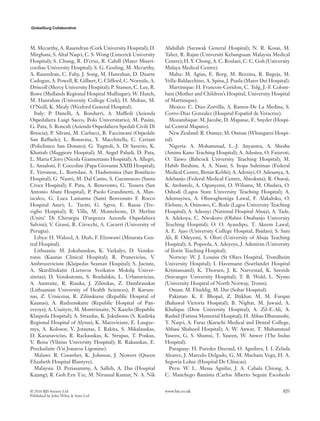
Switzerland: R. Schmid, D. Schivo, V. Despotidis (Bürg-
erspital Solothurn); S. Breitenstein, R. F. Staerkle, E.
Schadde (Kantonsspital Winterthur); F. Deichsel, A.
Gerosa, A. Nocito (Kantonsspital Baden); D. A. Raptis, B.
Mijuskovic, M. Zuber, L. Eisner (Kantonsspital Olten); S.
Kruspi, K. B. Reinisch, C. Schoewe (Kreisspital Fuer Das
Freiamt Muri Ag); A. Novak, A. F. Palma, G. Teufelberger
(Kreisspital Muri).
Tanzania: M. Kimaro, R. King (Mbalizi Christian Desig-
nated Hospital).
Turkey: A. Zeynel A. Balkan, M. Gumar, M. Ali Yavuz
(Harran University Research and Treatment Hospital); U.
Karabacak, G. Lap, B. B. Ozkan (Ondokuz Mayis Univer-
sity); B. B. Ozkan, M. Karakahya (Ordu University Train-
ing and Research Hospital).
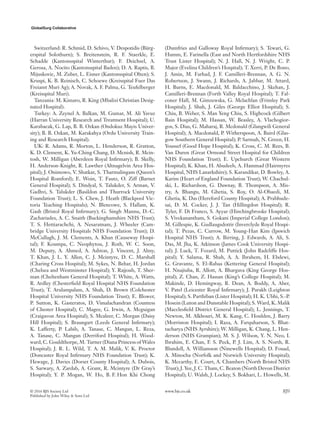
UK: R. Adams, R. Morton, L. Henderson, R. Gratton,
K. D. Clement, K. Yu-Ching Chang, D. Mcnish, R. Mcin-
tosh, W. Milligan (Aberdeen Royal Infirmary); B. Skelly,
H. Anderson-Knight, R. Lawther (Altnagelvin Area Hos-
pital); J. Onimowo, V. Shatkar, S. Tharmalingam (Queen’s
Hospital Romford); E. Woin, T. Fautz, O. Ziff (Barnet
General Hospital); S. Dindyal, S. Talukder, S. Arman, V.
Gadhvi, S. Talukder (Basildon and Thurrock University
Foundation Trust); L. S. Chew, J. Heath (Blackpool Vic-
toria Teaching Hospitals); N. Blencowe, S. Hallam, K.
Gash (Bristol Royal Infirmary); G. Singh Mannu, D.-C.
Zachariades, A. C. Snaith (Buckinghamshire NHS Trust);
T. S. Hettiarachchi, A. Nesaratnam, J. Wheeler (Cam-
bridge University Hospitals NHS Foundation Trust); D.
McCullagh, J. M. Clements, A. Khan (Causeway Hospi-
tal); F. Koumpa, C. Neophytou, J. Roth, W. C. Soon,
M. Deputy, A. Ahmed, A. Ashton, J. Vincent, J. Almy,
T. Khan, J. L. Y. Allen, C. J. Mcintyre, D. C. Marshall
(Charing Cross Hospital); M. Sykes, N. Behar, H. Jordan
(Chelsea and Westminster Hospital); Y. Rajjoub, T. Sher-
man (Cheltenham General Hospital); T. White, A. Watts,
R. Ardley (Chesterfield Royal Hospital NHS Foundation
Trust); T. Arulampalam, A. Shah, D. Brown (Colchester
Hospital University NHS Foundation Trust); E. Blower,
P. Sutton, K. Gasteratos, D. Vimalachandran (Countess
of Chester Hospital); C. Magee, G. Irwin, A. Mcguigan
(Craigavon Area Hospital); S. Mcaleer, C. Morgan (Daisy
Hill Hospital); S. Braungart (Leeds General Infirmary);
K. Lafferty, P. Labib, A. Tanase, C. Mangan, L. Reza,
A. Tanase, C. Mangan (Derriford Hospital); H. Wood-
ward, C. Gouldthorpe, M. Turner (Diana Princess of Wales
Hospital); J. R. L. Wild, T. A. M. Malik, V. K. Proctor
(Doncaster Royal Infirmary NHS Foundation Trust); K.
Hewage, J. Davies (Dorset County Hospital); A. Dubois,
S. Sarwary, A. Zardab, A. Grant, R. Mcintyre (Dr Gray’s
Hospital); Y. P. Mogan, W. Ho, B. F. Hon Khi Chong
(Dumfries and Galloway Royal Infirmary); S. Tewari, G.
Humm, E. Farinella (East and North Hertfordshire NHS
Trust Lister Hospital); N. J. Hall, N. J. Wright, C. P.
Major (Evelina Children’s Hospital); T. Xerri, P. De Bono,
J. Amin, M. Farhad, J. F. Camilleri-Brennan, A. G. N.
Robertson, J. Swann, J. Richards, A. Jabbar, M. Attard,
H. Burns, E. Macdonald, M. Baldacchino, J. Skehan, J.
Camilleri-Brennan (Forth Valley Royal Hospital); T. Fal-
coner Hall, M. Gimzewska, G. Mclachlan (Frimley Park
Hospital); J. Shah, J. Giles (George Elliot Hospital); S.
Chiu, B. Weber, S. Man Yeng Chiu, S. Highcock (Gilbert
Bain Hospital); M. Hassan, W. Beasley, A. Vlachogior-
gos, S. Dias, G. Maharaj, R. Mcdonald (Glangwili General
Hospital); A. Macdonald, P. Witherspoon, A. Baird (Glas-
gow Southern General Hospital); P. Sarmah, N. Green, H.
Youssef (Good Hope Hospital); K. Cross, C. M. Rees, B.
Van Duren (Great Ormond Street Hospital for Children
NHS Foundation Trust); E. Upchurch (Great Western
Hospital); K. Khan, H. Abudeeb, A. Hammad (Hairmyres
Hospital, NHS Lanarkshire); S. Karandikar, D. Bowley, A.
Karim (Heart of England Foundation Trust); W. Chachul-
ski, L. Richardson, G. Dawnay, B. Thompson, A. Mis-
try, A. Bhangu, M. Ghetia, S. Roy, O. Al-Obaedi, M.
Ghetia, K. Das (Hereford County Hospital); A. Prabhude-
sai, D. M. Cocker, J. J. Tan (Hillingdon Hospital); R.
Tyler, F. Di Franco, S. Ayyar (Hinchingbrooke Hospital);
S. Vivekanantham, S. Gokani (Imperial College London);
M. Gillespie, K. Gudlaugsdottir (Inverclyde Royal Hospi-
tal); T. Pezas, C. Currow, M. Young-Han Kim (Ipswich
Hospital NHS Trust); A. Birring, J. Edwards, A. Ali, S.
Das, M. Jha, K. Atkinson (James Cook University Hospi-
tal); J. Luck, T. Fozard, M. Puttick (John Radcliffe Hos-
pital); Y. Salama, R. Shah, A. A. Ibrahem, H. Ebdewi,
G. Gravante, S. El-Rabaa (Kettering General Hospital);
H. Nnajiuba, R. Allott, A. Bhargava (King George Hos-
pital); Z. Chan, Z. Hassan (King’s College Hospital); M.
Makinde, D. Hemingway, R. Dean, A. Boddy, A. Aber,
V. Patel (Leicester Royal Infirmary); J. Parakh (Leighton
Hospital); S. Parthiban (Lister Hospital); H. K. Ubhi, S.-P.
Hosein (Luton and Dunstable Hospital); S. Ward, K. Malik
(Macclesfield District General Hospital); L. Jennings, T.
Newton, M. Alkhouri, M. K. Kang, C. Houlden, J. Barry
(Morriston Hospital); I. Raza, A. Farquharson, S. Bhat-
tacharya (NHS Ayrshire); W. Milligan, K. Chang, L. Hen-
derson (NHS Grampian); M. S. J. Wilson, Y. N. Neo, I.
Ibrahim, E. Chan, F. S. Peck, P. J. Lim, A. S. North, R.
Blundell, A. Williamson (Ninewells Hospital); D. Fouad,
A. Minocha (Norfolk and Norwich University Hospital);
K. Mccarthy, E. Court, A. Chambers (North Bristol NHS
Trust); J. Yee, J. C. Tham, C. Beaton (North Devon District
Hospital); U. Walsh, J. Lockey, S. Bokhari, L. Howells, M.
© 2016 BJS Society Ltd www.bjs.co.uk BJS
Published by John Wiley & Sons Ltd
GlobalSurg Cohort Study
Griffiths, L. Yallop (Northwick Park Hospital); S. Singh,
O. Nasher, P. Jackson (Nottingham Children’s Hospital at
Queen’s Medical Centre); M. Puttick, J. Luck, T. Fozard
(Oxford University Hospitals); A. M. Shariffuddin, W. C.
Ho, M. S. J. Wilson, G. Pabla (Perth Royal Infirmary); S.
Ramzi, S. Zeidan, J. Doughty (Plymouth Hospitals NHS
Trust); S. Sinha, R. Davenport, J. Lewis (Princess Alexan-
dra Hospital); L. Duffy, E. Mcaleer, E. Williams (Princess
of Wales Hospital); R. Som, O. Javed (Queen Elizabeth
Hospital Woolwich); M. Boal, N. Harrison, H. Tafazal, O.
Javed, T. Brogden, E. Griffiths (Queen Elizabeth Hospi-
tal Birmingham); R. D. Obute, T. E. Glover, D. J. Clark
(Queen Elizabeth Hospital King’s Lynn); M. Boshnaq, M.
Akhtar, P. Capleton, S. Doughan, M. Rabie, I. Mohamed
(Queen Elizabeth the Queen Mother Hospital); D. Samuel,
L. Dickson, M. Kennedy, E. Dempster, E. Brown, N.
Maple, E. Monaghan, B. Wolf, A. Garland (Raigmore
Hospital); A. Mcphee, D. Anderson, R. Anderson (Royal
Alexandria Hospital); S. Hassan, P. Sutton, D. Smith (Royal
Bolton Hospital); J. Lund, C. Boereboom, J. Murphy, G.
Tierney, S. Tou (Royal Derby Hospital); E. F. Zimmer-
mann, N. J. Smart, A. M. Warwick, T. Stasinou, I. Daniels,
K. Findlay-Cooper (Royal Devon and Exeter NHS Foun-
dation Trust); S. Mitrasinovic, S. Ray, M. Varcada, R. D.
S. Omara (Royal Free Hospital); M. Spurr, L. Parkinson,
A. Hanks (Royal Glamorgan Hospital); J. Ma, E. Abing-
ton, M. Ramcharn, G. Williams (Royal Gwent Hospital);
J. Winstanley, E. D. Kennedy, E. N. W. Yeung (Royal Hos-
pital for Sick Children); S. Fergusson, C. Jones, S. O’Neill,
S. J. Lim, I. Liew, H. Nair, C. Fairfield, J. Oh, S. Koh, A.
Wilson, C. Fairfield (Royal Infirmary of Edinburgh); D.
Anandkumar, A. Kirupagaran, T. F. Jones, H. D. Torrance,
A. J. Fowler, C. Chandrakumar, P. Patel, S. F. Ashraf, S. M.
Lakhani, A. L. Mclean, S. Basson (Royal London Hospital);
J. Batt, C. Bowman, M. Stoddart, N. Benons (Royal United
Hospital Bath); C. Mason, R. Harrison, J. Quayle (Sal-
ford Royal NHS Foundation Trust); T. Barker, V. Summer-
our, E. Harper (Sandwell and West Birmingham Hospitals
NHS Trust); C. Smith, M. Hampton (Sheffield Children’s
Hospital); S. K. Pitt, A. E. Ward, T. O’Connor, E. G. Hey-
wood, T. M. Drake (Sheffield Teaching Hospitals NHS
Foundation Trust); A. Chowdhury, S. Hossaini, N. F. Wat-
son (Sherwood Forest Hospitals NHS Foundation Trust);
D. Mckechnie, A. Farah, A. Chun (Southend University
Hospital); H. Koh, G. Lim, G. Sunderland (Southern Gen-
eral Hospital); L. Gould, A. Chambers (Southmead Hos-
pital); P. C. Munipalle, H. Rooney, D. R. L. Browning
(Southmead Hospital); B. Pereira, K. Nemeth, E. Decker,
S. Giuliani, A. Shalaby (St George’s Healthcare NHS Trust
and University); S. Shaikh, C. Y. Tan, E. Y. A. Palkhi
(St James’s University Hospital); E. Kostov, P. Harbord,
J. Barnacle, A. Szczap, S. Chidambaram, C. Y. Chen, K.
Kulasabanathan, S. Chhabra (St Mary’s Hospital); M. M.
Palliyil, M. Zikry, J. Porter, C. Raslan, M. Saeed, S. Hafiz,
N. Soltani, K. Baillie (Stockport NHS Foundation Trust);
L. Marples, A. Macfarlane, R. Thurairaja, P. Singh, S.
Sheth, K. Patel, M. Khalili, J. Choi, M. Benger (St Thomas’
Hospital); T. Boyce, H. Whewell, E. Jones (The Royal
Gwent Hospital); F. Th’ng, N. Robertson (The Royal Infir-
mary of Edinburgh); A. Mirza, H. Saeed, S. Galloway (The
University Hospital of South Manchester); G. Elena, M.
Afzal, M. Zakir (Pilgrim Hospital); P. Sodde, C. Hand,
A. Sriram, T. Clark, P. Holton, A. Livesey (University
Hospital Coventry and Warwickshire); Y. Sinha, F. M.
Iqbal, I. S. Bharj (University Hospital of North Midlands);
A. Rotundo, C. Jenvey, R. Slade (University Hospital of
North Staffordshire NHS Trust); D. Golding, S. Haines,
A. A. Ne’ma Abdullah, T. W. Tilston, D. Loughran, D.
Donoghue, L. Giacci, M. Ashur Sherif, P. Harrison, A.
Tang (University Hospital of Wales); D. Kotecha (Leices-
ter Royal Infirmary); M. Elshaer, T. Urbonas, A. Riaz, A.
Chapman, P. Acharya, J. Shalhoub (Watford General Hos-
pital); C. Grossart, D. McMorran (Western General Hos-
pital); M. Mlotshwa, W. Hawkins, S. Loizides (Western
Sussex Hospitals NHS Trust); K. Krishna, M. Orchard, C.
W. Ho (Weston General Hospital); P. Thomson, S. Khan,
F. Taylor, J. Shukla, E. E. Howie (Whipps Cross Univer-
sity Hospital); L. Macdonald, O. Komolafe, N. Mcintyre
(Wishaw General Hospital); J. Cragg, J. Parker, D. Stewart
(Wrexham Maelor Hospital); L. Lintin, J. Tracy, T. Farooq
(Yeovil District Hospital).
USA: G. Molina, H. Kaafarani, L. Luque (Massachusetts
General Hospital); R. Beyene, J. Sava, M. Scott (Medstar
Washington Hospital Center); M. Swaroop, R. Kennedy
(Northwestern Memorial Hospital); I. A. Azodo, D.
Heffernan, T. Chun, A. Stephen (The Rhode Island
Hospital); M. Sion, M. S. Weinstein, V. Punja (Thomas
Jefferson University Hospital); N. Bugaev, M. Goodstein,
S. Razmdjou (Tufts Medical Center); E. Etchill, J. C.
Puyana, M. Kesinger (University of Pittsburgh Medical
Center); L. Napolitano, K. To, M. Hemmila (University
of Michigan).
Zambia: O. Todd, E. Jenner, E. Hoogakker (St Francis
Hospital).
Protocol translation: D. Roi, J. H. Chieh Chen, L. Ismail,
E. G. Escobar.
Acknowledgements
Organizations assisting in dissemination: Asian Medical
Students’ Association (AMSA), Association of Surgeons
in Training (ASiT), College of Surgeons of East, Central
© 2016 BJS Society Ltd www.bjs.co.uk BJS
Published by John Wiley & Sons Ltd
GlobalSurg Collaborative
and Southern Africa (COSECSA), Cutting Edge Manipal,
Egyptian Medical Student Research Association (EMRA),
International Collaboration for Essential Surgery (ICES),
International Federation of Medical Student Associations
(IFMSA), Lifebox Foundation, School of Surgery, Student
Audit and Research in Surgery (STARSurg), The Electives
Network, UK National Research Collaborative, World
Korean Medical Students Association (WKMSA), World
Society of Emergency Surgery (WSES) and World Sur-
gical Association (WSA). Individuals assisting in dissem-
ination: D. Bowley, V. Gokani, J. Ang Henry, C. Kong,
C. Lavy, J. Lim, L. Luque, M. Maruthappu, P. Mogan,
D. Nepogodiev, R. Sayyed, J. Shalhoub and R. Vohra.
The authors acknowledge support provided by D. Mor-
ton and H. Khairy.
References
1 Stewart B, Khanduri P, McCord C, Ohene-Yeboah M,
Uranues S, Vega Rivera F et al. Global disease burden of
conditions requiring emergency surgery. Br J Surg 2014;
101: e9–e22.
2 Meara JG, Leather AJ, Hagander L, Alkire BC, Alonso N,
Ameh EA et al. Global Surgery 2030: evidence and solutions
for achieving health, welfare, and economic development.
Lancet 2015; 386: 569–624.
3 Dare AJ, Bleicher J, Lee KC, Elobu AE, Kamara TB, Liko
O et al. Generation of national political priority for surgery:
a qualitative case study of three low-income and
middle-income countries. Lancet 2015; 385(Suppl 2): S54.
4 Weiser TG, Uribe-Leitz T, Fu R, Jaramillo J, Maurer L,
Esquivel MM et al. Variability in mortality after caesarean
delivery, appendectomy, and groin hernia repair in
low-income and middle-income countries: implications for
expanding surgical services. Lancet 2015; 385(Suppl 2):
S34.
5 World Health Organization. Global Reference List of 100 Core
Health Indicators. Working Version 5; 2014. http://who.int/
healthinfo/country_monitoring_evaluation/GlobalRefList
CoreIndicators_V5_17Nov2014_WithoutAnnexes.pdf
[accessed 14 September 2015].
6 Weiser TG, Makary MA, Haynes AB, Dziekan G, Berry
WR, Gawande AA. Standardised metrics for global surgical
surveillance. Lancet 2009; 374: 1113–1117.
7 Bhangu A, Fitzgerald JE, Fergusson S, Khatri C, Holmer H,
Soreide K et al. Determining universal processes related to
best outcome in emergency abdominal surgery: a
multicentre, international, prospective cohort study. BMJ
Open 2014; 4: e006239.
8 von Elm E, Altman DG, Egger M, Pocock SJ, Gøtzsche PC,
Vandenbroucke JP. The Strengthening the Reporting of
Observational Studies in Epidemiology (STROBE)
statement: guidelines for reporting observational studies.
Lancet 2007; 370: 1453–1457.
9 Holmer H, Oyerinde K, Meara JG, Gillies R, Liljestrand J,
Hagander L. The global met need for emergency obstetric
care: a systematic review. BJOG 2015; 122: 183–189.
10 Harris PA, Taylor R, Thielke R, Payne J, Gonzalez N,
Conde JG. Research electronic data capture (REDCap) – a
metadata-driven methodology and workflow process for
providing translational research informatics support.
J Biomed Inform 2009; 42: 377–381.
11 Watters DA, Hollands MJ, Gruen RL, Maoate K, Perndt H,
McDougall RJ et al. Perioperative Mortality Rate (POMR):
a global indicator of access to safe surgery and anaesthesia.
World J Surg 2015; 39: 856–864.
12 Haynes AB, Weiser TG, Berry WR, Lipsitz SR, Breizat AH,
Dellinger EP et al. A surgical safety checklist to reduce
morbidity and mortality in a global population. N Engl J
Med 2009; 360: 491–499.
13 Urbach DR, Govindarajan A, Saskin R, Wilton AS, Baxter
NN. Introduction of surgical safety checklists in Ontario,
Canada. N Engl J Med 2014; 370: 1029–1038.
14 Khatri C, Chapman SJ, Glasbey J, Kelly M, Nepogodiev D,
Bhangu A et al. Social media and internet driven study
recruitment: evaluating a new model for promoting
collaborator engagement and participation. PLoS One 2015;
10: e0118899.
15 Søreide K, Alderson D, Bergenfelz A, Beynon J, Connor S,
Deckelbaum DL et al. Strategies to improve clinical research
in surgery through international collaboration. Lancet 2013;
382: 1140–1151.
16 Luboga S, Macfarlane SB, von Schreeb J, Kruk ME,
Cherian MN, Bergstrom S et al. Increasing access to surgical
services in sub-saharan Africa: priorities for national and
international agencies recommended by the Bellagio
Essential Surgery Group. PLoS Med 2009; 6:
e1000200
17 Groen RS, Samai M, Stewart KA, Cassidy LD, Kamara TB,
Yambasu SE et al. Untreated surgical conditions in Sierra
Leone: a cluster randomised, cross-sectional, countrywide
survey. Lancet 2012; 380: 1082–1087.
18 Funk LM, Weiser TG, Berry WR, Lipsitz SR, Merry AF,
Enright AC et al. Global operating theatre distribution and
pulse oximetry supply: an estimation from reported data.
Lancet 2010; 376: 1055–1061.
19 Shekelle PG, Pronovost PJ, Wachter RM, Taylor SL, Dy
SM, Foy R et al. Advancing the science of patient safety. Ann
Intern Med 2011; 154: 693–696.
20 CRASH-2 collaborators, Roberts I, Shakur H, Afolabi A,
Brohi K, Coats T et al. The importance of early treatment
with tranexamic acid in bleeding trauma patients: an
exploratory analysis of the CRASH-2 randomised controlled
trial. Lancet 2011; 377: 1096–1101, 1101.e1–e2.
© 2016 BJS Society Ltd www.bjs.co.uk BJS
Published by John Wiley & Sons Ltd
GlobalSurg Cohort Study
Supporting information
Additional supporting information may be found in the online version of this article:
Table S1 Diagnosis by Human Development Index tertile (Word document)
Table S2 Factors associated with mortality within 24 h of surgical procedure (Word document)
Table S3 Factors associated with 30-day mortality: sensitivity analysis including only patients confirmed to be alive
at 30 days (Word document)
Editor’s comments
All empires fall and even pyramids crumble. Especially the economic kind built on an isolated, immobile, low-income
population with limited educational opportunity. Coalescent connectivity is the lesson to be learnt from this paper; the
triumph that rendered international barriers and borders as virtual as the internet space where young surgeons breathed
life into global health. There are no losers in a co-operative syncytium that illuminates healthcare inequality any more
than there is magic to high-income countries’ comparative performance. Outcome homogenization will follow the
inevitable balancing of the discrepancies identified. Systematic attention to detail, adherence to safety protocols, and
good perioperative care have made as much of an impact on surgical results as anaesthesia and prophylactic antibiotics.
Technological advances undoubtedly unbalance the equation toward the resource-rich, but there is much more to learn
from light shed on frugal healthcare excellence in low- and middle-income countries. This pyramidal inversion is the
prism through which aggregated outcome data can be separated into packaged quanta to define global health standards.
The GlobalSurg Collaborative have shown this to be a tangible concept worthy of further exploration.
D. C. Winter
Editor, BJS
© 2016 BJS Society Ltd www.bjs.co.uk BJS
Published by John Wiley & Sons Ltd

Collaborative 2016-british journal-of_surgery

  • 1.
    Original article Mortality ofemergency abdominal surgery in high-, middle- and low-income countries GlobalSurg Collaborative @globalsurg|www.globalsurg.org Correspondence to: Mr A. Bhangu, Academic Department of Surgery, Room 29, 4th Floor, Old Queen Elizabeth Hospital, University of Birmingham, Birmingham B15 2TH, UK (e-mail: aneelbhangu@doctors.org.uk) Background: Surgical mortality data are collected routinely in high-income countries, yet virtually no low- or middle-income countries have outcome surveillance in place. The aim was prospectively to collect worldwide mortality data following emergency abdominal surgery, comparing findings across countries with a low, middle or high Human Development Index (HDI). Methods: This was a prospective, multicentre, cohort study. Self-selected hospitals performing emer- gency surgery submitted prespecified data for consecutive patients from at least one 2-week interval during July to December 2014. Postoperative mortality was analysed by hierarchical multivariable logistic regression. Results: Data were obtained for 10 745 patients from 357 centres in 58 countries; 6538 were from high-, 2889 from middle- and 1318 from low-HDI settings. The overall mortality rate was 1⋅6 per cent at 24 h (high 1⋅1 per cent, middle 1⋅9 per cent, low 3⋅4 per cent; P < 0⋅001), increasing to 5⋅4 per cent by 30 days (high 4⋅5 per cent, middle 6⋅0 per cent, low 8⋅6 per cent; P < 0⋅001). Of the 578 patients who died, 404 (69⋅9 per cent) did so between 24 h and 30 days following surgery (high 74⋅2 per cent, middle 68⋅8 per cent, low 60⋅5 per cent). After adjustment, 30-day mortality remained higher in middle-income (odds ratio (OR) 2⋅78, 95 per cent c.i. 1⋅84 to 4⋅20) and low-income (OR 2⋅97, 1⋅84 to 4⋅81) countries. Surgical safety checklist use was less frequent in low- and middle-income countries, but when used was associated with reduced mortality at 30 days. Conclusion: Mortality is three times higher in low- compared with high-HDI countries even when adjusted for prognostic factors. Patient safety factors may have an important role. Registration number: NCT02179112 (http://www.clinicaltrials.gov). Paper accepted 10 February 2016 Published online in Wiley Online Library (www.bjs.co.uk). DOI: 10.1002/bjs.10151 Introduction Global health priorities are typically assessed by measuring the burden of various diseases, including human immuno- deficiency virus (HIV), tuberculosis, malaria and trauma. Surgery, however, contributes to the treatment of a very wide range of conditions and its significance may have been obscured by a disease-based approach to international health1. This is changing and the importance of surgery to human health and welfare has been highlighted by several recent studies2–4. For instance, 17 million of the 51 million people who died across the world in 2012 suffered from diseases needing surgical care1,2. Access to surgical care varies widely3,4. It has been estimated that less than one-third of the world’s population has access to safe, timely and affordable surgery, and only 6 per cent of the 300 million surgical procedures performed each year take place in a low- or middle-income country (LMIC) despite one-third of the world’s population living there2. There are firm moves, supported by the World Health Organization (WHO), to improve access to surgical care3,5. However, safe surgery requires considerable infrastructure, and improving coverage should go hand in hand with quality assurance3. Surgical mortality data are collected routinely in high-income health systems, but 70 per cent of countries lack routine surgical surveillance systems4,6. This study is the first step towards remedying the lack of outcome information by creating an international network of surgeons across all continents to measure mortality rates following emergency abdominal surgery. This is a common operation that is carried out with life-saving © 2016 BJS Society Ltd BJS Published by John Wiley & Sons Ltd
  • 2.
    GlobalSurg Cohort Study 1–5 6–10 aCollaborating centres b Proportion with trauma 11–20 > 20 0–2% > 2–5% > 5–10% > 10–20% > 20% Fig. 1 a Collaborating centres and b proportion of enrolled patients with trauma diagnosis, by contributing country intent, but which nevertheless carries substantial mortal- ity. This makes it an important topic in its own right and a potential proxy for surgical care generally. The aim of this study was to collect postoperative mortality data and analyse variation in factors that might affect mortality. This first report describes the feasibility of collecting bedside patient-level data across low-, middle- and high-income settings using a new collaborative network. The study also compared the performance and practicality of using 24-h or 30-day postoperative mortality as the primary outcome measure in a wide variety of clinical settings. Variation in mortality was compared with markers of prognosis (includ- ing operation type) and service, marked by the availability and use of safety checklists. Methods An international, multicentre, prospective, observational cohort study was conducted according to a prespecified, registered and published protocol (ClinicalTrials.gov identifier NCT02179112)7. A UK National Health Ser- vice Research Ethics review considered this study exempt from formal research registration (South East Scot- land Research Ethics Service, reference NR/1404AB12); individual centres obtained their own audit, ethical or institutional approval. Results are reported according to Strengthening the Reporting of Observational Studies in Epidemiology (STROBE) guidelines8. Study interval Investigators from self-selected surgical units identified consecutive patients within 2-week time intervals between 1 July 2014 and 31 December 2014. An open invitation to participate was disseminated through social media, per- sonal contacts, e-mail to authors of published emergency surgery studies, and national/international surgical orga- nizations. Short intensive data collection allowed surgical teams within these units to contribute meaningful numbers of patients without requiring additional resources. The © 2016 BJS Society Ltd www.bjs.co.uk BJS Published by John Wiley & Sons Ltd
  • 3.
    GlobalSurg Collaborative Table 1Demographic and preoperative data by Human Development Index tertile HDI tertile High (n = 6538) Middle (n = 2889) Low (n = 1318) P* Mean(s.d.) age (completed years) 44⋅5(23⋅7) 33⋅4(19⋅6) 30⋅7(18⋅8) < 0⋅001† Sex < 0⋅001 M 3162 (48⋅4) 1600 (55⋅4) 808 (61⋅3) F 3373 (51⋅6) 1289 (44⋅6) 510 (38⋅7) Missing 3 (0⋅0) 0 (0) 0 (0) ASA fitness grade < 0⋅001 I 2701 (41⋅3) 1648 (57⋅0) 613 (46⋅5) II 2004 (30⋅7) 728 (25⋅2) 352 (26⋅7) III 1134 (17⋅3) 283 (9⋅8) 162 (12⋅3) IV 411 (6⋅3) 98 (3⋅4) 43 (3⋅3) V 102 (1⋅6) 65 (2⋅2) 69 (5⋅2) Unknown 183 (2⋅8) 66 (2⋅3) 76 (5⋅8) Missing 3 (0⋅0) 1 (0⋅0) 3 (0⋅2) Diabetes 0⋅622 No 6044 (92⋅4) 2686 (93⋅0) 1226 (93⋅0) Yes 491 (7⋅5) 203 (7⋅0) 92 (7⋅0) Missing 3 (0⋅0) 0 (0) 0 (0) Current smoker < 0⋅001 No 4633 (70⋅9) 2247 (77⋅8) 1100 (83⋅5) Yes 1901 (29⋅1) 640 (22⋅2) 217 (16⋅5) Missing 4 (0⋅1) 2 (0⋅1) 1 (0⋅1) Diagnosis < 0⋅001 Non-trauma/non-cancer 5522 (84⋅5) 2416 (83⋅6) 1049 (79⋅6) Neoplasm 407 (6⋅2) 80 (2⋅8) 57 (4⋅3) Trauma 143 (2⋅2) 290 (10⋅0) 159 (12⋅1) No disease identified 181 (2⋅8) 48 (1⋅7) 14 (1⋅1) Complication of previous procedure 285 (4⋅4) 55 (1⋅9) 39 (3⋅0) CT performed < 0⋅001 No 3883 (59⋅4) 2354 (81⋅5) 1173 (89⋅0) Yes 2652 (40⋅6) 535 (18⋅5) 145 (11⋅0) Missing 3 (0⋅0) 0 (0) 0 (0) Values in parentheses are percentages by column unless indicated otherwise. HDI, Human Development Index; ASA, American Society of Anesthesiologists. *Pearson χ2 test, except †Kruskal–Wallis test. study covered an extended time interval to accommodate the availability of local investigators and variable holidays, while helping to smooth seasonal variation that can affect surgical pathology. An institution could collect over as many 2-week intervals as desired within the study time frame. Patients and procedures Consecutive patients undergoing emergency intraperi- toneal surgery during the chosen 2-week interval were included. There were no age restrictions. Emergency surgery was defined as any unplanned, non-elective operation, including reoperation after a previous proce- dure. Intraperitoneal surgery was defined as any open, laparoscopic or converted laparoscopic procedure that entered the peritoneal cavity. Elective (planned) or semi-elective procedures (where a patient initially admit- ted as an emergency was then discharged from hospital and readmitted at later time for elective surgery) were excluded. Additionally, patients undergoing caesarean section were excluded as they represent a separate oper- ative group with different management needs that have been studied elsewhere9. Data Included patients were followed to day 30 after surgery or for the duration of their inpatient stay where follow-up was not feasible. Records were uploaded by local inves- tigators to a secure online website, provided using the Research Electronic Data Capture (REDCap) system10. The lead investigator at each site checked the accuracy of all cases before data submission. The submitted data were then checked centrally and, where missing information was identified, the local lead investigator was contacted and asked to update and complete the record. Once vetted, the record was accepted into the data set for analysis. © 2016 BJS Society Ltd www.bjs.co.uk BJS Published by John Wiley & Sons Ltd
  • 4.
    GlobalSurg Cohort Study Table2 Operative data by Human Development Index tertile HDI tertile High (n = 6538) Middle (n = 2889) Low (n = 1318) P* Procedure start time < 0⋅001 08.00–18.00 hours (daytime) 3966 (60⋅7) 1230 (42⋅6) 586 (44⋅5) 18.00–22.00 hours (evening) 1401 (21⋅4) 755 (26⋅1) 367 (27⋅8) 22.00 to 08.00 hours (night-time) 1167 (17⋅8) 901 (31⋅2) 365 (27⋅7) Missing 4 (0⋅1) 3 (0⋅1) 0 (0) Admission to procedure time (h) < 0⋅001 < 6 1382 (21⋅1) 1324 (45⋅8) 607 (46⋅1) 6–11 1192 (18⋅2) 723 (25⋅0) 287 (21⋅8) 12–23 1510 (23⋅1) 462 (16⋅0) 189 (14⋅3) 24–47 1031 (15⋅8) 171 (5⋅9) 94 (7⋅1) ≥ 48 1415 (21⋅6) 204 (7⋅1) 139 (10⋅5) Missing 8 (0⋅1) 5 (0⋅2) 2 (0⋅2) Surgical safety checklist used < 0⋅001 No, not available in this hospital 422 (6⋅5) 1029 (35⋅6) 474 (36⋅0) No, but available in this hospital 146 (2⋅2) 248 (8⋅6) 421 (31⋅9) Yes 5967 (91⋅3) 1608 (55⋅7) 423 (32⋅1) Missing 3 (0⋅0) 4 (0⋅1) 0 (0) Senior surgeon > 5 years of training < 0⋅001 No 182 (2⋅8) 1208 (41⋅8) 384 (29⋅1) Yes 6353 (97⋅2) 1676 (58⋅0) 934 (70⋅9) Missing 3 (0⋅0) 5 (0⋅2) 0 (0) Senior anaesthetist > 5 years of training < 0⋅001 No 262 (4⋅0) 1395 (48⋅3) 524 (39⋅8) Yes 6273 (95⋅9) 1490 (51⋅6) 794 (60⋅2) Missing 3 (0⋅0) 4 (0⋅1) 0 (0) Anaesthetic type < 0⋅001 General 6438 (98⋅5) 2213 (76⋅6) 1219 (92⋅5) Spinal or sedation 97 (1⋅5) 673 (23⋅3) 98 (7⋅4) Missing 3 (0⋅0) 3 (0⋅1) 1 (0⋅1) Laparoscopic approach < 0⋅001 No 3369 (51⋅5) 2622 (90⋅8) 1238 (93⋅9) Yes 3169 (48⋅5) 267 (9⋅2) 80 (6⋅1) Bowel resection < 0⋅001 No 5454 (83⋅4) 2608 (90⋅3) 1112 (84⋅4) Yes 1077 (16⋅5) 276 (9⋅6) 205 (15⋅6) Missing 7 (0⋅1) 5 (0⋅2) 1 (0⋅1) Stoma formed < 0⋅001 No 5860 (89⋅6) 2732 (94⋅6) 1195 (90⋅7) Yes 674 (10⋅3) 152 (5⋅3) 123 (9⋅3) Missing 4 (0⋅1) 5 (0⋅2) 0 (0) Perforated viscus < 0⋅001 No 5475 (83⋅7) 2406 (83⋅3) 913 (69⋅3) Yes 1059 (16⋅2) 476 (16⋅5) 377 (28⋅6) Missing 4 (0⋅1) 7 (0⋅2) 28 (2⋅1) Supplementary oxygen < 0⋅001 No 239 (3⋅7) 515 (17⋅8) 101 (7⋅7) Yes 6296 (96⋅3) 2370 (82⋅0) 1187 (90⋅1) Missing 3 (0⋅0) 4 (0⋅1) 30 (2⋅3) Pulse oximetry < 0⋅001 No 39 (0⋅6) 129 (4⋅5) 15 (1⋅1) Yes 6496 (99⋅4) 2756 (95⋅4) 1303 (98⋅9) Missing 3 (0⋅0) 4 (0⋅1) 0 (0) Prophylactic antibiotics 0⋅710 No 824 (12⋅6) 370 (12⋅8) 177 (13⋅4) Yes 5709 (87⋅3) 2514 (87⋅0) 1140 (86⋅5) Missing 5 (0⋅1) 5 (0⋅2) 1 (0⋅1) Values in parentheses are percentages by column. HDI, Human Development Index; ASA, American Society of Anesthesiologists. *Pearson χ2 test. © 2016 BJS Society Ltd www.bjs.co.uk BJS Published by John Wiley & Sons Ltd
  • 5.
    GlobalSurg Collaborative High Middle Low 0 2550 75 100 Proportion of enrolled patients (~) CountrybyHDIrank Appendicitis No disease identified Other abdominal Neoplasm Gallstones Complication of previous procedure Trauma Fig. 2 Summary diagnostic groups according to Human Development Index (HDI) decile Outcome measures The primary outcome measure was the 24-h postopera- tive mortality rate. This was the number of deaths during the procedure, or within 24 h of the operation’s conclusion, divided by the number of eligible operations performed11. The main secondary outcome measure was the 30-day postoperative mortality rate. Where 30-day follow-up was not available, survival status (alive or dead) at the point of discharge from hospital was recorded. Other secondary outcome measures included postoperative complication and reintervention rates. For the purposes of clarity, these will be described in subsequent reports where sufficient detail can be included. Independent (exploratory) variables The following patient-level factors were collected in order to adjust outcome. Patient factors were: age, sex, diabetes, smoking status and American Society of Anesthesiologists (ASA) fitness grade. Disease factors comprised seven major diagnostic groups, representing the spectrum of disease encountered; in addition, the presence of a perforated abdominal viscus found at operation was included. Hospital safety was also explored in terms of the availability and use of a surgical safety checklist for each patient. Power considerations The sample size was limited by practical factors, and esti- mation of power by uncertainty over critical quantities such as clustering and variation in mortality by diagnosis. An indicative power calculation is provided in the protocol. Statistical analysis Variation across different international health settings was assessed by stratifying participating centres by country into three tertiles according to Human Development Index (HDI) rank. This is a composite statistic of life expectancy, education and income indices published by the United Nations (http://hdr.undp.org/en/statistics). This aggregate measure of development keeps individual countries anonymous. Differences between HDI ter- tiles were tested with the Pearson χ2 test and Kruskal– Wallis test for categorical and continuous variables respectively. Hierarchical multivariable logistic regression models (random intercept) were constructed with three levels: patients nested within hospitals, nested within coun- tries. HDI tertile and other explanatory variables were included as fixed effects. Other than HDI tertile, all fixed effects were considered at the level of the patient. Coefficients are expressed as odds ratios with confidence intervals and P values derived from percentiles of 10 000 bootstrap replications. Model residuals were checked at all three levels and first-order interactions explored. Goodness of model fit is reported with the Hosmer and Lemeshow test, and predictive ability described by area under the receiver operating characteristic (ROC) curve (c-statistic). © 2016 BJS Society Ltd www.bjs.co.uk BJS Published by John Wiley & Sons Ltd
  • 6.
    GlobalSurg Cohort Study Appendicitisn = 4546 (42·3%) 24-h mortality n = 2 (0·0%) 30-day mortality n = 8 (0·2%) Appendicitis n = 2499 (38·2%) 24-h mortality n = 1 (0·0%) 30-day mortality n = 3 (0·1%) Appendicitis n = 1540 (53·3%) 24-h mortality n = 1 (0·1%) 30-day mortality n = 2 (0·1%) All other n = 6199 (57·7%) 24-h mortality n = 172 (2·8%) 30-day mortality n = 570 (9·2%) All other n = 4039 (61·8%) 24-h mortality n = 74 (1·8%) 30-day mortality n = 288 (7·1%) All other n = 1349 (46·7%) 24-h mortality n = 53 (3·9%) 30-day mortality n = 171 (12·7%) Midline laparotomy n = 3104 (28·9%) 24-h mortality n = 149 (4·8%) 30-day mortality n = 462 (14·9%) Midline laparotomy n = 1770 (27·1%) 24-h mortality n = 63 (3·6%) 30-day mortality n = 230 (13·0%) Midline laparotomy n = 795 (27·5%) 24-h mortality n = 47 (5·9%) 30-day mortality n = 139 (17·5%) Appendicitis n = 507 (38·5%) 24-h mortality n = 0 (0%) 30-day mortality n = 3 (0·6%) P = 0·368 P = 0·002 P < 0·001 P < 0·001 P < 0·001 P < 0·001 All other n = 811 (61·5%) 24-h mortality n = 45 (5·5%) 30-day mortality n = 111 (13·7%) Midline laparotomy n = 539 (40·9%) 24-h mortality n = 39 (7·2%) 30-day mortality n = 93 (17·3%) Middle HDI n = 2889High HDI n = 6538 Low HDI n = 1318 Records accepted n = 10 745 24-h mortality n = 174 of 10 745 (1·6%) 30-day mortality n = 578 of 10 745 (5·4%) Fig. 3 Study process flow chart and key outcomes by Human Development Index (HDI) tertile. Pearson χ2 test was used for statistical analysis Table 3 Outcomes by Human Development Index tertile and American Society of Anesthesiologists fitness grade 24-h mortality 30-day mortality ASA fitness grade High Middle Low High Middle Low I 1 of 2701 (0⋅0) 8 of 1648 (0⋅5) 3 of 613 (0⋅5) 5 of 2701 (0⋅2) 25 of 1648 (1⋅5) 13 of 613 (2⋅1) II 4 of 2004 (0⋅2) 8 of 728 (1⋅1) 11 of 352 (3⋅1) 23 of 2004 (1⋅1) 31 of 728 (4⋅3) 27 of 352 (7⋅7) III 14 of 1134 (1⋅2) 15 of 283 (5⋅3) 9 of 162 (5⋅6) 82 of 1134 (7⋅2) 50 of 283 (17⋅7) 31 of 162 (19⋅1) IV 18 of 411 (4⋅4) 12 of 98 (12) 6 of 43 (14) 110 of 411 (26⋅8) 43 of 98 (43⋅9) 15 of 43 (35) V 31 of 102 (30⋅4) 9 of 65 (14) 11 of 69 (16) 57 of 102 (55⋅9) 18 of 65 (28) 17 of 69 (25) Unknown 7 of 183 (3⋅8) 2 of 66 (3) 5 of 76 (7) 14 of 183 (7⋅7) 6 of 66 (9) 11 of 76 (14) Missing 0 of 3 (0) 0 of 1 (0) 0 of 3 (0) 0 of 3 (0) 0 of 1 (0) 0 of 3 (0) Values in parentheses are percentages. ASA, American Society of Anesthesiologists. Table 4 Mortality between 24 h and 30 days after surgery All deaths (n = 578) Deaths within 24 h (n = 174) Deaths after 24 h within 30 days (n = 404) P* HDI tertile 0⋅024 High 291 75 of 291 (25⋅8) 216 of 291 (74⋅2) Middle 173 54 of 173 (31⋅3) 119 of 173 (68⋅8) Low 114 45 of 114 (39⋅5) 69 of 114 (60⋅5) Diagnosis Appendicitis 8 2 of 8 (25) 6 of 8 (75) No disease identified 17 3 of 17 (18) 14 of 17 (82) Other abdominal 339 90 of 339 (26⋅5) 249 of 339 (73⋅5) Neoplasm 78 16 of 78 (21) 62 of 78 (79) Gallstones 10 1 of 10 (10) 9 of 10 (90) Complication of previous procedure 44 12 of 44 (27) 32 of 44 (73) Trauma 82 50 of 82 (61) 32 of 82 (39) Values in parentheses are percentages by row, indicating distribution of deaths within 24 h versus after 24 h. HDI, Human Development Index. *Pearson χ2 test. © 2016 BJS Society Ltd www.bjs.co.uk BJS Published by John Wiley & Sons Ltd
  • 7.
    GlobalSurg Collaborative Table 5Factors associated with 30-day mortality Univariable analysis Multilevel analysis Alive Died Odds ratio† P Odds ratio† P HDI tertile High 6240 (61⋅5) 291 (50⋅3) 1⋅00 (reference) 1⋅00 (reference) Middle 2701 (26⋅6) 173 (29⋅9) 1⋅37 (1⋅13, 1⋅66) 0⋅001 2⋅78 (1⋅84, 4⋅20) < 0⋅001 Low 1202 (11⋅9) 114 (19⋅7) 2⋅03 (1⋅62, 2⋅54) < 0⋅001 2⋅97 (1⋅84, 4⋅81) < 0⋅001 Standardized age (years)* 38⋅7(22⋅3) 58⋅5(24⋅3) 2⋅36 (2⋅16, 2⋅58) < 0⋅001 1⋅68 (1⋅48, 1⋅91) < 0⋅001 Sex M 5229 (51⋅6) 333 (57⋅6) 1⋅00 (reference) 1⋅00 (reference) F 4914 (48⋅4) 245 (42⋅4) 0⋅78 (0⋅66, 0⋅93) 0⋅005 1⋅14 (0⋅92, 1⋅41) 0⋅240 Diabetes No 9467 (93⋅3) 469 (81⋅1) 1⋅00 (reference) 1⋅00 (reference) Yes 676 (6⋅7) 109 (18⋅9) 3⋅25 (2⋅59, 4⋅05) < 0⋅001 1⋅21 (0⋅92, 1⋅58) 0⋅174 Current smoker No 7569 (74⋅6) 395 (68⋅3) 1⋅00 (reference) 1⋅00 (reference) Yes 2571 (25⋅4) 183 (31⋅7) 1⋅36 (1⋅14, 1⋅63) 0⋅001 0⋅86 (0⋅69, 1⋅08) 0⋅195 ASA fitness grade I 4910 (48⋅4) 43 (7⋅4) 1⋅00 (reference) 1⋅00 (reference) II 2997 (29⋅6) 81 (14⋅0) 3⋅09 (2⋅14, 4⋅52) < 0⋅001 1⋅64 (1⋅10, 2⋅45) 0⋅016 III 1415 (14⋅0) 163 (28⋅2) 13⋅15 (9⋅44, 18⋅72) < 0⋅001 4⋅69 (3⋅15, 6⋅99) < 0⋅001 IV 382 (3⋅8) 168 (29⋅1) 50⋅22 (35⋅70, 72⋅11) < 0⋅001 18⋅21 (11⋅95, 27⋅74) < 0⋅001 V 144 (1⋅4) 92 (15⋅9) 72⋅95 (49⋅31, 109⋅52) < 0⋅001 30⋅23 (18⋅60, 49⋅14) < 0⋅001 Unknown 292 (2⋅9) 31 (5⋅4) 12⋅12 (7⋅47, 19⋅46) < 0⋅001 6⋅95 (3⋅90, 12⋅38) < 0⋅001 Diagnosis Appendicitis 4532 (44⋅7) 8 (1⋅4) 1⋅00 (reference) 1⋅00 (reference) No disease identified 222 (2⋅2) 17 (2⋅9) 43⋅38 (19⋅08, 107⋅33) < 0⋅001 32⋅52 (13⋅01, 81⋅32) < 0⋅001 Other abdominal 3147 (31⋅0) 339 (58⋅7) 61⋅02 (32⋅40, 134⋅55) < 0⋅001 20⋅09 (9⋅85, 40⋅99) < 0⋅001 Neoplasm 464 (4⋅6) 78 (13⋅5) 95⋅23 (48⋅63, 215⋅20) < 0⋅001 27⋅47 (12⋅88, 58⋅58) < 0⋅001 Gallstones 937 (9⋅2) 10 (1⋅7) 6⋅05 (2⋅38, 15⋅88) < 0⋅001 3⋅37 (1⋅31, 8⋅69) 0⋅012 Complication of previous procedure 331 (3⋅3) 44 (7⋅6) 75⋅30 (37⋅15, 173⋅90) < 0⋅001 18⋅91 (8⋅58, 41⋅67) < 0⋅001 Trauma 510 (5⋅0) 82 (14⋅2) 91⋅08 (46⋅64, 205⋅48) < 0⋅001 23⋅04 (10⋅80, 49⋅12) < 0⋅001 Perforated viscus No 8424 (83⋅3) 356 (61⋅9) 1⋅00 (reference) 1⋅00 (reference) Yes 1687 (16⋅7) 219 (38⋅1) 3⋅07 (2⋅57, 3⋅66) < 0⋅001 1⋅82 (1⋅46, 2⋅27) < 0⋅001 Surgical safety checklist used No, not available in this hospital 1793 (17⋅7) 128 (22⋅1) 1⋅00 (reference) 1⋅00 (reference) No, but available in this hospital 719 (7⋅1) 95 (16⋅4) 1⋅85 (1⋅40, 2⋅44) < 0⋅001 1⋅28 (0⋅81, 2⋅03) 0⋅294 Yes 7628 (75⋅2) 355 (61⋅4) 0⋅65 (0⋅53, 0⋅81) < 0⋅001 0⋅62 (0⋅42, 0⋅92) 0⋅016 Values in parentheses are percentages by column unless indicated otherwise; *values are mean(s.d.); †values in parentheses are 95 per cent confidence intervals. More detailed information on diagnoses is available in Table S1 (supporting information). HDI, Human Development Index; ASA, American Society of Anesthesiologists. Confidence intervals and P values derived from percentiles of 10 000 bootstrap predictions. Total n =10 721. Akaike information criterion 2974; c-statistic 0⋅93; Hosmer–Lemeshow goodness-of-fit test: χ2 = 13⋅3, 8 d.f., P = 0⋅102. To help visualize the relationship of outcomes with a con- tinuous representation of the HDI (HDI rank), the final fixed-effect regression models were used with a restricted cubic spline for HDI rank (3 knots distributed equally across the range of HDI rank) to allow for potential non-linear relationships. Predictions were made for spec- ified co-variable levels and bootstrapped confidence inter- vals generated. A prespecified sensitivity analysis was performed. It was predicted that some patients would be discharged alive but not followed up at 30 days. For the main analysis, these patients were coded as alive. To test the validity of this approach, patients ‘discharged alive and not followed up’ were excluded and the 30-day mortality analysis rerun. All analyses were undertaken using the R Foundation Statistical Program (R 3.1.1), with packages plyr, stringr, ggplot2, reshape2, jsonlite, RCurl, httr, Hmisc, rms, lme4 and knitr (R Project for Statistical Computing, Vienna, Austria). Results A total of 10 906 patient records were submitted and 10 745 records were accepted formally for analysis following the quality control algorithm described above. These patients came from 357 centres across 58 countries (Fig. 1), with 6538 (60⋅8 per cent) from high-, 2889 (26⋅9 per cent) from middle- and 1318 (12⋅3 per cent) from low-HDI © 2016 BJS Society Ltd www.bjs.co.uk BJS Published by John Wiley & Sons Ltd
  • 8.
    GlobalSurg Cohort Study Probability(%) Probability(%) 5 4 3 2 1 0 2 4 6 8 HDIrank 15010050 0 HDI rank 15010050 a Mortality at 24 h b Mortality at 30 days Fig. 4 Adjusted associations between Human Development Index (HDI) rank and mortality at a 24 h and b 30 days. Multivariable logistic regression models were repeated but using a continuous variable of HDI rank. A restricted cubic spline with three knots distributed equally across the range was applied to HDI rank. Predictions were made on the models and 95 per cent confidence intervals determined (shaded area). Vertical lines represent the relative proportion of patients for a given HDI rank. Co-variable levels: age, 35 years; diabetes, no; sex, male; smoker, no; American Society of Anesthesiologists fitness grade, I; diagnosis, trauma; checklist, no, not available. a P overall = 0⋅007, P non-linear = 0⋅112; b P overall < 0⋅001, P non-linear = 0⋅032 settings. A complete record with no missing data was achieved for 99⋅1 per cent of patients (10 644 of 10 745); 24-h outcome data were available for 99⋅9 per cent of patients (13 missing) and 30-day mortality for 99⋅8 per cent (24 missing). Demographics Differences in demographics and operative data across HDI groups are shown in Tables 1 and 2. Appendicectomy was the most commonly performed operation across all HDI settings (high 38⋅2 per cent, middle 53⋅3 per cent, low 38⋅5 per cent) (Fig. 2; Table S1, supporting information). Trauma was the indication for surgery in a higher propor- tion of patients in middle- and low-HDI countries (10⋅0 and 12⋅1 per cent respectively) compared with high-HDI countries (2⋅2 per cent). Use of a midline laparotomy for intraperitoneal access increased across the development index (high 27⋅1 per cent, middle 27⋅5 per cent, low 40⋅9 per cent). A surgical safety checklist was used in 74⋅4 per cent of procedures, varying significantly across HDI groups (91⋅3 per cent high, 55⋅7 per cent middle, 32⋅1 per cent low; P < 0⋅001). Crude mortality across Human Development Index groups The crude 24-h mortality rate was 1⋅6 per cent and the 30-day mortality rate was 5⋅4 per cent. The 24-h mortality rate increased threefold across HDI groups (high 1⋅1 per cent, middle 1⋅9 per cent, low 3⋅4 per cent; P < 0⋅001). Likewise, there was an inverse relationship between 30-day mortality and HDI (high 4⋅5 per cent, middle 6⋅0 per cent, low 8⋅6 per cent; P < 0⋅001). Mortality varied across HDI group for some opera- tions, but not others. Following appendicectomy, overall 24-h mortality (0⋅02 per cent) did not vary between groups, but there was a small absolute increase in 30-day mortality in low-income countries (high 0⋅1 per cent, middle 0⋅1 per cent, low 0⋅6 per cent). However, mor- tality following midline laparotomy was higher (4⋅8 per cent at 24 h and 14⋅9 per cent at 30 days) and varied across HDI groups (30-day mortality: high 13⋅0 per cent, middle 17⋅5 per cent, low 17⋅3 per cent; P < 0⋅001) (Fig. 3). Trauma was the surgical indication with the highest 24-h mortality rate at 8⋅4 per cent (high 8⋅4 per cent, middle 6⋅6 per cent, low 11⋅9 per cent; P = 0⋅144), rising to 13⋅9 per cent at 30 days (high 13⋅3 per cent, middle 11⋅7 per cent, low 18⋅2 per cent; P = 0⋅157). Mortality increased from high to low HDI at ASA fitness grades I–IV, but for patients with ASA grade V mortality reduced by half in the lower-income groups (30-day mor- tality: high 55⋅9 per cent, middle 28 per cent, low 25 per cent; P < 0⋅001) (Table 3). Of the 578 patients who died, 404 (69⋅9 per cent) did so between 24 h and 30 days following surgery (high 74⋅2 per cent, middle 68⋅8 per cent, low 60⋅5 per cent). Most of the © 2016 BJS Society Ltd www.bjs.co.uk BJS Published by John Wiley & Sons Ltd
  • 9.
    GlobalSurg Collaborative deaths inthis interval related to non-traumatic indications for index surgery (92⋅1 per cent non-trauma, 7⋅9 per cent trauma) (Table 4). Mortality adjusted for case mix Models of mortality accounted for the clustering of patients within hospitals and patients/hospitals within countries. The effects of prognostic factors on 24-h death rates are shown in Table S2 (supporting information), and on 30-day mortality in Table 5. After adjusting for case mix (includ- ing age, sex, history of diabetes, smoking history, ASA grade and diagnostic group, presence of a perforated viscus, checklist use), independent correlations between increased mortality in LMICs at 24 h and 30 days remained. Across the entire data set, use of a surgical safety checklist was associated with lower hospital mortality rates at 30 days. Having a checklist available, but not using it, was associated with increased mortality at 24 h but not at 30 days. Mortality analyses were repeated using non-linear models (Fig. 4). These showed that 30-day mortality was a better discriminator of HDI than 24-h mortality. Sensitivity analyses Some 17⋅7 per cent of patients were discharged alive and assumed to be still alive at 30 days. Excluding these patients from analysis of main outcomes did not affect the size or direction of effects across HDI groups (Table S3, supporting information). Discussion This study measured mortality following emergency abdominal surgery systematically at a worldwide level, thereby enabling comparisons to be made across low-, middle- and high-HDI countries. It shows that a collab- orative bedside network can collect mortality statistics following surgery on a large scale, even in low-HDI countries, and that follow-up to discharge or 30 days is achievable in the majority of survivors. The mortality rate after emergency abdominal surgery is two to three times higher in low- compared with high-HDI countries. More than half of the patients who died within 30 days did so after 24 h, strongly supporting 30-day perioperative mortality rate as an international benchmark. The present study supports inclusion of this standard in the 2014 WHO Global Reference List of 100 Core Health Indicators5. It also identifies appendicectomy as the most common emergency general surgical operation performed around the world and in all development tertiles. The trend towards higher mortality (24 h and 30 days) in low-income countries remained after adjusting for observ- able prognostic factors. The association between increasing mortality and lower HDI may be explained by unobserved differences in prognosis in different HDI countries, dif- ferences in treatment, or both. Higher mortality was seen specifically after laparotomy for trauma, and in patients undergoing midline laparotomy. Death rates after appen- dicectomy were consistently low, although a slight increase was seen at 30 days in low-income countries. Mortality was also higher in LMIC countries for each ASA grade up to level V, where the trend reversed, perhaps because of reluctance to operate on those moribund patients in resource-poor settings. Surgical safety checklists were included in this study as a marker of hospital safety. Use declined markedly across high- to low-HDI settings, and their use was associ- ated with reduced mortality at 30 days, even after adjust- ment. Having a checklist available, but not used, was associated with higher mortality at 24 h but not 30 days, compared with hospitals systems without one at all. This may be a reflection of the urgency of surgery in these patients. However, this study cannot determine definitively whether the checklist itself is responsible for improved out- comes, or whether it is merely a marker of safer hospi- tal systems12,13. The fact that risk adjustment for trauma did not affect the mortality gradient across HDI tertiles, and that checklist use was associated with reduced mor- tality, does suggest that some of the difference in out- come in LMICs was not the result of prognostic factors alone. An important strategy in collaborator recruitment was to invert the traditional research model. Rather than depart- ment heads, junior clinicians were often the contact point for hospital involvement. Social media and technology played an important role in the recruitment and running of the study14. Collaborators, particularly in LMICs, were clear in their view that those providing the clinical care can generate high-quality data and lead international clin- ical research. By providing clear protocols, administrative support, secure web-based data collection, and continued direct access to collected data, the collaborative contin- ues to be met with enthusiasm across a diverse range of settings. This collaboration has proved that large studies crossing cultures and levels of socioeconomic development are feasible without extensive resources when data collec- tion is performed during a short but intensive interval15. This international surgical network includes strong LMIC partners, and has established the feasibility of a common data-sharing platform that is accessible on computers and mobile phones. © 2016 BJS Society Ltd www.bjs.co.uk BJS Published by John Wiley & Sons Ltd
  • 10.
    GlobalSurg Cohort Study Thestrengths of this study lie in the scale of the net- work, range of countries included, duration of follow-up, low rates of missing data, and clinical and service detail obtained. Nevertheless, a study of this scale has some inevitable limitations. It was not possible to audit entered cases independently against operative logbooks. However, case sheets were signed off by the head at each centre and the data set was not accepted centrally until remediable deficiencies had been corrected. The data are likely to be more accurate than local administrative data because they were collected by enthusiastic clinicians who understood the purpose. There was also more clinical detail than can be found in routinely collected data. It was not possible to capture all risk factors. The risk adjustment strategy purposely used a limited number of variables to facilitate future comparisons, both locally and in other research studies. Access to surgery is poor in many LMICs with the consequence that patients may present late2. The effect of late presentation may not be cap- tured fully in variables such as the ASA grade, which was collected16,17. The proportion of patients undergoing dif- ferent types of operation varied by HDI tertile, but out- comes were compared by operation type and ASA grade, as well as overall. The short time frames for data capture by local collaborators are realistic, but do risk selection bias, such as seasonal variation in local presentations. Longer enrolment strategies will help quantify this potential bias. Use of the HDI allowed a comparison between coun- tries by an accepted classification, although other classifi- cations exist, comprising different measures and cut-offs. By grouping countries, between-country variation will not be detected but is likely to be significant. There is likely to be a selection bias towards better resourced institu- tions taking part in this study, even in low-income set- tings. An indication that this was the case is provided by the observation that pulse oximetry was used in a very high proportion of procedures, despite known shortages in low-income settings18. Furthermore, a high proportion of procedures had a senior anaesthetist present, which may not be expected outside better funded centres. This selec- tion bias may mean that data are not typical of some district or rural hospitals Members of this network could now work together to develop quality improvement collaboratives of the sort that have driven improved standards in high-income countries19. A second cohort study allows increased par- ticipation (registration available at http://globalsurg.org/) with surgeons able to reaudit their practice. It will also enable testing of the impact of new risk factors, including HIV status and the influence of prehospital delays. The aim is to establish a consortium of representative centres to deliver large-scale trials with global reach20. A funda- mental objective moving forward is the evidence-based identification of cost-effective interventions to reduce disparities in outcomes after surgery between countries. Collaborators Writing group: A. Bhangu (overall guarantor), J. E. F. Fitzgerald, A. O. Ademuyiwa, G. Recinos, C. Khatri, J. C. Glasbey, T. M. Drake, M. Mohan, R. Lilford, K. Søreide, E. M. Harrison (statistical guarantor), on behalf of the GlobalSurg Collaborative. Protocol: A. Bhangu, J. E. F. Fitzgerald, S. Fergusson, C. Khatri, H. Holmer, K. Søreide, E. M. Harrison. Statistical analysis: E. M. Harrison, T. M. Drake, A. Bhangu. National leads (these individuals were involved in recruit- ment of multiple centres (in some cases all centres) from the countries listed below): C. Khatri (Lead Coordina- tor for GlobalSurg); N. Gobin (Australia); A. Vega Fre- itas (Brazil); N. Hall (Canada); S.-H. Kim (China, Hong Kong); A. Negida (Egypt); Z. Jaffry, S. J. Chapman (Eng- land); A. P. Arnaud (France); S. Tabiri (Ghana); G. Recinos (Guatemala); Cutting Edge Manipal, M. Mohan (India); R. Amandito (Indonesia); M. Shawki (Iraq); M. Hanra- han (Ireland); F. Pata (Italy); J. Zilinskas (Lithuania); A. C. Roslani, C. C. Goh (Malaysia); A. O. Ademuyiwa (Nigeria); G. Irwin (Northern Ireland); S. Shu, L. Luque (Peru); H. Shiwani, A. Altamimi, M. Ubaid Alsaggaf (Saudi Arabia); S. Fergusson (Scotland); R. Spence, S. Rayne (South Africa); J. Jeyakumar (Sri Lanka); Y. Cengiz (Sweden); D. A. Raptis (Switzerland); J. C. Glasbey (Wales). Argentina: C. Fermani, R. Balmaceda, M. Marta Modolo (Hospital Luis Lagomaggiore). Australia: E. Macdermid, N. Gobin, R. Chenn, C. Ou Yong, M. Edye (Blacktown Hospital); M. Jarmin, S. K. D’amours, D. Iyer (Liverpool Hospital); D. Youssef, N. Phillips, J. Brown (Royal Brisbane and Women’s Hospital); R. George, C. Koh, O. Warren (The Royal Prince Alfred Hospital); I. Hanley (The Tweed Hospital); M. Dickfos (Toowoomba Hospital). Austria: C. Nawara, D. Öfner, F. Primavesi (Paracelsus Medical University Salzburg). Bangladesh: A. R. Mitul, K. Mahmud (Dhaka Shishu (Children) Hospital); M. Hussain, H. Hakim, T. Kumar (Dhaka Medical College Hospital); A. Oosterkamp (Lamb Hospital). Benin: P. A. Assouto, I. Lawani, Y. Imorou Souaibou (Centre National Hospitalier et Universitaire Hubert Koutoukou Maga). © 2016 BJS Society Ltd www.bjs.co.uk BJS Published by John Wiley & Sons Ltd
  • 11.
    GlobalSurg Collaborative Brunei: A.Kyaw Tun, C. Leung Chong (Penigiran Muda Mahkota Penigran Muda Haji Al-Muhtadee Billah Tutong Hospital); G. H. Devadasar, C. Leung Chong, M. Rashid Minhas Qadir (Suri Seri Begawan Hospital); K. Phyo Aung, L. Shi Yeo, C. Leung Chong (Raja Isteri Pengiran Anak Saleha Hospital). Brazil: V. D. Palomino Castillo, M. Moron Munhoz, G. Moreira (Conjunto Hospitalar De Sorocaba); L. C. Bar- ros De Castro Segundo, S. Anderson Khouri Ferreira, M. Cassa Careta (Hospital Da Santa Casa De Misericór- dia De Vitória); S. Binna Kim, A. Venâncio De Sousa, A. Daltri Lazzarini Cury (Hospital De Caridade Sãfo De Paula), G. Peixoto Soares Miguel, A. Vega Carreiro De Freitas, B. Pereira Silvestre (Hospital Estadual Doutor Jayme Dos Santos Neves); J. Guasti Pinto Vianna, C. Oliveira Felipe, L. Alberto Valente Laufer (Hospital Estad- ual Doutor Jayme Santos Neves); F. Altoe, L. Ayres Da Silva, M. L. Pimenta, T. Fernandes Giuriato, P. Alves Bez- erra Morais, J. Souza Luiz (Hospital Estadual Dr Jayme Santos Neves); R. Araujo, J. Menegussi, M. Leal, C. Viní- cius Barroso de Lima, L. Sarmento Tatagiba, A. Leal (Hos- pital Infantil Nosa Senhora Da Gloria); D. Vinicius dos Santos, G. Pereira Fraga, R. Lages Simoes (Hospital De Clinicas, University of Campinas). Cambodia: S. Stock (World Mate Emergency Hospital). Cameroon: S. Nigo, J. Kabba, T. Ebogo Ngwa, J. Brown (Mbingo Baptist Hospital). Canada: S. King, A. Zani, G. Azzie, M. Firdouse, S. Kushwaha, A. Agarwal (Hospital For Sick Children); K. Bailey, B. Cameron, M. Livingston (McMaster Children’s Hospital); A. Horobjowsky, D. L. Deckelbaum, T. Razek (McGill University Health Center). Chile: B. Marinkovic, E. Grasset, N. D’aguzan (Hospital Del Salvador); E. Grasset, J. Jimenez, R. Macchiavello (Hospital Luis Tisne). China: Z. Zhang, W. Guo, J. Oh, F. Zheng (Beijing Friendship Hospital). Colombia: I. Montes, S. Sierra, M. Mendez (Clinica Ces); M. I. Villegas, M. C. Mendoza Arango, I. Mendoza (Clinica Las Vegas); F. A. Naranjo Aristizã¡bal, J. A. Montoya Botero, V. M. Quintero Riaza (Hospital Pablo Tobon Uribe); J. Restrepo, C. Morales, M. C. Mendoza Arango (Hospital Universitario San Vicente Fundacion); H. Cruz, A. Munera, M. C. Mendoza Arango (Ips Univer- sitaria Clinica Leon XIII). Croatia: R. Karlo, E. Domini, J. Mihanovic (Zadar Gen- eral Hospital); M. Radic, K. Zamarin, N. Pezelj (General Hospital Sibenik). Dominican Republic: M. Hache-Marliere, S. Batista Lemaire, R. Rivas (Cedimat – Centro de Diagnóstico, Medicina Avanzada, Laboratorio y Telemedicina). Egypt: A. Khyrallh, A. Hassan, G. Shimy, M. A. Baky Fahmy (Alazher University Hospital); A. Nabawi, M. S. Ali Muhammad Gohar, M. Elfil, M. Ghoneem, M. Asal, M. Abdelkader, M. Gomah, H. Rashwan, M. Kar- keet, A. Gomaa (Alexandria Main University Hospital); A. Hasan, A. Elgebaly, O. Azzam, A. AbdelFattah, A. Gouda, A. Elshafay, A. Gharib, A. Menshawy, M. Hanafy, A. Al-Mallah, M. Abdulgawad, M. Baheeg, M. Alhendy, I. A. Fattah, A. Kenibar, O. Osman, M.Gemeah, A. Mohammed, A. Adel, A. Gharib, A. Mohammed, A. Sayed, M Abozaid (Al-Hussein Hospital); A. Hafez El-Badri Kotb, A. A. Ahmed Ata, M. Nasr, A. Alkammash, M. Saeed, N. Abd El Hamid, A. M. Attia, A. Abd El Galeel, E. Elbanby, K. Salah El-Dien, U. Hantour, O. Alahmady, B. Mansour, A. M. Elkorashy (Bab El-Shareia Hospital); E. M. Saeed Taha, K. T. Lasheen, S. Said Elkolaly, N. Yosri Elsayed Abdel-Wahab, M. A. Fathi Abozyed, A. Adel, A. M. Saeed, G. Samir El Sayed, J. H. Youssif (Banha Uni- versity Hospital); S. Magdy Ahmed, N. Soubhy El-Shahat, A. Hegazy Khedr (Belbes Central Hospital); A. Osama Elsebaaye, M. Elzayat, M. Abdelraheim, I. Elzayat, M. Warda, K. Naser El Deen, A. Essam Elnemr, O. Salah, M. Abbas, M. Rashad, I. Elzayyat, D. Hemeda, G. Tawfik, M. Salama, H. Khaled, M. Seisa (El Dawly Hospital, Man- soura); K. Elshaer, A. Hussein, M. Elkhadrawi (El Mahalla General Hospital); A. M. Afifi, O. Saadeldeen Ebrahim, M. M. Metwally (El Mataria Educational Hospital); R. Elmelegy, D. M. Elbendary Elsawahly, H. Safa, E. Nofal, M. Elbermawy, M. Abo Raya, A. Abdelmotaleb Ghazy, H. Samih, A. Abdelgelil, S. Abdelghany, A. El Kholy, F. Elkady, M. Salma, S. Samy, R. Fakher, A. Aboarab, A. Samir, A. Sakr, A. Haroun, A. Abdel-Rahman Al-Aarag, A. Elkholy, S. Elshanwany (El-Menshawy Hospital); E. Ghanem (Elshohadaa Central Hospital); A. Tammam, A. M. Hammad, Y. El Shoura, G. El Ashal, H. Khairy (Kasr Alainy School of Medicine); S. Antar, S. Mehrez, M. Abdelshafy, M. Gamal Mohamad Hamad, M. Farid Hosh, E. Abdallah, B. Magdy, T. Alzayat, E. Gamaly, H. Elfeki, A. Abouzahra, S. Elsheikh, F. Elgendy (Mansoura University Hospitals); F. Abd El-Salam, O. Seifelnasr, M. Ammar, A. Eysa, A. Sadek, A. Gamal Toeema, K. Shady, A. Nasr, M. Abuseif, H. Zidan, S. Abd Elmageed Barakat, N. Elsayed, Y. Abd Elrasoul, A. Elkelany, M. Sabry Ammar, M. Mustafa, Y. Hegazy, M. Etman, S. Saad, M. Alrahawy, A. Raslan, M. Morsi, A. Rslan, A. Sabry, H. Elwakil, H. Shaker, H. Zidan, Y. Abd-Elrasoul, A. Elkelany (Menoufia University Hospitals); H. El-Kashef, M. Shaalan, A. Tarek (Minia University Hospital); A. Elwan, A. Ragab Nayel, M. Seif, D. Emadeldin, M. Ali Ghonaim, A. Almallah, A. Fouad, E. Adel Sayma (New Damietta University Hos- pital); A. Elbatahgy, A. Solaiman El-Ma’doul, A. Mosad, © 2016 BJS Society Ltd www.bjs.co.uk BJS Published by John Wiley & Sons Ltd
  • 12.
    GlobalSurg Cohort Study H.Tolba, D. Eldin Abdelazeem Amin Elsorogy, H. Ali Mostafa, A. Atef Omar, O. Sherief Abd El Hameed, A. Lasheen (Quweisna Central Hospital In Quweisna); Y. Abd El Salam, A. Morsi, M. Ismail (Ras El Tin General Hospital); H. Ahmed El-badawy, M. Amer, A. Elkelany, A. Elkelany, A. Sabry El-Hamouly, N. Ahmed Attallah, O. Mosalum, A. Afandy, A. Mokhtar, A. Abouelnasr, S. Ayad, R. Shaker, R. Sakr, R. Shaker, M. Amreia, S. Elsobky, M. Mustafa, A. Abo El Magd, A. Marey, A. Tarek Hafez, M. Zalabia (Shebin Elkom Teaching Hospital, Menoufia); M. Moamen Mohamed, A. Fadel, E. Ali Ahmed (Sohag Uni- versity Hospital); A. Ali, M. Ghassan Alwafai, A. Dwydar, S. Kharsa, E. Mamdouh, H. El-Sheemy, I. Youssef, A. Khairy Aly, A. Aldalaq, E. Alnawam, D. Alkhabbaz (Souad Kafafi University Hospital); M. Saad, S. Hussein, A. Abo Elazayem, A. Ramadan, M. Elashmawy, M. Mousa, A. Nashaat, S. Ghanem, Z. Oof, A. Elwaey, I. Elkadsh (Suez Canal University Hospitals); M. Darweesh, A. Mohame- den, M. Hafez (Suez General Hospital); A. Badr, A. Badwy, M. Abd El Slam (Talla Central Hospital); M. Elazoul, S. Al-Nahrawi, L. Eldamaty, F. Nada, M. Ameen, A. Hagar, M. Elsehimy, M. Aboraya, H. Dawoud, S. El Mesery, A. El Gendy, A. Abdelkareem, A. Safwan Marey, M. Allam, S. Shehata, K. Abozeid, M. Elshobary, A. Fahiem, S. Sarsik, A. Hashish, M. Zidan, M. Hashish, A. Sanad, M. Mesalam, S. Aql, A. Osman Abdelaziz Elhendawy (Tanta University Hospital); M. Husseini, E. Kasem, A. Gheith, Y. Elfouly, A. Ragab Soliman, Y. Ibrahim, N. Elfouly, A. Fawzy, A. Hassan, M. Rashid, A. Salah Elsherbiny, B. Sieda, N. Badwi, M. M. Hassan Mohammed, O. Mohamed, M. Abdulkhalek Habeeb (Zagazig University Hospitals). Ethiopia: M. Worku, N. Starr (Dessie Referral Hospital); S. Desta, S. Wondimu, N. S. Abebe (Minilik Ii Hospital); E. Thomas, F. A. Asele, D. Dabessa (Myungsung Christian Medical Centre); N. Seyoum Abebe, A. B. Zerihun (Tikur Anbessa Hospital). Finland: P. Mentula, A. Leppäniemi, V. Sallinen (Helsinki University Central Hospital). France: A. Scalabre, F. Frade, S. Irtan (Trousseau Hos- pital Sorbonnes Universités, University Pierre and Marie Curie Paris); V. Graffeille, E. Gaignard, Q. Alimi (Centre Hospitalier Universitaire De Rennes); Q. Alimi, V. Graf- fieille, E. Gaignard (Rennes University), O. Abbo, S. Mout- talib, O. Bouali (Hôpital Des Enfants); E. Hervieux, Y. Aigrain, N. Botto (Hôpital Necker Enfants Malades); A. Faure, L. Fievet, N. Panait (Hôpital Nord); E. Eyssartier, F. Schmitt, G. Podevin (University Hospital of Angers); V. Parent, A. Martin, A. P. Arnaud (Rennes University Hos- pital); C. Muller, A. Bonnard, M. Peycelon (Robert Debré Children University Hospital). Ghana: F. Abantanga, K. Boakye-Yiadom, M. Bukari (Komfo Anokye Teaching Hospital); F. Owusu (Offinso District Hospital); J. Awuku-Asabre, S. Tabiri, L. D. Bray (Tamale Teaching Hospital). Greece: D. Lytras, K. Psarianos, A. Bamicha (Achillopoyleio General Hospital of Volos); E. Kefalidi (Attikon General Hospital); G. Gemenetzis (Attikon University Hospital); C. Dervenis, N. Gouvas, C. Agalianos (Konstantopouleio General Hospital of Athens); M. Kontos, G. Kouraklis, D. Karousos (Laiko University Hospital); S. Germanos, C. Marinos (Larissa General Hospital); C. Anthoulakis, N. Nikoloudis, N. Mitroudis (Serres General Hospital). Guatemala: G. Recinos, S. Estupinian, W. Forno (Hos- pital De Accidentes Ceibal); J. R. Arévalo Azmitia, C. C. Ramã-rez Cabrera (Hospital General De Enfermedades, Instituto Guatemalteco De Seguridad Social); R. Guevara, M. Aguilera, N. Mendez, C. A. Azmitia Mendizabal, P. Ramazzini, M. Contreras Urquizu (Hospital General San Juan De Dios); F. Tale, R. Soley, E. Barrios, E. Barrios (Hospital Juan Jose Arevalo Bermejo); D. E. Marroquín Rodríguez, C. I. Pérez Velásquez, S. M. Contreras Mérida (Hospital Regional De Retalhuleu); F. Regalado, M. Lopez, M. Siguantay (Hospital Roosevelt). Hong Kong: F. Y. Lam, K. J.-Y. Szeto, C. C. L. Szeto, W. S. Li, K. K. K. Li, M. F. Leung, T. Mak, S. Ng (Prince of Wales Hospital). India: S. S. Prasad, A. Kirishnan, N. Gyanchandani, S. Bhat, A. Sreedharan, S. V. Kinnera (Kasturba Medical Col- lege Hospital); B. S. Kumar, M. Rangarajan (Kovai Medical Centre and Hospital); Y. Reddy, C. Venugopal, S. Kumar (Pes Institute of Medical Sciences and Research); A. Mit- tal (Safdarjung Hospital); S. Nadkarni, H. N. Lakshmi, P. Malik (Sawai Man Singh Medical College and Hospi- tals); N. Limaye, S. Pai, P. Jain (Sri Dharmasthala Man- junatheshwara College of Medical Sciences and Hospital); M. Khajanchi, S. Satoskar, R. Satoskar (Seth Gordhandas Sunderdas Medical College and King Edward Memorial Hospital); A. Bin Mahamood (Travancore Medical College Hospital). Indonesia: E. P. Refianti Sutanto, D. A. Soeselo, C. Tedjaatmadja (Atmajaya Hospital); F. N. Rahmawati, R. Amandito, M. Mayasari (Dr Cipto Mangunkusumo Gen- eral Hospital). Iraq: R. K. M. Jawad Al-Hasani, H. I. Ibraheem Al-Hameedi, I. A. Aziz Al-Azraqi (Alsader Medical City); L. Sabeeh, R. Kamil, M. Shawki (Baghdad Medical City); M. Mezeil Telfah (Al-Jumhoori Teaching Hospital). Ireland: A. Rasendran, J. Sheehan, R. Kerley, C. Normile, R. W. Gilbert, J. Song, M. Dablouk, L. Mauro, M. O. Dablouk, M. Hanrahan, P. Kielty, E. Marks, S. Gosling, © 2016 BJS Society Ltd www.bjs.co.uk BJS Published by John Wiley & Sons Ltd
  • 13.
    GlobalSurg Collaborative M. Mccarthy,A. Rasendran (Cork University Hospital); D. Mirghani, S. Altaf Naqvi, C. S. Wong (Limerick University Hospital); S. Chung, R. D’cruz, R. Cahill (Mater Miseri- cordiae University Hospital); S. G. Gosling, M. Mccarthy, A. Rasendran, C. Fahy, J. Song, M. Hanrahan, D. Duarte Cadogan, A. Powell, R. Gilbert, C. Clifford, C. Normile, A. Driscoll (Mercy University Hospital); P. Stassen, C. Lee, R. Bowe (Midlands Regional Hospital Mullingar); W. Hutch, M. Hanrahan (University College Cork); H. Mohan, M. O’Neill, K. Mealy (Wexford General Hospital). Italy: P. Danelli, A. Bondurri, A. Maffioli (Azienda Ospedaliera Luigi Sacco, Polo Universitario); M. Pasini, G. Pata, S. Roncali (Azienda Ospedaliera Spedali Civili Di Brescia); P. Silvani, M. Carlucci, R. Faccincani (Ospedale San Raffaele); L. Bonavina, Y. Macchitella, C. Ceriani (Policlinico San Donato); G. Tugnoli, S. Di Saverio, K. Khattab (Maggiore Hospital); M. Angel Paludi, D. Pata, L. Maria Cloro (Nicola Giannettasio Hospital); A. Allegri, L. Ansaloni, F. Coccolini (Papa Giovanni XXIII Hospital); E. Veronese, L. Bortolasi, A. Hasheminia (San Bonifacio Hospital); G. Nastri, M. Dal Canto, S. Cucumazzo (Santa Croce Hospital); F. Pata, A. Benevento, G. Tessera (San Antonio Abate Hospital), P. Paolo Grandinetti, A. Man- iscalco, G. Luca Lamanna (Santi Benvenuto E Rocco Hospital Asur); L. Turati, G. Sgroi, E. Rausa (Tre- viglio Hospital); R. Villa, M. Monteleone, D. Merlini (Unita’ Di Chirurgia D’urgenza Azienda Ospedaliera Salvini); V. Grassi, R. Cirocchi, A. Cacurri (University of Perugia). Libya: H. Waleed, A. Diab, F. Elzowawi (Misurata Cen- tral Hospital). Lithuania: M. Jokubauskas, K. Varkalys, D. Vensku- tonis (Kaunas Clinical Hospital); R. Pranevicius, V. Ambrozeviciute (Klaipedas Seaman Hospital); S. Juciute, A. Skardžiukait˙e (Lietuvos Sveikatos Moksl¸u Univer- sitetas); D. Venskutonis, S. Bradulskis, L. Urbanavicius, A. Austraite, R. Riauka, J. Zilinskas, Z. Dambrauskas (Lithuanian University of Health Sciences); P. Karum- nas, Z. Urniezius, R. Zilinskiene (Republic Hospital of Kaunas); A. Rudzenskaite (Republic Hospital of Pan- evezys); A. Usaityte, M. Montrimaite, N. Kaselis (Republic Klaipeda Hospital); A. Strazdas, K. Jokubonis (S. Kudirka Regional Hospital of Alytus); K. Maceviciute, E. Laugze- mys, A. Kolosov, V. Jotautas, I. Rakita, S. Mikalauskas, D. Kazanavicius, R. Rackauskas, K. Strupas, T. Poskus, V. Beisa (Vilnius University Hospital); R. Rakauskas, E. Preckailaite (Vsi Jonavos Ligonine). Malawi: R. Coomber, K. Johnson, J. Nowers (Queen Elizabeth Hospital Blantyre). Malaysia: D. Periasammy, A. Salleh, A. Das (Hospital Kajang); R. Goh Ern Tze, M. Nirumal Kumar, N. A. Nik Abdullah (Sarawak General Hospital); N. R. Kosai, M. Taher, R. Rajan (Universiti Kebangsaan Malaysia Medical Centre); H. Y. Chong, A. C. Roslani, C. C. Goh (University Malaya Medical Centre). Malta: M. Agius, E. Borg, M. Bezzina, R. Bugeja, M. Vella-Baldacchino, A. Spina, J. Psaila (Mater Dei Hospital). Martinique: H. Francois-Coridon, C. Tolg, J.-F. Colom- bani (Mother and Children’s Hospital, University Hospital of Martinique). Mexico: C. Diaz-Zorrilla, A. Ramos-De La Medina, S. Corro-Diaz Gonzalez (Hospital Español de Veracruz). Mozambique: M. Jacobe, D. Mapasse, E. Snyder (Hospi- tal Central Maputo). New Zealand: R. Oumer, M. Osman (Whangarei Hospi- tal). Nigeria: A. Mohammad, L.-J. Anyanwu, A. Sheshe (Aminu Kano Teaching Hospital); A. Adesina, O. Faturoti, O. Taiwo (Babcock University Teaching Hospital); M. Habib Ibrahim, A. A. Nasir, S. Itopa Suleiman (Federal Medical Centre, Birnin Kebbi); A. Adeniyi, O. Adesanya, A. Adebanjo (Federal Medical Centre, Abeokuta); R. Osuoji, K. Atobatele, A. Ogunyemi, O. Wiliams, M. Oludara, O. Oshodi (Lagos State University Teaching Hospital); A. Ademuyiwa, A. Oluwagbemiga Lawal, F. Alakaloko, O. Elebute, A. Osinowo, C. Bode (Lagos University Teaching Hospital); A. Adesuyi (National Hospital Abuja), A. Tade, A. Adekoya, C. Nwokoro (Olabisi Onabanjo University Teaching Hospital); O. O. Ayandipo, T. Akeem Lawal, A. E. Ajao (University College Hospital, Ibadan); S. Sani Ali, B. Odeyemi, S. Olori (University of Abuja Teaching Hospital); A. Popoola, A. Adeyeye, J. Adeniran (University of Ilorin Teaching Hospital). Norway: W. J. Lossius (St Olavs Hospital, Trondheim University Hospital); I. Havemann (Soerlandet Hospital Kristiansand); K. Thorsen, J. K. Narvestad, K. Søreide (Stavanger University Hospital); T. B. Wold, L. Nymo (University Hospital of North Norway, Troms). Oman: M. Elsiddig, M. Dar (Sohar Hospital). Pakistan: K. F. Bhopal, Z. Iftikhar, M. M. Furqan (Bahawal Victoria Hospital); B. Nighat, M. Jawaid, A. Khalique (Dow University Hospital); A. Zil-E-Ali, A. Rashid (Fatima Memorial Hospital); H. Abbas Dharamshi, T. Naqvi, A. Faraz (Karachi Medical and Dental College, Abbasi Shaheed Hospital); A. W. Anwar, T. Muhammad Yaseen, G. S. Shamsi, T. Yaseen, W. Anwer (The Indus Hospital). Paraguay: H. Paredes Decoud, O. Aguilera, I. I. Zelada Alvarez, J. Marcelo Delgado, G. M. Machain Vega, H. A. Segovia Lohse (Hospital De Clínicas). Peru: W. L. Messa Aguilar, J. A. Cabala Chiong, A. C. Manchego Bautista (Carlos Alberto Seguin Escobedo © 2016 BJS Society Ltd www.bjs.co.uk BJS Published by John Wiley & Sons Ltd
  • 14.
    GlobalSurg Cohort Study NationalHospital, Essalud); E. Huaman, S. Zegarra, R. Camacho (Hospital Necional Guillermo Almenara); J. M. Vergara Celis, D. A. Romani Pozo (Hospital De Emergencias Pediatricas); J. Hamasaki, E. Temoche, J. Herrera-Matta (Hospital De Policia); C. P. García Torres, L. M. Alvarez Barreda, R. Barrionuevo Ojeda (Hospital Goyeneche); O. Garaycochea (Hospital II Minsa Moy- obamba); M. Castro Mollo, M. Linares Delgado, F. Fujii (Hospital Maria Auxiliadora); A. C. Manchego Bautista, W. L. Messa Aguilar, J. A. Cabala Chiong (Hospital Nacional Carlos Alberto Seguin); S. A. Durand, C. A. Arroyo Basto, N. M. Urbina Rojas (Hospital Nacional Edgardo Rebagliati Martins-Essalud); S. B. Shu Yip, A. L. Contreras Vergara, A. Echevarria Rosas Moran, G. Borda Luque, M. Rodriguez Castro, R. Alvarado Jaramillo (Hospital Nacional Cayetano Heredia); G. Manrique Sila, C. E. Lopez, M. Zapata Ponze De Leon, M. Machaca, R. Coasaca Huaraya, A. Arenas, C. López, C. Mila- gros Herrera Puma, W. Pino, C. Hinojosa, M. Zapata Ponze De Leon, S. Limache, G. Manrrique Sila, L.-A. Mercado Rodriguez (Hospital Regional Honorio Delgado Espinoza). Portugal: R. Melo, J. Costa-Maia, N. Muralha (Centro Hospitalar Sao Joao). Reunion: F. Sauvat (Chu Reunion). Romania: I. Dan, M. Hogea, P. Eduard (Emergency Clinical Hospital Brasov); R.-M. Bratu, M. Beuran, I.-B. Diaconescu, B.-V. Martian, F.-M. Iordache, M. Vartic (Emergency Clinical Hospital Bucharest); L. C. Vida, L. I. Muntean, A. S. Mironescu (Spitalul Clinic De Copii Brasov). Rwanda: V. J. P. Nsengimana (Chuk); A. Niragire, J. D. L. C. Allen Ingabire, E. Niyirera (University Teaching Hospital of Kigali). San Marino: N. Zanini, E. Jovine, G. Landolfo (San Marino State Hospital). Saudi Arabia: I. N. Alomar, S. A. Alnuqaydan, A. M. Altwigry (Buraydah Central Hospital); M. Othman, N. Osman (Imam Abdulrahman Al Faisal Hospital); E. Alqah- tani (King Abdulaziz Hospital Al Ahsa National Guard); M. Alzahrani, R. Alyami, E. Aljohani (King Abdulaziz Medical City); I. Alhabli, Z. Mikwar, S. Almuallem (King Abdu- laziz Medical City, King Khalid National Guard Hospi- tal, Jeddah); E. Aljohani, R. Alyami, M. Alzahrani (King Abdulaziz Medical City); A. Nawawi, M. Bakhaidar, A. A. Maghrabi, M. Alsaggaf, M. Aljiffry, A. Altaf, A. Khoja, A. Habeebullah, N. Akeel (King Abdulaziz University), N. Ghandora, A. Almoflihi, A. Huwait (King Fahad Gen- eral Hospital); A. Al-shammari, M. Al-Mousa (King Fahad Hospital); M. Alghamdi, W. Adham, B. Albeladi, M. A. Alfarsi, A. Mahdi, S. Al Awwad (King Fahd Hospital); A. Altamimi, T. Nouh, M. Hassanain (King Khaled University Hospital, King Saud University); S. Aldhafeeri, N. Sadig, O. Algohary (King Khalid General Hospital); M. Aledrisy, A. Gudal, A. Alrifaie (King Khalid National Guard Hos- pital); M. AlRowais, A. Althwainy (King Saud University); A. Shabkah, U. Alamoudi, M. Alrajraji (National Guard Hospital); B. Alghamdi, S. Aljohani, A. Daqeeq (Royal Commision Medical Centre Yanbu); J. J. Al-Faifi (Security Forces Hospital). South Africa: V. Jennings, N. Ngayu, R. Moore (Chris Hani Baragwanath Academic Hospital); V. Kong (Edendale Hospital); H. Kretzmann, K. Connor, D. Nel (Frere Hos- pital); C. Sampson, R. Spence, E. Panieri (Groote Schuur); S. Rayne, N. Sishuba (Helen Joseph Hospital); M. Tun, A. M. Mphatsoe, J. A. Carreira (Leratong Hospital); E. Teas- dale, M. Wagener (Ngwelezana Hospital); S. Botes, D. Du Plessis (Rob Ferreira Hospital). Spain: F. Fernandez-Bueno (Hospital Central De La Defensa Gomez Ulla); J. Aguilar-Jimenez, J. A. Garcia-Marin (Hospital Morales Meseguer Servicio Murciano de Salud), L. S. García, L. J. García Florez, R. Darío Arias Pacheco (Hospital San Agustín); J. Pag- nozzi, J. H. Jara Quezada, J. L. Rodicio, G. Minguez, R. Rodríguez-Uría, P. Ugalde, C. Lopez-Arevalo, L. Barneo, J. P. Gonzales Stuva (Hospital Universitario Central De Asturias); I. Ortega-Vazquez, L. Rodriguez, N. Herrera (Severo Ochoa University Hospital). Sri Lanka: P. Pitigala Arachchi, W. S. M. Kithsiri Janakantha Senanayake, L. A. J. Jayasooriya Arachchige (Teaching Hospital Kandy); S. Sivaganesh, D. I. Sama- raweera, V. Thanusan (National Hospital of Sri Lanka). Sudan: A. E. K. Musa, R. M. H. Balila, M. A. E. H. Mohamed (Ibrahim Malik Teaching Hospital); H. Ali, H. Zain Elabdin, A. Hassan (Jarash International Specialized Hospital); S. Mahdi, H. Ahmed, S. Abdoun Ishag Idris (Khartoum Teaching Hospital); M. Elsayed, M. Elsayed, M. Mahmoud (Omdurman Teaching Hospital). Sweden: M. Boijsen, P.-O. Lundgren (Capio St Goran Hospital); U. Gustafsson, A. Kiasat (Danderyds Hospi- tal); F. Wogensen, F. Wogensen, E. Jurdell, A. Thorell (Ersta Hospital, Stockholm); H. Thorarinsdottir, M. Utter (Helsingborgs Lasarett); S. M. Sundstrom (Hudiksvall Sjukhus); C. Wredberg, A. Kjellin (Karolinska Univer- sitetssjukhuset); J. Nyberg, B. Frisk (Skaraborg Hospital Skovde); M. Sund, L. Andersson, U. Gunnarsson (Umea University and Umea University Hospital); Y. Cen- giz, S. Ahlqvist, I. Björklund (Sundsvall Hostpital); H. Royson, P. Weber (Vaexjoe Central Hospital); H.-I. Pahlsson, E. Borin (Visby Hospital); M. Hjertberg (Vrin- nevi Hospital); H. Royson, P. Weber (Vaxjo Central Hospital). © 2016 BJS Society Ltd www.bjs.co.uk BJS Published by John Wiley & Sons Ltd
  • 15.
    GlobalSurg Collaborative Switzerland: R.Schmid, D. Schivo, V. Despotidis (Bürg- erspital Solothurn); S. Breitenstein, R. F. Staerkle, E. Schadde (Kantonsspital Winterthur); F. Deichsel, A. Gerosa, A. Nocito (Kantonsspital Baden); D. A. Raptis, B. Mijuskovic, M. Zuber, L. Eisner (Kantonsspital Olten); S. Kruspi, K. B. Reinisch, C. Schoewe (Kreisspital Fuer Das Freiamt Muri Ag); A. Novak, A. F. Palma, G. Teufelberger (Kreisspital Muri). Tanzania: M. Kimaro, R. King (Mbalizi Christian Desig- nated Hospital). Turkey: A. Zeynel A. Balkan, M. Gumar, M. Ali Yavuz (Harran University Research and Treatment Hospital); U. Karabacak, G. Lap, B. B. Ozkan (Ondokuz Mayis Univer- sity); B. B. Ozkan, M. Karakahya (Ordu University Train- ing and Research Hospital). UK: R. Adams, R. Morton, L. Henderson, R. Gratton, K. D. Clement, K. Yu-Ching Chang, D. Mcnish, R. Mcin- tosh, W. Milligan (Aberdeen Royal Infirmary); B. Skelly, H. Anderson-Knight, R. Lawther (Altnagelvin Area Hos- pital); J. Onimowo, V. Shatkar, S. Tharmalingam (Queen’s Hospital Romford); E. Woin, T. Fautz, O. Ziff (Barnet General Hospital); S. Dindyal, S. Talukder, S. Arman, V. Gadhvi, S. Talukder (Basildon and Thurrock University Foundation Trust); L. S. Chew, J. Heath (Blackpool Vic- toria Teaching Hospitals); N. Blencowe, S. Hallam, K. Gash (Bristol Royal Infirmary); G. Singh Mannu, D.-C. Zachariades, A. C. Snaith (Buckinghamshire NHS Trust); T. S. Hettiarachchi, A. Nesaratnam, J. Wheeler (Cam- bridge University Hospitals NHS Foundation Trust); D. McCullagh, J. M. Clements, A. Khan (Causeway Hospi- tal); F. Koumpa, C. Neophytou, J. Roth, W. C. Soon, M. Deputy, A. Ahmed, A. Ashton, J. Vincent, J. Almy, T. Khan, J. L. Y. Allen, C. J. Mcintyre, D. C. Marshall (Charing Cross Hospital); M. Sykes, N. Behar, H. Jordan (Chelsea and Westminster Hospital); Y. Rajjoub, T. Sher- man (Cheltenham General Hospital); T. White, A. Watts, R. Ardley (Chesterfield Royal Hospital NHS Foundation Trust); T. Arulampalam, A. Shah, D. Brown (Colchester Hospital University NHS Foundation Trust); E. Blower, P. Sutton, K. Gasteratos, D. Vimalachandran (Countess of Chester Hospital); C. Magee, G. Irwin, A. Mcguigan (Craigavon Area Hospital); S. Mcaleer, C. Morgan (Daisy Hill Hospital); S. Braungart (Leeds General Infirmary); K. Lafferty, P. Labib, A. Tanase, C. Mangan, L. Reza, A. Tanase, C. Mangan (Derriford Hospital); H. Wood- ward, C. Gouldthorpe, M. Turner (Diana Princess of Wales Hospital); J. R. L. Wild, T. A. M. Malik, V. K. Proctor (Doncaster Royal Infirmary NHS Foundation Trust); K. Hewage, J. Davies (Dorset County Hospital); A. Dubois, S. Sarwary, A. Zardab, A. Grant, R. Mcintyre (Dr Gray’s Hospital); Y. P. Mogan, W. Ho, B. F. Hon Khi Chong (Dumfries and Galloway Royal Infirmary); S. Tewari, G. Humm, E. Farinella (East and North Hertfordshire NHS Trust Lister Hospital); N. J. Hall, N. J. Wright, C. P. Major (Evelina Children’s Hospital); T. Xerri, P. De Bono, J. Amin, M. Farhad, J. F. Camilleri-Brennan, A. G. N. Robertson, J. Swann, J. Richards, A. Jabbar, M. Attard, H. Burns, E. Macdonald, M. Baldacchino, J. Skehan, J. Camilleri-Brennan (Forth Valley Royal Hospital); T. Fal- coner Hall, M. Gimzewska, G. Mclachlan (Frimley Park Hospital); J. Shah, J. Giles (George Elliot Hospital); S. Chiu, B. Weber, S. Man Yeng Chiu, S. Highcock (Gilbert Bain Hospital); M. Hassan, W. Beasley, A. Vlachogior- gos, S. Dias, G. Maharaj, R. Mcdonald (Glangwili General Hospital); A. Macdonald, P. Witherspoon, A. Baird (Glas- gow Southern General Hospital); P. Sarmah, N. Green, H. Youssef (Good Hope Hospital); K. Cross, C. M. Rees, B. Van Duren (Great Ormond Street Hospital for Children NHS Foundation Trust); E. Upchurch (Great Western Hospital); K. Khan, H. Abudeeb, A. Hammad (Hairmyres Hospital, NHS Lanarkshire); S. Karandikar, D. Bowley, A. Karim (Heart of England Foundation Trust); W. Chachul- ski, L. Richardson, G. Dawnay, B. Thompson, A. Mis- try, A. Bhangu, M. Ghetia, S. Roy, O. Al-Obaedi, M. Ghetia, K. Das (Hereford County Hospital); A. Prabhude- sai, D. M. Cocker, J. J. Tan (Hillingdon Hospital); R. Tyler, F. Di Franco, S. Ayyar (Hinchingbrooke Hospital); S. Vivekanantham, S. Gokani (Imperial College London); M. Gillespie, K. Gudlaugsdottir (Inverclyde Royal Hospi- tal); T. Pezas, C. Currow, M. Young-Han Kim (Ipswich Hospital NHS Trust); A. Birring, J. Edwards, A. Ali, S. Das, M. Jha, K. Atkinson (James Cook University Hospi- tal); J. Luck, T. Fozard, M. Puttick (John Radcliffe Hos- pital); Y. Salama, R. Shah, A. A. Ibrahem, H. Ebdewi, G. Gravante, S. El-Rabaa (Kettering General Hospital); H. Nnajiuba, R. Allott, A. Bhargava (King George Hos- pital); Z. Chan, Z. Hassan (King’s College Hospital); M. Makinde, D. Hemingway, R. Dean, A. Boddy, A. Aber, V. Patel (Leicester Royal Infirmary); J. Parakh (Leighton Hospital); S. Parthiban (Lister Hospital); H. K. Ubhi, S.-P. Hosein (Luton and Dunstable Hospital); S. Ward, K. Malik (Macclesfield District General Hospital); L. Jennings, T. Newton, M. Alkhouri, M. K. Kang, C. Houlden, J. Barry (Morriston Hospital); I. Raza, A. Farquharson, S. Bhat- tacharya (NHS Ayrshire); W. Milligan, K. Chang, L. Hen- derson (NHS Grampian); M. S. J. Wilson, Y. N. Neo, I. Ibrahim, E. Chan, F. S. Peck, P. J. Lim, A. S. North, R. Blundell, A. Williamson (Ninewells Hospital); D. Fouad, A. Minocha (Norfolk and Norwich University Hospital); K. Mccarthy, E. Court, A. Chambers (North Bristol NHS Trust); J. Yee, J. C. Tham, C. Beaton (North Devon District Hospital); U. Walsh, J. Lockey, S. Bokhari, L. Howells, M. © 2016 BJS Society Ltd www.bjs.co.uk BJS Published by John Wiley & Sons Ltd
  • 16.
    GlobalSurg Cohort Study Griffiths,L. Yallop (Northwick Park Hospital); S. Singh, O. Nasher, P. Jackson (Nottingham Children’s Hospital at Queen’s Medical Centre); M. Puttick, J. Luck, T. Fozard (Oxford University Hospitals); A. M. Shariffuddin, W. C. Ho, M. S. J. Wilson, G. Pabla (Perth Royal Infirmary); S. Ramzi, S. Zeidan, J. Doughty (Plymouth Hospitals NHS Trust); S. Sinha, R. Davenport, J. Lewis (Princess Alexan- dra Hospital); L. Duffy, E. Mcaleer, E. Williams (Princess of Wales Hospital); R. Som, O. Javed (Queen Elizabeth Hospital Woolwich); M. Boal, N. Harrison, H. Tafazal, O. Javed, T. Brogden, E. Griffiths (Queen Elizabeth Hospi- tal Birmingham); R. D. Obute, T. E. Glover, D. J. Clark (Queen Elizabeth Hospital King’s Lynn); M. Boshnaq, M. Akhtar, P. Capleton, S. Doughan, M. Rabie, I. Mohamed (Queen Elizabeth the Queen Mother Hospital); D. Samuel, L. Dickson, M. Kennedy, E. Dempster, E. Brown, N. Maple, E. Monaghan, B. Wolf, A. Garland (Raigmore Hospital); A. Mcphee, D. Anderson, R. Anderson (Royal Alexandria Hospital); S. Hassan, P. Sutton, D. Smith (Royal Bolton Hospital); J. Lund, C. Boereboom, J. Murphy, G. Tierney, S. Tou (Royal Derby Hospital); E. F. Zimmer- mann, N. J. Smart, A. M. Warwick, T. Stasinou, I. Daniels, K. Findlay-Cooper (Royal Devon and Exeter NHS Foun- dation Trust); S. Mitrasinovic, S. Ray, M. Varcada, R. D. S. Omara (Royal Free Hospital); M. Spurr, L. Parkinson, A. Hanks (Royal Glamorgan Hospital); J. Ma, E. Abing- ton, M. Ramcharn, G. Williams (Royal Gwent Hospital); J. Winstanley, E. D. Kennedy, E. N. W. Yeung (Royal Hos- pital for Sick Children); S. Fergusson, C. Jones, S. O’Neill, S. J. Lim, I. Liew, H. Nair, C. Fairfield, J. Oh, S. Koh, A. Wilson, C. Fairfield (Royal Infirmary of Edinburgh); D. Anandkumar, A. Kirupagaran, T. F. Jones, H. D. Torrance, A. J. Fowler, C. Chandrakumar, P. Patel, S. F. Ashraf, S. M. Lakhani, A. L. Mclean, S. Basson (Royal London Hospital); J. Batt, C. Bowman, M. Stoddart, N. Benons (Royal United Hospital Bath); C. Mason, R. Harrison, J. Quayle (Sal- ford Royal NHS Foundation Trust); T. Barker, V. Summer- our, E. Harper (Sandwell and West Birmingham Hospitals NHS Trust); C. Smith, M. Hampton (Sheffield Children’s Hospital); S. K. Pitt, A. E. Ward, T. O’Connor, E. G. Hey- wood, T. M. Drake (Sheffield Teaching Hospitals NHS Foundation Trust); A. Chowdhury, S. Hossaini, N. F. Wat- son (Sherwood Forest Hospitals NHS Foundation Trust); D. Mckechnie, A. Farah, A. Chun (Southend University Hospital); H. Koh, G. Lim, G. Sunderland (Southern Gen- eral Hospital); L. Gould, A. Chambers (Southmead Hos- pital); P. C. Munipalle, H. Rooney, D. R. L. Browning (Southmead Hospital); B. Pereira, K. Nemeth, E. Decker, S. Giuliani, A. Shalaby (St George’s Healthcare NHS Trust and University); S. Shaikh, C. Y. Tan, E. Y. A. Palkhi (St James’s University Hospital); E. Kostov, P. Harbord, J. Barnacle, A. Szczap, S. Chidambaram, C. Y. Chen, K. Kulasabanathan, S. Chhabra (St Mary’s Hospital); M. M. Palliyil, M. Zikry, J. Porter, C. Raslan, M. Saeed, S. Hafiz, N. Soltani, K. Baillie (Stockport NHS Foundation Trust); L. Marples, A. Macfarlane, R. Thurairaja, P. Singh, S. Sheth, K. Patel, M. Khalili, J. Choi, M. Benger (St Thomas’ Hospital); T. Boyce, H. Whewell, E. Jones (The Royal Gwent Hospital); F. Th’ng, N. Robertson (The Royal Infir- mary of Edinburgh); A. Mirza, H. Saeed, S. Galloway (The University Hospital of South Manchester); G. Elena, M. Afzal, M. Zakir (Pilgrim Hospital); P. Sodde, C. Hand, A. Sriram, T. Clark, P. Holton, A. Livesey (University Hospital Coventry and Warwickshire); Y. Sinha, F. M. Iqbal, I. S. Bharj (University Hospital of North Midlands); A. Rotundo, C. Jenvey, R. Slade (University Hospital of North Staffordshire NHS Trust); D. Golding, S. Haines, A. A. Ne’ma Abdullah, T. W. Tilston, D. Loughran, D. Donoghue, L. Giacci, M. Ashur Sherif, P. Harrison, A. Tang (University Hospital of Wales); D. Kotecha (Leices- ter Royal Infirmary); M. Elshaer, T. Urbonas, A. Riaz, A. Chapman, P. Acharya, J. Shalhoub (Watford General Hos- pital); C. Grossart, D. McMorran (Western General Hos- pital); M. Mlotshwa, W. Hawkins, S. Loizides (Western Sussex Hospitals NHS Trust); K. Krishna, M. Orchard, C. W. Ho (Weston General Hospital); P. Thomson, S. Khan, F. Taylor, J. Shukla, E. E. Howie (Whipps Cross Univer- sity Hospital); L. Macdonald, O. Komolafe, N. Mcintyre (Wishaw General Hospital); J. Cragg, J. Parker, D. Stewart (Wrexham Maelor Hospital); L. Lintin, J. Tracy, T. Farooq (Yeovil District Hospital). USA: G. Molina, H. Kaafarani, L. Luque (Massachusetts General Hospital); R. Beyene, J. Sava, M. Scott (Medstar Washington Hospital Center); M. Swaroop, R. Kennedy (Northwestern Memorial Hospital); I. A. Azodo, D. Heffernan, T. Chun, A. Stephen (The Rhode Island Hospital); M. Sion, M. S. Weinstein, V. Punja (Thomas Jefferson University Hospital); N. Bugaev, M. Goodstein, S. Razmdjou (Tufts Medical Center); E. Etchill, J. C. Puyana, M. Kesinger (University of Pittsburgh Medical Center); L. Napolitano, K. To, M. Hemmila (University of Michigan). Zambia: O. Todd, E. Jenner, E. Hoogakker (St Francis Hospital). Protocol translation: D. Roi, J. H. Chieh Chen, L. Ismail, E. G. Escobar. Acknowledgements Organizations assisting in dissemination: Asian Medical Students’ Association (AMSA), Association of Surgeons in Training (ASiT), College of Surgeons of East, Central © 2016 BJS Society Ltd www.bjs.co.uk BJS Published by John Wiley & Sons Ltd
  • 17.
    GlobalSurg Collaborative and SouthernAfrica (COSECSA), Cutting Edge Manipal, Egyptian Medical Student Research Association (EMRA), International Collaboration for Essential Surgery (ICES), International Federation of Medical Student Associations (IFMSA), Lifebox Foundation, School of Surgery, Student Audit and Research in Surgery (STARSurg), The Electives Network, UK National Research Collaborative, World Korean Medical Students Association (WKMSA), World Society of Emergency Surgery (WSES) and World Sur- gical Association (WSA). Individuals assisting in dissem- ination: D. Bowley, V. Gokani, J. Ang Henry, C. Kong, C. Lavy, J. Lim, L. Luque, M. Maruthappu, P. Mogan, D. Nepogodiev, R. Sayyed, J. Shalhoub and R. Vohra. The authors acknowledge support provided by D. Mor- ton and H. Khairy. References 1 Stewart B, Khanduri P, McCord C, Ohene-Yeboah M, Uranues S, Vega Rivera F et al. Global disease burden of conditions requiring emergency surgery. Br J Surg 2014; 101: e9–e22. 2 Meara JG, Leather AJ, Hagander L, Alkire BC, Alonso N, Ameh EA et al. Global Surgery 2030: evidence and solutions for achieving health, welfare, and economic development. Lancet 2015; 386: 569–624. 3 Dare AJ, Bleicher J, Lee KC, Elobu AE, Kamara TB, Liko O et al. Generation of national political priority for surgery: a qualitative case study of three low-income and middle-income countries. Lancet 2015; 385(Suppl 2): S54. 4 Weiser TG, Uribe-Leitz T, Fu R, Jaramillo J, Maurer L, Esquivel MM et al. Variability in mortality after caesarean delivery, appendectomy, and groin hernia repair in low-income and middle-income countries: implications for expanding surgical services. Lancet 2015; 385(Suppl 2): S34. 5 World Health Organization. Global Reference List of 100 Core Health Indicators. Working Version 5; 2014. http://who.int/ healthinfo/country_monitoring_evaluation/GlobalRefList CoreIndicators_V5_17Nov2014_WithoutAnnexes.pdf [accessed 14 September 2015]. 6 Weiser TG, Makary MA, Haynes AB, Dziekan G, Berry WR, Gawande AA. Standardised metrics for global surgical surveillance. Lancet 2009; 374: 1113–1117. 7 Bhangu A, Fitzgerald JE, Fergusson S, Khatri C, Holmer H, Soreide K et al. Determining universal processes related to best outcome in emergency abdominal surgery: a multicentre, international, prospective cohort study. BMJ Open 2014; 4: e006239. 8 von Elm E, Altman DG, Egger M, Pocock SJ, Gøtzsche PC, Vandenbroucke JP. The Strengthening the Reporting of Observational Studies in Epidemiology (STROBE) statement: guidelines for reporting observational studies. Lancet 2007; 370: 1453–1457. 9 Holmer H, Oyerinde K, Meara JG, Gillies R, Liljestrand J, Hagander L. The global met need for emergency obstetric care: a systematic review. BJOG 2015; 122: 183–189. 10 Harris PA, Taylor R, Thielke R, Payne J, Gonzalez N, Conde JG. Research electronic data capture (REDCap) – a metadata-driven methodology and workflow process for providing translational research informatics support. J Biomed Inform 2009; 42: 377–381. 11 Watters DA, Hollands MJ, Gruen RL, Maoate K, Perndt H, McDougall RJ et al. Perioperative Mortality Rate (POMR): a global indicator of access to safe surgery and anaesthesia. World J Surg 2015; 39: 856–864. 12 Haynes AB, Weiser TG, Berry WR, Lipsitz SR, Breizat AH, Dellinger EP et al. A surgical safety checklist to reduce morbidity and mortality in a global population. N Engl J Med 2009; 360: 491–499. 13 Urbach DR, Govindarajan A, Saskin R, Wilton AS, Baxter NN. Introduction of surgical safety checklists in Ontario, Canada. N Engl J Med 2014; 370: 1029–1038. 14 Khatri C, Chapman SJ, Glasbey J, Kelly M, Nepogodiev D, Bhangu A et al. Social media and internet driven study recruitment: evaluating a new model for promoting collaborator engagement and participation. PLoS One 2015; 10: e0118899. 15 Søreide K, Alderson D, Bergenfelz A, Beynon J, Connor S, Deckelbaum DL et al. Strategies to improve clinical research in surgery through international collaboration. Lancet 2013; 382: 1140–1151. 16 Luboga S, Macfarlane SB, von Schreeb J, Kruk ME, Cherian MN, Bergstrom S et al. Increasing access to surgical services in sub-saharan Africa: priorities for national and international agencies recommended by the Bellagio Essential Surgery Group. PLoS Med 2009; 6: e1000200 17 Groen RS, Samai M, Stewart KA, Cassidy LD, Kamara TB, Yambasu SE et al. Untreated surgical conditions in Sierra Leone: a cluster randomised, cross-sectional, countrywide survey. Lancet 2012; 380: 1082–1087. 18 Funk LM, Weiser TG, Berry WR, Lipsitz SR, Merry AF, Enright AC et al. Global operating theatre distribution and pulse oximetry supply: an estimation from reported data. Lancet 2010; 376: 1055–1061. 19 Shekelle PG, Pronovost PJ, Wachter RM, Taylor SL, Dy SM, Foy R et al. Advancing the science of patient safety. Ann Intern Med 2011; 154: 693–696. 20 CRASH-2 collaborators, Roberts I, Shakur H, Afolabi A, Brohi K, Coats T et al. The importance of early treatment with tranexamic acid in bleeding trauma patients: an exploratory analysis of the CRASH-2 randomised controlled trial. Lancet 2011; 377: 1096–1101, 1101.e1–e2. © 2016 BJS Society Ltd www.bjs.co.uk BJS Published by John Wiley & Sons Ltd
  • 18.
    GlobalSurg Cohort Study Supportinginformation Additional supporting information may be found in the online version of this article: Table S1 Diagnosis by Human Development Index tertile (Word document) Table S2 Factors associated with mortality within 24 h of surgical procedure (Word document) Table S3 Factors associated with 30-day mortality: sensitivity analysis including only patients confirmed to be alive at 30 days (Word document) Editor’s comments All empires fall and even pyramids crumble. Especially the economic kind built on an isolated, immobile, low-income population with limited educational opportunity. Coalescent connectivity is the lesson to be learnt from this paper; the triumph that rendered international barriers and borders as virtual as the internet space where young surgeons breathed life into global health. There are no losers in a co-operative syncytium that illuminates healthcare inequality any more than there is magic to high-income countries’ comparative performance. Outcome homogenization will follow the inevitable balancing of the discrepancies identified. Systematic attention to detail, adherence to safety protocols, and good perioperative care have made as much of an impact on surgical results as anaesthesia and prophylactic antibiotics. Technological advances undoubtedly unbalance the equation toward the resource-rich, but there is much more to learn from light shed on frugal healthcare excellence in low- and middle-income countries. This pyramidal inversion is the prism through which aggregated outcome data can be separated into packaged quanta to define global health standards. The GlobalSurg Collaborative have shown this to be a tangible concept worthy of further exploration. D. C. Winter Editor, BJS © 2016 BJS Society Ltd www.bjs.co.uk BJS Published by John Wiley & Sons Ltd