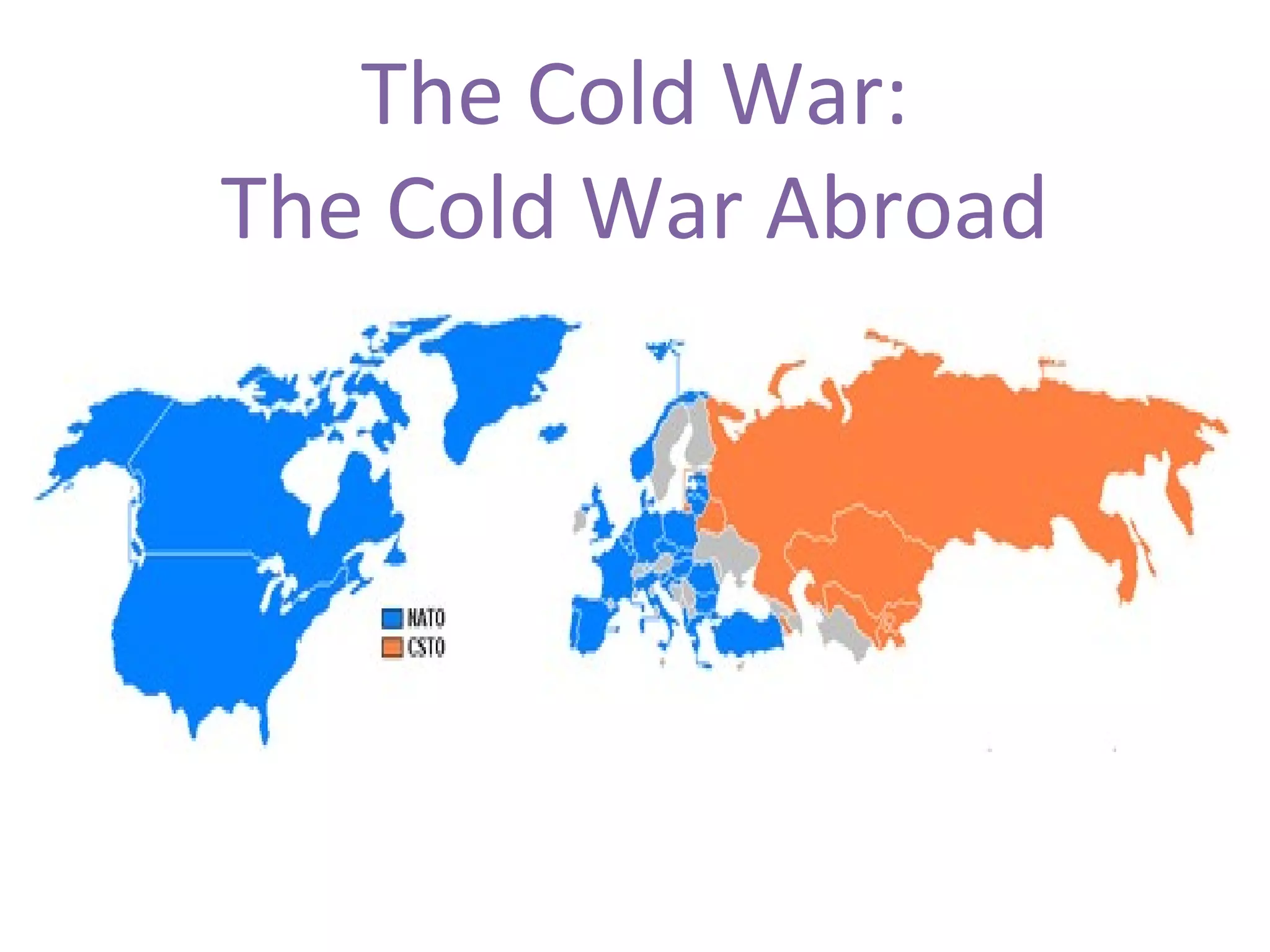
The Cold War: 
The Cold War Abroad
Troubles In Europe 
• Because of the effects of WWII on continental 
Europe they became very dependent on 
foreign investment, primarily from the US. 
• It took the massive influx of cash into the 
European economy via the Marshall Plan to 
save places like France and Italy from “turning 
red” and becoming communist states.
China: The New Communist Front 
• America had backed the Kuomintang regime 
in China since before the war. 
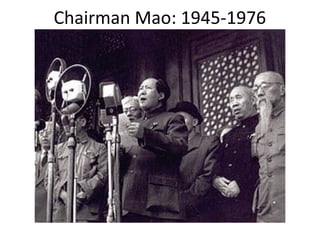
• In 1949 Mao Zedong led his revolutionaries 
against the Chinese regime and beat them in a 
bloody Civil War. 
• He created the People’s Republic of China 
which immediately allied with the Soviets.
Chairman Mao: 1945-1976
Cold War Terminology 
• A Proxy War is where two powers use third parties 
as a substitute for fighting each other directly. 
• Balance of Power, as it relates to the Cold War, is 
where the Soviets and the Americans would continue 
adding to their nuclear armaments in order to offset 
the other. 
• MAD (Mutual Assured Destruction) was a Cold War 
military strategy where both sides would be 
destroyed if one attacked the other due to each side 
possessing nuclear weapons.
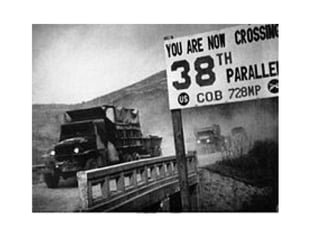
North & South Korea 
• The Korean War was largely the result of post WWII border 
disagreements. 
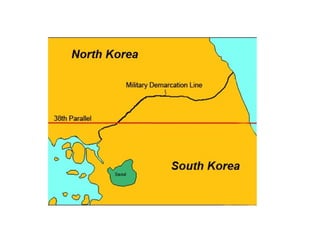
• At the end of WWII Korea had been split into two halves much the same 
way Germany had been. 
• The Japanese had occupied Korea during the war. At wars end the top half 
of Korea was held by the Soviets and the bottom by the Americans. 
• In 1950 the Soviets backed the invasion of South Korea by North Korea. 
• The UN largely driven by American interests embarked upon a military 
mission in Korea making it a “proxy war” of the Cold War. Under the 
umbrella of the UN Canada sent over 26,000 troops to Korea. 
• As the Americans approached the Chinese boarder China joined the 
conflict in 1951. 
• The conflict ended in 1953 with borders at the same place. A 
Demilitarized Zone was created to ease tensions. Korean War
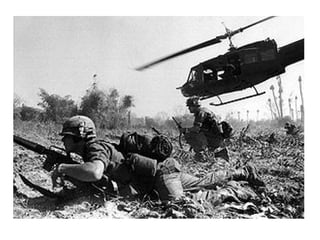
Battle In The ‘Nam’ 
• In 1953 President Eisenhower replaced 
President Truman as President of the United 
States and Nikita Khrushchev replaced the 
recently deceased Stalin. 
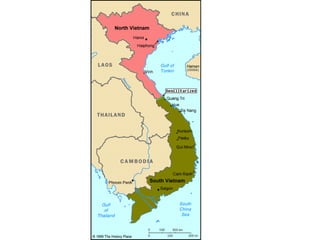
• As the Korean War wound down, the conflict 
in Vietnam began heating up. War between 
North and South Vietnam broke out in 1956 
originally with the French. Start of the Nam 
• The Americans came in to help and Vietnam 
became the second major proxy war in the 
Cold War era.
Battle In The ‘Nam’ Continued 
• The Americans were attempting to help withstand 
guerrilla attacks by the National Front for the 
Liberation of South Vietnam. 
• The US enacted a conscription policy and as a result 
90,000 people fled to Canada who became known as 
Draft Dodgers. 
• By now it was apparent that the US was staying 
involved in these national conflicts in order to 
protect governments against the threat of 
communism. 
• The North impressively drove away the American 
forces by 1975. This was a huge embarrassment to 
the American government.
• Hungarian Revolution in 1956 
• They lost.
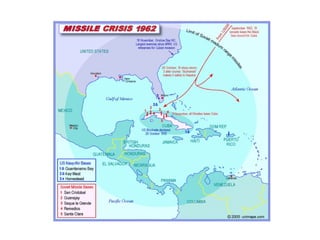
The Cuban Missile Crisis 
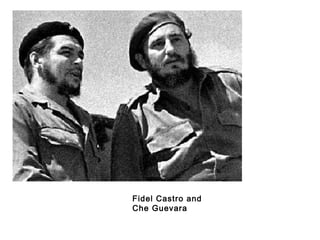
• Until 1959 Cuba had been an American colony. Castro and 
Che Guevara overthrew the Americans and made the country 
communist as it remains today. 
• The Cubans received funding from the Soviets and in 
exchange the Cubans allowed the USSR to plant nuclear 
missile bases on the island. 
• The US demanded that the Soviets remove the missile bases 
but they originally refused. 
• As the threat of nuclear war grew increasingly close the 
Soviets offered to remove the missiles in exchange for 
America leaving Cuba alone and taking missiles out of Turkey. 
• That fails when an American pilot is shot down while spying. 
• For 13 days the world sits on the brink of a nuclear war, until 
the two superpowers back down. 
• Cuba is placed under an embargo by the US, which continues 
to impact the economy of Cuba to this day.
Fidel Castro and 
Che Guevara
International Monetary Fund 
• The International Monetary Fund (IMF) is an international organization 
that was created in 1945 by 29 member countries. 
• The IMF's stated goal was to assist in the reconstruction of the world's 
international payment system post–World War II. 
• Countries contribute money to a pool through a quota system from which 
countries with payment imbalances can borrow funds temporarily. 
• The IMF describes itself as “an organization of 188 countries, working to 
foster global monetary cooperation, secure financial stability, facilitate 
international trade, promote high employment and sustainable economic 
growth, and reduce poverty around the world.”
Détente & The Thaw 
• By 1970 the cost of building arms was spiralling out 
of control and both countries stopped building up 
their armaments as much. 
• As other countries around the world had finished 
recovering from WWII they began stepping outside 
the US/Soviet spheres of influence. 
• The war re-heated up with Afghanistan in 1979. The 
Soviets backed the communist government in power 
while the US provided materials, guns and aid to the 
insurgents so that they could continue the war. 
• The War ended 9 years later with the Soviets being 
kicked out of Afghanistan after losing 100,000 troops 
and their puppet government failing.
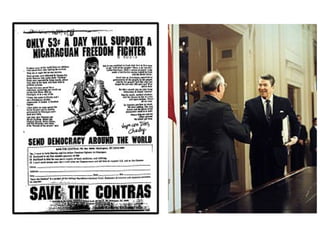
The Iran – Contra Affair 
• Was a political scandal that was discovered in 1987 
• Members of U.S. President Reagan’s government had been illegally 
selling weapons to Iran in exchange for the release of hostages 
• The profits from these weapons sales were then used to covertly 
fund the “Contras,” a right-wing extremist terrorist group fighting 
the government of Nicaragua. 
• As well, it has been alleged that the CIA was involved in aiding the 
Contras in cocaine trafficking, and that the CIA knowingly used drug 
money to fund the Contras. 
• The CIA distributed, a booklet describing ways for the average citizen 
to cause disorder, to the Nicaraguan public via airdrop. 
• President Reagan would initially deny any and all weapon sales to 
Iran, but would later admit to it, though only saying “one planeload 
of weapons” was sold.
End Of The Cold War 
• By the end of the Cold War the Soviets were starving 
their own people to keep up their military and 
armaments. 
• Mikhail Gorbachev, who had taken control of the 
USSR, decided to make peace with the US (George 
Bush Sr.) and the Cold War officially ended in 1989. 
• Following the peace, the Soviet empire would 
collapse politically, economically and socially. 
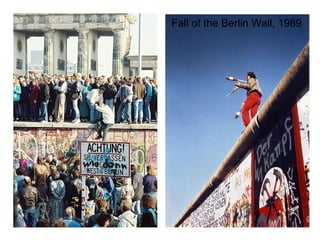
• November 1989 the Berlin Wall (Built 1961) which 
had split Germany in two was torn down by the 
citizens of East and West Germany. 
• Communism in the Soviet Union had failed
Glasnost: The Canadian Connection 
• Alexander Yakovlev, the Soviet ambassador to 
Canada, was a close friend and advisor to Mikhail 
Gorbachev 
• He had been credited as helping pioneer the idea of 
perestroika (economic reform in the USSR), and the 
driving force behind glasnost (freedom of 
information and government transparency) in the 
Soviet Union 
• Alexander was also a friend of famous PM Pierre 
Trudeau, and the two often talked of the need for 
liberalization in the USSR
Fall of the Berlin Wall, 1989
• Destruction of the Berlin Wall

Cold war abroad

  • 1.
    The Cold War: The Cold War Abroad
  • 2.
    Troubles In Europe • Because of the effects of WWII on continental Europe they became very dependent on foreign investment, primarily from the US. • It took the massive influx of cash into the European economy via the Marshall Plan to save places like France and Italy from “turning red” and becoming communist states.
  • 3.
    China: The NewCommunist Front • America had backed the Kuomintang regime in China since before the war. • In 1949 Mao Zedong led his revolutionaries against the Chinese regime and beat them in a bloody Civil War. • He created the People’s Republic of China which immediately allied with the Soviets.
  • 4.
  • 5.
    Cold War Terminology • A Proxy War is where two powers use third parties as a substitute for fighting each other directly. • Balance of Power, as it relates to the Cold War, is where the Soviets and the Americans would continue adding to their nuclear armaments in order to offset the other. • MAD (Mutual Assured Destruction) was a Cold War military strategy where both sides would be destroyed if one attacked the other due to each side possessing nuclear weapons.
  • 6.
    North & SouthKorea • The Korean War was largely the result of post WWII border disagreements. • At the end of WWII Korea had been split into two halves much the same way Germany had been. • The Japanese had occupied Korea during the war. At wars end the top half of Korea was held by the Soviets and the bottom by the Americans. • In 1950 the Soviets backed the invasion of South Korea by North Korea. • The UN largely driven by American interests embarked upon a military mission in Korea making it a “proxy war” of the Cold War. Under the umbrella of the UN Canada sent over 26,000 troops to Korea. • As the Americans approached the Chinese boarder China joined the conflict in 1951. • The conflict ended in 1953 with borders at the same place. A Demilitarized Zone was created to ease tensions. Korean War
  • 9.
    Battle In The‘Nam’ • In 1953 President Eisenhower replaced President Truman as President of the United States and Nikita Khrushchev replaced the recently deceased Stalin. • As the Korean War wound down, the conflict in Vietnam began heating up. War between North and South Vietnam broke out in 1956 originally with the French. Start of the Nam • The Americans came in to help and Vietnam became the second major proxy war in the Cold War era.
  • 11.
    Battle In The‘Nam’ Continued • The Americans were attempting to help withstand guerrilla attacks by the National Front for the Liberation of South Vietnam. • The US enacted a conscription policy and as a result 90,000 people fled to Canada who became known as Draft Dodgers. • By now it was apparent that the US was staying involved in these national conflicts in order to protect governments against the threat of communism. • The North impressively drove away the American forces by 1975. This was a huge embarrassment to the American government.
  • 13.
    • Hungarian Revolutionin 1956 • They lost.
  • 14.
    The Cuban MissileCrisis • Until 1959 Cuba had been an American colony. Castro and Che Guevara overthrew the Americans and made the country communist as it remains today. • The Cubans received funding from the Soviets and in exchange the Cubans allowed the USSR to plant nuclear missile bases on the island. • The US demanded that the Soviets remove the missile bases but they originally refused. • As the threat of nuclear war grew increasingly close the Soviets offered to remove the missiles in exchange for America leaving Cuba alone and taking missiles out of Turkey. • That fails when an American pilot is shot down while spying. • For 13 days the world sits on the brink of a nuclear war, until the two superpowers back down. • Cuba is placed under an embargo by the US, which continues to impact the economy of Cuba to this day.
  • 15.
    Fidel Castro and Che Guevara
  • 17.
    International Monetary Fund • The International Monetary Fund (IMF) is an international organization that was created in 1945 by 29 member countries. • The IMF's stated goal was to assist in the reconstruction of the world's international payment system post–World War II. • Countries contribute money to a pool through a quota system from which countries with payment imbalances can borrow funds temporarily. • The IMF describes itself as “an organization of 188 countries, working to foster global monetary cooperation, secure financial stability, facilitate international trade, promote high employment and sustainable economic growth, and reduce poverty around the world.”
  • 18.
    Détente & TheThaw • By 1970 the cost of building arms was spiralling out of control and both countries stopped building up their armaments as much. • As other countries around the world had finished recovering from WWII they began stepping outside the US/Soviet spheres of influence. • The war re-heated up with Afghanistan in 1979. The Soviets backed the communist government in power while the US provided materials, guns and aid to the insurgents so that they could continue the war. • The War ended 9 years later with the Soviets being kicked out of Afghanistan after losing 100,000 troops and their puppet government failing.
  • 19.
    The Iran –Contra Affair • Was a political scandal that was discovered in 1987 • Members of U.S. President Reagan’s government had been illegally selling weapons to Iran in exchange for the release of hostages • The profits from these weapons sales were then used to covertly fund the “Contras,” a right-wing extremist terrorist group fighting the government of Nicaragua. • As well, it has been alleged that the CIA was involved in aiding the Contras in cocaine trafficking, and that the CIA knowingly used drug money to fund the Contras. • The CIA distributed, a booklet describing ways for the average citizen to cause disorder, to the Nicaraguan public via airdrop. • President Reagan would initially deny any and all weapon sales to Iran, but would later admit to it, though only saying “one planeload of weapons” was sold.
  • 21.
    End Of TheCold War • By the end of the Cold War the Soviets were starving their own people to keep up their military and armaments. • Mikhail Gorbachev, who had taken control of the USSR, decided to make peace with the US (George Bush Sr.) and the Cold War officially ended in 1989. • Following the peace, the Soviet empire would collapse politically, economically and socially. • November 1989 the Berlin Wall (Built 1961) which had split Germany in two was torn down by the citizens of East and West Germany. • Communism in the Soviet Union had failed
  • 22.
    Glasnost: The CanadianConnection • Alexander Yakovlev, the Soviet ambassador to Canada, was a close friend and advisor to Mikhail Gorbachev • He had been credited as helping pioneer the idea of perestroika (economic reform in the USSR), and the driving force behind glasnost (freedom of information and government transparency) in the Soviet Union • Alexander was also a friend of famous PM Pierre Trudeau, and the two often talked of the need for liberalization in the USSR
  • 23.
    Fall of theBerlin Wall, 1989
  • 24.
    • Destruction ofthe Berlin Wall