Code of Ethics
 for Social Technology Professionals
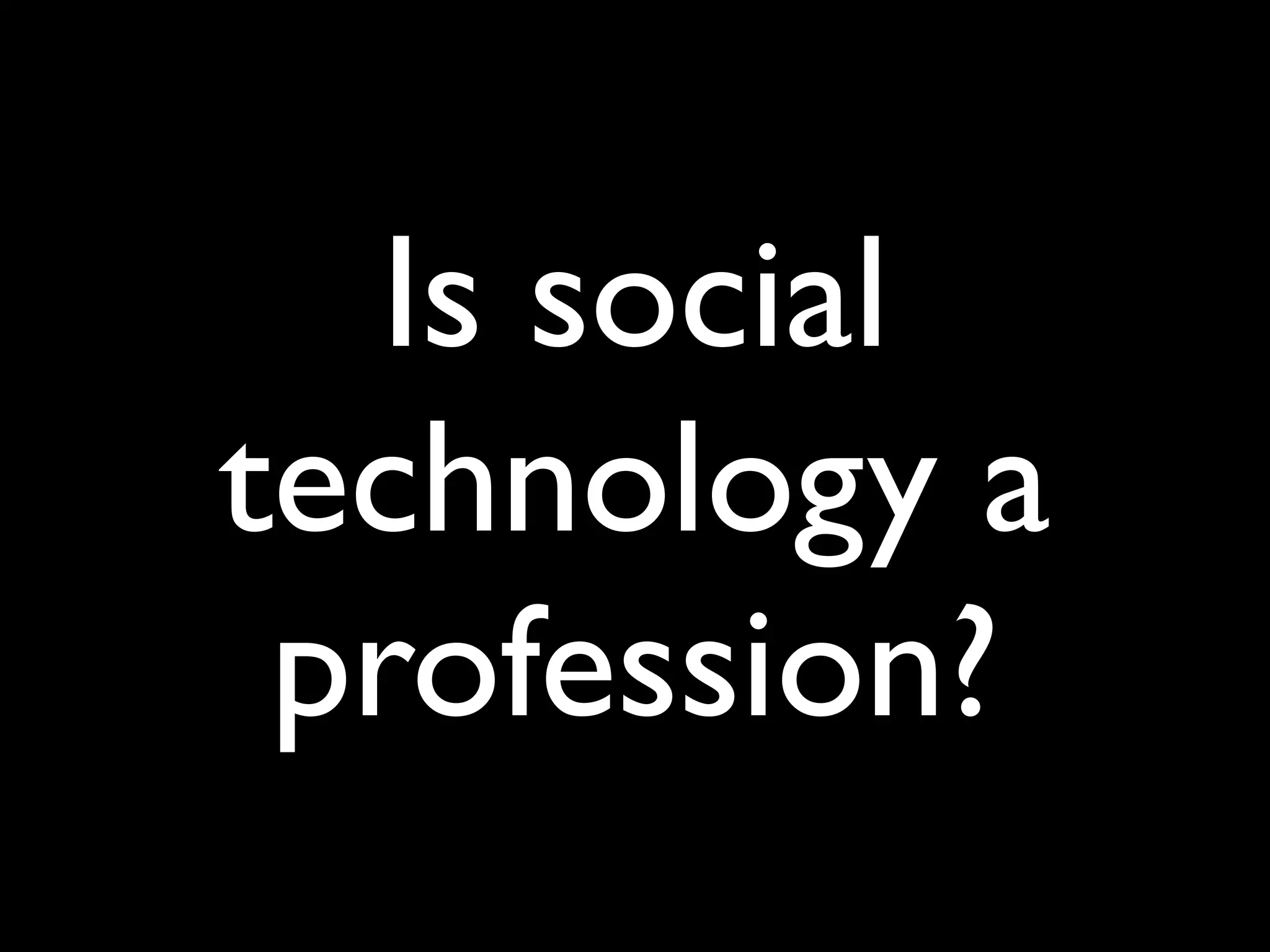
Is social
technology a
 profession?
Claiming our rightful place
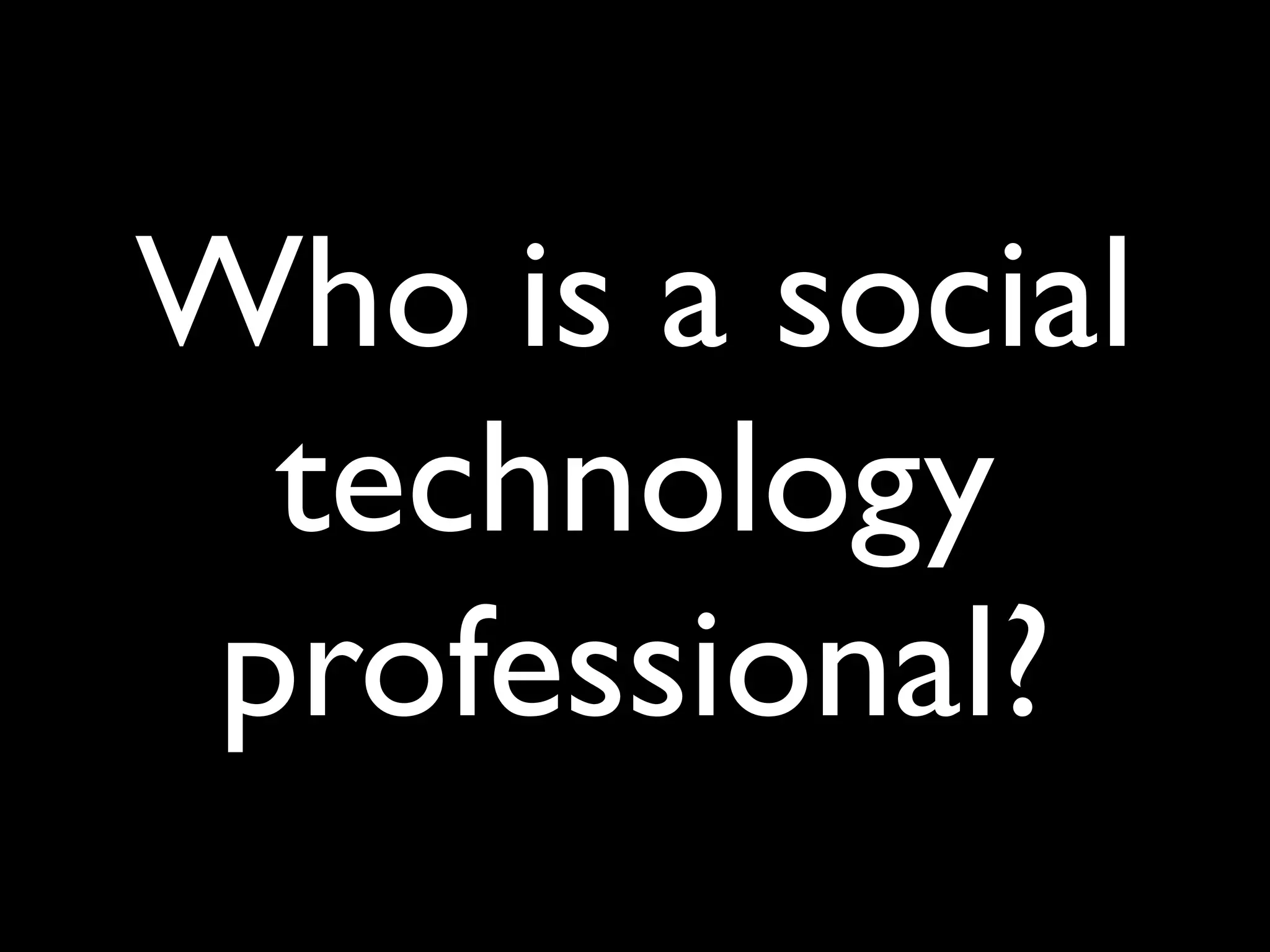
Who is a social
 technology
professional?
blogger
            journalist
publicist
            marketer
researcher
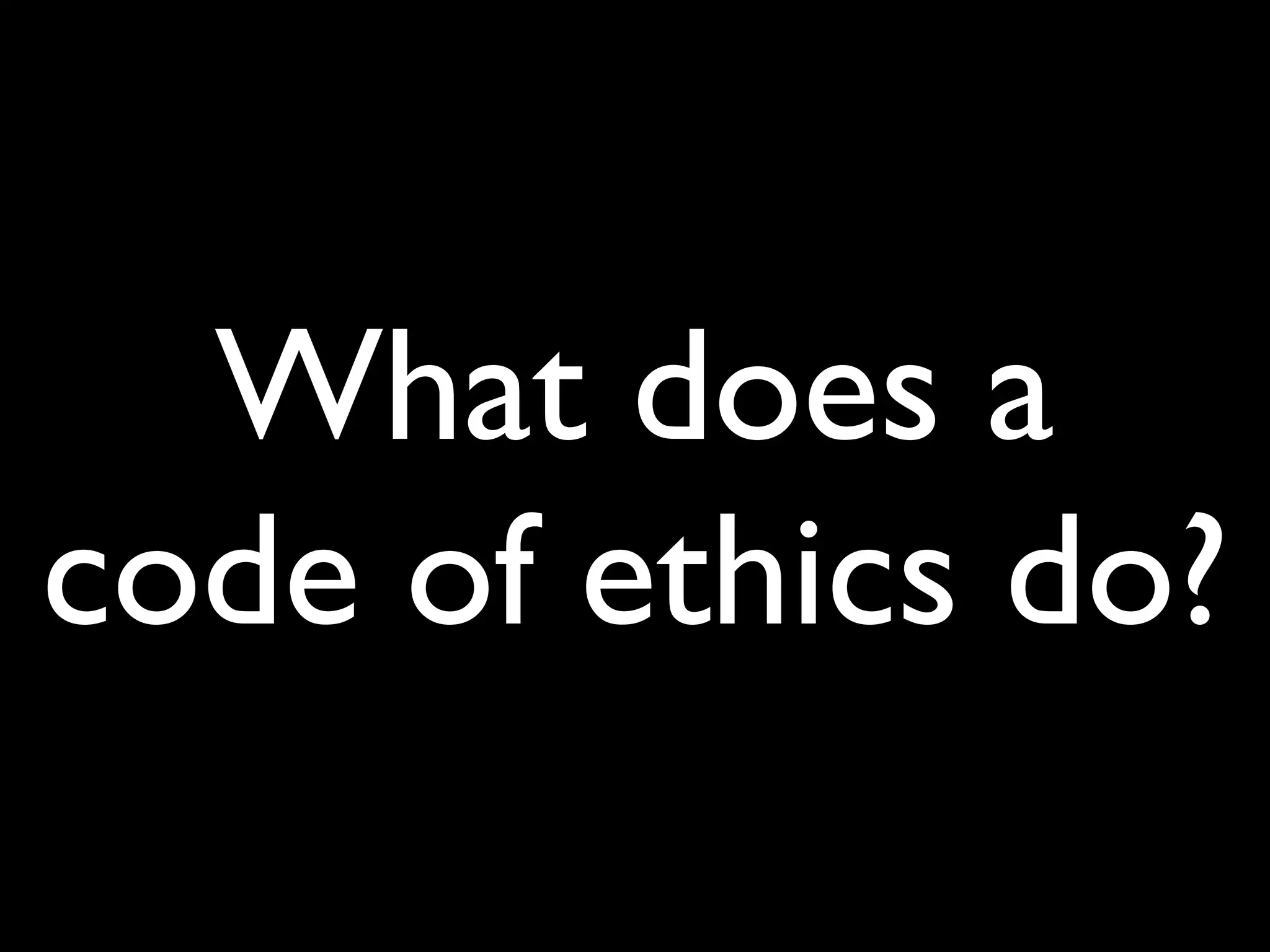
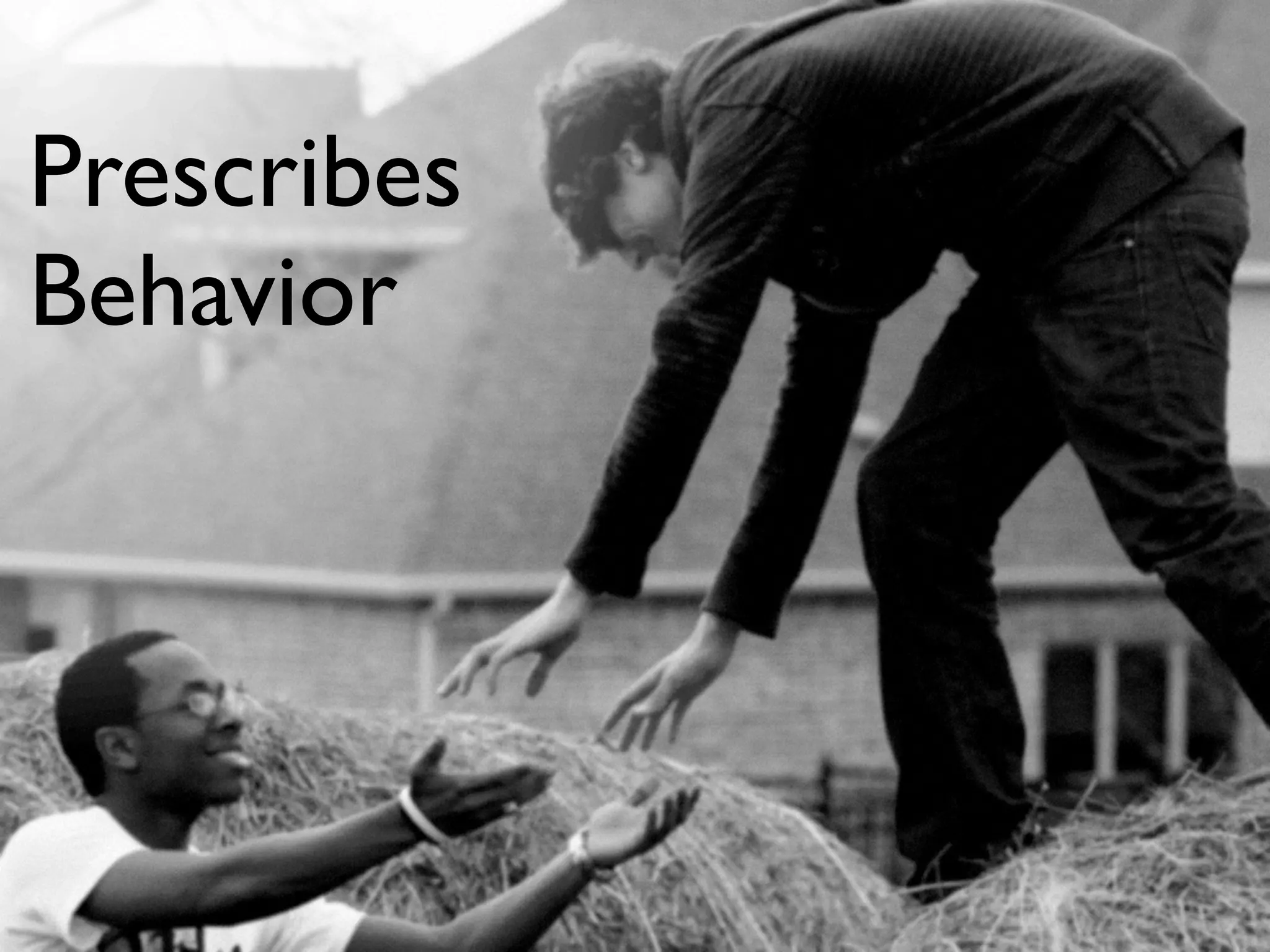
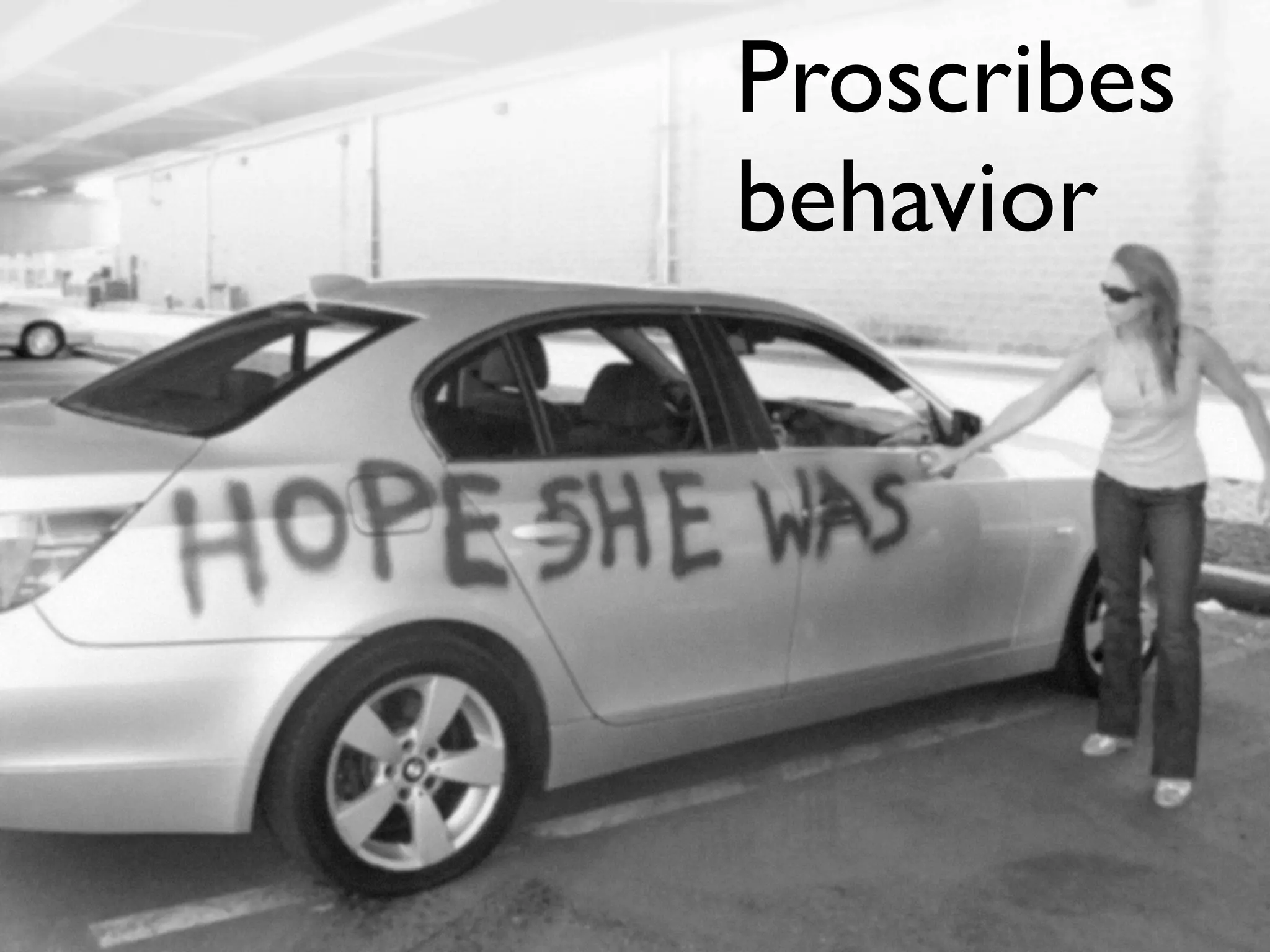
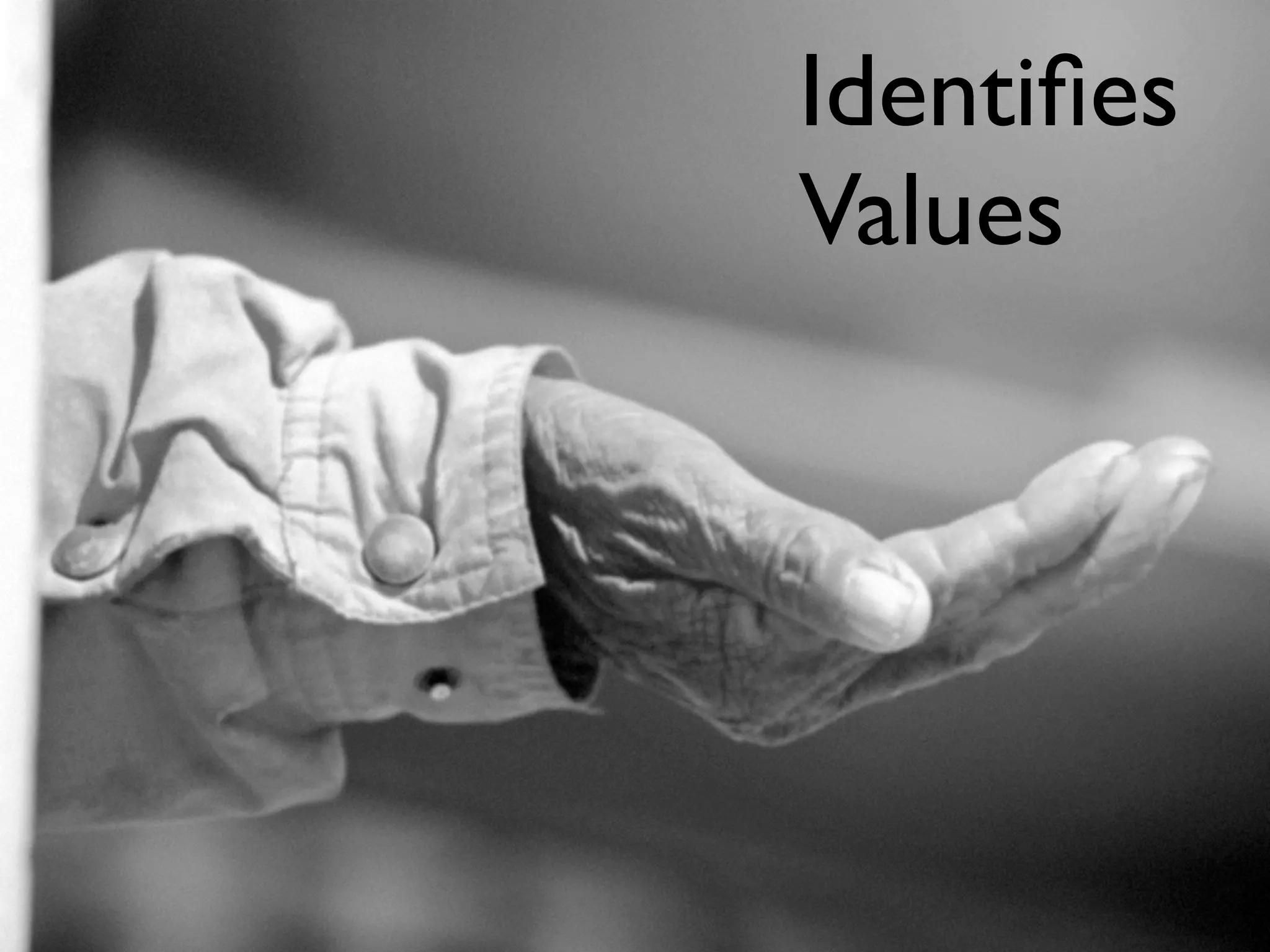
What does a
code of ethics do?
Prescribes
Behavior
Proscribes
behavior
Identifies
Values
The Code of
Ethics for Social
  Technology
 Professionals
Introduction
Social technology professionals have a responsibility
to the public and to their profession to provide
accurate information in a spirit of full disclosure.
Guiding Principles

Strive to be accurate in the information you
provide about yourself, organizations you represent,
and others.
Guiding Principles

Foster trust in social technology by engaging in
behavior that encourages and enhances the open
and free exchange of ideas.
Guiding Principles

Avoid any action or inaction that could cause harm
to others.
Standards of Behavior
Accuracy
Always present information in the most accurate,
straightforward manner possible.
Promptly correct any inaccurate information that you
are responsible for disseminating.
Promptly respond to any inaccurate comments about
or inaccurate responses to information that you are
responsible for disseminating.
Standards of Behavior
Accuracy
Always identify yourself and who you represent
accurately, honestly, and transparently.
Avoid any deceptive or misleading practices.
Standards of Behavior
Fair Use
Whenever possible, link to the work of others that
you are quoting, commenting on, or using within the
legal provisions of fair use.
Always credit the sources of information that did not
originate with you, unless the sources consent
otherwise.
Standards of Behavior
Fair Treatment
Treat all members of the community with dignity and
respect.
Never single out individuals or groups for inequitable
treatment based on an immutable characteristic, such
as race, gender, nationality, age, disability or sexual
orientation.
Standards of Behavior
Transparency
Disclose any commercial or personal relationships
that you have with people or organizations relevant
to content you create.
Disclose any remuneration, including free or
discounted products or services, that you receive in
exchange for reviewing, discussing, or commenting on
products or services, or their competition.
Standards of Behavior
Transparency
Avoid providing special treatment to sponsors or
advertisers, and if special treatment is provided,
clearly identify it as such.
Clearly differentiate between advertising and editorial
content.
Standards of Behavior
Professionalism
Always act in the best interest of your client, unless
doing so would violate another standard in the Code
of Ethics.
Avoid any actions or relationships that could be
perceived as presenting a conflict of interest or would
be detrimental to free and fair decisionmaking.
Standards of Behavior
Professionalism
Accurately describe both the potential risks and
potential benefits of any work that you do on behalf
of a client.
Always abide by both the spirit and letter of any laws
and regulations that apply to your work.
Who will enforce
  the code?
Current infrastructure
Proposed infrastructure
Image Credits


                  flickr.com/blmurch                                 flickr.com/sjcockell       flickr.com/hayleygee


                     chromoz.com                                    flickr.com/proimos          flickr.com/hayleygee


                                                   Ethics Resources
prsa.org                                             marketingpower.com                   ieee.org
spj.org                                              dsa.org                              cyberjournalist.net
ala.org                                              apa.org

   The content of this presentation is licensed under a
   Creative Commons Attribution Non-Commercial Share Alike 3.0 License                                       chadswaney.com

Code Of Ethics

  • 1.
    Code of Ethics for Social Technology Professionals
  • 2.
  • 3.
  • 4.
    Who is asocial technology professional?
  • 5.
    blogger journalist publicist marketer researcher
  • 6.
    What does a codeof ethics do?
  • 7.
  • 8.
  • 9.
  • 10.
    The Code of Ethicsfor Social Technology Professionals
  • 11.
    Introduction Social technology professionalshave a responsibility to the public and to their profession to provide accurate information in a spirit of full disclosure.
  • 12.
    Guiding Principles Strive tobe accurate in the information you provide about yourself, organizations you represent, and others.
  • 13.
    Guiding Principles Foster trustin social technology by engaging in behavior that encourages and enhances the open and free exchange of ideas.
  • 14.
    Guiding Principles Avoid anyaction or inaction that could cause harm to others.
  • 15.
    Standards of Behavior Accuracy Alwayspresent information in the most accurate, straightforward manner possible. Promptly correct any inaccurate information that you are responsible for disseminating. Promptly respond to any inaccurate comments about or inaccurate responses to information that you are responsible for disseminating.
  • 16.
    Standards of Behavior Accuracy Alwaysidentify yourself and who you represent accurately, honestly, and transparently. Avoid any deceptive or misleading practices.
  • 17.
    Standards of Behavior FairUse Whenever possible, link to the work of others that you are quoting, commenting on, or using within the legal provisions of fair use. Always credit the sources of information that did not originate with you, unless the sources consent otherwise.
  • 18.
    Standards of Behavior FairTreatment Treat all members of the community with dignity and respect. Never single out individuals or groups for inequitable treatment based on an immutable characteristic, such as race, gender, nationality, age, disability or sexual orientation.
  • 19.
    Standards of Behavior Transparency Discloseany commercial or personal relationships that you have with people or organizations relevant to content you create. Disclose any remuneration, including free or discounted products or services, that you receive in exchange for reviewing, discussing, or commenting on products or services, or their competition.
  • 20.
    Standards of Behavior Transparency Avoidproviding special treatment to sponsors or advertisers, and if special treatment is provided, clearly identify it as such. Clearly differentiate between advertising and editorial content.
  • 21.
    Standards of Behavior Professionalism Alwaysact in the best interest of your client, unless doing so would violate another standard in the Code of Ethics. Avoid any actions or relationships that could be perceived as presenting a conflict of interest or would be detrimental to free and fair decisionmaking.
  • 22.
    Standards of Behavior Professionalism Accuratelydescribe both the potential risks and potential benefits of any work that you do on behalf of a client. Always abide by both the spirit and letter of any laws and regulations that apply to your work.
  • 23.
  • 24.
  • 25.
  • 26.
    Image Credits flickr.com/blmurch flickr.com/sjcockell flickr.com/hayleygee chromoz.com flickr.com/proimos flickr.com/hayleygee Ethics Resources prsa.org marketingpower.com ieee.org spj.org dsa.org cyberjournalist.net ala.org apa.org The content of this presentation is licensed under a Creative Commons Attribution Non-Commercial Share Alike 3.0 License chadswaney.com