


FLOW
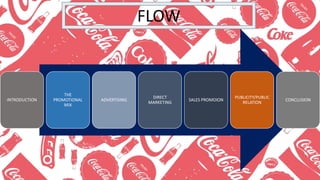
INTRODUCTION
THE
PROMOTIONAL
MIX
ADVERTISING
DIRECT
MARKETING
SALES PROMOION
PUBLICITY/PUBLIC
RELATION
CONCLUSION
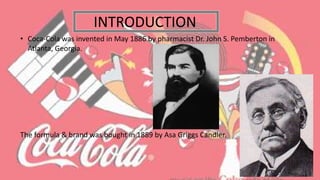
• Coca-Cola was invented in May 1886 by pharmacist Dr. John S. Pemberton in
Atlanta, Georgia.
The formula & brand was bought in 1889 by Asa Griggs Candler.
INTRODUCTION
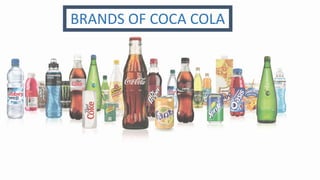
BRANDS OF COCA COLA
CONDITION OF COCA-COLA IN AUSTRALIA :
• THE 50% OF TEENAGERS AND YOUNG ADULTS HAD NEVER TASTED
COCA-COLA
• A GLOBALLY RECOGNISED BRAND WAS NOT KNOWN TO MOST OF
THE YOUTH
• SALES WAS DECREASING
• THE BRAND WAS NOT CONNECTED WITH THE PEOPLE.
OBJECTIVES
• Increase consumption of Coca-Cola over the summer period.
• Get people talking about Coke again.
• consumers see Coke in a way that would encourage them to
actually consume the product, not just love the brand.
• Build Coca-Cola not as drink to kill thirsty but drink to connect
people.
• Create emotional bond between target audience and the
product.
STRATEGY
• By offering the customer the sense of ownership over the brand.
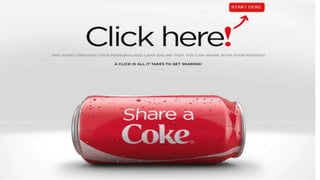
• Coca-Cola asked the people to “Share a Coke”
With some one they know ,
Want to know , &
With who are important in their lives.
By sharing a coke they leave a message about why they want to
share the coke.
The social media was the main communication tool to realize this
strategy
STRATEGY
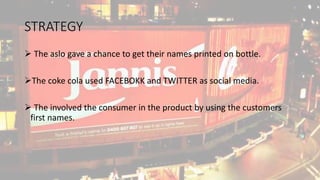
 The aslo gave a chance to get their names printed on bottle.
The coke cola used FACEBOKK and TWITTER as social media.
 The involved the consumer in the product by using the customers
first names.
Mainly Targeted To
 Mainly targeted to TEENAGERS & YOUNG ADULTS .
 17 % of the population.
The 50% TEENAGERS who not even TASTED coca cola.
People who mostly uses social networking sites.
Life surrounded by friends and family.
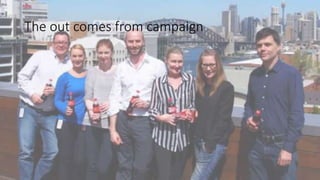
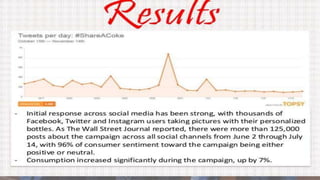
The out comes from campaign
Coca cola imc Australia

Coca cola imc Australia

  • 2.
  • 3.
    • Coca-Cola wasinvented in May 1886 by pharmacist Dr. John S. Pemberton in Atlanta, Georgia. The formula & brand was bought in 1889 by Asa Griggs Candler. INTRODUCTION
  • 4.
  • 5.
    CONDITION OF COCA-COLAIN AUSTRALIA : • THE 50% OF TEENAGERS AND YOUNG ADULTS HAD NEVER TASTED COCA-COLA • A GLOBALLY RECOGNISED BRAND WAS NOT KNOWN TO MOST OF THE YOUTH • SALES WAS DECREASING • THE BRAND WAS NOT CONNECTED WITH THE PEOPLE.
  • 7.
    OBJECTIVES • Increase consumptionof Coca-Cola over the summer period. • Get people talking about Coke again. • consumers see Coke in a way that would encourage them to actually consume the product, not just love the brand. • Build Coca-Cola not as drink to kill thirsty but drink to connect people. • Create emotional bond between target audience and the product.
  • 8.
    STRATEGY • By offeringthe customer the sense of ownership over the brand. • Coca-Cola asked the people to “Share a Coke” With some one they know , Want to know , & With who are important in their lives. By sharing a coke they leave a message about why they want to share the coke. The social media was the main communication tool to realize this strategy
  • 9.
    STRATEGY  The aslogave a chance to get their names printed on bottle. The coke cola used FACEBOKK and TWITTER as social media.  The involved the consumer in the product by using the customers first names.
  • 10.
    Mainly Targeted To Mainly targeted to TEENAGERS & YOUNG ADULTS .  17 % of the population. The 50% TEENAGERS who not even TASTED coca cola. People who mostly uses social networking sites. Life surrounded by friends and family.
  • 11.
    The out comesfrom campaign