Hallmark of Successful Management Implementation
PRESENTED BY : Sanjeev (Group Leader) Chinmay (Member) Geetanjali (Member)
Definition  Coordination is the management of interdependence in work situations. It is the orderly synchronization or fitting together of the interdependent efforts of individuals, in order to attain a common goal. To coordinate is to keep expenditure proportionate to financial resources, equipments and tools to production needs and so on.
What Coordination is? Coordination  is the act of coordinating , making different people or things work together for a goal or effect.
Introduction To Coordination Meaning:- 1. The act or state of coordinating or of being coordinated. 2. Proper order or relationship.  3. Harmonious combination or interaction, as of functions or parts.
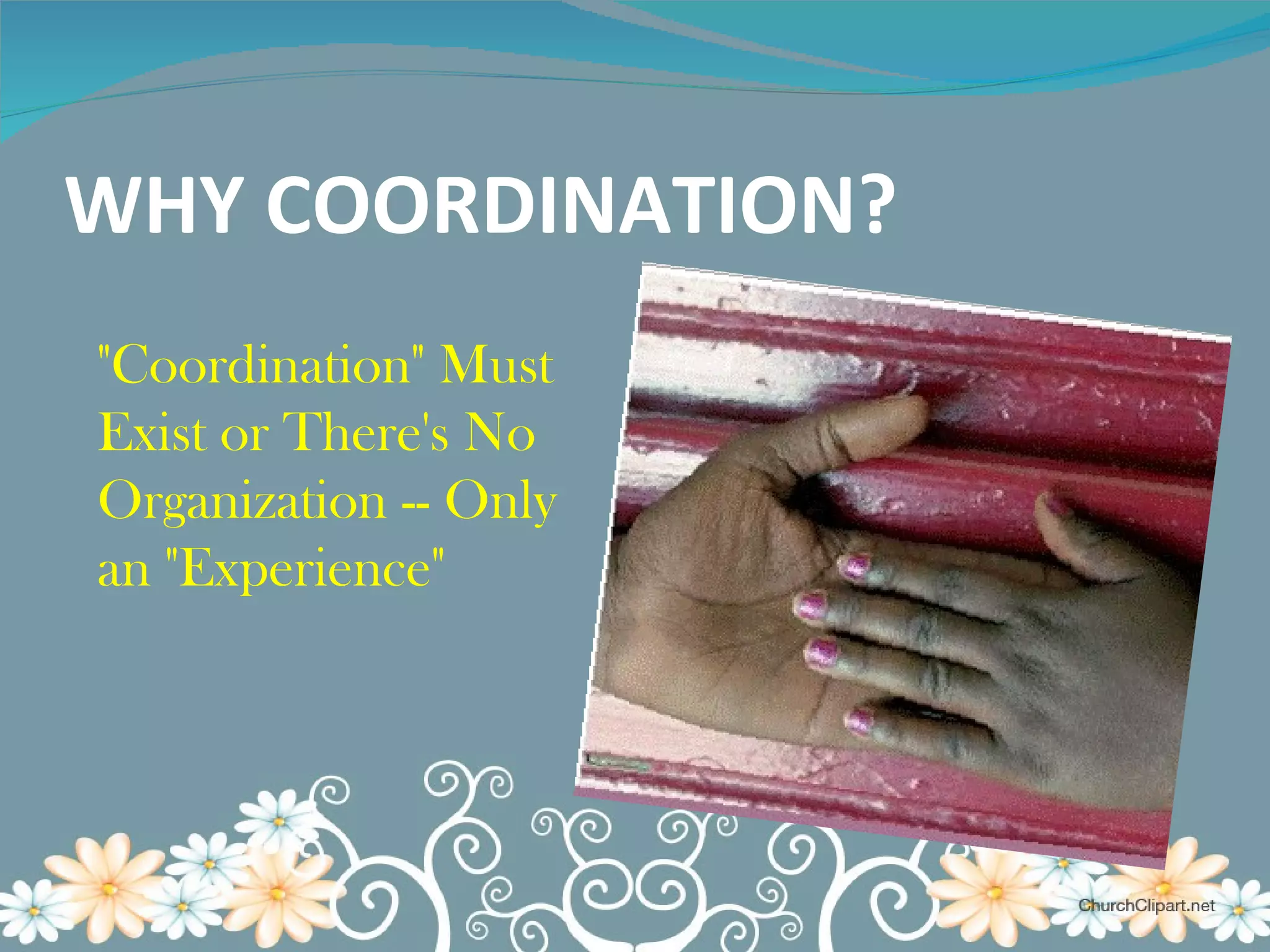
WHY COORDINATION? "Coordination" Must Exist or There's No Organization -- Only an "Experience"
FEATURES OF COORDINATION  Essence of Management Managerial Responsibility  Deliberate effort  Creativity Continuous Process Required in Group Activity  Different from Cooperation  Systems Concept
Importance Of Coordination  Integration of Group Efforts  Facilitates Mutual Dependence  Helps to Resolve Conflicts Development of Team Spirit Motivates Sub-ordinates  Better Relations  Optimum Use of Resources  Higher Efficiency Reduces Wastages  Encourages Initiative Corporate Image
Division of labour Interdependence of units Individual interests versus organizational interests Need for Coordination
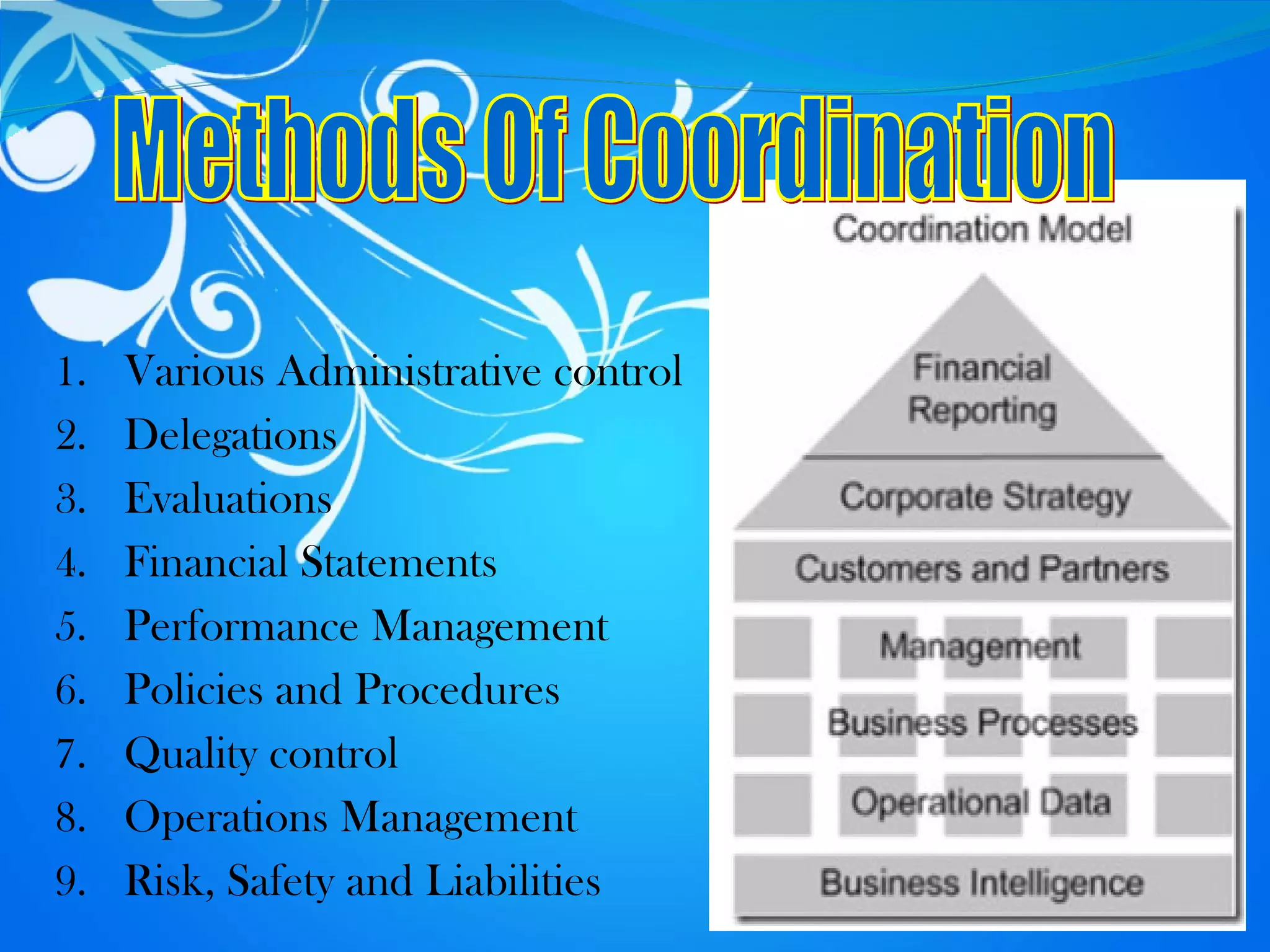
Various Administrative control  Delegations  Evaluations  Financial Statements  Performance Management  Policies and Procedures  Quality control  Operations Management  Risk, Safety and Liabilities  Methods Of Coordination
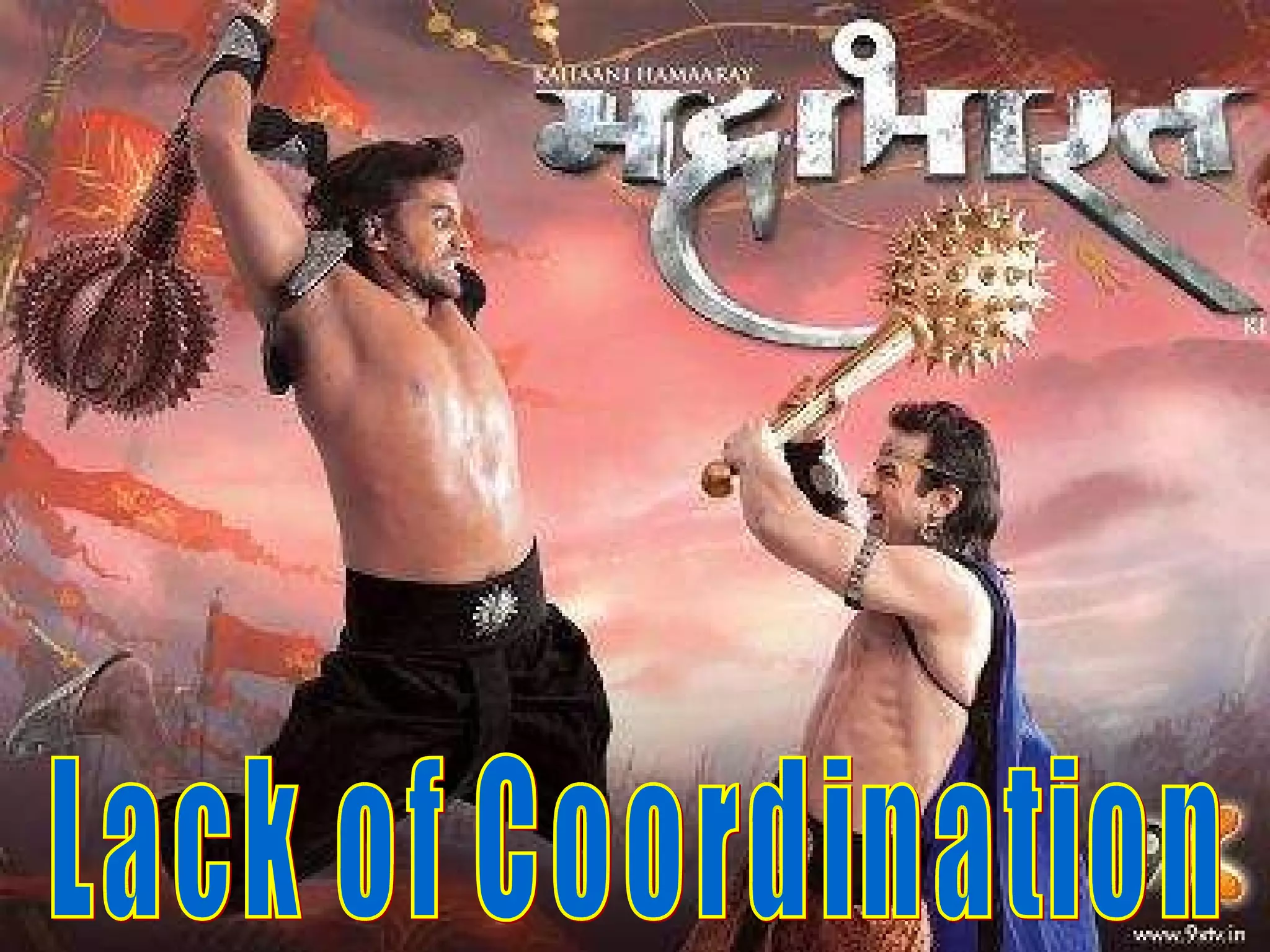
Lack of Coordination
Elements Of Successful Coordination   The  Mandate Dimension  -Leadership commitment  -Ministers' and stakeholders' buy in -Defined and agreed joint outcomes  The System Dimension  -Appropriate and documented governance and accountability frameworks  -Sufficient and appropriate resources  -Process to measure performance from established baselines The Behaviors Dimension -Right representation, skills and team leadership -Organizational cultures that support coordination -Shared culture, language and values
Successful Coordination
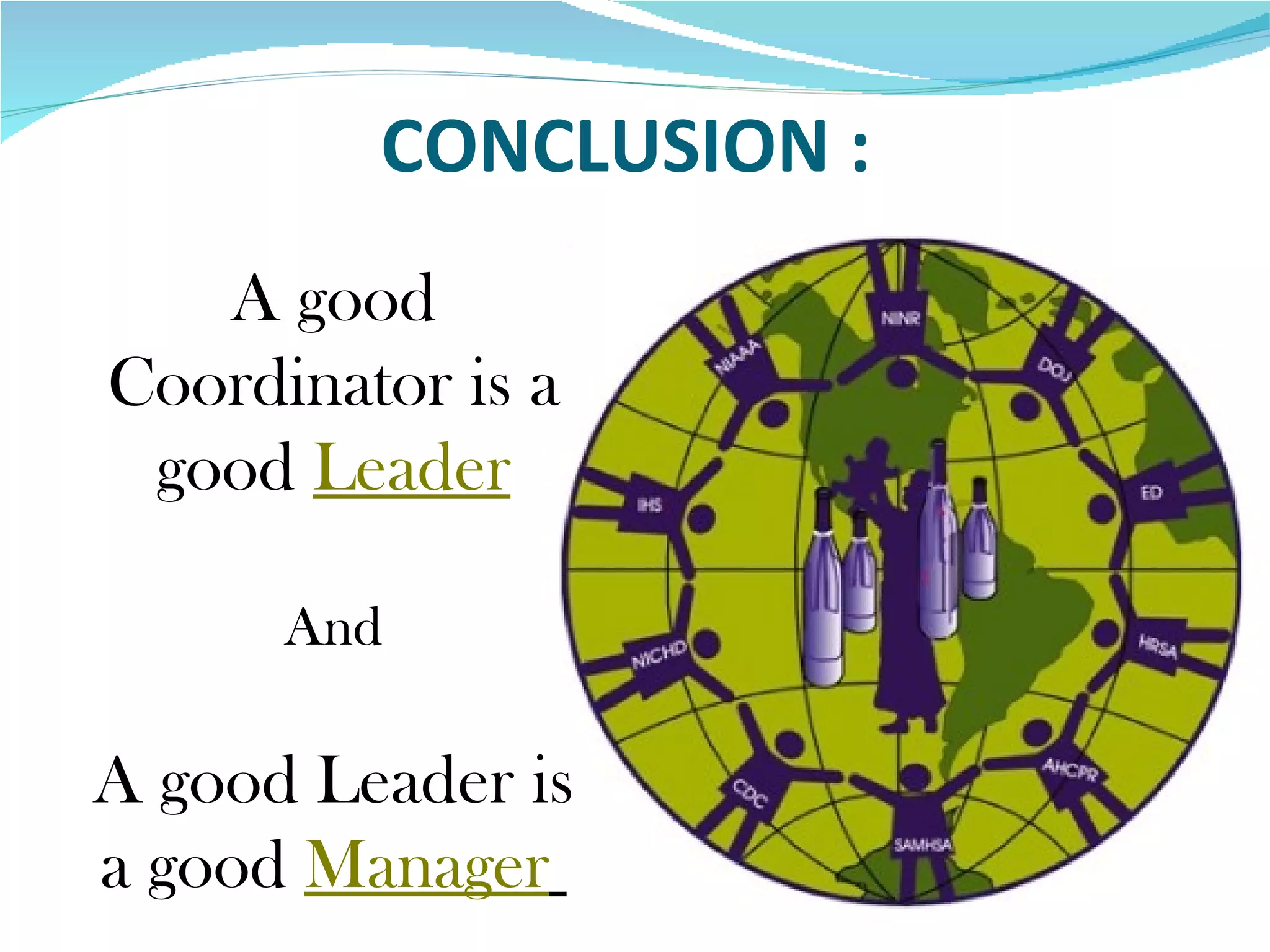
CONCLUSION :  A good Coordinator is a good  Leader And A good Leader is a good  Manager
 

Co ordination

  • 1.
    Hallmark of SuccessfulManagement Implementation
  • 2.
    PRESENTED BY :Sanjeev (Group Leader) Chinmay (Member) Geetanjali (Member)
  • 3.
    Definition Coordinationis the management of interdependence in work situations. It is the orderly synchronization or fitting together of the interdependent efforts of individuals, in order to attain a common goal. To coordinate is to keep expenditure proportionate to financial resources, equipments and tools to production needs and so on.
  • 4.
    What Coordination is?Coordination is the act of coordinating , making different people or things work together for a goal or effect.
  • 5.
    Introduction To CoordinationMeaning:- 1. The act or state of coordinating or of being coordinated. 2. Proper order or relationship. 3. Harmonious combination or interaction, as of functions or parts.
  • 6.
    WHY COORDINATION? "Coordination"Must Exist or There's No Organization -- Only an "Experience"
  • 7.
    FEATURES OF COORDINATION Essence of Management Managerial Responsibility Deliberate effort Creativity Continuous Process Required in Group Activity Different from Cooperation Systems Concept
  • 8.
    Importance Of Coordination Integration of Group Efforts Facilitates Mutual Dependence Helps to Resolve Conflicts Development of Team Spirit Motivates Sub-ordinates Better Relations Optimum Use of Resources Higher Efficiency Reduces Wastages Encourages Initiative Corporate Image
  • 9.
    Division of labourInterdependence of units Individual interests versus organizational interests Need for Coordination
  • 10.
    Various Administrative control Delegations Evaluations Financial Statements Performance Management Policies and Procedures Quality control Operations Management Risk, Safety and Liabilities Methods Of Coordination
  • 11.
  • 12.
    Elements Of SuccessfulCoordination The Mandate Dimension -Leadership commitment -Ministers' and stakeholders' buy in -Defined and agreed joint outcomes The System Dimension -Appropriate and documented governance and accountability frameworks -Sufficient and appropriate resources -Process to measure performance from established baselines The Behaviors Dimension -Right representation, skills and team leadership -Organizational cultures that support coordination -Shared culture, language and values
  • 13.
  • 14.
    CONCLUSION : A good Coordinator is a good Leader And A good Leader is a good Manager
  • 15.