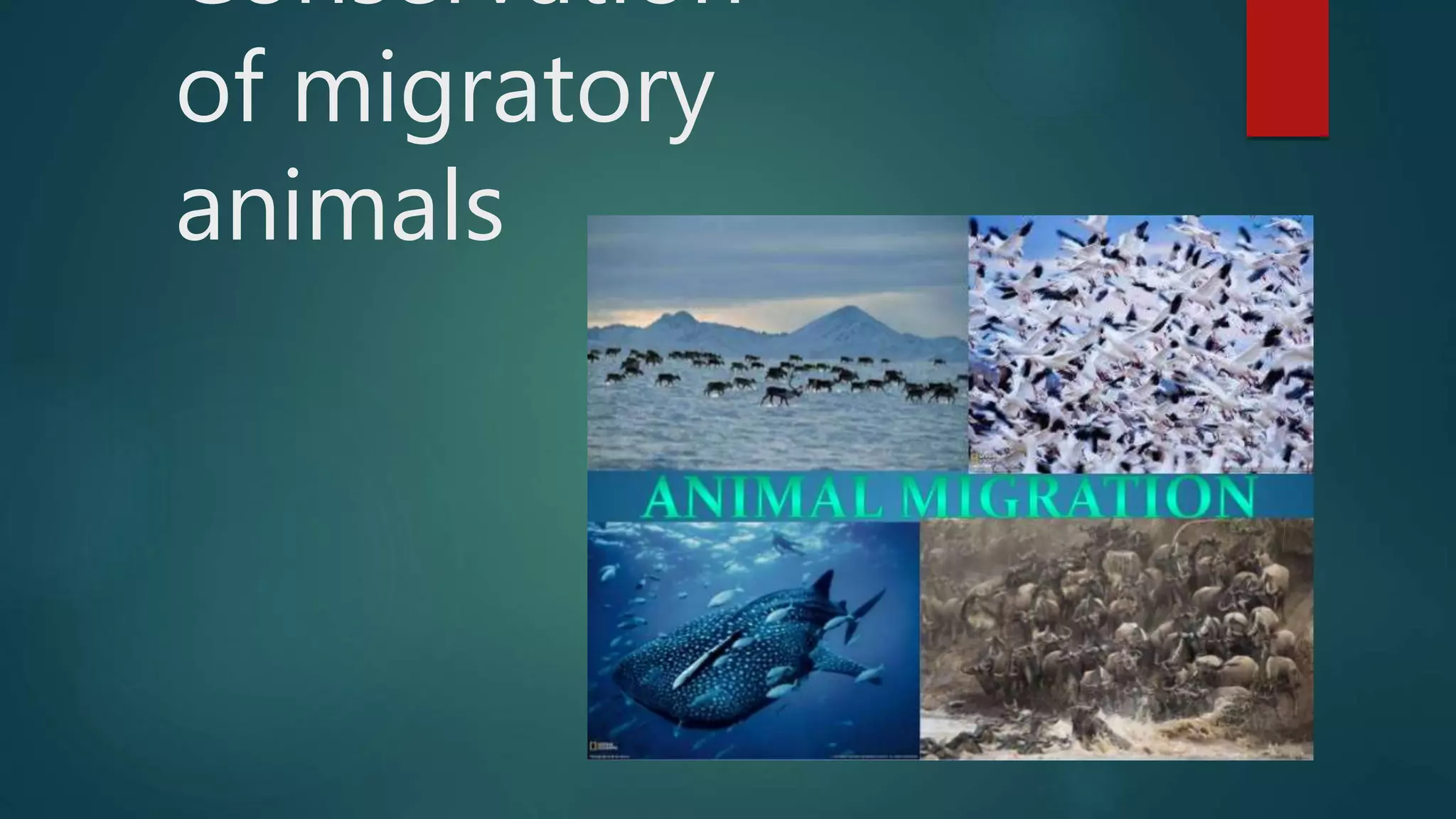


Conservation
of migratory
animals
 Massive animal migrations are among nature's most
inspiring events. Whether by wing, fin or hoof, the
distance some creatures travel in search of a new
habitat is paralleled only by what they endure to
survive.
 Migrations also play a vital role in our natural
ecosystems — they are the veins and arteries of
Mother Earth — and they are a reminder that the
world's habitats are interconnected.
Animal migration
 What is animal migration?
long-distance movement of individuals, usually on a seasonal basis.
It is found in all major animal groups, including birds, mammals, fish, reptiles,
amphibians, insects, and crustaceans
 Reasons for migration?
local climate,
local availability of food,
the season of the year
mating
 To be a true migration it should be a annual or a seasonal occurance
 Examples:
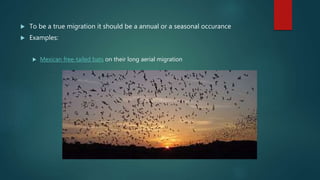
 Mexican free-tailed bats on their long aerial migration
 Christmas island red crab migration
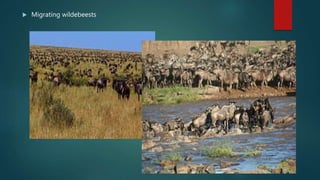
 Migrating wildebeests
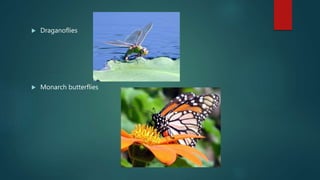
 Draganoflies
 Monarch butterflies
Why we need to conserve migratory
animals
 Although animal migration may be a ubiquitous phenomenon, it is also an increasingly
endangered one.
 In virtually every corner of the globe, migratory animals face a growing array of threats,
including
 habitat destruction,
 overexploitation,
 disease, and global climate change
Saving the great migrations will be one of the most difficult conservation challenges
of the 21st century. But if we fail to do so, we will pay a heavy price—aesthetically,
ecologically, and even economically.
 spring migration of songbirds across the Gulf of Mexico report that the
number of nightly flights dropped by nearly 50% between 1963 and 1989.
 58% of the elk migratory routes and 78% of the pronghorn routes in the
Greater Yellowstone Ecosystem have been lost due to development.
 more than 100 stocks of salmon in the Pacific North-west that have been
driven to extinction because of dam construction, logging, water diversion,
and other human activities.
 The Aviation
Ministry’s failure to
heed the warnings
issued by the
environmentalists
over the birds’
movement in
Mattala airstrip has
now become a
great threat for air
travel,
environmentalists
claim.(Sunday
leader)
About CMS
The Convention on Migratory
Species, also known as the Bonn
Convention, aims to conserve
terrestrial, aquatic and avian
migratory species throughout their
range.

Cms

  • 1.
  • 2.
     Massive animalmigrations are among nature's most inspiring events. Whether by wing, fin or hoof, the distance some creatures travel in search of a new habitat is paralleled only by what they endure to survive.  Migrations also play a vital role in our natural ecosystems — they are the veins and arteries of Mother Earth — and they are a reminder that the world's habitats are interconnected.
  • 3.
    Animal migration  Whatis animal migration? long-distance movement of individuals, usually on a seasonal basis. It is found in all major animal groups, including birds, mammals, fish, reptiles, amphibians, insects, and crustaceans  Reasons for migration? local climate, local availability of food, the season of the year mating
  • 4.
     To bea true migration it should be a annual or a seasonal occurance  Examples:  Mexican free-tailed bats on their long aerial migration
  • 5.
     Christmas islandred crab migration
  • 6.
  • 7.
  • 8.
    Why we needto conserve migratory animals  Although animal migration may be a ubiquitous phenomenon, it is also an increasingly endangered one.  In virtually every corner of the globe, migratory animals face a growing array of threats, including  habitat destruction,  overexploitation,  disease, and global climate change Saving the great migrations will be one of the most difficult conservation challenges of the 21st century. But if we fail to do so, we will pay a heavy price—aesthetically, ecologically, and even economically.
  • 9.
     spring migrationof songbirds across the Gulf of Mexico report that the number of nightly flights dropped by nearly 50% between 1963 and 1989.  58% of the elk migratory routes and 78% of the pronghorn routes in the Greater Yellowstone Ecosystem have been lost due to development.  more than 100 stocks of salmon in the Pacific North-west that have been driven to extinction because of dam construction, logging, water diversion, and other human activities.
  • 10.
     The Aviation Ministry’sfailure to heed the warnings issued by the environmentalists over the birds’ movement in Mattala airstrip has now become a great threat for air travel, environmentalists claim.(Sunday leader)
  • 12.
    About CMS The Conventionon Migratory Species, also known as the Bonn Convention, aims to conserve terrestrial, aquatic and avian migratory species throughout their range.