`
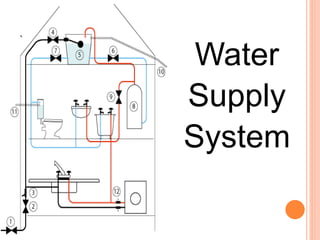
Water
Supply
System
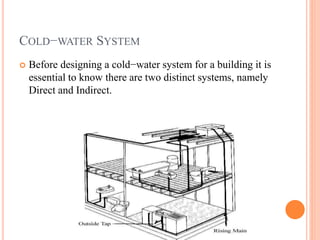
COLD−WATER SYSTEM
 Before designing a cold−water system for a building it is
essential to know there are two distinct systems, namely
Direct and Indirect.
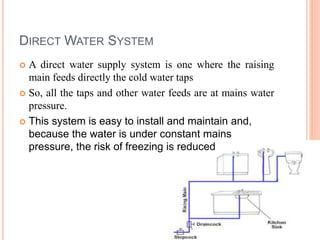
DIRECT WATER SYSTEM
 A direct water supply system is one where the raising
main feeds directly the cold water taps
 So, all the taps and other water feeds are at mains water
pressure.
 This system is easy to install and maintain and,
because the water is under constant mains
pressure, the risk of freezing is reduced
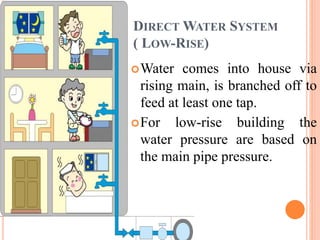
DIRECT WATER SYSTEM
( LOW-RISE)
Water comes into house via
rising main, is branched off to
feed at least one tap.
For low-rise building the
water pressure are based on
the main pipe pressure.
DIRECT WATER SYSTEM
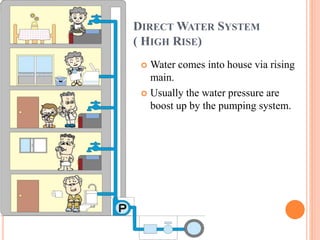
( HIGH RISE)
 Water comes into house via rising
main.
 Usually the water pressure are
boost up by the pumping system.
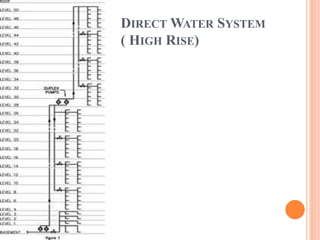
DIRECT WATER SYSTEM
( HIGH RISE)
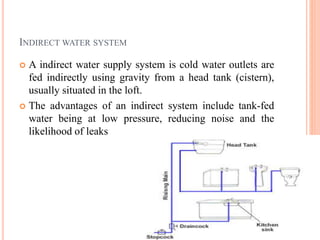
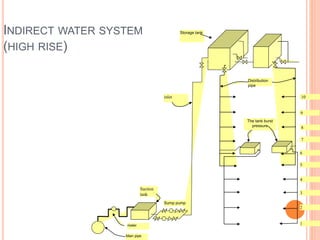
INDIRECT WATER SYSTEM
 A indirect water supply system is cold water outlets are
fed indirectly using gravity from a head tank (cistern),
usually situated in the loft.
 The advantages of an indirect system include tank-fed
water being at low pressure, reducing noise and the
likelihood of leaks
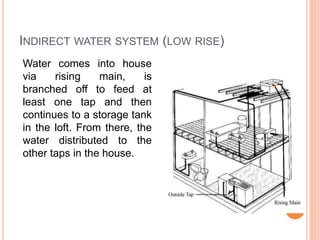
INDIRECT WATER SYSTEM (LOW RISE)
Water comes into house
via rising main, is
branched off to feed at
least one tap and then
continues to a storage tank
in the loft. From there, the
water distributed to the
other taps in the house.
INDIRECT WATER SYSTEM
(HIGH RISE)
10
9
8
7
6
5
4
3
2
1
Storage tank
The tank burst
pressure
Suction
tank
Sump pump
inlet
Distribution
pipe
meter
Main pipe
HOT WATER SUPPLY SYSTEM
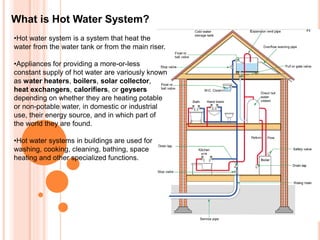
What is Hot Water System?
•Hot water system is a system that heat the
water from the water tank or from the main riser.
•Appliances for providing a more-or-less
constant supply of hot water are variously known
as water heaters, boilers, solar collector,
heat exchangers, calorifiers, or geysers
depending on whether they are heating potable
or non-potable water, in domestic or industrial
use, their energy source, and in which part of
the world they are found.
•Hot water systems in buildings are used for
washing, cooking, cleaning, bathing, space
heating and other specialized functions.
Direct System
HOT WATER SUPPLY SYSTEM
IN LOW RISE BUILDING
Advantages
•This system is easy to install and
maintain and, because the water is
under constant mains pressure, the
risk of freezing is reduced .(cold
country)
•Eliminates the dangers of bacterial
contamination.
Disadvantages
• risks of leaking joints
•A direct supply system fitted with a
modern boiler, anti-syphon and backflow
devices complies with most modern
water by-laws
•This system is recommended where
there is sufficient mains water supply to
maintain a good quantity of water at
adequate pressure during peak periods.
HOT WATER SUPPLY SYSTEM
IN LOW RISE BUILDING
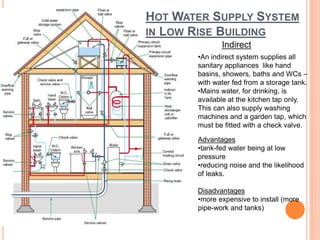
Indirect
•An indirect system supplies all
sanitary appliances like hand
basins, showers, baths and WCs –
with water fed from a storage tank.
•Mains water, for drinking, is
available at the kitchen tap only.
This can also supply washing
machines and a garden tap, which
must be fitted with a check valve.
Advantages
•tank-fed water being at low
pressure
•reducing noise and the likelihood
of leaks.
Disadvantages
•more expensive to install (more
pipe-work and tanks)
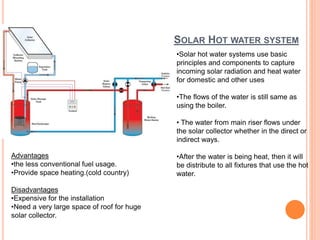
SOLAR HOT WATER SYSTEM
•Solar hot water systems use basic
principles and components to capture
incoming solar radiation and heat water
for domestic and other uses
•The flows of the water is still same as
using the boiler.
• The water from main riser flows under
the solar collector whether in the direct or
indirect ways.
•After the water is being heat, then it will
be distribute to all fixtures that use the hot
water.
Advantages
•the less conventional fuel usage.
•Provide space heating.(cold country)
Disadvantages
•Expensive for the installation
•Need a very large space of roof for huge
solar collector.
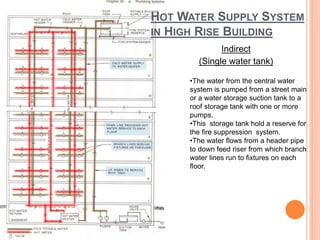
Indirect
(Single water tank)
•The water from the central water
system is pumped from a street main
or a water storage suction tank to a
roof storage tank with one or more
pumps.
•This storage tank hold a reserve for
the fire suppression system.
•The water flows from a header pipe
to down feed riser from which branch
water lines run to fixtures on each
floor.
HOT WATER SUPPLY SYSTEM
IN HIGH RISE BUILDING
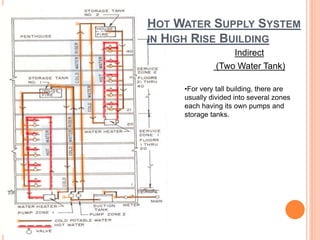
Indirect
(Two Water Tank)
•For very tall building, there are
usually divided into several zones
each having its own pumps and
storage tanks.
HOT WATER SUPPLY SYSTEM
IN HIGH RISE BUILDING

CMA433-Water Supply System.ppt

  • 1.
  • 2.
    COLD−WATER SYSTEM  Beforedesigning a cold−water system for a building it is essential to know there are two distinct systems, namely Direct and Indirect.
  • 3.
    DIRECT WATER SYSTEM A direct water supply system is one where the raising main feeds directly the cold water taps  So, all the taps and other water feeds are at mains water pressure.  This system is easy to install and maintain and, because the water is under constant mains pressure, the risk of freezing is reduced
  • 4.
    DIRECT WATER SYSTEM (LOW-RISE) Water comes into house via rising main, is branched off to feed at least one tap. For low-rise building the water pressure are based on the main pipe pressure.
  • 5.
    DIRECT WATER SYSTEM (HIGH RISE)  Water comes into house via rising main.  Usually the water pressure are boost up by the pumping system.
  • 6.
  • 7.
    INDIRECT WATER SYSTEM A indirect water supply system is cold water outlets are fed indirectly using gravity from a head tank (cistern), usually situated in the loft.  The advantages of an indirect system include tank-fed water being at low pressure, reducing noise and the likelihood of leaks
  • 8.
    INDIRECT WATER SYSTEM(LOW RISE) Water comes into house via rising main, is branched off to feed at least one tap and then continues to a storage tank in the loft. From there, the water distributed to the other taps in the house.
  • 9.
    INDIRECT WATER SYSTEM (HIGHRISE) 10 9 8 7 6 5 4 3 2 1 Storage tank The tank burst pressure Suction tank Sump pump inlet Distribution pipe meter Main pipe
  • 10.
  • 11.
    What is HotWater System? •Hot water system is a system that heat the water from the water tank or from the main riser. •Appliances for providing a more-or-less constant supply of hot water are variously known as water heaters, boilers, solar collector, heat exchangers, calorifiers, or geysers depending on whether they are heating potable or non-potable water, in domestic or industrial use, their energy source, and in which part of the world they are found. •Hot water systems in buildings are used for washing, cooking, cleaning, bathing, space heating and other specialized functions.
  • 12.
    Direct System HOT WATERSUPPLY SYSTEM IN LOW RISE BUILDING Advantages •This system is easy to install and maintain and, because the water is under constant mains pressure, the risk of freezing is reduced .(cold country) •Eliminates the dangers of bacterial contamination. Disadvantages • risks of leaking joints •A direct supply system fitted with a modern boiler, anti-syphon and backflow devices complies with most modern water by-laws •This system is recommended where there is sufficient mains water supply to maintain a good quantity of water at adequate pressure during peak periods.
  • 13.
    HOT WATER SUPPLYSYSTEM IN LOW RISE BUILDING Indirect •An indirect system supplies all sanitary appliances like hand basins, showers, baths and WCs – with water fed from a storage tank. •Mains water, for drinking, is available at the kitchen tap only. This can also supply washing machines and a garden tap, which must be fitted with a check valve. Advantages •tank-fed water being at low pressure •reducing noise and the likelihood of leaks. Disadvantages •more expensive to install (more pipe-work and tanks)
  • 14.
    SOLAR HOT WATERSYSTEM •Solar hot water systems use basic principles and components to capture incoming solar radiation and heat water for domestic and other uses •The flows of the water is still same as using the boiler. • The water from main riser flows under the solar collector whether in the direct or indirect ways. •After the water is being heat, then it will be distribute to all fixtures that use the hot water. Advantages •the less conventional fuel usage. •Provide space heating.(cold country) Disadvantages •Expensive for the installation •Need a very large space of roof for huge solar collector.
  • 15.
    Indirect (Single water tank) •Thewater from the central water system is pumped from a street main or a water storage suction tank to a roof storage tank with one or more pumps. •This storage tank hold a reserve for the fire suppression system. •The water flows from a header pipe to down feed riser from which branch water lines run to fixtures on each floor. HOT WATER SUPPLY SYSTEM IN HIGH RISE BUILDING
  • 16.
    Indirect (Two Water Tank) •Forvery tall building, there are usually divided into several zones each having its own pumps and storage tanks. HOT WATER SUPPLY SYSTEM IN HIGH RISE BUILDING