Cloud Strategy 
Migrating to the cloud
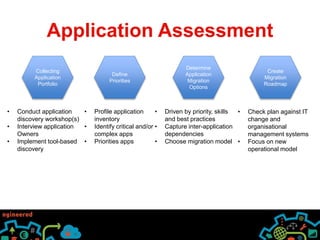
Application Assessment 
• Conduct application 
discovery workshop(s) 
• Interview application 
Owners 
• Implement tool-based 
discovery 
• Profile application 
inventory 
• Identify critical and/or 
complex apps 
• Priorities apps 
• Driven by priority, skills 
and best practices 
• Capture inter-application 
dependencies 
• Choose migration model 
• Check plan against IT 
change and 
organisational 
management systems 
• Focus on new 
operational model 
Collecting 
Application 
Portfolio 
Define 
Priorities 
Determine 
Application 
Migration 
Options 
Create 
Migration 
Roadmap
Application and data discovery 
Collecting Information 
• Use AWS and partner tooling to discover 
app complexity 
• Use cloud best practice guidelines 
• Employee work shadowing and discovery 
techniques 
• Capture sample data flows 
• Run work shops with product owners 
• Engage the staff who use these 
systems 
Key information 
• App details + technical/business owner 
• Infrastructure information (network, 
ports/protocols, security, OS, etc.) 
• Data information (database(type), data 
sensitivity, data exchange) 
• App information (frameworks, language, tier 
information) 
• This will help you discover the application 
complexity! 
Partner tooling 
• Multiple sources but check the AWS Market Place for SaaS offerings
Prioritisation 
• Business criticality (frequency of use, number of users, effected business processes) 
• Consider consequences of failure 
• Technology complexity (In house knowledge/skill set, fragility, other dependencies) 
• Evaluate probability of failure 
• Sizing (Data size, networking requirements, number of servers) 
• Determine time of data migration and effort 
• Disaster Recovering planning (Contingency planning, operational requirements, data 
retention) 
• Planning for post migration operations and costs
Devops 
• Traditionally organisations have split IT with different demands, which has 
lead to silo’s of knowledge and slower none progressive IT Infrastructure 
• On one hand developers are pushed to innovate and more products forward 
• On the other hand Systems Admins are naturally cautious 
• They are held responsible for the stability of a system and any issues 
that effect users 
• Cloud has removed the barriers of slow infrastructure however 
organisations now need to bring once separate teams back together and 
include both in the progression of the business 
This is called DevOps!
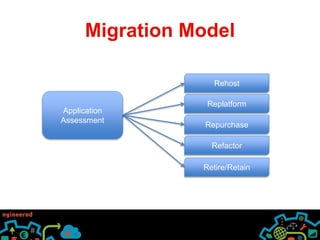
Migration Model 
Application 
Assessment 
Rehost 
Replatform 
Repurchase 
Refactor 
Retire/Retain
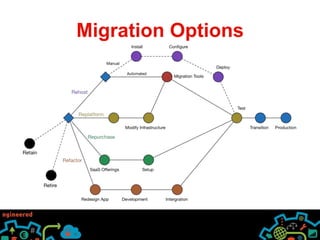
Migration Options
Rehost 
• Rehost 
– Simple “lift and shift” 
– Use automated migration tools 
• VMware export 
– Manually rebuild systems 
• Integrate orchestration tools 
– Chef/puppet/cfengine
Replatform 
• Use the opportunity to improve the 
systems 
– Migrate/Upgrade OS 
– Improve Security 
– Improve performance 
• Evaluate your collected data to right size your 
servers
Repurchase 
• SaaS (software as a service) 
– Runs outside your infrastructure 
– Maintained by a third party 
• Ensure good SLA’s (service level agreements) 
– Reduces overhead of management
Refactor/Rebuild 
• IaaS or PaaS 
– Rebuild the systems in the cloud but consider using 
the power of the services on offer 
• Adapt the application to use PaaS services 
– S3 for storage 
– RDS Databases 
• Re-code for modern architecture patterns 
– Loosely coupled design etc. etc.
Retire/Retain 
• Is the Application still in use? 
– Number of users 
– Migrate users to another system 
• Will the application be required much longer? 
– Evaluate the effort required to move against the 
application life cycle
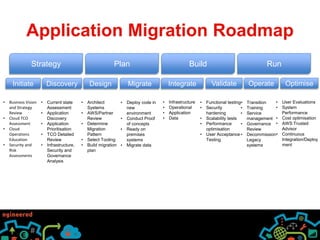
Application Migration Roadmap 
Strategy Plan Build Run 
Initiate Discovery Design Migrate Integrate Validate Operate Optimise 
• Business Vision 
and Strategy 
Review 
• Cloud TCO 
Assessment 
• Cloud 
Operations 
Education 
• Security and 
Risk 
Assessments 
• Current state 
Assessment 
• Application 
Discovery 
• Application 
Prioritisation 
• TCO Detailed 
Review 
• Infrastructure, 
Security and 
Governance 
Analysis 
• Architect 
Systems 
• AWS/Partner 
Review 
• Determine 
Migration 
Pattern 
• Select Tooling 
• Build migration 
plan 
• Deploy code in 
new 
environment 
• Conduct Proof 
of concepts 
• Ready on 
premises 
systems 
• Migrate data 
• Functional testing 
• Security 
hardening 
• Scalability tests 
• Performance 
optimisation 
• User Acceptance 
Testing 
• Transition 
• Training 
• Service 
management 
• Governance 
Review 
• Decommission 
Legacy 
systems 
• Infrastructure 
• Operational 
• Application 
• Data 
• User Evaluations 
• System 
Performance 
• Cost optimisation 
• AWS Trusted 
Advisor 
• Continuous 
Integration/Deploy 
ment
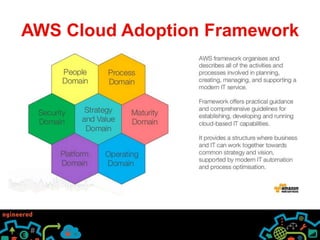
AWS Cloud Adoption Framework
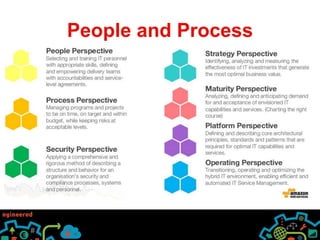
People and Process
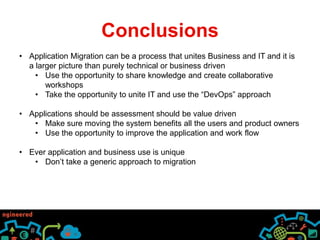
Conclusions 
• Application Migration can be a process that unites Business and IT and it is 
a larger picture than purely technical or business driven 
• Use the opportunity to share knowledge and create collaborative 
workshops 
• Take the opportunity to unite IT and use the “DevOps” approach 
• Applications should be assessment should be value driven 
• Make sure moving the system benefits all the users and product owners 
• Use the opportunity to improve the application and work flow 
• Ever application and business use is unique 
• Don’t take a generic approach to migration

Cloud Strategy

  • 1.
  • 2.
    Application Assessment •Conduct application discovery workshop(s) • Interview application Owners • Implement tool-based discovery • Profile application inventory • Identify critical and/or complex apps • Priorities apps • Driven by priority, skills and best practices • Capture inter-application dependencies • Choose migration model • Check plan against IT change and organisational management systems • Focus on new operational model Collecting Application Portfolio Define Priorities Determine Application Migration Options Create Migration Roadmap
  • 3.
    Application and datadiscovery Collecting Information • Use AWS and partner tooling to discover app complexity • Use cloud best practice guidelines • Employee work shadowing and discovery techniques • Capture sample data flows • Run work shops with product owners • Engage the staff who use these systems Key information • App details + technical/business owner • Infrastructure information (network, ports/protocols, security, OS, etc.) • Data information (database(type), data sensitivity, data exchange) • App information (frameworks, language, tier information) • This will help you discover the application complexity! Partner tooling • Multiple sources but check the AWS Market Place for SaaS offerings
  • 4.
    Prioritisation • Businesscriticality (frequency of use, number of users, effected business processes) • Consider consequences of failure • Technology complexity (In house knowledge/skill set, fragility, other dependencies) • Evaluate probability of failure • Sizing (Data size, networking requirements, number of servers) • Determine time of data migration and effort • Disaster Recovering planning (Contingency planning, operational requirements, data retention) • Planning for post migration operations and costs
  • 5.
    Devops • Traditionallyorganisations have split IT with different demands, which has lead to silo’s of knowledge and slower none progressive IT Infrastructure • On one hand developers are pushed to innovate and more products forward • On the other hand Systems Admins are naturally cautious • They are held responsible for the stability of a system and any issues that effect users • Cloud has removed the barriers of slow infrastructure however organisations now need to bring once separate teams back together and include both in the progression of the business This is called DevOps!
  • 6.
    Migration Model Application Assessment Rehost Replatform Repurchase Refactor Retire/Retain
  • 7.
  • 8.
    Rehost • Rehost – Simple “lift and shift” – Use automated migration tools • VMware export – Manually rebuild systems • Integrate orchestration tools – Chef/puppet/cfengine
  • 9.
    Replatform • Usethe opportunity to improve the systems – Migrate/Upgrade OS – Improve Security – Improve performance • Evaluate your collected data to right size your servers
  • 10.
    Repurchase • SaaS(software as a service) – Runs outside your infrastructure – Maintained by a third party • Ensure good SLA’s (service level agreements) – Reduces overhead of management
  • 11.
    Refactor/Rebuild • IaaSor PaaS – Rebuild the systems in the cloud but consider using the power of the services on offer • Adapt the application to use PaaS services – S3 for storage – RDS Databases • Re-code for modern architecture patterns – Loosely coupled design etc. etc.
  • 12.
    Retire/Retain • Isthe Application still in use? – Number of users – Migrate users to another system • Will the application be required much longer? – Evaluate the effort required to move against the application life cycle
  • 13.
    Application Migration Roadmap Strategy Plan Build Run Initiate Discovery Design Migrate Integrate Validate Operate Optimise • Business Vision and Strategy Review • Cloud TCO Assessment • Cloud Operations Education • Security and Risk Assessments • Current state Assessment • Application Discovery • Application Prioritisation • TCO Detailed Review • Infrastructure, Security and Governance Analysis • Architect Systems • AWS/Partner Review • Determine Migration Pattern • Select Tooling • Build migration plan • Deploy code in new environment • Conduct Proof of concepts • Ready on premises systems • Migrate data • Functional testing • Security hardening • Scalability tests • Performance optimisation • User Acceptance Testing • Transition • Training • Service management • Governance Review • Decommission Legacy systems • Infrastructure • Operational • Application • Data • User Evaluations • System Performance • Cost optimisation • AWS Trusted Advisor • Continuous Integration/Deploy ment
  • 14.
  • 15.
  • 16.
    Conclusions • ApplicationMigration can be a process that unites Business and IT and it is a larger picture than purely technical or business driven • Use the opportunity to share knowledge and create collaborative workshops • Take the opportunity to unite IT and use the “DevOps” approach • Applications should be assessment should be value driven • Make sure moving the system benefits all the users and product owners • Use the opportunity to improve the application and work flow • Ever application and business use is unique • Don’t take a generic approach to migration