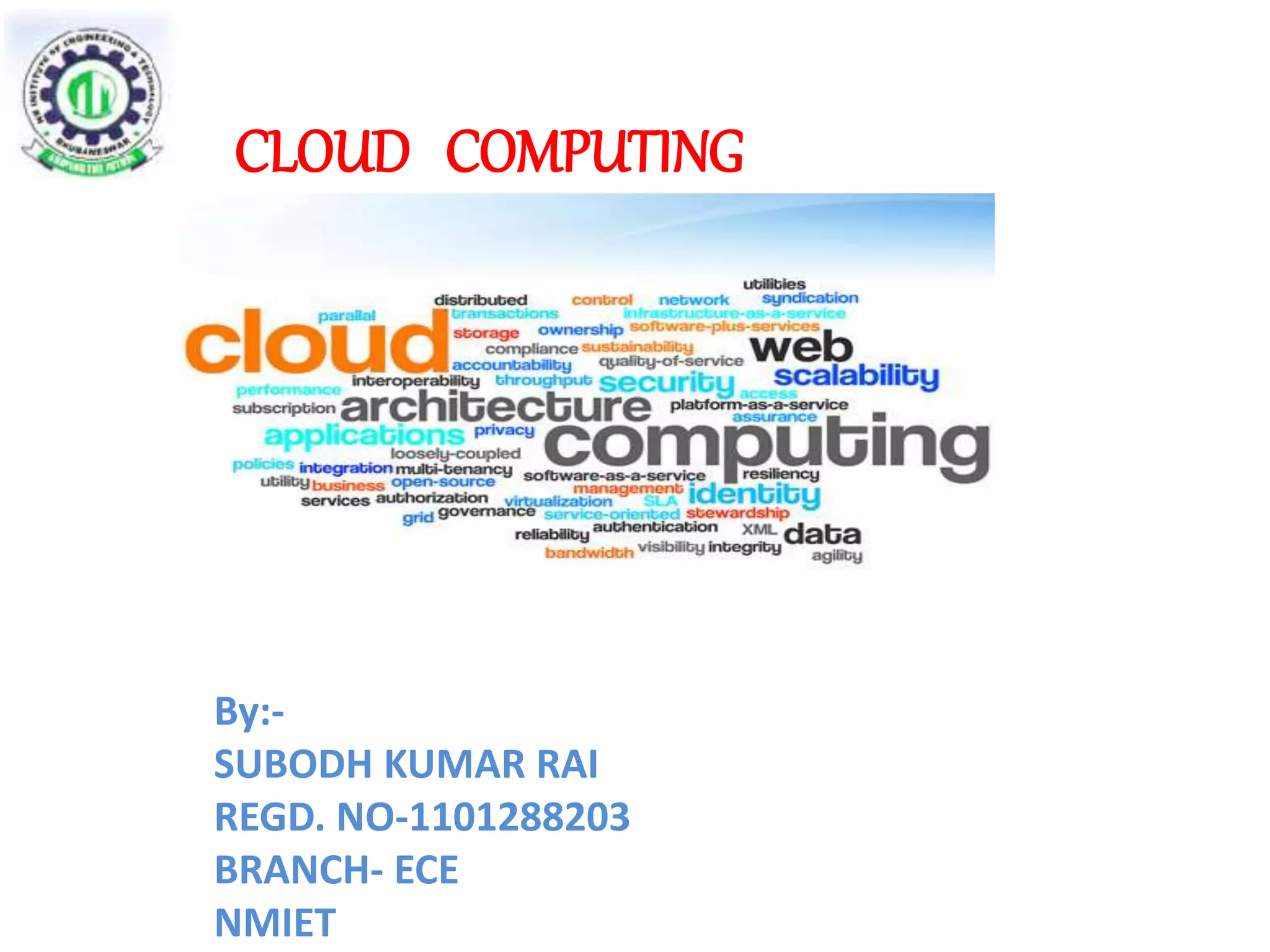
CLOUD COMPUTING 
By:- 
SUBODH KUMAR RAI 
REGD. NO-1101288203 
BRANCH- ECE 
NMIET
INTRODUCTION TO CLOUD COMPUTING 
→INRODUCTION TO IT COMPONENTS 
1. SERVER TECHNOLOGY 
2. STORAGE TECHNOLOGY 
3. COMPUTER NETWORK 
→SERVER VIRTUALIZATION 
→INTRODUCTION TO DIFFERENT COMPUTING PHASES 
→INTRODUCTION TO CLOUD COMPUTING 
→CLOUD COMPUTING CLASSIFICATION
WHAT IS SERVER ? 
A Server is a software program or the 
computer on which that program 
runs ,that provides a specific kind of 
service to client software running 
on the same computer or other 
computers on a network.
SERVER DESIGN PRINCIPLES 
→R: RELIABILITY 
→A:AVAILABILITY 
→S:SCALABILITY 
→ U:USABILITY 
→ M:MANAGEABILITY
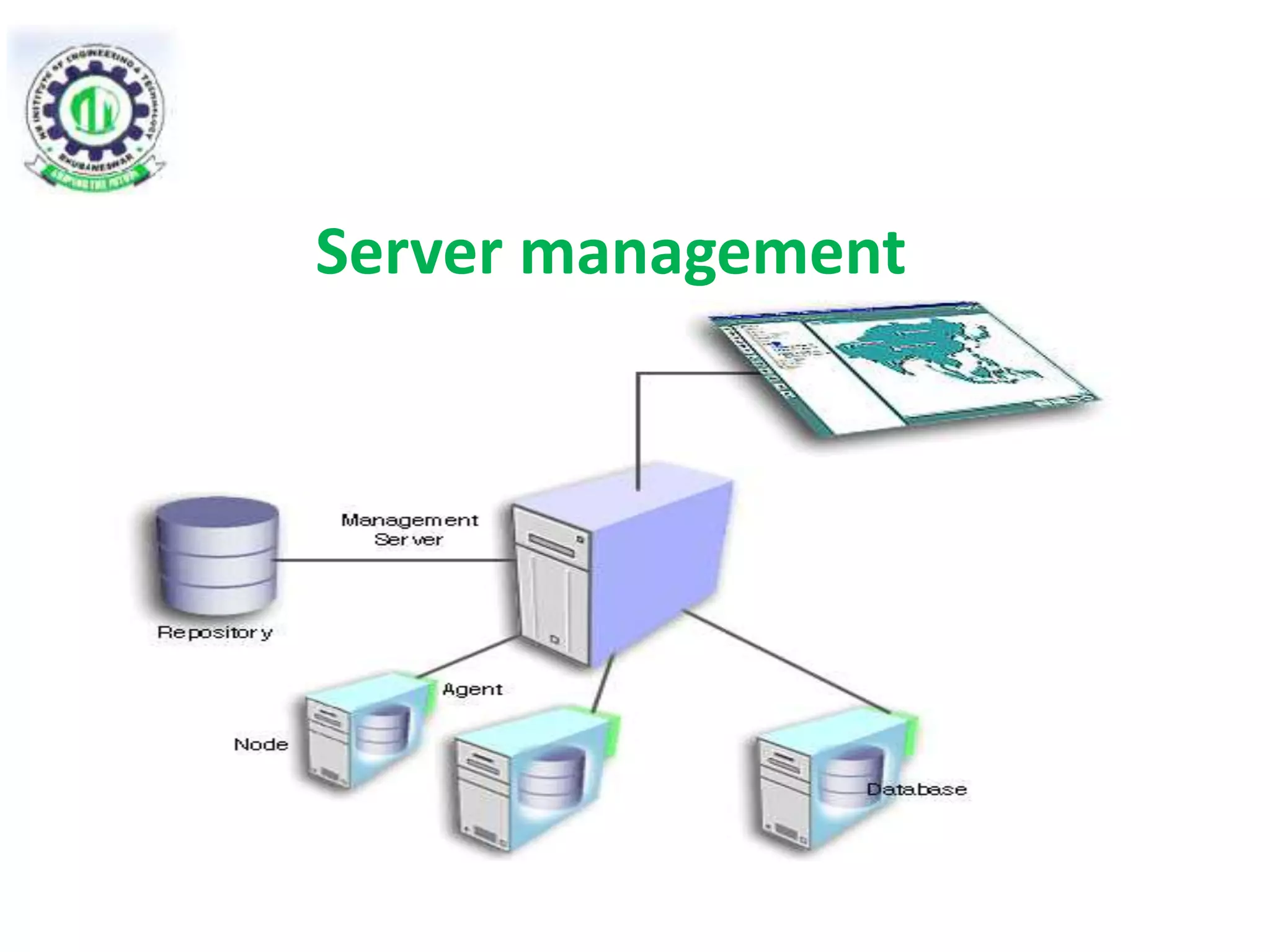
Server management
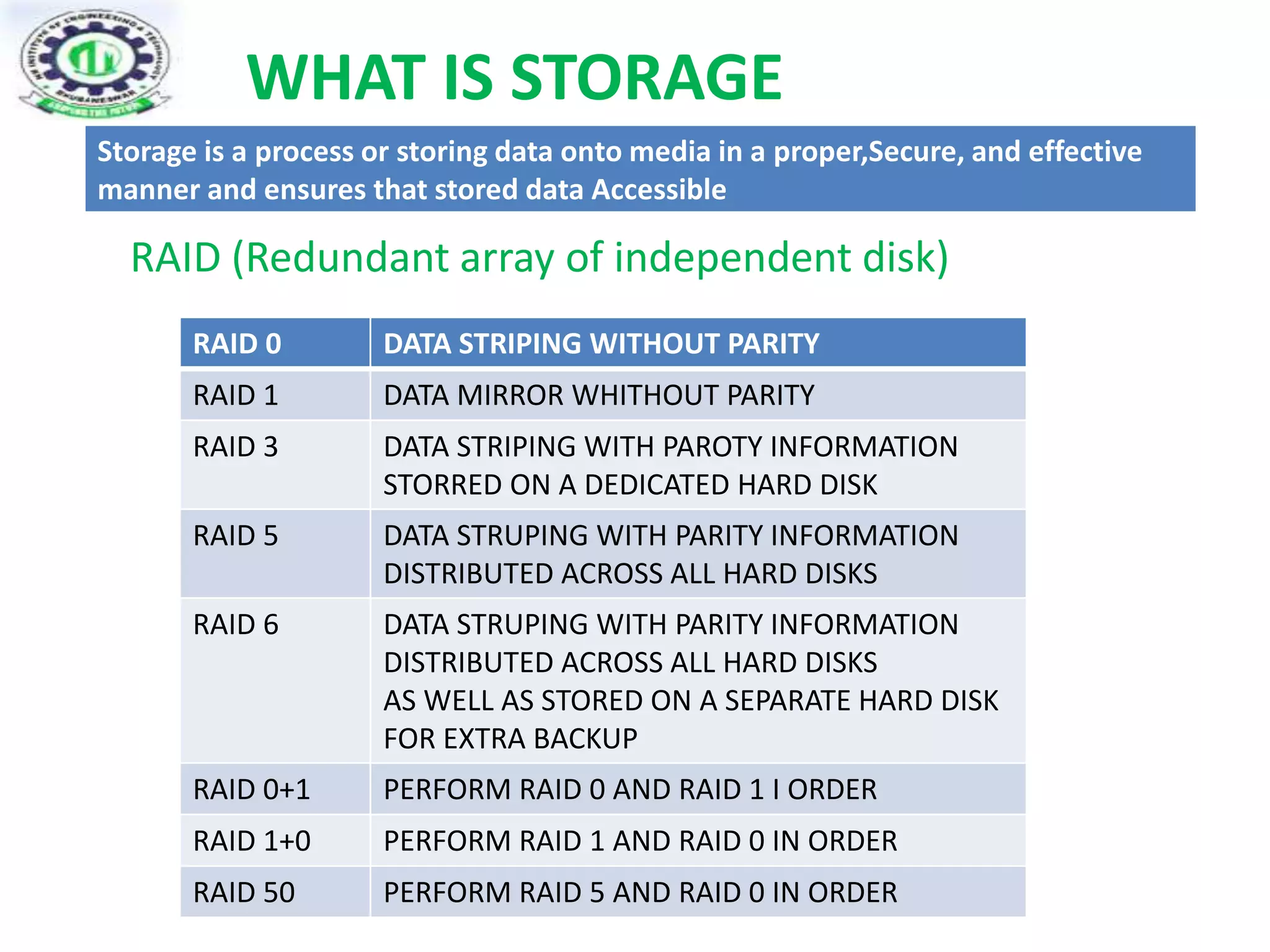
WHAT IS STORAGE 
Storage is a process or storing data onto media in a proper,Secure, and effective 
manner and ensures that stored data Accessible 
RAID (Redundant array of independent disk) 
RAID 0 DATA STRIPING WITHOUT PARITY 
RAID 1 DATA MIRROR WHITHOUT PARITY 
RAID 3 DATA STRIPING WITH PAROTY INFORMATION 
STORRED ON A DEDICATED HARD DISK 
RAID 5 DATA STRUPING WITH PARITY INFORMATION 
DISTRIBUTED ACROSS ALL HARD DISKS 
RAID 6 DATA STRUPING WITH PARITY INFORMATION 
DISTRIBUTED ACROSS ALL HARD DISKS 
AS WELL AS STORED ON A SEPARATE HARD DISK 
FOR EXTRA BACKUP 
RAID 0+1 PERFORM RAID 0 AND RAID 1 I ORDER 
RAID 1+0 PERFORM RAID 1 AND RAID 0 IN ORDER 
RAID 50 PERFORM RAID 5 AND RAID 0 IN ORDER
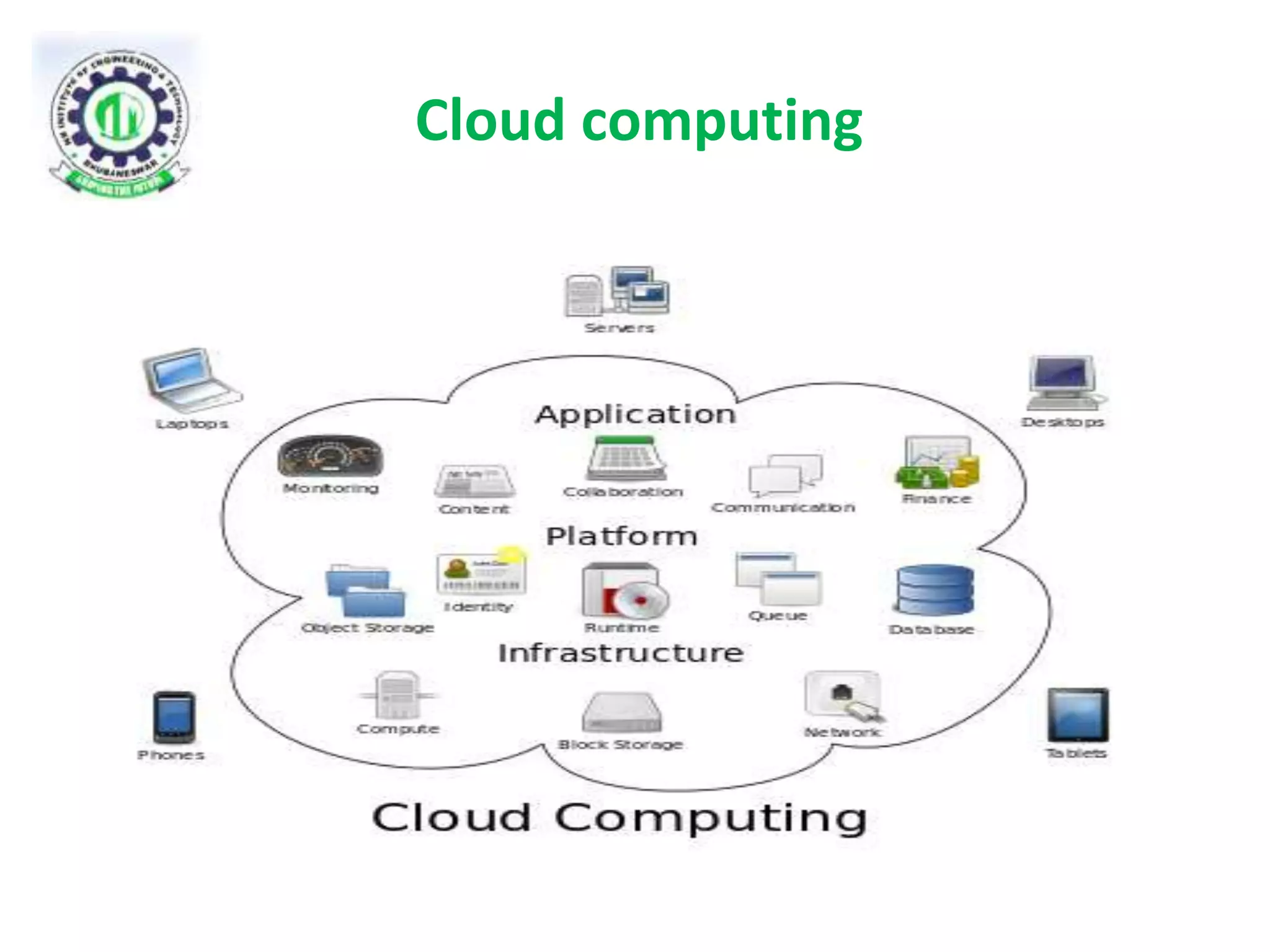
Cloud computing
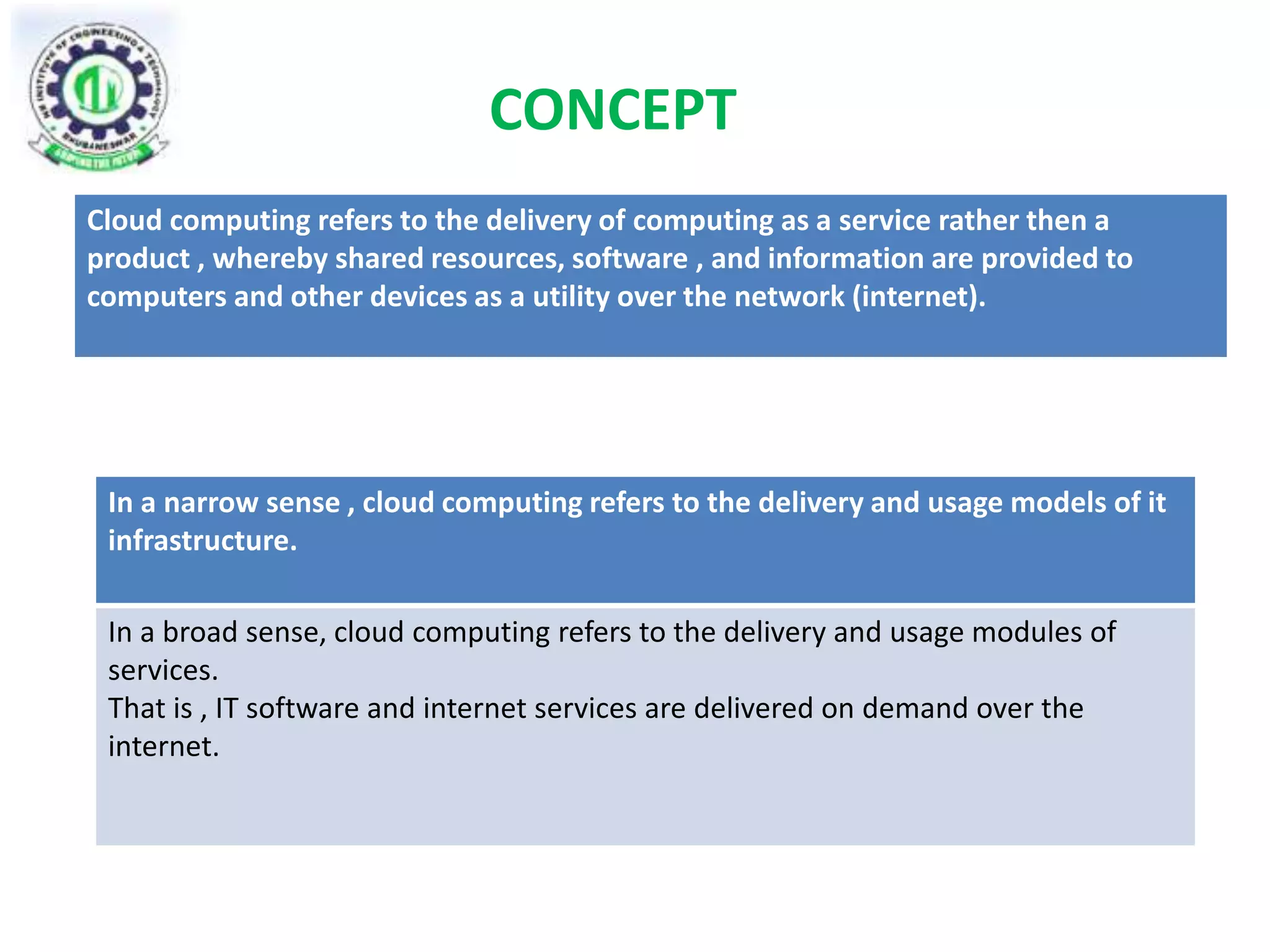
CONCEPT 
Cloud computing refers to the delivery of computing as a service rather then a 
product , whereby shared resources, software , and information are provided to 
computers and other devices as a utility over the network (internet). 
In a narrow sense , cloud computing refers to the delivery and usage models of it 
infrastructure. 
In a broad sense, cloud computing refers to the delivery and usage modules of 
services. 
That is , IT software and internet services are delivered on demand over the 
internet.
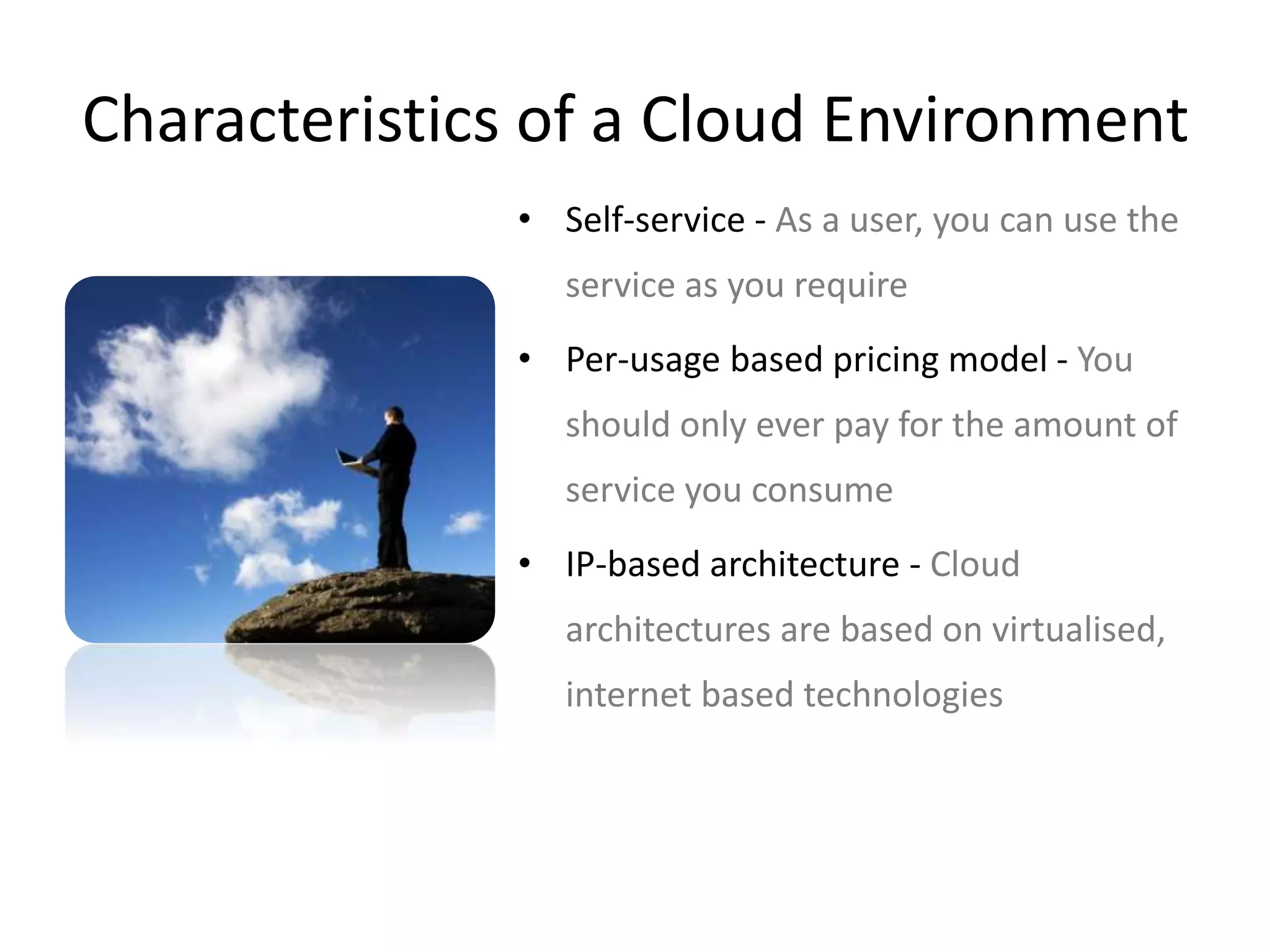
Characteristics of a Cloud Environment 
• Self-service - As a user, you can use the 
service as you require 
• Per-usage based pricing model - You 
should only ever pay for the amount of 
service you consume 
• IP-based architecture - Cloud 
architectures are based on virtualised, 
internet based technologies
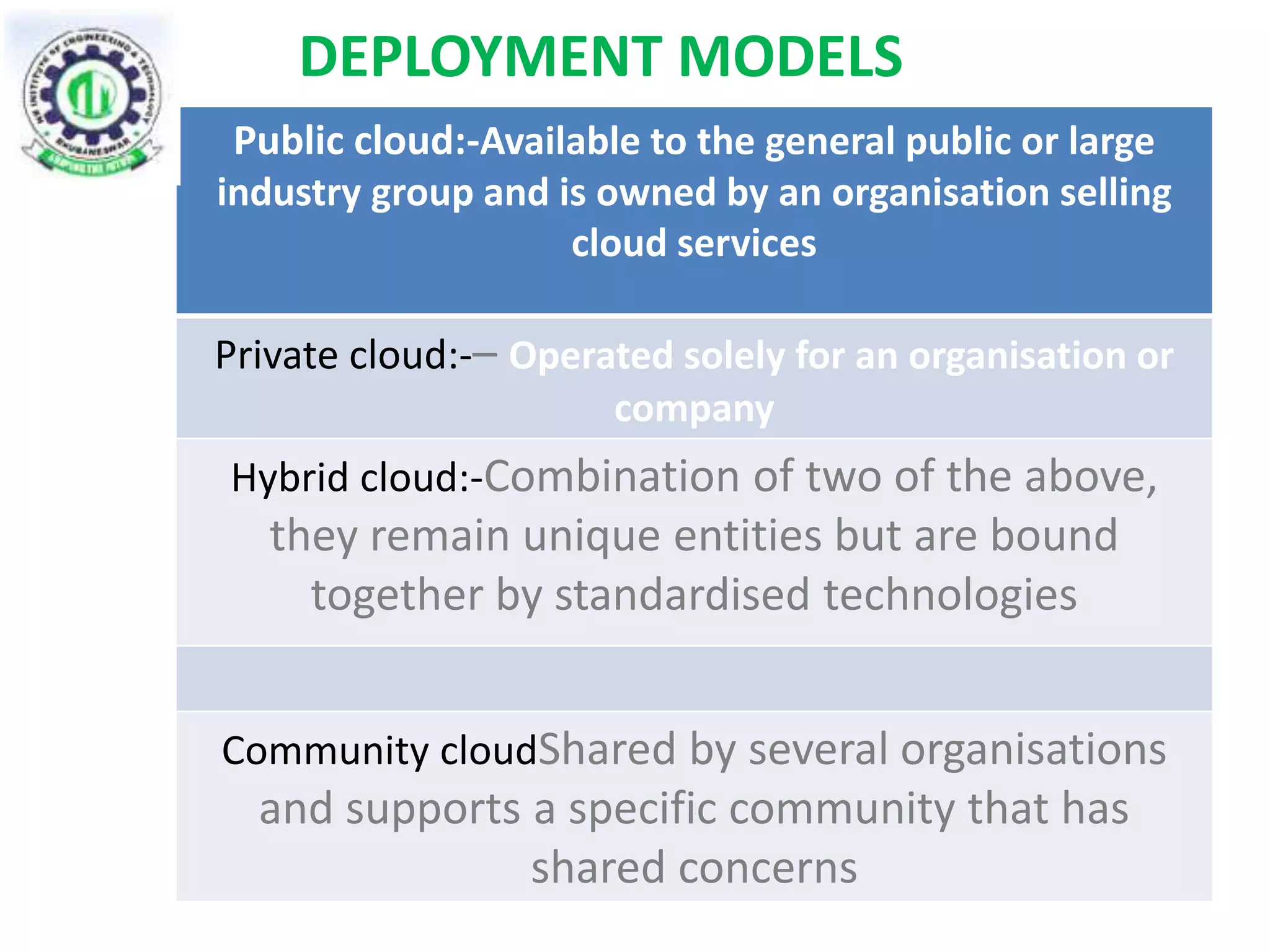
DEPLOYMENT MODELS 
Public cloud:-Available to the general public or large 
industry group and is owned by an organisation selling 
cloud services 
Private cloud:-– Operated solely for an organisation or 
company 
Hybrid cloud:-Combination of two of the above, 
they remain unique entities but are bound 
together by standardised technologies 
Community cloudShared by several organisations 
and supports a specific community that has 
shared concerns
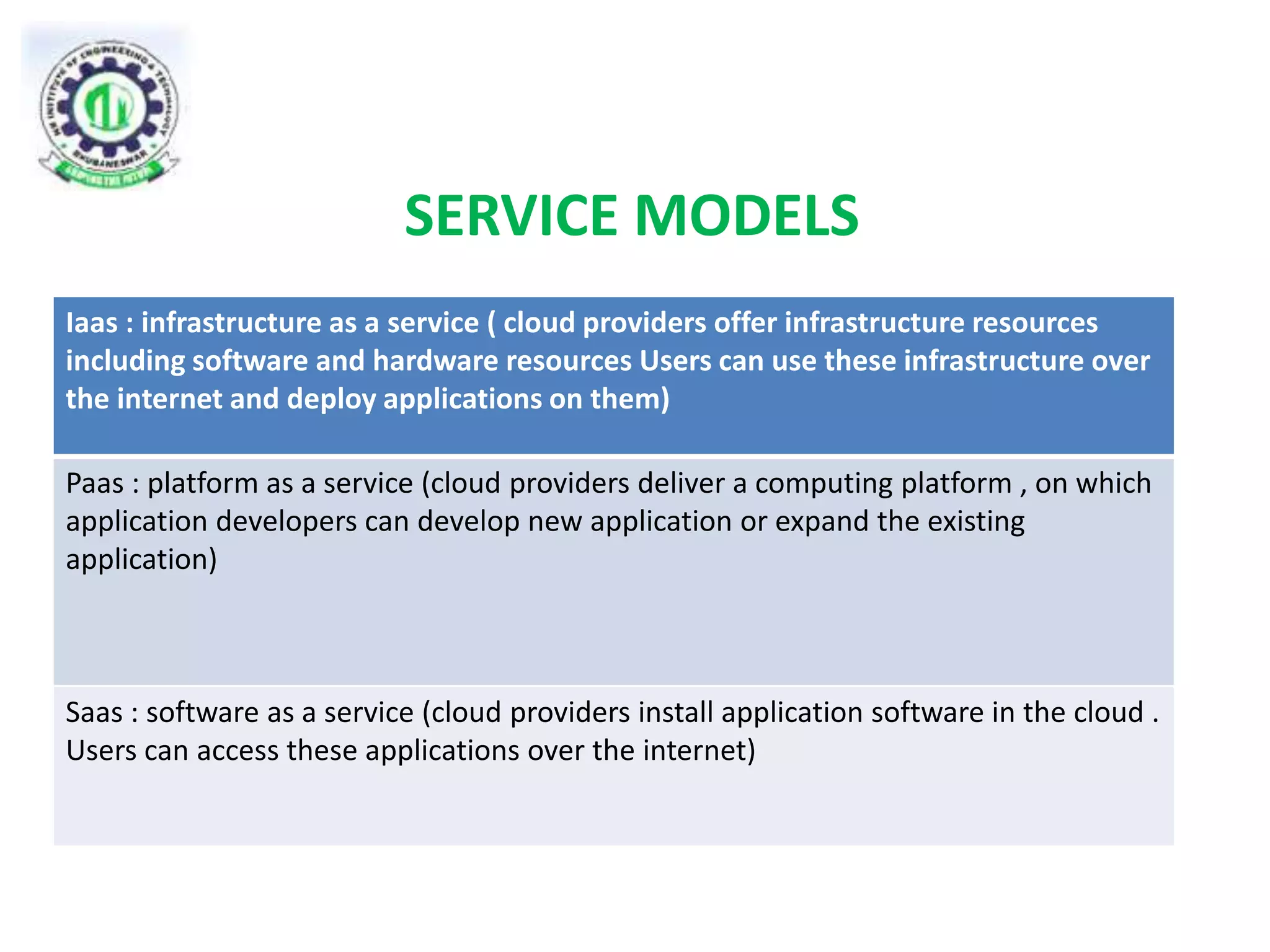
SERVICE MODELS 
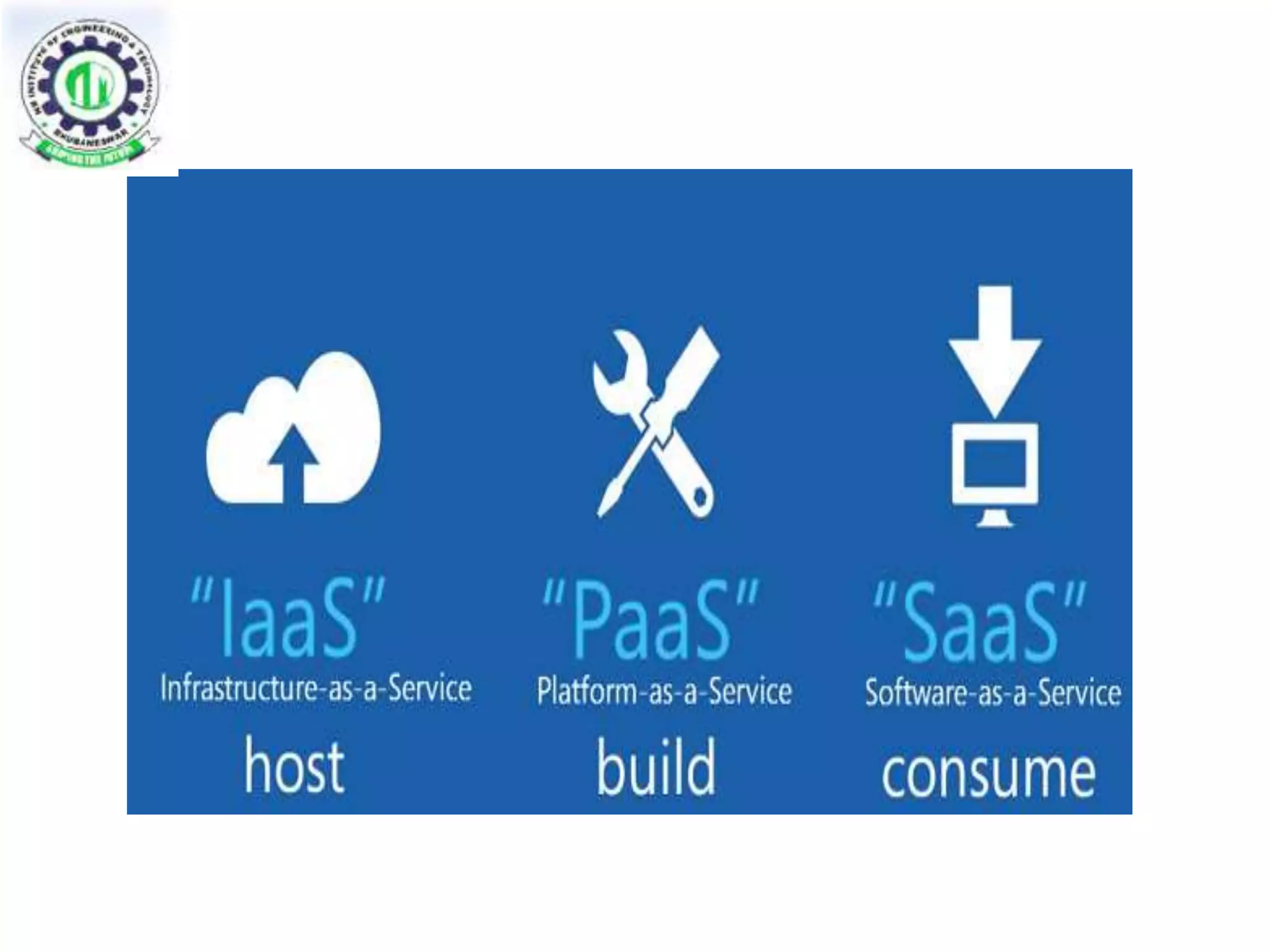
Iaas : infrastructure as a service ( cloud providers offer infrastructure resources 
including software and hardware resources Users can use these infrastructure over 
the internet and deploy applications on them) 
Paas : platform as a service (cloud providers deliver a computing platform , on which 
application developers can develop new application or expand the existing 
application) 
Saas : software as a service (cloud providers install application software in the cloud . 
Users can access these applications over the internet)
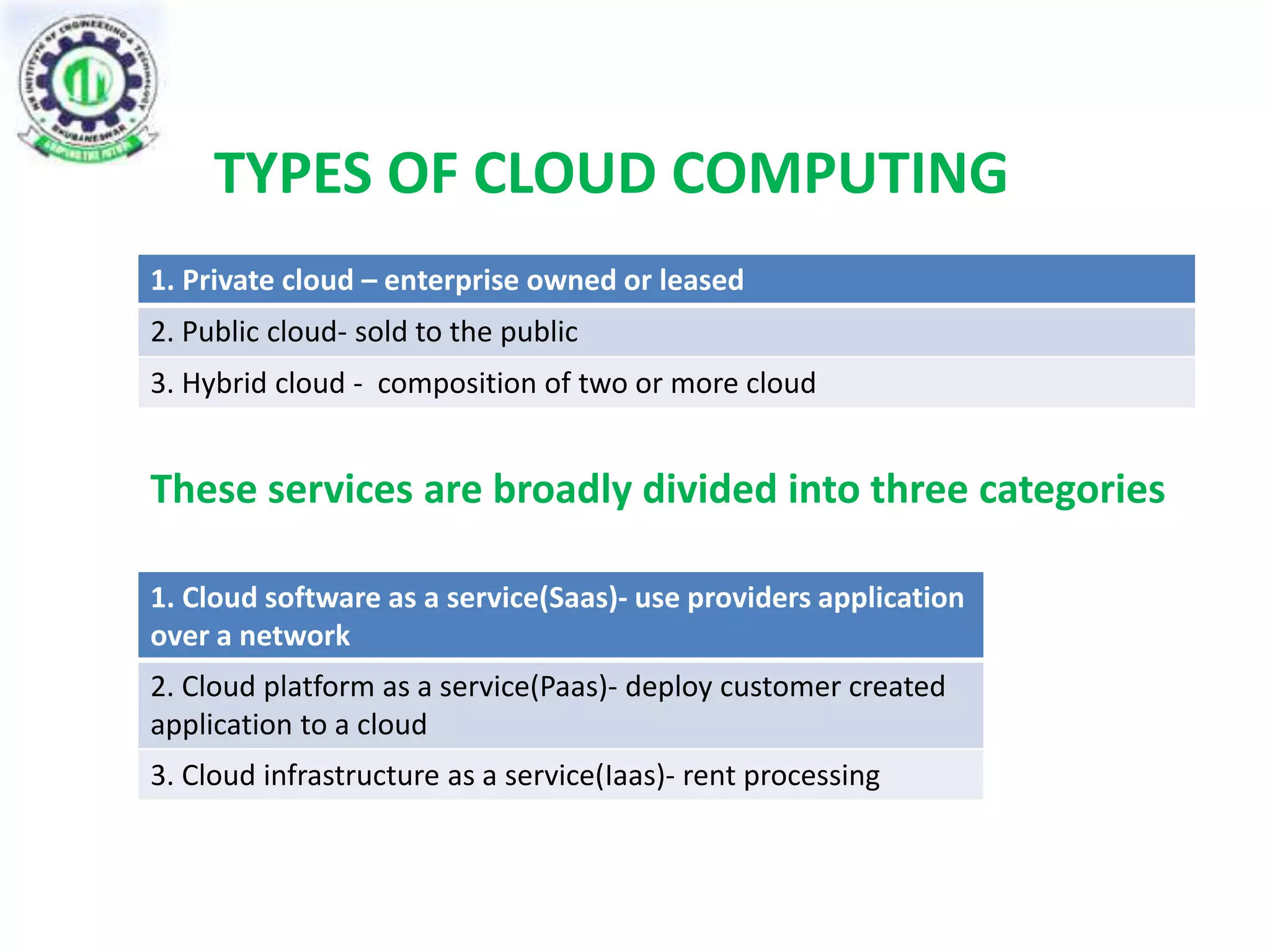
TYPES OF CLOUD COMPUTING 
1. Private cloud – enterprise owned or leased 
2. Public cloud- sold to the public 
3. Hybrid cloud - composition of two or more cloud 
These services are broadly divided into three categories 
1. Cloud software as a service(Saas)- use providers application 
over a network 
2. Cloud platform as a service(Paas)- deploy customer created 
application to a cloud 
3. Cloud infrastructure as a service(Iaas)- rent processing
CLOUD COMPUTING ADVANTAGES 
→Agility:-improves with users ability to re-provision 
technological infrastructure resources. 
→Application programming interface(API):-accessibility to 
software that enables machines to interact with cloud 
software 
→Device and Location independence. 
→Security
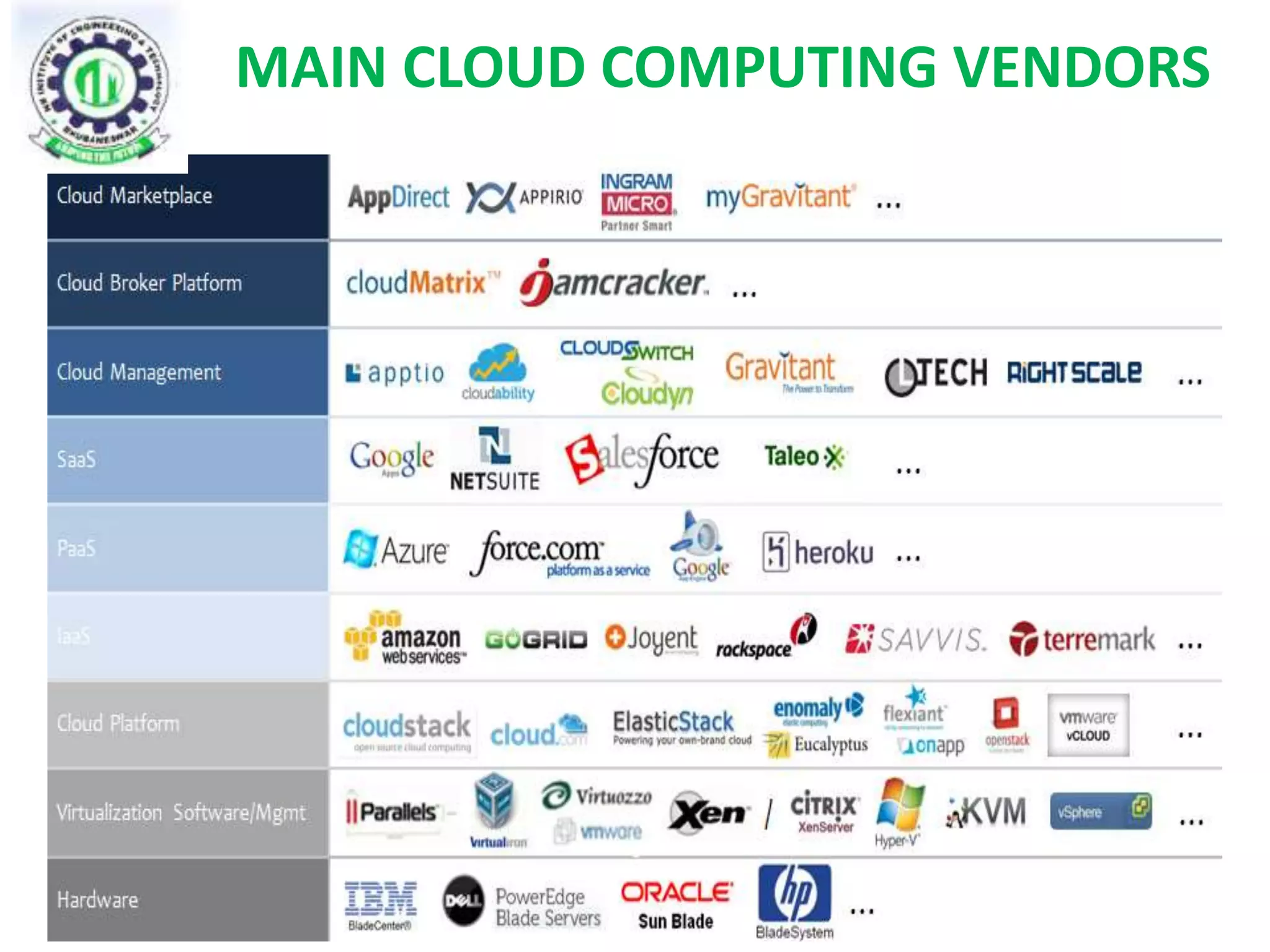
MAIN CLOUD COMPUTING VENDORS
tHANK YOU!!!A Hearty…
cloud computing ppt

cloud computing ppt

  • 1.
    CLOUD COMPUTING By:- SUBODH KUMAR RAI REGD. NO-1101288203 BRANCH- ECE NMIET
  • 2.
    INTRODUCTION TO CLOUDCOMPUTING →INRODUCTION TO IT COMPONENTS 1. SERVER TECHNOLOGY 2. STORAGE TECHNOLOGY 3. COMPUTER NETWORK →SERVER VIRTUALIZATION →INTRODUCTION TO DIFFERENT COMPUTING PHASES →INTRODUCTION TO CLOUD COMPUTING →CLOUD COMPUTING CLASSIFICATION
  • 3.
    WHAT IS SERVER? A Server is a software program or the computer on which that program runs ,that provides a specific kind of service to client software running on the same computer or other computers on a network.
  • 4.
    SERVER DESIGN PRINCIPLES →R: RELIABILITY →A:AVAILABILITY →S:SCALABILITY → U:USABILITY → M:MANAGEABILITY
  • 5.
  • 6.
    WHAT IS STORAGE Storage is a process or storing data onto media in a proper,Secure, and effective manner and ensures that stored data Accessible RAID (Redundant array of independent disk) RAID 0 DATA STRIPING WITHOUT PARITY RAID 1 DATA MIRROR WHITHOUT PARITY RAID 3 DATA STRIPING WITH PAROTY INFORMATION STORRED ON A DEDICATED HARD DISK RAID 5 DATA STRUPING WITH PARITY INFORMATION DISTRIBUTED ACROSS ALL HARD DISKS RAID 6 DATA STRUPING WITH PARITY INFORMATION DISTRIBUTED ACROSS ALL HARD DISKS AS WELL AS STORED ON A SEPARATE HARD DISK FOR EXTRA BACKUP RAID 0+1 PERFORM RAID 0 AND RAID 1 I ORDER RAID 1+0 PERFORM RAID 1 AND RAID 0 IN ORDER RAID 50 PERFORM RAID 5 AND RAID 0 IN ORDER
  • 7.
  • 8.
    CONCEPT Cloud computingrefers to the delivery of computing as a service rather then a product , whereby shared resources, software , and information are provided to computers and other devices as a utility over the network (internet). In a narrow sense , cloud computing refers to the delivery and usage models of it infrastructure. In a broad sense, cloud computing refers to the delivery and usage modules of services. That is , IT software and internet services are delivered on demand over the internet.
  • 9.
    Characteristics of aCloud Environment • Self-service - As a user, you can use the service as you require • Per-usage based pricing model - You should only ever pay for the amount of service you consume • IP-based architecture - Cloud architectures are based on virtualised, internet based technologies
  • 10.
    DEPLOYMENT MODELS Publiccloud:-Available to the general public or large industry group and is owned by an organisation selling cloud services Private cloud:-– Operated solely for an organisation or company Hybrid cloud:-Combination of two of the above, they remain unique entities but are bound together by standardised technologies Community cloudShared by several organisations and supports a specific community that has shared concerns
  • 11.
    SERVICE MODELS Iaas: infrastructure as a service ( cloud providers offer infrastructure resources including software and hardware resources Users can use these infrastructure over the internet and deploy applications on them) Paas : platform as a service (cloud providers deliver a computing platform , on which application developers can develop new application or expand the existing application) Saas : software as a service (cloud providers install application software in the cloud . Users can access these applications over the internet)
  • 12.
    TYPES OF CLOUDCOMPUTING 1. Private cloud – enterprise owned or leased 2. Public cloud- sold to the public 3. Hybrid cloud - composition of two or more cloud These services are broadly divided into three categories 1. Cloud software as a service(Saas)- use providers application over a network 2. Cloud platform as a service(Paas)- deploy customer created application to a cloud 3. Cloud infrastructure as a service(Iaas)- rent processing
  • 14.
    CLOUD COMPUTING ADVANTAGES →Agility:-improves with users ability to re-provision technological infrastructure resources. →Application programming interface(API):-accessibility to software that enables machines to interact with cloud software →Device and Location independence. →Security
  • 15.
  • 16.

Editor's Notes

  • #10 In addition cloud based environments offer Self-service delivery of applications and content - so as a user, you can use the service as you require it Per-usage based pricing model – which means that you should only ever pay for the amount of service you actually consume. This is extremely useful if you are working on a project by project basis, you can effectively use the service as and when you actually need to use it. IP based architecture – cloud architectures are based on virtualised, internet based technologies, this alone has provided one of the key reasons why cloud computing environments have become so popular and has changed the way in which IT infrastructures are deployed.