Cloud Computing
Management Information System
Group Member


Veerayuth Sasikanok   52905050052-7
Karnpisscha Plienpeng 52905050032-9
Jiraporn Hokceng      52905050047-7
Chaiwat Chaweewan       52905050022-0
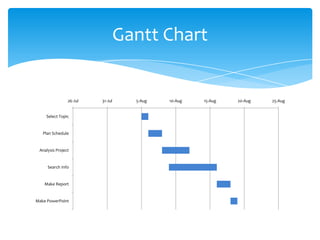
Gantt Chart


                26-Jul   31-Jul     5-Aug   10-Aug   15-Aug   20-Aug   25-Aug


    Select Topic


   Plan Schedule


 Analysis Project


     Search Info


    Make Report


Make PowerPoint
Outlines


Introduction
Categories of Cloud Computing
History and Present trends
Market Players
Cloud Computing in Thailand
Cloud Computing in Telecommunication Industry
Benefits and Drawbacks
Case Example
Conclusion
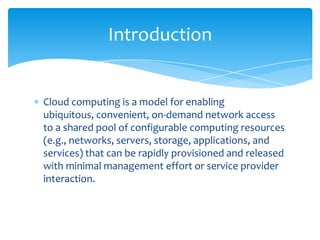
Introduction


Cloud computing is a model for enabling
ubiquitous, convenient, on-demand network access
to a shared pool of configurable computing resources
(e.g., networks, servers, storage, applications, and
services) that can be rapidly provisioned and released
with minimal management effort or service provider
interaction.
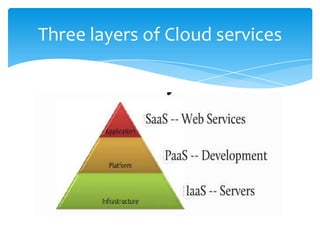
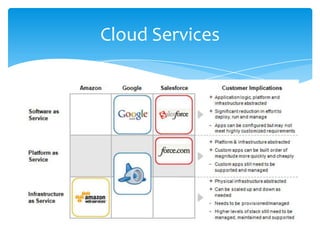
Three layers of Cloud services
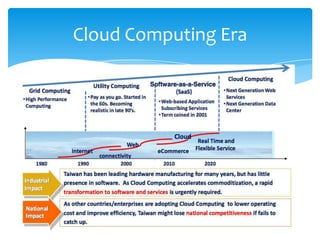
Cloud Computing Era
Cloud Market Players
Cloud Services
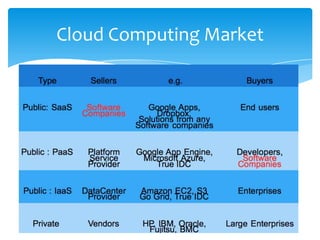
Cloud Computing Market
Only a handful of major players
          can build
  this massive infrastructure
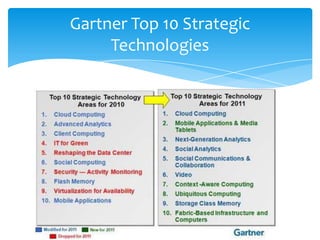
Gartner Top 10 Strategic
     Technologies
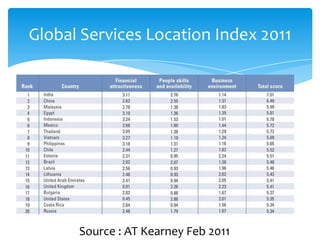
Global Services Location Index 2011


      Source : AT Kearney Feb 2011
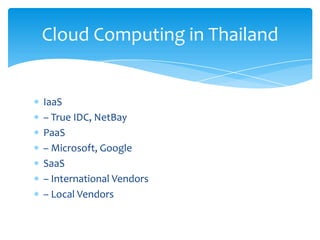
Cloud Computing in Thailand


IaaS
– True IDC, NetBay
PaaS
– Microsoft, Google
SaaS
– International Vendors
– Local Vendors
Cloud Computing in
Telecommunication Industry
Cloud Computing Impact
  Telecommunication Industry

Bypass the expense and bother of
buying, installing, operating, maintaining and upgrading
the networks and computers found in data centers.
Cloud services can be turned on and off as they are
needed, providing scalability for peak periods and cost
savings when usage is low.
Clouds are designed so that processing power can be
added simply by attaching more servers; everything is
virtualized so that software can be run on any available
server with excess capacity.
Opportunities


Business customers may be hesitant to shift major portions
of their IT infrastructure to international providers for
other reasons as well.
As a result, enterprises may feel more comfortable
purchasing cloud services through their traditional
technology providers.
Telecommunications companies can leverage their
expertise in building and managing complex networks to
offer value-added cloud services that address these unmet
needs.
Business Customers look in Future


 Customers are looking for more efficient
 collaboration, better integration, and easier access to
 products and services. Employees including a growing
 millennial workforce are expecting anytime, anywhere
 access to information and business applications.
 Business customers seek technology solutions that are
 easy to use, easy to deploy, and easy to access, they are
 equally concerned about ensuring that this technology—
 wherever it resides—is secure and provides maximum
 protection to sensitive business and customer data. Many
 consider this the number one challenge that technology
 providers must address.
Telecommunications providers
 leverage for cloud computing


Telecommunications companies have several business
and technology assets they can bring to bear as they
enter the cloud computing space, potentially gaining
a fast-follower advantage over cloud pioneers such as
Amazon and Google. These assets include:
Local point of presence.
Control of the base communications pipeline.
Pre-existing relationships with enterprise companies.
A deep bench of engineering talent.
Challenges and Risks


First and foremost providers operate their own
massive, legacy business processes and technology
infrastructures, in which provisioning services can
take days or weeks.
Scale is another issue.
A third challenge is the transparency of the cloud
market.
Lastly, competitive threats are prevalent.
Next Steps


Your next steps will depend on your current readiness
for cloud computing and the initiatives you may
already have underway.
Clearly map out a strategy based on
strengths, weaknesses, opportunities and threats.
Understand the competitive environment.
Develop a plan to create offerings short, medium and
long term.
Benefits


Simplicity
Cost Effectiveness
Moves as quickly as your business
Doesn’t have what you don’t need
Drawbacks


Performance
Security
Redundancy
Case-True IDC


True IDC introduced True Cloud Services for the first time
in Thailand.
 This innovation offers the cloud “as a service”, that is
accessible worldwide via the Internet under a Pay Per Use
model.
True Cloud Services offer a whole range of services
including Private Cloud, Public Cloud and Hybrid Cloud.
Service packages including Cloud Server and Cloud Storage
True IDC also entered an unique business collaboration
with Trend Micro
Case (continue.)


True Cloud Services provide Private Cloud, Public
Cloud which is shared by others, and Hybrid Cloud,
True Cloud Services are two service packages for
1) Cloud Server 2) Cloud All True Cloud services
True Cloud offers value added services that gives
operating systems including Microsoft License and
Cloud security solutions.
Conclusion


Cloud computing offers enormous opportunities for
forward-thinking telecommunications companies.
Helping business customers to manage new cloud
capabilities with all their existing legacy systems in a
way that is seamless will be critical to their achieving
the benefits and managing the risks and will be key to
your own success.
Thank You


Reference:
  http://eng.ntc.or.th/
  http://www2.truecorp.co.th/th/home_flash.aspx
  http://en.wikipedia.org/wiki/Cloud_computing
  http://computer.howstuffworks.com/cloud-
  computing/cloud-computing.htm
  http://www.infoworld.com/d/cloud-computing/what-
  cloud-computing-really-means-031

Cloud computing in Thailand

  • 1.
  • 2.
    Group Member Veerayuth Sasikanok 52905050052-7 Karnpisscha Plienpeng 52905050032-9 Jiraporn Hokceng 52905050047-7 Chaiwat Chaweewan 52905050022-0
  • 3.
    Gantt Chart 26-Jul 31-Jul 5-Aug 10-Aug 15-Aug 20-Aug 25-Aug Select Topic Plan Schedule Analysis Project Search Info Make Report Make PowerPoint
  • 4.
    Outlines Introduction Categories of CloudComputing History and Present trends Market Players Cloud Computing in Thailand Cloud Computing in Telecommunication Industry Benefits and Drawbacks Case Example Conclusion
  • 5.
    Introduction Cloud computing isa model for enabling ubiquitous, convenient, on-demand network access to a shared pool of configurable computing resources (e.g., networks, servers, storage, applications, and services) that can be rapidly provisioned and released with minimal management effort or service provider interaction.
  • 6.
    Three layers ofCloud services
  • 7.
  • 8.
  • 9.
  • 10.
  • 11.
    Only a handfulof major players can build this massive infrastructure
  • 12.
    Gartner Top 10Strategic Technologies
  • 13.
    Global Services LocationIndex 2011 Source : AT Kearney Feb 2011
  • 14.
    Cloud Computing inThailand IaaS – True IDC, NetBay PaaS – Microsoft, Google SaaS – International Vendors – Local Vendors
  • 15.
  • 16.
    Cloud Computing Impact Telecommunication Industry Bypass the expense and bother of buying, installing, operating, maintaining and upgrading the networks and computers found in data centers. Cloud services can be turned on and off as they are needed, providing scalability for peak periods and cost savings when usage is low. Clouds are designed so that processing power can be added simply by attaching more servers; everything is virtualized so that software can be run on any available server with excess capacity.
  • 17.
    Opportunities Business customers maybe hesitant to shift major portions of their IT infrastructure to international providers for other reasons as well. As a result, enterprises may feel more comfortable purchasing cloud services through their traditional technology providers. Telecommunications companies can leverage their expertise in building and managing complex networks to offer value-added cloud services that address these unmet needs.
  • 18.
    Business Customers lookin Future Customers are looking for more efficient collaboration, better integration, and easier access to products and services. Employees including a growing millennial workforce are expecting anytime, anywhere access to information and business applications. Business customers seek technology solutions that are easy to use, easy to deploy, and easy to access, they are equally concerned about ensuring that this technology— wherever it resides—is secure and provides maximum protection to sensitive business and customer data. Many consider this the number one challenge that technology providers must address.
  • 19.
    Telecommunications providers leveragefor cloud computing Telecommunications companies have several business and technology assets they can bring to bear as they enter the cloud computing space, potentially gaining a fast-follower advantage over cloud pioneers such as Amazon and Google. These assets include: Local point of presence. Control of the base communications pipeline. Pre-existing relationships with enterprise companies. A deep bench of engineering talent.
  • 20.
    Challenges and Risks Firstand foremost providers operate their own massive, legacy business processes and technology infrastructures, in which provisioning services can take days or weeks. Scale is another issue. A third challenge is the transparency of the cloud market. Lastly, competitive threats are prevalent.
  • 21.
    Next Steps Your nextsteps will depend on your current readiness for cloud computing and the initiatives you may already have underway. Clearly map out a strategy based on strengths, weaknesses, opportunities and threats. Understand the competitive environment. Develop a plan to create offerings short, medium and long term.
  • 22.
    Benefits Simplicity Cost Effectiveness Moves asquickly as your business Doesn’t have what you don’t need
  • 23.
  • 24.
    Case-True IDC True IDCintroduced True Cloud Services for the first time in Thailand. This innovation offers the cloud “as a service”, that is accessible worldwide via the Internet under a Pay Per Use model. True Cloud Services offer a whole range of services including Private Cloud, Public Cloud and Hybrid Cloud. Service packages including Cloud Server and Cloud Storage True IDC also entered an unique business collaboration with Trend Micro
  • 25.
    Case (continue.) True CloudServices provide Private Cloud, Public Cloud which is shared by others, and Hybrid Cloud, True Cloud Services are two service packages for 1) Cloud Server 2) Cloud All True Cloud services True Cloud offers value added services that gives operating systems including Microsoft License and Cloud security solutions.
  • 26.
    Conclusion Cloud computing offersenormous opportunities for forward-thinking telecommunications companies. Helping business customers to manage new cloud capabilities with all their existing legacy systems in a way that is seamless will be critical to their achieving the benefits and managing the risks and will be key to your own success.
  • 27.
    Thank You Reference: http://eng.ntc.or.th/ http://www2.truecorp.co.th/th/home_flash.aspx http://en.wikipedia.org/wiki/Cloud_computing http://computer.howstuffworks.com/cloud- computing/cloud-computing.htm http://www.infoworld.com/d/cloud-computing/what- cloud-computing-really-means-031