ISM – SML 713
How Cloud Computing has Transformed
Information Management?

By :
Pawandeep Singh Maniktala 2012SMN6706
Bhushan Kumar
2012SMN6788
Himanshu Singhal
2012SMN
What is Information Systems Management
(ISM)?
• The ISM program combines the fundamental
intellectual content of both Computer Science
and Business Management Economics.
• An increasingly larger number of companies
and institutions have concluded that their
daily operations have an indispensable
reliance on computer-based systems.
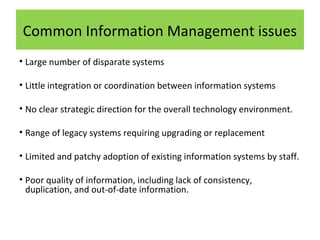
Common Information Management issues
• Large number of disparate systems
• Little integration or coordination between information systems
• No clear strategic direction for the overall technology environment.
• Range of legacy systems requiring upgrading or replacement
• Limited and patchy adoption of existing information systems by staff.
• Poor quality of information, including lack of consistency,
duplication, and out-of-date information.
Potential Solution : Cloud Computing !
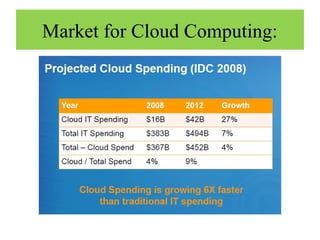
Market for Cloud Computing:
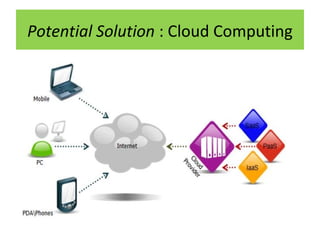
Potential Solution : Cloud Computing
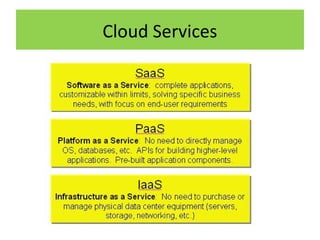
Cloud Services
What is Cloud Computing ?
• a new delivery model for IT services based on the Internet,
• it involves over-the-Internet provision of dynamically scalable &
virtualized resources
•

CC frequently takes the form of web-based tools or applications
that users can access and use through a web browser as if it were a
program installed locally on their own computer.

• Cloud Computing is the fifth generation of computing
(after Mainframe, Personal Computer, Client-Server
Computing, and the web).
What is Cloud Computing ?
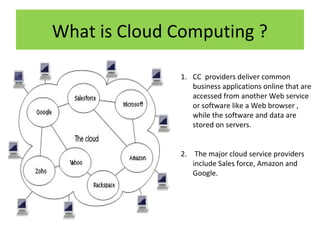
1. CC providers deliver common
business applications online that are
accessed from another Web service
or software like a Web browser ,
while the software and data are
stored on servers.
2. The major cloud service providers
include Sales force, Amazon and
Google.
Architecture of Cloud Computing
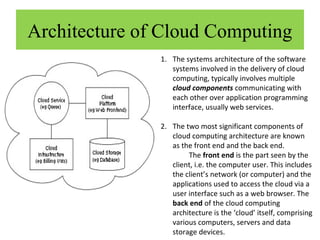
1. The systems architecture of the software
systems involved in the delivery of cloud
computing, typically involves multiple
cloud components communicating with
each other over application programming
interface, usually web services.
2. The two most significant components of
cloud computing architecture are known
as the front end and the back end.
The front end is the part seen by the
client, i.e. the computer user. This includes
the client’s network (or computer) and the
applications used to access the cloud via a
user interface such as a web browser. The
back end of the cloud computing
architecture is the ‘cloud’ itself, comprising
various computers, servers and data
storage devices.
Benefits of Cloud Computing ?
• Provides access to the latest software versions
• Can be accessed from anywhere
• Resiliency and Redundancy
• Improved services
• Environmentally friendly
• Sharing info is not restricted to size
• Innovation & Competitiveness
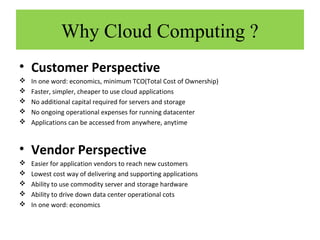
Why Cloud Computing ?
• Customer Perspective






In one word: economics, minimum TCO(Total Cost of Ownership)
Faster, simpler, cheaper to use cloud applications
No additional capital required for servers and storage
No ongoing operational expenses for running datacenter
Applications can be accessed from anywhere, anytime

• Vendor Perspective






Easier for application vendors to reach new customers
Lowest cost way of delivering and supporting applications
Ability to use commodity server and storage hardware
Ability to drive down data center operational cots
In one word: economics
Downsides Cloud Computing ?
• Immature technologies
• Connection
• Migrations and customisations
• Expectations
• Data Sovereignty
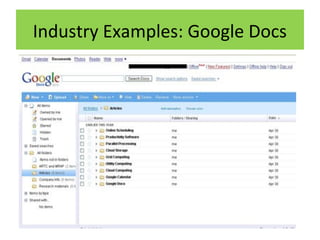
Industry Examples: Google Docs
ENTERPRISE
MARKET

MID-MARKET

SMALL BUSINESS
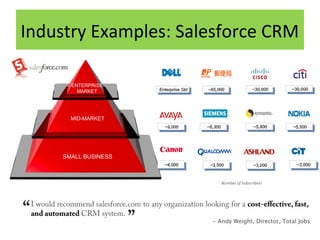
Industry Examples: Salesforce CRM
ENTERPRISE
MARKET

Enterprise Std
Enterprise Std

~65,000
~65,000

~30,000
~30,000

~30,000
~30,000

~6,300
~6,300

~5,800
~5,800

~5,500
~5,500

MID-MARKET
~9,000
~9,000

SMALL BUSINESS
~4,000
~4,000

~~3,500
3,500

~3,200
~3,200

Number of Subscribers

~3,000
~3,000
Conclusions








Cloud Computing is the fastest growing part of IT
Tremendous benefits to customers of all sizes
Cloud services are simpler to acquire and scale up or down
Key opportunity for application and infrastructure vendors
Public clouds work great for some but not all applications
Private clouds offer many benefits for internal applications
Public and private clouds can be used in combination
Thank you !

Cloud computing

  • 1.
    ISM – SML713 How Cloud Computing has Transformed Information Management? By : Pawandeep Singh Maniktala 2012SMN6706 Bhushan Kumar 2012SMN6788 Himanshu Singhal 2012SMN
  • 2.
    What is InformationSystems Management (ISM)? • The ISM program combines the fundamental intellectual content of both Computer Science and Business Management Economics. • An increasingly larger number of companies and institutions have concluded that their daily operations have an indispensable reliance on computer-based systems.
  • 3.
    Common Information Managementissues • Large number of disparate systems • Little integration or coordination between information systems • No clear strategic direction for the overall technology environment. • Range of legacy systems requiring upgrading or replacement • Limited and patchy adoption of existing information systems by staff. • Poor quality of information, including lack of consistency, duplication, and out-of-date information.
  • 4.
    Potential Solution :Cloud Computing !
  • 5.
    Market for CloudComputing:
  • 6.
    Potential Solution :Cloud Computing
  • 7.
  • 8.
    What is CloudComputing ? • a new delivery model for IT services based on the Internet, • it involves over-the-Internet provision of dynamically scalable & virtualized resources • CC frequently takes the form of web-based tools or applications that users can access and use through a web browser as if it were a program installed locally on their own computer. • Cloud Computing is the fifth generation of computing (after Mainframe, Personal Computer, Client-Server Computing, and the web).
  • 9.
    What is CloudComputing ? 1. CC providers deliver common business applications online that are accessed from another Web service or software like a Web browser , while the software and data are stored on servers. 2. The major cloud service providers include Sales force, Amazon and Google.
  • 10.
    Architecture of CloudComputing 1. The systems architecture of the software systems involved in the delivery of cloud computing, typically involves multiple cloud components communicating with each other over application programming interface, usually web services. 2. The two most significant components of cloud computing architecture are known as the front end and the back end. The front end is the part seen by the client, i.e. the computer user. This includes the client’s network (or computer) and the applications used to access the cloud via a user interface such as a web browser. The back end of the cloud computing architecture is the ‘cloud’ itself, comprising various computers, servers and data storage devices.
  • 11.
    Benefits of CloudComputing ? • Provides access to the latest software versions • Can be accessed from anywhere • Resiliency and Redundancy • Improved services • Environmentally friendly • Sharing info is not restricted to size • Innovation & Competitiveness
  • 12.
    Why Cloud Computing? • Customer Perspective      In one word: economics, minimum TCO(Total Cost of Ownership) Faster, simpler, cheaper to use cloud applications No additional capital required for servers and storage No ongoing operational expenses for running datacenter Applications can be accessed from anywhere, anytime • Vendor Perspective      Easier for application vendors to reach new customers Lowest cost way of delivering and supporting applications Ability to use commodity server and storage hardware Ability to drive down data center operational cots In one word: economics
  • 13.
    Downsides Cloud Computing? • Immature technologies • Connection • Migrations and customisations • Expectations • Data Sovereignty
  • 14.
    Industry Examples: GoogleDocs ENTERPRISE MARKET MID-MARKET SMALL BUSINESS
  • 15.
    Industry Examples: SalesforceCRM ENTERPRISE MARKET Enterprise Std Enterprise Std ~65,000 ~65,000 ~30,000 ~30,000 ~30,000 ~30,000 ~6,300 ~6,300 ~5,800 ~5,800 ~5,500 ~5,500 MID-MARKET ~9,000 ~9,000 SMALL BUSINESS ~4,000 ~4,000 ~~3,500 3,500 ~3,200 ~3,200 Number of Subscribers ~3,000 ~3,000
  • 16.
    Conclusions        Cloud Computing isthe fastest growing part of IT Tremendous benefits to customers of all sizes Cloud services are simpler to acquire and scale up or down Key opportunity for application and infrastructure vendors Public clouds work great for some but not all applications Private clouds offer many benefits for internal applications Public and private clouds can be used in combination
  • 17.