

Aboubakr Elnashar Benha university Hospital, Egypt 
Aboubakr Elnashar
Contents 
1.Terminology & Definition 
2.Causes 
3.Evaluation 
4.Treatment 
Aboubakr Elnashar
Abnormal-looking cervix 
Unhealthy looking cervix 
Aboubakr Elnashar
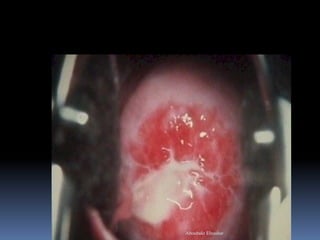
DEFINE It is the cervix which has one or more of the following: 
1.White or red patches 
2.Polyps 
3.Nodular cervix with retention cyst 
4.Hypertophied cervix 
5.Ulcer 
6.Purulent, or persistent discharge 
7.Bleeding on touch or PCB (Sammour et al, 1985; Aboloyoun et al, 1990; Abdelshafy,1997; Chong, 2003; Milingos et al, 2010; Darwish et al, 2013) 
Aboubakr Elnashar
Aboubakr Elnashar
Women presented with suspicious cervix during routine pelvic examination should be referred for appropriate diagnosis mainly to exclude underling preinvasive or invasive cervical lesions. 
Proper diagnoses and management of cervical lesions are the cornerstone for cervical cancer prevention in settings where there is no or disorganized cervical cancer screening program, like Egypt 
Aboubakr Elnashar
CAUSES 
1.Inflammatory: Mechanical Traumatic Infections. 2. Dystrophic: Hormonal or Nutritional 3. Neoplastic: Benign Premalignant Malignant 
Aboubakr Elnashar
Clinically suspicious cervix does not mean CIN, but mostly, it is caused by benign and inflammatory conditions: Cervicitis Ectopy, Ectropion infected Nabothian cysts polyp, or true ulcers (Chong, 2003) 
Aboubakr Elnashar
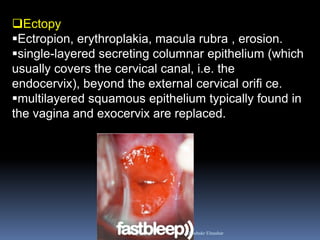
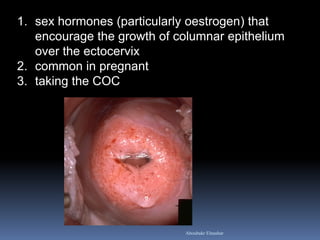
Ectopy 
Ectropion, erythroplakia, macula rubra , erosion. 
single-layered secreting columnar epithelium (which usually covers the cervical canal, i.e. the endocervix), beyond the external cervical orifi ce. 
multilayered squamous epithelium typically found in the vagina and exocervix are replaced. 
Aboubakr Elnashar
1.sex hormones (particularly oestrogen) that encourage the growth of columnar epithelium over the ectocervix 
2.common in pregnant 
3.taking the COC 
Aboubakr Elnashar
PCB Causes (Sahu etal,2007) 
Ectopy: 34% 
Cervical polyp: 5-13% 
Chlamydia infection: 2% 
CIN: 7-17% 
Invasive cervical cancer: 0.6-4%. 
No specific cause: 50% . 
Aboubakr Elnashar
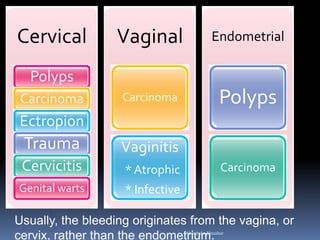
Cervical 
Polyps 
Carcinoma 
Ectropion 
Trauma 
Cervicitis 
Genital warts 
Vaginal 
Carcinoma 
Vaginitis 
* Atrophic 
* Infective 
Endometrial 
Polyps 
Carcinoma 
Usually, the bleeding originates from the vagina, or cervix, rather than the endometrium. 
Aboubakr Elnashar
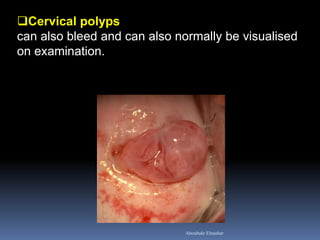
Cervical polyps can also bleed and can also normally be visualised on examination. 
Aboubakr Elnashar
Cervicitis : vaginal discharge, bleeding. STI: Chlamydia gonorrhoea occasionally herpes. 
Aboubakr Elnashar
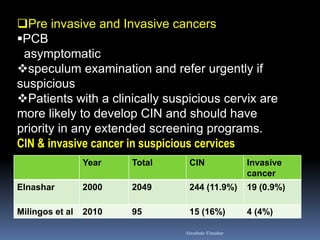
Invasive cancer 
CIN 
Total 
Year 
19 (0.9%) 
244 (11.9%) 
2049 
2000 
Elnashar 
4 (4%) 
15 (16%) 
95 
2010 
Milingos et al 
Pre invasive and Invasive cancers 
PCB asymptomatic 
speculum examination and refer urgently if suspicious 
Patients with a clinically suspicious cervix are more likely to develop CIN and should have priority in any extended screening programs. CIN & invasive cancer in suspicious cervices 
Aboubakr Elnashar
Diagnosis 
History 
Speculum examination 
Laboratory Tests: Infection screen 
Nucleic acid amplification testing (NAAT) for N.G, C.T, and T. V 
Wet mount: most cost-effective means of diagnosing TV, the overall sensitivity is low and is dependent on the inoculum size; thus, NAAT testing has become popular due to its relatively high sensitivity and specificity. 
Aboubakr Elnashar
 Cytology. 
 HPV. 
 VIA 
 Colposcopy 
Aboubakr Elnashar
Pap smear 
 used for ≥50 y all across the globe. 
widely used for in most developed countries Meets all the requirements for mass screening:. 
• Fairly tolerated by patients, Easy to administer 
• Reasonable sensitivity & specificity. 
•Detection of endocervical lesions. 
•It has resulted in a substantial reduction in both the morbidity & mortality of cervical cancer. 
Aboubakr Elnashar
Aboubakr Elnashar 
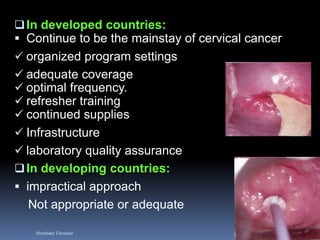
In developed countries: 
Continue to be the mainstay of cervical cancer 
organized program settings 
adequate coverage 
optimal frequency. 
refresher training 
continued supplies 
Infrastructure 
laboratory quality assurance 
In developing countries: 
impractical approach 
Not appropriate or adequate
Visual inspection with acetic acid (VIA) 
Effects of acetic acid: .It coagulates the proteins of the nucleus & cytoplasm & makes the protein opaque & white. .It dehydrates the cells, the cytoplasmic volume is reduced & the reflection is increased. 
Duration: appears after 20 seconds disappears after 2 minutes. 
Aboubakr Elnashar
Aboubakr Elnashar
Procedure 
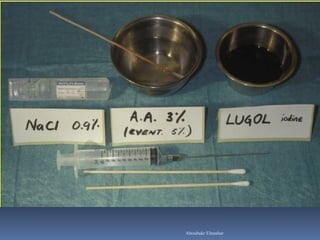
1.Wash the cervix with a 3%–5% acetic acid solution. 
2.Carefully inspect the cervix, especially the TZ, with the naked eye. 
Aboubakr Elnashar
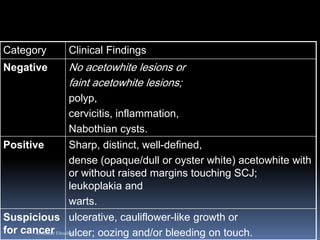
Category 
Clinical Findings 
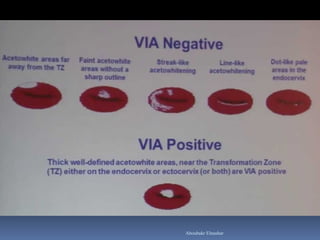
Negative 
No acetowhite lesions or 
faint acetowhite lesions; 
polyp, 
cervicitis, inflammation, 
Nabothian cysts. 
Positive 
Sharp, distinct, well-defined, 
dense (opaque/dull or oyster white) acetowhite with or without raised margins touching SCJ; leukoplakia and 
warts. 
Suspicious for cancer 
ulcerative, cauliflower-like growth or 
ulcer; oozing and/or bleeding on touch. 
Aboubakr Elnashar
Aboubakr Elnashar
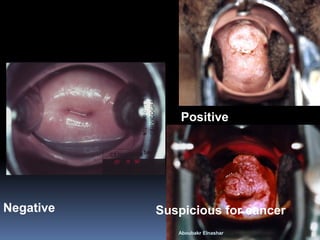
Negative 
Positive 
Suspicious for cancer 
Aboubakr Elnashar
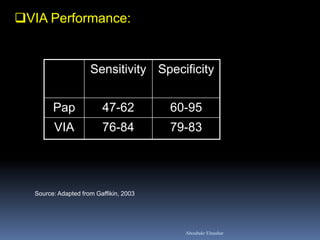
VIA Performance: 
Source: Adapted from Gaffikin, 2003 
Sensitivity 
Specificity 
Pap 
47-62 
60-95 
VIA 
76-84 
79-83 
Aboubakr Elnashar
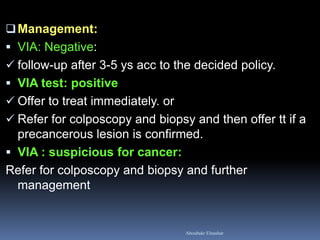
Management: 
VIA: Negative: 
follow-up after 3-5 ys acc to the decided policy. 
VIA test: positive 
Offer to treat immediately. or 
Refer for colposcopy and biopsy and then offer tt if a precancerous lesion is confirmed. 
VIA : suspicious for cancer: 
Refer for colposcopy and biopsy and further management 
Aboubakr Elnashar
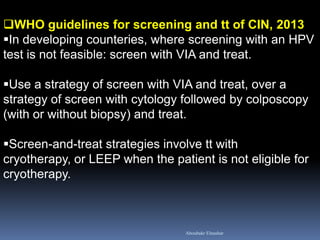
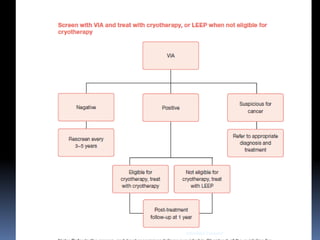
WHO guidelines for screening and tt of CIN, 2013 
In developing counteries, where screening with an HPV test is not feasible: screen with VIA and treat. 
Use a strategy of screen with VIA and treat, over a strategy of screen with cytology followed by colposcopy (with or without biopsy) and treat. 
Screen-and-treat strategies involve tt with cryotherapy, or LEEP when the patient is not eligible for cryotherapy. 
Aboubakr Elnashar
Aboubakr Elnashar
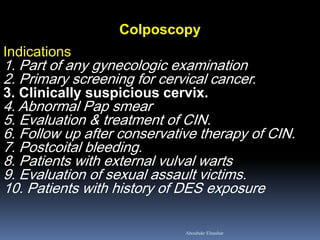
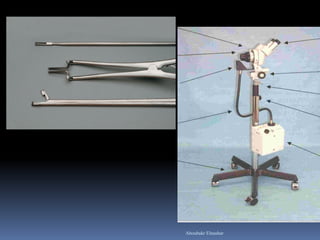
Colposcopy Indications 1. Part of any gynecologic examination 2. Primary screening for cervical cancer. 3. Clinically suspicious cervix. 4. Abnormal Pap smear 5. Evaluation & treatment of CIN. 6. Follow up after conservative therapy of CIN. 7. Postcoital bleeding. 8. Patients with external vulval warts 9. Evaluation of sexual assault victims. 10. Patients with history of DES exposure 
Aboubakr Elnashar
Aboubakr Elnashar
Aboubakr Elnashar
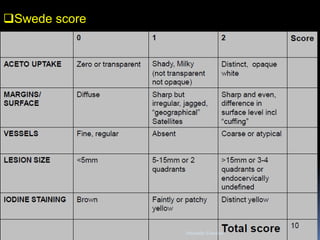
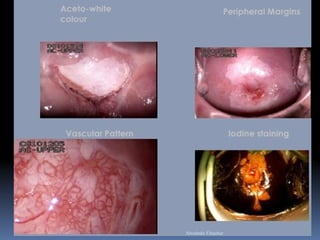
Swede score 
Aboubakr Elnashar
Swede score of 4 and above: Punch biopsies of the cervix 
Swede score 6 and above: 
immediate treatment with cold coagulation under visualisation with the Gynocular and local anaesthesia. 
patients not suitable for cold coagulation or with biopsies revealing microinvasive cervical disease or worse: appropriate diagnostic workup and management protocol. 
Aboubakr Elnashar
Aboubakr Elnashar
TREATMENT Of the cause 
Cervicitis 
Ectopy, Ectropion 
Infected Nabothian cysts 
Polyp 
True ulcers 
CIN 
Aboubakr Elnashar
Cervicitis. CT: Doxycycline 100mg twice daily for 7 days or Azithromycin 1gm orally stat dose. Gonorrhoea Ceftriaxone 250mg IM stat dose or Cefixime 400mg oral stat dose. 
Aboubakr Elnashar
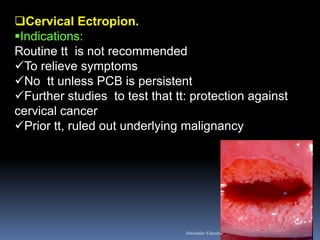
Cervical Ectropion. 
Indications: Routine tt is not recommended 
To relieve symptoms 
No tt unless PCB is persistent 
Further studies to test that tt: protection against cervical cancer 
Prior tt, ruled out underlying malignancy 
Aboubakr Elnashar
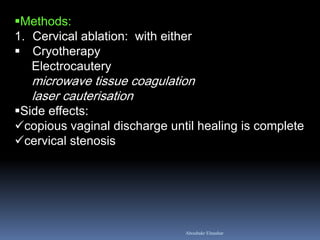
Methods: 
1.Cervical ablation: with either 
Cryotherapy Electrocautery microwave tissue coagulation laser cauterisation 
Side effects: 
copious vaginal discharge until healing is complete 
cervical stenosis 
Aboubakr Elnashar
2. An alternative therapy 
Acidifying agents: boric acid suppositories 600mg vaginally at bedtime 
Alpha interferon suppository 
Polydeoxyribonucleotide vaginal suppositories. 
Aboubakr Elnashar
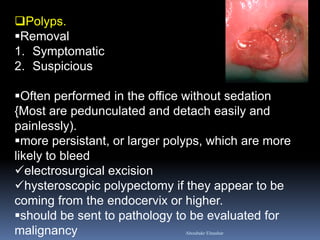
Polyps. 
Removal 
1.Symptomatic 
2.Suspicious 
Often performed in the office without sedation {Most are pedunculated and detach easily and painlessly). 
more persistant, or larger polyps, which are more likely to bleed 
electrosurgical excision 
hysteroscopic polypectomy if they appear to be coming from the endocervix or higher. 
should be sent to pathology to be evaluated for malignancy 
Aboubakr Elnashar
Vaginal Atrophy. 
1.Vaginal moisturizers and lubricants prior to and during intercourse (Avetrix gel) not have any direct effect on improving atrophic changes. 2. Vaginal estrogen therapy. PCB despite lubricants most effective: thickens the vaginal epithelium and decreases dryness. 1st line tt for postmenopausal women. 
Aboubakr Elnashar
CIN: WHO Recommendation 2014. 
CIN 1: 
(i)immediate tt 
(ii)follow the woman and then tt if the lesion is persistent or progressive after 18 to 24 months. 
CIN 2 and CIN 3: cryotherapy or LEEP. 
AIS (adenocarcinoma in situ) CKC 
Aboubakr Elnashar
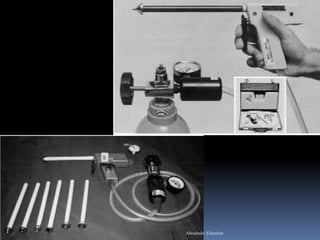
Cryotherapy 
Cryotherapy relies on a steady supply of compressed refrigerant gases (N2O or CO2) in transportable cylinders. 
Cryotherapy is not adequate to treat lesions involving the endocervix. 
If excellent contact between the cryoprobe tip and the ectocervix is achieved, N2O-based cryotherapy will achieve –89°C and CO2-based system will achieve –68°C at the core of the ice ball and temperatures around –20°C at the edges. Cells reduced to –20°C for one or more minutes will undergo cryonecrosis. 
Aboubakr Elnashar
Aboubakr Elnashar
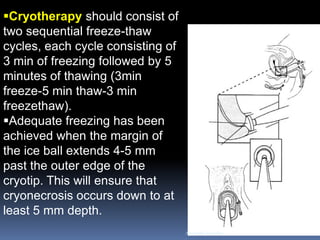
Cryotherapy should consist of two sequential freeze-thaw cycles, each cycle consisting of 3 min of freezing followed by 5 minutes of thawing (3min freeze-5 min thaw-3 min freezethaw). 
Adequate freezing has been achieved when the margin of the ice ball extends 4-5 mm past the outer edge of the cryotip. This will ensure that cryonecrosis occurs down to at least 5 mm depth. 
Aboubakr Elnashar
Advantages Favorable safety profile Outpatient procedure No anesthetic requirements Ease of procedure Low-cost equipment with minimal maintenance Bleeding complications rare No proven adverse reproductive effects Acceptable primary cure rate 
Aboubakr Elnashar
Disadvantages No tissue specimen for histopathology evaluation Cannot treat lesions with unfavorable sizes or shapes Uterine cramping Potential for vasovagal reaction Profuse vaginal discharge postprocedure Cephalad migration of squamocolumnar junction Adapted from Martin-Hirsch, 2010, with permission. Video 
Aboubakr Elnashar
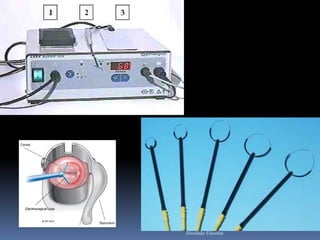
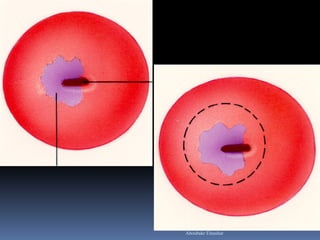
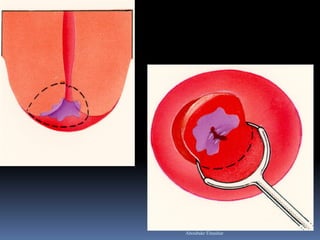
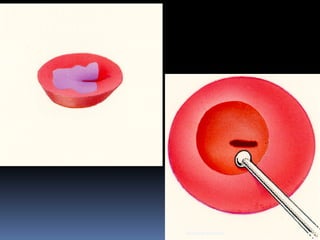
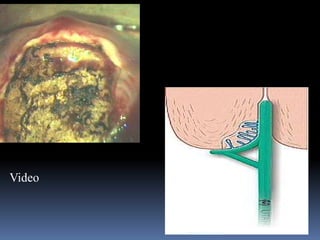
LEEP Technique 
• Colposcopy & lesion outlined 
• Patient grounded with pad return electrode 
•Inject anaesthetic just beneath & lateral to the lesion 
•Set cut/blend to 25-50 watts & excise lesion using the LEEP 
•Coagulate the base of the cone by the ball electrode(60 W) even if no apparent bleeding 
Aboubakr Elnashar
Aboubakr Elnashar
Aboubakr Elnashar
Aboubakr Elnashar
Aboubakr Elnashar
Advantages Favorable safety profile Ease of procedure Outpatient procedure using local anesthesia Low costs of equipment Tissue specimen for histopathology evaluation Disadvantages Thermal damage may obscure specimen margin status Special training required Risk of postprocedure bleeding Theoretical risk of vapor plume inhalation 
Aboubakr Elnashar
Video 
Aboubakr Elnashar
Thanks 
Aboubakr Elnashar

Clinically Suspicious cervix

  • 1.
    Aboubakr Elnashar Benhauniversity Hospital, Egypt Aboubakr Elnashar
  • 2.
    Contents 1.Terminology &Definition 2.Causes 3.Evaluation 4.Treatment Aboubakr Elnashar
  • 3.
    Abnormal-looking cervix Unhealthylooking cervix Aboubakr Elnashar
  • 4.
    DEFINE It isthe cervix which has one or more of the following: 1.White or red patches 2.Polyps 3.Nodular cervix with retention cyst 4.Hypertophied cervix 5.Ulcer 6.Purulent, or persistent discharge 7.Bleeding on touch or PCB (Sammour et al, 1985; Aboloyoun et al, 1990; Abdelshafy,1997; Chong, 2003; Milingos et al, 2010; Darwish et al, 2013) Aboubakr Elnashar
  • 5.
  • 6.
    Women presented withsuspicious cervix during routine pelvic examination should be referred for appropriate diagnosis mainly to exclude underling preinvasive or invasive cervical lesions. Proper diagnoses and management of cervical lesions are the cornerstone for cervical cancer prevention in settings where there is no or disorganized cervical cancer screening program, like Egypt Aboubakr Elnashar
  • 7.
    CAUSES 1.Inflammatory: MechanicalTraumatic Infections. 2. Dystrophic: Hormonal or Nutritional 3. Neoplastic: Benign Premalignant Malignant Aboubakr Elnashar
  • 8.
    Clinically suspicious cervixdoes not mean CIN, but mostly, it is caused by benign and inflammatory conditions: Cervicitis Ectopy, Ectropion infected Nabothian cysts polyp, or true ulcers (Chong, 2003) Aboubakr Elnashar
  • 9.
    Ectopy Ectropion, erythroplakia,macula rubra , erosion. single-layered secreting columnar epithelium (which usually covers the cervical canal, i.e. the endocervix), beyond the external cervical orifi ce. multilayered squamous epithelium typically found in the vagina and exocervix are replaced. Aboubakr Elnashar
  • 10.
    1.sex hormones (particularlyoestrogen) that encourage the growth of columnar epithelium over the ectocervix 2.common in pregnant 3.taking the COC Aboubakr Elnashar
  • 11.
    PCB Causes (Sahuetal,2007) Ectopy: 34% Cervical polyp: 5-13% Chlamydia infection: 2% CIN: 7-17% Invasive cervical cancer: 0.6-4%. No specific cause: 50% . Aboubakr Elnashar
  • 12.
    Cervical Polyps Carcinoma Ectropion Trauma Cervicitis Genital warts Vaginal Carcinoma Vaginitis * Atrophic * Infective Endometrial Polyps Carcinoma Usually, the bleeding originates from the vagina, or cervix, rather than the endometrium. Aboubakr Elnashar
  • 13.
    Cervical polyps canalso bleed and can also normally be visualised on examination. Aboubakr Elnashar
  • 14.
    Cervicitis : vaginaldischarge, bleeding. STI: Chlamydia gonorrhoea occasionally herpes. Aboubakr Elnashar
  • 15.
    Invasive cancer CIN Total Year 19 (0.9%) 244 (11.9%) 2049 2000 Elnashar 4 (4%) 15 (16%) 95 2010 Milingos et al Pre invasive and Invasive cancers PCB asymptomatic speculum examination and refer urgently if suspicious Patients with a clinically suspicious cervix are more likely to develop CIN and should have priority in any extended screening programs. CIN & invasive cancer in suspicious cervices Aboubakr Elnashar
  • 16.
    Diagnosis History Speculumexamination Laboratory Tests: Infection screen Nucleic acid amplification testing (NAAT) for N.G, C.T, and T. V Wet mount: most cost-effective means of diagnosing TV, the overall sensitivity is low and is dependent on the inoculum size; thus, NAAT testing has become popular due to its relatively high sensitivity and specificity. Aboubakr Elnashar
  • 17.
     Cytology. HPV.  VIA  Colposcopy Aboubakr Elnashar
  • 18.
    Pap smear used for ≥50 y all across the globe. widely used for in most developed countries Meets all the requirements for mass screening:. • Fairly tolerated by patients, Easy to administer • Reasonable sensitivity & specificity. •Detection of endocervical lesions. •It has resulted in a substantial reduction in both the morbidity & mortality of cervical cancer. Aboubakr Elnashar
  • 19.
    Aboubakr Elnashar Indeveloped countries: Continue to be the mainstay of cervical cancer organized program settings adequate coverage optimal frequency. refresher training continued supplies Infrastructure laboratory quality assurance In developing countries: impractical approach Not appropriate or adequate
  • 20.
    Visual inspection withacetic acid (VIA) Effects of acetic acid: .It coagulates the proteins of the nucleus & cytoplasm & makes the protein opaque & white. .It dehydrates the cells, the cytoplasmic volume is reduced & the reflection is increased. Duration: appears after 20 seconds disappears after 2 minutes. Aboubakr Elnashar
  • 21.
  • 22.
    Procedure 1.Wash thecervix with a 3%–5% acetic acid solution. 2.Carefully inspect the cervix, especially the TZ, with the naked eye. Aboubakr Elnashar
  • 23.
    Category Clinical Findings Negative No acetowhite lesions or faint acetowhite lesions; polyp, cervicitis, inflammation, Nabothian cysts. Positive Sharp, distinct, well-defined, dense (opaque/dull or oyster white) acetowhite with or without raised margins touching SCJ; leukoplakia and warts. Suspicious for cancer ulcerative, cauliflower-like growth or ulcer; oozing and/or bleeding on touch. Aboubakr Elnashar
  • 24.
  • 25.
    Negative Positive Suspiciousfor cancer Aboubakr Elnashar
  • 26.
    VIA Performance: Source:Adapted from Gaffikin, 2003 Sensitivity Specificity Pap 47-62 60-95 VIA 76-84 79-83 Aboubakr Elnashar
  • 27.
    Management: VIA: Negative: follow-up after 3-5 ys acc to the decided policy. VIA test: positive Offer to treat immediately. or Refer for colposcopy and biopsy and then offer tt if a precancerous lesion is confirmed. VIA : suspicious for cancer: Refer for colposcopy and biopsy and further management Aboubakr Elnashar
  • 28.
    WHO guidelines forscreening and tt of CIN, 2013 In developing counteries, where screening with an HPV test is not feasible: screen with VIA and treat. Use a strategy of screen with VIA and treat, over a strategy of screen with cytology followed by colposcopy (with or without biopsy) and treat. Screen-and-treat strategies involve tt with cryotherapy, or LEEP when the patient is not eligible for cryotherapy. Aboubakr Elnashar
  • 29.
  • 30.
    Colposcopy Indications 1.Part of any gynecologic examination 2. Primary screening for cervical cancer. 3. Clinically suspicious cervix. 4. Abnormal Pap smear 5. Evaluation & treatment of CIN. 6. Follow up after conservative therapy of CIN. 7. Postcoital bleeding. 8. Patients with external vulval warts 9. Evaluation of sexual assault victims. 10. Patients with history of DES exposure Aboubakr Elnashar
  • 31.
  • 32.
  • 33.
  • 34.
    Swede score of4 and above: Punch biopsies of the cervix Swede score 6 and above: immediate treatment with cold coagulation under visualisation with the Gynocular and local anaesthesia. patients not suitable for cold coagulation or with biopsies revealing microinvasive cervical disease or worse: appropriate diagnostic workup and management protocol. Aboubakr Elnashar
  • 35.
  • 36.
    TREATMENT Of thecause Cervicitis Ectopy, Ectropion Infected Nabothian cysts Polyp True ulcers CIN Aboubakr Elnashar
  • 37.
    Cervicitis. CT: Doxycycline100mg twice daily for 7 days or Azithromycin 1gm orally stat dose. Gonorrhoea Ceftriaxone 250mg IM stat dose or Cefixime 400mg oral stat dose. Aboubakr Elnashar
  • 38.
    Cervical Ectropion. Indications:Routine tt is not recommended To relieve symptoms No tt unless PCB is persistent Further studies to test that tt: protection against cervical cancer Prior tt, ruled out underlying malignancy Aboubakr Elnashar
  • 39.
    Methods: 1.Cervical ablation:with either Cryotherapy Electrocautery microwave tissue coagulation laser cauterisation Side effects: copious vaginal discharge until healing is complete cervical stenosis Aboubakr Elnashar
  • 40.
    2. An alternativetherapy Acidifying agents: boric acid suppositories 600mg vaginally at bedtime Alpha interferon suppository Polydeoxyribonucleotide vaginal suppositories. Aboubakr Elnashar
  • 41.
    Polyps. Removal 1.Symptomatic 2.Suspicious Often performed in the office without sedation {Most are pedunculated and detach easily and painlessly). more persistant, or larger polyps, which are more likely to bleed electrosurgical excision hysteroscopic polypectomy if they appear to be coming from the endocervix or higher. should be sent to pathology to be evaluated for malignancy Aboubakr Elnashar
  • 42.
    Vaginal Atrophy. 1.Vaginalmoisturizers and lubricants prior to and during intercourse (Avetrix gel) not have any direct effect on improving atrophic changes. 2. Vaginal estrogen therapy. PCB despite lubricants most effective: thickens the vaginal epithelium and decreases dryness. 1st line tt for postmenopausal women. Aboubakr Elnashar
  • 43.
    CIN: WHO Recommendation2014. CIN 1: (i)immediate tt (ii)follow the woman and then tt if the lesion is persistent or progressive after 18 to 24 months. CIN 2 and CIN 3: cryotherapy or LEEP. AIS (adenocarcinoma in situ) CKC Aboubakr Elnashar
  • 44.
    Cryotherapy Cryotherapy relieson a steady supply of compressed refrigerant gases (N2O or CO2) in transportable cylinders. Cryotherapy is not adequate to treat lesions involving the endocervix. If excellent contact between the cryoprobe tip and the ectocervix is achieved, N2O-based cryotherapy will achieve –89°C and CO2-based system will achieve –68°C at the core of the ice ball and temperatures around –20°C at the edges. Cells reduced to –20°C for one or more minutes will undergo cryonecrosis. Aboubakr Elnashar
  • 45.
  • 46.
    Cryotherapy should consistof two sequential freeze-thaw cycles, each cycle consisting of 3 min of freezing followed by 5 minutes of thawing (3min freeze-5 min thaw-3 min freezethaw). Adequate freezing has been achieved when the margin of the ice ball extends 4-5 mm past the outer edge of the cryotip. This will ensure that cryonecrosis occurs down to at least 5 mm depth. Aboubakr Elnashar
  • 47.
    Advantages Favorable safetyprofile Outpatient procedure No anesthetic requirements Ease of procedure Low-cost equipment with minimal maintenance Bleeding complications rare No proven adverse reproductive effects Acceptable primary cure rate Aboubakr Elnashar
  • 48.
    Disadvantages No tissuespecimen for histopathology evaluation Cannot treat lesions with unfavorable sizes or shapes Uterine cramping Potential for vasovagal reaction Profuse vaginal discharge postprocedure Cephalad migration of squamocolumnar junction Adapted from Martin-Hirsch, 2010, with permission. Video Aboubakr Elnashar
  • 49.
    LEEP Technique •Colposcopy & lesion outlined • Patient grounded with pad return electrode •Inject anaesthetic just beneath & lateral to the lesion •Set cut/blend to 25-50 watts & excise lesion using the LEEP •Coagulate the base of the cone by the ball electrode(60 W) even if no apparent bleeding Aboubakr Elnashar
  • 50.
  • 51.
  • 52.
  • 53.
  • 54.
    Advantages Favorable safetyprofile Ease of procedure Outpatient procedure using local anesthesia Low costs of equipment Tissue specimen for histopathology evaluation Disadvantages Thermal damage may obscure specimen margin status Special training required Risk of postprocedure bleeding Theoretical risk of vapor plume inhalation Aboubakr Elnashar
  • 55.
  • 56.