CLINICAL CASE DISCUSSION
PRESENTER: Dr. AMANI MUTAKANI
MODERATOR: Dr. GOLDY PATLE
HISTORY
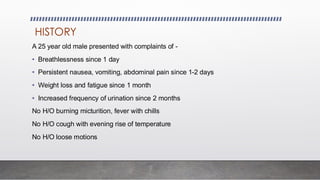
A 25 year old male presented with complaints of -
• Breathlessness since 1 day
• Persistent nausea, vomiting, abdominal pain since 1-2 days
• Weight loss and fatigue since 1 month
• Increased frequency of urination since 2 months
No H/O burning micturition, fever with chills
No H/O cough with evening rise of temperature
No H/O loose motions
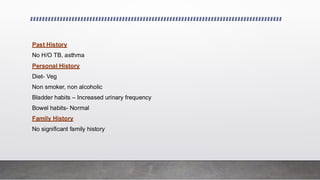
Past History
No H/O TB, asthma
Personal History
Diet- Veg
Non smoker, non alcoholic
Bladder habits – Increased urinary frequency
Bowel habits- Normal
Family History
No significant family history
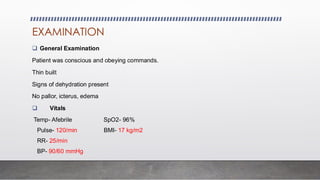
EXAMINATION
❑ General Examination
Patient was conscious and obeying commands.
Thin built
Signs of dehydration present
No pallor, icterus, edema
❑ Vitals
Temp- Afebrile SpO2- 96%
Pulse- 120/min BMI- 17 kg/m2
RR- 25/min
BP- 90/60 mmHg
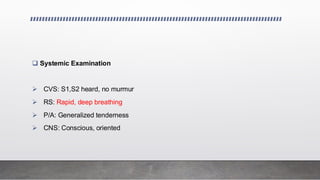
❑ Systemic Examination
➢ CVS: S1,S2 heard, no murmur
➢ RS: Rapid, deep breathing
➢ P/A: Generalized tenderness
➢ CNS: Conscious, oriented
INVESTIGATIONS
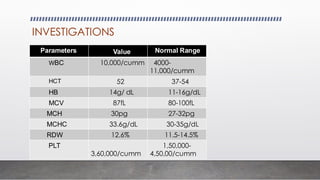
Parameters Value Normal Range
WBC 10,000/cumm 4000-
11,000/cumm
HCT 52 37-54
HB 14g/ dL 11-16g/dL
MCV 87fL 80-100fL
MCH 30pg 27-32pg
MCHC 33.6g/dL 30-35g/dL
RDW 12.6% 11.5-14.5%
PLT
3,60,000/cumm
1,50,000-
4,50,00/cumm
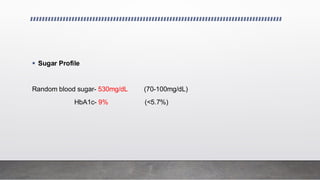
▪ Sugar Profile
Random blood sugar- 530mg/dL (70-100mg/dL)
HbA1c- 9% (<5.7%)
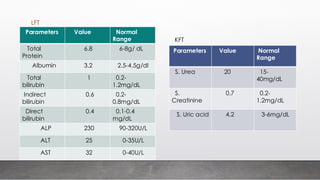
Parameters Value Normal
Range
Total
Protein
6.8 6-8g/ dL
Albumin 3.2 2.5-4.5g/dl
Total
bilirubin
1 0.2-
1.2mg/dL
Indirect
bilirubin
0.6 0.2-
0.8mg/dL
Direct
bilirubin
0.4 0.1-0.4
mg/dL
ALP 230 90-320U/L
ALT 25 0-35U/L
AST 32 0-40U/L
Parameters Value Normal
Range
S. Urea 20 15-
40mg/dL
S.
Creatinine
0.7 0.2-
1.2mg/dL
S. Uric acid 4.2 3-6mg/dL
LFT
KFT
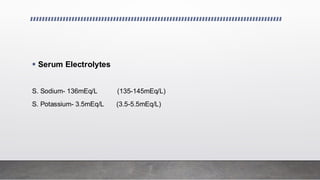
▪ Serum Electrolytes
S. Sodium- 136mEq/L (135-145mEq/L)
S. Potassium- 3.5mEq/L (3.5-5.5mEq/L)
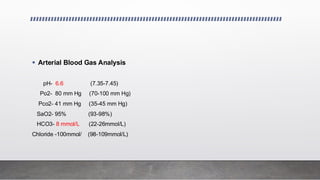
▪ Arterial Blood Gas Analysis
pH- 6.6 (7.35-7.45)
Po2- 80 mm Hg (70-100 mm Hg)
Pco2- 41 mm Hg (35-45 mm Hg)
SaO2- 95% (93-98%)
HCO3- 8 mmol/L (22-26mmol/L)
Chloride -100mmol/ (98-109mmol/L)
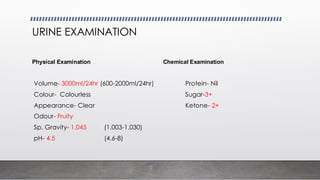
URINE EXAMINATION
Physical Examination Chemical Examination
Volume- 3000ml/24hr (600-2000ml/24hr) Protein- Nil
Colour- Colourless Sugar-3+
Appearance- Clear Ketone- 2+
Odour- Fruity
Sp. Gravity- 1.045 (1.003-1.030)
pH- 4.5 (4.6-8)
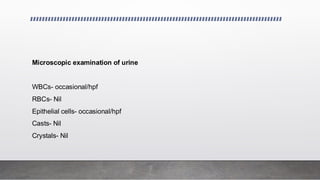
Microscopic examination of urine
WBCs- occasional/hpf
RBCs- Nil
Epithelial cells- occasional/hpf
Casts- Nil
Crystals- Nil
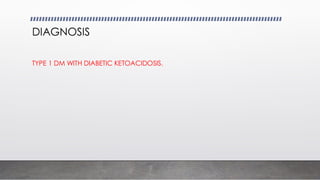
DIAGNOSIS
TYPE 1 DM WITH DIABETIC KETOACIDOSIS.
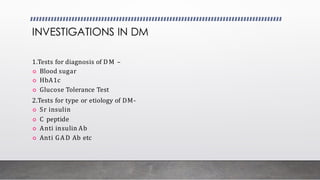
INVESTIGATIONS IN DM
1.Tests for diagnosis of D M –
 Blood sugar
 HbA1c
 Glucose Tolerance Test
2.Tests for type or etiology of DM-
 Sr insulin
 C peptide
 Anti insulin Ab
 Anti GA D Ab etc
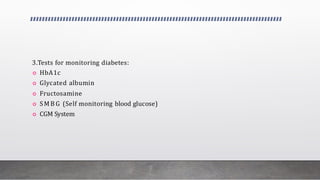
3.Tests for monitoring diabetes:
 HbA1c
 Glycated albumin
 Fructosamine
 SMB G (Self monitoring blood glucose)
 CGM System
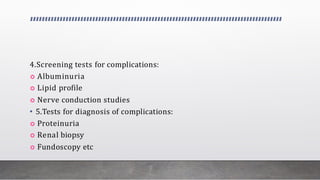
4.Screening tests for complications:
 Albuminuria
 Lipid profile
 Nerve conduction studies
• 5.Tests for diagnosis of complications:
 Proteinuria
 Renal biopsy
 Fundoscopy etc
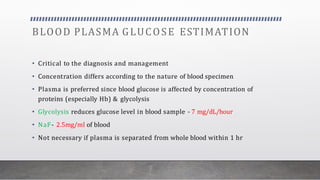
BLOOD PLASMA GLUCOSE ESTIMATION
• Critical to the diagnosis and management
• Concentration differs according to the nature of blood specimen
• Plasma is preferred since blood glucose is affected by concentration of
proteins (especially Hb) & glycolysis
• Glycolysis reduces glucose level in blood sample - 7 mg/dL/hour
• NaF- 2.5mg/ml of blood
• Not necessary if plasma is separated from whole blood within 1 hr
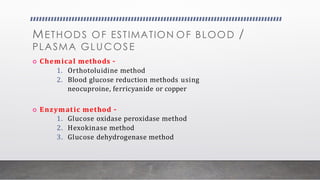
METHODS OF ESTIMATION OF BLOOD /
PLASMA GLUCOSE
 Chemical methods –
1. Orthotoluidine method
2. Blood glucose reduction methods using
neocuproine, ferricyanide or copper
 Enzymatic method –
1. Glucose oxidase peroxidase method
2. Hexokinase method
3. Glucose dehydrogenase method
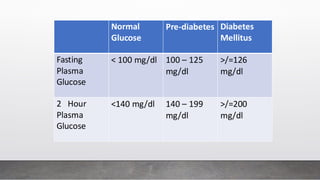
Normal
Glucose
Pre-diabetes Diabetes
Mellitus
Fasting
Plasma
Glucose
< 100 mg/dl 100 – 125
mg/dl
>/=126
mg/dl
2 Hour
Plasma
Glucose
<140 mg/dl 140 – 199
mg/dl
>/=200
mg/dl
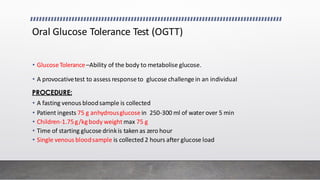
Oral Glucose Tolerance Test (OGTT)
• GlucoseTolerance–Ability of the body to metabolise glucose.
• A provocativetest to assess responseto glucose challenge in an individual
PROCEDURE:
• A fasting venous bloodsample is collected
• Patient ingests 75 g anhydrousglucose in 250-300 ml of waterover 5 min
• Children-1.75g/kgbody weight max 75 g
• Time of starting glucose drinkis taken as zero hour
• Single venous bloodsample is collected 2 hours after glucose load
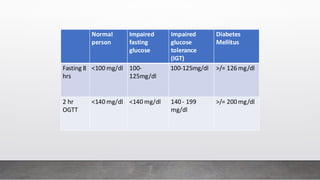
Normal
person
Impaired
fasting
glucose
Impaired
glucose
tolerance
(IGT)
Diabetes
Mellitus
Fasting 8
hrs
<100 mg/dl 100-
125mg/dl
100-125mg/dl >/= 126mg/dl
2 hr
OGTT
<140 mg/dl <140 mg/dl 140 - 199
mg/dl
>/= 200 mg/dl
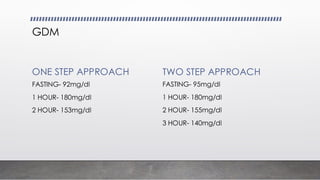
GDM
ONE STEP APPROACH
FASTING- 92mg/dl
1 HOUR- 180mg/dl
2 HOUR- 153mg/dl
TWO STEP APPROACH
FASTING- 95mg/dl
1 HOUR- 180mg/dl
2 HOUR- 155mg/dl
3 HOUR- 140mg/dl
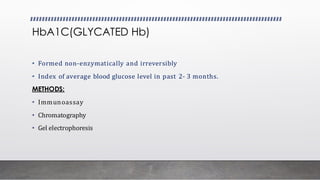
HbA1C(GLYCATED Hb)
• Formed non-enzymatically and irreversibly
• Index of average blood glucose level in past 2- 3 months.
METHODS:
• Immunoassay
• Chromatography
• Gel electrophoresis
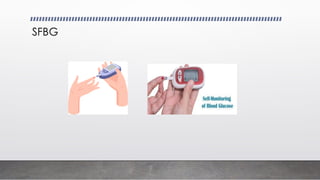
SFBG
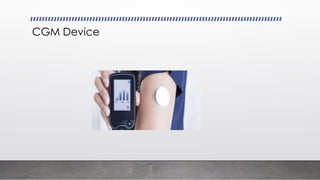
CGM Device
THANK YOU

Clinical case based discussion on DM .pdf

  • 1.
    CLINICAL CASE DISCUSSION PRESENTER:Dr. AMANI MUTAKANI MODERATOR: Dr. GOLDY PATLE
  • 2.
    HISTORY A 25 yearold male presented with complaints of - • Breathlessness since 1 day • Persistent nausea, vomiting, abdominal pain since 1-2 days • Weight loss and fatigue since 1 month • Increased frequency of urination since 2 months No H/O burning micturition, fever with chills No H/O cough with evening rise of temperature No H/O loose motions
  • 3.
    Past History No H/OTB, asthma Personal History Diet- Veg Non smoker, non alcoholic Bladder habits – Increased urinary frequency Bowel habits- Normal Family History No significant family history
  • 4.
    EXAMINATION ❑ General Examination Patientwas conscious and obeying commands. Thin built Signs of dehydration present No pallor, icterus, edema ❑ Vitals Temp- Afebrile SpO2- 96% Pulse- 120/min BMI- 17 kg/m2 RR- 25/min BP- 90/60 mmHg
  • 5.
    ❑ Systemic Examination ➢CVS: S1,S2 heard, no murmur ➢ RS: Rapid, deep breathing ➢ P/A: Generalized tenderness ➢ CNS: Conscious, oriented
  • 6.
    INVESTIGATIONS Parameters Value NormalRange WBC 10,000/cumm 4000- 11,000/cumm HCT 52 37-54 HB 14g/ dL 11-16g/dL MCV 87fL 80-100fL MCH 30pg 27-32pg MCHC 33.6g/dL 30-35g/dL RDW 12.6% 11.5-14.5% PLT 3,60,000/cumm 1,50,000- 4,50,00/cumm
  • 7.
    ▪ Sugar Profile Randomblood sugar- 530mg/dL (70-100mg/dL) HbA1c- 9% (<5.7%)
  • 8.
    Parameters Value Normal Range Total Protein 6.86-8g/ dL Albumin 3.2 2.5-4.5g/dl Total bilirubin 1 0.2- 1.2mg/dL Indirect bilirubin 0.6 0.2- 0.8mg/dL Direct bilirubin 0.4 0.1-0.4 mg/dL ALP 230 90-320U/L ALT 25 0-35U/L AST 32 0-40U/L Parameters Value Normal Range S. Urea 20 15- 40mg/dL S. Creatinine 0.7 0.2- 1.2mg/dL S. Uric acid 4.2 3-6mg/dL LFT KFT
  • 9.
    ▪ Serum Electrolytes S.Sodium- 136mEq/L (135-145mEq/L) S. Potassium- 3.5mEq/L (3.5-5.5mEq/L)
  • 10.
    ▪ Arterial BloodGas Analysis pH- 6.6 (7.35-7.45) Po2- 80 mm Hg (70-100 mm Hg) Pco2- 41 mm Hg (35-45 mm Hg) SaO2- 95% (93-98%) HCO3- 8 mmol/L (22-26mmol/L) Chloride -100mmol/ (98-109mmol/L)
  • 11.
    URINE EXAMINATION Physical ExaminationChemical Examination Volume- 3000ml/24hr (600-2000ml/24hr) Protein- Nil Colour- Colourless Sugar-3+ Appearance- Clear Ketone- 2+ Odour- Fruity Sp. Gravity- 1.045 (1.003-1.030) pH- 4.5 (4.6-8)
  • 12.
    Microscopic examination ofurine WBCs- occasional/hpf RBCs- Nil Epithelial cells- occasional/hpf Casts- Nil Crystals- Nil
  • 13.
    DIAGNOSIS TYPE 1 DMWITH DIABETIC KETOACIDOSIS.
  • 15.
    INVESTIGATIONS IN DM 1.Testsfor diagnosis of D M –  Blood sugar  HbA1c  Glucose Tolerance Test 2.Tests for type or etiology of DM-  Sr insulin  C peptide  Anti insulin Ab  Anti GA D Ab etc
  • 16.
    3.Tests for monitoringdiabetes:  HbA1c  Glycated albumin  Fructosamine  SMB G (Self monitoring blood glucose)  CGM System
  • 17.
    4.Screening tests forcomplications:  Albuminuria  Lipid profile  Nerve conduction studies • 5.Tests for diagnosis of complications:  Proteinuria  Renal biopsy  Fundoscopy etc
  • 18.
    BLOOD PLASMA GLUCOSEESTIMATION • Critical to the diagnosis and management • Concentration differs according to the nature of blood specimen • Plasma is preferred since blood glucose is affected by concentration of proteins (especially Hb) & glycolysis • Glycolysis reduces glucose level in blood sample - 7 mg/dL/hour • NaF- 2.5mg/ml of blood • Not necessary if plasma is separated from whole blood within 1 hr
  • 19.
    METHODS OF ESTIMATIONOF BLOOD / PLASMA GLUCOSE  Chemical methods – 1. Orthotoluidine method 2. Blood glucose reduction methods using neocuproine, ferricyanide or copper  Enzymatic method – 1. Glucose oxidase peroxidase method 2. Hexokinase method 3. Glucose dehydrogenase method
  • 20.
    Normal Glucose Pre-diabetes Diabetes Mellitus Fasting Plasma Glucose < 100mg/dl 100 – 125 mg/dl >/=126 mg/dl 2 Hour Plasma Glucose <140 mg/dl 140 – 199 mg/dl >/=200 mg/dl
  • 21.
    Oral Glucose ToleranceTest (OGTT) • GlucoseTolerance–Ability of the body to metabolise glucose. • A provocativetest to assess responseto glucose challenge in an individual PROCEDURE: • A fasting venous bloodsample is collected • Patient ingests 75 g anhydrousglucose in 250-300 ml of waterover 5 min • Children-1.75g/kgbody weight max 75 g • Time of starting glucose drinkis taken as zero hour • Single venous bloodsample is collected 2 hours after glucose load
  • 22.
    Normal person Impaired fasting glucose Impaired glucose tolerance (IGT) Diabetes Mellitus Fasting 8 hrs <100 mg/dl100- 125mg/dl 100-125mg/dl >/= 126mg/dl 2 hr OGTT <140 mg/dl <140 mg/dl 140 - 199 mg/dl >/= 200 mg/dl
  • 23.
    GDM ONE STEP APPROACH FASTING-92mg/dl 1 HOUR- 180mg/dl 2 HOUR- 153mg/dl TWO STEP APPROACH FASTING- 95mg/dl 1 HOUR- 180mg/dl 2 HOUR- 155mg/dl 3 HOUR- 140mg/dl
  • 24.
    HbA1C(GLYCATED Hb) • Formednon-enzymatically and irreversibly • Index of average blood glucose level in past 2- 3 months. METHODS: • Immunoassay • Chromatography • Gel electrophoresis
  • 25.
  • 26.
  • 27.