International Research Journal of Engineering and Technology (IRJET) e-ISSN: 2395-0056
Volume: 09 Issue: 11 | Nov 2022 www.irjet.net p-ISSN: 2395-0072
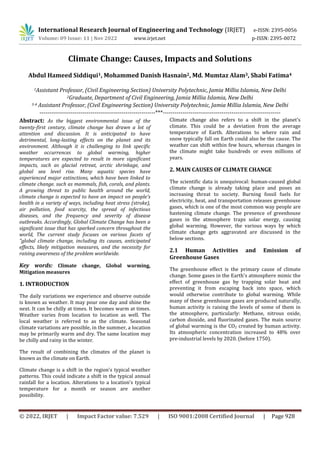
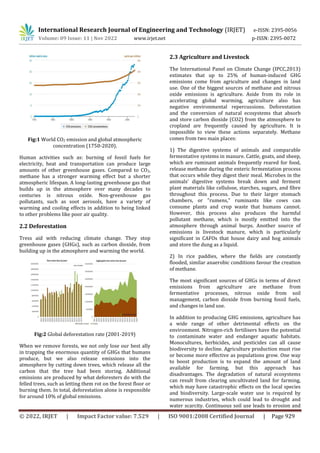
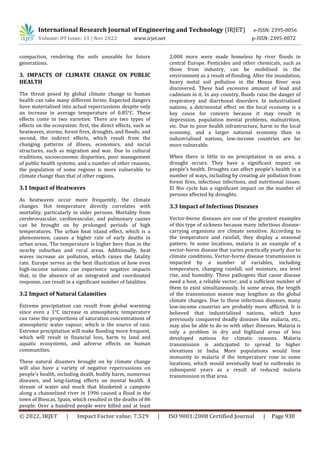
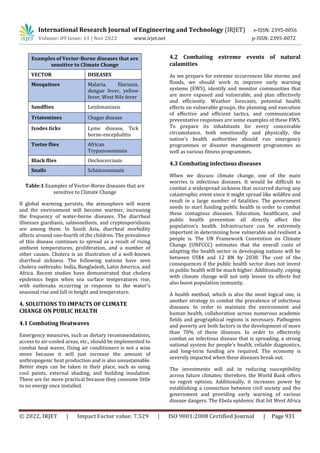
© 2022, IRJET | Impact Factor value: 7.529 | ISO 9001:2008 Certified Journal | Page 928
Climate Change: Causes, Impacts and Solutions
Abdul Hameed Siddiqui1, Mohammed Danish Hasnain2, Md. Mumtaz Alam3, Shabi Fatima4
1Assistant Professor, (Civil Engineering Section) University Polytechnic, Jamia Millia Islamia, New Delhi
2Graduate, Department of Civil Engineering, Jamia Millia Islamia, New Delhi
3-4 Assistant Professor, (Civil Engineering Section) University Polytechnic, Jamia Millia Islamia, New Delhi
-----------------------------------------------------------***------------------------------------------------------------
Abstract: As the biggest environmental issue of the
twenty-first century, climate change has drawn a lot of
attention and discussion. It is anticipated to have
detrimental, long-lasting effects on the planet and its
environment. Although it is challenging to link specific
weather occurrences to global warming, higher
temperatures are expected to result in more significant
impacts, such as glacial retreat, arctic shrinkage, and
global sea level rise. Many aquatic species have
experienced major extinctions, which have been linked to
climate change. such as mammals, fish, corals, and plants.
A growing threat to public health around the world,
climate change is expected to have an impact on people's
health in a variety of ways, including heat stress (stroke),
air pollution, food scarcity, the spread of infectious
diseases, and the frequency and severity of disease
outbreaks. Accordingly, Global Climate Change has been a
significant issue that has sparked concern throughout the
world, The current study focuses on various facets of
"global climate change, including its causes, anticipated
effects, likely mitigation measures, and the necessity for
raising awareness of the problem worldwide.
Key words: Climate change, Global warming,
Mitigation measures
1. INTRODUCTION
The daily variations we experience and observe outside
is known as weather. It may pour one day and shine the
next. It can be chilly at times. It becomes warm at times.
Weather varies from location to location as well. The
local weather is referred to as the climate. Seasonal
climate variations are possible, in the summer, a location
may be primarily warm and dry. The same location may
be chilly and rainy in the winter.
The result of combining the climates of the planet is
known as the climate on Earth.
Climate change is a shift in the region's typical weather
patterns. This could indicate a shift in the typical annual
rainfall for a location. Alterations to a location's typical
temperature for a month or season are another
possibility.
Climate change also refers to a shift in the planet's
climate. This could be a deviation from the average
temperature of Earth. Alterations to where rain and
snow typically fall on Earth could also be the cause. The
weather can shift within few hours, whereas changes in
the climate might take hundreds or even millions of
years.
2. MAIN CAUSES OF CLIMATE CHANGE
The scientific data is unequivocal: human-caused global
climate change is already taking place and poses an
increasing threat to society. Burning fossil fuels for
electricity, heat, and transportation releases greenhouse
gases, which is one of the most common way people are
hastening climate change. The presence of greenhouse
gases in the atmosphere traps solar energy, causing
global warming. However, the various ways by which
climate change gets aggravated are discussed in the
below sections.
2.1 Human Activities and Emission of
Greenhouse Gases
The greenhouse effect is the primary cause of climate
change. Some gases in the Earth's atmosphere mimic the
effect of greenhouse gas by trapping solar heat and
preventing it from escaping back into space, which
would otherwise contribute to global warming. While
many of these greenhouse gases are produced naturally,
human activity is raising the levels of some of them in
the atmosphere, particularly: Methane, nitrous oxide,
carbon dioxide, and fluorinated gases. The main source
of global warming is the CO2 created by human activity.
Its atmospheric concentration increased to 48% over
pre-industrial levels by 2020. (before 1750).
International Research Journal of Engineering and Technology (IRJET) e-ISSN: 2395-0056
Volume: 09 Issue: 11 | Nov 2022 www.irjet.net p-ISSN: 2395-0072
© 2022, IRJET | Impact Factor value: 7.529 | ISO 9001:2008 Certified Journal | Page 929
Fig:1 World CO2 emission and global atmospheric
concentration (1750-2020).
Human activities such as: burning of fossil fuels for
electricity, heat and transportation can produce large
amounts of other greenhouse gases. Compared to CO2,
methane has a stronger warming effect but a shorter
atmospheric lifespan. A long-lasting greenhouse gas that
builds up in the atmosphere over many decades to
centuries is nitrous oxide. Non-greenhouse gas
pollutants, such as soot aerosols, have a variety of
warming and cooling effects in addition to being linked
to other problems like poor air quality.
2.2 Deforestation
Tress aid with reducing climate change. They stop
greenhouse gases (GHGs), such as carbon dioxide, from
building up in the atmosphere and warming the world.
Fig:2 Global deforestation rate (2001-2019)
When we remove forests, we not only lose our best ally
in trapping the enormous quantity of GHGs that humans
produce, but we also release emissions into the
atmosphere by cutting down trees, which release all the
carbon that the tree had been storing. Additional
emissions are produced by what deforesters do with the
felled trees, such as letting them rot on the forest floor or
burning them. In total, deforestation alone is responsible
for around 10% of global emissions.
2.3 Agriculture and Livestock
The International Panel on Climate Change (IPCC,2013)
estimates that up to 25% of human-induced GHG
emissions come from agriculture and changes in land
use. One of the biggest sources of methane and nitrous
oxide emissions is agriculture. Aside from its role in
accelerating global warming, agriculture also has
negative environmental repercussions. Deforestation
and the conversion of natural ecosystems that absorb
and store carbon dioxide (CO2) from the atmosphere to
cropland are frequently caused by agriculture. It is
impossible to view these actions separately. Methane
comes from two main places:
1) The digestive systems of animals and comparable
fermentative systems in manure. Cattle, goats, and sheep,
which are ruminant animals frequently reared for food,
release methane during the enteric fermentation process
that occurs while they digest their meal. Microbes in the
animals' digestive systems break down and ferment
plant materials like cellulose, starches, sugars, and fibre
throughout this process. Due to their larger stomach
chambers, or "rumens," ruminants like cows can
consume plants and crop waste that humans cannot.
However, this process also produces the harmful
pollutant methane, which is mostly emitted into the
atmosphere through animal burps. Another source of
emissions is livestock manure, which is particularly
significant in CAFOs that house dairy and hog animals
and store the dung as a liquid.
2) In rice paddies, where the fields are constantly
flooded, similar anaerobic conditions favour the creation
of methane.
The most significant sources of GHGs in terms of direct
emissions from agriculture are methane from
fermentative processes, nitrous oxide from soil
management, carbon dioxide from burning fossil fuels,
and changes in land use.
In addition to producing GHG emissions, agriculture has
a wide range of other detrimental effects on the
environment. Nitrogen-rich fertilisers have the potential
to contaminate water and endanger aquatic habitats.
Monocultures, herbicides, and pesticides can all cause
biodiversity to decline. Agriculture production must rise
or become more effective as populations grow. One way
to boost production is to expand the amount of land
available for farming, but this approach has
disadvantages. The degradation of natural ecosystems
can result from clearing uncultivated land for farming,
which may have catastrophic effects on the local species
and biodiversity. Large-scale water use is required by
numerous industries, which could lead to drought and
water scarcity. Continuous soil use leads to erosion and
International Research Journal of Engineering and Technology (IRJET) e-ISSN: 2395-0056
Volume: 09 Issue: 11 | Nov 2022 www.irjet.net p-ISSN: 2395-0072
© 2022, IRJET | Impact Factor value: 7.529 | ISO 9001:2008 Certified Journal | Page 930
compaction, rendering the soils unusable for future
generations.
3. IMPACTS OF CLIMATE CHANGE ON PUBLIC
HEALTH
The threat posed by global climate change to human
health can take many different forms. Expected dangers
have materialised into actual repercussions despite only
an increase in average temperature of 0.85°C. These
effects come in two varieties: There are two types of
effects on the ecosystem: first, the direct effects, such as
heatwaves, storms, forest fires, droughts, and floods; and
second, the indirect effects, which result from the
changing patterns of illness, economics, and social
structures, such as migration and war. Due to cultural
traditions, socioeconomic disparities, poor management
of public health systems, and a number of other reasons,
the population of some regions is more vulnerable to
climate change than that of other regions.
3.1 Impact of Heatwaves
As heatwaves occur more frequently, the climate
changes. Hot temperature directly correlates with
mortality, particularly in older persons. Mortality from
cerebrovascular, cardiovascular, and pulmonary causes
can be brought on by prolonged periods of high
temperatures. The urban heat island effect, which is a
phenomenon, causes a higher rate of early deaths in
urban areas. The temperature is higher here than in the
nearby suburban and rural areas. Additionally, heat
waves increase air pollution, which raises the fatality
rate. Europe serves as the best illustration of how even
high-income nations can experience negative impacts
that, in the absence of an integrated and coordinated
response, can result in a significant number of fatalities.
3.2 Impact of Natural Calamities
Extreme precipitation can result from global warming
since even a 1°C increase in atmospheric temperature
can raise the proportions of saturation concentrations of
atmospheric water vapour, which is the source of rain.
Extreme precipitation will make flooding more frequent,
which will result in financial loss, harm to land and
aquatic ecosystems, and adverse effects on human
communities.
These natural disasters brought on by climate change
will also have a variety of negative repercussions on
people's health, including death, bodily harm, numerous
diseases, and long-lasting effects on mental health. A
stream of water and muck that blanketed a campsite
along a channelized river in 1996 caused a flood in the
town of Biescas, Spain, which resulted in the deaths of 86
people. Over a hundred people were killed and at least
2,000 more were made homeless by river floods in
central Europe. Pesticides and other chemicals, such as
those from industry, can be mobilised in the
environment as a result of flooding. After the inundation,
heavy metal soil pollution in the Meuse River was
discovered. These had excessive amount of lead and
cadmium in it. In any country, floods raise the danger of
respiratory and diarrhoeal disorders. In industrialised
nations, a detrimental effect on the local economy is a
key cause for concern because it may result in
depression, population mental problems, malnutrition,
etc. Due to poor health infrastructure, harm to the local
economy, and a larger national economy than in
industrialised nations, low-income countries are far
more vulnerable.
When there is little to no precipitation in an area, a
drought occurs. They have a significant impact on
people's health. Droughts can affect people's health in a
number of ways, including by creating air pollution from
forest fires, infectious infections, and nutritional issues.
El Nio cycle has a significant impact on the number of
persons affected by droughts.
3.3 Impact of Infectious Diseases
Vector-borne diseases are one of the greatest examples
of this type of sickness because many infectious disease-
carrying organisms are climate sensitive. According to
the temperature and rainfall, they display a seasonal
pattern. In some locations, malaria is an example of a
vector-borne disease that varies practically yearly due to
climate conditions. Vector-borne disease transmission is
impacted by a number of variables, including
temperature, changing rainfall, soil moisture, sea level
rise, and humidity. These pathogens that cause disease
need a host, a reliable vector, and a sufficient number of
them to exist simultaneously. In some areas, the length
of the transmission season may lengthen as the global
climate changes. Due to these infectious diseases, many
low-income countries are probably more afflicted. It is
believed that industrialised nations, which have
previously conquered deadly diseases like malaria, etc.,
may also be able to do so with other illnesses. Malaria is
only a problem in dry and highland areas of less
developed nations for climatic reasons. Malaria
transmission is anticipated to spread to higher
elevations in India. More populations would lose
immunity to malaria if the temperature rose in some
locations, which would eventually lead to outbreaks in
subsequent years as a result of reduced malaria
transmission in that area.
International Research Journal of Engineering and Technology (IRJET) e-ISSN: 2395-0056
Volume: 09 Issue: 11 | Nov 2022 www.irjet.net p-ISSN: 2395-0072
© 2022, IRJET | Impact Factor value: 7.529 | ISO 9001:2008 Certified Journal | Page 931
Examples of Vector-Borne diseases that are
sensitive to Climate Change
VECTOR DISEASES
Mosquitoes Malaria, filariasis,
dengue fever, yellow
fever, West Nile fever
Sandflies Leishmaniasis
Triatomines Chagas disease
Ixodes ticks Lyme disease, Tick
borne-encephalitis
Tsetse flies African
Trypanosomiasis
Black flies Onchocerciasis
Snails Schistosomiasis
Table:1 Examples of Vector-Borne diseases that are
sensitive to Climate Change
If global warming persists, the atmosphere will warm
and the environment will become warmer, increasing
the frequency of water-borne diseases. The diarrheal
illnesses giardiasis, salmonellosis, and cryptosporidiosis
are among them. In South Asia, diarrheal morbidity
affects around one-fourth of the children. The prevalence
of this disease continues to spread as a result of rising
ambient temperatures, proliferation, and a number of
other causes. Cholera is an illustration of a well-known
diarrheal sickness. The following nations have seen
cholera outbreaks: India, Bangladesh, Latin America, and
Africa. Recent studies have demonstrated that cholera
epidemics begin when sea surface temperatures rise,
with outbreaks occurring in response to the water's
seasonal rise and fall in height and temperature.
4. SOLUTIONS TO IMPACTS OF CLIMATE
CHANGE ON PUBLIC HEALTH
4.1 Combating Heatwaves
Emergency measures, such as dietary recommendations,
access to air-cooled areas, etc., should be implemented to
combat heat waves. Using air conditioners is not a wise
move because it will just increase the amount of
anthropogenic heat production and is also unsustainable.
Better steps can be taken in their place, such as using
cool paints, external shading, and building insulation.
These are far more practical because they consume little
to no energy once installed.
4.2 Combating extreme events of natural
calamities
As we prepare for extreme occurrences like storms and
floods, we should work to improve early warning
systems (EWS), identify and monitor communities that
are more exposed and vulnerable, and plan effectively
and efficiently. Weather forecasts, potential health
effects on vulnerable groups, the planning and execution
of effective and efficient tactics, and communication
preventative responses are some examples of these EWS.
To prepare its inhabitants for every conceivable
circumstance, both emotionally and physically, the
nation's health authorities should run emergency
programmes or disaster management programmes as
well as various fitness programmes.
4.3 Combating infectious diseases
When we discuss climate change, one of the main
worries is infectious diseases. It would be difficult to
combat a widespread sickness that occurred during any
catastrophic event since it might spread like wildfire and
result in a large number of fatalities. The government
needs to start funding public health in order to combat
these contagious diseases. Education, healthcare, and
public health prevention all directly affect the
population's health. Infrastructure can be extremely
important in determining how vulnerable and resilient a
people is. The UN Framework Convention on Climate
Change (UNFCCC) estimates that the overall costs of
adapting the health sector in developing nations will be
between US$4 and 12 BN by 2030. The cost of the
consequences if the public health sector does not invest
in public health will be much higher. Additionally, coping
with climate change will not only lessen its effects but
also boost population immunity.
A health method, which is also the most logical one, is
another strategy to combat the prevalence of infectious
diseases. In order to maintain the environment and
human health, collaboration across numerous academic
fields and geographical regions is necessary. Pathogens
and poverty are both factors in the development of more
than 70% of these illnesses. In order to effectively
combat an infectious disease that is spreading, a strong
national system for people's health, reliable diagnostics,
and long-term funding are required. The economy is
severely impacted when these diseases break out.
The investments will aid in reducing susceptibility
across future climates; therefore, the World Bank offers
no regret options. Additionally, it increases power by
establishing a connection between civil society and the
government and providing early warning of various
disease dangers. The Ebola epidemic that hit West Africa
International Research Journal of Engineering and Technology (IRJET) e-ISSN: 2395-0056
Volume: 09 Issue: 11 | Nov 2022 www.irjet.net p-ISSN: 2395-0072
© 2022, IRJET | Impact Factor value: 7.529 | ISO 9001:2008 Certified Journal | Page 932
demonstrated how crucial it is for nations to build their
capacity to track and address disease outbreaks.
Therefore, surveillance and monitoring are the third
strategy that can be employed to combat infectious
diseases. Public health services can gather the data and
information, which can then be tracked by monitoring
systems. This data can then be used to analyse the
pattern of the disease, identify vulnerable communities,
and build a response plan to deal with the problem.
5. ECONOMIC ASPECT OF CLIMATE CHANGE
In addition to harming people's lives, global climate
change also poses a threat to the world economy. There
is a chance that heat waves will make people less
productive. Storms such as typhoons, hurricanes,
cyclones, and others have rendered countless people
homeless and impoverished. According to the United
Nations Organization's World Population Prospects
2019, droughts lead to low harvests and, as a result, a
tiny amount of food to feed the population, which is
growing swiftly and is anticipated to reach 10 billion by
the year 2050. The World Bank says that if quick action
is not taken, by 2030, 100 million additional people may
live in poverty as a result of climate change.
Collaboration between the commercial and public
sectors is required to address this issue, and changing
how things are produced would help to promote
sustainable economic growth.
China might lose 24% of its GDP by the middle of the
century if the average temperature rises by just 3.2°C,
while France or Greece could lose 13%, Europe could
lose around 11%, and the US, Canada, and the UK all lose
about 10% of their GDP. Figure 3 illustrates the
percentage GDP loss experienced by different nations if
their average temperature increases by just 3.2°C.
Fig:3 Percentage loss of GDP in various countries if their
average temperature increase by 3.2 ° C
6. CONCLUSION
Many environmental processes will contribute to the
anticipated environmental health effects. Changes in
agriculture, natural resources (such as fresh water,
insects, or vectors), or both may have a variety of effects.
Heat waves, altered precipitation patterns, glacier and
sea ice melting, and other natural effects of climate
change will endanger the lives of the Earth's people.
Since climate data is obtained from both computer and
disease models to provide both field and lab data,
numerous scenarios-based mathematical modelling can
be utilised to give us an idea of the disease activity in
advance.
It will be challenging to adjust to a changing
environment with a population that is always growing.
Since the Earth's resources are finite, human society
must work together with developed and developing
nations which frequently lack the resources even for the
most basic needs to achieve sustainability. Additionally,
since the effects of climate change on the economy will
be detrimental, we must be ready to meet any challenges
that arise. As a result, we should switch to a more
sustainable and practical method of production and
employ more renewable resources. A civilization that
values the environment as well as current and future
generations' needs will undoubtedly advance.
REFERENCES
[1] Saurabh Manchanda et al. “Global Climate Change
and its Impact on Environment and Public Health:
Risks and Responses”, International Research
Journal Of Engineering and Technology, 2021.
[2] Sasmita Mohanty, Bimal Prasanna Mohanty, “Global
Climate Change: A cause of concern”, National
Academy of Science Letters, 2009.
[3] United Nations, “What is Climate Change?”
https://www.un.org/en/climatechange/what-is-
climate-change
[4] United Nations, “Causes and Effects of Climate
Change”,
https://www.un.org/en/climatechange/science/cau
ses-effects-climate-change
[5] The International Panel Of Climate Change (IPCC),
“Climate Change widespread, rapid, intensifying”,
2021
[6] https://www.ipcc.ch/2021/08/09/ar6-wg1-
20210809-pr/
International Research Journal of Engineering and Technology (IRJET) e-ISSN: 2395-0056
Volume: 09 Issue: 11 | Nov 2022 www.irjet.net p-ISSN: 2395-0072
© 2022, IRJET | Impact Factor value: 7.529 | ISO 9001:2008 Certified Journal | Page 933
[7] NASA article, “What is Climate Change”, 2014
https://www.nasa.gov/audience/forstudents/k-
4/stories/nasa-knows/what-is-climate-change-
k4.html
[8] NASA article,“The Causes of Climate Change”, 2019.
https://climate.nasa.gov/causes/?_ga=2.165571455.
1742643709.1669659170-
1004721616.1669110545
[9] Green, Julia K., et al. “Large Influence of Soil Moisture
on Long-Term Terrestrial Carbon Uptake.” Nature,
vol. 565, no. 7740, 2019.
[10] American Farm Bureau Federation- The Voice Of
Agriculture, “ Agriculture and Greenhouse Gas
Emission”, 2019 https://www.fb.org/market-
intel/agriculture-and-greenhouse-gas-
emissions?_ga=2.173517283.1742643709.1669659
170-1004721616.1669110545
[11] “REDD: Protecting Climate, Forests and Livelihoods.”
International Institute for Environment and
Development, 24 Jan. 2018.
https://www.iied.org/redd-protecting-climate-
forests-
livelihoods?_ga=2.198658671.1742643709.1669659
170-1004721616.1669110545
[12] Environmental Protection Agency, “Sources of
Greenhouse Gas Emissions”, 2019.
[13] Goodland et al. “Livestock and Climate Change”,
2009.
[14] Gerber, P.J. Steinfeld, H. Henderson et al., “Tackling
Climate Change through Livestock- A global
assessment of emissions and mitigation
opportunities, 2013
[15] Rhett A. Butler, “Deforestation”, 2019.
[16] Sentient Media, “How does Livestock Farming Affect
Climate Change” 2022.
https://sentientmedia.org/how-does-livestock-
affect-climate-change/
[17] Watts N, Adger WN, Agnolucci P, Blackstock J, Byass
P, Cai W, Chaytor S, Colbourn T, Collins M, Cooper A,
Cox PM, Depledge J, Drummond P, Ekins P, Galaz V,
Grace D, Graham H, Grubb M, Haines A, Hamilton I,
Hunter A, Jiang X, Li M, Kelman I, Liang L, Lott M,
Lowe R, Luo Y, Mace G, Maslin M, Nilsson M,
Oreszczyn T, Pye S, Quinn T, Svensdotter M,
Venevsky S, Warner K, Xu B, Yang J, Yin Y, Yu C,
Zhang Q, Gong P, Montgomery H, Costello A. “Health
and climate change: policy responses to protect
public health”. Lancet. 2015.
[18] Hulme M, Jenkins GJ, Lu X, et al. Climate change
scenarios for the United Kingdom: the UKCIP02
scientific report. Norwich: Tyndall Centre for
Climate Change Research, School of Environmental
Sciences, University of East Anglia; 2002.
[19] Knowles, C. L. (2020). Planning Strategies for
Improving Resilience of Cities in Developing
Countries to the Urban Heat Island.
[20] Zheng, Z., Zhao, L. & Oleson, K.W. Large model
structural uncertainty in global projections of urban
heat waves. Nat Commun 12, 3736, 2021.
[21] Moustakis, Y., Papalexiou, S. M., Onof, C. J., &
Paschalis, A. Seasonality, intensity, and duration of
rainfall extremes change in a warmer climate.
Earth's Future, 2021.
[22] Estrela T, Menendez M, Dimas M et al. Sustainable
water use in Europe – Part3 extreme hydrological
events: floods and draughts. Copenhagen: European
Environment Agency, 2001
[23] Albering HJ, van Leusen SM, Moonen EJC,
Hoogewerff JA, Kleinjans JCS. Human health risk
assessment: a case study involving heavy metal soil
contamination after the flooding of the river Meuse
during the winter of 1993–1994. Environ Health
Perspect 1999.
[24] Bigger, Patrick & Dempsey, Jessica & Christiansen,
Jens & Rojas-Marchini, Fernanda & Irvine-Broque,
Audrey & Nelson, Sara & Disilvestro, Adriana &
Schuldt, Andrew & Shapiro-Garza, Elizabeth, Beyond
The Gap: Placing Biodiversity Finance in the Global
Economy, 2021.
[25] Meynecke, J.-O., Grubert, M., Arthur, J. M., Boston, R.,
& Lee, S. Y. (2012). The influence of the La Niña-El
Niño cycle on giant mud crab (Scylla serrata) catches
in Northern Australia. Estuarine, Coastal and Shelf
Science, 100, 93–101.
[26] Sukmara, R.B.; Wu, R.S. Utilization of Mosque as A
Part of Early Warning Systems to Reduce Flood
Damage in Samarinda City, Indonesia. Preprints
2021.
[27] Kovats RS, Bouma MJ, Hajat S, Worrall E, Haines A. El
Niño and health. Lancet. 2003
International Research Journal of Engineering and Technology (IRJET) e-ISSN: 2395-0056
Volume: 09 Issue: 11 | Nov 2022 www.irjet.net p-ISSN: 2395-0072
© 2022, IRJET | Impact Factor value: 7.529 | ISO 9001:2008 Certified Journal | Page 934
[28] Rodó, X., Martinez, P.P., Siraj, A. et al. Malaria trends
in Ethiopian highlands track the 2000 ‘slowdown’ in
global warming. Nat Commun 12, 1555, 2021.
[29] Indhumathi K, Sathesh Kumar K. A review on
prediction of seasonal diseases based on climate
change using big data. Mater Today Proc. 2021.
[30] Wang, H., Chen, X., Kong, N. et al. TRIM21 inhibits
porcine epidemic diarrhea virus proliferation by
proteasomal degradation of the nucleocapsid
protein. Arch Virol 166, 1903–1911, 2021.
[31] Lipp E, Huq A, Colwell R. Effects of global climate on
infectious disease: the cholera model. Clin Microbiol
Rev. 2002.
[32] Bhopal, A., Medhin, H., Bærøe, K., & Norheim, O. F.
Climate change and health in Ethiopia: To what
extent have the health dimensions of climate change
been integrated into the Climate Resilient Green
Economy? World Medical & Health Policy, 2021.
[33] Catania, F., Baedke, J., Fábregas-Tejeda, A., Nieves
Delgado, A., Vitali, V., & Nguyen Long, L. Global
climate change, diet and the complex relationship
between human host and microbiome: Towards
picture. BioEssays, 2021.
[34] Rahman, M.T.; Sobur, M.A.; Islam, M.S.; Ievy, S.;
Hossain, M.J.; El Zowalaty, M.E.; Rahman, A.T.;
Ashour, H.M. Zoonotic Diseases: Etiology, Impact,
and Control. Microorganisms, 2020.
[35] Jalloh MF, Kinsman J, Conteh J, et al Barriers and
facilitators to reporting deaths following Ebola
surveillance in Sierra Leone: implications for
sustainable mortality surveillance based on an
exploratory qualitative assessment Open 2021.

Climate Change: Causes, Impacts and Solutions

  • 1.
    International Research Journalof Engineering and Technology (IRJET) e-ISSN: 2395-0056 Volume: 09 Issue: 11 | Nov 2022 www.irjet.net p-ISSN: 2395-0072 © 2022, IRJET | Impact Factor value: 7.529 | ISO 9001:2008 Certified Journal | Page 928 Climate Change: Causes, Impacts and Solutions Abdul Hameed Siddiqui1, Mohammed Danish Hasnain2, Md. Mumtaz Alam3, Shabi Fatima4 1Assistant Professor, (Civil Engineering Section) University Polytechnic, Jamia Millia Islamia, New Delhi 2Graduate, Department of Civil Engineering, Jamia Millia Islamia, New Delhi 3-4 Assistant Professor, (Civil Engineering Section) University Polytechnic, Jamia Millia Islamia, New Delhi -----------------------------------------------------------***------------------------------------------------------------ Abstract: As the biggest environmental issue of the twenty-first century, climate change has drawn a lot of attention and discussion. It is anticipated to have detrimental, long-lasting effects on the planet and its environment. Although it is challenging to link specific weather occurrences to global warming, higher temperatures are expected to result in more significant impacts, such as glacial retreat, arctic shrinkage, and global sea level rise. Many aquatic species have experienced major extinctions, which have been linked to climate change. such as mammals, fish, corals, and plants. A growing threat to public health around the world, climate change is expected to have an impact on people's health in a variety of ways, including heat stress (stroke), air pollution, food scarcity, the spread of infectious diseases, and the frequency and severity of disease outbreaks. Accordingly, Global Climate Change has been a significant issue that has sparked concern throughout the world, The current study focuses on various facets of "global climate change, including its causes, anticipated effects, likely mitigation measures, and the necessity for raising awareness of the problem worldwide. Key words: Climate change, Global warming, Mitigation measures 1. INTRODUCTION The daily variations we experience and observe outside is known as weather. It may pour one day and shine the next. It can be chilly at times. It becomes warm at times. Weather varies from location to location as well. The local weather is referred to as the climate. Seasonal climate variations are possible, in the summer, a location may be primarily warm and dry. The same location may be chilly and rainy in the winter. The result of combining the climates of the planet is known as the climate on Earth. Climate change is a shift in the region's typical weather patterns. This could indicate a shift in the typical annual rainfall for a location. Alterations to a location's typical temperature for a month or season are another possibility. Climate change also refers to a shift in the planet's climate. This could be a deviation from the average temperature of Earth. Alterations to where rain and snow typically fall on Earth could also be the cause. The weather can shift within few hours, whereas changes in the climate might take hundreds or even millions of years. 2. MAIN CAUSES OF CLIMATE CHANGE The scientific data is unequivocal: human-caused global climate change is already taking place and poses an increasing threat to society. Burning fossil fuels for electricity, heat, and transportation releases greenhouse gases, which is one of the most common way people are hastening climate change. The presence of greenhouse gases in the atmosphere traps solar energy, causing global warming. However, the various ways by which climate change gets aggravated are discussed in the below sections. 2.1 Human Activities and Emission of Greenhouse Gases The greenhouse effect is the primary cause of climate change. Some gases in the Earth's atmosphere mimic the effect of greenhouse gas by trapping solar heat and preventing it from escaping back into space, which would otherwise contribute to global warming. While many of these greenhouse gases are produced naturally, human activity is raising the levels of some of them in the atmosphere, particularly: Methane, nitrous oxide, carbon dioxide, and fluorinated gases. The main source of global warming is the CO2 created by human activity. Its atmospheric concentration increased to 48% over pre-industrial levels by 2020. (before 1750).
  • 2.
    International Research Journalof Engineering and Technology (IRJET) e-ISSN: 2395-0056 Volume: 09 Issue: 11 | Nov 2022 www.irjet.net p-ISSN: 2395-0072 © 2022, IRJET | Impact Factor value: 7.529 | ISO 9001:2008 Certified Journal | Page 929 Fig:1 World CO2 emission and global atmospheric concentration (1750-2020). Human activities such as: burning of fossil fuels for electricity, heat and transportation can produce large amounts of other greenhouse gases. Compared to CO2, methane has a stronger warming effect but a shorter atmospheric lifespan. A long-lasting greenhouse gas that builds up in the atmosphere over many decades to centuries is nitrous oxide. Non-greenhouse gas pollutants, such as soot aerosols, have a variety of warming and cooling effects in addition to being linked to other problems like poor air quality. 2.2 Deforestation Tress aid with reducing climate change. They stop greenhouse gases (GHGs), such as carbon dioxide, from building up in the atmosphere and warming the world. Fig:2 Global deforestation rate (2001-2019) When we remove forests, we not only lose our best ally in trapping the enormous quantity of GHGs that humans produce, but we also release emissions into the atmosphere by cutting down trees, which release all the carbon that the tree had been storing. Additional emissions are produced by what deforesters do with the felled trees, such as letting them rot on the forest floor or burning them. In total, deforestation alone is responsible for around 10% of global emissions. 2.3 Agriculture and Livestock The International Panel on Climate Change (IPCC,2013) estimates that up to 25% of human-induced GHG emissions come from agriculture and changes in land use. One of the biggest sources of methane and nitrous oxide emissions is agriculture. Aside from its role in accelerating global warming, agriculture also has negative environmental repercussions. Deforestation and the conversion of natural ecosystems that absorb and store carbon dioxide (CO2) from the atmosphere to cropland are frequently caused by agriculture. It is impossible to view these actions separately. Methane comes from two main places: 1) The digestive systems of animals and comparable fermentative systems in manure. Cattle, goats, and sheep, which are ruminant animals frequently reared for food, release methane during the enteric fermentation process that occurs while they digest their meal. Microbes in the animals' digestive systems break down and ferment plant materials like cellulose, starches, sugars, and fibre throughout this process. Due to their larger stomach chambers, or "rumens," ruminants like cows can consume plants and crop waste that humans cannot. However, this process also produces the harmful pollutant methane, which is mostly emitted into the atmosphere through animal burps. Another source of emissions is livestock manure, which is particularly significant in CAFOs that house dairy and hog animals and store the dung as a liquid. 2) In rice paddies, where the fields are constantly flooded, similar anaerobic conditions favour the creation of methane. The most significant sources of GHGs in terms of direct emissions from agriculture are methane from fermentative processes, nitrous oxide from soil management, carbon dioxide from burning fossil fuels, and changes in land use. In addition to producing GHG emissions, agriculture has a wide range of other detrimental effects on the environment. Nitrogen-rich fertilisers have the potential to contaminate water and endanger aquatic habitats. Monocultures, herbicides, and pesticides can all cause biodiversity to decline. Agriculture production must rise or become more effective as populations grow. One way to boost production is to expand the amount of land available for farming, but this approach has disadvantages. The degradation of natural ecosystems can result from clearing uncultivated land for farming, which may have catastrophic effects on the local species and biodiversity. Large-scale water use is required by numerous industries, which could lead to drought and water scarcity. Continuous soil use leads to erosion and
  • 3.
    International Research Journalof Engineering and Technology (IRJET) e-ISSN: 2395-0056 Volume: 09 Issue: 11 | Nov 2022 www.irjet.net p-ISSN: 2395-0072 © 2022, IRJET | Impact Factor value: 7.529 | ISO 9001:2008 Certified Journal | Page 930 compaction, rendering the soils unusable for future generations. 3. IMPACTS OF CLIMATE CHANGE ON PUBLIC HEALTH The threat posed by global climate change to human health can take many different forms. Expected dangers have materialised into actual repercussions despite only an increase in average temperature of 0.85°C. These effects come in two varieties: There are two types of effects on the ecosystem: first, the direct effects, such as heatwaves, storms, forest fires, droughts, and floods; and second, the indirect effects, which result from the changing patterns of illness, economics, and social structures, such as migration and war. Due to cultural traditions, socioeconomic disparities, poor management of public health systems, and a number of other reasons, the population of some regions is more vulnerable to climate change than that of other regions. 3.1 Impact of Heatwaves As heatwaves occur more frequently, the climate changes. Hot temperature directly correlates with mortality, particularly in older persons. Mortality from cerebrovascular, cardiovascular, and pulmonary causes can be brought on by prolonged periods of high temperatures. The urban heat island effect, which is a phenomenon, causes a higher rate of early deaths in urban areas. The temperature is higher here than in the nearby suburban and rural areas. Additionally, heat waves increase air pollution, which raises the fatality rate. Europe serves as the best illustration of how even high-income nations can experience negative impacts that, in the absence of an integrated and coordinated response, can result in a significant number of fatalities. 3.2 Impact of Natural Calamities Extreme precipitation can result from global warming since even a 1°C increase in atmospheric temperature can raise the proportions of saturation concentrations of atmospheric water vapour, which is the source of rain. Extreme precipitation will make flooding more frequent, which will result in financial loss, harm to land and aquatic ecosystems, and adverse effects on human communities. These natural disasters brought on by climate change will also have a variety of negative repercussions on people's health, including death, bodily harm, numerous diseases, and long-lasting effects on mental health. A stream of water and muck that blanketed a campsite along a channelized river in 1996 caused a flood in the town of Biescas, Spain, which resulted in the deaths of 86 people. Over a hundred people were killed and at least 2,000 more were made homeless by river floods in central Europe. Pesticides and other chemicals, such as those from industry, can be mobilised in the environment as a result of flooding. After the inundation, heavy metal soil pollution in the Meuse River was discovered. These had excessive amount of lead and cadmium in it. In any country, floods raise the danger of respiratory and diarrhoeal disorders. In industrialised nations, a detrimental effect on the local economy is a key cause for concern because it may result in depression, population mental problems, malnutrition, etc. Due to poor health infrastructure, harm to the local economy, and a larger national economy than in industrialised nations, low-income countries are far more vulnerable. When there is little to no precipitation in an area, a drought occurs. They have a significant impact on people's health. Droughts can affect people's health in a number of ways, including by creating air pollution from forest fires, infectious infections, and nutritional issues. El Nio cycle has a significant impact on the number of persons affected by droughts. 3.3 Impact of Infectious Diseases Vector-borne diseases are one of the greatest examples of this type of sickness because many infectious disease- carrying organisms are climate sensitive. According to the temperature and rainfall, they display a seasonal pattern. In some locations, malaria is an example of a vector-borne disease that varies practically yearly due to climate conditions. Vector-borne disease transmission is impacted by a number of variables, including temperature, changing rainfall, soil moisture, sea level rise, and humidity. These pathogens that cause disease need a host, a reliable vector, and a sufficient number of them to exist simultaneously. In some areas, the length of the transmission season may lengthen as the global climate changes. Due to these infectious diseases, many low-income countries are probably more afflicted. It is believed that industrialised nations, which have previously conquered deadly diseases like malaria, etc., may also be able to do so with other illnesses. Malaria is only a problem in dry and highland areas of less developed nations for climatic reasons. Malaria transmission is anticipated to spread to higher elevations in India. More populations would lose immunity to malaria if the temperature rose in some locations, which would eventually lead to outbreaks in subsequent years as a result of reduced malaria transmission in that area.
  • 4.
    International Research Journalof Engineering and Technology (IRJET) e-ISSN: 2395-0056 Volume: 09 Issue: 11 | Nov 2022 www.irjet.net p-ISSN: 2395-0072 © 2022, IRJET | Impact Factor value: 7.529 | ISO 9001:2008 Certified Journal | Page 931 Examples of Vector-Borne diseases that are sensitive to Climate Change VECTOR DISEASES Mosquitoes Malaria, filariasis, dengue fever, yellow fever, West Nile fever Sandflies Leishmaniasis Triatomines Chagas disease Ixodes ticks Lyme disease, Tick borne-encephalitis Tsetse flies African Trypanosomiasis Black flies Onchocerciasis Snails Schistosomiasis Table:1 Examples of Vector-Borne diseases that are sensitive to Climate Change If global warming persists, the atmosphere will warm and the environment will become warmer, increasing the frequency of water-borne diseases. The diarrheal illnesses giardiasis, salmonellosis, and cryptosporidiosis are among them. In South Asia, diarrheal morbidity affects around one-fourth of the children. The prevalence of this disease continues to spread as a result of rising ambient temperatures, proliferation, and a number of other causes. Cholera is an illustration of a well-known diarrheal sickness. The following nations have seen cholera outbreaks: India, Bangladesh, Latin America, and Africa. Recent studies have demonstrated that cholera epidemics begin when sea surface temperatures rise, with outbreaks occurring in response to the water's seasonal rise and fall in height and temperature. 4. SOLUTIONS TO IMPACTS OF CLIMATE CHANGE ON PUBLIC HEALTH 4.1 Combating Heatwaves Emergency measures, such as dietary recommendations, access to air-cooled areas, etc., should be implemented to combat heat waves. Using air conditioners is not a wise move because it will just increase the amount of anthropogenic heat production and is also unsustainable. Better steps can be taken in their place, such as using cool paints, external shading, and building insulation. These are far more practical because they consume little to no energy once installed. 4.2 Combating extreme events of natural calamities As we prepare for extreme occurrences like storms and floods, we should work to improve early warning systems (EWS), identify and monitor communities that are more exposed and vulnerable, and plan effectively and efficiently. Weather forecasts, potential health effects on vulnerable groups, the planning and execution of effective and efficient tactics, and communication preventative responses are some examples of these EWS. To prepare its inhabitants for every conceivable circumstance, both emotionally and physically, the nation's health authorities should run emergency programmes or disaster management programmes as well as various fitness programmes. 4.3 Combating infectious diseases When we discuss climate change, one of the main worries is infectious diseases. It would be difficult to combat a widespread sickness that occurred during any catastrophic event since it might spread like wildfire and result in a large number of fatalities. The government needs to start funding public health in order to combat these contagious diseases. Education, healthcare, and public health prevention all directly affect the population's health. Infrastructure can be extremely important in determining how vulnerable and resilient a people is. The UN Framework Convention on Climate Change (UNFCCC) estimates that the overall costs of adapting the health sector in developing nations will be between US$4 and 12 BN by 2030. The cost of the consequences if the public health sector does not invest in public health will be much higher. Additionally, coping with climate change will not only lessen its effects but also boost population immunity. A health method, which is also the most logical one, is another strategy to combat the prevalence of infectious diseases. In order to maintain the environment and human health, collaboration across numerous academic fields and geographical regions is necessary. Pathogens and poverty are both factors in the development of more than 70% of these illnesses. In order to effectively combat an infectious disease that is spreading, a strong national system for people's health, reliable diagnostics, and long-term funding are required. The economy is severely impacted when these diseases break out. The investments will aid in reducing susceptibility across future climates; therefore, the World Bank offers no regret options. Additionally, it increases power by establishing a connection between civil society and the government and providing early warning of various disease dangers. The Ebola epidemic that hit West Africa
  • 5.
    International Research Journalof Engineering and Technology (IRJET) e-ISSN: 2395-0056 Volume: 09 Issue: 11 | Nov 2022 www.irjet.net p-ISSN: 2395-0072 © 2022, IRJET | Impact Factor value: 7.529 | ISO 9001:2008 Certified Journal | Page 932 demonstrated how crucial it is for nations to build their capacity to track and address disease outbreaks. Therefore, surveillance and monitoring are the third strategy that can be employed to combat infectious diseases. Public health services can gather the data and information, which can then be tracked by monitoring systems. This data can then be used to analyse the pattern of the disease, identify vulnerable communities, and build a response plan to deal with the problem. 5. ECONOMIC ASPECT OF CLIMATE CHANGE In addition to harming people's lives, global climate change also poses a threat to the world economy. There is a chance that heat waves will make people less productive. Storms such as typhoons, hurricanes, cyclones, and others have rendered countless people homeless and impoverished. According to the United Nations Organization's World Population Prospects 2019, droughts lead to low harvests and, as a result, a tiny amount of food to feed the population, which is growing swiftly and is anticipated to reach 10 billion by the year 2050. The World Bank says that if quick action is not taken, by 2030, 100 million additional people may live in poverty as a result of climate change. Collaboration between the commercial and public sectors is required to address this issue, and changing how things are produced would help to promote sustainable economic growth. China might lose 24% of its GDP by the middle of the century if the average temperature rises by just 3.2°C, while France or Greece could lose 13%, Europe could lose around 11%, and the US, Canada, and the UK all lose about 10% of their GDP. Figure 3 illustrates the percentage GDP loss experienced by different nations if their average temperature increases by just 3.2°C. Fig:3 Percentage loss of GDP in various countries if their average temperature increase by 3.2 ° C 6. CONCLUSION Many environmental processes will contribute to the anticipated environmental health effects. Changes in agriculture, natural resources (such as fresh water, insects, or vectors), or both may have a variety of effects. Heat waves, altered precipitation patterns, glacier and sea ice melting, and other natural effects of climate change will endanger the lives of the Earth's people. Since climate data is obtained from both computer and disease models to provide both field and lab data, numerous scenarios-based mathematical modelling can be utilised to give us an idea of the disease activity in advance. It will be challenging to adjust to a changing environment with a population that is always growing. Since the Earth's resources are finite, human society must work together with developed and developing nations which frequently lack the resources even for the most basic needs to achieve sustainability. Additionally, since the effects of climate change on the economy will be detrimental, we must be ready to meet any challenges that arise. As a result, we should switch to a more sustainable and practical method of production and employ more renewable resources. A civilization that values the environment as well as current and future generations' needs will undoubtedly advance. REFERENCES [1] Saurabh Manchanda et al. “Global Climate Change and its Impact on Environment and Public Health: Risks and Responses”, International Research Journal Of Engineering and Technology, 2021. [2] Sasmita Mohanty, Bimal Prasanna Mohanty, “Global Climate Change: A cause of concern”, National Academy of Science Letters, 2009. [3] United Nations, “What is Climate Change?” https://www.un.org/en/climatechange/what-is- climate-change [4] United Nations, “Causes and Effects of Climate Change”, https://www.un.org/en/climatechange/science/cau ses-effects-climate-change [5] The International Panel Of Climate Change (IPCC), “Climate Change widespread, rapid, intensifying”, 2021 [6] https://www.ipcc.ch/2021/08/09/ar6-wg1- 20210809-pr/
  • 6.
    International Research Journalof Engineering and Technology (IRJET) e-ISSN: 2395-0056 Volume: 09 Issue: 11 | Nov 2022 www.irjet.net p-ISSN: 2395-0072 © 2022, IRJET | Impact Factor value: 7.529 | ISO 9001:2008 Certified Journal | Page 933 [7] NASA article, “What is Climate Change”, 2014 https://www.nasa.gov/audience/forstudents/k- 4/stories/nasa-knows/what-is-climate-change- k4.html [8] NASA article,“The Causes of Climate Change”, 2019. https://climate.nasa.gov/causes/?_ga=2.165571455. 1742643709.1669659170- 1004721616.1669110545 [9] Green, Julia K., et al. “Large Influence of Soil Moisture on Long-Term Terrestrial Carbon Uptake.” Nature, vol. 565, no. 7740, 2019. [10] American Farm Bureau Federation- The Voice Of Agriculture, “ Agriculture and Greenhouse Gas Emission”, 2019 https://www.fb.org/market- intel/agriculture-and-greenhouse-gas- emissions?_ga=2.173517283.1742643709.1669659 170-1004721616.1669110545 [11] “REDD: Protecting Climate, Forests and Livelihoods.” International Institute for Environment and Development, 24 Jan. 2018. https://www.iied.org/redd-protecting-climate- forests- livelihoods?_ga=2.198658671.1742643709.1669659 170-1004721616.1669110545 [12] Environmental Protection Agency, “Sources of Greenhouse Gas Emissions”, 2019. [13] Goodland et al. “Livestock and Climate Change”, 2009. [14] Gerber, P.J. Steinfeld, H. Henderson et al., “Tackling Climate Change through Livestock- A global assessment of emissions and mitigation opportunities, 2013 [15] Rhett A. Butler, “Deforestation”, 2019. [16] Sentient Media, “How does Livestock Farming Affect Climate Change” 2022. https://sentientmedia.org/how-does-livestock- affect-climate-change/ [17] Watts N, Adger WN, Agnolucci P, Blackstock J, Byass P, Cai W, Chaytor S, Colbourn T, Collins M, Cooper A, Cox PM, Depledge J, Drummond P, Ekins P, Galaz V, Grace D, Graham H, Grubb M, Haines A, Hamilton I, Hunter A, Jiang X, Li M, Kelman I, Liang L, Lott M, Lowe R, Luo Y, Mace G, Maslin M, Nilsson M, Oreszczyn T, Pye S, Quinn T, Svensdotter M, Venevsky S, Warner K, Xu B, Yang J, Yin Y, Yu C, Zhang Q, Gong P, Montgomery H, Costello A. “Health and climate change: policy responses to protect public health”. Lancet. 2015. [18] Hulme M, Jenkins GJ, Lu X, et al. Climate change scenarios for the United Kingdom: the UKCIP02 scientific report. Norwich: Tyndall Centre for Climate Change Research, School of Environmental Sciences, University of East Anglia; 2002. [19] Knowles, C. L. (2020). Planning Strategies for Improving Resilience of Cities in Developing Countries to the Urban Heat Island. [20] Zheng, Z., Zhao, L. & Oleson, K.W. Large model structural uncertainty in global projections of urban heat waves. Nat Commun 12, 3736, 2021. [21] Moustakis, Y., Papalexiou, S. M., Onof, C. J., & Paschalis, A. Seasonality, intensity, and duration of rainfall extremes change in a warmer climate. Earth's Future, 2021. [22] Estrela T, Menendez M, Dimas M et al. Sustainable water use in Europe – Part3 extreme hydrological events: floods and draughts. Copenhagen: European Environment Agency, 2001 [23] Albering HJ, van Leusen SM, Moonen EJC, Hoogewerff JA, Kleinjans JCS. Human health risk assessment: a case study involving heavy metal soil contamination after the flooding of the river Meuse during the winter of 1993–1994. Environ Health Perspect 1999. [24] Bigger, Patrick & Dempsey, Jessica & Christiansen, Jens & Rojas-Marchini, Fernanda & Irvine-Broque, Audrey & Nelson, Sara & Disilvestro, Adriana & Schuldt, Andrew & Shapiro-Garza, Elizabeth, Beyond The Gap: Placing Biodiversity Finance in the Global Economy, 2021. [25] Meynecke, J.-O., Grubert, M., Arthur, J. M., Boston, R., & Lee, S. Y. (2012). The influence of the La Niña-El Niño cycle on giant mud crab (Scylla serrata) catches in Northern Australia. Estuarine, Coastal and Shelf Science, 100, 93–101. [26] Sukmara, R.B.; Wu, R.S. Utilization of Mosque as A Part of Early Warning Systems to Reduce Flood Damage in Samarinda City, Indonesia. Preprints 2021. [27] Kovats RS, Bouma MJ, Hajat S, Worrall E, Haines A. El Niño and health. Lancet. 2003
  • 7.
    International Research Journalof Engineering and Technology (IRJET) e-ISSN: 2395-0056 Volume: 09 Issue: 11 | Nov 2022 www.irjet.net p-ISSN: 2395-0072 © 2022, IRJET | Impact Factor value: 7.529 | ISO 9001:2008 Certified Journal | Page 934 [28] Rodó, X., Martinez, P.P., Siraj, A. et al. Malaria trends in Ethiopian highlands track the 2000 ‘slowdown’ in global warming. Nat Commun 12, 1555, 2021. [29] Indhumathi K, Sathesh Kumar K. A review on prediction of seasonal diseases based on climate change using big data. Mater Today Proc. 2021. [30] Wang, H., Chen, X., Kong, N. et al. TRIM21 inhibits porcine epidemic diarrhea virus proliferation by proteasomal degradation of the nucleocapsid protein. Arch Virol 166, 1903–1911, 2021. [31] Lipp E, Huq A, Colwell R. Effects of global climate on infectious disease: the cholera model. Clin Microbiol Rev. 2002. [32] Bhopal, A., Medhin, H., Bærøe, K., & Norheim, O. F. Climate change and health in Ethiopia: To what extent have the health dimensions of climate change been integrated into the Climate Resilient Green Economy? World Medical & Health Policy, 2021. [33] Catania, F., Baedke, J., Fábregas-Tejeda, A., Nieves Delgado, A., Vitali, V., & Nguyen Long, L. Global climate change, diet and the complex relationship between human host and microbiome: Towards picture. BioEssays, 2021. [34] Rahman, M.T.; Sobur, M.A.; Islam, M.S.; Ievy, S.; Hossain, M.J.; El Zowalaty, M.E.; Rahman, A.T.; Ashour, H.M. Zoonotic Diseases: Etiology, Impact, and Control. Microorganisms, 2020. [35] Jalloh MF, Kinsman J, Conteh J, et al Barriers and facilitators to reporting deaths following Ebola surveillance in Sierra Leone: implications for sustainable mortality surveillance based on an exploratory qualitative assessment Open 2021.