R.JAYACHANDRAN 
Social Development Management Consultant 
Chennai
Climate Change: 
-Increase in average temperature of the air 
near earth surface 
-ocean 
caused by the excessive concentration of 
green gases(carbon dioxide, methane and 
nitrous oxide in the atmosphere.
Climate change 
• Changes in climate alter the configuration of forest eco-systems and 
as such global vegetation pattern 
• Recognized as a significant manmade global environmental 
challenge. 
• Has enormous implications to the natural resources and livelihoods 
of the people.
Why India is vulnerable to Climate change? 
• Long coastline of above 7000kms, (Sea-level rise and 
changes in the occurrence of frequency and intensity of 
storm surges) 
• Our Himalayas with their vast glaciers, 
• Our almost 70million hectares of forests (which incidentally 
house almost all of our key mineral reserves)
World Bank warning 
4 Degree C rise in global temperature, would result in increased 
climate extreme events: 
• heat waves, sea level rise, more storm surges, droughts and flooding 
in the South Asian region including India. 
• The coastal and deltaic regions of India are reported to be 
particularly vulnerable to the risks of flooding including two Indian 
cities of Mumbai and Kolkata. 
• The Ganges, Indus, and Brahmaputra—are also vulnerable to the 
effects of climate change due to the melting of glaciers and loss of 
snow cover resulting in significant risk of flooding 
Source: The World Bank Report “Turn Down the Heat: Climate Extremes, Regional Impacts, and the Case 
for Resilience” published in June 2013
Critical area and Sectors in India 
• Should be looked at in four major regions in India, namely, Himalayan 
region, the North-Eastern region, the Western Ghats and the Coastal 
Region 
• Should assess impact on 4 key sectors such as the agriculture, water, 
natural ecosystem, biodiversity and health
Climate change issues relating to India 
• Per capita water availability will go down from 1820m3 to 1140m3 
in2050 
• Cereal production will be reduced 
• More floods and droughts 
• Availability of seafood will get reduced.
Assessing impacts and vulnerability of climate change 
• Assessment is essential to work out adaptation strategies and 
activities 
• Assessment depends on good quality information. 
• This information requires on : 
1. climate data (temperature, rainfall and the frequency of 
extreme events) 
2. Non-climatic data (current situation of water resources, 
agriculture and food security, human health, ecosystems and 
biodiversity, and coastal zones) 
Quantification of the Sensitivity of crops, soil, water, fish and livestock
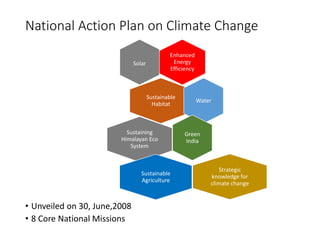
National Action Plan on Climate Change 
• Unveiled on 30, June,2008 
• 8 Core National Missions 
Enhanced 
Energy 
Efficiency 
Solar 
Sustainable 
Habitat 
Water 
Green 
India 
Sustaining 
Himalayan Eco 
System 
Sustainable 
Agriculture 
Strategic 
knowledge for 
climate change
Where we need to focus?

Climate change

  • 1.
    R.JAYACHANDRAN Social DevelopmentManagement Consultant Chennai
  • 2.
    Climate Change: -Increasein average temperature of the air near earth surface -ocean caused by the excessive concentration of green gases(carbon dioxide, methane and nitrous oxide in the atmosphere.
  • 3.
    Climate change •Changes in climate alter the configuration of forest eco-systems and as such global vegetation pattern • Recognized as a significant manmade global environmental challenge. • Has enormous implications to the natural resources and livelihoods of the people.
  • 5.
    Why India isvulnerable to Climate change? • Long coastline of above 7000kms, (Sea-level rise and changes in the occurrence of frequency and intensity of storm surges) • Our Himalayas with their vast glaciers, • Our almost 70million hectares of forests (which incidentally house almost all of our key mineral reserves)
  • 6.
    World Bank warning 4 Degree C rise in global temperature, would result in increased climate extreme events: • heat waves, sea level rise, more storm surges, droughts and flooding in the South Asian region including India. • The coastal and deltaic regions of India are reported to be particularly vulnerable to the risks of flooding including two Indian cities of Mumbai and Kolkata. • The Ganges, Indus, and Brahmaputra—are also vulnerable to the effects of climate change due to the melting of glaciers and loss of snow cover resulting in significant risk of flooding Source: The World Bank Report “Turn Down the Heat: Climate Extremes, Regional Impacts, and the Case for Resilience” published in June 2013
  • 7.
    Critical area andSectors in India • Should be looked at in four major regions in India, namely, Himalayan region, the North-Eastern region, the Western Ghats and the Coastal Region • Should assess impact on 4 key sectors such as the agriculture, water, natural ecosystem, biodiversity and health
  • 8.
    Climate change issuesrelating to India • Per capita water availability will go down from 1820m3 to 1140m3 in2050 • Cereal production will be reduced • More floods and droughts • Availability of seafood will get reduced.
  • 9.
    Assessing impacts andvulnerability of climate change • Assessment is essential to work out adaptation strategies and activities • Assessment depends on good quality information. • This information requires on : 1. climate data (temperature, rainfall and the frequency of extreme events) 2. Non-climatic data (current situation of water resources, agriculture and food security, human health, ecosystems and biodiversity, and coastal zones) Quantification of the Sensitivity of crops, soil, water, fish and livestock
  • 10.
    National Action Planon Climate Change • Unveiled on 30, June,2008 • 8 Core National Missions Enhanced Energy Efficiency Solar Sustainable Habitat Water Green India Sustaining Himalayan Eco System Sustainable Agriculture Strategic knowledge for climate change
  • 11.
    Where we needto focus?