

1. Increase of the earthly temperature.
The main consequence of the climate change
is the increase of the temperature.




2. . Changes on the snow, ice and frozen
sources.
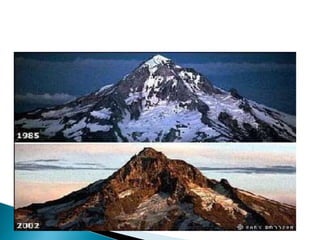
Poles are thawed in a very fast way. It is
producing instability on the ground and in
the rocky landslides.




3. Increase of the sea level and temperature.
The medium average of the rise has been 1,8
milimetres per year. This fact is dangering
some cities that are placed on the rivers
edges or oceans.


4. Increase of the frequency and intensity of
the extreme meteorological phenomena.
Strong waves of heat, rushes, floods,
droughts, etc are some of the phenomena
that are appeared in our planet and that will
stay with more frequency if we can´t reduce
gases emissions of the greenhouse effect all
over the world.
 5.

Endangered species and flora.
Among 20% and 30% of vegetables and animals
could be in danger if the global temperature
overtake 1,5 – 2,5 ºC.

 The

different ecosystems could be badly
damaged in the structure and working by the
consequencies of the climate change, having to
adapt to the opposite conditions of its normal
habitat.


6. Effects over agriculture and forestal sector.
Farmings placed in the bottom places can loose the
mayor part of its production,causing the increase of
the risk of hunger in people that survive thanks to
these lands.
the increase of the number of fires will cause that the
forestal places, huge drains of carbon, disappear and
stop practising this activity, very important to reduce
the impacts of the climate change.




7 Impact over the human health
As reference to the location and the ability to
the adaptation of regions, the consequences
that the climate change can have over the
human health can be very dangerous.


The ISCC (International Screen of experts about
the Climate Change), the Global Warming is a fact
that is causing and will produce, huge
consequences in the climate, atmosphere and
the biodiversity: increase of the average
temperature in the Earth for this century among
1 and 3,5 grades, decrease of the ice sources in
the Poles, increase of the level of the sea and
floods in bottom places and isles, increase of
desertification, extinction of flora and fauna in
ecosystems, shortage of water and atmospheric
instabilities (hurrycanes, fires, etc), secondary
effects of human disasters (propagation of
hunger, illnesses, etc)


The worldwide increase of the demand and
the energetic consumption, as well as the
industrial activity, transports, deforestation
and the agriculture, have caused an increase
of the emissions in the atmosphere of CO2
and methane, the main gases of the
greenhouse effects originators of the climate
change.



The Climate change is a worldwide problem that
needs a worldwide solution.
The measures to ease this terrible future are
obey the guidelines of the agrees such as The
Kyoto Convention: decrease the emissions of
CO2, reduce the use of fossil fuels and increase
the use of renovable energies, to improve the
efficiency and the energetic diversity, to follow a
policy of sustainable development and above all
to to make aware of the gravity of the prolbem
for the future generations.




The Greenhouse Effect if the phenomenon by
which some gases that are components of the
earth atmosphere have part of the energy
tath the planetary surface emits for having
beed warmed by the solar radiation. It affects
to every planetary rocky objects with
atmosphere. This phenomenon avoids that
the energy received comes back to the space,
producing a similar effect when seeing in a
hothouse.






Natural Causes
Natural causes of emission of these gases exist, such as:
Volcanic activity.
Evaporation of water in the oceans, related to the sun
action.
The industrialization. Once the man developed the
industry and his energetic model started to depend on the
fossil oils, the CO2 emissions and other heavy gases
started to increase in a very fast way, getting nowadays
35% more of carbon dioxide than in the pre-industrials
levels.
This has caused that the medium average has increased
and, in the same way that the effect that a coat produces
out of the period of time in our bodies, the planet is
overheating.


The crowd of heavy gases in the atmosphere, according to the experts,
caused that for the twentieth century the medium average of the
temperature increased among 4-8 grades, being the 2010 the hottest
year registered in the history. The superficial temperature of the Earth,
without doubts, has increased more for this industrial period than in any
other of the latest one thousand years.



Consequences of the Greenhouse Effect.



The consequences have done obvious all over the world. Every year, due
to the sharp changes of temperature…



Thirty thousand of species of flora and fauna are extinguished.



The medium average of the level of the sea increased among 10 – 20
centimetres in the last century and it´s thought that the annual taxes of
this increase for the last 20 years has been of 3,2 milimetres, more or
less the double of the medium speed of the latest 80 years.











The climate is changing.
A lot of responsible gases of the climate change are as well atmospheric
pollutant that affect to our health and to the environment.
In 2009, some Bristish and German researchers carried out a study in
the Norway coasts. They wanted to observe one of the strongest gases
of the greenhouse effects, the methane.
These investigations sum up to the warnings about the possible effects
of the climate change.
In the closest regions to the poles, some of the earthy mass or the
marine bottom is always frozen.
This source- named permafrost- contains the double of carbono that
the one that is normally in the atmosphere.
In hot conditions , this carbone can freed of the biomass in
descomposition as dioxide of carbone or methane. The methane is a gas
of greenhouse effect much more powerful that the dioxide of carbone.
For this reason we take the risk of confronting to a global warming and
to thaw even faster than in the Artic.
Once freed to the atmosphere, the methane has life about 12 years.
 Project

developed by Lidia,
Claudia, Natalia and Mario, of
Sixth grade.

Clima

  • 2.
     1. Increase ofthe earthly temperature. The main consequence of the climate change is the increase of the temperature.
  • 3.
      2. . Changeson the snow, ice and frozen sources. Poles are thawed in a very fast way. It is producing instability on the ground and in the rocky landslides.
  • 4.
      3. Increase ofthe sea level and temperature. The medium average of the rise has been 1,8 milimetres per year. This fact is dangering some cities that are placed on the rivers edges or oceans.
  • 5.
     4. Increase ofthe frequency and intensity of the extreme meteorological phenomena. Strong waves of heat, rushes, floods, droughts, etc are some of the phenomena that are appeared in our planet and that will stay with more frequency if we can´t reduce gases emissions of the greenhouse effect all over the world.
  • 6.
     5. Endangered speciesand flora. Among 20% and 30% of vegetables and animals could be in danger if the global temperature overtake 1,5 – 2,5 ºC.  The different ecosystems could be badly damaged in the structure and working by the consequencies of the climate change, having to adapt to the opposite conditions of its normal habitat.
  • 7.
     6. Effects overagriculture and forestal sector. Farmings placed in the bottom places can loose the mayor part of its production,causing the increase of the risk of hunger in people that survive thanks to these lands. the increase of the number of fires will cause that the forestal places, huge drains of carbon, disappear and stop practising this activity, very important to reduce the impacts of the climate change.
  • 8.
      7 Impact overthe human health As reference to the location and the ability to the adaptation of regions, the consequences that the climate change can have over the human health can be very dangerous.
  • 9.
     The ISCC (InternationalScreen of experts about the Climate Change), the Global Warming is a fact that is causing and will produce, huge consequences in the climate, atmosphere and the biodiversity: increase of the average temperature in the Earth for this century among 1 and 3,5 grades, decrease of the ice sources in the Poles, increase of the level of the sea and floods in bottom places and isles, increase of desertification, extinction of flora and fauna in ecosystems, shortage of water and atmospheric instabilities (hurrycanes, fires, etc), secondary effects of human disasters (propagation of hunger, illnesses, etc)
  • 10.
     The worldwide increaseof the demand and the energetic consumption, as well as the industrial activity, transports, deforestation and the agriculture, have caused an increase of the emissions in the atmosphere of CO2 and methane, the main gases of the greenhouse effects originators of the climate change.
  • 11.
      The Climate changeis a worldwide problem that needs a worldwide solution. The measures to ease this terrible future are obey the guidelines of the agrees such as The Kyoto Convention: decrease the emissions of CO2, reduce the use of fossil fuels and increase the use of renovable energies, to improve the efficiency and the energetic diversity, to follow a policy of sustainable development and above all to to make aware of the gravity of the prolbem for the future generations.
  • 12.
      The Greenhouse Effectif the phenomenon by which some gases that are components of the earth atmosphere have part of the energy tath the planetary surface emits for having beed warmed by the solar radiation. It affects to every planetary rocky objects with atmosphere. This phenomenon avoids that the energy received comes back to the space, producing a similar effect when seeing in a hothouse.
  • 13.
        Natural Causes Natural causesof emission of these gases exist, such as: Volcanic activity. Evaporation of water in the oceans, related to the sun action. The industrialization. Once the man developed the industry and his energetic model started to depend on the fossil oils, the CO2 emissions and other heavy gases started to increase in a very fast way, getting nowadays 35% more of carbon dioxide than in the pre-industrials levels. This has caused that the medium average has increased and, in the same way that the effect that a coat produces out of the period of time in our bodies, the planet is overheating.
  • 14.
     The crowd ofheavy gases in the atmosphere, according to the experts, caused that for the twentieth century the medium average of the temperature increased among 4-8 grades, being the 2010 the hottest year registered in the history. The superficial temperature of the Earth, without doubts, has increased more for this industrial period than in any other of the latest one thousand years.  Consequences of the Greenhouse Effect.  The consequences have done obvious all over the world. Every year, due to the sharp changes of temperature…  Thirty thousand of species of flora and fauna are extinguished.  The medium average of the level of the sea increased among 10 – 20 centimetres in the last century and it´s thought that the annual taxes of this increase for the last 20 years has been of 3,2 milimetres, more or less the double of the medium speed of the latest 80 years.
  • 15.
            The climate ischanging. A lot of responsible gases of the climate change are as well atmospheric pollutant that affect to our health and to the environment. In 2009, some Bristish and German researchers carried out a study in the Norway coasts. They wanted to observe one of the strongest gases of the greenhouse effects, the methane. These investigations sum up to the warnings about the possible effects of the climate change. In the closest regions to the poles, some of the earthy mass or the marine bottom is always frozen. This source- named permafrost- contains the double of carbono that the one that is normally in the atmosphere. In hot conditions , this carbone can freed of the biomass in descomposition as dioxide of carbone or methane. The methane is a gas of greenhouse effect much more powerful that the dioxide of carbone. For this reason we take the risk of confronting to a global warming and to thaw even faster than in the Artic. Once freed to the atmosphere, the methane has life about 12 years.
  • 17.
     Project developed byLidia, Claudia, Natalia and Mario, of Sixth grade.