CLASSIFICATION CYBER SECURITY THREATS
OF MODERN SUBSTATION
1
Maxim Nikandrov, Maxim Braguta
IGRIDSIGRIDSИнтеллектуальные СетиИнтеллектуальные Сети
1. Information infrastructure Features
2. System Model
3. Vectors of attacks
4. Threats
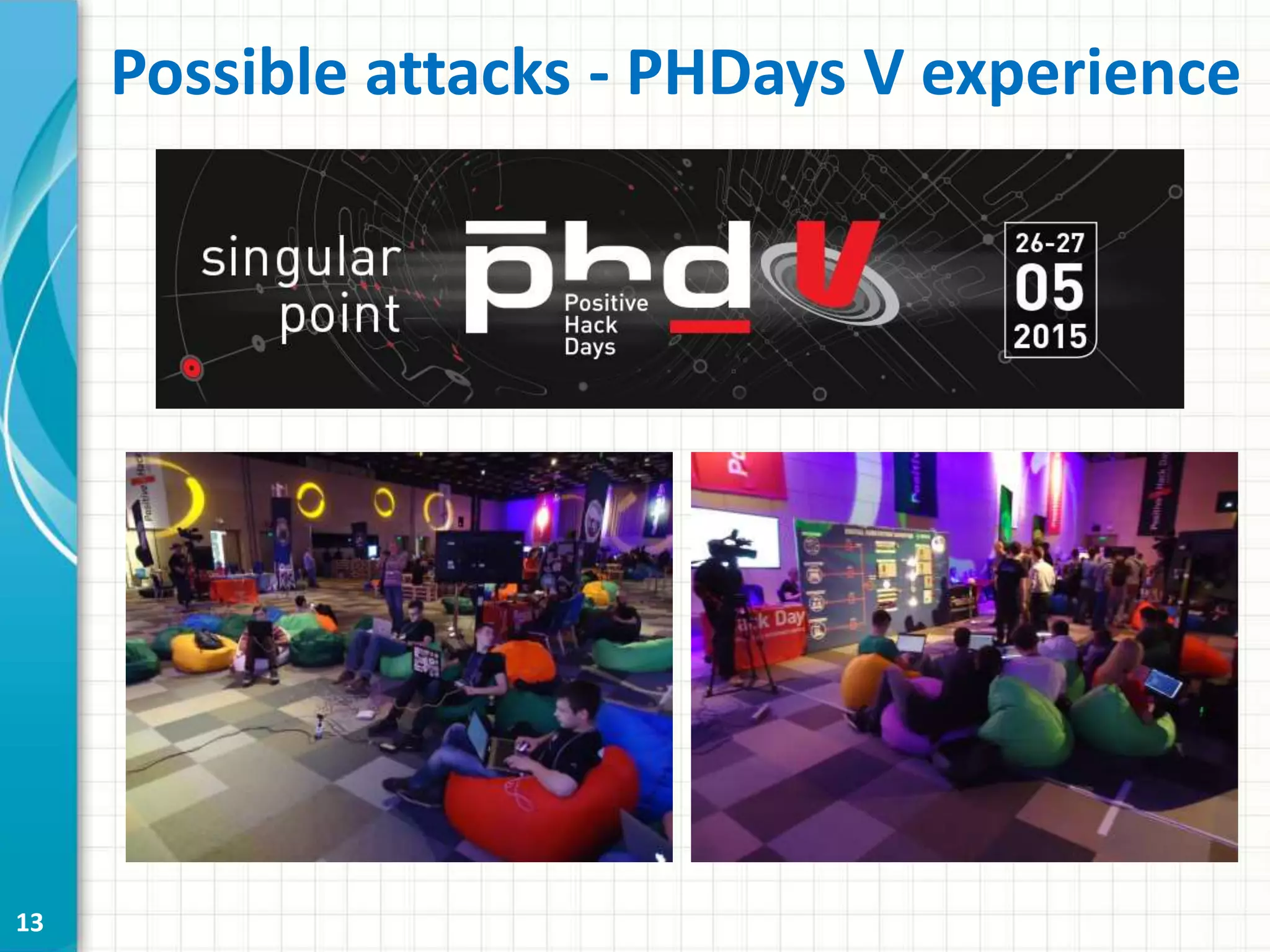
5. Possible attacks – PHDays V experience
6. Our recommendations on objects classification
2
Contents
3
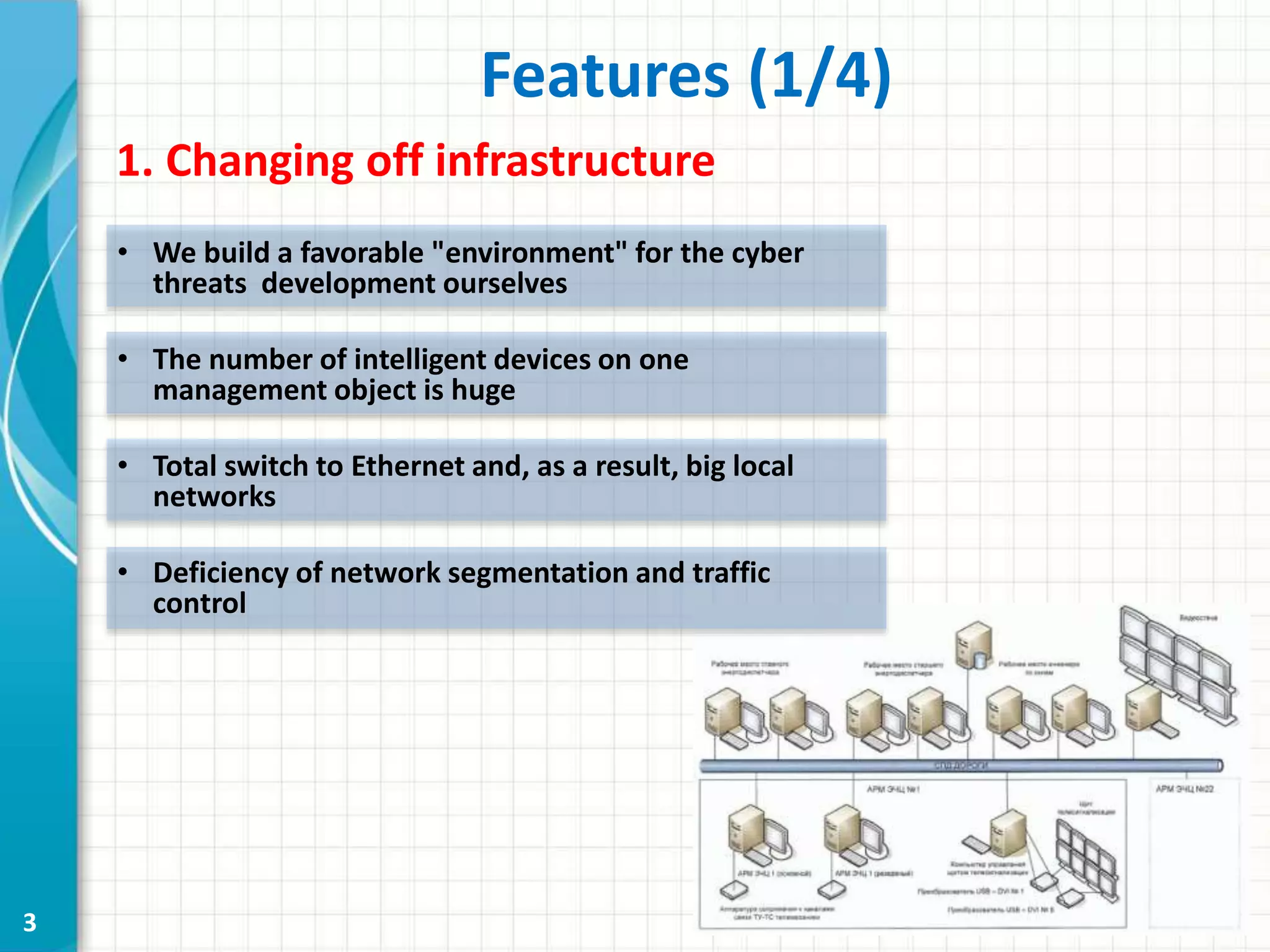
1. Changing off infrastructure
Features (1/4)
• We build a favorable "environment" for the cyber
threats development ourselves
• The number of intelligent devices on one
management object is huge
• Total switch to Ethernet and, as a result, big local
networks
• Deficiency of network segmentation and traffic
control
4
2. Network is not isolated
Features (2/4)
• Necessity to transmit real-time information to higher
levels of management
• Use off corporate or leased from providers of
communication lines
• External traffic is not controlled
5
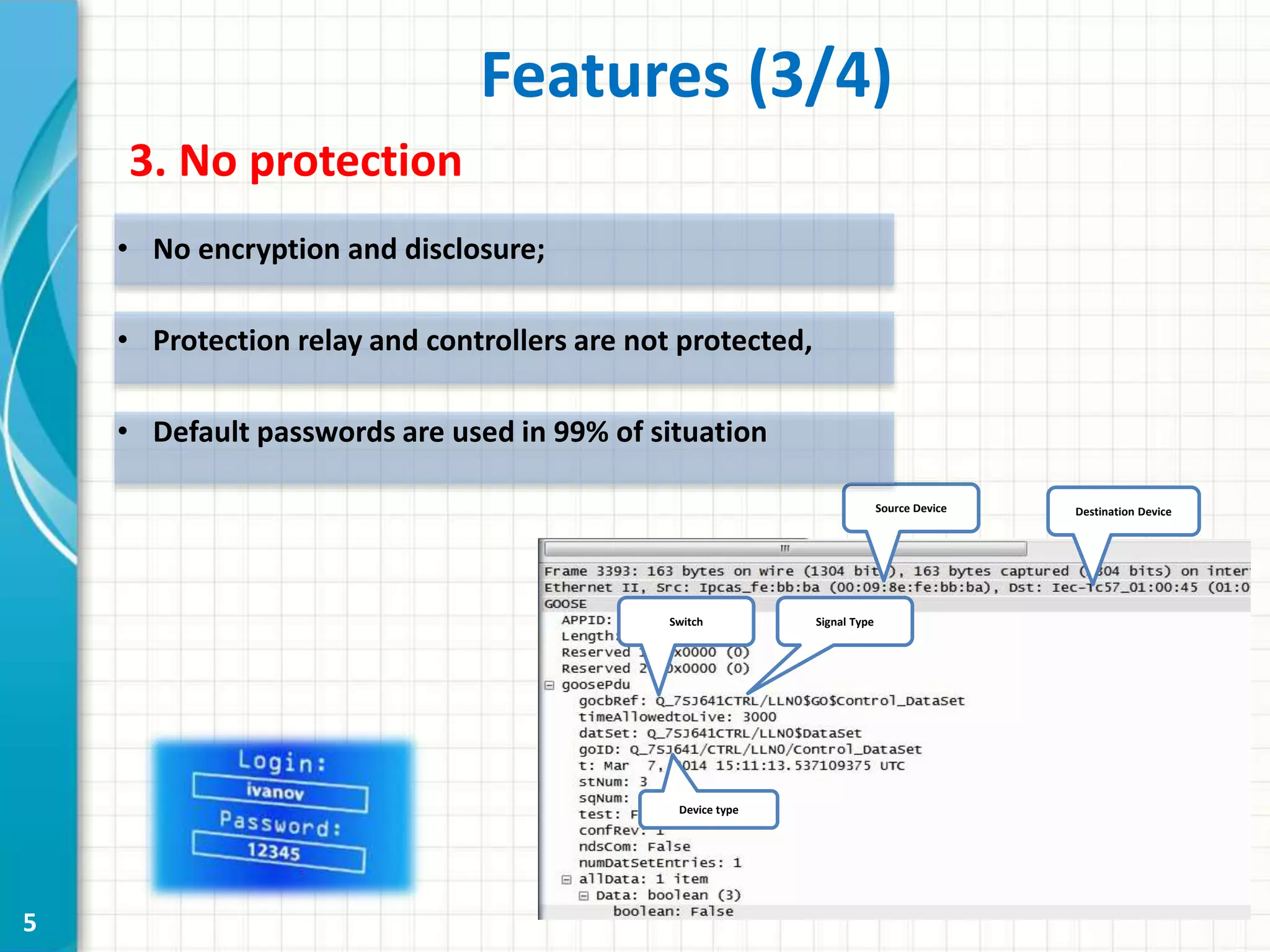
Switch
Device type
Signal Type
Source Device Destination Device
Features (3/4)
3. No protection
• No encryption and disclosure;
• Protection relay and controllers are not protected,
• Default passwords are used in 99% of situation
6
Features (4/4)
4. Changing oа conditions
• “Cyberpunk“ culture
• Greater attention from hooligans, hacktivists and
criminals
• Greater attention from state security services
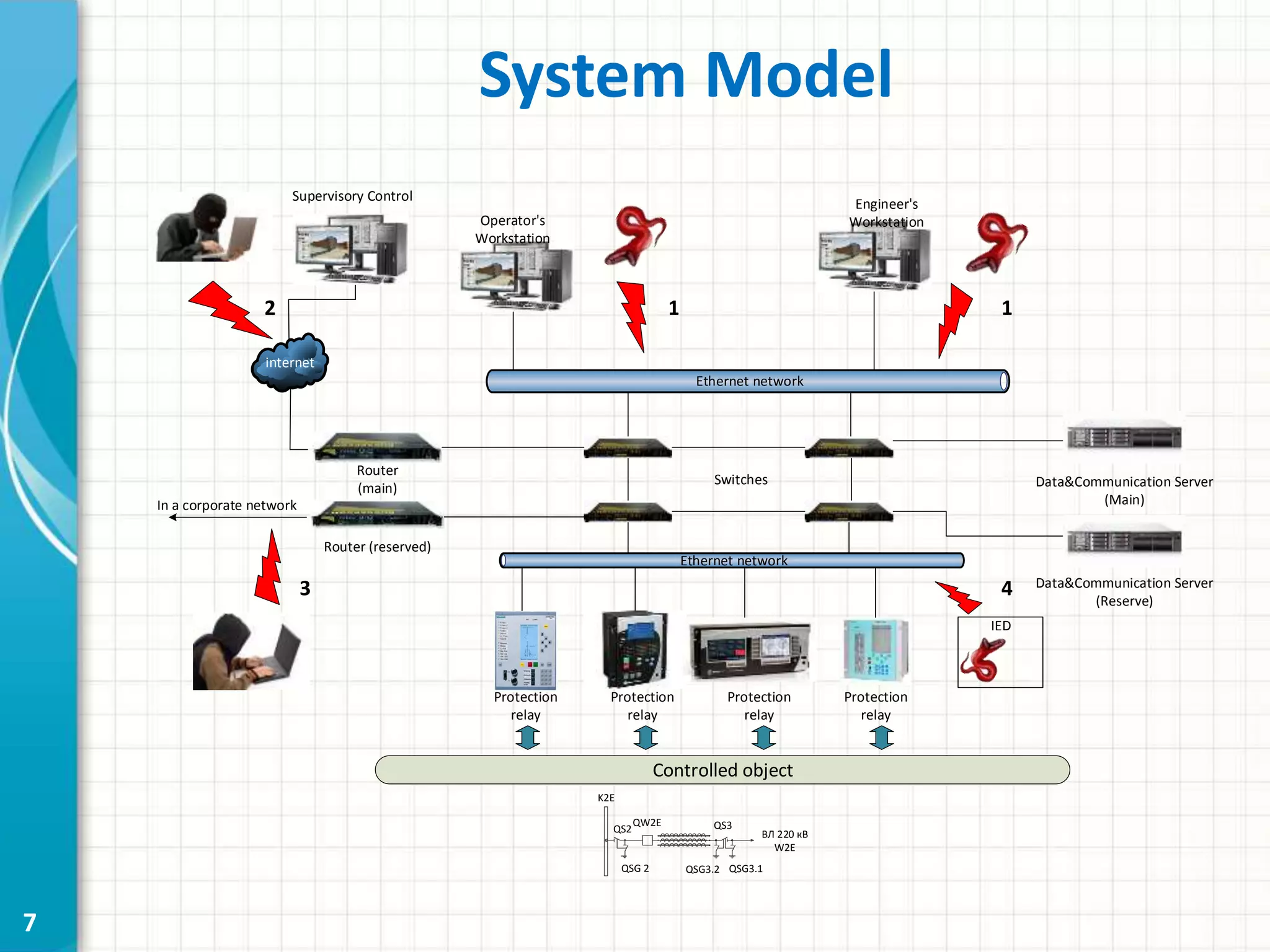
System Model
7
internet
Protection
relay
Protection
relay
Protection
relay
Protection
relay
Controlled object
Router
(main)
Operator's
Workstation
Switches
Data&Communication Server
(Reserve)
ВЛ 220 кВ
W2E
K2E
QSG3.2
QW2E QS3QS2
QSG 2 QSG3.1
Router (reserved)
Engineer's
Workstation
Data&Communication Server
(Main)
Ethernet network
In a corporate network
Supervisory Control
IED
1 12
3 4
Vector of attacks
8
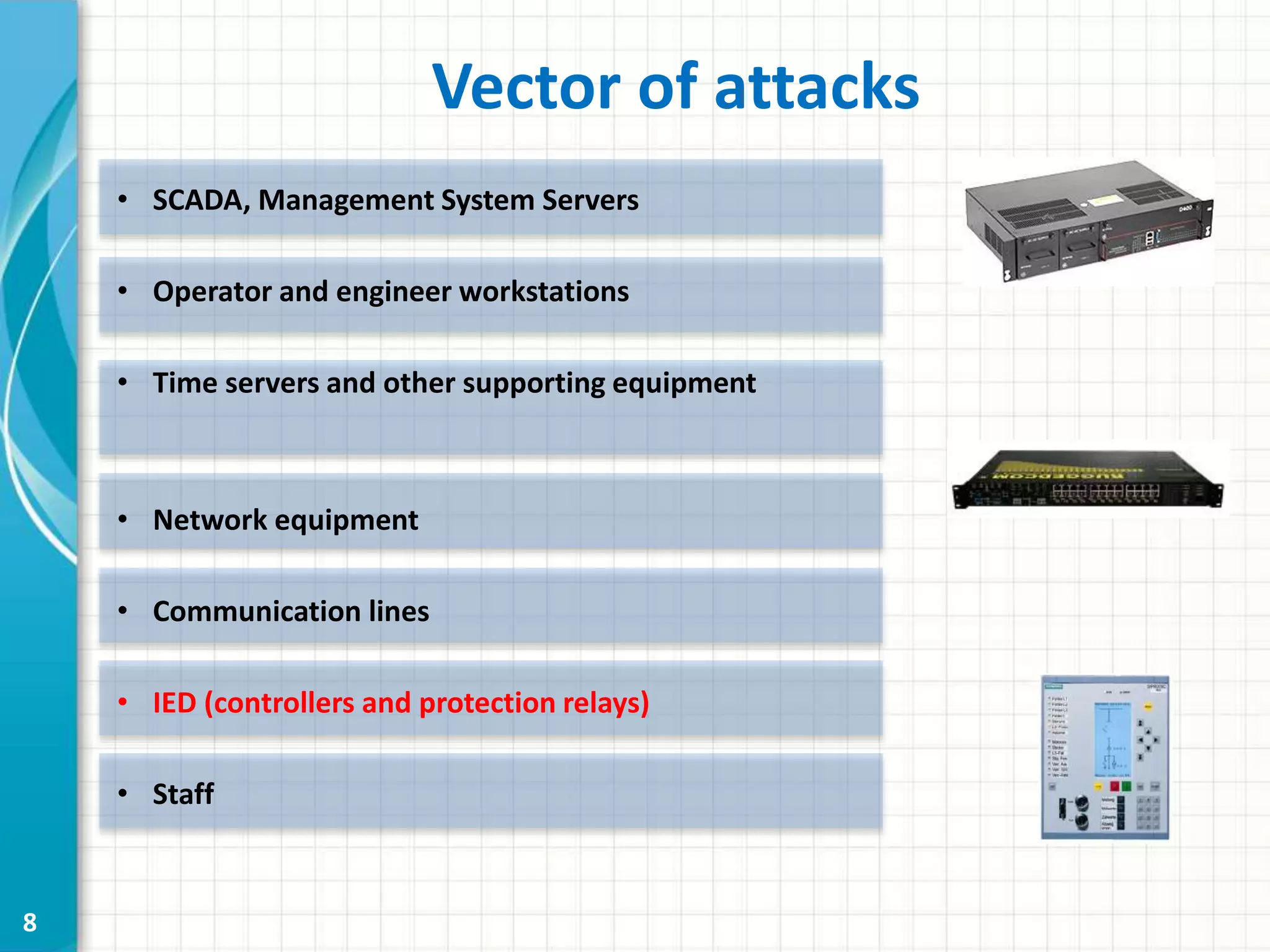
• SCADA, Management System Servers
• Operator and engineer workstations
• Time servers and other supporting equipment
• Network equipment
• Communication lines
• IED (controllers and protection relays)
• Staff
Cybersecurity Threats
9
Three level classification
(Offered by Sergei Gordeychik)
1. Decrease of functional safety and reliability of
energy transfer network system
2. Decrease of efficiency of electric power
transmission process
3. Security violation of the basic process
Cybersecurity Threats (1/3)
10
• Temporal disability of components that are not responsible for electricity
transmission security (for example, communication equipment, time server,
secondary sensors, etc.)
• Temporary disability of remote control system and supervisory control
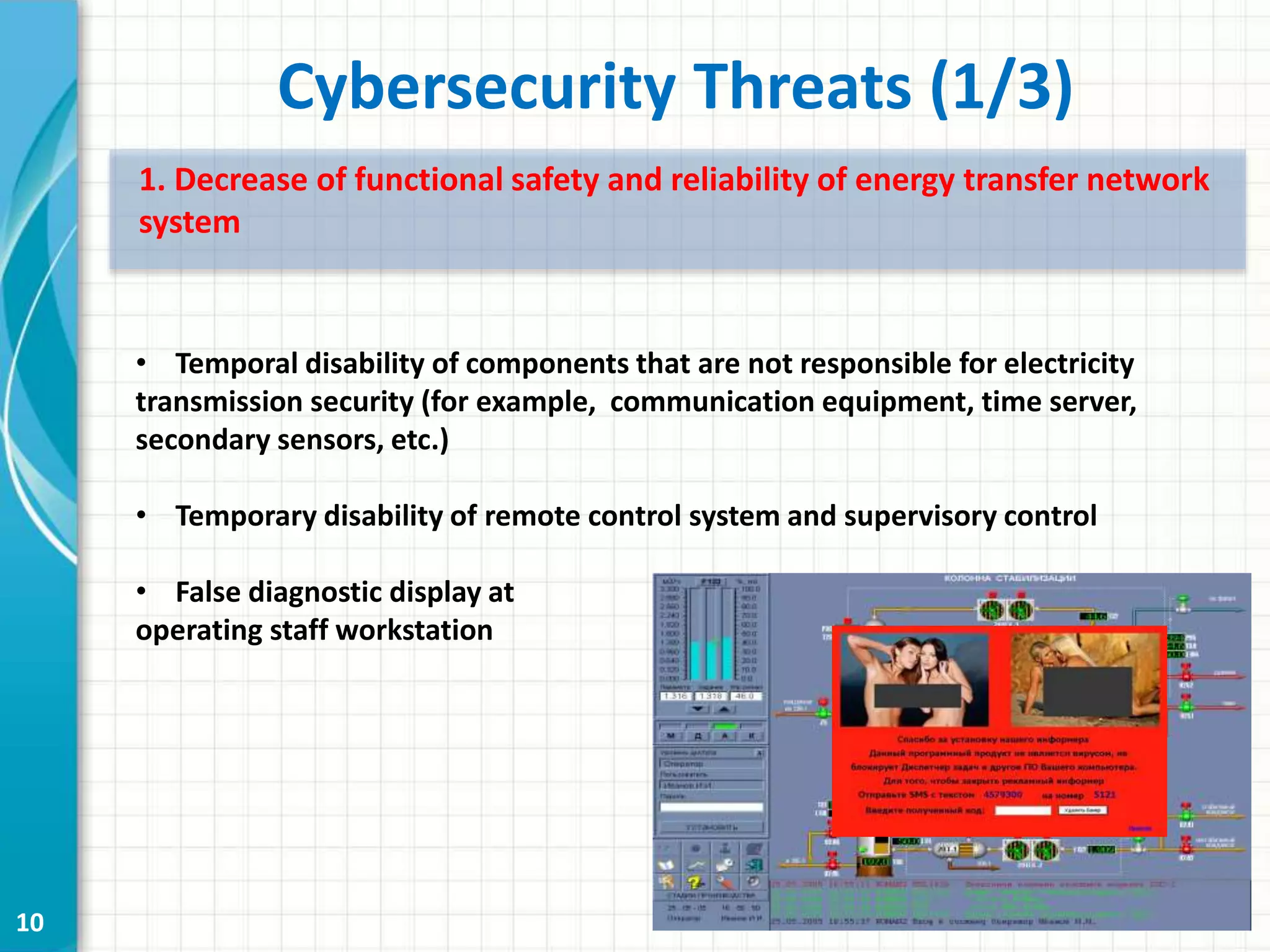
• False diagnostic display at
operating staff workstation
1. Decrease of functional safety and reliability of energy transfer network
system
Cybersecurity Threats (2/3)
11
• Long-term disabling of the remote control system and
supervisory control
• Unauthorized trip of consumers
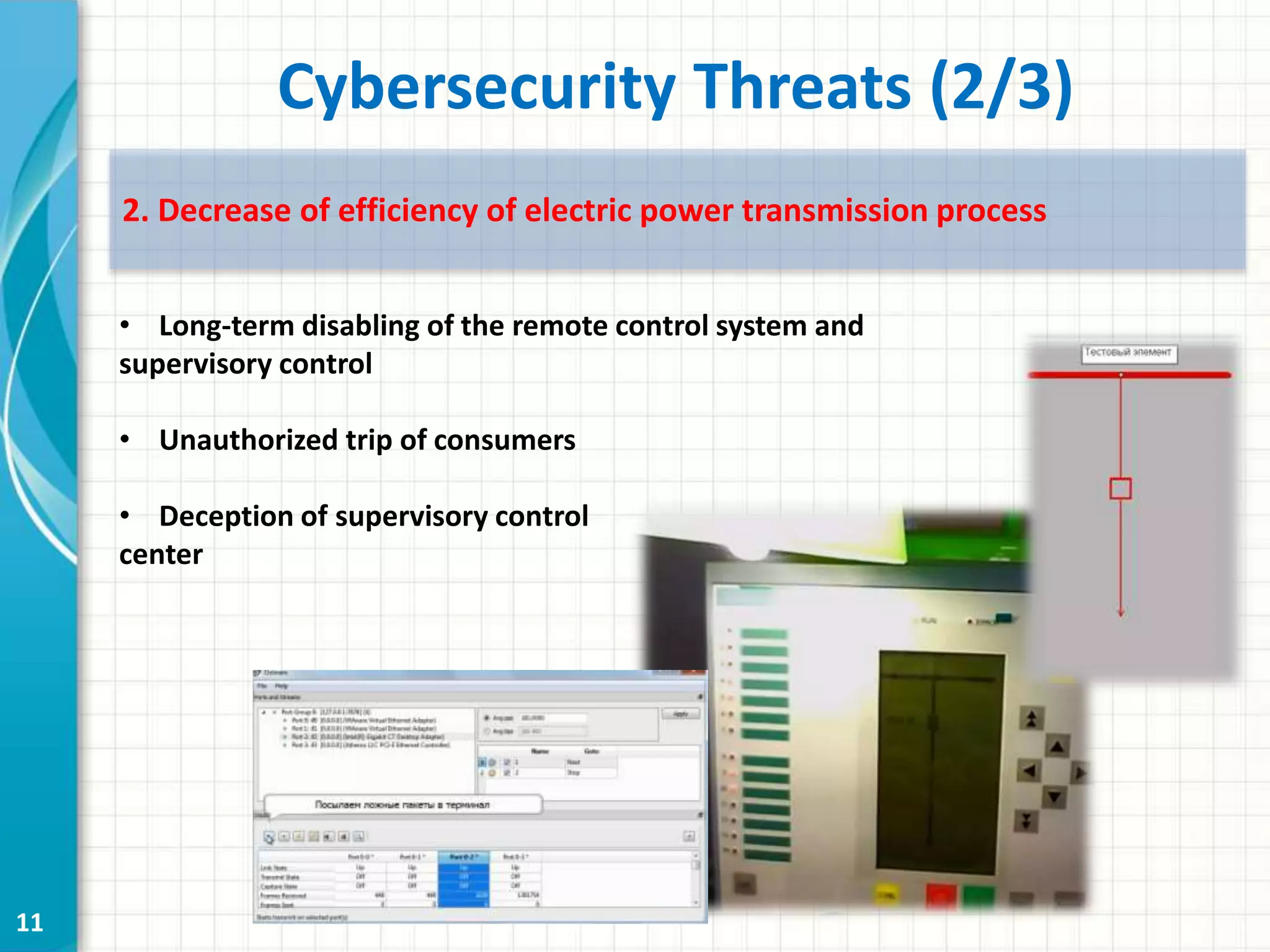
• Deception of supervisory control
center
2. Decrease of efficiency of electric power transmission process
Cybersecurity Threats (3/3)
12
• Shutdown and/or modification of prompt
blocking
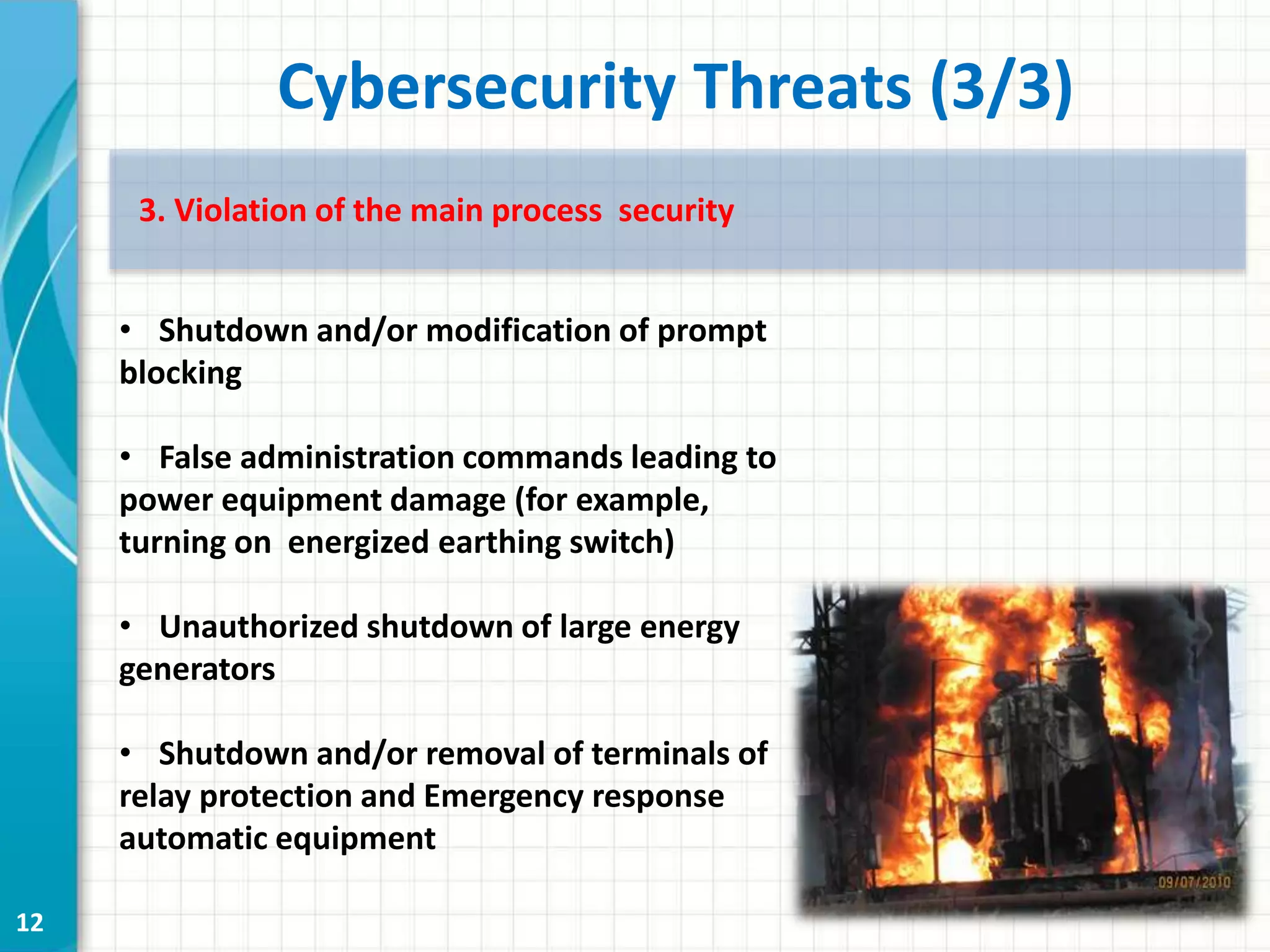
• False administration commands leading to
power equipment damage (for example,
turning on energized earthing switch)
• Unauthorized shutdown of large energy
generators
• Shutdown and/or removal of terminals of
relay protection and Emergency response
automatic equipment
3. Violation of the main process security
Possible attacks - PHDays V experience
13
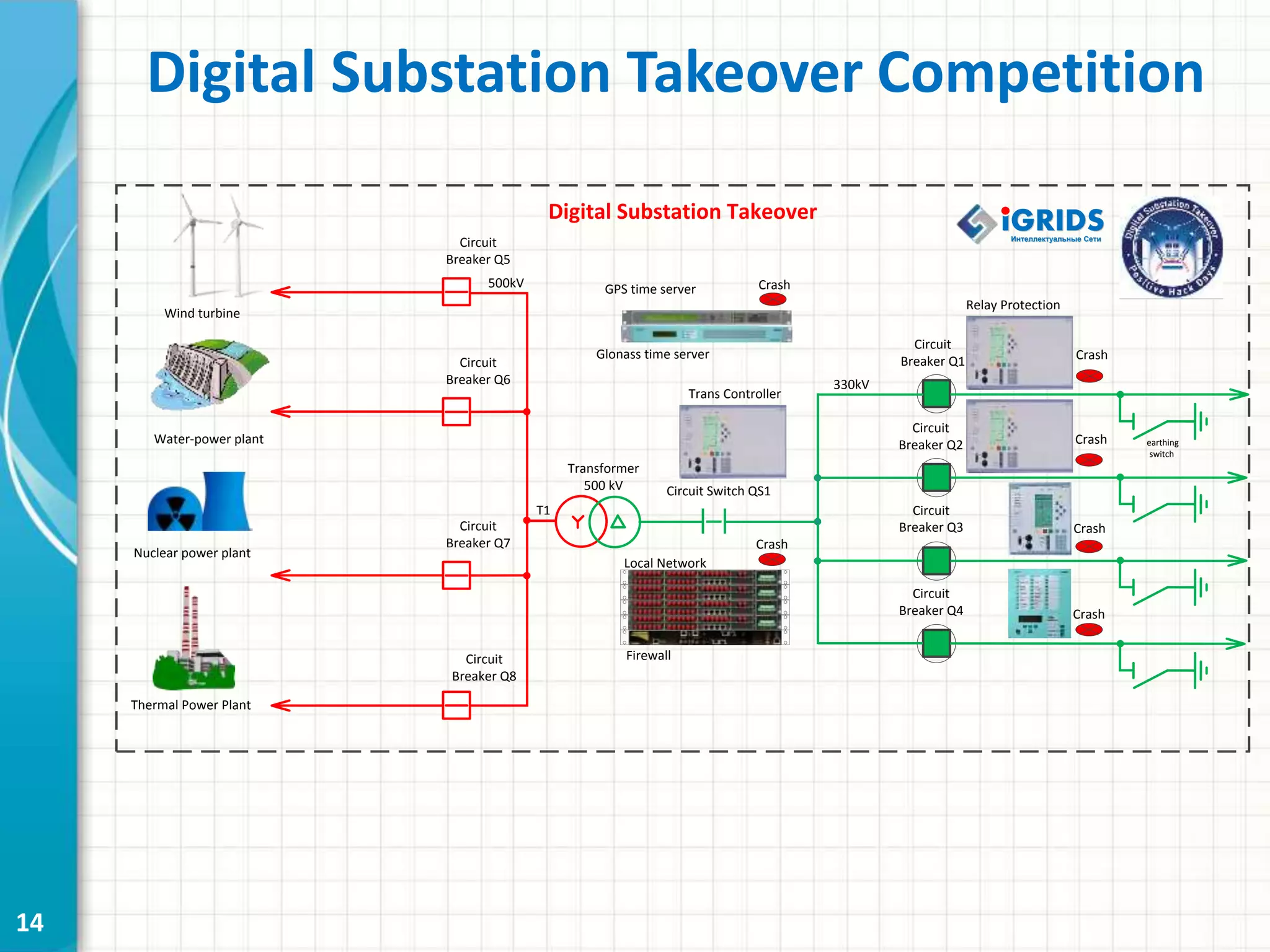
Digital Substation Takeover Competition
14
Wind turbine
Transformer
500 kV Circuit Switch QS1
Circuit
Breaker Q1
Circuit
Breaker Q2
Circuit
Breaker Q3
Circuit
Breaker Q4
Circuit
Breaker Q8
Circuit
Breaker Q5
T1
Local Network
Trans Controller
Relay Protection
Crash
Crash
Crash
Crash
CrashGPS time server
Glonass time server
Crash
Firewall
Digital Substation Takeover
IGRIDSIGRIDSИнтеллектуальные СетиИнтеллектуальные Сети
Nuclear power plant
Circuit
Breaker Q6
Circuit
Breaker Q7
Water-power plant
Thermal Power Plant
earthing
switch
500kV
330kV
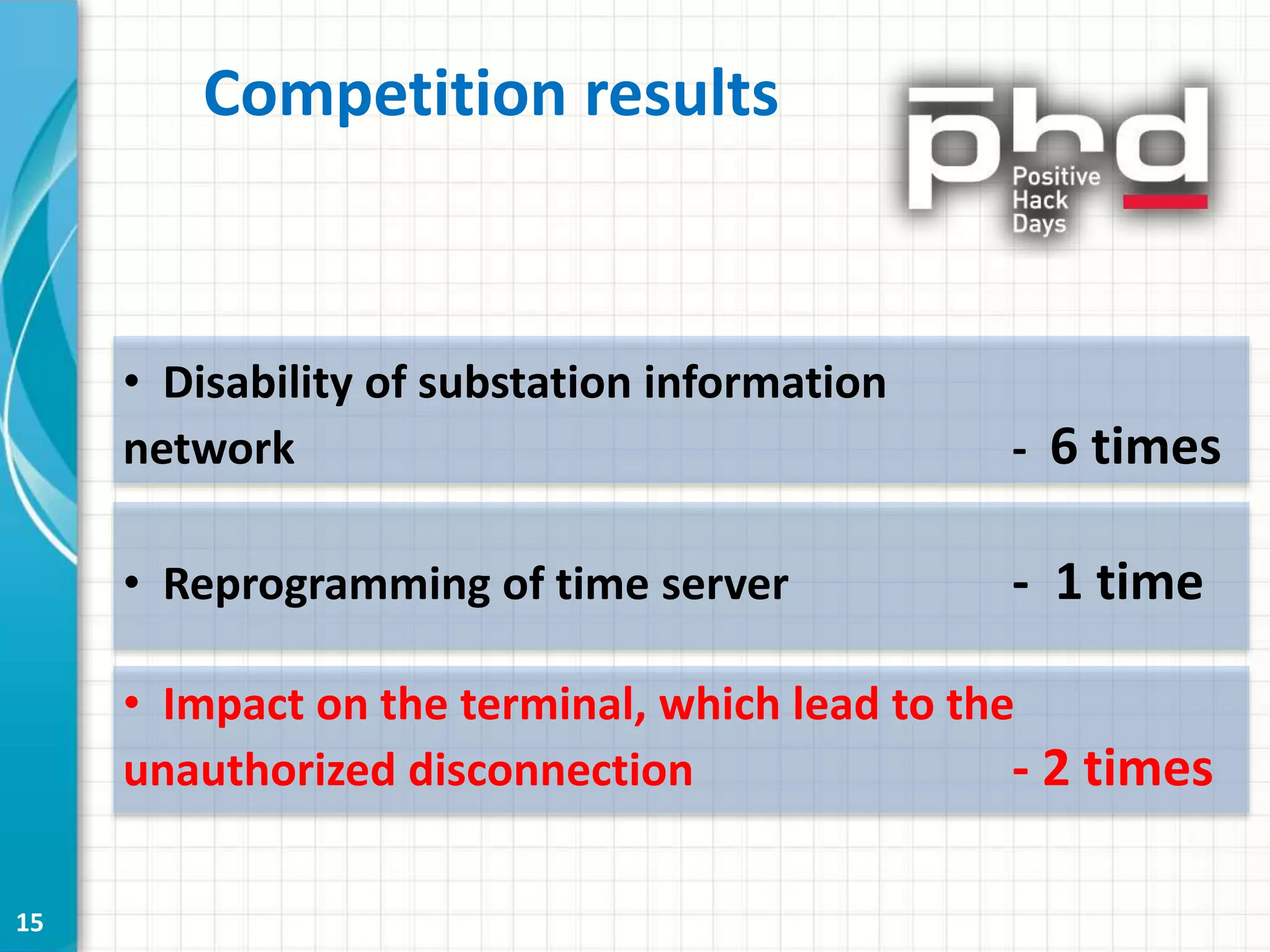
Competition results
15
• Disability of substation information
network - 6 times
• Reprogramming of time server - 1 time
• Impact on the terminal, which lead to the
unauthorized disconnection - 2 times
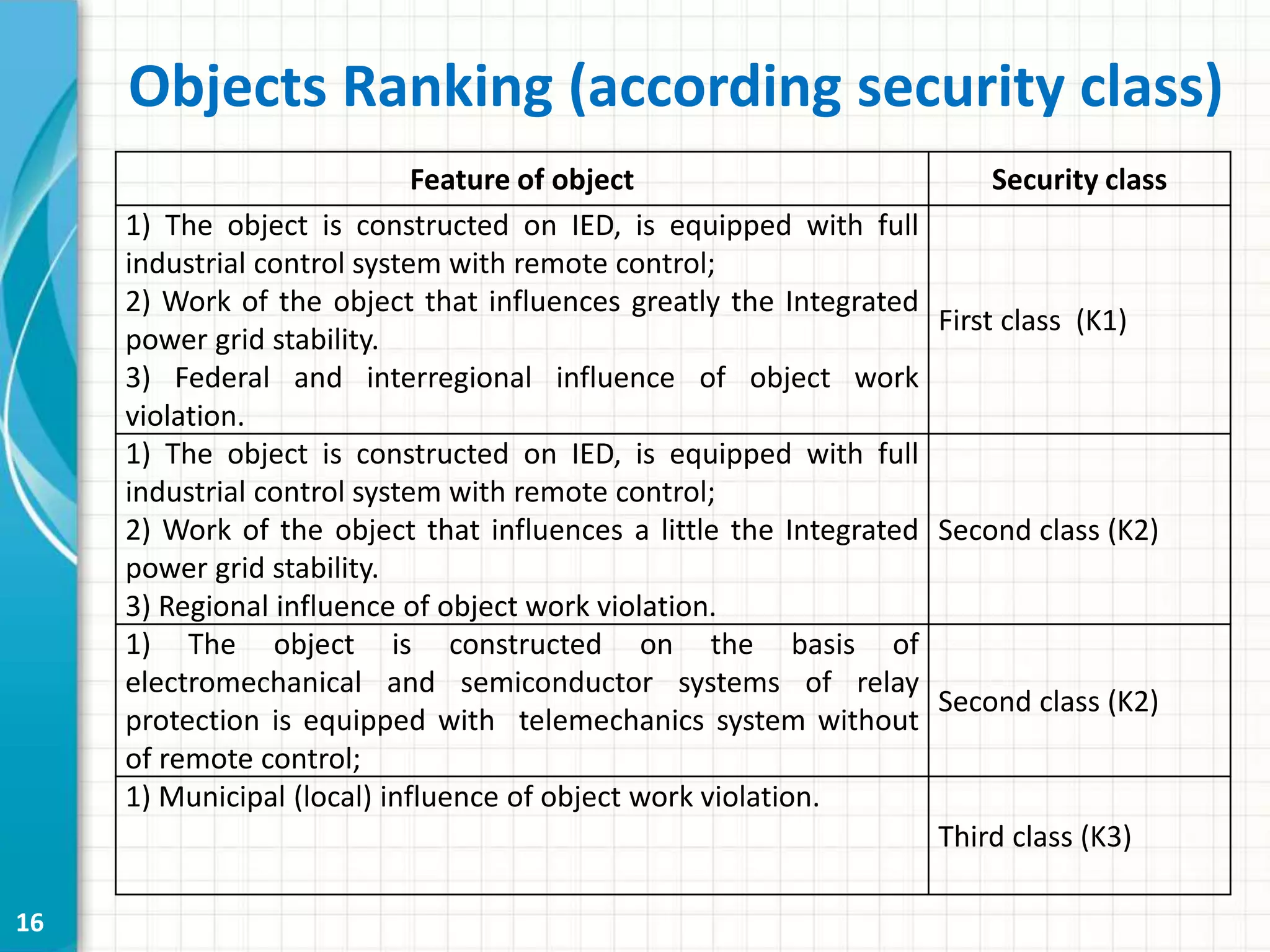
Objects Ranking (according security class)
16
Feature of object Security class
1) The object is constructed on IED, is equipped with full
industrial control system with remote control;
2) Work of the object that influences greatly the Integrated
power grid stability.
3) Federal and interregional influence of object work
violation.
First class (K1)
1) The object is constructed on IED, is equipped with full
industrial control system with remote control;
2) Work of the object that influences a little the Integrated
power grid stability.
3) Regional influence of object work violation.
Second class (K2)
1) The object is constructed on the basis of
electromechanical and semiconductor systems of relay
protection is equipped with telemechanics system without
of remote control;
Second class (K2)
1) Municipal (local) influence of object work violation.
Third class (K3)
Thank you!
17
iGRIDS, LLC
www.igrids.ru
NTC FSK EES
www.ntc-power.ru
IGRIDSIGRIDSИнтеллектуальные СетиИнтеллектуальные Сети

Classification cyber security threats of modern substation

  • 1.
    CLASSIFICATION CYBER SECURITYTHREATS OF MODERN SUBSTATION 1 Maxim Nikandrov, Maxim Braguta IGRIDSIGRIDSИнтеллектуальные СетиИнтеллектуальные Сети
  • 2.
    1. Information infrastructureFeatures 2. System Model 3. Vectors of attacks 4. Threats 5. Possible attacks – PHDays V experience 6. Our recommendations on objects classification 2 Contents
  • 3.
    3 1. Changing offinfrastructure Features (1/4) • We build a favorable "environment" for the cyber threats development ourselves • The number of intelligent devices on one management object is huge • Total switch to Ethernet and, as a result, big local networks • Deficiency of network segmentation and traffic control
  • 4.
    4 2. Network isnot isolated Features (2/4) • Necessity to transmit real-time information to higher levels of management • Use off corporate or leased from providers of communication lines • External traffic is not controlled
  • 5.
    5 Switch Device type Signal Type SourceDevice Destination Device Features (3/4) 3. No protection • No encryption and disclosure; • Protection relay and controllers are not protected, • Default passwords are used in 99% of situation
  • 6.
    6 Features (4/4) 4. Changingoа conditions • “Cyberpunk“ culture • Greater attention from hooligans, hacktivists and criminals • Greater attention from state security services
  • 7.
    System Model 7 internet Protection relay Protection relay Protection relay Protection relay Controlled object Router (main) Operator's Workstation Switches Data&CommunicationServer (Reserve) ВЛ 220 кВ W2E K2E QSG3.2 QW2E QS3QS2 QSG 2 QSG3.1 Router (reserved) Engineer's Workstation Data&Communication Server (Main) Ethernet network In a corporate network Supervisory Control IED 1 12 3 4
  • 8.
    Vector of attacks 8 •SCADA, Management System Servers • Operator and engineer workstations • Time servers and other supporting equipment • Network equipment • Communication lines • IED (controllers and protection relays) • Staff
  • 9.
    Cybersecurity Threats 9 Three levelclassification (Offered by Sergei Gordeychik) 1. Decrease of functional safety and reliability of energy transfer network system 2. Decrease of efficiency of electric power transmission process 3. Security violation of the basic process
  • 10.
    Cybersecurity Threats (1/3) 10 •Temporal disability of components that are not responsible for electricity transmission security (for example, communication equipment, time server, secondary sensors, etc.) • Temporary disability of remote control system and supervisory control • False diagnostic display at operating staff workstation 1. Decrease of functional safety and reliability of energy transfer network system
  • 11.
    Cybersecurity Threats (2/3) 11 •Long-term disabling of the remote control system and supervisory control • Unauthorized trip of consumers • Deception of supervisory control center 2. Decrease of efficiency of electric power transmission process
  • 12.
    Cybersecurity Threats (3/3) 12 •Shutdown and/or modification of prompt blocking • False administration commands leading to power equipment damage (for example, turning on energized earthing switch) • Unauthorized shutdown of large energy generators • Shutdown and/or removal of terminals of relay protection and Emergency response automatic equipment 3. Violation of the main process security
  • 13.
    Possible attacks -PHDays V experience 13
  • 14.
    Digital Substation TakeoverCompetition 14 Wind turbine Transformer 500 kV Circuit Switch QS1 Circuit Breaker Q1 Circuit Breaker Q2 Circuit Breaker Q3 Circuit Breaker Q4 Circuit Breaker Q8 Circuit Breaker Q5 T1 Local Network Trans Controller Relay Protection Crash Crash Crash Crash CrashGPS time server Glonass time server Crash Firewall Digital Substation Takeover IGRIDSIGRIDSИнтеллектуальные СетиИнтеллектуальные Сети Nuclear power plant Circuit Breaker Q6 Circuit Breaker Q7 Water-power plant Thermal Power Plant earthing switch 500kV 330kV
  • 15.
    Competition results 15 • Disabilityof substation information network - 6 times • Reprogramming of time server - 1 time • Impact on the terminal, which lead to the unauthorized disconnection - 2 times
  • 16.
    Objects Ranking (accordingsecurity class) 16 Feature of object Security class 1) The object is constructed on IED, is equipped with full industrial control system with remote control; 2) Work of the object that influences greatly the Integrated power grid stability. 3) Federal and interregional influence of object work violation. First class (K1) 1) The object is constructed on IED, is equipped with full industrial control system with remote control; 2) Work of the object that influences a little the Integrated power grid stability. 3) Regional influence of object work violation. Second class (K2) 1) The object is constructed on the basis of electromechanical and semiconductor systems of relay protection is equipped with telemechanics system without of remote control; Second class (K2) 1) Municipal (local) influence of object work violation. Third class (K3)
  • 17.
    Thank you! 17 iGRIDS, LLC www.igrids.ru NTCFSK EES www.ntc-power.ru IGRIDSIGRIDSИнтеллектуальные СетиИнтеллектуальные Сети

Editor's Notes

  • #2 Этот шаблон можно использовать как начальный файл для представления учебных материалов группе слушателей. Разделы Для добавления разделов щелкните слайд правой кнопкой мыши. Разделы позволяют упорядочить слайды и организовать совместную работу нескольких авторов. Заметки Используйте раздел заметок для размещения заметок докладчика или дополнительных сведений для аудитории. Во время воспроизведения презентации эти заметки отображаются в представлении презентации. Обращайте внимание на размер шрифта (важно обеспечить различимость при ослабленном зрении, видеосъемке и чтении с экрана) Сочетаемые цвета Обратите особое внимание на графики, диаграммы и надписи. Учтите, что печать будет выполняться в черно-белом режиме или в оттенках серого. Выполните пробную печать, чтобы убедиться в сохранении разницы между цветами при печати в черно-белом режиме или в оттенках серого. Диаграммы, таблицы и графики Не усложняйте восприятие: по возможности используйте согласованные, простые стили и цвета. Снабдите все диаграммы и таблицы подписями.
  • #4 Добавьте слайды в раздел по каждой теме, включая слайды с таблицами, диаграммами и изображениями. Образцы макетов таблицы, диаграммы, изображения и видео см. в следующем разделе.
  • #5 Добавьте слайды в раздел по каждой теме, включая слайды с таблицами, диаграммами и изображениями. Образцы макетов таблицы, диаграммы, изображения и видео см. в следующем разделе.
  • #6 Добавьте слайды в раздел по каждой теме, включая слайды с таблицами, диаграммами и изображениями. Образцы макетов таблицы, диаграммы, изображения и видео см. в следующем разделе.
  • #7 Добавьте слайды в раздел по каждой теме, включая слайды с таблицами, диаграммами и изображениями. Образцы макетов таблицы, диаграммы, изображения и видео см. в следующем разделе.