Plan for Today
Recap: Virtualizing Memory
Segmentation Faults
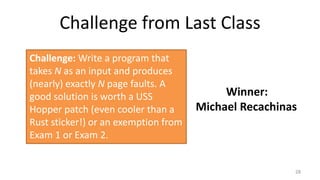
Page Faults: Challenge winner!
Processes, Threads, Tasks
1
PS2 is Due Sunday
Exam 1 is out after
class Tuesday (Feb
11) due 11:59pm
Thursday (Feb 13) –
open resources,
most questions will
be taken from notes
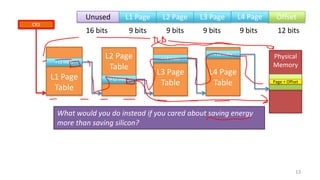
PS2 Demos
Everyone should be signed up
If you can’t find a time that works for
your team, let me know by tomorrow
At the scheduled start time and place:
Your full team should be present
One of you should have:
– Your code ready to show in your
favorite editor
– Your gash ready to run
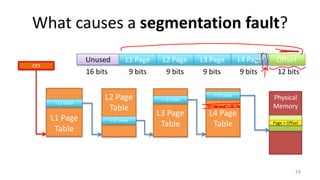
2
PS2 autograder and
submission will be posted by
Friday (if I forget, but no one
reminds me, there won’t be
an extension like for PS1!)
If your team is not ready to go
at your scheduled time (no
grace period!), your demo is
cancelled and you need to
schedule a new one with me.
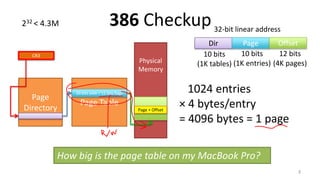
386 Checkup
3
Dir Page Offset
CR3
Page
Directory
Page Table
Physical
Memory
20 bits addr / 12 bits flags
Page + Offset
12 bits
(4K pages)
10 bits
(1K tables)
10 bits
(1K entries)
32-bit linear address
How big is the page table on my MacBook Pro?
1024 entries
× 4 bytes/entry
= 4096 bytes = 1 page
222 < 4.3M
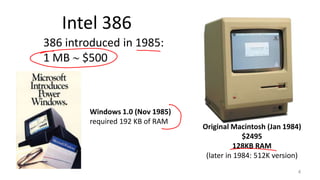
Intel 386
4
386 introduced in 1985:
1 MB $500
Original Macintosh (Jan 1984)
$2495
128KB RAM
(later in 1984: 512K version)
Windows 1.0 (Nov 1985)
required 192 KB of RAM
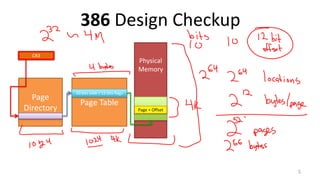
386 Design Checkup
5
CR3
Page
Directory
Page Table
Physical
Memory
20 bits addr / 12 bits flags
Page + Offset
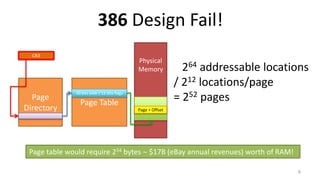
386 Design Fail!
6
CR3
Page
Directory
Page Table
Physical
Memory
20 bits addr / 12 bits flags
Page + Offset
264 addressable locations
/ 212 locations/page
= 252 pages
Page table would require 254 bytes $17B (eBay annual revenues) worth of RAM!
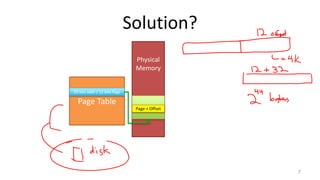
Solution?
7
Page Table
Physical
Memory
20 bits addr / 12 bits flags
Page + Offset
Page + Offset
base basebasebase
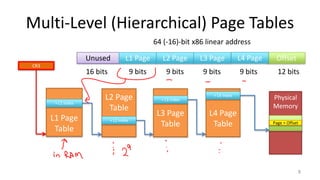
Multi-Level (Hierarchical) Page Tables
8
Unused L1 Page Offset
12 bits16 bits 9 bits
64 (-16)-bit x86 linear address
L2 Page L3 Page
9 bits 9 bits
L4 Page
9 bits
CR3
L1 Page
Table
+ L1 Index
L2 Page
Table
+ L2 Index
L3 Page
Table
+ L3 Index
L4 Page
Table
+ L4 Index
Physical
Memory
Page + Offset
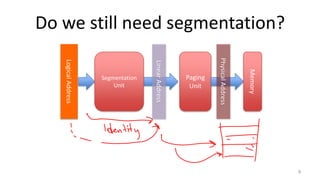
Do we still need segmentation?
9
LogicalAddress
Segmentation
Unit
LinearAddress
Paging
Unit
PhysicalAddress
Memory
Page + Offset
base basebasebase
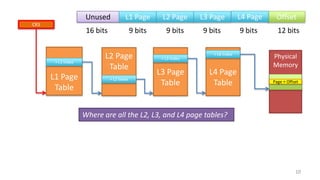
10
Unused L1 Page Offset
12 bits16 bits 9 bits
L2 Page L3 Page
9 bits 9 bits
L4 Page
9 bits
CR3
L1 Page
Table
+ L1 Index
L2 Page
Table
+ L2 Index
L3 Page
Table
+ L3 Index
L4 Page
Table
+ L4 Index
Physical
Memory
Page + Offset
Where are all the L2, L3, and L4 page tables?
Page + Offset
base basebasebase
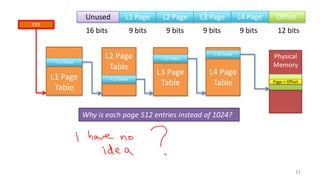
11
Unused L1 Page Offset
12 bits16 bits 9 bits
L2 Page L3 Page
9 bits 9 bits
L4 Page
9 bits
CR3
L1 Page
Table
+ L1 Index
L2 Page
Table
+ L2 Index
L3 Page
Table
+ L3 Index
L4 Page
Table
+ L4 Index
Physical
Memory
Page + Offset
Why is each page 512 entries instead of 1024?
Page + Offset
base basebasebase
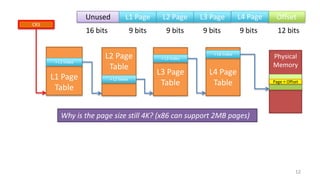
12
Unused L1 Page Offset
12 bits16 bits 9 bits
L2 Page L3 Page
9 bits 9 bits
L4 Page
9 bits
CR3
L1 Page
Table
+ L1 Index
L2 Page
Table
+ L2 Index
L3 Page
Table
+ L3 Index
L4 Page
Table
+ L4 Index
Physical
Memory
Page + Offset
Why is the page size still 4K? (x86 can support 2MB pages)
Page + Offset
base basebasebase
13
Unused L1 Page Offset
12 bits16 bits 9 bits
L2 Page L3 Page
9 bits 9 bits
L4 Page
9 bits
CR3
L1 Page
Table
+ L1 Index
L2 Page
Table
+ L2 Index
L3 Page
Table
+ L3 Index
L4 Page
Table
+ L4 Index
Physical
Memory
Page + Offset
What would you do instead if you cared about saving energy
more than saving silicon?
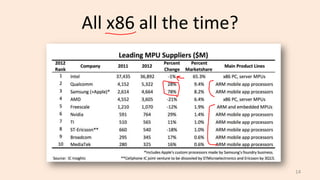
All x86 all the time?
14
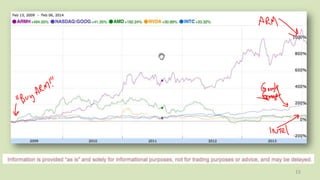
15
16
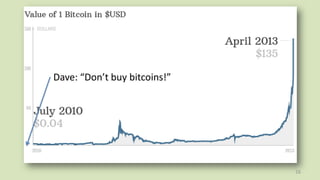
Dave: “Don’t buy bitcoins!”
17
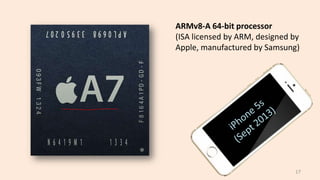
ARMv8-A 64-bit processor
(ISA licensed by ARM, designed by
Apple, manufactured by Samsung)
18
19
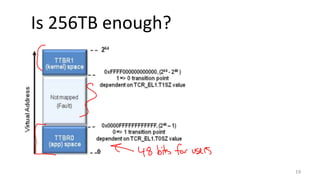
Is 256TB enough?
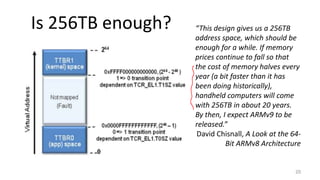
Is 256TB enough?
20
“This design gives us a 256TB
address space, which should be
enough for a while. If memory
prices continue to fall so that
the cost of memory halves every
year (a bit faster than it has
been doing historically),
handheld computers will come
with 256TB in about 20 years.
By then, I expect ARMv9 to be
released.”
David Chisnall, A Look at the 64-
Bit ARMv8 Architecture
21
#include <stdio.h>
#include <stdlib.h>
int main(int argc, char **argv) {
char *s = (char *) malloc (1);
int i = 0;
while (1) {
printf("%d: %lx / %dn", i, s + i, i[s]);
i += 1;
}
}
What will this program do?
22
int main(int argc, char **argv) {
char *s = (char *) malloc (1);
int i = 0;
while (1) {
printf("%d: %lx / %dn", i, s + i, i[s]);
i += 1;
}
} gash> gcc -Wall segfault.c
segfault.c: In function ‘main’:
segfault.c:8: warning: format ‘%lx’ expects type ‘long unsigned
int’, but argument 3 has type ‘char *’
segfault.c:8: warning: format ‘%lx’ expects type ‘long unsigned
int’, but argument 3 has type ‘char *’
What causes a segmentation fault?
23
What causes a segmentation fault?
24
Page + Offset
base basebasebase
12 bits16 bits 9 bits 9 bits 9 bits 9 bits
CR3
L1 Page
Table
+ L1 Index
L2 Page
Table
+ L2 Index
L3 Page
Table
+ L3 Index
L4 Page
Table
+ L4 Index
Physical
Memory
Page + Offset
Unused L1 Page OffsetL2 Page L3 Page L4 Page
25
#include <stdio.h>
#include <stdlib.h>
int main(int argc, char **argv) {
char *s = (char *) malloc (1);
int i = 0;
while (1) {
printf("%d: %lx / %dn",
i, s + i, i[s]);
i += 1;
}
}
> ./a.out
0: 7ff7004039a0 / 0
1: 7ff7004039a1 / 0
2: 7ff7004039a2 / 0
…
95: 7ff7004039ff / 0
…
1033819: 7ff7004ffffb / 0
1033820: 7ff7004ffffc / 0
1033821: 7ff7004ffffd / 0
1033822: 7ff7004ffffe / 0
1033823: 7ff7004fffff / 0
Segmentation fault: 11
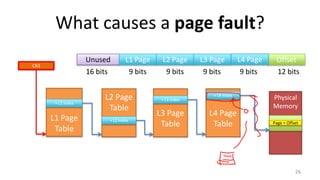
What causes a page fault?
26
Page + Offset
base basebasebase
12 bits16 bits 9 bits 9 bits 9 bits 9 bits
CR3
L1 Page
Table
+ L1 Index
L2 Page
Table
+ L2 Index
L3 Page
Table
+ L3 Index
L4 Page
Table
+ L4 Index
Physical
Memory
Page + Offset
Unused L1 Page OffsetL2 Page L3 Page L4 Page
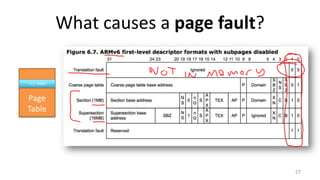
What causes a page fault?
27
base
Page
Table
+ L1 Index
Challenge from Last Class
28
Challenge: Write a program that
takes N as an input and produces
(nearly) exactly N page faults. A
good solution is worth a USS
Hopper patch (even cooler than a
Rust sticker!) or an exemption from
Exam 1 or Exam 2.
Winner:
Michael Recachinas
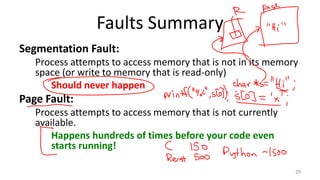
Faults Summary
Segmentation Fault:
Process attempts to access memory that is not in its memory
space (or write to memory that is read-only)
Should never happen
Page Fault:
Process attempts to access memory that is not currently
available.
Happens hundreds of times before your code even
starts running!
29
Processes,
Threads, and Tasks
30
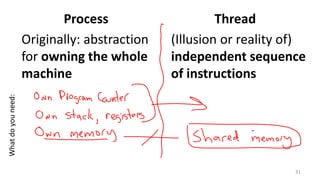
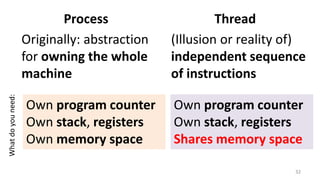
Process
Originally: abstraction
for owning the whole
machine
31
Thread
(Illusion or reality of)
independent sequence
of instructions
Whatdoyouneed:
32
Own program counter
Own stack, registers
Own memory space
Own program counter
Own stack, registers
Shares memory space
Process
Originally: abstraction
for owning the whole
machine
Thread
(Illusion or reality of)
independent sequence
of instructions
Whatdoyouneed:
Tasks
in Rust
33
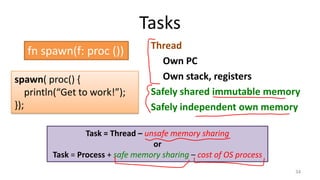
Tasks
Thread
Own PC
Own stack, registers
Safely shared immutable memory
Safely independent own memory
34
fn spawn(f: proc ())
spawn( proc() {
println(“Get to work!”);
});
Task = Thread – unsafe memory sharing
or
Task = Process + safe memory sharing – cost of OS process
35
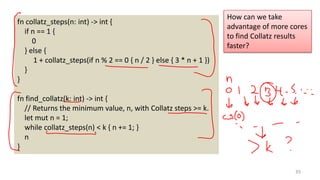
How can we take
advantage of more cores
to find Collatz results
faster?
fn collatz_steps(n: int) -> int {
if n == 1 {
0
} else {
1 + collatz_steps(if n % 2 == 0 { n / 2 } else { 3 * n + 1 })
}
}
fn find_collatz(k: int) -> int {
// Returns the minimum value, n, with Collatz steps >= k.
let mut n = 1;
while collatz_steps(n) < k { n += 1; }
n
}
36
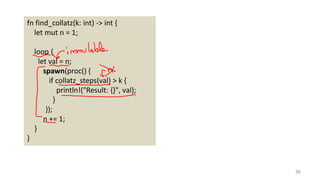
fn find_collatz(k: int) -> int {
let mut n = 1;
loop {
let val = n;
spawn(proc() {
if collatz_steps(val) > k {
println!("Result: {}", val);
}
});
n += 1;
}
}
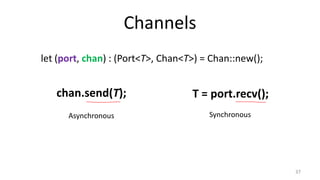
Channels
37
let (port, chan) : (Port<T>, Chan<T>) = Chan::new();
chan.send(T); T = port.recv();
Asynchronous Synchronous
38
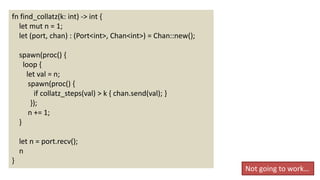
fn find_collatz(k: int) -> int {
let mut n = 1;
let (port, chan) : (Port<int>, Chan<int>) = Chan::new();
spawn(proc() {
loop {
let val = n;
spawn(proc() {
if collatz_steps(val) > k { chan.send(val); }
});
n += 1;
}
let n = port.recv();
n
}
Not going to work…
39
fn find_collatz(k: int) -> int {
let mut n = 1;
let max_tasks = 7; // keep all my cores busy
let mut found_result = false;
let mut result = -1; // need to initialize
while !found_result {
let mut ports = ~[];
for i in range(0, max_tasks) {
let val = n + i;
let (port, chan) : (Port<int>, Chan<int>) = Chan::new();
ports.push(port);
spawn(proc() {
let steps = collatz_steps(val);
println!("Result for {}: {}", val, steps);
chan.send(steps);
});
}
for i in range(0, max_tasks) {
let port = ports.pop();
let steps = port.recv();
if steps > k {
found_result = true;
result = n + i;
}
}
n += max_tasks;
}
assert!(result != -1);
result
}
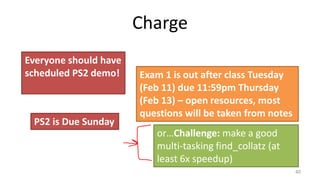
Charge
40
PS2 is Due Sunday
Exam 1 is out after class Tuesday
(Feb 11) due 11:59pm Thursday
(Feb 13) – open resources, most
questions will be taken from notes
Everyone should have
scheduled PS2 demo!
or…Challenge: make a good
multi-tasking find_collatz (at
least 6x speedup)

Segmentation Faults, Page Faults, Processes, Threads, and Tasks

  • 2.
    Plan for Today Recap:Virtualizing Memory Segmentation Faults Page Faults: Challenge winner! Processes, Threads, Tasks 1 PS2 is Due Sunday Exam 1 is out after class Tuesday (Feb 11) due 11:59pm Thursday (Feb 13) – open resources, most questions will be taken from notes
  • 3.
    PS2 Demos Everyone shouldbe signed up If you can’t find a time that works for your team, let me know by tomorrow At the scheduled start time and place: Your full team should be present One of you should have: – Your code ready to show in your favorite editor – Your gash ready to run 2 PS2 autograder and submission will be posted by Friday (if I forget, but no one reminds me, there won’t be an extension like for PS1!) If your team is not ready to go at your scheduled time (no grace period!), your demo is cancelled and you need to schedule a new one with me.
  • 4.
    386 Checkup 3 Dir PageOffset CR3 Page Directory Page Table Physical Memory 20 bits addr / 12 bits flags Page + Offset 12 bits (4K pages) 10 bits (1K tables) 10 bits (1K entries) 32-bit linear address How big is the page table on my MacBook Pro? 1024 entries × 4 bytes/entry = 4096 bytes = 1 page 222 < 4.3M
  • 5.
    Intel 386 4 386 introducedin 1985: 1 MB $500 Original Macintosh (Jan 1984) $2495 128KB RAM (later in 1984: 512K version) Windows 1.0 (Nov 1985) required 192 KB of RAM
  • 6.
    386 Design Checkup 5 CR3 Page Directory PageTable Physical Memory 20 bits addr / 12 bits flags Page + Offset
  • 7.
    386 Design Fail! 6 CR3 Page Directory PageTable Physical Memory 20 bits addr / 12 bits flags Page + Offset 264 addressable locations / 212 locations/page = 252 pages Page table would require 254 bytes $17B (eBay annual revenues) worth of RAM!
  • 8.
    Solution? 7 Page Table Physical Memory 20 bitsaddr / 12 bits flags Page + Offset
  • 9.
    Page + Offset basebasebasebase Multi-Level (Hierarchical) Page Tables 8 Unused L1 Page Offset 12 bits16 bits 9 bits 64 (-16)-bit x86 linear address L2 Page L3 Page 9 bits 9 bits L4 Page 9 bits CR3 L1 Page Table + L1 Index L2 Page Table + L2 Index L3 Page Table + L3 Index L4 Page Table + L4 Index Physical Memory Page + Offset
  • 10.
    Do we stillneed segmentation? 9 LogicalAddress Segmentation Unit LinearAddress Paging Unit PhysicalAddress Memory
  • 11.
    Page + Offset basebasebasebase 10 Unused L1 Page Offset 12 bits16 bits 9 bits L2 Page L3 Page 9 bits 9 bits L4 Page 9 bits CR3 L1 Page Table + L1 Index L2 Page Table + L2 Index L3 Page Table + L3 Index L4 Page Table + L4 Index Physical Memory Page + Offset Where are all the L2, L3, and L4 page tables?
  • 12.
    Page + Offset basebasebasebase 11 Unused L1 Page Offset 12 bits16 bits 9 bits L2 Page L3 Page 9 bits 9 bits L4 Page 9 bits CR3 L1 Page Table + L1 Index L2 Page Table + L2 Index L3 Page Table + L3 Index L4 Page Table + L4 Index Physical Memory Page + Offset Why is each page 512 entries instead of 1024?
  • 13.
    Page + Offset basebasebasebase 12 Unused L1 Page Offset 12 bits16 bits 9 bits L2 Page L3 Page 9 bits 9 bits L4 Page 9 bits CR3 L1 Page Table + L1 Index L2 Page Table + L2 Index L3 Page Table + L3 Index L4 Page Table + L4 Index Physical Memory Page + Offset Why is the page size still 4K? (x86 can support 2MB pages)
  • 14.
    Page + Offset basebasebasebase 13 Unused L1 Page Offset 12 bits16 bits 9 bits L2 Page L3 Page 9 bits 9 bits L4 Page 9 bits CR3 L1 Page Table + L1 Index L2 Page Table + L2 Index L3 Page Table + L3 Index L4 Page Table + L4 Index Physical Memory Page + Offset What would you do instead if you cared about saving energy more than saving silicon?
  • 15.
    All x86 allthe time? 14
  • 16.
  • 17.
  • 18.
    17 ARMv8-A 64-bit processor (ISAlicensed by ARM, designed by Apple, manufactured by Samsung)
  • 19.
  • 20.
  • 21.
    Is 256TB enough? 20 “Thisdesign gives us a 256TB address space, which should be enough for a while. If memory prices continue to fall so that the cost of memory halves every year (a bit faster than it has been doing historically), handheld computers will come with 256TB in about 20 years. By then, I expect ARMv9 to be released.” David Chisnall, A Look at the 64- Bit ARMv8 Architecture
  • 22.
    21 #include <stdio.h> #include <stdlib.h> intmain(int argc, char **argv) { char *s = (char *) malloc (1); int i = 0; while (1) { printf("%d: %lx / %dn", i, s + i, i[s]); i += 1; } } What will this program do?
  • 23.
    22 int main(int argc,char **argv) { char *s = (char *) malloc (1); int i = 0; while (1) { printf("%d: %lx / %dn", i, s + i, i[s]); i += 1; } } gash> gcc -Wall segfault.c segfault.c: In function ‘main’: segfault.c:8: warning: format ‘%lx’ expects type ‘long unsigned int’, but argument 3 has type ‘char *’ segfault.c:8: warning: format ‘%lx’ expects type ‘long unsigned int’, but argument 3 has type ‘char *’
  • 24.
    What causes asegmentation fault? 23
  • 25.
    What causes asegmentation fault? 24 Page + Offset base basebasebase 12 bits16 bits 9 bits 9 bits 9 bits 9 bits CR3 L1 Page Table + L1 Index L2 Page Table + L2 Index L3 Page Table + L3 Index L4 Page Table + L4 Index Physical Memory Page + Offset Unused L1 Page OffsetL2 Page L3 Page L4 Page
  • 26.
    25 #include <stdio.h> #include <stdlib.h> intmain(int argc, char **argv) { char *s = (char *) malloc (1); int i = 0; while (1) { printf("%d: %lx / %dn", i, s + i, i[s]); i += 1; } } > ./a.out 0: 7ff7004039a0 / 0 1: 7ff7004039a1 / 0 2: 7ff7004039a2 / 0 … 95: 7ff7004039ff / 0 … 1033819: 7ff7004ffffb / 0 1033820: 7ff7004ffffc / 0 1033821: 7ff7004ffffd / 0 1033822: 7ff7004ffffe / 0 1033823: 7ff7004fffff / 0 Segmentation fault: 11
  • 27.
    What causes apage fault? 26 Page + Offset base basebasebase 12 bits16 bits 9 bits 9 bits 9 bits 9 bits CR3 L1 Page Table + L1 Index L2 Page Table + L2 Index L3 Page Table + L3 Index L4 Page Table + L4 Index Physical Memory Page + Offset Unused L1 Page OffsetL2 Page L3 Page L4 Page
  • 28.
    What causes apage fault? 27 base Page Table + L1 Index
  • 29.
    Challenge from LastClass 28 Challenge: Write a program that takes N as an input and produces (nearly) exactly N page faults. A good solution is worth a USS Hopper patch (even cooler than a Rust sticker!) or an exemption from Exam 1 or Exam 2. Winner: Michael Recachinas
  • 30.
    Faults Summary Segmentation Fault: Processattempts to access memory that is not in its memory space (or write to memory that is read-only) Should never happen Page Fault: Process attempts to access memory that is not currently available. Happens hundreds of times before your code even starts running! 29
  • 31.
  • 32.
    Process Originally: abstraction for owningthe whole machine 31 Thread (Illusion or reality of) independent sequence of instructions Whatdoyouneed:
  • 33.
    32 Own program counter Ownstack, registers Own memory space Own program counter Own stack, registers Shares memory space Process Originally: abstraction for owning the whole machine Thread (Illusion or reality of) independent sequence of instructions Whatdoyouneed:
  • 34.
  • 35.
    Tasks Thread Own PC Own stack,registers Safely shared immutable memory Safely independent own memory 34 fn spawn(f: proc ()) spawn( proc() { println(“Get to work!”); }); Task = Thread – unsafe memory sharing or Task = Process + safe memory sharing – cost of OS process
  • 36.
    35 How can wetake advantage of more cores to find Collatz results faster? fn collatz_steps(n: int) -> int { if n == 1 { 0 } else { 1 + collatz_steps(if n % 2 == 0 { n / 2 } else { 3 * n + 1 }) } } fn find_collatz(k: int) -> int { // Returns the minimum value, n, with Collatz steps >= k. let mut n = 1; while collatz_steps(n) < k { n += 1; } n }
  • 37.
    36 fn find_collatz(k: int)-> int { let mut n = 1; loop { let val = n; spawn(proc() { if collatz_steps(val) > k { println!("Result: {}", val); } }); n += 1; } }
  • 38.
    Channels 37 let (port, chan): (Port<T>, Chan<T>) = Chan::new(); chan.send(T); T = port.recv(); Asynchronous Synchronous
  • 39.
    38 fn find_collatz(k: int)-> int { let mut n = 1; let (port, chan) : (Port<int>, Chan<int>) = Chan::new(); spawn(proc() { loop { let val = n; spawn(proc() { if collatz_steps(val) > k { chan.send(val); } }); n += 1; } let n = port.recv(); n } Not going to work…
  • 40.
    39 fn find_collatz(k: int)-> int { let mut n = 1; let max_tasks = 7; // keep all my cores busy let mut found_result = false; let mut result = -1; // need to initialize while !found_result { let mut ports = ~[]; for i in range(0, max_tasks) { let val = n + i; let (port, chan) : (Port<int>, Chan<int>) = Chan::new(); ports.push(port); spawn(proc() { let steps = collatz_steps(val); println!("Result for {}: {}", val, steps); chan.send(steps); }); } for i in range(0, max_tasks) { let port = ports.pop(); let steps = port.recv(); if steps > k { found_result = true; result = n + i; } } n += max_tasks; } assert!(result != -1); result }
  • 41.
    Charge 40 PS2 is DueSunday Exam 1 is out after class Tuesday (Feb 11) due 11:59pm Thursday (Feb 13) – open resources, most questions will be taken from notes Everyone should have scheduled PS2 demo! or…Challenge: make a good multi-tasking find_collatz (at least 6x speedup)