





CKD and Diabetes: Tips & Tricks
Usama Ragab Youssif, MD
Lecturer of Medicine
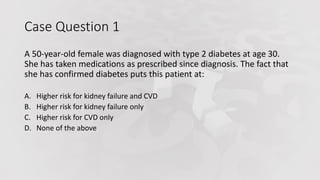
Case Question 1
A 50-year-old female was diagnosed with type 2 diabetes at age 30.
She has taken medications as prescribed since diagnosis. The fact that
she has confirmed diabetes puts this patient at:
A. Higher risk for kidney failure and CVD
B. Higher risk for kidney failure only
C. Higher risk for CVD only
D. None of the above
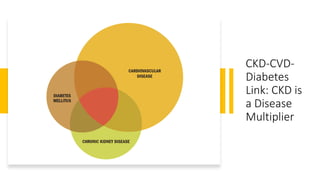
CKD-CVD-
Diabetes
Link: CKD is
a Disease
Multiplier
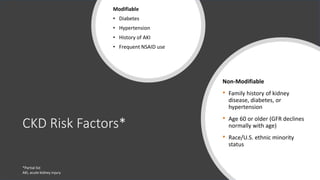
CKD Risk Factors*
Modifiable
• Diabetes
• Hypertension
• History of AKI
• Frequent NSAID use
Non-Modifiable
• Family history of kidney
disease, diabetes, or
hypertension
• Age 60 or older (GFR declines
normally with age)
• Race/U.S. ethnic minority
status
*Partial list
AKI, acute kidney injury
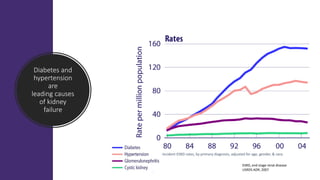
Diabetes and
hypertension
are
leading causes
of kidney
failure
ESRD, end stage renal disease
USRDS ADR, 2007
Incident ESRD rates, by primary diagnosis, adjusted for age, gender, & race.
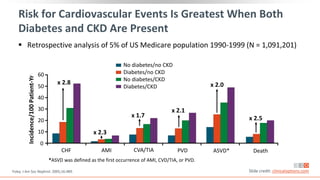
*ASVD was defined as the first occurrence of AMI, CVD/TIA, or PVD.
Incidence/100
Patient-Yr
x 2.8
x 2.3
x 1.7
x 2.1
x 2.0
x 2.5
Risk for Cardiovascular Events Is Greatest When Both
Diabetes and CKD Are Present
 Retrospective analysis of 5% of US Medicare population 1990-1999 (N = 1,091,201)
Foley. J Am Soc Nephrol. 2005;16:489. Slide credit: clinicaloptions.com
0
10
20
30
40
50
60
CHF AMI CVA/TIA PVD ASVD* Death
No diabetes/no CKD
Diabetes/no CKD
No diabetes/CKD
Diabetes/CKD
Patients
(%)
*Relative to diabetes alone.
15.7
32.3
29.5
T2D,
No CKD
No T2D,
CKD
T2D,
CKD
No T2D,
No CKD
10.3
Mortality Among Medicare Patients
Mortality Risk Doubles* in Comorbid T2D and CKD
 Retrospective analysis of US Medicare enrollees 1996-2000 (N = 1.1 million)
Collins. Kidney Int. 2003;64:S24. Slide credit: clinicaloptions.com
0
10
20
30
40
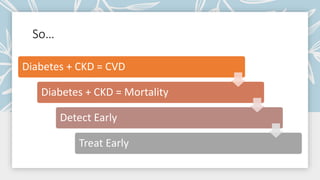
So…
Diabetes + CKD = CVD
Diabetes + CKD = Mortality
Detect Early
Treat Early
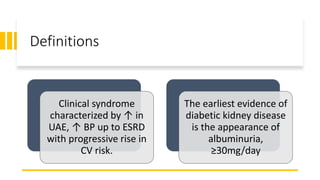
Definitions
Clinical syndrome
characterized by ↑ in
UAE, ↑ BP up to ESRD
with progressive rise in
CV risk.
The earliest evidence of
diabetic kidney disease
is the appearance of
albuminuria,
≥30mg/day
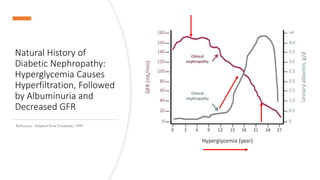
Natural History of
Diabetic Nephropathy:
Hyperglycemia Causes
Hyperfiltration, Followed
by Albuminuria and
Decreased GFR
Reference: Adapted from Friedman, 1999
And to be more precise…
*Kidney complications: anemia, bone and mineral metabolism, retinopathy, and neuropathy.
Alicic. CJASN. 2017;12:2032. Slide credit: clinicaloptions.com
Diagnosis
Yr 2 5 10 20 30
Hyperglycemia
Cellular injury Mesangial expansion glomerulosclerosis, tubulointerstitial fibrosis, and inflammation
Microalbuminuria Macroalbuminuria
GFR High Normal Low ESRD
Hypertension
Kidney complications*
Cardiovascular disease, infections, death
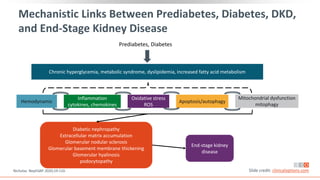
Mechanistic Links Between Prediabetes, Diabetes, DKD,
and End-Stage Kidney Disease
Prediabetes, Diabetes
Chronic hyperglycemia, metabolic syndrome, dyslipidemia, increased fatty acid metabolism
Hemodynamic
Inflammation
cytokines, chemokines
Oxidative stress
ROS
Apoptosis/autophagy
Mitochondrial dysfunction
mitophagy
Diabetic nephropathy
Extracellular matrix accumulation
Glomerular nodular sclerosis
Glomerular basement membrane thickening
Glomerular hyalinosis
podocytopathy
End-stage kidney
disease
Nicholas. NephSAP. 2020;19:110. Slide credit: clinicaloptions.com
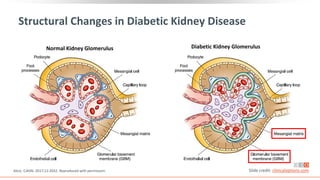
Structural Changes in Diabetic Kidney Disease
Alicic. CJASN. 2017;12:2032. Reproduced with permission.
Normal Kidney Glomerulus Diabetic Kidney Glomerulus
Slide credit: clinicaloptions.com
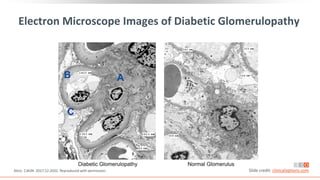
Diabetic Glomerulopathy
Alicic. CJASN. 2017;12:2032. Reproduced with permission. Slide credit: clinicaloptions.com
Normal Glomerulus Diffuse mesangial expansion Nodularity, mesangiolysis
Kimmelstiel-Wilson nodules Dilated capillaries-
microaneurysms
Obsolescent glomerulus
Electron Microscope Images of Diabetic Glomerulopathy
Alicic. CJASN. 2017;12:2032. Reproduced with permission. Slide credit: clinicaloptions.com
How to Assess The risk
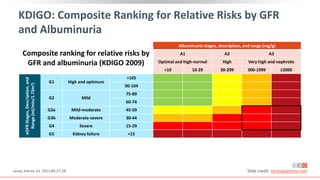
KDIGO: Composite Ranking for Relative Risks by GFR
and Albuminuria
17
Levey. Kidney Int. 2011;80:17-28. Slide credit: clinicaloptions.com
Composite ranking for relative risks by
GFR and albuminuria (KDIGO 2009)
Albuminuria stages, description, and range (mg/g)
A1 A2 A3
Optimal and high-normal High Very high and nephrotic
<10 10-29 30-299 300-1999 ≥2000
eGFR
Stages,
Description,
and
Range
(ml/min/1.73m
2
)
G1 High and optimum
>105
90-104
G2 Mild
75-89
60-74
G3a Mild-moderate 45-59
G3b Moderate-severe 30-44
G4 Severe 15-29
G5 Kidney failure <15
So…
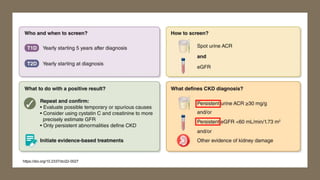
ACR ≥30 mg/gm and / or
eGFR <60
mL/min/1.73 m2
CKD in Diabetes means
Screening
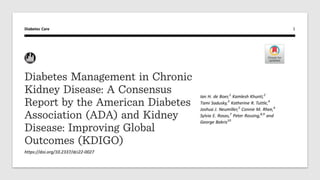
https://doi.org/10.2337/dci22-0027
PERSONAL USE ONLY
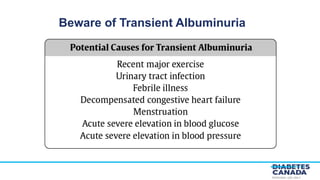
Beware of Transient Albuminuria
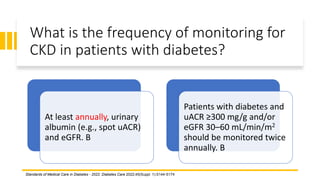
What is the frequency of monitoring for
CKD in patients with diabetes?
At least annually, urinary
albumin (e.g., spot uACR)
and eGFR. B
Patients with diabetes and
uACR ≥300 mg/g and/or
eGFR 30–60 mL/min/m2
should be monitored twice
annually. B
Standards of Medical Care in Diabetes - 2022. Diabetes Care 2022;45(Suppl. 1):S144-S174
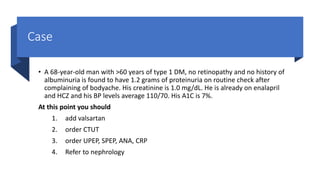
Case
• A 68-year-old man with >60 years of type 1 DM, no retinopathy and no history of
albuminuria is found to have 1.2 grams of proteinuria on routine check after
complaining of bodyache. His creatinine is 1.0 mg/dL. He is already on enalapril
and HCZ and his BP levels average 110/70. His A1C is 7%.
At this point you should
1. add valsartan
2. order CTUT
3. order UPEP, SPEP, ANA, CRP
4. Refer to nephrology
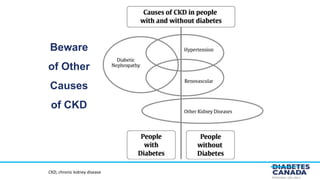
Be Aware of CKD of other causes
PERSONAL USE ONLY
Beware
of Other
Causes
of CKD
CKD, chronic kidney disease
PERSONAL USE ONLY
2018 Diabetes Canada CPG – Chapter 29. Chronic Kidney Disease in Diabetes
When to consider other causes of CKD
CKD, chronic kidney disease
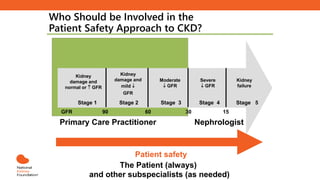
Early Referral
Kidney
damage and
normal or  GFR
Kidney
damage and
mild 
GFR
Severe
 GFR
Kidney
failure
Moderate
 GFR
Stage 1 Stage 2 Stage 3 Stage 4 Stage 5
Nephrologist
Primary Care Practitioner
The Patient (always)
and other subspecialists (as needed)
GFR 90 60 30 15
Who Should be Involved in the
Patient Safety Approach to CKD?
Patient safety
Consult?
When
to refer
https://doi.org/10.2337/dci22-0027
Patients should be referred for
evaluation by a nephrologist if
they have an estimated
glomerular filtration rate <30
mL/min/1.73 m2. A
Promptly refer to a nephrologist
for uncertainty about the etiology
of kidney disease, difficult
management issues, and rapidly
progressing kidney disease. A
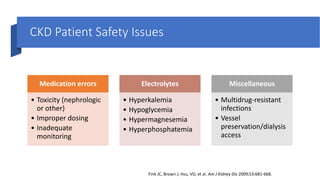
CKD Patient Safety Issues
Fink JC, Brown J, Hsu, VD, et al. Am J Kidney Dis 2009;53:681-668.
Medication errors
• Toxicity (nephrologic
or other)
• Improper dosing
• Inadequate
monitoring
Electrolytes
• Hyperkalemia
• Hypoglycemia
• Hypermagnesemia
• Hyperphosphatemia
Miscellaneous
• Multidrug-resistant
infections
• Vessel
preservation/dialysis
access
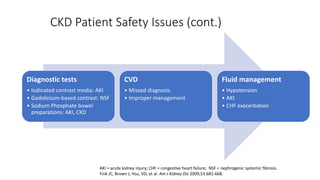
CKD Patient Safety Issues (cont.)
Diagnostic tests
• Iodinated contrast media: AKI
• Gadolinium-based contrast: NSF
• Sodium Phosphate bowel
preparations: AKI, CKD
CVD
• Missed diagnosis
• Improper management
Fluid management
• Hypotension
• AKI
• CHF exacerbation
AKI = acute kidney injury; CHF = congestive heart failure; NSF = nephrogenic systemic fibrosis.
Fink JC, Brown J, Hsu, VD, et al. Am J Kidney Dis 2009;53:681-668..
Also, refer
early if…
Chronic, progressive loss of kidney function
ACR persistently >60 mg/mmol
eGFR <30 mL/min/1.73 m2
Unable to remain on renal-protective therapies due to
adverse effects such as hyperkalemia or a >30% increase in
serum Cr within 3 months of starting ACEi or ARB
Unable to achieve target BP (could be referred to any
specialist in hypertension)
2018 Diabetes Canada CPG – Chapter 29. Chronic Kidney Disease in Diabetes
Fix
Sugar
First
Optimize
blood
glucose
• Optimize glucose control to reduce
the risk or slow the progression of
chronic kidney disease. A
Standards of Medical Care in Diabetes - 2022. Diabetes Care 2022;45(Suppl. 1):S144-S174
What are the
preferred
antidiabetic
drugs in patients
with CKD?
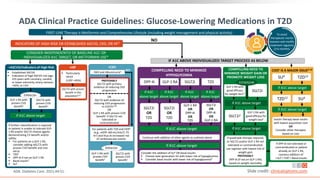
ADA. Diabetes Care. 2021;44:S1. Slide credit: clinicaloptions.com
COMPELLING NEED TO
MINIMIZE WEIGHT GAIN OR
PROMOTE WEIGHT LOSS
SGLT2i2
+HF
 Particularly
HFrEF
(LVEF <45%)
To avoid
therapeutic inertia
reassess and modify
treatment regularly
(3-6 months)
FIRST-LINE Therapy is Metformin and Comprehensive Lifestyle (including weight management and physical activity)
INDICATORS OF HIGH-RISK OR ESTABLISHED ASCVD, CKD, OR HF†
NO
CONSIDER INDEPENDENTLY OF BASELINE A1C OR
INDIVIDUALIZED A1C TARGET, OR METFORMIN USE*
+ASCVD/Indicators of High Risk
GLP-1 RA with
proven CVD
benefit1
If A1C above target
SGLT2i with proven
benefit in this
population5,6,7
COMPELLING NEED TO MINIMIZE
HYPOGLYCEMIA
DPP-4i GLP-1 RA SGLT2i TZD
If A1C
above target
If A1C
above target
If A1C
above target
If A1C
above target
SGLT2i
OR
TZD
SGLT2i
OR
TZD
GLP-1 RA
OR
DPP-4i
OR
TZD
SGLT2i
OR
DPP-4i
OR
GLP-1 RA
If A1C above target
GLP-1 RA with
good efficacy
for weight loss10
GLP-1 RA with
good efficacy for
weight loss8
SGLT2i
EITHER/OR
If A1C above target
COST IS A MAJOR ISSUE9-10
SU4 TZD12
TZD12 SU4
If A1C above target
If A1C above target
IF A1C ABOVE INDIVIDUALIZED TARGET PROCEED AS BELOW
 Established ASCVD
 Indicators of high ASCVD risk (age
≥55 years with coronary, carotid,
or lower extremity artery stenosis
>50%, or LVH
SGLT2i with
proven CVD
benefit1
Either/or
If further intensification is required
or patient is unable to tolerate GLP-
1 RA and/or SGLT2i choose agents
demonstrating CV benefit and/or
safety:
 For patients on a GLP-1 RA,
consider adding AGLT2i with
proven CVD benefit and vice
versa
 TZD2
 DPP-4i if not on GLP-1 RA
 Basal insulin3
 SU4
+CKD
PREFERABLY
SGLT2i with primary
evidence of reducing CKD
progression
OR
SGLT2i with evidence of
reducing CKD progression
in CVOTs5,6,8
OR
GLP-1 RA with proven CVD
benefit1 if SGLT2i not
tolerated or
contraindicated
DKD and Albuminuria6
For patients with T2D and CKD8
(e.g., eGFR <60 mL/min/1.73
m2) and thus at increased risk
of cardiovascular events
NO
GLP-1 RA with
proven CVD
benefit1
SGLT2i with
proven CVD
benefit1
Either/or
Continue with addition of other agents as outlined above
If A1C above target
Consider the addition of SU4 OR basal insulin:
 Choose later generation SU with lower risk of hypoglycemia
 Consider basal insulin with lower risk of hypoglycemia9
If A1C above target
Insulin therapy basal insulin
with lowest acquisition cost
OR
Consider other therapies
based on cost
If quadruple therapy required,
or SGLT2i and/or GLP-1 RA not
tolerated or contraindicated,
use regimen with lowest risk of
weight gain
PREFERABLY
DPP-4i (if not on GLP-1 RA)
based on weight neutrality
If DPP-4i not tolerated or
contraindicated or patient
already on GLP-1 RA,
cautious addition of:
▪ SU4 ▪ TZD2 ▪ Basal Insulin
ADA Clinical Practice Guidelines: Glucose-Lowering Medications in T2D
What are
issues to be
considered
while treating
CKD in
patients with
diabetes
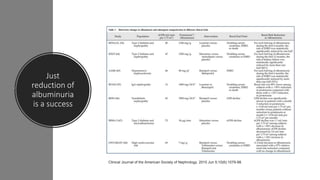
In patients with chronic kidney disease
who have ≥300 mg/g urinary albumin, a
reduction of 30% or greater in mg/g
urinary albumin is recommended to slow
chronic kidney disease progression. B
Optimization of blood pressure control
and reduction in blood pressure
variability to reduce the risk or slow the
progression of chronic kidney disease is
recommended. A
Just
reduction of
albuminuria
is a success
Clinical Journal of the American Society of Nephrology. 2015 Jun 5;10(6):1079-88.
ACEi and ARBs
• In nonpregnant patients with diabetes and hypertension, either an ACEi
or an ARB is recommended for those with modestly elevated urinary
albumin-to-creatinine ratio (30–299 mg/g creatinine) B and is strongly
recommended for those with urinary albumin-to creatinine ratio ≥300
mg/g creatinine and/or estimated glomerular filtration rate <60
mL/min/1.73 m2. A
• Monitor serum creatinine and potassium levels for the development of
increased creatinine or changes in potassium when ACEi, ARBs, or
diuretics are used. B
Is ACEi + ARBs
combination is
recommended
?
2018 Diabetes Canada CPG – Chapter 29. Chronic Kidney Disease in Diabetes
What about primary prevention of CKD?
• An ACE inhibitor or an angiotensin receptor blocker is not
recommended for the primary prevention of chronic kidney
disease in patients with diabetes who have normal BP, normal
uACR (<30 mg/g), and normal eGFR. A
Quiz
52 Year old female, diabetes, hypertension, albuminuria
eGFR 55 ml/min
She was prescribed ramipril
2 weeks later, her cousin text you and tell you that the GFR is now 50
and he is concerned with the nephrotoxic effect of this group of drug?
ADA SoC 2022: Do not discontinue renin-angiotensin
system blockade for minor increases in serum creatinine
(<30%) in the absence of volume depletion. A
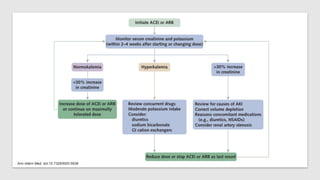
KDIGO Practice Point: Continue ACEi or ARB therapy
unless serum creatinine rises by >30% within 4 weeks
following initiation of treatment or an increase in dose.
Ann Intern Med. doi:10.7326/M20-5938
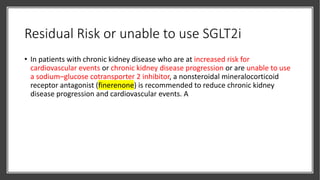
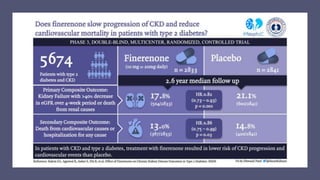
Residual Risk or unable to use SGLT2i
• In patients with chronic kidney disease who are at increased risk for
cardiovascular events or chronic kidney disease progression or are unable to use
a sodium–glucose cotransporter 2 inhibitor, a nonsteroidal mineralocorticoid
receptor antagonist (finerenone) is recommended to reduce chronic kidney
disease progression and cardiovascular events. A
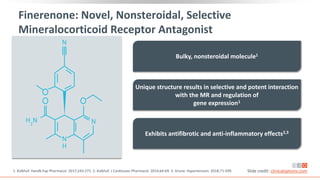
Finerenone: Novel, Nonsteroidal, Selective
Mineralocorticoid Receptor Antagonist
1. Kolkhof. Handb Exp Pharmacol. 2017;243:271. 2. Kolkhof. J Cardiovasc Pharmacol. 2014;64:69. 3. Grune. Hypertension. 2018;71:599.
N
H
H2
N N
N
Bulky, nonsteroidal molecule1
Unique structure results in selective and potent interaction
with the MR and regulation of
gene expression1
Exhibits antifibrotic and anti-inflammatory effects2,3
Slide credit: clinicaloptions.com
Protein Restriction
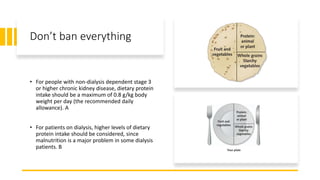
Don’t ban everything
• For people with non-dialysis dependent stage 3
or higher chronic kidney disease, dietary protein
intake should be a maximum of 0.8 g/kg body
weight per day (the recommended daily
allowance). A
• For patients on dialysis, higher levels of dietary
protein intake should be considered, since
malnutrition is a major problem in some dialysis
patients. B
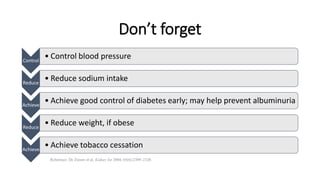
Don’t forget
Reference: De Zeeuw et al. Kidney Int 2004; 65(6):2309–2320.
Control
• Control blood pressure
Reduce
• Reduce sodium intake
Achieve
• Achieve good control of diabetes early; may help prevent albuminuria
Reduce
• Reduce weight, if obese
Achieve
• Achieve tobacco cessation
PERSONAL USE ONLY
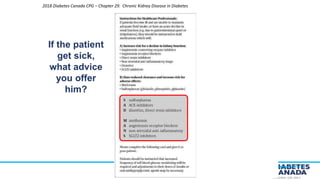
If the patient
get sick,
what advice
you offer
him?
2018 Diabetes Canada CPG – Chapter 29. Chronic Kidney Disease in Diabetes
Make sure of diagnosis
65–year–old man with T2D for 25 years and
Retinopathy
He may have diabetic
kidney disease: he has
long term diabetes, and
both retinopathy and
albuminuria.
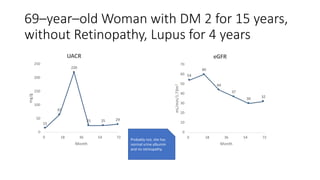
69–year–old Woman with DM 2 for 15 years,
without Retinopathy, Lupus for 4 years
Probably not, she has
normal urine albumin
and no retinopathy.
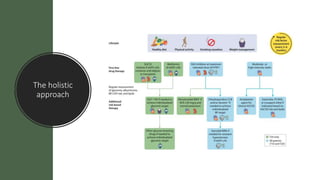
Holistic
Approach
The holistic
approach
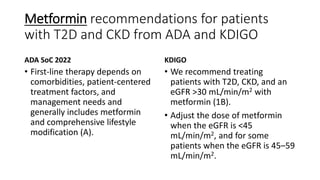
Metformin recommendations for patients
with T2D and CKD from ADA and KDIGO
ADA SoC 2022
• First-line therapy depends on
comorbidities, patient-centered
treatment factors, and
management needs and
generally includes metformin
and comprehensive lifestyle
modification (A).
KDIGO
• We recommend treating
patients with T2D, CKD, and an
eGFR >30 mL/min/m2 with
metformin (1B).
• Adjust the dose of metformin
when the eGFR is <45
mL/min/m2, and for some
patients when the eGFR is 45–59
mL/min/m2.
GLP1A recommendations for patients with
T2D and CKD from ADA and KDIGO
ADA SoC 2022
• Among patients with T2D who
have established ASCVD or
established kidney disease, an
SGLT2i or GLP-1 receptor agonist
with demonstrated CVD benefit
is recommended as part of the
comprehensive CV risk reduction
and/or glucose-lowering
regimens (A).
KDIGO
• In patients with T2D and CKD
who have not achieved
individualized glycemic targets
despite use of metformin and
SGLT2i treatment, or who are
unable to use those
medications, we recommend a
long-acting GLP-1 receptor
agonist (1B).
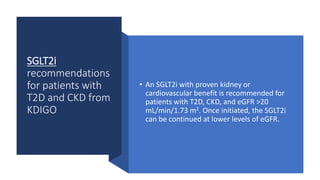
SGLT2i
recommendations
for patients with
T2D and CKD from
KDIGO
• An SGLT2i with proven kidney or
cardiovascular benefit is recommended for
patients with T2D, CKD, and eGFR >20
mL/min/1.73 m2. Once initiated, the SGLT2i
can be continued at lower levels of eGFR.
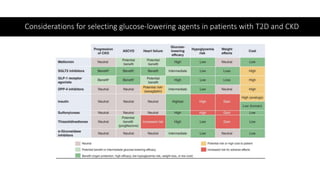
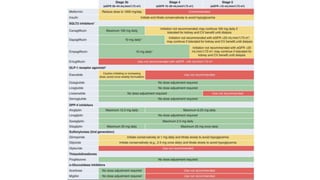
Considerations for selecting glucose-lowering agents in patients with T2D and CKD
Thank You

CKD and Diabetes: Tips & Tricks

  • 1.
    CKD and Diabetes:Tips & Tricks Usama Ragab Youssif, MD Lecturer of Medicine
  • 2.
    Case Question 1 A50-year-old female was diagnosed with type 2 diabetes at age 30. She has taken medications as prescribed since diagnosis. The fact that she has confirmed diabetes puts this patient at: A. Higher risk for kidney failure and CVD B. Higher risk for kidney failure only C. Higher risk for CVD only D. None of the above
  • 3.
  • 4.
    CKD Risk Factors* Modifiable •Diabetes • Hypertension • History of AKI • Frequent NSAID use Non-Modifiable • Family history of kidney disease, diabetes, or hypertension • Age 60 or older (GFR declines normally with age) • Race/U.S. ethnic minority status *Partial list AKI, acute kidney injury
  • 5.
    Diabetes and hypertension are leading causes ofkidney failure ESRD, end stage renal disease USRDS ADR, 2007 Incident ESRD rates, by primary diagnosis, adjusted for age, gender, & race.
  • 6.
    *ASVD was definedas the first occurrence of AMI, CVD/TIA, or PVD. Incidence/100 Patient-Yr x 2.8 x 2.3 x 1.7 x 2.1 x 2.0 x 2.5 Risk for Cardiovascular Events Is Greatest When Both Diabetes and CKD Are Present  Retrospective analysis of 5% of US Medicare population 1990-1999 (N = 1,091,201) Foley. J Am Soc Nephrol. 2005;16:489. Slide credit: clinicaloptions.com 0 10 20 30 40 50 60 CHF AMI CVA/TIA PVD ASVD* Death No diabetes/no CKD Diabetes/no CKD No diabetes/CKD Diabetes/CKD
  • 7.
    Patients (%) *Relative to diabetesalone. 15.7 32.3 29.5 T2D, No CKD No T2D, CKD T2D, CKD No T2D, No CKD 10.3 Mortality Among Medicare Patients Mortality Risk Doubles* in Comorbid T2D and CKD  Retrospective analysis of US Medicare enrollees 1996-2000 (N = 1.1 million) Collins. Kidney Int. 2003;64:S24. Slide credit: clinicaloptions.com 0 10 20 30 40
  • 8.
    So… Diabetes + CKD= CVD Diabetes + CKD = Mortality Detect Early Treat Early
  • 9.
    Definitions Clinical syndrome characterized by↑ in UAE, ↑ BP up to ESRD with progressive rise in CV risk. The earliest evidence of diabetic kidney disease is the appearance of albuminuria, ≥30mg/day
  • 10.
    Natural History of DiabeticNephropathy: Hyperglycemia Causes Hyperfiltration, Followed by Albuminuria and Decreased GFR Reference: Adapted from Friedman, 1999
  • 11.
    And to bemore precise… *Kidney complications: anemia, bone and mineral metabolism, retinopathy, and neuropathy. Alicic. CJASN. 2017;12:2032. Slide credit: clinicaloptions.com Diagnosis Yr 2 5 10 20 30 Hyperglycemia Cellular injury Mesangial expansion glomerulosclerosis, tubulointerstitial fibrosis, and inflammation Microalbuminuria Macroalbuminuria GFR High Normal Low ESRD Hypertension Kidney complications* Cardiovascular disease, infections, death
  • 12.
    Mechanistic Links BetweenPrediabetes, Diabetes, DKD, and End-Stage Kidney Disease Prediabetes, Diabetes Chronic hyperglycemia, metabolic syndrome, dyslipidemia, increased fatty acid metabolism Hemodynamic Inflammation cytokines, chemokines Oxidative stress ROS Apoptosis/autophagy Mitochondrial dysfunction mitophagy Diabetic nephropathy Extracellular matrix accumulation Glomerular nodular sclerosis Glomerular basement membrane thickening Glomerular hyalinosis podocytopathy End-stage kidney disease Nicholas. NephSAP. 2020;19:110. Slide credit: clinicaloptions.com
  • 13.
    Structural Changes inDiabetic Kidney Disease Alicic. CJASN. 2017;12:2032. Reproduced with permission. Normal Kidney Glomerulus Diabetic Kidney Glomerulus Slide credit: clinicaloptions.com
  • 14.
    Diabetic Glomerulopathy Alicic. CJASN.2017;12:2032. Reproduced with permission. Slide credit: clinicaloptions.com Normal Glomerulus Diffuse mesangial expansion Nodularity, mesangiolysis Kimmelstiel-Wilson nodules Dilated capillaries- microaneurysms Obsolescent glomerulus
  • 15.
    Electron Microscope Imagesof Diabetic Glomerulopathy Alicic. CJASN. 2017;12:2032. Reproduced with permission. Slide credit: clinicaloptions.com
  • 16.
    How to AssessThe risk
  • 17.
    KDIGO: Composite Rankingfor Relative Risks by GFR and Albuminuria 17 Levey. Kidney Int. 2011;80:17-28. Slide credit: clinicaloptions.com Composite ranking for relative risks by GFR and albuminuria (KDIGO 2009) Albuminuria stages, description, and range (mg/g) A1 A2 A3 Optimal and high-normal High Very high and nephrotic <10 10-29 30-299 300-1999 ≥2000 eGFR Stages, Description, and Range (ml/min/1.73m 2 ) G1 High and optimum >105 90-104 G2 Mild 75-89 60-74 G3a Mild-moderate 45-59 G3b Moderate-severe 30-44 G4 Severe 15-29 G5 Kidney failure <15
  • 18.
    So… ACR ≥30 mg/gmand / or eGFR <60 mL/min/1.73 m2 CKD in Diabetes means
  • 19.
  • 20.
  • 21.
    PERSONAL USE ONLY Bewareof Transient Albuminuria
  • 22.
    What is thefrequency of monitoring for CKD in patients with diabetes? At least annually, urinary albumin (e.g., spot uACR) and eGFR. B Patients with diabetes and uACR ≥300 mg/g and/or eGFR 30–60 mL/min/m2 should be monitored twice annually. B Standards of Medical Care in Diabetes - 2022. Diabetes Care 2022;45(Suppl. 1):S144-S174
  • 23.
    Case • A 68-year-oldman with >60 years of type 1 DM, no retinopathy and no history of albuminuria is found to have 1.2 grams of proteinuria on routine check after complaining of bodyache. His creatinine is 1.0 mg/dL. He is already on enalapril and HCZ and his BP levels average 110/70. His A1C is 7%. At this point you should 1. add valsartan 2. order CTUT 3. order UPEP, SPEP, ANA, CRP 4. Refer to nephrology
  • 24.
    Be Aware ofCKD of other causes
  • 25.
    PERSONAL USE ONLY Beware ofOther Causes of CKD CKD, chronic kidney disease
  • 26.
    PERSONAL USE ONLY 2018Diabetes Canada CPG – Chapter 29. Chronic Kidney Disease in Diabetes When to consider other causes of CKD CKD, chronic kidney disease
  • 27.
  • 28.
    Kidney damage and normal or GFR Kidney damage and mild  GFR Severe  GFR Kidney failure Moderate  GFR Stage 1 Stage 2 Stage 3 Stage 4 Stage 5 Nephrologist Primary Care Practitioner The Patient (always) and other subspecialists (as needed) GFR 90 60 30 15 Who Should be Involved in the Patient Safety Approach to CKD? Patient safety Consult?
  • 29.
    When to refer https://doi.org/10.2337/dci22-0027 Patients shouldbe referred for evaluation by a nephrologist if they have an estimated glomerular filtration rate <30 mL/min/1.73 m2. A Promptly refer to a nephrologist for uncertainty about the etiology of kidney disease, difficult management issues, and rapidly progressing kidney disease. A
  • 30.
    CKD Patient SafetyIssues Fink JC, Brown J, Hsu, VD, et al. Am J Kidney Dis 2009;53:681-668. Medication errors • Toxicity (nephrologic or other) • Improper dosing • Inadequate monitoring Electrolytes • Hyperkalemia • Hypoglycemia • Hypermagnesemia • Hyperphosphatemia Miscellaneous • Multidrug-resistant infections • Vessel preservation/dialysis access
  • 31.
    CKD Patient SafetyIssues (cont.) Diagnostic tests • Iodinated contrast media: AKI • Gadolinium-based contrast: NSF • Sodium Phosphate bowel preparations: AKI, CKD CVD • Missed diagnosis • Improper management Fluid management • Hypotension • AKI • CHF exacerbation AKI = acute kidney injury; CHF = congestive heart failure; NSF = nephrogenic systemic fibrosis. Fink JC, Brown J, Hsu, VD, et al. Am J Kidney Dis 2009;53:681-668..
  • 32.
    Also, refer early if… Chronic,progressive loss of kidney function ACR persistently >60 mg/mmol eGFR <30 mL/min/1.73 m2 Unable to remain on renal-protective therapies due to adverse effects such as hyperkalemia or a >30% increase in serum Cr within 3 months of starting ACEi or ARB Unable to achieve target BP (could be referred to any specialist in hypertension) 2018 Diabetes Canada CPG – Chapter 29. Chronic Kidney Disease in Diabetes
  • 33.
  • 34.
    Optimize blood glucose • Optimize glucosecontrol to reduce the risk or slow the progression of chronic kidney disease. A Standards of Medical Care in Diabetes - 2022. Diabetes Care 2022;45(Suppl. 1):S144-S174
  • 35.
  • 36.
    ADA. Diabetes Care.2021;44:S1. Slide credit: clinicaloptions.com COMPELLING NEED TO MINIMIZE WEIGHT GAIN OR PROMOTE WEIGHT LOSS SGLT2i2 +HF  Particularly HFrEF (LVEF <45%) To avoid therapeutic inertia reassess and modify treatment regularly (3-6 months) FIRST-LINE Therapy is Metformin and Comprehensive Lifestyle (including weight management and physical activity) INDICATORS OF HIGH-RISK OR ESTABLISHED ASCVD, CKD, OR HF† NO CONSIDER INDEPENDENTLY OF BASELINE A1C OR INDIVIDUALIZED A1C TARGET, OR METFORMIN USE* +ASCVD/Indicators of High Risk GLP-1 RA with proven CVD benefit1 If A1C above target SGLT2i with proven benefit in this population5,6,7 COMPELLING NEED TO MINIMIZE HYPOGLYCEMIA DPP-4i GLP-1 RA SGLT2i TZD If A1C above target If A1C above target If A1C above target If A1C above target SGLT2i OR TZD SGLT2i OR TZD GLP-1 RA OR DPP-4i OR TZD SGLT2i OR DPP-4i OR GLP-1 RA If A1C above target GLP-1 RA with good efficacy for weight loss10 GLP-1 RA with good efficacy for weight loss8 SGLT2i EITHER/OR If A1C above target COST IS A MAJOR ISSUE9-10 SU4 TZD12 TZD12 SU4 If A1C above target If A1C above target IF A1C ABOVE INDIVIDUALIZED TARGET PROCEED AS BELOW  Established ASCVD  Indicators of high ASCVD risk (age ≥55 years with coronary, carotid, or lower extremity artery stenosis >50%, or LVH SGLT2i with proven CVD benefit1 Either/or If further intensification is required or patient is unable to tolerate GLP- 1 RA and/or SGLT2i choose agents demonstrating CV benefit and/or safety:  For patients on a GLP-1 RA, consider adding AGLT2i with proven CVD benefit and vice versa  TZD2  DPP-4i if not on GLP-1 RA  Basal insulin3  SU4 +CKD PREFERABLY SGLT2i with primary evidence of reducing CKD progression OR SGLT2i with evidence of reducing CKD progression in CVOTs5,6,8 OR GLP-1 RA with proven CVD benefit1 if SGLT2i not tolerated or contraindicated DKD and Albuminuria6 For patients with T2D and CKD8 (e.g., eGFR <60 mL/min/1.73 m2) and thus at increased risk of cardiovascular events NO GLP-1 RA with proven CVD benefit1 SGLT2i with proven CVD benefit1 Either/or Continue with addition of other agents as outlined above If A1C above target Consider the addition of SU4 OR basal insulin:  Choose later generation SU with lower risk of hypoglycemia  Consider basal insulin with lower risk of hypoglycemia9 If A1C above target Insulin therapy basal insulin with lowest acquisition cost OR Consider other therapies based on cost If quadruple therapy required, or SGLT2i and/or GLP-1 RA not tolerated or contraindicated, use regimen with lowest risk of weight gain PREFERABLY DPP-4i (if not on GLP-1 RA) based on weight neutrality If DPP-4i not tolerated or contraindicated or patient already on GLP-1 RA, cautious addition of: ▪ SU4 ▪ TZD2 ▪ Basal Insulin ADA Clinical Practice Guidelines: Glucose-Lowering Medications in T2D
  • 37.
    What are issues tobe considered while treating CKD in patients with diabetes In patients with chronic kidney disease who have ≥300 mg/g urinary albumin, a reduction of 30% or greater in mg/g urinary albumin is recommended to slow chronic kidney disease progression. B Optimization of blood pressure control and reduction in blood pressure variability to reduce the risk or slow the progression of chronic kidney disease is recommended. A
  • 38.
    Just reduction of albuminuria is asuccess Clinical Journal of the American Society of Nephrology. 2015 Jun 5;10(6):1079-88.
  • 39.
    ACEi and ARBs •In nonpregnant patients with diabetes and hypertension, either an ACEi or an ARB is recommended for those with modestly elevated urinary albumin-to-creatinine ratio (30–299 mg/g creatinine) B and is strongly recommended for those with urinary albumin-to creatinine ratio ≥300 mg/g creatinine and/or estimated glomerular filtration rate <60 mL/min/1.73 m2. A • Monitor serum creatinine and potassium levels for the development of increased creatinine or changes in potassium when ACEi, ARBs, or diuretics are used. B
  • 40.
    Is ACEi +ARBs combination is recommended ? 2018 Diabetes Canada CPG – Chapter 29. Chronic Kidney Disease in Diabetes
  • 41.
    What about primaryprevention of CKD? • An ACE inhibitor or an angiotensin receptor blocker is not recommended for the primary prevention of chronic kidney disease in patients with diabetes who have normal BP, normal uACR (<30 mg/g), and normal eGFR. A
  • 42.
    Quiz 52 Year oldfemale, diabetes, hypertension, albuminuria eGFR 55 ml/min She was prescribed ramipril 2 weeks later, her cousin text you and tell you that the GFR is now 50 and he is concerned with the nephrotoxic effect of this group of drug? ADA SoC 2022: Do not discontinue renin-angiotensin system blockade for minor increases in serum creatinine (<30%) in the absence of volume depletion. A KDIGO Practice Point: Continue ACEi or ARB therapy unless serum creatinine rises by >30% within 4 weeks following initiation of treatment or an increase in dose.
  • 43.
    Ann Intern Med.doi:10.7326/M20-5938
  • 44.
    Residual Risk orunable to use SGLT2i • In patients with chronic kidney disease who are at increased risk for cardiovascular events or chronic kidney disease progression or are unable to use a sodium–glucose cotransporter 2 inhibitor, a nonsteroidal mineralocorticoid receptor antagonist (finerenone) is recommended to reduce chronic kidney disease progression and cardiovascular events. A
  • 45.
    Finerenone: Novel, Nonsteroidal,Selective Mineralocorticoid Receptor Antagonist 1. Kolkhof. Handb Exp Pharmacol. 2017;243:271. 2. Kolkhof. J Cardiovasc Pharmacol. 2014;64:69. 3. Grune. Hypertension. 2018;71:599. N H H2 N N N Bulky, nonsteroidal molecule1 Unique structure results in selective and potent interaction with the MR and regulation of gene expression1 Exhibits antifibrotic and anti-inflammatory effects2,3 Slide credit: clinicaloptions.com
  • 47.
  • 48.
    Don’t ban everything •For people with non-dialysis dependent stage 3 or higher chronic kidney disease, dietary protein intake should be a maximum of 0.8 g/kg body weight per day (the recommended daily allowance). A • For patients on dialysis, higher levels of dietary protein intake should be considered, since malnutrition is a major problem in some dialysis patients. B
  • 49.
    Don’t forget Reference: DeZeeuw et al. Kidney Int 2004; 65(6):2309–2320. Control • Control blood pressure Reduce • Reduce sodium intake Achieve • Achieve good control of diabetes early; may help prevent albuminuria Reduce • Reduce weight, if obese Achieve • Achieve tobacco cessation
  • 50.
    PERSONAL USE ONLY Ifthe patient get sick, what advice you offer him? 2018 Diabetes Canada CPG – Chapter 29. Chronic Kidney Disease in Diabetes
  • 51.
    Make sure ofdiagnosis
  • 52.
    65–year–old man withT2D for 25 years and Retinopathy He may have diabetic kidney disease: he has long term diabetes, and both retinopathy and albuminuria.
  • 53.
    69–year–old Woman withDM 2 for 15 years, without Retinopathy, Lupus for 4 years Probably not, she has normal urine albumin and no retinopathy.
  • 55.
  • 56.
  • 57.
    Metformin recommendations forpatients with T2D and CKD from ADA and KDIGO ADA SoC 2022 • First-line therapy depends on comorbidities, patient-centered treatment factors, and management needs and generally includes metformin and comprehensive lifestyle modification (A). KDIGO • We recommend treating patients with T2D, CKD, and an eGFR >30 mL/min/m2 with metformin (1B). • Adjust the dose of metformin when the eGFR is <45 mL/min/m2, and for some patients when the eGFR is 45–59 mL/min/m2.
  • 58.
    GLP1A recommendations forpatients with T2D and CKD from ADA and KDIGO ADA SoC 2022 • Among patients with T2D who have established ASCVD or established kidney disease, an SGLT2i or GLP-1 receptor agonist with demonstrated CVD benefit is recommended as part of the comprehensive CV risk reduction and/or glucose-lowering regimens (A). KDIGO • In patients with T2D and CKD who have not achieved individualized glycemic targets despite use of metformin and SGLT2i treatment, or who are unable to use those medications, we recommend a long-acting GLP-1 receptor agonist (1B).
  • 59.
    SGLT2i recommendations for patients with T2Dand CKD from KDIGO • An SGLT2i with proven kidney or cardiovascular benefit is recommended for patients with T2D, CKD, and eGFR >20 mL/min/1.73 m2. Once initiated, the SGLT2i can be continued at lower levels of eGFR.
  • 60.
    Considerations for selectingglucose-lowering agents in patients with T2D and CKD
  • 62.