KDIGO 2022 CLINICAL PRACTICE GUIDELINE
ON DIABETES MANAGEMENT IN CKD
SLIDE SET
KDIGO GUIDELINE CO-CHAIRS:
IAN DE BOER, MD, MS
PETER ROSSING, MD, DMSC
TABLE OF CONTENTS
• Introduction
• Guideline Development Process:
• Evidence Review
• Guideline Format
• Guideline Statements and Rationale from:
• Chapter 1. Comprehensive care in patients with diabetes and CKD
• Chapter 2. Glycemic monitoring and targets in patients with diabetes and CKD
• Chapter 3. Lifestyle interventions in patients with diabetes and CKD
• Chapter 4. Glucose-lowering therapies in patients with T2D and CKD
• Chapter 5. Approaches to management of patients with diabetes and CKD
• Question and Answer
Guidelines
• KDIGO’s core mission. KDIGO is the only organization developing global guidelines in
nephrology.
Controversies Conferences
• International Conferences that examine significant topics in nephrology and related disciplines
that are not fully resolved. Results in a published paper, usually in Kidney International. Often a
Controversies Conference will prompt development of a guideline or a guideline update.
Implementation Activities
• Dissemination and Implementation of KDIGO Guidelines
• Controversies Conference Reports and Observations
• Live Clinical Practice Conferences – usually with a nephrology society to bring global KDIGO’s
work to local audiences, using case studies
• Implementation Summits bring local experts together to discuss local or regional barriers and
opportunities
• Core Implementation Kits – educational materials including Speaker’s Guides, Reference Tools,
and Case Studies to assist with implementation of all KDIGO publications
KDIGO PROGRAMS
KDIGO CONTROVERSIES CONFERENCE: DIABETES & CKD
• February 2015 (Vancouver, BC)
• Topics:
• Lifestyle measures
• Glycemic control
• Cardiovascular & other outcomes
• Paths forward for new therapies
• Report published in Kidney International
(2016)
• Led to initiation of new clinical practice
guideline
KDIGO 2020 CLINICAL PRACTICE GUIDELINE FOR DIABETES
MANAGEMENT IN CKD
• October 2020
• Topics:
• Ch 1. Comprehensive care
• Ch 2. Glycemic monitoring and targets
• Ch 3. Lifestyle interventions
• Ch 4. Antihyperglycemic therapies in
T2D
• Ch 5. Approaches to management
• Published as a Supplement
• Executive Summary published in Kidney
International
THE BEGINNING
SCOPE OF THE CLINICAL PRACTICE GUIDELINE
Include:
• Types 1 and 2 diabetes
• All stages of CKD
• Kidney transplant recipients
• Dialysis
• Interventions addressed with
rigorous data (RCTs)
• Lifestyle
• Pharmacotherapy
• Systems
Exclude:
• Interventions covered elsewhere
• Blood pressure
• Lipids
• Prevention & screening
• Topics with insufficient data
• Diagnosis
• Emerging & pipeline therapies
GUIDELINE GOALS
• Generate a useful resource for clinicians and patients
• Address relevant questions with actionable recommendations
• Take on controversial topics when sufficient evidence
• Communicate clearly: highlight figures and tables
• Stay true to evidence
• Target audience: broad, primarily clinicians treating diabetes & CKD
• Be mindful of implications for policy and payment
• Propose research questions
WORK GROUP
• Diverse expertise
• Worldwide scope
• Deep experience
• Patients
• Evidence Review Team
WORK GROUP
CHALLENGES TO THE GUIDELINE
• What to do when evidence is lacking?
• Balance providing guidance with rigor
• How to address clinically relevant groups of patients?
• Type 1 and Type 2 diabetes
• CKD stages
• Kidney failure/ESKD
• Transplant recipients
EVIDENCE REVIEW
• ERT - Cochrane Kidney Transplant
• PICO questions developed
• Clinical and important outcomes identified
Critical outcomes Important outcomes
All-cause mortality Albuminuria progression
Cardiovascular mortality Acute kidney injury
3-point and 4-point MACE Falls
Kidney failure (ESKD) Harms (fatigue, amputations, fractures, etc.)
Cardiovascular outcomes - myocardial
infarction, stroke, heart failure
Hyperkalemia
Doubling serum creatinine Quality of life
Hypoglycemia requiring 3rd party assistance Blood pressure
HbA1c Body weight, body mass index (BMI)
EVIDENCE REVIEW
• ERT - Cochrane Kidney Transplant
• Existing PICO questions and new PICO questions developed
• Clinical and important outcomes identified
Critical outcomes Important outcomes
All-cause mortality Albuminuria progression (onset of
albuminuria, moderately increased to
severely increased albuminuria)
Kidney failure/End-stage kidney disease
Cardiovascular outcomes - MACE, myocardial
infarction, stroke, heart failure
Doubling serum creatinine
Hypoglycemia requiring 3rd party assistance
HbA1c
PICO QUESTIONS
Population Intervention Comparator Outcome
Comprehensive care
Adults with CKD (G1-G5, G5D)
and diabetes (T1D and T2D)
Antihypertensive – RAS
inhibitors (ACEi and
ARB)
Placebo/standard of
care
Critical and important
outcomes, AKI,
hyperkalemia
Adults with CKD (G1-G5, G5D)
and diabetes (T1D and T2D)
Dual RAS inhibition Mono RAS inhibition Critical and important
outcomes, AKI,
hyperkalemia
• Focus on RCTs - mapped to existing Cochrane Systematic reviews
• New systematic reviews undertaken as required
• Some focused observational studies reviews
• General diabetes population - Existing systematic reviews
Population Intervention Comparator Outcome
Comprehensive care
Adults with CKD (G1-G5, G5D,
G1T-G5T) and diabetes (T2D)
SGLT2i Placebo/standard
of care
Critical and important
outcomes, Long-term
harms: amputation, bone
fractures, hypoglycemia,
lactic acidosis
Adults with CKD (G1-G5, G5D)
and diabetes (T1D and T2D)
Mineralocorticoid receptor
antagonists or direct renin
inhibitors
Standard of care or
RAS inhibitors
Critical and important
outcomes, AKI,
hyperkalemia
Adults with CKD (G1-G5, G5D,
G1T-G5T) and diabetes (T1D
and T2D)
Potassium binders Standard of care Critical and important
outcomes, AKI,
hyperkalemia
Adults with CKD (G1-G5, G5D,
G1T-G5T) and diabetes (T1D
and T2D)
Antiplatelet therapy Usual care Critical and important
outcomes, BP, fatigue, QoL
PICO QUESTIONS
Population Intervention Comparator Outcome
Comprehensive care
Adults with CKD (G1-G5,
G5D, G1T-G5T) and diabetes
(T1D and T2D)
Smoking-cessation interventions Usual care Critical and important
outcomes, BP, BMI, body
weight, fatigue, QoL
Adults with CKD (G1-G5,
G5D, G1T-G5T) and diabetes
(T1D and T2D)
Bariatric surgery Usual care Critical and important
outcomes, BP, BMI, body
weight, fatigue, QoL
Adults with CKD (G1-G5,
G5D, G1T-G5T) and diabetes
(T1D and T2D)
Weight loss therapies (olistat,
phentermine, saxenda,
liraglutide, lorcaserin, bupropion-
naltrexone, topiramate,
acarbose, miglitol, pramlintide,
exenatide, zonisamide,
fluoxetide, semaglutide,
dulaglutide)
Placebo/Standard
of care
Critical and important
outcomes, BP, BMI, body
weight, fatigue, QoL
PICO QUESTIONS
Population Intervention Comparator Outcome
Glycemic monitoring and targets
Adults with CKD (G1-G5, G5D)
and diabetes (T1D and T2D)
Alternative biomarkers
(glycated albumin,
fructosamine, carbamylates
albumin)
HbA1c or blood
glucose monitoring
All-cause mortality, kidney
failure, CKD progression
(doubling of SCr, ≥40% decline
in eGFR), mean blood glucose
(HbA1c)
Adults with CKD (G1-G5, G5D)
and diabetes (T1D and T2D)
Glucose monitoring (CGM,
SMBG)
HbA1c All-cause mortality, kidney
failure, CKD progression
(doubling of SCr, ≥40% decline
in eGFR), mean blood glucose
(HbA1c)
Adults with CKD (G1-G5, G5D)
and diabetes (T1D and T2D)
Tight glycemic control
(HbA1c targets - ≤7.0%,
≤6.5%, ≤6.0%)
Standard glycemic
target
Critical and important
outcomes
PICO QUESTIONS
Population Intervention Comparator Outcome
Lifestyle interventions
Adults with CKD (G1-G5, G5D)
and diabetes (T1D and T2D)
Exercise/physical activity
(aerobic training, resistance
training)
Usual care Critical and important
outcomes, BP, BMI, body
weight, fatigue, QoL
Adults with CKD (G1-G5, G5D)
and diabetes (T1D and T2D)
Low-salt diets, low-
potassium diets, low-
phosphate diets, low-
protein diets, dietary
patterns (caloric-restriction
diet, whole-food diets,
Mediterranean diet, DASH
diet, vegetarian diet)
Usual diet Critical and important
outcomes, BP, BMI, body
weight, fatigue, QoL
PICO QUESTIONS
Population Intervention Comparator Outcome
Glucose-lowering therapies
Adults with CKD (G1-G5,
G5D, G1T-G5T) and
diabetes (T2D)
Older – metformin,
sulfonylureas,
thiazolidinediones, Newer
– alpha-glucosidase
inhibitors, GLP1 RA, DPP-4
inhibitors
Placebo/Standar
d of care
Critical and important
outcomes, For GLP-1 RA:
BMI, body weight, Long-term
harms: amputation, bone
fractures, hypoglycemia,
lactic acidosis
Approaches to management
Adults with CKD (G1-G5,
G5D) and diabetes (T1D and
T2D)
Education and self-
management programs
Standard of care Critical and important
outcomes, fatigue, QoL
Adults with CKD (G1-G5,
G5D) and diabetes (T1D and
T2D)
Health service delivery
programs/models of care
Standard of care Critical and important
outcomes, fatigue, Qol
PICO QUESTIONS
LITERATURE
SEARCH
DECEMBER 2021; UPDATED
IN FEBRUARY 2022
EVIDENCE SYNTHESIS
• Standard Cochrane methods – Two
independent reviewers
• Data abstraction
• Critical appraisal – using validated tools
• Data-analysis
• Random effects meta-analysis and
generic inverse variance
• Relative risk for dichotomous
outcomes
• Mean difference for continuous
outcomes
• Heterogeneity assessed using the I2
statistic
Risk of bias graph example
Forest plot example – SGLT2 inhibitors – 3-point MACE
GRADING RECOMMENDATIONS
• GRADE methodology
• The quality of the evidence – Level A, B, C, D
• Study limitations
• Inconsistency
• Indirectness
• Imprecision
• Publication bias
• Strength of the recommendation – “We recommend” or “We suggest”
• Two face-to-face meetings – New Orleans Jan 2019, Barcelona Sept 2019
• Balance of benefits and harms
• Quality of the evidence
• Patient values and preferences – Two patients on the Work Group
• Resources and other considerations
• Update was conducted fully virtually through teleconferences
GUIDELINE FORMAT
• KDIGO guidelines continue to use GRADE methodology, but we
have strengthened the link between the recommendation
statements and underlying evidence base.
• Guidelines are now a mox of recommendations and practice
points to help clinicians better evaluate and implement the
guidelines from the Work Group.
• All recommendations follow a consistent and structured format
and are similar in style to previous KDIGO recommendations.
• Practice points are may be formatted as text, a table, a figure, or
an algorithm to make them easier to use in clinical practice.
SITUATIONS WHEN PRACTICE POINTS CAN/
SHOULD BE USED
3.
Testable
PICO Question
Not included in a
systematic review
due to resource
limitations
Uncommon
(ideally none)
2.
Implementation
Guidance
Commonly used
as figures, tables,
algorithms, and
explanatory text
Variable as
needed
1.
Not Testable
PICO Question
There is no
reasonable
alternative
Rarely needed
HOW SHOULD PRACTICE POINTS BE USED WHEN
CARING FOR PATIENTS?
• Practice points are consensus statements about a specific aspect of care and
supplement graded recommendations for which a larger quantity of evidence
was identified.
• While practice points represent the expert judgment of the guideline Work
Group, they may also be based on limited evidence.
• Unlike recommendations, practice points are not graded for strength of
recommendation or certainty of the evidence.
• Users should consider the practice point as expert guidance, and use it as they
see fit to inform the care of patients.
Start with
recommendations
Consider relevant
practice points
New guideline
disseminated
DIABETES & CKD GUIDELINE CONTENTS
• Chapter 1. Comprehensive care in
patients with diabetes and CKD
• Comprehensive diabetes and CKD
management
• RAS blockade
• SGLT2i
• MRA
• Smoking cessation
• Chapter 2. Glycemic monitoring and
targets in patients with diabetes and
CKD
• Glycemic monitoring
• Glycemic targets
• Chapter 3. Lifestyle interventions in
patients with diabetes and CKD
• Nutrition intake
• Physical activity
• Chapter 4. Glucose-lowering therapies in
patients with T2D and CKD
• Overall approach
• Metformin
• GLP-1 RA
• Chapter 5. Approaches to management
of patients with diabetes and CKD
• Self-management education
programs
• Team-based integrated care
COMPREHENSIVE CARE IN PATIENTS WITH DIABETES AND
CKD
Practice Point 1.1.1: Patients
with diabetes and chronic
kidney disease (CKD) should
be treated with a
comprehensive strategy to
reduce risks of kidney
disease progression and
cardiovascular disease
(Figure 1 and 2).
FIGURE 2. HOLISTIC APPROACH FOR IMPROVING OUTCOMES IN PATIENTS WITH
DIABETES AND CHRONIC KIDNEY DISEASE
COMPREHENSIVE CARE IN PATIENTS WITH DIABETES AND
CKD
Recommendation 1.2.1: We recommend that treatment with an
angiotensin-converting enzyme inhibitor (ACEi) or an angiotensin II
receptor blocker (ARB) be initiated in patients with diabetes,
hypertension, and albuminuria, and that these medications be
titrated to the highest approved dose that is tolerated (1B).
COMPREHENSIVE CARE IN PATIENTS WITH DIABETES AND
CKD
Practice Point 1.2.1: For patients with diabetes, albuminuria, and normal blood
pressure, treatment with an ACEi or ARB may be considered.
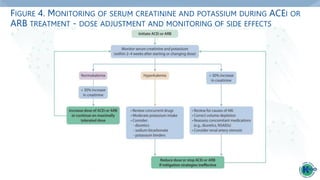
Practice Point 1.2.2: Monitor for changes in blood pressure, serum creatinine,
and serum potassium within 2-4 weeks of initiation or increase in the dose of an
ACEi or ARB (Figure 4).
Practice Point 1.2.3: Continue ACEi or ARB therapy unless serum creatinine rises
by more than 30% within 4 weeks following initiation of treatment or an increase
in dose (Figure 4).
Practice Point 1.2.4: Advise contraception in women who are receiving ACEi or
ARB therapy and discontinue these agents in women who are considering
pregnancy or who become pregnant.
FIGURE 4. MONITORING OF SERUM CREATININE AND POTASSIUM DURING ACEI OR
ARB TREATMENT - DOSE ADJUSTMENT AND MONITORING OF SIDE EFFECTS
COMPREHENSIVE CARE IN PATIENTS WITH DIABETES AND
CKD
Practice Point 1.2.5: Hyperkalemia associated with the use of an ACEi or ARB can
often be managed by measures to reduce serum potassium levels rather than
decreasing the dose or stopping ACEi or ARB immediately (Figure 4).
Practice Point 1.2.6: Reduce the dose or discontinue ACEi or ARB therapy in the
setting of either symptomatic hypotension or uncontrolled hyperkalemia despite
medical treatment outlined in Practice Point 1.2.5., or to reduce uremic
symptoms while treating kidney failure (estimated glomerular filtration rate
[eGFR] <15 ml/min per 1.73 m2).
Practice Point 1.2.7: Use only one agent at a time to block the RAS. The
combination of an ACEi with an ARB, or the combination of an ACEi or ARB with
a direct renin inhibitor, is potentially harmful.
COMPREHENSIVE CARE IN PATIENTS WITH DIABETES AND
CKD
Recommendation
1.3.1: We recommend
treating patients with
type 2 diabetes (T2D),
CKD, and eGFR ≥20
ml/min per 1.73 m2
with an SGLT2i (1A).
COMPREHENSIVE CARE IN PATIENTS WITH DIABETES AND
CKD
Practice Point 1.3.1: The recommendation for SGLT2i is for kidney and
cardiovascular protection and SGLT2i have been shown to have safety and benefit
in CKD patients, even for those without T2D. Thus, if patients are already being
treated with other glucose-lowering agents, an SGLT2i can be added to the current
treatment regimen (Figure 6).
Practice Point 1.3.2: The choice of an SGLT2i should prioritize agents with
documented kidney or cardiovascular benefits and take eGFR into account.
Practice Point 1.3.3: It is reasonable to withhold SGLT2i during times of prolonged
fasting, surgery, or critical medical illness (when patients may be at greater risk for
ketosis).
Practice Point 1.3.4: If a patient is at risk for hypovolemia, consider decreasing
thiazide or loop diuretic dosages before commencement of SGLT2i treatment,
Practice Point 1.3.5: A reversible decrease in the eGFR with commencement of
SGLT2i treatment may occur and is generally not an indication to discontinue
therapy.
Practice Point 1.3.6: Once an SGLT2i is initiated, it is reasonable to continue an
SGLT2i even if eGFR falls below 20 ml/min per 1.73 m2, unless it is not tolerated
or kidney replacement therapy is initiated.
Practice Point 1.3.7: SGLT2i have not been adequately studied in kidney
transplant recipients, who may benefit from SGLT2i treatment, but are
immunosuppressed and potentially at increased risk for infections; therefore, the
recommendation to use SGLT2i treatment does not apply to kidney transplant
recipients. (see Recommendation 1.3.1).
COMPREHENSIVE CARE IN PATIENTS WITH DIABETES AND
CKD
COMPREHENSIVE CARE IN PATIENTS WITH DIABETES AND
CKD
Recommendation 1.4.1: We suggest a nonsteroidal mineralocorticoid receptor
antagonist with proven kidney or cardiovascular benefit for patients with T2D, an
eGFR ≥25 ml/min per 1.73 m2, normal serum potassium concentration, and
albuminuria (≥30 mg/g [≥ 3mg/mmol]) despite maximum tolerated dose of RAS
inhibitor (RASi) (2A).
COMPREHENSIVE CARE IN PATIENTS WITH DIABETES AND
CKD
Practice Point 1.4.1: Nonsteroidal MRA are most appropriate for patients with T2D who are
at high risk of CKD progression and cardiovascular events, as demonstrated by persistent
albuminuria despite other standard-of-care therapies.
Practice Point 1.4.2: A nonsteroidal MRA can be added to a RASi and an SGLT2i for
treatment of T2D and CKD.
Practice Point 1.4.3: To mitigate risk of hyperkalemia, select patients with consistently
normal serum potassium concentration and monitor serum potassium regularly after
initiation of a nonsteroidal MRA.
Practice Point 1.4.4: The choice of a nonsteroidal MRA should prioritize agents with
documented kidney or cardiovascular benefits.
Practice Point 1.4.5: A steroidal MRA should be used for treatment of heart failure,
hyperaldosteronism, or refractory hypertension, but may cause hyperkalemia or a reversible
decline in glomerular filtration, particularly among patients with a low GFR.
COMPREHENSIVE CARE IN PATIENTS WITH DIABETES AND
CKD
Recommendation 1.5.1: We recommend advising patients with diabetes
and CKD who use tobacco to quit using tobacco products (1D).
Practice Point 1.3.1: Physicians should counsel patients with diabetes and CKD
to reduce secondhand smoke exposure.
GLYCEMIC MONITORING AND TARGETS IN PATIENTS WITH
DIABETES AND CKD
Recommendation 2.1.1: We recommend hemoglobin A1c (HbA1c) to monitor
glycemic control in patients with diabetes and CKD (1C).
Practice Point 2.1.1: Monitoring long-term
glycemic control by HbA1c twice per year is
reasonable for patients with diabetes. HbA1c
may be measured as often as 4 times per
year if the glycemic target is not met or after
a change in glucose-lowering therapy.
Practice Point 2.1.2: Accuracy and precision
of HbA1c measurement declines with
advanced CKD (G4-G5), particularly among
patients treated by dialysis, in whom HbA1c
measurements have low reliability.
GLYCEMIC MONITORING AND TARGETS IN PATIENTS WITH
DIABETES AND CKD
Practice Point 2.1.3: A glucose management indicator (GMI) derived from continuous
glucose monitoring (CGM) data can be used to index glycemia for individuals in whom
HbA1c is not concordant with directly measured blood glucose levels or clinical
symptoms.
Practice Point 2.1.4: Daily glycemic monitoring with CGM or self-monitoring of blood
glucose (SMBG) may help to prevent hypoglycemia and improve glycemic control when
glucose-lowering therapies associated with risk of hypoglycemia are used.
Practice Point 2.1.5: For patients with T2D and CKD who choose not to do daily glycemic
monitoring by CGM or SMBG, glucose-lowering agents that pose a lower risk of
hypoglycemia are preferred and should be administered in doses that are appropriate
for the level of eGFR.
Practice Point 2.1.6: CGM devices are rapidly evolving with multiple functionalities (e.g.,
real-time and intermittently scanned CGM). Newer CGM devices may offer advantages
FIGURE 11. FREQUENCY OF HBA1C MEASUREMENT AND
USE OF GMI IN CKD
FIGURE 12. GLOSSARY OF GLUCOSE-MONITORING TERMS*
*Adapted from Battelino T, et al.
GLYCEMIC MONITORING AND TARGETS IN PATIENTS WITH
DIABETES AND CKD
Recommendation 2.2.1. We recommend an individualized HbA1c target
ranging from <6.5% to <8.0% in patients with diabetes and CKD not
treated with dialysis (Figure 14) (1C).
GLYCEMIC MONITORING AND TARGETS IN PATIENTS WITH
DIABETES AND CKD
Practice Point 2.2.1: Safe achievement of lower HbA1c targets (e.g., <6.5% or
<7.0%) may be facilitated by CGM or SMBG and by selection of glucose-lowering
agents that are not associated with hypoglycemia.
Practice Point 2.2.2: CGM metrics, such as time in range and time in
hypoglycemia, may be considered as alternatives to HbA1c for defining glycemic
targets in some patients.
LIFESTYLE INTERVENTIONS IN PATIENTS WITH DIABETES
AND CKD
Practice Point 3.1.1: Patients
with diabetes and CKD should
consume an individualized
diet high in vegetables, fruits,
whole grains, fiber, legumes,
plant-based proteins,
unsaturated fats, and nuts;
and lower in processed meats,
refined carbohydrates, and
sweetened beverages.
LIFESTYLE INTERVENTIONS IN PATIENTS WITH DIABETES
AND CKD
Recommendation 3.1.1: We suggest maintaining a protein intake of 0.8 g
of protein/kg (weight)/d for those with diabetes and CKD not treated with
dialysis (2C).
Practice Point 3.1.2: Patients treated with hemodialysis, and particularly
peritoneal dialysis should consume between 1.0 and 1.2 g protein/kg (weight)/d.
LIFESTYLE INTERVENTIONS IN PATIENTS WITH DIABETES
AND CKD
Recommendation 3.1.2: We
suggest that sodium intake be
<2 g of sodium per day (or <90
mmol of sodium per day, or <5
g of sodium chloride per day)
in patients with diabetes and
CKD (2C).
FIGURE 19. TEN WAYS TO CUT OUT SALT
LIFESTYLE INTERVENTIONS IN PATIENTS WITH DIABETES
AND CKD
Practice Point 3.1.3: Shared decision-making should be a cornerstone of patient-
centered nutrition management in patients with diabetes and CKD.
Practice Point 3.1.4: Accredited nutrition providers, registered dietitians and
diabetes educators, community health workers, peer counselors, or other health
workers should be engaged in the multidisciplinary nutrition care of patients
with diabetes and CKD.
Practice Point 3.1.5: Health care providers should consider cultural differences,
food intolerances, variations in food resources, cooking skills, comorbidities, and
cost when recommending dietary options to patients and their families.
LIFESTYLE INTERVENTIONS IN PATIENTS WITH DIABETES
AND CKD
Recommendation 3.2.1. We recommend that patients with diabetes and
CKD be advised to undertake moderate-intensity physical activity for a
cumulative duration of at least 150 minutes per week, or to a level
compatible with their cardiovascular and physical tolerance (1D).
LIFESTYLE INTERVENTIONS IN PATIENTS WITH DIABETES
AND CKD
Practice Point 3.2.1: Recommendations for physical activity should consider age,
ethnic background, presence of other comorbidities, and access to resources.
Practice Point 3.2.2: Patients should be advised to avoid sedentary behavior.
Practice Point 3.2.3: For patients at higher risk of falls, health care providers should
provide advice on the intensity of physical activity (low, moderate, or vigorous) and
type of exercises (aerobic vs. resistance, or both).
Practice Point 3.2.4: Physicians should consider advising/encouraging patients with
obesity, diabetes, and CKD to lose weight, particularly patients with eGFR ≥30
ml/min per 1.73 m2.
FIGURE 22. SUGGESTED APPROACH TO ADDRESS PHYSICAL INACTIVITY AND SEDENTARY BEHAVIOR
IN CKD
GLUCOSE-LOWERING THERAPIES IN PATIENTS WITH
DIABETES AND CKD
Practice Point 4.1: Glycemic management for patients with T2D and CKD should
include lifestyle therapy, first-line treatment with metformin and a sodium-
glucose cotransporter-2 inhibitor (SGLT2i), and additional drug therapy as
needed for glycemic control (Figure 23).
Practice Point 4.2: Most patients with T2D, CKD, and eGFR ≥30 ml/min per 1.73
m2 would benefit from treatment with both metformin and an SGLT2i.
Practice Point 4.3: Patient preferences, comorbidities, eGFR, and cost should
guide selection of additional drugs to manage glycemia, when needed, with
glucagon-like peptide-1 receptor agonists (GLP-1 RA) generally preferred (Figure
25).
FIGURE 23. TREATMENT ALGORITHM FOR SELECTING GLUCOSE-LOWERING DRUGS FOR PATIENTS
WITH T2D AND CKD
FIGURE 25. PATIENT FACTORS INFLUENCING SELECTION OF GLUCOSE-LOWERING DRUGS OTHER
THAN SGLT2I AND METFORMIN IN T2D AND CKD
GLUCOSE-LOWERING THERAPIES IN PATIENTS WITH
DIABETES AND CKD
Recommendation 4.1.1: We recommend treating patients with T2D, CKD,
and eGFR ≥30 ml/min per 1.73 m2 with metformin (1B).
Practice Point 4.1.1: Treat kidney transplant recipients with T2D and eGFR ≥30
ml/min per 1.73 m2 with metformin according to recommendations for patients
with T2D and CKD.
Practice Point 4.1.2: Monitor eGFR in patients treated with metformin. Increase
the frequency of monitoring when eGFR is <60 ml/min per 1.73 m2 (Figure 27).
FIGURE 27. SUGGESTED APPROACH IN DOSING METFORMIN BASED ON THE LEVEL OF KIDNEY
FUNCTION
GLUCOSE-LOWERING THERAPIES IN PATIENTS WITH
DIABETES AND CKD
Practice Point 4.1.3: Adjust the dose of metformin when eGFR is <45 ml/min per
1.73 m2, and for some patients when eGFR is 45-59 ml/min per 1.73 m2 (Figure
27).
Practice Point 4.1.4: Monitor patients for vitamin B12 deficiency when they are
treated with metformin for more than 4 years.
GLUCOSE-LOWERING THERAPIES IN PATIENTS WITH
DIABETES AND CKD
Recommendation 4.2.1: In
patients with T2D and CKD
who have not achieved
individualized glycemic
targets despite use of
metformin and SGLT2i
treatment, or who are
unable to use those
medications, we
recommend a long-acting
GLP-1 RA (1B).
GLUCOSE-LOWERING THERAPIES IN PATIENTS WITH
DIABETES AND CKD
Practice Point 4.2.1: The choice of GLP-1 RA should prioritize agents with documented
cardiovascular benefits.
Practice Point 4.2.2: To minimize gastrointestinal side effects, start with a low dose of GLP-1
RA, and titrate up slowly (Figure 29).
Practice Point 4.2.3: GLP-1 RA should not be used in combination with dipeptidyl peptidase-4
(DPP-4) inhibitors.
Practice Point 4.2.4: The risk of hypoglycemia is generally low with GLP-1 RA when used
alone, but risk is increased when GLP-1 RA are used concomitantly with other medications
such as sulfonylureas or insulin. The doses of sulfonylurea and/or insulin may need to be
reduced.
Practice Point 4.2.5: GLP-1 RA may be preferentially used in patients with obesity, T2D, and
APPROACHES TO MANAGEMENT OF PATIENTS WITH
DIABETES AND CKD
Recommendation 5.1.1: We
recommend that a structured
self-management educational
program be implemented for
care of people with diabetes
and CKD (Figure 30) (1C).
Practice Point 5.1.1: Health care
systems should consider
implementing a structured self-
management program for
patients with diabetes and CKD,
taking into consideration local
context, cultures, and
availability of resources.
APPROACHES TO MANAGEMENT OF PATIENTS WITH
DIABETES AND CKD
Recommendation 5.2.1: We
suggest that policymakers and
institutional decision-makers
should implement team-based,
integrated care focused on risk
evaluation and patient
empowerment to provide
comprehensive care in patients
with diabetes and CKD (2B).
FIGURE 34. THE CHRONIC CARE MODEL
APPROACHES TO MANAGEMENT OF PATIENTS WITH
DIABETES AND CKD
Practice Point 5.2.1: Team-based integrated care, supported by decision-
makers, should be delivered by physicians and nonphysician personnel (e.g.,
trained nurses and dieticians, pharmacists, health care assistants, community
workers, peer supporters) preferably with knowledge of CKD (Figure 35).
OVERALL SUMMARY
• KDIGO 2022 Guideline on Diabetes and CKD is now available
• Provide recommendations and practice points on:
• Comprehensive care
• Glycemic monitoring and targets
• Lifestyle interventions
• Glucose-lowering therapies
• Approaches to management of patients
• Patient-centered decision-making and support highlighting the need for a holistic
approach; Consistent efforts at improving diet and exercise remain the foundation of all
glycemic management
• Control of risk factors including RAS blockade and statins remains part of standard of care
• Glycemia is monitored with HbA1c and blood glucose; Glycemic targets should be
individualized with focus on increased risk for hypoglycemia with declining kidney
function.
• Use of both metformin and SGLT2i is recommended as first-line therapy for T2D
CENTRAL ILLUSTRATION
QUESTION AND ANSWER

KDIGO-Diabetes-2022-Guideline_Slide-Set-Update.pptx

  • 1.
    KDIGO 2022 CLINICALPRACTICE GUIDELINE ON DIABETES MANAGEMENT IN CKD SLIDE SET KDIGO GUIDELINE CO-CHAIRS: IAN DE BOER, MD, MS PETER ROSSING, MD, DMSC
  • 2.
    TABLE OF CONTENTS •Introduction • Guideline Development Process: • Evidence Review • Guideline Format • Guideline Statements and Rationale from: • Chapter 1. Comprehensive care in patients with diabetes and CKD • Chapter 2. Glycemic monitoring and targets in patients with diabetes and CKD • Chapter 3. Lifestyle interventions in patients with diabetes and CKD • Chapter 4. Glucose-lowering therapies in patients with T2D and CKD • Chapter 5. Approaches to management of patients with diabetes and CKD • Question and Answer
  • 3.
    Guidelines • KDIGO’s coremission. KDIGO is the only organization developing global guidelines in nephrology. Controversies Conferences • International Conferences that examine significant topics in nephrology and related disciplines that are not fully resolved. Results in a published paper, usually in Kidney International. Often a Controversies Conference will prompt development of a guideline or a guideline update. Implementation Activities • Dissemination and Implementation of KDIGO Guidelines • Controversies Conference Reports and Observations • Live Clinical Practice Conferences – usually with a nephrology society to bring global KDIGO’s work to local audiences, using case studies • Implementation Summits bring local experts together to discuss local or regional barriers and opportunities • Core Implementation Kits – educational materials including Speaker’s Guides, Reference Tools, and Case Studies to assist with implementation of all KDIGO publications KDIGO PROGRAMS
  • 4.
    KDIGO CONTROVERSIES CONFERENCE:DIABETES & CKD • February 2015 (Vancouver, BC) • Topics: • Lifestyle measures • Glycemic control • Cardiovascular & other outcomes • Paths forward for new therapies • Report published in Kidney International (2016) • Led to initiation of new clinical practice guideline
  • 5.
    KDIGO 2020 CLINICALPRACTICE GUIDELINE FOR DIABETES MANAGEMENT IN CKD • October 2020 • Topics: • Ch 1. Comprehensive care • Ch 2. Glycemic monitoring and targets • Ch 3. Lifestyle interventions • Ch 4. Antihyperglycemic therapies in T2D • Ch 5. Approaches to management • Published as a Supplement • Executive Summary published in Kidney International
  • 6.
  • 7.
    SCOPE OF THECLINICAL PRACTICE GUIDELINE Include: • Types 1 and 2 diabetes • All stages of CKD • Kidney transplant recipients • Dialysis • Interventions addressed with rigorous data (RCTs) • Lifestyle • Pharmacotherapy • Systems Exclude: • Interventions covered elsewhere • Blood pressure • Lipids • Prevention & screening • Topics with insufficient data • Diagnosis • Emerging & pipeline therapies
  • 8.
    GUIDELINE GOALS • Generatea useful resource for clinicians and patients • Address relevant questions with actionable recommendations • Take on controversial topics when sufficient evidence • Communicate clearly: highlight figures and tables • Stay true to evidence • Target audience: broad, primarily clinicians treating diabetes & CKD • Be mindful of implications for policy and payment • Propose research questions
  • 9.
    WORK GROUP • Diverseexpertise • Worldwide scope • Deep experience • Patients • Evidence Review Team
  • 10.
  • 12.
    CHALLENGES TO THEGUIDELINE • What to do when evidence is lacking? • Balance providing guidance with rigor • How to address clinically relevant groups of patients? • Type 1 and Type 2 diabetes • CKD stages • Kidney failure/ESKD • Transplant recipients
  • 13.
    EVIDENCE REVIEW • ERT- Cochrane Kidney Transplant • PICO questions developed • Clinical and important outcomes identified Critical outcomes Important outcomes All-cause mortality Albuminuria progression Cardiovascular mortality Acute kidney injury 3-point and 4-point MACE Falls Kidney failure (ESKD) Harms (fatigue, amputations, fractures, etc.) Cardiovascular outcomes - myocardial infarction, stroke, heart failure Hyperkalemia Doubling serum creatinine Quality of life Hypoglycemia requiring 3rd party assistance Blood pressure HbA1c Body weight, body mass index (BMI)
  • 14.
    EVIDENCE REVIEW • ERT- Cochrane Kidney Transplant • Existing PICO questions and new PICO questions developed • Clinical and important outcomes identified Critical outcomes Important outcomes All-cause mortality Albuminuria progression (onset of albuminuria, moderately increased to severely increased albuminuria) Kidney failure/End-stage kidney disease Cardiovascular outcomes - MACE, myocardial infarction, stroke, heart failure Doubling serum creatinine Hypoglycemia requiring 3rd party assistance HbA1c
  • 15.
    PICO QUESTIONS Population InterventionComparator Outcome Comprehensive care Adults with CKD (G1-G5, G5D) and diabetes (T1D and T2D) Antihypertensive – RAS inhibitors (ACEi and ARB) Placebo/standard of care Critical and important outcomes, AKI, hyperkalemia Adults with CKD (G1-G5, G5D) and diabetes (T1D and T2D) Dual RAS inhibition Mono RAS inhibition Critical and important outcomes, AKI, hyperkalemia • Focus on RCTs - mapped to existing Cochrane Systematic reviews • New systematic reviews undertaken as required • Some focused observational studies reviews • General diabetes population - Existing systematic reviews
  • 16.
    Population Intervention ComparatorOutcome Comprehensive care Adults with CKD (G1-G5, G5D, G1T-G5T) and diabetes (T2D) SGLT2i Placebo/standard of care Critical and important outcomes, Long-term harms: amputation, bone fractures, hypoglycemia, lactic acidosis Adults with CKD (G1-G5, G5D) and diabetes (T1D and T2D) Mineralocorticoid receptor antagonists or direct renin inhibitors Standard of care or RAS inhibitors Critical and important outcomes, AKI, hyperkalemia Adults with CKD (G1-G5, G5D, G1T-G5T) and diabetes (T1D and T2D) Potassium binders Standard of care Critical and important outcomes, AKI, hyperkalemia Adults with CKD (G1-G5, G5D, G1T-G5T) and diabetes (T1D and T2D) Antiplatelet therapy Usual care Critical and important outcomes, BP, fatigue, QoL PICO QUESTIONS
  • 17.
    Population Intervention ComparatorOutcome Comprehensive care Adults with CKD (G1-G5, G5D, G1T-G5T) and diabetes (T1D and T2D) Smoking-cessation interventions Usual care Critical and important outcomes, BP, BMI, body weight, fatigue, QoL Adults with CKD (G1-G5, G5D, G1T-G5T) and diabetes (T1D and T2D) Bariatric surgery Usual care Critical and important outcomes, BP, BMI, body weight, fatigue, QoL Adults with CKD (G1-G5, G5D, G1T-G5T) and diabetes (T1D and T2D) Weight loss therapies (olistat, phentermine, saxenda, liraglutide, lorcaserin, bupropion- naltrexone, topiramate, acarbose, miglitol, pramlintide, exenatide, zonisamide, fluoxetide, semaglutide, dulaglutide) Placebo/Standard of care Critical and important outcomes, BP, BMI, body weight, fatigue, QoL PICO QUESTIONS
  • 18.
    Population Intervention ComparatorOutcome Glycemic monitoring and targets Adults with CKD (G1-G5, G5D) and diabetes (T1D and T2D) Alternative biomarkers (glycated albumin, fructosamine, carbamylates albumin) HbA1c or blood glucose monitoring All-cause mortality, kidney failure, CKD progression (doubling of SCr, ≥40% decline in eGFR), mean blood glucose (HbA1c) Adults with CKD (G1-G5, G5D) and diabetes (T1D and T2D) Glucose monitoring (CGM, SMBG) HbA1c All-cause mortality, kidney failure, CKD progression (doubling of SCr, ≥40% decline in eGFR), mean blood glucose (HbA1c) Adults with CKD (G1-G5, G5D) and diabetes (T1D and T2D) Tight glycemic control (HbA1c targets - ≤7.0%, ≤6.5%, ≤6.0%) Standard glycemic target Critical and important outcomes PICO QUESTIONS
  • 19.
    Population Intervention ComparatorOutcome Lifestyle interventions Adults with CKD (G1-G5, G5D) and diabetes (T1D and T2D) Exercise/physical activity (aerobic training, resistance training) Usual care Critical and important outcomes, BP, BMI, body weight, fatigue, QoL Adults with CKD (G1-G5, G5D) and diabetes (T1D and T2D) Low-salt diets, low- potassium diets, low- phosphate diets, low- protein diets, dietary patterns (caloric-restriction diet, whole-food diets, Mediterranean diet, DASH diet, vegetarian diet) Usual diet Critical and important outcomes, BP, BMI, body weight, fatigue, QoL PICO QUESTIONS
  • 20.
    Population Intervention ComparatorOutcome Glucose-lowering therapies Adults with CKD (G1-G5, G5D, G1T-G5T) and diabetes (T2D) Older – metformin, sulfonylureas, thiazolidinediones, Newer – alpha-glucosidase inhibitors, GLP1 RA, DPP-4 inhibitors Placebo/Standar d of care Critical and important outcomes, For GLP-1 RA: BMI, body weight, Long-term harms: amputation, bone fractures, hypoglycemia, lactic acidosis Approaches to management Adults with CKD (G1-G5, G5D) and diabetes (T1D and T2D) Education and self- management programs Standard of care Critical and important outcomes, fatigue, QoL Adults with CKD (G1-G5, G5D) and diabetes (T1D and T2D) Health service delivery programs/models of care Standard of care Critical and important outcomes, fatigue, Qol PICO QUESTIONS
  • 21.
  • 22.
    EVIDENCE SYNTHESIS • StandardCochrane methods – Two independent reviewers • Data abstraction • Critical appraisal – using validated tools • Data-analysis • Random effects meta-analysis and generic inverse variance • Relative risk for dichotomous outcomes • Mean difference for continuous outcomes • Heterogeneity assessed using the I2 statistic Risk of bias graph example Forest plot example – SGLT2 inhibitors – 3-point MACE
  • 23.
    GRADING RECOMMENDATIONS • GRADEmethodology • The quality of the evidence – Level A, B, C, D • Study limitations • Inconsistency • Indirectness • Imprecision • Publication bias • Strength of the recommendation – “We recommend” or “We suggest” • Two face-to-face meetings – New Orleans Jan 2019, Barcelona Sept 2019 • Balance of benefits and harms • Quality of the evidence • Patient values and preferences – Two patients on the Work Group • Resources and other considerations • Update was conducted fully virtually through teleconferences
  • 24.
    GUIDELINE FORMAT • KDIGOguidelines continue to use GRADE methodology, but we have strengthened the link between the recommendation statements and underlying evidence base. • Guidelines are now a mox of recommendations and practice points to help clinicians better evaluate and implement the guidelines from the Work Group. • All recommendations follow a consistent and structured format and are similar in style to previous KDIGO recommendations. • Practice points are may be formatted as text, a table, a figure, or an algorithm to make them easier to use in clinical practice.
  • 25.
    SITUATIONS WHEN PRACTICEPOINTS CAN/ SHOULD BE USED 3. Testable PICO Question Not included in a systematic review due to resource limitations Uncommon (ideally none) 2. Implementation Guidance Commonly used as figures, tables, algorithms, and explanatory text Variable as needed 1. Not Testable PICO Question There is no reasonable alternative Rarely needed
  • 26.
    HOW SHOULD PRACTICEPOINTS BE USED WHEN CARING FOR PATIENTS? • Practice points are consensus statements about a specific aspect of care and supplement graded recommendations for which a larger quantity of evidence was identified. • While practice points represent the expert judgment of the guideline Work Group, they may also be based on limited evidence. • Unlike recommendations, practice points are not graded for strength of recommendation or certainty of the evidence. • Users should consider the practice point as expert guidance, and use it as they see fit to inform the care of patients. Start with recommendations Consider relevant practice points New guideline disseminated
  • 27.
    DIABETES & CKDGUIDELINE CONTENTS • Chapter 1. Comprehensive care in patients with diabetes and CKD • Comprehensive diabetes and CKD management • RAS blockade • SGLT2i • MRA • Smoking cessation • Chapter 2. Glycemic monitoring and targets in patients with diabetes and CKD • Glycemic monitoring • Glycemic targets • Chapter 3. Lifestyle interventions in patients with diabetes and CKD • Nutrition intake • Physical activity • Chapter 4. Glucose-lowering therapies in patients with T2D and CKD • Overall approach • Metformin • GLP-1 RA • Chapter 5. Approaches to management of patients with diabetes and CKD • Self-management education programs • Team-based integrated care
  • 28.
    COMPREHENSIVE CARE INPATIENTS WITH DIABETES AND CKD Practice Point 1.1.1: Patients with diabetes and chronic kidney disease (CKD) should be treated with a comprehensive strategy to reduce risks of kidney disease progression and cardiovascular disease (Figure 1 and 2).
  • 29.
    FIGURE 2. HOLISTICAPPROACH FOR IMPROVING OUTCOMES IN PATIENTS WITH DIABETES AND CHRONIC KIDNEY DISEASE
  • 30.
    COMPREHENSIVE CARE INPATIENTS WITH DIABETES AND CKD Recommendation 1.2.1: We recommend that treatment with an angiotensin-converting enzyme inhibitor (ACEi) or an angiotensin II receptor blocker (ARB) be initiated in patients with diabetes, hypertension, and albuminuria, and that these medications be titrated to the highest approved dose that is tolerated (1B).
  • 31.
    COMPREHENSIVE CARE INPATIENTS WITH DIABETES AND CKD Practice Point 1.2.1: For patients with diabetes, albuminuria, and normal blood pressure, treatment with an ACEi or ARB may be considered. Practice Point 1.2.2: Monitor for changes in blood pressure, serum creatinine, and serum potassium within 2-4 weeks of initiation or increase in the dose of an ACEi or ARB (Figure 4). Practice Point 1.2.3: Continue ACEi or ARB therapy unless serum creatinine rises by more than 30% within 4 weeks following initiation of treatment or an increase in dose (Figure 4). Practice Point 1.2.4: Advise contraception in women who are receiving ACEi or ARB therapy and discontinue these agents in women who are considering pregnancy or who become pregnant.
  • 32.
    FIGURE 4. MONITORINGOF SERUM CREATININE AND POTASSIUM DURING ACEI OR ARB TREATMENT - DOSE ADJUSTMENT AND MONITORING OF SIDE EFFECTS
  • 33.
    COMPREHENSIVE CARE INPATIENTS WITH DIABETES AND CKD Practice Point 1.2.5: Hyperkalemia associated with the use of an ACEi or ARB can often be managed by measures to reduce serum potassium levels rather than decreasing the dose or stopping ACEi or ARB immediately (Figure 4). Practice Point 1.2.6: Reduce the dose or discontinue ACEi or ARB therapy in the setting of either symptomatic hypotension or uncontrolled hyperkalemia despite medical treatment outlined in Practice Point 1.2.5., or to reduce uremic symptoms while treating kidney failure (estimated glomerular filtration rate [eGFR] <15 ml/min per 1.73 m2). Practice Point 1.2.7: Use only one agent at a time to block the RAS. The combination of an ACEi with an ARB, or the combination of an ACEi or ARB with a direct renin inhibitor, is potentially harmful.
  • 34.
    COMPREHENSIVE CARE INPATIENTS WITH DIABETES AND CKD Recommendation 1.3.1: We recommend treating patients with type 2 diabetes (T2D), CKD, and eGFR ≥20 ml/min per 1.73 m2 with an SGLT2i (1A).
  • 35.
    COMPREHENSIVE CARE INPATIENTS WITH DIABETES AND CKD Practice Point 1.3.1: The recommendation for SGLT2i is for kidney and cardiovascular protection and SGLT2i have been shown to have safety and benefit in CKD patients, even for those without T2D. Thus, if patients are already being treated with other glucose-lowering agents, an SGLT2i can be added to the current treatment regimen (Figure 6). Practice Point 1.3.2: The choice of an SGLT2i should prioritize agents with documented kidney or cardiovascular benefits and take eGFR into account. Practice Point 1.3.3: It is reasonable to withhold SGLT2i during times of prolonged fasting, surgery, or critical medical illness (when patients may be at greater risk for ketosis). Practice Point 1.3.4: If a patient is at risk for hypovolemia, consider decreasing thiazide or loop diuretic dosages before commencement of SGLT2i treatment,
  • 36.
    Practice Point 1.3.5:A reversible decrease in the eGFR with commencement of SGLT2i treatment may occur and is generally not an indication to discontinue therapy. Practice Point 1.3.6: Once an SGLT2i is initiated, it is reasonable to continue an SGLT2i even if eGFR falls below 20 ml/min per 1.73 m2, unless it is not tolerated or kidney replacement therapy is initiated. Practice Point 1.3.7: SGLT2i have not been adequately studied in kidney transplant recipients, who may benefit from SGLT2i treatment, but are immunosuppressed and potentially at increased risk for infections; therefore, the recommendation to use SGLT2i treatment does not apply to kidney transplant recipients. (see Recommendation 1.3.1). COMPREHENSIVE CARE IN PATIENTS WITH DIABETES AND CKD
  • 37.
    COMPREHENSIVE CARE INPATIENTS WITH DIABETES AND CKD Recommendation 1.4.1: We suggest a nonsteroidal mineralocorticoid receptor antagonist with proven kidney or cardiovascular benefit for patients with T2D, an eGFR ≥25 ml/min per 1.73 m2, normal serum potassium concentration, and albuminuria (≥30 mg/g [≥ 3mg/mmol]) despite maximum tolerated dose of RAS inhibitor (RASi) (2A).
  • 38.
    COMPREHENSIVE CARE INPATIENTS WITH DIABETES AND CKD Practice Point 1.4.1: Nonsteroidal MRA are most appropriate for patients with T2D who are at high risk of CKD progression and cardiovascular events, as demonstrated by persistent albuminuria despite other standard-of-care therapies. Practice Point 1.4.2: A nonsteroidal MRA can be added to a RASi and an SGLT2i for treatment of T2D and CKD. Practice Point 1.4.3: To mitigate risk of hyperkalemia, select patients with consistently normal serum potassium concentration and monitor serum potassium regularly after initiation of a nonsteroidal MRA. Practice Point 1.4.4: The choice of a nonsteroidal MRA should prioritize agents with documented kidney or cardiovascular benefits. Practice Point 1.4.5: A steroidal MRA should be used for treatment of heart failure, hyperaldosteronism, or refractory hypertension, but may cause hyperkalemia or a reversible decline in glomerular filtration, particularly among patients with a low GFR.
  • 39.
    COMPREHENSIVE CARE INPATIENTS WITH DIABETES AND CKD Recommendation 1.5.1: We recommend advising patients with diabetes and CKD who use tobacco to quit using tobacco products (1D). Practice Point 1.3.1: Physicians should counsel patients with diabetes and CKD to reduce secondhand smoke exposure.
  • 40.
    GLYCEMIC MONITORING ANDTARGETS IN PATIENTS WITH DIABETES AND CKD Recommendation 2.1.1: We recommend hemoglobin A1c (HbA1c) to monitor glycemic control in patients with diabetes and CKD (1C). Practice Point 2.1.1: Monitoring long-term glycemic control by HbA1c twice per year is reasonable for patients with diabetes. HbA1c may be measured as often as 4 times per year if the glycemic target is not met or after a change in glucose-lowering therapy. Practice Point 2.1.2: Accuracy and precision of HbA1c measurement declines with advanced CKD (G4-G5), particularly among patients treated by dialysis, in whom HbA1c measurements have low reliability.
  • 41.
    GLYCEMIC MONITORING ANDTARGETS IN PATIENTS WITH DIABETES AND CKD Practice Point 2.1.3: A glucose management indicator (GMI) derived from continuous glucose monitoring (CGM) data can be used to index glycemia for individuals in whom HbA1c is not concordant with directly measured blood glucose levels or clinical symptoms. Practice Point 2.1.4: Daily glycemic monitoring with CGM or self-monitoring of blood glucose (SMBG) may help to prevent hypoglycemia and improve glycemic control when glucose-lowering therapies associated with risk of hypoglycemia are used. Practice Point 2.1.5: For patients with T2D and CKD who choose not to do daily glycemic monitoring by CGM or SMBG, glucose-lowering agents that pose a lower risk of hypoglycemia are preferred and should be administered in doses that are appropriate for the level of eGFR. Practice Point 2.1.6: CGM devices are rapidly evolving with multiple functionalities (e.g., real-time and intermittently scanned CGM). Newer CGM devices may offer advantages
  • 42.
    FIGURE 11. FREQUENCYOF HBA1C MEASUREMENT AND USE OF GMI IN CKD
  • 43.
    FIGURE 12. GLOSSARYOF GLUCOSE-MONITORING TERMS* *Adapted from Battelino T, et al.
  • 44.
    GLYCEMIC MONITORING ANDTARGETS IN PATIENTS WITH DIABETES AND CKD Recommendation 2.2.1. We recommend an individualized HbA1c target ranging from <6.5% to <8.0% in patients with diabetes and CKD not treated with dialysis (Figure 14) (1C).
  • 45.
    GLYCEMIC MONITORING ANDTARGETS IN PATIENTS WITH DIABETES AND CKD Practice Point 2.2.1: Safe achievement of lower HbA1c targets (e.g., <6.5% or <7.0%) may be facilitated by CGM or SMBG and by selection of glucose-lowering agents that are not associated with hypoglycemia. Practice Point 2.2.2: CGM metrics, such as time in range and time in hypoglycemia, may be considered as alternatives to HbA1c for defining glycemic targets in some patients.
  • 46.
    LIFESTYLE INTERVENTIONS INPATIENTS WITH DIABETES AND CKD Practice Point 3.1.1: Patients with diabetes and CKD should consume an individualized diet high in vegetables, fruits, whole grains, fiber, legumes, plant-based proteins, unsaturated fats, and nuts; and lower in processed meats, refined carbohydrates, and sweetened beverages.
  • 47.
    LIFESTYLE INTERVENTIONS INPATIENTS WITH DIABETES AND CKD Recommendation 3.1.1: We suggest maintaining a protein intake of 0.8 g of protein/kg (weight)/d for those with diabetes and CKD not treated with dialysis (2C). Practice Point 3.1.2: Patients treated with hemodialysis, and particularly peritoneal dialysis should consume between 1.0 and 1.2 g protein/kg (weight)/d.
  • 48.
    LIFESTYLE INTERVENTIONS INPATIENTS WITH DIABETES AND CKD Recommendation 3.1.2: We suggest that sodium intake be <2 g of sodium per day (or <90 mmol of sodium per day, or <5 g of sodium chloride per day) in patients with diabetes and CKD (2C).
  • 49.
    FIGURE 19. TENWAYS TO CUT OUT SALT
  • 50.
    LIFESTYLE INTERVENTIONS INPATIENTS WITH DIABETES AND CKD Practice Point 3.1.3: Shared decision-making should be a cornerstone of patient- centered nutrition management in patients with diabetes and CKD. Practice Point 3.1.4: Accredited nutrition providers, registered dietitians and diabetes educators, community health workers, peer counselors, or other health workers should be engaged in the multidisciplinary nutrition care of patients with diabetes and CKD. Practice Point 3.1.5: Health care providers should consider cultural differences, food intolerances, variations in food resources, cooking skills, comorbidities, and cost when recommending dietary options to patients and their families.
  • 51.
    LIFESTYLE INTERVENTIONS INPATIENTS WITH DIABETES AND CKD Recommendation 3.2.1. We recommend that patients with diabetes and CKD be advised to undertake moderate-intensity physical activity for a cumulative duration of at least 150 minutes per week, or to a level compatible with their cardiovascular and physical tolerance (1D).
  • 52.
    LIFESTYLE INTERVENTIONS INPATIENTS WITH DIABETES AND CKD Practice Point 3.2.1: Recommendations for physical activity should consider age, ethnic background, presence of other comorbidities, and access to resources. Practice Point 3.2.2: Patients should be advised to avoid sedentary behavior. Practice Point 3.2.3: For patients at higher risk of falls, health care providers should provide advice on the intensity of physical activity (low, moderate, or vigorous) and type of exercises (aerobic vs. resistance, or both). Practice Point 3.2.4: Physicians should consider advising/encouraging patients with obesity, diabetes, and CKD to lose weight, particularly patients with eGFR ≥30 ml/min per 1.73 m2.
  • 53.
    FIGURE 22. SUGGESTEDAPPROACH TO ADDRESS PHYSICAL INACTIVITY AND SEDENTARY BEHAVIOR IN CKD
  • 54.
    GLUCOSE-LOWERING THERAPIES INPATIENTS WITH DIABETES AND CKD Practice Point 4.1: Glycemic management for patients with T2D and CKD should include lifestyle therapy, first-line treatment with metformin and a sodium- glucose cotransporter-2 inhibitor (SGLT2i), and additional drug therapy as needed for glycemic control (Figure 23). Practice Point 4.2: Most patients with T2D, CKD, and eGFR ≥30 ml/min per 1.73 m2 would benefit from treatment with both metformin and an SGLT2i. Practice Point 4.3: Patient preferences, comorbidities, eGFR, and cost should guide selection of additional drugs to manage glycemia, when needed, with glucagon-like peptide-1 receptor agonists (GLP-1 RA) generally preferred (Figure 25).
  • 55.
    FIGURE 23. TREATMENTALGORITHM FOR SELECTING GLUCOSE-LOWERING DRUGS FOR PATIENTS WITH T2D AND CKD
  • 56.
    FIGURE 25. PATIENTFACTORS INFLUENCING SELECTION OF GLUCOSE-LOWERING DRUGS OTHER THAN SGLT2I AND METFORMIN IN T2D AND CKD
  • 57.
    GLUCOSE-LOWERING THERAPIES INPATIENTS WITH DIABETES AND CKD Recommendation 4.1.1: We recommend treating patients with T2D, CKD, and eGFR ≥30 ml/min per 1.73 m2 with metformin (1B). Practice Point 4.1.1: Treat kidney transplant recipients with T2D and eGFR ≥30 ml/min per 1.73 m2 with metformin according to recommendations for patients with T2D and CKD. Practice Point 4.1.2: Monitor eGFR in patients treated with metformin. Increase the frequency of monitoring when eGFR is <60 ml/min per 1.73 m2 (Figure 27).
  • 58.
    FIGURE 27. SUGGESTEDAPPROACH IN DOSING METFORMIN BASED ON THE LEVEL OF KIDNEY FUNCTION
  • 59.
    GLUCOSE-LOWERING THERAPIES INPATIENTS WITH DIABETES AND CKD Practice Point 4.1.3: Adjust the dose of metformin when eGFR is <45 ml/min per 1.73 m2, and for some patients when eGFR is 45-59 ml/min per 1.73 m2 (Figure 27). Practice Point 4.1.4: Monitor patients for vitamin B12 deficiency when they are treated with metformin for more than 4 years.
  • 60.
    GLUCOSE-LOWERING THERAPIES INPATIENTS WITH DIABETES AND CKD Recommendation 4.2.1: In patients with T2D and CKD who have not achieved individualized glycemic targets despite use of metformin and SGLT2i treatment, or who are unable to use those medications, we recommend a long-acting GLP-1 RA (1B).
  • 61.
    GLUCOSE-LOWERING THERAPIES INPATIENTS WITH DIABETES AND CKD Practice Point 4.2.1: The choice of GLP-1 RA should prioritize agents with documented cardiovascular benefits. Practice Point 4.2.2: To minimize gastrointestinal side effects, start with a low dose of GLP-1 RA, and titrate up slowly (Figure 29). Practice Point 4.2.3: GLP-1 RA should not be used in combination with dipeptidyl peptidase-4 (DPP-4) inhibitors. Practice Point 4.2.4: The risk of hypoglycemia is generally low with GLP-1 RA when used alone, but risk is increased when GLP-1 RA are used concomitantly with other medications such as sulfonylureas or insulin. The doses of sulfonylurea and/or insulin may need to be reduced. Practice Point 4.2.5: GLP-1 RA may be preferentially used in patients with obesity, T2D, and
  • 62.
    APPROACHES TO MANAGEMENTOF PATIENTS WITH DIABETES AND CKD Recommendation 5.1.1: We recommend that a structured self-management educational program be implemented for care of people with diabetes and CKD (Figure 30) (1C). Practice Point 5.1.1: Health care systems should consider implementing a structured self- management program for patients with diabetes and CKD, taking into consideration local context, cultures, and availability of resources.
  • 63.
    APPROACHES TO MANAGEMENTOF PATIENTS WITH DIABETES AND CKD Recommendation 5.2.1: We suggest that policymakers and institutional decision-makers should implement team-based, integrated care focused on risk evaluation and patient empowerment to provide comprehensive care in patients with diabetes and CKD (2B).
  • 64.
    FIGURE 34. THECHRONIC CARE MODEL
  • 65.
    APPROACHES TO MANAGEMENTOF PATIENTS WITH DIABETES AND CKD Practice Point 5.2.1: Team-based integrated care, supported by decision- makers, should be delivered by physicians and nonphysician personnel (e.g., trained nurses and dieticians, pharmacists, health care assistants, community workers, peer supporters) preferably with knowledge of CKD (Figure 35).
  • 66.
    OVERALL SUMMARY • KDIGO2022 Guideline on Diabetes and CKD is now available • Provide recommendations and practice points on: • Comprehensive care • Glycemic monitoring and targets • Lifestyle interventions • Glucose-lowering therapies • Approaches to management of patients • Patient-centered decision-making and support highlighting the need for a holistic approach; Consistent efforts at improving diet and exercise remain the foundation of all glycemic management • Control of risk factors including RAS blockade and statins remains part of standard of care • Glycemia is monitored with HbA1c and blood glucose; Glycemic targets should be individualized with focus on increased risk for hypoglycemia with declining kidney function. • Use of both metformin and SGLT2i is recommended as first-line therapy for T2D
  • 67.
  • 68.