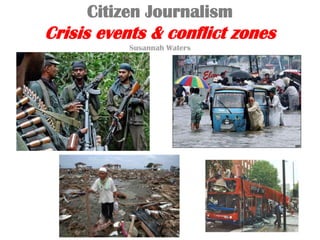
Citizen JournalismCrisis events & conflict zonesSusannah Waters
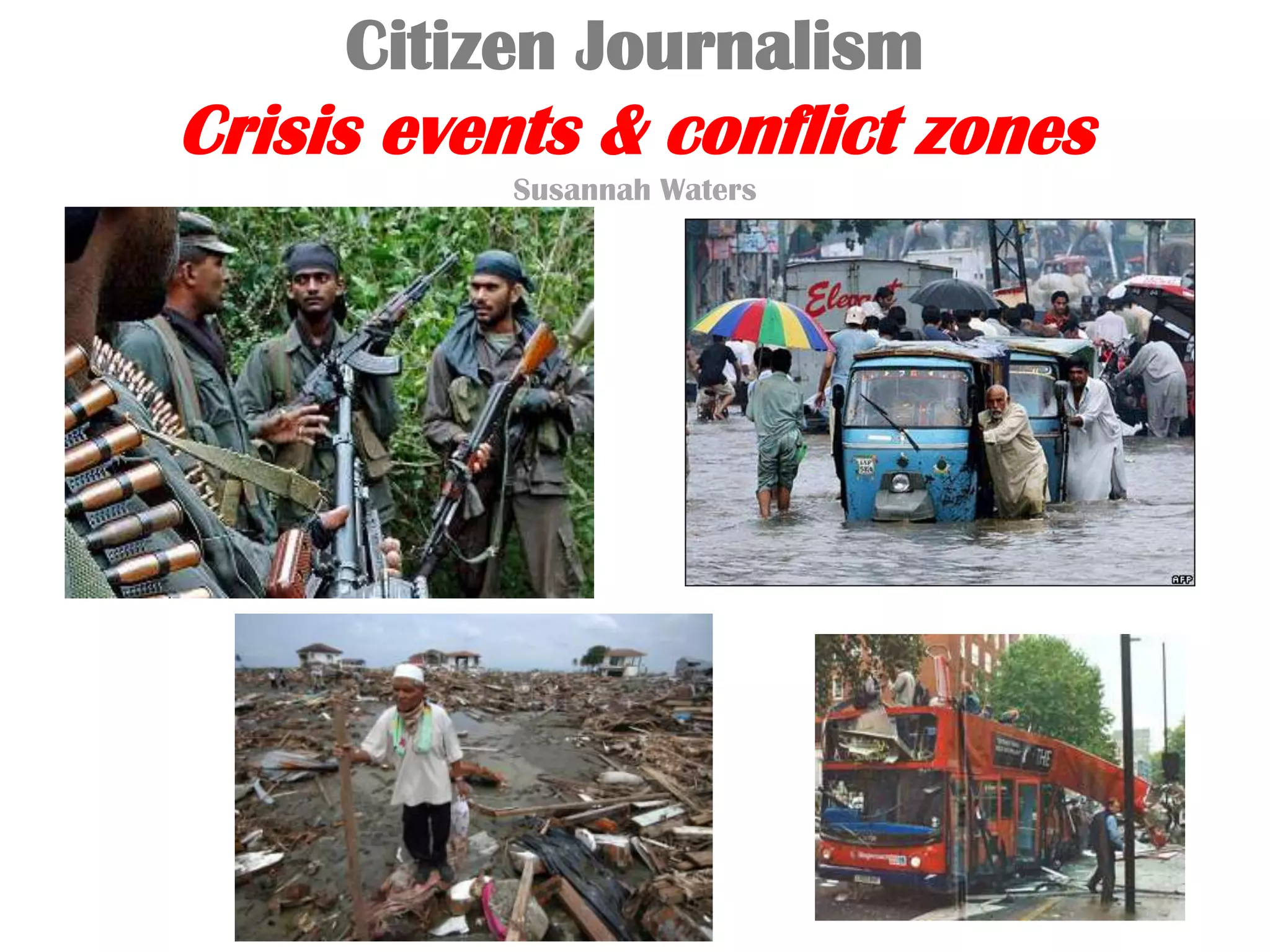
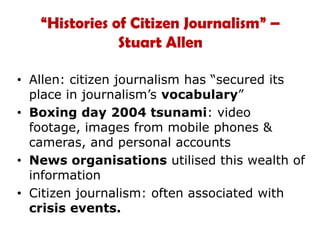
“Histories of Citizen Journalism” – Stuart AllenAllen: citizen journalism has “secured its place in journalism’s vocabulary”Boxing day 2004 tsunami: video footage, images from mobile phones & cameras, and personal accounts News organisations utilised this wealth of informationCitizen journalism: often associated with crisis events.
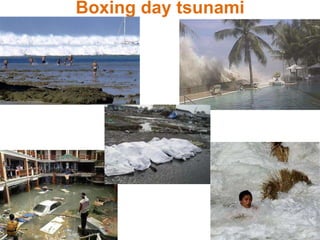
Boxing day tsunami
Boxing day tsunamiThe significancewas highlighted by media commentators & journalists just days following the event.They agreed it represented a “tipping point” in citizen journalism and that it was the first time that hundreds of regular people produced powerful coverage of a large news event. Channel 4 UK made a special “Tsunami: Caught on Camera”, all composed from citizen video footage, released in 2009.
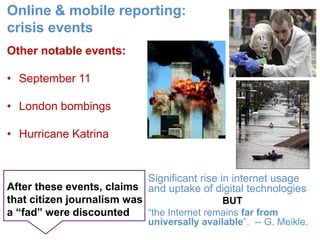
Online & mobile reporting: crisis events Significant rise in internet usage and uptake of digital technologiesBUT“the Internet remains far from universally available”.  -- G. Meikle.Other notable events:September 11London bombingsHurricane KatrinaAfter these events, claims that citizen journalism was a “fad” were discounted
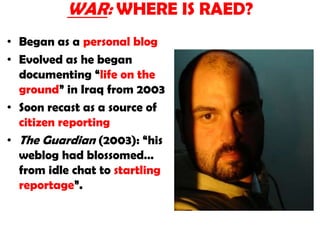
WAR: WHERE IS RAED? Began as a personal blog Evolved as he began documenting “life on the ground” in Iraq from 2003Soon recast as a source of citizen reportingThe Guardian (2003): “his weblog had blossomed… from idle chat to startling reportage”.
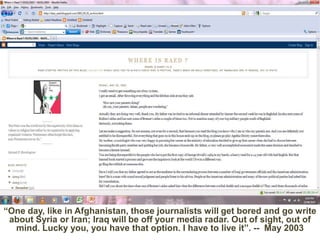
“One day, like in Afghanistan, those journalists will get bored and go write about Syria or Iran; Iraq will be off your media radar. Out of sight, out of mind. Lucky you, you have that option. I have to live it”. --  May 2003
Citizen journalism websitesProvide people a direct outlet to post reportage.Sri Lanka: “groundviews”.“to strengthen… marginalised yet vital voices… this site was the first attempt in Sri Lanka to create a means through which citizens in civil society could pen their own perspectives of lifein conflict zones, call attention to humanitarian emergencies, give information on security / ground conditions and present alternatives to the status quo”.http://www.groundviews.org/
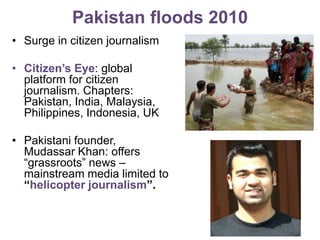
Pakistan floods 2010Surge in citizen journalismCitizen’s Eye: global platform for citizen journalism. Chapters: Pakistan, India, Malaysia, Philippines, Indonesia, UKPakistani founder, Mudassar Khan: offers “grassroots” news – mainstream media limited to “helicopter journalism”.
Tagline: Views & News directly from Citizens http://www.citizenseye.com/Citizen’s Eye was contacted by newspapers and a TV channel in Pakistan wanting to use contributors as sources.“…we as a citizen journalism body became the source of news for mainstream media” – Khan.
Pakistan floods: video footage“CITIZENTUBEis a feed of the latest breaking news videos on YouTube”.http://www.citizentube.com/http://www.youtube.com/watch?v=mI3murr9hhkhttp://www.youtube.com/watch?v=icOTusCqhL0
Advantages of citizen journalism“Embedded reporting” – CJs are on the scene: - Regular journalists often can’t access a crisis/conflict scene immediately or at all due to danger- On-the-ground perspective: rather than traditional reporting which reports at arm’s length- Personal, raw, revealing – compelling reportage- Easy access to other witnesses- Event reported “as it happens” – immediacy. E.g. London Bombings- Consequently, beat international media to story. Content often appropriated by mainstream media
Advantages cont...Reportage independent of large news organisations Free of government & military agenda and defies censorshipGraininess of footage e.g. London Bombings – more compelling, raw.
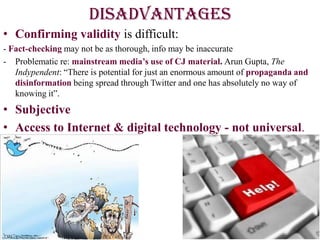
DisadvantagesConfirming validity is difficult: - Fact-checking may not be as thorough, info may be inaccurateProblematic re: mainstream media’s use of CJ material. Arun Gupta, The Indypendent: “There is potential for just an enormous amount of propaganda and disinformation being spread through Twitter and one has absolutely no way of knowing it”. SubjectiveAccess to Internet & digital technology - not universal.
Steve Outing:[New media expert] “And as with September 11, the tsunamis changed the media landscape. They thrust into the limelight an army of accidental journalists. Perhaps as a result, now is the time when citizen reporters will begin to join the ranks of journalism's working class in informing the public -- not as professional equals, yet in some ways as important in the grand scheme of news”.
BIBLIOGRAPHYAllan, S 2009, ‘Histories of Citizen Journalism’, in A Stuart and E Thorsen (eds), Citizen Journalism: Global Perspectives, New York: Peter Lang, pp 17-32.Channel 4 2009, Tsunami Caught on Camera, 29 December, http://www.channel4.com/programmes/tsunami-caught-on-camera/episode-guide/series-1/episode-1Gupta, A 2009, quoted in Al Jazeera report, http://www.youtube.com/watch?v=-VGzm7YNSJgInternet Usage Statistics 2010, Internet World Stats 30 June, http://www.internetworldstats.com/stats.htmMcAthy, R 2010, ‘Pakistan floods: mainstream media turns to citizen journalism’, Journalism.co.uk 5 August, http://www.journalism.co.uk/2/articles/539954.phpMcCarthy, R 2003, ‘Salam’s Story’, The Guardian 30 May, http://www.guardian.co.uk/world/2003/may/30/iraq.digitalmediaMeikle, G 2009, Interpreting News, New York: Palgrave Macmillan, pp. 170-195.Outing, S 2005, ‘Taking tsunami coverage into their own hands’, Poynter Online 6 January, http://www.poynter.org/content/content_view.asp?id=76520Srinivas, S 2005, ‘Online Citizen Journalists Respond to South Asian Disaster’, OJR 7 January, http://www.ojr.org/ojr/stories/050107srinivas/

Citizen journalism

  • 1.
    Citizen JournalismCrisis events& conflict zonesSusannah Waters
  • 2.
    “Histories of CitizenJournalism” – Stuart AllenAllen: citizen journalism has “secured its place in journalism’s vocabulary”Boxing day 2004 tsunami: video footage, images from mobile phones & cameras, and personal accounts News organisations utilised this wealth of informationCitizen journalism: often associated with crisis events.
  • 3.
  • 4.
    Boxing day tsunamiThesignificancewas highlighted by media commentators & journalists just days following the event.They agreed it represented a “tipping point” in citizen journalism and that it was the first time that hundreds of regular people produced powerful coverage of a large news event. Channel 4 UK made a special “Tsunami: Caught on Camera”, all composed from citizen video footage, released in 2009.
  • 5.
    Online & mobilereporting: crisis events Significant rise in internet usage and uptake of digital technologiesBUT“the Internet remains far from universally available”. -- G. Meikle.Other notable events:September 11London bombingsHurricane KatrinaAfter these events, claims that citizen journalism was a “fad” were discounted
  • 6.
    WAR: WHERE ISRAED? Began as a personal blog Evolved as he began documenting “life on the ground” in Iraq from 2003Soon recast as a source of citizen reportingThe Guardian (2003): “his weblog had blossomed… from idle chat to startling reportage”.
  • 7.
    “One day, likein Afghanistan, those journalists will get bored and go write about Syria or Iran; Iraq will be off your media radar. Out of sight, out of mind. Lucky you, you have that option. I have to live it”. -- May 2003
  • 8.
    Citizen journalism websitesProvidepeople a direct outlet to post reportage.Sri Lanka: “groundviews”.“to strengthen… marginalised yet vital voices… this site was the first attempt in Sri Lanka to create a means through which citizens in civil society could pen their own perspectives of lifein conflict zones, call attention to humanitarian emergencies, give information on security / ground conditions and present alternatives to the status quo”.http://www.groundviews.org/
  • 10.
    Pakistan floods 2010Surgein citizen journalismCitizen’s Eye: global platform for citizen journalism. Chapters: Pakistan, India, Malaysia, Philippines, Indonesia, UKPakistani founder, Mudassar Khan: offers “grassroots” news – mainstream media limited to “helicopter journalism”.
  • 11.
    Tagline: Views &News directly from Citizens http://www.citizenseye.com/Citizen’s Eye was contacted by newspapers and a TV channel in Pakistan wanting to use contributors as sources.“…we as a citizen journalism body became the source of news for mainstream media” – Khan.
  • 12.
    Pakistan floods: videofootage“CITIZENTUBEis a feed of the latest breaking news videos on YouTube”.http://www.citizentube.com/http://www.youtube.com/watch?v=mI3murr9hhkhttp://www.youtube.com/watch?v=icOTusCqhL0
  • 13.
    Advantages of citizenjournalism“Embedded reporting” – CJs are on the scene: - Regular journalists often can’t access a crisis/conflict scene immediately or at all due to danger- On-the-ground perspective: rather than traditional reporting which reports at arm’s length- Personal, raw, revealing – compelling reportage- Easy access to other witnesses- Event reported “as it happens” – immediacy. E.g. London Bombings- Consequently, beat international media to story. Content often appropriated by mainstream media
  • 14.
    Advantages cont...Reportage independentof large news organisations Free of government & military agenda and defies censorshipGraininess of footage e.g. London Bombings – more compelling, raw.
  • 15.
    DisadvantagesConfirming validity isdifficult: - Fact-checking may not be as thorough, info may be inaccurateProblematic re: mainstream media’s use of CJ material. Arun Gupta, The Indypendent: “There is potential for just an enormous amount of propaganda and disinformation being spread through Twitter and one has absolutely no way of knowing it”. SubjectiveAccess to Internet & digital technology - not universal.
  • 16.
    Steve Outing:[New mediaexpert] “And as with September 11, the tsunamis changed the media landscape. They thrust into the limelight an army of accidental journalists. Perhaps as a result, now is the time when citizen reporters will begin to join the ranks of journalism's working class in informing the public -- not as professional equals, yet in some ways as important in the grand scheme of news”.
  • 17.
    BIBLIOGRAPHYAllan, S 2009,‘Histories of Citizen Journalism’, in A Stuart and E Thorsen (eds), Citizen Journalism: Global Perspectives, New York: Peter Lang, pp 17-32.Channel 4 2009, Tsunami Caught on Camera, 29 December, http://www.channel4.com/programmes/tsunami-caught-on-camera/episode-guide/series-1/episode-1Gupta, A 2009, quoted in Al Jazeera report, http://www.youtube.com/watch?v=-VGzm7YNSJgInternet Usage Statistics 2010, Internet World Stats 30 June, http://www.internetworldstats.com/stats.htmMcAthy, R 2010, ‘Pakistan floods: mainstream media turns to citizen journalism’, Journalism.co.uk 5 August, http://www.journalism.co.uk/2/articles/539954.phpMcCarthy, R 2003, ‘Salam’s Story’, The Guardian 30 May, http://www.guardian.co.uk/world/2003/may/30/iraq.digitalmediaMeikle, G 2009, Interpreting News, New York: Palgrave Macmillan, pp. 170-195.Outing, S 2005, ‘Taking tsunami coverage into their own hands’, Poynter Online 6 January, http://www.poynter.org/content/content_view.asp?id=76520Srinivas, S 2005, ‘Online Citizen Journalists Respond to South Asian Disaster’, OJR 7 January, http://www.ojr.org/ojr/stories/050107srinivas/