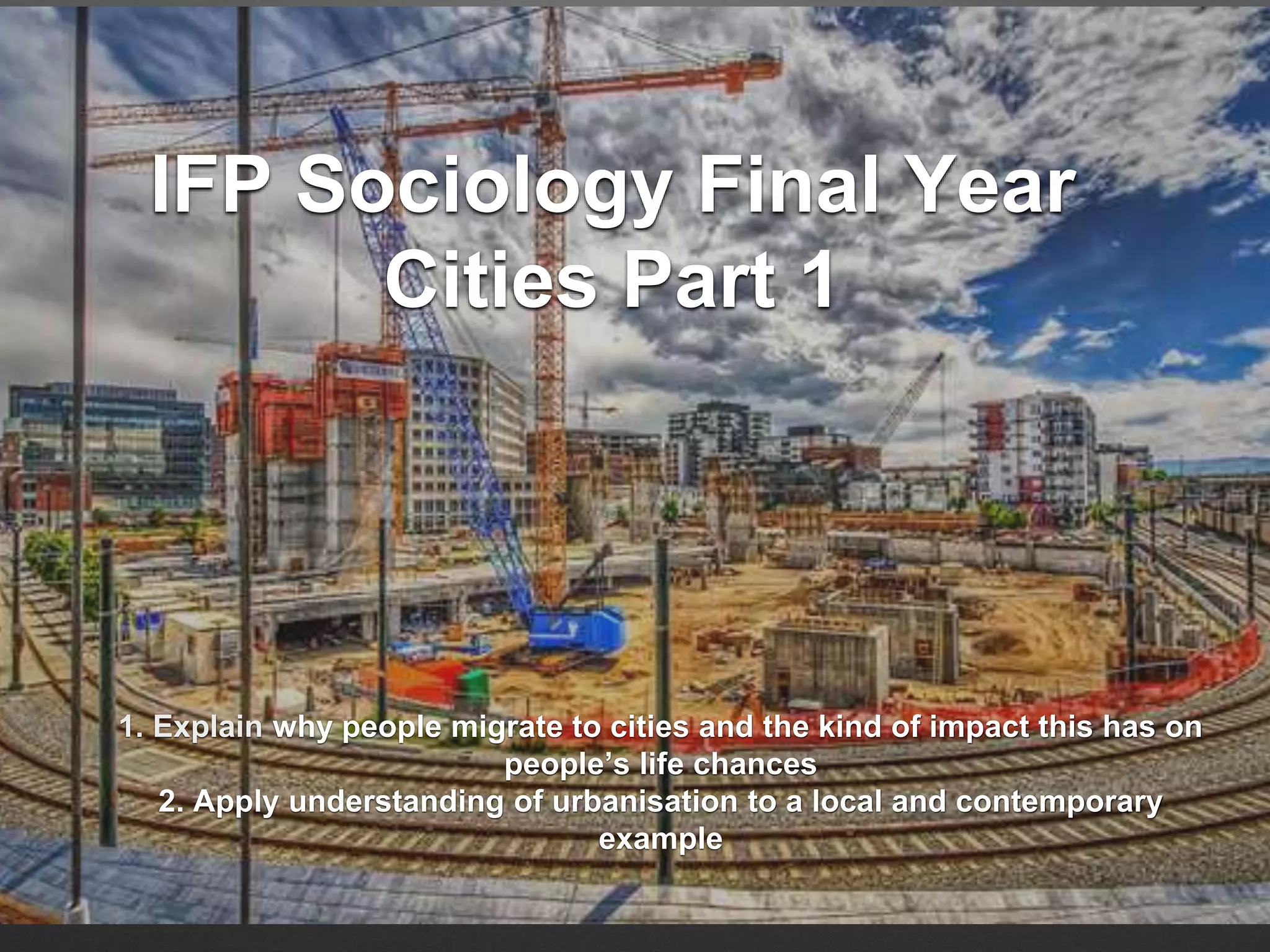
IFP Sociology Final Year
Cities Part 1
1. Explain why people migrate to cities and the kind of impact this has on
people’s life chances
2. Apply understanding of urbanisation to a local and contemporary
example
Urbanisation
Urbanisation
• 1. Divide the positive and negative features of urban life
Positive Negative
5 minutes
Urbanisation
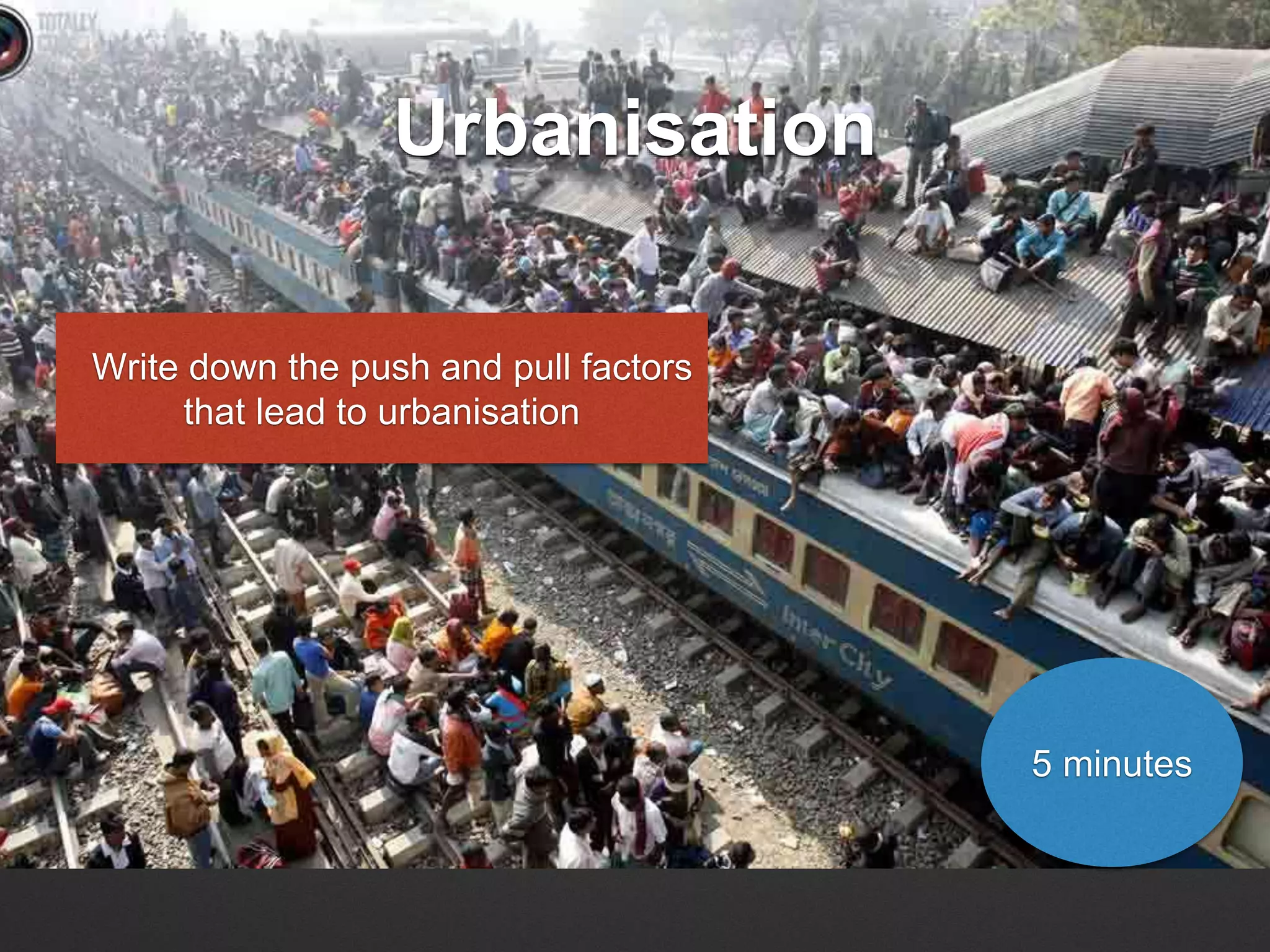
Write down the push and pull factors
that lead to urbanisation
5 minutes
Urbanisation in China1992
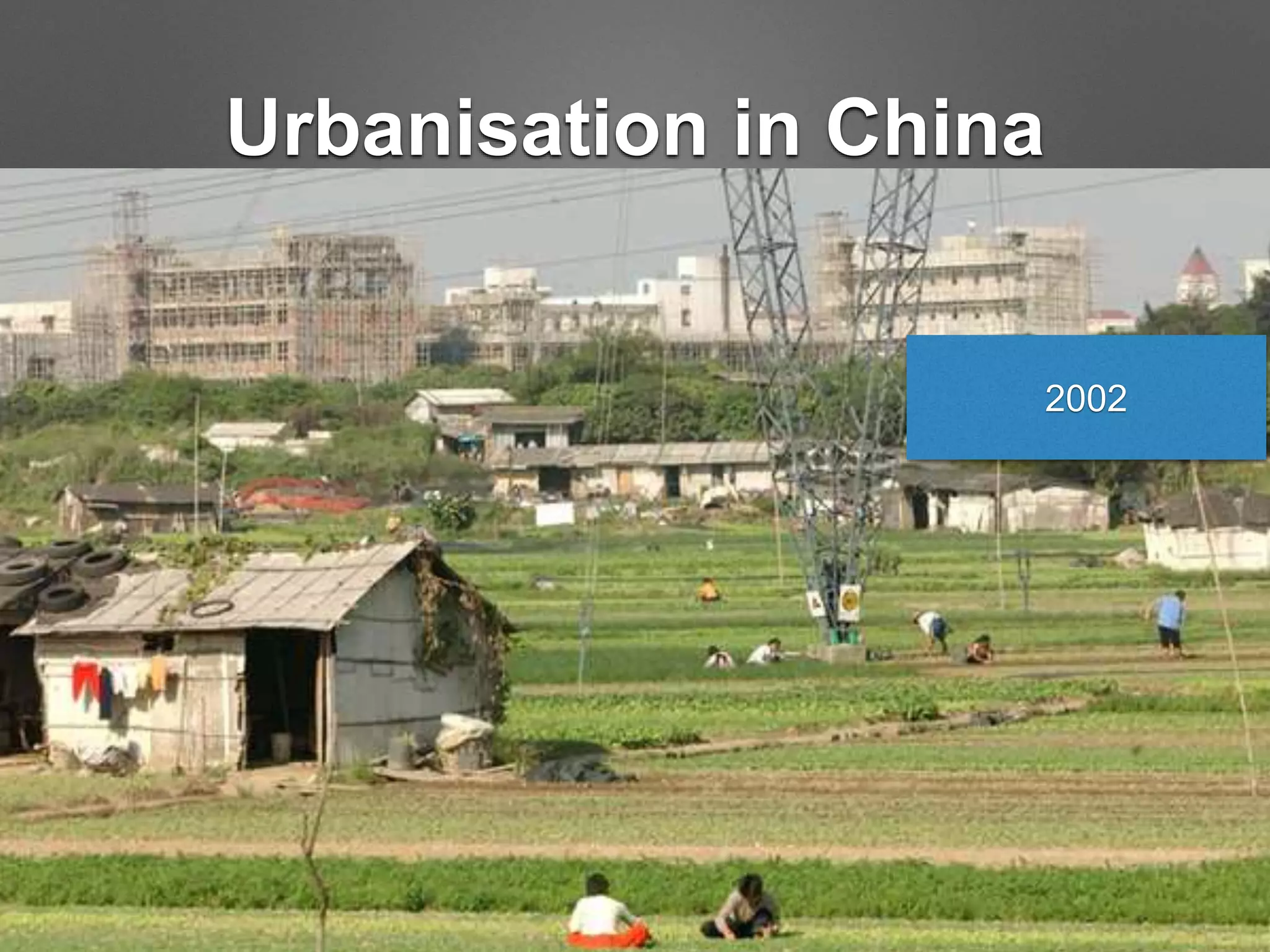
Urbanisation in China
2002
Urbanisation in China
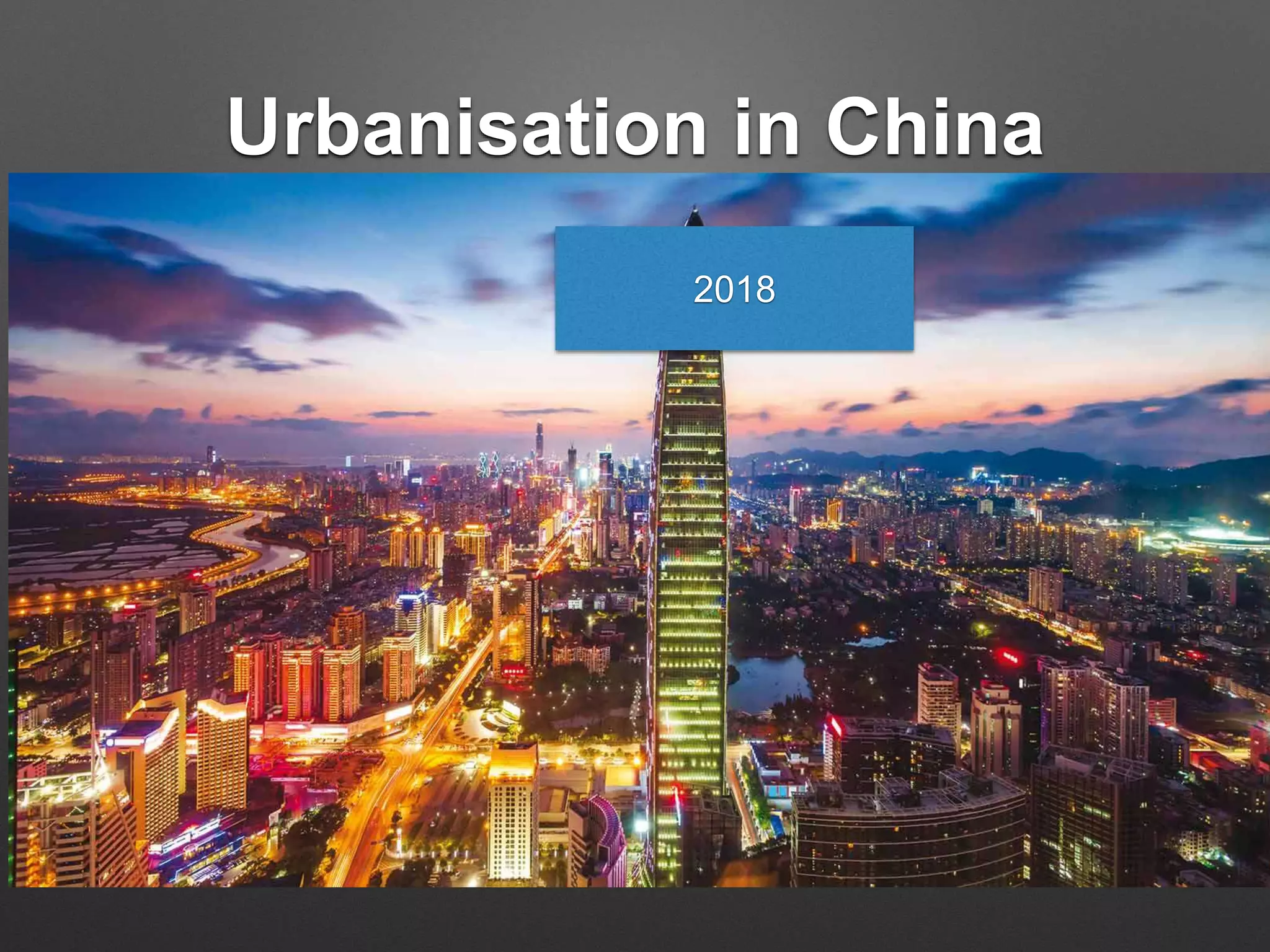
2018
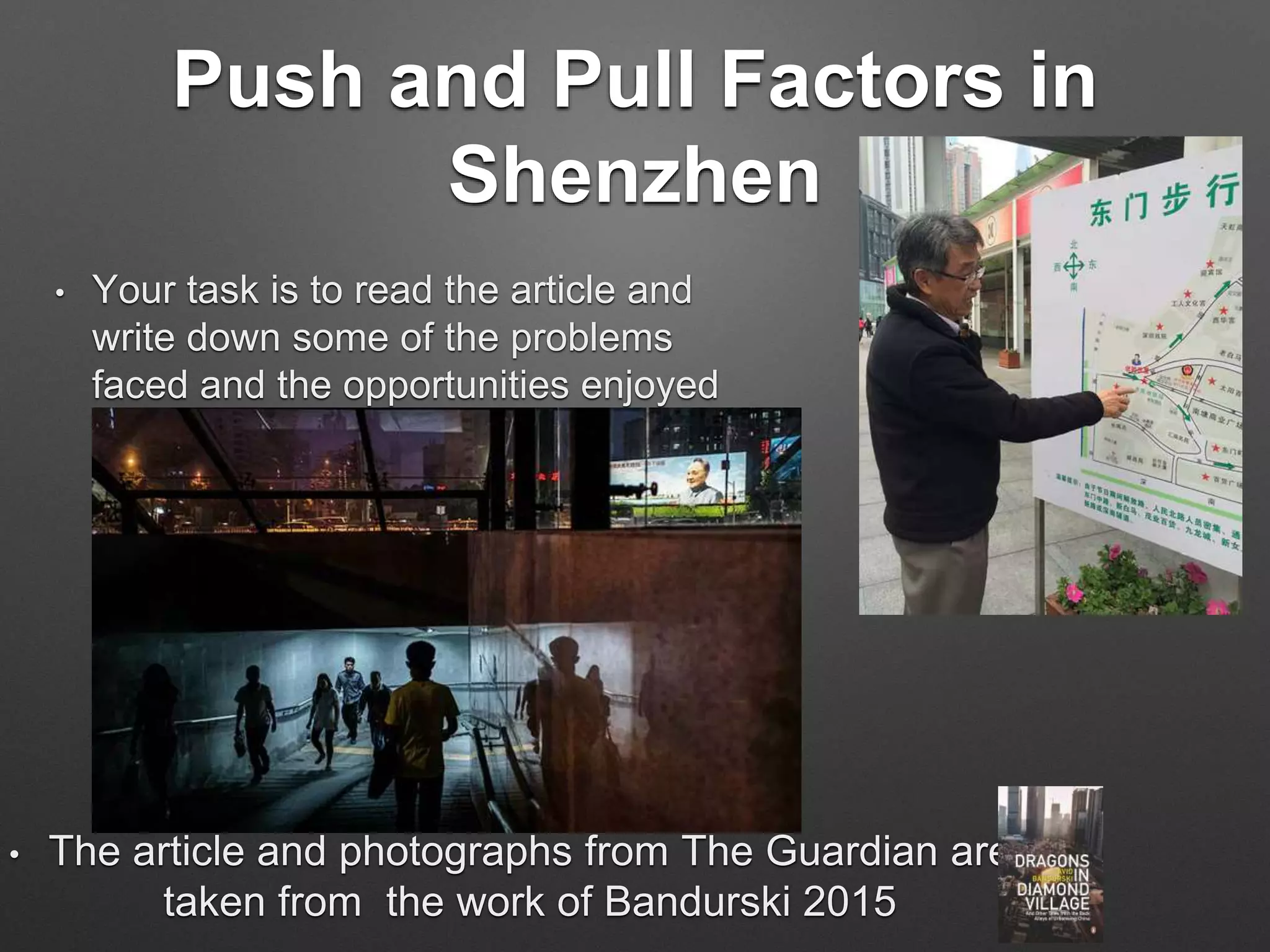
Push and Pull Factors in
Shenzhen
• Your task is to read the article and
write down some of the problems
faced and the opportunities enjoyed
by the residents of Shenzhen
• The article and photographs from The Guardian are
taken from the work of Bandurski 2015
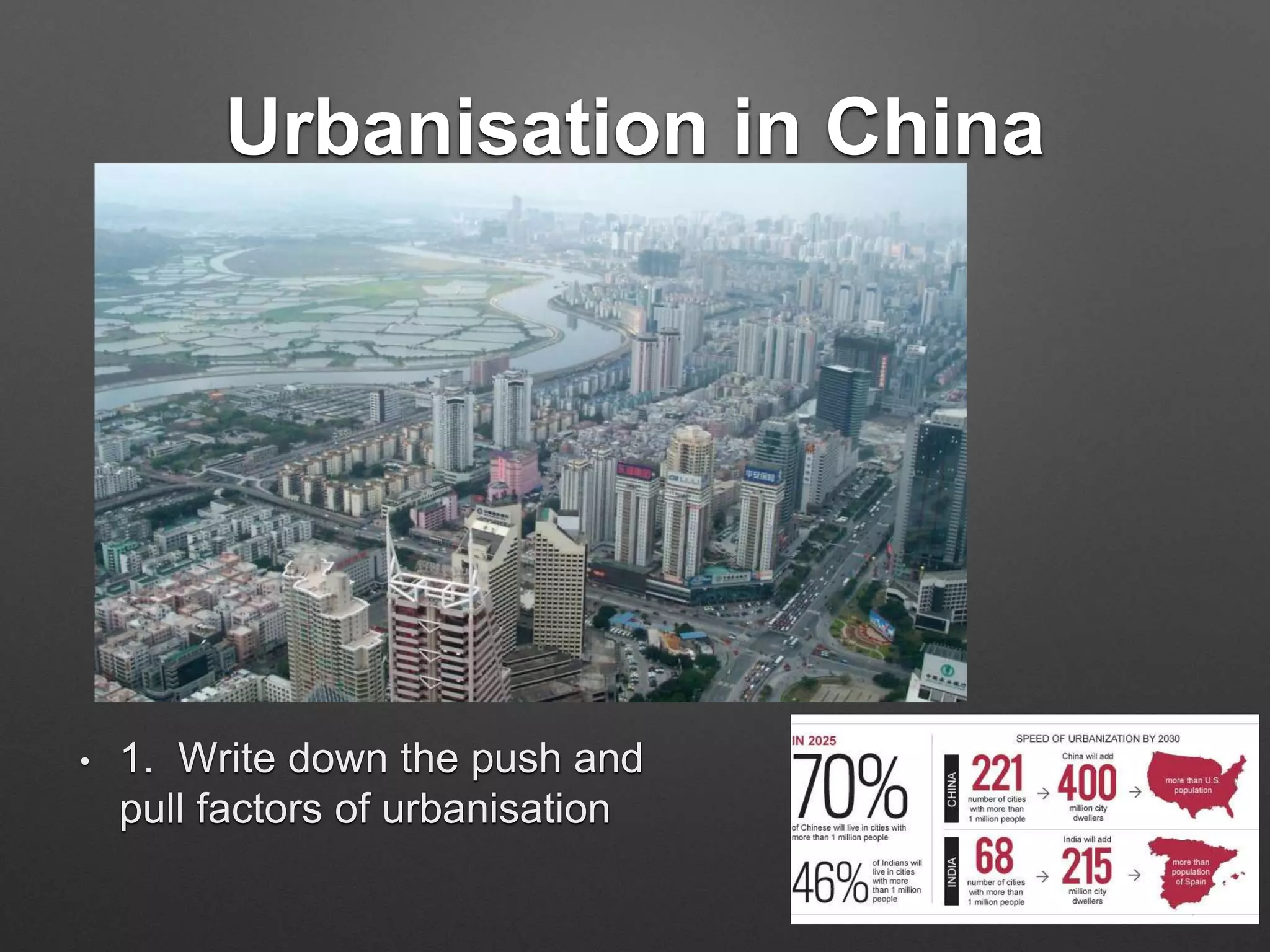
Urbanisation in China
• 1. Write down the push and
pull factors of urbanisation
The End
Cities IFP Final Year Part 2
. 1)
. 2) Discuss the similarities and differences in
urbanisation in developed and developing country contexts
. 3) Discuss impact of urbanisation from gender
perspective
Urbanisation in the Developed
World: Surburbanisation
• Suburbanisation is the word used to describe the growth
in relatively affluent quiet residential areas populated by
mostly white middle class families on the outskirts of
cities
Inner-City
Decay/Ghettoisation
the 1990s inner city areas came to be known as ghettos containing a range of
Gentrification
• The process of ghettoisation is being reversed as social housing
projects are being demolished and city centres experience
‘regeneration projects’
• The working classes that once inhabited these areas can no
longer afford to live in the areas they once grew up in
Gentrification
Urbanisation in the
Developing World
• Write down the 3 most interesting things you learned
from this video
Slums and the Rise of the
Informal Economy
What is the link between urbanisation and
the informal economy?
Urbanisation and Gender
• Does urbanisation have a
positive or negative impact for
women?
• Is this different for
developing/developed countries?

Cities IFP final year ppt

  • 1.
    IFP Sociology FinalYear Cities Part 1 1. Explain why people migrate to cities and the kind of impact this has on people’s life chances 2. Apply understanding of urbanisation to a local and contemporary example
  • 2.
  • 4.
    Urbanisation • 1. Dividethe positive and negative features of urban life Positive Negative 5 minutes
  • 5.
    Urbanisation Write down thepush and pull factors that lead to urbanisation 5 minutes
  • 6.
  • 7.
  • 8.
  • 9.
    Push and PullFactors in Shenzhen • Your task is to read the article and write down some of the problems faced and the opportunities enjoyed by the residents of Shenzhen • The article and photographs from The Guardian are taken from the work of Bandurski 2015
  • 10.
    Urbanisation in China •1. Write down the push and pull factors of urbanisation
  • 11.
  • 12.
    Cities IFP FinalYear Part 2 . 1) . 2) Discuss the similarities and differences in urbanisation in developed and developing country contexts . 3) Discuss impact of urbanisation from gender perspective
  • 14.
    Urbanisation in theDeveloped World: Surburbanisation • Suburbanisation is the word used to describe the growth in relatively affluent quiet residential areas populated by mostly white middle class families on the outskirts of cities
  • 15.
    Inner-City Decay/Ghettoisation the 1990s innercity areas came to be known as ghettos containing a range of
  • 16.
    Gentrification • The processof ghettoisation is being reversed as social housing projects are being demolished and city centres experience ‘regeneration projects’ • The working classes that once inhabited these areas can no longer afford to live in the areas they once grew up in
  • 17.
  • 19.
    Urbanisation in the DevelopingWorld • Write down the 3 most interesting things you learned from this video
  • 21.
    Slums and theRise of the Informal Economy
  • 22.
    What is thelink between urbanisation and the informal economy?
  • 23.
    Urbanisation and Gender •Does urbanisation have a positive or negative impact for women? • Is this different for developing/developed countries?