Chapter 14, Page 341
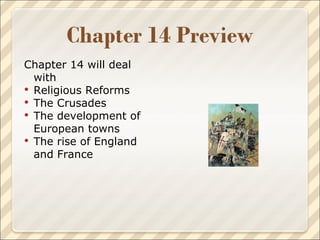
Chapter 14 will deal with  Religious Reforms The Crusades The development of European towns The rise of England and France
Anything that you will be responsible for will be underlined. A vocabulary term will also be in bold
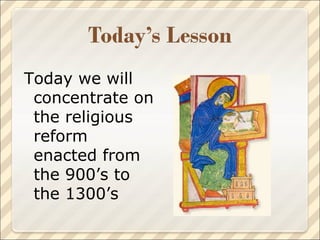
Today we will concentrate on the religious reform enacted from the 900’s to the 1300’s
simony curia canon law St. Francis of Assisi Gothic Cathedral
Between 500-1000, The Church faced the following problems Some priests could barely read their prayers. Some Popes were of questionable morals. Many bishops and abbots cared more about their positions as feudal lords than their duties as spiritual leaders.
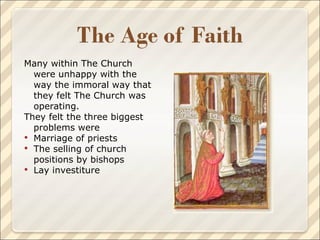
Many within The Church were unhappy with the way the immoral way that they felt The Church was operating. They felt the three biggest problems were Marriage of priests The selling of church positions by bishops Lay investiture
simony  is the practice by which bishops sell positions within the church. It is pronounced (SY-muh-nee)
Why would these things be seen as problems for The Church?
Monks at a monastery in Cluny, France begin to interpret the Benedictine rules more strictly. Within 100 years 300 monasteries throughout Europe would follow the rules of Cluny.
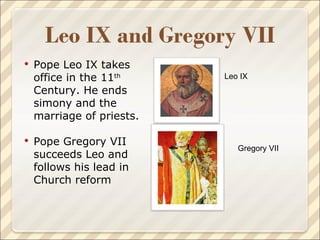
Pope Leo IX takes office in the 11 th  Century. He ends simony and the marriage of priests. Pope Gregory VII succeeds Leo and follows his lead in Church reform Leo IX Gregory VII
What Arabic numeral is represented by the Roman numeral IX? What Arabic numeral is represented by the Roman numeral VII? What years did the 11 th  Century cover?  How many years ago was the 11 th  Century?  How many centuries ago was the 11 th  Century?
In the years following Leo and Gregory, The Church was reorganized in the same structure as a kingdom. The Pope remained the head of the church. The Pope’s group of advisors became known as The Curia.
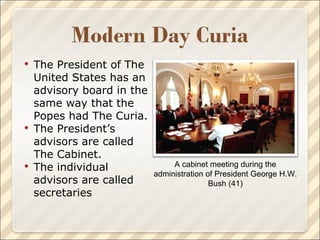
The President of The United States has an advisory board in the same way that the Popes had The Curia.  The President’s advisors are called The Cabinet. The individual advisors are called secretaries A cabinet meeting during the administration of President George H.W. Bush (41)
The Curia also acted as a court. The Curia also developed canon law (the law of the church). The canon law was on subjects such as marriage, divorce and inheritance. The Pope sent diplomats throughout Europe to deal with Bishops and Kings, extending the power of The Pope.
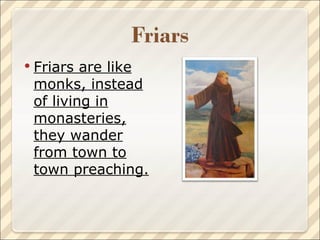
Friars are like monks, instead of living in monasteries, they wander from town to town preaching.
Dominicans Dominicans were an order of friars founded by the Spanish priest, Dominic. Dominic emphasized learning, thus many Dominicans were scholars Franciscans St. Francis of Assisi, an Italian friar founded the Franciscan movement. Francis placed less emphasis on importance on scholarship, he treated all creatures  as if they were his spiritual brothers and sisters
 
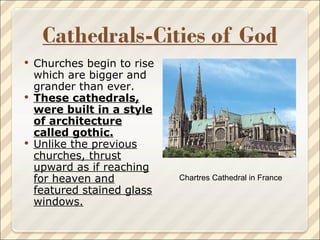
Churches begin to rise which are bigger and grander than ever. These cathedrals, were built in a style of architecture called gothic. Unlike the previous churches, thrust upward as if reaching for heaven and featured stained glass windows. Chartres Cathedral in France
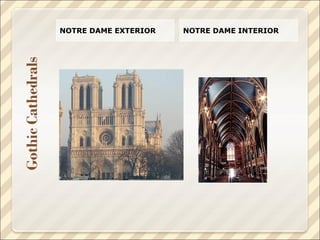
NOTRE DAME EXTERIOR NOTRE DAME INTERIOR
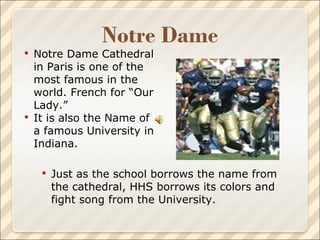
Notre Dame Cathedral in Paris is one of the most famous in the world. French for “Our Lady.” It is also the Name of a famous University in Indiana. Just as the school borrows the name from the cathedral, HHS borrows its colors and fight song from the University.
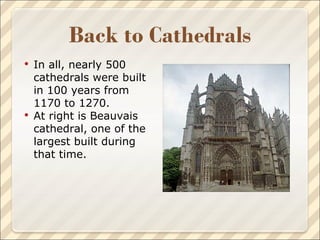
In all, nearly 500 cathedrals were built in 100 years from 1170 to 1270. At right is Beauvais cathedral, one of the largest built during that time.
Where may have you seen a cathedral?
Read Pages 343-346

Church Reform

  • 1.
  • 2.
    Chapter 14 willdeal with Religious Reforms The Crusades The development of European towns The rise of England and France
  • 3.
    Anything that youwill be responsible for will be underlined. A vocabulary term will also be in bold
  • 4.
    Today we willconcentrate on the religious reform enacted from the 900’s to the 1300’s
  • 5.
    simony curia canonlaw St. Francis of Assisi Gothic Cathedral
  • 6.
    Between 500-1000, TheChurch faced the following problems Some priests could barely read their prayers. Some Popes were of questionable morals. Many bishops and abbots cared more about their positions as feudal lords than their duties as spiritual leaders.
  • 7.
    Many within TheChurch were unhappy with the way the immoral way that they felt The Church was operating. They felt the three biggest problems were Marriage of priests The selling of church positions by bishops Lay investiture
  • 8.
    simony isthe practice by which bishops sell positions within the church. It is pronounced (SY-muh-nee)
  • 9.
    Why would thesethings be seen as problems for The Church?
  • 10.
    Monks at amonastery in Cluny, France begin to interpret the Benedictine rules more strictly. Within 100 years 300 monasteries throughout Europe would follow the rules of Cluny.
  • 11.
    Pope Leo IXtakes office in the 11 th Century. He ends simony and the marriage of priests. Pope Gregory VII succeeds Leo and follows his lead in Church reform Leo IX Gregory VII
  • 12.
    What Arabic numeralis represented by the Roman numeral IX? What Arabic numeral is represented by the Roman numeral VII? What years did the 11 th Century cover? How many years ago was the 11 th Century? How many centuries ago was the 11 th Century?
  • 13.
    In the yearsfollowing Leo and Gregory, The Church was reorganized in the same structure as a kingdom. The Pope remained the head of the church. The Pope’s group of advisors became known as The Curia.
  • 14.
    The President ofThe United States has an advisory board in the same way that the Popes had The Curia. The President’s advisors are called The Cabinet. The individual advisors are called secretaries A cabinet meeting during the administration of President George H.W. Bush (41)
  • 15.
    The Curia alsoacted as a court. The Curia also developed canon law (the law of the church). The canon law was on subjects such as marriage, divorce and inheritance. The Pope sent diplomats throughout Europe to deal with Bishops and Kings, extending the power of The Pope.
  • 16.
    Friars are likemonks, instead of living in monasteries, they wander from town to town preaching.
  • 17.
    Dominicans Dominicans werean order of friars founded by the Spanish priest, Dominic. Dominic emphasized learning, thus many Dominicans were scholars Franciscans St. Francis of Assisi, an Italian friar founded the Franciscan movement. Francis placed less emphasis on importance on scholarship, he treated all creatures as if they were his spiritual brothers and sisters
  • 18.
  • 19.
    Churches begin torise which are bigger and grander than ever. These cathedrals, were built in a style of architecture called gothic. Unlike the previous churches, thrust upward as if reaching for heaven and featured stained glass windows. Chartres Cathedral in France
  • 20.
    NOTRE DAME EXTERIORNOTRE DAME INTERIOR
  • 21.
    Notre Dame Cathedralin Paris is one of the most famous in the world. French for “Our Lady.” It is also the Name of a famous University in Indiana. Just as the school borrows the name from the cathedral, HHS borrows its colors and fight song from the University.
  • 22.
    In all, nearly500 cathedrals were built in 100 years from 1170 to 1270. At right is Beauvais cathedral, one of the largest built during that time.
  • 23.
    Where may haveyou seen a cathedral?
  • 24.