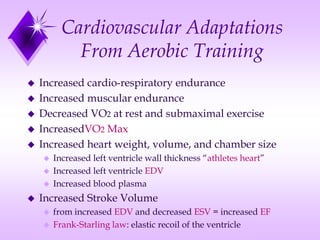
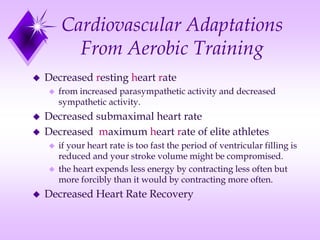
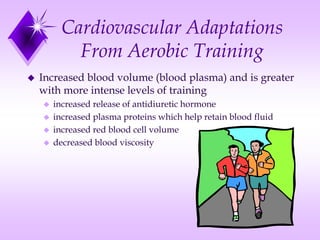
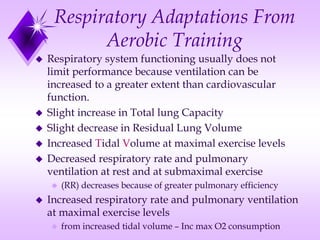
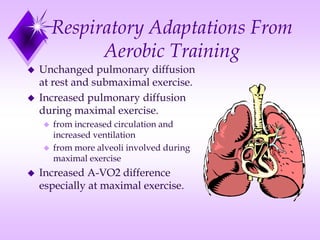
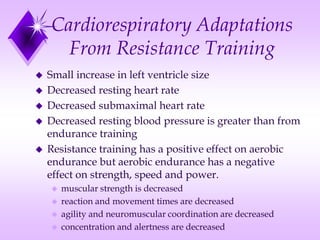
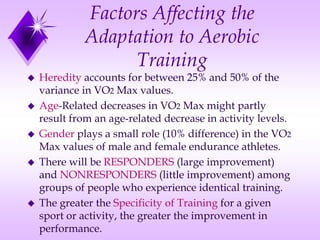
Cardiorespiratory adaptations to aerobic training include increased cardiac output and oxygen delivery through enlarged chambers, thicker walls, and higher stroke volume. Respiratory adaptations include higher tidal volumes and pulmonary diffusion. Metabolic adaptations include increased lactate threshold and utilization of fatty acids through enhanced oxidative enzymes and mitochondria. Resistance training provides some cardiovascular benefits like lower resting heart rate and blood pressure while negatively impacting aerobic endurance abilities. Factors like heredity, age, gender, and training specificity influence the degree of adaptation.




![Biomechanics_of_Ligament_and_Tendon[1].pptx](https://cdn.slidesharecdn.com/ss_thumbnails/biomechanicsofligamentandtendon1-250703153443-b997b280-thumbnail.jpg?width=640&height=640&fit=bounds)


