Chocolatology
Chocolates
Bonbons, Chocolate Pralines
and Chocolate Truffles
Bonbons, Truffles and Chocolate
Pralines
 Bonbon or bon-bons refers to any of
several types of sweets, especially small
candies enrobed in chocolate.
 Chocolate Truffle is a type of chocolate
confectionery, traditionally made with a
chocolate ganache center coated in
chocolate, icing sugar, cocoa powder
usually in a spherical, conical, or curved
shape.
 Chocolate Pralines are a molded
How to make –First Temper
Chocolate
 When we receive chocolate from the manufacture bit
is in temper. The cocoa butter crystals are proper
alignment. As soon as we melt the chocolate it
comes out of temper. We will need to put back in
temper is we want those same physical
characteristics we started with. This would be if we
are making candy, using a mold or a showpiece
 If you are baking, cooking or making mousse you do
not temper chocolate.
 Chocolate that is melted and not re-tempered will be
soft, streaky in appearance and gritty in mouth-feel.
This can always be melted down again and tempered
or used for something else, such as baking.
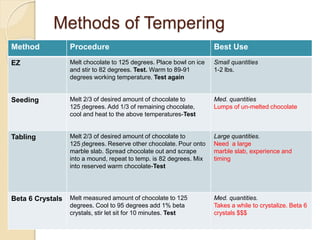
Methods of Tempering
Method Procedure Best Use
EZ Melt chocolate to 125 degrees. Place bowl on ice
and stir to 82 degrees. Test. Warm to 89-91
degrees working temperature. Test again
Small quantities
1-2 lbs.
Seeding Melt 2/3 of desired amount of chocolate to
125 ̥degrees. Add 1/3 of remaining chocolate,
cool and heat to the above temperatures-Test
Med. quantities
Lumps of un-melted chocolate
Tabling Melt 2/3 of desired amount of chocolate to
125 ̥degrees. Reserve other chocolate. Pour onto
marble slab. Spread chocolate out and scrape
into a mound, repeat to temp. is 82 degrees. Mix
into reserved warm chocolate-Test
Large quantities.
Need a large
marble slab, experience and
timing
Beta 6 Crystals Melt measured amount of chocolate to 125
degrees. Cool to 95 degrees add 1% beta
crystals, stir let sit for 10 minutes. Test
Med. quantities.
Takes a while to crystalize. Beta 6
crystals $$$
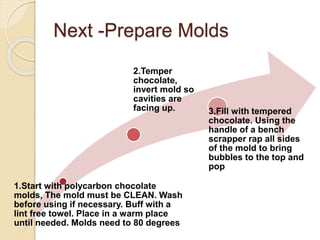
Next -Prepare Molds
1.Start with polycarbon chocolate
molds, The mold must be CLEAN. Wash
before using if necessary. Buff with a
lint free towel. Place in a warm place
until needed. Molds need to 80 degrees
2.Temper
chocolate,
invert mold so
cavities are
facing up. 3.Fill with tempered
chocolate. Using the
handle of a bench
scrapper rap all sides
of the mold to bring
bubbles to the top and
pop
Prepping Molds
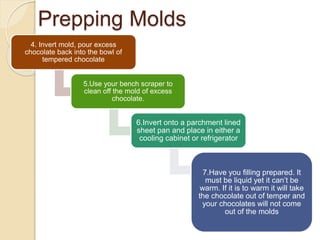
4. Invert mold, pour excess
chocolate back into the bowl of
tempered chocolate
5.Use your bench scraper to
clean off the mold of excess
chocolate.
6.Invert onto a parchment lined
sheet pan and place in either a
cooling cabinet or refrigerator
7.Have you filling prepared. It
must be liquid yet it can’t be
warm. If it is to warm it will take
the chocolate out of temper and
your chocolates will not come
out of the molds
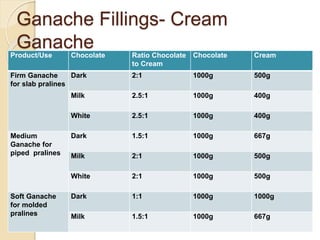
Ganache Fillings- Cream
GanacheProduct/Use Chocolate Ratio Chocolate
to Cream
Chocolate Cream
Firm Ganache
for slab pralines
Dark 2:1 1000g 500g
Milk 2.5:1 1000g 400g
White 2.5:1 1000g 400g
Medium
Ganache for
piped pralines
Dark 1.5:1 1000g 667g
Milk 2:1 1000g 500g
White 2:1 1000g 500g
Soft Ganache
for molded
pralines
Dark 1:1 1000g 1000g
Milk 1.5:1 1000g 667g
Butter Ganache
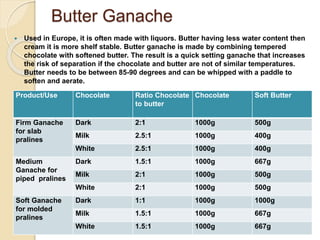
 Used in Europe, it is often made with liquors. Butter having less water content then
cream it is more shelf stable. Butter ganache is made by combining tempered
chocolate with softened butter. The result is a quick setting ganache that increases
the risk of separation if the chocolate and butter are not of similar temperatures.
Butter needs to be between 85-90 degrees and can be whipped with a paddle to
soften and aerate.
Product/Use Chocolate Ratio Chocolate
to butter
Chocolate Soft Butter
Firm Ganache
for slab
pralines
Dark 2:1 1000g 500g
Milk 2.5:1 1000g 400g
White 2.5:1 1000g 400g
Medium
Ganache for
piped pralines
Dark 1.5:1 1000g 667g
Milk 2:1 1000g 500g
White 2:1 1000g 500g
Soft Ganache
for molded
pralines
Dark 1:1 1000g 1000g
Milk 1.5:1 1000g 667g
White 1.5:1 1000g 667g
Fruit and Vegetable Puree Ganaches
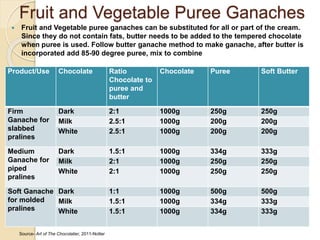
 Fruit and Vegetable puree ganaches can be substituted for all or part of the cream.
Since they do not contain fats, butter needs to be added to the tempered chocolate
when puree is used. Follow butter ganache method to make ganache, after butter is
incorporated add 85-90 degree puree, mix to combine
Product/Use Chocolate Ratio
Chocolate to
puree and
butter
Chocolate Puree Soft Butter
Firm
Ganache for
slabbed
pralines
Dark 2:1 1000g 250g 250g
Milk 2.5:1 1000g 200g 200g
White 2.5:1 1000g 200g 200g
Medium
Ganache for
piped
pralines
Dark 1.5:1 1000g 334g 333g
Milk 2:1 1000g 250g 250g
White 2:1 1000g 250g 250g
Soft Ganache
for molded
pralines
Dark 1:1 1000g 500g 500g
Milk 1.5:1 1000g 334g 333g
White 1.5:1 1000g 334g 333g
Source- Art of The Chocolatier, 2011-Notter
Filling Molds
8.Fill 7/8 full, allow filling to “crust
over” The ideal ratio for pralines
and bonbons is 60:40, filling to
chocolate
9.Spread a thin layer of tempered
chocolate over the top of the mold to
seal the pralines
10. Scrape off excess, and return to
cooling cabinet or refrigerator to set
thoroughly
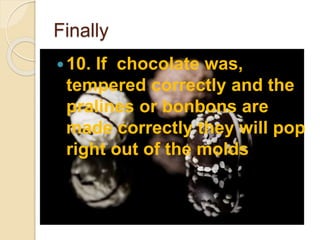
Finally
10. If chocolate was,
tempered correctly and the
pralines or bonbons are
made correctly they will pop
right out of the molds
Enrobing with Chocolate
1. Temper Chocolate, place
into a bowl
2. Stretch a piece of floral wire
across the top of the bowl and
tape to the outside of the bowl .
3. Take item to be enrobed, rolled chocolate truffle
or piece of slab ganache and place ¾ the way on a
dipping fork. Place into tempered chocolate, gently
cover with tempered chocolate
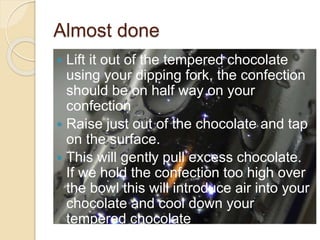
Almost done
 Lift it out of the tempered chocolate
using your dipping fork, the confection
should be on half way on your
confection
 Raise just out of the chocolate and tap
on the surface.
 This will gently pull excess chocolate.
If we hold the confection too high over
the bowl this will introduce air into your
chocolate and cool down your
tempered chocolate
Stick the landing
 Scrape the chocolate confection
bottom across the wire
 Place on a silpat mat to set. The groves
in the mat will allow the excess
chocolate not to pool at the base of the
chocolate confection creating footing
and will leave a neat professional
looking confection.

Chocolates

  • 1.
  • 2.
    Bonbons, Truffles andChocolate Pralines  Bonbon or bon-bons refers to any of several types of sweets, especially small candies enrobed in chocolate.  Chocolate Truffle is a type of chocolate confectionery, traditionally made with a chocolate ganache center coated in chocolate, icing sugar, cocoa powder usually in a spherical, conical, or curved shape.  Chocolate Pralines are a molded
  • 3.
    How to make–First Temper Chocolate  When we receive chocolate from the manufacture bit is in temper. The cocoa butter crystals are proper alignment. As soon as we melt the chocolate it comes out of temper. We will need to put back in temper is we want those same physical characteristics we started with. This would be if we are making candy, using a mold or a showpiece  If you are baking, cooking or making mousse you do not temper chocolate.  Chocolate that is melted and not re-tempered will be soft, streaky in appearance and gritty in mouth-feel. This can always be melted down again and tempered or used for something else, such as baking.
  • 4.
    Methods of Tempering MethodProcedure Best Use EZ Melt chocolate to 125 degrees. Place bowl on ice and stir to 82 degrees. Test. Warm to 89-91 degrees working temperature. Test again Small quantities 1-2 lbs. Seeding Melt 2/3 of desired amount of chocolate to 125 ̥degrees. Add 1/3 of remaining chocolate, cool and heat to the above temperatures-Test Med. quantities Lumps of un-melted chocolate Tabling Melt 2/3 of desired amount of chocolate to 125 ̥degrees. Reserve other chocolate. Pour onto marble slab. Spread chocolate out and scrape into a mound, repeat to temp. is 82 degrees. Mix into reserved warm chocolate-Test Large quantities. Need a large marble slab, experience and timing Beta 6 Crystals Melt measured amount of chocolate to 125 degrees. Cool to 95 degrees add 1% beta crystals, stir let sit for 10 minutes. Test Med. quantities. Takes a while to crystalize. Beta 6 crystals $$$
  • 5.
    Next -Prepare Molds 1.Startwith polycarbon chocolate molds, The mold must be CLEAN. Wash before using if necessary. Buff with a lint free towel. Place in a warm place until needed. Molds need to 80 degrees 2.Temper chocolate, invert mold so cavities are facing up. 3.Fill with tempered chocolate. Using the handle of a bench scrapper rap all sides of the mold to bring bubbles to the top and pop
  • 6.
    Prepping Molds 4. Invertmold, pour excess chocolate back into the bowl of tempered chocolate 5.Use your bench scraper to clean off the mold of excess chocolate. 6.Invert onto a parchment lined sheet pan and place in either a cooling cabinet or refrigerator 7.Have you filling prepared. It must be liquid yet it can’t be warm. If it is to warm it will take the chocolate out of temper and your chocolates will not come out of the molds
  • 7.
    Ganache Fillings- Cream GanacheProduct/UseChocolate Ratio Chocolate to Cream Chocolate Cream Firm Ganache for slab pralines Dark 2:1 1000g 500g Milk 2.5:1 1000g 400g White 2.5:1 1000g 400g Medium Ganache for piped pralines Dark 1.5:1 1000g 667g Milk 2:1 1000g 500g White 2:1 1000g 500g Soft Ganache for molded pralines Dark 1:1 1000g 1000g Milk 1.5:1 1000g 667g
  • 8.
    Butter Ganache  Usedin Europe, it is often made with liquors. Butter having less water content then cream it is more shelf stable. Butter ganache is made by combining tempered chocolate with softened butter. The result is a quick setting ganache that increases the risk of separation if the chocolate and butter are not of similar temperatures. Butter needs to be between 85-90 degrees and can be whipped with a paddle to soften and aerate. Product/Use Chocolate Ratio Chocolate to butter Chocolate Soft Butter Firm Ganache for slab pralines Dark 2:1 1000g 500g Milk 2.5:1 1000g 400g White 2.5:1 1000g 400g Medium Ganache for piped pralines Dark 1.5:1 1000g 667g Milk 2:1 1000g 500g White 2:1 1000g 500g Soft Ganache for molded pralines Dark 1:1 1000g 1000g Milk 1.5:1 1000g 667g White 1.5:1 1000g 667g
  • 9.
    Fruit and VegetablePuree Ganaches  Fruit and Vegetable puree ganaches can be substituted for all or part of the cream. Since they do not contain fats, butter needs to be added to the tempered chocolate when puree is used. Follow butter ganache method to make ganache, after butter is incorporated add 85-90 degree puree, mix to combine Product/Use Chocolate Ratio Chocolate to puree and butter Chocolate Puree Soft Butter Firm Ganache for slabbed pralines Dark 2:1 1000g 250g 250g Milk 2.5:1 1000g 200g 200g White 2.5:1 1000g 200g 200g Medium Ganache for piped pralines Dark 1.5:1 1000g 334g 333g Milk 2:1 1000g 250g 250g White 2:1 1000g 250g 250g Soft Ganache for molded pralines Dark 1:1 1000g 500g 500g Milk 1.5:1 1000g 334g 333g White 1.5:1 1000g 334g 333g Source- Art of The Chocolatier, 2011-Notter
  • 10.
    Filling Molds 8.Fill 7/8full, allow filling to “crust over” The ideal ratio for pralines and bonbons is 60:40, filling to chocolate 9.Spread a thin layer of tempered chocolate over the top of the mold to seal the pralines 10. Scrape off excess, and return to cooling cabinet or refrigerator to set thoroughly
  • 11.
    Finally 10. If chocolatewas, tempered correctly and the pralines or bonbons are made correctly they will pop right out of the molds
  • 12.
    Enrobing with Chocolate 1.Temper Chocolate, place into a bowl 2. Stretch a piece of floral wire across the top of the bowl and tape to the outside of the bowl . 3. Take item to be enrobed, rolled chocolate truffle or piece of slab ganache and place ¾ the way on a dipping fork. Place into tempered chocolate, gently cover with tempered chocolate
  • 13.
    Almost done  Liftit out of the tempered chocolate using your dipping fork, the confection should be on half way on your confection  Raise just out of the chocolate and tap on the surface.  This will gently pull excess chocolate. If we hold the confection too high over the bowl this will introduce air into your chocolate and cool down your tempered chocolate
  • 14.
    Stick the landing Scrape the chocolate confection bottom across the wire  Place on a silpat mat to set. The groves in the mat will allow the excess chocolate not to pool at the base of the chocolate confection creating footing and will leave a neat professional looking confection.