28-Dec-2015 Chimpanzee 1
28-Dec-2015 Chimpanzee 2
CHIMPANZEE
Classification of Chimpanzee
Kingdom: Animalia
Phylum: Chordata
Class: Mammalia
Order: Primates
Family: Pongidae
Subfamily: Homininae
Genus: Pan
Species: P. troglodytes
28-Dec-2015Chimpanzee 3
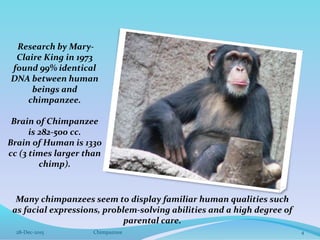
Research by Mary-
Claire King in 1973
found 99% identical
DNA between human
beings and
chimpanzee.
Brain of Chimpanzee
is 282-500 cc.
Brain of Human is 1330
cc (3 times larger than
chimp).
Many chimpanzees seem to display familiar human qualities such
as facial expressions, problem-solving abilities and a high degree of
parental care.
28-Dec-2015 Chimpanzee 4
HABITS
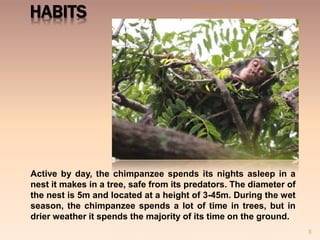
Active by day, the chimpanzee spends its nights asleep in a
nest it makes in a tree, safe from its predators. The diameter of
the nest is 5m and located at a height of 3-45m. During the wet
season, the chimpanzee spends a lot of time in trees, but in
drier weather it spends the majority of its time on the ground.
28-Dec-2015Chimpanzee
5
Special Adaptation
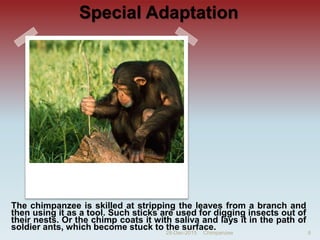
The chimpanzee is skilled at stripping the leaves from a branch and
then using it as a tool. Such sticks are used for digging insects out of
their nests. Or the chimp coats it with saliva and lays it in the path of
soldier ants, which become stuck to the surface.
28-Dec-2015 Chimpanzee 6
Food & Feeding
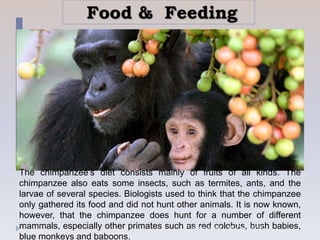
The chimpanzee’s diet consists mainly of fruits of all kinds. The
chimpanzee also eats some insects, such as termites, ants, and the
larvae of several species. Biologists used to think that the chimpanzee
only gathered its food and did not hunt other animals. It is now known,
however, that the chimpanzee does hunt for a number of different
mammals, especially other primates such as red colobus, bush babies,
blue monkeys and baboons.
28-Dec-2015Chimpanzee7
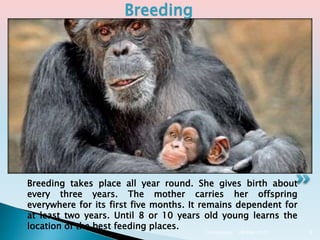
Breeding takes place all year round. She gives birth about
every three years. The mother carries her offspring
everywhere for its first five months. It remains dependent for
at least two years. Until 8 or 10 years old young learns the
location of the best feeding places.
Breeding
28-Dec-2015Chimpanzee 8
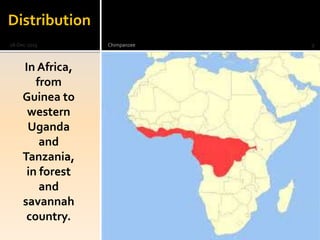
Distribution
In Africa,
from
Guinea to
western
Uganda
and
Tanzania,
in forest
and
savannah
country.
28-Dec-2015 Chimpanzee 9
Sizes
Height: Male 170cm, female 130cm.
Weight: 45-80kg.
Breeding
Sexual maturity: 8-10 years.
Mating: No specific season.
Female mates when previous offspring is 3 years old.
Gestation: 202-261 days.
No. of young: 1 or 2.
Lifestyle
Habit: Social, lives in small troops.
Diet: Mainly fruit, but also leaves, buds, blossoms, bark, resin,
honey, termites and ants.
Occasionally other mammals.
Lifespan: Over 20 years.
28-Dec-2015Chimpanzee
10
• The chimpanzee suffers from many
human diseases, including malaria.
• The chimpanzee may be the only
animal, apart from a human, able to
recognize itself in a mirror.
• The chimpanzee may throw stones
and twigs at other animals as part of
its threat display.
28-Dec-2015 Chimpanzee 11
28-Dec-2015 Chimpanzee 12

Chimpanzee

  • 1.
  • 2.
  • 3.
    CHIMPANZEE Classification of Chimpanzee Kingdom:Animalia Phylum: Chordata Class: Mammalia Order: Primates Family: Pongidae Subfamily: Homininae Genus: Pan Species: P. troglodytes 28-Dec-2015Chimpanzee 3
  • 4.
    Research by Mary- ClaireKing in 1973 found 99% identical DNA between human beings and chimpanzee. Brain of Chimpanzee is 282-500 cc. Brain of Human is 1330 cc (3 times larger than chimp). Many chimpanzees seem to display familiar human qualities such as facial expressions, problem-solving abilities and a high degree of parental care. 28-Dec-2015 Chimpanzee 4
  • 5.
    HABITS Active by day,the chimpanzee spends its nights asleep in a nest it makes in a tree, safe from its predators. The diameter of the nest is 5m and located at a height of 3-45m. During the wet season, the chimpanzee spends a lot of time in trees, but in drier weather it spends the majority of its time on the ground. 28-Dec-2015Chimpanzee 5
  • 6.
    Special Adaptation The chimpanzeeis skilled at stripping the leaves from a branch and then using it as a tool. Such sticks are used for digging insects out of their nests. Or the chimp coats it with saliva and lays it in the path of soldier ants, which become stuck to the surface. 28-Dec-2015 Chimpanzee 6
  • 7.
    Food & Feeding Thechimpanzee’s diet consists mainly of fruits of all kinds. The chimpanzee also eats some insects, such as termites, ants, and the larvae of several species. Biologists used to think that the chimpanzee only gathered its food and did not hunt other animals. It is now known, however, that the chimpanzee does hunt for a number of different mammals, especially other primates such as red colobus, bush babies, blue monkeys and baboons. 28-Dec-2015Chimpanzee7
  • 8.
    Breeding takes placeall year round. She gives birth about every three years. The mother carries her offspring everywhere for its first five months. It remains dependent for at least two years. Until 8 or 10 years old young learns the location of the best feeding places. Breeding 28-Dec-2015Chimpanzee 8
  • 9.
    Distribution In Africa, from Guinea to western Uganda and Tanzania, inforest and savannah country. 28-Dec-2015 Chimpanzee 9
  • 10.
    Sizes Height: Male 170cm,female 130cm. Weight: 45-80kg. Breeding Sexual maturity: 8-10 years. Mating: No specific season. Female mates when previous offspring is 3 years old. Gestation: 202-261 days. No. of young: 1 or 2. Lifestyle Habit: Social, lives in small troops. Diet: Mainly fruit, but also leaves, buds, blossoms, bark, resin, honey, termites and ants. Occasionally other mammals. Lifespan: Over 20 years. 28-Dec-2015Chimpanzee 10
  • 11.
    • The chimpanzeesuffers from many human diseases, including malaria. • The chimpanzee may be the only animal, apart from a human, able to recognize itself in a mirror. • The chimpanzee may throw stones and twigs at other animals as part of its threat display. 28-Dec-2015 Chimpanzee 11
  • 12.