Tasnim Hoque Neela
ID - BPh130101031
Md. Saiful Islam Chowdhury
ID- BPh130100991
Presented
by
List of content
• Introduction
• Chikungunya virus
• Epidemics of chikungunya
• History
• Recent outbreak
• Chikungunya viral disease spreads first in Dhaka
• Sign and symptoms
• Transmission
• Diagnosis of disease
• Prevention
• Vaccination
• Treatment
Chikungunya
• Chikungunya is a viral disease transmitted to
humans by infected mosquitoes. It causes fever
and severe joint pain. Other symptoms include
muscle pain, headache, nausea, fatigue and rash.
• The virus is spread between people by two types
of mosquitoes:
Aedes albopictus and
Aedes aegypti
• They mainly bite during the day.
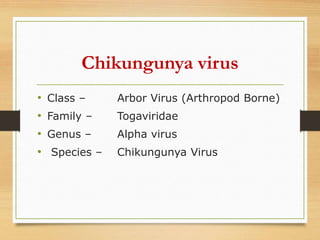
Chikungunya virus
• Class – Arbor Virus (Arthropod Borne)
• Family – Togaviridae
• Genus – Alpha virus
• Species – Chikungunya Virus
Epidemics of Chikungunya
• Large epidemics were recognized in
Transvaal of south Africa, Zambia, India
and South-east asia and Philippine.
History
• Chikungunya disease was first detected in
1952 in africa at a place called Makonde
Plateau. This is a border area between
Tanzania and Mozambique.
• The first recorded outbreak of this disease
may have been in 1779.
• 1955 - Marion Robinson and W.H.R.
Lumsden identifies and describes
Chikungunya.
History (Cont.)
• 1963/64 - Chikungunya detected Indian
cities mainly calcutta, maharashtra and
vellore. The number of infections were in
lakhs (100,000+) and over 200 deaths
were reported.
• 1969 - Chikungunya detected in Srilanka.
Recent outbreak
• Outbreaks are often separated by periods
of more than 10 years. Between 2001 and
2011, a number of countries reported on
chikungunya outbreaks.
• 2006: Outbreak in India, more than 1 500
000 cases of chikungunya were reported .
Recent outbreak (Cont.)
• 2007: Migration of infected people
introduced the infection in a coastal village
in Italy.
• Chikungunya has been identified in nearly
40 countries.
Chikungunya viral disease
spreads fast in Dhaka
• Bangladesh found the first case in 2008 in
northern Rajshahi and Chap’ainawabganj
districts.
• People affected with Chikungunya disease are
believed to be more in some areas of
Dhanmondi, Kalabagan, Green Road, Hatirpool,
Lalmatia, Malibagh, Basabo, Gulshan, Uttara
and Mirpur in the capital.
• There are also patients coming from different
districts and upazilas outside Dhaka.
Signs and symptoms
• Symptoms appear between 4 and 7 days after the patient
has been bitten by the infected mosquito and these include:
• High fever (40°C/ 104°F)
• Joint pain (lower back, ankle, knees, wrists or phalanges)
• Joint swelling
• Rash
• Headache
• Muscle pain
• Nausea
• Fatigue
Transmission
• Chikungunya is generally transmitted from
mosquitoes to humans. Less common modes of
transmission include vertical transmission,
which is transmission from mother to child
during pregnancy or at birth.
• The virus is transmitted to human by the bites
of infected female mosquitoes.
• Most commonly, the mosquitoes involved are
Aedes aegypti and Aedes albopictus.
• These mosquitoes can be found biting
throughout daylight hours, though there
may be peaks of activity in the early
morning and late afternoon.
• After the bite of an infected mosquito,
onset of illness occurs usually between 4
and 8 days but can range from 2 to 12
days.
Transmission (Cont.)
Diagnosis of disease
• Only a blood test can definitively diagnose
chikungunya as symptoms are not always
easy to tell apart from other conditions.
• Presently, there is no specific way to test for
chronic signs and symptoms associated with
Chikungunya fever .
Prevention
• Wearing clothing that covers the whole body.
• Staying indoors as much as possible, especially
during early morning and late afternoon.
• Avoiding traveling to areas experiencing
outbreaks.
• Sleeping under a mosquito net.
• Using mosquito coils and insecticide vaporizers.
Vaccination
• As of 2017, no approved vaccines are
available.
• Alternative vaccine strategies have been
developed, and show efficacy in mouse models.
• In August 2014 researchers at the National
Institute of Allergy and Infectious Diseases in
the USA were testing an experimental vaccine
which uses virus-like particles (VLPs) instead of
attenuated virus.
Treatment
• There are no specific drugs to treat
chikungunya; doctors simply recommend rest
and plenty of fluids.
• Medications will help ease fever and joint pain.
• These include:
Naproxen
Ibuprofen
Acetaminophen
• For longer-lasting aches, physiotherapy may
be helpful.
• Passive immunotherapy has potential
benefit in treatment of chikungunya.
• To prevent further spread of the virus, it is
important for people to avoid mosquito
bites during the first week of illness.
• In those who have more than two weeks of
arthritis, ribavirin may be useful.
Treatment (Cont.)
Chikungunya
Chikungunya

Chikungunya

  • 2.
    Tasnim Hoque Neela ID- BPh130101031 Md. Saiful Islam Chowdhury ID- BPh130100991 Presented by
  • 3.
    List of content •Introduction • Chikungunya virus • Epidemics of chikungunya • History • Recent outbreak • Chikungunya viral disease spreads first in Dhaka • Sign and symptoms • Transmission • Diagnosis of disease • Prevention • Vaccination • Treatment
  • 4.
    Chikungunya • Chikungunya isa viral disease transmitted to humans by infected mosquitoes. It causes fever and severe joint pain. Other symptoms include muscle pain, headache, nausea, fatigue and rash. • The virus is spread between people by two types of mosquitoes: Aedes albopictus and Aedes aegypti • They mainly bite during the day.
  • 5.
    Chikungunya virus • Class– Arbor Virus (Arthropod Borne) • Family – Togaviridae • Genus – Alpha virus • Species – Chikungunya Virus
  • 6.
    Epidemics of Chikungunya •Large epidemics were recognized in Transvaal of south Africa, Zambia, India and South-east asia and Philippine.
  • 7.
    History • Chikungunya diseasewas first detected in 1952 in africa at a place called Makonde Plateau. This is a border area between Tanzania and Mozambique. • The first recorded outbreak of this disease may have been in 1779. • 1955 - Marion Robinson and W.H.R. Lumsden identifies and describes Chikungunya.
  • 8.
    History (Cont.) • 1963/64- Chikungunya detected Indian cities mainly calcutta, maharashtra and vellore. The number of infections were in lakhs (100,000+) and over 200 deaths were reported. • 1969 - Chikungunya detected in Srilanka.
  • 9.
    Recent outbreak • Outbreaksare often separated by periods of more than 10 years. Between 2001 and 2011, a number of countries reported on chikungunya outbreaks. • 2006: Outbreak in India, more than 1 500 000 cases of chikungunya were reported .
  • 10.
    Recent outbreak (Cont.) •2007: Migration of infected people introduced the infection in a coastal village in Italy. • Chikungunya has been identified in nearly 40 countries.
  • 11.
    Chikungunya viral disease spreadsfast in Dhaka • Bangladesh found the first case in 2008 in northern Rajshahi and Chap’ainawabganj districts. • People affected with Chikungunya disease are believed to be more in some areas of Dhanmondi, Kalabagan, Green Road, Hatirpool, Lalmatia, Malibagh, Basabo, Gulshan, Uttara and Mirpur in the capital. • There are also patients coming from different districts and upazilas outside Dhaka.
  • 12.
    Signs and symptoms •Symptoms appear between 4 and 7 days after the patient has been bitten by the infected mosquito and these include: • High fever (40°C/ 104°F) • Joint pain (lower back, ankle, knees, wrists or phalanges) • Joint swelling • Rash • Headache • Muscle pain • Nausea • Fatigue
  • 13.
    Transmission • Chikungunya isgenerally transmitted from mosquitoes to humans. Less common modes of transmission include vertical transmission, which is transmission from mother to child during pregnancy or at birth. • The virus is transmitted to human by the bites of infected female mosquitoes. • Most commonly, the mosquitoes involved are Aedes aegypti and Aedes albopictus.
  • 14.
    • These mosquitoescan be found biting throughout daylight hours, though there may be peaks of activity in the early morning and late afternoon. • After the bite of an infected mosquito, onset of illness occurs usually between 4 and 8 days but can range from 2 to 12 days. Transmission (Cont.)
  • 15.
    Diagnosis of disease •Only a blood test can definitively diagnose chikungunya as symptoms are not always easy to tell apart from other conditions. • Presently, there is no specific way to test for chronic signs and symptoms associated with Chikungunya fever .
  • 16.
    Prevention • Wearing clothingthat covers the whole body. • Staying indoors as much as possible, especially during early morning and late afternoon. • Avoiding traveling to areas experiencing outbreaks. • Sleeping under a mosquito net. • Using mosquito coils and insecticide vaporizers.
  • 17.
    Vaccination • As of2017, no approved vaccines are available. • Alternative vaccine strategies have been developed, and show efficacy in mouse models. • In August 2014 researchers at the National Institute of Allergy and Infectious Diseases in the USA were testing an experimental vaccine which uses virus-like particles (VLPs) instead of attenuated virus.
  • 18.
    Treatment • There areno specific drugs to treat chikungunya; doctors simply recommend rest and plenty of fluids. • Medications will help ease fever and joint pain. • These include: Naproxen Ibuprofen Acetaminophen • For longer-lasting aches, physiotherapy may be helpful.
  • 19.
    • Passive immunotherapyhas potential benefit in treatment of chikungunya. • To prevent further spread of the virus, it is important for people to avoid mosquito bites during the first week of illness. • In those who have more than two weeks of arthritis, ribavirin may be useful. Treatment (Cont.)