Data Processing
  with Apache Hadoop:
Scalable and Cost Effective


        Doug Cutting
the opportunity
●   data accumulating faster than ever
●   storage, CPU & network cheaper than ever
●   but conventional enterprise tech
    ●   isn't priced at commodity hardware prices
    ●   doesn't scale well to thousands of CPUs & drives
problem: scaling reliably is hard
●   need to store petabytes of data
    ●   on 1000s of nodes, MTBF < 1 day
    ●   something is always broken
●   need fault tolerant store
    ●   handle hardware faults transparently and efficiently
    ●   provide availability
●   need fault-tolerant computing framework
    ●   even on a big cluster, some things take days
problem: bandwidth to data
●   need to process 100TB dataset
●   on 1000 node cluster reading from LAN
    ●   100Mb all-to-all bandwidth
    ●   scanning @ 10MB/s = 165 min
●   on 1000 node cluster reading from local drives
    ●   scanning @ 200MB/s = 8 min
●   moving computation beats moving data
Apache Hadoop: a new Paradigm
●   scales to thousands of commodity computers
●   can effectively use all cores & spindles
    ●   simultaneously to process your data
●   new software stack
    ●   built on a different foundation
●   in use already by many
    ●   most big web 2.0 companies
    ●   many Fortune 500 companies now too
new foundations
●   commodity hardware
●   sequential file access
●   sharding of data & computation
●   automated, high-level reliability
●   open source
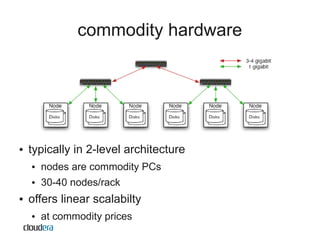
commodity hardware


●   typically in 2-level architecture
    ●   nodes are commodity PCs
    ●   30-40 nodes/rack
●   offers linear scalabilty
    ●   at commodity prices
how I got here
●   started in the 80's, building full-text indexes
●   first implemented with a B-Tree
    ●   foundation of relational DBs
    ●   log(n) random accesses per update
    ●   seek time is wasted time
●   too slow when updates are frequent
    ●   instead use batched sort/merge
        –   to index web at Excite in 90's
Lucene (2000):
●   open-source full-text search library
●   sorts batches of updates
●   then merges with previously sorted data
●   only n/k seeks to build an index
●   compared to B-Tree
    ●   much less wasted time
    ●   vastly faster
open source
●   Apache
    ●   supports diverse, collaborative communities
●   advantages
    ●   the price is right
         –   costs shared with collaborators
              ●   QA, documentation, features, support, training, etc.
    ●   transparency of product and process
    ●   better code
         –   publication encourages quality
         –   sharing encourages generality
    ●   happier engineers
         –   respect from wider peer pool
Nutch (2002)
●   open-source web search engine
●   db access per link in crawled page
    ●   monthly crawl requires >10k accesses/second
●   sort/merge optimization applicable
    ●   but distributed solution required
Nutch (2004)
●   Google publishes GFS & MapReduce papers
●   together, provide automation of
    ●   sort/merge+sharding
    ●   reliability
●   we then implemented these in Nutch
Hadoop (2006)
●   Yahoo! joins the effort
●   split HDFS and MapReduce from Nutch
HDFS
●   scales well
    ●   files sharded across commodity hardware
    ●   efficient and inexpensive
●   automated reliability
    ●   each block replicated on 3 datanodes
    ●   automatically rebalances, replicates, etc.
    ●   namenode has hot spare
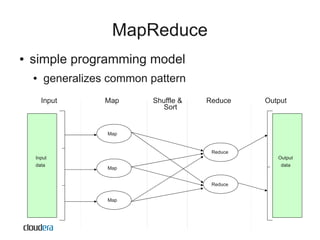
MapReduce
●   simple programming model
    ●   generalizes common pattern
        Input      Map      Shuffle &   Reduce    Output
                               Sort


                   Map


                                         Reduce
    Input                                            Output
    data                                              data
                   Map


                                         Reduce


                   Map
MapReduce
●   compute on same nodes as HDFS storage
    ●   i/o on every drive
    ●   compute on every core
    ●   massive throughput
●   sequential access
    ●   directly supports sort/merge
●   automated reliability & scaling
    ●   datasets are sharded to tasks
    ●   failed tasks retried
pattern of adoption
●   initially adopt Hadoop for particular application
    ●   for cost effective scaling
●   then load more datasets & add more users
    ●   & find it more valuable for new, unanticipated apps
●   having all data in one place, usable, empowers
●   “We don't use Hadoop because we have a lot
    of data, we have a lot of data because we use
    Hadoop.”
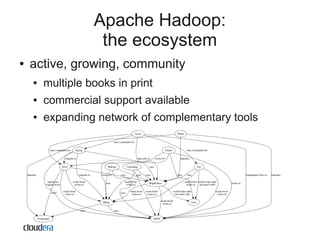
Apache Hadoop:
                   the ecosystem
●   active, growing, community
    ●   multiple books in print
    ●   commercial support available
    ●   expanding network of complementary tools
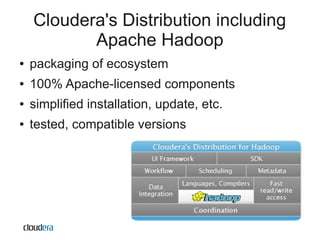
Cloudera's Distribution including
           Apache Hadoop
●   packaging of ecosystem
●   100% Apache-licensed components
●   simplified installation, update, etc.
●   tested, compatible versions
key advantages of Apache Hadoop
●   cost-effective
    ●   scales linearly on commodity hardware
●   general purpose
    ●   powerful, easy-to-program
●   low barrier to entry
    ●   no schema or DB design required up-front
    ●   just load raw data & use it
Thank you!


 Questions?

Chicago Data Summit: Keynote - Data Processing with Hadoop: Scalable and Cost Effective

  • 1.
    Data Processing with Apache Hadoop: Scalable and Cost Effective Doug Cutting
  • 2.
    the opportunity ● data accumulating faster than ever ● storage, CPU & network cheaper than ever ● but conventional enterprise tech ● isn't priced at commodity hardware prices ● doesn't scale well to thousands of CPUs & drives
  • 3.
    problem: scaling reliablyis hard ● need to store petabytes of data ● on 1000s of nodes, MTBF < 1 day ● something is always broken ● need fault tolerant store ● handle hardware faults transparently and efficiently ● provide availability ● need fault-tolerant computing framework ● even on a big cluster, some things take days
  • 4.
    problem: bandwidth todata ● need to process 100TB dataset ● on 1000 node cluster reading from LAN ● 100Mb all-to-all bandwidth ● scanning @ 10MB/s = 165 min ● on 1000 node cluster reading from local drives ● scanning @ 200MB/s = 8 min ● moving computation beats moving data
  • 5.
    Apache Hadoop: anew Paradigm ● scales to thousands of commodity computers ● can effectively use all cores & spindles ● simultaneously to process your data ● new software stack ● built on a different foundation ● in use already by many ● most big web 2.0 companies ● many Fortune 500 companies now too
  • 6.
    new foundations ● commodity hardware ● sequential file access ● sharding of data & computation ● automated, high-level reliability ● open source
  • 7.
    commodity hardware ● typically in 2-level architecture ● nodes are commodity PCs ● 30-40 nodes/rack ● offers linear scalabilty ● at commodity prices
  • 8.
    how I gothere ● started in the 80's, building full-text indexes ● first implemented with a B-Tree ● foundation of relational DBs ● log(n) random accesses per update ● seek time is wasted time ● too slow when updates are frequent ● instead use batched sort/merge – to index web at Excite in 90's
  • 9.
    Lucene (2000): ● open-source full-text search library ● sorts batches of updates ● then merges with previously sorted data ● only n/k seeks to build an index ● compared to B-Tree ● much less wasted time ● vastly faster
  • 10.
    open source ● Apache ● supports diverse, collaborative communities ● advantages ● the price is right – costs shared with collaborators ● QA, documentation, features, support, training, etc. ● transparency of product and process ● better code – publication encourages quality – sharing encourages generality ● happier engineers – respect from wider peer pool
  • 11.
    Nutch (2002) ● open-source web search engine ● db access per link in crawled page ● monthly crawl requires >10k accesses/second ● sort/merge optimization applicable ● but distributed solution required
  • 12.
    Nutch (2004) ● Google publishes GFS & MapReduce papers ● together, provide automation of ● sort/merge+sharding ● reliability ● we then implemented these in Nutch
  • 13.
    Hadoop (2006) ● Yahoo! joins the effort ● split HDFS and MapReduce from Nutch
  • 14.
    HDFS ● scales well ● files sharded across commodity hardware ● efficient and inexpensive ● automated reliability ● each block replicated on 3 datanodes ● automatically rebalances, replicates, etc. ● namenode has hot spare
  • 15.
    MapReduce ● simple programming model ● generalizes common pattern Input Map Shuffle & Reduce Output Sort Map Reduce Input Output data data Map Reduce Map
  • 16.
    MapReduce ● compute on same nodes as HDFS storage ● i/o on every drive ● compute on every core ● massive throughput ● sequential access ● directly supports sort/merge ● automated reliability & scaling ● datasets are sharded to tasks ● failed tasks retried
  • 17.
    pattern of adoption ● initially adopt Hadoop for particular application ● for cost effective scaling ● then load more datasets & add more users ● & find it more valuable for new, unanticipated apps ● having all data in one place, usable, empowers ● “We don't use Hadoop because we have a lot of data, we have a lot of data because we use Hadoop.”
  • 18.
    Apache Hadoop: the ecosystem ● active, growing, community ● multiple books in print ● commercial support available ● expanding network of complementary tools
  • 19.
    Cloudera's Distribution including Apache Hadoop ● packaging of ecosystem ● 100% Apache-licensed components ● simplified installation, update, etc. ● tested, compatible versions
  • 20.
    key advantages ofApache Hadoop ● cost-effective ● scales linearly on commodity hardware ● general purpose ● powerful, easy-to-program ● low barrier to entry ● no schema or DB design required up-front ● just load raw data & use it
  • 21.