CHEMISTRY PP3 PRACTICAL
GUIDE
KCSE GUIDE
QUALITATIVE ANALYSIS
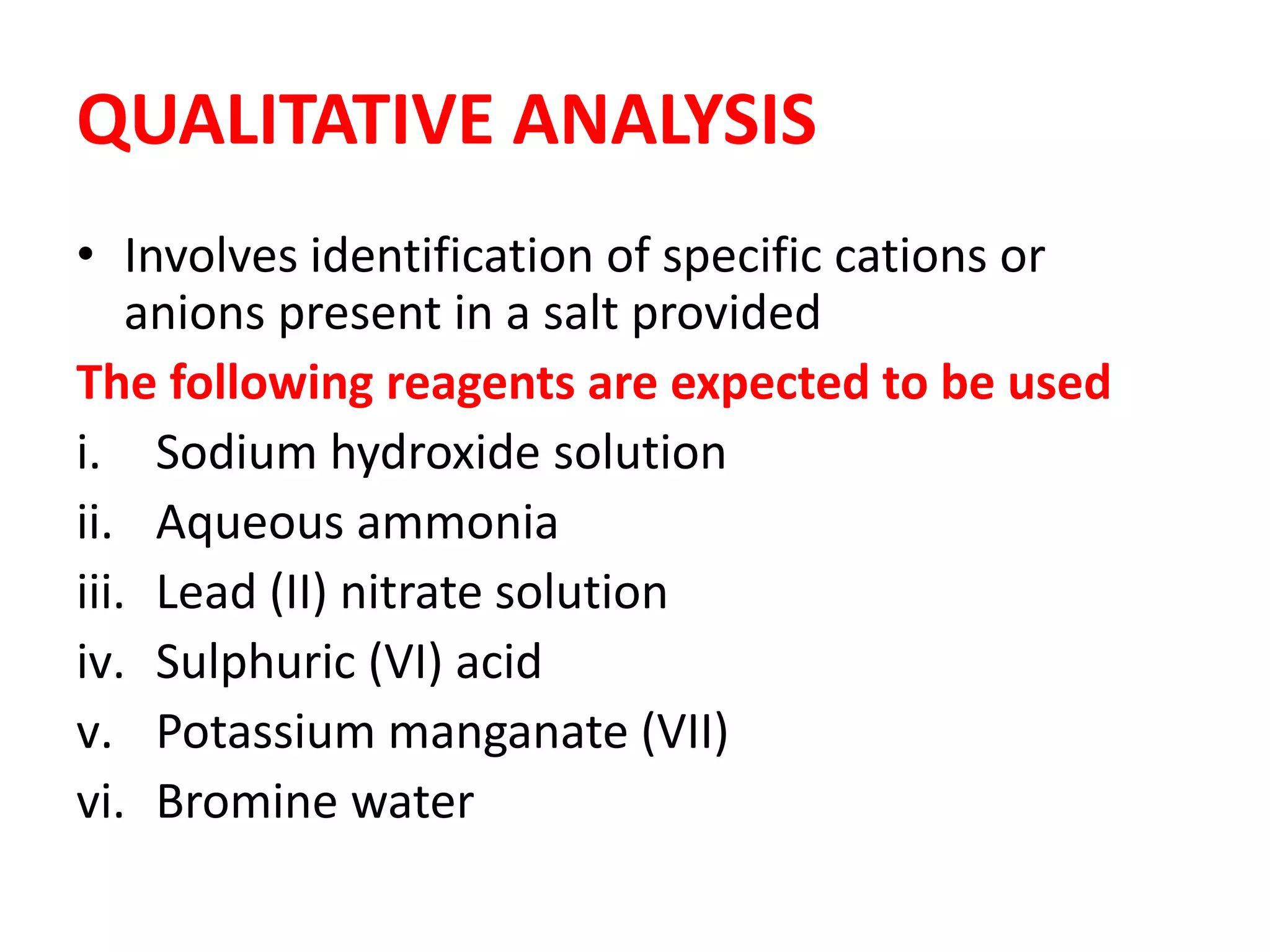
• Involves identification of specific cations or
anions present in a salt provided
The following reagents are expected to be used
i. Sodium hydroxide solution
ii. Aqueous ammonia
iii. Lead (II) nitrate solution
iv. Sulphuric (VI) acid
v. Potassium manganate (VII)
vi. Bromine water
Purpose of each reagent
• Sodium hydroxide and ammonia are meant to
test for cations
• Lead (II) nitrate is meant to test for; sulphate,
SO4
2−
, sulphite, SO3
2−
, chlorides, Cl−
, and
carbonates CO3
2−
• Sulphuric (VI) acid, to test for CO3
2−
and Pb2+
ions.
• Acidified potassium dichromate (VI), can be
used to test for the sulphite ions, 𝐒𝐎𝟑
𝟐−
Sample procedures
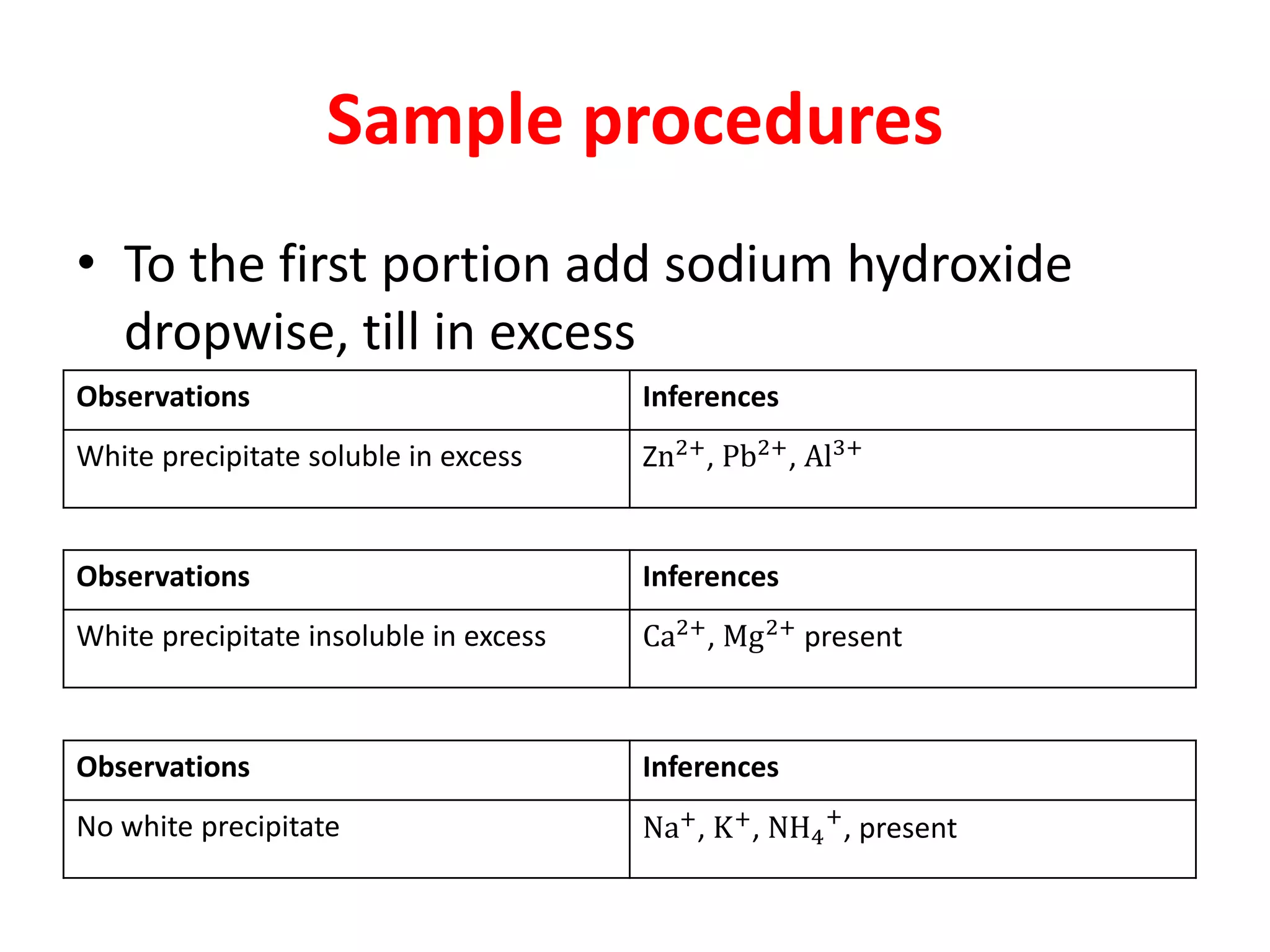
• To the first portion add sodium hydroxide
dropwise, till in excess
Observations Inferences
White precipitate soluble in excess Zn2+
, Pb2+
, Al3+
Observations Inferences
White precipitate insoluble in excess Ca2+, Mg2+ present
Observations Inferences
No white precipitate Na+, K+, NH4
+
, present
Sample procedures
• To the second portion, add a few drops of
dilute sulphuric (VI) acid.
Observations Inferences
No effervescence
No white precipitate
𝐶𝑂3
2−
absent
𝑃𝑏2+absent
Observations Inferences
Effervescence
white precipitate
𝐶𝑂3
2−
present
𝑃𝑏2+ present
Sample procedure
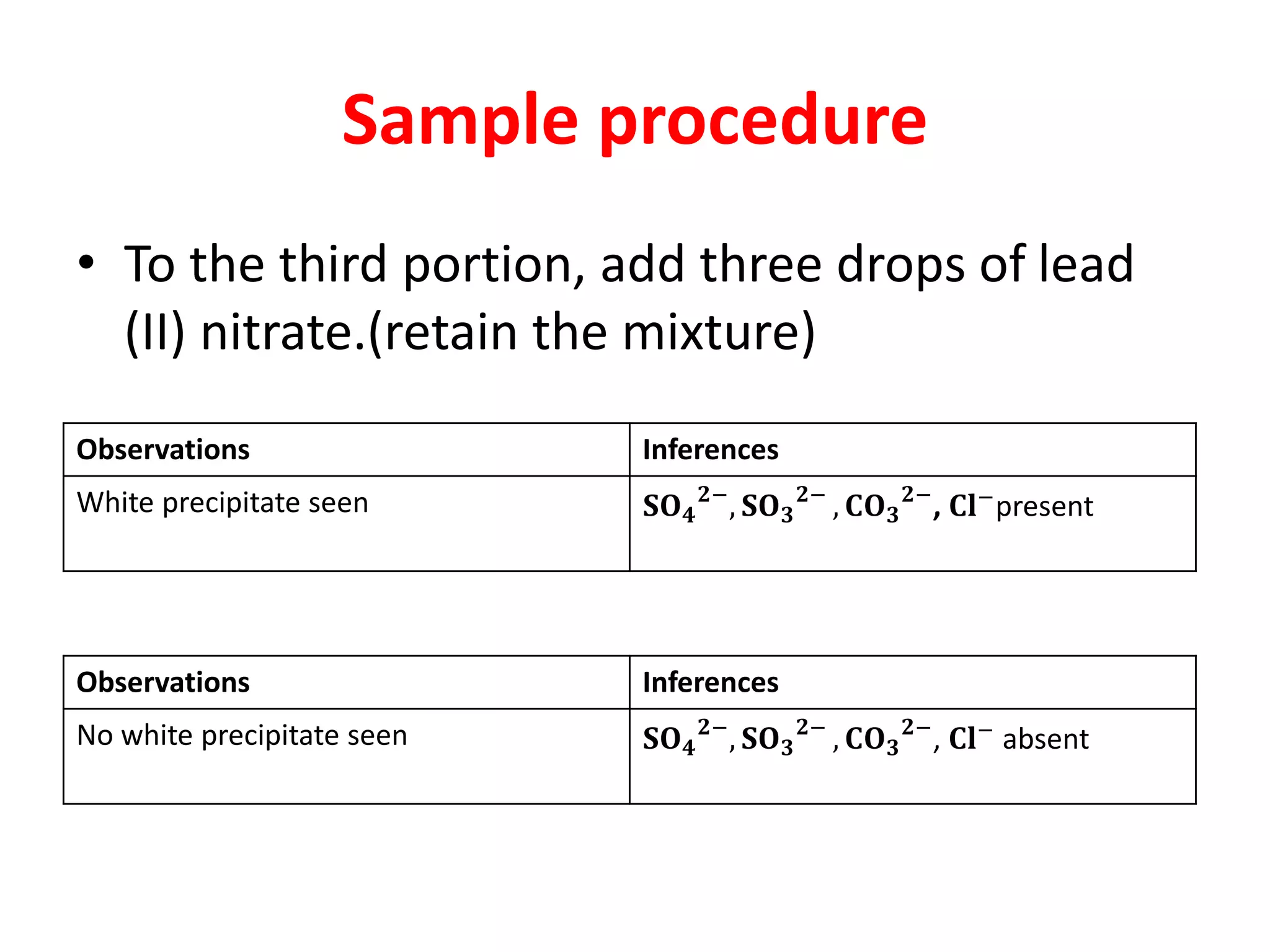
• To the third portion, add three drops of lead
(II) nitrate.(retain the mixture)
Observations Inferences
White precipitate seen 𝐒𝐎𝟒
𝟐−
, 𝐒𝐎𝟑
𝟐−
, 𝐂𝐎𝟑
𝟐−
, 𝐂𝐥−
present
Observations Inferences
No white precipitate seen 𝐒𝐎𝟒
𝟐−
, 𝐒𝐎𝟑
𝟐−
, 𝐂𝐎𝟑
𝟐−
, 𝐂𝐥− absent
Sample procedure
Warm the mixture obtained above.
Observations Inferences
The white precipitate dissolves 𝐂𝐥−
present
Observations Inferences
The white precipitate persists 𝐒𝐎𝟒
𝟐−
, 𝐒𝐎𝟑
𝟐−
, 𝐂𝐎𝟑
𝟐−
, present
Organic compounds
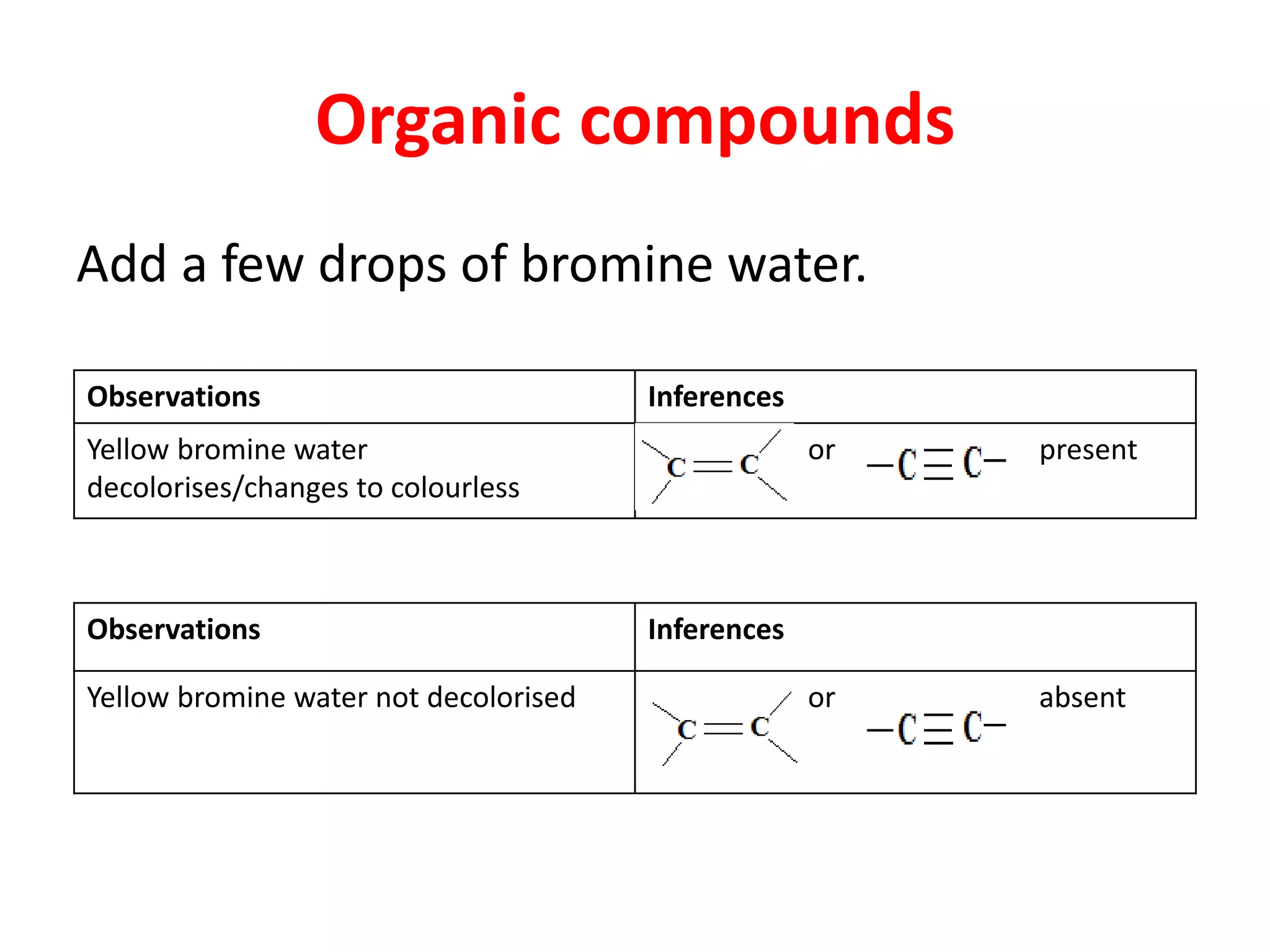
Add a few drops of bromine water.
Observations Inferences
Yellow bromine water
decolorises/changes to colourless
or present
Observations Inferences
Yellow bromine water not decolorised or absent
Organic compounds
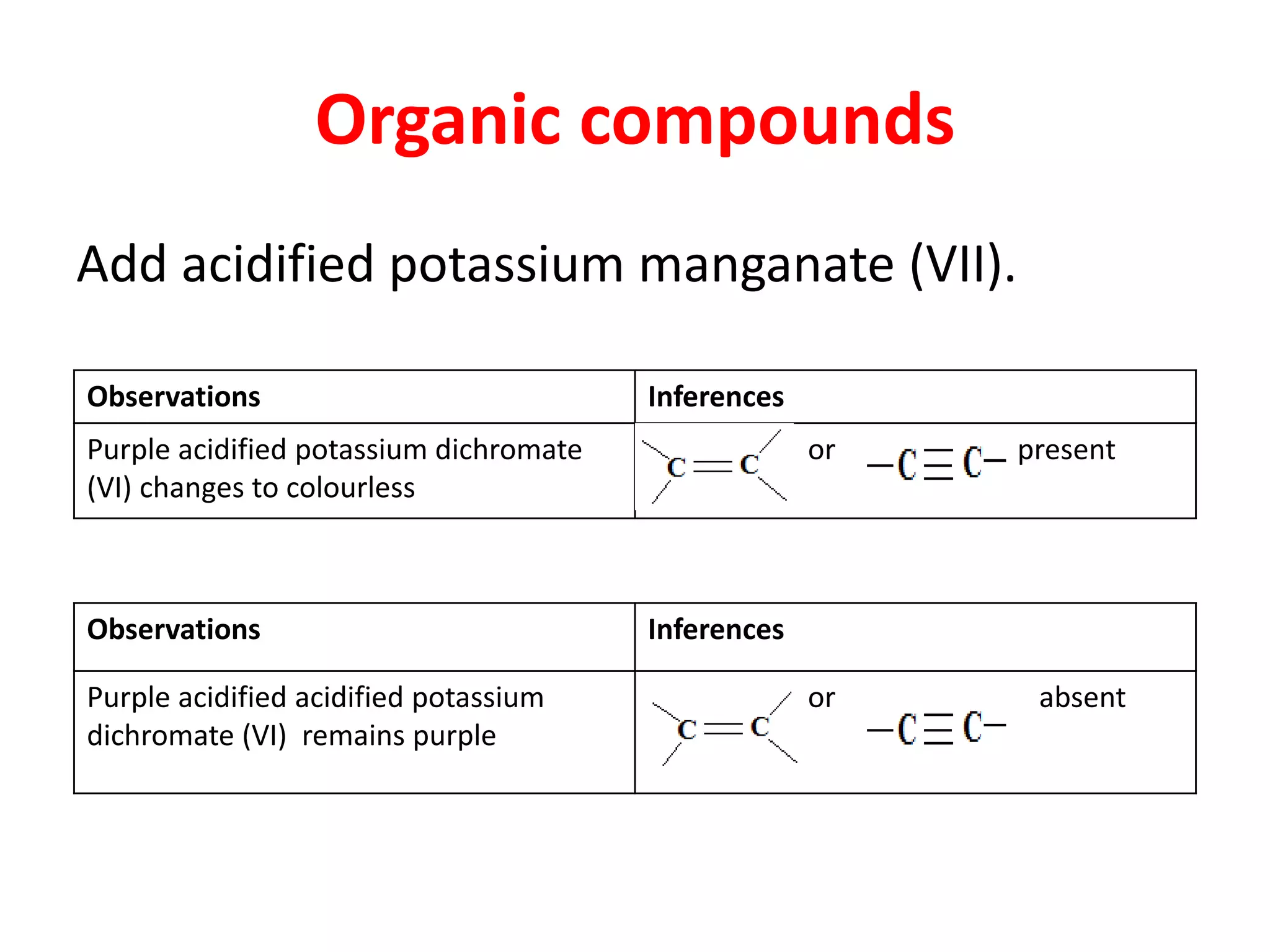
Add acidified potassium manganate (VII).
Observations Inferences
Purple acidified potassium dichromate
(VI) changes to colourless
or present
Observations Inferences
Purple acidified acidified potassium
dichromate (VI) remains purple
or absent
Organic compounds
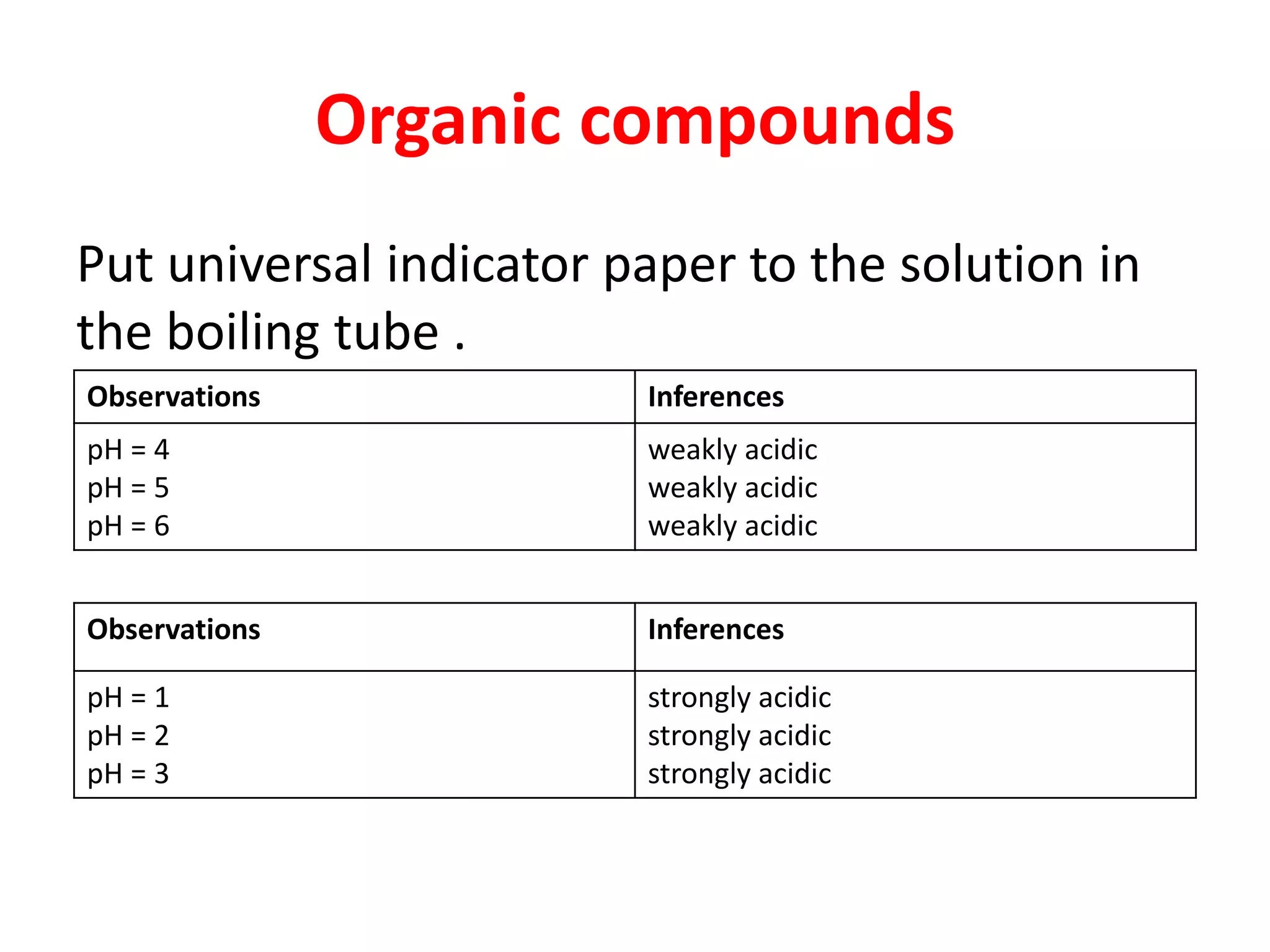
Put universal indicator paper to the solution in
the boiling tube .
Observations Inferences
pH = 4
pH = 5
pH = 6
weakly acidic
weakly acidic
weakly acidic
Observations Inferences
pH = 1
pH = 2
pH = 3
strongly acidic
strongly acidic
strongly acidic
Volumetric analysis
• Answering questions in volumetric analysis
involves moving from known to unknown.
The knowns will be obtained from;
• The provided quantities up in the requirements
section
• The equation relating the reactants
• The answer to the question in the previous
section.
• From the procedure undertaken
Thermochemistry
Time(min) 0 ½ 1 1½ 2 2½ 3 3½ 4 4½
Temp(ᵒC)
X
Alternative graph
Time(min) 0 ½ 1 1½ 2 2½ 3 3½ 4 4½
Temp(ᵒC)
X
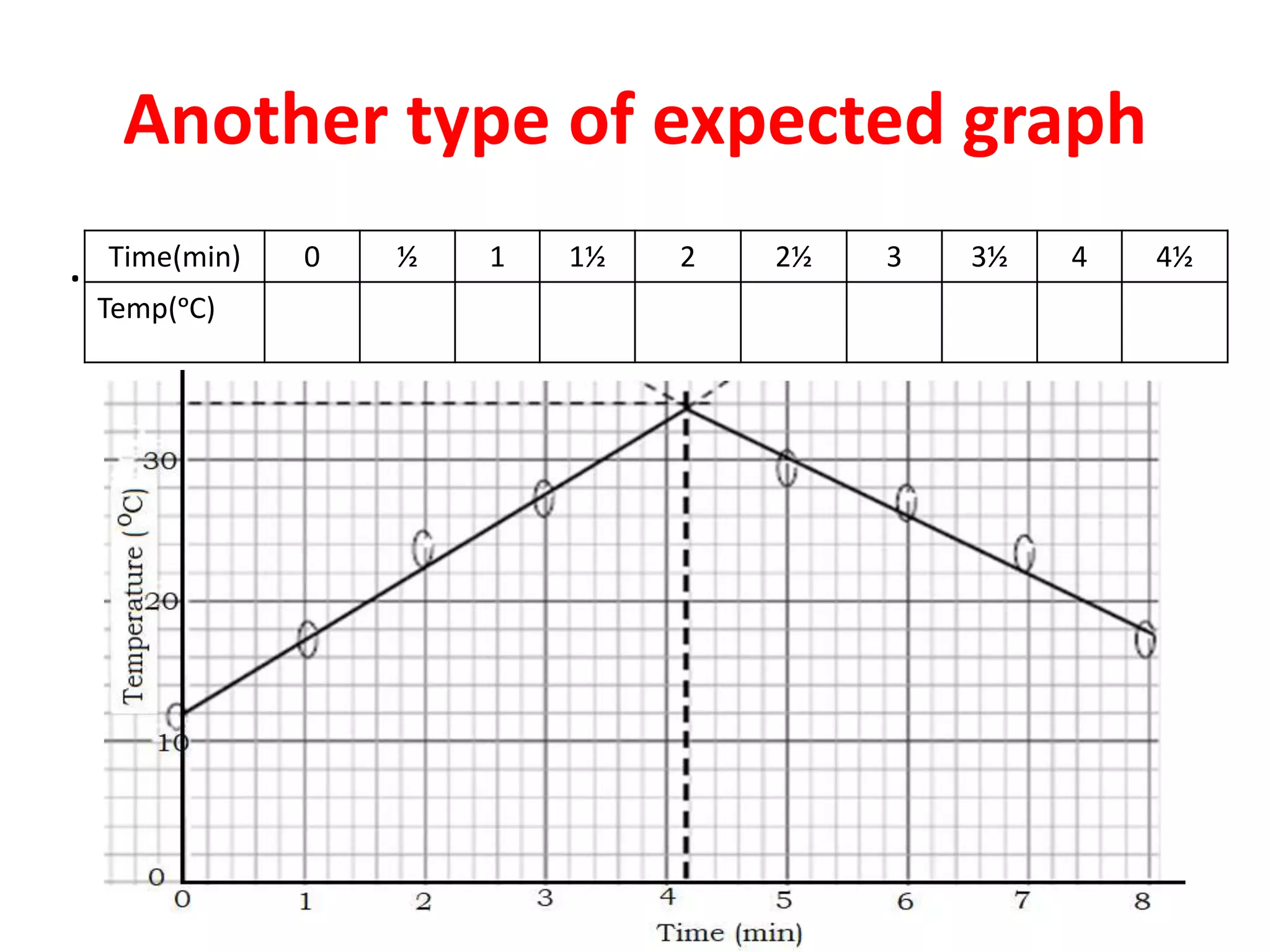
Another type of expected graph
Time(min) 0 ½ 1 1½ 2 2½ 3 3½ 4 4½
Temp(ᵒC)
.

CHEMISTRY PP3 PRACTICAL GUIDE.pptx

  • 1.
  • 2.
    QUALITATIVE ANALYSIS • Involvesidentification of specific cations or anions present in a salt provided The following reagents are expected to be used i. Sodium hydroxide solution ii. Aqueous ammonia iii. Lead (II) nitrate solution iv. Sulphuric (VI) acid v. Potassium manganate (VII) vi. Bromine water
  • 3.
    Purpose of eachreagent • Sodium hydroxide and ammonia are meant to test for cations • Lead (II) nitrate is meant to test for; sulphate, SO4 2− , sulphite, SO3 2− , chlorides, Cl− , and carbonates CO3 2− • Sulphuric (VI) acid, to test for CO3 2− and Pb2+ ions. • Acidified potassium dichromate (VI), can be used to test for the sulphite ions, 𝐒𝐎𝟑 𝟐−
  • 4.
    Sample procedures • Tothe first portion add sodium hydroxide dropwise, till in excess Observations Inferences White precipitate soluble in excess Zn2+ , Pb2+ , Al3+ Observations Inferences White precipitate insoluble in excess Ca2+, Mg2+ present Observations Inferences No white precipitate Na+, K+, NH4 + , present
  • 5.
    Sample procedures • Tothe second portion, add a few drops of dilute sulphuric (VI) acid. Observations Inferences No effervescence No white precipitate 𝐶𝑂3 2− absent 𝑃𝑏2+absent Observations Inferences Effervescence white precipitate 𝐶𝑂3 2− present 𝑃𝑏2+ present
  • 6.
    Sample procedure • Tothe third portion, add three drops of lead (II) nitrate.(retain the mixture) Observations Inferences White precipitate seen 𝐒𝐎𝟒 𝟐− , 𝐒𝐎𝟑 𝟐− , 𝐂𝐎𝟑 𝟐− , 𝐂𝐥− present Observations Inferences No white precipitate seen 𝐒𝐎𝟒 𝟐− , 𝐒𝐎𝟑 𝟐− , 𝐂𝐎𝟑 𝟐− , 𝐂𝐥− absent
  • 7.
    Sample procedure Warm themixture obtained above. Observations Inferences The white precipitate dissolves 𝐂𝐥− present Observations Inferences The white precipitate persists 𝐒𝐎𝟒 𝟐− , 𝐒𝐎𝟑 𝟐− , 𝐂𝐎𝟑 𝟐− , present
  • 8.
    Organic compounds Add afew drops of bromine water. Observations Inferences Yellow bromine water decolorises/changes to colourless or present Observations Inferences Yellow bromine water not decolorised or absent
  • 9.
    Organic compounds Add acidifiedpotassium manganate (VII). Observations Inferences Purple acidified potassium dichromate (VI) changes to colourless or present Observations Inferences Purple acidified acidified potassium dichromate (VI) remains purple or absent
  • 10.
    Organic compounds Put universalindicator paper to the solution in the boiling tube . Observations Inferences pH = 4 pH = 5 pH = 6 weakly acidic weakly acidic weakly acidic Observations Inferences pH = 1 pH = 2 pH = 3 strongly acidic strongly acidic strongly acidic
  • 11.
    Volumetric analysis • Answeringquestions in volumetric analysis involves moving from known to unknown. The knowns will be obtained from; • The provided quantities up in the requirements section • The equation relating the reactants • The answer to the question in the previous section. • From the procedure undertaken
  • 12.
    Thermochemistry Time(min) 0 ½1 1½ 2 2½ 3 3½ 4 4½ Temp(ᵒC) X
  • 13.
    Alternative graph Time(min) 0½ 1 1½ 2 2½ 3 3½ 4 4½ Temp(ᵒC) X
  • 14.
    Another type ofexpected graph Time(min) 0 ½ 1 1½ 2 2½ 3 3½ 4 4½ Temp(ᵒC) .