Downloaded 145 times
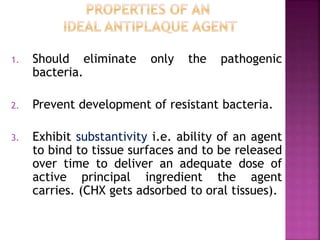
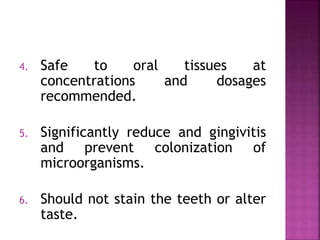
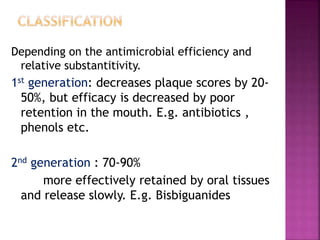
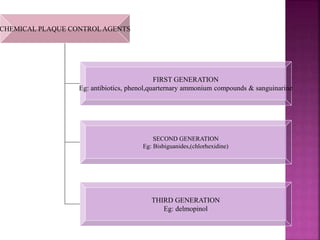
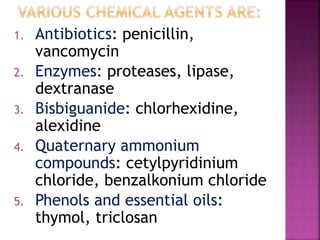
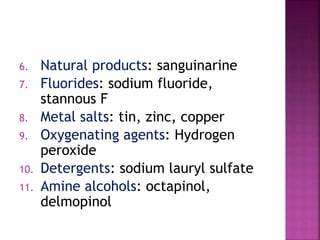
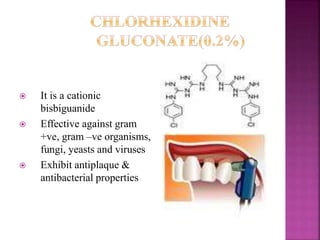
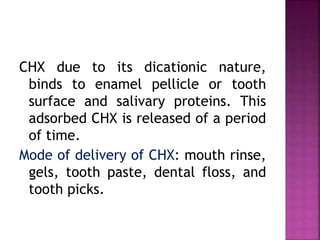
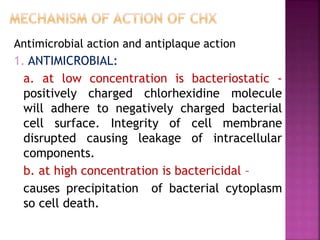
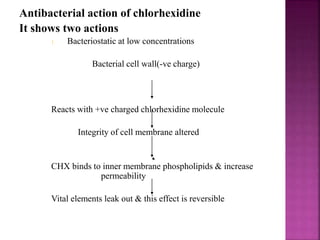
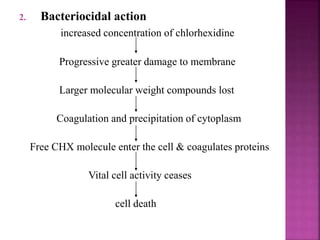


Chlorhexidine is widely considered one of the most effective antiplaque agents. As a cationic bisbiguanide, it is effective against both gram-positive and gram-negative bacteria through disruption of the bacterial cell membrane. It exhibits both bacteriostatic and bactericidal properties depending on concentration. Chlorhexidine also prevents plaque formation through inhibition of bacterial adhesion to tooth surfaces and competition for calcium ions necessary for plaque aggregation. While effective, it can potentially cause tooth staining at high concentrations or dosages. Enzymes also show promise as antiplaque agents by breaking down plaque matrices and exhibiting bactericidal effects.


![Periodontal microbiology [autosaved]](https://cdn.slidesharecdn.com/ss_thumbnails/periodontalmicrobiologyautosaved-210219050149-thumbnail.jpg?width=640&height=640&fit=bounds)


