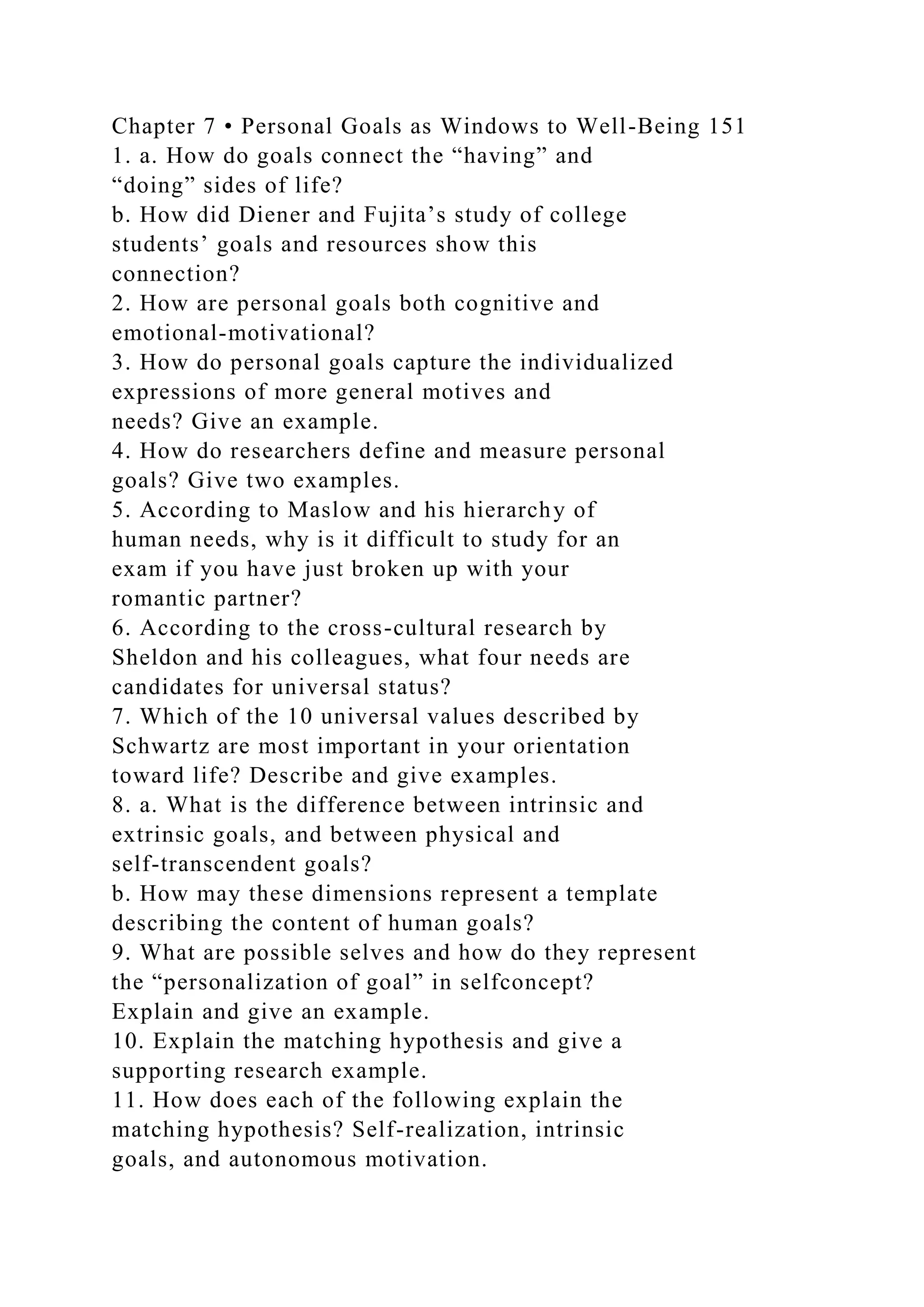
This document summarizes a chapter about personal goals and well-being. It discusses how goals provide purpose and direction for behavior. Well-defined, attainable goals are linked to well-being, while unrealistic or conflicting goals can cause distress. The chapter examines what goals are, how they are measured and organized, and how they relate to needs, values and culture. It explores how intrinsic and extrinsic goals may differently impact well-being. The "matching hypothesis" proposes that goals most contribute to well-being when a person's resources and strengths align with and support their goals. In short, this chapter analyzes how and why personal goals influence happiness and life satisfaction.