Dickens’ Biography 
• He was born on February 7, 1812 in Portsmouth. 
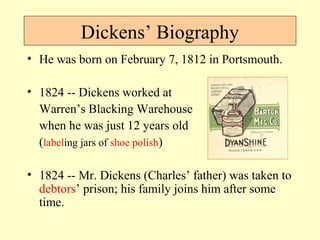
• 1824 -- Dickens worked at 
Warren’s Blacking Warehouse 
when he was just 12 years old 
(labeling jars of shoe polish) 
• 1824 -- Mr. Dickens (Charles’ father) was taken to 
debtors’ prison; his family joins him after some 
time.
More Bio 
• Charles is pulled out of private school. 
• 1827 - Charles, now 15, becomes law clerk 
and after working even in his free time, he 
decides to become a freelance writer. 
• 1834 - Charles takes Boz as a pseudonym . 
• 1834 - Charles’ dad is re-arrested for debts.
Dickens starts Publishing! 
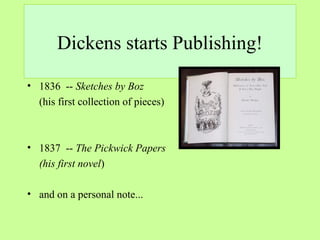
• 1836 -- Sketches by Boz 
(his first collection of pieces) 
• 1837 -- The Pickwick Papers 
(his first novel) 
• and on a personal note...
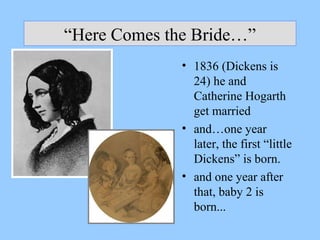
“Here Comes the Bride…” 
• 1836 (Dickens is 
24) he and 
Catherine Hogarth 
get married 
• and…one year 
later, the first “little 
Dickens” is born. 
• and one year after 
that, baby 2 is 
born...
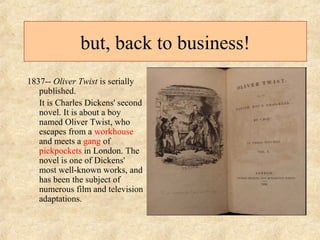
but, back to business! 
1837-- Oliver Twist is serially 
published. 
It is Charles Dickens' second 
novel. It is about a boy 
named Oliver Twist, who 
escapes from a workhouse 
and meets a gang of 
pickpockets in London. The 
novel is one of Dickens' 
most well-known works, and 
has been the subject of 
numerous film and television 
adaptations.
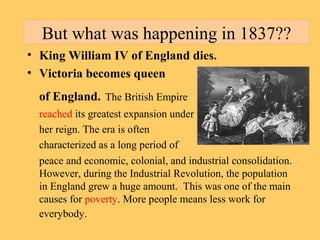
But what was happening in 1837?? 
• King William IV of England dies. 
• Victoria becomes queen 
of England. The British Empire 
reached its greatest expansion under 
her reign. The era is often 
characterized as a long period of 
peace and economic, colonial, and industrial consolidation. 
However, during the Industrial Revolution, the population 
in England grew a huge amount. This was one of the main 
causes for poverty. More people means less work for 
everybody.
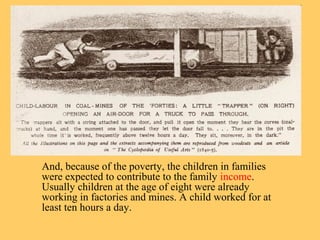
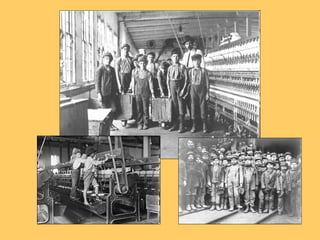
And, because of the poverty, the children in families 
were expected to contribute to the family income. 
Usually children at the age of eight were already 
working in factories and mines. A child worked for at 
least ten hours a day.
And Dickens, meanwhile… 
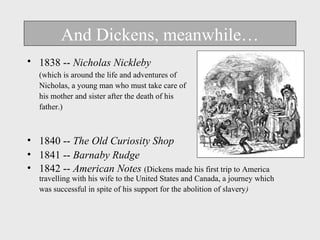
• 1838 -- Nicholas Nickleby 
(which is around the life and adventures of 
Nicholas, a young man who must take care of 
his mother and sister after the death of his 
father.) 
• 1840 -- The Old Curiosity Shop 
• 1841 -- Barnaby Rudge 
• 1842 -- American Notes (Dickens made his first trip to America 
travelling with his wife to the United States and Canada, a journey which 
was successful in spite of his support for the abolition of slavery)
And more Dickens’ books! 
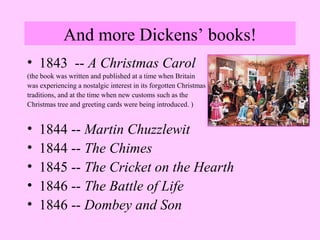
• 1843 -- A Christmas Carol 
(the book was written and published at a time when Britain 
was experiencing a nostalgic interest in its forgotten Christmas 
traditions, and at the time when new customs such as the 
Christmas tree and greeting cards were being introduced. ) 
• 1844 -- Martin Chuzzlewit 
• 1844 -- The Chimes 
• 1845 -- The Cricket on the Hearth 
• 1846 -- The Battle of Life 
• 1846 -- Dombey and Son
And also... 
• 1850 -- David Copperfield 
• 1853 -- Bleak House 
• 1854 -- Hard Times 
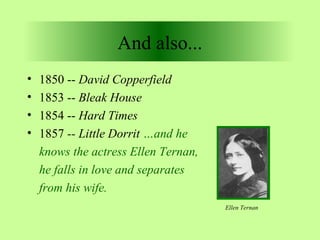
• 1857 -- Little Dorrit …and he 
knows the actress Ellen Ternan, 
he falls in love and separates 
from his wife. 
Ellen Ternan
His last works… 
• 1859 -- A Tale of Two Cities 
• 1861 -- *Great Expectations 
• 1865 -- Our Mutual Friend (Dickens survives a 
train crash this year. After helping other people he climbs 
back into the carriage to rescue the manuscript of his novel 
Our Mutual Friend.) 
• 1869 -- The Mystery of Edwin Drood (he left 
it unfinished)
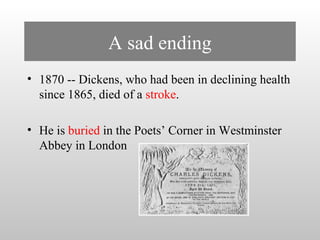
A sad ending 
• 1870 -- Dickens, who had been in declining health 
since 1865, died of a stroke. 
• He is buried in the Poets’ Corner in Westminster 
Abbey in London
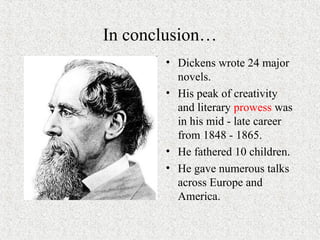
In conclusion… 
• Dickens wrote 24 major 
novels. 
• His peak of creativity 
and literary prowess was 
in his mid - late career 
from 1848 - 1865. 
• He fathered 10 children. 
• He gave numerous talks 
across Europe and 
America.
And what’s more important… 
• He was an advocate of child labour laws to protect 
children. 
• He opposed cruelty, deprivation and corporal 
punishment in the education of children. 
• He was also against the abuses of the Victorian 
legal and penal systems. 
• He organized amateur theatricals for charitable 
purposes. 
• He created an institution for homeless and "fallen" 
women, offering them a positive alternative to the 
prostitution and crime. 
• He attacked slavery.
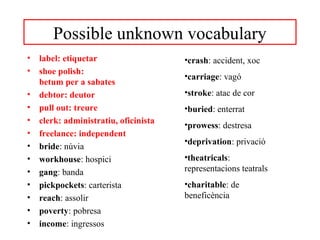
Possible unknown vocabulary 
• label: etiquetar 
• shoe polish: 
betum per a sabates 
• debtor: deutor 
• pull out: treure 
• clerk: administratiu, oficinista 
• freelance: independent 
• bride: núvia 
• workhouse: hospici 
• gang: banda 
• pickpockets: carterista 
• reach: assolir 
• poverty: pobresa 
• income: ingressos 
•crash: accident, xoc 
•carriage: vagó 
•stroke: atac de cor 
•buried: enterrat 
•prowess: destresa 
•deprivation: privació 
•theatricals: 
representacions teatrals 
•charitable: de 
beneficència

Charles dickens bio and time ppt

  • 2.
    Dickens’ Biography •He was born on February 7, 1812 in Portsmouth. • 1824 -- Dickens worked at Warren’s Blacking Warehouse when he was just 12 years old (labeling jars of shoe polish) • 1824 -- Mr. Dickens (Charles’ father) was taken to debtors’ prison; his family joins him after some time.
  • 3.
    More Bio •Charles is pulled out of private school. • 1827 - Charles, now 15, becomes law clerk and after working even in his free time, he decides to become a freelance writer. • 1834 - Charles takes Boz as a pseudonym . • 1834 - Charles’ dad is re-arrested for debts.
  • 4.
    Dickens starts Publishing! • 1836 -- Sketches by Boz (his first collection of pieces) • 1837 -- The Pickwick Papers (his first novel) • and on a personal note...
  • 5.
    “Here Comes theBride…” • 1836 (Dickens is 24) he and Catherine Hogarth get married • and…one year later, the first “little Dickens” is born. • and one year after that, baby 2 is born...
  • 6.
    but, back tobusiness! 1837-- Oliver Twist is serially published. It is Charles Dickens' second novel. It is about a boy named Oliver Twist, who escapes from a workhouse and meets a gang of pickpockets in London. The novel is one of Dickens' most well-known works, and has been the subject of numerous film and television adaptations.
  • 7.
    But what washappening in 1837?? • King William IV of England dies. • Victoria becomes queen of England. The British Empire reached its greatest expansion under her reign. The era is often characterized as a long period of peace and economic, colonial, and industrial consolidation. However, during the Industrial Revolution, the population in England grew a huge amount. This was one of the main causes for poverty. More people means less work for everybody.
  • 8.
    And, because ofthe poverty, the children in families were expected to contribute to the family income. Usually children at the age of eight were already working in factories and mines. A child worked for at least ten hours a day.
  • 10.
    And Dickens, meanwhile… • 1838 -- Nicholas Nickleby (which is around the life and adventures of Nicholas, a young man who must take care of his mother and sister after the death of his father.) • 1840 -- The Old Curiosity Shop • 1841 -- Barnaby Rudge • 1842 -- American Notes (Dickens made his first trip to America travelling with his wife to the United States and Canada, a journey which was successful in spite of his support for the abolition of slavery)
  • 11.
    And more Dickens’books! • 1843 -- A Christmas Carol (the book was written and published at a time when Britain was experiencing a nostalgic interest in its forgotten Christmas traditions, and at the time when new customs such as the Christmas tree and greeting cards were being introduced. ) • 1844 -- Martin Chuzzlewit • 1844 -- The Chimes • 1845 -- The Cricket on the Hearth • 1846 -- The Battle of Life • 1846 -- Dombey and Son
  • 12.
    And also... •1850 -- David Copperfield • 1853 -- Bleak House • 1854 -- Hard Times • 1857 -- Little Dorrit …and he knows the actress Ellen Ternan, he falls in love and separates from his wife. Ellen Ternan
  • 13.
    His last works… • 1859 -- A Tale of Two Cities • 1861 -- *Great Expectations • 1865 -- Our Mutual Friend (Dickens survives a train crash this year. After helping other people he climbs back into the carriage to rescue the manuscript of his novel Our Mutual Friend.) • 1869 -- The Mystery of Edwin Drood (he left it unfinished)
  • 14.
    A sad ending • 1870 -- Dickens, who had been in declining health since 1865, died of a stroke. • He is buried in the Poets’ Corner in Westminster Abbey in London
  • 15.
    In conclusion… •Dickens wrote 24 major novels. • His peak of creativity and literary prowess was in his mid - late career from 1848 - 1865. • He fathered 10 children. • He gave numerous talks across Europe and America.
  • 16.
    And what’s moreimportant… • He was an advocate of child labour laws to protect children. • He opposed cruelty, deprivation and corporal punishment in the education of children. • He was also against the abuses of the Victorian legal and penal systems. • He organized amateur theatricals for charitable purposes. • He created an institution for homeless and "fallen" women, offering them a positive alternative to the prostitution and crime. • He attacked slavery.
  • 17.
    Possible unknown vocabulary • label: etiquetar • shoe polish: betum per a sabates • debtor: deutor • pull out: treure • clerk: administratiu, oficinista • freelance: independent • bride: núvia • workhouse: hospici • gang: banda • pickpockets: carterista • reach: assolir • poverty: pobresa • income: ingressos •crash: accident, xoc •carriage: vagó •stroke: atac de cor •buried: enterrat •prowess: destresa •deprivation: privació •theatricals: representacions teatrals •charitable: de beneficència