•   Learning Objectives:

    – Discover what are work related attitudes

    – Explain the meaning of Job Satisfaction, Commitment
      and Organisational Citizenship Behaviour

    – Discuss the influence of work related attitudes for
      organisations on organisation’s priorities

    – Present what measures can organisations adopt in
      order to shape favorable attitudes at work
“…Reflect an individual’s persistent tendency to think, feel and behave towards an
object in a particular way involving favor or disfavor.”


   • Always towards
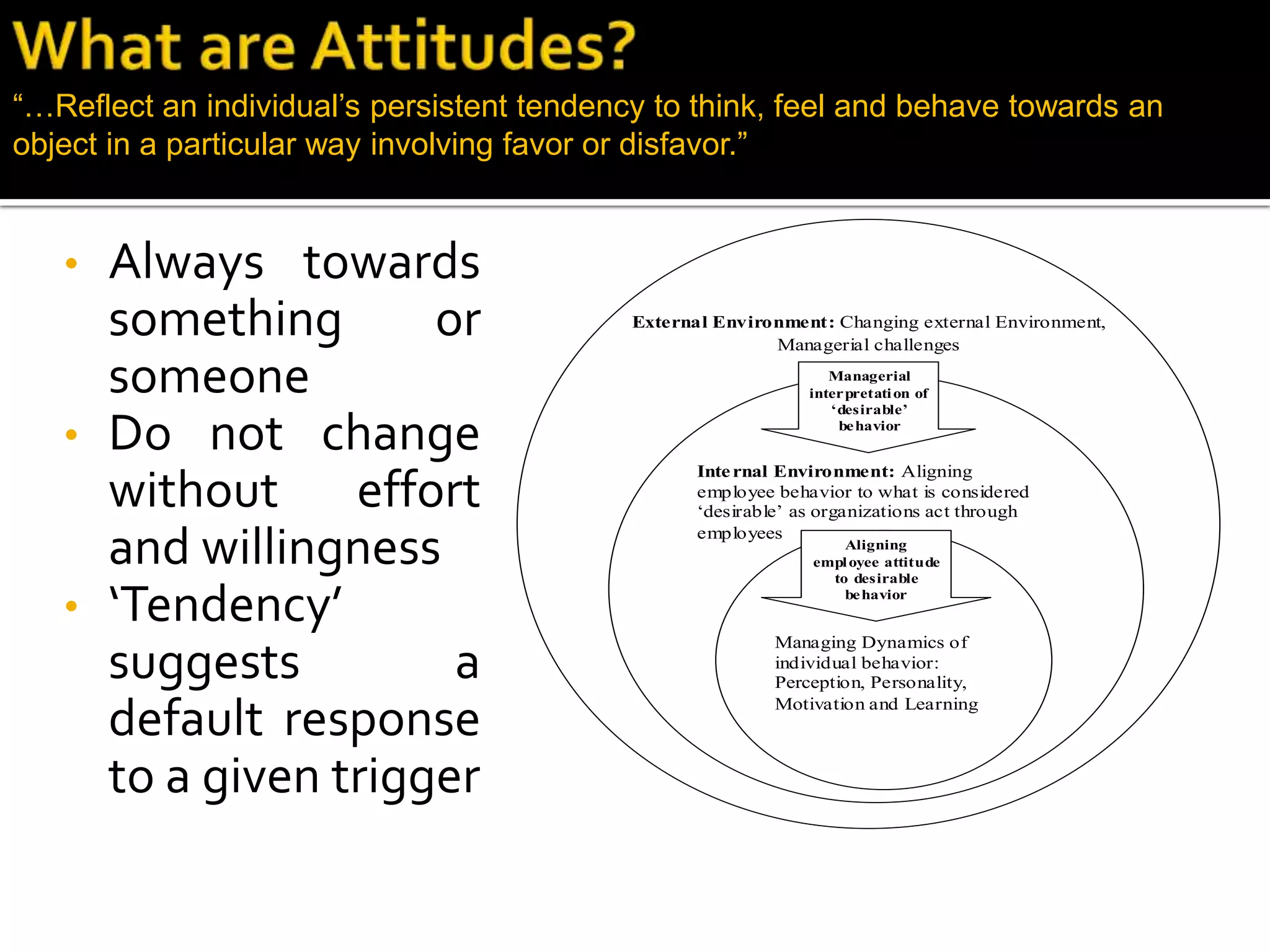
     something       or                     External Environment: Changing external Environment,
                                                           Managerial challenges

     someone                                                       Managerial
                                                                inter pretati on of
                                                                   ‘desirable’

   • Do not change                                                  be havior


                                                   Inte rnal Environment: Aligning
     without effort                                employee behavior to what is considered
                                                   ‘desirable’ as organizations act through

     and willingness                               employees
                                                                    Aligning
                                                                empl oyee attitude
                                                                  to desirable

   • ‘Tendency’
                                                                    be havior


                                                            Managing Dynamics of
     suggests         a                                     individual behavior:
                                                            Perception, Personality,

     default response                                       Motivation and Learning


     to a given trigger
•   The two most researched Work Attitudes

•   Job satisfaction is an emotional state
    generated by evaluation or appraisal of one’s
    job experiences
    – An employee who is satisfied with his/her job is said to
      derive happiness or pleasure from his/her job or
      experience at the job
    – It is also a psychological state represented by thoughts
      and feelings as its indicators
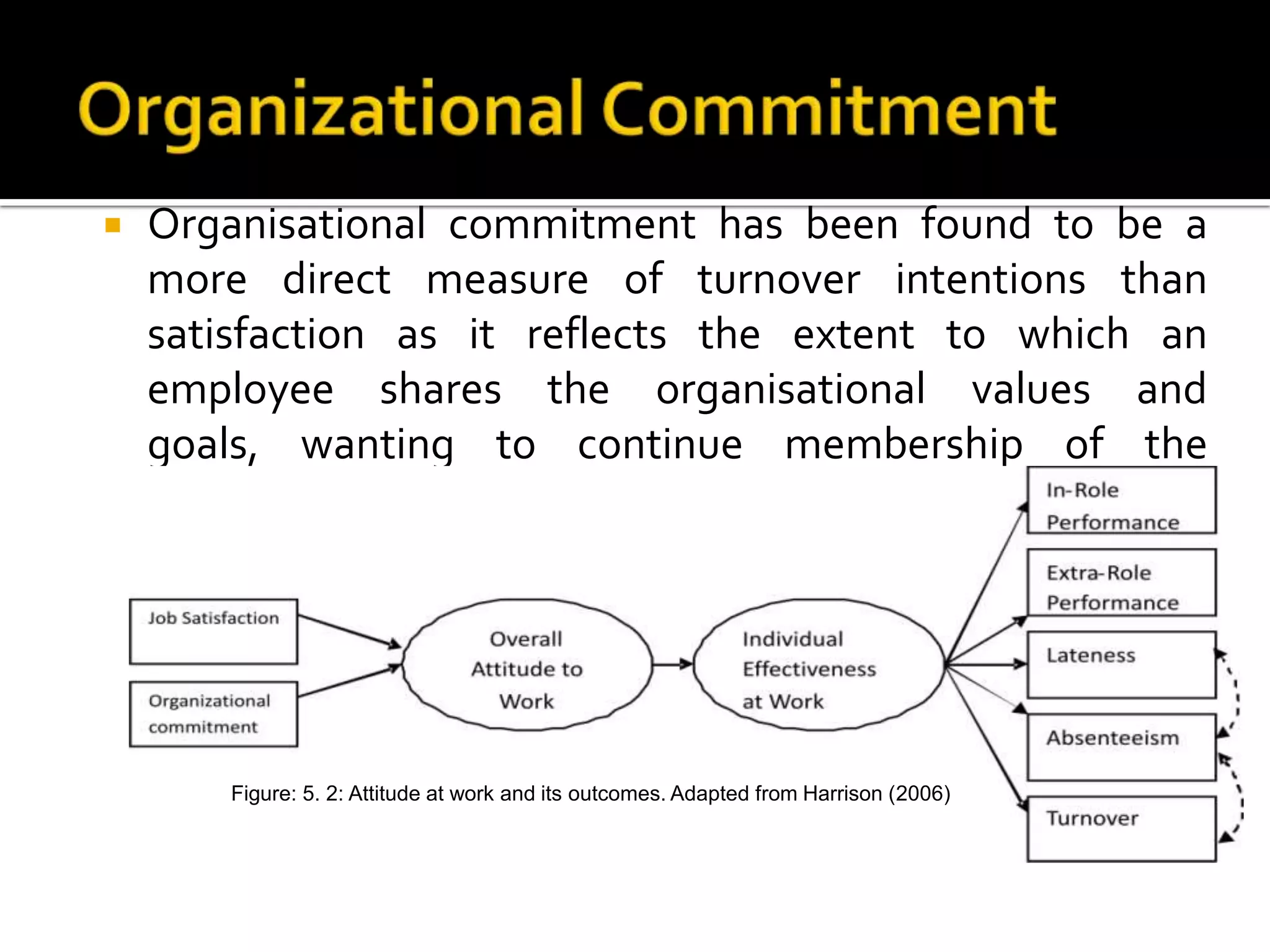
   Organisational commitment has been found to be a
    more direct measure of turnover intentions than
    satisfaction as it reflects the extent to which an
    employee shares the organisational values and
    goals, wanting to continue membership of the
    organisation and willing to work hard for it


       Figure: 5. 2: Attitude at work and its outcomes. Adapted from Harrison (2006)
   Individual behaviour that is discretionary, not
    directly or explicitly recognized by the formal
    reward system, and in the aggregate
    promotes the efficient and effective
    functioning of the organisation
•   Encouraging Citizenship Behaviour
    – Dimensions of OCB: Sportsmanship, Organisational
      Loyalty, Individual Initiative, Civic virtue and Self
      Development

•   Two work attitudes relevant to India:
    Karmayoga and Work Dedication
    – Karmayoga means a tendency to discharge one’s duties
      without lusting for the outcomes
    – Work Dedication is the disposition of the employee to
      voluntarily engage in affectively unpleasant, non-
      rewarding organisationally relevant behaviours. It is a
      more relevant concept in India.
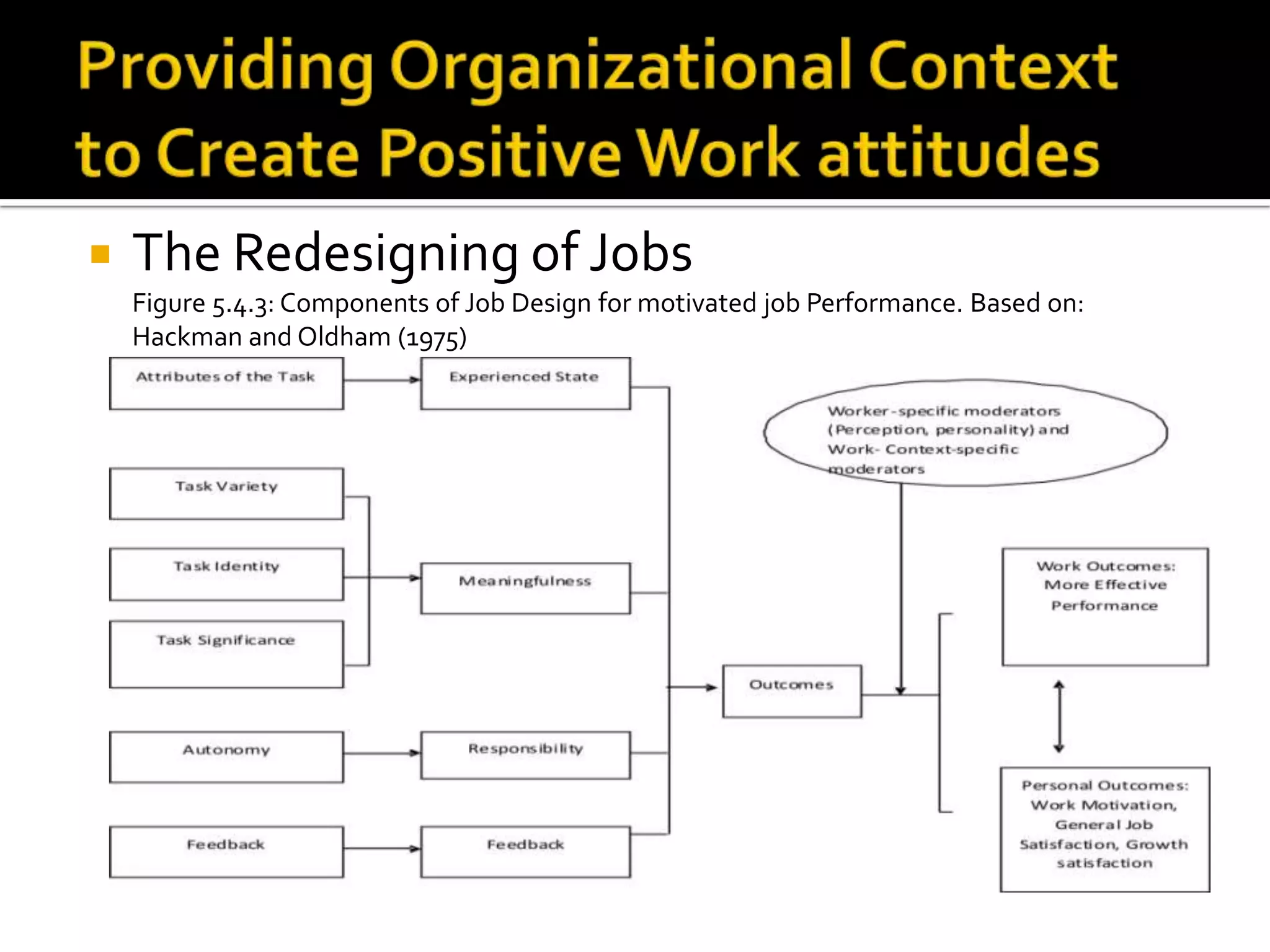
   The Redesigning of Jobs
    Figure 5.4.3: Components of Job Design for motivated job Performance. Based on:
    Hackman and Oldham (1975)
•   Reinforcement: Anything that increases the
    frequency or intensity of a desired behaviour

•   Punishment : Aimed at mainly to stop or
    reduce the frequency of undesirable activities

•   Individual Incentive Systems
    – Usually in the form of money
    – They can strengthen goal commitment
•   Gainsharing or Group Incentive
    – When incentives are spread at group level, the best
     results are found when employees participate in
     decisionmaking and later share group incentive
•   Goal Setting, Feedback and Bonus
•   Pay Dispersion and Equity
•   Employee Stock Ownership Plan (ESOPs)
    – The employee-owners are more committed to the
     success of the enterprise because business success is
     transferred directly into personal wealth. Incentive
     Stock Options (ISOs) allow ownership of stock
     contingent upon meeting specific performance criteria

Chapter5

  • 1.
    Learning Objectives: – Discover what are work related attitudes – Explain the meaning of Job Satisfaction, Commitment and Organisational Citizenship Behaviour – Discuss the influence of work related attitudes for organisations on organisation’s priorities – Present what measures can organisations adopt in order to shape favorable attitudes at work
  • 2.
    “…Reflect an individual’spersistent tendency to think, feel and behave towards an object in a particular way involving favor or disfavor.” • Always towards something or External Environment: Changing external Environment, Managerial challenges someone Managerial inter pretati on of ‘desirable’ • Do not change be havior Inte rnal Environment: Aligning without effort employee behavior to what is considered ‘desirable’ as organizations act through and willingness employees Aligning empl oyee attitude to desirable • ‘Tendency’ be havior Managing Dynamics of suggests a individual behavior: Perception, Personality, default response Motivation and Learning to a given trigger
  • 3.
    The two most researched Work Attitudes • Job satisfaction is an emotional state generated by evaluation or appraisal of one’s job experiences – An employee who is satisfied with his/her job is said to derive happiness or pleasure from his/her job or experience at the job – It is also a psychological state represented by thoughts and feelings as its indicators
  • 4.
    Organisational commitment has been found to be a more direct measure of turnover intentions than satisfaction as it reflects the extent to which an employee shares the organisational values and goals, wanting to continue membership of the organisation and willing to work hard for it Figure: 5. 2: Attitude at work and its outcomes. Adapted from Harrison (2006)
  • 5.
    Individual behaviour that is discretionary, not directly or explicitly recognized by the formal reward system, and in the aggregate promotes the efficient and effective functioning of the organisation
  • 6.
    Encouraging Citizenship Behaviour – Dimensions of OCB: Sportsmanship, Organisational Loyalty, Individual Initiative, Civic virtue and Self Development • Two work attitudes relevant to India: Karmayoga and Work Dedication – Karmayoga means a tendency to discharge one’s duties without lusting for the outcomes – Work Dedication is the disposition of the employee to voluntarily engage in affectively unpleasant, non- rewarding organisationally relevant behaviours. It is a more relevant concept in India.
  • 7.
    The Redesigning of Jobs Figure 5.4.3: Components of Job Design for motivated job Performance. Based on: Hackman and Oldham (1975)
  • 8.
    Reinforcement: Anything that increases the frequency or intensity of a desired behaviour • Punishment : Aimed at mainly to stop or reduce the frequency of undesirable activities • Individual Incentive Systems – Usually in the form of money – They can strengthen goal commitment
  • 9.
    Gainsharing or Group Incentive – When incentives are spread at group level, the best results are found when employees participate in decisionmaking and later share group incentive • Goal Setting, Feedback and Bonus • Pay Dispersion and Equity • Employee Stock Ownership Plan (ESOPs) – The employee-owners are more committed to the success of the enterprise because business success is transferred directly into personal wealth. Incentive Stock Options (ISOs) allow ownership of stock contingent upon meeting specific performance criteria