Gas Chromatography
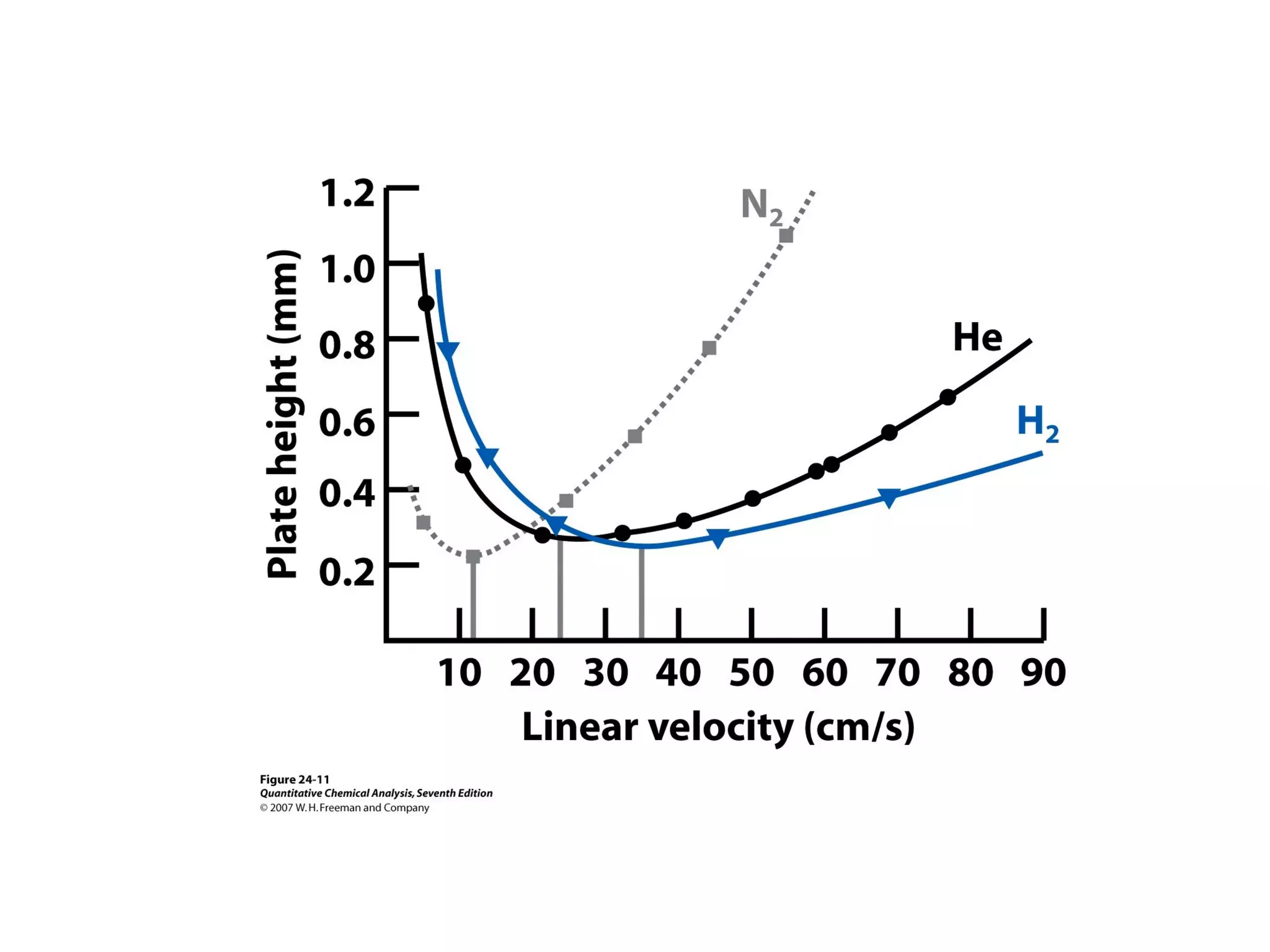
Mobile phase: Gas (H2, He, N2)
Stationary phase: Nonvolatile liquid or solid
Solute: gas or volatile liquid
GC considerations: analyte must be volatile and thermally stable
Factors that influence separation
Carrier gas type and velocity
Column temperature
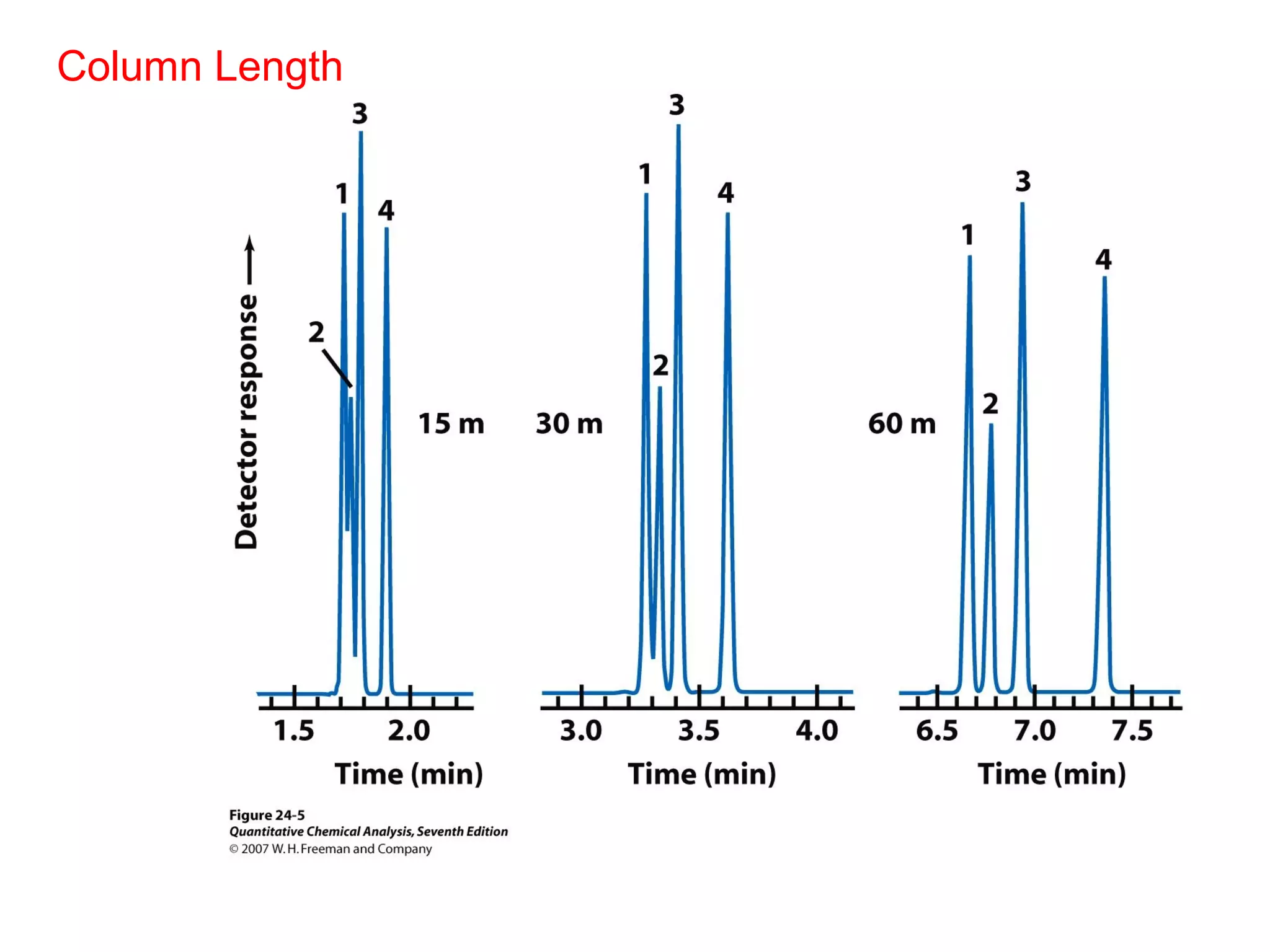
Column length
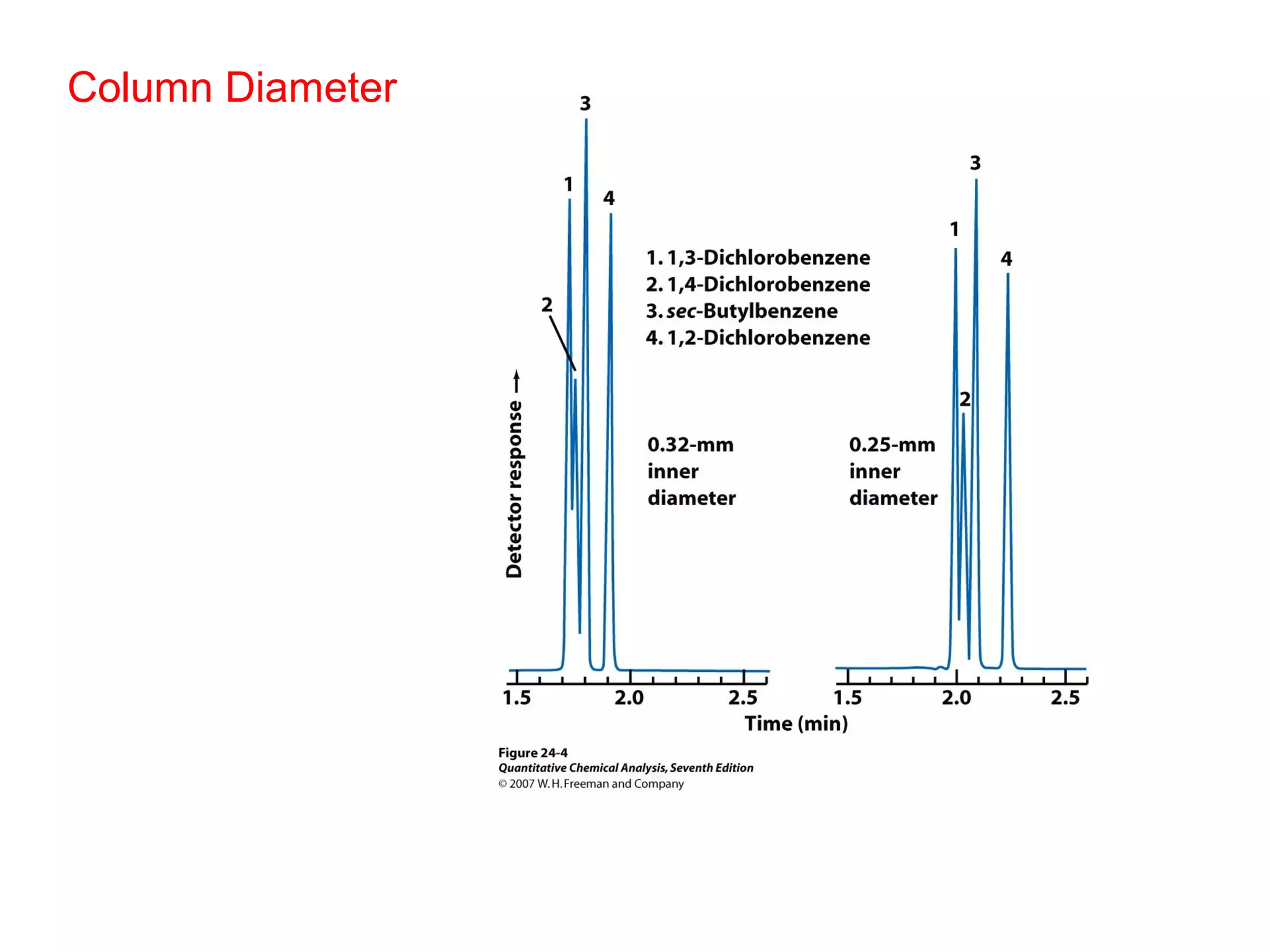
Column diameter
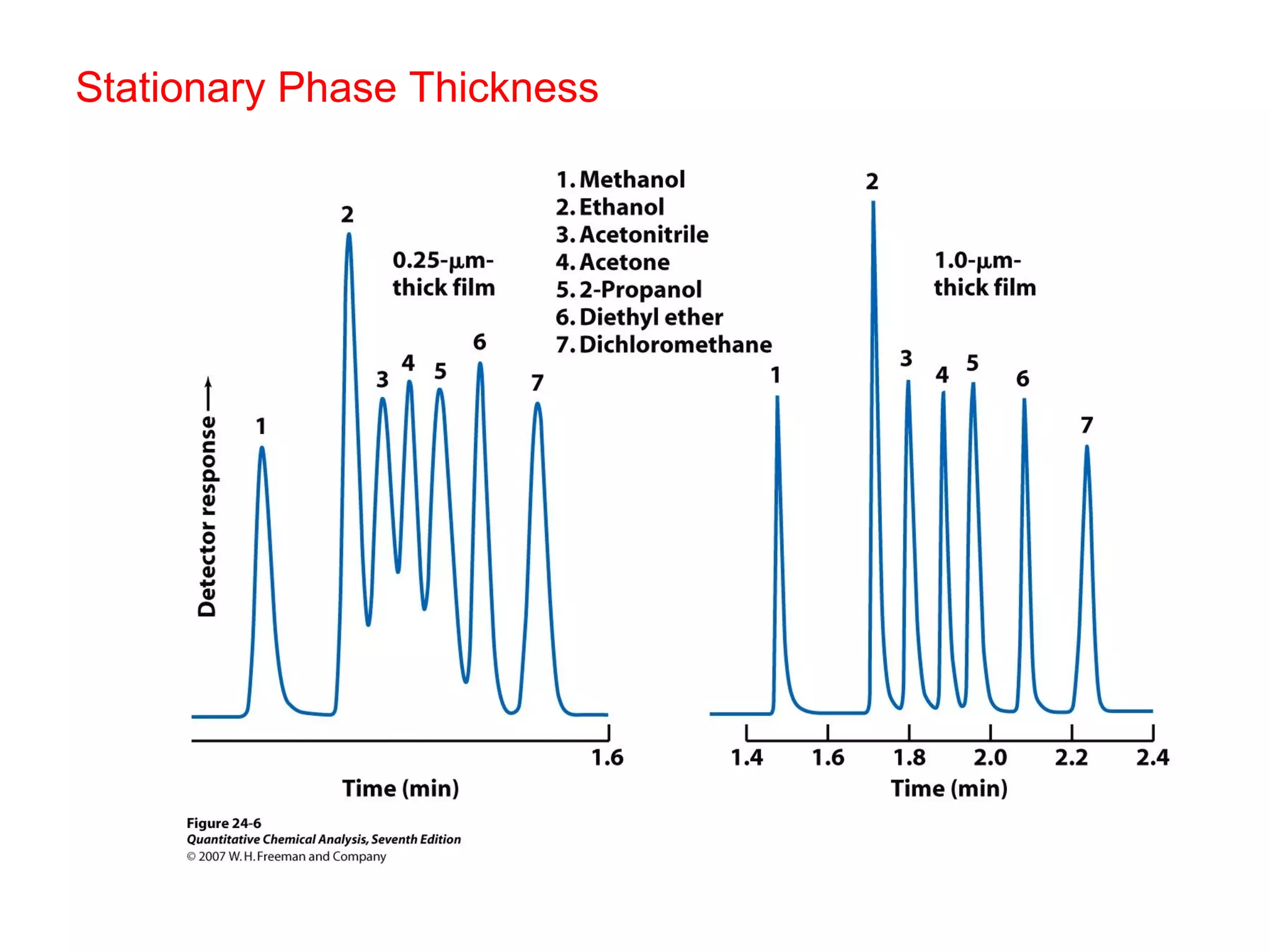
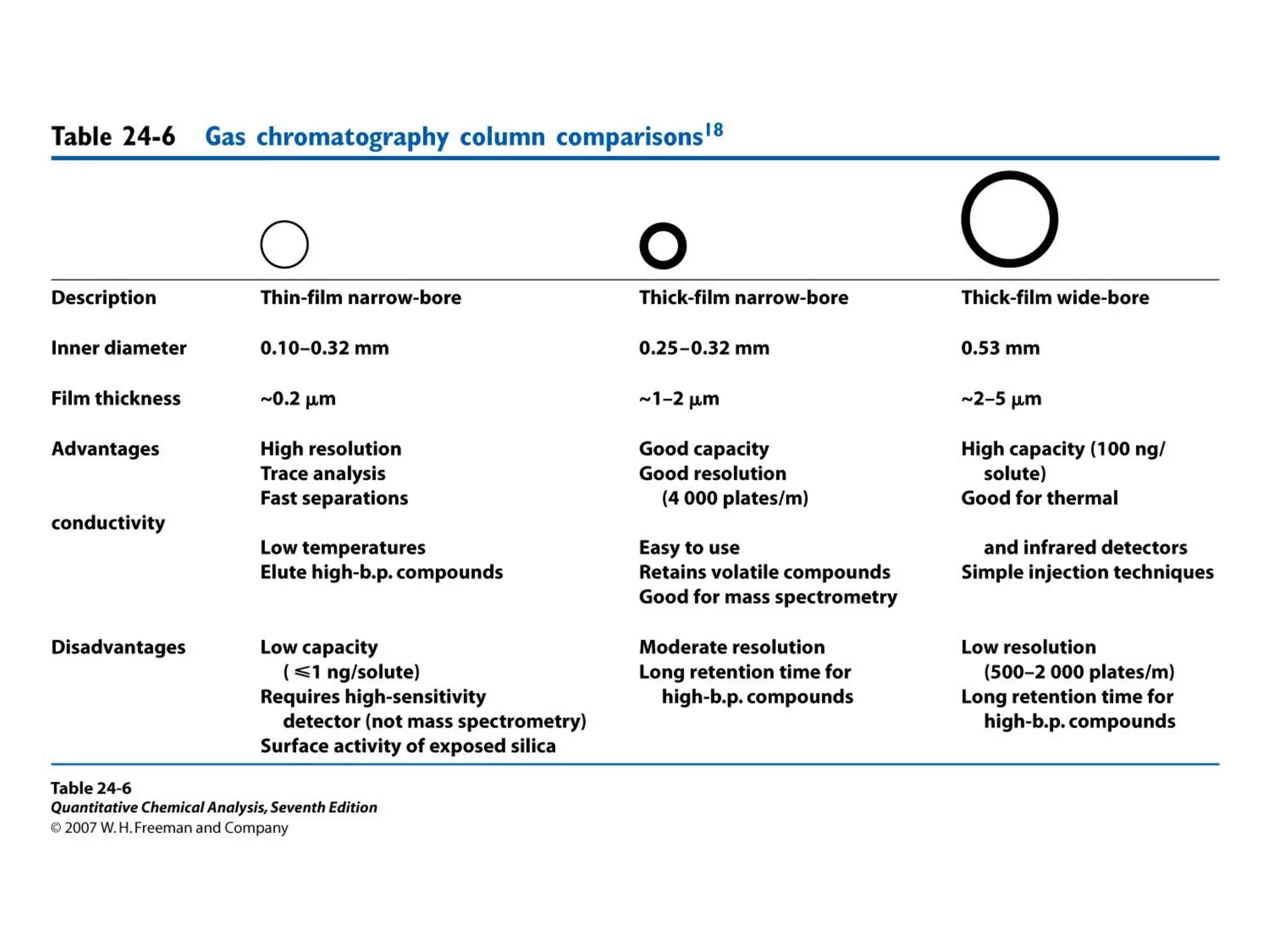
Film thickness
Stationary phase type
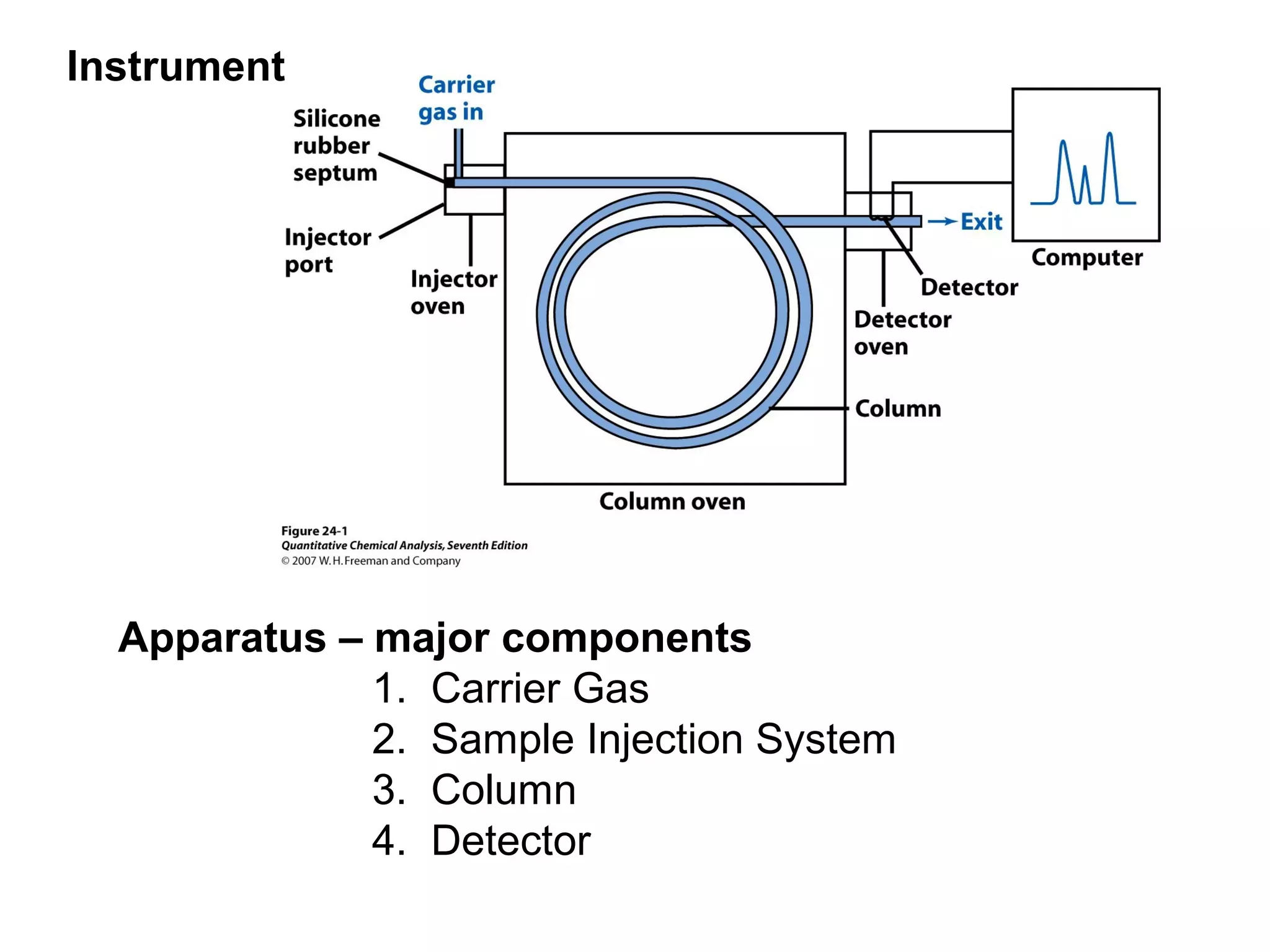
Instrument
Apparatus – major components
1. Carrier Gas
2. Sample Injection System
3. Column
4. Detector
Gas Chromatography
1. Carrier Gas
• Inert
• Hydrogen, helium, nitrogen
• Often dictated by detector
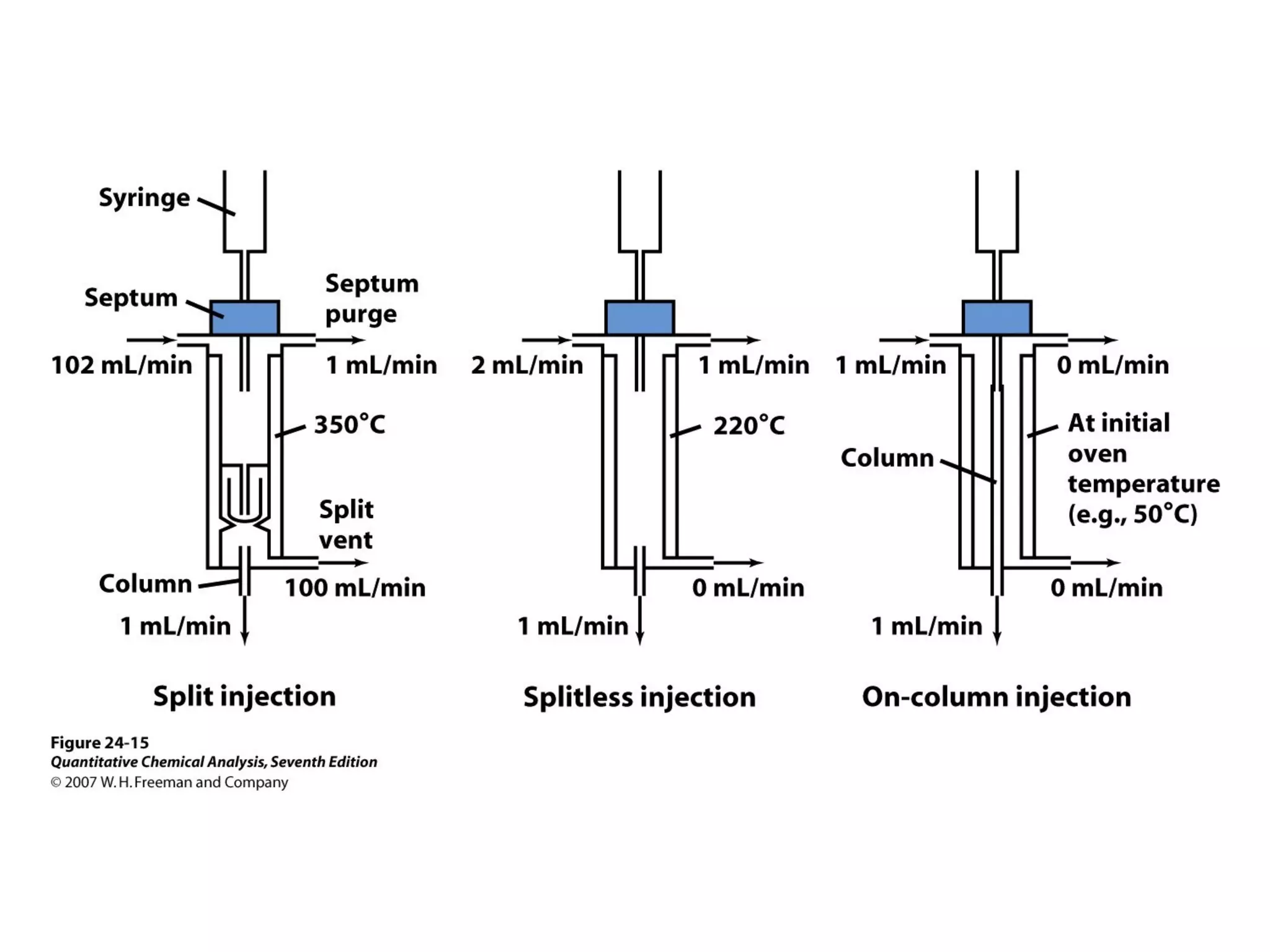
2. Sample Injection System
•Temp. very important
•Avoid band broadening
•Suitable size (µL)
•Liquid/Gas: syringes
Gas Chromatography
3. Columns
A. Packed
B. Open Tubular
A. Packed
Stainless steel or glass
3-8 mm dia
1-5 m in length
Fine solid support coated with nonvolatile liq
Strong solid support
Gas Chromatography
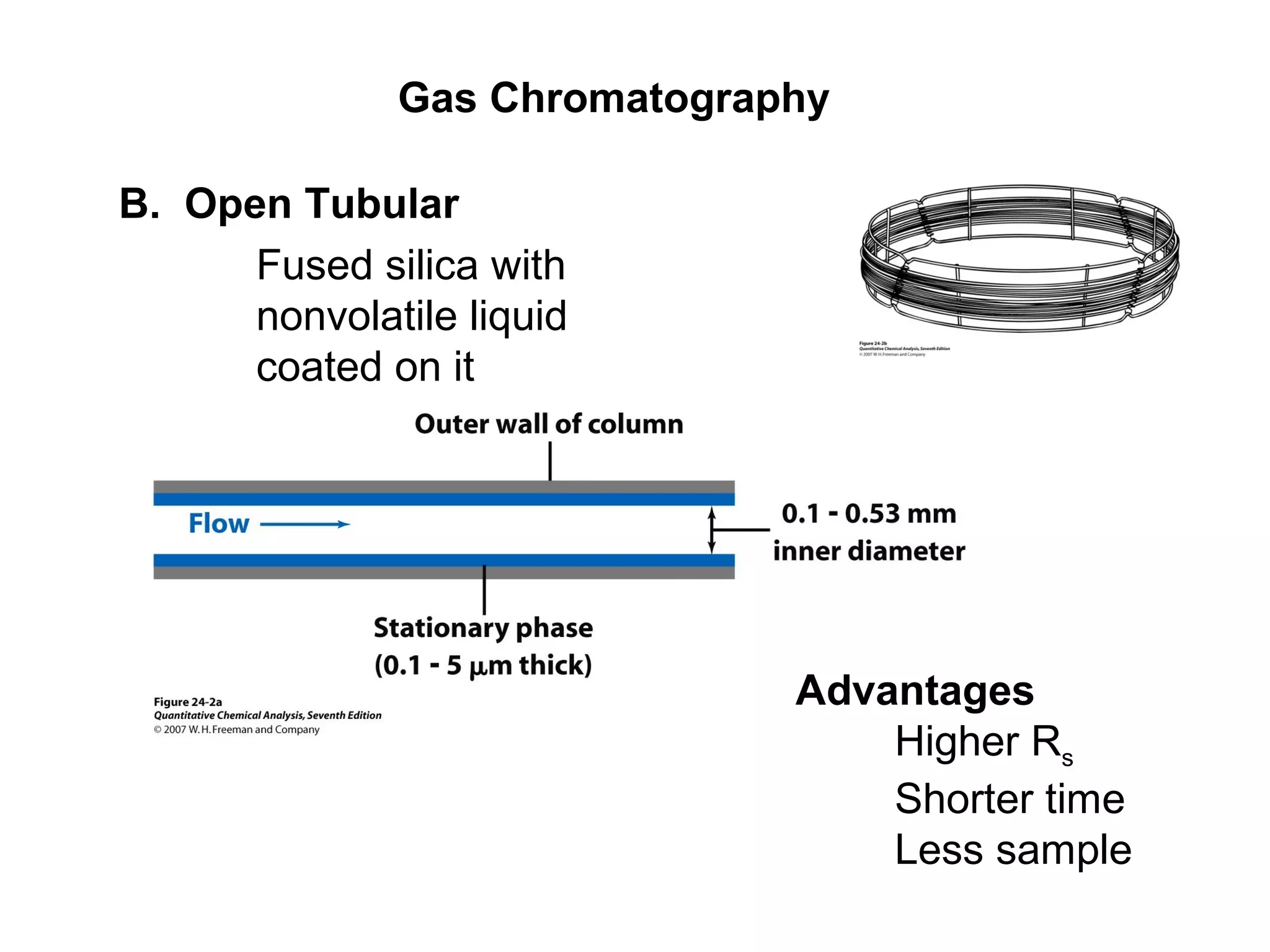
B. Open Tubular
Fused silica with
nonvolatile liquid
coated on it
Advantages
Higher Rs
Shorter time
Less sample
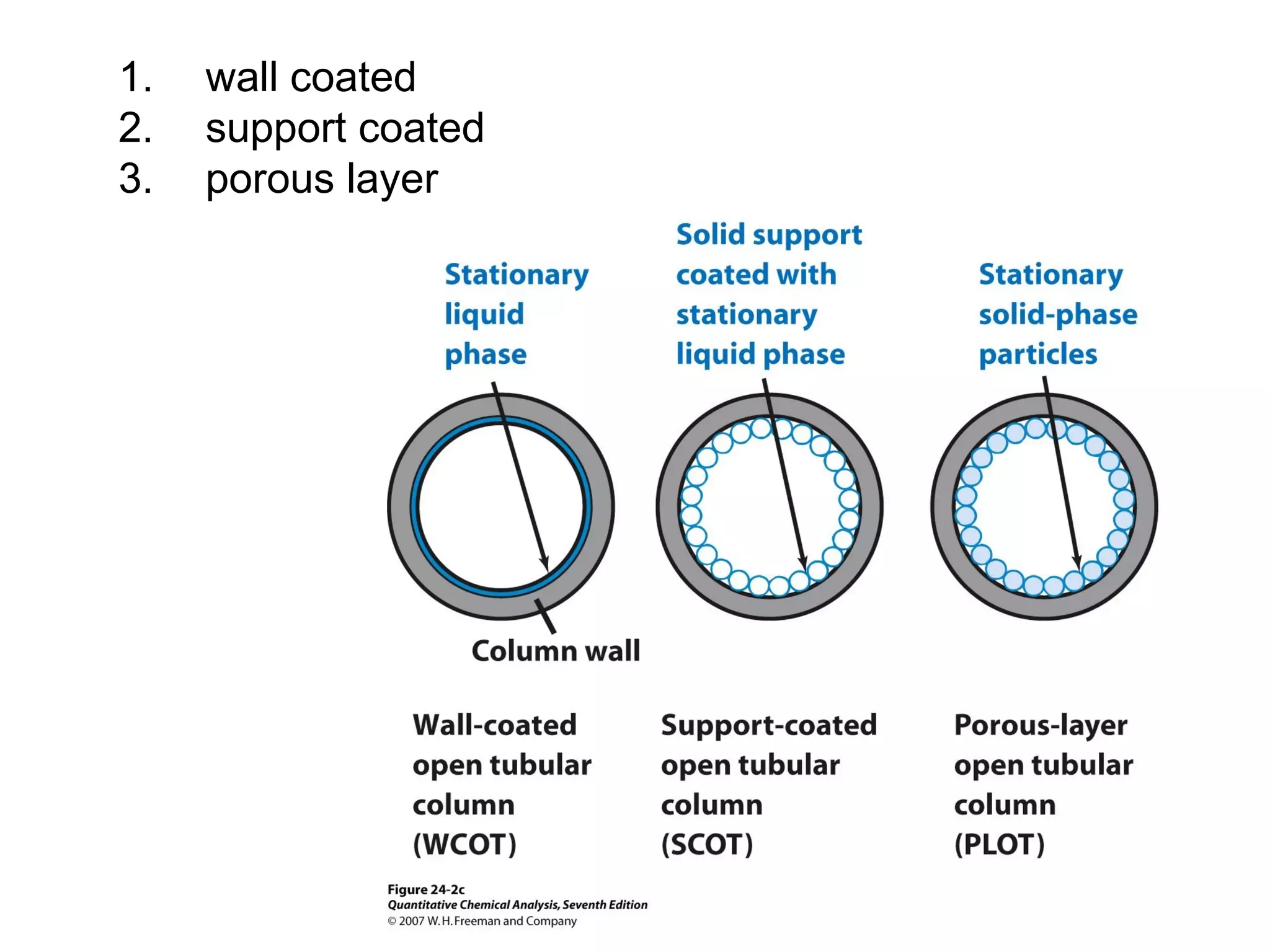
1. wall coated
2. support coated
3. porous layer
Gas Chromatography
A. Solid Support
Small uniform particles
Good mechanical strength
High surface area
Inert at high temperature
Usually 150 – 250 µm dia
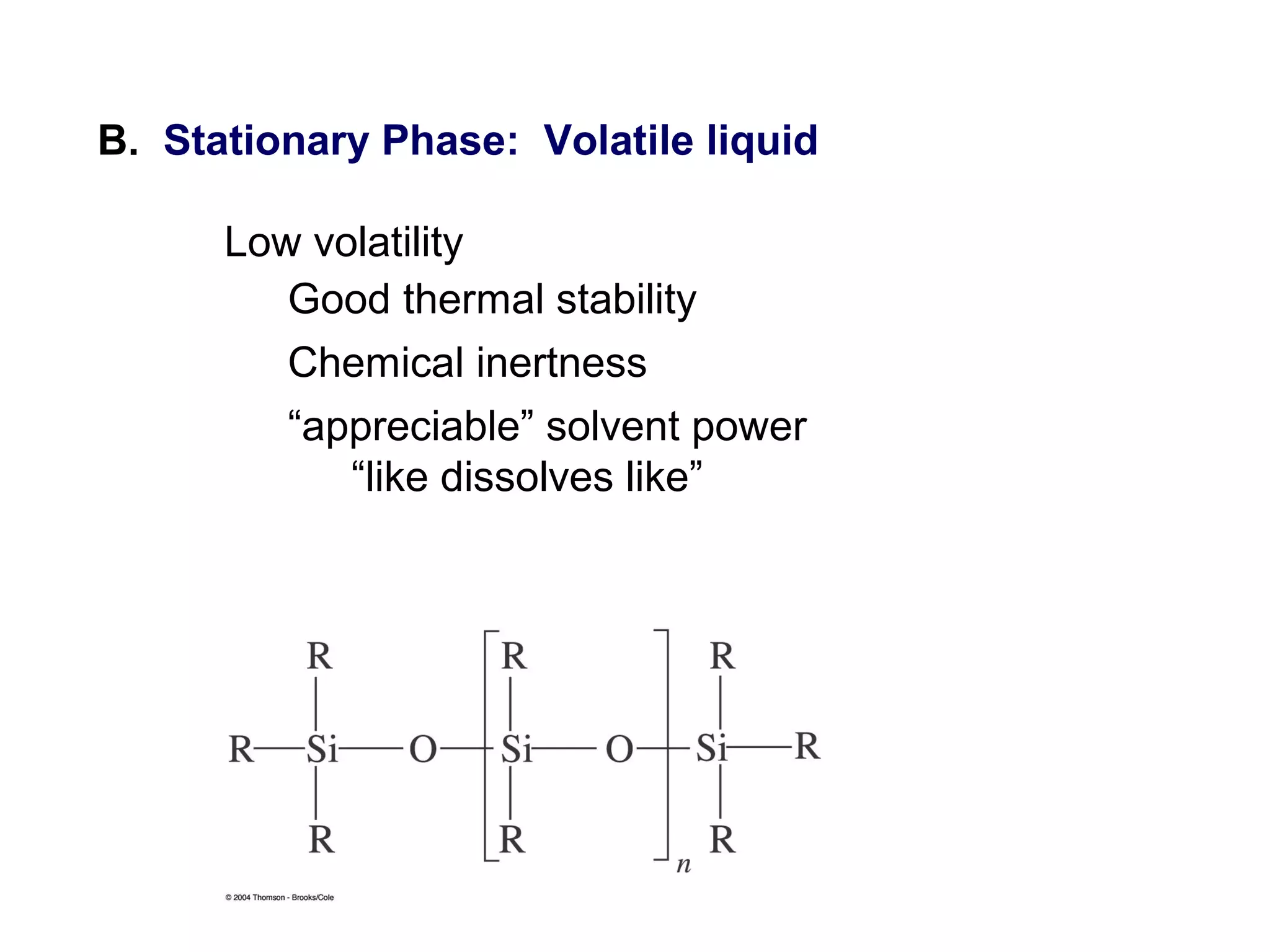
B. Stationary Phase: Volatile liquid
Low volatility
Good thermal stability
Chemical inertness
“appreciable” solvent power
“like dissolves like”
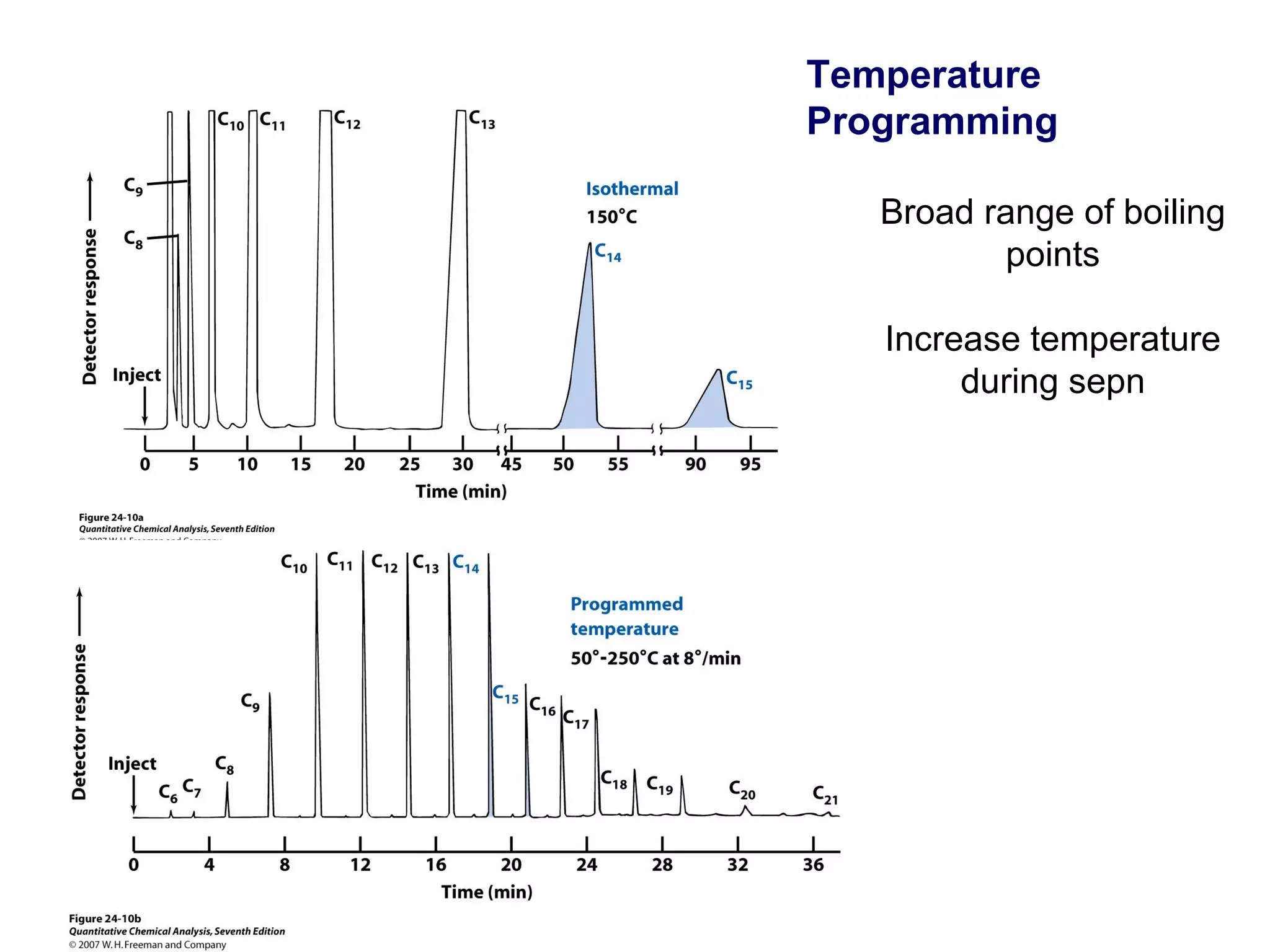
Temperature
Programming
Broad range of boiling
points
Increase temperature
during sepn
Column Diameter
Column Length
Stationary Phase Thickness
Gas Chromatography
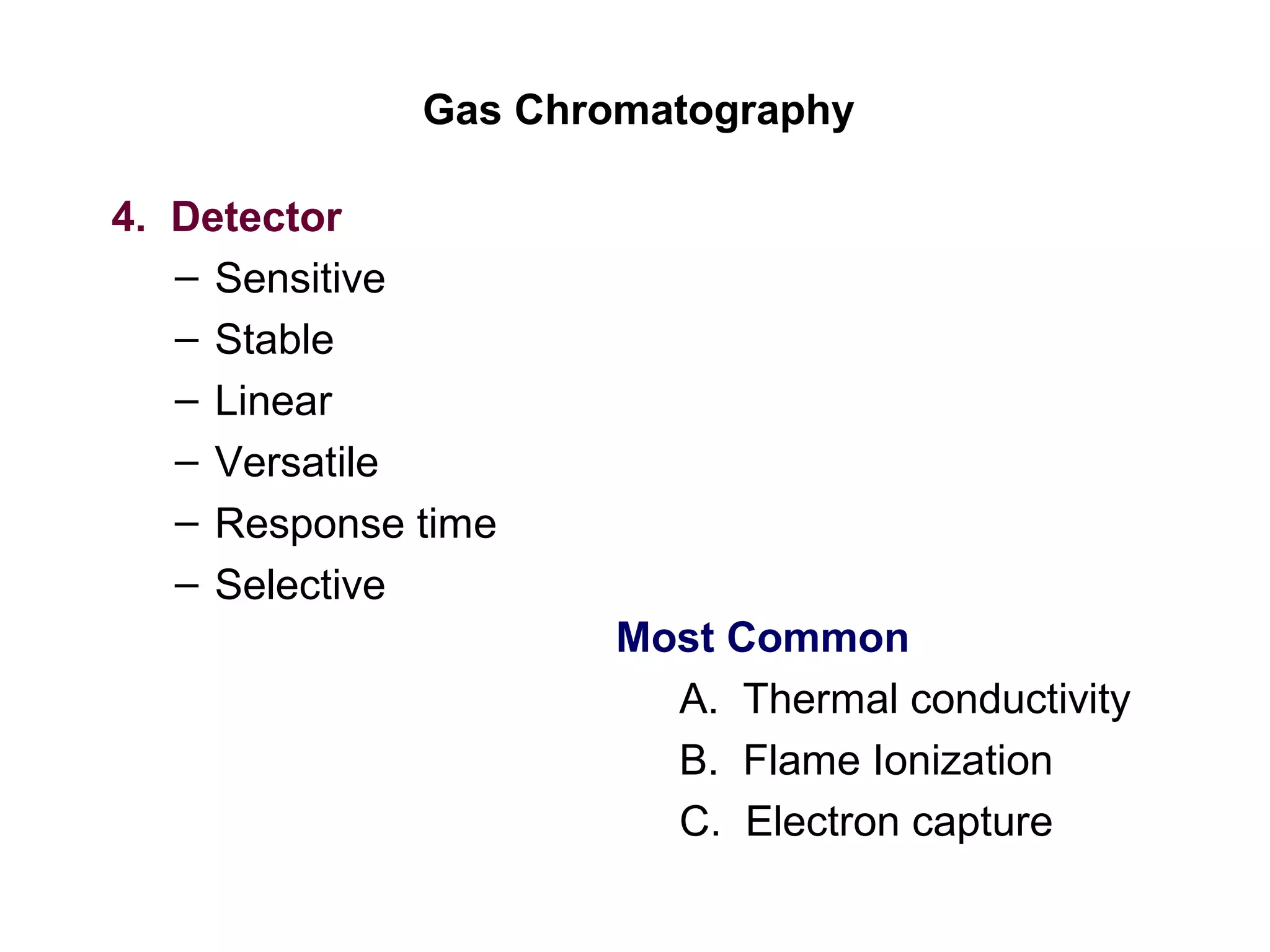
4. Detector
– Sensitive
– Stable
– Linear
– Versatile
– Response time
– Selective
Most Common
A. Thermal conductivity
B. Flame Ionization
C. Electron capture
Gas Chromatography
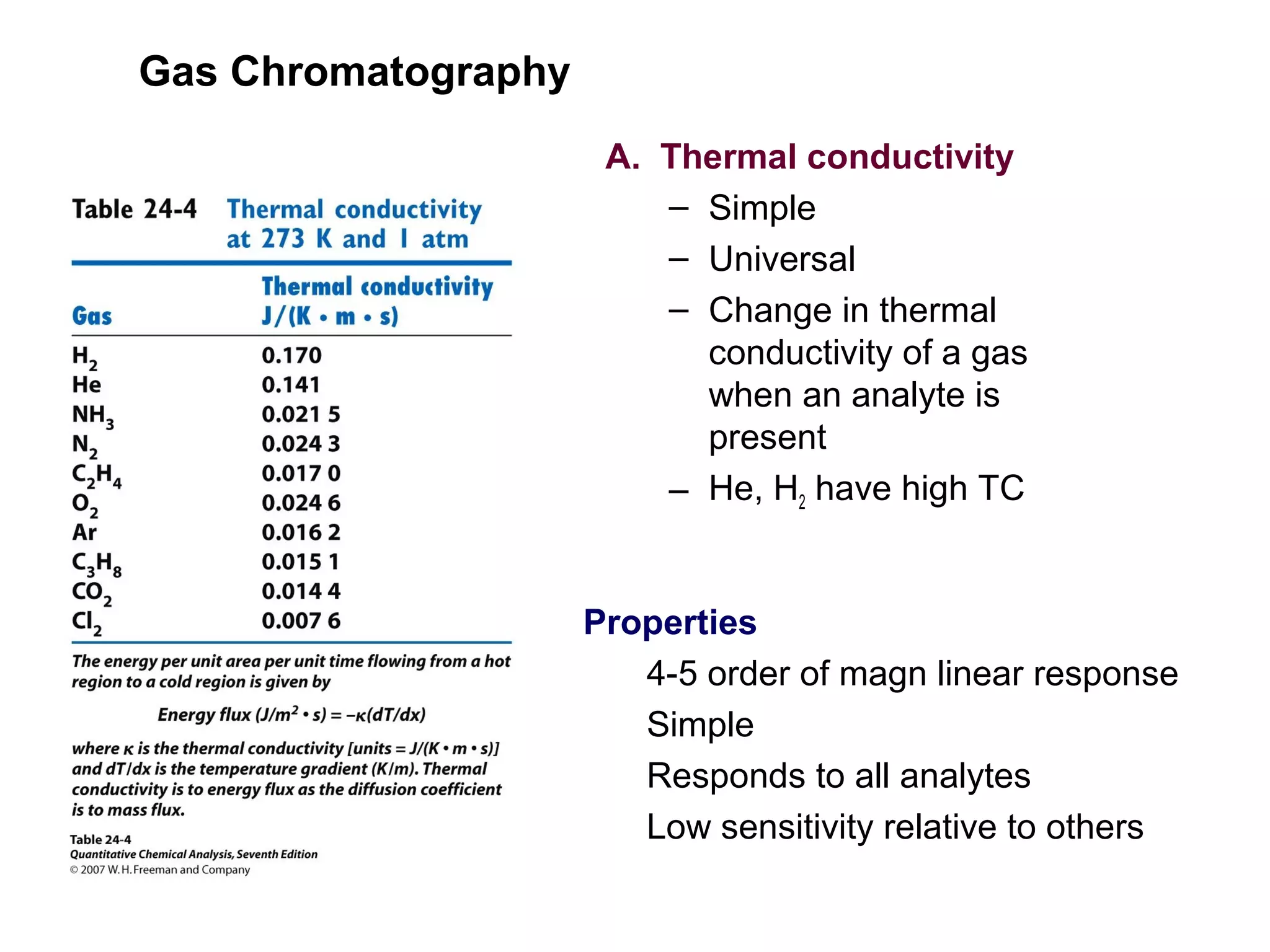
A. Thermal conductivity
– Simple
– Universal
– Change in thermal
conductivity of a gas
when an analyte is
present
– He, H2 have high TC
Properties
4-5 order of magn linear response
Simple
Responds to all analytes
Low sensitivity relative to others
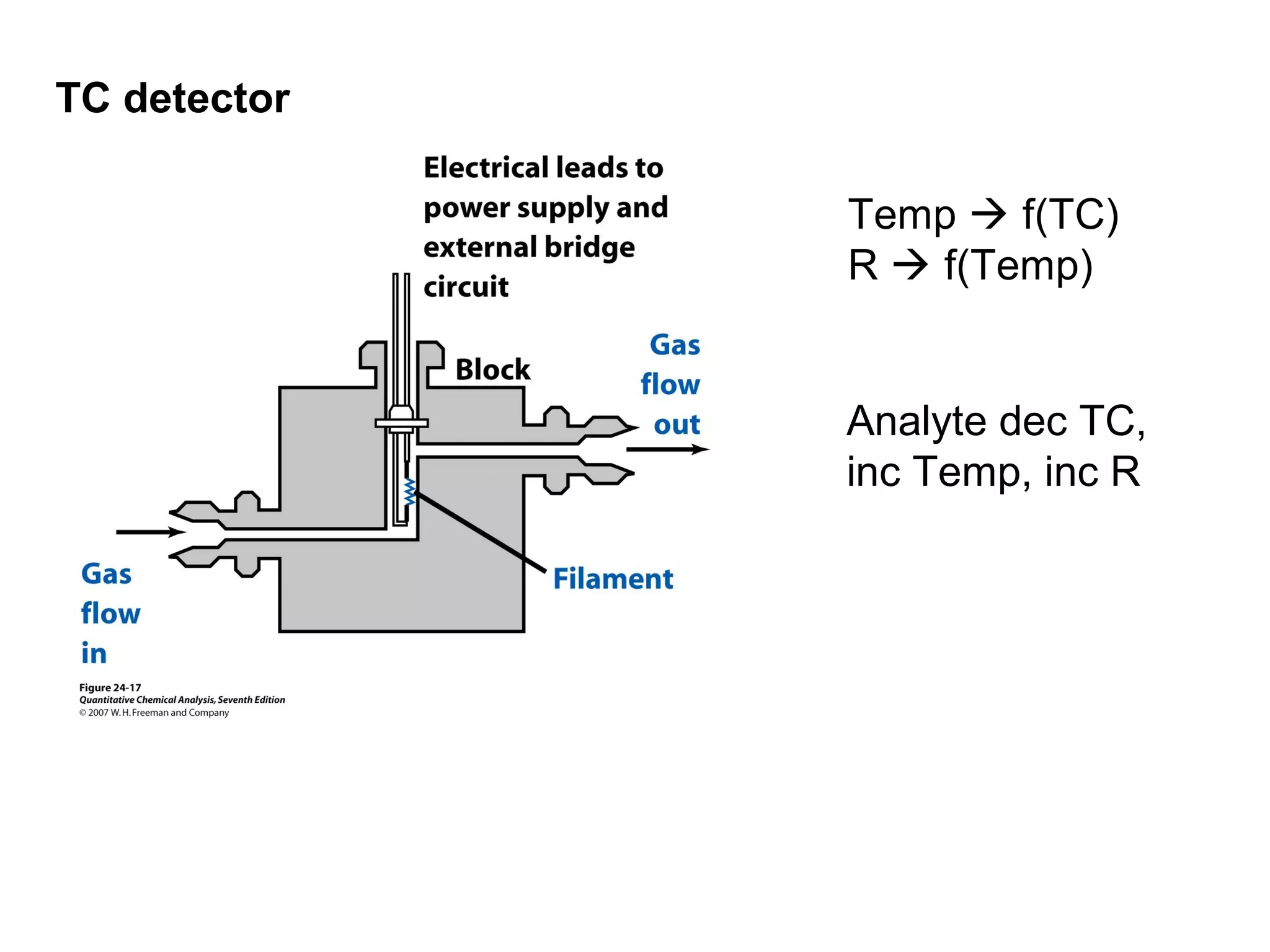
Temp  f(TC)
R  f(Temp)
Analyte dec TC,
inc Temp, inc R
TC detector
Gas Chromatography
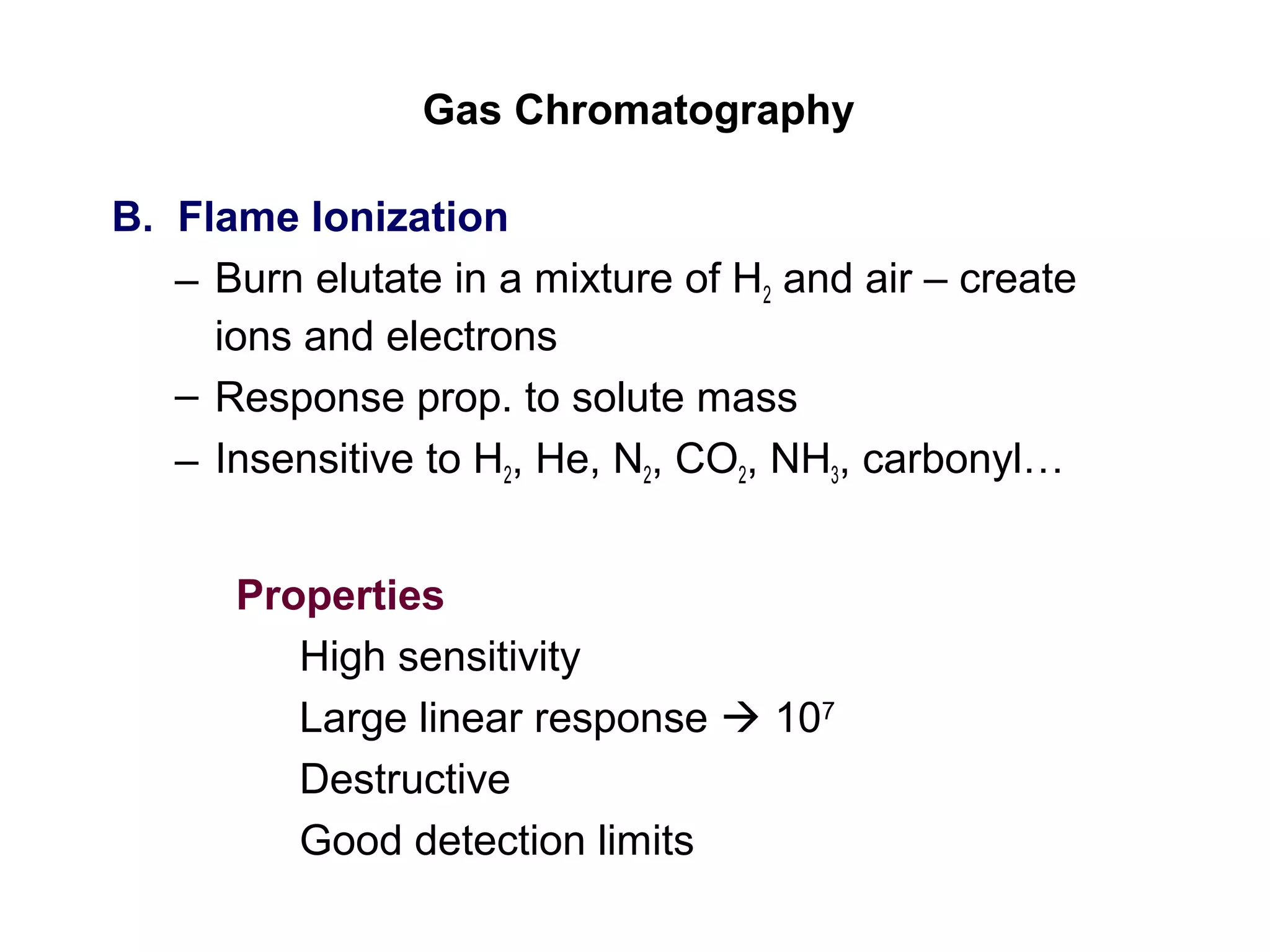
B. Flame Ionization
– Burn elutate in a mixture of H2 and air – create
ions and electrons
– Response prop. to solute mass
– Insensitive to H2, He, N2, CO2, NH3, carbonyl…
Properties
High sensitivity
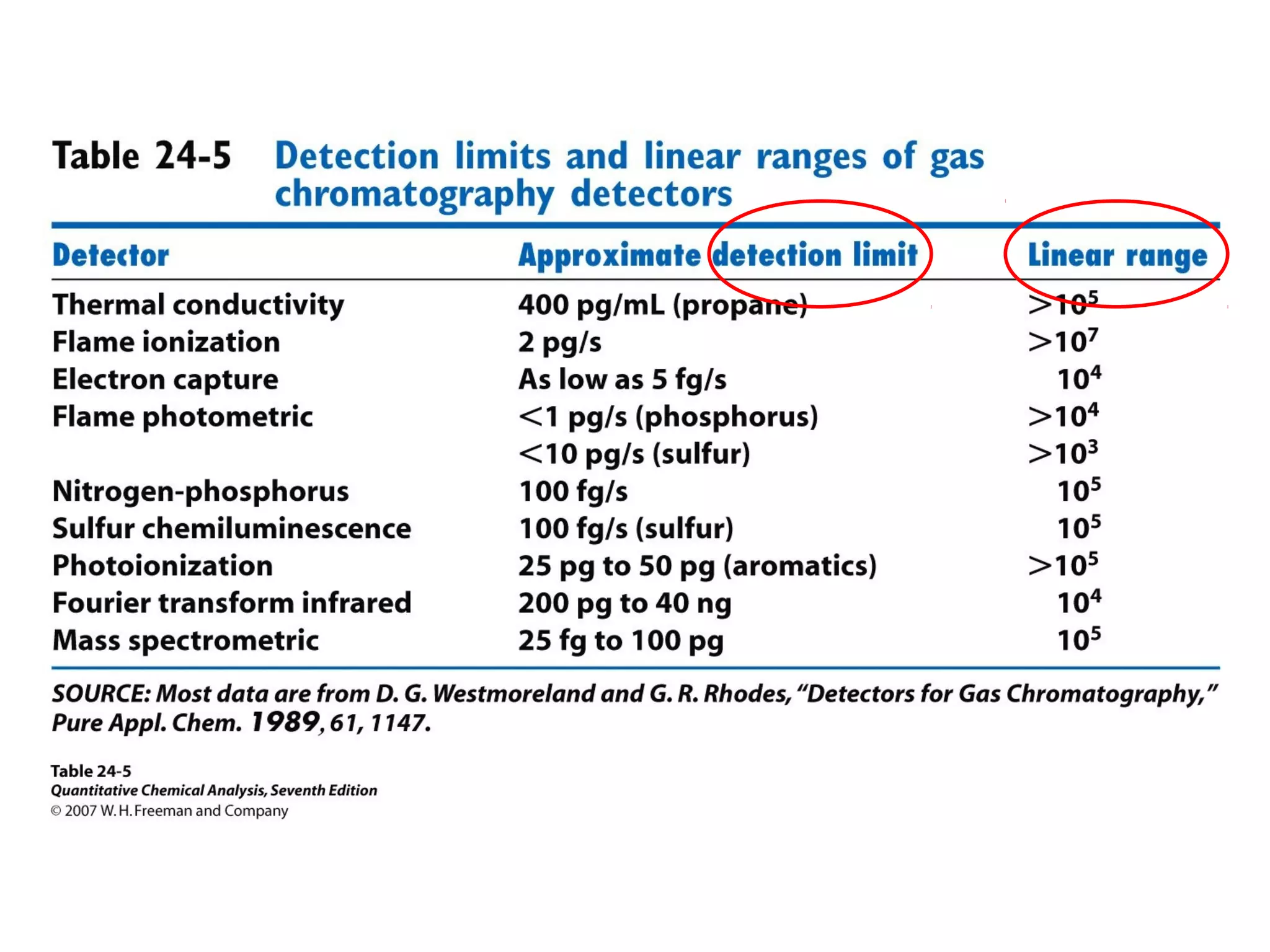
Large linear response  107
Destructive
Good detection limits
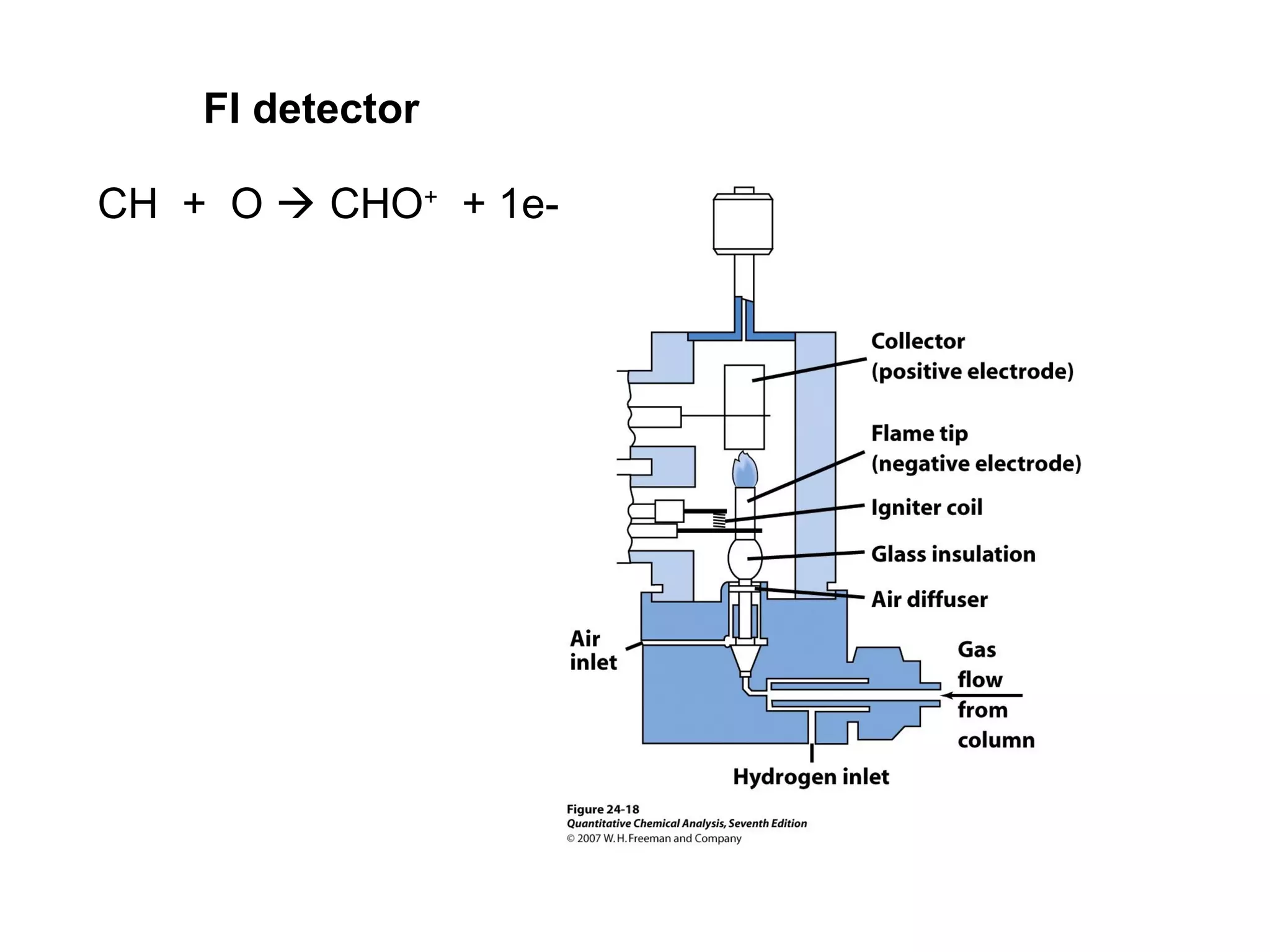
CH + O  CHO+
+ 1e-
FI detector
Gas Chromatography
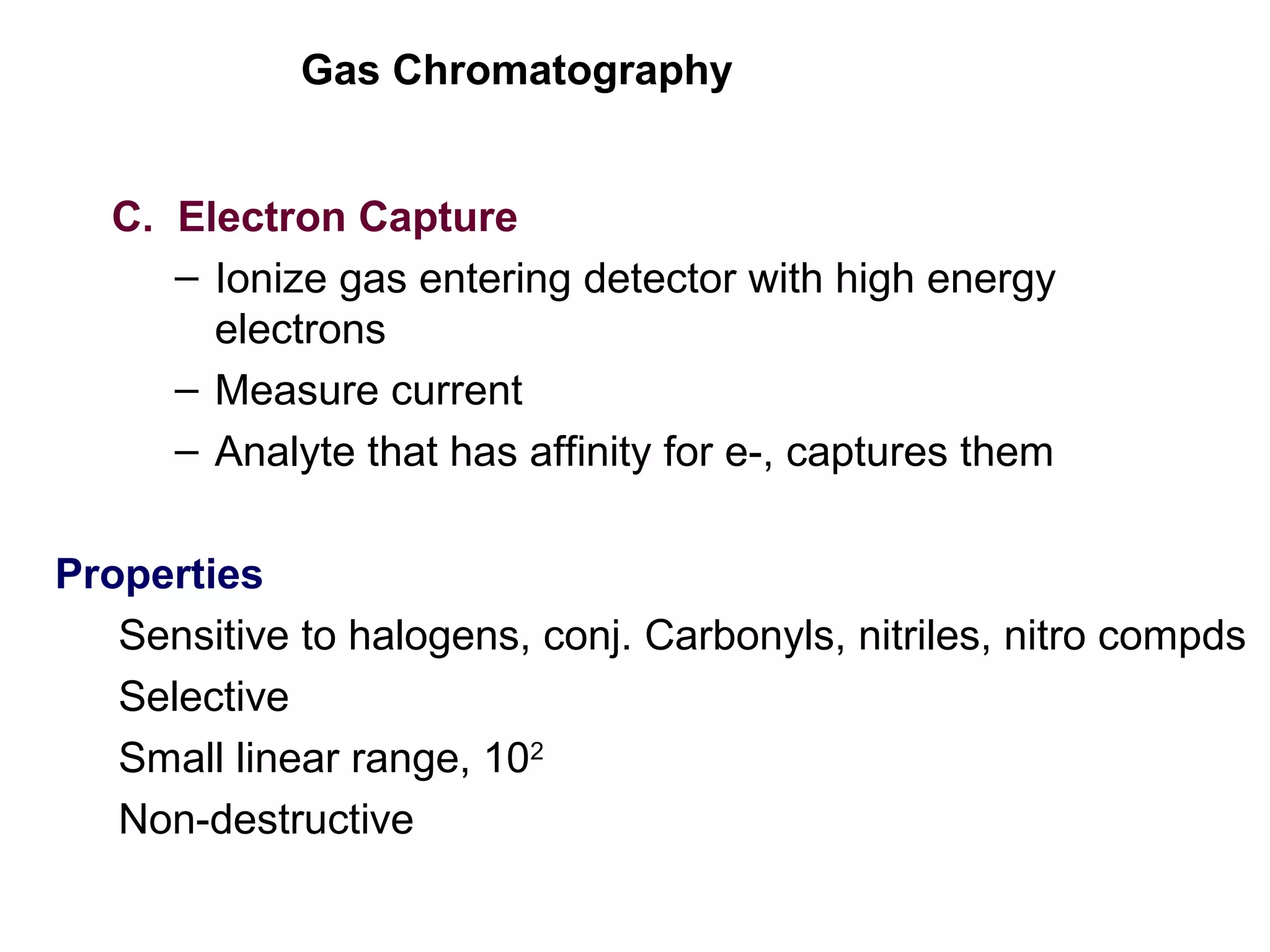
C. Electron Capture
– Ionize gas entering detector with high energy
electrons
– Measure current
– Analyte that has affinity for e-, captures them
Properties
Sensitive to halogens, conj. Carbonyls, nitriles, nitro compds
Selective
Small linear range, 102
Non-destructive
Chapter24gc 140711154209-phpapp01

Chapter24gc 140711154209-phpapp01

  • 1.
    Gas Chromatography Mobile phase:Gas (H2, He, N2) Stationary phase: Nonvolatile liquid or solid Solute: gas or volatile liquid GC considerations: analyte must be volatile and thermally stable Factors that influence separation Carrier gas type and velocity Column temperature Column length Column diameter Film thickness Stationary phase type
  • 2.
    Instrument Apparatus – majorcomponents 1. Carrier Gas 2. Sample Injection System 3. Column 4. Detector
  • 3.
    Gas Chromatography 1. CarrierGas • Inert • Hydrogen, helium, nitrogen • Often dictated by detector 2. Sample Injection System •Temp. very important •Avoid band broadening •Suitable size (µL) •Liquid/Gas: syringes
  • 5.
    Gas Chromatography 3. Columns A.Packed B. Open Tubular A. Packed Stainless steel or glass 3-8 mm dia 1-5 m in length Fine solid support coated with nonvolatile liq Strong solid support
  • 6.
    Gas Chromatography B. OpenTubular Fused silica with nonvolatile liquid coated on it Advantages Higher Rs Shorter time Less sample
  • 7.
    1. wall coated 2.support coated 3. porous layer
  • 9.
    Gas Chromatography A. SolidSupport Small uniform particles Good mechanical strength High surface area Inert at high temperature Usually 150 – 250 µm dia
  • 10.
    B. Stationary Phase:Volatile liquid Low volatility Good thermal stability Chemical inertness “appreciable” solvent power “like dissolves like”
  • 12.
    Temperature Programming Broad range ofboiling points Increase temperature during sepn
  • 14.
  • 15.
  • 16.
  • 18.
    Gas Chromatography 4. Detector –Sensitive – Stable – Linear – Versatile – Response time – Selective Most Common A. Thermal conductivity B. Flame Ionization C. Electron capture
  • 19.
    Gas Chromatography A. Thermalconductivity – Simple – Universal – Change in thermal conductivity of a gas when an analyte is present – He, H2 have high TC Properties 4-5 order of magn linear response Simple Responds to all analytes Low sensitivity relative to others
  • 20.
    Temp  f(TC) R f(Temp) Analyte dec TC, inc Temp, inc R TC detector
  • 21.
    Gas Chromatography B. FlameIonization – Burn elutate in a mixture of H2 and air – create ions and electrons – Response prop. to solute mass – Insensitive to H2, He, N2, CO2, NH3, carbonyl… Properties High sensitivity Large linear response  107 Destructive Good detection limits
  • 22.
    CH + O CHO+ + 1e- FI detector
  • 23.
    Gas Chromatography C. ElectronCapture – Ionize gas entering detector with high energy electrons – Measure current – Analyte that has affinity for e-, captures them Properties Sensitive to halogens, conj. Carbonyls, nitriles, nitro compds Selective Small linear range, 102 Non-destructive