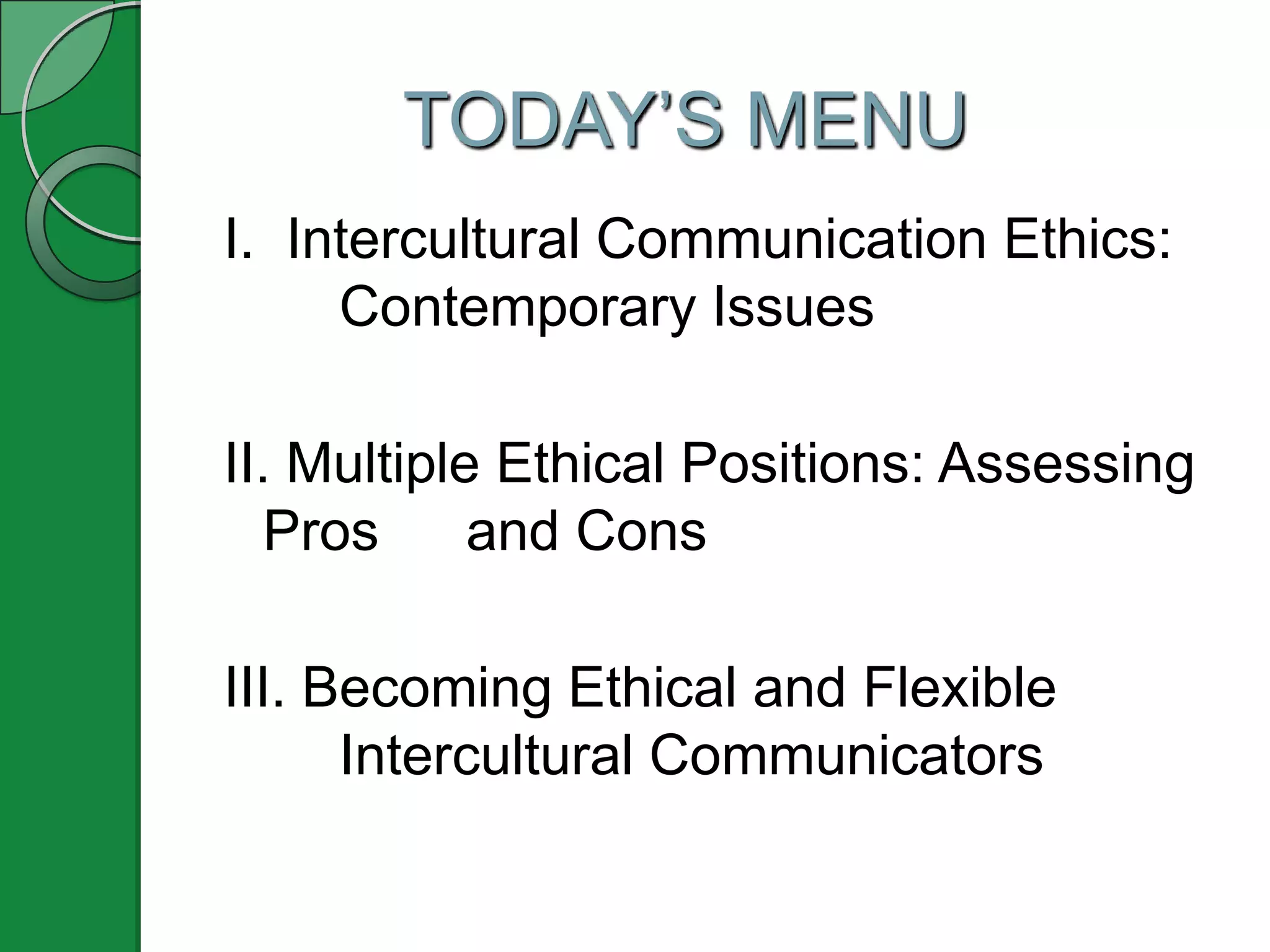
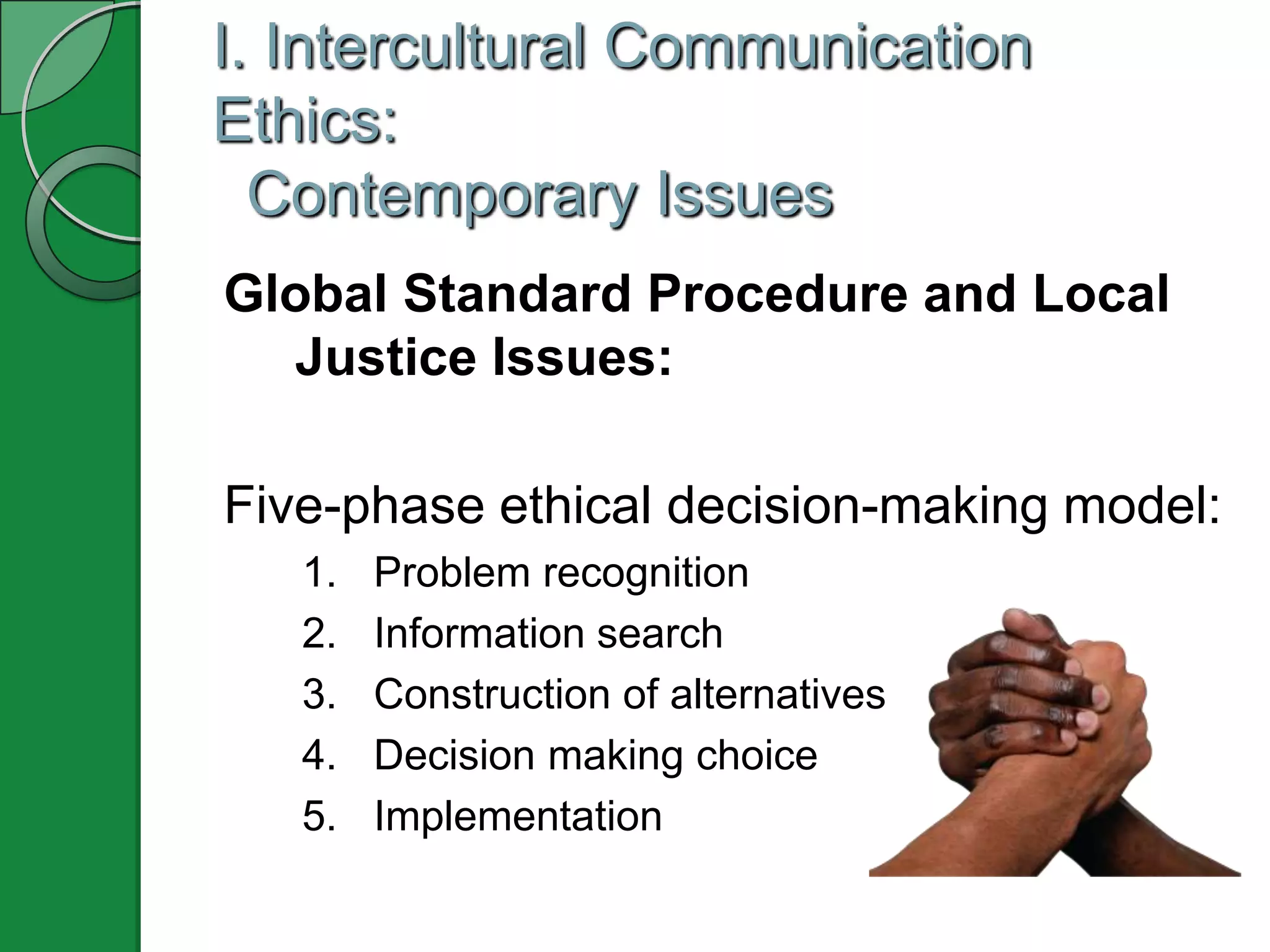
This document summarizes Chapter 12 of the book "Understanding Intercultural Communication Second Edition" which discusses how to become ethical intercultural communicators. [1] It outlines three ethical positions - absolutism, relativism and universalism - and their pros and cons for assessing ethical issues across cultures. [2] It also presents a fourth alternative position called "meta-ethics contextualism" which emphasizes fact-finding and layered interpretations of ethical dilemmas. [3] Finally, it discusses the importance of flexibility, parallel thinking and taking responsibility to communicate ethically with culturally different others.