The Role of IMC in the
Marketing Process
2
McGraw-Hill/Irwin Copyright © 2009 by The McGraw-Hill Companies, Inc. All rights reserved.
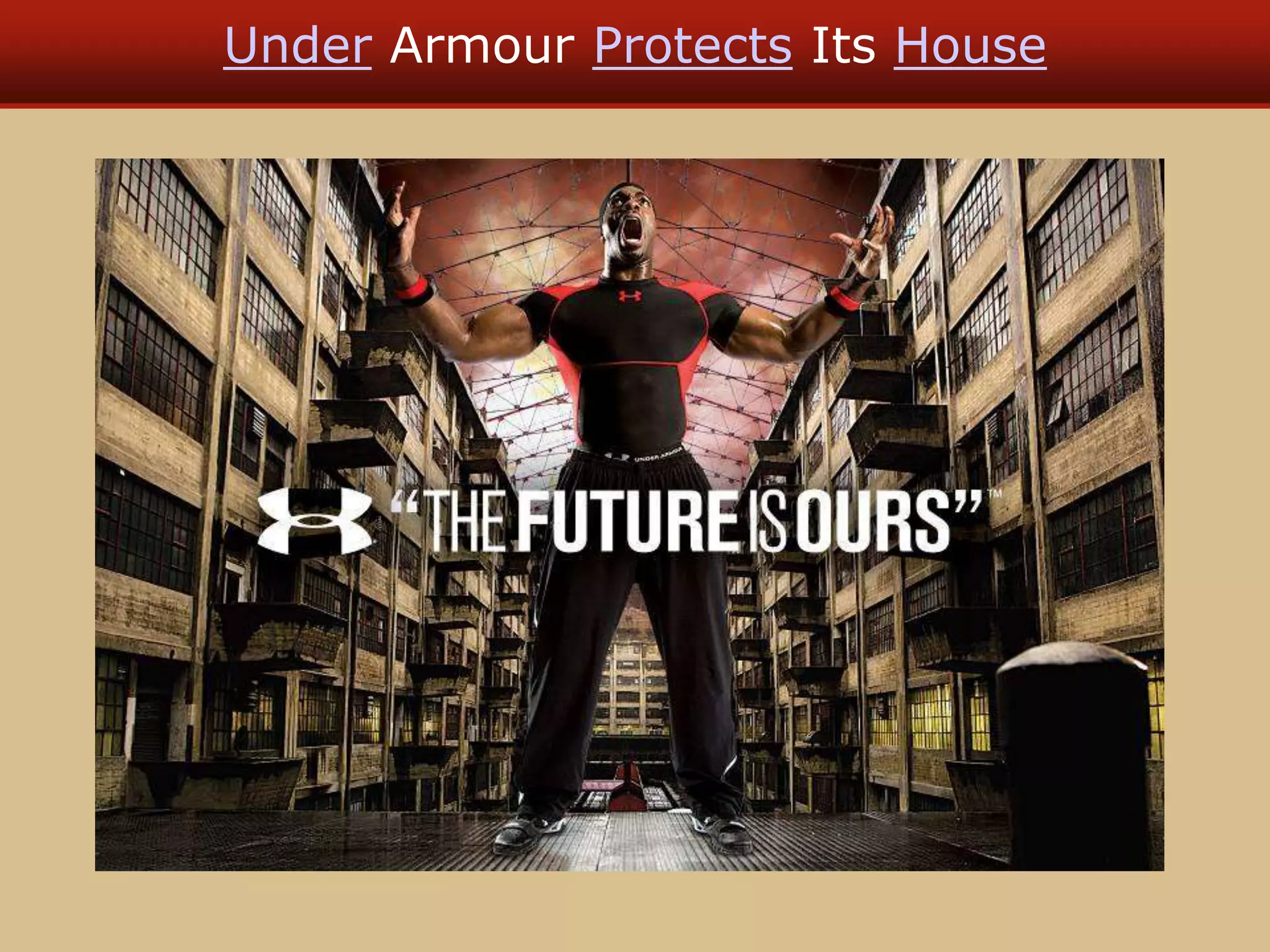
Under Armour Protects Its House
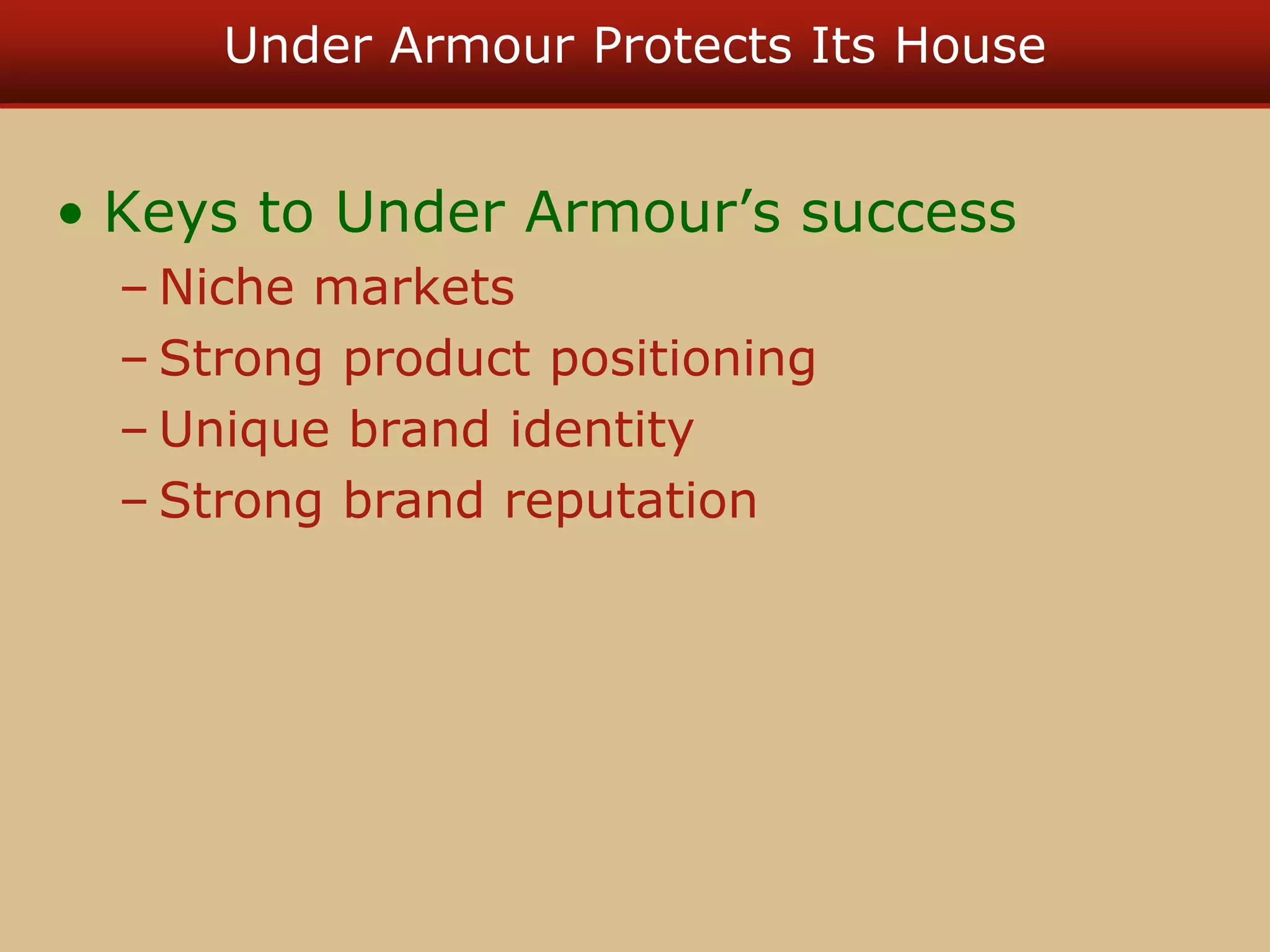
• Keys to Under Armour’s success
– Niche markets
– Strong product positioning
– Unique brand identity
– Strong brand reputation
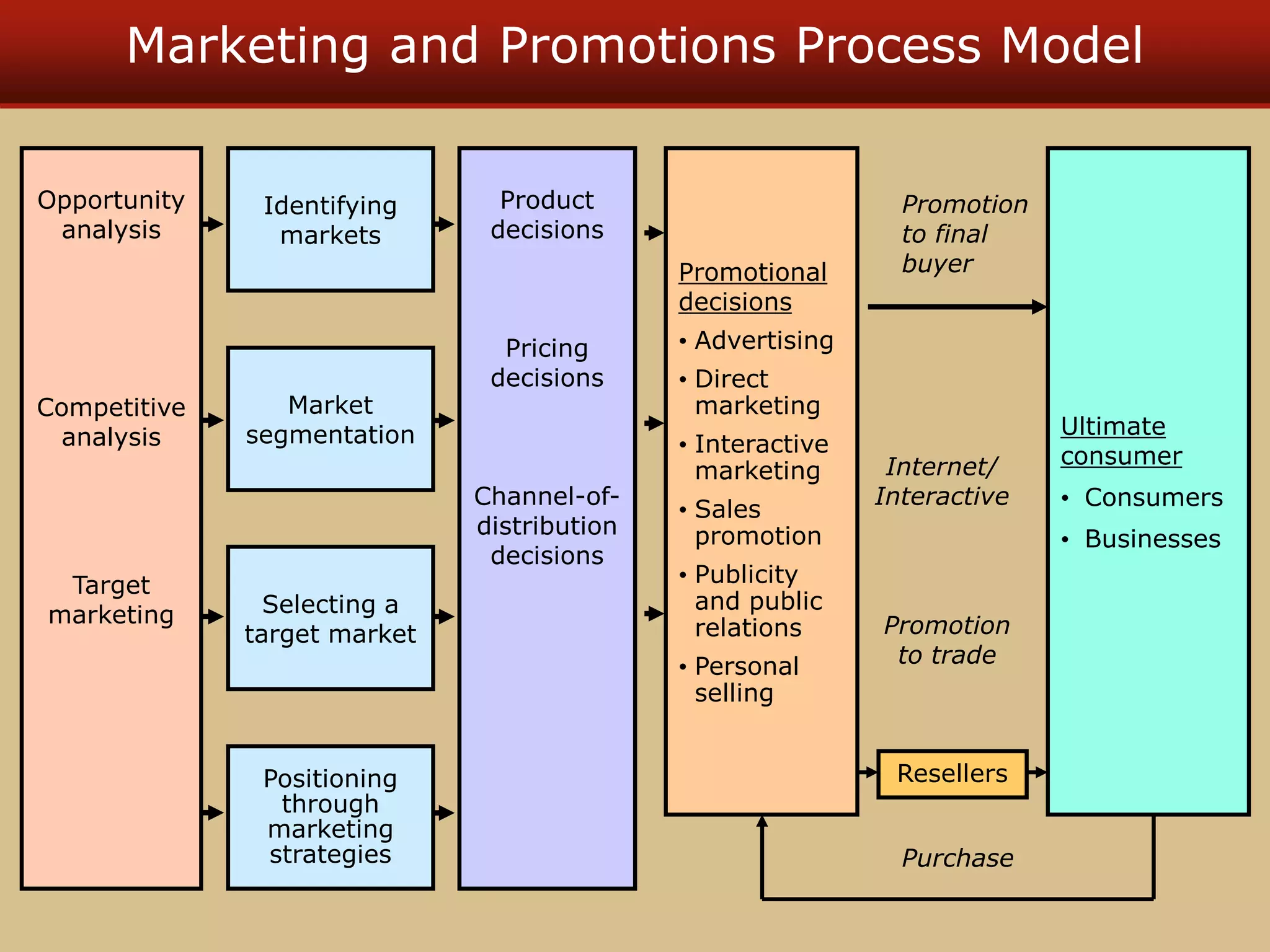
Marketing and Promotions Process Model
Product
decisions
Pricing
decisions
Channel-of-
distribution
decisions
Opportunity
analysis
Competitive
analysis
Target
marketing
Identifying
markets
Market
segmentation
Selecting a
target market
Positioning
through
marketing
strategies
Promotional
decisions
• Advertising
• Direct
marketing
• Interactive
marketing
• Sales
promotion
• Publicity
and public
relations
• Personal
selling
Ultimate
consumer
• Consumers
• Businesses
Promotion
to final
buyer
Resellers
Promotion
to trade
Internet/
Interactive
Purchase
Marketing to a Lifestyle
Padres Pitch to the Fans
*Click outside of the video screen to advance to the next slide
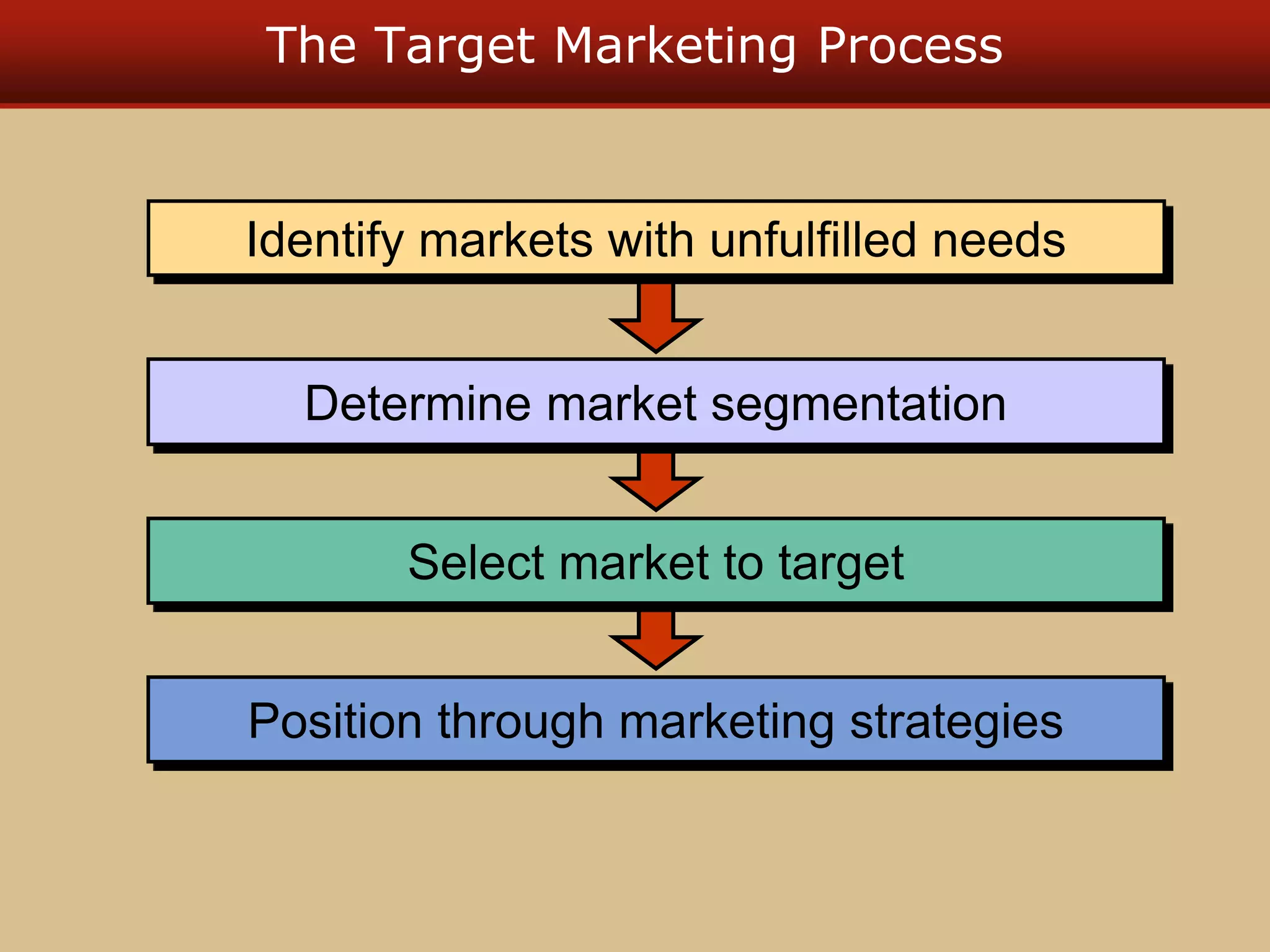
The Target Marketing Process
Position through marketing strategies
Select market to target
Determine market segmentation
Identify markets with unfulfilled needs
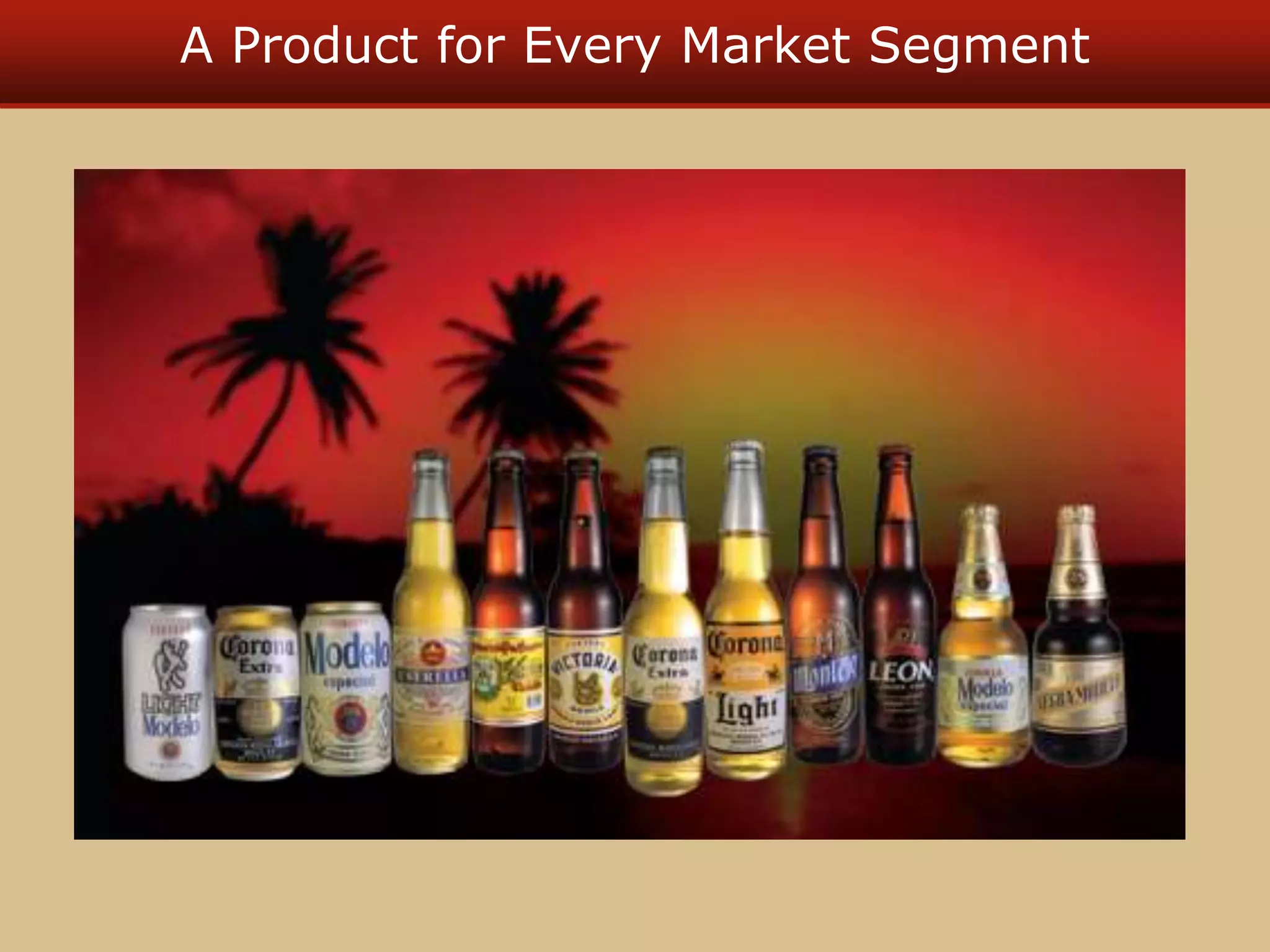
A Product for Every Market Segment
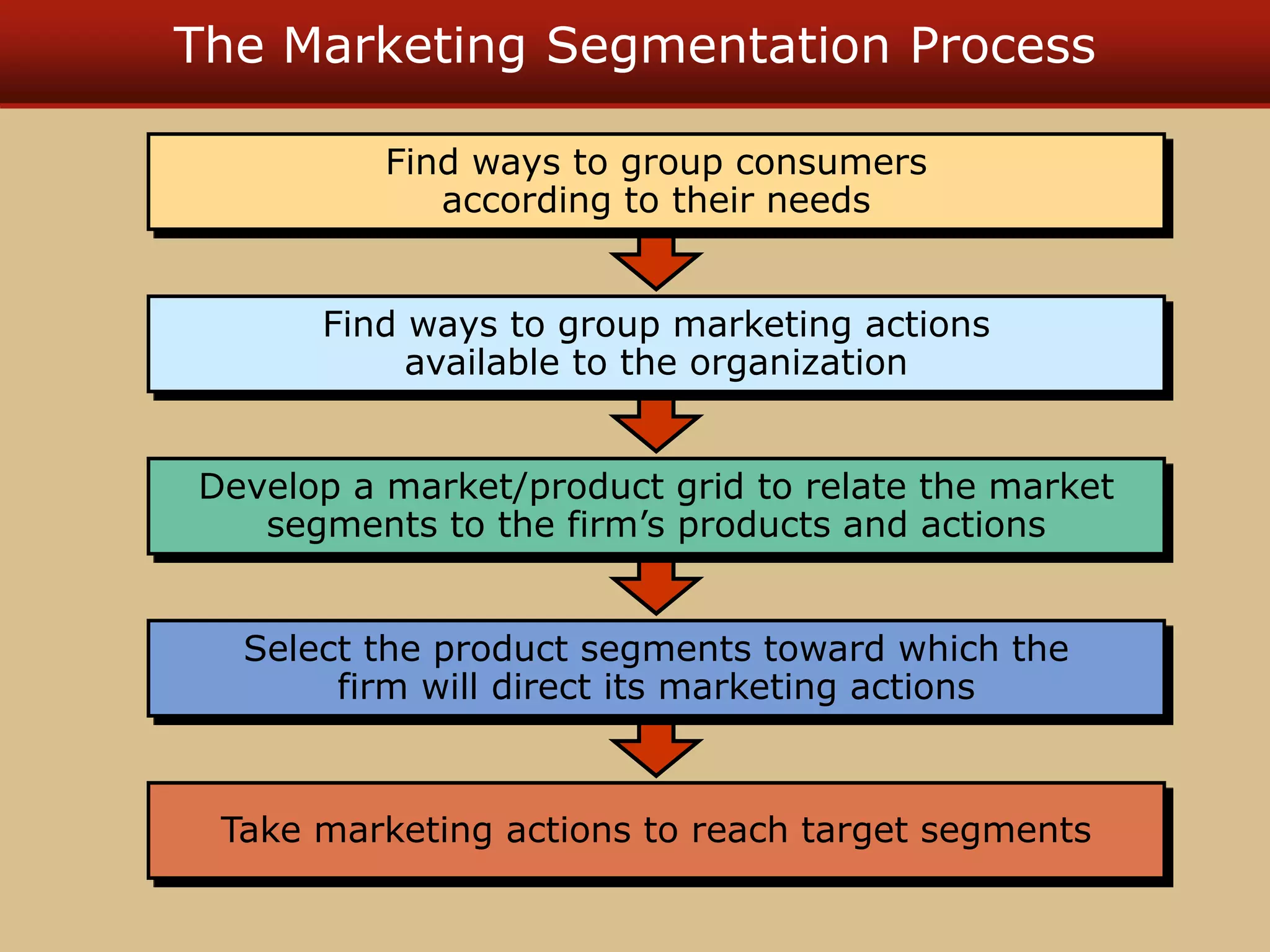
The Marketing Segmentation Process
Take marketing actions to reach target segments
Select the product segments toward which the
firm will direct its marketing actions
Develop a market/product grid to relate the market
segments to the firm’s products and actions
Find ways to group marketing actions
available to the organization
Find ways to group consumers
according to their needs
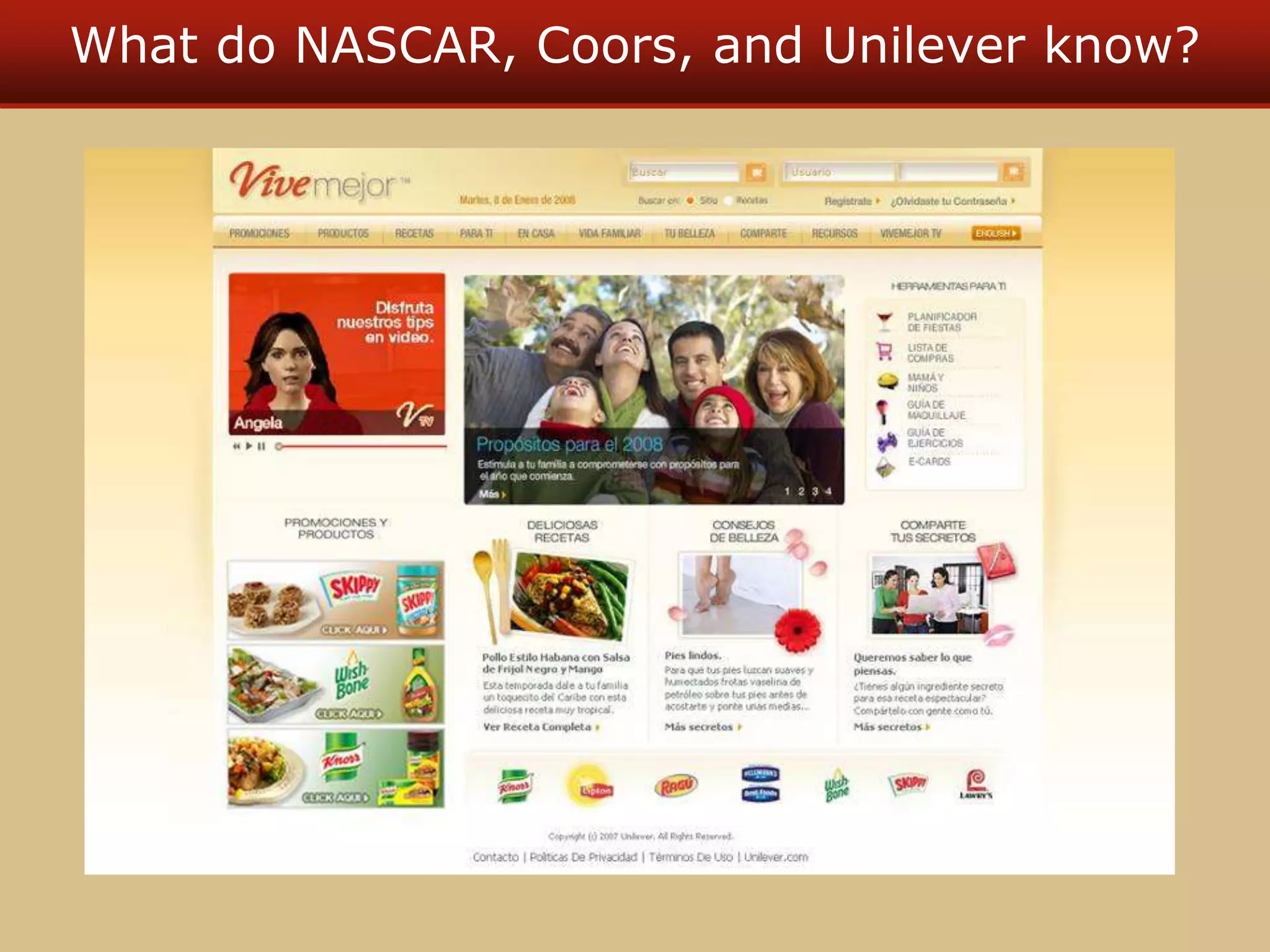
What do NASCAR, Coors, and Unilever know?
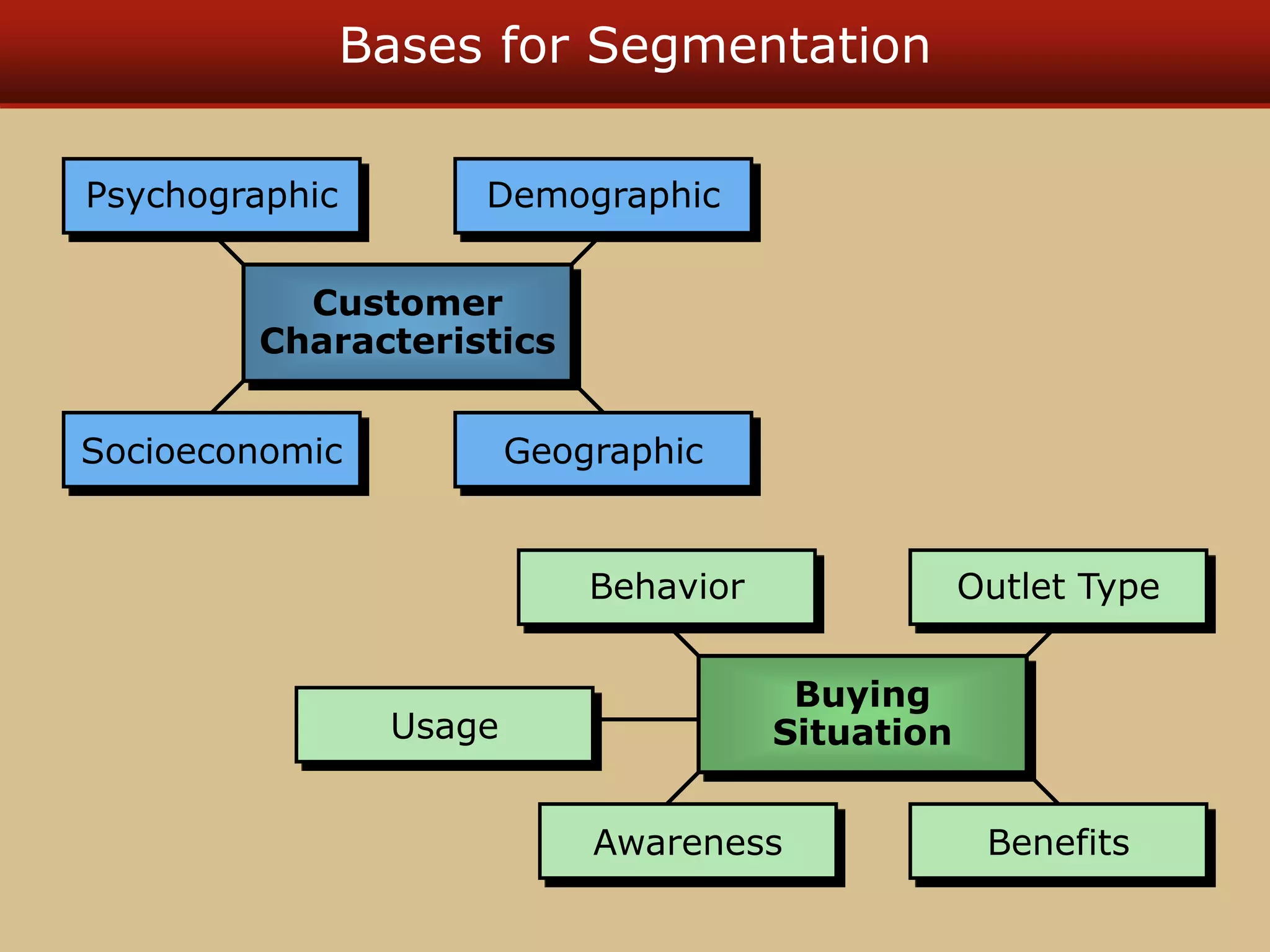
Bases for Segmentation
Behavior
Benefits
Outlet Type
Psychographic
Geographic
Demographic
Customer
Characteristics
Socioeconomic
Buying
Situation
Usage
Awareness
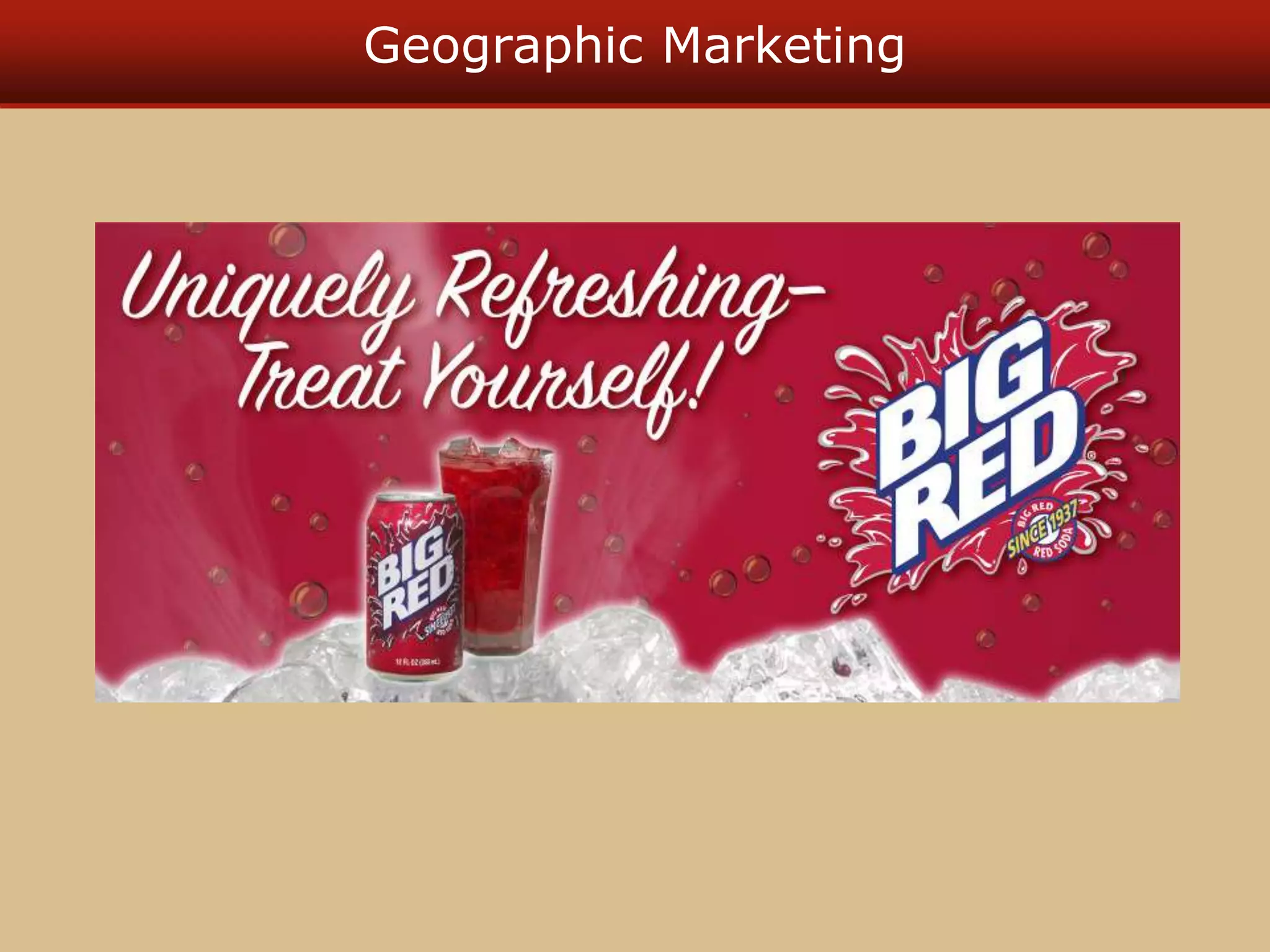
Geographic Marketing
Demographic Segmentation
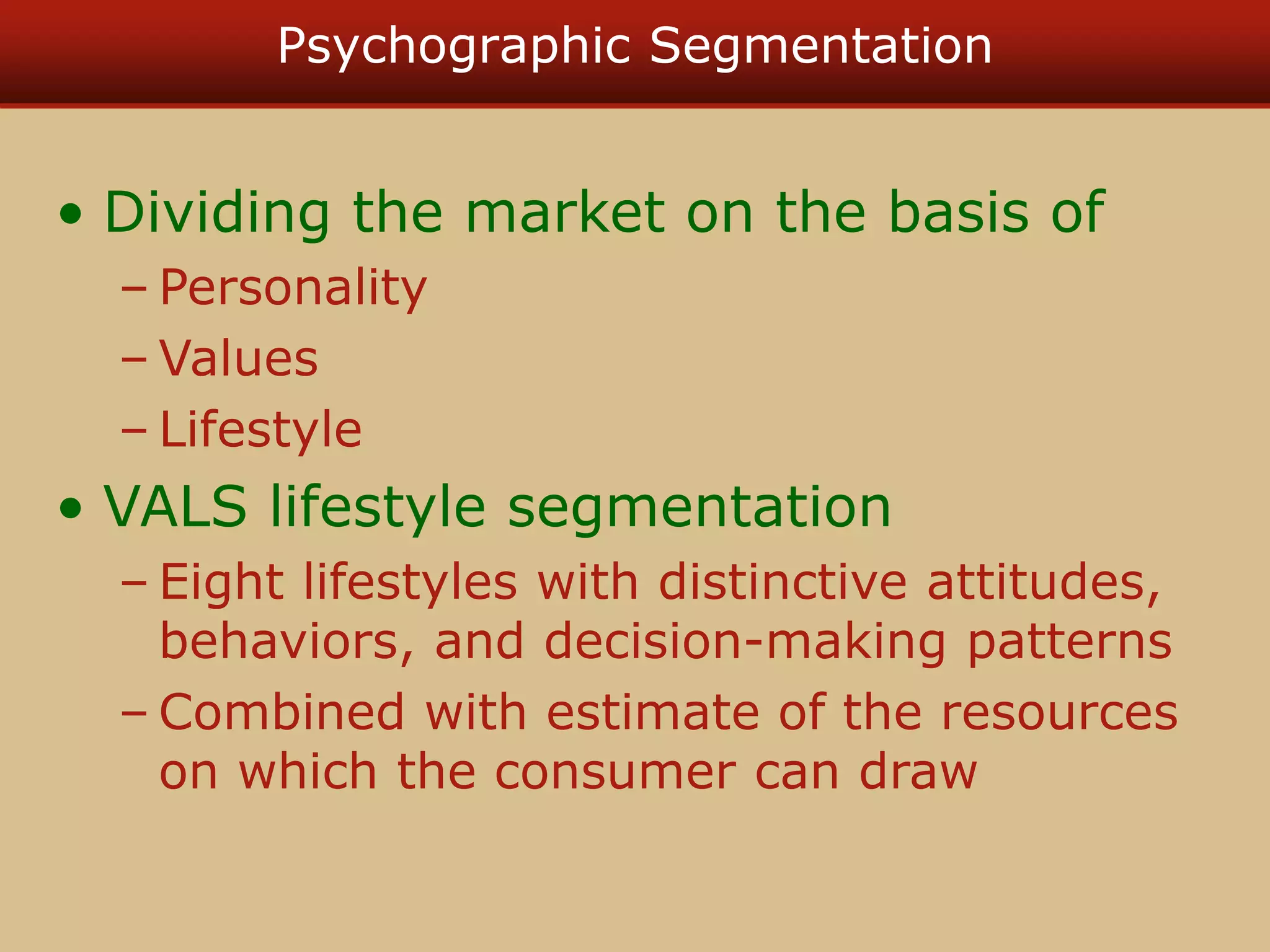
Psychographic Segmentation
• Dividing the market on the basis of
– Personality
– Values
– Lifestyle
• VALS lifestyle segmentation
– Eight lifestyles with distinctive attitudes,
behaviors, and decision-making patterns
– Combined with estimate of the resources
on which the consumer can draw
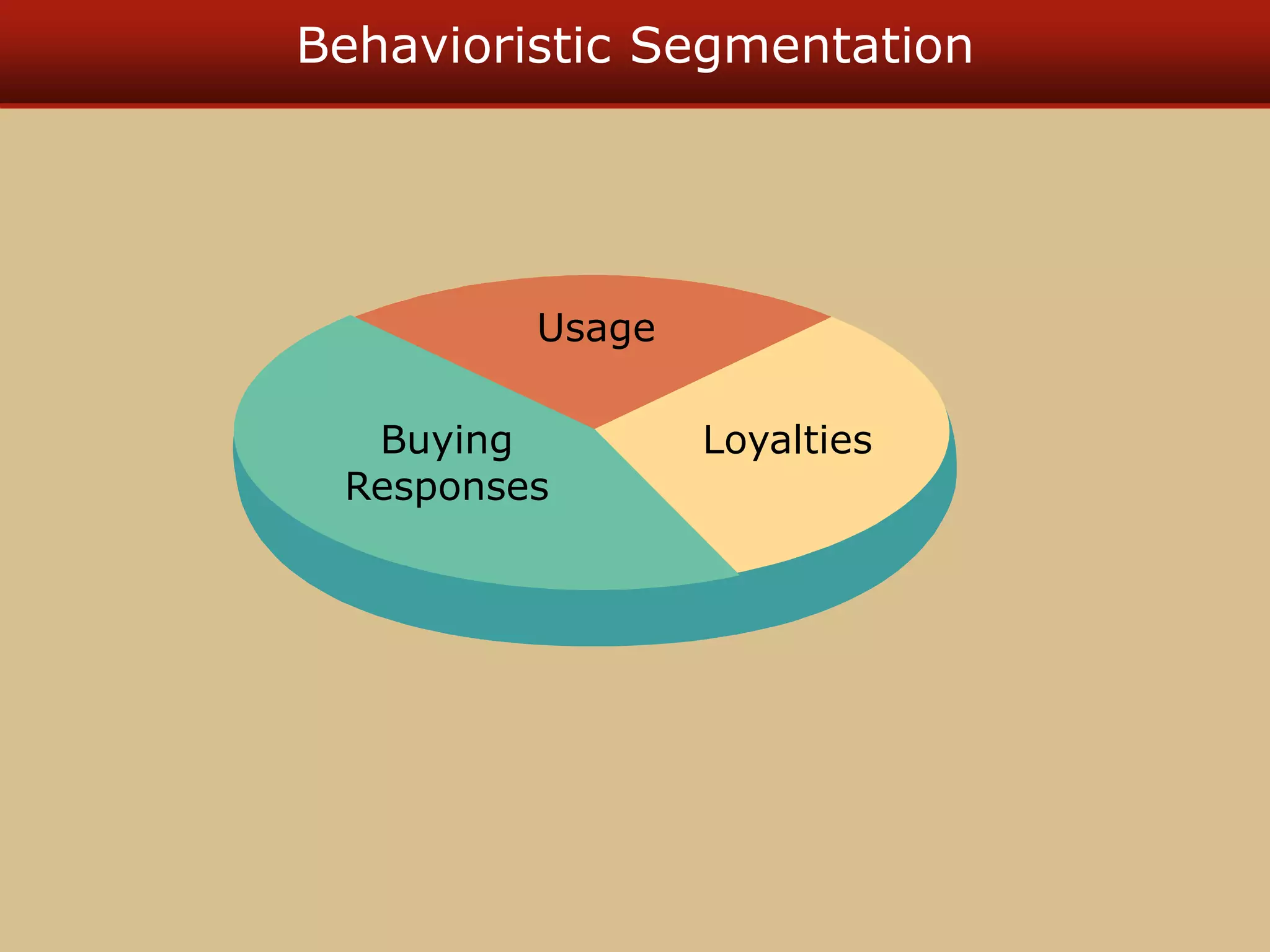
Behavioristic Segmentation
Usage
Loyalties
Buying
Responses
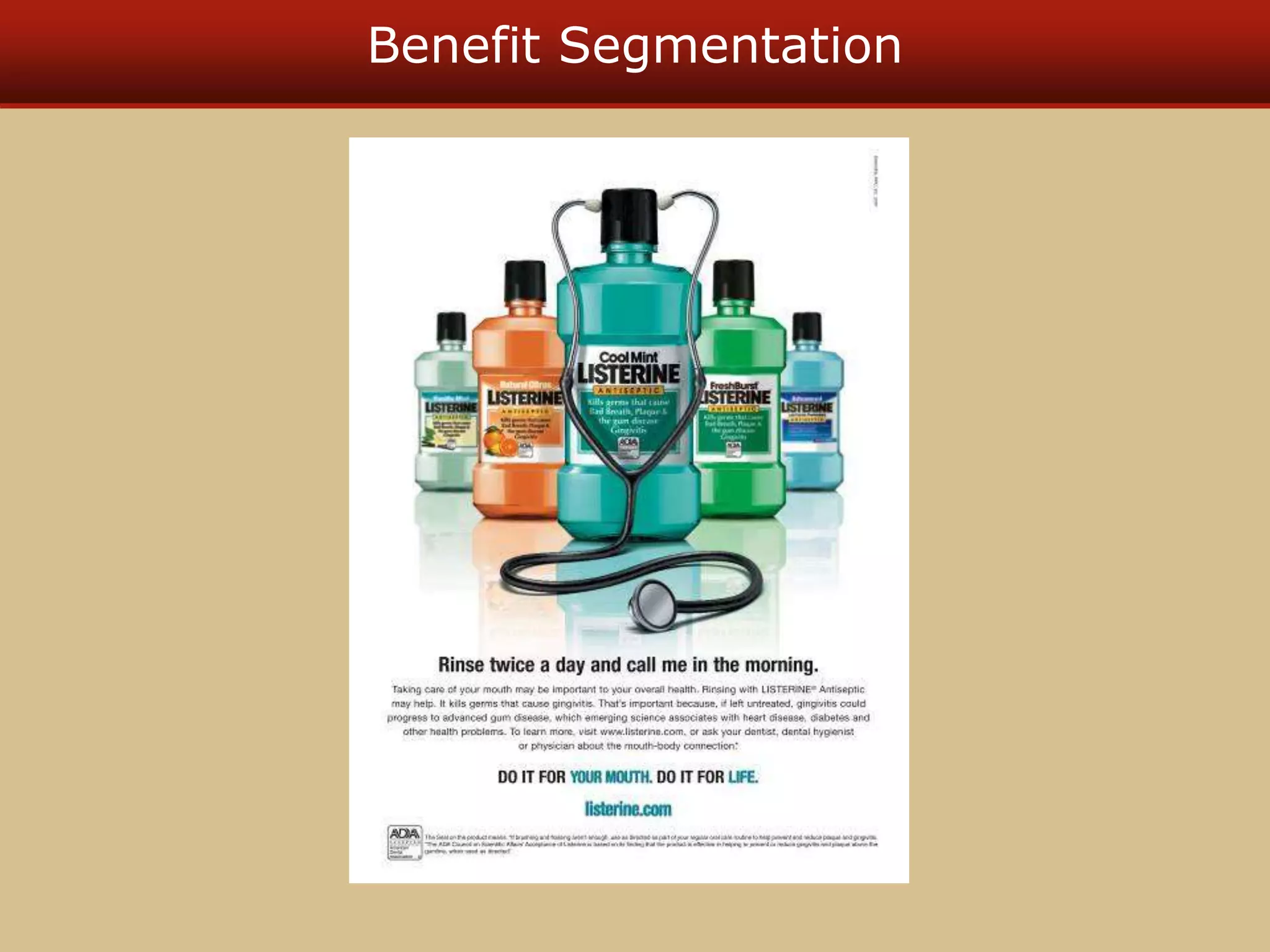
Benefit Segmentation
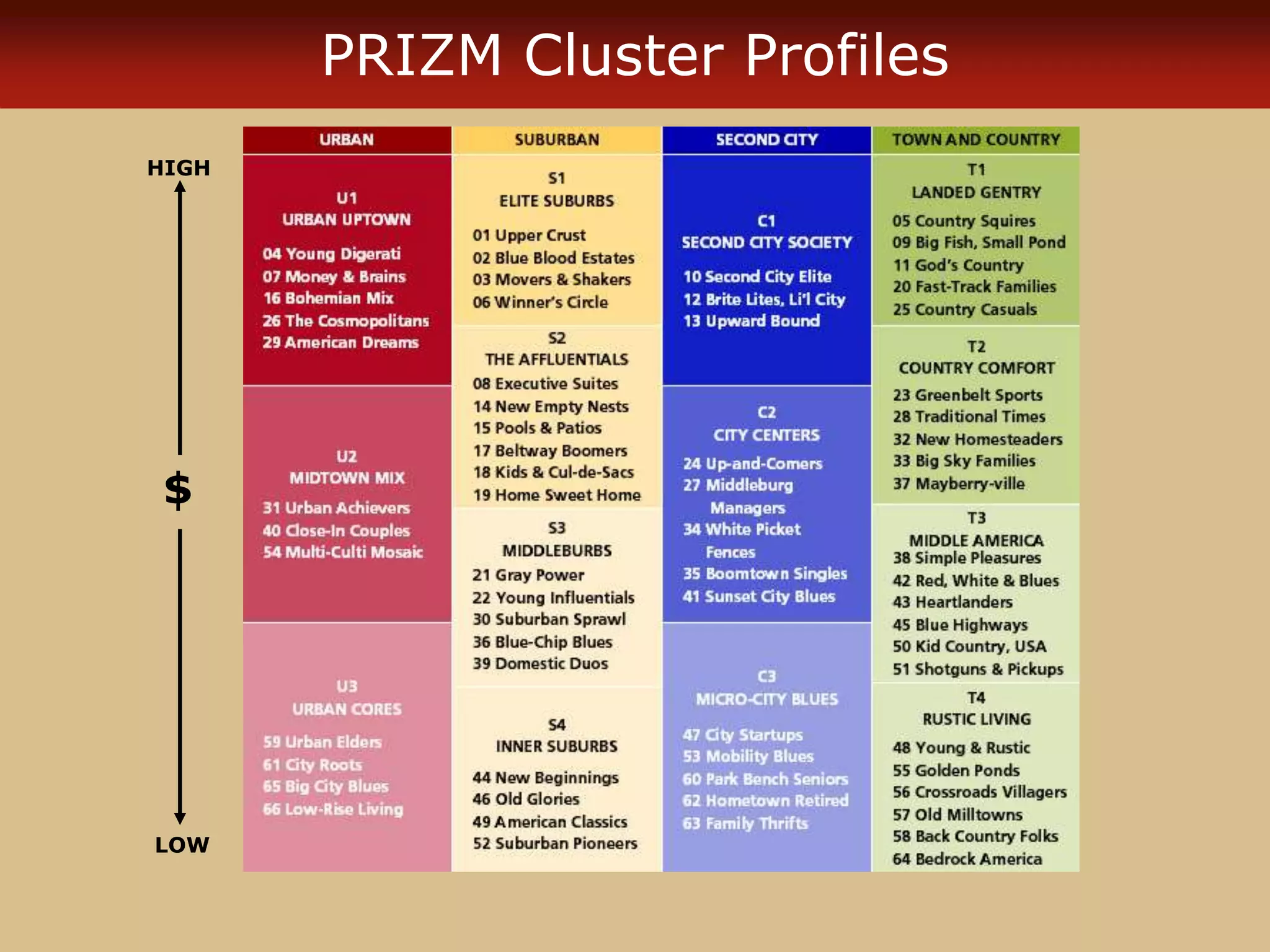
PRIZM Cluster Profiles
HIGH
LOW
$
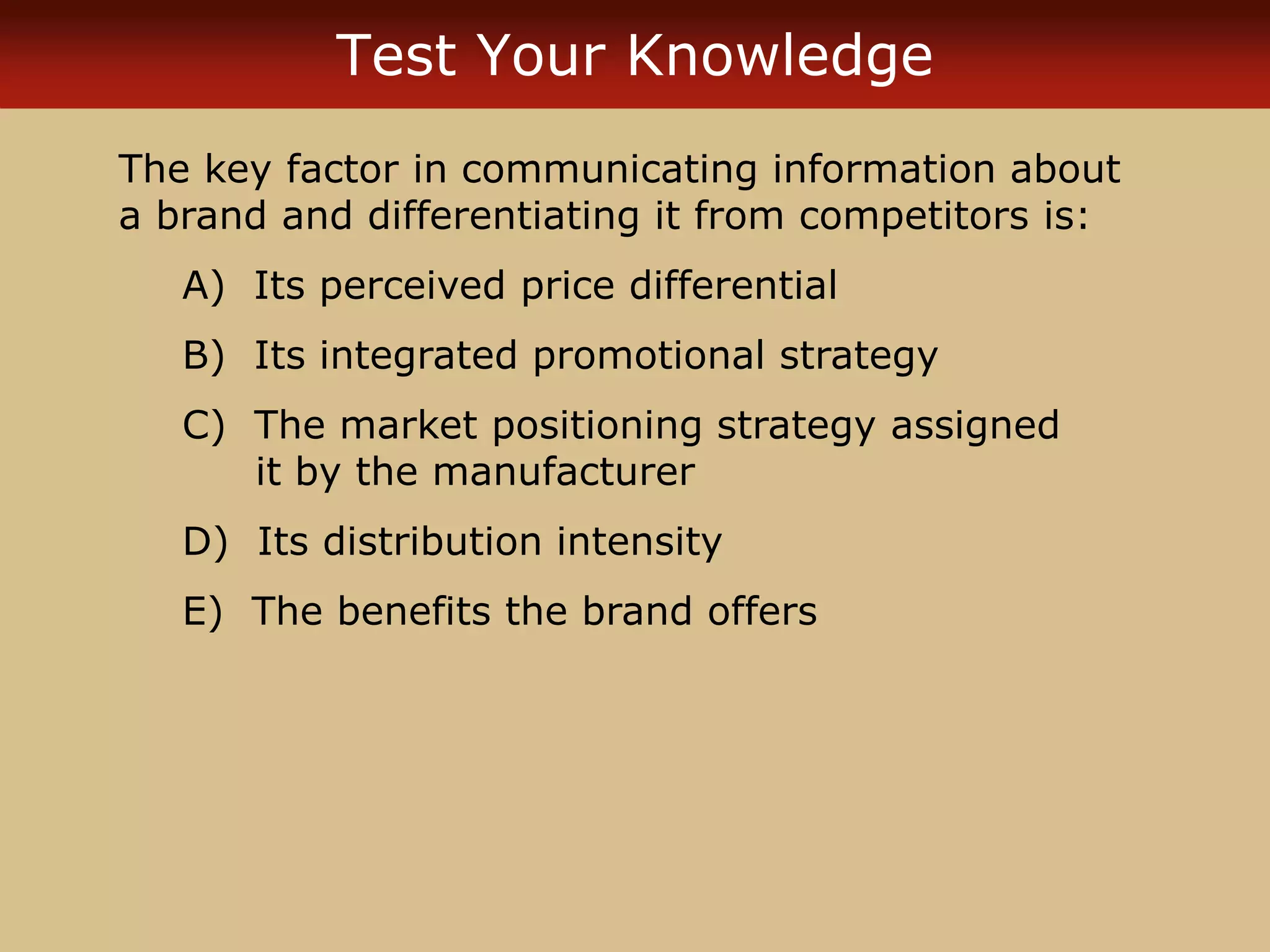
Test Your Knowledge
The key factor in communicating information about
a brand and differentiating it from competitors is:
A) Its perceived price differential
B) Its integrated promotional strategy
C) The market positioning strategy assigned
it by the manufacturer
D) Its distribution intensity
E) The benefits the brand offers
Selecting a Target Market
Determine how many
segments to enter
Determine which segments
have the greatest potential
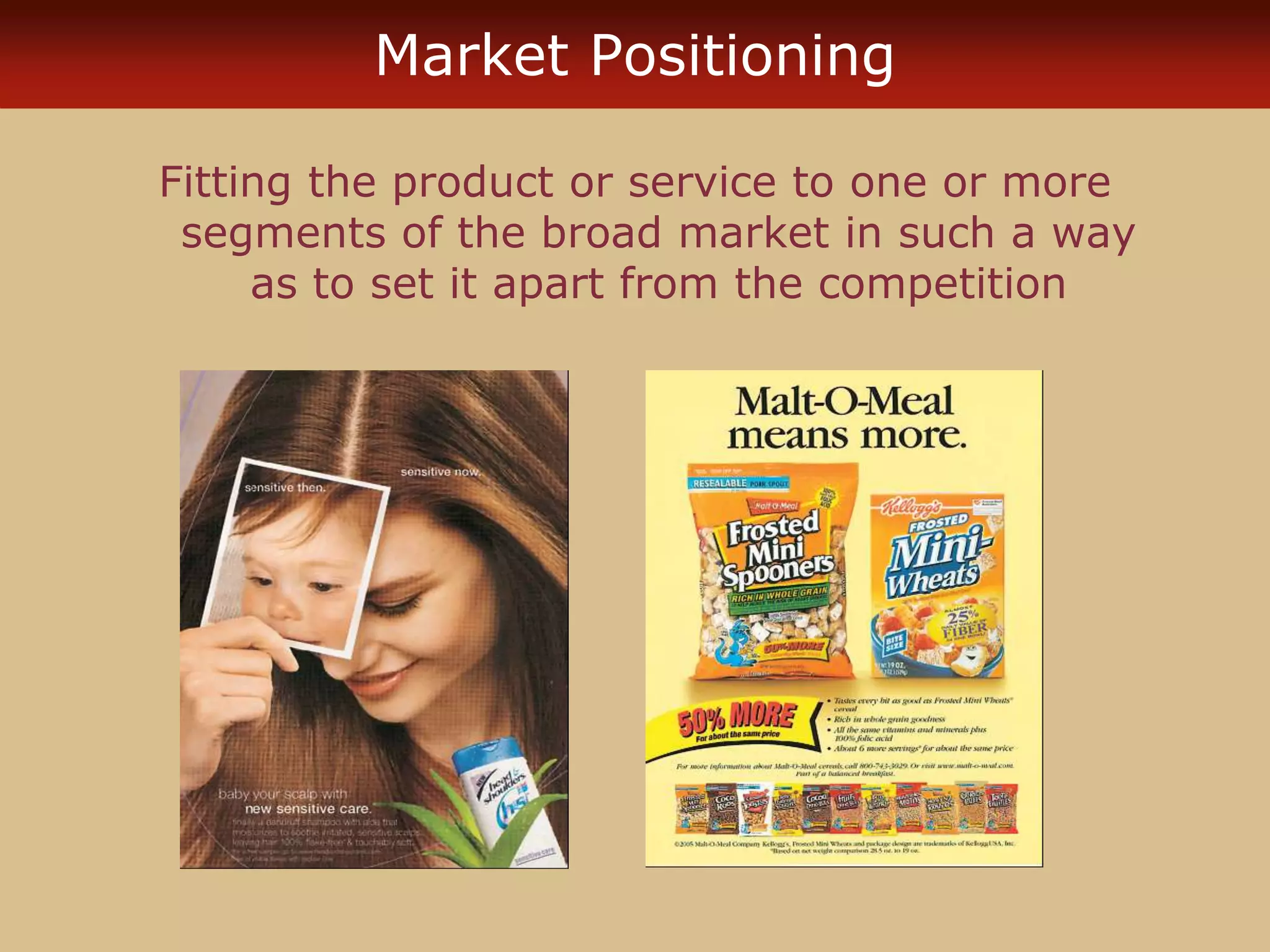
Market Positioning
Fitting the product or service to one or more
segments of the broad market in such a way
as to set it apart from the competition
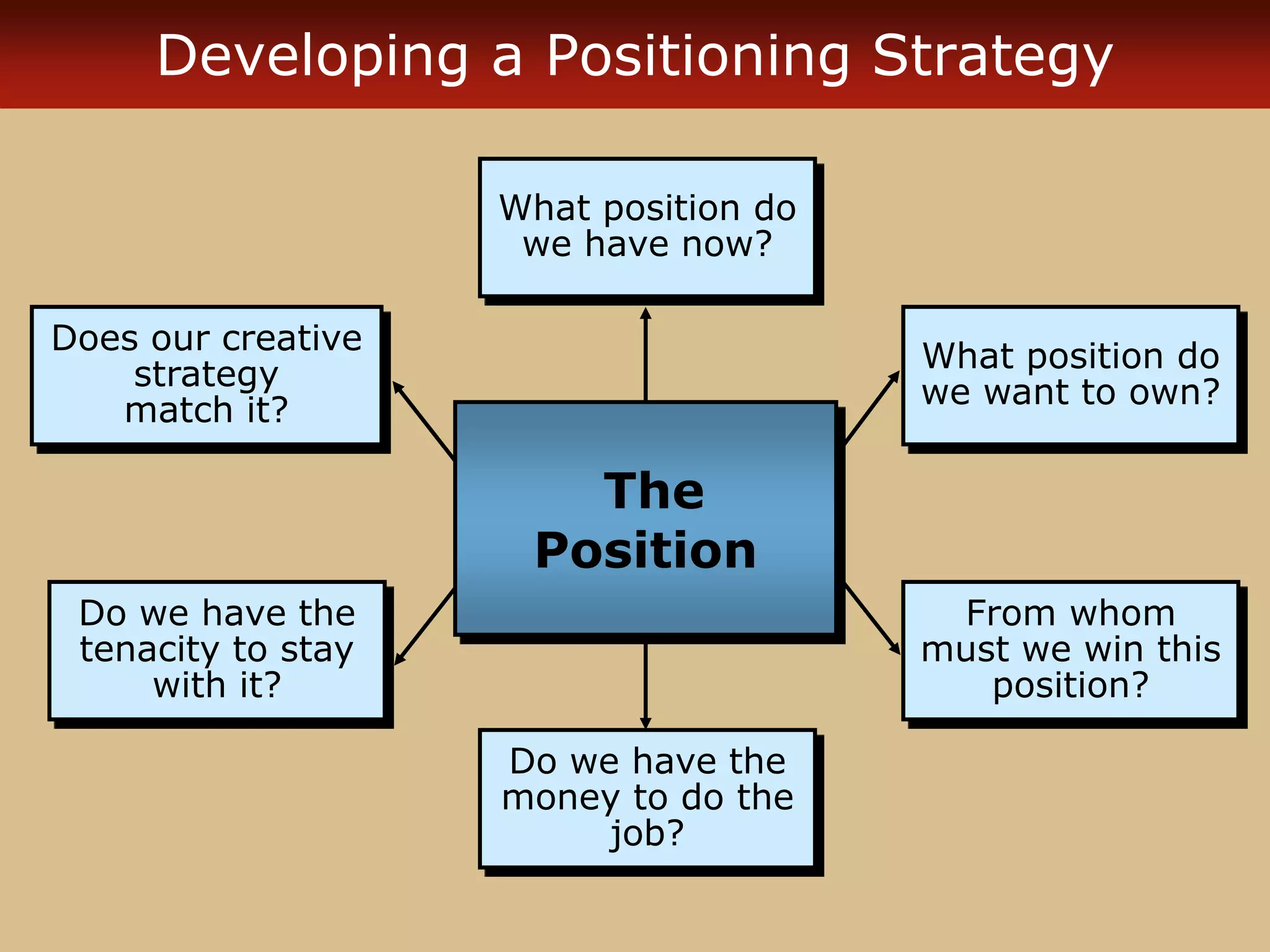
Developing a Positioning Strategy
What position do
we have now?
Do we have the
money to do the
job?
What position do
we want to own?
From whom
must we win this
position?
Do we have the
tenacity to stay
with it?
Does our creative
strategy
match it?
The
Position
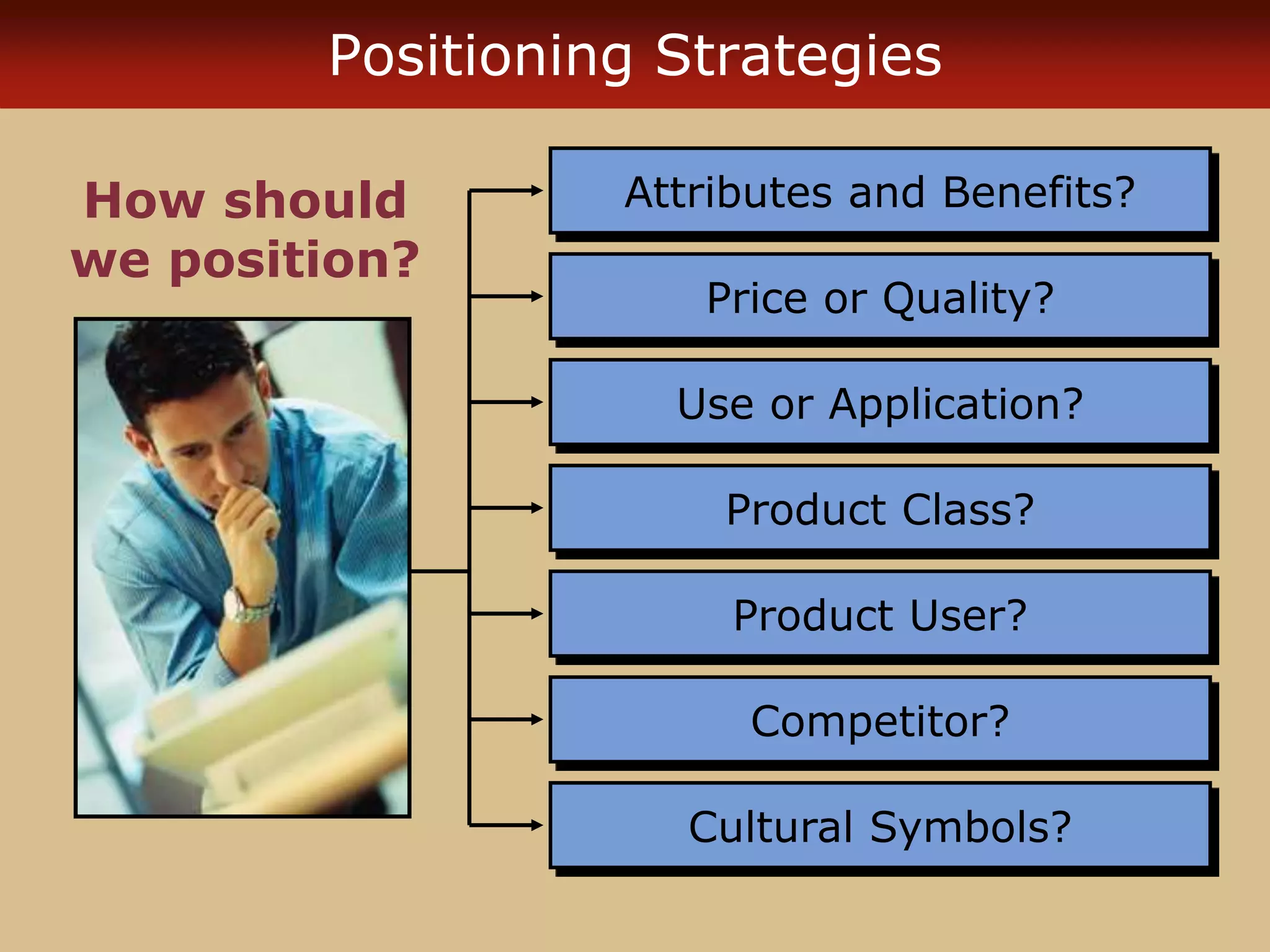
Positioning Strategies
Attributes and Benefits?
Price or Quality?
Use or Application?
Product Class?
Product User?
Competitor?
Cultural Symbols?
How should
we position?
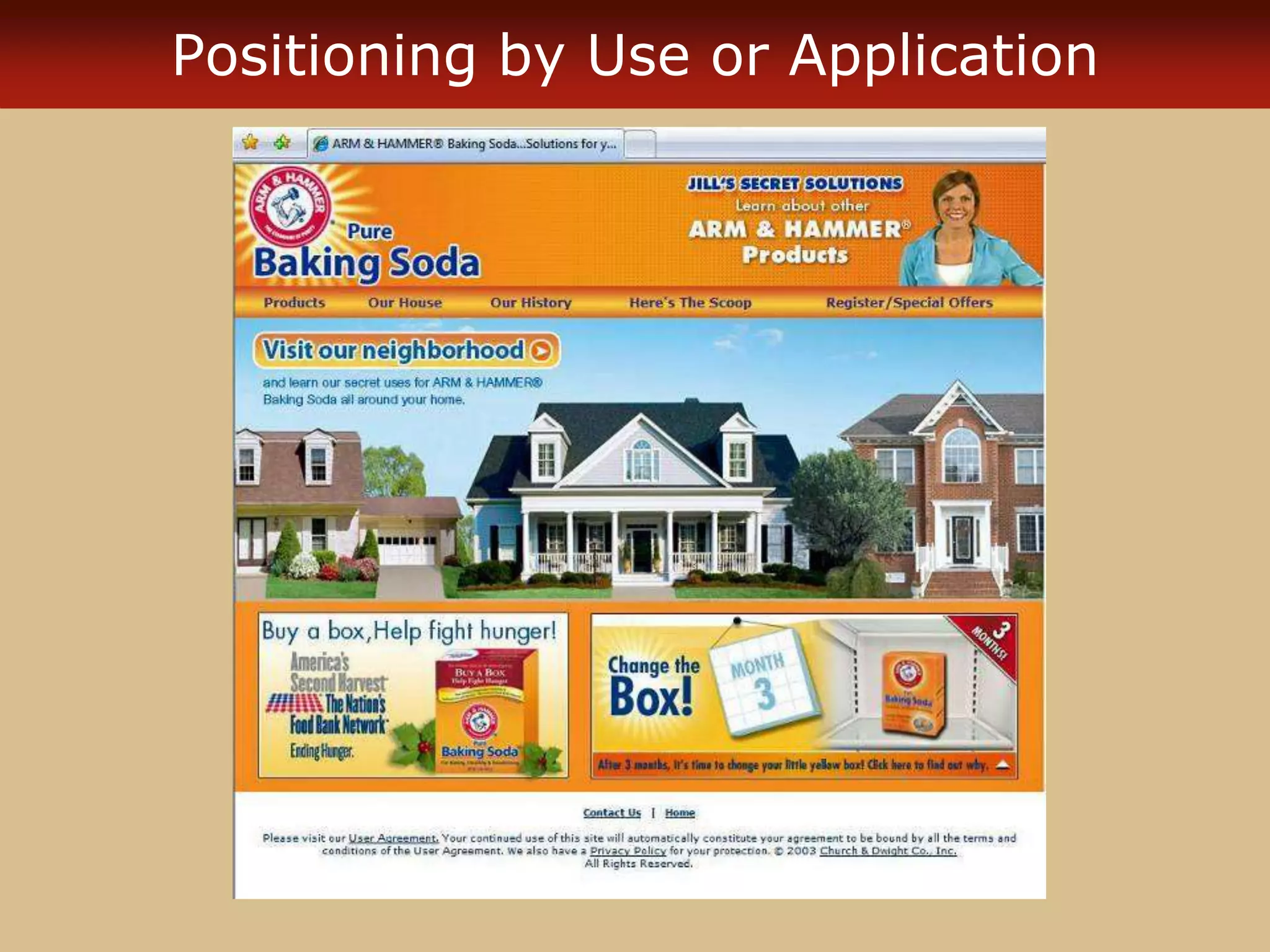
Positioning by Use or Application
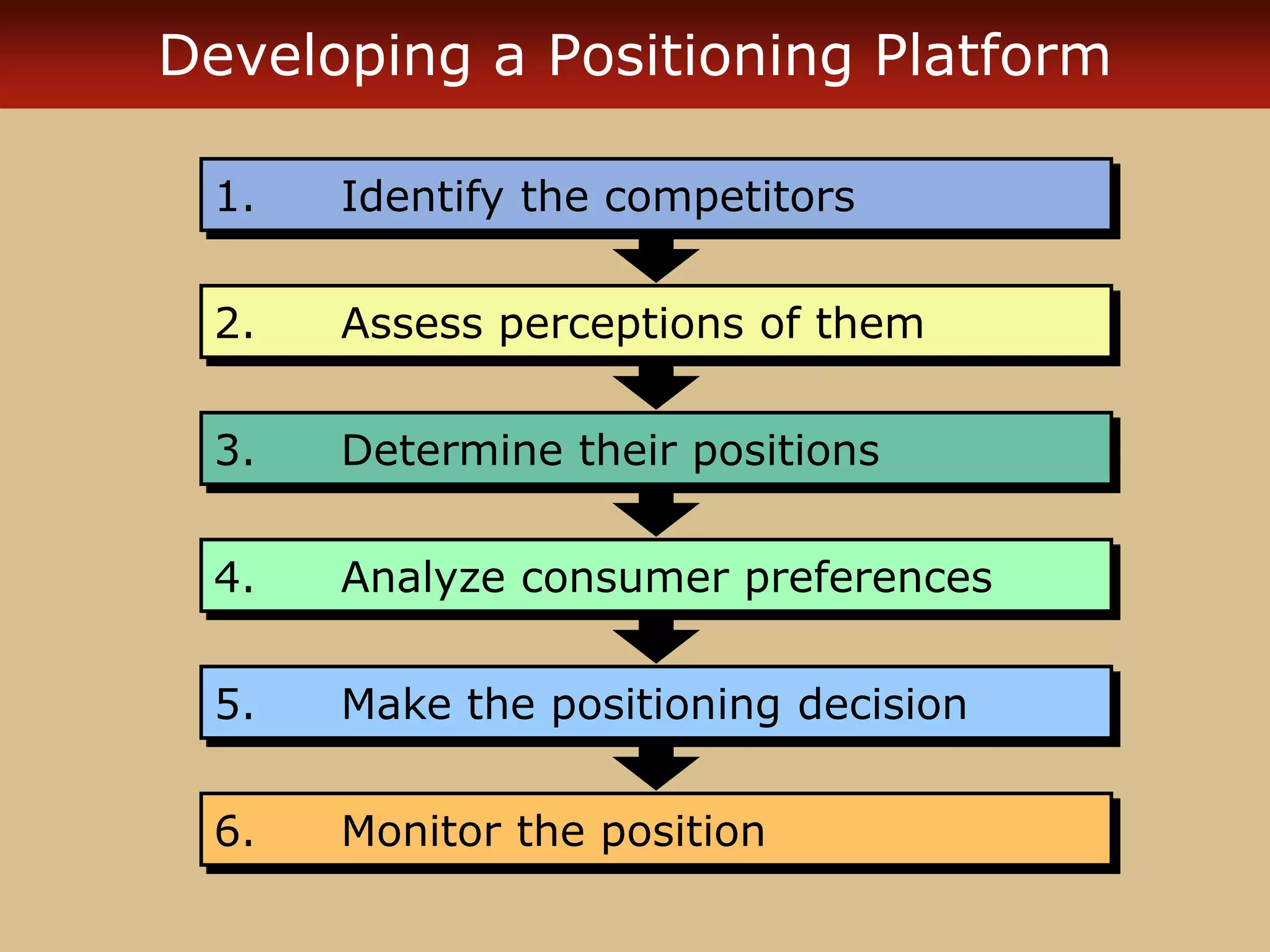
Developing a Positioning Platform
6. Monitor the position
5. Make the positioning decision
4. Analyze consumer preferences
3. Determine their positions
2. Assess perceptions of them
1. Identify the competitors
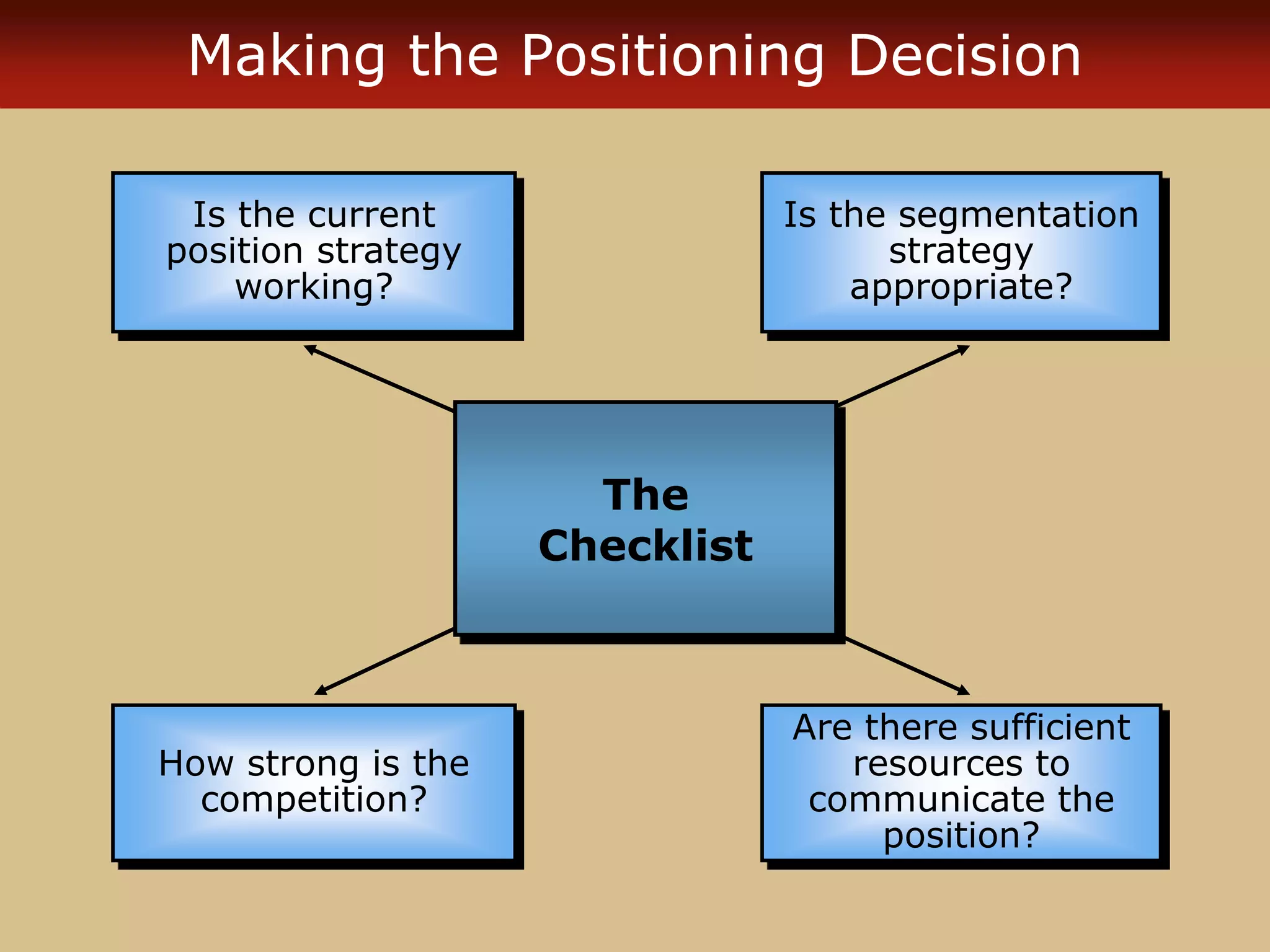
Making the Positioning Decision
Is the current
position strategy
working?
Is the segmentation
strategy
appropriate?
Are there sufficient
resources to
communicate the
position?
How strong is the
competition?
The
Checklist
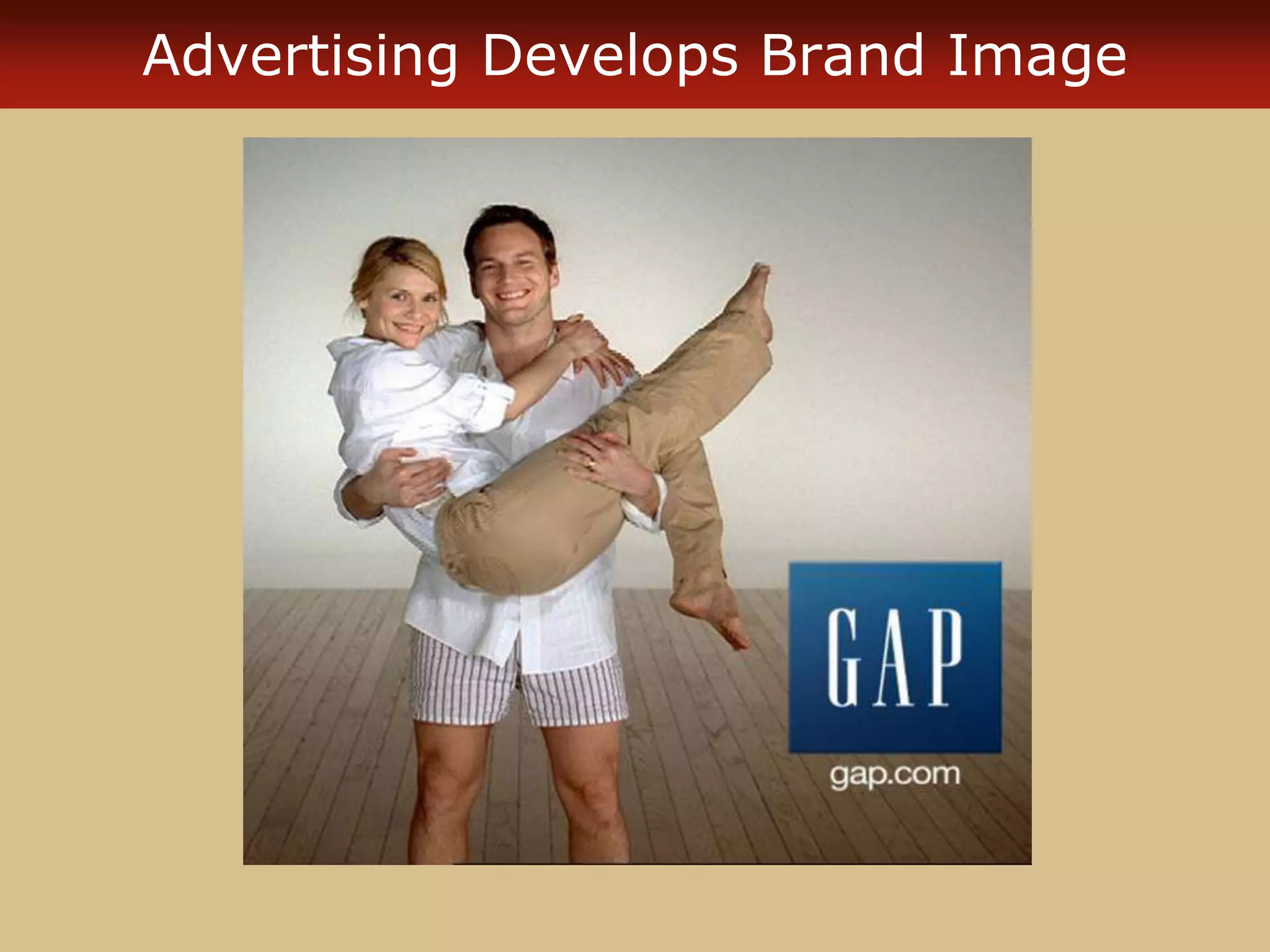
Advertising Develops Brand Image
Branding and Product Names
• Brand names often communicate
attributes and meaning
– Safeguard
– I Can’t Believe It’s Not Butter!
– Easy-Off
– Arrid
– Spic and Span
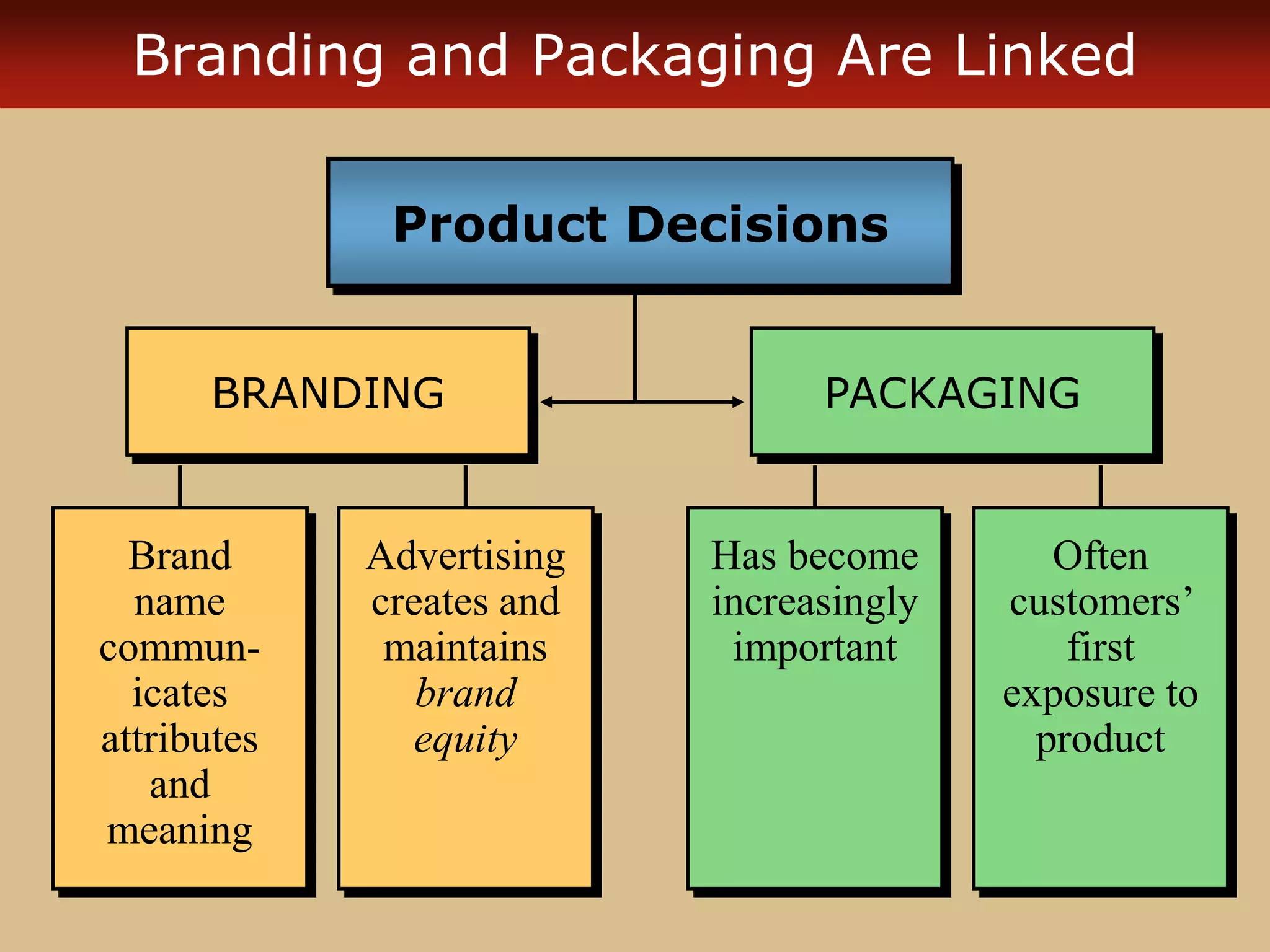
Branding and Packaging Are Linked
Product Decisions
BRANDING
Brand
name
commun-
icates
attributes
and
meaning
Advertising
creates and
maintains
brand
equity
Has become
increasingly
important
Often
customers’
first
exposure to
product
PACKAGING
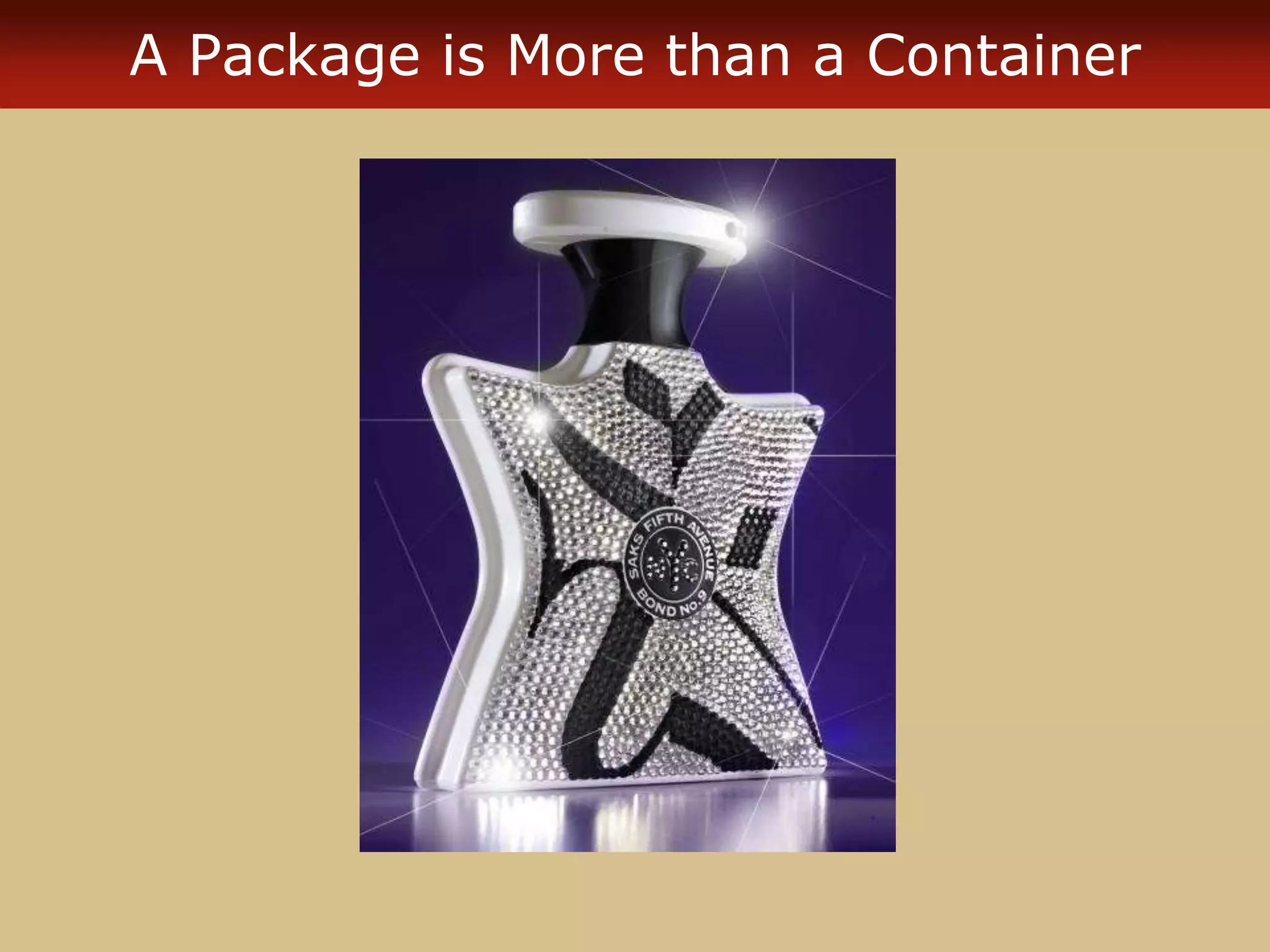
A Package is More than a Container
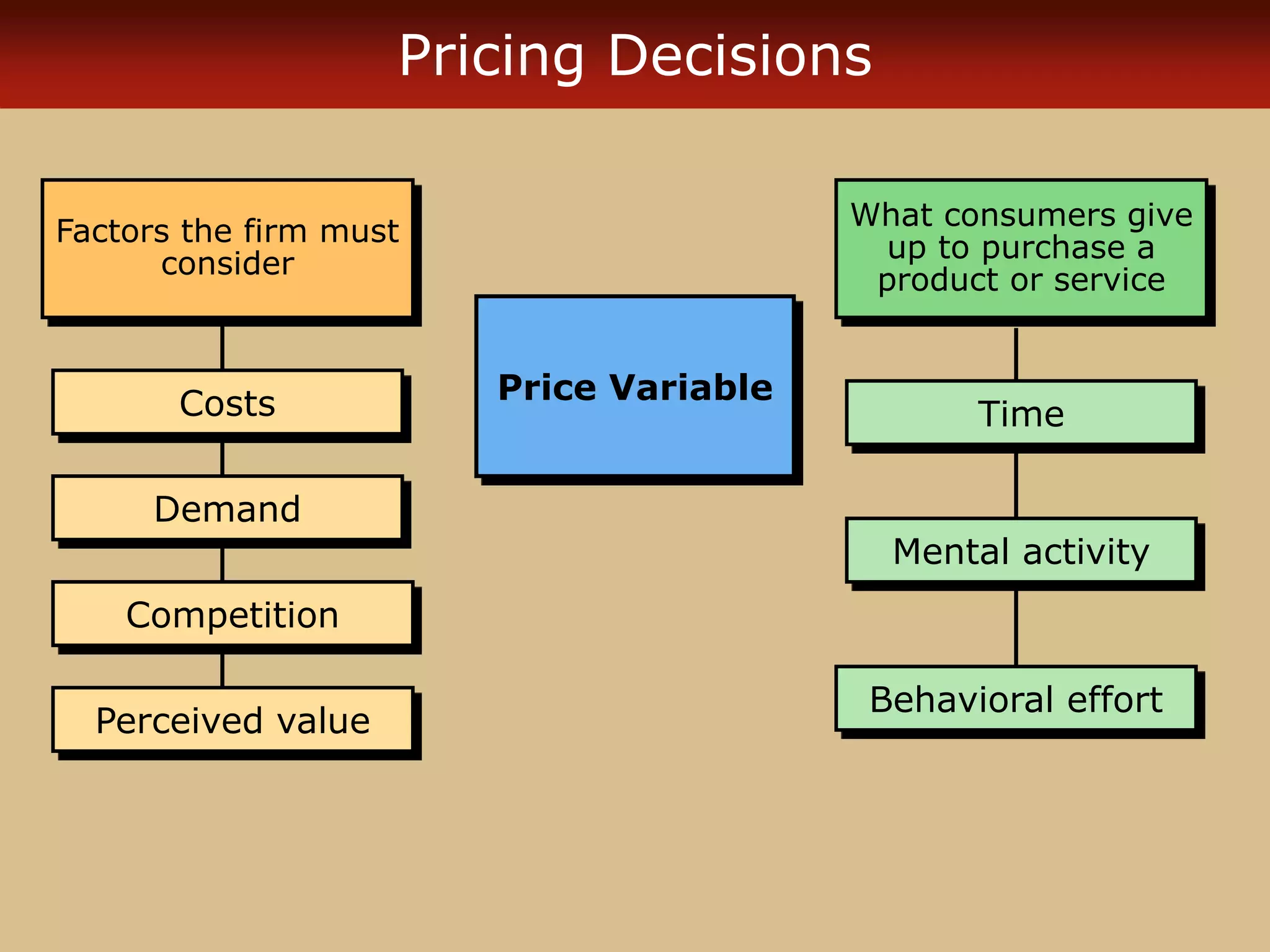
Pricing Decisions
What consumers give
up to purchase a
product or service
Time
Price Variable
Mental activity
Behavioral effort
Factors the firm must
consider
Costs
Demand
Competition
Perceived value
Relating Price to Ads and Promotion
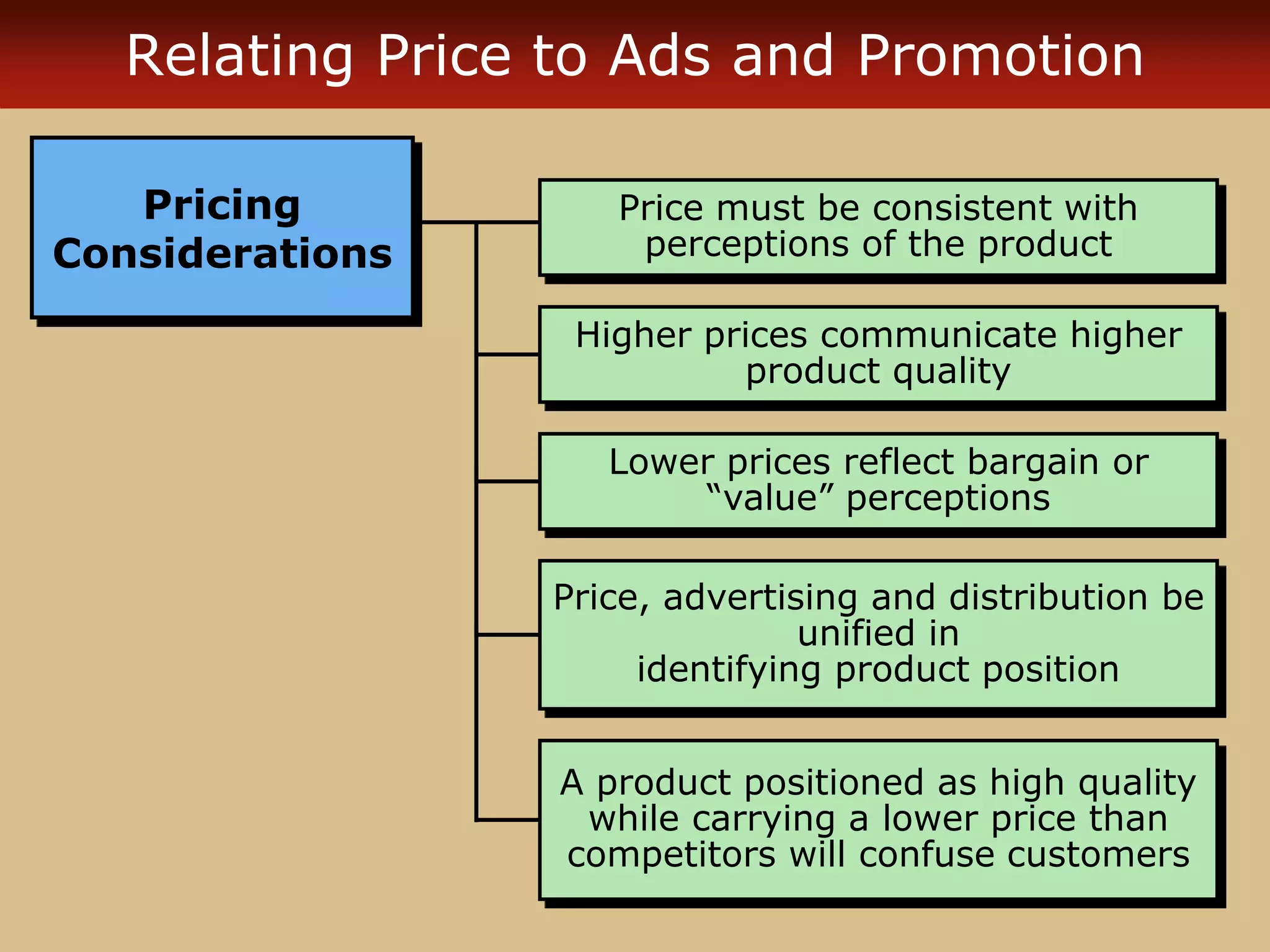
Price must be consistent with
perceptions of the product
Higher prices communicate higher
product quality
Lower prices reflect bargain or
“value” perceptions
Price, advertising and distribution be
unified in
identifying product position
Pricing
Considerations
A product positioned as high quality
while carrying a lower price than
competitors will confuse customers
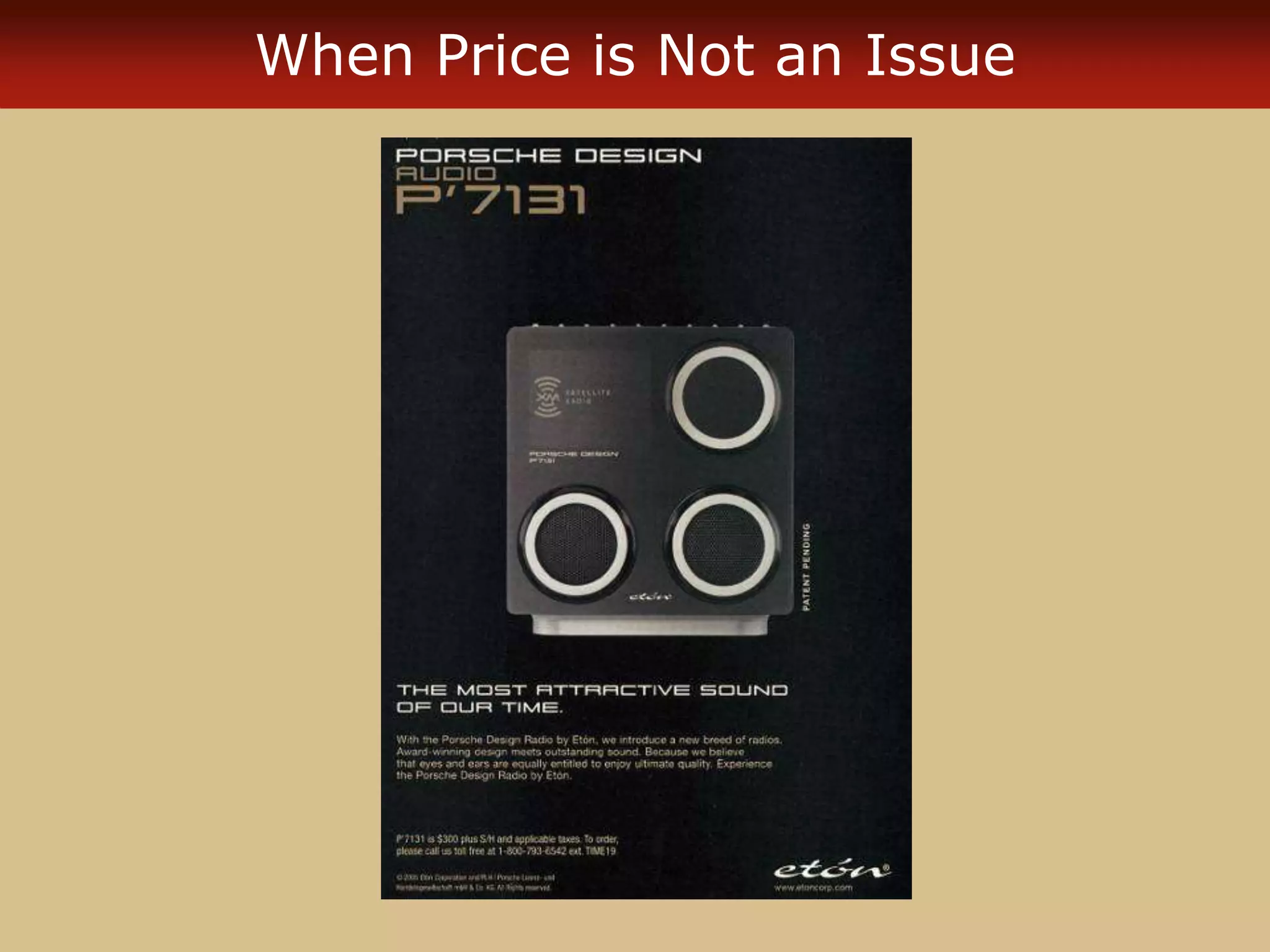
When Price is Not an Issue
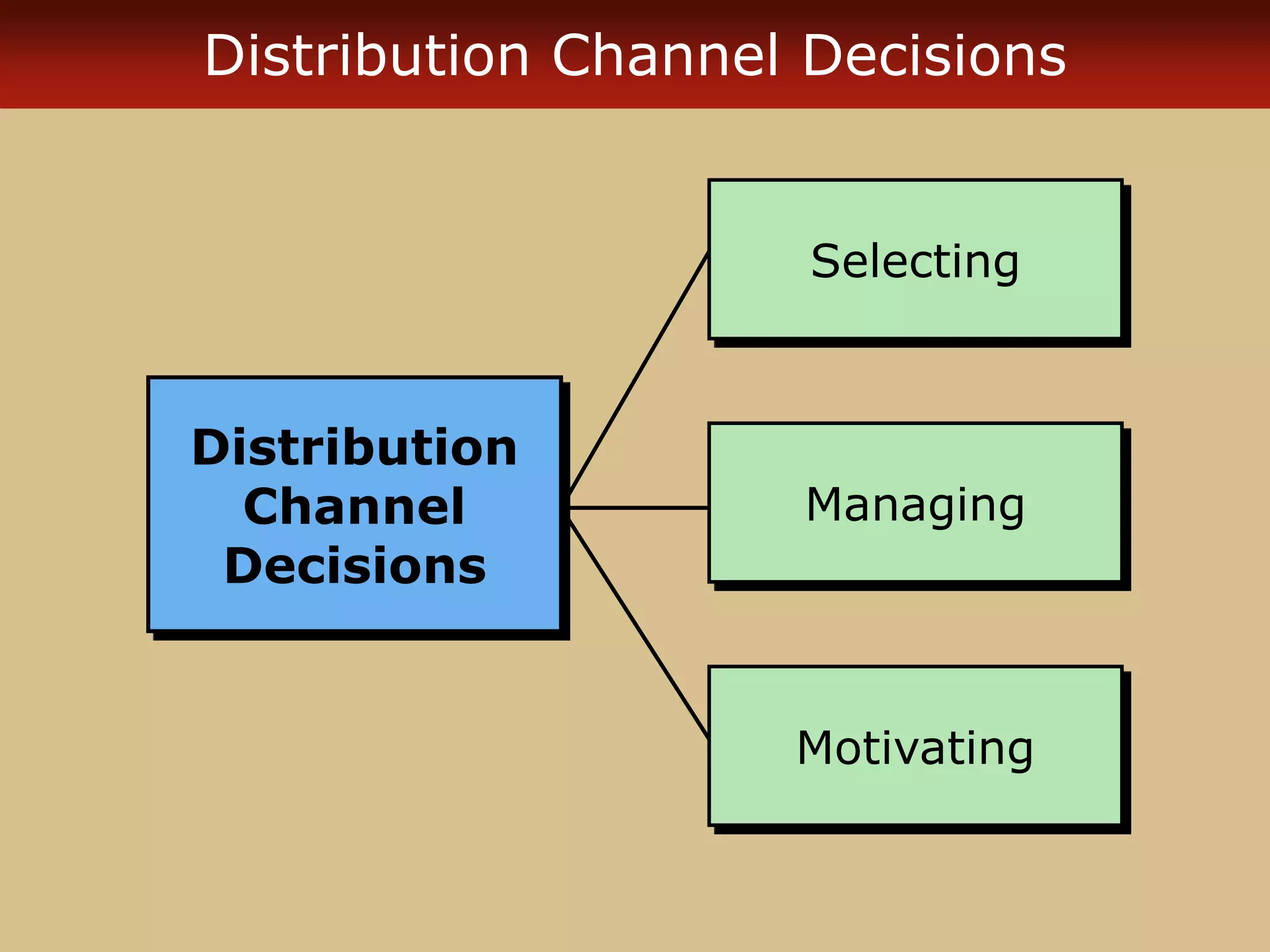
Distribution Channel Decisions
Selecting
Managing
Motivating
Distribution
Channel
Decisions
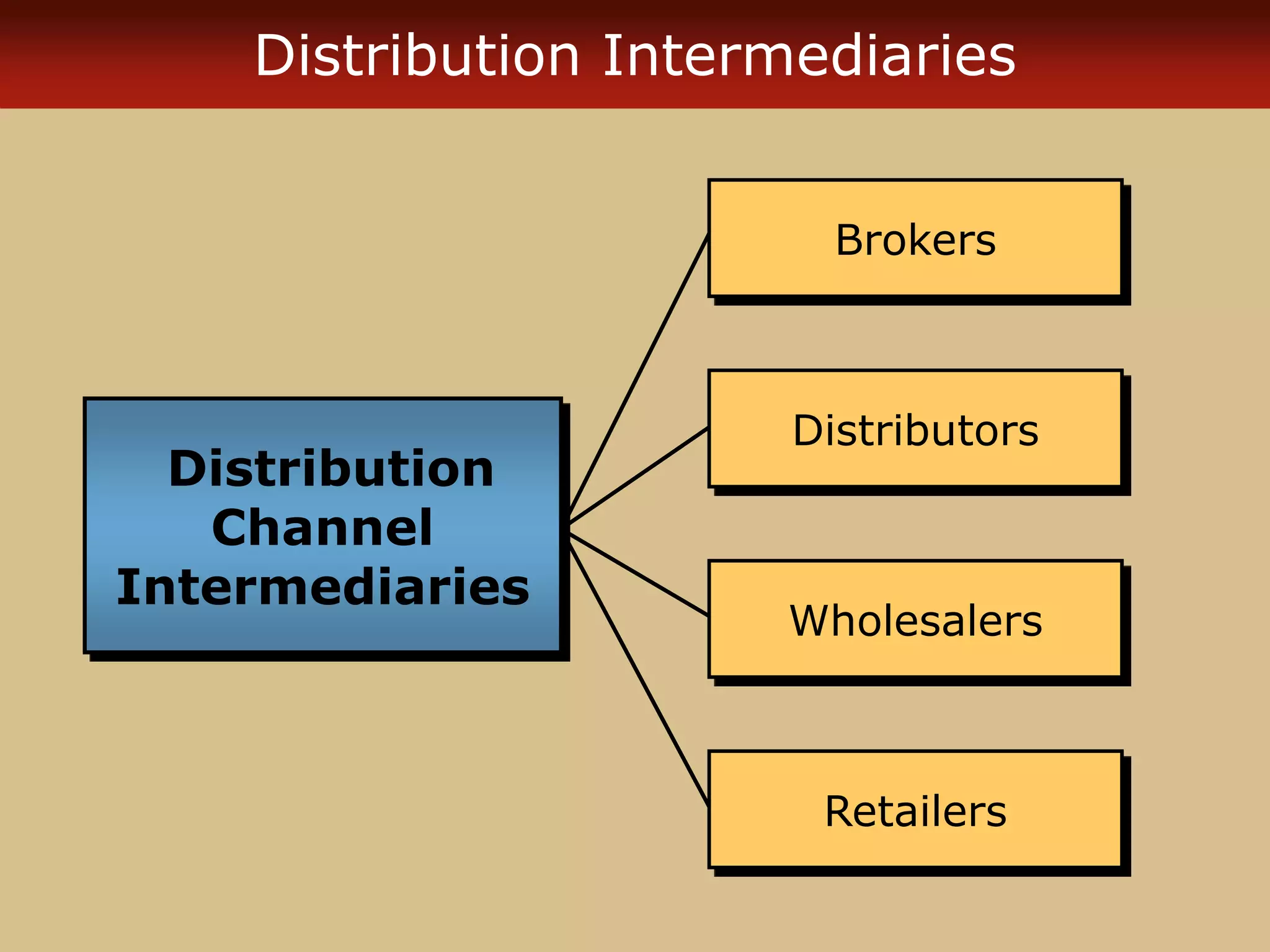
Distribution Intermediaries
Distribution
Channel
Intermediaries
Brokers
Distributors
Wholesalers
Retailers
Promotional Strategy: Push or Pull?
Push Policy
Producer
Wholesaler
Retailer
Consumer
Information Flow
Pull Policy
Producer
Wholesaler
Retailer
Consumer
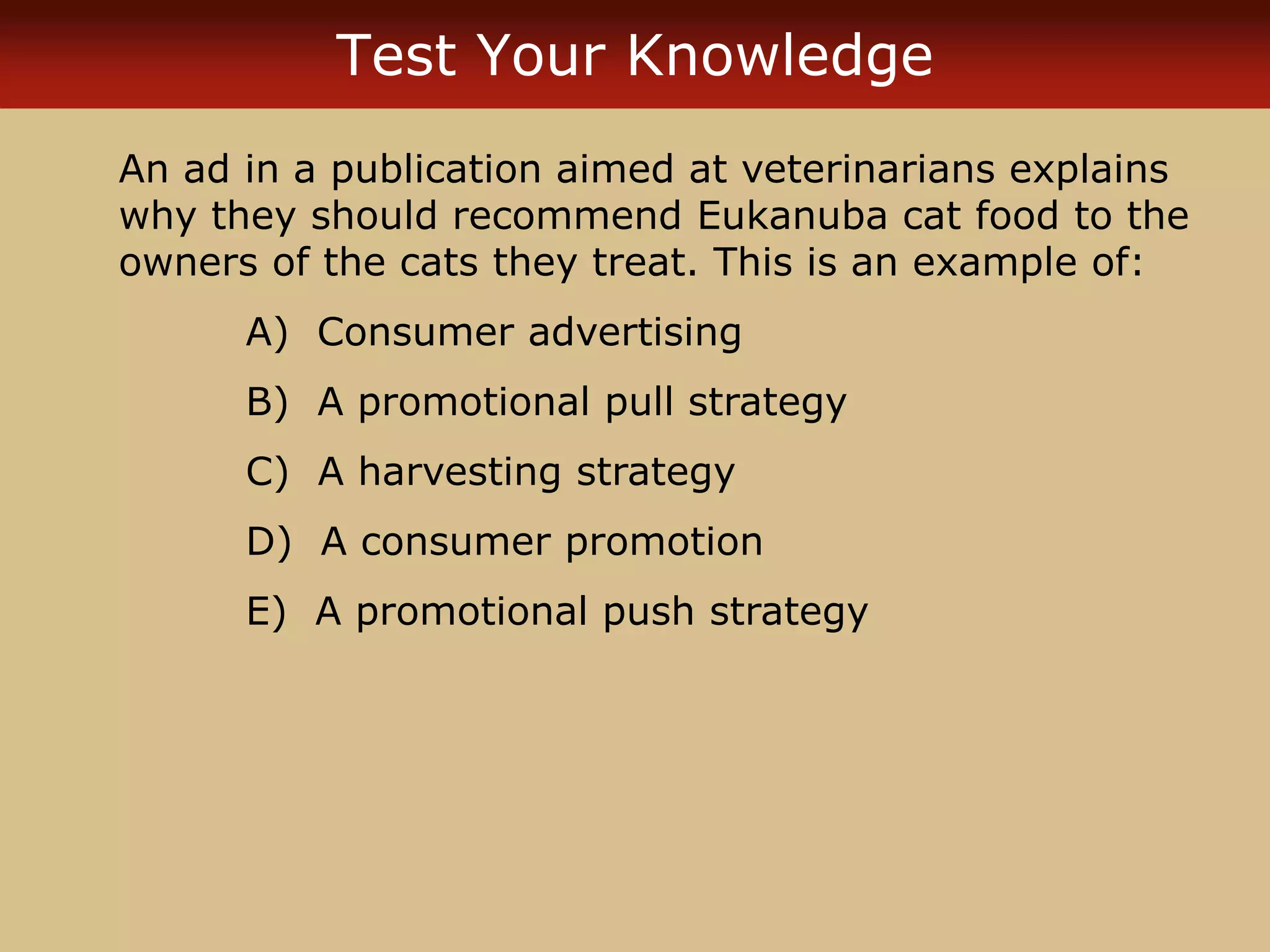
Test Your Knowledge
An ad in a publication aimed at veterinarians explains
why they should recommend Eukanuba cat food to the
owners of the cats they treat. This is an example of:
A) Consumer advertising
B) A promotional pull strategy
C) A harvesting strategy
D) A consumer promotion
E) A promotional push strategy

Chapter02 introduction to advertising

  • 1.
    The Role ofIMC in the Marketing Process 2 McGraw-Hill/Irwin Copyright © 2009 by The McGraw-Hill Companies, Inc. All rights reserved.
  • 2.
  • 3.
    Under Armour ProtectsIts House • Keys to Under Armour’s success – Niche markets – Strong product positioning – Unique brand identity – Strong brand reputation
  • 4.
    Marketing and PromotionsProcess Model Product decisions Pricing decisions Channel-of- distribution decisions Opportunity analysis Competitive analysis Target marketing Identifying markets Market segmentation Selecting a target market Positioning through marketing strategies Promotional decisions • Advertising • Direct marketing • Interactive marketing • Sales promotion • Publicity and public relations • Personal selling Ultimate consumer • Consumers • Businesses Promotion to final buyer Resellers Promotion to trade Internet/ Interactive Purchase
  • 5.
    Marketing to aLifestyle
  • 6.
    Padres Pitch tothe Fans *Click outside of the video screen to advance to the next slide
  • 7.
    The Target MarketingProcess Position through marketing strategies Select market to target Determine market segmentation Identify markets with unfulfilled needs
  • 8.
    A Product forEvery Market Segment
  • 9.
    The Marketing SegmentationProcess Take marketing actions to reach target segments Select the product segments toward which the firm will direct its marketing actions Develop a market/product grid to relate the market segments to the firm’s products and actions Find ways to group marketing actions available to the organization Find ways to group consumers according to their needs
  • 10.
    What do NASCAR,Coors, and Unilever know?
  • 11.
    Bases for Segmentation Behavior Benefits OutletType Psychographic Geographic Demographic Customer Characteristics Socioeconomic Buying Situation Usage Awareness
  • 12.
  • 13.
  • 14.
    Psychographic Segmentation • Dividingthe market on the basis of – Personality – Values – Lifestyle • VALS lifestyle segmentation – Eight lifestyles with distinctive attitudes, behaviors, and decision-making patterns – Combined with estimate of the resources on which the consumer can draw
  • 15.
  • 16.
  • 17.
  • 18.
    Test Your Knowledge Thekey factor in communicating information about a brand and differentiating it from competitors is: A) Its perceived price differential B) Its integrated promotional strategy C) The market positioning strategy assigned it by the manufacturer D) Its distribution intensity E) The benefits the brand offers
  • 19.
    Selecting a TargetMarket Determine how many segments to enter Determine which segments have the greatest potential
  • 20.
    Market Positioning Fitting theproduct or service to one or more segments of the broad market in such a way as to set it apart from the competition
  • 21.
    Developing a PositioningStrategy What position do we have now? Do we have the money to do the job? What position do we want to own? From whom must we win this position? Do we have the tenacity to stay with it? Does our creative strategy match it? The Position
  • 22.
    Positioning Strategies Attributes andBenefits? Price or Quality? Use or Application? Product Class? Product User? Competitor? Cultural Symbols? How should we position?
  • 23.
    Positioning by Useor Application
  • 24.
    Developing a PositioningPlatform 6. Monitor the position 5. Make the positioning decision 4. Analyze consumer preferences 3. Determine their positions 2. Assess perceptions of them 1. Identify the competitors
  • 25.
    Making the PositioningDecision Is the current position strategy working? Is the segmentation strategy appropriate? Are there sufficient resources to communicate the position? How strong is the competition? The Checklist
  • 26.
  • 27.
    Branding and ProductNames • Brand names often communicate attributes and meaning – Safeguard – I Can’t Believe It’s Not Butter! – Easy-Off – Arrid – Spic and Span
  • 28.
    Branding and PackagingAre Linked Product Decisions BRANDING Brand name commun- icates attributes and meaning Advertising creates and maintains brand equity Has become increasingly important Often customers’ first exposure to product PACKAGING
  • 29.
    A Package isMore than a Container
  • 30.
    Pricing Decisions What consumersgive up to purchase a product or service Time Price Variable Mental activity Behavioral effort Factors the firm must consider Costs Demand Competition Perceived value
  • 31.
    Relating Price toAds and Promotion Price must be consistent with perceptions of the product Higher prices communicate higher product quality Lower prices reflect bargain or “value” perceptions Price, advertising and distribution be unified in identifying product position Pricing Considerations A product positioned as high quality while carrying a lower price than competitors will confuse customers
  • 32.
    When Price isNot an Issue
  • 33.
  • 34.
  • 35.
    Promotional Strategy: Pushor Pull? Push Policy Producer Wholesaler Retailer Consumer Information Flow Pull Policy Producer Wholesaler Retailer Consumer
  • 36.
    Test Your Knowledge Anad in a publication aimed at veterinarians explains why they should recommend Eukanuba cat food to the owners of the cats they treat. This is an example of: A) Consumer advertising B) A promotional pull strategy C) A harvesting strategy D) A consumer promotion E) A promotional push strategy