GOLIS TECH UNIVERSITY BURAO
COURSE: FINANCIAL MANAGEMENT
CHAPTER TWO: FINANCIAL MANAGEMENT
SEMESTER SIX: ACCOUNTING
LECTURER: MOHAMED M.BAROUD
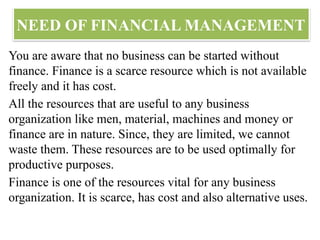
NEED OF FINANCIAL MANAGEMENT
You are aware that no business can be started without
finance. Finance is a scarce resource which is not available
freely and it has cost.
All the resources that are useful to any business
organization like men, material, machines and money or
finance are in nature. Since, they are limited, we cannot
waste them. These resources are to be used optimally for
productive purposes.
Finance is one of the resources vital for any business
organization. It is scarce, has cost and also alternative uses.
Financial viability is perhaps the central theme of any
business proposition. That’s why, it has been rightly said that
business needs money to make more money.
However, it is also true that money begets more money only
when it is properly managed. Hence, efficient management of
every business enterprise is closely linked with efficient
management of its finances.
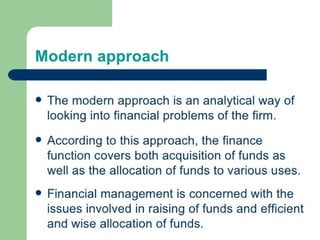
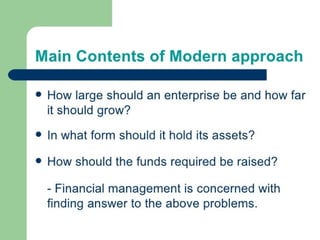
Financial management involves the management of finance
function. It is concerned with the planning, organizing,
directing and controlling the financial activities of an
enterprise.
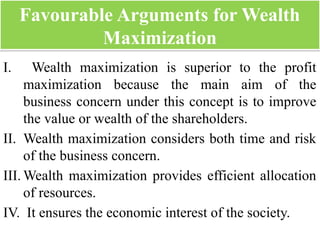
Favourable Arguments for Wealth
Maximization
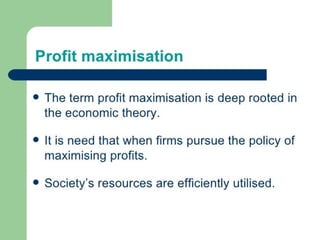
I. Wealth maximization is superior to the profit
maximization because the main aim of the
business concern under this concept is to improve
the value or wealth of the shareholders.
II. Wealth maximization considers both time and risk
of the business concern.
III. Wealth maximization provides efficient allocation
of resources.
IV. It ensures the economic interest of the society.
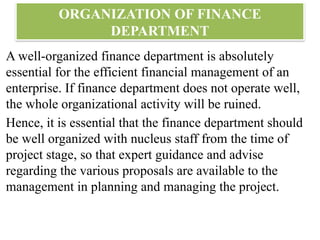
ORGANIZATION OF FINANCE
DEPARTMENT
A well-organized finance department is absolutely
essential for the efficient financial management of an
enterprise. If finance department does not operate well,
the whole organizational activity will be ruined.
Hence, it is essential that the finance department should
be well organized with nucleus staff from the time of
project stage, so that expert guidance and advise
regarding the various proposals are available to the
management in planning and managing the project.
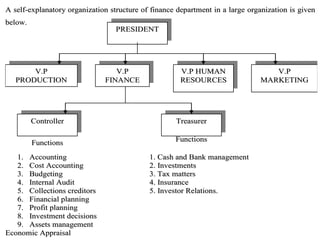
F
Fu
un
nc
ct
ti
io
on
ns
s F
Fu
un
nc
ct
ti
io
on
ns
s
A
A s
se
el
lf
f-
-e
ex
xp
pl
la
an
na
at
to
or
ry
y o
or
rg
ga
an
ni
iz
za
at
ti
io
on
n s
st
tr
ru
uc
ct
tu
ur
re
e o
of
f f
fi
in
na
an
nc
ce
e d
de
ep
pa
ar
rt
tm
me
en
nt
t i
in
n a
a l
la
ar
rg
ge
e o
or
rg
ga
an
ni
iz
za
at
ti
io
on
n i
is
s g
gi
iv
ve
en
n
b
be
el
lo
ow
w.
.
1
1.
. A
Ac
cc
co
ou
un
nt
ti
in
ng
g 1
1.
. C
Ca
as
sh
h a
an
nd
d B
Ba
an
nk
k m
ma
an
na
ag
ge
em
me
en
nt
t
2
2.
. C
Co
os
st
t A
Ac
cc
co
ou
un
nt
ti
in
ng
g 2
2.
. I
In
nv
ve
es
st
tm
me
en
nt
ts
s
3
3.
. B
Bu
ud
dg
ge
et
ti
in
ng
g 3
3.
. T
Ta
ax
x m
ma
at
tt
te
er
rs
s
4
4.
. I
In
nt
te
er
rn
na
al
l A
Au
ud
di
it
t 4
4.
. I
In
ns
su
ur
ra
an
nc
ce
e
5
5.
. C
Co
ol
ll
le
ec
ct
ti
io
on
ns
s c
cr
re
ed
di
it
to
or
rs
s 5
5.
. I
In
nv
ve
es
st
to
or
r R
Re
el
la
at
ti
io
on
ns
s.
.
6
6.
. F
Fi
in
na
an
nc
ci
ia
al
l p
pl
la
an
nn
ni
in
ng
g
7
7.
. P
Pr
ro
of
fi
it
t p
pl
la
an
nn
ni
in
ng
g
8
8.
. I
In
nv
ve
es
st
tm
me
en
nt
t d
de
ec
ci
is
si
io
on
ns
s
9
9.
. A
As
ss
se
et
ts
s m
ma
an
na
ag
ge
em
me
en
nt
t
E
Ec
co
on
no
om
mi
ic
c A
Ap
pp
pr
ra
ai
is
sa
al
l
P
PR
RE
ES
SI
ID
DE
EN
NT
T
V
V.
.P
P
P
PR
RO
OD
DU
UC
CT
TI
IO
ON
N
V
V.
.P
P
F
FI
IN
NA
AN
NC
CE
E
V
V.
.P
P H
HU
UM
MA
AN
N
R
RE
ES
SO
OU
UR
RC
CE
ES
S
V
V.
.P
P
M
MA
AR
RK
KE
ET
TI
IN
NG
G
C
Co
on
nt
tr
ro
ol
ll
le
er
r T
Tr
re
ea
as
su
ur
re
er
r
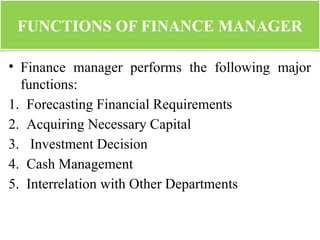
FUNCTIONS OF FINANCE MANAGER
• Finance manager performs the following major
functions:
1. Forecasting Financial Requirements
2. Acquiring Necessary Capital
3. Investment Decision
4. Cash Management
5. Interrelation with Other Departments
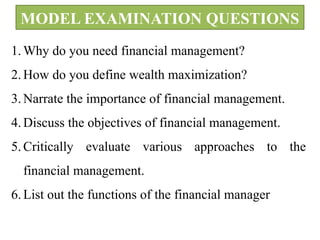
MODEL EXAMINATION QUESTIONS
1. Why do you need financial management?
2. How do you define wealth maximization?
3. Narrate the importance of financial management.
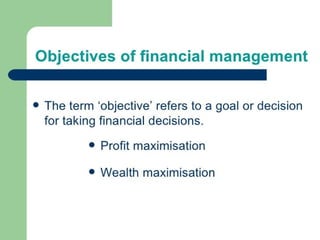
4. Discuss the objectives of financial management.
5. Critically evaluate various approaches to the
financial management.
6. List out the functions of the financial manager

Chapter Two Financial management .pptx

  • 1.
    GOLIS TECH UNIVERSITYBURAO COURSE: FINANCIAL MANAGEMENT CHAPTER TWO: FINANCIAL MANAGEMENT SEMESTER SIX: ACCOUNTING LECTURER: MOHAMED M.BAROUD
  • 4.
    NEED OF FINANCIALMANAGEMENT You are aware that no business can be started without finance. Finance is a scarce resource which is not available freely and it has cost. All the resources that are useful to any business organization like men, material, machines and money or finance are in nature. Since, they are limited, we cannot waste them. These resources are to be used optimally for productive purposes. Finance is one of the resources vital for any business organization. It is scarce, has cost and also alternative uses.
  • 5.
    Financial viability isperhaps the central theme of any business proposition. That’s why, it has been rightly said that business needs money to make more money. However, it is also true that money begets more money only when it is properly managed. Hence, efficient management of every business enterprise is closely linked with efficient management of its finances. Financial management involves the management of finance function. It is concerned with the planning, organizing, directing and controlling the financial activities of an enterprise.
  • 28.
    Favourable Arguments forWealth Maximization I. Wealth maximization is superior to the profit maximization because the main aim of the business concern under this concept is to improve the value or wealth of the shareholders. II. Wealth maximization considers both time and risk of the business concern. III. Wealth maximization provides efficient allocation of resources. IV. It ensures the economic interest of the society.
  • 29.
    ORGANIZATION OF FINANCE DEPARTMENT Awell-organized finance department is absolutely essential for the efficient financial management of an enterprise. If finance department does not operate well, the whole organizational activity will be ruined. Hence, it is essential that the finance department should be well organized with nucleus staff from the time of project stage, so that expert guidance and advise regarding the various proposals are available to the management in planning and managing the project.
  • 30.
    F Fu un nc ct ti io on ns s F Fu un nc ct ti io on ns s A A s se el lf f- -e ex xp pl la an na at to or ry yo or rg ga an ni iz za at ti io on n s st tr ru uc ct tu ur re e o of f f fi in na an nc ce e d de ep pa ar rt tm me en nt t i in n a a l la ar rg ge e o or rg ga an ni iz za at ti io on n i is s g gi iv ve en n b be el lo ow w. . 1 1. . A Ac cc co ou un nt ti in ng g 1 1. . C Ca as sh h a an nd d B Ba an nk k m ma an na ag ge em me en nt t 2 2. . C Co os st t A Ac cc co ou un nt ti in ng g 2 2. . I In nv ve es st tm me en nt ts s 3 3. . B Bu ud dg ge et ti in ng g 3 3. . T Ta ax x m ma at tt te er rs s 4 4. . I In nt te er rn na al l A Au ud di it t 4 4. . I In ns su ur ra an nc ce e 5 5. . C Co ol ll le ec ct ti io on ns s c cr re ed di it to or rs s 5 5. . I In nv ve es st to or r R Re el la at ti io on ns s. . 6 6. . F Fi in na an nc ci ia al l p pl la an nn ni in ng g 7 7. . P Pr ro of fi it t p pl la an nn ni in ng g 8 8. . I In nv ve es st tm me en nt t d de ec ci is si io on ns s 9 9. . A As ss se et ts s m ma an na ag ge em me en nt t E Ec co on no om mi ic c A Ap pp pr ra ai is sa al l P PR RE ES SI ID DE EN NT T V V. .P P P PR RO OD DU UC CT TI IO ON N V V. .P P F FI IN NA AN NC CE E V V. .P P H HU UM MA AN N R RE ES SO OU UR RC CE ES S V V. .P P M MA AR RK KE ET TI IN NG G C Co on nt tr ro ol ll le er r T Tr re ea as su ur re er r
  • 31.
    FUNCTIONS OF FINANCEMANAGER • Finance manager performs the following major functions: 1. Forecasting Financial Requirements 2. Acquiring Necessary Capital 3. Investment Decision 4. Cash Management 5. Interrelation with Other Departments
  • 32.
    MODEL EXAMINATION QUESTIONS 1.Why do you need financial management? 2. How do you define wealth maximization? 3. Narrate the importance of financial management. 4. Discuss the objectives of financial management. 5. Critically evaluate various approaches to the financial management. 6. List out the functions of the financial manager

Editor's Notes

  • #2 Financial management has a wide scope. According to Dr. S. C. Saxena, the scope of financial management includes the following five ‘A’s: 1.Anticipation : Financial management estimates the financial needs of the company. That is, it finds out how much finance is required by the company. 2.Acquisition : It collects finance for the company from different sources. 3.Allocation : It uses this collected finance to purchase fixed and current assets for the company. 4.Appropriation : It divides the company’s profits among the shareholders, debenture holders, etc. It keeps a part of the profits as reserves. 5.Assessment : It also controls all the financial activities of the company. Financial management is the most important functional area of management. All other functional areas such as production management, marketing management, personnel management, etc. depends on Financial management. Efficient financial management is required for survival, growth and success of the company or firm.
  • #7 Procurement is the act of obtaining goods or services. Business procurement requires preparation, solicitation, and payment processing, which usually involves several areas of a company.
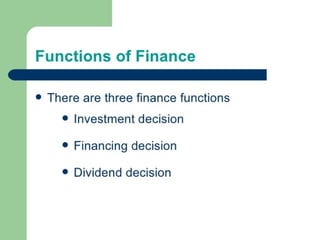
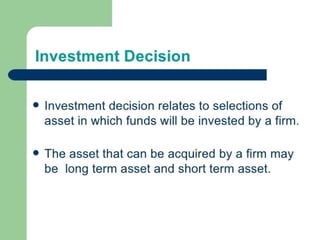
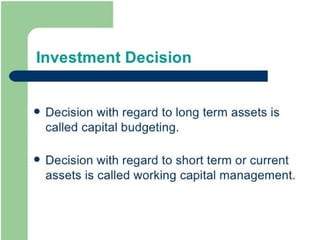
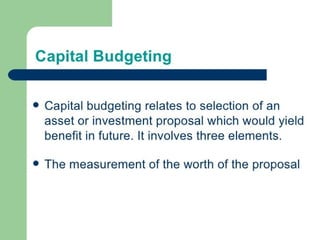
  • #13 Objectives of Finance Functions Investment Decisions– This is where the finance manager decides where to put the company funds. Investment decisions relate to management of working capital, capital budgeting decisions, management of mergers, buying or leasing of assets. Investment decisions should create revenue, profits and save costs. Capital Budgeting and Fixed Capital : Plant, Machinery, Land, Building, Furniture. Etc. Working Capital Management: for the purchase of: Raw materials, payment of wages and other day-to-day expenses.
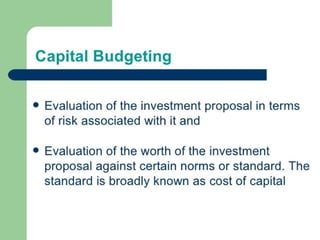
  • #15 Cost of capital represents the return a company needs in order to take on a capital project, such as purchasing new equipment or constructing a new building. A company's investment decisions for new projects should always generate a return that exceeds the firm's cost of the capital used to finance the project—otherwise, the project will not generate a return for investor.
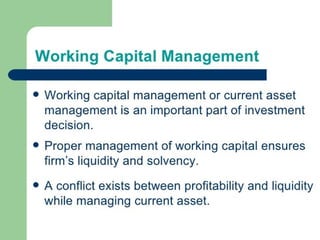
  • #16 Working capital management is a business strategy designed to ensure that a company operates efficiently by monitoring and using its current assets and liabilities to the best effect. The primary purpose of working capital management is to enable the company to maintain sufficient cash flow to meet its short-term operating costs and short-term debt obligations. A company's working capital is made up of its current assets minus its current liabilities: Liquidity: Implies the measure of the ability of the firm to cover its immediate financial obligation. Ratio Current ratio, acid test ratio, quick ratio, et Solvency: Means the firm's ability of a business to have sufficient assets to meet its debts as they fall due for payment. Debt to equity ratio, interest coverage ratio, etc.
  • #19 Financing Decisions– Here a company decides where to raise funds from. They are two main sources to consider from mainly equity and borrowed. From the two a decision on the appropriate mix of short and long-term financing should be made. The sources of financing best at a given time should also be agreed upon. Here a company decides where to raise funds from. They are two main sources to consider from mainly equity and borrowed. From the two a decision on the appropriate mix of short and long-term financing should be made. The sources of financing best at a given time should also be agreed upon.
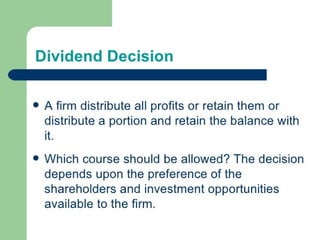
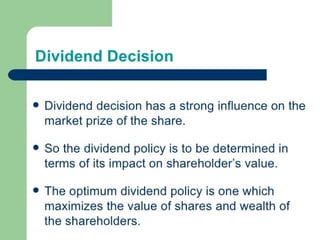
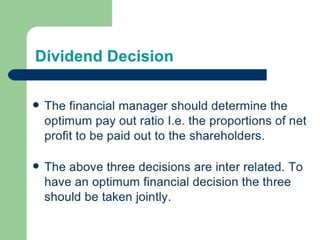
  • #20  Dividend Decisions– These are decisions as to how much, how frequent and in what form to return cash to owners. A balance between profits retained and the amount paid out as dividend should be decided here