FORECASTING EXCHANGE RATES
P R O F E S S O R D R . M D . A M I N U L I S L A M
FA C U LT Y O F A P P L I E D A N D H U M A N
S C I E N C E S
U N I V E R S I T I M A L AY S I A P E R L I S
Vi s i t i n g P r o f e s s o r
D a ff o d i l I n t e r n a t i o n a l U n i v e r s i t y
a m i n @ u n i m a p . e d u . m y
W h a t s Ap p : + 6 0 1 6 4 0 4 9 0 8 7
M Y Y O U T U B E C H AN N E L :
P L AT F O R M F O R R E S E AR C H AN D
D E V E L O P M E N T
Knowledge Sincerity Excellence UniMAP
LEARNING OUTCOMES
After this session participants will be able to:
 Explain how firms can benefit from forecasting exchange
rates
 Describe the common techniques used for forecasting
 Explain how forecasting performance can be evaluated
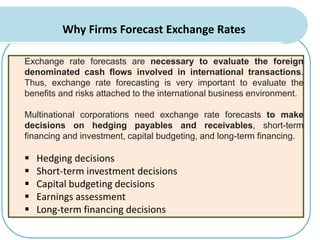
Why Firms Forecast Exchange Rates
Exchange rate forecasts are necessary to evaluate the foreign
denominated cash flows involved in international transactions.
Thus, exchange rate forecasting is very important to evaluate the
benefits and risks attached to the international business environment.
Multinational corporations need exchange rate forecasts to make
decisions on hedging payables and receivables, short-term
financing and investment, capital budgeting, and long-term financing.
 Hedging decisions
 Short-term investment decisions
 Capital budgeting decisions
 Earnings assessment
 Long-term financing decisions
Forecasting Techniques
Exchange rate forecasting means to estimate the rate which will
be any of future date. It is just expectation of currency rate. In
future, our currency may be depreciated or may be appreciated.
There are 3 common methods of forecasting exchange rates:
1. Technical Forecasting
2. Fundamental Forecasting
3. Market-Based Forecasting
Technical Forecasting
Technical analysis is a currency forecasting technique that uses
historical prices or trends. This focuses solely on past prices and
volume movements not on economic and political factors.
1. Involves the use of historical exchange rate data to
predict future values
2. Limitations of technical forecasting:
a. Focuses on the near future
b. Rarely provides point estimates or range of possible future
values
c. Technical forecasting model that worked well in one period may
not work well in another
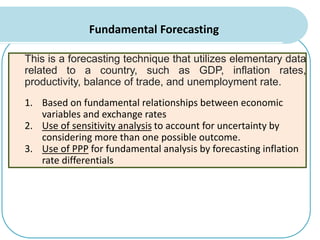
Fundamental Forecasting
This is a forecasting technique that utilizes elementary data
related to a country, such as GDP, inflation rates,
productivity, balance of trade, and unemployment rate.
1. Based on fundamental relationships between economic
variables and exchange rates
2. Use of sensitivity analysis to account for uncertainty by
considering more than one possible outcome.
3. Use of PPP for fundamental analysis by forecasting inflation
rate differentials
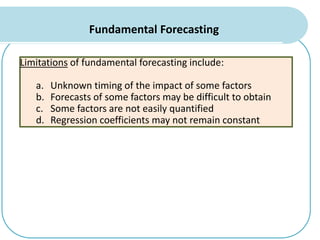
Fundamental Forecasting
Limitations of fundamental forecasting include:
a. Unknown timing of the impact of some factors
b. Forecasts of some factors may be difficult to obtain
c. Some factors are not easily quantified
d. Regression coefficients may not remain constant
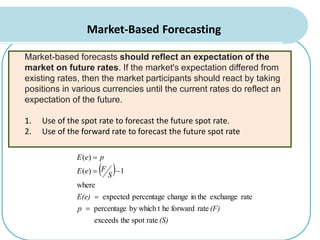
Market-Based Forecasting
Market-based forecasts should reflect an expectation of the
market on future rates. If the market's expectation differed from
existing rates, then the market participants should react by taking
positions in various currencies until the current rates do reflect an
expectation of the future.
1. Use of the spot rate to forecast the future spot rate.
2. Use of the forward rate to forecast the future spot rate
 
(S)
(F)
p
E(e)
S
F
e
E
p
e
E
rate
spot
the
exceeds
rate
forward
he
by which t
percentage
rate
exchange
in the
change
percentage
expected
where
1
)
(
)
(





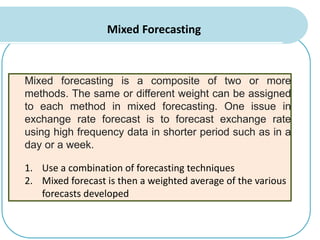
Mixed Forecasting
Mixed forecasting is a composite of two or more
methods. The same or different weight can be assigned
to each method in mixed forecasting. One issue in
exchange rate forecast is to forecast exchange rate
using high frequency data in shorter period such as in a
day or a week.
1. Use a combination of forecasting techniques
2. Mixed forecast is then a weighted average of the various
forecasts developed
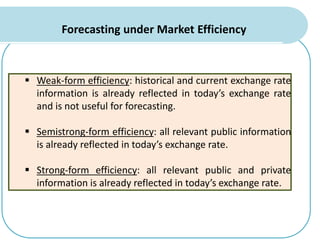
Forecasting under Market Efficiency
 Weak-form efficiency: historical and current exchange rate
information is already reflected in today’s exchange rate
and is not useful for forecasting.
 Semistrong-form efficiency: all relevant public information
is already reflected in today’s exchange rate.
 Strong-form efficiency: all relevant public and private
information is already reflected in today’s exchange rate.
Methods of Forecasting Exchange Rate Volatility
Currency exchange rate forecasts help brokers and businesses
make better decisions. There are 3 Common Ways to Forecast
Currency Exchange Rates
 Purchasing power parity looks at the prices of goods in
different countries and is one of the more widely used methods
for forecasting exchange rates due to its indoctrination in
textbooks.
 The relative economic strength approach compares levels of
economic growth across countries to forecast exchange rates.
 Lastly, econometric models can consider a wide range of
variables when attempting to understand trends in the currency
markets.
1. Use of recent volatility level
2. Use of historical pattern of volatilities
Knowledge Sincerity Excellence UniMAP

Chapter 9:Forecasting Exchange Rates.pptx

  • 1.
    FORECASTING EXCHANGE RATES PR O F E S S O R D R . M D . A M I N U L I S L A M FA C U LT Y O F A P P L I E D A N D H U M A N S C I E N C E S U N I V E R S I T I M A L AY S I A P E R L I S Vi s i t i n g P r o f e s s o r D a ff o d i l I n t e r n a t i o n a l U n i v e r s i t y a m i n @ u n i m a p . e d u . m y W h a t s Ap p : + 6 0 1 6 4 0 4 9 0 8 7 M Y Y O U T U B E C H AN N E L : P L AT F O R M F O R R E S E AR C H AN D D E V E L O P M E N T Knowledge Sincerity Excellence UniMAP
  • 2.
    LEARNING OUTCOMES After thissession participants will be able to:  Explain how firms can benefit from forecasting exchange rates  Describe the common techniques used for forecasting  Explain how forecasting performance can be evaluated
  • 3.
    Why Firms ForecastExchange Rates Exchange rate forecasts are necessary to evaluate the foreign denominated cash flows involved in international transactions. Thus, exchange rate forecasting is very important to evaluate the benefits and risks attached to the international business environment. Multinational corporations need exchange rate forecasts to make decisions on hedging payables and receivables, short-term financing and investment, capital budgeting, and long-term financing.  Hedging decisions  Short-term investment decisions  Capital budgeting decisions  Earnings assessment  Long-term financing decisions
  • 4.
    Forecasting Techniques Exchange rateforecasting means to estimate the rate which will be any of future date. It is just expectation of currency rate. In future, our currency may be depreciated or may be appreciated. There are 3 common methods of forecasting exchange rates: 1. Technical Forecasting 2. Fundamental Forecasting 3. Market-Based Forecasting
  • 5.
    Technical Forecasting Technical analysisis a currency forecasting technique that uses historical prices or trends. This focuses solely on past prices and volume movements not on economic and political factors. 1. Involves the use of historical exchange rate data to predict future values 2. Limitations of technical forecasting: a. Focuses on the near future b. Rarely provides point estimates or range of possible future values c. Technical forecasting model that worked well in one period may not work well in another
  • 6.
    Fundamental Forecasting This isa forecasting technique that utilizes elementary data related to a country, such as GDP, inflation rates, productivity, balance of trade, and unemployment rate. 1. Based on fundamental relationships between economic variables and exchange rates 2. Use of sensitivity analysis to account for uncertainty by considering more than one possible outcome. 3. Use of PPP for fundamental analysis by forecasting inflation rate differentials
  • 7.
    Fundamental Forecasting Limitations offundamental forecasting include: a. Unknown timing of the impact of some factors b. Forecasts of some factors may be difficult to obtain c. Some factors are not easily quantified d. Regression coefficients may not remain constant
  • 8.
    Market-Based Forecasting Market-based forecastsshould reflect an expectation of the market on future rates. If the market's expectation differed from existing rates, then the market participants should react by taking positions in various currencies until the current rates do reflect an expectation of the future. 1. Use of the spot rate to forecast the future spot rate. 2. Use of the forward rate to forecast the future spot rate   (S) (F) p E(e) S F e E p e E rate spot the exceeds rate forward he by which t percentage rate exchange in the change percentage expected where 1 ) ( ) (     
  • 9.
    Mixed Forecasting Mixed forecastingis a composite of two or more methods. The same or different weight can be assigned to each method in mixed forecasting. One issue in exchange rate forecast is to forecast exchange rate using high frequency data in shorter period such as in a day or a week. 1. Use a combination of forecasting techniques 2. Mixed forecast is then a weighted average of the various forecasts developed
  • 10.
    Forecasting under MarketEfficiency  Weak-form efficiency: historical and current exchange rate information is already reflected in today’s exchange rate and is not useful for forecasting.  Semistrong-form efficiency: all relevant public information is already reflected in today’s exchange rate.  Strong-form efficiency: all relevant public and private information is already reflected in today’s exchange rate.
  • 11.
    Methods of ForecastingExchange Rate Volatility Currency exchange rate forecasts help brokers and businesses make better decisions. There are 3 Common Ways to Forecast Currency Exchange Rates  Purchasing power parity looks at the prices of goods in different countries and is one of the more widely used methods for forecasting exchange rates due to its indoctrination in textbooks.  The relative economic strength approach compares levels of economic growth across countries to forecast exchange rates.  Lastly, econometric models can consider a wide range of variables when attempting to understand trends in the currency markets. 1. Use of recent volatility level 2. Use of historical pattern of volatilities
  • 12.