Types of Chemical Reactions
Chapter 9.2
p 311-315
There are many different types
of reactions. Most fit into 4
major categories.
•
•
•
•

Synthesis
Decomposition
Replacement
Combustion
Synthesis Reactions
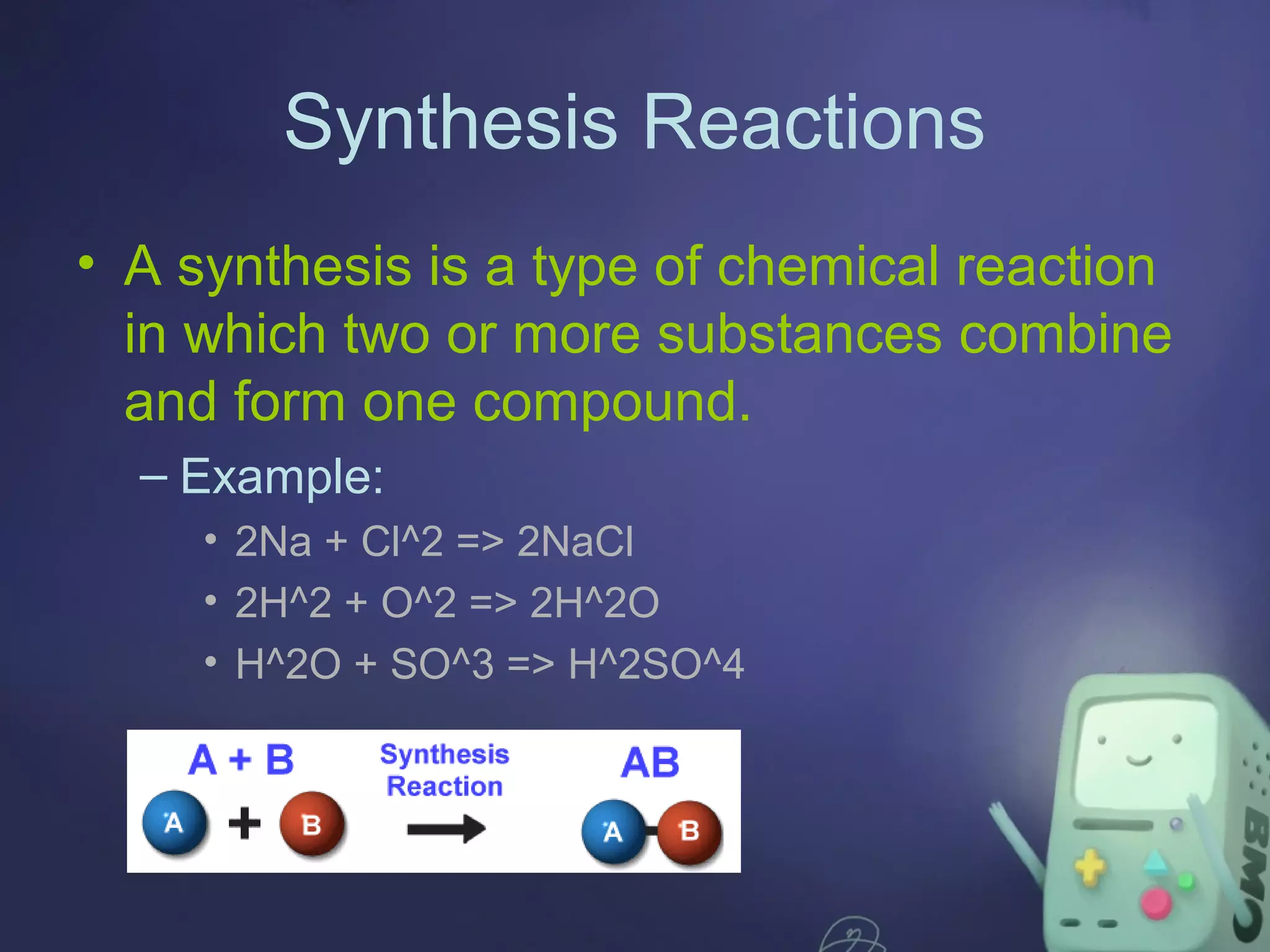
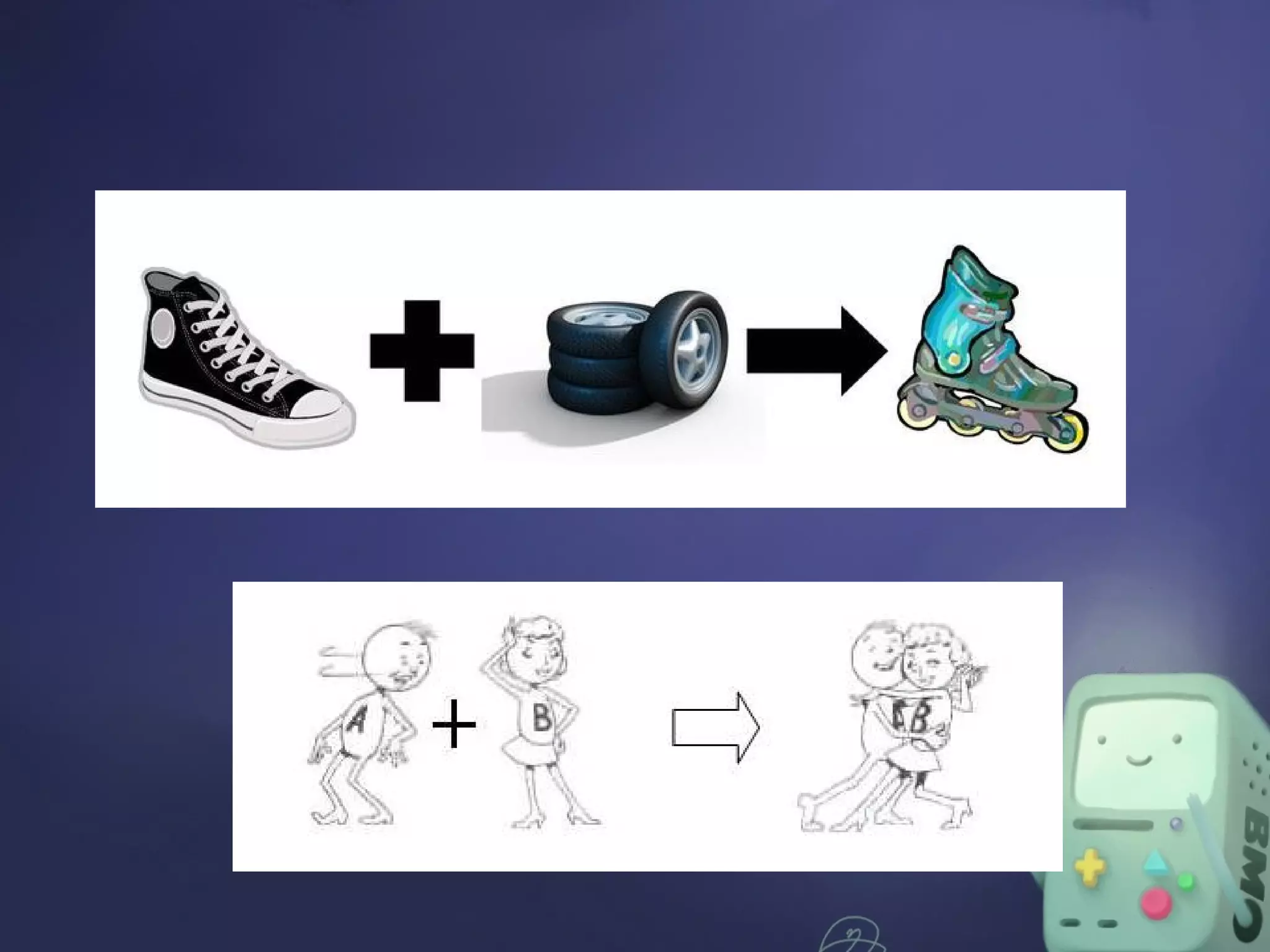
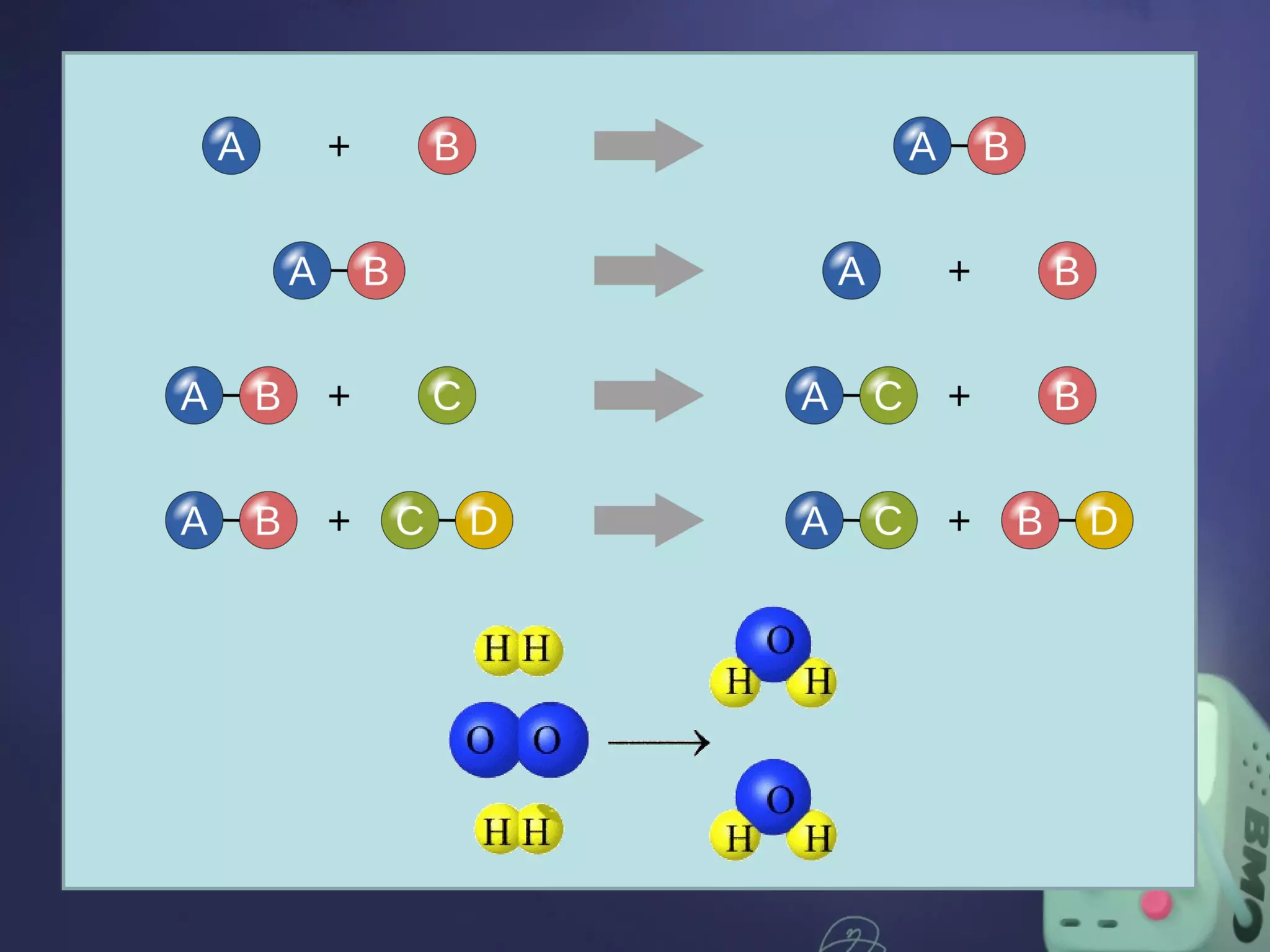
• A synthesis is a type of chemical reaction
in which two or more substances combine
and form one compound.
– Example:
• 2Na + Cl^2 => 2NaCl
• 2H^2 + O^2 => 2H^2O
• H^2O + SO^3 => H^2SO^4
Decomposition Reactions
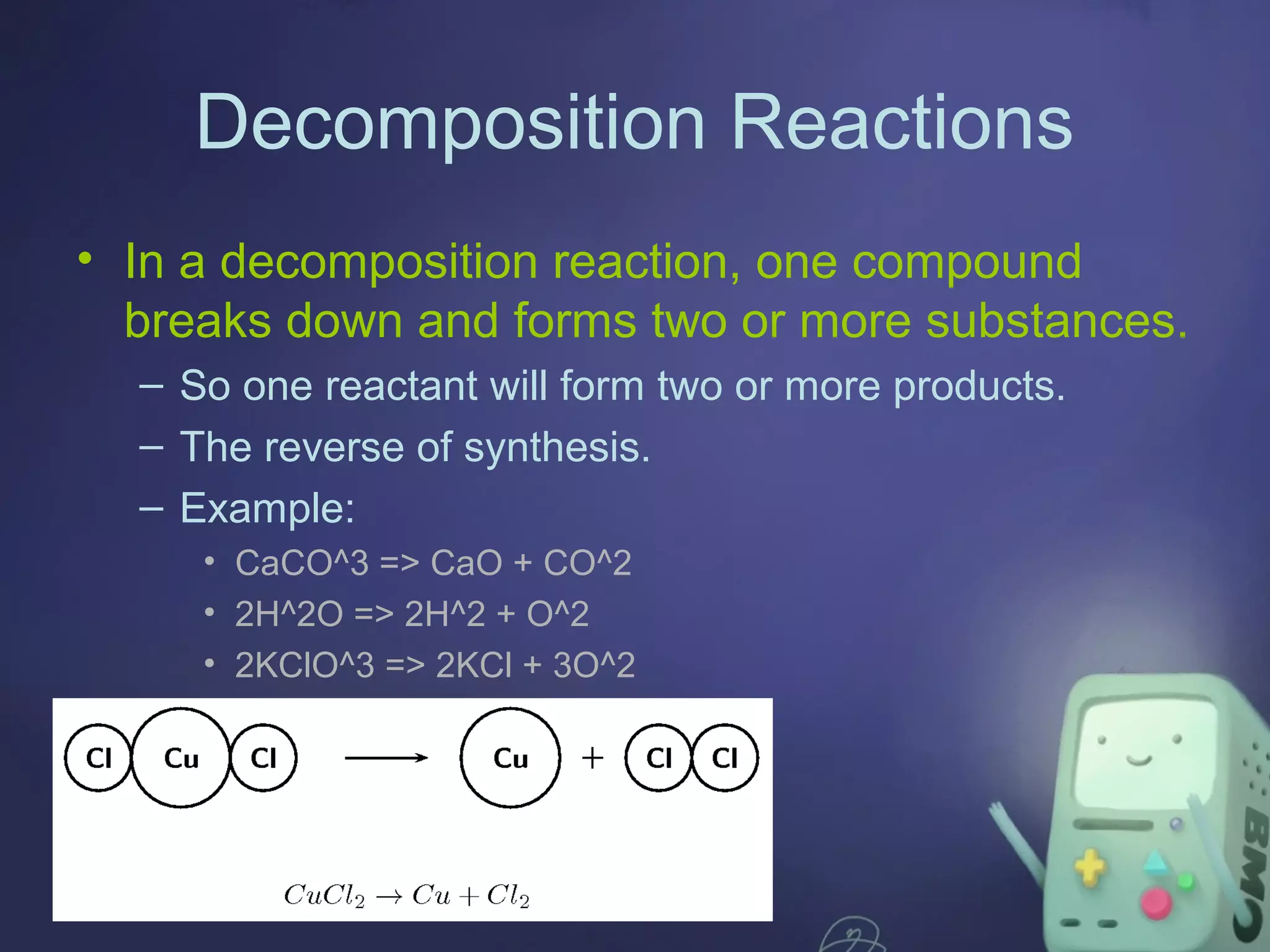
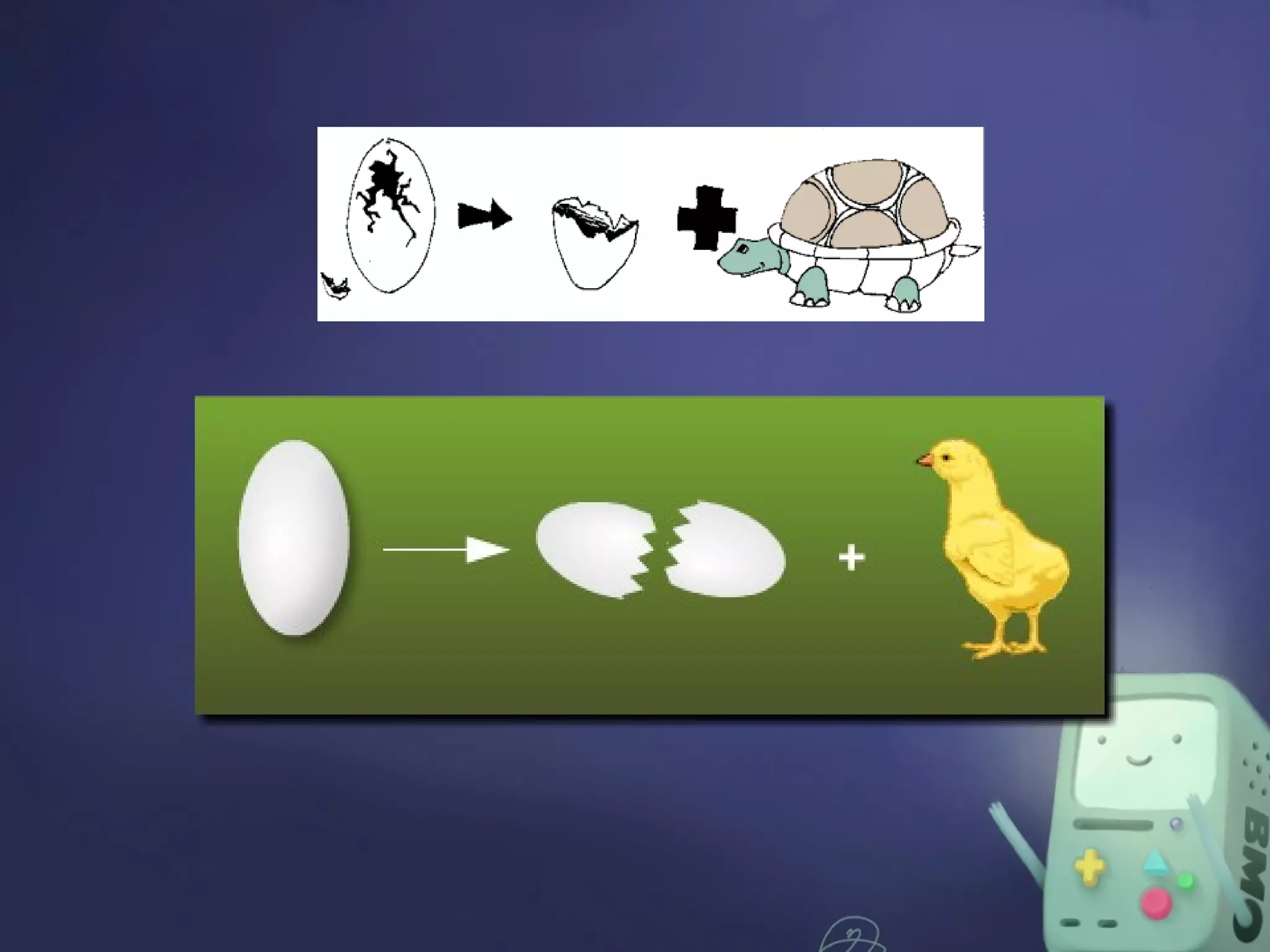
• In a decomposition reaction, one compound
breaks down and forms two or more substances.
– So one reactant will form two or more products.
– The reverse of synthesis.
– Example:
• CaCO^3 => CaO + CO^2
• 2H^2O => 2H^2 + O^2
• 2KClO^3 => 2KCl + 3O^2
Replacement Reactions
• Single-replacement
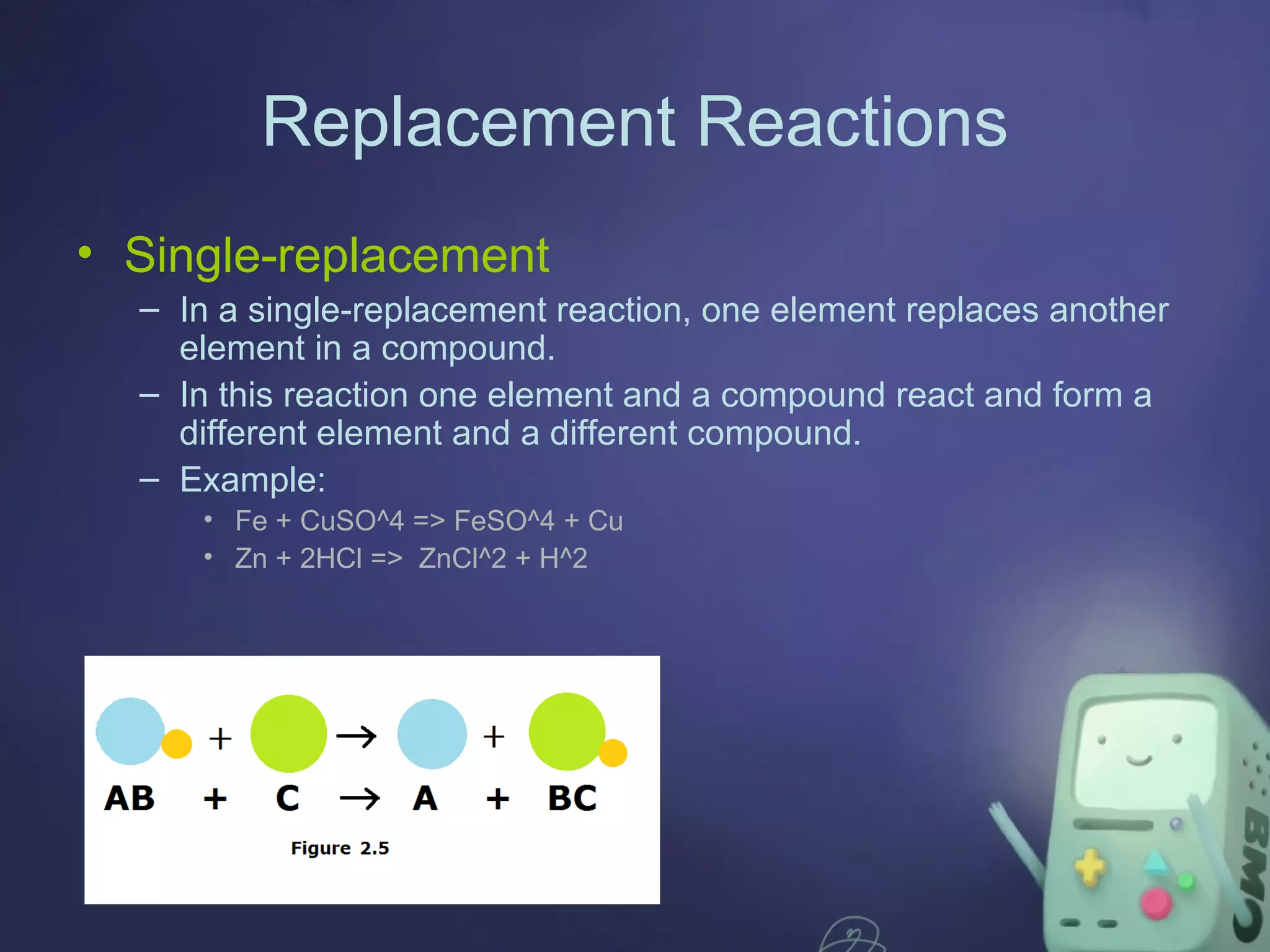
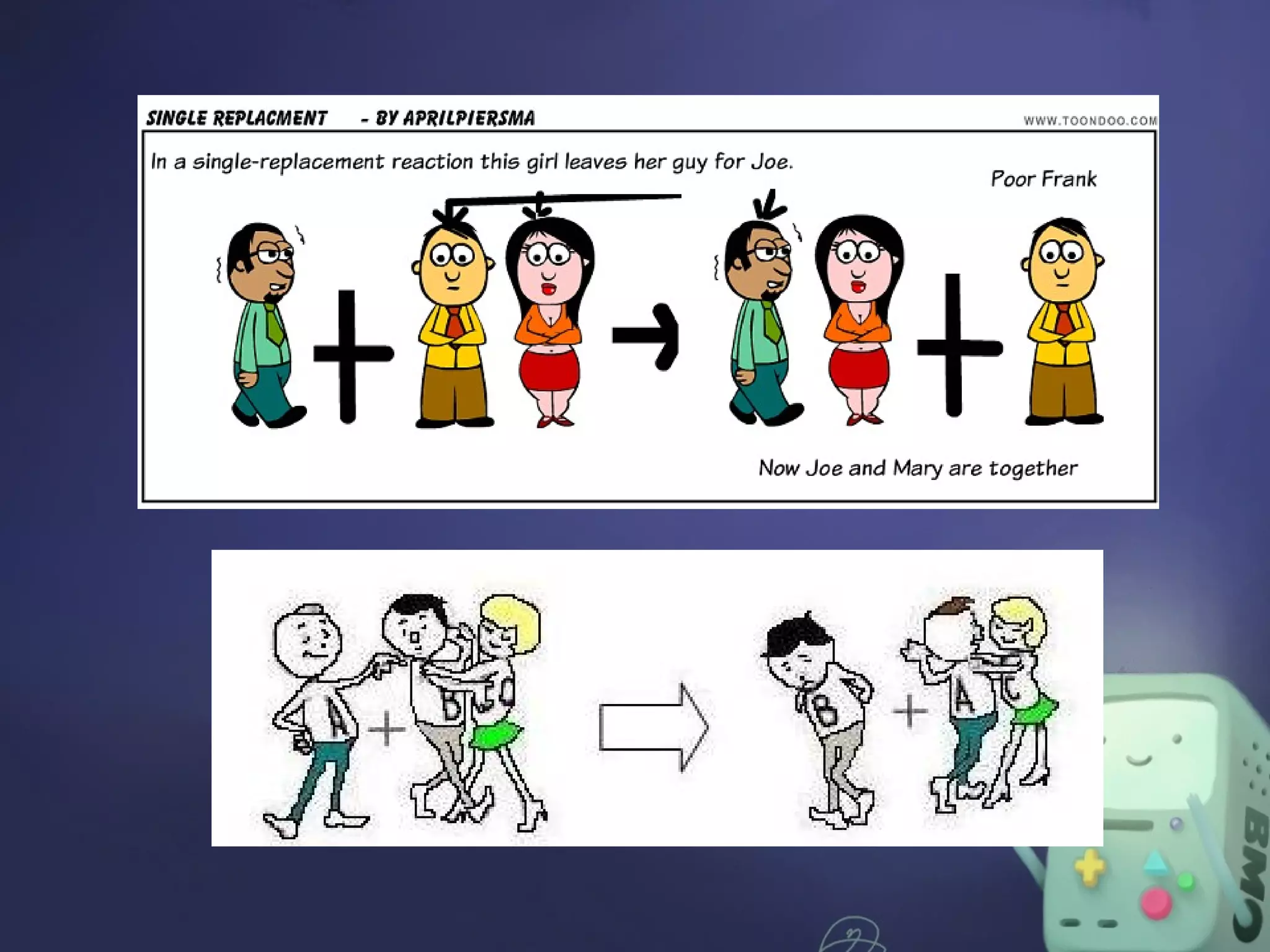
– In a single-replacement reaction, one element replaces another
element in a compound.
– In this reaction one element and a compound react and form a
different element and a different compound.
– Example:
• Fe + CuSO^4 => FeSO^4 + Cu
• Zn + 2HCl => ZnCl^2 + H^2
Replacement Reactions
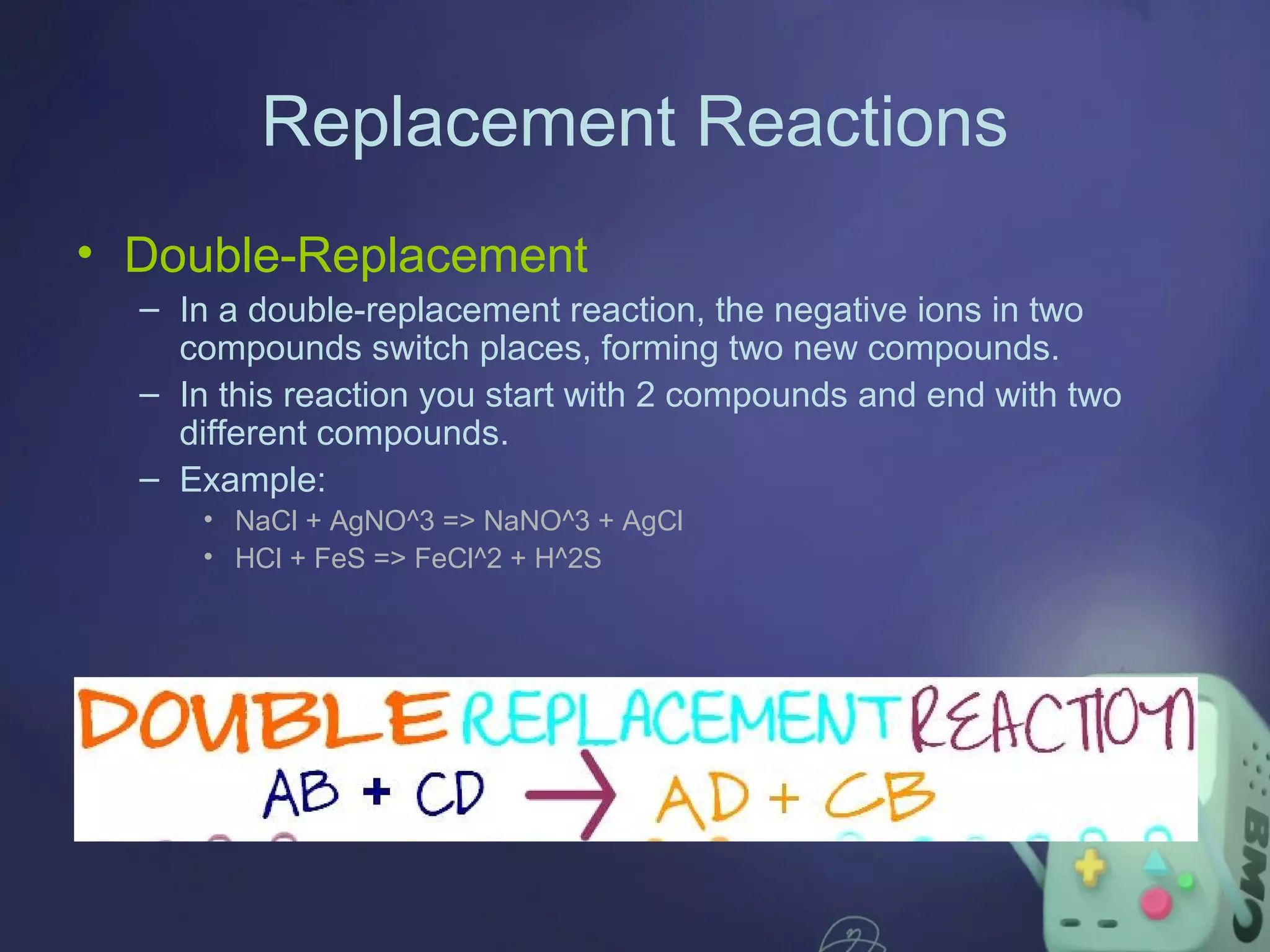
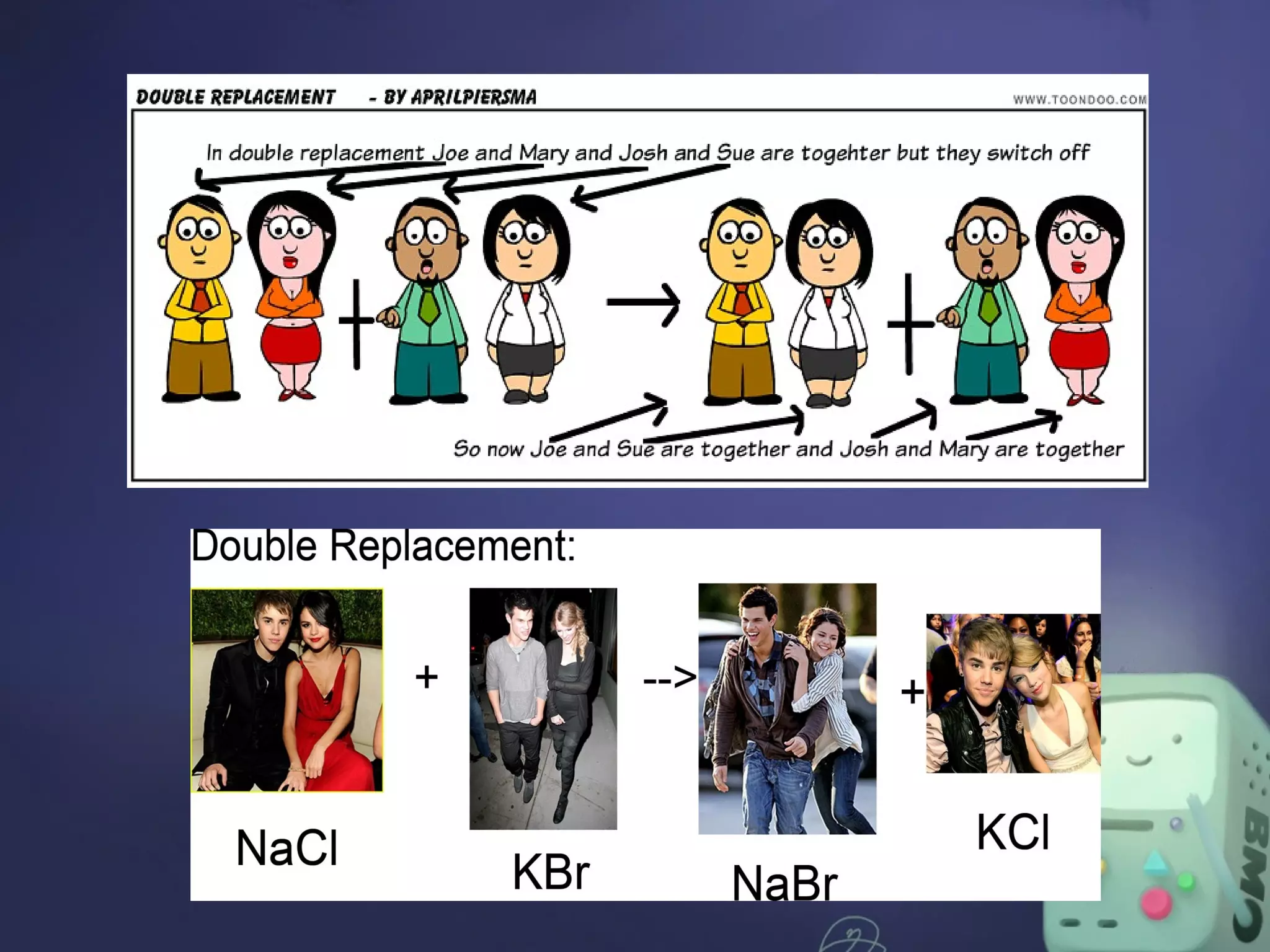
• Double-Replacement
– In a double-replacement reaction, the negative ions in two
compounds switch places, forming two new compounds.
– In this reaction you start with 2 compounds and end with two
different compounds.
– Example:
• NaCl + AgNO^3 => NaNO^3 + AgCl
• HCl + FeS => FeCl^2 + H^2S
Combustion Reactions
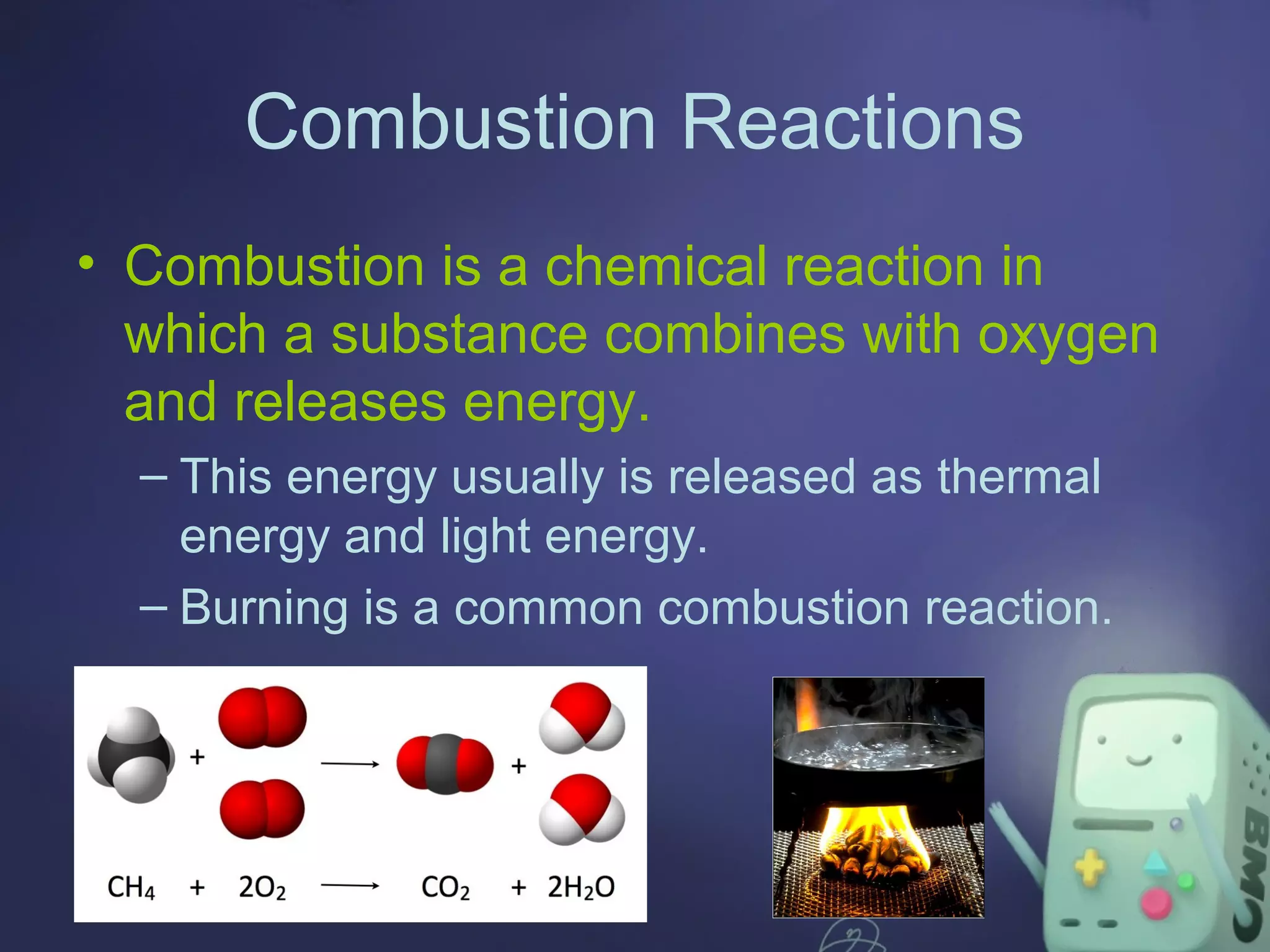
• Combustion is a chemical reaction in
which a substance combines with oxygen
and releases energy.
– This energy usually is released as thermal
energy and light energy.
– Burning is a common combustion reaction.
Chapter 9.2: Types of Chemical Reactions

Chapter 9.2: Types of Chemical Reactions

  • 1.
    Types of ChemicalReactions Chapter 9.2 p 311-315
  • 2.
    There are manydifferent types of reactions. Most fit into 4 major categories. • • • • Synthesis Decomposition Replacement Combustion
  • 3.
    Synthesis Reactions • Asynthesis is a type of chemical reaction in which two or more substances combine and form one compound. – Example: • 2Na + Cl^2 => 2NaCl • 2H^2 + O^2 => 2H^2O • H^2O + SO^3 => H^2SO^4
  • 5.
    Decomposition Reactions • Ina decomposition reaction, one compound breaks down and forms two or more substances. – So one reactant will form two or more products. – The reverse of synthesis. – Example: • CaCO^3 => CaO + CO^2 • 2H^2O => 2H^2 + O^2 • 2KClO^3 => 2KCl + 3O^2
  • 7.
    Replacement Reactions • Single-replacement –In a single-replacement reaction, one element replaces another element in a compound. – In this reaction one element and a compound react and form a different element and a different compound. – Example: • Fe + CuSO^4 => FeSO^4 + Cu • Zn + 2HCl => ZnCl^2 + H^2
  • 9.
    Replacement Reactions • Double-Replacement –In a double-replacement reaction, the negative ions in two compounds switch places, forming two new compounds. – In this reaction you start with 2 compounds and end with two different compounds. – Example: • NaCl + AgNO^3 => NaNO^3 + AgCl • HCl + FeS => FeCl^2 + H^2S
  • 11.
    Combustion Reactions • Combustionis a chemical reaction in which a substance combines with oxygen and releases energy. – This energy usually is released as thermal energy and light energy. – Burning is a common combustion reaction.