1600s Early Western European
Settlements
1865-1914 The Triumph of Industry
1890-1920 Eastern Immigration and
Urbanization
1890-1920 The Progressive Era
1898-1917 An Emerging World Power
1914-1920 World War I and Beyond
1919-1929 The Twenties
1928-1932 The Great Depression
1932-1941 The New Deal
1931-1942 The Coming War
1941-1945 World War II
1945-1960 The Cold War
1945-1960 Postwar Confidence and
Anxiety
1945-1975 The Civil Rights Movement
1960-1968 The Kennedy and Johnson
Years
1954-1975 The Vietnam Era
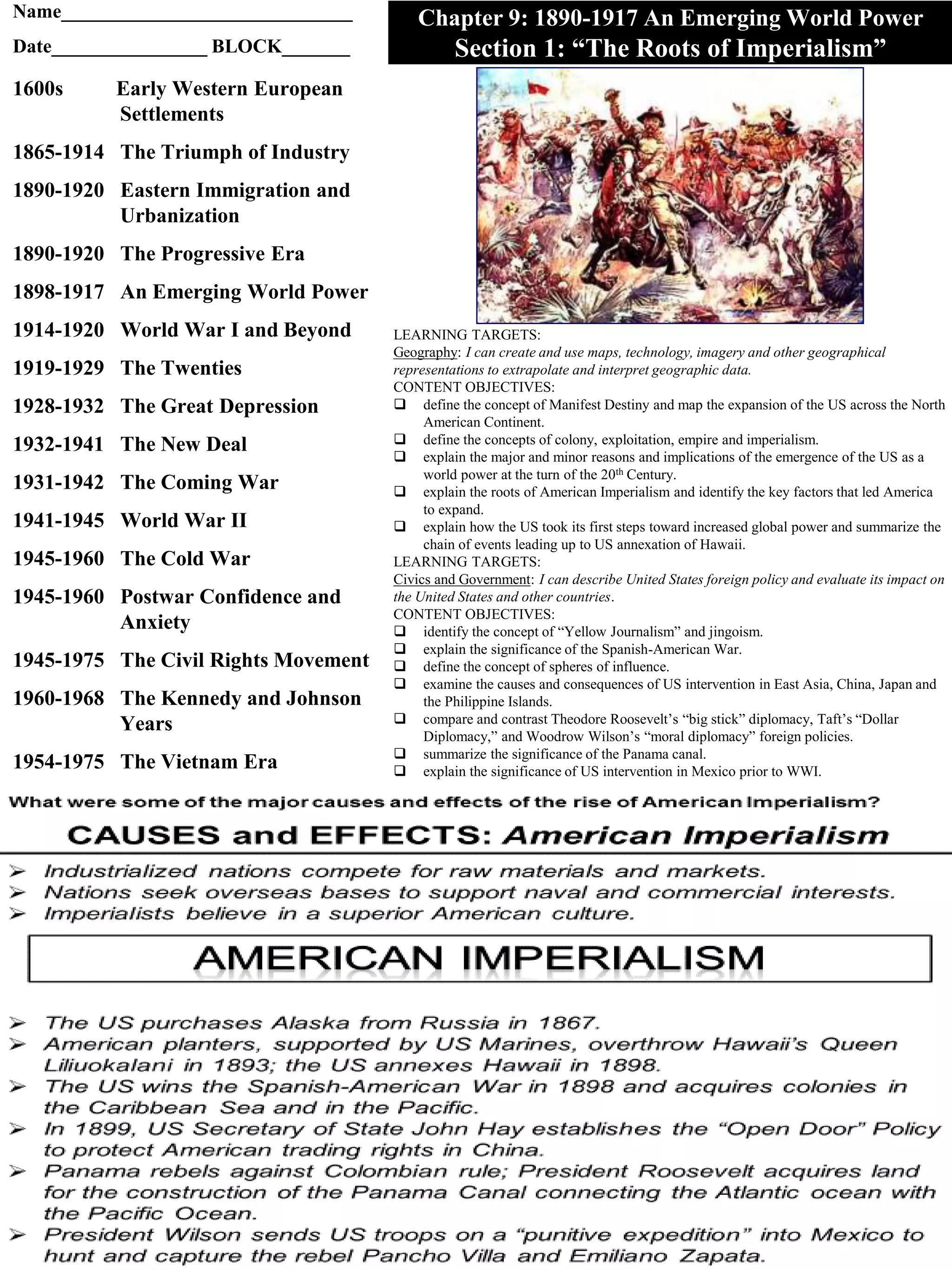
Chapter 9: 1890-1917 An Emerging World Power
Section 1: “The Roots of Imperialism”
LEARNING TARGETS:
Geography: I can create and use maps, technology, imagery and other geographical
representations to extrapolate and interpret geographic data.
CONTENT OBJECTIVES:
 define the concept of Manifest Destiny and map the expansion of the US across the North
American Continent.
 define the concepts of colony, exploitation, empire and imperialism.
 explain the major and minor reasons and implications of the emergence of the US as a
world power at the turn of the 20th Century.
 explain the roots of American Imperialism and identify the key factors that led America
to expand.
 explain how the US took its first steps toward increased global power and summarize the
chain of events leading up to US annexation of Hawaii.
LEARNING TARGETS:
Civics and Government: I can describe United States foreign policy and evaluate its impact on
the United States and other countries.
CONTENT OBJECTIVES:
 identify the concept of “Yellow Journalism” and jingoism.
 explain the significance of the Spanish-American War.
 define the concept of spheres of influence.
 examine the causes and consequences of US intervention in East Asia, China, Japan and
the Philippine Islands.
 compare and contrast Theodore Roosevelt’s “big stick” diplomacy, Taft’s “Dollar
Diplomacy,” and Woodrow Wilson’s “moral diplomacy” foreign policies.
 summarize the significance of the Panama canal.
 explain the significance of US intervention in Mexico prior to WWI.
Name______________________________
Date________________ BLOCK_______
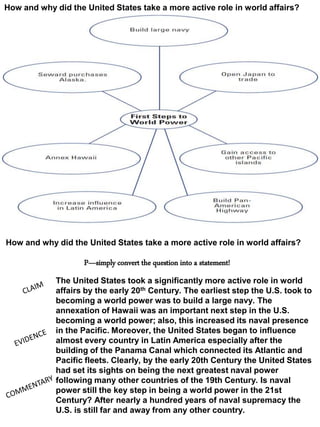
How and why did the United States take a more active role in world affairs?
The United States took a significantly more active role in world
affairs by the early 20th Century. The earliest step the U.S. took to
becoming a world power was to build a large navy. The
annexation of Hawaii was an important next step in the U.S.
becoming a world power; also, this increased its naval presence
in the Pacific. Moreover, the United States began to influence
almost every country in Latin America especially after the
building of the Panama Canal which connected its Atlantic and
Pacific fleets. Clearly, by the early 20th Century the United States
had set its sights on being the next greatest naval power
following many other countries of the 19th Century. Is naval
power still the key step in being a world power in the 21st
Century? After nearly a hundred years of naval supremacy the
U.S. is still far and away from any other country.
P—simply convert the question into a statement!
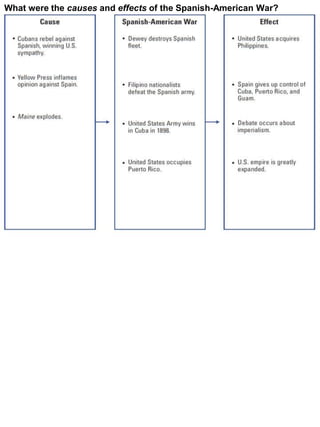
What were the causes and effects of the Spanish-American War?
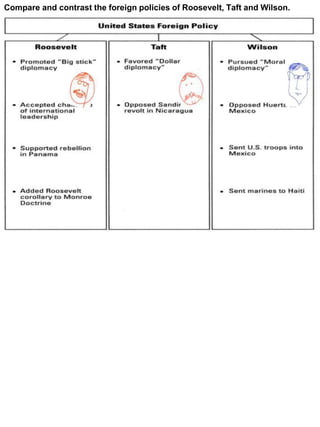
Compare and contrast the foreign policies of Roosevelt, Taft and Wilson.
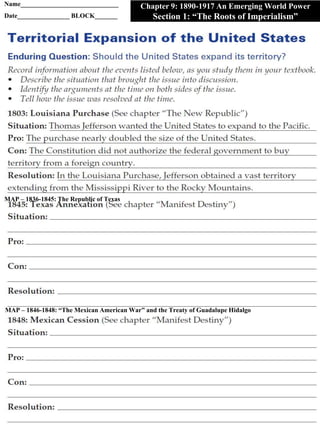
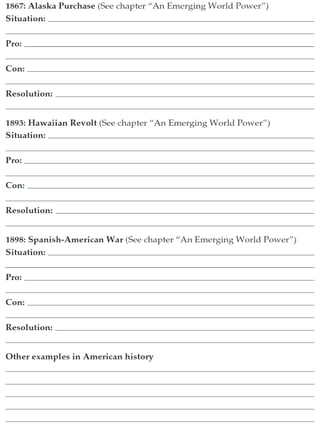
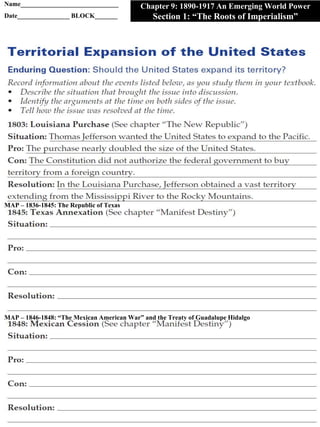
MAP – 1836-1845: The Republic of Texas
MAP – 1846-1848: “The Mexican American War” and the Treaty of Guadalupe Hidalgo
Chapter 9: 1890-1917 An Emerging World Power
Section 1: “The Roots of Imperialism”
Name______________________________
Date________________ BLOCK_______
MAP – 1836-1845: The Republic of Texas
MAP – 1846-1848: “The Mexican American War” and the Treaty of Guadalupe Hidalgo
Chapter 9: 1890-1917 An Emerging World Power
Section 1: “The Roots of Imperialism”
Name______________________________
Date________________ BLOCK_______
Chapter 9 Learning Guide

Chapter 9 Learning Guide

  • 1.
    1600s Early WesternEuropean Settlements 1865-1914 The Triumph of Industry 1890-1920 Eastern Immigration and Urbanization 1890-1920 The Progressive Era 1898-1917 An Emerging World Power 1914-1920 World War I and Beyond 1919-1929 The Twenties 1928-1932 The Great Depression 1932-1941 The New Deal 1931-1942 The Coming War 1941-1945 World War II 1945-1960 The Cold War 1945-1960 Postwar Confidence and Anxiety 1945-1975 The Civil Rights Movement 1960-1968 The Kennedy and Johnson Years 1954-1975 The Vietnam Era Chapter 9: 1890-1917 An Emerging World Power Section 1: “The Roots of Imperialism” LEARNING TARGETS: Geography: I can create and use maps, technology, imagery and other geographical representations to extrapolate and interpret geographic data. CONTENT OBJECTIVES:  define the concept of Manifest Destiny and map the expansion of the US across the North American Continent.  define the concepts of colony, exploitation, empire and imperialism.  explain the major and minor reasons and implications of the emergence of the US as a world power at the turn of the 20th Century.  explain the roots of American Imperialism and identify the key factors that led America to expand.  explain how the US took its first steps toward increased global power and summarize the chain of events leading up to US annexation of Hawaii. LEARNING TARGETS: Civics and Government: I can describe United States foreign policy and evaluate its impact on the United States and other countries. CONTENT OBJECTIVES:  identify the concept of “Yellow Journalism” and jingoism.  explain the significance of the Spanish-American War.  define the concept of spheres of influence.  examine the causes and consequences of US intervention in East Asia, China, Japan and the Philippine Islands.  compare and contrast Theodore Roosevelt’s “big stick” diplomacy, Taft’s “Dollar Diplomacy,” and Woodrow Wilson’s “moral diplomacy” foreign policies.  summarize the significance of the Panama canal.  explain the significance of US intervention in Mexico prior to WWI. Name______________________________ Date________________ BLOCK_______
  • 2.
    How and whydid the United States take a more active role in world affairs? How and why did the United States take a more active role in world affairs? The United States took a significantly more active role in world affairs by the early 20th Century. The earliest step the U.S. took to becoming a world power was to build a large navy. The annexation of Hawaii was an important next step in the U.S. becoming a world power; also, this increased its naval presence in the Pacific. Moreover, the United States began to influence almost every country in Latin America especially after the building of the Panama Canal which connected its Atlantic and Pacific fleets. Clearly, by the early 20th Century the United States had set its sights on being the next greatest naval power following many other countries of the 19th Century. Is naval power still the key step in being a world power in the 21st Century? After nearly a hundred years of naval supremacy the U.S. is still far and away from any other country. P—simply convert the question into a statement!
  • 3.
    What were thecauses and effects of the Spanish-American War?
  • 4.
    Compare and contrastthe foreign policies of Roosevelt, Taft and Wilson.
  • 5.
    MAP – 1836-1845:The Republic of Texas MAP – 1846-1848: “The Mexican American War” and the Treaty of Guadalupe Hidalgo Chapter 9: 1890-1917 An Emerging World Power Section 1: “The Roots of Imperialism” Name______________________________ Date________________ BLOCK_______
  • 9.
    MAP – 1836-1845:The Republic of Texas MAP – 1846-1848: “The Mexican American War” and the Treaty of Guadalupe Hidalgo Chapter 9: 1890-1917 An Emerging World Power Section 1: “The Roots of Imperialism” Name______________________________ Date________________ BLOCK_______

Editor's Notes