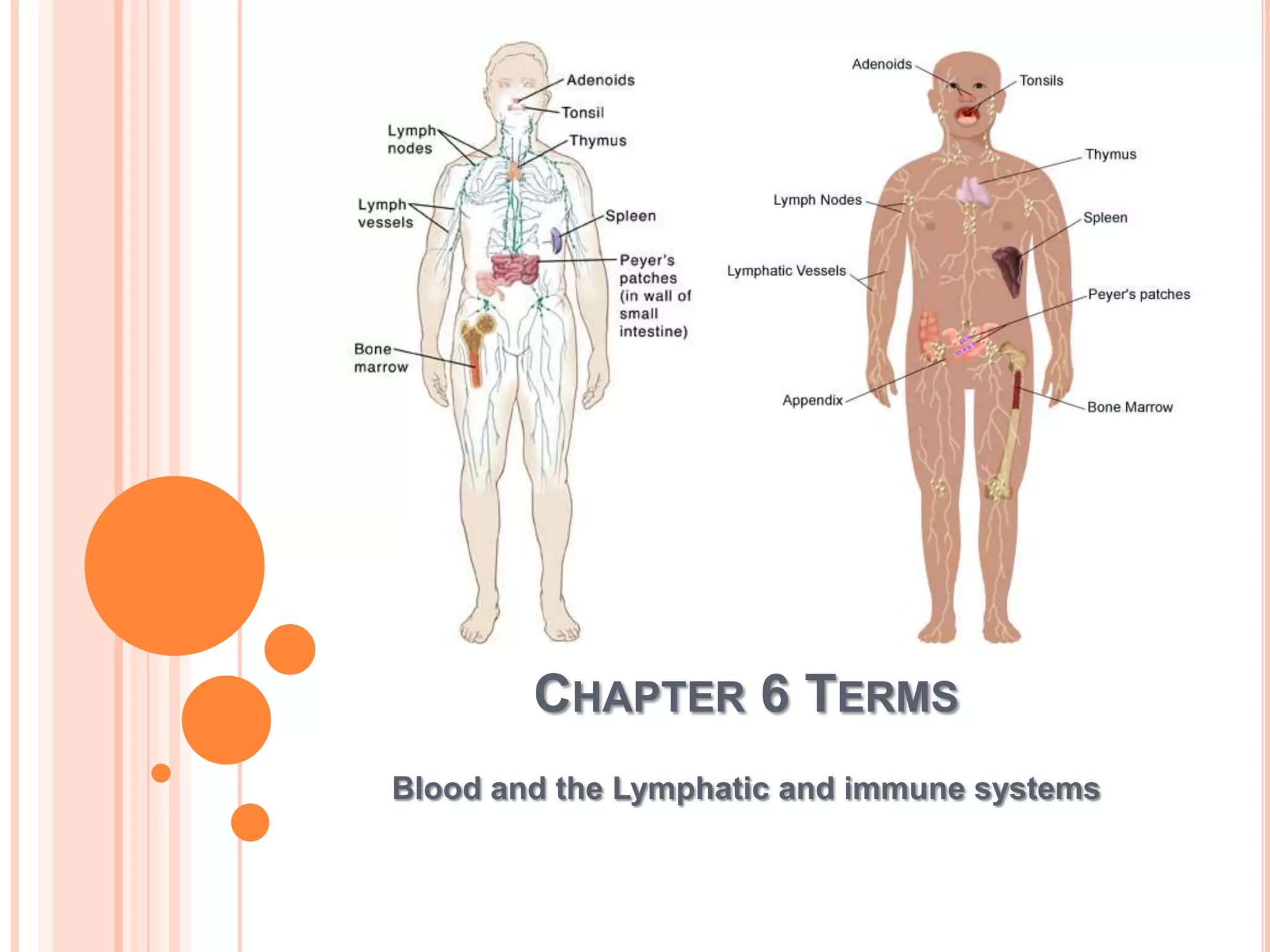
CHAPTER 6 TERMS
Blood and the Lymphatic and immune systems
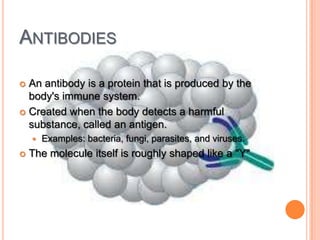
ANTIBODIES

 An antibody is a protein that is produced by the
  body's immune system.
 Created when the body detects a harmful
  substance, called an antigen.
       Examples: bacteria, fungi, parasites, and viruses.
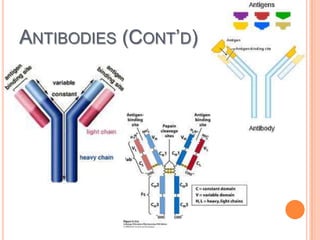
   The molecule itself is roughly shaped like a "Y"
ANTIBODIES (CONT’D)
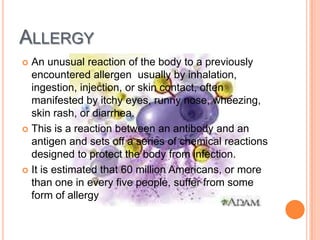
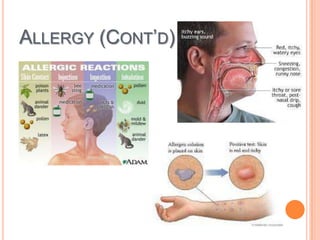
ALLERGY
 An unusual reaction of the body to a previously
  encountered allergen usually by inhalation,
  ingestion, injection, or skin contact, often
  manifested by itchy eyes, runny nose, wheezing,
  skin rash, or diarrhea.
 This is a reaction between an antibody and an
  antigen and sets off a series of chemical reactions
  designed to protect the body from infection.
 It is estimated that 60 million Americans, or more
  than one in every five people, suffer from some
  form of allergy
ALLERGY (CONT’D)
VACCINATION
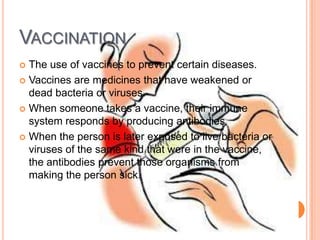
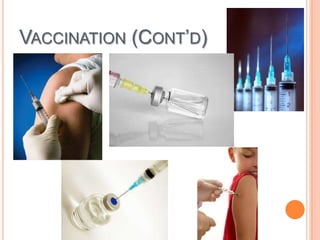
 The use of vaccines to prevent certain diseases.
 Vaccines are medicines that have weakened or
  dead bacteria or viruses.
 When someone takes a vaccine, their immune
  system responds by producing antibodies
 When the person is later exposed to live bacteria or
  viruses of the same kind that were in the vaccine,
  the antibodies prevent those organisms from
  making the person sick.
VACCINATION (CONT’D)

Chapter 6 terms

  • 1.
    CHAPTER 6 TERMS Bloodand the Lymphatic and immune systems
  • 2.
    ANTIBODIES  An antibodyis a protein that is produced by the body's immune system.  Created when the body detects a harmful substance, called an antigen.  Examples: bacteria, fungi, parasites, and viruses.  The molecule itself is roughly shaped like a "Y"
  • 3.
  • 4.
    ALLERGY  An unusualreaction of the body to a previously encountered allergen usually by inhalation, ingestion, injection, or skin contact, often manifested by itchy eyes, runny nose, wheezing, skin rash, or diarrhea.  This is a reaction between an antibody and an antigen and sets off a series of chemical reactions designed to protect the body from infection.  It is estimated that 60 million Americans, or more than one in every five people, suffer from some form of allergy
  • 5.
  • 6.
    VACCINATION  The useof vaccines to prevent certain diseases.  Vaccines are medicines that have weakened or dead bacteria or viruses.  When someone takes a vaccine, their immune system responds by producing antibodies  When the person is later exposed to live bacteria or viruses of the same kind that were in the vaccine, the antibodies prevent those organisms from making the person sick.
  • 7.