1Gardner’s Art Through the Ages:The Western PerspectiveChapter 6Italy Before the Romans:The Art of the Etruscans
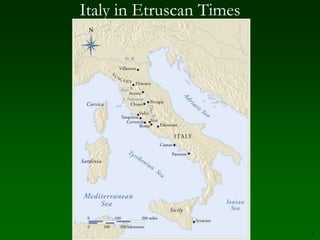
2Italy in Etruscan Times
3GoalsIdentify the geographic area of the Etruscan people.
Examine the possible origins of Etruscan art and culture.
Understand how and why the architecture and art of the Etruscans is different from that of the Greeks.
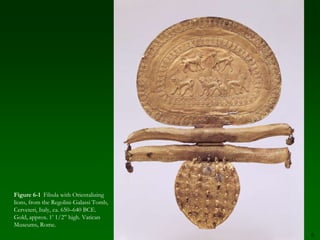
Understand the funerary customs of the Etruscans.4Etruscan Origins and Geographical Locations/Villanovan PeriodIdentify the geographic area of the Etruscan people.
Examine the possible origins of Etruscan art and culture.
Examine the religious and mythological similarities among the Etruscans, Romans and Greeks.5Early Etruscan ArtExamine the orientalized designs of Etruscan jewelry.
Understand jewelry making techniques and materials originating in the east.6Figure 6-1  Fibula with Orientalizing lions, from the Regolini-Galassi Tomb, Cerveteri, Italy, ca. 650–640 BCE. Gold, approx. 1’ 1/2” high. Vatican Museums, Rome.
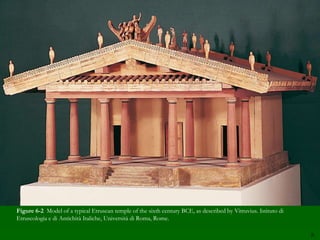
7Etruscan ArchitectureUnderstand why Etruscan temple architecture is different from Greek architecture.
Compare the Etruscan and Greek temples in terms of materials, columns, space, function and placement of statuary.8Figure 6-2  Model of a typical Etruscan temple of the sixth century BCE, as described by Vitruvius. Istituto di Etruscologia e di Antichità Italiche, Università di Roma, Rome.
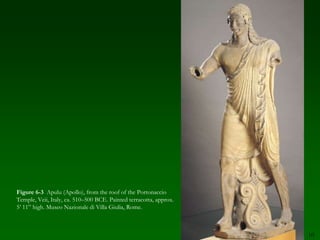
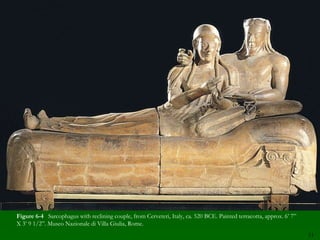
9Etruscan SculptureExamine the formal qualities of the Etruscan Apollo and the “Sarcophagus of the Cerveteri.”
How are both objects unique in terms of materials, poses, and social commentary?
Examine the role of women in Etruscan society.10Figure 6-3  Apulu (Apollo), from the roof of the Portonaccio Temple, Veii, Italy, ca. 510–500 BCE. Painted terracotta, approx. 5’ 11” high. Museo Nazionale di Villa Giulia, Rome.
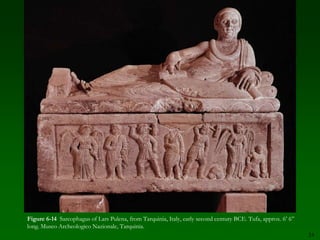
11Figure 6-4   Sarcophagus with reclining couple, from Cerveteri, Italy, ca. 520 BCE. Painted terracotta, approx. 6’ 7” X 3’ 9 1/2”. Museo Nazionale di Villa Giulia, Rome.
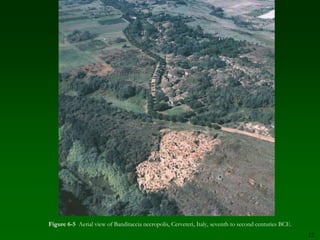
12Figure 6-5  Aerial view of Banditaccia necropolis, Cerveteri, Italy, seventh to second centuries BCE.
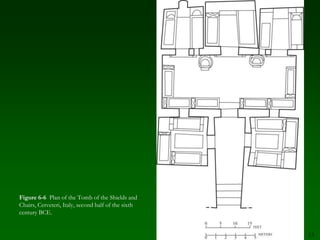
13Figure 6-6  Plan of the Tomb of the Shields and Chairs, Cerveteri, Italy, second half of the sixth century BCE.
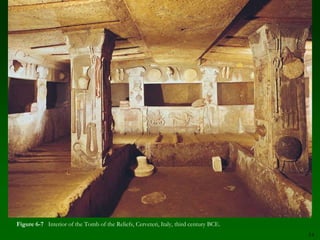
14Figure 6-7   Interior of the Tomb of the Reliefs, Cerveteri, Italy, third century BCE.
15Etruscan Classical and Hellenistic PeriodsUnderstand the funerary customs and beliefs of the Etruscans and their resulting artistic forms in tomb architecture, low relief sculpture, and wall painting.
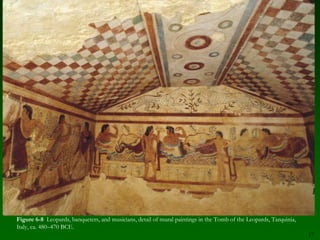
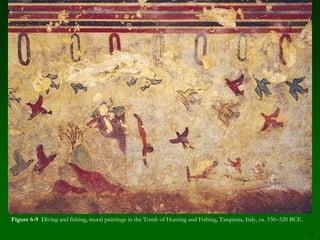
Examine later Etruscan art in terms of materials and subject matter as result of contact and being conquered by the Greeks and the Romans. 16Etruscan Tombs and Funerary ArtUnderstand the materials, methods and techniques used in Etruscan wall painting.
Explore the subject matter in Etruscan painting. 17Figure 6-8  Leopards, banqueters, and musicians, detail of mural paintings in the Tomb of the Leopards, Tarquinia, Italy, ca. 480–470 BCE.
18Figure 6-9  Diving and fishing, mural paintings in the Tomb of Hunting and Fishing, Tarquinia, Italy, ca. 530–520 BCE.
19Classical and Roman Etruscan ArtWhat evidence is present for the influence of the Greeks and Romans in the Etruscan art?
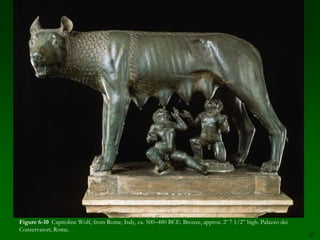
What is the importance of the Capitoline Wolf?20Figure 6-10  Capitoline Wolf, from Rome, Italy, ca. 500–480 BCE. Bronze, approx. 2’ 7 1/2” high. Palazzo dei Conservatori, Rome.
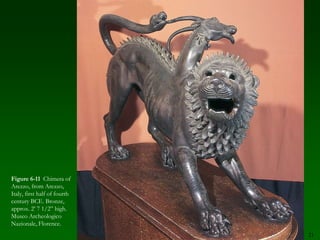
21Figure 6-11  Chimera of Arezzo, from Arezzo, Italy, first half of fourth century BCE. Bronze, approx. 2’ 7 1/2” high. Museo Archeologico Nazionale, Florence.
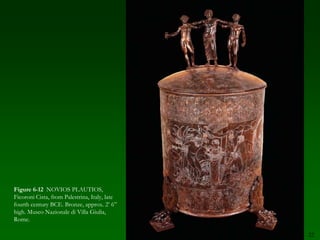
22Figure 6-12  NOVIOS PLAUTIOS, Ficoroni Cista, from Palestrina, Italy, late fourth century BCE. Bronze, approx. 2’ 6” high. Museo Nazionale di Villa Giulia, Rome.

Chapter 6

  • 1.
    1Gardner’s Art Throughthe Ages:The Western PerspectiveChapter 6Italy Before the Romans:The Art of the Etruscans
  • 2.
  • 3.
    3GoalsIdentify the geographicarea of the Etruscan people.
  • 4.
    Examine the possibleorigins of Etruscan art and culture.
  • 5.
    Understand how andwhy the architecture and art of the Etruscans is different from that of the Greeks.
  • 6.
    Understand the funerarycustoms of the Etruscans.4Etruscan Origins and Geographical Locations/Villanovan PeriodIdentify the geographic area of the Etruscan people.
  • 7.
    Examine the possibleorigins of Etruscan art and culture.
  • 8.
    Examine the religiousand mythological similarities among the Etruscans, Romans and Greeks.5Early Etruscan ArtExamine the orientalized designs of Etruscan jewelry.
  • 9.
    Understand jewelry makingtechniques and materials originating in the east.6Figure 6-1 Fibula with Orientalizing lions, from the Regolini-Galassi Tomb, Cerveteri, Italy, ca. 650–640 BCE. Gold, approx. 1’ 1/2” high. Vatican Museums, Rome.
  • 10.
    7Etruscan ArchitectureUnderstand whyEtruscan temple architecture is different from Greek architecture.
  • 11.
    Compare the Etruscanand Greek temples in terms of materials, columns, space, function and placement of statuary.8Figure 6-2 Model of a typical Etruscan temple of the sixth century BCE, as described by Vitruvius. Istituto di Etruscologia e di Antichità Italiche, Università di Roma, Rome.
  • 12.
    9Etruscan SculptureExamine theformal qualities of the Etruscan Apollo and the “Sarcophagus of the Cerveteri.”
  • 13.
    How are bothobjects unique in terms of materials, poses, and social commentary?
  • 14.
    Examine the roleof women in Etruscan society.10Figure 6-3 Apulu (Apollo), from the roof of the Portonaccio Temple, Veii, Italy, ca. 510–500 BCE. Painted terracotta, approx. 5’ 11” high. Museo Nazionale di Villa Giulia, Rome.
  • 15.
    11Figure 6-4 Sarcophagus with reclining couple, from Cerveteri, Italy, ca. 520 BCE. Painted terracotta, approx. 6’ 7” X 3’ 9 1/2”. Museo Nazionale di Villa Giulia, Rome.
  • 16.
    12Figure 6-5 Aerial view of Banditaccia necropolis, Cerveteri, Italy, seventh to second centuries BCE.
  • 17.
    13Figure 6-6 Plan of the Tomb of the Shields and Chairs, Cerveteri, Italy, second half of the sixth century BCE.
  • 18.
    14Figure 6-7 Interior of the Tomb of the Reliefs, Cerveteri, Italy, third century BCE.
  • 19.
    15Etruscan Classical andHellenistic PeriodsUnderstand the funerary customs and beliefs of the Etruscans and their resulting artistic forms in tomb architecture, low relief sculpture, and wall painting.
  • 20.
    Examine later Etruscanart in terms of materials and subject matter as result of contact and being conquered by the Greeks and the Romans. 16Etruscan Tombs and Funerary ArtUnderstand the materials, methods and techniques used in Etruscan wall painting.
  • 21.
    Explore the subjectmatter in Etruscan painting. 17Figure 6-8 Leopards, banqueters, and musicians, detail of mural paintings in the Tomb of the Leopards, Tarquinia, Italy, ca. 480–470 BCE.
  • 22.
    18Figure 6-9 Diving and fishing, mural paintings in the Tomb of Hunting and Fishing, Tarquinia, Italy, ca. 530–520 BCE.
  • 23.
    19Classical and RomanEtruscan ArtWhat evidence is present for the influence of the Greeks and Romans in the Etruscan art?
  • 24.
    What is theimportance of the Capitoline Wolf?20Figure 6-10 Capitoline Wolf, from Rome, Italy, ca. 500–480 BCE. Bronze, approx. 2’ 7 1/2” high. Palazzo dei Conservatori, Rome.
  • 25.
    21Figure 6-11 Chimera of Arezzo, from Arezzo, Italy, first half of fourth century BCE. Bronze, approx. 2’ 7 1/2” high. Museo Archeologico Nazionale, Florence.
  • 26.
    22Figure 6-12 NOVIOS PLAUTIOS, Ficoroni Cista, from Palestrina, Italy, late fourth century BCE. Bronze, approx. 2’ 6” high. Museo Nazionale di Villa Giulia, Rome.